Within the fast-moving world of blockchain technology, Non-Fungible Tokens (NFTs) have grabbed the attention of creators, collectors and investors everywhere. Each one is a unique digital asset that proves ownership or authenticity of something, digital or physical. Most of the NFT action so far has happened on Ethereum. But Polkadot, a multi-chain platform, has quietly opened a second door for anyone who wants to build an NFT marketplace.
What makes Polkadot different? It was built for interoperability and scale. Instead of one chain doing everything, it links many specialized blockchains into a single decentralized network. Assets and messages can move between those chains without friction, and that’s exactly the kind of foundation an NFT marketplace wants. Add solid infrastructure and serious technical depth, and developers get a flexible base for marketplaces that are secure, efficient and genuinely new.
So what separates a Polkadot NFT marketplace people enjoy from one they abandon? Usually the features. Think a clean interface, strong search and filters, secure and transparent transactions, storefronts artists and creators can customize, bidding and auctions, royalty management, and social tools. Below, we cover what you need to know about Polkadot NFT marketplace development: the advantages, the must-have features, and where it could go next.
What is a Polkadot NFT Marketplace?
Put simply, it’s a digital platform on the Polkadot blockchain network where people buy, sell and trade Non-Fungible Tokens (NFTs). Those NFTs are one-of-a-kind digital assets that prove ownership or authenticity of an item, whether that’s artwork, a collectible, virtual real estate, music, or plenty else.
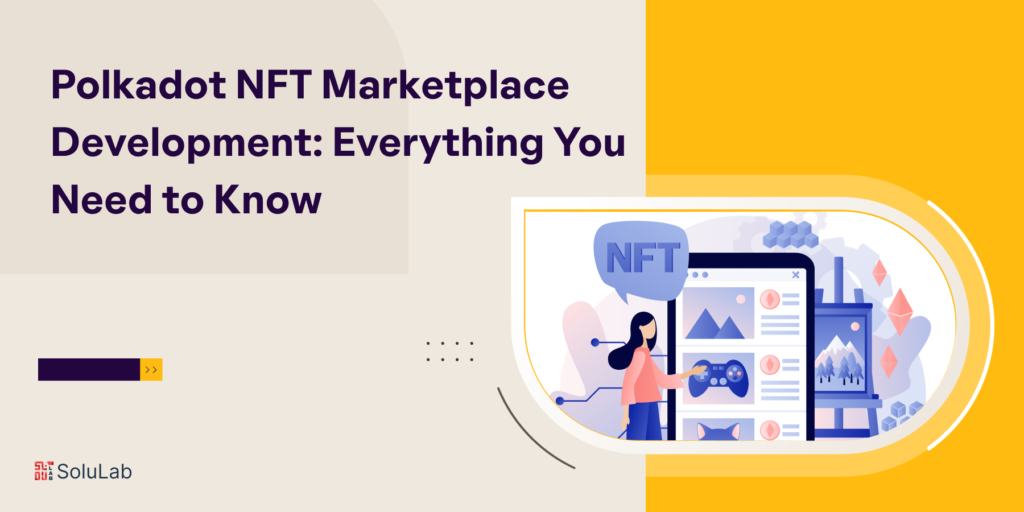
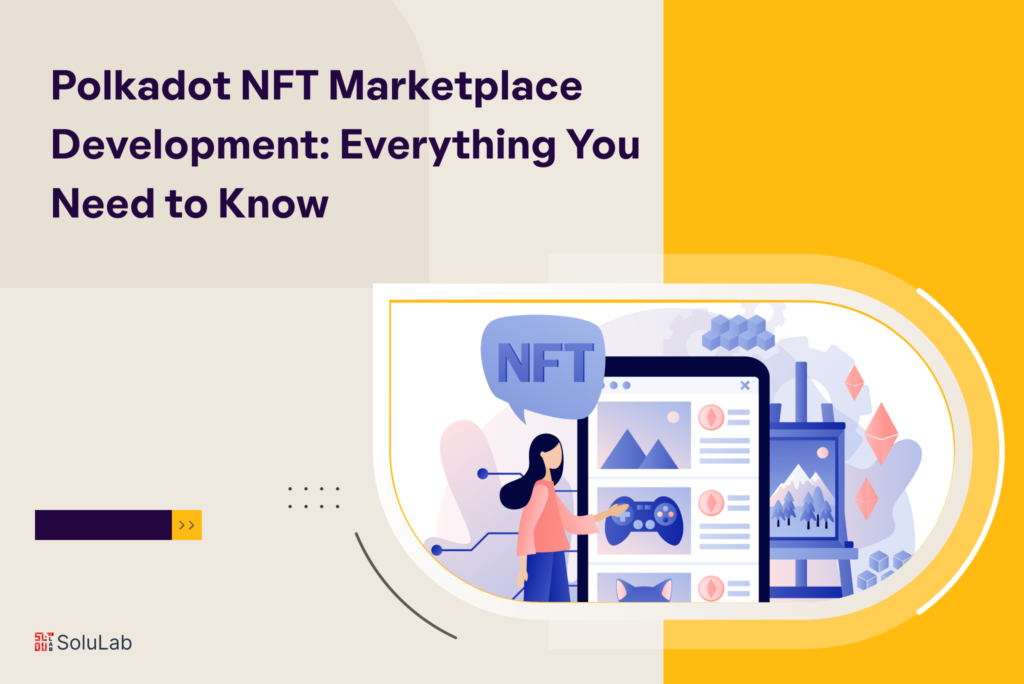
Inside one of these marketplaces, users browse a wide spread of NFT collections, find pieces they like, and connect with artists, creators and fellow collectors. Most offer an easy interface, advanced search and filters, and storefronts artists can shape around their work. You can move between categories, open the full details on any NFT, and join in with comments, likes or social media sharing.
Read Also: Cardano Vs Polkadot Vs Solana
Scale is the first big win. Plenty of blockchains choke when traffic spikes, and fees jump right along with it. Polkadot’s design handles a high volume of transactions without giving up speed or cost. For the person using the marketplace, that means buying, selling and trading NFTs just works.
Interoperability is the second. Polkadot lets separate blockchains talk to each other and pass assets back and forth, which widens what creators and collectors can actually do.
Then there’s security. Non-negotiable. Polkadot’s decentralized network and its smart contracts keep NFT transactions intact and unchangeable once recorded. On top of that, most platforms add their own protection: encryption protocols, two-factor authentication, and regular smart contract audits, so users have a place they can trust.
How to Develop NFT Marketplace on Polkadot?
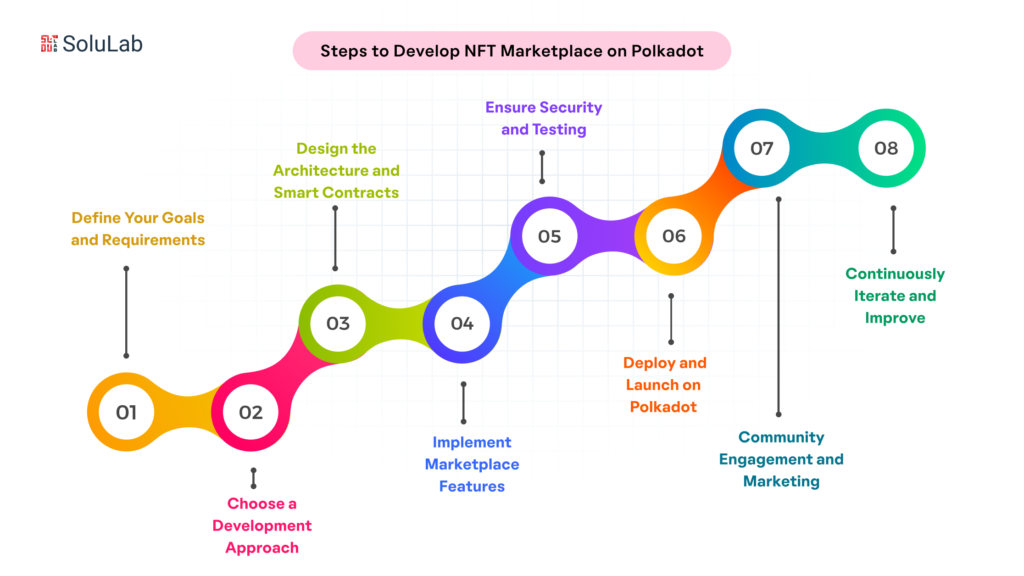
Building an NFT marketplace on Polkadot is a chance to put the platform’s interoperability and scale to real use. Here’s the path most projects follow:
- Define Your Goals and Requirements
Begin with the why. Get clear on what the project should achieve and what your marketplace specifically needs. Who is it for? Which features matter most? What should the experience feel like, and what will you offer that nobody else does?
- Choose a Development Approach
Next, decide whether you want to build your NFT marketplace from scratch or build on frameworks and protocols that already exist. Polkadot gives you choices. Substrate is a framework for creating your own custom blockchain. The Polkadot Parachain Development Kit (PDK) makes building parachains on the network simpler.
- Design the Architecture and Smart Contracts
Now map the architecture: the front-end interface, the back-end systems, and the smart contracts that sit between them. Those contracts do the heavy lifting in any NFT marketplace. They decide how NFTs get created, who owns them, and how they change hands. Use the tools and libraries in the Polkadot network to write contracts shaped around what your marketplace needs.
- Implement Marketplace Features
Build the core. User sign-up and login, NFT listings and browsing, transaction handling, bidding and auctions, wallet integration, search. Then think about what makes people stay: royalty management, social features, even game-like elements. Those extras are often what sets one marketplace apart from the next.
Read Also: Avalanche NFT Marketplace Development : A Complete Guide
- Ensure Security and Testing
Protect your users’ assets and data with strong security from the start. Run full security audits, with code reviews and vulnerability assessments, to find weak spots before someone else does. Then test everything, both functionality and performance. The aim is a smooth experience with the bugs and glitches caught and fixed before launch.
- Deploy and Launch on Polkadot
Time to go live. You can launch your marketplace on Polkadot as its own parachain, or plug into parachains that already run on the network. Weigh the deployment options and pick the one that matches your goals and technical needs.
- Community Engagement and Marketing
Launch is the start, not the end. A marketplace without a community is an empty shop. Talk to artists, collectors and users on social media, in forums and at events. Bring people in with partnerships, promotional campaigns and incentives for both buyers and creators.
- Continuously Iterate and Improve
You’re never really finished. Gather feedback from users and artists, then keep improving: smooth out the experience, ship new features, respond to new needs and problems as they come up. And keep an eye on what’s new in the Polkadot network, because adopting fresh technology early is how a marketplace stays competitive.
Why is Polkadot NFT an Ideal Platform for Developing NFT Marketplaces?
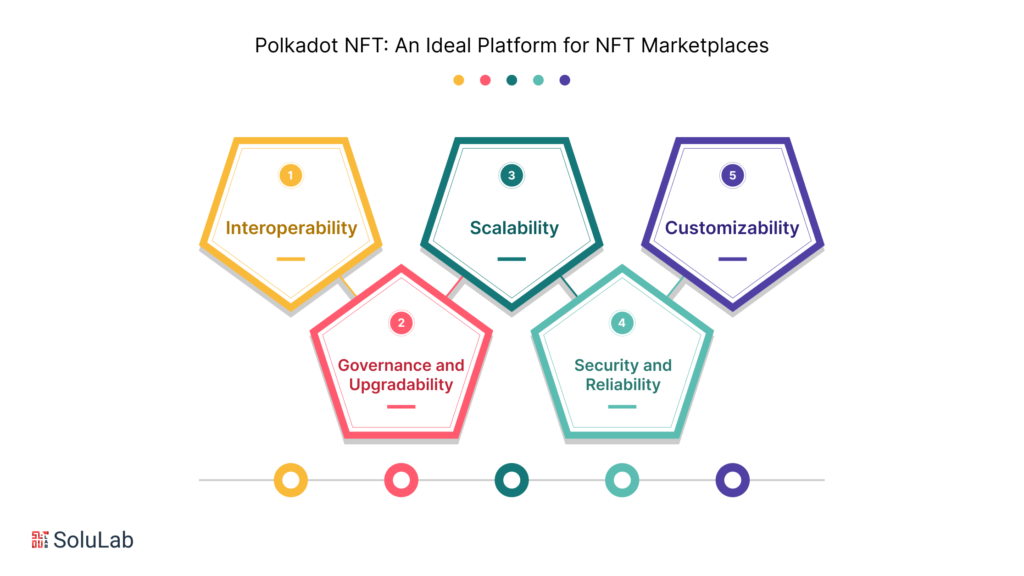
Why do so many developers pick Polkadot for NFT marketplaces? It comes down to a handful of features other platforms don’t combine in quite the same way. Here they are:
- Interoperability
This is Polkadot’s headline strength. The network exists to join many blockchains, called parachains, into one connected system. For an NFT marketplace built on it, that means smooth interaction with other chains, assets that can cross from one chain to another, and a much wider pool of NFTs to offer.
Artists and collectors get a bigger world to work with. They can draw on assets from several chains and reach a far more varied set of users.
- Scalability
NFT marketplaces live or die on fast, efficient transactions. Polkadot tackles this with a two-part design: a relay chain and parachains. The relay chain is the central hub. The parachains each take on specific jobs.
Because the work runs in parallel, Polkadot can process a large number of transactions at once. Confirmations come faster, and the experience feels smooth. When user activity climbs and demand for NFT transactions grows, the marketplace can keep up.
- Customizability
Developers get a lot of room to shape things. Using Substrate, a framework for building blockchains, a team can create parachains designed around exactly what its NFT marketplace needs.
That opens the door to one-off features, custom smart contracts, and a user experience tuned to the audience. Polkadot’s modular design means you can build a marketplace that stands out on functionality, on interface, and on design as a whole.
Read Also: Everything You Need to Know About Metaverse NFT Marketplace Development
- Governance and Upgradability
On Polkadot, the community gets a real say. Through on-chain governance, stakeholders vote on protocol upgrades, parameter changes and how the network is run.
Decisions happen by community consensus, not by decree, and that gives NFT marketplaces a stable, long-lasting home. Upgradability matters a lot here. NFTs move fast, and a marketplace has to keep adjusting to new trends, new technology and new user demands.
- Security and Reliability
Security sits near the top of Polkadot’s priorities. It runs on a shared security model, so every parachain is protected by the consensus of the whole Polkadot network. Its design also supports secure, trustless transactions through advanced cryptography and smart contracts.
Build on that infrastructure and your marketplace inherits the benefit. Transactions stay intact and can’t be altered, and users get a safe place to buy, sell and trade NFTs.
What are the Initial Steps in Building a Polkadot NFT Marketplace?
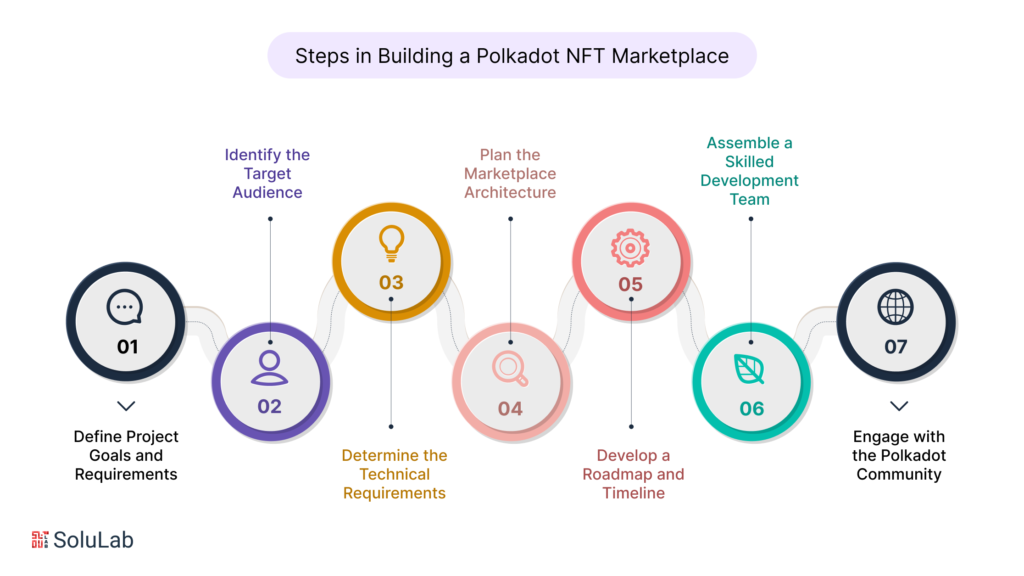
A Polkadot NFT marketplace takes careful planning, and then careful execution. These are the first moves to make:
- Define Project Goals and Requirements
Be specific about what your marketplace is for. Serving a particular niche? Focusing on one type of NFT? Offering an experience nobody else has? Pick your purpose.
Then list the features you need: user registration, NFT listings, bidding, auctions, wallet integration, social tools. Writing your requirements down clearly gives the whole development process something solid to stand on.
- Identify the Target Audience
Know who you’re building for and what they want. How do the NFT collectors, artists and fans who’ll use your marketplace think and behave?
Study the Polkadot NFT marketplaces already out there, and look for gaps you could fill or ways to stand apart. The better you know your audience, the easier it is to shape features and design around what they expect, and to give them an experience worth coming back to.
- Determine the Technical Requirements
Work out what the build will take technically. Will you start from scratch, or use existing frameworks and protocols like Substrate or the Polkadot Parachain Development Kit (PDK)?
Your resources, skills, timeline and budget should all shape that choice. Look hard at the scalability and interoperability Polkadot gives you too. They’ll have a big hand in whether your marketplace succeeds.
Read Our Blog: BSC NFT Marketplace Development: Everything you Need to Know
- Plan the Marketplace Architecture
Sketch the architecture. Front-end interface, back-end systems, database structure. Decide how NFTs will be stored, minted and traded on the Polkadot network.
Plan how smart contracts will manage creation, ownership and trading. And think through security properly, from encryption protocols to authentication, so user transactions and data stay safe and untouched.
- Develop a Roadmap and Timeline
Build a roadmap and a timeline to steer the work. Split the project into milestones you can actually manage, and decide which features have to be in the first release. Set aside resources for QA, testing and security audits, too.
A good roadmap keeps you organized. It lets you track progress and hit your key deliverables all the way through.
- Assemble a Skilled Development Team
A Polkadot NFT marketplace is only as good as the people who build it. Look for experience in blockchain development, smart contracts, front-end and back-end programming, and user experience design.
In practice, a team that already knows the quirks of Polkadot and of NFT marketplaces will save you a lot of wasted weeks and make the whole build run smoother.
- Engage with the Polkadot Community
Get involved with the Polkadot community. Talk to other developers, artists and fans. Post in forums, go to meetups or conferences, and find people who think the way you do.
Being active there pays off. You pick up useful insights, get honest feedback, and meet potential partners who can help your Polkadot NFT marketplace succeed.
Conclusion
Polkadot NFT marketplace development is one of the more promising ways to test what blockchain and non-fungible tokens (NFTs) can really do. Its multi-chain framework and interoperability give you a strong base for creating NFT marketplaces that are secure, scalable, and linked to many different blockchain networks.
Cross-chain communication and asset transfers are the real prize. With the Substrate framework and Polkadot’s parachain infrastructure, developers can build NFT marketplaces that aren’t boxed in by a single blockchain. The result: smooth interoperability, and NFT collections pulled in from several networks.
And then there’s throughput. Polkadot’s shared security model, along with its sharding and parallel processing, lets it handle a high volume of transactions efficiently. For users, that means an experience that stays smooth and doesn’t stall.
SoluLab, a leading Polkadot Blockchain Development company, helps businesses make the most of cross-chain platforms by bringing multichain and permissionless information transfers together at high speed. Its experts can help businesses and startups build strong NFT marketplaces from scratch, for artwork, digital collectibles, gaming, asset tokenization and more. SoluLab’s NFT marketplace development services are known for feature-rich builds and close attention to detail. If you’re planning a Polkadot marketplace, get in touch with SoluLab and talk it through.
FAQs
Shipra Garg is a tech-focused content strategist and copywriter specializing in Web3, blockchain, and artificial intelligence. She has worked with startups and enterprise teams to craft high-conversion content that bridges deep tech with business impact. Her work translates complex innovations into clear, credible, and engaging narratives that drive growth and build trust in emerging tech markets.