


We executed the algorithm in the backend, fetched the coordinates, and called the mint function to store the NFTs.

Marketplace For High-Quality Carbon Credits
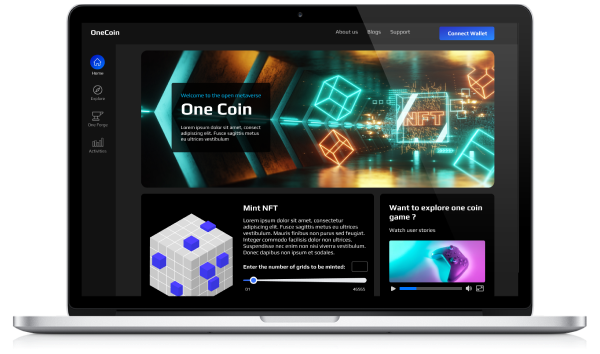









The One Game is an NFT game in which players compete and collaborate to correctly assemble a puzzle made up of many other NFTs in order to assemble The One NFT. The project’s business idea is to create a platform similar to play-to-earn games where players can mint NFTs, play games with minted NFTs, and buy/sell NFTs in the marketplace.
In Blockchain, due to the gas limit, it was highly challenging to store 1,25,000 NFT in the array.
To merge NFT, we applied a linked list, so creating a linked list in the blockchain was complicated to handle.
Fetching the MATIC value corresponding to the TOG token using DEX was a challenging task. Many DEXs don’t support polygon networks.
Generating adjacent positions was highly challenging for us as we were not sure whether all the positions were covered or not.
The One Forge is a smart contract protocol enabling wallets to assemble pieces of The One NFT using Grid NFTs.
$TOG is used to mint the Grid NFTs. It is an ERC-20 token existing on Polygon (MATIC) Layer-2 blockchain.
Grid NFTs, or fragments, are the building blocks of The One NFT. Grid NFTs always represent a locked fraction of the $TOG, regardless of how many are strung together.
The marketplace is a public decentralized NFT marketplace (a DEX) for trading grid/fragment NFTs.
It is one of the One Game’s game achievements and a community-building component. The Order is organized into ranks that represent the status of each player.
Admin can view player information such as collectibles, on-sale NFTs, and so on, and mute/unmute a player. The admin can view the NFT details such as name, price, position, trading history, etc.
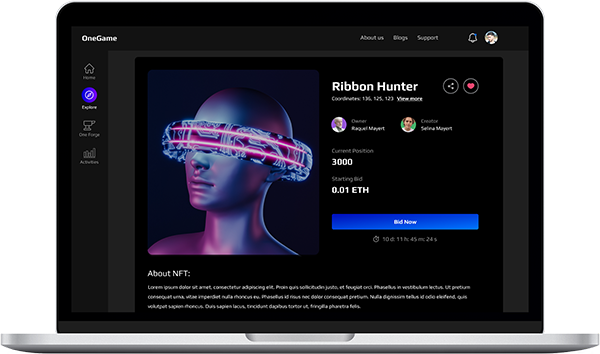
The One Game is an NFT game in which players compete and collaborate to correctly assemble a puzzle made up of many other NFTs to assemble The One NFT.
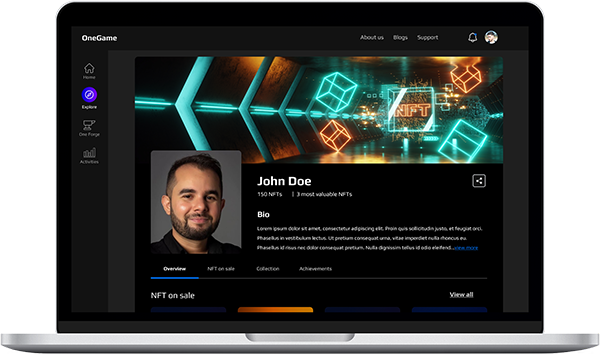
The One NFT is made up of all 125,000 Grid NFTs. The primary goal of the first game is to assemble it.
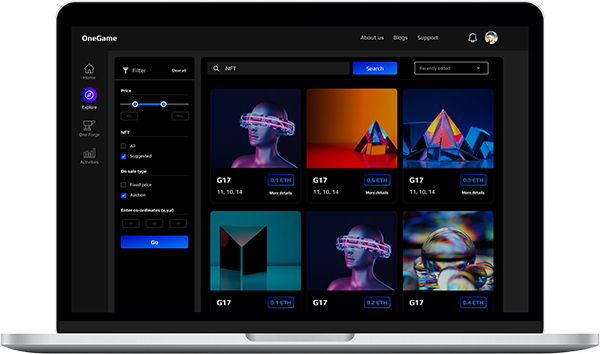
Grid NFTs, or fragments, are the building blocks of The One NFT. They represent unique positions on a final grid of 125,000 positions in a 3D asset composed of a 50x50x50 matrix.
We executed the algorithm in the backend, fetched the coordinates, and called the mint function to store the NFTs.
The team analyzed and found one library for the linked list, and we have used it during merging NFTs.
Using Uniswap helped fetch values of Matic corresponding to TOG Token.
To swap indexes, we followed the fisher yates algorithm. We followed a shuffling algorithm from a set of ranges, so this algorithm helps us to generate random numbers without repetition.


“Working with SoluLab was a delight, and they did a fantastic job. They get the job done quickly and competently. Always ready to provide support and look for the most effective solution.”