
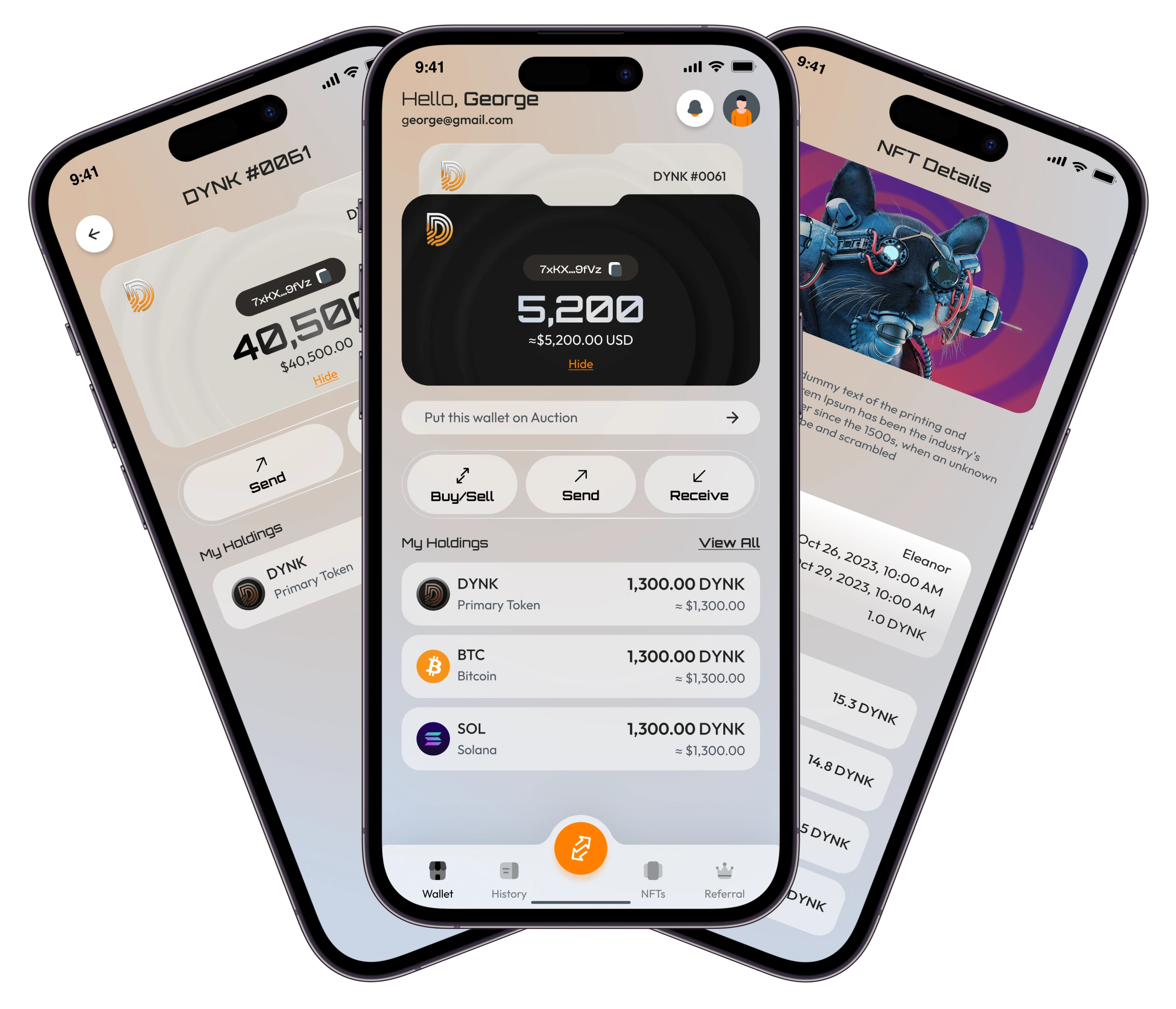
SoluLab developed a Solana-based blockchain ecosystem that transforms NFTs from static digital collectibles into ownership keys for fully functional cryptocurrency wallets. By combining NFT-controlled wallets, tokenized assets, private exchange infrastructure, and auction-based ownership transfers, the platform introduces a new approach to digital asset ownership and portfolio management.









The client came to SoluLab with a question that most of the NFT industry hadn't thought to ask: what if owning an NFT meant owning everything behind it?
Not just a collectible. Not just metadata on a blockchain. But a live, functional crypto wallet — with real assets inside it, growing over time, and fully transferable the moment the NFT changes hands.
The founding belief was simple but radical: NFTs should be keys, not
trophies.
The client had watched the first wave of NFT adoption produce thousands of projects where the
initial excitement faded quickly. Holders were left with digital art that had no ongoing utility,
wallets they couldn't transfer cleanly, and portfolios that required manual effort to manage across
multiple platforms. The novelty wore off, and so did the value.Their vision for DYNK was to fix this
at the infrastructure level, not with another collectible drop or membership gimmick, but with a
platform where the NFT is genuinely the ownership mechanism for a productive financial asset.
An NFT may represent a collectible, a membership pass, a digital artwork, or a community credential, but it rarely controls functional blockchain infrastructure. Wallets stay separate. Assets stay fragmented. And when the NFT changes hands, the buyer gets the token, not the ecosystem behind it.
For users, this created compounding friction:
Digital assets scattered across multiple wallets with no unified view
Portfolio transfers requiring multiple, independent on-chain transactions
NFT ownership that rarely grew in utility after the initial purchase
Secondary market transactions that transferred the token but left all associated assets behind
The vision behind DYNK was direct: challenge the conventional ownership model and build something more useful.
Before a single line of code was written, SoluLab mapped out the non-negotiable requirements that would define whether the platform succeeded or fell short of the client's vision.
The challenge wasn't just technical complexity — it was the need to make several distinct systems work as one seamless product. Each requirement had to be met in full, because a gap in any one layer would undermine the entire ownership model.
The platform needed a tamper-proof, on-chain mechanism that cryptographically links each NFT to a unique, dedicated wallet. This binding had to be verifiable by anyone, enforceable by smart contract, and transferable when the NFT changes hands — without any manual intervention.
Entirely by NFT Ownership Traditional wallet access relies on private keys. DYNK required a model where access is determined solely by NFT ownership state — meaning the smart contract, not the user's credentials, acts as the gatekeeper. Lose the NFT, lose access. Own the NFT, own the wallet.
The wallets couldn't be empty containers. The platform required a token allocation and distribution system that seeds wallets with ecosystem tokens and supports accumulation over time — giving each NFT wallet a growing, measurable value.
To create liquidity within the ecosystem, the platform needed a fully functional exchange — not a connection to a public DEX, but a purpose-built private environment with order books, matching logic, escrow management, and settlement workflows.
The transfer mechanism had to go beyond a simple buy-now transaction. The client required a competitive auction system with reserve pricing, bid management, asset locking during active auctions, and automated settlement that transfers full wallet ownership — not just the NFT — to the winning bidder.
Users needed live visibility into their wallet holdings, exchange positions, and auction activity. This required WebSocket infrastructure and an event-driven backend capable of pushing updates instantly across the platform.
Every ownership operation, binding, transfer, auction settlement, and exchange execution had to be governed by smart contracts on Solana. The architecture needed to be modular enough to support future product expansion without requiring a rebuild of core logic.
SoluLab designed and developed a complete Solana-based ecosystem that unifies wallet ownership, tokenized assets, private exchange functionality, and NFT-powered transfers within a single platform.
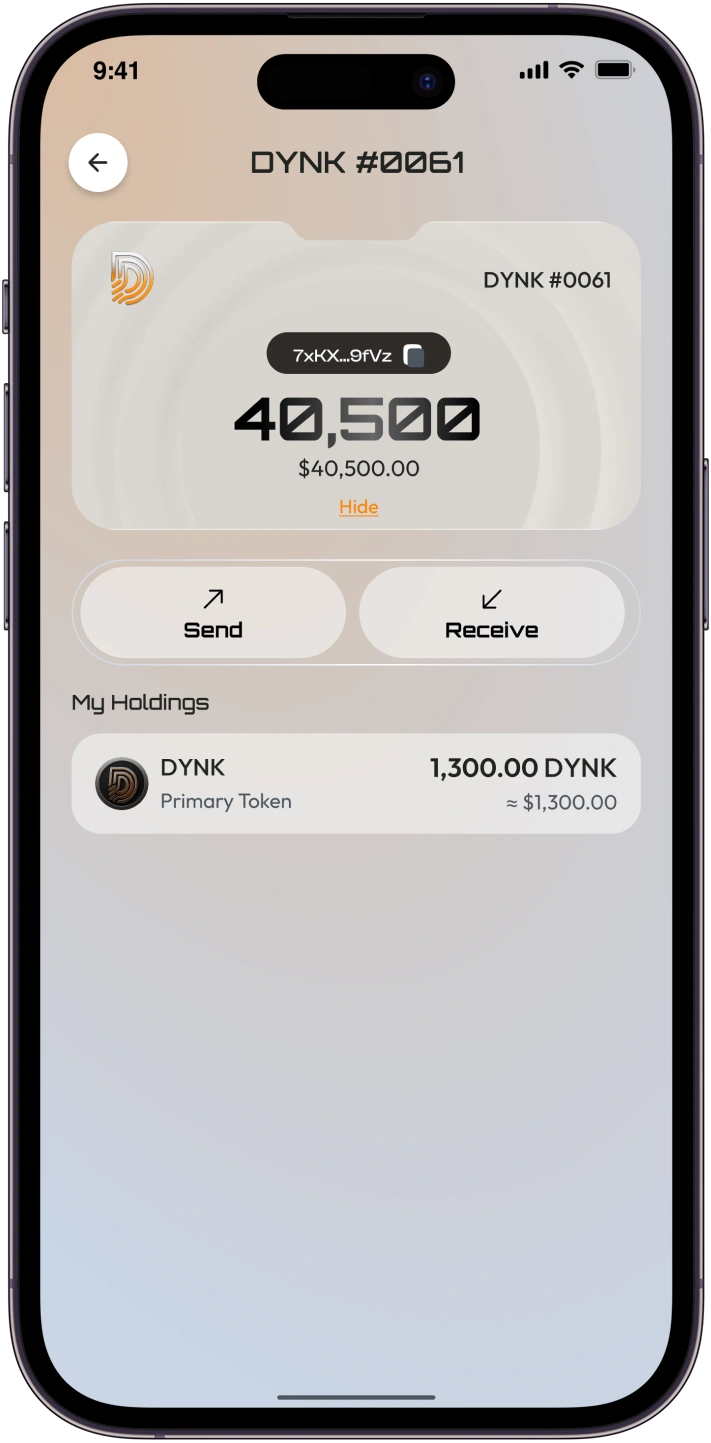
At the center of the ecosystem is an innovative wallet ownership model powered by NFTs. Each NFT is linked to a dedicated wallet on the Solana blockchain. Ownership of the NFT determines wallet access, no traditional wallet credential is required. Users interact with their assets through a clean dashboard that reflects the true on-chain state of their holdings.
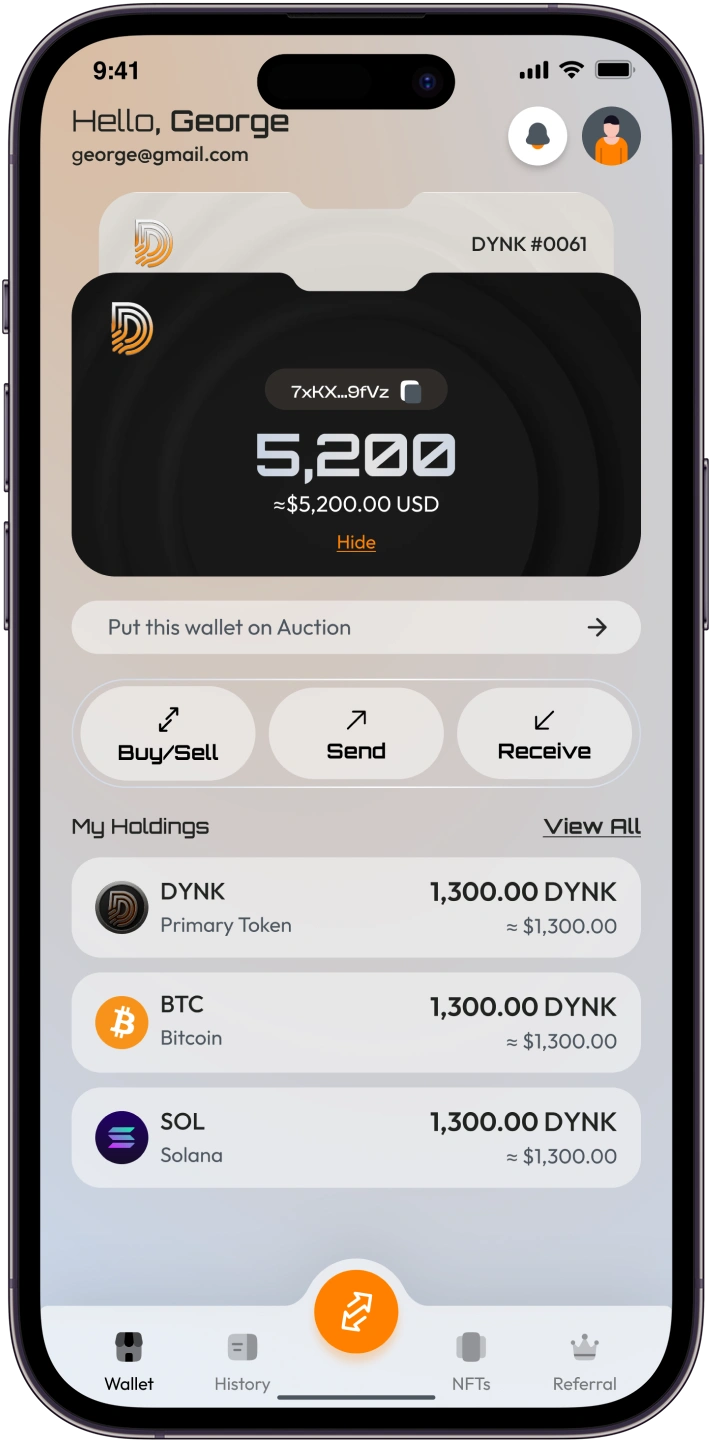
The platform includes a token ecosystem designed to support asset distribution and long-term portfolio growth. Wallets hold allocated ecosystem tokens while remaining open to additional digital assets received over time. Users can monitor balances, manage holdings, and track portfolio activity through a single dashboard, eliminating the fragmented, multi-wallet experience common in Web3.
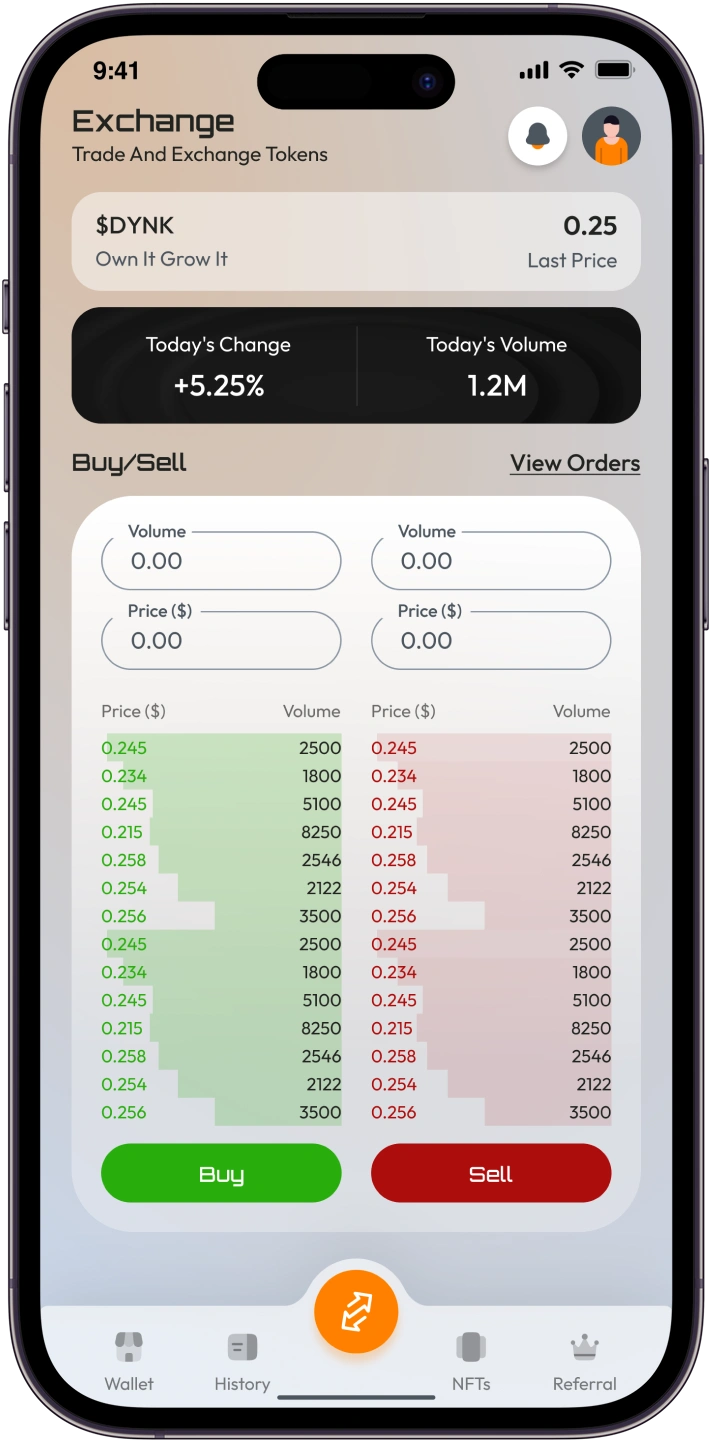
To support token liquidity and ecosystem participation, SoluLab developed a private exchange environment integrated directly into the platform. Users can place buy and sell orders while the platform's order-matching system manages transaction processing and settlement workflows automatically.
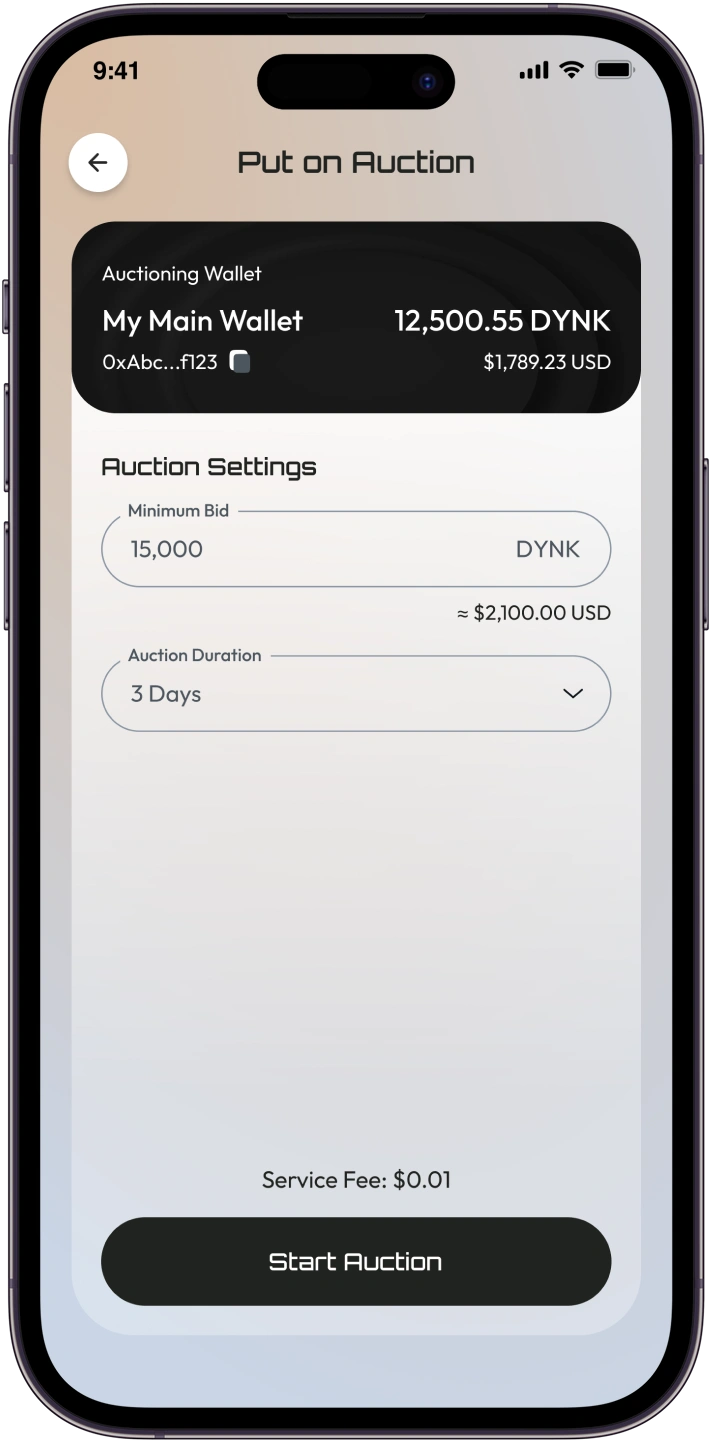
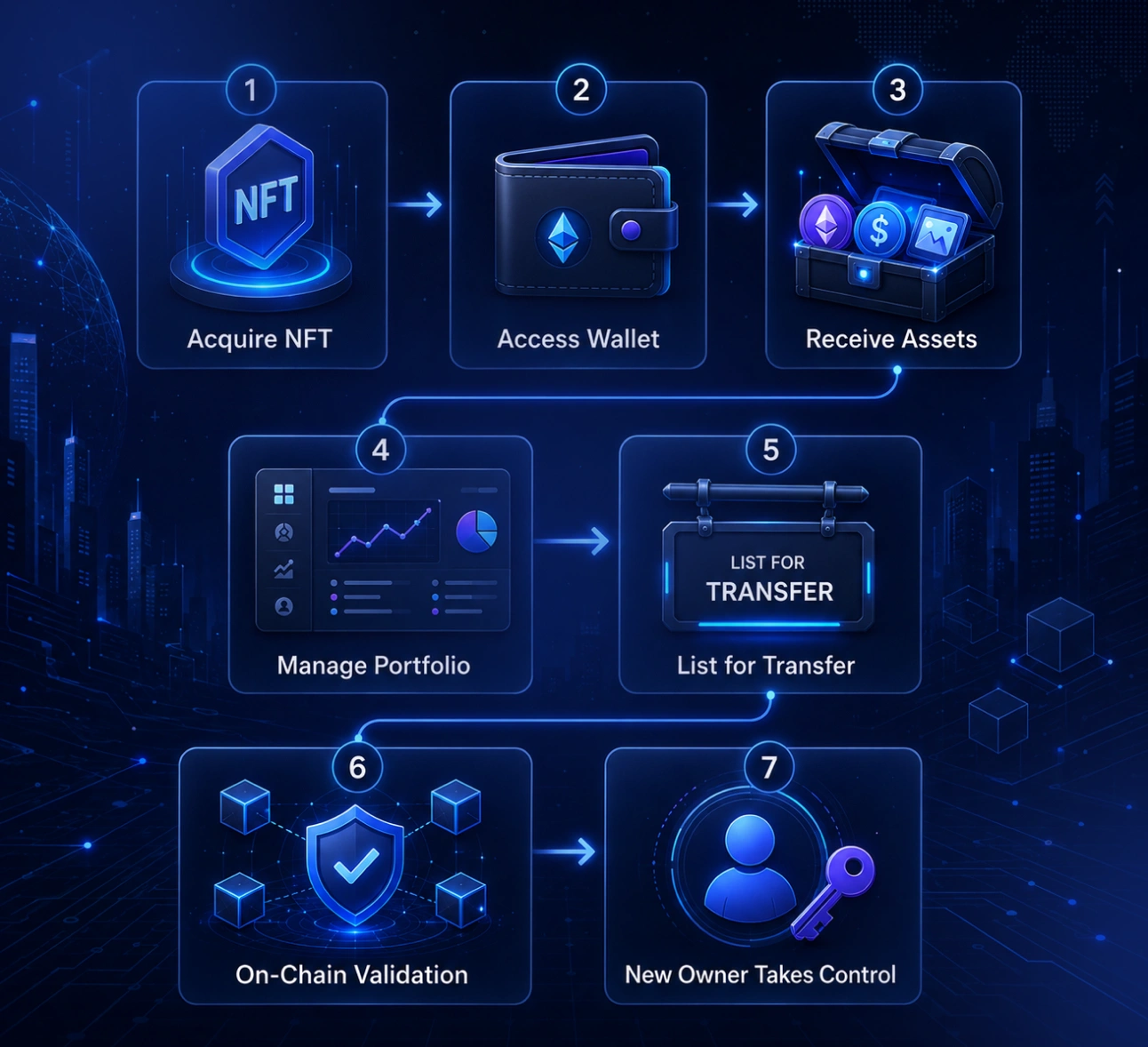
DYNK introduces a structured, auction-based mechanism for NFT wallet ownership transfers. Users can list an NFT wallet for auction, define reserve prices, accept competitive bids, and complete ownership transfers through a validated on-chain settlement process.
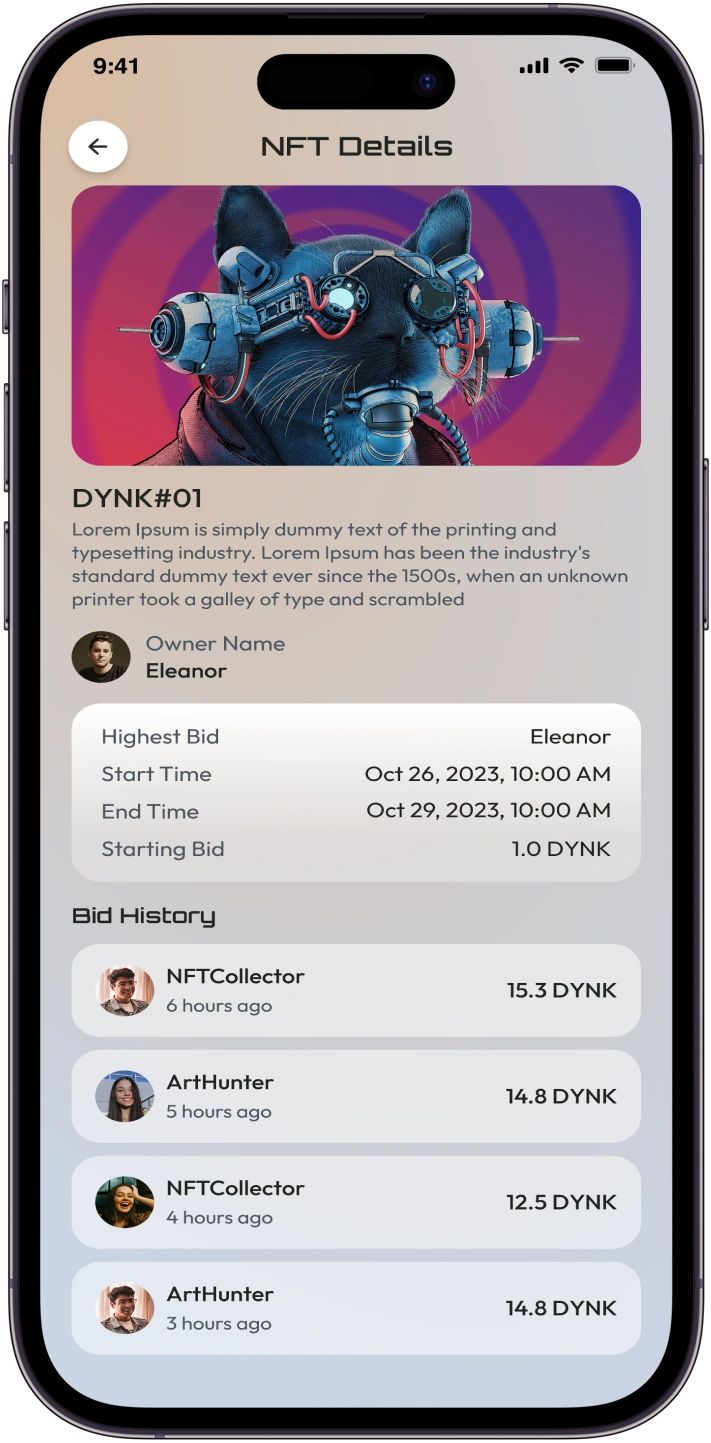
Unlike traditional NFT transfers that move only metadata and ownership records, DYNK enables the transfer of complete wallet ownership. When an NFT changes hands, the new owner gains access to the associated wallet, its token holdings, and its accumulated assets. The seller exits cleanly. The buyer steps in completely.

Whether you're exploring NFT platforms, token ecosystems, blockchain wallets, digital asset marketplaces, private exchanges, or custom Web3 applications, SoluLab helps transform innovative ideas into scalable, production-ready blockchain products. From smart contract architecture on Solana to full-stack Web3 product delivery, our team works across every layer of the stack.
Under 400ms Finality
Near-Zero Dashboard Latency
Automated Auction Settlement
Independently Upgradeable Smart Contract Modules
Real-Time Exchange, Zero Polling
Cheaper Than Ethereum
 Solana Blockchain
 Anchor Framework
 Metaplex NFT Standards
  React Native
 Node.js
 PostgreSQL
Redis
PostgreSQL
Redis
 Kafka
Kafka WebSocket
"We came to SoluLab with an idea that most blockchain developers would have called too complex for a first build — linking NFTs directly to functional wallets so that owning the token means owning everything inside it. Not only did the team understand exactly what we were going for, they pushed the architecture further than we'd originally scoped. The private exchange, the auction system, the real-time portfolio layer — it all shipped together, and it works exactly the way we envisioned. SoluLab didn't just build what we asked for. They built what we actually needed."


