


The approach of targeting and detecting cell-free DNA proved to be a method of identifying hereditary cancer cells.

Deep Learning based algorithms that conduct physical examination visually to diagnose cancer.
Canopus is a software kit that we built with machine learning programs and deep learning algorithms. It captures physical raw images and removes unwanted image noise to detect cancer with improved accuracy.
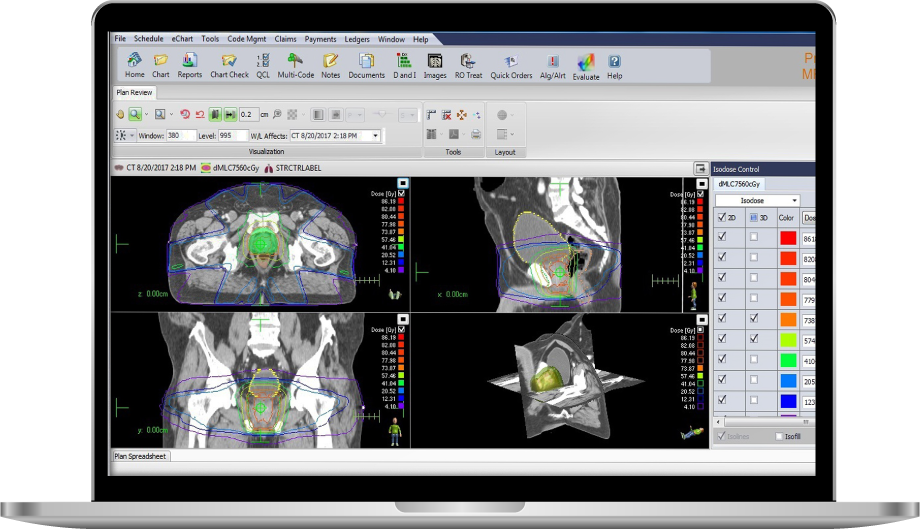










The ultimate focus of our client was to build a medical imaging software that pre-processes images from BET, CT scans, as well as from live scanning.
Images were classified into Gaussian noise, Poisson noise and speckle noise to remove undesired image objects and provide quality detection of cancer.
Mammogram labeling provided the necessary data to identify high-intensity breast cancers that occur in the earliest stages.
Shining a light on image detection without letting the various image noises affect the accuracy of detecting cancer accurately.
Simultaneous processing of images to ensure cancer that lies in the minutest of detail can be detected feasibly.
Targeting existing cancer molecule by molecule and analyzing cell-free DNA through deep learning algorithms to identify what type of cancer exists and in which part of the body.

We broke down the cancer-detecting process into three essential parts. They are pre-processing, image segmentation and post-processing.Pre-processing deals with removing noise from the image captured. Image segmentation deals with further processing of the image to separate Region of Interest (ROI) from the unwanted image background. Post-processing deals with grabbing the labeled features of cancer to detect them precisely.

Adjusting the contrast of the images captured to ensure that unwanted edges and objects of the image are either removed or blurred to focus only on the key areas required .

Transforming images into purposeful data by labelling them accordingly to their characteristics. The labelled data is then used for automatic cancer detection

Perform complex computation to grab the power of cancer prediction through images. Train the deep learning neurons to generate an accurate output.

Extract features of the cancerous part away from the healthy parts. Conduct watershed segmentation and seeded region growing to process images and identify ROI

Developed evaluation metrics such as True Positive (TP) and True Negative (TN). Classify the cancerous cells into positive and negative classes to remove the target cancer cells

Creating appropriate models and build algorithms with fitting cancer-detecting features for breast cancer, lung cancer, brain cancer, and prostate cancer
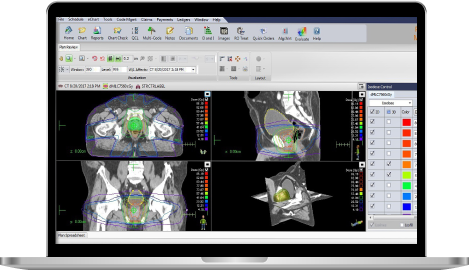
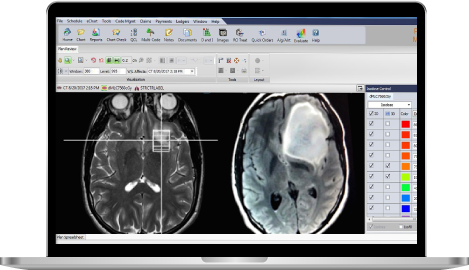
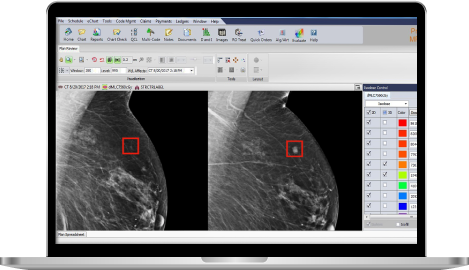
Ensemble deep learning algorithms to provide better cancer predictive performance and data set classification.
Aggressive computation of the created cancer data models provides accurate statistical analysis than empirical predictions.
Monitor CT and MRI scans with 3D visualization to reproduce valuable results in understanding and detecting cancer.
The approach of targeting and detecting cell-free DNA proved to be a method of identifying hereditary cancer cells.
Deep learning algorithms we built also serves as a diagnostic assistant to detect critical abnormalities like fractures, bleeding and midline shift.



“Medical imaging with deep learning almost sounded impossible. Through Canopus, SoluLab has made medical imaging look easy and convenient to use. They have taken healthcare industry to the next level”