Talk to an Expert
Get in Touch

How Mobile Technology Is Changing Healthcare Industry And Patient Care Delivery?

Due to revolution of mobile era, the way healthcare is delivered and received is changing significantly. Due to the mobile technology in healthcare sector, a patient can possibly avoid the need of visiting clinic due to the technological power of artificial intelligence, data analytics and natural language processing. And that’s why, gradually virtual clinic visits are increasing faster than actual clinic visits.

According to MarketsandMarkets, the global mHealth (or mobile health) solutions market is expected to reach $90.49 billion by 2020 from $21.17 billion in 2017, at a CAGR of 33.7 percent.

Mobile Technology in Healthcare Sevtor

What exactly a Mobile technology in healthcare sector is for patients and healthcare providers?

Mobile technology in healthcare sector can have different meanings to different people. For an instance, patients see mobile devices as a gateway to boost engagement with healthcare providers i.e. clinics, doctors, laboratories and so on. They can view their reports online, schedule appointments online, get reminders of scheduled consultations, etc. Every single thing thing they can manage with an ease on their fingertips; all thanks to smartphones and mHealth applications.

On the other hand, Healthcare providers are using applications to access patient information. It also include keeping a tab on routine checkups, and scheduled appointments. There are many mHealth apps available in the market that are meant for keeping patients’ database uptodate and within reach of healthcare professionals.

How mobile technology in healthcare sector is changing entire industry

patient care

Connected  patient care and cost reduction

According to a research, 25% of the physicians are already using mobile technology to provide better healthcare and for effective patient communication.

Having an mHealth in place, integrated with a hospital management system, reduces overall healthcare expenditure. Connected care enables healthcare providers to pay focused attention to the health of patients, which in turn reduces the occurrences of readmission to the hospital. In addition, physicians can have video chats with patients. Further, there is no need for a dedicated resource at a clinic or healthcare centre for data entry. Rather, electronic information eliminates human errors and helps healthcare providers access patient data seamlessly. Patients don’t need to invest time waiting for their lab reports, as they can be transferred directly to their mobile devices. This saves their time as well as transportation costs.

Wearable devices and remote monitoring

Bio-metric wearables and smartphones have provided patients better control of their own health. Wearable devices  are a boon for the patients, especially for those with chronic conditions that require constant monitoring post their treatment or surgery. In addition, wearable devices enable physicians and healthcare providers to send their patients home earlier, track their health conditions with remote monitoring, and reduce the overall hospitalisation cost. This is because wearable devices have ability to provide more accurate picture of the patient’s underlying condition.

In all, interactive platforms like mHealth apps not only create ease for patients to book appointments but also provide ease for doctors and physicians to keep in constant touch with their patients.

Resource optimisation

Physicians and healthcare providers can easily access the patient’s current information and history. Top of it, they can also access entire medical journals and other online resources that assist them in accurate diagnosis. This excellent combination results in minimal or fewer diagnosis mistakes in terms of care. The mobile technology in healthcare sector, including healthcare communication app, also enables doctors and physicians to share critical health information, ask related questions and deal with difficult cases.

Closing thoughts…!

Mobile technology in healthcare sector has the power to change how medicine is practiced. Especially, mobile apps i.e. mHealth apps will essentially help patients to schedule appointments, monitor the side effects of a medication, remind them to take pills, analyze health reports, and do a lot more. Mobile technology has opened an avenue for effective and timely communication between healthcare providers and patients. This in turn improves the outcomes, streamlines processes, and enhances patient experience. Developers are finding more and more ways on how they can provide a better platform to the entire industry which help medical professionals to offer services more effectively along with taking due care of privacy, laws and regulations.

In case you would like to add more here, feel free to reach out to us at [email protected]

We’d love to hear from you.


How Could Blockchain Technology Change Finance?

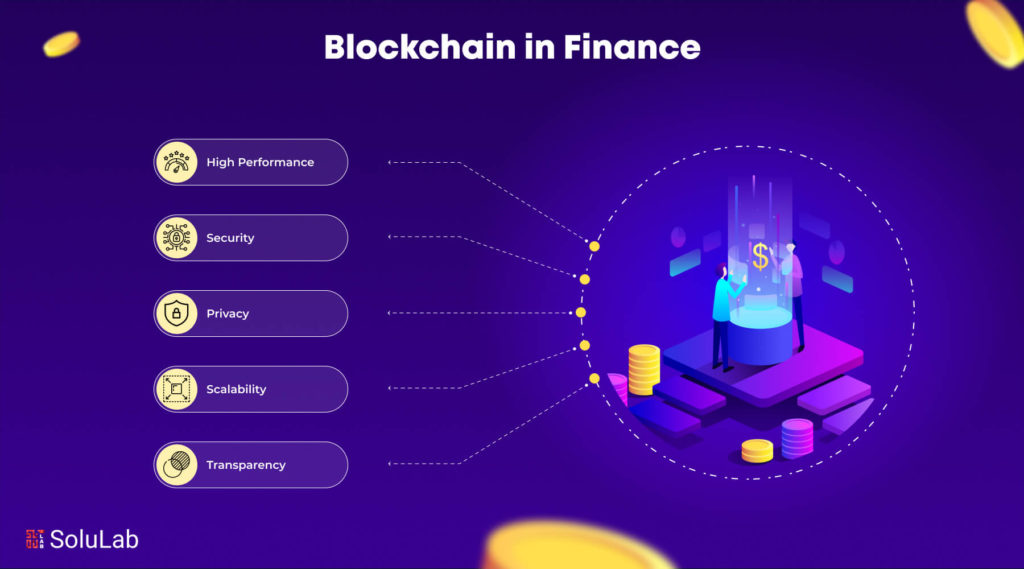
Blockchain in Finance

With a substantial increase in recent times, the cryptocurrency market has reached a valuation of trillions of dollars. A significant portion of this success can be attributed to the potential applications of the underlying blockchain technology. Given that blockchain emerged alongside digital currencies, it comes as no surprise that its applications in the financial sector hold great promise.

In essence, blockchain in financial services can be understood as a decentralized ledger that records transactions. For financial service providers, this technology has the potential to facilitate faster and more cost-effective transactions, automate contracts, and enhance security. While blockchain technology has yet to achieve widespread adoption, several financial institutions are already leveraging its capabilities.

What are the Benefits of Blockchain in Finance?

The Ethereum blockchain transforms business networks, shared operating models, and processes in banking and finance, resulting in increased openness, inclusivity, security, efficiency, reduced costs, and novel products and services. It facilitates the issuance of digital securities within shorter timeframes and at lower unit costs, enabling greater customization. This customization aligns digital financial instruments with investor demands, expanding the investor market, minimizing costs for issuers, and mitigating counterparty risk. Over the past five years, the technology’s maturation for enterprise-grade applications has showcased these advantages:

  • Security: Ethereum’s distributed, consensus-based architecture eliminates single points of failure and minimizes the need for intermediaries, resulting in a tamper-proof and hack-resistant platform. It enables the creation of secure applications that are immune to fraud and malicious third-party interference.
  • Transparency: Ethereum operates on shared standards, protocols, and processes, acting as a single, centralized source of truth for all network participants, promoting transparency and trust.
  • Trust: The transparent and immutable ledger facilitates collaboration, data management, and agreement reaching among various parties in a business network, enhancing trust and fostering efficient operations.
  • Programmability: Ethereum supports the development and execution of smart contracts, which are tamper-proof and deterministic software that automates business logic, leading to increased trust and efficiency.
  • Privacy: Ethereum offers market-leading tools for granular data privacy across all software stack layers, enabling selective data sharing in business networks. This approach significantly improves transparency, trust, and efficiency while preserving privacy and confidentiality.
  • High Performance: Ethereum’s private and hybrid networks are designed to handle hundreds of transactions per second and periodic network activity surges, ensuring consistent performance.
  • Scalability: Ethereum facilitates interoperability between private and public chains, providing each enterprise solution with the global reach, resilience, and integrity of the main net.

A new report from Jupiter Research predicts that blockchain in finance deployments will allow banks to achieve significant cost savings in cross-border settlement transactions. The report suggests that banks could save up to $27 billion by 2030, representing a reduction in costs of over 11%. Ethereum, in particular, has already proven its potential to disrupt the industry, delivering cost advantages of over 10 times compared to traditional technologies. Financial institutions recognize that distributed ledger technology has the potential to save billions of dollars for banks and major financial institutions over the next decade.

How Does The Digitization of Financial Instruments Impact Finance?

The digitization of financial instruments, including digital assets, smart contracts, and programmable money, propels the advantages of blockchain to new heights. It enables unparalleled levels of connectivity and programmability among products, services, assets, and holdings. These digitized instruments will revolutionize the operations of commercial and financial markets, establishing a paradigm shift where value is generated at every touchpoint. Digital financial instruments provide businesses with the following benefits:

1. Authenticity and Scarcity: Digitization ensures data integrity, establishing a single source of truth for asset provenance and full transaction history.

2. Programmable Capabilities: Governance, compliance, data privacy, identity (KYC/AML attributes), system incentives, and stakeholder participation features can be integrated within the digital assets.

3. Streamlined Processes: Enhanced automation increases operational efficiency, enabling real-time settlement, audit, and reporting, and reducing processing times, errors, and delays.

4. Economic Benefits: Automated and efficient processes lead to decreased infrastructure, operation, and transaction costs.

5. Market Reactivity: Digital securities offer greater customization than standardized securities and can be issued quickly, allowing issuers to create tailored financial instruments that meet investor demand.

6. New Products and Markets: Digital asset tokenization enables secure, scalable, and rapid asset transfers, fractionalized ownership of real-world assets, tokenized micro-economies, and more.

By combining these benefits, governance systems become more transparent and accountable, business models become more efficient, incentive alignment among stakeholders improves, liquidity increases, the cost of capital decreases, counterparty risk is reduced, access to a broader investor and capital base is granted, and the door is opened to all other digital financial instruments.

Blockchain in FinTech Case Study

Uses For Blockchain In The Financial Services Industry

Of the numerous applications of blockchain in finance, a few key uses include:

  • Secure and Efficient Money Transfers: Facilitate fast, secure, and low-cost cross-border and domestic money transfers.
  • Enhanced Transaction Security: Offer an immutable ledger system, ensuring the integrity and security of financial transactions.
  • Automated Smart Contracts: Enable the creation of self-executing contracts, reducing the need for intermediaries and streamlining processes.
  • Secure Customer Data Storage: Provide a decentralized and tamper-proof platform for storing sensitive customer data, enhancing privacy and security.

Let’s delve deeper into how financial institutions could integrate blockchain technology to address the aforementioned scenarios and explore the potential motivations driving their adoption.

1. Money Transfers: Blockchain financial services, beginning with Bitcoin, was created to facilitate fund transfers between two parties (point A to point B) without the need for a central authority. As blockchains have developed, they’ve enabled faster and more cost-effective transactions. A notable example is Ripple, a company that utilizes blockchain for financial services for RippleNet, a global payments network. RippleNet processes transactions within five seconds, with a minimal cost of a fraction of a cent. Financial institutions leveraging blockchain technology can offer more efficient money transfer services. International money transfers that could take hours or days using traditional methods can now be completed in seconds at a fraction of the cost.

2. Enhanced Transaction Security: Financial institutions are frequently targeted by fraudulent activities. Digital payments, in particular, pose the risk of information theft during the transaction process as they pass through payment processors and banks. blockchain in the financial industry leverages cryptographic algorithms to process and record transaction blocks. This cryptography offers a potential solution for financial companies to mitigate risks associated with transaction processing.

3. Automated Smart Contracts: The introduction of Ethereum in 2015 marked a significant milestone in blockchain in the financial industry. It was the first blockchain to incorporate smart contracts, which are self-executing contracts triggered when predefined conditions are met. Contracts play a crucial role in the financial services industry, and companies allocate substantial resources to their management. Self-executing smart contracts have the potential to streamline this process significantly. For instance, an insurance company could utilize smart contracts to expedite the claims process. Upon a client’s claim submission, it would be automatically reviewed by the codes programmed into the blockchain for financial services. If the claim is deemed valid, the smart contract will execute and initiate payment to the client.

4. Customer Data Storage: To prevent fraud and money laundering, most financial organizations must conduct identity verification processes with their clients. While this process is vital for business integrity, it can be time-consuming and costly. An alternative solution is to leverage blockchain technology with AML monitoring software to store customer data securely and transparently. When a company completes the Know-Your-Customer (KYC) process with a new client, it can add the client’s data to the financial services blockchain. Subsequently, other financial institutions can utilize this KYC data rather than repeating the process independently. This approach not only streamlines the process for financial companies but also reduces the burden on clients, eliminating the need for multiple KYC processes for different financial accounts.

How Does Blockchain Impact Different Industries of Finance

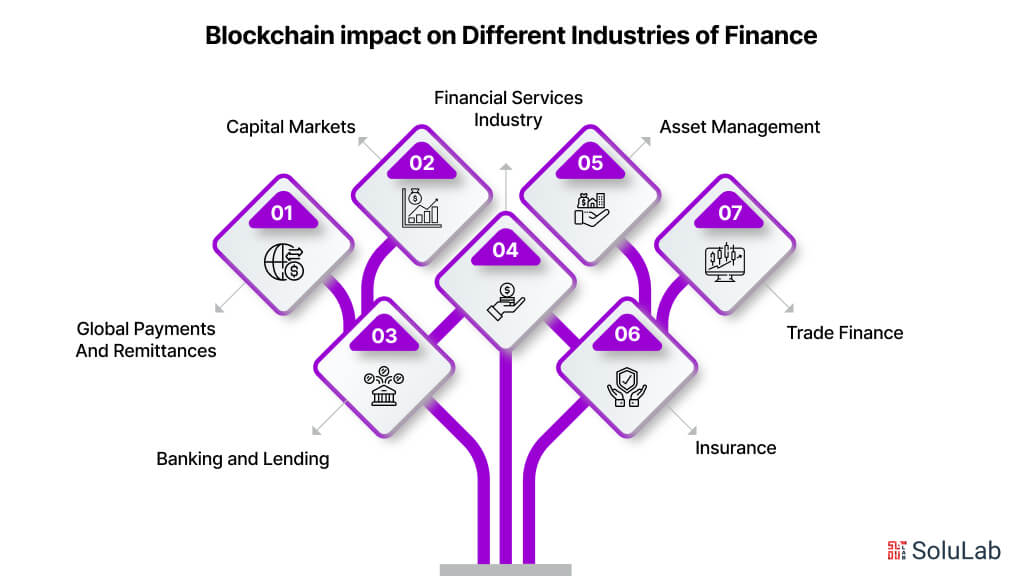
Blockchain Impact on Different Industries of Finance

Before delving into the specific industries that can benefit from blockchain technology, let’s briefly explore the foundational concepts and benefits of blockchain.

Capital Markets

Capital markets are a platform for issuers seeking capital to connect with investors who have the appropriate risk and return profiles. Raising capital can be challenging for issuers, including entrepreneurs, startups, and large organizations. Firms must navigate increasingly stringent regulations, longer time to market, interest rate volatility, and liquidity risk. Emerging markets face additional challenges, such as a lack of rigorous monitoring, comprehensive regulation, and sufficient market infrastructure for issuing, settlement, clearing, and trading.

Blockchain for financial services offers several benefits for capital market use cases, including:

  • Eliminating single points of failure through decentralized utilities.
  • Streamlining capital market activities, reducing costs, and decreasing settlement times.
  • Digitizing processes and workflows, reducing operational risks, such as fraud, human error, and overall counterparty risk.
  • Digitizing or tokenizing assets and financial instruments, making them programmable and easier to manage and trade. Tokenization also broadens market access through increased connectivity and the possibility of fractionalized ownership, resulting in increased liquidity and reduced cost of capital.

Asset Management

In the face of rising demands for enhanced liability risk management, more agile decision-making frameworks, and navigating the complexities of evolving regulations, venture capital firms, private equity firms, real estate funds, and specialty markets are turning to blockchain in finance industry for innovative solutions. Blockchain’s capabilities can effectively streamline asset and stakeholder management, offering a range of benefits:

  • Automated Fund Launch: Streamlined and efficient fund launch processes.
  • Seamless Stakeholder Engagement: Digitized assets and services facilitate seamless stakeholder engagement.
  • Digitization of Portfolio and Holdings: Wider market access, enhanced liquidity, and fractionalization of assets through digitization.
  • Customizable Privacy Settings: Built-in privacy features ensure transaction confidentiality.
  • Programmable Rights and Obligations: Voting and shareholder rights and obligations embedded in digital assets for enhanced user experience and reduced human error risks.
  • Incentive Mechanisms: Creation and enforcement of incentive mechanisms to encourage participation and deter unethical activities.
  • Improved Governance and Transparency: Enhanced governance and transparency for investors and stakeholders.
  • Efficient Cap Table Management: Streamlined and efficient management of cap tables.
  • Automated Fund Administration: Automated fund administration processes for increased efficiency.
  • Automated Transfer Agency: Automated transfer agency services for seamless asset management.

Global Payments And Remittances

In today’s world, global payments and remittances involve numerous intermediaries charging fees for their services. Sending $200 internationally can take 2 to 7 days and cost an average of 6.94%, resulting in a $48 billion reduction in remittances due to fees and intermediaries. Blockchain financial services has the potential to streamline payment and remittance processes, reducing settlement times and significantly lowering costs.

Here are some of the potential benefits of using blockchain for payments and remittances:

  • Rapid and secure domestic retail payments
  • Rapid and secure domestic wholesale and securities settlement
  • Rapid and secure cross-border payments
  • Real-time gross settlement between central banks, commercial banks, and independent banks
  • Digitized KYC/AML data and transaction history, reducing fraud risks and enabling real-time authentication
  • Automated regulatory oversight and auditing
  • Multiple forms of payment-enabled on the blockchain, including tokenized fiat, stablecoins, and cryptocurrencies

Banking and Lending

Core banking services encompass transactions, loans, mortgages, and payments, many of which depend on traditional execution processes. For example, it takes 30 to 60 days for individuals to secure a mortgage and 60 to 90 days for small and medium enterprises to obtain a business loan due to processes such as information verification, credit scoring, loan processing, and funds distribution.

Blockchain technology can revolutionize banking and lending services by streamlining processes, minimizing counterparty risk, and reducing issuance and settlement times. It offers several key benefits:

  • Authenticated documentation and KYC/AML data: Financial services blockchain enables real-time verification of financial documents, reducing operational risks and allowing for instant verification.
  • Streamlined credit prediction and credit scoring markets: By instantaneously gathering user activity and authorized data across a network, blockchain in financial services can improve credit prediction and credit scoring processes.
  • Automated syndicate formation, underwriting, and disbursement of funds: Blockchain can automate processes such as syndicate formation, underwriting, and disbursement of funds, including principal and interest payments, reducing costs, delays, and friction associated with syndication.
  • Facilitated collateralization of assets: The digitization of assets through blockchain enables real-time asset management, tracking, and enforcement of regulatory controls, facilitating asset collateralization.

Trade Finance

Trade finance encompasses the infrastructure, processes, and funding that facilitate international trade supply chains. However, the industry heavily relies on paper-based processes, which are prone to security vulnerabilities and lengthy transaction times, often taking 90-120 days to process letters of credit, verify documents, and establish trust among stakeholders. Blockchain technology has the potential to upgrade trade finance by digitizing the entire trade finance lifecycle, enhancing security, and improving efficiency. It can enable increased transparency in governance, reduced processing times, lower capital requirements, and mitigate risks associated with fraud, human error, and overall counterparty risk.

Specifically, blockchain can facilitate the following advancements in trade finance:

  • Digitized and authenticated documentation, such as letters of credit and bills of lading, as well as KYC/AML data, with real-time verification of financial documents.
  • Asset digitization to expedite settlement times.
  • Creation of more efficient financing structures through shared secure networks and digitized processes.
  • Establishment of a consistent financing vehicle throughout the entire trade lifecycle, eliminating the traditional practice of negotiating independent finance vehicles for each stage of the trade.

Insurance

In property and casualty insurance, fraud is a prevalent concern, and claim assessments often take an extended duration. Blockchain technology offers a solution by securely streamlining data verification, claim processing, and disbursement, resulting in significantly reduced processing times. Here are the key benefits:

  • Secure Data Verification: Authentic documentation and KYC/AML data are stored on the blockchain, reducing the risk of fraud and facilitating efficient claim assessments.
  • Automated Claims Processing: Smart contracts automate claims processing, eliminating manual intervention and ensuring accuracy and efficiency.
  • Parameterized Contracts: Automated parameterized contracts are used to trigger payments upon the occurrence of specific risks, ensuring prompt and seamless claim settlements.
  • Automated Disbursement: Insurance payments are automatically disbursed through the blockchain in financial services, ensuring timely and secure transfer of funds to policyholders.
  • Tokenized Reinsurance Markets: Tokenized reinsurance markets facilitate policy reinsurance in open marketplaces, moving away from traditional broker-based and relationship-driven systems.

Financial Services Industry

Blockchain technology has the potential to revolutionize the financial services industry by offering several compelling advantages. Here are the main benefits of blockchain in finance:

  • Efficient Payment Processing: Blockchain enables fast and cost-effective payment processing, with transactions settling in seconds and fees as low as $0.01. This can result in significant cost savings for both financial institutions and their customers.
  • Reduced Costs in International Transactions: Blockchain deployments are projected to save banks a substantial amount of money on cross-border transactions, potentially reaching $27 billion by the end of 2030.
  • Secure Recordkeeping and Reporting: Blockchain provides a distributed and tamper-proof record of transactions, allowing financial institutions to use it for recordkeeping and regulatory reporting, ensuring compliance and transparency.
  • Accelerated Financial Services: The rapid settlement capabilities of blockchain can enhance various financial services. Lenders can fund loans more swiftly, vendors can receive payments sooner, and stock exchanges can settle securities transactions almost instantaneously.
  • Improved Risk Management: The immutability of blockchain records enables more effective risk management in finance. Financial institutions can use blockchain to accurately track and monitor transactions, reducing the risk of fraud and errors.

Challenges Of Implementing Blockchain For Financial Companies

Implementing blockchain in the financial industry presents several challenges:

  • Widespread Adoption Requirement: Blockchains need widespread adoption for optimal performance. This is particularly significant in financial services, where numerous companies collaborate and require a shared transaction handling method. For instance, to transfer funds using blockchain, all participating banks must have adopted the technology.
  • Lack of Interoperability: Different blockchains often lack interoperability, hindering communication between them. To address this, several blockchain networks focused on interoperability solutions, such as Polkadot, are under development.
  • High Cost and Time Investment: Switching to blockchain technology can be expensive and time-consuming, especially due to the scarcity of skilled blockchain developers. Smaller finance companies in particular may hesitate to commit to overhauling existing systems.
  • Immutable Data: While the immutability of blockchain data is an advantage, it also poses challenges for financial companies that frequently need to modify stored data. Implementing blockchain would require these companies to adjust their methodologies.
  • Regulatory Uncertainty: Given the nascent and rapidly evolving nature of blockchain technology, regulators have yet to catch up. Governments are likely to establish policies that impact blockchain and the companies that use it.

Blockchain Solutions

Conclusion

In conclusion, the transformative potential of blockchain in finance is immense. By leveraging blockchain for financial services, the industry can achieve unparalleled levels of transparency, security, and efficiency. The adoption of blockchain in financial services is set to revolutionize traditional banking, insurance, and investment sectors, paving the way for blockchain financial services to become a cornerstone of the modern financial ecosystem. Financial services blockchain solutions offer significant benefits, including reduced fraud, lower costs, and faster transactions. As the blockchain in finance industry continues to evolve, it is clear that blockchain in the financial industry will play a pivotal role in shaping its future.

Companies like SoluLab are at the forefront of this transformation, providing cutting-edge solutions for blockchain and financial services. Their expertise in blockchain technology in finance ensures that businesses can seamlessly integrate blockchain into their operations, enhancing their capabilities and competitiveness. As we look to the future, the collaboration between finance and blockchain will continue to grow, driving innovation and creating new opportunities in the blockchain finance industry. The synergy between blockchain fintech and traditional finance promises a dynamic and resilient financial landscape, underscoring the critical role of blockchain finance in driving progress and prosperity.

FAQs

1. What is the role of blockchain in finance?

Blockchain in finance provides a secure, transparent, and efficient method for recording and verifying transactions, reducing fraud and operational costs.

2. How does blockchain for financial services improve security?

Blockchain for financial services enhances security by using cryptographic methods to protect transaction data, making it tamper-proof and resistant to unauthorized access.

3. What are the benefits of using blockchain in financial services?

The benefits of using blockchain in financial services include faster transaction times, reduced costs, improved transparency, and enhanced security.

4. How are blockchain financial services transforming traditional banking?

Blockchain financial services are transforming traditional banking by streamlining processes, reducing the need for intermediaries, and increasing transaction speed and accuracy.

5. What impact does blockchain technology have on the financial services blockchain?

Blockchain technology significantly impacts the financial services blockchain by providing a decentralized ledger that ensures transparency and security, thereby increasing trust in financial transactions.

6. How is blockchain in the finance industry driving innovation?

Blockchain in the finance industry drives innovation by enabling new financial products and services, such as decentralized finance (DeFi), smart contracts, and real-time cross-border payments.

7. Why is blockchain fintech considered a game-changer for the finance sector?

Blockchain fintech is considered a game-changer for the finance sector because it offers innovative solutions that enhance efficiency, reduce costs, and open up new avenues for financial inclusion.

Applications And Use Cases of Blockchain in 2026

Blockchain Use Cases

Blockchain has transitioned from its origins as a ledger for supporting peer-to-peer cash systems to a transformative force in the centralized ecosystem. Its immutable, decentralized, secure, and transparent features have propelled it into mainstream technology, driving innovation across various sectors. Businesses are increasingly recognizing the benefits of integrating blockchain, which enhances speed, efficiency, and fairness within specific industries.

According to Spendmenot, a significant portion of the world’s largest public companies, approximately 81%, acknowledge their utilization of blockchain technology. Moreover, around 80% of global executives perceive blockchain as “very important.” Projections suggest that global spending on blockchain solutions will surge to $19 billion by 2024, underlining the growing significance of blockchain in business operations.

In this article, we will look into use cases for blockchain across industries and explore how it addresses existing limitations and challenges.

Top Blockchain Technology Use Cases in 2026

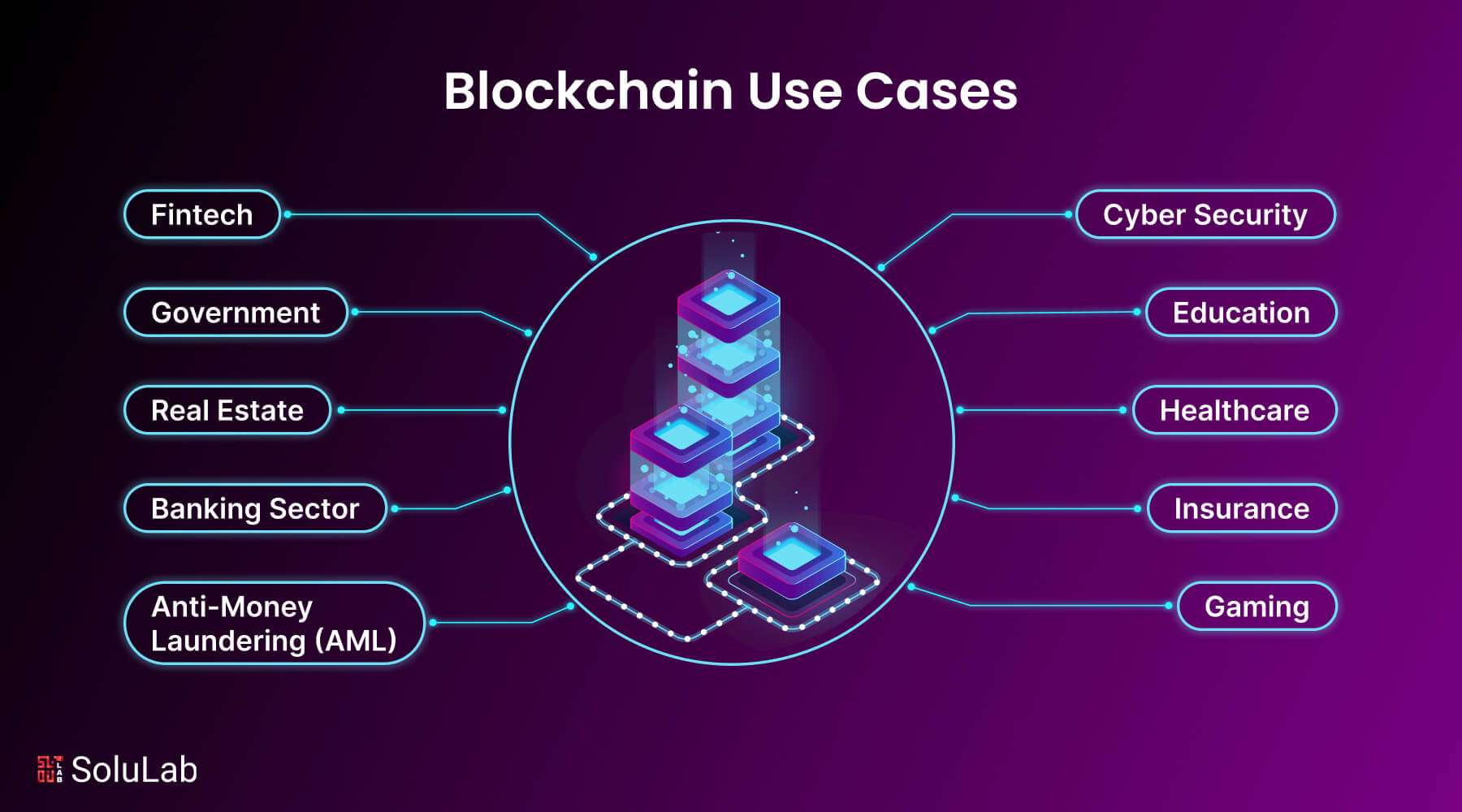
The top blockchain use cases by industry include the following:

  • Fintech
  • Digital Identity
  • Government
  • Supply Chain
  • Real Estate
  • Banking Sector
  • Asset tokenization
  • Blockchain Advertising
  • Anti-Money Laundering (AML)
  • Cyber Security
  • Education
  • Healthcare
  • Patent Ecosystem
  • Insurance
  • Gaming

So, without any further ado, let’s start exploring the use cases and applications of blockchain technology.

1. Fintech

Since they have been using blockchain technology for more than ten years, the finance industry is an early user of the technology. There are a number of blockchain use cases in finance. Major industrial problems including unethical conduct, long settlement and auditing times, high prices, security risks, and irregular compliance are all resolved by blockchain technology. Thus, it can offer improved audits, instantaneous settlements, risk control, security, and transparency at a lower cost. Through the use of smart contracts, blockchain has also brought Decentralized finance(DeFi) development to the banking sector, eliminating any third-party influence in financial services.

Here are some of the blockchain finance use cases:

  • Cross Border Payments
  • Credit Score
  • Stock Exchange
  • Lending Platforms
  • Financial Record Keeping
  • Invoice Management and Billing Solution
  • Fund Investment

Related: How Blockchain Is Revolutionizing the Fintech Industry?

2. Digital Identity

Major drawbacks with the existing centralized Web 2.0 include identity theft, giving personal information to unaffiliated parties, confusion between identities and passwords, and more. It is unable to provide users with a self-sovereign identity (SSI). On the other hand, blockchain can offer consumers complete control over their digital identities and the data contained in them, opening the door for SSI.

Additionally, self-sovereign identification can help with interoperability—particularly in the metaverse—and allow one to maintain their identity through avatars across various metaverse initiatives. One solution that would enable the most secure identification of the general public would also be very beneficial to them.

The answer lies in a digital identity management system built on the blockchain. Big businesses see this need as well and are attempting to create apps that will let their employees and the public create digital IDs. Even while it will take time to develop a global identity, the process has already started.

3. Government 

Blockchain technology presents numerous use cases within the government sector, leveraging its core features such as decentralization, transparency, and immutability to enhance various processes. Here are some notable blockchain government use cases:

  • Secure Identity Management: Blockchain can revolutionize identity management systems by providing a secure and tamper-proof database for storing citizen identities. Each citizen could have a unique digital identity stored on the blockchain, ensuring privacy and reducing the risk of identity theft or fraud.
  • Transparent Voting Systems: Blockchain-based voting systems offer a solution to enhance the transparency and integrity of elections. Each vote is recorded on the blockchain, ensuring that it cannot be altered or manipulated. This helps to prevent voter fraud and ensures the accuracy of election results.
  • Efficient Public Records Management: Governments can use blockchain to manage public records such as land titles, birth certificates, and business registrations more efficiently. By storing these records on a blockchain, they become easily accessible, tamper-proof, and can be updated in real time, reducing administrative overhead and the risk of data loss.
  • Tax Compliance and Fraud Prevention: Blockchain can streamline tax collection processes and prevent tax evasion by providing transparent and traceable transactions. Smart contracts can automate tax calculations and payments, reducing errors and ensuring compliance with tax regulations.
  • Secure Data Sharing: Governments often need to share sensitive information across departments or with other government agencies. Blockchain-based solutions enable secure and encrypted data sharing while maintaining data integrity and confidentiality.

4. Supply Chain

The fundamental characteristics of blockchain technology, such as its immutability, transparency, and decentralization, make it an ideal fit for the modern supply chain. This supply chain is prone to errors because of a number of factors, such as high costs, corruption, and rapid changes in the market.

Blockchain technology has the potential to replace sluggish, manual supply chain processes that mostly rely on paperwork with quick, end-to-end digital processes that provide visibility and transparency. Blockchain makes it possible for supply chain activities to be tracked and traced, as well as for greater inventory utilization, faster delivery, higher quality, and less income loss from items sold on the black or grey market. Consequently, the use case of blockchain technology may be applied to the following supply chain areas:

  • Supply chain finance
  • Reducing counterfeit products
  • Supplier payments
  • Supply chain logistics
  • Food safety
  • Diamond tracking
  • Oil supply chain

CTA1

5. Real Estate

Blockchain real estate use cases offer a transformative solution to the complex and time-consuming process of purchasing or selling real estate. Currently, the traditional method involves extensive documentation, verification, and ownership transfer, often exacerbated when involving loans, leading to increased complexity and susceptibility to fraudulent activities.

However, blockchain technology provides a streamlined approach to real estate transactions, significantly reducing the time and effort involved. Through the tokenization of physical assets, sellers can leverage smart contracts to facilitate the sale of real estate properties.

By embedding legal procedures within smart contracts, transactions can be executed automatically once predefined conditions are met. For example, upon payment from the buyer, ownership of the property is swiftly transferred, eliminating the need for lengthy paperwork and manual verification processes.

Furthermore, blockchain real estate solutions ensure security, transparency, and immutability, mitigating the risk of fraud and enhancing trust among parties involved in the transaction. This innovative application of blockchain technology revolutionizes the real estate industry, offering efficiency, reliability, and convenience to both buyers and sellers.

6. Banking Sector

Blockchain has the potential to revolutionize the financial industry by addressing key challenges such as inefficient record-keeping, security vulnerabilities, regulatory inconsistencies, and high transaction costs and times. In banking, blockchain technology operates on a decentralized network where each participant serves as a node, eliminating the need for intermediaries.

One of the notable advantages of blockchain in banking is the execution of smart contracts, which enable swift transactions at lower costs. Additionally, blockchain ensures secure, transparent, and private data management, with technologies like zero-knowledge proof authenticating financial information without revealing sensitive details.

Blockchain’s applications in banking encompass various areas such as clearance and settlement, lending and borrowing, trade finance, accounting, bookkeeping, and generating credit reports. These blockchain banking use cases highlight how blockchain enhances efficiency, reliability, and security in banking operations.

7. Asset Tokenization

Blockchain technology empowers Asset Tokenization development by enabling the transformation of real-world assets, digital assets, and corporate shares into secure, tradable tokens. Additionally, users may convert tangible assets into digital assets, which they can then use as fungible and non-fungible tokens (NFTs) for representing them on the blockchain. From traditional asset classes like bonds, real estate, venture capital funds, and commodities to unique asset classes like artwork, sports teams, and racehorses, almost any kind of asset may be tokenized.

Because blockchain is an unchangeable public ledger, it guarantees that the ownership of the tokens you have acquired cannot be removed. The following advantages come with tokenizing assets:

  • Removal of Third Parties
  • Absence of Borders
  • Transparency
  • Fast and Less Expensive Transactions
  • Availability
  • Enhanced Liquidity
  • Broader Investor Base
  • Fractional Ownership

8. Blockchain Advertising

The advertising business is currently dealing with issues such as costly middlemen, a dearth of accountability and transparency, inefficiencies, ad fraud, and more.

With Blockchain-based smart contracts, it is possible to design efficient advertising funnels with several levels of verification that offer better targeting and return on investment. Furthermore, Blockchain networks can improve overall security for the advertising industry as they necessitate majority consent from all of its nodes, or members.

In the advertising sector, blockchain offers the following:

  • Consumer Data Privacy
  • Absence of Intermediaries
  • Reduction in Ad Fraud
  • Improved Ad Exchanges
  • Decentralized Network
  • Consumer Trust

9. Anti-Money Laundering (AML)

As globalization and technology progress enhance company operations, new technologies have also been leveraged by digital financial crimes, including money laundering. Based on in-depth analysis, Zippia estimates that the United States launders about $300 billion a year.

The use of blockchain in AML can assist mitigate money laundering risks and streamline the Know-Your-Customer procedure. The whole history of every transaction can be tracked, verified, and recorded in a public blockchain ledger that cannot be changed or erased. Rather than overseeing the points of entry and departure, it helps with system analysis in general.

By storing data and information concerning KYC and AML on a decentralized ledger, developing a blockchain-enabled AML/KYC platform contributes to the simplification of AML/KYC procedures. Since the data in a blockchain ledger is constantly visible to all users of the network, AML/KYC data management on the blockchain can help financial companies manage their data more effectively.

10. Cyber Security

Decentralized storage systems and blockchain technology can improve cybersecurity. Predators won’t have a single point of entry since data is kept decentralized and the danger is distributed across several nodes. Many businesses rely heavily on centralized systems, which are not the greatest for storing data—at least not in terms of security.

Blockchain can improve Domain Name System (DNS) security and perhaps reduce Distributed Denial of Service (DD0S) assaults due to its distributed and decentralized architecture. Other elements of the system, including communications, can also benefit from increased security. Additionally, immutability stops fraud and hackers from stealing data. Therefore, blockchain has the following cybersecurity use cases:

  • Safe private messaging
  • Secure DNS and DDoS protection
  • Internet of Things security
  • Decreased risk to human safety as a result of cyberattacks
  • Source of software validation

Related : Blockchain Technology in Cybersecurity

11. Education

Over time, there has been a significant shift in the educational system. Aspirants may currently fake a degree, diploma, or other educational qualification from any university they want. Even phony degrees are produced and used to pretend to be graduates of particular universities. Such occurrences make it difficult for hiring managers or employers from any business to verify the accuracy of a candidate’s educational background.

The use of blockchain technology in education can stop fake diplomas by keeping all student data in a digital ledger with tamper-proof features. Additionally, in order to establish digital certificates and eliminate paper in the system, educational certifications can be created and maintained on the blockchain. Only a URL must be provided by universities or colleges to verify the educational credentials. Other examples of applications of blockchain in education are:

  • Keeping academic records secure in the blockchain
  • Preserving records of information on grants, teacher payments, and other funds that improve the legitimacy of credentials
  • Economical storage of big files
  • Platforms for automated learning

12. Healthcare

Patients sometimes find it difficult to keep their records organized and undamaged, and this problem is exacerbated when they see several doctors. Health information exchange (HIE), the digital mobilization of health care data, can assist in tracking medical records, however, it is vulnerable to security and privacy problems.

On the other hand, patient data may be safely stored using blockchain technology. They are accessible at any time and may be updated each time a patient sees their physician. A Hipaajournal article states that between 2009 and 2021, the Health and Human Services (HHS) Office for Civil Rights received reports on 4,419 healthcare security breaches involving 500 or more records. Similarly, blockchain technology may be used to track pharmaceuticals, making it possible to eliminate counterfeit drugs from the medical supply chain. Blockchain technology may be applied to healthcare to enhance interaction between providers and patients and to analyze genomes, or whole sets of an organism’s DNA, comprising its genes.

Related: Blockchain in Healthcare

13. Patent Ecosystem

Due to incomplete asset ownership records or difficulty selecting the best patent for a company, the old patent system has many drawbacks. It’s also challenging to maintain the ownership, transparency, and privacy of digital material. For example, it’s common practice to utilize a music, film, or other digital asset that has been put online without the owner’s consent.

This problem can be largely resolved by using blockchain in the payment industry. On the blockchain, patents are exclusive rights bestowed by a governing authority, be it an international organization or a sovereign state. The exclusive right to reveal the creation’s details to the wider public is given to the author. Blockchain patents, which provide a commercial value of confidence, have grown in importance since the creation of Bitcoin. Rather than relying on a third party for its operations, it stores, broadcasts, verifies, and exchanges data across a dispersed network. This enhances prolonged IP safety, progressive protection, and secure collaboration. It provides value and trust at a reasonable price.
CTA2

14. Insurance 

Currently, obtaining insurance involves difficult procedures when submitting a claim, requiring a substantial quantity of paperwork and ongoing communication with your insurance agent.

Because the blockchain can securely store data that has to be validated in order to process a claim, it helps expedite the claims settlement process. After having been uploaded to the blockchain network, the claims are subsequently sent to the relevant parties. The parties issue the insurance after examining the data. Additionally, smart contracts can improve the automation of the claims procedure, making it easier for consumers to file and receive approved claims. Blockchain has the potential to drastically change insurance procedures by doing away with paper contracts, speeding up turnaround times, and disclosing fictitious claims.

15. Gaming

There are several promising use cases for blockchain in the gaming industry, revolutionizing how games are developed, distributed, and monetized. One significant application lies in digital asset ownership and interoperability. Through blockchain, players gain true ownership of in-game assets, such as skins, weapons, or characters, which can be securely stored and traded on decentralized marketplaces. This fosters a more transparent and equitable ecosystem where players have greater control over their virtual possessions. Additionally, blockchain enables cross-game compatibility, allowing players to use their assets across multiple gaming platforms seamlessly. This interoperability enhances user experience and encourages player engagement, as gamers can leverage their investments across various titles.

Another compelling use case of blockchain in gaming is the implementation of provably fair systems for in-game economies and rewards. By utilizing blockchain-based smart contracts, game developers can ensure transparent and verifiable distribution of rewards, loot, and digital currencies within the game environment. This not only enhances trust between players and developers but also mitigates issues like cheating and fraud. Moreover, blockchain technology enables the creation of decentralized autonomous organizations (DAOs) for community governance, empowering players to participate in decision-making processes regarding game development, updates, and monetization strategies. Overall, blockchain’s integration into gaming holds the potential to foster a more inclusive, secure, and player-centric gaming experience.

Related: Top 25 Blockchain-Based Gaming Companies

The Bottom Line

It is astonishing to observe how blockchain is revolutionizing a number of sectors and how use cases for blockchain keep evolving in response to shifting trends and time. Blockchain is essential to supply chains, healthcare, real estate, and financial services. Blockchain technology is undoubtedly going to be the face of the future, given the rapid expansion of use cases by sector and the widespread acceptance of blockchain across a range of industries.

SoluLab, a leading blockchain consulting company, is spearheading the integration of blockchain across various industries, revolutionizing traditional processes and enhancing efficiency, transparency, and security. With a team of seasoned blockchain experts, SoluLab is empowering businesses to leverage the full potential of distributed ledger technology.

From finance to healthcare, supply chain to gaming, SoluLab’s innovative blockchain solutions are reshaping industries worldwide. Whether it’s developing decentralized finance (DeFi) platforms, implementing transparent supply chain tracking systems, or creating secure digital identities in healthcare, SoluLab’s bespoke blockchain solutions cater to diverse business needs.

Contact us today to explore how SoluLab can tailor innovative blockchain solutions to drive your business forward. Let’s innovate together for a smarter, more connected future.

FAQs

1. What are the main applications of blockchain technology?

Blockchain technology finds applications across various industries, including finance, supply chain management, healthcare, gaming, and more. Its primary applications include decentralized finance (DeFi), supply chain transparency, digital identity management, smart contracts, and tokenization of assets.

2. How does blockchain enhance supply chain management?

Blockchain ensures transparency and traceability in supply chains by recording every transaction in a tamper-proof and immutable ledger. This enables stakeholders to track the movement of goods from the point of origin to the final destination, thereby reducing fraud, ensuring product authenticity, and optimizing processes like inventory management and logistics.

3. What role does blockchain play in the financial sector?

In the financial sector, blockchain technology facilitates faster and more secure transactions, eliminates intermediaries, reduces costs, and enables access to financial services for the unbanked population through decentralized finance (DeFi) platforms. Additionally, blockchain-based smart contracts automate contract execution, streamlining processes like loan approvals, trade settlements, and insurance claims.

4. How can blockchain benefit the healthcare industry?

Blockchain enhances data security, interoperability, and patient privacy in the healthcare sector by enabling secure storage and sharing of medical records and facilitating the development of decentralized healthcare applications. It also enables pharmaceutical supply chain tracking to combat counterfeit drugs and ensures transparency in clinical trials by recording trial data immutably.

5. What opportunities does blockchain present in the gaming industry?

Blockchain introduces new monetization models, enhances digital asset ownership, and enables provably fair gameplay in the gaming industry. Through blockchain, players gain true ownership of in-game assets, which can be traded on decentralized marketplaces. Smart contracts ensure the transparent distribution of rewards, while blockchain-based voting mechanisms empower players in community governance.

How blockchain technology is going to shape our future

Amor Sexton, senior innovation manager at Citi, walked us through the incredible potential of blockchain technology at Inspirefest 2017.

While excitement about the potential of blockchain technology has been brewing in the technology sector for some time now, the hype recently penetrated the mainstream as bitcoin furor has reached fever pitch.

At Inspirefest 2017, Amor Sexton, senior innovation manager at Citi, provided a clear and concise explanation of just what blockchain is for those of us scratching our heads at the term’s mere mention.

Sexton explained that, just like the shipping container, blockchain has the potential to provide a more secure and efficient way to transfer one of the most valuable modern commodities: data.

Though there are more than 100 different types of blockchain in existence, they all share one common facet: the use of a “shared digital ledger”.

This provides “a single source of data that all of the participants in the network can see, can contribute to and can trust that it is accurate”.

Though Sexton was quick to highlight that blockchain isn’t a ‘cure-all’, she explained that its ability to do away with a middleman in a transaction has the potential to reduce costs, create new business models and markets, and increase efficiencies.

Words by Eva Short

Admin Note: The post has been imported from: https://www.siliconrepublic.com/video/blockchain-amor-sexton

The Future Is Here: The Potential of Blockchain Technology

For all the investor hype around Bitcoin, which became an international sensation in the second half of 2017, the cryptocurrency still lacks the fundamental attributes of money and is behaving more like a speculative commodity. Ultimately, Bitcoin’s star could fade as rival cryptocurrencies overcome its inherent technical flaws and governments continue to crack-down on its use.

Blockchain technology, which is beginning to gain significant attention, possesses far more future potential than Bitcoin. There is just one snag, which has heretofore been largely ignored: energy use.

Bitcoin Basics

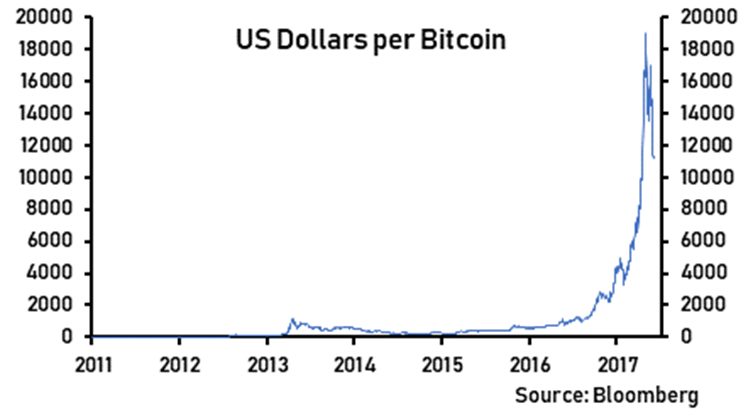
Created in 2009, Bitcoin is the first cryptocurrency released. For much of its existence, it was consigned to the periphery of finance, failing to generate much interest. However, in the latter half of 2017, Bitcoin mania descended upon investors who began piling into the cryptocurrency, with prices rising exponentially. To many, it was reminiscent of Dutch ‘tulip mania’ from the 1600s.

Bitcoin, unlike typical notes and coins, is not backed by a single central bank.

It was created by an unidentified developer who goes by the name of Satoshi Nakamoto; lending a certain mystique to the cryptocurrency.

Its developer purportedly developed Bitcoin as an alternative to national currencies because he was sceptical of the vast QE programmes national central banks undertook following the 2008 financial crisis.

Bitcoin is not alone as a cryptocurrency, although it garners most of the attention and has the largest market capitalisation. There are over 1,300 different types of cryptocurrencies and new ones spring up as creators try to overcome the technical challenges faced by rivals.

bitcoin-price

Bitcoin Basics

Bitcoin uses “blockchain technology.” This phrase has become synonymous with Bitcoin – in reality, most cryptocurrencies use blockchain technology. The blockchain, as it is commonly known, is a continuously updated, distributed digital ledger. It permanently records all transactions and, by design, it is practically unalterable.

Most importantly, it provides both parties with a transaction with the assurance provided by an unbiased third party, without the expense of intermediation. The word ‘block’ comes from the fact that transactions are bundled together to form a new ‘block’. Meanwhile, when it is created, it is combined like a ‘chain’ to all previous blocks.

The blockchain ledger replicates all historical transactions across millions of computers. This prevents a single user from tampering with history, as all records across the computers have to be in accordance with one another. Information can only be added to the blockchain, not altered. Furthermore, since transactions take place on the blockchain – which is public – a transaction of an item can be verified as unique. Finally, because the transaction does not require a third party (such as a bank) to adjudicate it, blockchain technology is decentralised.

Bitcoin transactions are ‘verified’ through a global computer network that performs the computational heavy lifting required to facilitate secure transactions. Verification takes place through the process of cryptography – mathematical code. Computers are required to provide a unique solution to a given challenge. This verification solves the double-spending problem. It prevents a user copying coins so as to appear to pay another user. Because this verification process is extremely energy-intensive, the bitcoin ‘miner,’ as they are known, who successfully solves the problem is rewarded with bitcoins for their efforts.

Moreover, computers are competing with one other to solve the challenge. There is an upper limit of 21

canada drugs no prescription, The Canadian Drugstore generic zovirax tablets canada zovirax 400mg Discount Online Pharmacy, purchase zovirax oral Pharmacy Websites

million bitcoins that can be mined, and to date, 16.75 million have been mined. Therefore, individuals who verify the transactions will no longer receive a reward as the upper supply limit is reached.

The expectation is that once the supply of bitcoins has been exhausted, transaction fees will be introduced in order to maintain an incentive for ‘miners’ to continue to verify transactions. One must remember that the process of verifying transactions is extremely energy intensive and ‘miners’ therefore require a reward for their efforts. However, the introduction of transaction fees is likely to discourage users, as the transaction costs fall on them. This provides an opportunity for rival coins with a superior technological concept that have virtually zero transaction costs.

<h2″>The Problem of Power

The process of cryptography is extremely energy-intensive. Racks of powerful computer graphics cards are required to process advanced calculations to verify transactions. Some estimate the annual total power consumption from the ‘mining’ industry to be greater than that of Ireland. What is more, most of the Bitcoin activity takes place in China, which uses mostly coal-fired plants. In short, Bitcoin transactions are ‘killing the planet’.

So far, a crisis has been averted as ‘mining’ equipment has become vastly more efficient since 2009. But it is unlikely that such gains are repeatable indefinitely. There is also the question of what happens if cryptocurrencies eventually become widely adopted. While there is active research in the field, a breakthrough has yet to materialise. Energy consumption, therefore, remains a significant obstacle to worldwide adoption.

The Potential of Blockchain Technology

If Bitcoin, through the use of the blockchain, is designed to retire burdensome middlemen, what other bureaucratic authorities can blockchain technology help render irrelevant?

There is a lot of potential behind the use of smart contracts. Smart contracts are agreements that can be understood and executed using machines. This renders a third-party arbitrator irrelevant. Moreover, the smart contract can also perform due diligence duties. An example of a smart contract is a car lease programmed to prevent an individual from driving their car if they are seriously behind on their payments.

It is worth stressing that these concepts are in their infancy and are a topic of discussion rather than an inevitable outcome. In the case of the smart car contract, there is the issue of an individual, behind on their payments, being remotely blocked from driving their car in the case of an emergency. This would be unacceptable. Such inflexibility leaves complex problems that will require careful thought in order to have smart contracts that factor in the human quality of flexibility.

In a more positive example, blockchain technology could be used to create ‘coloured’ coins whereby certain properties are assigned to a currency. One such property would be the possibility to view previous transactions to see generally where the coin has been. This could be used to spot money from criminals or from sanctioned countries. Therefore, it would be possible for a user to block transactions from criminal individuals.

Finally, blockchain could prove to be a controversial technology, as all information is stored forever. This would appear to violate the right to be forgotten. In the end, a solution will need to be devised that affords sufficient privacy to users.

Conclusion

Blockchain technology could be another case where an adaptation of an original invention goes on to eclipse its original function. For example, the internet was born out of a US defence project (to provide resilient communications in the event of a cold war) that went on to revolutionise twenty-first-century business and communication.

Today, the internet’s spectacular rise leaves people wondering how they ever lived without it. Could blockchain technology go on to become another core utility, long after Bitcoin becomes obsolete? A lot still hinges on the ability to store and process vast quantities of data without expending unacceptable amounts of fossil fuel energy. At this stage, it is too soon to tell.

https://themarketmogul.com/blockchain-technology-potential/

WhatsApp Telegram