Talk to an Expert
Get in Touch

Time to Reimagine Financial Sector with Four Pillars – AI, ML, IoT, and Blockchain

Table of Contents

[fusion_builder_container hundred_percent="no" equal_height_columns="no" menu_anchor="" hide_on_mobile="small-visibility,medium-visibility,large-visibility" class="" id="" background_color="" background_image="" background_position="center center" background_repeat="no-repeat" fade="no" background_parallax="none" parallax_speed="0.3" video_mp4="" video_webm="" video_ogv="" video_url="" video_aspect_ratio="16:9" video_loop="yes" video_mute="yes" overlay_color="" video_preview_image="" border_size="" border_color="" border_style="solid" padding_top="" padding_bottom="" padding_left="" padding_right=""][fusion_builder_row][fusion_builder_column type="1_1" layout="1_1" background_position="left top" background_color="" border_size="" border_color="" border_style="solid" border_position="all" spacing="yes" background_image="" background_repeat="no-repeat" padding_top="" padding_right="" padding_bottom="" padding_left="" margin_top="0px" margin_bottom="0px" class="" id="" animation_type="" animation_speed="0.3" animation_direction="left" hide_on_mobile="small-visibility,medium-visibility,large-visibility" center_content="no" last="no" min_height="" hover_type="none" link=""][fusion_text] Today, complex financial operations have become easier with smart technology. Financial industry is one of the industries that has been majorly impacted by the influence and implementation of technology. However, technologies have been changing the way financial sectors have been operating and delivering financial services to their customers. Combination of technology and financial sector sounds a little vague without getting deeper into details, doesn’t it? So, how exactly smart technologies such as artificial intelligence (AI), internet of things (IoT), blockchain and machine learning (ML) can benefit financial sector? This article discusses about how AI, IoT blockchain in financial sector have been providing a strong pillar for finance along with machine learning too. Finance sector has always been demanding more from the company, more from the government, more from the customer. Why is this? This is because of the inefficiency or challenges faced by the finance sector to balance the demand and supply or maintain a smooth cash flow. AI IoT Blockchain ML in Financial sectors Connecting AI and IoT for financial services provide enhanced interoperability between all financial operations and provide a better sharing of data and information.


According to Mckinsey, with blockchain based platforms and IoT, the financial sector is estimated to make an economic revenue generation of USD 11.1 trillion by 2025.

AI, IoT, Blockchain in Financial sector, along with ML 

Machine Learning

Machine learning is a scientific approach of complex algorithms that use statistical models to improve the performance of a particular task. Using machine learning and predictive analysis, financial sectors can operate efficiently. With predictive analytics, financial companies can make a useful report of the outcomes of the potential future. This prediction is arrived with the help of the current data influenced by current operations and transactions. ML in finance The current business performance is also an important factor used to predict the future outcomes of a financial operations or transaction. Not every outcome is easy to predict though. This is not a fortune teller. Machine learning uses mathematical models, statistical models that gather current data and plots a pattern between the inter-related data. From the inter-related data, the models built provide potential outcomes for the specific operation for which the prediction model was built. This outcome is used to make better, more efficient and smarter decisions in terms of saving money, making smarter investments, identifying investment mistakes, accomplishing a balanced demand and supply.

Artificial Intelligence

One of the major issues faced in the financial sector is financial crimes such as money laundering, illegal transfers, fake claims, etc. With the help of artificial intelligence, fraud detection in financial sectors can be enhanced. Detection of fraudulent activities and mal-practices can be identified easily. This is possible by feeding red alert data into the artificial intelligence supercomputer. AI in finance For example, say two individuals are trading inside information via SMS. This critical information is fed into the supercomputer in such a way that the super computer constantly keeps searching all phone communications and text messages with the location boundaries set within the AI system. Further, when the supercomputer comes across any conversation or SMS that contains tags similar to the critical information or red alert data fed in the super computer, a red alert message or notification is sent to the concerned person. Then, the concerned personnel can take appropriate necessary action even before the malpractice could occur. This puts a full stop to many financial mal-practices.

Internet of Things

Internet of Things connects different smart devices together. This in turn increases the operating efficiency by enhancing the interoperability between devices. Now, what would happen if the internet of things is built to go beyond a device and enhance the interoperability between the two departments. Imagine, what if the internet of things is built to go beyond departments and increase the interoperability between different financial institutions across countries. Wouldn’t that be an apple for the eye? IoT in Finance Yes, with IoT, it is possible to interconnect devices  across departments to efficiently share data and information. Also, with the help of internet of things, financial institutions can verify data in real-time. One can track transactions of payments made and payments to be received in real-time. For example, now put all the above-mentioned features of internet of things in online banking. It would allow the user as well as the financial institution to track payments in real-time. This ensures that the end user receives the payment on time and the person who sent it does not become a victim of financial theft too. With the internet of things, security and privacy is enhanced for all operations and transactions. In addition, one can monitor data anytime, anywhere.

Blockchain

Blockchain is decentralized platform that operates with no central authority or a third-party service. Thus, there is no middlemen between the seller and the buyer. Both the parties can directly connect with each other anytime , anywhere for any operation to transact any amount they agree upon. Hence, blockchain also provides an environment of freedom for the financial sector. Since the number of middlemen interference is reduce, the costs of transaction also reduce. Also, there is no extra charge levied on the user for using blockchain services too. Moreover, blockchain also stores the financial data with high-encryption. Each data holder is given a unique decryption key. Without this key, no data can be decrypted. Thus, the financial data is protected, secured and safe. This increases a sense of trust between the parties with enhanced transparency.
Read More: Top 5 Hyperledger blockchain development companies in Los Angeles

Signing off: AI, IoT, blockchain and ML in financial sector will bring revolution

Undoubtedly, all these technologies are used vividly. And, why not? They offer the possibility to achieve goals and accomplish financial tasks and transactions in a timely manner. These four pillars help financial institutions to resolve customer queries and requests. Also, they allow the financial sector as a whole to make smarter decisions and make smarter investments. This, in turn, would help all industries that depend on the financial sector too. What other ways do you think that AI, IoT, Blockchain in financial sector along with ML will benefit the entire industry? [/fusion_text][/fusion_builder_column][/fusion_builder_row][/fusion_builder_container]

Can Blockchain Technology Boost The Quality of Clinical Research?

Today, we are going to shed some light on how blockchain boost clinical research quality. Researchers are facing various challenges regarding trust and transparency in clinical data. The huge amounts of data created  in clinical trials are outpacing the ability of legacy data-management platforms to administer the competing needs of data sharing, patient privacy, and data integrity

The tricky and unpredictable nature of the clinical trial process is a crucial driver of high costs for pharmaceutical drugs. Many pharmaceutical companies aim to create  2-3 new drugs per year, to rationalize the costs of drug development. However, the success rate with clinical trials decreases the chances of a successful product to nearly zero.

This huge uncertainty results in higher prices for everyone, from the investigator to the end consumer.

Can Blockchain Boost Clinical Research Quality? How?

Today, there is a great demand for enterprise blockchain development solutions and blockchain development companies. Blockchain development technology is appearing as an innovative tool across all areas of industry. Fortunately,  blockchain technology for pharmaceutical industry is bringing significant attention in the research community that can provide solutions to all of these problems.     

blockchain clinical research quality

Blockchain technology utilizes a distributed computer network platform that enables databases to store time-stamped transaction records and documents. Each server in the network processes and verifies each data entry, then archives all transactions, along with the history trail.

The best part about blockchain is that data stored in a blockchain is essentially impossible to hack, temper, or steal. This is because the ledger is not kept on a single repository, but is spread throughout multiple databases in replicate copies. These verification requirements ensure that stored data remains intact and immutable. The blockchain technology is a safe and secure platform for storing and processing all types of valuable information, from clinical trial analysis results to business workflow documents to patients’ medical data and blueprints of genetic information.      

Blockchain in Healthcare and Pharmaceuticals

Blockchain development solutions in healthcare possess the capability to solve some of the biggest challenges in the industry. It enables real-time visibility into the entire clinical trial supply chain.

“Blockchain technology has the potential to solve many challenges facing clinical trial processes, such as accurately reproducing and sharing data, privacy concerns, and patient enrollment strategies”, said Caron Dhillon health care analyst at Results Healthcare.

Perhaps most importantly, through its ability to track events in chronological order and with full transparency, blockchain allows for a high level of data authenticity throughout the whole document flow in a clinical trial, ensuring the trust of the data and its integrity,” she told us.       

How Blockchain Technology Could Help in Clinical Trials?

blockchain in clinical trials

Improving patient recruitment

Blockchain in healthcare has the capacity to dramatically enhance the patient recruitment process. With blockchain solutions, one could share patient information with pharmaceutical or contract research organizations without disclosing the patient’s identity. This could provide more information about potential participants who are likely to be motivated to join a study.

Maintaining medical privacy

Blockchain technology can develop a secure tracking system for any data generated from patient-physician interactions. Blockchain anonymity allows storing and sharing of electronic health record (EHR) data transparently, along with maintaining patient privacy. This could free huge amounts of data for clinical research.

Securing data integrity

Good quality data from clinical trials requires security and an immutable audit trail. Blockchain secures data integrity with cryptographic validation of each transaction.

Read More: How Blockchain Projects Battle for Healthcare Data Protection

Traceability of consent

In a recent concept study, “researchers from the University of Paris and Columbia University applied cryptographic validation to transactions related to patient consent and the clinical research protocol for a fake experimental study. Each patient consent was time-stamped on the blockchain, as were consent renewals for protocol revisions. The resulting master data collection traced each consent to a version of the revised protocol. The result was a cryptographic representation of the real consent and protocol document data that can be verified on the web”.

Read More: How Blockchain Can Help Fight the Problem of Fake and Counterfeit Drugs?

Closing thoughts:

Let’s make a long story short! Yes, blockchain can boost clinical research quality. Three of the biggest pharmaceutical conglomerates – Pfizer, Amgen, and Sanofi – are working together to find the best ways to employ blockchain technology, from storing safe data to speeding up clinical trials and ultimately lowering drug development costs.  What are your thoughts on how can blockchain boost clinical research quality? In case of any queries, feel free to approach us for a no-obligation FREE consultation!                  

How blockchain helps Insurance to Gain Efficiencies in KYC and On-boarding?

In modern times, an inspection of insurance and on-boarding processes are either outsourced to third-party entities or are totally solved with the help of digital tools and modern technology. Data plays a significant role in the establishment of any strong ‘Know your customer’ (KYC) and anti-fraud function. Here, we shall discuss the importance of blockchain in KYC and on-boarding can solve existing hurdles and gain efficiencies.

Do you really think the data your customer is providing is reliable, accurate and verifiable?

Now,we would look into some challenges faced by the insurance industry:

blockchain in kyc and on-boarding

Chances of error and time consumption with human dependency

Human intervention is evident when policyholders, workers, and agents are not able to view policy information. This elevates the chances of errors, delays claims resolution and increases costs. In various countries, the challenge increases rapidly with complex insurance programs or managing policies. Furthermore, it involves strict legal and regulatory adherence.

Complexity and infectivity

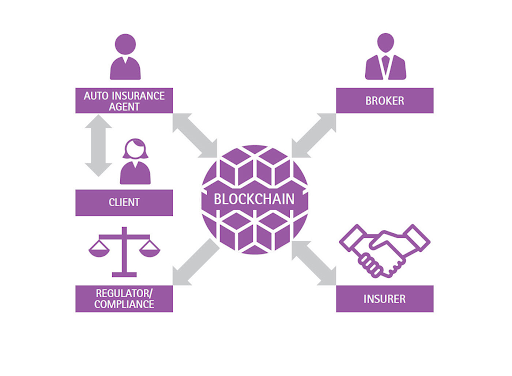
Firstly, there is a rise of online insurance brokers. However, many consumers still call insurance brokers to buy new policies. Mostly all policies are processed on paper contracts. Due to which processing of claims and payments tend to cause an error and usually require human control. Compounding this is the inherent complexity of insurance, which involves consumers, brokers, insurers, and reinsurers, as well as insurance’s main product — risk.

Claims processing

For a policyholder, making a claim can be a long and tiring process. We have to wait for a long time, as hundreds of insurers and reinsurers need to figure out

  • where contracts are,
  • which are correct,
  • who are already paid,
  • what, and which ledger has the right accounting

It’s a process that can take quite a while, even if you don’t factor in the extra time needed to adhere to tighter regulations for combating fraudulent claims.

Lack of trust

There’s a crisis of trust in the financial services industry. However, the large banks are significant, the erosion of trust influence all businesses. Lack of trust, high costs and inefficiency of the insurance industry all play a part in the extraordinarily high levels of under-insurance. To handle the trust issues, blockchain in KYC and on-boarding is going to play a major role. 

Chances of fraud

An estimated 5 to 10 percent of all claims are fraudulent which, according to the FBI, costs the U.S. on health insurers more than $40 billion per year.

chances of insurance fraud

Customer on-boarding & KYC verification

To satisfy compliance requirements such as KYC (know your customer), insurance providers must collect, validate and verify key documents to prove characteristics such as name, address, birth, health, and economic status. Time delays are quite common as different third parties and internal departments must review the data to finish their due diligence processes.  Afterward, companies spend huge resources fixing any mistake that occurred while records were being reconciled.

How Blockchain in KYC And on-boarding Helps Insurance Industry  

Nearly half (46 percent) of insurers expect to integrate blockchain within the next two years, and the vast majority (84 percent) say blockchain-based ledgers and smart contracts are reinventing the way they engage with new partners.

Proof of blockchain’s popularity is evident, with $1.9 billion having been invested in 891 blockchain startups as of early 2017.

Read More:  Is blockchain technology ripe to enter the Insurance ecosystem?

Unlike banking and capital markets, which have established exchanges that are particularly vulnerable to disruption by blockchain, insurance doesn’t have a natural exchange to which the technology can be applied. However, that doesn’t mean it doesn’t promise to reshape the industry’s processes.

Blockchain technology can solve the legal and regulatory problems to become the default standard across the insurance industry. But, the possibilities are endless. And insurance companies and startups alike are exploring insurance applications for the technology at full throttle. While blockchain might not be able to end all problems faced by insurers, it does provide foundation technology that promotes trust, transparency, and stability.

Customer identification

A blockchain is a distributed network. Hence, it is possible to make the necessary documentation available to whoever has permission access. The records are secured with cryptography and linked together, which prevents them from being altered retroactively.

customer identification

This will help in enabling the secure sharing of information across an company and to relevant third parties.

Claims processing

Blockchain development solutions can be a vital link across a vast ecosystem of third-party administrators and service provider networks. Employers can benefit from its characteristics shared ledger transparency, i.e; fewer errors resulting in better claims processing, superior provider management, and reduce operational expense.

Reduce errors and complexity

With Blockchain insurance companies can convert multiple policies into “smart contracts” giving a single, consolidated view of policy data and documentation in real time. The solution allows visibility into coverage and premium payments, delivering automated notifications to network participants following payment event

Fraud detection & risk prevention

By moving insurance claims onto an immutable ledger, blockchain technology can help eliminate common sources of fraud in the insurance industry.

Health insurance

With the help blockchain technology, the health insurance ecosystem will increase, medical records can be cryptographically protected and shared between health providers.

Reinsurance

With the implication, blockchain can simplify the flow of information and payments between insurers and reinsurers.

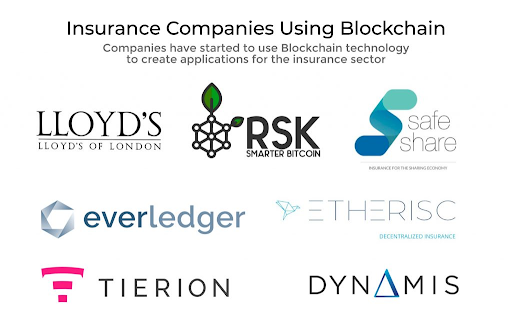
Some of the insurance companies who have already started using Blockchain in KYC and on-boarding

blockchain insurance companies

A report from EY, “Blockchain in insurance: applications and pursuing a path to adoption,” states, “the insurance industry must make investments now to be in a position to take advantage of efficiencies and opportunities blockchain technology can deliver long term.”

The insurance industry will still have a hurdle to overcome. However, blockchain’s potential to provide complete transparency, accountability and security will help insurers save time and money. Also, blockchain in KYC and on-boarding will enhance customer satisfaction. Moreover, it will help to establish a good level of trust between the insurer and the insured and will build stronger and more powerful relationships as well.


Is Blockchain Technology Ripe To Enter The Insurance Ecosystem? Use Cases

This article discusses the importance of blockchain in insurance sector. Is the technology ripe enough to enter insurance ecosystem? The important challenge of all insurance companies is to eliminate false claims and ensure that insurance money reaches for appropriate true purposes. 

According to Disruptor Daily, around the year 2015, the casualty in fake claims and property damage resulted in the insurance industry to spend more than USD 520 billion.

According to Disruptor Daily, Directors of Personal Watercraft Forum state that the expense of insurance industry will increase by 35%. And, it will remain the same until a positive technology disrupts it within the next 5 to 10 years.

Many startups such as Surety.AI, Medishares and Poleecy have realized the importance of blockchain in insurance and have started incorporating blockchain technology within their insurance transactions.

Blockchain in the insurance ecosystem

Blockchain is a decentralized platform that does not require any central authority or third-party services to monitoring or control transactions. Traditionally, insurance industry has been facing challenges in protecting digital identity, authenticating insurance claims, tracing back insurance claim to its source for identifying if the claim is true or fake, etc. These are some of the reasons why blockchain is ripe to enter the insurance industry today and why blockchain can bring significant transformations.

Blockchain Use cases For Insurance Industry

blockchain in insurance ecosystem

Preventing fraudulent claims

According to Disruptor Daily, within the past few years, 48 states including Washington D.C in U.S.A have declared a fraudulent insurance claim of more than USD 80 billion every year. Because of this fraudulent claim, each family in the country is affected. And approximately USD 400 to USD 700 is charged unnecessarily on the family per year to meet out the total country’s fraudulent insurance claim.

With blockchain, these fraudulent activities and claims can be stopped by using smart contracts as a method of identity verification and authentication. With smart contracts, the insurer and the customer can track all transactions in real-time and also the insurer will be notified of any critical incident that has occurred to the customer in real-time. This allows the insurer to observe and detect repetition in claims to stop offenders.

Speed up the process of processing of insurance claims and policy creation

One of the major challenges is the time taken to authenticate and authorize insurance claims for customers. Because of multiple middlemen intervention and third-party banking services, typically insurance enterprises had to follow huge procedures before releasing any insurance money. The process of going through different management levels. Attaining different permissions from different personnel takes a lot of time. It may even take days, months before the insurance claim is authenticated.

processing insurance claims

With blockchain technology in insurance industry, say goodbye to the long process and waiting or queueing time for processing insurance claims. Using blockchain, the insurer and the customer can connect directly and stay connected at all times without any central authority. Thus, the insurer is always informed of the customer activities. Hence, they do not have to waste time in getting to know the details of any incident occurred with the customer. Distributed ledger of blockchain helps insurance companies to protect and share information without any limitations.

Streamline insurance interaction with customer routine

Exchanging false and fake information is one of the major disruptors in insurance industry. Traditionally, this results in various consequences. This is because data were documented in the form of paper too and the chances of information getting lost in paper storage were higher. But, with blockchain in insurance all these challenges are eliminated.

With blockchain, the customer details are directly tied up to the details of the insurer over a decentralized platform. On decentralized platform, data manipulation is impossible because of the immutable data encryption. Thus, the insurer is able to organize their data and in turn streamline their operations. Customers are also able to streamline their insurance payments with automation using advanced technology by integration blockchain with IoT.

Enhanced security for managing data

Decentralized ledgers that operate using blockchain has the capacity to collect, store and distribute data amongst necessary personnel. With blockchain, every customer can start a transaction of their own within their peer system where they can store their personal data and also schedule their insurance payments.

Every single data along with the customers identity is encrypted with blockchain. Encryption ensures that each customer is given a unique decryption key. Without this key, no one will have access to what is stored. This enhances the viability and credibility of information stored. And, it also provides authenticated proof of identity for the insurer as well as the customer.

Micro-insurance helps the needy

Traditionally, people and families with lower income had lower chances of insuring their property or themselves. This is because of the border limitations or the huge insurance amount that the families had to pay every month. Today, the potential of insuring low-income families has become easier as blockchain provides borderless microinsurance’s at a lower cost.

According to Disruptor Daily, microinsurance agencies that use blockchain will benefit more than 4 billion low-income people within the next couple of years.

Conclusion: Blockchain enhances the trust in insurance industry

There are few blockchain based projects that improve the insurance policies and speed up all operations. Some of those projects are Everledger, SafeShare Global and Etherisc. Blockchain prevents fraud, increases customer experience, improves the efficiency of insurance claiming process. Blockchain Technology in insurance industry helps various sectors with its benefits in insurance. Some of those sectors are healthcare, law & order, intellectual property, etc.


How Blockchain Can Help Fight The Problem Of Fake And Counterfeit Drugs?

In the healthcare industry, where ever loopholes are available in the pharma supply chain, mal-practitioners try to counterfeit original drugs with fraudulent drugs. Hence, blockchain in drug supply chain is now the talk of the town.

According to the report submitted by World Health Organization (WHO), 15% to 30% of the total drugs sold in the world account to fake or counterfeit drugs, especially in the developing countries.

In industrialized countries, counterfeit drugs account to a minimum of 1% in every single pharma supply chain.

If healthcare industry keeps progressing with counterfeit drugs at this rate, the world is only going to get worse. Blockchain in drug supply chain, serves to take care of the healthcare industry in fighting against fake and counterfeit drugs. It hurts even to imagine counterfeit drugs for cancer. In the recent years, WHO report states that there has been a significant increase in medicinal theft and selling of uncertified drugs.

Enterprise blockchain development for medicines focus on ensuring that pharmaceutical retailers sell only the genuinely certified and verified drugs.

To avoid chronic spread of epidemic diseases and fighting medical fraud, blockchain is one of the best solutions. With the help of blockchain technology, identifying toxic ingredients and identifying counterfeit ingredients deviated from original prescription can be identified before any sales.

Keep reading to know how blockchain in drug supply chain fights to ensure that a safe and sound healthcare service is provided.

Role of Blockchain in Drug Supply Chain To Fight Fake And Counterfeit Drugs

Here is how blockchain is re-structuring medical industry to fight fake and counterfeit drugs.

blockchain in drug supply chain

Identify The Source of Origin For Every Drug

One of the major reasons for counterfeit drugs to enter the industry of healthcare is due to the obstacles in identifying the original source from where the drugs are originating from. If the location of the manufacturer and supplier of the drugs can be identified with appropriate certifications, that is already a big step towards stopping production of counterfeit drugs.

Blockchain in drug supply chain helps to identify manufacturers, suppliers and vendors with authenticated identity and certification via its proof of work, proof of stake and proof of providence.

Detail recording of data with smart contracts

One of the major challenges faced in healthcare and medical industry as a whole is the handling of discrepancies in data stored. Every medical supply chain and operation goes through a channel involving one too many personnel and technology devices. Retrieving necessary drug data is traditionally hard because information is stored in multiple systems at different locations and even time zones.

Smart contracts that operate with blockchain aims at putting a full stop confusion caused due to storage of information in multiple systems. Smart contracts combine all drug manufacturers and suppliers under one smart system. Starting from drug dispatch till end delivery location, all transactions and operations can be monitored in real-time.

Read More: Insights of Blockchain Technology in Drug Discovery

Seek out the ingredients of every drug sold

One another major factors that influence fraudulent activities to occur in the healthcare industry is the failure to track minutest details such as ingredients used to manufacture drugs. Not because pharmaceuticals didn’t want to track such details. Rather it was because information of drug manufacturing was spread and it was time consuming to get too many approvals to have visibility in ingredients used.

With blockchain, the process or attaining such details is simplified. Using smart contracts and proof of authenticity, every drug detail will be visible to everyone. Manufacturers can even protect the ingredient details with encryption installation of QR codes in drugs sold.

Ensures regulatory compliance

According to World Health Organization (WHO), today, most of the drugs are exported from country to country due to differences in manufacturing costs, raw material availability, etc.

Blockchain ensures that every drug manufactured and sold is compliant with the standard regulations set by the Food and Drug Administration (FDA).

With blockchain, medical industry can say goodbye to long and lengthy paperwork and time-consuming processes of getting drugs approved or process of verifying drug quality.

Transparency in supply chain

Pharmacist Panel

Blockchain based Digital Ledger Technology (DLT) is one way to counterfeit fake drugs extensively in medical industry. DLT integrated with (Internet of Things) IoT allows data transfer at the speed of light without compromising transparency. Each user gets to create their own node system and each information is split between different nodes with its own encryption and decryption key.

Thus, everyone involved within a particular drug supply can see all transactions anytime from anywhere without accessibility to manipulate any data.

Integration with IoT for temperature-controlled shipment  

Certain drugs require highly cold-based environment to ensure preservation of ingredients. Different drugs have different temperature and packaging requirements. Traditionally, such drugs were transported in temperature-controlled trucks and shipment containers but how far temperature was controlled is not visible. For instance, maybe the suppler decided to control the temperature in secrecy only for half of the shipment journey to save cost. This is hard to identify.

With blockchain, now consumers and pharmacies can track and monitor the temperature-controlled environment throughout the shipment journey.

Avoid glitching of networks

Storing medical information and drug data in a centralized system has higher chances of getting hacked and being vulnerable to security threats. This is because all information is under one single system maintained and controlled by one server. If the server fails or system fails, the consequences maybe catastrophic in medical industry.

Blockchain stores information under one platform but with multiple systems and each system with a group of clusters and nodes each of within which the information is spread. Thus, even when one system fails, the drug information can be accessed from another system.

Conclusion: Blockchain protects medical industry against harmful drugs

blockhain for medicines

Saving life and maintaining a good health-life balance is of the utmost importance today. All of us are busy with our respective daily chores and professional works. We may not have the time to wait for longer periods of time to identify drug authenticity and ingredient originality. But with blockchain in drug supply chain, every one of us get the accessibility to stay informed and take care of health in a smarter way with smarter drugs.

Reducing transactional costs and managing supply chain end-to-end is possible with blockchain which also helps to reduce fake drugs in the process. Let us know your perceptions and views on approaches provided through blockchain in drug supply chain to fight against counterfeit drugs.


Insights of Blockchain Technology in Drug Discovery

Blockchain has made a name for itself ever since its arrival. The era of blockchain has initiated itself and today blockchain is emerging as an important part of every major industry be it oil and gas industries, or the technical industries,  blockchain is establishing itself prominently in every field. Blockchain technology has introduced the new monitory exchange in the form of cryptocurrencies. Well as compare to the conventional payment method via credit cards, wire transfers, and other, cryptocurrencies like Bitcoin provides quicker and less expensive ways to accept the payment by the customers. These transactions that are occurring provides more power to the retailers as compared to the consumers. Can blockchain impact drug discovery process?

The technology allows to record digital events and no change can be made in the data recorded until that data reaches the recipient. This security of the data is the most significant advantage of this technology which is the main reason for the increasing immense popularity and widespread use of it by several organizations.

Blockchain insights in drug discovery

According to the reports, blockchain startups raised $1.4 billion in 2016 and the figure is consequently rising. Banks around the worlds are also using this technology and are saving whooping amount in the form of billions of dollars as the banks using this technology are able to save $8-$12 billion dollars annually.

With the increased use of technology, it has led to the establishment of several Blockchain development companies which aims to build blockchain. This company develops companies has which provide or give easy and secure records of transactions as security and transparency are the main motos of the technology.

Blockchain can reinvent drug discovery. It has evolved the pharma industry, as well as its features, are a perk for the pharma industry such as-

Management of the data

As we all know day by day a lot of data us being generated in the pharma field and thus it is being difficult to manage all these data records thus Blockchain technology will provide management of all these data by storing them and they can be accessed according to the desires and needs of the user.

Billing management

A lot of frauds occur worldwide with the U.S marking more than $30 million loss due to these frauds, thus use of blockchain system could help in minimizing these incidents, also reduction in admin costs for billing can be observed as there is elimination of the intermediates with use of blockchain and also increment in efficiency will be there.

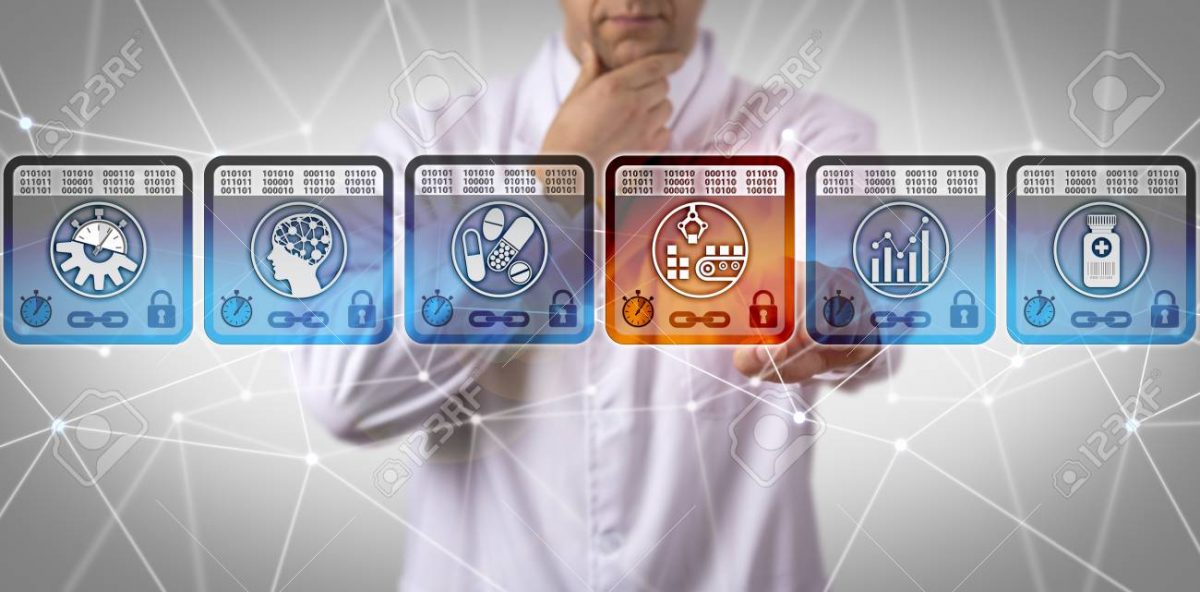
Unrecognizable pharmaceutical scientist using blockchain technology for the supply chain management. Pharma IT concept for managing the drug distribution process via distributed virtual ledger system.                                  

Safety of the drugs

Drug safety starts with the initial step of how the drug is being manufactured. It is quite difficult to track down the active pharmaceutical ingredients so without knowing the active ingredients if a drug is being sold that it could be dangerous and could cause harm to the consumer and could be even fatal.
In recent years it has been seen that the death toll has raised a lot due to this issue and has been increasing. But with the help of blockchain in drug discovery, it is now possible to provide a basis for the complete traceability of the drug right from its manufacturing to its consumer it gives all the information and with the help of blockchain, it is also possible to know where the supply chain broke if any issue arises.

Inventory management

Despite putting a lot of efforts due to the lack of proper visibility it becomes quite difficult to prepare the inventories based upon the demand for the pharmaceuticals, but with the help of blockchain, the inventory level can be managed efficiently and then the demands can be met accordingly.
The flow of the products will become more efficient with the help of this and financial gains can also be obtained. The industry is rapidly growing, and it is expected that soon this technology will become a necessity for pharmaceutical organizations.

Public safety and awareness

A lot of safety issues come up with the pharma industry but with the help of blockchain, all these issues can be solved as it will improve the efficiency of delivering a safe and effective medicine to end consumer-patients. The movement of the products can be tracked with the help of blockchain. Thus blockchain provides a strong foundation of trustworthiness and safe practices for all the patients and community as a whole.

Clinical trial management

Blockchain is being used in the clinical trial management as well as large molecule medicines are being developed by several biotech companies which have raised the need for digital ledger so that various points can be identified and validated along the path to a final product for the market.

Along with this blockchain is also useful for the safety of the patients and to provide accurate results from the patient studies as it acts as a secure and decentralized ledger to maintain all the complex data.

Read More: How Blockchain Can Help Fight the Problem of Fake and Counterfeit Drugs?

Nevertheless, there is no doubt that blockchain has taken up the pharma industry by storm and the landscape of the industry is quite changed with its arrival in the market and certainly, the technology is going to progress more in the field and will be the key pillar of change in the pharma sector.


How Blockchain Is Transforming The Nursing Profession

In their list of 100 Best Jobs for 2019, US News ranks nursing seventh. Being a nurse pays well, and provides great opportunities for gaining highly advanced knowledge while also helping people in need a long the way.

Still, it doesn’t take away the fact that the industry is in dire need of more personnel. Becker’s Hospital Review reveals that 72% of chief nursing officers recognize that their organization is understaffed. To compensate for the shortage, nurses tend to work longer shifts, which then causes a whole host of other problems. Long hours in a high-stress environment results in faster burnout. It could cause nurses to quit their jobs, which exacerbates the understaffing issue. This doesn’t even take into consideration the danger of having highly fatigued nurses on the job. They might make errors that could affect patients.

Advancements in technology strive to find new solutions to these problems. Maryville University cited a study titled ‘The Future of Nursing’, which tackles the increasingly complex healthcare system. Incorporating new technologies like blockchain is a main component of this progression. The distributed ledger technology could be an opportunity for efficiency and accountability in the healthcare industry.

Here are some ways in which blockchain could improve the nursing profession both for healthcare providers and patients:

Patient Health Records

A team of researchers led by Ann Hendrich found that nurses dedicate a large portion of their time to patient documentation and other administrative work. This means less time spent on more pressing tasks like delivering medication and assisting doctors in procedures.

Their findings are in line with issues in aggregating and managing patient data that are highlighted on Health Tech Magazine. If patient data was pooled together in blockchain ledgers, nurses will have more time to spend on administering care. The secure chain of data blocks might also help in authenticating information in order to avoid identity fraud.

On the patient side, a blockchain application can help them access and manage their own health data. This makes patients accountable for the choices they make in relation to preventive and long-term health care. Here on SoluLab we have already talked about startups which are working on this idea. The Atlanta-based Patientory, for instance, aims to provide a secure platform where health data is stored and readily available for patients as well as nurses. The application also tracks other patient information such as doctor visits, medical bills and insurance.

Payments Process

Blockchain can make payments more efficient as well. Open Access Government suggests redesigning the way people pay for healthcare from “fee-for-service payments towards value-based reimbursement models that prioritize quality outcomes of the continuity of care.” It makes more sense for patients with chronic illnesses to lump together expenses related to their condition (medication, doctor’s fee, treatment, therapy) into one payment instead of paying for them on a service basis. A more efficient payment system will also help nurses who have to prepare paperwork for the billing department day in and day out. Blockchain can support these processes through creating new payment schemes.

Open Medical Research

Medical data is often restricted within a medical institution because of confidentiality. But for the nursing body of knowledge to grow, it needs to start moving towards improving open data for scientific purposes. Blockchain presents a channel where different teams can access information securely, even simultaneously.

A newly launched UK-based application seeks to aid in this process. Medichain is a platform that connects patients looking to sell anonymized versions of their data to various researchers and companies. While it currently operates by incentivizing data sharing for commercial purposes, it’s still a step in the right direction.

More extreme advocates of the integration of blockchain in nursing envision a “decentralized autonomous organization” (DAO) for the profession. Cyrus Maaghul of healthcare platform PointNurse explains that this DAO can be used not just for sharing research findings, but also for records regarding malpractice cases.

In a previous article, we discussed different business models for healthcare blockchain. Those models, alongside the points above, prove that there are a number of cases in which blockchain can be applied to the nursing industry.

Given all these cases, it might be easier to start with one issue in the healthcare system that blockchain could solve, and grow from there. This major transformation requires small steps with lots of learning in between.

Bio:
Jam Burton is a freelance writer with a specific interest in business and technology. When she is not writing, she often goes to tech conferences. She is currently working on a startup related to improving pharmacy services.

Quick Read: What is Interoperability Blockchain – The Next Revolution In Blockchain!

SoluLab Reaches New Heights – Named A Top B2B Company By Clutch

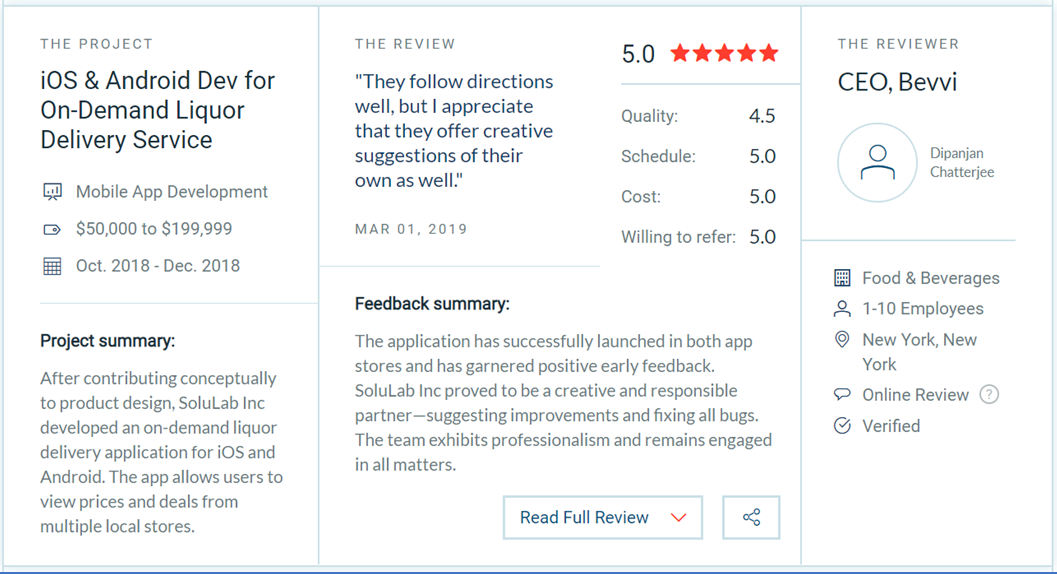
SoluLab, leading mobile apps, and software Development Company, is excited to announce that we have been ranked by Clutch as one of the top mobile app developers in India. We’ve been ranked in the top 50 companies of 500 featured in this category. Clutch gives out these annual awards to companies engaged with the platform who demonstrate that they truly deliver quality results to their clients.

In short, Clutch is a B2B ratings and reviews site based in Washington. They use market research and reviews of a company’s work to rank businesses in categories according to their service focus and location. We are ranked by them as one of the top 10 Indian blockchain developers. As a team that always try to stay on top of the cutting-edge technology, our top performance in this category on Clutch is a validation of our hard work and innovative approach. You can check out our blockchain solutions for various industries on our site.

One of the most important factors that Clutch takes into consideration is the in-depth reviews it collects from a business’s past clients. This means that a high ranking from Clutch is due, in large part, to receiving really good reviews from our past clients.

Since Clutch started collecting them in 2016, they have received 17 reviews from our clients, with an average rating of 4.9 out of 5 stars. Clutch publishes transcripts all of its reviews, but here’s a preview of our most recent one.

Clutch also has two sister sites, The Manifest and Visual Objects.

The Manifest is designed to allow potential clients to quickly browse a list of business sorted by service focus and location. You can compare prices, look at short bios, and see some select past clients, all at a glance.

We are included on The Manifest among the top mobile app developers. We were featured for an app that we designed for a social fitness startup.

We are honored to receive this recognition, and we want to thank all of our wonderful clients, we could never have gotten this far without you. We are excited to keep improving and to continue providing exemplary digital development services.

How AI Is Impacting Mobile Apps Development Companies

AI-powered mobile apps have had a huge influence on all mobile app development companies in an optimistic manner.

Related image

AI is set to transform the face of mobile app development companies, be it, virtual assistants, chatbots or automatic cars. That’s, the reason current buzzword in the market is artificial intelligence. In fact, numerous companies worldwide are investing their time, efforts and money into AI technology. Also, the impact of Artificial Intelligence on mobile app development companies is tremendous. Yet, why is AI integration needed for mobile app development? How will AI change app development in a positive way? Are AI-powered mobile apps benefiting people?

How AI is Revolutionizing Mobile App Development

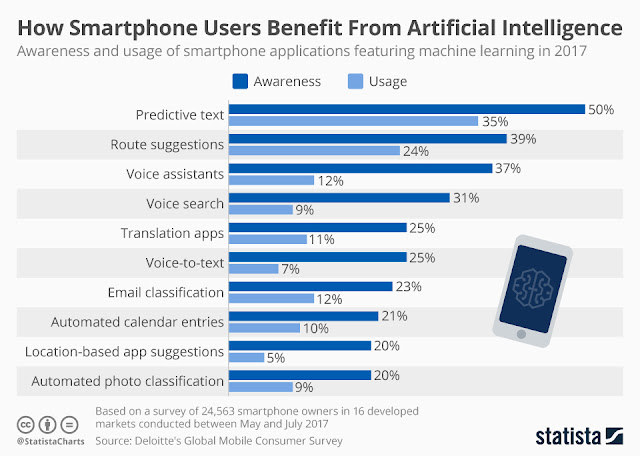
Deloitte conducted a global consumer survey and found that 65% of smartphone owners across sixteen various developed markets have used machine-learning applications in the past, according to Statista.

So now, you will ask how Machine Learning applications are related to AI. In fact, AI and Machine Learning work hand in hand. All smart things, including smartphones, smart homes, and smart cities use both of these technologies. These machine-learning applications use predictive text and route suggestions. Thus, they make our mobile experiences more convenient and personalized. Yet, there is an improvement in algorithms, hardware, and underlying data-sets. This can give rise to the possibility of AI-infused services to have a brighter future.

Below is the chart that is a result based on Deloitte’s findings. It shows that predictive text is the most used application involving machine learning. However, most people remain ignorant of the Artificial Intelligence feature of such functionalities.

Image result for screenshot

It’s clear, that in future every sector will go towards AI. There will most certainly various considerable changes in the industrial world soon. AI is disrupting industries by providing greater personalization to users, automating processes, and disrupting how we work. Though AI will bring the next revolution in various business verticals, the most significant change is in the mobile economy. So, let’s take a detailed look at how AI will transform the mobile market.

In what ways AI has affected mobile app companies

There is no doubt that AI has affected mobile app development companies in many ways. In fact, there are several advantages of AI that your company can consider. This will also help your team to make an informed decision of AI integration in your mobile app development process. So, let’s know more about how Artificial Intelligence has influenced mobile app development companies.

Alexey Sapozhnikov, co-founder and CTO of Tel Aviv, Israel-based prooV points out that while virtually every industry is embracing AI, it’s the sectors that are stymied by well-worn processes and regulations — such as healthcare and government — that are likely to lag in AI adoption.

Enhanced user experience and superior engagement

The Internet of Things will be reaching more than 30 billion connected devices by the year 2020. This means that there will be a higher demand for AI apps to control these IoT devices.

App development companies must think about adopting AI. This is because there has been a giant growth in the Internet of Things (IoT). This is because many people are using mobile phones. Users are more interested in using different connected devices. These can be sensors, TVs, more interesting watches, phones and computers that complete simple tasks. It is clear that customers prefer the convenience. They don’t want confusion due to the use of multiple devices.

AI can help in providing users with a single interface for connecting with every connected device on any network. Voice interfaces can help users to get what they need from their system via easy commands. Besides, mobile application development companies have benefitted a lot by virtual assistants too. The AI facilities can provide users with intuitive ways to interact with their apps.

Improves customer experience

AI can help in providing users with a single interface for connecting with every connected device on any network. Voice interfaces can help users to get what they need from their system via easy commands.

Ryan Lester is the director of customer engagement technologies at Boston-based LogMeIn. He said that customer experience is emerging as an early success story for AI across industries. While retail is the most common sector leveraging AI today, others are also becoming aware. Travel companies, for example, are seeing real value in leveraging chatbots to create always-on, personalized concierge-level service at scale. From airlines and hotels to travel agencies,

Besides, mobile application development companies have benefitted a lot from virtual assistants too. The AI facilities can provide users with intuitive ways to interact with their apps.

AI helps lessen frustration during difficult travel situations by understanding the context of the customer’s circumstance and providing appropriate options to resolve the issue.

Used in our day-to-day life

In the near future, everyone will have a robot for a variety of day-to-day activities. In fact, AI is already a part of our lives. Today, with the facility of augmented reality, artificially intelligent applications can detect areas. It helps in superimposing computer-generated pictures of the real world and enhances them. Moreover, augmented reality is also used in museums for more dynamic visitor experiences.

Improved marketing techniques

From behavioral patterns of customers to market trends, AI can help in providing real-time and detailed demographics. This actually cuts down the efforts of marketers in collecting data. It also minimizes the chances of errors. Further, it enables marketers to make marketing strategies with a futuristic approach too.  This helps in improving the conversion rates and sales.
Thus, investing in AI will increase in the near future. Even the statistics prove this fact. As per Gartner Research, almost 30% of companies will use AI for sales by 2020.

AI can understand the behavior of users


One of the most interesting advantages of consolidating AI with mobile app development companies. In fact, today there will be no need to guess your outcomes of marketing. In other words, companies do not need to worry about the needs of their customers. They also don’t need to research the locations of customers before launching their products or services. This is because AI can enable businesses to predict consumer behavior.

Signing off…

Regardless of whether the influence of AI on mobile app development companies seems positive, there is another side to it too. AI can lead to employment loss too. Also, it is very expensive to build and manage supported devices. Further, it lacks the touch of human emotions and understanding. But, the advantages outweigh the disadvantages here.

In the present day, AI is revolutionizing various business verticals, including healthcare, finance, and education. But, the most significant change is in the mobile app development. Artificial Intelligence is disrupting the mobile app industry. Still, it is paving a new way to meet the users’ expectations.  Besides, users will reap the benefits of them with the introduction of AI-powered mobile apps. So, what do you think about AI and mobile app development?

Key Elements In Developing A Website For ICO

Table of Contents

[fusion_builder_container hundred_percent="no" equal_height_columns="no" menu_anchor="" hide_on_mobile="small-visibility,medium-visibility,large-visibility" class="" id="" background_color="" background_image="" background_position="center center" background_repeat="no-repeat" fade="no" background_parallax="none" parallax_speed="0.3" video_mp4="" video_webm="" video_ogv="" video_url="" video_aspect_ratio="16:9" video_loop="yes" video_mute="yes" overlay_color="" video_preview_image="" border_size="" border_color="" border_style="solid" padding_top="" padding_bottom="" padding_left="" padding_right=""][fusion_builder_row][fusion_builder_column type="1_1" layout="1_1" background_position="left top" background_color="" border_size="" border_color="" border_style="solid" border_position="all" spacing="yes" background_image="" background_repeat="no-repeat" padding_top="" padding_right="" padding_bottom="" padding_left="" margin_top="0px" margin_bottom="0px" class="" id="" animation_type="" animation_speed="0.3" animation_direction="left" hide_on_mobile="small-visibility,medium-visibility,large-visibility" center_content="no" last="no" min_height="" hover_type="none" link=""][fusion_text columns="" column_min_width="" column_spacing="" rule_style="default" rule_size="" rule_color="" hide_on_mobile="small-visibility,medium-visibility,large-visibility" class="" id="" animation_type="" animation_direction="left" animation_speed="0.3" animation_offset=""] Every business needs funding for their ideas or projects to venture into future growth and showcase its potential. Cryptocurrency is the new digital currency that has been revolutionizing the financial markets as we know. Initial coin offering (ICO) is yet another part of cryptocurrency that has been trending in those financial markets. ICO is a boon to all business that has integrated the usage of cryptocurrency into their existing system. ICO is similar to an initial public offering, wherein here shares are referred to as tokens. ICos is a kind of source of funding for the business. A share from the returns of the business is given back to the user holding ICO in the form of tokens. Tokens can be used to trade the crypto coins for liquidated value.  Some of the popular ICO’s are Dominium, CoTrader, Bethlehem, etc.

Why need an ICO marketing website

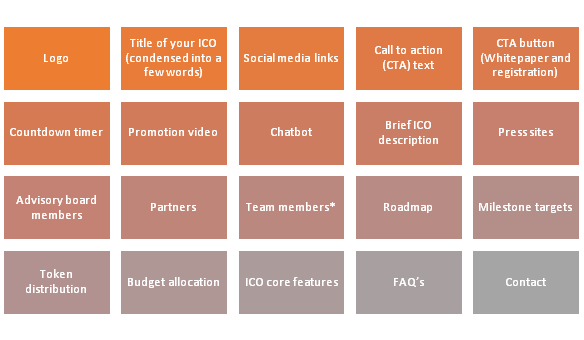
Every business involved in ICO should have a website for the promotion of their ICO. This is because ICO is new and many of the users might not know what it is. When a user or an investor wants to buy tokens or invest in your ICO, they must know what it is and what kind of business you are into. They also must know how your ICO is going to help their project help in the growth of their company or the project. You can create a typical website or a landing page for your ICO. A landing page is similar to the website but focused more on advertisements which help to attract more users or visitors. The homepage gives an eagle’s view of your website and landing page gives you an eagle’s view of advertisement for your ICO. There are many elements of ICO landing page that would keep the visitors attracted towards your ICO. Some of those elements are having an attractive logo, a chatbot to connect visitors your business support and clarify any queries, the board of advisory members to give you powerful insights, etc. You can hire a website development company or a web designer to help you with all the requirements. But in the end what matters is the elements included in your website or landing page should help the user or visitor better understand your ICO.

Elements to be addressed by your ICO website

These are the must-have elements for developing the website for ICO

Screen 1

Before getting into the details of ICO, make the first impression on your user or visitor rememberable.
  1. Initially, first, the user should understand what kind of company is yours and what is your vision and mission. This will first help the user or visitor to understand your value and see your future potential. So, make a brief statement about your business, vision, and mission to achieve them.  It should also include a header, logo, social network links, menu bar, footer menu, pop up window, etc.
  2. Give extra links about your business in your brief statement about your business. This will create a curiosity among the user or visitor and if they click on the links, then they are potential users or visitors.
  3. Give facts and provide evidence or proof of your so said statements of your business. Also, provide facts about what your company values and give facts supporting your vision. This will help to convince the user or visitor that your business or project is trustable.

Screen 2

The next important level is to split the structure of your business into two types. Type one is to impress the users or visitors who are new to your company. Type two is to impress the users or visitors who are already attracted to your business. You necessarily don’t have to follow this structure and can make your own way of attracting user or visitors. But this way of splitting the structure might help you in better developing an attractive website.

Elements to be focused on type one structure

This is pretty much similar to making the first impression the best impression. So, following the above details of initially giving information about your business, vision, mission and supporting facts is required in this phase. Make sure that you also address your unique selling proposition (USP) of your business and ICO in this section.

Elements to be focused on type two structure

This phase of website structure follows the after-effects of phase one or type one structure. Users or visitors who feel comfortable from phase one will move onto this phase. So, make sure to give details on the following.
  1. Discuss the advantages and potential of your project and ICO in the future. Give facts as to how it will be promising in the future.
  2. Give details about the team you have working in your company and supporting the ICO growth too. Give facts as to how skilled and experienced your team is. This is one of the important elements. This is because having a good team is what will make users or visitors believe that your project and ICO won’t fail even through crisis.
  3. Give subsections to show users or visitor what your mission as the roadmap plan of how you are going to achieve your vision. This will urge users or visitors to give their suggestions and ideas too. This particular element will help potential users become a part of your project or ICO community.
  4. Give information about the time period gap as to when you will provide updates on any future launch of release from your business. Give details on notification period of when you will distribute your ICO and how to collect them.
  5. Showcase a support section to clarify user or visitor queries and create a separate subsection for feedback from those users or visitors.

Design an open-minded website design

When a user or visitor lands on your ICO website page, make sure that the information you have posted does not give a sense of limitation. This means that with the information given on the website, be open to any scrutinizing from the user or visitor and this will create a trust too. Make sure that your website does not give a feeling of not being open or hiding something. Let the users and visitors feel transparency. After all, cryptocurrency is famous for its transparency. So, what are you waiting for? Keep it simple and attractive. Good luck to create an attractive website for your ICO. Quick Read: How To Launch A Successful ICO – Necessary Steps And Important Tips [/fusion_text][/fusion_builder_column][/fusion_builder_row][/fusion_builder_container]

-Contact Us-

The World is Upgrading to Blockchain. Don't get confused and take the wrong base technology for your project. Get Free Consultation Now.
WhatsApp Telegram