Talk to an Expert
Get in Touch

Artificial Intelligence in Healthcare: Future Outlook

Artificial Intelligence in Healthcare

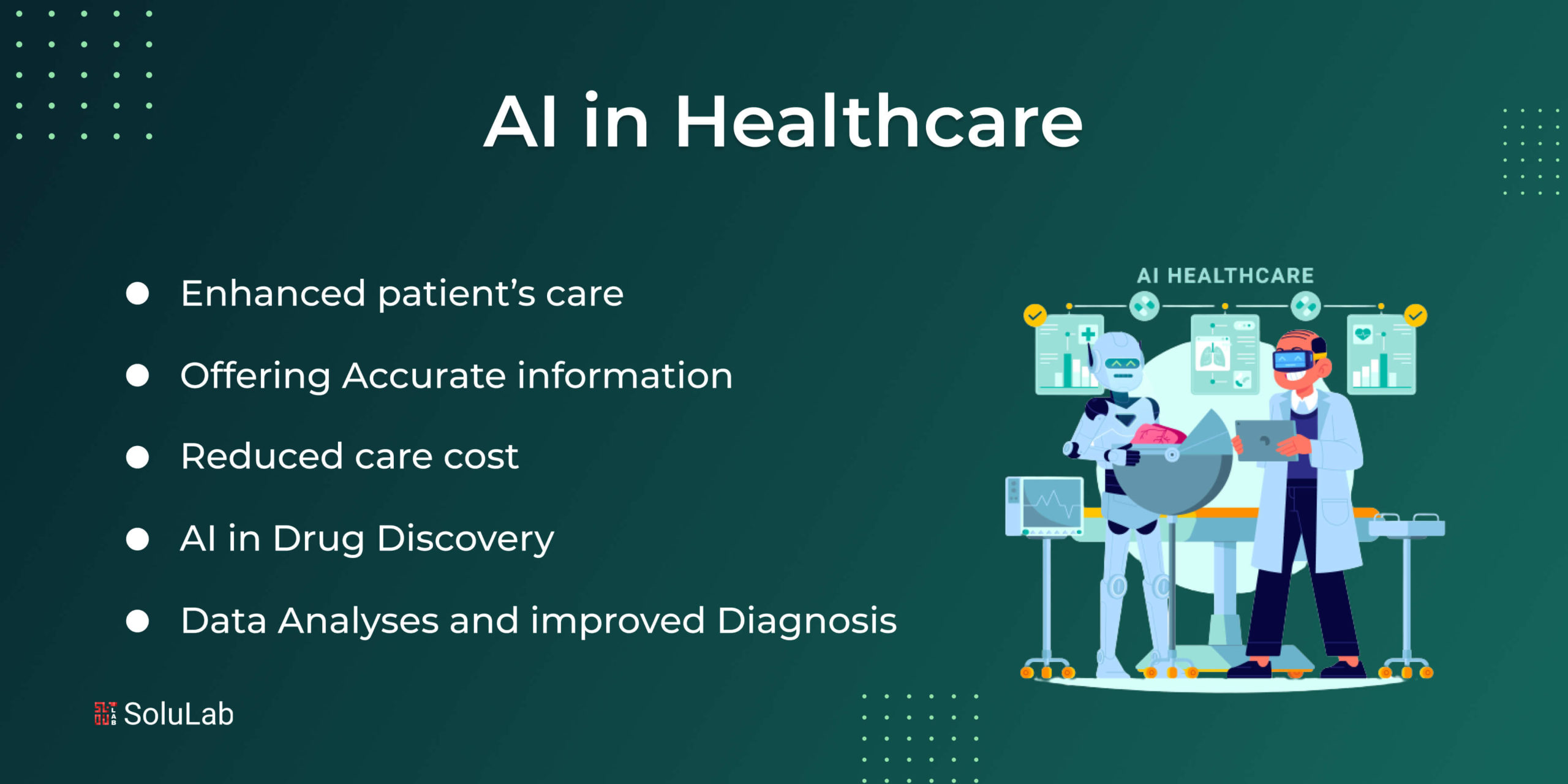
Artificial Intelligence (AI) has emerged as a transformative force in healthcare, revolutionizing how medical professionals diagnose, treat, and manage patient care. AI is making a significant impact on multiple facets of the healthcare industry:

  • Enhanced Diagnostics: AI-driven diagnostic tools sift through extensive databases, identifying subtle patterns and anomalies, leading to earlier disease detection and improved patient outcomes.
  • Personalized Treatment Plans: AI algorithms analyze vast amounts of data to tailor treatment strategies to individual needs, considering factors such as genetics, lifestyle, and medical history.
  • Virtual Health Assistants: AI-powered virtual health assistants offer real-time symptom analysis, medication reminders, and preliminary health advice, enhancing accessibility to healthcare services and facilitating proactive self-care.
  • Drug Discovery and Development: AI expedites the drug discovery process by analyzing chemical databases and predicting potential drug candidates, reducing the time and cost associated with traditional drug development.
  • Remote Patient Monitoring: AI-enabled remote patient monitoring tools track vital signs and physiological data, allowing healthcare providers to monitor patients remotely and foster proactive interventions.
  • Predictive Analytics: AI algorithms analyze data to predict patient outcomes, hospital readmission rates, and potential health risks, enabling proactive care management and effective resource allocation.

AI’s potential to revolutionize healthcare delivery and improve patient outcomes is boundless as it continues to evolve.

Artificial Intelligence in Healthcare

Welcome to a new era in healthcare, where technology merges with medical expertise. Artificial Intelligence (AI) is revolutionizing the industry by transforming healthcare practices, enhancing patient care, and fueling remarkable advancements in medical research. Discover how this remarkable integration is reshaping the landscape and ushering in unparalleled possibilities for improving lives.

  • Definition and Scope of AI in Healthcare

Artificial Intelligence (AI) is revolutionizing healthcare by utilizing advanced algorithms and computational models to process and analyze vast medical data. It offers numerous benefits, including enhanced diagnostic accuracy through AI-powered algorithms that detect subtle patterns in medical images. AI also assists in personalized treatment planning by analyzing patient data and medical literature, leading to improved decision-making. Additionally, AI streamlines administrative tasks, reducing the burden on healthcare staff and improving efficiency. The implementation of AI in healthcare brings forth advantages such as enhanced precision, time efficiency, personalized care, cost savings, and improved accessibility. However, challenges like data privacy, ethical considerations, and infrastructure requirements must be addressed to ensure responsible implementation and maximize the potential of AI in transforming healthcare.

  • Evolution and Adoption in the Healthcare Sector

The integration of AI in healthcare has undergone significant changes, with increasing adoption across the industry. Initially, rule-based systems were used, but they lacked adaptability and handled complex data. Machine learning (ML) models emerged, enabling learning from data and improving performance over time, and have been successfully applied in various healthcare areas. Deep learning, a subset of ML, has further advanced AI’s capabilities in healthcare, enabling it to excel in visual recognition, natural language processing, and speech recognition. AI integration has led to transformative advancements, such as AI-powered image analysis systems, ML algorithms for predicting health risks, and AI-driven chatbots for providing support. The future of AI in healthcare holds immense potential, with the ability to revolutionize medical care delivery and improve patient outcomes.

  • Challenges and Opportunities

The utilization of Artificial Intelligence (AI) in healthcare presents promising opportunities for enhanced diagnostics, personalized treatments, and better patient outcomes. However, it also brings unique challenges that must be carefully addressed to harness its full potential.

Key challenges in AI for healthcare include data privacy and security, with the need to protect sensitive patient information from unauthorized access and breaches. Ethical considerations arise regarding bias and fairness in algorithms, job displacement, and the necessity for human oversight and accountability. Integration hurdles exist due to legacy systems, fragmented data, and the lack of standardized data collection protocols.

To address these challenges, proactive and multi-faceted approaches are required:

  • Establish clear data governance policies and privacy frameworks for responsible data usage.
  • Develop AI algorithms with transparency and accountability to mitigate bias and ensure fairness.
  • Promote collaboration and standardization among stakeholders to overcome integration challenges.

By addressing these challenges through thoughtful planning, ethical considerations, and collaborative efforts, healthcare organizations can unlock the transformative potential of AI to revolutionize patient care and improve health outcomes.
CTA1

  • Key Components of AI in Healthcare

Artificial Intelligence (AI) is transforming healthcare by offering a wide range of applications. These applications have the potential to revolutionize patient care, streamline clinical processes, and enhance overall healthcare delivery. AI in healthcare encompasses three core components:

Machine Learning (ML): ML enables computers to learn from and make decisions based on data.

Applications in healthcare:

  • Disease diagnosis
  • Treatment recommendations
  • Predictive analytics

Natural Language Processing (NLP): NLP involves the interaction between computers and human language.

Applications in healthcare:

Computer Vision (CV): CV enables computers to interpret and understand visual information.

Applications in healthcare:

  • Medical imaging
  • Surgical robotics
  • Wearable devices

These components of AI work together to enhance clinical decision-making, streamline workflows, and improve patient outcomes. As AI continues to evolve, its impact on healthcare is expected to expand.

Read Also: AI Healthcare in the UAE

Benefits of AI in Healthcare
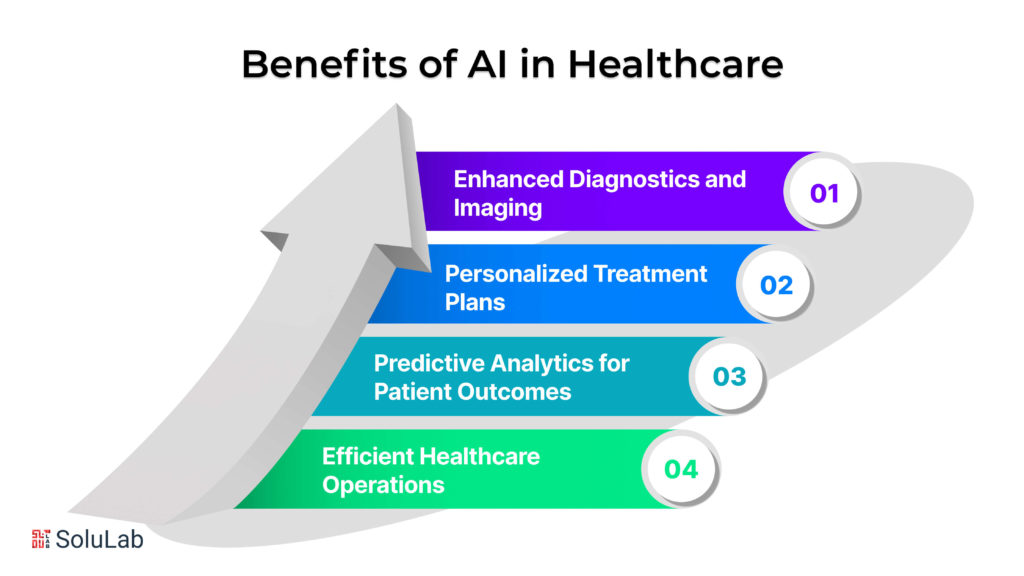
Benefits of AI in Healthcare

A journey to explore the vast array of advantages that Artificial Intelligence(AI) offers to the dynamic healthcare ecosystem. Witness how AI is revolutionizing patient care, from enhancing diagnostic accuracy to shaping personalized treatment plans. Let’s delve deeper into the transformative impact AI is making on patient outcomes, operational efficiency, and the overall landscape of healthcare delivery.

1. Enhanced Diagnostics and Imaging

The integration of AI in medical image diagnostics has revolutionized healthcare. AI algorithms analyze vast data, identify subtle abnormalities, and provide real-time decision support. This improves diagnosis accuracy, enhances patient outcomes, and reduces workload for healthcare professionals. AI assists in the early detection of diseases, enabling timely interventions and improved prognoses. By automating routine tasks, AI frees up radiologists’ time for more intricate aspects of patient care, potentially easing the burden on radiologist staffing firms who are striving to meet the demand for qualified professionals.

2. Personalized Treatment Plans

The integration of Artificial Intelligence (AI) in healthcare has brought about transformative changes in patient treatments. By leveraging advanced algorithms and data analysis, AI enables the creation of customized treatment plans tailored to each patient’s unique characteristics. This shift offers several key advantages:

  • Precision Medicine: AI facilitates the analysis of extensive patient data, including genetic information and lifestyle factors, enabling healthcare professionals to identify patterns and predict treatment outcomes accurately. It empowers doctors to provide targeted and personalized interventions that cater to each patient’s needs.
  • Optimized Treatment Outcomes: Customized treatment plans guided by AI significantly enhance the effectiveness of interventions. By identifying the most suitable options, AI minimizes trial-and-error approaches, reduces adverse side effects, and leads to improved outcomes, higher success rates, and faster recovery times.
  • Patient-Centric Approach: AI actively involves patients in the decision-making process through AI-driven tools and platforms. Patients can access information about their conditions, treatment options, and potential outcomes. This transparency fosters collaboration between patients and healthcare providers, ensuring treatment plans align with individual preferences and values.
  • Cost-Effective Healthcare: AI-enabled customization contributes to cost savings by optimizing treatments and reducing adverse events. It also analyzes large datasets to identify cost-effective options, aiding healthcare providers in making informed resource allocation decisions.

AI in healthcare has opened new avenues for personalized and precise treatment plans. Customizing interventions based on individual patient data leads to more effective outcomes, empowers patients, and promotes a patient-centric approach. As AI continues to evolve, its potential to revolutionize healthcare delivery and enhance patient experiences remains immense.

Read Blog: AI Use Cases and Applications

3. Predictive Analytics for Patient Outcomes

Artificial Intelligence (AI) is transforming healthcare by enhancing patient outcomes through advanced predictive capabilities. AI algorithms analyze vast amounts of historical data to identify patterns, risk factors, and potential disease progression. This predictive power enables healthcare professionals to take proactive and preventive measures, personalize care plans, and optimize treatment strategies.

For instance, in cardiology, AI algorithms can assess cardiovascular risks and predict heart disease, enabling early identification and timely interventions. In oncology, AI analyzes genetic data and imaging results to predict cancer progression and response to treatments, enabling personalized therapies and improved outcomes.

AI’s predictive capabilities extend to population health management, helping identify trends, predict disease outbreaks, and allocate resources efficiently. By harnessing AI’s predictive power, healthcare systems can shift to proactive care models, empowering individuals to take control of their health and enhancing overall quality of life.

4. Efficient Healthcare Operations

Artificial Intelligence (AI) has significantly transformed healthcare administration, streamlining mundane tasks and enhancing efficiency. AI-powered systems now handle various administrative responsibilities, including scheduling appointments, processing medical bills, and optimizing resource allocation. These automation efforts result in substantial cost reductions and improved healthcare delivery quality and efficiency. In specialized care settings, tools such as behavioral health RCM software further strengthen financial and operational performance by automating claims management, reducing denials, and ensuring accurate reimbursement workflows. By combining AI-driven analytics with dedicated RCM systems, healthcare organizations can improve revenue cycles, reduce administrative overhead, and maintain smoother clinical operations.

AI-driven scheduling platforms leverage historical data and patient preferences to create optimized schedules, reducing wait times and maximizing satisfaction. Automated billing processes, facilitated by AI, minimize errors and improve cash flow for healthcare providers. Additionally, AI algorithms analyze vast amounts of data, enabling strategic resource allocation, leading to cost reduction, enhanced operational efficiency, and critical resource availability. By utilizing AI, healthcare administration can shift its focus from administrative tasks to exceptional patient care. AI’s potential to transform healthcare administration is limitless, aiming for a more efficient, cost-effective, and patient-centered healthcare system.

AI Applications in Healthcare

Delve into the multifaceted applications of Artificial Intelligence (AI) in the healthcare industry. Discover how AI transcends its role as a mere tool and becomes a catalyst for transformation, impacting diagnostics, drug discovery, predictive analytics, and more. Explore the profound ways in which AI is reshaping the healthcare landscape, bringing about tangible advancements and revolutionizing patient care.

1.  AI in Drug Discovery and Development

Artificial Intelligence (AI) is revolutionizing drug discovery, leading to significant advancements in the pharmaceutical industry. AI enables scientists to analyze vast complex data, identify promising drug candidates, and optimize clinical trials, resulting in faster and more cost-effective development of new medications.

2. AI contributes to drug discovery in several ways:

  • Data Analysis: AI algorithms uncover hidden patterns in large datasets, providing deeper insights into disease mechanisms and potential treatments.
  • Virtual Screening: AI-powered tools rapidly assess compound libraries, reducing the time and costs associated with traditional screening methods.
  • Drug Design: AI algorithms design and optimize novel drug molecules with improved properties based on specific criteria.
  • Clinical Trial Optimization: AI identifies suitable patient populations, designs adaptive protocols, and predicts patient outcomes, leading to more efficient and informative trials.
  • Safety and Efficacy Evaluation: AI algorithms analyze clinical trial data to identify safety and efficacy signals early, ensuring patient safety and effective drug development.
  • Predictive Modeling: AI models predict drug efficacy and side effects based on structural and biological properties, guiding researchers in selecting promising compounds for further development.

The integration of AI into drug discovery transforms the pharmaceutical industry, making the process faster, more efficient, and more precise. It accelerates the delivery of new and effective treatments, improving healthcare outcomes and saving lives.

3. Virtual Health Assistants and Chatbots

Virtual health assistants powered by AI revolutionize the healthcare experience. They provide instant access to support, information, and assistance. These chatbots offer personalized recommendations, answer questions, and promote proactive healthcare habits. By handling routine queries, they free up valuable time for healthcare professionals to focus on more complex patient needs. Virtual health assistants enhance communication, foster patient engagement, and optimize resource allocation. As these technologies advance, they hold the potential to transform healthcare delivery and the patient experience.

4. Remote Patient Monitoring

Artificial Intelligence (AI) applications are revolutionizing remote patient monitoring by enabling continuous tracking of patient health. This groundbreaking technology empowers healthcare providers to make timely interventions and effectively manage chronic conditions without the need for constant hospital visits. Here’s how AI enhances remote patient monitoring:

  • Real-Time Data Collection and Analysis: AI-driven remote monitoring devices collect vast amounts of patient data, including vital signs, activity levels, and medication adherence. Advanced algorithms analyze this data in real time, providing healthcare professionals with a comprehensive view of a patient’s health status.
  • Early Identification of Health Issues: AI algorithms can detect subtle changes in patient data that may indicate potential health issues. This early identification allows for prompt intervention, preventing complications and the need for emergency care.
  • Personalized Treatment Plans: AI assists in developing personalized treatment plans by analyzing patient data and identifying patterns. This data-driven approach ensures that treatment is tailored to individual needs, leading to better outcomes.
  • Enhanced Medication Management: AI helps monitor medication adherence and provides reminders, reducing the risk of missed or incorrect doses. It can also detect potential drug interactions, ensuring patient safety.
  • Remote Care Coordination: AI facilitates seamless coordination between healthcare providers by sharing patient data securely. This enables specialists from different fields to collaborate and provide comprehensive care, even if they are not physically present with the patient.
  • Improved Patient Engagement: AI-powered remote monitoring platforms offer user-friendly interfaces, empowering patients to actively engage in their healthcare journey. They can access their health data, communicate with healthcare providers, and receive educational resources, fostering a sense of control and well-being.

By leveraging AI in remote patient monitoring, healthcare systems can enhance the quality of care, reduce costs, and improve patient outcomes. This technology is transforming healthcare delivery by making it more accessible, proactive, and personalized.

Read Also: How Healthcare Startups in the USA Leverage Generative AI to Cut 40% Costs? 

5. Natural Language Processing in Healthcare

Natural Language Processing (NLP) technology enables AI systems to understand and interpret human language in medical records. This advancement has major implications in healthcare, improving data extraction, documentation accuracy, and information retrieval. NLP uses algorithms and machine learning to analyze unstructured medical data, identifying clinical concepts and relationships. It aids in creating structured electronic health records, which are more accessible and facilitate better patient care, diagnoses, and clinical decisions. NLP also extracts vital information from medical literature, enhancing literature reviews and clinical decision-making. Its applications in healthcare are broad, ranging from automating administrative tasks to supporting personalized medicine and real-time clinical decisions. NLP holds the potential to transform patient care and clinical practice in the healthcare industry.

Use of AI in Healthcare

Discover the practical applications of AI in healthcare environments. Explore how AI enhances healthcare delivery by streamlining administrative tasks, augmenting medical decision-making, and promoting efficiency and effectiveness across various facets of the healthcare system

1. Telemedicine and Telehealth

AI has revolutionized telemedicine by facilitating remote consultations through virtual assistants and chatbots. It enables patients to receive medical advice and initial assessments conveniently from their homes. AI also plays a crucial role in monitoring patient’s health remotely by analyzing data from wearable devices and sensors, allowing healthcare providers to intervene proactively and personalize treatment plans. Furthermore, AI supports diagnosis and decision-making by analyzing medical images and EHRs to identify abnormalities and uncover patterns. Integrating AI into telemedicine software enhances accessibility, effectiveness, and efficiency, leading to improved healthcare delivery and outcomes for patients.

2. Robotics in Surgical Procedures

AI-driven robotics in surgical procedures bring numerous benefits:

  • Improved Precision: Robotic systems offer unparalleled precision and accuracy, reducing the risk of human error and enabling delicate procedures.
  • Minimally Invasive Surgeries: AI allows for smaller incisions, less pain, faster recovery, and improved cosmetic outcomes.
  • Enhanced Patient Safety: Safety protocols and real-time feedback minimize risks and errors during surgery.
  • Reduced Recovery Times: Minimally invasive surgeries result in smoother recoveries and quicker returns to daily activities.
  • Personalized Surgical Plans: AI helps create customized plans based on each patient’s unique anatomy and condition.
  • Remote Surgery Potential: Advanced telecommunication technologies may enable remote surgeries in the future.

AI-driven robotics are revolutionizing surgery by enhancing precision, safety, and patient outcomes.

3. AI for Mental Health Diagnosis

AI is having a major impact on mental health assessment and treatment. AI algorithms can analyze vast amounts of data to detect patterns and provide insights into mental health conditions. This technology has the potential to revolutionize the way we identify, diagnose, and manage mental health disorders. One advantage of AI in mental health assessment is its ability to analyze large datasets quickly and accurately. This allows clinicians to make more informed decisions about diagnosis and treatment plans. AI can also identify individuals at risk of developing mental health disorders, facilitating early intervention and prevention strategies.

Furthermore, AI-powered tools can offer personalized mental health interventions tailored to each individual’s unique needs and preferences. This tailored approach enhances the effectiveness of interventions, promotes patient engagement, and fosters better mental health outcomes. The integration of AI in mental health assessment and treatment has the potential to revolutionize the delivery of mental healthcare services. By leveraging AI’s analytical capabilities and vast data processing power, we can enhance our understanding of mental health conditions, improve diagnostic accuracy, and provide more personalized and effective interventions.

4. Predictive Analytics in Preventive Healthcare

AI is transforming preventive healthcare through its predictive analytics capabilities. By analyzing patterns and risk factors, AI can identify individuals at an increased risk of developing certain medical conditions. This enables early intervention, reducing the burden on healthcare systems and improving patient outcomes. Preventive measures, such as lifestyle changes and targeted treatments, can be implemented to mitigate the likelihood of serious illnesses. AI also helps identify genetic predispositions and assess treatment effectiveness, empowering individuals to make informed decisions about their health. Incorporating AI into preventive healthcare has the potential to revolutionize health management, shifting the focus from reactive treatment to proactive prevention.

Future of AI in Healthcare
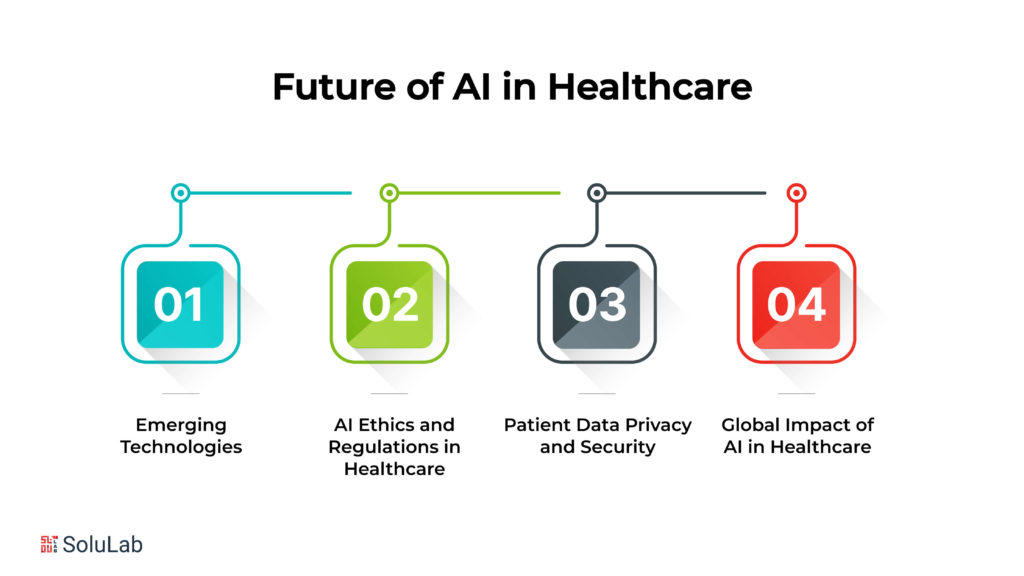
Future of AI in Healthcare

Gaze into the crystal ball of healthcare technology and catch a glimpse of the AI-shaped future. Discover emerging trends, groundbreaking innovations, and the potential for AI to revolutionize healthcare as we know it. Embark on a journey of envisioning a healthcare landscape transformed by cutting-edge AI technologies

Emerging Technologies

The future of AI in healthcare holds immense promise, driven by emerging technologies like quantum computing, advanced robotics, and sophisticated AI models. These advancements can revolutionize healthcare delivery, transforming patient care, improving outcomes, and enhancing the overall experience.

Quantum computing introduces unprecedented computational power, accelerating drug discovery, analyzing genetic data, and optimizing treatment plans. Advanced robotics automates mundane tasks, allowing healthcare providers to focus on patient care, while surgical robots improve precision and outcomes. Sophisticated AI models can diagnose diseases, predict treatment responses, and identify risks, and can also power virtual health assistants for personalized support.

The convergence of these technologies can transform healthcare delivery, but ethical and regulatory considerations must be addressed. Data privacy, security, and transparency are paramount, and robust frameworks and standards must be established to balance innovation with patient safety and trust. By harnessing the power of emerging technologies, we can create a future where AI augments healthcare professionals, leading to better care, improved outcomes, and a more efficient and sustainable healthcare system.

AI Ethics and Regulations in Healthcare

The adoption of AI in healthcare demands ethical considerations and regulatory frameworks. Ethical guidelines should focus on privacy, patient consent, and bias mitigation. Regulatory frameworks should establish data governance, certification processes, accountability, and transparency standards. By adhering to these guidelines, we can ensure the responsible use of AI in healthcare for improved patient outcomes and better healthcare delivery.

Patient Data Privacy and Security

Securing patient data is crucial for the successful implementation of AI in healthcare. Robust privacy and security protocols, including adherence to GDPR & HIPAA compliance, build trust among patients, healthcare professionals, and regulatory bodies.

Privacy Measures:

  • De-identification of data: Removing direct identifiers like names and addresses before AI training or analysis.
  • Encryption of data: Protecting patient data at rest and in transit.
  • Access controls: Restricting access to authorized personnel using passwords and biometrics.

Security Measures:

  • Firewalls and intrusion detection systems: Protecting against external threats like hackers and malware.
  • Secure networks: Transmitting patient data over secure networks to prevent eavesdropping.
  • Regular security audits: Identifying and addressing vulnerabilities in security systems.

Implementing robust privacy and security protocols is essential for the successful and trustworthy integration of AI in healthcare.

Global Impact of AI in Healthcare

The global impact of Artificial Intelligence (AI) in healthcare transcends individual healthcare systems, fostering collaboration and a connected approach to healthcare delivery and improvement. Collaborative efforts, shared data, global initiatives, and a unified approach to global health improvement are key aspects of AI’s transformative role.

Collaborative efforts involve the sharing of best practices, algorithms, and insights between healthcare organizations, research institutions, and technology companies, leading to enhanced AI solutions and improved healthcare outcomes. Effective utilization of AI requires large and diverse datasets, and collaborative data-sharing promotes the development of more accurate AI models.

Global initiatives set standards, provide funding, and facilitate knowledge exchange to accelerate the integration of AI into healthcare systems. AI plays a crucial role in addressing global health challenges, such as tracking disease outbreaks, monitoring health indicators, and delivering remote healthcare services, contributing to improved global health equity.

In essence, AI’s global impact extends beyond individual systems, fostering collaboration, data sharing, and a shared vision to revolutionize healthcare delivery and improve the health and well-being of people worldwide.

Applications of AI in Healthcare

Explore the remarkable advancements of AI in healthcare across pivotal applications. From radiology and pathology to virtual health assistants, witness how AI applications are transforming traditional practices, ushering in an era of heightened intelligence and responsiveness in healthcare delivery systems.

AI in Epidemiology and Disease Tracking

The integration of AI into epidemiology has revolutionized disease tracking and prediction through advanced algorithms and real-time data analysis. AI plays a crucial role in enhancing disease pattern understanding, optimizing resource allocation, and implementing effective containment measures.

Key applications of AI in epidemiology include disease surveillance, where AI algorithms identify and detect outbreaks in near real-time, enabling swift responses and targeted interventions. Further, AI processes vast data to identify risk factors and forecast disease trends, guiding resource allocation and prevention strategies.

AI also contributes to tracking disease spread by integrating data from various sources and generating detailed transmission maps. This information facilitates containment efforts, hotspot identification, and targeted interventions. Additionally, AI’s potential extends to long-term public health planning, assisting in prevention strategy development and building resilient communities and healthcare systems.

In conclusion, AI integration in epidemiology has brought transformative advancements in outbreak tracking, prediction, and response. AI empowers epidemiologists and public health experts to safeguard populations, mitigate the impact of infectious diseases, and create a healthier and more resilient world.

AI in Genomics and Precision Medicine

The integration of artificial intelligence (AI) in genomic data analysis has revolutionized precision medicine. AI algorithms can extract insights from vast amounts of genomic data, leading to more accurate diagnoses, personalized treatment plans, and improved patient outcomes.

Key areas where AI shines include identifying genetic markers associated with diseases or traits, predicting treatment responses, and tailoring therapies to individual patients. AI-driven models can simulate drug interactions and treatment outcomes, helping to identify the most effective and safest options for each patient.

In drug discovery and development, AI can identify novel drug targets and predict the efficacy and toxicity of potential drug candidates, significantly accelerating the drug development process.

As AI continues to evolve, it will play an increasingly significant role in transforming medicine and improving the lives of patients worldwide.

AI in Health Wearables

The integration of wearable technology and AI has revolutionized healthcare monitoring and management. Health wearables with advanced sensors and AI algorithms offer continuous monitoring of vital signs and provide valuable health insights. This technology enables early detection of health issues, promotes preventive care, and fosters a proactive approach to maintaining optimal well-being. By analyzing data, AI algorithms identify trends and potential health risks, empowering individuals to take timely action. Health wearables encourage healthier habits and lifestyles, reducing the risk of chronic diseases. They promote proactive healthcare by providing personalized recommendations and fostering a sense of ownership for one’s health. The synergy between wearable technology and AI transforms healthcare from reactive to proactive, empowering individuals to achieve optimal health and well-being.

AI-Enabled Rehabilitation

Artificial Intelligence (AI) is revolutionizing personalized rehabilitation by analyzing patient data, tracking progress, and adjusting interventions. AI applications enable healthcare professionals to create personalized rehabilitation plans, leading to improved outcomes for conditions like stroke, spinal cord injuries, orthopedic injuries, and chronic pain.

Key ways AI enhances personalized rehabilitation plans:

  • Data Analysis: AI algorithms analyze patient data to identify patterns and trends, providing a deeper understanding of the patient’s condition and targeted rehabilitation strategies.
  • Progress Tracking: AI continuously monitors patient progress through wearable devices and sensors, evaluating metrics like range of motion and muscle strength to identify areas needing improvement.
  • Intervention Adjustment: AI assists healthcare professionals in adjusting and personalizing rehabilitation interventions, recommending changes to exercises, modalities, or intensity levels to optimize the patient’s recovery.
  • Outcome Prediction: AI algorithms predict potential outcomes and rehabilitation trajectories based on historical data, helping set realistic goals, manage expectations, and facilitate early intervention.
  • Patient Engagement: AI-powered applications enhance patient engagement by providing educational resources, reminders, and motivational support, empowering patients and promoting compliance.

AI is transforming personalized rehabilitation, allowing healthcare professionals to deliver more precise, efficient, and patient-centered care, significantly improving outcomes and empowering individuals to achieve their full potential.

Advantages of AI in Healthcare
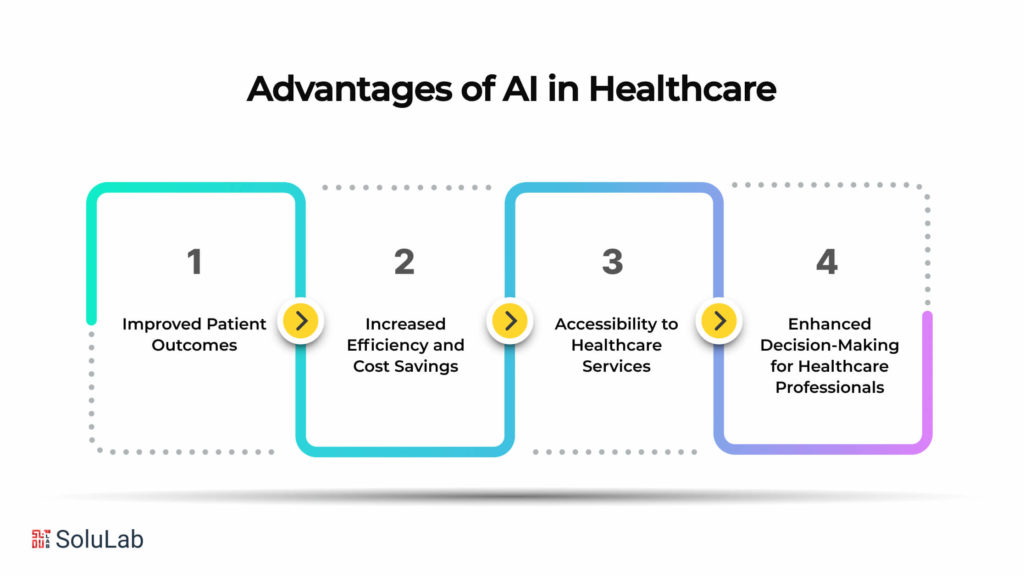
Advantages of AI in Healthcare

Discover the myriad of benefits Artificial Intelligence (AI) brings to the healthcare industry. From significantly enhancing diagnostic accuracy to tailoring personalized treatment plans, AI stands as a catalyst for improving patient outcomes and elevating the quality of healthcare services.

Improved Patient Outcomes

The integration of Artificial Intelligence (AI) in healthcare has led to numerous advancements, enhancing patient outcomes and the quality of healthcare delivery. AI offers key advantages including accurate diagnostics through analyzing vast medical data, enabling personalized treatments tailored to individual needs, and providing predictive analytics to anticipate potential health issues. Additionally, AI streamlines administrative tasks, improving efficiency and accessibility, and accelerates drug discovery and development processes. These transformative capabilities of AI are revolutionizing healthcare and benefiting patients worldwide.

Increased Efficiency and Cost Savings

AI applications in healthcare offer substantial financial benefits:

  • Streamlined Processes: AI automation reduces costs associated with manual processes.
  • Reduced Errors: AI algorithms minimize human errors, improving patient safety and eliminating financial implications.
  • Optimized Resource Allocation: AI analyzes data to direct resources where needed, leading to cost savings and better patient outcomes.
  • Enhanced Revenue Cycle Management: AI automates tasks like insurance verification, accelerating the revenue cycle and improving cash flow.
  • Predictive Analytics for Cost Containment: AI identifies high-risk patients and patterns, enabling proactive care and reducing costly interventions.
  • Improved Supply Chain Management: AI optimizes the supply chain by identifying cost-saving opportunities and maintaining optimal stock levels.

These benefits allow healthcare providers to invest in new technologies, expand services, and enhance the quality of healthcare delivery.

Accessibility to Healthcare Services

AI-driven technologies such as telemedicine and virtual health assistants have revolutionized healthcare delivery and accessibility, especially for individuals in remote or underserved regions. Telemedicine platforms use digital communication tools to connect patients with healthcare providers remotely, eliminating the need for physical visits. Virtual health assistants, powered by AI algorithms, provide 24/7 access to health information, symptom checkers, and personalized recommendations. These technologies benefit both patients and healthcare providers by improving accessibility, accuracy, and efficiency. As AI advances, its applications in healthcare are poised to expand, transforming healthcare delivery and experiences.
CTA2

Enhanced Decision-Making for Healthcare Professionals

The use of AI-supported decision-making tools is rapidly increasing in healthcare. These tools offer a range of valuable features that assist healthcare providers in making informed and data-driven choices, leading to improved patient outcomes. They provide deep insights and recommendations, enabling more accurate diagnoses and treatment plans. Real-time guidance is offered by integrating with various data sources, aiding in time-sensitive decisions and reducing errors. Positive impacts have been observed, including reduced diagnostic errors, improved patient safety, and optimized treatment plans. AI-supported decision-making tools are revolutionizing healthcare delivery, making it more efficient, effective, and personalized. Specific examples of successful implementation include radiology, oncology, and cardiology. As AI advances, even greater developments in the use of these tools are anticipated.

Conclusion

In conclusion, the integration of Artificial Intelligence (AI) in healthcare marks a significant milestone in the evolution of the medical industry. The benefits of AI in healthcare, from enhanced diagnostics to personalized treatment plans, underscore its transformative impact on patient outcomes and operational efficiency. As the future of AI in healthcare unfolds, promising technologies and ethical considerations will play pivotal roles. The applications of AI in epidemiology, genomics, health wearables, and rehabilitation showcase its versatility in addressing diverse healthcare challenges.

SoluLab, as a leading AI Development Company, contributes to the positive transformation of healthcare through innovative solutions. Our team of dedicated AI Developers and comprehensive AI Development Services align with the industry’s best practices. SoluLab helped Medicgraph improve its ECG data analytics and patient management software by developing a secure, user-friendly platform. We digitized patient registration, integrated Amazon EMR, and enabled real-time notifications. With GDPR & HIPAA compliance, role-based access control, and fast reporting, our solution improved clinical workflows, accelerated disease diagnosis, and enhanced arrhythmia monitoring accuracy.

For all your AI Development needs, trust SoluLab – Your Partner in Shaping the Future of Healthcare.

FAQs

1. How is AI used in healthcare?

AI is employed in healthcare for tasks like diagnostics, personalized treatment plans, and predictive analytics. It enhances efficiency and aids in making data-driven decisions for improved patient care.

2. What are the benefits of AI in healthcare?

The benefits include faster and more accurate diagnostics, personalized treatment, improved operational efficiency, predictive analytics, and enhanced patient outcomes.

3. What AI applications are prevalent in healthcare?

AI applications in healthcare span various domains, including diagnostics, virtual health assistants, predictive analytics, robotics in surgery, and personalized medicine.

4. How does AI contribute to the future of healthcare?

AI is expected to revolutionize healthcare by providing more precise diagnostics, personalized treatment plans, efficient administrative processes, and fostering medical research and drug discovery.

5. What are the ethical considerations in AI healthcare?

Ethical concerns include data privacy, bias in algorithms, maintaining transparency in AI decision-making, and ensuring that AI applications prioritize patient well-being.

6. What is SoluLab’s role in AI healthcare development?

SoluLab is a leading AI consulting Company, specializing in creating innovative AI solutions for healthcare. Our dedicated AI Developers offer comprehensive AI Development Services, ensuring ethical and impactful AI integration.

7. How can AI enhance patient outcomes in healthcare?

AI contributes to improved patient outcomes by providing faster and more accurate diagnostics, enabling personalized treatment plans, and facilitating proactive healthcare management through predictive analytics.
How ML, Blockchain Technology & IoT can bring Innovation in Healthcare?

With technological advancements, several things have been simplified. Now many of us own a smartphone and computer and have access to the internet. The Healthcare Industry has hugely benefited from such emerging technologies. 

Blockchain IoT and ML is an amazing trio of Emerging technologies. Blockchain technology makes data more secure, ML analyses the data, and IoT makes Data more Secure. In the coming few decades, a blockchain-based ecosystem will emerge. Blockchain would reduce several issues like Applications, growth opportunities, Identity Management, supply chain province, and many more. 

As per the conclusion drawn by the report made by Frost and Sullivan’s, Blockchain technology will be used in Healthcare in the coming years. Also, the report discussed how blockchain could solve several issues like billing fraud, notarization, drug supply chain, and many more.

How IoT can be used in Healthcare

IoT devices can help patients to interact with doctors in a much better way. IoT based devices can innovatively connect doctors and patients. Also, there are several applications where the Internet of things applications can be used for things like remote monitoring, medical device integration, and smart sensors. All these will help to monitor the patient’s data in realtime continually, and it will give realtime data to doctors for the health of patients.

Also, these IoT devices will be able to collect, analyze, and make a report of data instantaneously. It will help to provide a complete analysis of the data collected that will also assist doctors in understanding much more about patients’ health. 

With the help of realtime devices, it will let doctors diagnose the health of doctors in realtime. IoT devices have huge potential to improve the treatment process of the patients and save their lives. It will make it easy for doctors to monitor critical patients.

How Machine Learning can be used in Healthcare

Several health providers, using IoT devices, get a huge amount of data. With the help of that data, doctors can create a bot and several applications that will help to track the health regimen. ML-based chatbots will be considered as assistants that will provide feedback and coaching based on data.

All the data could be captured using wearable IoT devices like Smart Watches. And these bots can provide realtime information and feedback to the patients or people using these services. It will make customer care service more interactive.

Another significant use of ML in healthcare is that it leads doctors to store information easily. Also, analysis can be done in a better way. It will also minimize waiting time in healthcare.

How Blockchain can be used in the Healthcare 

Blockchain promises to bring more transparency and accessibility to the patient’s record. Also, it will increase the healthcare providers, patients’ numbers, and much more. As the data will increase, it will become more difficult to handle such information. Blockchain would help to make a hyper ledger for the patient data that will be more tamper-proof and reliable. 

Blockchain would bring more transparency, integration, and immutability. It will make health records updated securely. Also, with the use of smart contracts, this will make sure that the data is correct and can be cross-checked with various patients. And much more. It will also allow the data to be shared in different organizations in the healthcare blockchain network.

Blockchain can Be used with IoT

The convergence of Emerging technologies like Machine Learning Blockchain, ML, and IOT will bring a lot more opportunities for digital healthcare. Also, blockchain is very potential to bring decentralization in health care that would ensure authenticity, access control, security, and integrity. It will help to build a new Value-based System for reimbursement and healthcare.

How IOT can be used with ML in Healthcare

IOT or internet of things can help devices, to allow doctors, and collect a record of patients . all this data can be stored in an online database, which could be easily accessible by doctors. Such data can be used for ML-based chatbots developments., and ML-enabled devices, which will help doctors to understand patients in a much better way.

Such new technologies will allow doctors to store information that could be later stored as an archive. According to the professional editor of trust my paper, creating medical histories of the patient is already a hectic task. It leads to making mistakes, and there are chances that the information can be missed. Hence with the use of technologies like ML and IOT and Blockchain, All the data can be stored securely and analyzed. Hence ML and IOT or internet of thing applications has huge potential to bring Innovation in the healthcare industry.

Conclusion

As there is huge innovation done in the technologies, several patients are becoming more aware and involved in the healthcare process. Such improvements in healthcare will lead to making it more usable and secure. Several healthcare providers can make use of these high potential technologies, to enhance the experience of healthcare. And also, it will reduce several costs on board and would make them winners in the competitive health care sector.

Especially technologies, IOT, ML, and blockchain would make the healthcare industry run more accurately and easily. It helps to create a better experience of the patients, also with such technologies healthcare.

In conclusion, everyone would be given proper healthcare facilities. Also, it will reduce the huge number of frauds happening in healthcare since all the medical data would be stored securely on the blockchain.

If you are looking to know more about the convergence of innovative technologies like ML, IOT and blockchain in health care, then you should join an exclusive webinar exclusively for the enthusiasts by the Solulab. Such kind of webinars would give you more information and let you learn more about the technologies and their use cases in different industries.

If you want to bring such innovations as a healthcare provider, well companies like SoluLab will assist you in making several solutions using several innovative technologies like ML, IOT, and blockchain.

Can Blockchain transform the way we communicate?

Introduction

Several cryptocurrencies such as litecoin and Bitcoin are making a huge revolution in the transactions and financial world. But the technology behind cryptocurrencies, ie, Blockchain has much more huge potential, and it can revolutionize communication. As you know that there are a large number of transactions in a day growing, and the amount of time needed to communicate is analogous to the number of transactions. 

Blockchain technology has a huge potential to change the way we do communication. Blockchain leads to more fast transactions and transparency. Also, it aims to reduce expenses. Various permissions blockchains are useful since they try to protect companies and operate with safety for customers. Several advantages of using blockchain technologies can track actions, temperatures, movement, and details of certain products. Also, it builds trust between customer and seller.

What is Blockchain technology?

A blockchain is a distributed decentralized ledger that stores the information in encrypted form, all the blocks tend to have a certain number of transactions.it is a transparent ledger and decentralized, which means there is no central authority for authorizing the transactions. All the users in a blockchain network are known as nodes. It creates a self-sufficient process with no regulation of a single party.

Well, there are several reasons why Blockchain can bring innovation in communication. It has the potential to improve efficiency and data privacy. Also, it brings the ability to communicate with each other without any censorship issues.

Best Reasons for companies adopting Blockchain Technology

It could be integrated with policymaking.

  • Several big entities, such as the EU, forecast the potential of blockchain technology that will revolutionize the way society operates. It could be connections with different industries or in your industry. But blockchain is not all about this. 
  • Crypto Currencies like bitcoins deal with the permissionless blockchain. But offers less privacy and easy to track all details of the transaction. Hence it is not considered to be suitable for industries. Apart from several other industries, various companies have huge potential for blockchain technology. 
  • According to the report made by the EU, it was found that the blockchain is at the age of infancy and there are several small challenges.

As per the survey done by Deloitte, more than fifty per cent of fintech companies are using blockchain for developing products. According to PwC’s survey, it has confirmed that around 90% of companies have already used blockchain technology for their businesses. 

There are several reasons why blockchain is considered to be a medium for transforming the way we communicate.

  • Blockchain promotes decentralization

According to the definition of blockchain, and its property of decentralization, it is not controlled by the single node. It is a decentralized ledger where all the information. It means that if a single node fails in the blockchain, it won’t affect much more since other nodes would be working. Due to blockchain’s decentralization nature, it promotes the peer to peer to communication without any need of authority.

  • Blockchain secures the data

Since data security is the most important concern for the business, it ensures that there are no attacks to breach data. Blockchain platform provides a secure platform, where it uses several cryptographic techniques to make next to impossible for hackers to breach data. All the data stored in Blockchain is immutable, hence it cannot be changed once it is added in the blockchain whether public or private. Several blockchain projects are enhancing the way of communicating the data with several companies and industries.

  • All the data stored in Blockchain is private

Blockchain is categorised into two different categories, permission blockchain and permissionless blockchain. Permissioned blockchain makes sure that all the information is stored in such a way that it is kept away from everyone. Also, the data in the blockchain is encrypted. Several blockchain projects such as dust and debrief are working to find several ways to increase data efficiency, privacy and much more. Also, it has the potential to reduce the sensitive information.

  • Blockchain makes transactions more transparent

Blockchain technology fosters trust among all the network participants since it makes sure that all the transactions are secure and safe. Everyone in the network can have a record of all the transactions. Also, the most important benefit of transparency is that it improves the trust and accountability among several business participants.

Also, the immutable nature of blockchain offers several advantages like data integrity and immutability of the content. Healthcare industry can be benefited since it will prevent fraud and improve revenue cycle management.

  • Blockchain let’s easy tracking of data

Blockchain technology lets users track all the real-time data, which brings several benefits in business. It contains all the accurate information, and all the participants in blockchain networks have access to the same information. Hence it enables large enterprises to communicate easily and coordinate in logistics and supply chain management.

It is really important to track the goods and products since customers would be easily able to know where the products were sourced and also makes customers more confident about the authentic products they have bought.

Advantages of Blockchain

  • Well, in today’s world, censorship is an important topic. It talks about several concerns related to the regulations and rules on what to say, sends, and does. Blockchain and its features such as decentralization, it allows an individual to send any data without any interference.
  • Blockchain technology has a lot of potential when it comes to making communication efficient. It improves the protection of messages and information sent on the blockchain network. Well, as you know, the freedom of speech is the most important right of humans, but many times, you feel censored and are not able to send messages, due to various concerns such as censorship, tracking or blocking.
  • But Blockchain makes sure that your identity is anonymous, and there is no involvement of any third party while a user makes a transaction.
  • Blockchain in communications would improve several services such as emails, instant messages. Also, it aims to protect the data and speed at which it is shared. Also, sharing efficiently takes place. There is no way in which data can be blocked, or censorship issues should occur.

Blockchain technology can be used with several other disrupting technologies such as following

  • Cyber Security

Blockchain helps in data verification since all the data stored in the blockchain is encrypted using the advanced concepts of cryptography. Also, it makes it resistant to any changes or hacks. Due to its property of decentralization, data cannot be deleted or corrupted.

  • Internet of things

In today’s time, the internet of things has gained huge popularity. It is being used in vehicles, homes, and several more places. IoT without Blockchain are prone to hack and it is less secure. But when blockchain is integrated with IoT, it makes it more secure and impossible to hack.

  • Unified Communications

Blockchain leads to more reliable communication and that to automated, fast, and secure. Various automated algorithms can be used that will communicate on its own. It can include emails, call notifications or system alerts, and much more. 

  • Government

In government, Blockchain can increase security and bureaucracy, transparency, and efficiency. Also, several unemployment sectors would be benefited since it would be easily verified the votes and can be distributed accordingly. 

  • Donation and Charities

It is good to work, to account for charities and noble work, and Blockchain helps to build us the best system that can be used to ensure that all the money a user donates gets to the right person for charity. With the help of Blockchain, transactions will occur more transparently, and it will create an automated environment and an immutable record of communication.

An example is the United Nations Food Programme, they are trying to implement blockchain technology that will allow the purchase of foods without the use of cash, credit cards, and vouchers but with an iris scan.

Blockchain has huge potential to transform the future of communication in business

Blockchain has huge potential to transform the communication, as it is useful in several industries like instant messaging applications, email boxes and much more. It secures the data and increases the speed for transactions. Blockchain has several applications in different industries, and several corporations and industries are using them.

 If we talk about the telecommunication industry, data can be easily transferred to private blockchain in the company. Various organizations are working in several areas where they can use blockchain. IBM and Microsoft have even set a budget that helps investments. 

Conclusion

If we talk about the future of Blockchain, well it depends on the business and investment done by the ICT industry. Blockchain communication will increase in the future for sure. Are you looking to build a blockchain for your industry, well, you can take assistance from companies like Solulab? Since several blockchain developers and researchers would assist you to build the best blockchain network for your company. Blockchain based applications for your business will enhance the way of communication with other clients.

Quick Read: Tangle Vs Blockchain: Concepts & Differences

How Can University Administrators Benefit from Salesforce?

CRM for higher education

Higher education institutions are made up of intertwined networks that need to be maintained for recruitment, admissions and financial purposes. The students’ network is probably the largest at any given university or college, but this does not mean the lecturing staff, administration and alumni are not equally as important. Therefore, for complete academic and administrative success, there is a need for a high level of visibility and strong communication across the institution. The use of CRM for higher education has proved to be the ultimate solution to gain visibility and improve communications throughout university structures. An added benefit of CRM is that most of its software can be accessed on a smartphone or a tablet, which are used by almost 48% of the total users.

Simplified recruitment and admissions

The foundation of all higher education institutions is the successful recruitment of students every academic cycle. Using a CRM for higher education admissions processes helps improve recruiting results and ultimately brings more visibility to the institution. With Salesforce Education Cloud, higher education institutions can create compelling, customized messages to target the best prospects for enrollment. By increasing visibility, means the institution has a broader pool of prospective students and can attract high-quality academic staff, which consequently leads to maximum yields both financially and academically. Keep track of progress towards recruitment goals, monitor recruiter performance all under one roof.

Marian University adopted the use of a CRM platform to impress prospective students and get them to enroll in the university. CRM helps the university make campus visits very personal to prospective students, allowing them to impress on the front-end and still remain efficient on the back-end of the enrollment process. This results in a huge increase in on-time tuition payments for new students by the first day of class.

 Overview and management of enrolled students

It takes a lot of resources to enroll and manage students from enrolment to post-graduation. It is imperative that universities and colleges retain all enrolled students and see them through graduation. Losing a student by any means is a loss of resources to the institution. Salesforce higher education solutions bring a different dynamic to the way colleges and universities manage their students while they are enrolled. With innovative automated solutions like Salesforce’s 360-degree student view program, institutions can learn what makes students tick, identify students at risk, assign staff to help students and consequently build long-lasting bridges that continue to benefit the higher education institution in question. Today, the benefits of CRM and the Cloud have influenced 43% of educational institutes to opt for these technologies.

College for America decided to implement a CRM automated platform as a solution to manage student data and launch a new degree program. They used a CRM concept from Salesforce to connect recruiting, student success, marketing, and IT departments, allowing them to launch a degree program in just 16 weeks. In a recent study, some of the problems behind not implementing CRM were discussed. These, when cleared, could help popularize CRM and also help clear out administrative tangles.

Keeping the alumni connection

The alumni community forms an integral part of a college and university. Keeping the former students engaged with the campus builds strong relations between the institution and the group of former institutions, which can lead to greater donations and improved visibility to prospective students. CRM can be used in higher education to keep alumni connected to the institution long after they have graduated. In a mix of CRM users generated from every field, data suggests that almost 59% of the respondents indicated success through CRM. Gain an insight into the Full lifecycle relationship management and insight into student and alumni journey.

The bottom line

CRM for higher education is an effective solution for better visibility and improved communications across campus structures. CRM can help roll out strategic enrollments, monitor student progress, identify and assist students at risk, coordinate staff members and activities, and maintain relations with alumni. Here is a detailed resource on how universities can leverage CRM.

3 Benefits of Using Salesforce in Financial Industry

In the financial services sector, Salesforce stands head and shoulders above the other customer relationship management (CRM) and cloud computing platforms out there. That’s because the Salesforce Financial Services Cloud was designed with financial services in mind, allowing you to connect with your clients more personally than ever before.

As Regional Vice President, I’ve worked with many financial services companies to support their digital transformation and business process improvements. I’ve seen firsthand how Salesforce makes a difference in this industry for three main reasons:

  • The security and trust features
  • Their investment in understanding the financial services industry
  • The degree of customizability to suit unique company needs

Below, I dive into each of these three points to show how Salesforce can help take your financial services company to the next level.

SECURITY AND TRUST FEATURES

Salesforce is known as the most secure CRM platform available. It’s not only the system the Department of Defense uses, but also the platform chosen by U.S. Bank, Transamerica, Western Union, and numerous other financial institutions for its robust features and reliable data security.

Financial services companies don’t just need to be vigilant against external hacks — they also have to ensure that client information isn’t shared across business lines. These special security needs are well served by Salesforce’s security and trust features. Salesforce features provide advanced configurations for top security, boosting trust among your clients as they share their most sensitive data with you.

DEEP UNDERSTANDING OF THE INDUSTRY

Salesforce Financial Services Cloud was created with the input of wealth management companies and independent software vendors. This is representative of the time Salesforce has invested in understanding the financial services industry.

Through consultations with industry experts and ongoing events for financial services professionals, Salesforce has come to truly understand the financial industry — and it shows in their products. You can be confident that your Salesforce solution will be able to meet your specific needs, especially with the customizations available.

HIGH LEVEL OF CUSTOMIZABILITY

Financial service companies vary widely; from banking and insurance to wealth management and investing, each sector of financial services operates very differently.

Salesforce has the customizability to support them all. Financial advisors, for instance, can leverage Salesforce to deliver personalized relationships to each of their clients. Bankers can use the platform to gain more insight about their customers and identify opportunities to convert and cross-sell their target market. All sectors can benefit from the technology’s ability to streamline client communications, increase data security, and integrate omni-channel efforts.

In fact, Salesforce has so many options that our clients can sometimes feel overwhelmed by the possibilities — that’s where we come in to help.

We encourage our clients to avoid trying to boil the ocean. Instead, as you implement Salesforce, focus on the key areas and problems that need to be addressed. For your organization, the focus may be on risk management, financial reporting timeliness, or regulatory compliance. Identify the top challenges you need your technology solution to help solve. This allows you and your implementation partner to develop a minimum viable product that will address your key needs, and then build and expand on that solution.

As a starting point, aside from using Salesforce Financial Cloud, we have found that many financial services companies benefit from customizing and using:

  • Sales Cloud: to find clients and grow accounts to improve the lead-to-loyalty cycle
  • Marketing Cloud: for help with (GDPR-compliant) marketing automation
  • Service Cloud: to increase client satisfaction and improve customer support
  • Community Cloud: to provide clients with excellent self-service options and account portals
  • Einstein AI: to leverage AI-powered predictions and recommendations to improve internal decision making, increase productivity, and create a better customer experience

What are the benefits of using Salesforce in Manufacturing industry?

Salesforce offers a number of distinct advantages to customers within the manufacturing industry. The advantages help manufacturers connect with customers, manage and boost sales, handle customer service issues, and seamlessly collaborate across multiple departments to provide excellence in customer service and raise productivity. Salesforce offers these benefits through their unique cloud systems which integrate with each other and offer outstanding options, service, and performance. Let’s take a look at several of Salesforce’s main systems and how they relate to the manufacturing industry.

SOCIAL MEDIA MONITORING MADE EASY WITH THE SALESFORCE MARKETING CLOUD

The Salesforce Marketing Cloud provides a convenient highly functional way for a manufacturing company to monitor social networks, blogs, and community forums that are relevant to their industry. They can track what is being said about the company itself, or monitor relevant keywords so that they can identify when an opportunity exists with a potential customer who may be in need of the product that the company manufactures.

The Salesforce Marketing Cloud also allows manufacturing companies to manager their Facebook, Twitter, and other social media pages and to reply directly to customers who might be interested in their products.

SALES AND EMPLOYEE/TEAM PERFORMANCE TRACKING IN THE SALESFORCE SALES CLOUD

The Salesforce Sales Cloud allows manufacturing companies to create leads based on traditional lead sources or by conjunctive use with the Salesforce Marketing Cloud. For instance if someone is identified on Facebook posting about the product the manufacturing company sells, the company can then use this information to create a lead for the individual in the Sales Cloud. The Sales Cloud also allows the company to conduct valuable research on the person by aggregating their social media information and supplying the cloud with useful information that may help close a deal or help sales reps better connect with the person.

Additionally the Sales Cloud allows manufacturing companies to track performance and sales records for their sales reps in real time. This can be used as a motivational tool by sharing snapshots of the sales charts in the My Chatter field so that all sales reps can see the standings. The Salesforce Sales Cloud also allows manufacturing companies to gain valuable information about what goods and products are selling and the demographics that they are selling to.

CUSTOMER SERVICE EFFICIENCY IN THE SALESFORCE SERVICE CLOUD

The Salesforce Service Cloud benefits manufacturing companies by providing them with an easy and efficient way to handle their customer service issues. The Service Cloud aggregates information about the person such as warranties, models bought, past interaction with the company, and contact information so that the company can interact with a person quickly and effectively without wasting time re-gathering this information every time the person calls.

The Service cloud also allows customer service reps to work more efficiently by automatically suggesting relevant articles to them as they are typing in information about the person’s problem. Additionally if the fix for the issue can be solved remotely such as would be the case for a software update, then the service rep can send that fix directly to the customer.

We can also help you brainstorm for particular ways to benefit from Salesforce’s many resources based on the unique profile of your particular manufacturing company.

Top benefits of using Salesforce for Telecommunication Industry

The telecommunications industry finds itself in a very ironic situation with a problem many would think is a good one to have. A growing customer database may be a gold-mine in business terms but poses a fair challenge on its own. According to the Newsroom, there are 5.3 billion unique telecom subscribers in the world. That is a lot of data, and with Artificial Intelligence and Data Science becoming more and more of a mainstay in business circles, this is important data.

But how do you sort this data is the question. How do you categorize it to tell you what you want to know? How do you pinpoint that one customer that isn’t happy with the service? How do you bring proactivity to your support team? There is one answer to all of those questions: Salesforce!

Salesforce is a market leader in CRM software and a perfect fit for an evolving telecommunications industry. Besides the standard Contacts, Activity and Account features it also helps manage and control customer turnover. Its extensive industry-specific features ensure quick identification of relevant data from different sectors of the organization i.e. Sales, Support, Marketing. This data is consolidated to find a deeper understanding of customer behaviors and habits, not to mention avoiding repetition and churn.

Let’s look at what makes Salesforce perfect for the Telecommunication Industry.

Database Management

Find detailed information on all customers from various functional mediums. This is particularly helpful in dealing with a client in a number of ways; support team can handle the customer better when they know the customer’s history and past experience with the organization. The marketing team can target profitable customers for certain campaigns to increase ROI. The sales team can focus their attention on customers that have a track-record of conversion to boost sales. Uniformity of data ensures that information is never lost and the customer always feels at home, no matter how many layoffs or recruitment you make on your end.

Effective Customer Interactions

They say every contact with a customer influences whether or not that customer will return in the future. Customer interactions are extremely important to the success of a business and Salesforce understands that better than anyone. Salesforce gives you a complete view of your customer that helps create personalized offers and campaigns based on the customer’s behavior, habits, and history. It also uses the data you have to keep existing customers up to date on new offers and promotions, all of which goes a long way in ensuring that every customer gets a personalized experience. Customers want to feel like they are the alpha and not just a part of the herd.

You can take your customer interactions one step further with a social media integration that lets you monitor your customer’s social media habits. Customers on social media are very expressive, and analyzing their online habits can lead you to that elusive pot full of gold at the end of the rainbow.

Follow Up and Tracking

Understanding which customer is at what stage of the pipeline can be an arduous task, and with customers running in the number of millions, this task becomes next to impossible. Salesforce, however, presents a simple solution with a branch of its data consolidation feature. The detailed data also includes real-time updates on the customer’s current status with the organization. You can filter the customers that are, let’s say, regular customers from those that are new. You can also filter those that recently made a purchase and send out an automated follow-up response. You can track their social media behaviors to interpret their level of satisfaction with respect to your product, a little far-fetched but there’s room for improvement and development.

Proactivity (Predict Trends)

Data mining is not something new to CRM platforms. The extensive data presents an excellent opportunity for mining behaviors that can be used to analyze trends and predict the market direction. Innovation is the cornerstone of success in the telecommunication industry due to minimal differences in the level of services provided. Salesforce takes data mining one step further with its predictive analytics that helps you make educated guesses about the trends of the market. With the help of Salesforce, you can interpret your customers’ collective behavior and habits to set yourself for the future.

Conclusion

Salesforce gives you a 360-degree look at your customers with a layered manual of their habits and behavior that set you up perfectly to target them with your products. The telecommunication industry has one of the biggest customer bases among industry verticals and can use Salesforce to get their customer’s worth in gold.

Ways in which Salesforce is beneficial to Real Estate sector

BENEFITS OF USING A CRM FOR REAL ESTATE / PROPERTY MANAGEMENT

CRM or Customer Relationship Management is an effective tool for every business, including the real estate, but a few people could visualize the relevance and criticality of it in a real estate business. Contrary to the popular belief that a CRM is more appropriate for a business where the number of transactions is quite high, it is equally beneficial for “less transaction-high turnover” business of a property dealer.

Some advantages that you haven’t thought about

  • Intuitiveness makes a CRM quick and effective: It is said that if one takes a few weeks to understand the navigation and functionality of a CRM, it means it is not contemporary. Leave aside the exaggeration, but it is true that modern CRM systems are unbelievably easy and user-friendly. They are widely accessible and available on different devices like iPads, iPhones, Android, etc.
  • Easy customization and adaptability: Modern CRM systems are highly customizable and professionally developed ones. In the dynamic business world today, entrepreneurs do not like a common system that fits for all. Rather, they need adaptable CRM that can be customized according to user specifications.
  • They automate a majority of operations: When you invest heavily in a CRM system, the biggest benefit is automation of mundane tasks. Though a real estate business is not heavily transaction oriented, still a CRM is useful in making it automated up to the largest extent. Keep your back end staff busy in creative thinking and keep the maximum information available to the sales force by installing rugged and multi-faceted software.
  • Customer Info at the distance of a click: It is a fact that automated systems like CRM makes loads of customer information incredibly accessible. The same is not possible if you are an old-fashioned real estate developer using a manual system. Some call it contact management, and some think it is customer management. We consider it “relationship building”.  When you have an easy to use interface and effective way of organizing and storing information, converting clients into lifetime relationship is not difficult at all. A detailed client history and event management makes it further effective and reliable.
  • Cost saving on human resources by automating pre and post sales activities: When you automate pre and post sales activities using CRM software, the things become pretty simple. You can organize and systematize customer interaction, schedule appointment, store information and defining triggers and alarms. Synchronize the daily planner and do not miss even a single potential sales lead. We know that timing is the crux of success in the competitive world. Since you automate the things, no burden on the pocket.
  • Effective customer conversion ratio: Since you strike when the iron is hot, there are fair chances of converting a sales inquiry into a sales deed. CRM makes it possible for you. Another interesting thing helps in enhancing customer conversion ratio. CRM brings smart marketing tools to keep your real estate firm top-of-the-mind when customers plan actual purchase. Libraries of smart emails, newsletters, teasers and several other tools make the business projection into reality.
  • Better process management and payment collection: It is said that the speed of a business is determined by the speed of transactions. When you make use of a robust and reliable CRM system, speed doesn’t remain an issue. You stay connected to the clients, process the transactions speedily and keep them satisfied forever. Workflow-based system brings enhanced process management and transaction system ensure that right from sales lead generation to payment processing, everything happens in the blink of an eye.

A good real estate CRM makes the things amazingly simple for you

  • It manages every bit of information related to your clients and customers. Right from personal and professional details to demographics and correspondence details to preferences; everything is there at the fingertips.
  • You can keep the communication channel always open by sending email, social media messages, and advertising campaigns. It keeps the clients noted about the latest happenings and offers. It enhances business potential.
  • CRM offers a clean and simple user interface that gives relevant information in a legible and presentable format.
  • You can schedule appointments, chalk out plans and organize yourself using a good CRM system. The more organized you are, higher is the efficiency.
  • Workflow makes the things simple and practical. They automate and systemize your tasks.

While robust lead management simplifies the efforts made by real estate marketing executives, reliable customer relationship management makes the things easy for customer care executives. As a real estate business owner, you wish to have control over these two functions; a fully functional CRM is need of the day.

How Salesforce can help your business in improving sales

Are you wondering whether your business should start using Salesforce as a tool to boost sales and profitability? Not sure if it’s the right tool for your needs? There are plenty of CRMs on the market, but Salesforce often emerges as a leader, and for a good reason. Here are some of the benefits of Salesforce technology.

Why Use Salesforce Over Other CRMs?

It can help you generate more leads and close more deals.

Do you ever feel like sales is a game of chance? If you’re looking to improve your sales, ROI, or even your processes, Salesforce is designed to assist your business throughout the entire customer lifecycle. One of Salesforce’s standout features is its ability to help you track customer (and potential customer) lifecycle from lead generation to closing sales. You can leverage the technology to look deep into your data and get customizable insights. You can even anticipate customer needs before they happen, allowing you to stay proactive. Salesforce is truly designed to help you find the right customers, build relationships with them, and offer stellar customer service while keeping costs down.

It allows you to keep up with rising customer expectations and serve your customers better.

Customers expectations have changed tremendously in the last decade and today’s customer is demanding more throughout the entire customer journey: they expect proactive service, user-friendly interfaces, reliable support, and interactions that are personalized to their needs. Salesforce can help you gain a competitive advantage by connecting with your customers in the most optimal way. It allows for customization, a connected journey, data protection, and a proactive approach to meeting customer needs. The best part is that you can do all of that at scale and at a much lower cost.

It can help increase sales.

Did you know that 66% of consumers say they’re likely to switch brands if they feel treated like a number, not an individual? Imagine if you could retain all those customers by treating them with a personalized, custom approach. Salesforce helps your company to:

  • Improve forecast accuracy
  • Keep important customer information all in one place
  • Manage sales tasks and set reminders to follow up
  • Track your performance over time
  • Quickly identify problems/issues to be fixed in the sales process

When used correctly, a CRM can help improve productivity by 30%, helping you in turn increase sales and close more deals. You would also see a significant increase in brand loyalty and a subsequent increase in revenue as a result of using Salesforce.

It works for businesses large and small.

Salesforce is an adaptable technology that is used by over 150,000 businesses of all sizes across many different industries. Whether you have a startup, a small business, a medium-sized enterprise or a large corporation, Salesforce makes it easy to deliver personalized experiences to your customers.

It’s ideal for many different industries.

Wondering what industries use Salesforce? The answer is, almost any company can take advantage of its benefits. Financial services, communications, media, consumer goods, healthcare, insurance, manufacturing, nonprofit, retail, hospitality—all these industries and more are using Salesforce as their CRM.

It is easy to customize and scale to your unique needs.

All businesses are different, and Salesforce seems to understand this. The cloud-based software is very customizable and modifiable. Not only can you configure it to your requirements from the start, but you can also add or extend functionalities as your business needs grow or change over time. You can integrate your own apps, add in custom objects or fields, integrate third-party extensions and more. All this can help you achieve the ideal complete solution for your company.

It has a long track record.

Can you believe that Salesforce has been around for twenty years? That’s an impressive length of time, and Salesforce has grown exponentially and remained a leader in the CRM industry for many years. Based on Salesforce’s steadfast presence in the industry, it is safe to say that the company isn’t going to leave you high and dry anytime soon. And when you use Salesforce, you’re benefiting from two decades of knowledge and experience to back you up.
It harnesses AI and other emerging technologies.

As one of the early investors in AI, Salesforce is hard at work improving its unique artificial intelligence technologies and integrating them with its CRM platform. Salesforce’s AI can help your business learn from trends and show you how you can take the best course of action in a variety of situations.

It provides more than just CRM tools.

Most people think of Salesforce as strictly a customer relationship management software, but it offers more than that.

  • Salesforce Commerce Cloud is a B2B/B2C commerce solution that lets you create unified buying experiences across mobile, social, web and physical channels.
  • Salesforce’s productivity platform Quip has been generating a buzz with its easy-to-use collaboration tools that keep teams on the same page.
  • Salesforce Ventures is the venture capital and investment arm of Salesforce.
  • Salesforce for Startups can help your brand-new business get off the ground with helpful resources and technology. It is focused on building startups that give back to their communities.
  • The AI Innovation Fund has invested several million dollars into startups whose products incorporate AI with Salesforce.
  • The AppExchange is Salesforce’s own app store. Like the Apple store or the Google Play store, it lets you find a wide variety of free and paid apps (around 3,000!) that will integrate with Salesforce and meet your business needs.
  • The 1-1-1 model of philanthropy is one of Salesforce’s defining characteristics. This company is dedicated to giving away time, products and resources for the good of the community. With millions of dollars donated and millions of hours of community service on the books, Salesforce has shown itself to be far more than your regular profits-centered corporation.

You can attend the largest software conference in the world each year.

Salesforce puts on an annual user conference that attracts more than a hundred thousand attendees each year! There are dozens of experts on hand, leading hundreds of sessions to educate and inspire professionals across many different industries. You can network with other professionals, learn from the experts, and learn more about how Salesforce can help your business.

Expert consulting is available to help you get the most out of Salesforce.

Is your company going through rapid expansion and struggling to stay ahead? To help you get started with Salesforce and get the most out of it.

Why Salesforce is a necessity for your logistics business

Why Salesforce is a necessity for your logistics business

Customer satisfaction and loyalty drive growth and sustained profitability. However, if your clients aren’t happy, sales will drop and in the end you may lose your business. This is especially true for the highly competitive transportation industry, where customers are often very selective about Logistics Service Providers (LSPs). They look not just at affordable prices and on-time delivery, but at the overall quality of interactions. Therefore, to keep your customers contented and deliver them exceptional experience, you need to empower your business with a Salesforce solution.

Capture more value from relations with your customers

The use of Salesforce is a best practice approach for a wide range of businesses, including logistics, transportation, shipping and freight forwarding. It helps optimize customer service, manage the sales pipeline, drive successful marketing campaigns, identify and retain valuable customers, encourage unstable ones to spend more, etc.

Salesforce can help you strengthen relationships with your clients and thereby gain a competitive advantage over other LSPs. Salesforce is the right tool for you to:

  • Take advantage of the complete view of interactions and communications with customers
  • Design customer service strategies
  • Determine factors that affect customer behavior
  • Understand the actual and potential value of customers
  • Define your most valuable customers
  • Analyze customer feedback
  • Discover customer preferences
  • Find CRM levers that are most effective in ensuring customer loyalty
  • Deliver better all-round customer service
  • Win back customers gone over to competitors
  • Optimize business workflows.

Your 5 key benefits

Consider the following 5 benefits for your logistics and transportation business:

  • Maximized quality of customer service
  • Strengthened marketing and sales
  • Improved image of your business
  • Greater customer loyalty
  • Increased profit.

Why choose Salesforce

Maintaining strong collaborative relations with customers is a strategic imperative for your logistics business. In comparison to out-of-the-box software, customizable IT solutions are designed to streamline and automate processes within your particular organization in the most efficient way. With a Salesforce, you can flexibly and quickly plan, design, implement, and execute a number of customer-oriented initiatives. Tailored to the specific needs and priorities of your company, Salesforce is the very instrument you need to succeed.

WhatsApp Telegram