[fusion_builder_container hundred_percent="no" equal_height_columns="no" menu_anchor="" hide_on_mobile="small-visibility,medium-visibility,large-visibility" class="" id="" background_color="" background_image="" background_position="center center" background_repeat="no-repeat" fade="no" background_parallax="none" parallax_speed="0.3" video_mp4="" video_webm="" video_ogv="" video_url="" video_aspect_ratio="16:9" video_loop="yes" video_mute="yes" overlay_color="" video_preview_image="" border_size="" border_color="" border_style="solid" padding_top="" padding_bottom="" padding_left="" padding_right=""][fusion_builder_row][fusion_builder_column type="1_1" layout="1_1" background_position="left top" background_color="" border_size="" border_color="" border_style="solid" border_position="all" spacing="yes" background_image="" background_repeat="no-repeat" padding_top="" padding_right="" padding_bottom="" padding_left="" margin_top="0px" margin_bottom="0px" class="" id="" animation_type="" animation_speed="0.3" animation_direction="left" hide_on_mobile="small-visibility,medium-visibility,large-visibility" center_content="no" last="no" min_height="" hover_type="none" link=""][fusion_text columns="" column_min_width="" column_spacing="" rule_style="default" rule_size="" rule_color="" hide_on_mobile="small-visibility,medium-visibility,large-visibility" class="" id="" animation_type="" animation_direction="left" animation_speed="0.3" animation_offset=""]
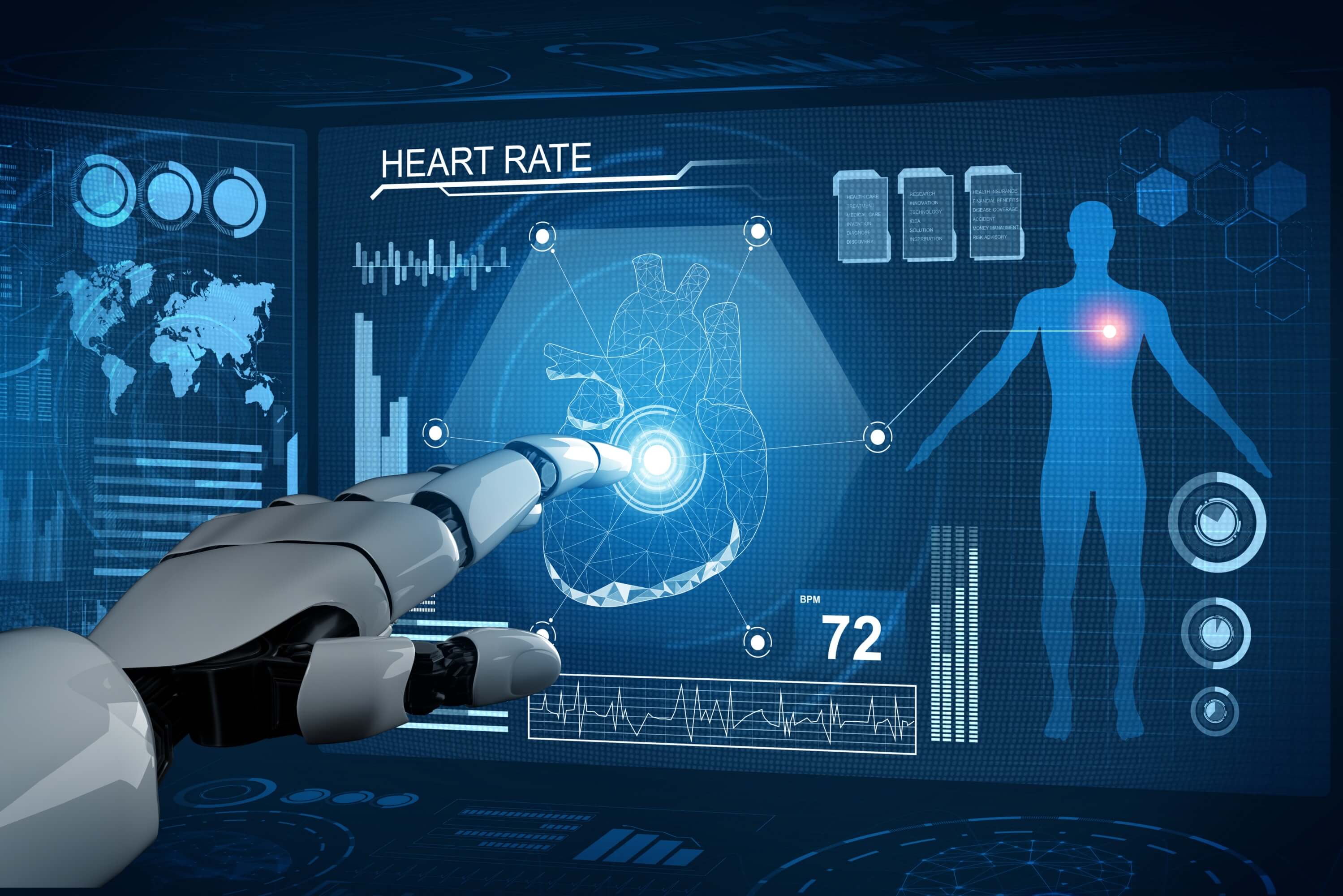
Cryptocurrency is a globally developing concept that is known by many but understood only by few. Cryptocurrency is a revolution of monetary markets that may be a mystery to some, misery to some, a lottery to some, and many more to others. It has made the history of making the whole world wonder what it is?Now there is hardly any bank, accounting firm, a software company, or government that has not done its research cryptocurrencies. So let us know the concept which has turned the financial world topsy-turvy step by step.Entrepreneurs from all over the globe are continuously investing in Blockchain & Cryptocurrency after seeing the huge rise of Blockchain rise in India. But before deciding to dive into this vast Sea, try to discover the overall skeleton of the Crypto Trading approach and have a clear understanding of cryptocurrency, blockchain, and their. exchange Hopefully, this article gives you a skeleton of how machine learning is used in crypto trading.Let us know how to use machine learning-enabled software in the domain of financial investment Optimization or automation in blockchain-based cryptocurrency markets.
What Is A Cryptocurrency?
A cryptocurrency us virtual or digital money based on the blockchain technology secured by cryptography making it almost impossible to counterfeit or double spend. The word “cryptocurrency” springs from the encryption techniques which are designed to protect the network.
Creation of Cryptocurrency
The production or creation of cryptocurrencies is different from the production or creation of regular money. There’s no central authority that issues new notes; instead, cryptocurrencies are generated through a process known as ‘mining.
How Does The Cryptocurrency Process Work?
Cryptocurrency is the transfer of cryptocurrencies or coins digitally via the blockchain technology. In other words, it is a digital cash system without a central entity. Cryptos are monitored through a P2P protocol. A Blockchain is a technology that supports almost every cryptocurrency. It is a decentralized public ledger or register which holds the record of every transaction that has been carried out in that cryptocurrency. Instead of being hosted by a central server, the ledger is publicly available and hosted by anyone wanting to contribute to its security. The transactions are assembled into what are called “blocks”. These transactions are verified by cryptocurrency miners to ensure their legitimacy. This is done to avoid double-spending of currencies and also to ensure that the input and output expenses tally.
Machine Learning and Cryptocurrency
People who have invested in the cryptocurrencies have difficulty in predicting the market trend. SoMachine learning and AI-assisted trading have attracted the developing interest of crypto investors in recent years. These investors use this technique to check the speculation that the inefficiency of the cryptocurrency marketplace may be exploited to generate bizarre profits by predicting their trends. Through machine learning, blockchain-based currencies turn out to be slightly more predictable of their if no less volatile and are ready to be safer, more stable systems than they were before its various implementations.
What’s Machine learning?
It is one of the most important and interesting fields or the scope of Artificial intelligence [AI].
It enables the systems or gadgets to learn, predict, interpret, and improvise the data without being explicitly telling them what to do every time.
We no longer need to outline all the steps in programming applications like the earlier times explicitly because of machine learning.
On the other hand, the gadget/system receives its training on a dataset that is highly sufficient and competent to build a model that facilitates and supports the device to make decisions based on their earlier data learnings.
Machine Learning and crypto trading
Machine learning is used in crypto trading in the foremost four ways mentioned below. They are
Flow Analysis
The single greatest, best way of determining the long term performance of a given asset is via the analysis of the flow of its funds. By examining the way funds are being transferred by known entities and comparing that to previously known data sets, machine learning is in a position to assist Individuals to predict value shifts in an asset. By being aware of this, the investors will be able to jump safely before the catastrophe strike. The applications of this are numerous within the crypto space, making this sort of machine learning something which will be absolutely vital to successful trading down the road.
Address Classification
One of the other major use of machine learning in the crypto trade is the usage of machine learning in classifying wallet addresses. By figuring out which wallet addresses are trade wallets and individual wallets, machine learning models can examine the conduct of crypto exchanges, where previously this is able to be impossible thanks to the shortage of comprehensive data sets.
Analyzing Trading Behaviors
Machine learning supports individuals to understand the performance of assets in a cryptocurrency market. It is also used to know about the t trading patterns of specific investors.In a given set of investors, this sort of machine learning is employed to spot investors in groups and find out the way they invest their capital, the patterns they follow.
Fraud Detection.
Among the maximum beneficial approaches, machine learning is being positioned to apply withinside the crypto sphere in the manner to locate fraudulent transactions.This is because the nature of cryptocurrencies permits the traders that use them to be more or less anonymous.Due to this feature of crypto exchanges, any damage the fraudsters manage to create is permanent.Therefore there is a dire need of a far and strong approach in stopping fraud than it would be applied to fiat currencies.Machine learning comes in as a perfect choice for solving the above-mentioned problems.This is because machine learning uses a prevention system consisting of both machines and human analysts, supporting each other in a feedback loop to tackle the problems.This has a big effect on any individual trader. By developing a safer, extra stable market for traders to alternate their cryptocurrencies within, exchanges like Coin base make certain that cryptocurrencies continue to be a possible concept.
Use of Chatbots
AI and ML have substantially introduced value to the everyday lives of the investors with numerous high-quality inclusions, for example, chatbots. Chatbots have stepped forward the way trading takes place on account that it is simpler for traders to not only communicate with the chatbot but also has access to the history of the statements. Moreover, chatbots learn themselves and don’t require any human intervention.
The Disadvantages of Machine learning in Crypto trade
The models don’t absolutely gift actual correlation among their predictions and the genuine results.
They don’t intimate the investors with potential risks.
Machine learning can be applied only if the trading follows a certain pattern; if there is no pattern, then machine learning is of no use.
Crypto trading is a volatile entity. You will need a complete knowledge of machine learning and crypto trading to diligently define your approaches which can be very complex.
Cryptocurrencies and machine learning can also seem like a high-quality but complicated hassle to dive into. However, it’s something we want to be attentive to see that many foremost companies have begun out to just accept cryptocurrency as a mode of payment. These organizations have also started to earn them with the support of machine learning. Currently, there is hardly any bank, accounting firm, a software company, or government that has not done its research on cryptocurrency, blockchain, and machine learning. Despite their advantages and disadvantages, the application of machine learning in the crypto trade is here to stay, especially where emotions can lead to pitfalls when it comes to decision making. ML is a well-structured trial-and-error and optimization method, and there’s no doubt why it is anyway chosen above the human performing the same function. ML is suggested for trading since it overcomes human limitations, but it’s only asked for experts to work. Since the parameters on which the info must be categorized are uncertain, non-expertise officials aren’t recommended. Some hooked up finances like Medallion fund, Citadel, D.E. Shaw is stated to be using machine learning strategies for buying and selling. However, the volume to which those ML strategies are implemented in buying and selling stays unknown to outsiders, then does the contribution of machine learning techniques inside the standard overall performance of these finances.As each blockchain and machine learning hold to grow, we are able to necessarily hold to look terrific innovation in each field, in order to truly permit buyers to higher apprehend the markets they exchange in.Quick Read: How Can Machine Learning Be Beneficial For Businesses?
[/fusion_text][/fusion_builder_column][/fusion_builder_row][/fusion_builder_container]
-Contact Us-
The World is Upgrading to Blockchain. Don't get confused and take the wrong base technology for your project. Get Free Consultation Now.
The mortgage industry was brought to the world by Ginnie Mae to solve a major economic crisis. During the Great Economic Depression of the 1920s. During the world economic crisis of the 1920s, people weren’t able to fulfill even the interest requirements of the loans, which was nothing compared to the actual amount of the loan. This led to the formulation of a concept, aka mortgage. The mortgage system allows you to pay some part of your principal and interest over a fixed period to reduce the liability on the borrower and give certain assurance to the lender. The industry has grown to a great extent. People on a large scale take up loans on mortgages to finance big projects like home loans, education loans, etc. The mortgage industry in the US alone is a massive $11 trillion. But that is not it, the mortgage industry is far from the point of saturation but is inefficient in filling the gap.
The Problems associated with the present Mortgage Model
The traditional mortgage model lags in some important aspects, which, if eliminated, can bring substantial growth in the industry altogether. According to a report published by PwC (PricewaterhouseCoopers), on average, a mortgage application is 500 pages long, which becomes a time-consuming process and often leaves huge chances of human errors. The entire flow of the application consists of several parties like brokers, banks, attorneys, underwriters, agents, etc. Which, in turn, increases the cost and also often ends up accumulating a period of 45-60 days. These setbacks have an undue influence on the growth of the mortgage industry as it increases the resistance of people against it.
The Solution
How can the mortgage industry become more efficient? The answer is Blockchain. Blockchain is a decentralized network built on a distributed ledger and fueled by the concept of Smart Contracts. Inducing this in the financial system has already brought out astonishing results, and now it is time to take it up a notch. Blockchain, which took the form of Bitcoin in the initial years, has broadened its scope to almost all the sectors promising a brighter future for each one of them conditioned to the lawful and ethical use. Blockchain, as we know of it, is an immutable chain of blocks stored by hashing, making it harder to break down the system. Of course, it is possible, but then it stands on stronger ground than the existing system of networks.
Problems will it solve for the mortgage industry?
Innumerable problems can be solved with Blockchain as an intimate part of the system. When we talk about mortgages similarly, blockchain networks can build a more soothing and accurate model for it. The Blockchain network is essentially a network of nodes associated with it. So instead of the data stored with the only party, it is locally stored at every node. We are going to discuss some crucial issues that can be potentially solved with the help of blockchain.
Maintenance of Documents and Streamlined Bookkeeping
When applying for a mortgage, there’s a ton of paperwork that needs to be done, and more importantly, has to be checked and approved by all the intermediaries thereafter. Now obviously, the exchange of these articulate paperwork is done via emails or fax, which is bound to take a handful amount of time as it gets exchanged from one party to another. The next obstacle is the inconvenience in updating the documents as per the suggestion of the involved parties and thereafter, maintain a record of those updates and also the recipient and provider of the same. It also opens gates to human errors in addition to being cumbersome.
This can be replaced by inducing blockchain where every party can access the documents using a digital ID, and the changes thereafter will not only be updated automatically but also can be tracked without a hiccup. As blockchain is a distributed ledger, all the parties will have access to the documents when and where needed. In essence, instead of having the documents in the hands of a single party, all the parties have access to them. This eliminates the traditional handoff process. In DSCR investor loans for rental property investors, lenders scrutinize cash flow and documentation; Griffin Funding offers a clear guide to DSCR calculations, qualification thresholds, and ratio-improvement tactics that blockchain-based document sharing can standardize and validate across stakeholders.
The added advantage here is that the changes get updated automatically and are easily traceable to enhance the reversibility of errors. They fill the loopholes that often are existential to the human bookkeeping process and make the process more streamlined and saves time.
Lower Costs
Whenever the application process of mortgage takes off, it often deals with a lot of intermediaries in the life of it. So say that every intermediary charges 1% on the amount of loan, and we assume there are six intermediaries involved, this means you are paying an up to 6% of your principal just to get the mortgage sanctioned. 6% of a huge amount is heavy. The middlemen involved couple is appointed for legal documentation, reaching out to prospective lenders, drawing up the paperwork, etc.
These roles can be replaced with the help of Blockchain and thereby reducing the costs you incur on these services.
Blockchain can eliminate the roles of intermediaries by matching the borrowers and lenders and streamlining the process further with the induction of smart contracts. This saves your substantial costs and reduces your liability. According to a report by Moody, the consumers can save up to $1.7 billion of the consumers altogether.
Smart Contracts
A smart Contract is a self-executed contract written in lines of codes. With the help of smart contracts, you can initiate the terms and conditions of an agreement into a code, meeting which the agreement will be executed after taking digital signatures from the involved parties to confirm the sanctioning of the mortgage. You can also write conditional codes in order to avoid further discrepancies; for example, you can initiate a refund of the payment if a certain condition is not met as prescribed in the agreement.
If all the conditions prescribed in the smart contract are met, the mortgage can immediately go through, and the parties will be updated in real-time regarding the payments and repayments.
The execution of Smart Contracts can also be used in other ways to potentially reduce the timeframe of the sanction and further instalments. It also makes it easier to track the various aspects and changes in the smart contract.
The execution of the trades and approvals of paperwork over a smart contract makes the process more streamlined, makes the validation mechanism easier and recording perceptual, thereby excluding the costs incurred in it.
Saves Time
This one is pretty obvious. If we integrate all the points discussed above, we can confidently say that these applications of the blockchain process reduce the time of the entire process. As mentioned before, a normal application process takes about 45-60 days to get approved. This is primarily because of the many intermediaries involved in the process that ends up taking an enormous waiting period.
However, blockchain induces the aforementioned characteristics into the network, which directs the borrowers and lenders that appropriately meet each other’s profile. The updates and payments are made on a real-time basis hence increasing the transparency even further.
Also, with no middlemen involved, the transparency increases even further because the time frame reduces significantly, as there is no accumulated paperwork and reduced processing time.
More Secure
The first and foremost reason that makes the blockchain network more secure is the traceability that comes with it. Blockchain records are immutable; that is, if a piece of information is entered into the system once, it cannot be removed without deleting the entire blockchain, which is very rare. Therefore all the changes made into the data that you have provided are recorded with all the other required details.
As a result of this phenomenal feature, you cannot forge records or enter fake details because you most likely do not have any access to the information which you plan to manipulate.
The gaps of human defaults are also filled, and even if a fraud takes place, it can easily be traced back to the origin, and the offender can be taken into charge.
Owing to this, Blockchain reduces the possibilities of frauds, which are very frequent in the mortgage industry.
Conclusion
The world is constantly on the mode of change and moving progressively towards success, the blockchain in the mortgage industry is still in its infancy but is trending and spreading its arms to reach a potential height of success and change the innate flaws of the mortgage industry and driving it towards success to reach the areas where haven’t been discovered yet by the existing trends in the industry. However, it is indeed a milestone because it takes a lot of effort and time, and yes, an initiative to inflict the use of blockchain into the industry. The entire system of blockchain is very secure but still is not invincible and needs to address any security breach that may coexist with it
A lot of people are not aware of the possible outcomes that blockchain has and will bring to the modern world. And with that comes resistance to adapt newer and trendier methods to fulfil various needs. But like the internet became a necessity for people after facing various objections in the initial phase, this will too, but it needs time to prosper the mortgage industry. These new decentralized platforms are making it simpler for people to access loans for all purposes. Likewise, the time and cost savings realized by lenders will be significant.
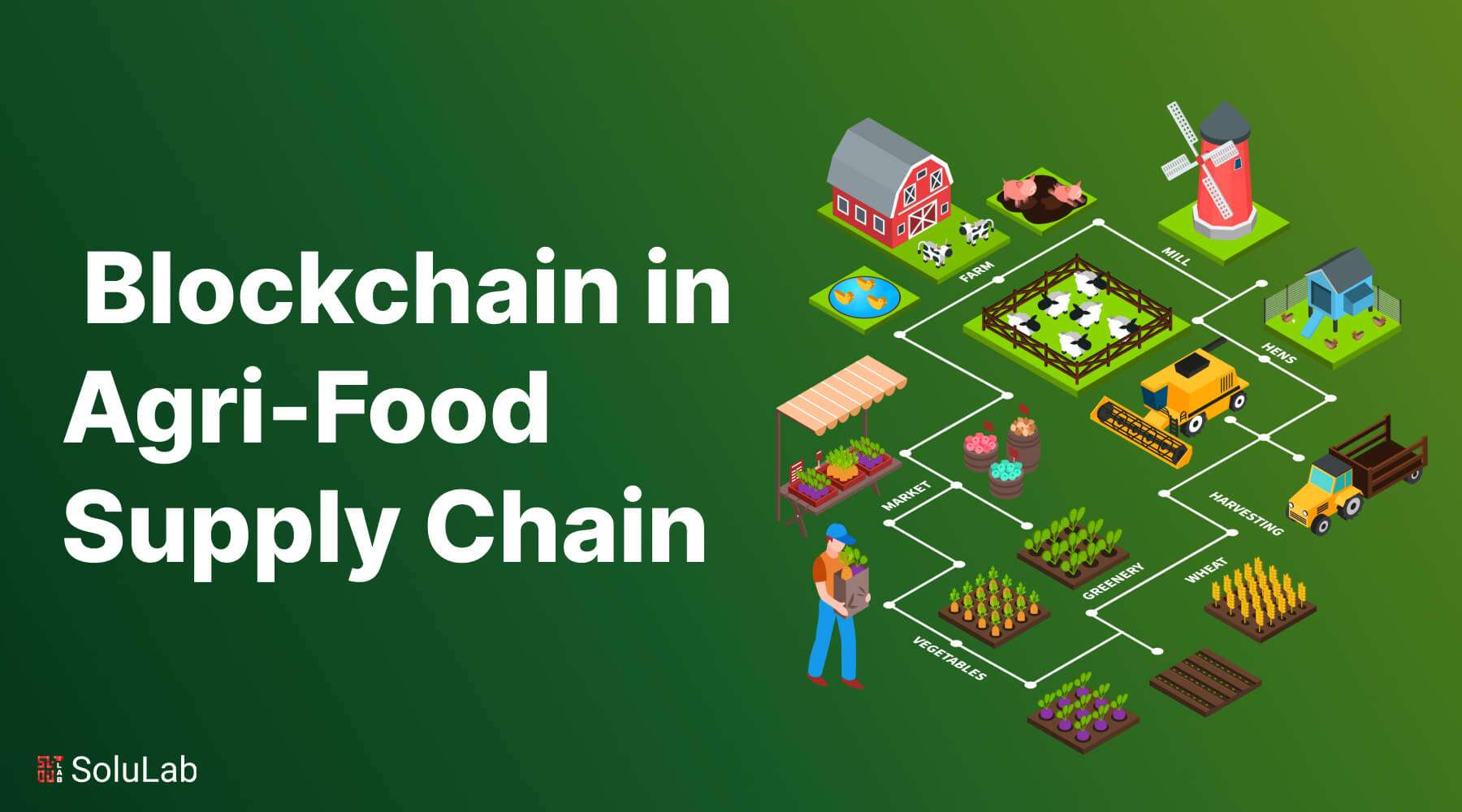
Now, you can know where your food comes from by the use of Blockchain; a technology that has shaken the Agricultural industry of the 21st Century. Blockchain is an emerging technology that not only conforms to cryptocurrency. But it has made swooping changes in the agricultural sector. Here’s the answer to all your questions.
What is Blockchain?
Blockchain is a ledger of accounts and transactions stored by all participants in a network. Blockchain is built on Distributed Ledger Technology (DLT), allowing any kind of information to be recorded and shared among the participants in a network. Any alterations made on the blockchain must be approved by all the users in the Peer-to-Peer Network.
Blockchain technology eliminates the need for middlemen in transactions resulting in transparency; data is accessible by all users. It also allows users to create their own digital identity, which can ease their trouble in providing financial services, social benefits, healthcare, political and legal rights and many more.
Because of Blockchain’s unique characteristics and the perks it provides, many companies of different sectors now increasingly demand Blockchain technology to be implemented in their services.
Blending Blockchain in Agriculture Sector
One such sector is the Agricultural industry. It is said that 6.7% of the economical production of the world is represented by agriculture, and nearly 40% of the world’s population is engaged in the agricultural economy.
However, in developing countries, the agricultural sector is still lacking and confines conventional methods of agriculture from producing crops until the shelving of products in stores.
Some of the promising benefits over the years that have been observed by implementing Blockchain are:
Agricultural Insurance: The process of validating claims by insurance providers are complicated and painstakingly long. Moreover, the risk of corruption and alteration of insurance policies are some limitations that farmers are apprehensive about. The introduction of smart contracts development from Blockchain eliminates these risks making it simpler, faster and transparent.
Land legitimacy: Blockchain technology is famous in the real estate business. In the same way, implementation of Blockchain for land records linked to ID can be proved without having to take trips to government offices, especially after incidents of natural disasters or wars.
Agricultural supply chains: Blockchain can assist in providing an immutable record from the initial stages of crop growth and processing to the retail store of a product. This can elevate the consumer’s trust in the products that they buy.
Traceability: Blockchain enables companies to track their products and see where they have been disbursed. In the process of tracking unsafe products, the data stored through the use of Blockchain makes it easier to locate their products. It has been claimed that, with the help of the Blockchain system, we can now trace the path of food from farm to the stores in just a few seconds.
Goods Management: Almost all the companies face the issues of data management, delay in payments etc. However, with the use of Blockchain Technology, they are able to keep track of organized data which is incorruptible.
E-Marketplace Creation: Producers may not know the market and trending prices or which areas have the most larger number of customers. Thus, it creates a digital market for producers to connect them directly to their buyers.
The knowledge of financial transactions, farm inputs, demands of crops in the market, market-rate supply chain land holding etc. can be procured and analysed from Blockchain-based platforms.
Access to Capital: Small scale farmers, shareholders, might find it difficult to procure loans for start-up businesses because of limitations like credit history, land ownership and so on.
However, Blockchain provides investment tokens and funds for their business to pay for raw materials and machinery.
Food safety: As consumers take precautionary measures, producers can provide a number of information through data that is stored. It gives out the info of quality and what goes into their food, ensuring quality. It also monitors storage conditions.
Environmental sustainability: All industries related to producing commodities are concerned with the number of toxic substances that their industries release.
Policies are also tailored, keeping in mind the environmental sustainability. The crucial problem here is the degradation of land, soil and water where food is being produced.
In this context, the sustainable development, proper management and rational use of agricultural fields, water resources and soils are of utmost importance. Tracing this information via the supply chain, making it visible to the public, is essential for putting public pressure to producers and policy-makers on the aspect of how the food is produced in a sustainable manner.
FUN FACT: ‘Plastic Bank’ based in Canada has been successfully set up for developing countries producing wastes. With every batch of plastic brought to recycle, they are awarded Blockchain digital tokens.
Subsidiary Disbursement: Agricultural-driven countries can have access to all information regarding financial help distributed under Government schemes. It ensures transparency on the correct and uncorrupted distribution of capital.
In addition, the application of Blockchain results in:
Simplified stages of the supply chain from farmland to store shelf
Informed consumers who are aware and satisfied
Decreased dependency on intermediaries or agencies
Elimination of fraud and promoting an inclusive trade
Improved quality of products
Lesser risks of food-borne diseases
If you’re still perplexed of how Blockchain takes place in the agricultural sector, or driven by curiosity, explained below are the stages of the mechanism of Blockchain in Agriculture:
1. Data storing: Smart farming has enabled farmers to use Internet of things (IoT) sensors and devices to track the temperature, water level, soil quality and other factors that affect the growth of crops. This information gathered is then structured to make it comprehensive.
2. Value Data: before updating the collected information into Blockchains, more value and quality is added to the information in two ways: adding timestamps and demographics. Secondly, the product information is made sure that it follows strict security measures.
3. Insightful Information: To add more value, with the help of algorithms, the quality of the crop, identification and demand predictions in the market are made. In this way, farmers and stakeholders can make decisions to improve their irrigation system. All of this information is transparent for growers, producers, service producers and retailers.
4.Interplanetary File System(IPFS): the data is then stored in a distributed platform called IPFS and is stored in a blockchain. It then produces a smart contract which includes rules to facilitate storage of data, and it’s accessibility to the participants in the system.
Blockchain in Food Supply Chain
1. Data storage: Above, we have learned the process of how food is grown and under what conditions.
2.Distribution: the food processing companies now on the bidding platform. After this is validated, the food is transported to refineries in IoT enabled vehicles where the required storage temperature is maintained. Every process that takes place in the refineries is recorded, ensuring retailers to give out the proper information on the quality of products.
3.Supplying: Supply of processed food is then again, transported in IoT enabled vehicles.
4. Consumers can now procure information by scanning the QR code like the batch number, data on food processing, expiry date, price, etc.
Platforms applying Blockchain Technology for Agriculture and supply chain.
AgUnity provides solutions to digital identity and financial inclusivity to empower poor farmers. The AgUnity App helps small farmers plan, trade and track everyday transactions. By using Blockchain, AgUnity ensures that all transactions users and clients are securely recorded on an incorruptible Blockchain ledger. The AgUnity app provides people living in remote areas accessible tools to connect with each other and establish effective lines of communication trade.
FARMS ( Financial and Agricultural Risk Management for Small Holders) is based on the concept of Blockchain virtual currency platform, ensuring transparent transactions. One speciality is that farmers can buy digital currency and add it into their virtual wallets. They can redeem or withdraw these vouchers and coins.
AgriDigital is digitizing and growing grain supply chains connecting farmers, buyers, investors through a single platform, allowing them to contract, deliver and make payments securely and in real-time.
BanQu is another Blockchain platform for agriculture that allows farmers to use their smartphones to record their personal information and transaction history. Furthermore, these digital identities can be used to apply for credit while they search for financial aid in the future.
Hello Tractor connects tractor owners to smallholder farmers in need of tractor services.
TE-FOOD provides backtracking of product serialization to the information of custom protocols carried out to the consumers building trust between the producers and the consumers.
Despite its initial development, Blockchain has a growing impact on different sectors replacing many financial institutions, banks, education, health care system, educational system and above all, as discussed, it has significantly brought changes in the dimension of agriculture. It has brought Transparency, security, providing streamlined operations, a greater degree of analytics and a more efficient consumer engagement.
Consumer safety is ensured as Blockchain technology unfolds unique transformations in ensuring quality-controlled food, providing storage conditions and also empowered many farmers to be insured. One of the most important features it brings is environmental sustainability which is the need of the hour.
The use of data is the crux to improve productivity and sustainability as people can track the progress of crop growth according to the environmental conditions and needs. Blockchain has also reduced the need for agents who deducts 5-10℅ of brokerage fee and also has reduced the trouble to trace the delivery of their products to stores.
Blockchain has empowered many small-scale farmers to elevate themselves as there’s no hassle to find brokers and allows them to effectively connect to their consumers and retailers.
Also, farmers can have access to data related to seed and soil quality, pH level, payments, demands, and efficiently supply their products with fair pricing, which was once controlled by big MNCs.
Although it may seem like a cake and ale task to do, Blockchain technology has a long way to go parallel to the developing countries. Because not all, farmers are smartphone-literate in the third world. The apprehension, because of the cost of implementing Blockchain, has created doubt among farmers. But all it takes is a bit of education, a zeal to innovate and a bigger scope in life. Nevertheless, Blockchain has provided promising results and innovatively changed different sectors.
First, to understand our stance at blockchain being our knight in shining armor for cloud computing, let us first understand the innate nature of cloud computing and what ground it stands on. In a nutshell, Cloud Computing is the delivery of services like storage, databases, and the internet on a local server rather than a particular computer. The main aim of cloud computing is to enrich accessibility. It enhances the IT and technical work for developers and professionals to effectively organize their resources and manage their accounts. So quintessentially, the entire data is available on every device it is accessed from.
Cloud Computing has been consistently growing over the last decade. It is assumed to reach the mark of $300 billion in 2020. This growth is mainly owed to the big tech giants like Amazon Web Services, Microsoft Azure, Google Cloud, Alibaba, etc. with AWS being the top player in the field with a market share of over 33%, Key players who have established a solid ground are expected to enter the market soon enough namely BMC, Open Text, etc.
In particular, Amazon and Google consistently look ahead in the game and successfully deliver up to 50 new features every month. Dazzling as it is, it puts forth complexities and discrepancies that arise with innovations. Apart from this, the features introduced are not the immediate need of firms and individuals, so they end up inhabiting the spaces unnecessarily of already diverse and complex IT infrastructures of certain organizations.
According to Gartner, the global expenditure on the Internet of Things (IoT) is expected to cross $1 trillion by 2021. This clearly figures clearly state the enormous amount of data that will be generated by IoT, and this increasingly necessitates the need for higher optimization. According to a white paper published by Cisco, a conglomerate, the data generated, by 2021, is expected to rise to 850 Zettabytes (109 TB makes up 1 ZB). All these stats raise a serious question about whether the existing computer systems can process and store such a humongous amount of data.
Loopholes in the current Cloud Computing Mechanism
According to a survey directed by Gartner, Cloud Computing tops the list of emerging risks, contributed by a council of 110 senior executives reporting their respective company’s problems. The main issue that gauged the focus was addressing the security of a platform with such huge exposure and can be prone to unauthorized access. The complexities that come with cloud computing also invite attackers globally to find leaks in the system and malware personal and sensitive information. The downside can also take the form of a lack of operations from the cloud provider’s side as a result of disruption that consequently leads to downtime in the entire network, failing to provide access to information.
There suddenly has been a pool of free service providers that offer the benefit of storing databases and information. However some of these take an ungranted stance by clearing the information they perceive as offensive without providing proper backup to clients. This leads to an increased risk of data loss and dispersion of control.
A renowned global cryptographer, Burce Schneier, pointed out that cloud computing may fail to meet an organization’s legal requirements. The trends in regulatory infrastructure have seen drastic changes, and the complexities in cloud-based centralized computing make the mechanisms harder to trust and tougher to get authorized.
Another demotivating phenomenon that has been observed is that cloud-based companies have been popular in large businesses and do not attract small industries primarily because of their affordability and feasibility.
Researchers and Analytics suggest one of the main disruptions is the centralization of these cloud services. The data has to travel through highly regulated central servers, which ultimately leads to a rise in costs and a decrease in efficiency and connectivity. Centralization of repositories also adds concerns of privacy, security, and verifiability of computations.
What can be done?
Decentralization of these repositories and servers stands as a promise. And what better than inducing Blockchain in Cloud Computing to provide it the benefits of devolution? Developers worldwide have realized the urgency of a decentralized network to reframe the infrastructure of cloud computing. The IoT industry can gain largely from the integration of AI and distributed ledgers. One similar concept is edge computing. Edge computing is somewhat a mixture of P to P (peer to peer), hoc networking local cloud, grid, fog computing, distributed data storage, and other enhanced solutions wherein some portion of the data is displaced from one or more central nodes to the end-users or the other edge local cloud computing, grid computing, fog computing, distributed data storage and other more sophisticated solutions. Edge Technology will dominate the IoT market by over 25% in the next few years, which is astonishing given that investments in IoT are expected to reach $500 Billion. Edge computing provides comprehensive solutions to these problems, which are unavoidable in cloud computing. It addresses the network bandwidth issue by reducing it to a permissible limit; the data transfer becomes much smoother and facilitates data compression. With innovations in the IoT sector, M2M i.e., machine-to-machine transactions and transfers will also grow and provide a flow for the same, for example, environment or weather metrics.
How will Blockchain address these issues?
Blockchain technology is built on a distributed ledger mechanism wherein all the parties reach a consensus to build the blockchain. Another advantage to this is that blockchains are immutable, to be simply put, once some data is stored on a blockchain, it stays there forever. This’ll assist you in knowing where, when, and how your information has been used—thus safeguarding the security of your assets and information saved on the clouds. So we all can agree that blockchain addressed some of the major issues consequential in cloud computing, if not all.
The Blockchain technology has already shown wonders in the financial cryptocurrency market with Bitcoin, which then led to an intervention of many such brands. Hence, on the path to revolutionizing the finance industry, the same can be said for cloud computing very soon.
Blockchain can also assist with its reward mechanism. The host of various nodes can be rewarded in its currency, also known as tokens. It is a useful encouragement tactic for interested parties to put their resources online, and it also avoids misbehaving actors.
With so many sugar cubes, there are some sour patches. Blockchain has to ensure that the reward mechanism is in place to provide a proper reward system to the stakeholders, failing which the institution’s integrity can be questioned. It could also make sure there is no unjustified distribution of rewards.
Another feature that comes readily with cloud-based computing is the large chunk of data that it deals with, i.e., more or less scalability. With the current infrastructure systems in Blockchain, and its vulnerability, how will it be able to garner large amounts of data and exhibit scalability while ensuring efficiency and speed of the enormous transactions and transfers of data?
One of the most important aspects is the proper computation of the program so as not to make it more vulnerable to attacks by cybercriminals. It is the top priority failing in which there will be a high breach in the protection of sensitive information that can be devastatingly misused if tampered with. This causes the need to center the attention to making it more secure and properly calculated to avoid discrepancies. And in a sense, if a provider cannot promise these basic rights, they deny the services they aim to offer.
Using a trusted interface that links smart contracts with real-world occurrences because a glitch in this system might lead to a severe crash in the system.
Another aspect that needs to be taken care of is the erasure control if and when the wall crashes. To control how much data is to be erased, and what data should be preserved, and in some cases, have a reasonable backup. These powers also need to be carefully distributed to avoid major losses.
Evidently, before implementing these changes, there is a lot down the road.
Conclusion
Cloud Computing has undoubtedly given us so much exposure. No more transferring loads and loads of files when changing devices and wasting human resources and time. Your Google Accounts or Apple Accounts do that for you. Just log in and there, you go, all your files in front of you. Sure it has made our lives much easier, but its growing complexities require more innovative solutions to manage time, increase efficiencies, and enhance regulation. A lot of these problems are existential because of centralized systems and servers. Researchers have consistently been trying to find solutions and have narrowed it down to Blockchain as the game-changer. True, with the many advantages that blockchain provides, it comes with a checklist that needs to be fulfilled before it can be optimally integrated with Cloud Computing. It still is a long way to go.
An agreement two or more parties arrive at and agree to implement on a legally enforceable basis is called a contract. A contract defines the rights and duties of each involved party provided it fulfills a certain set of requirements. The exchanges that it monitors are mostly of goods, services, money, or the promise of any of those in the future. A simple example would be money kept in a bank at the promise of a certain interest rate or the provision of a certain service to a company with the promise of getting a salary at the end of the month, provided the work is finished satisfactorily.
Coming to a contractual agreement is a little more complex than it sounds. Since contracts are legally enforceable, drafting it with precision becomes extremely important for it too- 1. even qualify as a contract, and 2. avoid conflict in the future. For the first part, it must contain four parts: an offer- a clearly stated offer with unambiguous metrics must be made, and acceptance- it must be officially accepted by the other party(s), an agreement- terms and conditions must be discussed and a consideration- a formal exchange must happen or be promised in the future. For the second part, a fallback mechanism needs to be put in place in case any of the involved parties fail to deliver. This leads to certain requirements.
Cost- third party intervention, especially in case of a conflict, becomes extremely relevant in order to maintain fairness and ensure professional conduct.
Introduction to smart contracts
When a contract’s execution is not left in the hands of the people involved but upto computer code, it is a smart contract. Smart contracts are self-executing and do not require third-party intervention. All terms and conditions, details of the exchange, policy and time constraints are converted into sentences of computer language (such as Java and fed into the system. Once it has been validated, the contract executes itself without any further involvement by any party. Such processes are irreversible, traceable, and transparent.
Perhaps the simplest example of a smart contract would be a vending machine. When a coin is put into the machine, provided its value is equal to or greater than the cost of the product, the product rolls out.
Role of blockchain
Blockchain technology is currently the largest, most secure distributive ledger technology (DLT) available. A DLT can be looked at as a huge, computer-based record keeper/book which has the entire data copied over every single device in use. What this implies is that every bit of data stored on a blockchain is universally available to users without discrepancies and not centralized, exponentially increasing transparency. What blockchain brings with itself to DLT technology is unmatched security. There are multiple reasons behind it.
Scams are difficult on blockchain because a hash (or the public key) is derived by performing complex and irreversible mathematical operations on the private key, which are nearly impossible to decode. In addition to this, every block on the chain is unanimously approved and for additional security, rigorously time stamped. Every programming happens and is visible in a particular order, and time details cannot be altered. These details become relevant with respect to smart contracts.
Smart contracts are designed and carried out inside a distributed blockchain. Certain steps are involved from creation to execution.
Most of the time, several sub-conditions are left upto customization by the user. For instance, some conditions may be introduced/verified, and the code would function, taking the particular line of code.
Examples of smart contracts on the blockchain
Here are some relatable examples of distributive ledger powered smart contracts.
Blockchain developers write the contract in the form of computer code. They use a programming language to do so. While writing the script, developers implement the logic behind the contract, which enables its execution when respective commands are given by users.
Once the code is uploaded to the blockchain, it is made available to all systems using the technology. This is done in such a way that for every identical input, the output is also identical.
Online shopping and supply chain: With nearly everything being on our phones these days and online shopping and ordering being the latest trends, a fast system to deal with these transactions is imperative, and blockchain smart contracts are exactly that. The process of registration of orders, the transmission of them to warehouses, and the initializing of the shipping process are no longer manual or fed step-but-step but largely automated. Verification through OTPs and passwords are all triggers that take the process from one stage to another. Once both parties ‘okay’ the transaction, the majority of intermediate steps are carried out automatically.
Copyrighting and proof of ownership: It has now become much simpler for artists and content creators to put their content out there without facing a large magnitude of risk of losing their rights or relenting control to the bigger sharks. Distributive and irreversible records of blockchain provide a large level of objectivity, and claiming rights has become less complicated. In addition to this, the terms that each firm or creator can set are varied. This means some licenses can be pre-given to readers, whereas some other uses might be prohibited and, in some cases, even punishable. The process of spotting controversies and a portion of verification becomes computerized instead of manual.
Insurance: The way smart contracts in insurance work is the conditions are verified on computers, and when they are met, the compensation or agreed upon payout is automatically processed. One sub-example of this would be flight delay insurance. Airlines often collaborate with blockchain to set up flight delay insurances where once a passenger is registered and the flight is shown to be delayed, payouts are automatically granted. This not only saves a massive amount of time and labor but also increases the goodwill of airlines and consumer trust.
Industries that are using Smart Contracts
Getting copyrights and patents: verification of the authenticity of claims is faster, more detailed, and more efficient when they are computerized, and that is about what happens when a claim is made on the blockchain. To check for explicit or implicit plagiarism is carried out.
Protection of intellectual property: as discussed in the previous column. This comes into the act when an approved right is infringed upon. Verifications take place to determine the validity of the claim.
Transfer of money or assets: cryptocurrency or even bank money can be transferred on a click without third party involvement, much like depositing or withdrawing money at an ATM.
Theft protection: sale of non-existent, pre-sold, or unregistered products is not possible on the blockchain or smart contracts. Hence they have found a use in law enforcement and are used in catching thefts since some loophole is always left behind.
Authentication: from the granting of diplomas to job certificates, many of these written contracts are generated via smart contracts.
Insurance: also, as discussed in the previous column. Processing payouts is automated on the fulfillment of criteria.
The Upside
The level of objectivity smart contracts bring is unparalleled. Terms and conditions are not left upto interpretation, and, especially in cases of insurance, the customer is subjected through much less physical and mental trauma. This also makes it easier for content creators since the concrete proof is much more easily available.
Time taken is minimized. Every procedure is not carried by people; machines are doing it by using a pre-fed algorithm.
The absence of third party intervention minimizes human resource used.
The traceability is high. Hence every action can be tracked and checked in case disputes arise.
The Downside
Since actions on the blockchain are irreversible; there is no room for error. Changes cannot be made post-facto and fallback mechanisms need to be completely separate.
Contracts remain untampered only if the coding is perfect. Hence flawless programs are a prerequisite to dependency on smart contracts, which results in high dependency on programmers. Unlike traditional contracts where technological knowledge was not a prerequisite, only coders can make these contracts.
Lawyers are not completely eliminated. After a point, coders working for large companies also need lawyers for legal input.
Conclusion – Future of the sale of goods
Smart contracts have not been here forever, which is why people are still suspicious about it, but if more information is spread and blockchain development becomes more and more bug-free and popular, people might abandon their stigma. Instead of writing and signifying long drawn contracts and doing procedures to participate in the investment or buying and selling market, buying, selling, and investing with a click is much more accessible. Ambiguity is much lesser, and security is much more. The coder dependency might be a little intimidating, but just like only a surgeon can perform surgeries, this is something that needs getting used to. With more and more programmers coming up in the industry, smart contracts can become more common and doable. The need for lawyers in a new industry can be seen as a new and upcoming prospect. Looking at the whole picture, factoring in the technology trend, and the fast pacing world, there is no doubt that smart contracts can become a viable future of marketing.
The Internet of Things does connect several individuals from different corners. It is a revolutionary technology that bridges the gap between the machines and individuals by collecting and sharing information using different devices. Such devices do include sophisticated chips, actuators, sensors, and much more. Such devices are connected to physical devices, which collect data and send it across the IoT network. It does have capabilities to share data from different locations.
With the use of different technologies, such as AI and ML, IoT becomes more revolutionary. Whatever data is collected using the Internet of Things, different AI and ML algorithms are used to analyze data. The Internet of Things does build a network that transmits sensitive data; hence the security of such data is necessary. With the use of technologies like Blockchain, it has become easy to secure the IoT network.
Security in IoT devices
Security of the IOT network is a significant concern as it does heifers massive scale deployment. Different IoT devices do have lots of vulnerabilities, which makes it easy for hackers to perform DDoS attacks. In DDoS attacks, different computers are targeted and vast data request areas are made, which causes the denial of service attacks for users. Various DDoS attacks have generated lots of issues for industries and individuals. AN unsecured IoT network is much vulnerable to different attacks.
Another main concern is Scalability. IoT networks grow and are controlled by centralized authorities that authenticate, connect, and authorize different nodes in the IoT network. Huge investments are needed to make such big servers to handle large information exchange. If the entire network goes down, the server is not available.
Blockchain technology is a revolutionary technology or distributed ledger technology. Such technology has great usability to secure different IoT networks and solve different challenges related to security and scalability. Blockchain is a game-changer due to some unique features. Blockchain technology involves the use of distributed ledgers, where no central authority is there. All data validation and recording are done on different nodes of the network. Blockchain does not allow any user to delete or amend any data stored in the Blockchain.
How Blockchain technology solves different challenges such as security and scalability
Different IoT networks are capable of processing different kinds of data transactions across different industries. It makes it difficult to find any data leakages if any cyber attack is done by cybercriminals. IoT generates a huge amount of data, and different stakeholders are available in the network. And due to a large number of stakeholders, different data is not clear.
Blockchain. Technology would build an infrastructure for different devices, which can directly connect and transfer a piece of property like money or data. To enable different exchanges of information, IoT devices can be used and smart contracts would enable agreement between two different parties. Such features would enable the autonomous functioning of different smart contracts.
Blockchain technology helps in different ways to make the IoT network more secure and scalable.
A distributed ledger is a blockchain network that stores data in an immutable form. It means that data in the blockchain network is not edited. Hence it becomes difficult for different hackers to make changes in data stored in a blockchain.
With the use of blockchain technology, the IoT network would have another layer of security. Hackers would be required to use different techniques to make the security layer vulnerable and access the network. Blockchain technology does build a robust level of encryption of data in the Internet of Things network which makes it very difficult to override the data.
Blockchain technology brings transparency and it allows only authorized users to access the network. It builds a reliable way of accessing different data in the IoT network.
Blockchain technology makes its network more scalable since it increases the processing of different transactions in the IoT network. Different IoT devices can be connected to the IoT network. It makes a distributed ledger technology that makes a viable solution.
Blockchain technology allows different stakeholders to trust each other. Blockchain allows different industries to reduce fees by eliminating costs by eliminating the processes for different IoT gateways.
Blockchain technology would make sure that IoT based devices are reliable. Different IoT networks do have a central gateway for communication. But with the use of Blockchain, it would make sure that no single source can control the device and gain all different information.
The Internet of things has rolled out different consumers as well as businesses. Different devices are great to use cases of the Internet of things. Blockchain technology is not only underlying technology for digital currencies. But Blockchain technology has different use cases along with digital currencies.
Blockchain technology with IoT would lead to great devices that will share information without any involvement of centralized authority. Blockchain and IoT would make everything more secure, scalable, and useful for everyone. It would connect different devices securely and increase the scalability for sharing data.
Use of smart contracts in Internet things devices
Different smart contracts work like traditional contracts. Smart contracts are self-executable contracts that can be used by different stakeholders. Such contracts would automate that payment without any need for manual work.
Blockchain technologies and the Internet of things
A very basic problem with different IoT devices is the security structure. IoT networks work based on a client-server model which is managed by a centralized authority. It does cause a single point of failure. Blockchain technology does address such a problem by making the whole network decentralized. While building IoT devices with the use of blockchain ledger, different challenges need to be considered.
Scalability
Networks need to be scalable, and it does allow users to handle massive amounts of data collected using large networks. It does have low transaction speeds lattices. With a great model, it would make it easier to make solutions with fewer difficulties and quickly.
Sensors
It does need to have sensors that could measure data correctly and according to need. It would make sure that the transaction executed is secure and correct. With Blockchain technology, it would be easy to ensure the integrity of different IoT devices, which cannot be altered using external interventions.
Network Security and confidentiality
The security of the Internet of Things network is essential. And it can be done using Blockchain only. Blockchain technology would make sure to save the identities of users using the public key. Different industries would be able to make more private networks by sharing any details about the users.
Different Industries working in Blockchain and IoT, and its use cases
The Internet of Things is the technology behind different smart sensors. Such make devices more portable and interactive with different blockchain networks. Both Blockchain technology and the Internet of things has a large potential to create a marketplace of different services and devices. It gives different industries to create valuable information from the collected data. With a large number of blockchain protocols, IoT devices, and devices, it shows that blockchain technology has a great use case.
The Internet of Things is the technology behind different smart sensors. Such make devices more portable and interactive with different blockchain networks. Both Blockchain technology and the Internet of things has a large potential to create a marketplace of different services and devices. It gives different industries to create valuable information from the collected data. With a large number of blockchain protocols, IoT devices, and devices, it shows that blockchain technology has a great use case.
According to different statistics, the scope of blockchain technology and the Internet of things is huge. It is used in insurance and would be used in different industries. It builds a great model using telematics.
Different Industries where both Blockchain and IoT can be used are the following
Blockchain and IoT can be used in the insurance industry. Such a use case would allow data analysis more easily and it would automate everything.
IoT and Blockchain are different security and manufacturing. Blockchain would make it easy to secure data and solve different security problems. IoT and Blockchain would solve different security challenges.
Another main use case of IoT and Blockchain is in the building management and industry management. Blockchain technology would store all different transactions that occur between different machines. With the use of blockchain technology, energy sharing would be and decentralized. With IoT devices, it would be easy to sell renewable energy.
Some more scenarios where IoT and Blockchain can converge
Blockchain technology and the Internet of Things have great use cases. Blockchain technology can be used in different industries like the electricity industry to buy or sell energy using smart contracts. Smart contracts are autonomous contracts that automate different transactions.
Different security and control reasons lead to more efficiency in music systems. With the use of different technologies, like AI and mL, decision making can be more efficient and it would enable some new use cases. Several areas are available where Blockchain and pity can be used.
Different use cases of IoT and Blockchain are smart contracts, network sharing, end-user authentication, network management, and supply chain.
Conclusion
Blockchain technology and IoT both are revolutionary technology and have great potential, but due to different constraints, it lacks widespread adoption. Such concerns are caused due to technicality and security concerns. Different industries are using the combination of technologies to increase security and work with different scalable solutions.
If you want to know about mini apps, it is essential to understand what such an app is and why it was created. In this blog, we will discuss mini-apps and some of the advantages.
Creating an application is not an easy task
Different knowledge of technology
It is tough to work on the applications when you don’t have a technical team. If you need a technical team, you can outsource it or get it in the house. Different recruiting agents have their plans. A developer needs to get details about different frameworks, like who will use an application, which devices would be able to run applications and much more. Different technologies are available, but it becomes difficult to choose the correct framework for application designing.
It involves high cost marketing
Different consumers do like to know if different people use the application or not. Is it famous or not. Such questions need to be answered; hence you need to spend substantial costs on marketing. Such would assist you in getting consumers and would allow them to download applications. Different big techies do spend huge costs on marketing. Marketing is what brings more customers. Hence you need to use different marketing strategies for marketing. With such strategies, your application would reach the crowd and get famous.
Expensive
Apps are costly to make and manage. It involves a large number of costs, along with iOS apps and Android apps. Also, it is required to manage and update regular application basis. For example, if you want to create an ecommerce application, it is essential to install a booking engine in an ecommerce website and get a process flow along with a payment gateway. It involves vast hidden and extra costs. Hence it becomes quite expensive to make applications.
Why are Mini Apps solutions?
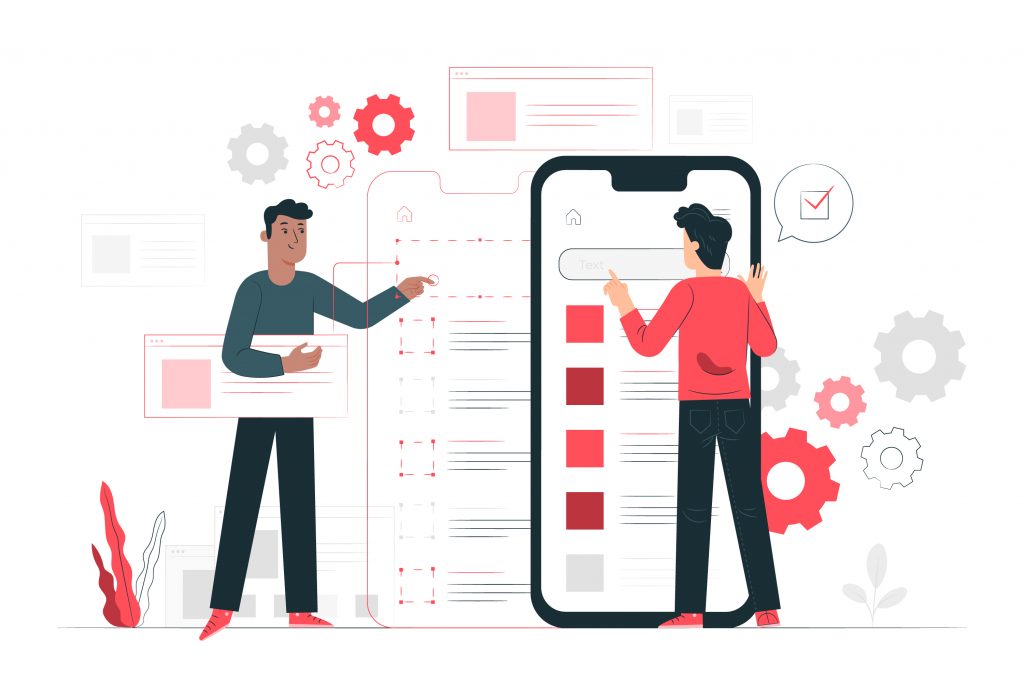
Mini apps are just like applications, but they do have many applications under them. For example, in the right box mega apps in India, It does have different Mini Apps.
Different consumers do like to install an application, from which they can have access to different applications. It allows users to search for different applications using the search box and name of the application. Once the user gets the application, the user can use the add button to add a mini-application on the home screen.
Such mini-apps do come with different functionalities which you would like to have in applications. It does have a large number of applications such as messaging screen, management console. It does come with the built-in marketing features, and customers invite which are quite different.
How mini apps help to run businesses?
To solve any issue in businesses, it does require a mobile application. With a mini-application, you can do it yourself(DIY) app such as good box partner app. It would allow you to create your commerce ready mini-application.
Mini apps do come with a large number of features.
A messaging screen
A cost screen
A payment gateway.
No commissions.
Ability to give reward points to customers.
Why do users like mini applications?
Users do need to install only mini applications, and users can get more applications. Mini apps do come with different advantages. Such as WeChat is a mini application, which has integrated several programs in the ecosystem. Such allows users to use several advanced features such as task management, coupons, e-commerce and much more.
Mini apps in iOS 14
iOS 14 brings a new way to interact with different applications. Such applications are known as app clips. It aims to allow you to use applications which are not available in your device. An app Clop is a mini-app which does come with limited functionalities. It was launched to save the storage in your device and give you a fast experience.
Wechat does allow users to build Mini applications which can run in the mini applications. Different technologies allow users to make such applications which work. It gives developers a rich platform for building various applications.
Different applications in mini applications, gets easily loaded and are easy to use.
How mini applications work?
Different mini applications, can be used in mobile. Such mini applications allow users to make instant use of different applications. For example, in the wechat ecosystem, various applications can be integrated, and users can use it for a large variety of applications like ecommerce, games, productivity, and much more. It enhances the user experience with different features and APIs WeChat allows users to link to different mini-programs of any choice
Another great use of mini applications is APP clips. Different app clips in IOS 14 allows users to have access to different applications. Such brings lots of advantages in iOS devices for storage. Some of the features are. Such applications are part of the main application.
An app clip is a small part of any application because it gets developed in an Xcode project. It is short and swift to open. And it allows users to submit a review about the applications.
App clips streamline the work, such as it allows users to complete tasks efficiently. Also, it allows users to use Apple pay and sign in with the Apple.
How can you create an App Clip?
With the use of Xcode, users can add different app clip destinations in the apps Xcode project. It would allow users to share code and various assets in the app clip and app. Also, it would enable users to run, build and debug different app clops in the simulators in the device. You need to configure the web application to the system for verification of the authenticity of the app clip.
You can add an app clip target
Here you need to have another application which offers the same functionality as the app clip. So you can use the same Xcode for both applications. If you want to work on different projects, you can create a new iOS project in Xcode as you can add an app clip in the existing application.
Once you mention the app and its destination you need to add associated domain entitlements
Users do need to launch app clips using the invocations which run using an innovation URL that redirects to the app clip. If in case users install the app to replace the app clip, a full app would be installed. Associated domain Entitlement should be added to app clips and align with it you need to make changes in the server. Since it would allow devices to validate the app clop for any launch.
After you add an entitlement URL, you can further add code and assets
With such app clips, users can make use of the same frameworks used by full apps. You can add the same code for assets to the app clips target and it would work in the same way it works with another target application. It allows users to create different ounce files and assets. In order to ensure the maintainability of the project, full app and app clip should have the same code as much as possible.
Use of active compilation conditions in mini applications
If you share code between the app clip and the full clip, you will get some cases where you won’t be able to use code of your app in the app clip. During such issues, you can make use of the current compilation conditions in the settings. It would exclude all such code.
Make changes in the server and Xcode project
An app clip card would allow invocation of app clip. It would verify the app clip’s configuration and invocation URL. If verification is not done, it won’t show and app clip card and app clip won’t launch. To enable the system, it is crucial to verify the app clip. You can make changes in the web server and Xcode project.
Conclusion
With mini apps, the user does not need to download any full application, which saves the storage. Such mini apps were introduced in the new iOS 14, which allows users to use any application with installing it; such mini applications are known as app clips. Mini applications are quite strange and ambivalent applications in technology. According to face value, it is considered to be quite a terrible choice since it has low capabilities and proprietary language. But it is advantageous since it converts different applications to another application and makes it a powerful tool. It is a great choice. You can easily make mini application for your device even if you dont have much information. And if you want to outsource your work, you can do.
Recently the twitter scammer took over a large leap, ever since the novice investors losing their money for the fake tweets about bitcoin went viral from verified twitter accounts of former US president Barack Obama, Amazon’s founder Jeff Bezos, and Microsoft’s CEO Bill Gates.
The Twitter accounts of major companies and individuals were utilized as a trap for common investors that were compromised on Wednesday. A maintained and well-planned mass attack over social media. Twitter continues to investigate this so-called coordinated social engineering attack. Apart from the mentioned names, renowned names and high-profile people who became targets of the scam included Mike Bloomberg, Joe Bidden, Kim Kardashian, Elon Musk, and Warren Buffet.
Jack Dorsey, co-founder and CEO of Twitter said that it was unlikely and too unbelievable for a social media platform like twitter, to get into the scam. The hacked accounts were made use of to send bitcoin scam messages inviting other twitter users, to send huge payments to a BTC address, with the assurance of getting it double in return.
What was the scam exactly?
The scam had hackers getting into high-profile user’s accounts, sending fake messages offering $2000 for every $1000 shipped to an anonymous twitter scam bitcoin address. For example,the tweet posted by Elon Musk’s account said: “the bitcoin sent to this address will be backed in double the amount if you sent $1000 on the below address, the returns become $2000”.
It turned out that whosoever worked the scam, made a lot from it according to blockchain.com tracking, the BTC account received as much as $118,211.37. The three richest profiles being, Musk, Bezos and Gates have a combined net worth of $366 billion, and the value of 1 bitcoin hovering around is $9,113
How did the scam hold grip?
The scam is suspected to happen though, the first few tweets that made the round from Bill Gates and Elon Musk’s accounts which were hitting bitcoin and were deleted too. Later, persistently the scale only got more significant from the hackers. Twitter made all attempts of completely restricting access to the breached accounts for the current situation.
Twitter mentions that all the targeted and compromised accounts have been taken into control, and hence have restricted their activity, including the ability to tweet for a few days. Assurances have been made, to restore access of the original account owner, securely. Twitter believes it to be a planned and coordinated engineering attack, that gave the world twitter scam 2020, and confirmed that hackers deliberately targeted some of the twitter employees with authority to enter the internal systems and tools. However, rapid steps are taken and re-installation of accounts for their ability to tweet is resuming, but it can take time.
Twitter’s response to the threatening scandal
Twitter mostly has a huge suspicion, that there can be a possibility of more malicious activity from the hacker’s point, who took over the high-profile accounts through employees’ access to twitter. Twitter is investing more behind the scam activities, which may include, stealing of data, or malicious conduct initiated through verified accounts and more.
It is highly unlikely for such a scam to take place taking into consideration the fact that this scam was very provoking in making successful dollar transactions done on random BTC accounts, that direct messages through such accounts were also sent as part of the hacking scheme.
Earlier, Jack Dorsy tweeted to the audience expressing the grieve and mentioning “Tough day for us at twitter”. Dorsy said the entire scam to be highly dubious and that its terrible that 2020, brought such a time for twitter. He also indemnified that diagnosis has been initiated and every detail about the scam will be shared as they get, to explain what exactly happened.
The scale of the hack was massive and marked its entry in some of the biggest scams globally over social media, with a reported revenue loss of $118,211.37. Twitter, for some days, has shut down the ability of tweeting. Majorly for those 359,000 additional verified accounts that were involved, including some of the named above if not all users.
Moreover, it has been confirmed that the hackers stole no passwords information amidst the scam, and all operations are terminated until the internal tools. Cybersecurity of all accounts are made more secure. The attackers managed to get hold over 130 small subsets accounts, and the activities over them have also been restricted.
In addition to this, even those accounts which were not directly related to the scammed will remain locked, as the investigation continues. It is yet not confirmed whether personal messages threads were compromised as part of the account takeovers along with non-public data related to these accounts.
The experts take over the entire twitter scam 2020
Arjun Vijay, who is the co-founder of Giottus cryptocurrency Exchange, stated that such scams have already happened in the past, but this time the scale was unexpected. It was a well-planned and well-coordinated scam attack, where many verified accounts were deliberately chosen for the spread, and hence got hacked at the same time.
Along with this, the strange thing to notice was, direct messages floating into ordinary peoples account, and same tweets making the rounds directing towards the same scam site. Unfortunately, more than 373 users got trapped into the account for the global scam.
Many law enforcement investigations which also included the federal bureau of investigation are involved and activity probing the current situation over another angle of concern; that social media platforms like twitter are vulnerable towards exploitation and can be hacked.
As a result, the powerful site access tools went into the wrong hands from the twitter employees grip and exposed a serious threat over security and platform user’s data. The lawmakers are now hounding twitter over more transparency over the complete incident. The attack is sure to leave long-standing consequences.
Cybersecurity and Blockchain security
It was unbelievable to accept that the company’s own internal employee tools were compromised and used for the hack, which puts the system and security of a well-established social media platform like twitter in question.
Since the internal tools were made use of, even the accounts that claimed to have two-factor authentication were trapped into the bitcoin scam. All the messages circulated as a part of the hacking were directed over a common twitter scam bitcoin address (BTC address). The transaction was made, where through the blockchain security of twitter, Blockchain.com
Blockchain security is a chain of secured digital blocks, which contains records of transactions. Every block is connected to all blocks, before and after it all. This method makes it really difficult to tamper with any single record, as well as those which are associated with it to avoid any detection.
Conclusion
The primary lessons learnt from the biggest twitter scam 2020, is that there is no free lunch in the world. As an experienced novice investor, you should always ask questions and doubt such secure money-making schemes. Hackers have a complete grip over twitter, which was introduced, false bitcoin schemes as a more easy trap. People should remain more careful and aware and understand no opportunity gives quick money in a short time.
Machine Learning is the new trending concept that is revolutionizing a lot of sectors already. To start understanding the use cases of the technology or more precisely the mechanism, we need to form a brief understanding of it.
What is Machine Learning?
In a nutshell machine learning is the capability of the computers to collect, observe, and process the data provided to it without much human interference. It’s a comprehensive concept, but if I had to put it in a sentence then, “Machine learning enables computers to automate experiences by generalizing examples and figuring out important tasks”.
Research in the field continuously provides improved results. Now, this happens because of the tendency to discover limitations and boundaries to the existing methods; and researchers consistently try to improve the current trends, with the assistance of the developers.
Machine learning quickens the segregation and grouping of data, which would cost immense time if executed by humans. ML softwares is capable of finding patterns in big data and highlighting them, which would cause errors/neglected by the human eye.
Machine learning algorithms consist of:
Representation (a set of classifiers or the language that a computer understands), Evaluation (objective/scoring function), Optimization (search method; often the highest-scoring classifier).
The machine learning algorithms are grouped in many forms as the basis of differentiation is vast. These algorithms have been incorporated across various sectors having many potential uses. The use case of machine learning can be actively seen in customer service, forecasting, product recommendation, healthcare, etc.
Use cases in various sectors
Voice assistants
The brain behind SIRI, Google Assistant, or Cortana is machine learning. The machine learning algorithms that are put into use while constructing voice assistants are integrated with Natural Language Processing (NLP). These voice assistants are trained to recognize human voices, consequently convert them into numbers, and then finally come up with an instant response. These assistants often generalize our tasks and its responses based on our habits and applications.
We often do not contemplate the complexity of the mechanism that goes after “Okay Google”, but it sure has made our lives much more comfortable, and quick.
Travel
The first exciting use case in the travel industry is the dynamic pricing tool which is most often implemented by travel agencies. How cumbersome, and tiring would the process get if the human operators have to customize the prices according to the market conditions(how far is the travel date. How many travels are in demand, etc.) every time. The good news is that through ML, they don’t have to beat their heads about this and can focus on the more essential things.
Another use case of ML is when you type the destination, and Google Maps shows you the best route for your travel. This use case is also really beneficial to the cab companies, who rely on this mechanism to get more rides per day.
The recent innovation of self-driven cars is also a good use case for ML. The cars recognize traffic signals, passengers, forgoing objects, speed, based on the algorithms of machine learning.
Mails and Media
Do you know how all the spam mails et collected automatically in the spam folder, without you requiring to justify the same? It is because of ML, what it mostly does is, assess the similarity of such emails, and group them so that your inbox is filtered.
Additionally, all the social media platforms use this mechanism to avoid any explicit, violent, and offensive content of their sites. So it is not a human employee telling the users that ‘this content cannot be published’, it’s the computers who recognize the content based on the generalized similarities and generate the message.
Product Recommendations
When you have searched for a particular product, say on Amazon, your Instagram, Facebook, chrome screens are fille with the recommendations of that/and similar products, this is the work of AI.
It makes sales and marketing customized and helps to get the attention of the target audience. A similar thing happens when you get the friend recommendations on Facebook, Instagram, LinkedIn, etc. Again the ML algorithms observe patterns and learn from them to provide similar and focused results to you.
Personal Marketing
How did sales happen traditionally? You probably would find somebody at your door selling products that are of no use/interest to you or the companies spamming your calls convincing you to buy their products and services, right? And now you get personalized offers based on your purchase history, the tabs that you search often, and the applications you use. So for example, if you have lately been researching a lot about AI, you’ll get mails/texts offering you courses related to it. This is very efficient since it optimizes the time and cost of the providers and customers.
Security
The undeniable use case of this is surveillance cameras. Countries, organizations all over the world are using these algorithms to keep track of their citizens and employees. The new update in iOS notifies you, who is standing at your door, based on the faces tagged in your photos. All this is the work of Artificial Intelligence and Machine Learning.
Process Automation
Businesses incorporate various processes that can be integrated with machine learning to provide better and improved results. These processes include demand forecasting, customer-loyalty analysis, optimization, etc. In this competitive world, you need to stand out and be faster. ML is your gateway for this. Tasks that require months to be completed manually can be achieved within days with ML,
Banking
The financial sector has already gained a lot of benefits from blockchain technology. Starting with Bitcoin, advancements in AI have led to a revelation in the financial industry. Almost all the significant transactions take place through banking. The computers have inputs about the standard patterns. When the computer recognizes high discrepancies in the data, it notifies them of the errors; this helps the banking to detect any fraudulent practices/scams. The cybercrimes keep on exceeding the stages and finding glitches in the system.
Consequently, developers thrive on making the system more accurate and improved. Another application of ML in the banking sector is personalization. Now we are well aware of what personalization is, the banking services get more focused on the segments that you’re inclined to and offer various options of investment, etc.
Top 4 Use Cases in Healthcare
Machine learning in the healthcare sector helps improve decision-making, optimized innovation, improved efficiency of research/clinical trials, and new tool creation for physicians, consumers, insurers, and regulators. Research and Development in Healthcare are directed towards identifying the risk of developing sepsis and diagnosing breast cancer.
These have to be carefully planned and implemented so that it helps the patients and brings returns on investment. Using open-source data sciences, developers can build systems in such a way that it addresses the requirements of the healthcare sector and improves patient’s conditions. Here are four machine learning use cases for the healthcare sector that can be developed with open-source data science tools and adapted for different functions.
1. Patient- Risk Identification
Machine learning models have several advantages over classic linear models when it comes to patient-level predictions that are important in a value-based care framework. Provider organizations can use machine learning models to help identify the members who would benefit most from active care management to improve patient outcomes and reduce costs under value-based contracting.
Advances in machine learning, particularly in the healthcare sector have helped the doctors across the globe to use algorithms to detect patterns and subsequently predict heart attacks, sepsis, and diseases. If doctors are aware of the condition beforehand, they can start taking preventive measures and practice risk management. The Sepsis Sniffer Algorithm uses demographic signals to alert the individual staff whenever the risk of developing the disease increases. This algorithm was developed by Mayo Clinic and has decreased the manual screening time by 72%.
Another such example is El Camino Hospital. Their researchers used electronic health records, bed alarm data, and nurse call data to develop a tool for predicting patient falls. This new tool alerts staff when a patient is at high risk for falling so they can take action to reduce the risk. They managed to reduce falls by 39%.
2. Oncology
Deep learning can be customized to algorithms that can identify early development of tumours in the lungs, breasts, brains, etc. This happens because the algorithms cn=an be designed to provide information about the patterns in patients and the development of the disease and alert an early detection. Algorithms can be trained to recognize intricate patterns in radiographic imaging data. Researchers all over the world have tried to benefit from these tools to detect essential features from gene expression data, to identify brain cells of breast cancer. Houston Methodist Research developed such a device, and this resulted in the information generation getting 30 times faster than that of a human report.
A research paper publishedby Stanford University researchers has shown that their convolutional neural network (CNN) achieves performance on par with all tested experts when classifying skin cancer. Google’s CNN system has demonstrated the ability to identify deadline skin cancers at an accuracy rate on par with practitioners, potentially extending diagnosis reach outside the clinic and into service-based apps that have been popping up as mobile access expands worldwide.
Convolutional Neural Networks can be used for the diagnosis of skin cancer that otherwise relies on procedures including clinical screening, dermoscopic analysis, and histopathological examination. This process usually takes up a lot of time. Still, machine learning models are trained using thousands of images of malignant and benign skin lesions, which increases the accuracy of detection by 87-95%.
3. Pharma
AI and machine learning can potentially help develop and improve the pharma sector too. The applications of DNNs in drug discovery have been numerous and include bioactivity prediction, de novo molecular design, synthesis prediction, and biological image analysis. One advantage of DNNs is that they have several different flexible architectures and are thus used to answer a variety of questions. The use of machine learning can be put to use from initial screening of drug compounds and their consequent results based on biological factors.
The NLP tool can successfully read and interpret thousands of reports and get us years ahead in the field. A team of researchers from the U.S. and Ireland worked together to conduct a study on Adverse Drug Events (ADEs) using text mining, predictive analytics, and neural networks to analyze vast databases of medical literature and social media posts for comments related to drug side effects. They were able to list the side effects of the respective drugs with the help of these machine learning tools.
4. NLP in Administration
Natural Language Processing can help doctors and other medical staff to avoid filing reports manually, and let the software do it. More than 80% of respondents reported a physician’s burnout problem. By leveraging NLP tools that use algorithms to identify and categorize words and phrases, physicians can dictate notes directly to EHRs during patient visits. This will facilitate the administrative work of hospitals and increase efficiencies and clarity in the reports. These tools will help the doctors to spend more time with the patients.
Conclusion
We have seen the potential of machine learning is not just healthcare, but various other sectors. This latest development in technology and science is grasping new heights with every advancement and making our lives easier and more comfortable. This is the inception of an era and is yet to bewilder us with its abilities.
What is the first thing that you look for when you form an opinion about any app, the way it looks, how easy it is on your touch, does it display extraneous content or is pretty focused, how can it fit in my everyday schedule, and some more around the same contexts. What do you think is the foundation behind this, without a doubt, UI/UX Designing.
With over 5 million apps on the Google Playstore and Apple Store, you have to make your app stand out of the crowd, and how you can do that, you ask, the answer is right in front of you. This blog explains the importance of UI/UX Design when it comes to developing applications. Let us start by understanding what exactly these terms mean.
UI or User Interface
If I had to sum it up in two words then, UI is all about the appearance. User Interface design patterns are the means that combine structure and order to deliver a powerful experience and a pleasant time. UI helps you design how actually your application will look. Designers help to create an interface that is easy to use and pleasurable. From the color scheme to the font sizes, everything comes under UI. Now, this is very important because the impression will be faced on the basis of the glance.
It goes without saying that you have to master this, in order to increase the impact of your app. A careful and innovative design leads to your company gaining a brand name and enhances your relationships with the customers. You also have to be careful about the desires and needs of your target customers in order to provide them a satisfactory or at least a frustration-free experience. A good design nudges the sentiments of the users and provides them a seamless experience, which ultimately is the goal of any service provided.
UX or User Experience Design
The UX design aims to gauge and reach maximum customer satisfaction. UX helps to create products that provide relevant tactics to the user. It is a procedure that builds an improved customer experience and minimizes hindrances in its use. Now this is required to provide a definite flow of the application, like what window comes after what, are the clicks in the thumb zone, is the drift smooth, and everything a user goes through when he is operating the app. This meticulous structuring is the foundation used by Excited product design agency to ensure every user journey is seamless and intuitive.
UI is all about the experience. A UX designer is concerned with the entire process of acquiring and integrating a product, including aspects of branding, design, usability, and function. It is a story that begins before the device is in the user’s hands. UX designers don’t just focus on creating products that are usable; we concentrate on other aspects of the user experience, such as pleasure, efficiency, and fun, too. Consequently, there is no single definition of a good user experience. Instead, a good user experience is one that meets a particular user’s needs in the specific context where he or she uses the product.
Why do you need a UI/UX design?
UI/UX designs if taken in a serious way highlight your application and make it fit for propagation. It has a domino effect, so basically if a user likes your app, they are more likely to recommend it to their acquaintance as well. The goal here is to acutely design it to be able to make it suitable for all kinds of users and provide them a cognitive satisfaction when they are doing so. This can be solely accomplished by the optimization in the UI+UX designs. Consequently, this will lead to an increase in sales and revenue which is ultimately the destination of any organization.
The designs are most certainly based on concrete and careful observations and predictions about user behavior. This also assists the company to understand its customers well. To be more precise, the number of consumers is directly related to the success of the UI/UX design.
With the advent of so many apps, you get very little space and time to capture the attention of your consumers. The trick is to target them at that time with a quality, and antiquity that they simply cannot resist. Successful developers like Apple and Google use this as their mantra. However, this becomes more crucial when you’re just setting your foot in the market. It helps you to create a strong stand if you’re a start-up.
Let us discuss some of the key points of its importance:
Enhances customer satisfaction and ROI
Why do we even care to provide satisfaction to our consumers? Because if we fail to do so, there is an entire queue of competitors ready to step in our shoes. The aim of any business is to earn profit and loyalty from your customers and their dedication which arises from the ease that you provide them doesn’t only limit them but to the people who they suggest it to. This, in turn, increases your customer turnover and hence, an increase in the Return On Investment, which most definitely is required for the survival and growth of your business.
Understand your clients better
The UI/UX designs are without a doubt based exclusively according to the preferences and ease of the customers. So when you are studying and predicting the plausible success and use of your product, the process leaves you with a better understanding of your clients and helps you to make it more user-centric. It also helps in understanding the different segments of your audience and what each segment demands. This understanding and knowledge help you provide a more seamless experience that gets the customers to commit to your product and maintain brand loyalty. This definitely indicates an uptrend in your performance chart.
Builds your brand
An efficient UI/UX design achieves customer satisfaction and leaves you with happy clients. People are always on the go now so they are looking for something that fits smoothly into their day. The more focused your app is on its purpose, the more attractive it is to your customers. This increases the credibility of your product and builds a brand name which in itself is a colossal achievement. You’d definitely want your customers to come to you for the services that you provide and not to your competitors, UI/UX designs help you provide that touch of distinctness that makes your product protrude than that of your rivals.
Saves Time and Money
If your design has been developed with the utmost perfection and skill (of course there is always room for new ideas and innovation), then it is quintessential to the success of your company. Also, a good design doesn’t fuel any bugs or unnecessary upgrades. The time and cost involved in fixing these bugs or handling such upgrades are cumbersome and expensive. A good prototype of the product ensures and secures the interest of both the users and the developers. The companies should hence, diverge their focus to this aspect and make sure to make it flawless.
The natural question that arises is, which of the two is more important. The truth is they are two sides of the same coin. You cannot ignore one, to make the other perfect. The success of UI and UX goes hand in hand. The developers should aim at the optimization of both in order to achieve credibility and success.
An aesthetically good looking website that is difficult to navigate, locate content and call-to-action. An easy to navigate website with poor visuals that spoils the brand positioning and user experience. You’d not want either of those scenarios. You need a perfect combination of both UI and UX. It all anyways comes down to how happy are your clients.
Some components of UI/UX
The first key component is the Information Architecture, which essentially provides a structure to your design. It ensures the serenity of your model. It should provide a tranquil experience to the user while navigating through the app or the browser for the website. All kinds of codes and combinations should be used to assist your users with the same.
The next in line is the interaction design, which is more of a UI aspect. It deals with the visuals of your app; the graphics, the animations, the fonts, the colors, the aesthetics, sounds, spaces, touch, etc. You can also make use of a fonts library to easily browse and integrate a wide range of typefaces that match your app’s style.
Usability focuses on how convenient the app is to use for the user. Are all the buttons in the reach of the fingers, is all the information relevant to the use are at the customer’s disposal? All of these issues are addressed through usability. It also comprehends the method to handle errors.
Just like any big player company launches a beta version of its software before the official product, to test and improve it, the developers should adopt this practice and launch a sample before the full-fledged version. This is also known as a wireframe.
Last but not least is the visual design which definitely serves as a factor in building your brand name. Visual Design is not only about selecting the best images, colors, icons, fonts, but also identifying the appearance of the application impacts the interaction of its users.
Conclusion
Till now, the things discussed above should have provided you a glimpse into the significance of UI/UX design. In a world dependent on smartphones, it becomes difficult to create something that hasn’t been created before. This is accompanied by the responsibility of providing a phenomenal and coherent experience to your users which keep them coming back to you. This is an innate premise for a successful business model.