Talk to an Expert

The Roots of Data Revolts Against AI: What Does it Mean?

The Roots of Data Revolts Against AI What Does it Mean

In the rapidly changing digital landscape, the growth of Artificial Intelligence (AI) has been nothing short of remarkable. From AI-powered chatbots revolutionizing customer service to the top AI solution companies pioneering cutting-edge innovations, the impact of AI is undeniable. However, this journey has not been without its challenges. The rise of AI has also sparked discussions about the ethical implications and responsible integration of this technology. This blog will delve into the nuances of the AI revolution, exploring the role of various AI-related entities and their impact on the digital ecosystem.
The Rise of Artificial Intelligence

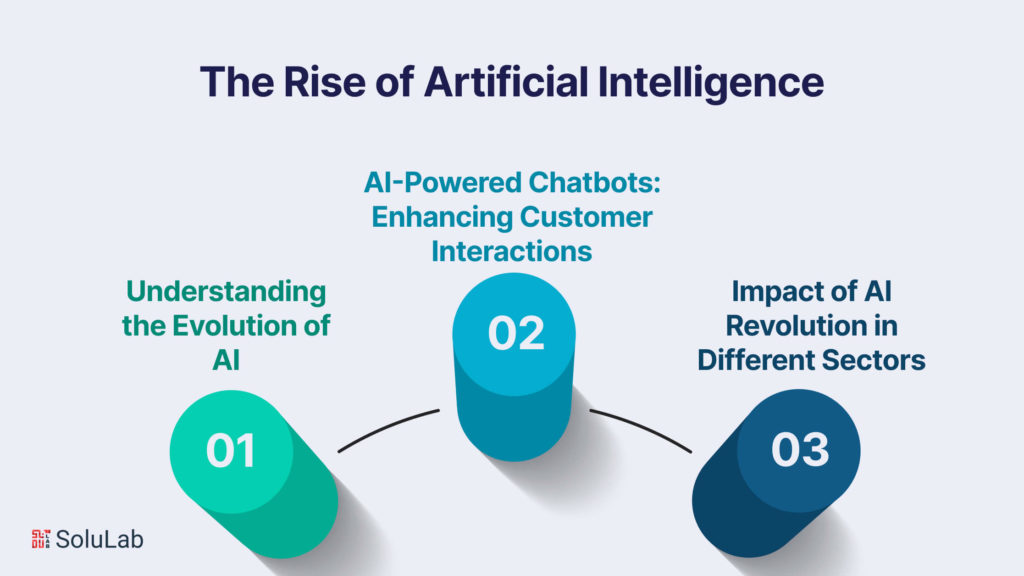
Artificial Intelligence (AI) has become an integral part of the modern technological landscape, revolutionizing the way businesses operate and transforming various industries. This section provides insights into the evolution of AI, its impact on customer interactions through AI-powered chatbots, and the transformative role it plays across different sectors.

  • Understanding the Evolution of AI

Artificial Intelligence (AI) has undergone significant evolution, from its early stages of rule-based systems to the complex deep learning models of today. This evolution has been driven by advancements in computing power, data availability, and algorithmic innovations. The initial stages of AI development focused on basic tasks such as decision-making and problem-solving. However, with the introduction of machine learning and neural networks, AI has expanded its capabilities to encompass complex data analysis, pattern recognition, and natural language processing.

  • AI-Powered Chatbots: Enhancing Customer Interactions

AI-powered chatbots have revolutionized customer interactions, providing businesses with efficient and effective ways to engage with their audience. These chatbots leverage natural language processing and machine learning algorithms to understand and respond to customer queries, thereby offering personalized and seamless experiences. The integration of AI-powered chatbots has streamlined customer service operations, allowing businesses to provide round-the-clock support and instant solutions to customer queries and concerns.

  • Analyzing the Impact of AI Revolution in Different Sectors

The AI revolution has made a significant impact across various sectors, including healthcare, finance, retail, and manufacturing. In healthcare, AI has enabled the development of predictive models for disease diagnosis and treatment planning, leading to more accurate and efficient healthcare services. In the financial sector, AI has facilitated the automation of routine tasks, fraud detection, and risk management, enhancing operational efficiency and security. Similarly, in the retail industry, AI has enabled personalized shopping experiences, recommendation systems, and inventory management optimization, leading to improved customer satisfaction and increased sales.
Top AI Solution Companies: Driving Innovation and Integration

Top AI Solution Companies: Driving Innovation and Integration

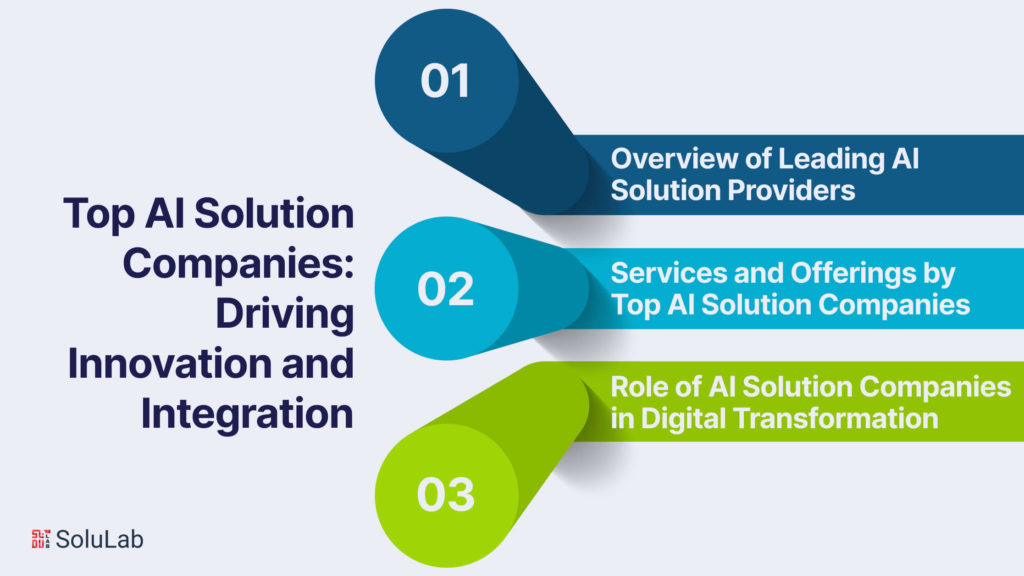
Amid the dynamic AI landscape, numerous top AI solution companies have emerged, leading the charge in driving innovation and integration. This segment highlights the services and offerings provided by these companies and their pivotal role in supporting businesses through digital transformation.

  • Overview of Leading AI Solution Providers

Several leading AI solution companies have emerged, offering a diverse range of AI-based products and services. These companies specialize in developing AI solutions tailored to specific industry requirements, including data analysis, automation, and predictive modeling. Some of the top AI solution companies include Google, Microsoft, IBM, Amazon Web Services (AWS), and Salesforce, among others.

  • Services and Offerings by Top AI Solution Companies

Top AI solution companies offer a wide array of services and offerings, including AI-powered data analytics, machine learning algorithms, natural language processing tools, and AI-driven automation solutions. These services cater to the specific needs of businesses, providing them with valuable insights, predictive analytics, and automation capabilities to streamline their operations and drive business growth. Additionally, AI solution companies offer consultancy services, training programs, and customized AI solutions to address complex business challenges and opportunities.

  • Role of AI Solution Companies in Digital Transformation

The role of AI solution companies in digital transformation is instrumental in driving innovation and integration across industries. These companies play a crucial role in helping businesses adopt and implement AI technologies, enabling them to leverage data-driven insights and automation to enhance their operational efficiency and competitiveness. By providing customized AI development solutions, consultancy services, and ongoing support, AI solution companies empower businesses to navigate the complexities of digital transformation and stay ahead in an increasingly competitive marketplace.

AI Development Company

AI Consulting Companies: Navigating Businesses Through AI Integration

AI consulting companies are crucial in guiding businesses through the intricate process of AI integration. This section delves into the significance of AI consulting in organizational development and emphasizes the collaborative strategies adopted by businesses and consulting firms for successful AI implementation.

  • Importance of AI Consulting in Organizational Development

AI consulting companies play a vital role in guiding businesses through the process of AI integration and adoption. These consulting firms provide expert guidance and strategic insights to help businesses identify the right AI solutions and develop customized strategies for successful implementation. By understanding the unique requirements and challenges of each business, AI consulting companies offer tailored solutions that align with the organization’s objectives and goals, facilitating a seamless transition to AI-driven operations.

  • Leveraging Expertise from AI Consulting Companies

Businesses can leverage the expertise and knowledge of AI consulting companies to gain a deeper understanding of AI technologies, their potential applications, and their impact on business operations. These consulting firms offer comprehensive assessments, feasibility studies, and roadmaps for AI implementation, enabling businesses to make informed decisions and investments in AI solutions that best align with their long-term objectives. By collaborating with AI consulting companies, businesses can gain access to a pool of AI experts, data scientists, and industry specialists, ensuring a holistic approach to AI integration and development.

  • Collaborative Strategies for AI Implementation and Integration

AI consulting companies work collaboratively with businesses to develop and implement effective strategies for AI integration. These strategies encompass the identification of AI use cases, data collection and analysis, AI model development, and deployment, as well as ongoing monitoring and optimization. By fostering collaboration and communication between cross-functional teams, AI consulting companies facilitate the seamless integration of AI technologies into existing business processes, enabling businesses to achieve operational excellence, cost optimization, and enhanced decision-making capabilities.

Exploring the Landscape of AI Development Companies

AI development companies are at the forefront of AI innovation, contributing to the development and deployment of cutting-edge AI solutions. This segment provides an overview of these leading companies, their innovations, and their contributions to shaping future technologies.

  • Overview of Top AI Development Companies

AI development companies are at the forefront of AI innovation, driving the development and deployment of cutting-edge AI solutions across industries. These companies specialize in AI software development, algorithm design, and machine learning model development, catering to the diverse needs of businesses seeking to leverage AI for enhanced productivity, efficiency, and competitive advantage. Some of the top AI development companies include OpenAI, DeepMind, and UiPath, among others.

  • Innovations and Technologies by AI Development Companies

AI development companies are known for their innovative approaches to Artificial Intelligence technology, including advancements in natural language processing, computer vision, and reinforcement learning. These companies continuously strive to push the boundaries of AI research and development, exploring new techniques, algorithms, and models that can address complex business challenges and opportunities. By staying at the forefront of AI research, AI development companies contribute to the continuous evolution and advancement of AI technologies, fostering a culture of innovation and excellence.

  • AI Development Companies and the Shaping of Future Technologies

The contributions of AI development companies are instrumental in shaping the future of technology, as they continue to drive advancements in AI research, development, and deployment. These companies are actively involved in addressing the evolving needs and demands of businesses, offering tailored AI solutions that can optimize operations, enhance decision-making, and drive innovation. By collaborating with AI development companies, businesses can tap into a wealth of AI expertise and knowledge, gaining access to state-of-the-art AI technologies that can propel them toward sustainable growth and success.
Decoding the AI Revolution: Challenges and Opportunities

Decoding the AI Revolution: Challenges and Opportunities

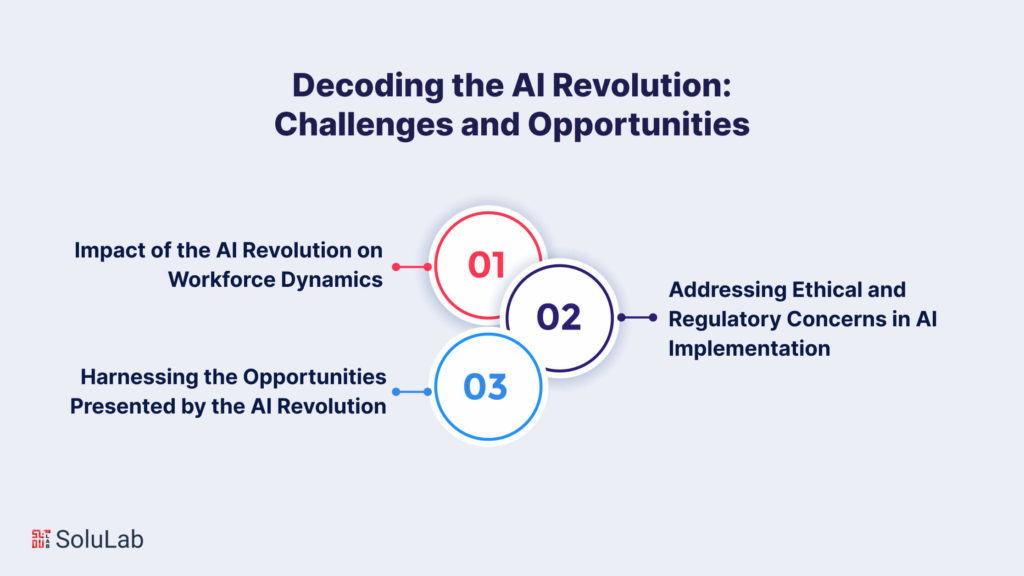
The AI revolution presents a myriad of challenges and opportunities for businesses, particularly in terms of workforce dynamics, ethical considerations, and harnessing the potential of AI technologies. This section sheds light on the implications of the Artificial Intelligence revolution and how businesses can navigate this transformative era.

  • Impact of the AI Revolution on Workforce Dynamics

The AI revolution has led to significant changes in workforce dynamics, impacting the nature of work, job roles, and skill requirements. As AI technologies continue to automate routine tasks and streamline business operations, there is a growing need for upskilling and reskilling the workforce to adapt to the changing demands of the digital era. While AI presents opportunities for increased efficiency and productivity, it also poses challenges related to job displacement, skill gaps, and workforce restructuring, necessitating a comprehensive approach to workforce development and management.

  • Addressing Ethical and Regulatory Concerns in AI Implementation

As AI technologies become more pervasive across industries, there is a growing need to address ethical and regulatory concerns related to data privacy, security, and bias in AI decision-making. Businesses and AI stakeholders must prioritize ethical considerations in AI development and deployment, ensuring that AI systems adhere to ethical guidelines and regulatory frameworks to protect user data and privacy. By implementing transparent and accountable AI practices, businesses can build trust and credibility with their stakeholders and foster responsible AI integration and usage.

  • Harnessing the Opportunities Presented by the AI Revolution

While the AI revolution presents challenges, it also offers numerous opportunities for businesses to innovate, grow, and thrive in an increasingly competitive marketplace. By embracing AI technologies, businesses can leverage data-driven insights, predictive analytics, and automation capabilities to streamline their operations, optimize their resources, and deliver enhanced customer experiences. The AI revolution also enables businesses to explore new market opportunities, develop innovative products and services, and expand their reach to new customer segments, driving sustainable growth and profitability in the digital age.

Enterprise AI Development Companies: Advancing Organizational Efficiency

In the quest for enhanced organizational efficiency, enterprise AI development companies play a pivotal role. This segment emphasizes the importance of these companies in optimizing enterprise-level operations and implementing AI solutions tailored to meet complex business challenges.

  • Role of Enterprise AI Development Companies in Business Optimization

Enterprise AI development companies play a critical role in advancing organizational efficiency by offering AI solutions and services tailored to the specific needs of enterprises. These companies focus on addressing complex business challenges, such as process automation, data analysis, and decision-making, by leveraging AI-driven technologies and applications. By partnering with enterprise AI development companies, businesses can optimize their operations, improve productivity, and achieve cost-effective solutions that drive business success and sustainability.

  • Implementing AI Solutions for Enterprise-Level Challenges

Enterprise AI development companies offer a comprehensive suite of AI solutions designed to address enterprise-level challenges and opportunities. These solutions encompass AI-driven data analytics, predictive modeling, intelligent automation, and cognitive computing, enabling businesses to make informed decisions, streamline their operations, and enhance their competitive edge. By integrating AI solutions, businesses can unlock valuable insights, mitigate risks, and capitalize on emerging opportunities, positioning themselves as industry leaders and innovators in their respective domains.

  • Driving Innovation and Scalability through Enterprise AI Development

Enterprise AI development companies are instrumental in driving innovation and scalability across industries, empowering businesses to explore new horizons and opportunities for growth. These companies specialize in developing scalable AI solutions that can adapt to the evolving needs and demands of enterprise-level operations, enabling businesses to achieve long-term sustainability and success. By harnessing the power of AI technologies, businesses can foster a culture of innovation, creativity, and agility, driving continuous improvement and transformation within their organizations.
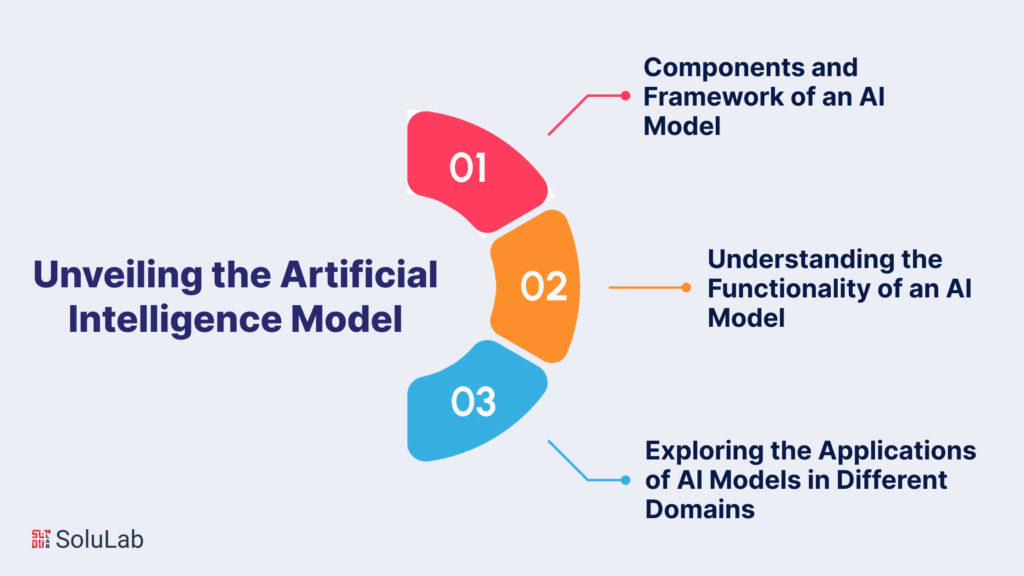
Unveiling the Artificial Intelligence Model

Unveiling the Artificial Intelligence Model

The artificial intelligence model serves as the backbone of AI operations, encompassing a diverse range of components and frameworks designed to simulate human intelligence. This section provides insights into the functionality of an Generative AI models and its applications across various domains.

  • Components and Framework of an Artificial Intelligence Model

The artificial intelligence model encompasses a set of interconnected components and frameworks designed to simulate human intelligence and cognitive functions. These components include data collection and preprocessing, algorithm development and training, model testing and validation, and deployment and optimization. The framework of an artificial intelligence model is structured to enable the seamless integration of data-driven insights and machine learning capabilities, facilitating the development of predictive models, recommendation systems, and decision-making tools that can enhance business performance and outcomes.

  • Understanding the Functionality of an AI Model

The functionality of an AI model revolves around its ability to process and analyze vast amounts of data, extract meaningful patterns and insights, and generate predictive outcomes and recommendations. AI models leverage sophisticated algorithms and machine learning techniques to learn from data, adapt to changing environments, and make intelligent decisions based on predefined objectives and criteria. By understanding the functionality of an AI model, businesses can harness the power of data-driven insights and automation to optimize their operations, enhance their decision-making capabilities, and drive sustainable growth and profitability.

  • Exploring the Applications of AI Models in Different Domains

AI models find applications in various domains, including finance, healthcare, manufacturing, and retail, among others. In finance, AI models are utilized for risk management, fraud detection, and algorithmic trading, enabling businesses to optimize their investment strategies and minimize financial risks. In healthcare, AI models support disease diagnosis, treatment planning, and patient care management, empowering healthcare professionals to deliver personalized and efficient healthcare services. Similarly, in manufacturing and retail, AI models facilitate supply chain optimization, inventory management, and demand forecasting, leading to improved operational efficiency and customer satisfaction.

Generative AI: A Catalyst for Innovation and Creativity

Generative AI has emerged as a catalyst for fostering innovation and creativity, enabling businesses to explore new dimensions of creative design and multimedia production. This segment explores the concept of generative AI, its emerging trends, and its transformative applications in different industries.

  • Understanding the Concept of Generative AI

Generative AI refers to a subset of artificial intelligence that focuses on creating and generating new content, such as images, text, and multimedia, based on existing data and patterns. Generative AI models utilize deep learning techniques, including generative adversarial networks (GANs) and variational autoencoders (VAEs), to generate realistic and creative outputs that mimic human creativity and imagination. By simulating human-like behaviors and cognitive processes, generative AI fosters innovation and creativity, enabling businesses to explore new possibilities and avenues for product development and design.

  • Emerging Trends and Applications of Generative AI

Generative AI is witnessing a surge in popularity across various industries, driven by its applications in creative design, content generation, and multimedia production. In the field of creative design, generative AI is used for generating realistic images, 3D models, and visual artwork, allowing designers and artists to explore new aesthetics and design concepts. In content generation, generative AI facilitates the development of personalized content, storytelling, and multimedia presentations, enhancing user engagement and brand storytelling. Additionally, in multimedia production, generative AI enables the creation of realistic animations, special effects, and virtual environments, enhancing the overall visual appeal and immersive experience for users and audiences.

  • Leveraging Generative AI for Innovative Use Cases

Businesses can leverage generative AI for innovative use cases, such as product design, virtual prototyping, and creative marketing campaigns, to foster innovation and differentiation in the marketplace. By incorporating generative AI tools and models, businesses can streamline their creative processes, accelerate product development cycles, and introduce novel concepts and designs that resonate with their target audience. Generative AI also empowers businesses to personalize user experiences, deliver interactive content, and create immersive virtual environments, fostering deeper engagement and emotional connections with their customers and stakeholders.

Exploring the Role of Generative AI in Shaping Future Technologies

Generative AI plays a crucial role in advancing data analysis, pattern recognition, and creative design capabilities, significantly impacting the trajectory of future technologies. This section highlights the implications of generative AI and its collaborative integration with existing technologies.

  • Role of Generative AI in Advanced Data Analysis and Pattern Recognition

Generative AI plays a critical role in advancing data analysis and pattern recognition capabilities, enabling businesses to extract meaningful insights, trends, and correlations from complex datasets. By leveraging generative AI models, businesses can analyze large volumes of structured and unstructured data, identify hidden patterns and anomalies, and derive actionable insights that drive strategic decision-making and business performance. Generative AI also facilitates predictive modeling, forecasting, and trend analysis, empowering businesses to make informed predictions and projections that support long-term planning and growth.

  • Implications of Generative AI in Creative Design and Multimedia Production

The implications of generative AI in creative design and multimedia production are far-reaching, as businesses increasingly rely on AI-driven tools and technologies to enhance their creative capabilities and storytelling techniques. Generative AI enables businesses to automate the design process, streamline content creation, and generate personalized multimedia experiences that resonate with their target audience. By harnessing generative AI, businesses can unlock new dimensions of creativity, aesthetics, and user engagement, fostering a culture of innovation and experimentation in their creative endeavors and multimedia productions.

  • Collaboration and Integration of Generative AI with Existing Technologies

The collaboration and integration of generative AI with existing technologies are essential for driving innovation and fostering a cohesive digital ecosystem that supports business growth and sustainability. Businesses can integrate generative AI tools and models with their existing AI infrastructure, data analytics platforms, and creative design software, enabling seamless data exchange and collaboration across different departments and teams. By fostering a collaborative environment, businesses can leverage the collective expertise and insights of AI specialists, data scientists, and creative professionals, fostering cross-functional collaboration and knowledge sharing that drive continuous improvement and excellence.

Hire AI Developers

Conclusion

In conclusion, the evolution of Artificial Intelligence (AI) has ushered in a new era of technological advancement and innovation, redefining the way businesses operate and transforming various industries. The widespread adoption of AI-powered chatbots, the rise of top AI solution companies, and the pivotal role of AI consulting services have revolutionized the business landscape, paving the way for a more efficient and streamlined future.

Enterprise AI development companies have played a significant role in advancing organizational efficiency, providing tailored AI solutions to address complex business challenges and drive growth. The unveiling of the artificial intelligence model has provided businesses with a comprehensive framework to leverage data-driven insights and machine learning capabilities, propelling them towards optimized operations and enhanced decision-making.

Furthermore, the emergence of Generative AI as a catalyst for innovation and creativity has unlocked new dimensions of creative design and multimedia production. Generative AI trends and tools have empowered businesses to foster a culture of innovation, drive continuous improvement, and enhance customer experiences, thereby securing a competitive edge in the market.

Through strategic implementations and collaborative efforts with leading AI development companies like SoluLab, businesses can harness the full potential of AI technologies, drive sustainable growth, and differentiate themselves in an increasingly competitive landscape. By leveraging the expertise of dedicated AI developers and consulting services, businesses can navigate the complexities of the AI revolution, capitalize on emerging opportunities, and chart a successful path toward a more prosperous and technologically advanced future.

FAQs

1. What are the key benefits of integrating AI-powered chatbots into business operations?

The key benefits of integrating AI-powered chatbots into business operations include enhanced customer engagement, round-the-clock support, personalized interactions, and streamlined customer service operations.

2. How can businesses determine the right AI consulting services to meet their specific needs and objectives?

Businesses can determine the right AI consulting services by considering factors such as expertise, industry experience, tailored solutions, and a proven track record of successful AI integration and implementation.

3. What are the primary factors to consider when hiring dedicated AI developers for a project?

When hiring dedicated AI developers, businesses should consider factors such as technical proficiency, experience in AI development, adaptability to project requirements, and a collaborative approach to problem-solving.

4. How does Generative AI contribute to the enhancement of creative design and multimedia production?

Generative AI contributes to the enhancement of creative design and multimedia production by enabling automated design processes, personalized content generation, and the creation of immersive virtual environments that resonate with audiences.

5. What are the potential ethical implications and challenges associated with the widespread adoption of AI technologies?

The widespread adoption of AI technologies raises ethical implications and challenges related to data privacy, security, and bias. Businesses must prioritize transparent and accountable AI practices to build trust and credibility with stakeholders.

6. How can businesses effectively leverage the capabilities of the artificial intelligence model to optimize their decision-making processes?

Businesses can effectively leverage the capabilities of the artificial intelligence model by harnessing data-driven insights, predictive analytics, and automation to optimize their operations, enhance decision-making, and drive sustainable growth.

7. What are the emerging trends in AI development and how do they impact the future of various industries?

Emerging trends in AI development impact the future of various industries by enabling advanced data analysis, pattern recognition, and creative design solutions that drive innovation, efficiency, and competitiveness across different domains.

How Generative AI Can Augment Human Creativity?

How Generative AI Can Augment Human Creativity?

In the ever-evolving landscape of technology, the emergence of Generative AI technology has ignited a captivating conversation about its transformative potential in the realm of creativity. The fusion of Generative AI and creativity represents a dynamic synergy that is poised to revolutionize the way we approach artistic expression, innovation, and problem-solving. 

In this blog, we delve into the fascinating world of Generative AI and its role in augmenting human creativity, exploring how these powerful algorithms are reshaping traditional boundaries and opening up new vistas for human ingenuity.

What is Generative AI?

Before diving into how Generative AI can augment human creativity, it’s essential to understand what generative AI is. Generative AI refers to a subset of artificial intelligence that uses neural networks to generate content autonomously. One of the most notable examples is GPT-3, a language model capable of generating human-like text. Generative AI can create content across various domains, including text, art, and music.

Generative AI, with its ability to autonomously create content, has found applications across various domains. Here are some compelling examples of how this technology is making waves:

  • Text Generation: Generative AI models like GPT-3 can produce human-like text, making them invaluable for content creation, copywriting, and even automated customer support chatbots. They can craft articles, generate code snippets, and compose emails, streamlining numerous written communication tasks.
  • Art Generation: Generative Adversarial Networks (GANs) have empowered AI to generate stunning artwork, illustrations, and even 3D designs. Artists and designers often use these AI-generated pieces as a starting point for their creative projects or as a source of inspiration.
  • Music Composition: AI is capable of creating music in a variety of genres and styles. Musicians and composers can use Generative AI to spark new musical ideas or even generate entire compositions. This application has led to the creation of unique soundscapes and musical pieces.
  • Video Game Content: In the gaming industry, Generative AI is employed to create dynamic game environments, characters, and quests. Games that adapt to the player’s actions use AI to generate content on the fly, providing a more immersive and personalized gaming experience.
  • Drug Discovery: In the field of pharmaceuticals, Generative AI is used to discover new drug candidates by analyzing molecular structures and predicting their effectiveness. This accelerates the drug development process and can potentially lead to the discovery of life-saving medications more quickly.
  • Language Translation: Generative AI has enhanced language translation services, making them more accurate and efficient. These models can translate text and even interpret spoken language in real-time, breaking down language barriers in global communication.

Read Our Blog Post: Top 10 Generative AI Development Companies

  • Content Personalization: Online platforms, such as streaming services and e-commerce websites, use Generative AI to recommend personalized content to users. This technology analyzes user preferences and behavior to suggest movies, music, products, and more.
  • Healthcare Imaging: In the medical field, Generative AI assists in image generation and enhancement for diagnostic purposes. It can reconstruct 3D images from 2D scans, generate synthetic medical images for training AI models, and improve the clarity of medical imaging.

CTA1

  • Autonomous Vehicles: Generative AI plays a crucial role in the development of self-driving cars. These vehicles use AI to generate real-time predictions, detect and respond to obstacles, and navigate complex road conditions safely.
  • Natural Language Generation (NLG): NLG models can transform data into human-readable text. They are employed in various applications, such as generating financial reports, weather updates, and sports summaries, providing valuable insights in a digestible format.

These examples illustrate the versatility and impact of Generative AI tools across diverse industries, showcasing their potential to augment human capabilities and transform the way we create, communicate, and innovate. As Generative AI continues to advance, it is likely that we will witness even more groundbreaking applications in the future.

The Interaction Between Human Creativity and Generative AI

In the ever-evolving landscape of technology, the synergy between human creativity and Generative AI has emerged as a remarkable force shaping the way we approach creativity, innovation, and problem-solving. Generative AI, a subset of artificial intelligence, holds the promise of enhancing and augmenting human creativity in unprecedented ways. This symbiotic relationship between humans and machines is a testament to the remarkable potential of combining human ingenuity with the computational prowess of AI.

How Generative AI Can Serve as a Creative Tool?

One of the most profound ways in which Generative AI complements human creativity is by acting as an infinite wellspring of ideas and inspiration. AI models like GPT-3 can swiftly generate a multitude of concepts, helping artists, writers, and innovators overcome creative blocks. Whether it’s ideating for a new product, devising plot twists for a novel, or conceptualizing artwork, Generative AI models can provide an unending stream of fresh ideas, propelling the creative process forward.

Also, creativity often involves mundane and repetitive tasks that can be time-consuming and creatively draining. Generative AI excels at automating such tasks, liberating creators to concentrate on more substantial creative work. It can automate the generation of social media posts, design templates, or data analysis reports, allowing creative professionals to redirect their energy towards the artistic facets of their work.

How Generative AI Can Enhance Human Creativity?

How Generative AI Can Enhance Human Creativity?

Generative AI solutions possess a unique capability to amplify and complement human creativity. This technology utilizes advanced algorithms and deep learning models to generate content such as text, graphics, music, and even entire virtual worlds. Importantly, it operates not as a substitute for human creativity but as a collaborative partner, enriching the creative toolkit and sparking fresh ideas.

  • Expanding Creative Horizons

Generative AI use cases provide creators with a vast reservoir of information and data, enabling them to venture into uncharted creative territories. Artists can harness these AI models, trained on diverse datasets, to produce original and imaginative content that pushes the boundaries of traditional artistic techniques.

  • Cultivating Innovation and Inspiration

Generative AI has the potential to invigorate human creativity by serving as a wellspring of inspiration. It encourages experimentation and creativity throughout the creative process. Artists can use AI-generated content as a starting point, exploring various modifications, remixes, and interpretations. This iterative and collaborative interaction between human creativity and generative AI inspires artists to push their creative boundaries.

  • Overcoming Creative Obstacles

Creativity can sometimes be stifled by a lack of fresh ideas or creative blocks. Generative AI trends can come to the rescue by acting as a source of creativity and generating original ideas, helping creators overcome these hurdles. It can expose creators to novel combinations, surprising juxtapositions, or contrasting viewpoints, acting as a catalyst to unlock creative potential and break through creative stagnation.

  • Collaborative Co-Creation

Generative AI development solutions facilitate collaborative co-creation between humans and machines. Artists can use AI technologies to generate preliminary sketches, concept art, or musical compositions, which they can later refine, personalize, and imbue with their unique artistic sensibilities. This collaborative process allows artists to infuse their distinct creative vision into the final product while leveraging the capabilities of AI.

  • Interactive Engagements

Generative AI creativity supports interactive and expressive interactions between creators and their audiences. By employing AI-powered systems to create dynamic visual or auditory experiences responsive to user inputs, artists can craft immersive and captivating artistic experiences. This interplay between generative AI and audience participation adds a new dimension of inventiveness and interactivity to artistic expressions.

  • Embracing Serendipity and Exploration

The use of Generative AI in the creative process can lead to unexpected and serendipitous discoveries. By examining the outputs of generative AI models, artists may uncover novel patterns, unconventional concepts, or hidden connections, potentially charting entirely new creative paths. This element of surprise and discovery injects excitement into artistic exploration and pushes the boundaries of creative expression.

  • Enhancing Productivity and Efficiency

Generative AI solutions can enhance the productivity and efficiency of creative endeavors. Through tasks like automating repetitive chores, generating initial drafts or prototypes, or offering creative suggestions, AI algorithms assist artists in streamlining their work processes. This allows artists to allocate more of their efforts toward making intricate creative decisions.

  • Exploring Diverse Perspectives and Artistic Styles

Generative AI & human-AI collaboration simplify the exploration of diverse viewpoints and artistic idioms. Creators can experiment with blending, reimagining, or reinterpreting multiple sources of inspiration, resulting in fresh hybrids and distinctive artistic expressions. By training AI models on various cultural references, historical eras, or aesthetic movements, artists can broaden their creative palette.

  • Fostering Creative Exploration and Growth

Generative AI promotes ongoing creative exploration and growth by providing continuous feedback and educational opportunities. Creators can use AI-generated content as a platform for experimentation, continuous skill development, and the exploration of new creative frontiers. This iterative approach nurtures growth, education, and the advancement of artistic abilities.

Challenges and Limitations of Generative AI in Augmenting Human Creativity

While Generative AI holds immense promise in enhancing human creativity, it also presents a set of challenges and limitations that must be addressed for its responsible and effective integration into creative processes. Understanding these challenges is essential for maximizing the potential benefits of AI while mitigating potential risks:

  • Ethical Concerns: Generative AI can produce content that raises ethical questions. AI models trained on large datasets may inadvertently generate biased, offensive, or inappropriate material. Maintaining ethical standards and avoiding the propagation of harmful content is a pressing challenge. Rigorous content moderation and the development of ethical guidelines for AI-generated content are crucial. Human oversight is essential in curating and filtering AI outputs to ensure adherence to ethical principles.
  • Quality Control: While Generative AI can produce a vast amount of content, its quality may vary significantly. Ensuring that AI-generated work meets the desired standards can be a challenge, especially in creative fields where subjective judgment plays a crucial role. Human evaluators and quality control mechanisms can help assess and refine AI-generated content. Feedback loops between humans and AI can be established to improve the quality of output over time.
  • Data Availability: Generative AI models require extensive training on large datasets, which may not always be readily available, especially for niche or less-studied creative domains. Access to relevant and diverse training data can be a limitation.
    Efforts should be made to collect and curate datasets specific to various creative domains. Collaboration between AI researchers and domain experts can help address this limitation.
  • Computational Resources: Running advanced Generative AI models often demands substantial computational resources, including powerful hardware and significant energy consumption. This can be a constraint for individuals or organizations with limited resources. Advancements in cloud-based AI services and more energy-efficient AI hardware can help mitigate this challenge. Cost-effective solutions should also be explored.
  • Overreliance on AI: There is a risk that users may become overly reliant on generative AI, potentially stifling human creativity and innovation. Overreliance on AI-generated ideas or content can limit the diversity and depth of creative output. Encouraging a balanced approach that values human creativity and uses AI as a tool rather than a replacement is essential. Education and awareness campaigns can promote responsible AI use.
  • Intellectual Property Issues: Determining ownership and intellectual property rights for AI-generated content can be complex. It raises questions about who owns the rights to content produced by AI and how creators can protect their work from unauthorized use. Legal frameworks and policies need to be developed to address intellectual property issues related to AI-generated content. Clear guidelines for ownership and attribution are essential.
  • Lack of Emotional Depth: While AI can assist in generating creative content, it often lacks the emotional depth and nuanced understanding that humans bring to their creations. Artistic expressions may be limited in their ability to convey complex emotions and experiences. Creatives should strive to infuse their unique emotional and experiential perspectives into AI-generated content, ensuring that human emotions remain central in creative works.

Read Blog Post: Generative AI Use Cases in 2025

  • Unintended Consequences: The use of Generative AI may lead to unintended consequences, such as job displacement in creative industries or the creation of misleading content. Identifying and addressing these unintended outcomes is a critical challenge. Comprehensive impact assessments and proactive measures can help anticipate and mitigate unintended consequences. Adaptation and reskilling programs can also support individuals affected by automation.

While Generative AI offers immense potential in augmenting human creativity, it is not without its challenges and limitations. Responsible development and deployment of AI, combined with thoughtful human oversight and collaboration, can help harness the power of AI while preserving the integrity and depth of human creativity. Addressing these challenges is an ongoing process that requires collaboration among technologists, creatives, ethicists, and policymakers to ensure that AI remains a valuable creative ally.

The Future of Creativity and Generative AI

The Future of Creativity and Generative AI

Creativity has always been a hallmark of human ingenuity, driving innovation across countless domains, from art and music to technology and science. However, as we stand on the cusp of a new era, the future of creativity is being shaped in unprecedented ways by Generative AI. This transformative technology holds the promise of augmenting, amplifying, and even redefining human creativity. In this exploration of the future, we delve into the exciting prospects and potential challenges that lie ahead at the intersection of human imagination and artificial intelligence.

  • Advanced Generative AI Technologies: As Generative AI technologies continue to evolve, we can expect them to become more sophisticated and capable. Improved neural networks, training methods, and data sources will enable AI systems to generate increasingly high-quality and creative content. For example, we might see AI-generated art that rivals the works of famous painters, or music compositions that are indistinguishable from those created by human composers.

Know More: How Generative AI is Transforming Industries

  • Hybrid Creative Collaborations: The future will likely bring about a shift in the way humans collaborate with AI. Rather than AI replacing human creativity, we’ll see more hybrid models where AI acts as a creative partner or a tool to amplify human ideas. This collaborative approach will empower creators across various fields to explore new horizons and push the boundaries of what’s possible.
  • Customized Creative Assistance: AI systems will become more personalized, tailoring their creative assistance to individual users. Whether you’re a writer, designer, musician, or engineer, AI tools will adapt to your unique style and preferences, offering suggestions and enhancements that align with your creative vision. This level of customization will empower creators to achieve their artistic goals more efficiently.
  • AI in Education and Skill Development: Generative AI will play a significant role in education and skill development. Students and aspiring artists can use AI as a creative mentor, offering guidance, feedback, and practical exercises to hone their talents. AI-driven educational platforms will provide accessible and adaptive learning experiences for individuals of all skill levels.
  • Solving Creative Challenges: The future of creativity and Generative AI also involves addressing some pressing challenges. One key issue is the potential for AI-generated content to perpetuate biases present in training data. Striking a balance between creative freedom and ethical content generation will be crucial in ensuring responsible AI use.

In summary, the future of human creativity and Generative AI is a landscape filled with both promise and uncertainty. While AI has the potential to enhance human creativity in unimaginable ways, we must navigate ethical, legal, and societal challenges along the way. The key will be to harness the power of Generative AI as a creative tool while preserving the essence of human ingenuity and the depth of human expression. As we venture into this uncharted territory, one thing is certain: the future of creativity will be a dynamic fusion of human and artificial intelligence, ushering in a new era of innovation and artistic exploration.

CTA2

Concluding Remarks

In conclusion, the symbiotic relationship between Generative AI and human creativity is a captivating journey into uncharted territories of innovation and artistic expression. As we’ve explored throughout this blog, Generative AI has the potential to revolutionize the creative landscape by offering unparalleled assistance, inspiration, and collaborative possibilities. It can automate repetitive tasks, provide limitless variations of creative content, and even challenge us to redefine the boundaries of imagination. However, we must proceed with a mindful approach, addressing ethical concerns, ensuring transparency, and preserving the authenticity of human creativity. The future is bright for those who embrace the possibilities of Generative AI, recognizing it not as a replacement for human creativity but as a powerful tool to augment and elevate our imaginative capacities.

At SoluLab, we are at the forefront of this creative revolution, harnessing the transformative potential of Generative AI to empower businesses and creators across diverse industries. Our team of experts specializes in developing Generative AI development services that seamlessly integrate with your creative processes. Whether you’re an artist looking to explore new artistic dimensions or a business seeking innovative solutions, SoluLab can tailor Generative AI applications to meet your specific needs. Together, we can embark on a journey of boundless creativity, where the synergy between human ingenuity and AI capabilities knows no limits. Contact SoluLab today to hire the best Generative AI developers and discover how SoluLab can help you unlock the full potential of Generative AI in your creative endeavors.

FAQs

1. What is Generative AI, and how does it differ from other forms of artificial intelligence?

Generative AI refers to a subset of artificial intelligence that focuses on creating new content, such as images, text, music, or videos. It uses neural networks and deep learning techniques to generate original and creative output. Unlike other AI systems that primarily analyze data or make predictions, Generative AI’s primary function is to create something new and imaginative.

2. How can Generative AI enhance human creativity?

Generative AI can enhance human creativity in various ways. It can automate repetitive creative tasks, provide inspiration and suggestions, generate a wide range of creative content, and act as a collaborative partner for artists, writers, designers, and innovators. Handling the mundane aspects of creative work, allows humans to focus on higher-level ideation and innovation.

3. What are some real-world applications of Generative AI in creative fields?

Generative AI has found applications in art, music composition, content generation, design, and even video game development. For example, artists use AI to create unique digital artworks, musicians use it to compose music, and content creators rely on AI to automate content production, such as generating product descriptions or news articles.

4. Are there any ethical concerns associated with Generative AI in creativity?

Yes, there are ethical considerations. Generative AI can inadvertently perpetuate biases present in training data, and there are concerns about authorship and copyright when AI contributes to creative works. Ensuring transparency, accountability, and responsible use of AI in creative processes is essential to address these concerns.

5. What role can companies like SoluLab play in harnessing Generative AI for creative purposes?

Companies like SoluLab specialize in developing customized Generative AI solutions tailored to the specific needs of businesses and creators. They can assist in integrating Generative AI into creative workflows, offering technical expertise, and ensuring that AI technologies are used effectively and ethically to augment human creativity.

Generative AI in E-Commerce – Benefits and Applications

Strategies for Leveraging Generative AI in E-Commerce

In the landscape of e-commerce, where competition is fierce and consumer expectations continue to rise, staying ahead of the game is imperative for businesses. One transformative strategy that has gained prominence in recent years is the integration of Generative Artificial Intelligence (AI) into e-commerce operations. Generative AI, a subset of Artificial Intelligence (AI), possesses the remarkable ability to create new content, whether it’s text, images, videos, or even music. 

In this blog, we delve into the strategies for effectively harnessing the power of Generative AI in e-commerce, exploring its profound impact on the digital shopping experience and the strategies that underpin its successful implementation.

Before delving into strategies for its application, it’s crucial to grasp the fundamental concepts of Generative AI and generative AI development.

Generative Models: The Architects of Creativity

At the core of Generative AI lies generative models—sophisticated algorithms and neural networks that are trained to generate data that resembles the input data they were trained on. These models are capable of producing new content that can be remarkably indistinguishable from human-created content. Two notable types of generative models are Generative Adversarial Networks (GANs) and Variational Autoencoders (VAEs).

  • GANs (Generative Adversarial Networks): GANs consist of two networks, a generator, and a discriminator, engaged in a constant tug of war. The generator attempts to create counterfeit data, while the discriminator strives to distinguish between real and fake data. This adversarial process refines the generator’s ability to produce highly realistic content.
  • VAEs (Variational Autoencoders): VAEs take a different approach, focusing on encoding and decoding data within a probabilistic framework. They learn to represent data in a compressed form (latent space) and then decode it to generate new data points. VAEs are particularly valuable for tasks where controlled randomness is desirable.

Check Our Blog Post: Top 10 Generative AI Development Companies

Key Concepts of Generative AI

Two essential concepts underpin the workings of Generative AI: training and inference.

  • Training: The training phase involves exposing the generative model to vast datasets. During this phase, the model learns the patterns, features, and nuances of the data it will later generate. The training process can be computationally intensive and time-consuming, but it is foundational to the model’s performance.
  • Inference: Once trained, the model enters the inference phase, where it generates new content based on the knowledge it acquired during training. This content can take various forms, depending on the specific task, such as generating product descriptions, creating images, or making personalized product recommendations.

Now that we’ve established the fundamental principles of Generative AI, let’s delve into the myriad applications it offers within the realm of e-commerce.

Generative AI Applications in E-commerce

Generative AI Applications in E-commerce

Generative AI’s versatility finds myriad applications in the e-commerce landscape, revolutionizing the way businesses interact with consumers and enhancing the overall shopping experience.

  • Personalized Product Recommendations

One of the most powerful applications of Generative AI in e-commerce is its ability to deliver personalized product recommendations. Through the analysis of user behavior, purchase history, and preferences, generative models can create tailored product suggestions for each customer. This level of personalization not only improves the likelihood of conversion but also enhances customer satisfaction by presenting products that align with individual tastes.

Read Also: Generative AI in the Manufacturing Process

  • Content Generation

Content is the lifeblood of e-commerce, from product descriptions to customer reviews and marketing copy. Ecommerce Generative AI can efficiently produce this content, saving businesses valuable time and resources. Furthermore, AI-generated content tends to be consistent and engaging, ensuring that product listings and marketing materials maintain a high standard across a vast product catalog.

  • Visual Content Generation

In the visually-driven world of e-commerce, the ability to create compelling visual content is paramount. Generative AI development can generate product images, design eye-catching advertisements, and even produce video content. This not only streamlines the content creation process but also ensures a visually cohesive brand identity, captivating potential customers.

CTA1

  • Chatbots and Customer Service

Enhancing customer service through AI-driven chatbots is another avenue where Generative AI development shines. Chatbots powered by Generative AI can provide instant responses to customer inquiries, whether they pertain to product queries, order tracking, or general inquiries. These chatbots operate round-the-clock, improving accessibility and engagement, while freeing up human agents for more complex tasks.

These applications represent just the tip of the iceberg when it comes to Generative AI’s potential in e-commerce. However, to effectively leverage these capabilities, businesses must implement well-thought-out strategies. In the next section, we’ll explore the essential strategies that underpin the successful integration of Generative AI and e-commerce operations.

Strategies for Implementation of Generative AI in E-Commerce

Strategies for Implementation of Generative AI in E-Commerce

Implementing Generative AI in an e-commerce environment is a multifaceted endeavor, encompassing several crucial strategies and considerations.

  • Data Collection and Preprocessing

The foundation of any successful Generative AI project is high-quality data. Businesses must invest in data collection methods that yield rich, diverse, and representative datasets. Additionally, data preprocessing is essential to clean, format, and prepare the data for training. Without quality data and preprocessing, the AI model’s performance will be compromised.

  • Model Selection and Training

Selecting the appropriate generative model for a specific e-commerce task is paramount. The choice may depend on factors such as the type of content to be generated and the complexity of the task. Once a model is selected, it undergoes a rigorous training process. This process can be resource-intensive and time-consuming, but it’s the crucible in which the model acquires the knowledge necessary to generate high-quality content.

Read Our Blog: How Generative AI is Revolutionizing Art

  • Integration with E-commerce Platforms

For seamless operations, Generative AI solutions must integrate effectively with e-commerce platforms, such as Shopify, WooCommerce, or Magento. This integration ensures that AI-generated content and recommendations seamlessly flow into the customer experience, enhancing the overall shopping journey.

  • Continuous Learning and Improvement

The AI journey doesn’t end with deployment. To stay relevant and effective, Generative AI models must undergo continuous learning and improvement. This involves periodic updates, retraining, and adaptation to changing customer preferences and market trends. Businesses that commit to ongoing refinement can maintain a competitive edge in the ever-evolving e-commerce landscape.

Generative AI Ethical Considerations in E-commerce

Generative AI Ethical Considerations in E-commerce

While Generative AI holds immense promise, it also comes with a set of ethical considerations that cannot be overlooked. In the next section, we’ll delve into these crucial aspects of responsible AI implementation in e-commerce.

The integration of Generative AI in e-commerce brings forth a series of ethical considerations that businesses must carefully navigate. Addressing these concerns is not only essential for maintaining consumer trust but also for ensuring fair and responsible AI practices.

1. Data Privacy and Security

  • Consumer Data Protection: As businesses collect and utilize customer data for training AI models, safeguarding data privacy becomes paramount. Compliance with data protection regulations, such as GDPR or CCPA, is a legal obligation.
  • Secure Handling of Data: Robust security measures should be in place to protect sensitive customer information from breaches. Encryption, access controls, and regular security audits are crucial components of a secure data handling strategy.

2. Bias and Fairness

  • Mitigating Bias: Generative AI models can inadvertently perpetuate biases present in the training data. To mitigate bias, businesses should regularly audit their models and datasets for discriminatory patterns.
  • Fair Treatment: AI-generated content should be designed to treat all customers fairly, regardless of factors like race, gender, or socioeconomic status. Fairness should be a core principle in AI content generation.

Read Our Blog Post: 10 Ways Generative AI is Revolutionizing Healthcare

3. Transparency in AI-powered Decisions

  • Transparency: Customers should be informed when they are interacting with AI-driven systems, such as chatbots or AI-generated content. Transparency builds trust and allows consumers to make informed choices.
  • Explainability: Businesses should strive to make AI-driven decisions more interpretable and explainable. Customers should have a basic understanding of how AI influences the recommendations and content they encounter.

Maintaining ethical AI practices is not only a moral imperative but also a means to mitigate risks associated with public backlash, legal challenges, and reputational damage.

4. Outcomes and Benefits

  • Increased Conversion Rates: E-commerce companies leveraging Generative AI often report notable increases in conversion rates due to personalized recommendations and engaging AI-generated content.
  • Cost Savings: AI-driven content generation reduces the time and resources required for content creation, resulting in cost savings for businesses.
  • Enhanced Customer Satisfaction: Personalization and improved customer service through AI-powered chatbots contribute to higher levels of customer satisfaction and loyalty.

Challenges and Pitfalls

While Generative AI offers significant advantages, businesses must be aware of the challenges and potential pitfalls associated with its implementation.

1. Overcoming Data Limitations

  • Data Quality: Obtaining high-quality training data can be challenging. Businesses must invest in data collection and cleaning efforts to ensure the success of their AI projects.
  • Data Imbalance: Data may not always be evenly distributed across different product categories, leading to bias in AI recommendations. Addressing data imbalance is crucial for fairness.

2. Managing AI Development Costs

  • Computational Resources: Training Generative AI models can be resource-intensive, requiring substantial computational power and energy. Managing these costs is a significant consideration.
  • Expertise: Building and maintaining AI systems necessitates specialized expertise, which can be costly to acquire and retain.

3. Monitoring and Mitigating Bias

  • Continuous Monitoring: Regularly auditing AI models for bias and discrimination is an ongoing effort. It requires vigilance to ensure that the AI remains fair and ethical.
  • Bias Mitigation Strategies: Developing and implementing bias mitigation strategies is essential for responsible AI deployment. Businesses should be prepared to adapt their models and datasets as necessary.

Future Trends of Generative AI in E-commerce

The Generative AI landscape is continually evolving, and e-commerce is poised to experience further transformation in the years to come.

  • Improved Model Architectures: Expect advancements in generative model architectures, leading to more efficient and creative AI systems.
  • Multimodal AI: Future developments may enable AI models to generate content across multiple modalities simultaneously, such as text, images, and audio.

Read Our Blog: Generative AI and Human Creativity

Predictions for E-commerce

  • Hyper-personalization: E-commerce will witness an era of hyper-personalization, with AI-driven experiences tailored to individual preferences.
  • AI-driven Content Dominance: AI-generated content will become even more prevalent, shaping product listings, marketing materials, and customer interactions.

CTA2

Concluding Remarks

In conclusion, Generative AI development solutions are a transformative force in e-commerce, offering businesses the means to enhance personalization, streamline content creation, and improve customer service. By adhering to ethical considerations, staying vigilant about potential challenges, and adapting to future trends, businesses can fully leverage the potential of Generative AI technology to create a dynamic and engaging digital shopping experience for consumers. As the e-commerce landscape continues to evolve, embracing Generative AI will be pivotal in staying competitive and relevant in the digital marketplace.

Solulab is a prominent software development company known for its innovative solutions and cutting-edge technology expertise. Specializing in areas like blockchain, IoT, and artificial intelligence, Solulab has established itself as a trusted partner for businesses looking to harness the power of emerging technologies. While not directly linked to Generative AI development, Solulab’s expertise in AI and machine learning can undoubtedly be leveraged to assist e-commerce companies in implementing Generative AI consulting services. By utilizing Solulab’s technical prowess and experience, e-commerce businesses can navigate the complexities of AI integration more effectively, ensuring that Generative AI tools enhance the shopping experience for their customers and boost their competitive edge in the digital marketplace.

FAQs

1. What is Generative AI, and how does it apply to e-commerce?

Generative AI is a subset of artificial intelligence that can create new content, such as text, images, or videos, that closely resembles human-generated content. In e-commerce, it is used to personalize product recommendations, generate product descriptions, and create visual content like images and videos. It enhances the overall shopping experience by tailoring content to individual customer preferences.

2. How can Generative AI improve the customer shopping experience?

Generative AI enhances the customer shopping experience by providing personalized product recommendations based on individual preferences and behavior. It also streamlines content creation, ensuring consistent and engaging product descriptions and marketing materials. AI-powered chatbots further improve customer service by providing instant responses to inquiries.

3. What are the key challenges in implementing Generative AI in e-commerce?

Implementing Generative AI in e-commerce comes with challenges such as obtaining high-quality training data, managing the computational resources required for model training, and addressing bias in AI-generated content. Additionally, businesses must navigate ethical considerations related to data privacy, security, and transparency.

4. How can businesses ensure the ethical use of Generative AI in e-commerce?

Businesses can ensure the ethical use of Generative AI by prioritizing data privacy and security, implementing robust security measures, and complying with data protection regulations. They should also regularly monitor AI models for bias, mitigate bias when detected, and maintain transparency in AI-powered interactions with customers.

5. What are some future trends in Generative AI for e-commerce?

Future trends in Generative AI for e-commerce include the development of improved model architectures that enhance creativity and efficiency. Multimodal AI, capable of generating content across multiple modalities simultaneously, is also expected to gain prominence. Hyper-personalization and the dominance of AI-driven content in product listings and marketing materials are predicted to shape the future of e-commerce. So, to leverage this technology hire generative AI developers.


Generative AI and Human Creativity

Generative AI and Human Creativity: Where the Line is to be Drawn?

Generative AI, at its core, refers to a subset of Artificial intelligence (AI) that focuses on creating rather than merely processing data. It stands as a testament to the relentless evolution of technology, transforming the way we perceive and harness AI capabilities.

The evolution of Generative AI technology has been marked by significant milestones, from early experiments to the current era of advanced models. The journey involves the continuous refinement of algorithms, the introduction of deep learning techniques, and the exploration of novel architectures that enhance the generative capabilities of AI.

In the broader technological landscape, Generative AI holds immense significance, particularly in fostering a dynamic relationship between machines and human creativity. By enabling the creation of content that mirrors human-like expression, Generative AI becomes a powerful tool for artists, writers, and innovators seeking new avenues for creative exploration.

What Impact of Generative Al on Creativity?

What impact of Generative Al on Creativity?

The advent of Generative AI technology has ushered in a transformative era for creativity, profoundly impacting the creative process through its sophisticated models and collaborative potential.

  • Generative AI Models

Generative AI models, powered by advanced algorithms and neural networks, have become veritable engines of creativity. These models possess the capability to analyze vast datasets and generate content autonomously, mimicking and often surpassing human-like creative outputs. This impact is most evident in fields such as art, design, and content creation, where Generative AI models contribute novel perspectives, styles, and ideas that augment the creative repertoire.

  • Human-AI Collaboration

The intersection of Generative AI and human creativity unfolds in a dynamic collaboration. This synergy is not about replacing human creativity but enhancing it. Generative AI and Human-AI collaboration become a symbiotic relationship where Generative AI acts as a co-creator, aiding humans in ideation, suggesting alternative solutions, and automating routine tasks. This collaboration amplifies efficiency, allowing creatives to focus on high-level thinking and innovation.

  • Generative AI Use Cases

The impact of Generative AI extends across diverse use cases. In fields like graphic design, Generative AI tools assist in rapid prototyping and ideation. In content creation, language models generate coherent and contextually relevant text. In healthcare, Generative AI aids in drug discovery and medical imaging interpretation. The breadth of applications showcases the versatility of Generative AI in catalyzing creativity across industries.

CTA1

  • Trends Shaping Generative AI Landscape

The Generative AI landscape is marked by dynamic trends. Continuous advancements in algorithms, increased computing power, and improved datasets contribute to the evolution of Generative AI models. Ethical considerations, responsible AI deployment, and transparency are becoming pivotal trends, reflecting a growing awareness of the societal impact of Generative AI.

  • Generative AI Development Solutions

Navigating the complexities of Generative AI development requires tailored solutions. Specialized Generative AI development companies play a crucial role in providing expertise, from algorithmic development to ethical considerations. These solutions ensure responsible and effective integration of Generative AI into existing workflows.

How to Analyze the Intersection of Generative Al and Human Creativity?

How to Analyze the intersection of Generative Al and human creativity?

Generative AI, a powerful technological force, intersects with human creativity, sparking a nuanced exploration of boundaries, ethics, and collaborative potentials.

  • Identifying the Boundaries of Generative AI’s Creative Outputs

Generative AI, while capable of producing impressive creative outputs, operates within defined limits. Understanding these boundaries is crucial to harness its potential responsibly. By deciphering the extent of AI-generated creativity, we ensure harmonious integration without overshadowing the human touch.

  • Discussing Ethical Considerations in Generative AI and Creativity

The fusion of Generative AI and creativity introduces ethical dimensions. Delving into questions of authorship, intellectual property, and the unintended consequences of AI-generated content is imperative. Striking a balance between innovation and ethical integrity safeguards against potential pitfalls in the evolving landscape of AI-driven creativity.

Related: How Generative AI is Revolutionizing Art

  • Exploring Instances of Successful Human-AI Collaboration in Creative Endeavors

Examining instances where Generative AI collaborates with human creatives reveals the potential for groundbreaking synergy. From aiding artists in ideation to assisting writers in content creation, these collaborations showcase the harmonious coexistence of technology and human intuition. Such success stories serve as beacons guiding the path toward fruitful partnerships.

What are the Current Trends that are Shaping the Generative AI Landscape?

The current trends in the Generative AI landscape reflect a dynamic interplay between technology, creativity, and collaborative efforts, shaping the way we approach problem-solving and innovation.

Generative AI technology has witnessed a surge in advancements, with cutting-edge tools and models driving the landscape’s evolution. These technologies are not merely computational tools; they’ve become enablers of creativity, unlocking novel possibilities across various industries.

Generative AI and human creativity are converging, fostering a symbiotic relationship where AI acts as a catalyst for human ingenuity. This collaboration is particularly evident in fields like art, design, and content creation, where Generative AI tools serve as creative assistants, augmenting human capabilities and pushing the boundaries of what’s achievable.

Related:How Generative AI is Transforming Industries

The proliferation of Generative AI tools is influencing diverse use cases. From generating realistic AI images to aiding in complex decision-making processes, these tools are proving versatile across sectors such as healthcare, finance, and entertainment. The adaptability of Generative AI models ensures their relevance in addressing a broad spectrum of challenges.

With expertise in Generative AI technology, SoluLab provides comprehensive Generative AI consulting services that encompass strategic planning, implementation, and ongoing support. The company recognizes the critical intersection of Generative AI and human creativity, and its consulting services are designed to facilitate a seamless integration that enhances creative processes across industries.

What are the Challenges in Generative AI Development and Potential Solutions?

Developing Generative AI poses several challenges, reflecting the intricate nature of merging technology and human creativity.

Challenge: Building sophisticated Generative AI models requires a deep understanding of complex algorithms and neural networks.

Solution: Continuous research and collaboration among developers to simplify model architectures and enhance accessibility.

  • Ethical Concerns in Creativity

Challenge: Striking a balance between Generative AI’s creative outputs and ethical considerations is challenging.

Solution: Implementing robust ethical guidelines, involving diverse perspectives in development, and fostering responsible AI practices.

  • Limited Interpretability

Challenge: Understanding the decision-making process of Generative AI models can be challenging due to their black-box nature.

Solution: Incorporating explainable AI techniques to enhance model interpretability and build trust among users.

  • Data Quality and Bias

Challenge: Generative AI heavily relies on training data, and biased or low-quality data can lead to biased model outputs.

Solution: Rigorous data preprocessing, diverse dataset curation, and ongoing monitoring to identify and rectify biases.

Read Our Blog: Real-World Applications of Generative AI and GPT

  • Human-AI Collaboration Barriers

Challenge: Establishing effective collaboration between Generative AI systems and human creators requires overcoming communication barriers.

Solution: Develop intuitive user interfaces, foster interdisciplinary teams, and enhance AI’s adaptability to user preferences.

What is the Role of Generative AI Development Companies in Addressing Industry Needs?

What is the Role of Generative AI development companies in addressing industry needs?

Generative AI development companies play a pivotal role in addressing the evolving needs of industries in the era of artificial intelligence. As businesses increasingly leverage Generative AI technology to enhance creativity and streamline processes, these companies become essential catalysts for innovation and progress.

1. Expertise in Generative AI Technology

  • Generative AI development companies possess specialized knowledge in cutting-edge Generative AI technology, ensuring that businesses can tap into the full potential of these advancements.
  • Their expertise extends to the intricate workings of Generative AI tools and models, allowing for the seamless integration of these solutions into diverse industry frameworks.

2. Driving Human-AI Collaboration

  • Fostering effective collaboration between Generative AI and human creativity is a nuanced challenge. Development companies bridge this gap by crafting solutions that empower human-AI synergy.
  • They design Generative AI models that complement human capabilities, fostering a harmonious partnership where technology augments and enhances creative processes.

3. Tailoring Solutions to Industry-Specific Use Cases

  • Understanding the unique demands of various industries, Generative AI development companies tailor solutions to specific use cases, be it in healthcare, finance, or creative arts.
  • By customizing Generative AI applications, these companies address industry-specific challenges, maximizing the impact of AI on operational efficiency and creativity.

Related: 10 Ways Generative AI is Revolutionizing Healthcare

4. Staying Ahead of Generative AI Trends

  • The landscape of Generative AI is dynamic, with trends evolving rapidly. Development companies play a crucial role in staying ahead of these trends, ensuring that their clients benefit from the latest advancements.
  • Proactive adaptation to emerging Generative AI trends positions businesses to maintain a competitive edge in their respective sectors.

5. Offering Comprehensive Development Solutions

  • Generative AI development companies provide end-to-end solutions, encompassing everything from ideation and prototyping to deployment and maintenance.
  • This comprehensive approach streamlines the implementation of Generative AI, reducing the burden on businesses and enabling them to focus on leveraging the technology for strategic goals.

6. Ethical Considerations and Consulting Services

  • Addressing ethical concerns related to Generative AI is a crucial aspect of development. Companies in this domain often offer consulting services, guiding businesses on responsible AI practices.
  • Their role extends beyond technical expertise to encompass ethical considerations, ensuring that Generative AI is deployed with a mindful approach to societal impact.

What are the Essential Skills for Generative AI Developers?

What are the Essential Skills for Generative AI Developers?

To excel in the dynamic field of Generative AI development, developers must possess a diverse skill set that extends beyond traditional programming. The essential skills for Generative AI developers encompass technical expertise, creativity, and a deep understanding of the collaboration between Generative AI and human creativity.

  • Programming Proficiency

Generative AI developers should have a strong foundation in programming languages such as Python, TensorFlow, and PyTorch. Proficiency in these languages is crucial for implementing and fine-tuning Generative AI models.

  • Deep Learning Knowledge

A comprehensive understanding of deep learning principles is essential. Developers must grasp concepts like neural networks, backpropagation, and optimization algorithms to effectively design and train Generative AI models.

  • Mathematical Aptitude

Strong mathematical skills, particularly in linear algebra, calculus, and probability, are vital. These skills underpin the algorithms and statistical models used in Generative AI development.

  • Creativity and Innovation

Generative AI is at the intersection of technology and creativity. Developers should possess a creative mindset to push the boundaries of AI-generated content and explore innovative applications.

Understanding Human-AI Collaboration

Successful Generative AI developers understand how to facilitate meaningful collaboration between AI and human creativity. This involves developing models that augment human capabilities rather than replacing them entirely.

  • Domain Knowledge

Depending on the application, developers should have domain-specific knowledge. Whether it’s art, music, language, or other fields, a deep understanding enhances the ability to create relevant and impactful Generative AI solutions.

Read Also: Generative AI in the Manufacturing 

  • Problem-Solving Skills

Generative AI development often involves tackling complex problems. Developers must be adept at breaking down challenges, devising creative solutions, and iterating on models to achieve optimal results.

  • Ethical Considerations

Awareness of ethical implications is crucial. Generative AI developers should prioritize responsible AI practices, considering issues like bias, fairness, and the potential societal impact of their creations.

CTA2

Conclusion

In navigating the evolving landscape of Generative AI technology, the delineation between artificial intelligence and human creativity is a pivotal concern. As Generative AI models and tools continue to advance, the imperative lies in orchestrating a symbiotic relationship between the ingenuity of human minds and the computational prowess of AI. SoluLab emerges as a trailblazer in this paradigm, providing cutting-edge Generative AI development solutions.

The delicate balance between Generative AI and human creativity hinges on thoughtful collaboration. While Generative AI offers unprecedented capabilities to generate content, ideas, and designs, it is paramount to recognize its role as a tool rather than a replacement for human innovation. SoluLab, as a Generative AI development company, exemplifies this synergy, fostering an environment where human-AI collaboration amplifies creative outputs.

Exploring Generative AI use cases, SoluLab navigates diverse industries, harnessing the technology to streamline processes, enhance efficiency, and unlock novel possibilities. The company’s Generative AI consulting services underline a commitment to guiding clients in harnessing the technology responsibly, ensuring that AI augments human creativity rather than supplants it.

FAQs

1. What is Generative AI, and how does it differ from traditional AI?

Generative AI refers to technology that produces content, mimicking human creativity. It diverges from traditional AI by creating original outputs rather than relying solely on predefined patterns.

2. How can Generative AI technology enhance human creativity?

Generative AI tools empower creators by offering new perspectives, automating routine tasks, and fostering collaborative efforts, ultimately expanding the boundaries of human creativity.

3. Where is the line drawn between Generative AI and human creativity?

The line is defined by the synergy between Generative AI models and human input. While AI generates content, human creativity guides the process, ensuring a harmonious collaboration.

4. What are the key use cases for Generative AI in creative industries?

Generative AI finds applications in content creation, design, music composition, and more. Its versatility contributes to novel solutions across various creative domains.

5. What trends are emerging in the Generative AI landscape?

Trends include personalized content generation, improved natural language processing, and enhanced collaboration between Generative AI and human creators.

6. How can SoluLab contribute to Generative AI development solutions?

SoluLab, as a leading Generative AI development company, specializes in crafting innovative solutions. Their expertise lies in leveraging Generative AI to address specific industry challenges.


How Generative AI is Revolutionizing Art?

How Generative AI is Revolutionizing Art: The Way AI Unlocks Creativity

Artificial intelligence (AI) has transformed businesses all over the world, including the creative sphere. Generative AI, a cutting-edge branch of AI, is revolutionizing creative labor. It expands brand opportunities globally by improving content development and picture generation. But what does this signify for your company’s image? How can you use Generative AI technology to keep one step ahead of the competition?

In this blog article, we will look at how generative AI revolutionizing art affects creative work. We will also go through its pros and drawbacks, as well as offer advice on how to incorporate this cutting-edge technology into your brand’s workflow. 

The Impact of Generative AI on Creative Work

The Impact of Generative AI on Creative Work

A type of artificial intelligence known as Generative AI is transforming the way creative professions approach their work. Generative AI models may produce material that resembles human expression by employing powerful machine learning algorithms and natural language processing models. It also provides a plethora of time-saving and inspiration-stimulating alternatives for people who regularly participate in creative activities. Some artists, authors, and musicians, however, are skeptical about generative AI’s ability to replicate human expression. Furthermore, the intangible component of a creative’s work is because neural networks may not entirely grasp the core characteristics of human creativity.

Despite these reservations, the use of generative AI in creative work has transformed many parts of the creative process. Let’s look at how generative AI improves content production, picture development, and cooperation with human intelligence, providing new potential for companies.

  • Improving Content Creation

By automating activities, creating ideas, and optimizing for search engine optimization (SEO), generative AI systems can help to simplify content development.

GPT-4 language models, for example, are extremely excellent at creating human-like text. As a result, they are crucial for creating content for marketing and other communication-focused applications.

CTA1

 By utilizing Generative AI trends to improve content creation, brands can:

  • Create more persuasive, specialized content that appeals to their intended audience. Highly tailored content is possible because of the ability of language models to be trained on particular content kinds or writing etiquette.
  • Increase productivity by automating the development of repeated content categories, such as product descriptions or customer communications.
  • Deliver a user experience that is more tailored and engaging. Brands may employ language models to provide content that is extremely relevant to each user, increasing user engagement and conversion rates.
  • Differentiate themselves from the opposition. Brands can remain ahead of the curve and stand out in a crowded market by employing AI to produce content.

Read Our Blog: Top 25 Generative AI Use Cases in 2024

  • Modernizing Image Generation

Brands now generate graphics for advertising and product design using tools like DALL-E, Midjourney, and others that are trained on stable diffusion models. The innovative and appealing pictures produced by these potent Generative AI tools, which employ deep learning techniques, provide companies with a competitive edge.

Generative AI images can still benefit from human input and traditional software expertise, though. It makes sure that the finished item complies with the objectives and vision of the brand. Brands may open up a world of artistic possibilities by employing generative AI development techniques in picture production. Additionally, it creates eye-catching graphics that appeal to its target audience and stand out in a market that is becoming more saturated.

  • Working in Conjunction With Human Intelligence

In many creative areas, generative AI models have the ability to work in conjunction with human intelligence to increase creativity and productivity. Generic AI creates new ideas and concepts that allow professionals to explore their creativity by automating repetitive work. This increases the potential for creative endeavors. Implementing generative AI can also improve the accuracy and quality of the output while lowering the costs related to creative activity.

However, it is essential to take into account the difficulties and ethical concerns when using generative AI development services in creative industries, such as intellectual property and copyright issues, data bias and justice, and balancing automation and human creativity. By tackling these issues, companies can make sure that AI and human intelligence work in harmony to provide new and creative results.

Read Also: Top 10 Generative AI Development Companies

How AI Works as a Tool for Artists and Creators?

How AI Works as a Tool for Artists and Creators?

Artists and creators have always sought innovative tools and techniques to bring their visions to life. In recent years, Generative AI has emerged as a transformative tool that empowers artists in unprecedented ways.

  • Expanding the Artist’s Toolkit

Generative AI provides artists with a versatile set of tools to expand their creative toolkit. Whether it’s generating complex textures, intricate patterns, or unique compositions, AI algorithms can automate tasks that were once time-consuming or technically challenging. Generative AI examples, for instance in visual art, AI algorithms can create detailed backgrounds or repetitive elements, freeing the artist to focus on the core elements of the piece.

  • Customization and Efficiency

One of the significant advantages of AI for artists is the ability to customize AI tools to match their specific style and preferences. AI algorithms can be trained on an artist’s previous works, learning to mimic their distinctive techniques. This customization allows artists to efficiently generate content that aligns with their artistic vision, saving time and effort.

Read Our Blog Post: From Theory to Reality: Real-World Applications of Generative AI and GPT

  • Breaking Down Technical Barriers

Generative AI also has the potential to democratize art creation. It can make art more accessible to individuals who may not have formal artistic training or technical skills. With user-friendly AI tools, anyone can experiment with creating art, leading to a more inclusive and diverse artistic landscape.

Thus, AI serves as a powerful tool for artists and creators, offering expanded creative possibilities, customization, efficiency, and accessibility. It encourages the fusion of traditional and modern artistic practices, opening up exciting new avenues for artistic expression. As AI continues to evolve and become more accessible, we can expect artists to push the boundaries of their creativity further, creating a vibrant and dynamic art landscape for the future.

The Benefits of Implementing Generative AI for Your Brand

The Benefits of Implementing Generative AI for Your Brand

Being ahead of the curve is crucial in today’s fast-paced and fiercely competitive corporate environment. One way to gain a significant edge is by incorporating Generative AI art into your brand strategy. Generative AI, a subset of Artificial intelligence, offers a wide array of benefits that can elevate your brand’s presence and impact. Here are some of the key advantages of implementing Generative AI for your brand:

1. Enhanced Personalization

  • Customized User Experiences: Generative AI allows you to create highly personalized experiences for your customers. It can analyze user data and behavior to deliver tailored product recommendations, content, and offers.
  • Building Strong Customer Relationships: By understanding your customers’ preferences and needs, Generative AI enables you to forge deeper connections and foster customer loyalty.

2. Content Creation and Marketing

  • Automated Content Generation: Generative AI can produce high-quality, relevant content at scale. From blog posts and social media updates to product descriptions, AI can handle content creation efficiently.
  • Consistent Brand Messaging: Maintaining a consistent brand voice and message across various platforms and channels is vital. Generative AI can ensure your brand’s message is coherent and on point.

Related: Exploring the Current State of Generative AI

3. Data-Driven Insights

  • Analyzing Consumer Behavior: Generative AI can analyze vast amounts of data to gain insights into consumer behavior. This helps in understanding trends, preferences, and pain points, which can inform your marketing and product development strategies.
  • Market Trend Prediction: Stay ahead of market trends with AI-driven predictions. This enables your brand to proactively respond to changing consumer demands.

4. Improved Customer Support

  • Chatbots and Virtual Assistants: Implement AI-powered chatbots and virtual assistants to provide round-the-clock customer support. They can handle routine inquiries, offer product recommendations, and enhance the overall customer experience.
  • 24/7 Availability and Quick Responses: AI-driven customer support is available 24/7, ensuring that customers receive timely responses and assistance, ultimately leading to higher customer satisfaction.

5. Cost Efficiency and Scalability

  • Reducing Manual Labor: Automation through Generative AI can significantly reduce manual and repetitive tasks, saving time and resources.
  • Scalability in Marketing Efforts: AI allows your brand to scale marketing efforts efficiently, reaching a broader audience without proportional increases in costs.

Implementing Generative AI consulting services for your brand can unlock a plethora of advantages, from personalized customer experiences and data-driven decision-making to enhanced efficiency and improved customer support. By embracing AI innovation, your brand can not only stay competitive but also lead the way in delivering exceptional value to your customers. The transformative potential of Generative AI in branding is boundless, and now is the time to leverage it for your brand’s success.

Challenges and Ethical Considerations of Implementing Generative AI for Your Brand

While the benefits of integrating Generative AI into your brand strategy are substantial, it’s essential to be aware of the challenges and ethical considerations that come with this technological advancement. Navigating these challenges responsibly is crucial to maintaining brand integrity and ensuring ethical AI practices. Here are some key considerations:

  • Bias in AI

AI systems can inadvertently perpetuate biases present in training data, potentially leading to biased recommendations or content. Brands must actively address bias issues by carefully curating training data, monitoring AI outputs for bias, and implementing fairness and bias mitigation techniques.

  • Transparency and Explainability

AI algorithms can be complex and challenging to understand, making it difficult for consumers to know how decisions are made. Brands should prioritize transparency by providing clear explanations of AI-driven processes, especially when AI influences user experiences or decisions.

Read Our Blog: Generative AI and Human-AI Collaboration

  • Data Privacy

Generative AI relies on data, and improper handling of user data can lead to privacy breaches and legal consequences. Brands must adhere to data protection regulations, obtain informed consent from users, and implement robust security measures to safeguard customer data.

  • Intellectual Property and Copyright

AI-generated content raises questions about copyright ownership and intellectual property rights, particularly when AI creates works that resemble existing content. Brands should establish clear guidelines and policies regarding the ownership and usage of AI-generated content to avoid legal disputes and respect the rights of creators.

By proactively addressing these challenges and adhering to ethical considerations, brands can harness the power of Generative AI responsibly, fostering trust with customers, and contributing to positive societal outcomes while reaping the benefits of AI-driven innovation.

The Future of Generative AI in the Creative World

The Future of Generative AI in the Creative World

Generative AI has already made profound strides in the creative world, transforming the way we think about art, music, literature, and more. However, its journey is far from over, and the future holds exciting possibilities that promise to take the concept of “Generative AI revolutionizing art” to new heights.

  • Advanced Artistic Collaboration: In the future, we can anticipate even more advanced forms of collaboration between artists and Generative AI systems. Artists may work hand in hand with AI algorithms to create truly hybrid artworks, blending the human touch with the computational creativity of AI.
  • Personalized Art Experiences: Generative AI will continue to evolve in its ability to create highly personalized art experiences. Imagine walking into an art gallery where the pieces on display change dynamically based on your preferences, emotions, or even the weather outside. Generative AI can make this a reality, tailoring art to individual viewers in real-time.
  • Art Curation and Recommendation: As AI gains a deeper understanding of art styles, genres, and historical contexts, it will become a powerful curator and recommender of art. It can introduce audiences to lesser-known artists, uncover hidden gems, and provide insightful interpretations of artworks.
  • AI as a Muse: Beyond assisting artists, Generative AI may act as a constant muse, sparking new ideas and pushing creative boundaries. Artists will turn to AI not just for technical assistance but as a source of inspiration, resulting in innovative and thought-provoking creations.
  • AI-Generated Art Movements: We might witness the emergence of entirely new art movements inspired by Generative AI. These movements could challenge traditional artistic norms and redefine our understanding of creativity.
  • AI-Generated Literary Works: Just as AI has started producing poetry and literature, we can expect AI-generated novels and stories to become more sophisticated and immersive. Authors may collaborate with AI systems to co-create captivating narratives.
  • AI in Art Education: Generative AI will likely play a significant role in art education, providing tools and resources that help students explore their creativity and develop their skills. AI-powered art teachers may become a common feature of the classroom.
  • Interactive and Immersive Art: With the integration of augmented reality (AR) and virtual reality (VR), Generative AI will enable entirely new dimensions of interactive and immersive art experiences. Users can step inside digital worlds created in real-time by AI.
  • Global Art Accessibility: Generative AI could democratize art by making it more accessible to people worldwide. Whether it’s creating art in remote areas or offering virtual museum tours to those who can’t physically visit, AI can bridge geographical and cultural gaps.
  • Ethical AI in Art: The future will place a stronger emphasis on ethical AI practices in the art world. Regulations and guidelines may emerge to ensure fairness, transparency, and responsible AI use in the creation and curation of art.

The future of Generative AI in the creative world is brimming with potential. It promises to break down traditional boundaries, inspire new forms of artistic expression, and foster a global community of artists, creators, and appreciators. As we embark on this journey, the phrase “Generative AI revolutionizing art” will become even more synonymous with innovation, creativity, and limitless possibilities.

CTA2

Conclusion

In conclusion, the world of art is undergoing a remarkable transformation, driven by the unprecedented capabilities of Generative AI. We’ve witnessed how AI algorithms, fueled by vast datasets and intricate algorithms, are pushing the boundaries of creativity, blurring the lines between human imagination and machine intelligence. As we’ve explored the profound impact of Generative AI on art creation, it’s evident that this technological revolution is not about machines replacing artists; it’s about machines empowering artists, offering them new tools, sources of inspiration, and opportunities for collaboration.

The journey of Generative AI in the realm of art is a testament to the endless wellspring of human creativity and the remarkable potential of technology. It challenges us to reevaluate our definitions of art, creativity, and authorship. As we look toward the future, we anticipate an era where Generative AI continues to evolve, where human and machine collaboration becomes the norm, and where art becomes a dynamic, ever-evolving expression of the human spirit, with the phrase “Generative AI revolutionizing art” forever etched into the canvas of our creative landscape.

SoluLab, a Generative AI Development Company, with its cutting-edge expertise in AI and deep understanding of the evolving landscape, is uniquely positioned to empower you in the world of Generative AI. We provide custom Generative AI models and ethical AI practices, ensuring you harness the transformative power of AI while maintaining your creative vision and brand integrity. With our guidance, you can revolutionize your creative processes and stay at the forefront of the Generative AI revolution. Hire top generative AI developers from SoluLab today to embark on this exciting journey of AI-driven creativity and innovation. Contact SoluLab today to embark on this exciting journey of AI-driven creativity and innovation.

FAQs

1. What is Generative AI, and how does it relate to art?

Generative AI is a subset of artificial intelligence that focuses on creating content, including art, using algorithms and data. It relates to art by offering new tools and methods for artists and creators to generate, enhance, and collaborate on artistic works.

2. Can Generative AI truly replace human creativity in art?

No, Generative AI technology is not meant to replace human creativity but to complement and enhance it. While AI can generate art, it lacks the unique human experiences, emotions, and perspectives that artists bring to their work. AI serves as a tool to assist and inspire human artists.

3. What are the ethical considerations when using AI in art creation?

Ethical considerations include issues of bias in AI-generated content, intellectual property rights, transparency in AI processes, and maintaining the authenticity and integrity of art. Ensuring responsible AI use and addressing these concerns is essential.

4. How can businesses leverage Generative AI for marketing and content creation?

Businesses can use Generative AI to automate content creation, personalize user experiences, and gain data-driven insights into consumer behavior. This helps in delivering tailored content, improving engagement, and making informed marketing decisions.

5. What does the future hold for Generative AI in the art world?

The future of Generative AI in art promises advanced collaboration between AI and artists, more personalized art experiences, innovative art movements, and ethical AI practices. It will continue to push the boundaries of creativity and redefine traditional notions of artistry.


Exploring the Current State of Generative AI: An In Depth Analysis

Generative Artificial Intelligence (AI) stands as a pioneering advancement in the realm of artificial intelligence, bringing to life the ability to create original and unique content, such as images, text, music, and more. At its core, Generative AI refers to the technology that empowers machines to generate content that closely resembles human-created creations. It operates on complex algorithms and models that learn from vast datasets, allowing them to produce new content that exhibits patterns, styles, and characteristics present in the training data.

The concept of Generative AI revolves around the idea of enabling machines to autonomously create content that goes beyond simple replication. Unlike traditional AI systems that primarily focus on classification and prediction, Generative AI goes a step further by creating something novel, often presenting unforeseen combinations or variations that challenge conventional creativity boundaries.

Read Our Blog Post: Top 10 Generative AI Development Companies

At the crossroads of technology and creativity, Generative AI beckons us to peer into a future where machines and human creativity collaborate, weaving a tapestry of possibility that was once confined to human hands alone. As we immerse ourselves in this in-depth analysis, we uncover the intricacies of this remarkable technology and its potential to reshape industries, redefine artistic expression, and inspire a new era of innovation.

What are the Evolution and Advancements in Generative AI Technology?

The evolution and Advancements in Generative AI Technology

The evolution of Generative AI technology is a remarkable journey that spans multiple decades, marked by significant milestones and breakthroughs:

  • Early Experiments and Beginnings

In the early days of AI, researchers began experimenting with simple rule-based systems that generated basic patterns. These rudimentary systems laid the groundwork for later advancements.

Read Also: Top 10 Generative AI Trends To Watch Out In 2024

  • Emergence of Neural Networks

The resurgence of neural networks, particularly deep learning, brought a new wave of progress in the field of Generative AI. Neural networks allowed for more sophisticated learning from data and better capturing of complex patterns.

  • Variational Autoencoders (VAEs)

VAEs introduced probabilistic thinking into Generative AI. These models could generate new content by learning the underlying statistical distributions of data, enabling them to generate similar but distinct outputs.

  • Generative Adversarial Networks (GANs)

GANs, introduced by Ian Goodfellow in 2014, revolutionized the Generative AI landscape. GANs consist of two neural networks – a generator and a discriminator – engaged in a competitive learning process. The generator aims to produce content that is indistinguishable from real data, while the discriminator tries to differentiate between real and generated data. This adversarial training results in remarkably realistic content generation.

  • Style Transfer and Beyond

Generative AI models like GANs paved the way for style transfer, where the style of one image or piece of content could be applied to another, merging art and technology in novel ways.

  • Text and Language Generation

The evolution of Generative AI expanded to include text and language generation. Models like OpenAI’s GPT-3 demonstrated the capability to generate coherent and contextually relevant text, revolutionizing content creation and automated text generation.

  • Cross-domain and Multimodal Generative Models

Recent advancements have focused on generating content across domains or even across different modes, such as generating images from textual descriptions or vice versa.

What are the Generative AI Solutions in the Industry?

the Generative AI Solutions in the Industry

Generative AI has transcended its experimental origins and found its way into a multitude of industries, revolutionizing processes, igniting innovation, and pushing the boundaries of what’s possible. As industries recognize the transformative potential of Generative AI, its applications have evolved to cater to specific needs and challenges across diverse sectors.

  • Creative Industries

In the realm of creative expression, Generative AI has become a muse that collaborates with artists, designers, and musicians to produce captivating and novel works. Artists are leveraging generative models to create unique visual art pieces, blending their creativity with the algorithms’ ability to produce unexpected variations. Music composers are experimenting with AI-generated compositions that span genres, allowing them to explore new melodies and harmonies that might have never been considered. 

This intersection of human ingenuity and algorithmic creativity fosters an environment where artistic boundaries are continually stretched and redefined.

Check Out Our New Blog: Generative AI and Human-AI Collaboration: A Look into the Future

  • Healthcare and Medicine

The healthcare and medical sectors have embraced Generative AI to tackle complex challenges, from drug discovery to medical imaging analysis. AI models are being trained to generate molecular structures for potential drugs, expediting the drug development process. 

In medical imaging, Generative AI assists in enhancing and denoising images, aiding in accurate diagnosis and treatment planning. Additionally, the technology is being used to simulate biological processes, contributing to advancements in understanding diseases and their mechanisms.

CTA1

  • Fashion and Design

Fashion designers and architects are harnessing the power of Generative AI to create innovative designs that blend aesthetics and functionality. In fashion, AI-generated patterns and textures provide designers with fresh ideas and inspirations. 

Architects are using generative models to design structures that optimize space utilization and environmental sustainability. By incorporating AI-generated concepts into design processes, the industry is pushing the boundaries of creativity while maintaining a practical focus.

  • Gaming and Entertainment

The gaming and entertainment sectors have embraced Generative AI to enhance user experiences and create immersive virtual worlds. Game developers are utilizing AI to generate intricate landscapes, characters, and scenarios, resulting in dynamic and evolving gameplay. 

Procedural content generation driven by Generative AI ensures that no two gaming experiences are alike. Moreover, in the entertainment industry, AI-driven algorithms are used to generate realistic special effects and visualizations, elevating storytelling to new heights.

Read Blog Post: Top Artificial Intelligence Solution Companies

  • Manufacturing and Engineering

In the domain of manufacturing and engineering, Generative AI is redefining the design and production processes. Engineers are using AI-generated designs to optimize product geometries for enhanced performance and reduced material usage.

This approach is particularly valuable in fields like the aerospace and automotive industries. Additionally, Generative AI aids in generating prototypes and testing scenarios, accelerating the iterative design process and enabling faster product development cycles.

What are the Challenges and Ethical Considerations in Generative AI?

As Generative AI continues to make strides in reshaping industries and creative processes, it brings forth a series of challenges and ethical considerations that demand careful attention. These complexities arise from the unprecedented capabilities of AI models to create convincing and realistic content, as well as the potential consequences of their misuse. Here, we explore the key challenges and ethical dimensions surrounding Generative AI.

  • Misinformation and Manipulation

Generative AI models can generate highly realistic but entirely fabricated content, raising concerns about misinformation and manipulation. Deepfakes, for instance, can convincingly swap faces in videos, potentially leading to the spread of falsified information or malicious intent.

Know More: From Data to Business Success: Role of AI in Sentiment Analysis

  • Intellectual Property and Ownership

The question of who owns AI-generated content remains a legal and ethical gray area. As these models blend existing data to create new works, determining intellectual property rights and fair compensation for creators becomes complex.

  • Creative Originality

Generative AI’s ability to generate art, music, and literature prompts questions about the nature of creativity. If machines can produce creative works, how does this impact the value and definition of human creativity?

  • Unintended Bias and Fairness

Generative AI models learn from large datasets, which may inadvertently embed biases present in the data. These biases can be perpetuated in the generated content, raising concerns about the fairness and inclusivity of AI-generated outputs.

  • Privacy and Consent

Using AI to generate content often involves using existing data, raising privacy concerns if the data used wasn’t originally intended for such purposes. Additionally, AI-generated content might inadvertently reveal sensitive information or breach privacy boundaries.

  • Reliability and Authenticity

The authenticity of AI-generated content can be challenging to discern. This poses potential threats to the reliability of digital media and could undermine trust in online content.

Check Our Post: Generative AI for Enterprises: Understanding Architecture, Implementation, and Implications

  • Technological Accessibility

The complexity of Generative AI development may lead to a technology gap, where only those with significant technical expertise can create and control these systems. This could limit equal participation and hinder widespread understanding.

  • Ethical Deployment

Deciding how Generative AI should be used and where the line should be drawn in terms of its applications is an ongoing ethical debate. Determining which Generative AI use cases align with societal values and avoiding harmful applications is a complex task.

What Skills and Expertise Are Required for Generative AI Development?

Generative AI development demands a specialized skill set that combines expertise in machine learning, data science, and creative problem-solving. Creating AI models that generate new and imaginative content requires a deep understanding of algorithms, neural networks, and the nuances of the data they learn from. Here are the essential skills and expertise required for Generative AI development:

Skills and Expertise are Required for Generative AI Development

  • Machine Learning Fundamentals

A solid grasp of machine learning concepts is foundational. Understanding supervised and unsupervised learning, classification, regression, and clustering provides the basis for more advanced Generative AI techniques.

  • Neural Networks and Deep Learning

Deep learning is at the core of Generative AI. Proficiency in building and training various types of neural networks, including convolutional neural networks (CNNs) and recurrent neural networks (RNNs), is essential.

  • Mathematics and Statistics

Strong mathematical skills are crucial. Linear algebra, calculus, and probability theory are used extensively in designing, optimizing, and understanding the behavior of generative models.

Check This Blog Also: 10 Benefits of Incorporating Generative AI in the Manufacturing Process

  • Generative Model Architecture

Developers need a deep understanding of various generative model architectures, such as Generative Adversarial Networks (GANs), Variational Autoencoders (VAEs), and autoregressive models. Each architecture has its intricacies and applications.

  • Programming Proficiency

Fluency in programming languages such as Python is essential. Frameworks like TensorFlow, PyTorch, and Keras are commonly used to implement and train generative models.

  • Data Preprocessing and Augmentation

Manipulating and preparing data for generative tasks is vital. Skills in data preprocessing, augmentation, and normalization ensure that the input data is suitable for training the models effectively.

  • Optimization Techniques

Understanding optimization algorithms, gradient descent, and backpropagation is crucial for training generative models and fine-tuning their performance.

Read Also: From Theory to Reality: Real-World Applications of Generative AI and GPT

  • Domain Knowledge

Depending on the application of Generative AI, having domain-specific knowledge can greatly enhance the effectiveness of the models. For example, medical imaging requires knowledge of medical processes.

  • Creativity and Innovation

Generating novel content requires a creative touch. Developers need to think innovatively to push the boundaries of what AI-generated content can achieve.

  • Ethical Considerations

Awareness of ethical implications and considerations related to AI-generated content, such as privacy, bias, and authenticity, is vital to developing responsible and socially aware solutions.

  • Problem-Solving Skills

Generative AI development often involves solving complex challenges, from fine-tuning models to optimizing hyperparameters. Strong problem-solving abilities are a must.

Check Out Our Post: Top 7 Generative AI Integration Services For Your Business

  • Continuous Learning

Given the rapidly evolving nature of AI, a passion for continuous learning and staying updated with the latest research and advancements is crucial

Where to Find Generative AI Developers: A Spotlight on SoluLab

In the quest to find skilled and proficient Generative AI developers, SoluLab emerges as a noteworthy destination that combines expertise, innovation, and a proven track record in cutting-edge AI development. As the demand for Generative AI solutions grows, the search for top-tier talent becomes crucial, and SoLulab offers a compelling solution.

  • Diverse and Proficient Team

SoluLab boasts a team of seasoned AI experts who specialize in Generative AI development. Their multidisciplinary skill set spans machine learning, data science, neural networks, and more. This diversity enables them to tackle complex Generative AI projects with finesse.

  • Expertise in AI Frameworks

Generative AI often relies on frameworks like TensorFlow, PyTorch, and Keras. SoluLab’s developers are well-versed in these platforms, allowing them to efficiently build and deploy generative models tailored to your specific needs.

Read Also: Top 10 Enterprise AI Development Companies

  • Collaborative Approach

Collaboration is key in AI development, especially in a domain as intricate as Generative AI. SoluLab’s team adopts a collaborative approach, working closely with clients to understand their requirements, offer expert insights, and create tailor-made solutions that align with their vision.

  • Project Portfolio

SoluLab’s portfolio showcases an array of successful AI projects, including those in the realm of Generative AI. This proven track record underscores their ability to deliver innovative solutions that cater to diverse industries and challenges.

  • Industry Integration

Generative AI’s applications span various industries, and SoluLab’s expertise extends across sectors like healthcare, finance, e-commerce, and more. This diverse integration showcases their adaptability and commitment to addressing industry-specific challenges.

  • Thought Leadership

SoluLab maintains an active presence in the AI community through research, participation in conferences, and sharing insights. Their thought leadership reflects their dedication to staying at the forefront of AI advancements.

Check Blog Post: Unleashing Business Value: How Generative AI is Transforming Industries

  • Ethical Approach

Addressing ethical considerations in Generative AI is of paramount importance. SoluLab prioritizes the responsible use of AI technologies, ensuring that solutions align with ethical guidelines and societal norms.

  • Holistic Solutions

SoluLab offers end-to-end solutions, from ideation and development to deployment and maintenance. This comprehensive approach streamlines the development process.

What Are the Benefits of Collaborating with Generative AI Development Experts?

The Benefits of Collaborating with Generative AI Development Experts

Collaborating with Generative AI development experts can bring transformative advantages to your projects and initiatives. As the field of AI rapidly evolves, these specialists offer a wealth of knowledge and experience that can shape innovative solutions and drive progress. Here’s a closer look at the benefits of partnering with Generative AI development experts:

  • Technical Excellence and Expertise

Generative AI development experts possess a deep understanding of AI algorithms, neural network architectures, and cutting-edge frameworks. Their technical prowess ensures that your generative models are designed, implemented, and fine-tuned for optimal performance and innovation.

  • Creative Problem-Solving

Generative AI is as much about creativity as it is about technology. Collaborating with experts allows you to harness their creative problem-solving skills to produce novel and imaginative outputs that align with your project goals.

Read Also: What is an AI-powered chatbot?

  • Industry Knowledge and Versatility

Generative AI has applications across various industries, from art and entertainment to healthcare and manufacturing. Development experts can tailor their solutions to suit your specific industry requirements, bringing a versatile approach to your projects.

  • Ethical Considerations and Responsible AI

Responsible AI development involves addressing ethical concerns such as bias, privacy, and authenticity. Generative AI experts are well-versed in navigating these complexities, ensuring that the AI-generated content adheres to ethical guidelines and societal norms.

  • Resource Efficiency and Time Savings

Building Generative AI models from scratch can be resource-intensive and time-consuming. By collaborating with experts, you can tap into their pre-existing knowledge, tools, and workflows, saving valuable time and resources.

  • Access to Cutting-Edge Technology

The AI landscape evolves rapidly, with new techniques and advancements emerging frequently. Generative AI experts stay updated with the latest developments, ensuring that your projects benefit from state-of-the-art technology and methodologies.

  • Comprehensive Solutions

From ideation to deployment and maintenance, Generative AI development experts offer end-to-end solutions. This holistic approach streamlines the entire development process and ensures that your projects are seamlessly integrated and effectively managed.

  • Learning and Knowledge Exchange

Collaborating with experts provides a unique learning opportunity. You gain insights into AI techniques, best practices, and industry trends, fostering knowledge exchange that can empower your team’s future projects.

  • Innovation and Competitive Edge

Innovation often requires thinking beyond the conventional. Generative AI development experts introduce fresh perspectives, helping your projects stand out and maintain a competitive edge in rapidly evolving markets.

  • Customization for Unique Challenges

No two projects are exactly alike. Generative AI experts can customize solutions to address your project’s unique challenges, ensuring that your goals are met with precision.

CTA2

Conclusion

In conclusion, delving into the current landscape of generative AI has unveiled a realm of innovation that holds immense potential across various domains. The evolution of generative AI models has paved the way for groundbreaking solutions that redefine creativity, problem-solving, and user experiences. From art and content generation to complex data synthesis, generative AI demonstrates its prowess by producing outputs that often transcend human capabilities.

Generative AI solutions are witnessing a surge in adoption, driven by their remarkable versatility and ability to cater to a wide array of use cases. This technology has showcased its prowess in fields as diverse as art, design, music, text generation, and even scientific research. The power to create novel and contextually relevant content is empowering businesses and individuals alike, opening new avenues for exploration and expression.

However, it’s worth noting that while generative AI tools continue to astound with their capabilities, they are not without challenges. Fine-tuning these models, ensuring ethical usage, and maintaining quality control are important considerations to navigate this evolving landscape successfully.

Unlock the potential of Generative AI for your digital creations with SoluLab. Our team of experts harnesses the power of cutting-edge Generative AI models like ChatGPT, DALL-E, and Midjurney, offering tailor-made solutions for your specific AI needs. When it comes to state-of-the-art Generative AI Development Services designed specifically for your company’s requirements, look no further. We stand out in the crowded Generative AI landscape by prioritizing agile development and a steadfast commitment to delivering exceptional business outcomes. Hire Generative AI Developers from SoluLab today to harness the creative force of Generative AI for your success. Contact SoluLab Now to explore the possibilities.

FAQs

1. What is Generative AI?

Generative AI refers to a subset of artificial intelligence that involves creating or generating new content, such as images, text, music, or even entire virtual worlds, using algorithms and data.

2. How does a Generative AI model work?

Generative AI models work by learning patterns and features from a dataset and then generating new content that resembles the input data. These models utilize techniques like neural networks and probabilistic models to generate creative and novel outputs.

3. What are some use cases for Generative AI?

Generative AI has diverse applications, including creating realistic images, text generation, video game content generation, style transfer, music composition, drug discovery, and more. It’s used wherever creativity and content creation are needed.

4. What sets Generative AI apart from other AI approaches?

Generative AI focuses on creativity and content generation, distinguishing it from other AI applications that primarily involve classification, prediction, or optimization tasks.

5. What are Generative AI solutions?

Generative AI solutions are software applications or platforms that leverage generative AI technology to create new content. They can range from text generators and image synthesis tools to more complex systems like virtual environment creation engines.


How Generative AI is Transforming Industries

Unleashing Business Value: How Generative AI is Transforming Industries

In the ever-evolving landscape of technology, artificial intelligence (AI) has been a driving force behind transformative changes in various industries. Within the realm of AI, Generative AI has emerged as a powerful tool with the potential to reshape entire sectors, disrupt traditional business models, and unlock unprecedented value. In this comprehensive blog, we will delve deep into the world of Generative AI, exploring its technology, applications, and profound impact on diverse industries.

Understanding Generative AI

Generative AI, a subset of Artificial Intelligence (AI), is a fascinating technology that focuses on the creation of content rather than traditional problem-solving or decision-making tasks. Here are a few things to know about Generative AI.

Generative AI, short for Generative Artificial Intelligence, is a subset of artificial intelligence that focuses on enabling machines to generate content, data, or even human-like responses. What sets Generative AI apart is its ability to produce original content rather than relying solely on pre-existing data or patterns. It leverages neural networks, particularly generative models, to create content that can be remarkably human-like in quality.

At its core, Generative AI is all about teaching machines to be creative, innovative, and capable of independent thought, albeit within the parameters and data it’s trained on. It’s a significant departure from traditional AI, which primarily involves pattern recognition and data analysis.

How Generative AI Differs from Other AI Models?

To understand Generative AI better, it’s crucial to differentiate it from other AI models. In traditional AI, models are designed for specific tasks, such as image recognition or language translation. These models excel in their predefined roles but lack the versatility of Generative AI.

Generative AI models, on the other hand, are designed to be creative and adaptable. They can generate text, images, music, and more, making them incredibly versatile. They don’t rely solely on structured data; instead, they learn from vast datasets and then create content that fits within the patterns they’ve learned. This flexibility has made Generative AI a game-changer in various industries.

The Inner Workings of Generative AI Technology

Generative AI’s inner workings are a blend of mathematics, computer science, and neural networks. At its core, it relies on deep learning techniques, specifically generative models. These models are trained on extensive datasets, learning patterns, and correlations within the data.

Generative models use various algorithms and architectures, such as Variational Autoencoders (VAEs), Generative Adversarial Networks (GANs), and Transformers, to create content. VAEs and GANs are well-known for their ability to generate images and other multimedia content, while Transformers excel in natural language processing tasks, such as text generation and translation.

Generative AI Models: A Closer Look

Generative AI Models: A Closer Look

Generative AI is a vast field with numerous models, each designed for specific tasks. Some of the most prominent Generative AI models include:

  • GPT-3 (Generative Pre-trained Transformer 3): Developed by OpenAI, GPT-3 is a language-based model capable of generating human-like text. It has gained immense attention for its natural language understanding and generation capabilities.
  • DALL-E: Also from OpenAI, DALL-E generates images from text descriptions. It’s known for creating unique and imaginative visual content based on textual prompts.
  • StyleGAN: This model, developed by NVIDIA, is used for generating realistic images, especially faces. It can create high-resolution images of people who don’t even exist.
  • BERT (Bidirectional Encoder Representations from Transformers): Although primarily used for language understanding tasks, BERT has generative capabilities and can be fine-tuned for text generation tasks.

Use Cases of Generative AI

Use Cases of Generative AI

Generative AI, which includes models like GPT-3 and its successors, has a wide range of use cases across various industries. These models have the ability to generate human-like text, images, and even music. Here are some notable use cases of generative AI:

  • Natural Language Processing (NLP)

Generative AI technology has achieved remarkable success in natural language processing tasks. One of the key models driving this progress is GPT-3 (Generative Pre-trained Transformer 3). GPT-3 can generate coherent and contextually relevant text, making it a game-changer for various applications. Content generation is a prominent use case. GPT-3 can generate articles, marketing copy, and even code snippets. This has implications for content creators, businesses, and developers looking to streamline their workflows. Another application is chatbots and virtual assistants. GPT-3 can power chatbots that provide more human-like interactions, enhancing customer support and engagement. OpenAI’s ChatGPT is a prime example of this technology in action.

  • Image Generation and Manipulation

Generative AI models like StyleGAN and DALL-E have reshaped the creative landscape when it comes to images. StyleGAN, for instance, can create photorealistic faces of people who don’t exist. This has implications for the entertainment industry, where CGI characters can be generated with ease. DALL-E, on the other hand, takes textual descriptions and generates corresponding images. This is a boon for designers and artists looking to bring their ideas to life visually. Advertisers can also benefit from this technology by generating visuals for their campaigns.

CTA1

  • Drug Discovery and Healthcare

In the field of drug discovery, Generative AI has made significant strides. It can predict molecular structures and assess their potential as drugs. This accelerates the drug development process, reducing costs and timeframes. Generative AI is also vital in medical image analysis. It can assist radiologists in identifying anomalies in X-rays, MRIs, and CT scans. This not only enhances diagnostic accuracy but also speeds up the process, which is crucial in healthcare.

  • Content Recommendation and Personalization

Generative AI plays a crucial role in content recommendation systems. It can analyze user behavior and preferences to generate personalized recommendations. Streaming platforms like Netflix and music services like Spotify rely on these algorithms to keep users engaged. Moreover, e-commerce platforms use Generative AI to suggest products based on user browsing and purchase history. This leads to increased sales and customer satisfaction. As AI continues to improve its understanding of user preferences, these recommendations will become even more accurate and effective.

  • Creative Content Generation

Generative AI has transformed the way creative content is produced. Whether it’s generating text, images, music, or videos, Generative AI can assist or even take the lead in content creation. This has implications for content creators, marketers, and artists, who can now harness AI’s creative power to streamline their workflows and push the boundaries of their craft.

  • Data Augmentation and Enhancement

In data-driven fields like machine learning and research, Generative AI plays a vital role in data augmentation. By generating synthetic data that mimics real-world data, it helps improve the robustness and performance of AI models. Additionally, Generative AI can enhance low-quality images or videos, making them more usable and visually appealing.

  • Personalization and Customer Engagement

Generative AI has revolutionized personalization in customer experiences. Chatbots and virtual assistants powered by Generative AI technology can engage customers with human-like interactions, answering queries and providing personalized recommendations. This not only enhances customer satisfaction but also streamlines customer support.

  • Scientific Discovery and Research

Generative AI is a game-changer in scientific research. It can analyze complex datasets, identify patterns, and generate hypotheses that would be challenging for humans to discern. In genomics, AI-driven analysis of DNA sequences is helping uncover genetic patterns related to diseases and traits. Similarly, in materials science, AI models are aiding in the discovery of new materials with unique properties, potentially revolutionizing various industries.

  • Healthcare and Medical Advancements

The healthcare industry benefits immensely from Generative AI. It can assist radiologists in identifying anomalies in medical images like X-rays, MRIs, and CT scans, enhancing diagnostic accuracy and speed. In drug discovery, Generative AI models simulate molecular structures, significantly accelerating the process. This has the potential to revolutionize the pharmaceutical industry by reducing drug development timelines and costs.

Related: Generative AI in Healthcare

  • Manufacturing and Supply Chain Optimization

Manufacturing and Industry 4.0 are transformed by Generative AI. It plays a significant role in predictive maintenance, where AI models predict when machines or equipment are likely to fail, allowing for timely maintenance and reducing downtime. Supply chain optimization benefits from AI’s ability to forecast demand, optimize inventory levels, and streamline logistics, resulting in cost savings and operational efficiency.

Generative AI Transforming the Industries

Generative AI Transforming the Industries

Generative AI has the potential to transform various industries by automating tasks, enhancing creativity, and improving decision-making processes. Here’s a look at how generative AI can impact different sectors:

  • Revolutionizing Healthcare

Generative AI industries are ushering in a revolution in healthcare. Its ability to analyze vast amounts of medical data and generate insights is invaluable. For instance, Generative AI can help in medical image analysis, assisting radiologists in detecting anomalies in X-rays or MRIs with high accuracy. Moreover, it can be used to predict disease outbreaks by analyzing global health data and recognizing patterns that humans might overlook. In drug discovery, Generative AI models can simulate molecular structures, significantly accelerating the process. Traditional drug discovery often takes years, but with the aid of AI-generated compounds, this timeline can be drastically reduced. Companies like Insilico Medicine are at the forefront of using Generative AI for drug development.

  • Transforming Creative Industries

The creative landscape is experiencing a paradigm shift thanks to Generative AI. One of the most notable examples is the art generation. Generative models like DALL-E can take textual descriptions and turn them into stunning and imaginative visual art. This has opened up new avenues for artists and designers, allowing them to explore ideas that were previously unattainable. Music composition is another area being transformed. AI can analyze existing music and create original compositions in various styles. This is not about replacing musicians but rather collaborating with AI to enhance creativity. Projects like AIVA are producing beautiful symphonies, demonstrating how Generative AI can be a muse for human artists.

  • Redefining Finance and Investment

The financial sector is no stranger to data-driven decision-making, and Generative AI is taking it to the next level. In trading, AI models can analyze vast datasets in real-time, identifying trading patterns and making split-second decisions. Hedge funds and asset management firms are increasingly relying on AI-powered trading algorithms to gain an edge in the market. Risk assessment is another critical area. Banks and insurance companies use Generative AI industries to predict creditworthiness and assess insurance claims. This not only speeds up processes but also enhances accuracy. It’s a win-win for businesses and customers.

  • Enhancing Customer Experiences

Generative AI is redefining customer experiences across industries. Chatbots and virtual assistants powered by Generative AI can provide more human-like interactions, solving customer queries and offering personalized recommendations. This not only improves customer satisfaction but also reduces the workload of customer support teams. In e-commerce, Generative AI models can generate product descriptions, reviews, and even personalized shopping suggestions. This enhances the overall shopping experience, leading to increased sales and customer loyalty. Retail giants like Amazon are already using AI to improve product recommendations.

Trends in Generative AI

Trends in Generative AI

Generative AI is a rapidly evolving field, and several trends have emerged in 2023. These Generative AI trends continue to shape the development and applications of generative AI:

  • AI in Art and Creativity

The intersection of AI and creativity is a hotbed of innovation. Artists and designers are increasingly collaborating with Generative AI to push the boundaries of what’s possible. AI-generated art exhibitions are gaining popularity, blurring the lines between human and machine creativity. In music, AI-generated compositions are becoming more intricate and emotionally resonant. AI-generated literature and poetry are also emerging as fascinating experiments in generative AI & human-AI collaboration. The future of creative expression may well be a fusion of human ingenuity and AI assistance.

  • Conversational AI and Virtual Assistants

Conversational AI powered by Generative AI models is making waves in customer service and virtual assistants. These AI systems are becoming more conversational and context-aware, making interactions with AI-driven chatbots and virtual assistants feel increasingly human. Voice assistants like Siri, Alexa, and Google Assistant are also benefiting from Generative AI. They can generate natural-sounding responses and hold more dynamic and context-aware conversations. As AI becomes more integrated into our daily lives, conversational AI will continue to evolve.

  • AI in Scientific Research

Generative AI is transforming scientific research by accelerating data analysis and hypothesis generation. Researchers can use AI models to analyze complex datasets, identify patterns, and generate hypotheses that would be challenging for humans to discern. In fields like genomics, AI-driven analysis of DNA sequences is helping scientists uncover genetic patterns related to diseases and traits. Similarly, in materials science, AI models are aiding in the discovery of new materials with unique properties. These applications have the potential to revolutionize scientific discovery and innovation.

Tools and Frameworks of Generative AI

Tools and Frameworks of Generative AI

Generative AI relies on various tools and frameworks to develop, train, and deploy models for generating text, images, and other types of content. Here are some of the notable tools and frameworks commonly used in the field of generative AI:

  • OpenAI’s GPT-3 and ChatGPT

OpenAI’s GPT-3 is one of the most prominent Generative AI models available. It’s capable of a wide range of natural language processing tasks, making it a versatile tool for content generation, chatbots, and more. Developers can access GPT-3 through OpenAI’s API, allowing them to integrate it into their applications. ChatGPT, a sibling model to GPT-3, is specifically designed for chatbot applications. It powers human-like conversations and can be customized for various use cases. Developers can fine-tune ChatGPT to create chatbots that suit specific industries and customer needs.

  • StyleGAN and DALL-E by NVIDIA

NVIDIA’s StyleGAN and DALL-E have revolutionized image generation and manipulation. StyleGAN, known for its ability to create realistic faces, is available as an open-source tool. It’s widely used by artists, designers, and developers to generate high-quality images. DALL-E, another creation from NVIDIA, is currently in research and development. It has the potential to be a groundbreaking tool for generating images from textual descriptions. As these tools evolve, they are likely to become even more accessible to creative professionals.

  • AI Frameworks and Libraries

Various AI frameworks and libraries empower developers to work with Generative AI. TensorFlow and PyTorch are two popular frameworks that offer tools and resources for building and training AI models, including generative models. These frameworks come with pre-built models and tutorials to kickstart projects. Additionally, specialized libraries like Hugging Face Transformers provide pre-trained models for natural language processing tasks. These libraries simplify the process of incorporating Generative AI into applications, making it more accessible to developers.

Future Prospects of Generative AI

Future Prospects of Generative AI

The future prospects of generative AI are promising and are expected to bring about significant advancements and transformations across various domains. Here are some of the key future prospects and trends for generative AI:

  • Advancements in Generative AI Models

The future of Generative AI promises even more advanced models that can create content of unprecedented quality. Researchers are working on refining existing models like GPT-3 and developing new architectures that can generate highly realistic text, images, and multimedia content.

  • Human-AI Collaboration

Generative AI will increasingly be seen as a creative tool, facilitating collaboration between humans and machines in various creative fields. Musicians, writers, artists, and designers will incorporate AI into their creative processes, pushing the boundaries of what’s possible.

  • AI-Powered Personalization

Generative AI technology will continue to enhance personalization in various industries, from entertainment to e-commerce. AI will better understand individual preferences and deliver highly tailored content, products, and experiences. This will lead to higher customer satisfaction and engagement.

CTA2

Conclusion

In conclusion, Generative AI has emerged as a transformative force across industries, revolutionizing content creation, data augmentation, personalization, and more. Its ability to generate creative and contextually relevant content is reshaping how businesses operate and innovate. As we’ve explored, Generative AI is not only a technological breakthrough but also a catalyst for efficiency, creativity, and innovation.

In this rapidly evolving landscape, staying ahead in Generative AI development is crucial. Businesses seeking to harness the full potential of Generative AI can benefit from Generative AI development services and solutions. These services encompass a spectrum of offerings, from custom Generative AI model development to consulting services that guide organizations in integrating Generative AI into their workflows.

When it comes to Generative AI development services, SoluLab stands out as a leading partner. With a team of top Generative AI developers and experts, SoluLab offers comprehensive Generative AI development solutions tailored to your specific needs. Whether you aim to automate content generation, enhance data quality, or innovate in your industry, SoluLab’s Generative AI consulting services can help you achieve your goals. By partnering with SoluLab and leveraging their expertise in Generative AI development, businesses can unlock new possibilities, streamline operations, and pioneer innovation in their respective domains. As Generative AI continues to evolve, SoluLab remains at the forefront, empowering businesses to thrive in a generative AI-powered future.

FAQs

1. What is Generative AI, and how does it differ from other AI models?

Generative AI is a subset of artificial intelligence that focuses on creating data, content, or solutions autonomously. Unlike other AI models that primarily analyze and interpret existing data, Generative AI has the unique ability to generate new and original content, making it a powerful tool for creative tasks, data augmentation, and personalization.

2. What are some prominent use cases of Generative AI technology?

Generative AI technology finds application in various industries, including content generation, data augmentation, personalized recommendations, scientific research, healthcare, finance, manufacturing, and more. Specific use cases include generating creative content, enhancing data quality, optimizing supply chains, and predicting financial trends.

3. How is Generative AI transforming industries?

Generative AI is driving significant transformations across industries by automating tasks, improving efficiency, and fostering innovation. In entertainment, it’s revolutionizing content creation; in healthcare, it’s accelerating drug discovery; and in finance, it’s enhancing risk management and forecasting.

4. What are the key trends in the Generative AI landscape?

Some key trends in the Generative AI landscape include the rapid evolution of Generative AI models, ethical considerations related to AI-generated content, privacy and security concerns, and the development of regulatory frameworks. Additionally, collaborative AI, where humans work alongside Generative AI systems, is gaining prominence.

5. How can businesses benefit from Generative AI development services?

Businesses can benefit from Generative AI development services by leveraging the expertise of top Generative AI developers to build custom AI models tailored to their needs. These services enable organizations to automate processes, enhance content quality, and innovate in their industries.

6. What sets SoluLab apart in the field of Generative AI development?

SoluLab distinguishes itself in Generative AI development by offering comprehensive solutions and consulting services. With a team of top Generative AI developers, SoluLab provides customized Generative AI development services, empowering businesses to harness the power of AI for content generation, data enhancement, and innovation.

7. How can I hire top Generative AI developers for my project?

To hire top Generative AI developers, you can reach out to experienced AI development firms like SoluLab. They have a pool of skilled professionals with expertise in Generative AI technology. By partnering with such firms, you gain access to top talent to bring your AI projects to life.

Generative AI and Human-AI Collaboration: A Look into the Future

Generative AI and Human-AI Collaboration: A Look into the Future

Generative Artificial Intelligence (AI), often referred to as Generative AI, is a cutting-edge branch of artificial intelligence that revolves around the creation of autonomous systems capable of producing content that is original, creative, and indistinguishable from human-generated output. Unlike traditional AI models, which primarily focus on data analysis and pattern recognition, Generative AI seeks to simulate human creativity and generate content autonomously, such as text, images, music, and even entire narratives.

Generative AI leverages deep learning techniques, including neural networks such as Generative Adversarial Networks (GANs) and Transformers, to understand patterns, styles, and contexts from vast datasets. This understanding allows it to generate content that is contextually relevant, coherent, and, in many cases, aesthetically pleasing. Whether it’s generating realistic images from textual descriptions or composing coherent and context-aware text, Generative AI holds immense potential to reshape various industries and human-machine interactions.

This blog intends to shed light on the revolutionary influence of generative artificial intelligence, how it is positioned to revolutionize numerous sectors, and the ways in which it might enhance human skills. Additionally, it emphasizes the necessity for the ethical and responsible integration of AI technology into our daily lives while exploring the collaboration possibilities of humans and AI.

Read Our Blog Post: Exploring the Current State of Generative AI: An In-Depth Analysis

How Does Generative AI Contribute to the Collaboration Between Humans and AI?

The journey of AI development has been a remarkable odyssey marked by ingenuity, persistence, and the pursuit of emulating human intelligence. The roots of AI can be traced back to ancient civilizations, where myths and legends often featured artificial beings, embodying mankind’s fascination with creating intelligent life. However, the modern era of AI development took shape in the mid-20th century.

In the 1950s and 1960s, the foundational concepts of AI were established, including symbolic reasoning and problem-solving. Pioneers like Alan Turing and John McCarthy laid the groundwork for AI by proposing theories and developing early computer programs that demonstrated machine learning capabilities.

What are the Key Advancements in AI Technology Over the Years?

Key Advancements in AI Technology

The journey of AI development has been a remarkable odyssey marked by ingenuity, persistence, and the pursuit of emulating human intelligence. The roots of AI can be traced back to ancient civilizations, where myths and legends often featured artificial beings, embodying mankind’s fascination with creating intelligent life. However, the modern era of AI development took shape in the mid-20th century.

In the 1950s and 1960s, the foundational concepts of AI were established, including symbolic reasoning and problem-solving. Pioneers like Alan Turing and John McCarthy laid the groundwork for AI by proposing theories and developing early computer programs that demonstrated machine learning capabilities.

Advancements in AI Technology

Advancements in AI technology have been nothing short of revolutionary, particularly in the past few decades. The evolution of AI can be categorized into several key phases:

CTA1

  • Expert Systems

In the 1970s and 1980s, AI development saw the rise of expert systems, and rule-based programs that could simulate human expertise in specific domains. This era marked the first practical applications of AI in fields like medicine and finance.

  • Machine Learning

The late 20th century saw a shift toward machine learning approaches, where AI systems learned from data. Techniques such as neural networks and decision trees emerged, enabling AI to make predictions and classify data with increasing accuracy.

  • Big Data

The advent of big data in the 21st century provided AI with massive datasets to train on. This led to breakthroughs in natural language processing, computer vision, and recommendation systems, transforming industries like e-commerce, healthcare, and entertainment.

  • Deep Learning

Deep learning, characterized by deep neural networks, emerged as a dominant AI paradigm. This technology powered significant advancements in image recognition, speech synthesis, and autonomous vehicles.

What is the Role of Generative AI in AI Development?

Role of Generative AI in AI Development

Generative AI stands at the forefront of AI development, playing a pivotal role in shaping the future of human-AI collaboration and the quest for artificial general intelligence (AGI). Generative AI encompasses a wide range of generative AI models, including Generative Adversarial Networks (GANs) and Transformers, which have revolutionized content generation and manipulation.

1. Human-AI Collaboration

Generative AI fosters collaboration between humans and machines by augmenting human creativity and productivity. It enables artists, writers, and designers to generate novel content, while also assisting professionals in tasks like data augmentation and content generation.

2. AI Development Services

The growth of Generative AI has spurred the emergence of specialized AI development services. Companies and organizations can now leverage these services to harness the power of Generative AI in their projects, further accelerating AI development across industries.

3. AGI Aspiration

Generative AI plays a crucial role in the pursuit of artificial general intelligence. Its ability to generate coherent and context-aware content brings us closer to creating AI systems that can understand and perform tasks across diverse domains, ultimately blurring the lines between AI and human intelligence.

4. Ethical Considerations

The rapid development of Generative AI also raises ethical concerns, particularly in terms of content manipulation and potential misuse. Thus, as the Generative AI landscape continues to evolve, ethical frameworks and responsible practices must be integral to AI development.

What are the Benefits of Collaboration Between Humans and AI?

Benefits of Collaboration Between Humans and AI

Collaboration between humans and AI, often referred to as human-AI collaboration, offers a multitude of benefits and advantages in the field of AI development and its real-world applications. Here’s a detailed exploration of these advantages:

  • Complementary Skillsets

Collaborative artificial intelligence leverages the strengths of both humans and AI. While humans excel in creativity, emotional intelligence, and contextual understanding, AI systems possess rapid data processing capabilities, precision, and scalability. Together, they can complement each other’s skill sets.

  • Enhanced Decision-Making

In various industries such as healthcare, finance, and cybersecurity, human-AI collaboration results in improved decision-making. AI can process vast amounts of data quickly, providing insights that humans might miss. Humans, on the other hand, can add critical judgment and ethical considerations to AI-generated recommendations.

  • Efficiency and Productivity

AI can automate repetitive and time-consuming tasks, freeing up human workers to focus on more complex and creative aspects of their jobs. This leads to increased efficiency and productivity in the workplace.

  • Cost Reduction

Integrating AI into processes can significantly reduce operational costs. AI-powered chatbots, for example, can handle customer queries 24/7, reducing the need for round-the-clock human customer support.

  • Personalization

Human-AI collaboration enables businesses to offer personalized experiences to their customers. AI algorithms can analyze user data and preferences to provide tailored recommendations, while humans can ensure that these recommendations align with brand values.

  • Risk Mitigation

In industries like aviation and healthcare, the collaboration between humans and AI helps in risk mitigation. Pilots and doctors, for instance, can rely on AI systems for real-time data analysis and diagnosis, reducing the chances of human errors.

  • Innovation and Creativity

AI can assist humans in creative tasks, such as content generation, art creation, and product design. Generative AI tools empower artists and designers by providing new perspectives and ideas. In the field of writing, for example, creators often use an AI to human text converter or an AI text humanizer to ensure that AI-generated content sounds natural, context-appropriate, and aligned with human tone and expression.

What are the Real-World Applications of Human-AI Collaboration?

Real-World Applications of Human-AI Collaboration

Human-AI collaboration has rapidly emerged as a transformative force across various industries, revolutionizing the way we approach problem-solving, decision-making, and innovation. The fusion of human expertise with the capabilities of AI development services and Generative AI tools has led to remarkable real-world applications. Here, we explore some of these applications:

1. Healthcare

  • Diagnostic Assistance

Human-AI collaboration aids healthcare professionals in diagnosing diseases more accurately. AI algorithms analyze medical images, such as X-rays and MRIs, and highlight potential issues for doctors to review.

  • Drug Discovery

AI systems process vast datasets to identify potential drug candidates, expediting the drug development process and enhancing the discovery of novel treatments.

2. Finance

  • Algorithmic Trading

Financial institutions use AI-powered algorithms to make split-second trading decisions, maximizing returns and minimizing risks.

  • Customer Service

Chatbots and virtual assistants handle customer inquiries, streamline account management, and offer financial advice, improving customer service efficiency.

Read Our Case Study: Generative AI in Banking and Finance

3. Manufacturing

  • Collaborative Robotics

Collaborative artificial intelligence robots (cobots) work alongside human workers on factory floors, automating repetitive tasks and ensuring precision in manufacturing processes.

  • Predictive Maintenance

AI predicts when machinery in manufacturing plants requires maintenance, reducing downtime and improving overall equipment efficiency.

4. Customer Service

  • Personalized Support

AI-driven systems analyze customer data to provide personalized recommendations and assistance, enhancing customer satisfaction.

  • Language Translation

AI-powered language translation tools enable businesses to communicate effectively with global customers and partners.

5. Education

  • Personalized Learning

AI in education adapts educational content to individual students’ abilities and learning styles, improving engagement and learning outcomes.

  • AI Tutors

AI tutors assist students in understanding complex topics and provide instant feedback on assignments and quizzes.

6. Content Creation

  • Text Generation

Generative AI tools generate high-quality written content for marketing, journalism, and creative writing.

  • Art and Design

AI-powered tools assist artists and designers in generating visual content and creative concepts.

7. Transportation

  • Autonomous Vehicles

Self-driving cars and trucks utilize AI to navigate roads, enhancing safety and potentially reducing traffic congestion.

  • Traffic Management

AI systems optimize traffic flow in smart cities, reducing commute times and improving transportation efficiency.

Related: The impact of AI in Transportation

8. Space Exploration

  • Data Analysis

AI processes and analyzes data from space missions, aiding scientists in discovering new insights about our universe.

  • Robotics

AI-powered robots are deployed on celestial bodies to conduct experiments and gather data.

How Will Human-AI Collaboration Change in the Future?

How Will Human-AI Collaboration Change in the Future?

The future of AI development and collaboration between humans and AI systems holds immense promise and transformative potential. As we look ahead, several Generative AI trends are poised to shape the landscape of Human-AI collaboration:

  • Advanced Generative AI

Generative AI tools will continue to evolve, enabling machines to create content with even greater sophistication. These AI systems will be able to generate high-quality text, images, videos, and music, revolutionizing content creation and artistic endeavors.

  • AI Development Services

The demand for AI development services will surge, driven by businesses seeking to harness the power of AI for automation, optimization, and innovation. AI development companies will play a crucial role in providing tailored solutions across industries.

  • Artificial General Intelligence (AGI)

While AGI remains a long-term goal, we can expect progress toward systems with broader problem-solving capabilities. AGI could revolutionize fields like healthcare, finance, and research, where complex decision-making is crucial.

  • Ethical Frameworks

Ethical considerations in Collaborative artificial intelligence will gain prominence. The development of responsible AI, privacy safeguards, and AI transparency will be key areas of focus to ensure that AI benefits society without causing harm.

  • Cross-Industry Impact

AI will continue to permeate various industries, including healthcare, finance, manufacturing, and education. In healthcare, AI-powered diagnostics and personalized treatments will improve patient outcomes. In finance, AI will enhance fraud detection and investment strategies.

  • Human-AI Synergy

Rather than replacing human jobs, AI will increasingly augment human capabilities. Collaborative artificial intelligence robots and AI assistants will become commonplace in workplaces, helping humans perform tasks more efficiently.

  • Generative AI Development Services

SoluLab is at the forefront of providing cutting-edge Generative AI development services that empower businesses to harness the full potential of AI-driven generative technologies. As a trusted partner in AI development solutions, SoluLab offers a comprehensive suite of services that cater to diverse industry needs, ensuring innovation, efficiency, and competitiveness.

Ethical Considerations in Human-AI Collaboration

The growth of Human-AI collaboration brings forth critical ethical considerations:

  • Bias Mitigation

Ethical AI development will prioritize the mitigation of biases in AI algorithms, ensuring fair and unbiased decision-making across diverse populations.

  • Data Privacy

Protecting individuals’ data privacy will remain paramount. Stricter regulations and robust data protection mechanisms will be implemented to safeguard user information.

  • Transparency

AI systems must be transparent, providing explanations for their decisions. This transparency is crucial for accountability and user trust.

  • Accountability

Establishing clear lines of accountability for AI systems’ actions will be essential. When AI is involved in critical decisions, responsibility must be clearly defined.

  • Job Displacement

Addressing the potential displacement of jobs due to automation, retraining programs, and policies to support affected workers will be crucial.

Potential Impact of Human-AI Collaboration on Various Industries

The impact of Human-AI collaboration will vary across industries:

  • Healthcare

AI will accelerate drug discovery, enhance diagnostics, and personalize treatment plans, improving patient outcomes and reducing healthcare costs.

  • Finance

AI will enhance risk assessment, fraud detection, and investment strategies, making financial systems more efficient and secure.

  • Manufacturing

Smart factories powered by AI will optimize production processes, leading to increased productivity and reduced waste.

Check Out Our Blog: Generative AI in Manufacturing – Benefits and Use Cases

  • Education

AI-driven personalized learning platforms will cater to individual student needs, improving educational outcomes.

  • Entertainment

Generative AI will transform content creation, enabling the production of highly customized and engaging media.

  • Transportation

Self-driving vehicles and AI-optimized traffic management will improve road safety and reduce congestion.

CTA2

Conclusion

In conclusion, the future of AI development and human-artificial intelligence collaboration holds immense promise, and SoluLab stands at the forefront of this transformative journey. 

With its expertise in Generative AI and a dedicated team of Generative AI developers, SoluLab is well-equipped to lead the way in harnessing the potential of generative AI tools. The synergy between Generative AI and Human collaboration not only paves the path towards achieving artificial general intelligence but also fosters a future where AI augments and complements human intelligence.

SoluLab’s commitment to providing top-notch Generative AI development services reaffirms their dedication to empowering businesses and industries with cutting-edge AI solutions. As we embark on this exciting journey into the future, SoluLab’s role as a trailblazer in the realm of Generative AI and human-AI collaboration is pivotal. 

So, if you’re looking to unlock the full potential of Generative AI, there’s no better choice than to hire the top Generative AI developers at SoluLab. Together, we can shape a world where the fusion of AI and human intelligence leads to unprecedented advancements and possibilities. Connect with SoluLab today to embark on this transformative journey.

FAQs

1. What is Generative AI, and how does it relate to Human-AI Collaboration?

Generative AI is a subset of artificial intelligence development that focuses on creating systems capable of generating content, such as text, images, or music, autonomously. Human-AI collaboration refers to the synergy between human intelligence and AI technologies. In the future, Generative AI will play a crucial role in enhancing this collaboration by assisting and augmenting human creativity and productivity.

2. How can Generative AI tools benefit the Development of Artificial Intelligence?

Generative AI tools can streamline the AI development process by automating the generation of code, data, and even design elements. They can assist AI developers in creating models, generating datasets, and optimizing algorithms, making the entire AI development cycle more efficient and productive.

3. What are the potential applications of Generative AI and Human-AI Collaboration?

The applications are vast, ranging from content generation, data analysis, and creative arts to scientific research, healthcare, and autonomous systems. Human-AI collaboration can bring about groundbreaking innovations and efficiencies across various industries.

4. Can Generative AI contribute to the development of artificial general intelligence (AGI)?

Yes, Generative AI plays a role in AGI development. It aids in creating more capable and versatile AI systems, which is a step towards achieving artificial general intelligence. Human-AI collaboration will be instrumental in advancing AGI research.

5. How can I find Generative AI development services or hire top Generative AI developers?

You can find Generative AI development services and hire skilled developers through AI development agencies, freelance platforms, or by reaching out to AI research institutions. Ensure that you assess the expertise, portfolio, and experience of developers or service providers to meet your specific project needs.

6. Are there any ethical concerns related to Generative AI and Human-AI Collaboration?

Yes, ethical concerns such as bias in AI-generated content, job displacement, and privacy issues must be addressed. Human-AI collaboration requires careful consideration of ethical guidelines and regulations to ensure responsible and fair AI development and usage.

Top Generative AI Tools to Check Out in 2026

Top Generative AI Tools

Industries and opportunities are changing due to generative artificial intelligence (GenAI). According to the World Economic Forum, over 80% of businesses intend to use genAI by 2025. This technology is growing rapidly as a key component of efficiency and innovation.

McKinsey estimates that genAI may create between $2.6 trillion and $4.4 trillion in value across businesses, propelling previously unheard-of expansion in fields including finance, healthcare, retail, and more.

AI is a force that is changing the global economy as companies incorporate it more and more into their operations. It is opening up new possibilities for innovation, automation, and productivity. In this blog, we’ll explore what generative AI tools are, the top 15 generative AI tools, their features, and more. 

What Are Generative AI Tools?

Artificial intelligence systems known as “generative AI” are capable of producing new text, image, audio, or video content in response to a prompt or request.  To create original content, they are trained on large datasets and employ machine learning to identify patterns and connections in the data.

The Impact of Popular Generative AI Tools Across Sectors

Generative AI systems, which can create original material and data, have changed many sectors. From automating repetitive tasks to reinventing content production, these tools are changing processes and opening new possibilities. 

This article examines the growing importance of top generative AI tools technologies across industries, their potential for changing them, and their adoption hurdles. Each industry is using artificial intelligence tools to attain unique goals. Generative AI optimizes operations, improves customer service, and drives innovation across industries.

Top Generative AI Tools 2026

1. ChatGPT

ChatGPT

OpenAI’s ChatGPT language model is known for its expressive text. It’s great at genuine interactions, smart reactions, and creative writing. This innovative technology has improved customer support bots, content development, and author brainstorming. Its natural language processing skills allow it to improve with updates. However, disinformation, bias, and difficulty recognizing intricate contextual nuances provide significant problems.

Key Features:

  • Generates text that closely mimics human language.
  • Engages in natural and authentic conversations.
  • Provides detailed and insightful answers to a wide range of questions.

2. Scribe

Scribe

Scribe, an amazing AI writing aid, changes content creation. It effortlessly summarizes information, writes compelling reports, and aids academic writing. This innovative tool helps journalists, students, and professionals research and write. Scribe excels at customized jobs and enhances productivity, but complicated creative writing may require human skill for precision.

Key Features:

  • Dedicated AI writing assistant at your disposal.
  • Generates content in various styles and formats.
  • Summarizes articles, creates reports, and aids in academic writing.

3. Freepik AI

Freepik AI

Bringing ideas and concepts to life, Freepik’s AI Image Generator blends user input with a choice of advanced AI models capable of creating high-quality, photorealistic images and digital art in seconds. Such state-of-the-art detailing and text-to-image prompt interpretation allow professionals and designers alike the ability to create specific visuals for complex projects and campaigns. Additional attributes, such as its save style and character function, promise consistency from project to project, perfect for building a brand identity.

Key Features:

  • An easy and intuitive interface that caters to both professional and novice users.
  • Freepik offers users a choice of AI models, including Mystic, Ideogram, and Google Imagen, each with different characteristics.
  • Users can combine both written instructions and image references to get accurate results.

4. GitHub Copilot

Github Copilot

GitHub Copilot improves coding by easily integrating with Visual Studio Code. Code snippets, explanations, and contextual guidance boost developer productivity and learning. This adaptable tool supports multiple programming languages, speeds up coding, aids learning, and encourages best practices. It uses external APIs for ideas, thus, the resulting code may need refining.

Key Features:

  • Integration with popular code editors ensures a smooth workflow.
  • Provision of not just code snippets but also explanations and contextual information for enhanced understanding.
  • Instant and relevant suggestions for code completion.

5. GPT-4

GPT 4

GPT-4, an AI language model innovation, changes text production across domains. It improves content generation for writers, marketers, and educators. Its adaptability in natural language processing enhances data analysis. Success stories show its capacity to create unique storylines and individualized conversations. GPT-4 is flexible and accurate, however, inaccuracies and biases should be considered. 

Key Features:

  • Generates high-quality, diverse text on a range of subjects.
  • Produces more coherent and nuanced responses, feeling natural and human-like.
  • Tackles complex questions and tasks with improved accuracy.

6. Gemini

Gemini

Gemini, an innovative chatbot and content production platform developed by Google. Driven by the advanced LaMDA transformer-based architecture, Bard represents Google’s creative answer to ChatGPT. A notable addition to the list of the best generative AI tools, Bard is now in its experimental stage and is only available to a limited number of users in the United States and the United Kingdom.

Key features: 

  • Utilizes the capabilities of LaMDA, a robust transformer-based model, enabling Bard to deliver exceptional results.
  • Operates on a limited-access waitlist, catering to select users in the US and UK.
  • Incorporates a user response rating mechanism, ensuring continuous improvement and refinement of Bard’s responses.

7. Cohere Generate

Cohere

Cohere Generate’s wide range of features enables developers to design engaging and appealing dialogue systems. Its ability to create customized content makes it a useful tool for marketing initiatives, especially when it comes to creating unique emails. Although its versatility is greatly commended, it needs to be carefully fine-tuned to maintain a consistent context during interactions to earn a place on the list of generative AI tools.

Key Features:

  • Tailored to handle various natural language generation tasks with ease.
  • Facilitates the creation of interactive conversational agents.
  • Offers proficiency in crafting personalized email content.

8. Dall-E2

DALL.E2

The best generative AI tool, termed Dall-E2, improves picture creation by converting verbal cues into eye-catching images. This innovation enables designers and artists to create original artwork and personalized visuals by pushing the boundaries of creativity. While recognizing the limitations and occasional errors included in its training notions, Dall-E2 encourages innovation by bridging the gap between text and image.

  • Dall-E2 excels in picture synthesis, turning text into complex images.
  • It allows a variety of visual styles and genres, encouraging artistic innovation.
  • Dall-E2 controls image composition and lighting to realize artistic visions.

9. Claude

Claude

Claude is an AI chatbot developed by Anthropic, known for its conversational skills, ethical design, and deep understanding of complex topics. It can write, summarize, answer questions, and assist with creative or technical tasks while maintaining a friendly, safe, and helpful tone in its interactions.

Key features:

  • Efficient processing of extensive text data
  • Engaging in natural and fluent conversations
  • Automating and streamlining complex workflows

10. Synthesia

Synthesia

Synthesia AI is changing content production by combining text with realistic images with ease using deep learning techniques. This technology turns ideas into visually stunning experiences that go beyond imagination. Synthesia AI enhances the combination of text and images to new levels, maintaining its position as one of the top generative AI tools and revolutionizing how we express and represent concepts.

Key Features:

  • Efficient text-to-video conversion driven by artificial intelligence.
  • Generation of dynamic visuals, avatars, and scenes, unlocking endless creative possibilities.
  • Audio integration through automated voice synthesis.

11. Duet AI

Duet AI

Content production, summarization, and rewriting are integrated into Gmail, Docs, and Meet by Duet AI. Inspired by AI chatbots like ChatGPT, it uses a strong, large language model (LLM). Duet AI goes beyond chatbots by seamlessly integrating with major Google apps, removing the need for copying and pasting. Key features of Duet AI for Google Workspace, currently in beta:

Key Features:

  • Generates unique text content.
  • Provides AI-driven code assistance to cloud users.
  • Easily generates images based on prompts.

12. Copy.ai

copy.AI

Copy.ai is an AI-powered writing assistant that helps you generate high-quality content for blogs, emails, social media, and more in seconds. It’s perfect for marketers, founders, and creators who want to save time without sacrificing creativity

Features:

  • 90+ content templates
  • Multi-language support
  • Blog wizard for long-form content

13. Jasper

Jasper

Jasper is an advanced AI writing tool built to create persuasive and engaging content for marketing, sales, and branding. It understands tone, brand voice, and can generate everything from emails to SEO blogs.
Features:

  • Brand voice customization
  • SEO-optimized content creation
  • Templates for ads, blogs, and social media

14. Envato AI ImageGen

Envato AI ImageGen

Envato AI ImageGen transforms simple text prompts into high-quality, styled images in seconds—no prompt-writing expertise required. By combining top-tier AI models like Runway Gen-4, Recraft v3, and Seedream 3.0, it delivers a wide variety of visual results, from photorealistic to artistic. Users can enhance prompts with a single click, choose from multiple orientations, and generate variations that match a chosen style for brand consistency.

Key Features:

  • Built-in prompt enhancement for effortless, polished results.
  • Choice of three orientation filters to lock in aspect ratio from the start.
  • “Generate Similar” function to create consistent visuals in the same style.
  • Uses multiple leading AI models for a broad range of styles and quality outputs.
  • Generate history to revisit and edit favorite creations.

15. Microsoft Copilot

Microsoft Copilot

Microsoft Copilot integrates directly into tools like Word, Excel, and Teams to help you draft, analyze, and automate work using AI. It boosts productivity by turning natural language into powerful actions.
Features:

  • AI assistance in Office apps
  • Data insights in Excel
  • Smart email replies in Outlook

CTA1

Conclusion

As we move into 2025, artificial intelligence continues to evolve, offering powerful generative AI tools that revolutionize various industries. The tools highlighted in this blog represent some of the top generative AI tools list available today, each offering unique capabilities. These generative AI tools are changing creative processes, improving problem-solving techniques, and establishing new standards for creativity. 

A tech-savvy client aimed to change recruitment using AI. SoluLab built a feature-rich platform offering smart job matching, resume optimization, real-time career coaching, and networking tools. The result?

  • 45% faster placements
  • 70% resume success
  • 3x more referrals—making job searches faster, smarter, and stress-free.

SoluLab, a generative AI development company, can help you find solutions to your business queries. 

FAQs

1. How do generative artificial intelligence tools work?

Generative artificial intelligence tools work by training on large datasets and using algorithms to learn and mimic patterns found in the data. This enables them to generate new content that is similar to the input data but unique in its form.

2. What are the best AI tools for generative tasks?

The best generative AI tools include platforms like OpenAI’s GPT, DALL-E, and Google’s DeepDream. These tools are known for their advanced capabilities in generating text, images, and other forms of content.

3. Why should I use generative AI tools in 2026?

Generative AI Tools 2026 offers cutting-edge features and improvements over previous versions. They enhance productivity, creativity, and efficiency by automating content creation and providing innovative solutions for complex problems.

4. What are the top generative AI tools to check out?

Some of the top generative AI tools to explore include OpenAI’s GPT-3, Google’s BERT, and Nvidia’s GauGAN. These tools are at the forefront of AI technology and are widely used in various industries.

5. How can generative AI tools benefit my business?

Utilizing generative AI tools can streamline operations, enhance creativity, and improve customer engagement. By leveraging these artificial intelligence tools, businesses can automate repetitive tasks, generate innovative solutions, and stay competitive in their respective markets.

6. Can SoluLab help me choose the right generative AI tool for my business?

Absolutely! SoluLab’s team will assess your goals and use cases, then recommend the best AI tools (from writing to image generation) that align with your industry, whether you’re in e-commerce, healthcare, or finance.

Why is Generative AI Considered a Disruptive Technology in Education?

Why is Generative AI Considered a Disruptive Technology in Education?

Generative Artificial Intelligence (AI) is revolutionizing education as a disruptive technology with its transformative capabilities. By leveraging advanced algorithms and deep learning models, generative AI has the potential to reshape how we teach and learn. In this blog post, we will explore why it has become a disruptive force and examine generative AI applications in education and its profound implications for the future of learning.

Generative AI harnesses the power of artificial intelligence to generate content, ideas, and responses that resemble human creativity and intelligence. Its impact on education is significant, as it automates and optimizes traditionally time-consuming and resource-intensive processes. This technology enables rapid content creation, personalized learning experiences, enhanced creativity and critical thinking, and improved language acquisition. This is why educational organizations are eager to get such future-proof generative AI tools by hiring generative AI development services.

However, ethical considerations and the transformative potential of generative AI technology must be addressed. Issues such as potential biases in AI-generated content and responsible implementation need careful attention to ensure fairness, equity, and inclusivity. By exploring the disruptive nature of generative AI and understanding its role in education, we can shape a future where AI and human interaction coexist harmoniously, creating enhanced learning opportunities for students worldwide.

Enhancing Content Creation

  • Automated Generation of Educational Materials

Generative AI has revolutionized content creation in education by enabling the automated generation of educational materials. With the ability to analyze vast amounts of data and understand patterns, AI algorithms can generate high-quality learning resources such as textbooks, worksheets, and interactive multimedia content. This automated generation process significantly reduces the time and effort required by educators to create materials from scratch, allowing them to focus more on instructional design and personalization.

  • Customized Content Creation For Individual Students

One of the significant advantages of generative AI solutions in education is its capability to create customized content for individual students. By leveraging data on students’ learning preferences, strengths, and weaknesses, AI algorithms can generate personalized educational materials tailored to their needs. This customization enhances student engagement and promotes better understanding and retention of the material. Students can receive content that aligns with their learning style, pace, and skill level, fostering a more effective and personalized learning experience.

  • Reducing The Burden on Educators and Enabling Personalization

Generative AI alleviates educators’ burdens by automating certain content creation aspects. Instead of spending countless hours designing materials, teachers can leverage AI-generated resources and focus on providing guidance and support to students. This technology also enables educators to personalize instruction by tailoring content based on students’ requirements. By providing adaptive and personalized learning materials, generative AI empowers educators to address the diverse needs of their students more effectively.

CTA1

Generative AI’s impact on content creation in education is transformative. It streamlines the process of creating educational materials, allowing educators to allocate more time to instruction and individualized support. Moreover, generating customized content enhances student engagement and promotes a deeper understanding of the material. The next section will explore how generative AI solutions facilitate adaptive learning and personalization, further revolutionizing education.

Adaptive Learning and Personalization

  • Tailoring Educational Experiences To Individual Students’ Needs

Generative AI tools play a crucial role in adaptive learning, which involves tailoring educational experiences to meet the unique needs of each student. AI algorithms can generate personalized learning paths and activities by analyzing student learning preferences, performance, and progress data. These paths adapt to the strengths and weaknesses of individual learners, ensuring that they receive the most relevant and effective content. Through adaptive learning, generative AI helps optimize the learning experience, improving outcomes and student success.

  • Adaptive Feedback And Assessment

Another significant benefit of generative AI in education is its ability to provide adaptive feedback and assessment. Traditional assessment methods often lack real-time feedback, making it challenging for students to gauge their progress accurately. Generative AI can generate personalized feedback based on individual responses and provide immediate insights into areas of improvement. This real-time feedback helps students identify their strengths and weaknesses, guiding them toward targeted learning and growth. Additionally, adaptive assessment systemically adjusts the difficulty level of questions based on a student’s performance, ensuring that they are appropriately challenged.

  • Enabling Personalized Learning Paths And Pacing

Generative AI facilitates personalized learning paths and pacing, allowing students to learn quickly and explore interesting topics. AI algorithms can analyze students’ past performance, preferences, and knowledge gaps to generate personalized recommendations and resources. This personalized approach empowers students to take ownership of their learning, fostering intrinsic motivation and a sense of autonomy. Moreover, generative AI tools can generate diverse learning materials, including interactive simulations, virtual reality experiences, and multimedia content, catering to different learning styles and preferences.

Generative AI’s contribution to adaptive learning and personalization transforms education into a more student-centered and tailored experience. Generative AI empowers learners to engage with educational content in a way that suits their unique needs by providing personalized learning paths, adaptive feedback, and individualized pacing. The next section will explore how generative AI fosters creativity and critical thinking, enhancing the educational journey.

Fostering Creativity and Critical Thinking

  • AI-Generated Prompts And Scenarios For Creative Projects

Generative AI tools open up exciting possibilities for fostering creativity in education. AI algorithms can stimulate students’ imagination and inspire creative projects by generating prompts and scenarios. Whether it’s writing a story, composing music, or designing artwork, AI-generated prompts can serve as starting points for students to explore their creative abilities. This technology introduces new dimensions to the creative process, offering fresh perspectives and expanding the horizons of students’ artistic endeavors.

  • Simulation And Modeling Tools For Critical Thinking Exercises

Generative AI also facilitates critical thinking exercises through simulation and modeling tools. AI-powered simulations allow students to engage in real-world scenarios, analyze complex problems, and make informed decisions. These interactive experiences provide a safe and controlled environment for students to apply critical thinking skills, experiment with solutions, and evaluate outcomes. By immersing students in realistic simulations, generative AI enhances their ability to think critically, solve problems, and develop a deeper understanding of complex concepts.

  • Facilitating Higher-Order Thinking Skills Through AI-Generated Challenges

Generative AI can generate challenges that promote higher-order thinking skills, such as analysis, evaluation, and synthesis. These challenges go beyond basic knowledge recall and encourage students to think critically, draw connections, and apply their learning to novel situations. AI algorithms can generate thought-provoking questions, puzzles, and problem-solving tasks that require deep understanding and higher-level cognitive processes. By engaging students in AI-generated challenges, generative AI fosters the development of essential skills for lifelong learning and success in the ever-evolving digital age.

Read Our Blog Post: Top 10 Generative AI Trends To Watch Out In 2025

Generative AI empowers educators to nurture creativity and critical thinking among students. This technology expands the possibilities for imaginative expression, problem-solving, and higher-order cognitive skills by providing AI-generated prompts, simulations, and challenges. Through the integration of generative AI in the educational journey, students are encouraged to think creatively, critically analyze information, and develop innovative solutions. The next section will explore how generative AI revolutionizes language learning and translation, breaks down barriers, and promotes global collaboration.

Language Learning and Translation

  • AI-Powered Language Tutoring And Practice

Generative AI has transformed the landscape of language learning by providing AI-powered tutoring and practice tools. Language learning traditionally relied on textbooks and classroom instruction, limiting individualized practice and feedback opportunities. With generative AI, language learners can access interactive platforms offering personalized tutoring and practice exercises. AI algorithms can analyze learners’ language proficiency, identify areas for improvement, and generate targeted exercises to enhance their skills. These AI-powered language tutors provide real-time feedback, pronunciation assistance, and adaptive learning paths, enabling learners to progress at their own pace and achieve fluency more efficiently.

  • Real-Time Translation And Communication Tools

Generative AI has also revolutionized translation and communication in language learning. Language barriers that once hindered global collaboration and understanding are now being overcome through AI-powered real-time translation tools. These tools can instantly translate spoken and written language, facilitating communication between individuals who speak different languages. Language learners can engage in conversations and interact with authentic content in foreign languages with AI-powered translation tools. This real-time translation capability promotes cross-cultural understanding, fosters global collaboration, and broadens learners’ perspectives.

  • Breaking Down Language Barriers And Promoting Global Collaboration

Generative AI in language learning breaks down language barriers and promotes global collaboration. Through AI-powered platforms and tools, students worldwide can connect and collaborate on projects, sharing their cultural perspectives and learning from one another. Language learners can engage in virtual language exchanges, where AI algorithms facilitate conversations and provide language assistance. This global collaboration enhances cultural competence, empathy, and communication skills, preparing students to thrive in an interconnected and diverse world.

Read Our Recent Press Release: SoluLab Launches Generative AI Consulting & Development Services to Help Clients Leverage the Strength of AI Technology

Generative AI has transformed language learning and translation, offering personalized tutoring, real-time translation, and opportunities for global collaboration. With AI-powered language tools, learners can develop their language skills, communicate effectively across borders, and engage in meaningful cross-cultural interactions. The next section will explore the ethical considerations and challenges of implementing generative AI in education.

Ethical Considerations and Challenges

1. Potential Biases And Ethical Implications of Generative AI

While generative AI offers immense potential in education, it also poses ethical considerations and challenges that must be addressed. One significant concern is the potential biases embedded in AI algorithms. Since generative AI relies on large datasets for training if these datasets contain biases or reflect societal inequalities, the generated content may perpetuate or amplify those biases. It is crucial to ensure that AI algorithms are developed and trained using diverse and representative datasets and to implement rigorous evaluation mechanisms to detect and mitigate biases.

2. Ensuring Responsible And Inclusive AI Use In Education

Another challenge is ensuring generative AI’s responsible and inclusive use in education. As AI systems become more sophisticated, there is a risk of overreliance on AI-generated content and neglecting the importance of human interaction and guidance. It is essential to balance AI assistance and educators’ role as mentors and facilitators of learning. Additionally, efforts should be made to ensure that AI-powered educational resources are accessible to all learners, including those with disabilities or limited access to technology.

3. Balancing AI Assistance With Human Interaction And Guidance

Generative AI should be viewed as a tool to augment, rather than replace, human educators. While AI algorithms can generate content and provide personalized recommendations, the value of human interaction and guidance in the learning process should not be underestimated. Educators play a vital role in fostering critical thinking, social-emotional development, and ethical reasoning. It is crucial to balance AI assistance and human involvement to create a holistic and well-rounded educational experience for students.

Educators, researchers, and policymakers must collaborate closely to address these ethical considerations and challenges. Clear guidelines and standards should be established to ensure the responsible and inclusive use of generative AI in education. Ongoing research and development efforts should focus on refining AI algorithms, enhancing transparency, and developing robust evaluation frameworks. By doing so, we can harness the power of generative AI while upholding ethical principles and creating a more equitable and inclusive educational environment.

In the next section, we will explore the future implications and possibilities of generative AI in education, paving the way for continued advancements and the potential for breakthroughs in this transformative field.

Future Implications and Possibilities

1. Continued Advancements And Potential Breakthroughs In Generative AI

The field of generative AI is continuously evolving, with ongoing advancements and breakthroughs on the horizon. AI algorithms are expected to become even more sophisticated as technology progresses, capable of generating highly realistic and contextually nuanced educational content. This could include AI-generated virtual tutors with advanced natural language processing capabilities, providing personalized and interactive learning experiences. Furthermore, advancements in deep learning and neural networks may unlock new possibilities for generative AI, enabling even more creative and intelligent content generation.

2. Expanded Access To Quality Education Through AI-Driven Platforms

Generative AI can potentially address the issue of access to quality education, particularly in underserved communities or remote areas. AI-driven educational platforms can provide personalized learning experiences, adaptive feedback, and access to high-quality educational resources. By leveraging generative AI, these platforms can bridge the academic gap, offering tailored instruction and support to learners who may not have access to traditional educational institutions. This democratization of education through AI-driven platforms has the potential to empower individuals worldwide and promote lifelong learning.

Read Our Blog Post: How Can AI in Education Help Teachers Save Time?

3. Shaping The Future Of Education Through Collaborative Human-AI Systems

The future of education lies in collaborative human-AI systems, where humans and AI work together synergistically. Generative AI can be a powerful tool to assist educators in teaching and learning, such as content creation, personalization, and assessment. By leveraging the strengths of both humans and AI, educational experiences can be enhanced, with AI providing intelligent support and augmenting the capabilities of human educators.  Collaborative human-AI systems can revolutionize education, creating a dynamic and adaptive learning environment that maximizes the potential of each learner.

As generative AI continues to advance, it holds the potential to shape the future of education. The educational landscape will transform significantly through ongoing breakthroughs, expanded access to quality education, and collaborative human-AI systems. However, it is essential to approach these possibilities with a critical lens, addressing ethical considerations and ensuring responsible implementation. In the next section, we will conclude our exploration of the transformative power of generative AI in education and emphasize the need for reliable and ethical practices.

CTA2

Conclusion

No doubt, generative AI use cases in education are vast, which is why it is a disruptive technology transforming education in profound ways. From enhancing content creation and enabling personalization to fostering creativity and critical thinking and breaking down language barriers, generative AI can revolutionize the learning experience. However, as we embrace this transformative power, we must approach generative AI in education with responsibility and ethical considerations.

Addressing potential biases, ensuring inclusive access, and balancing AI assistance and human guidance is vital for responsible implementation. Educators, researchers, and policymakers must collaborate to establish guidelines, refine AI algorithms, and create a holistic educational environment combining AI’s strengths and human interaction.

The future implications of generative AI in education are promising. Continued advancements and breakthroughs will further enhance its capabilities, expanding access to quality education and shaping the future of learning. By embracing generative AI with responsible practices, we can unlock its transformative power and empower learners to thrive in an ever-changing world.

SoluLab, a renowned generative AI development company, provides a wide range of comprehensive generative AI development services tailored to various industries and business sectors. The team of highly skilled generative AI developers at SoluLab utilizes cutting-edge Generative AI technology, software, and tools to craft personalized solutions that effectively cater to your specific business requirements. By enhancing operational efficiency, streamlining processes, and elevating user experiences, SoluLab’s Generative AI solutions aim to unlock fresh opportunities for businesses. For a free consultation, reach out to SoluLab today.

FAQs

1. How can generative AI help the education sector?

Generative AI can help education in various ways. It can automate the process of content creation, generating educational materials such as textbooks, worksheets, and multimedia content. This reduces the burden on educators, allowing them to focus on instructional design and personalization. Generative AI also enables personalized learning experiences by analyzing student data and generating tailored content and recommendations based on individual needs. It can facilitate adaptive learning, providing customized learning paths, adaptive feedback, and assessment. Additionally, generative AI can break down language barriers, offer real-time translation tools, and promote global collaboration in language learning. Overall, generative AI has the potential to enhance content creation, personalize learning, foster creativity and critical thinking, and support language learning and translation.

2. Is generative AI the future of learning?

Generative AI holds great potential for the future of learning. It can revolutionize education by offering personalized and adaptive learning experiences tailored to individual students’ needs. Generative AI algorithms can analyze vast amounts of data on students’ learning preferences, performance, and progress to generate personalized content, recommendations, and feedback. This level of personalization can enhance student engagement, motivation, and understanding. Furthermore, generative AI can assist educators by automating content creation, providing intelligent tutoring and assessment, and fostering creativity and critical thinking. By leveraging generative AI, the future of learning can be characterized by personalized, adaptive, and enriched educational experiences.

3. How does generative AI enhance content creation in education?

Generative AI automates the generation of educational materials such as textbooks, worksheets, and multimedia content. It reduces the burden on educators by saving time and effort in content creation, allowing them to focus on instructional design and personalization. Additionally, generative AI enables the customization of content for individual students, catering to their specific needs and learning styles.

4. How is AI making an impact in the field of education?

AI revolutionizes education by enabling personalized learning experiences, providing intelligent tutoring systems, and automating content creation processes. It analyzes student data to tailor instruction, offers real-time guidance, and generates educational materials. AI’s impact on education enhances learning outcomes, fosters engagement, and enables adaptive and efficient educational experiences.

5. What are SoluLab’s generative AI development solutions for education?

SoluLab, renowned for its innovative technological solutions, offers a range of generative AI development solutions tailored to the field of education. Their comprehensive offerings encompass state-of-the-art AI-driven tools crafted for content creation, yielding interactive learning materials. Additionally, SoluLab provides adaptive assessment platforms adept at furnishing personalized feedback to students, fostering a more tailored learning journey. Among their array of solutions are language learning applications boasting real-time translation capabilities, further enriching the educational experience. Notably, SoluLab extends its expertise to encompass bespoke AI integration services, enabling educational institutions to seamlessly incorporate generative AI into their existing frameworks. Through these endeavors, SoluLab strives to reshape education by leveraging the potential of generative AI to innovate and elevate the learning process for both educators and students.

6. How can businesses leverage generative AI in the education sector for commercial purposes?

Businesses can harness the power of generative AI in education by creating and offering innovative products and services. They can develop AI-driven educational apps, platforms, or tools that deliver personalized learning experiences to students. By integrating generative AI, companies can provide content-generation services to educational institutions, reducing their content creation costs while maintaining quality. Additionally, businesses can explore partnerships with schools and universities to implement AI-powered solutions that enhance teaching and learning processes, thereby creating revenue streams through licensing or subscription models.
