Talk to an Expert

The Roots of Data Revolts Against AI: What Does it Mean?

The Roots of Data Revolts Against AI What Does it Mean

In the rapidly changing digital landscape, the growth of Artificial Intelligence (AI) has been nothing short of remarkable. From AI-powered chatbots revolutionizing customer service to the top AI solution companies pioneering cutting-edge innovations, the impact of AI is undeniable. However, this journey has not been without its challenges. The rise of AI has also sparked discussions about the ethical implications and responsible integration of this technology. This blog will delve into the nuances of the AI revolution, exploring the role of various AI-related entities and their impact on the digital ecosystem.
The Rise of Artificial Intelligence

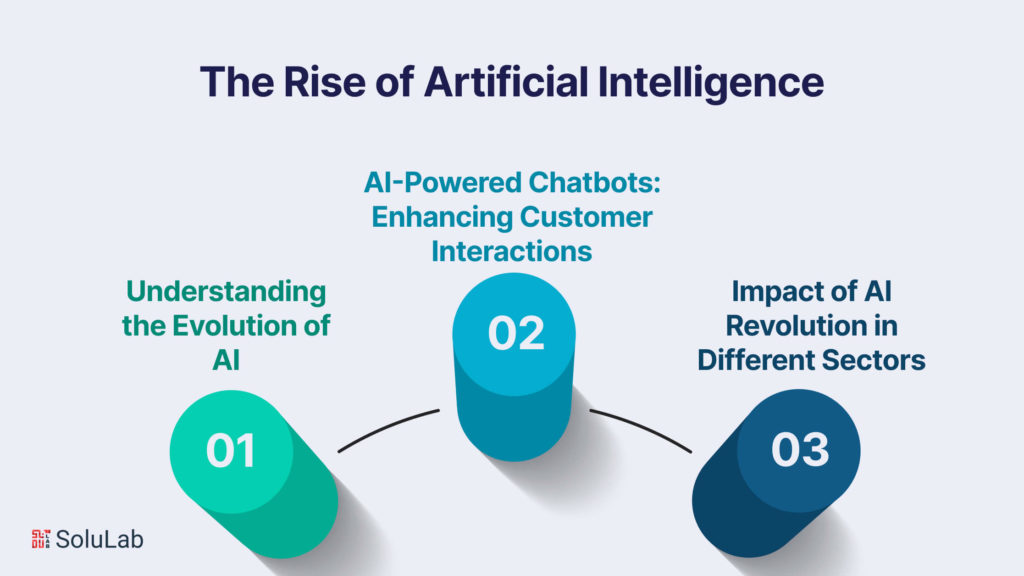
Artificial Intelligence (AI) has become an integral part of the modern technological landscape, revolutionizing the way businesses operate and transforming various industries. This section provides insights into the evolution of AI, its impact on customer interactions through AI-powered chatbots, and the transformative role it plays across different sectors.

  • Understanding the Evolution of AI

Artificial Intelligence (AI) has undergone significant evolution, from its early stages of rule-based systems to the complex deep learning models of today. This evolution has been driven by advancements in computing power, data availability, and algorithmic innovations. The initial stages of AI development focused on basic tasks such as decision-making and problem-solving. However, with the introduction of machine learning and neural networks, AI has expanded its capabilities to encompass complex data analysis, pattern recognition, and natural language processing.

  • AI-Powered Chatbots: Enhancing Customer Interactions

AI-powered chatbots have revolutionized customer interactions, providing businesses with efficient and effective ways to engage with their audience. These chatbots leverage natural language processing and machine learning algorithms to understand and respond to customer queries, thereby offering personalized and seamless experiences. The integration of AI-powered chatbots has streamlined customer service operations, allowing businesses to provide round-the-clock support and instant solutions to customer queries and concerns.

  • Analyzing the Impact of AI Revolution in Different Sectors

The AI revolution has made a significant impact across various sectors, including healthcare, finance, retail, and manufacturing. In healthcare, AI has enabled the development of predictive models for disease diagnosis and treatment planning, leading to more accurate and efficient healthcare services. In the financial sector, AI has facilitated the automation of routine tasks, fraud detection, and risk management, enhancing operational efficiency and security. Similarly, in the retail industry, AI has enabled personalized shopping experiences, recommendation systems, and inventory management optimization, leading to improved customer satisfaction and increased sales.
Top AI Solution Companies: Driving Innovation and Integration

Top AI Solution Companies: Driving Innovation and Integration

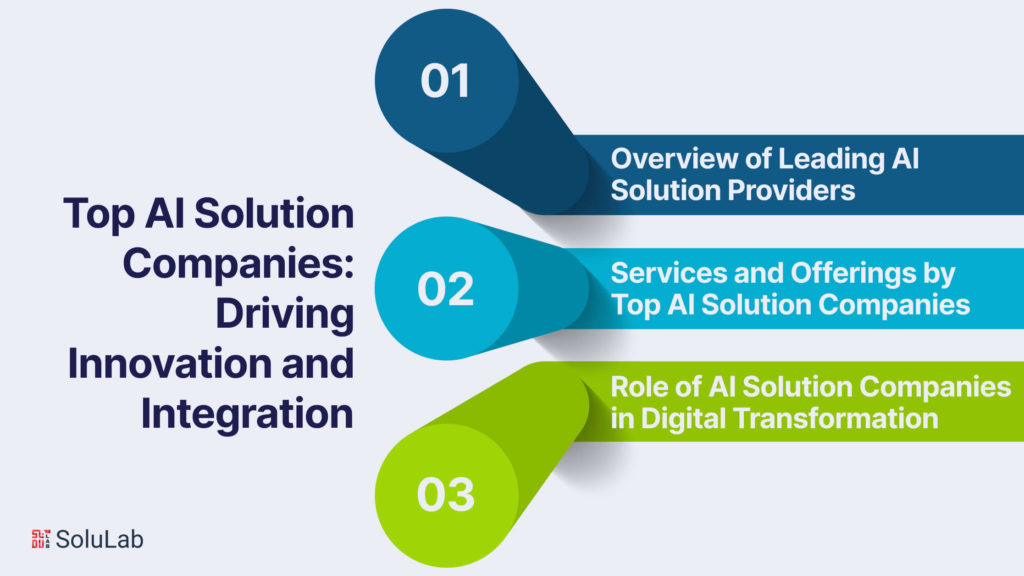
Amid the dynamic AI landscape, numerous top AI solution companies have emerged, leading the charge in driving innovation and integration. This segment highlights the services and offerings provided by these companies and their pivotal role in supporting businesses through digital transformation.

  • Overview of Leading AI Solution Providers

Several leading AI solution companies have emerged, offering a diverse range of AI-based products and services. These companies specialize in developing AI solutions tailored to specific industry requirements, including data analysis, automation, and predictive modeling. Some of the top AI solution companies include Google, Microsoft, IBM, Amazon Web Services (AWS), and Salesforce, among others.

  • Services and Offerings by Top AI Solution Companies

Top AI solution companies offer a wide array of services and offerings, including AI-powered data analytics, machine learning algorithms, natural language processing tools, and AI-driven automation solutions. These services cater to the specific needs of businesses, providing them with valuable insights, predictive analytics, and automation capabilities to streamline their operations and drive business growth. Additionally, AI solution companies offer consultancy services, training programs, and customized AI solutions to address complex business challenges and opportunities.

  • Role of AI Solution Companies in Digital Transformation

The role of AI solution companies in digital transformation is instrumental in driving innovation and integration across industries. These companies play a crucial role in helping businesses adopt and implement AI technologies, enabling them to leverage data-driven insights and automation to enhance their operational efficiency and competitiveness. By providing customized AI development solutions, consultancy services, and ongoing support, AI solution companies empower businesses to navigate the complexities of digital transformation and stay ahead in an increasingly competitive marketplace.

AI Development Company

AI Consulting Companies: Navigating Businesses Through AI Integration

AI consulting companies are crucial in guiding businesses through the intricate process of AI integration. This section delves into the significance of AI consulting in organizational development and emphasizes the collaborative strategies adopted by businesses and consulting firms for successful AI implementation.

  • Importance of AI Consulting in Organizational Development

AI consulting companies play a vital role in guiding businesses through the process of AI integration and adoption. These consulting firms provide expert guidance and strategic insights to help businesses identify the right AI solutions and develop customized strategies for successful implementation. By understanding the unique requirements and challenges of each business, AI consulting companies offer tailored solutions that align with the organization’s objectives and goals, facilitating a seamless transition to AI-driven operations.

  • Leveraging Expertise from AI Consulting Companies

Businesses can leverage the expertise and knowledge of AI consulting companies to gain a deeper understanding of AI technologies, their potential applications, and their impact on business operations. These consulting firms offer comprehensive assessments, feasibility studies, and roadmaps for AI implementation, enabling businesses to make informed decisions and investments in AI solutions that best align with their long-term objectives. By collaborating with AI consulting companies, businesses can gain access to a pool of AI experts, data scientists, and industry specialists, ensuring a holistic approach to AI integration and development.

  • Collaborative Strategies for AI Implementation and Integration

AI consulting companies work collaboratively with businesses to develop and implement effective strategies for AI integration. These strategies encompass the identification of AI use cases, data collection and analysis, AI model development, and deployment, as well as ongoing monitoring and optimization. By fostering collaboration and communication between cross-functional teams, AI consulting companies facilitate the seamless integration of AI technologies into existing business processes, enabling businesses to achieve operational excellence, cost optimization, and enhanced decision-making capabilities.

Exploring the Landscape of AI Development Companies

AI development companies are at the forefront of AI innovation, contributing to the development and deployment of cutting-edge AI solutions. This segment provides an overview of these leading companies, their innovations, and their contributions to shaping future technologies.

  • Overview of Top AI Development Companies

AI development companies are at the forefront of AI innovation, driving the development and deployment of cutting-edge AI solutions across industries. These companies specialize in AI software development, algorithm design, and machine learning model development, catering to the diverse needs of businesses seeking to leverage AI for enhanced productivity, efficiency, and competitive advantage. Some of the top AI development companies include OpenAI, DeepMind, and UiPath, among others.

  • Innovations and Technologies by AI Development Companies

AI development companies are known for their innovative approaches to Artificial Intelligence technology, including advancements in natural language processing, computer vision, and reinforcement learning. These companies continuously strive to push the boundaries of AI research and development, exploring new techniques, algorithms, and models that can address complex business challenges and opportunities. By staying at the forefront of AI research, AI development companies contribute to the continuous evolution and advancement of AI technologies, fostering a culture of innovation and excellence.

  • AI Development Companies and the Shaping of Future Technologies

The contributions of AI development companies are instrumental in shaping the future of technology, as they continue to drive advancements in AI research, development, and deployment. These companies are actively involved in addressing the evolving needs and demands of businesses, offering tailored AI solutions that can optimize operations, enhance decision-making, and drive innovation. By collaborating with AI development companies, businesses can tap into a wealth of AI expertise and knowledge, gaining access to state-of-the-art AI technologies that can propel them toward sustainable growth and success.
Decoding the AI Revolution: Challenges and Opportunities

Decoding the AI Revolution: Challenges and Opportunities

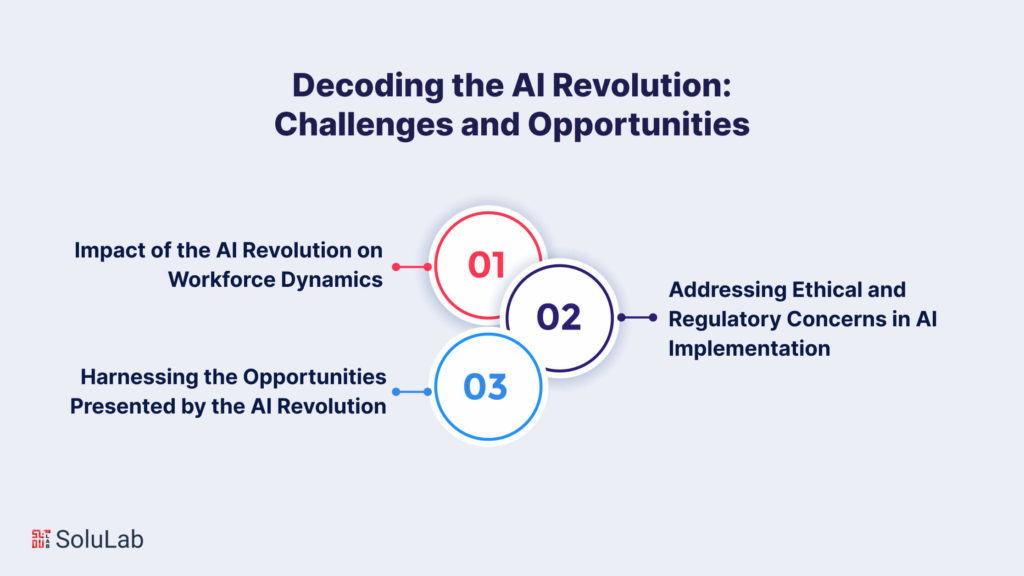
The AI revolution presents a myriad of challenges and opportunities for businesses, particularly in terms of workforce dynamics, ethical considerations, and harnessing the potential of AI technologies. This section sheds light on the implications of the Artificial Intelligence revolution and how businesses can navigate this transformative era.

  • Impact of the AI Revolution on Workforce Dynamics

The AI revolution has led to significant changes in workforce dynamics, impacting the nature of work, job roles, and skill requirements. As AI technologies continue to automate routine tasks and streamline business operations, there is a growing need for upskilling and reskilling the workforce to adapt to the changing demands of the digital era. While AI presents opportunities for increased efficiency and productivity, it also poses challenges related to job displacement, skill gaps, and workforce restructuring, necessitating a comprehensive approach to workforce development and management.

  • Addressing Ethical and Regulatory Concerns in AI Implementation

As AI technologies become more pervasive across industries, there is a growing need to address ethical and regulatory concerns related to data privacy, security, and bias in AI decision-making. Businesses and AI stakeholders must prioritize ethical considerations in AI development and deployment, ensuring that AI systems adhere to ethical guidelines and regulatory frameworks to protect user data and privacy. By implementing transparent and accountable AI practices, businesses can build trust and credibility with their stakeholders and foster responsible AI integration and usage.

  • Harnessing the Opportunities Presented by the AI Revolution

While the AI revolution presents challenges, it also offers numerous opportunities for businesses to innovate, grow, and thrive in an increasingly competitive marketplace. By embracing AI technologies, businesses can leverage data-driven insights, predictive analytics, and automation capabilities to streamline their operations, optimize their resources, and deliver enhanced customer experiences. The AI revolution also enables businesses to explore new market opportunities, develop innovative products and services, and expand their reach to new customer segments, driving sustainable growth and profitability in the digital age.

Enterprise AI Development Companies: Advancing Organizational Efficiency

In the quest for enhanced organizational efficiency, enterprise AI development companies play a pivotal role. This segment emphasizes the importance of these companies in optimizing enterprise-level operations and implementing AI solutions tailored to meet complex business challenges.

  • Role of Enterprise AI Development Companies in Business Optimization

Enterprise AI development companies play a critical role in advancing organizational efficiency by offering AI solutions and services tailored to the specific needs of enterprises. These companies focus on addressing complex business challenges, such as process automation, data analysis, and decision-making, by leveraging AI-driven technologies and applications. By partnering with enterprise AI development companies, businesses can optimize their operations, improve productivity, and achieve cost-effective solutions that drive business success and sustainability.

  • Implementing AI Solutions for Enterprise-Level Challenges

Enterprise AI development companies offer a comprehensive suite of AI solutions designed to address enterprise-level challenges and opportunities. These solutions encompass AI-driven data analytics, predictive modeling, intelligent automation, and cognitive computing, enabling businesses to make informed decisions, streamline their operations, and enhance their competitive edge. By integrating AI solutions, businesses can unlock valuable insights, mitigate risks, and capitalize on emerging opportunities, positioning themselves as industry leaders and innovators in their respective domains.

  • Driving Innovation and Scalability through Enterprise AI Development

Enterprise AI development companies are instrumental in driving innovation and scalability across industries, empowering businesses to explore new horizons and opportunities for growth. These companies specialize in developing scalable AI solutions that can adapt to the evolving needs and demands of enterprise-level operations, enabling businesses to achieve long-term sustainability and success. By harnessing the power of AI technologies, businesses can foster a culture of innovation, creativity, and agility, driving continuous improvement and transformation within their organizations.
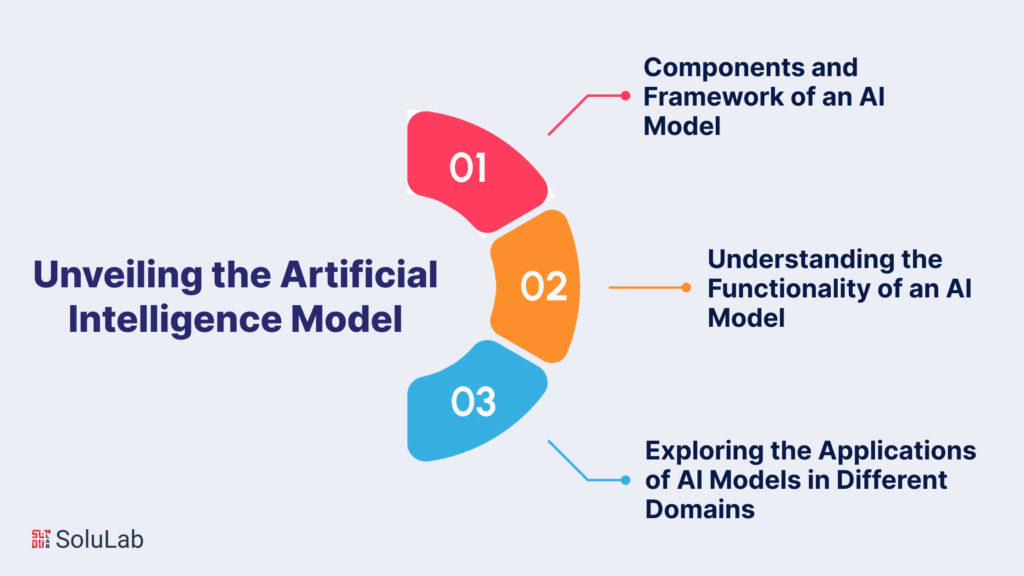
Unveiling the Artificial Intelligence Model

Unveiling the Artificial Intelligence Model

The artificial intelligence model serves as the backbone of AI operations, encompassing a diverse range of components and frameworks designed to simulate human intelligence. This section provides insights into the functionality of an Generative AI models and its applications across various domains.

  • Components and Framework of an Artificial Intelligence Model

The artificial intelligence model encompasses a set of interconnected components and frameworks designed to simulate human intelligence and cognitive functions. These components include data collection and preprocessing, algorithm development and training, model testing and validation, and deployment and optimization. The framework of an artificial intelligence model is structured to enable the seamless integration of data-driven insights and machine learning capabilities, facilitating the development of predictive models, recommendation systems, and decision-making tools that can enhance business performance and outcomes.

  • Understanding the Functionality of an AI Model

The functionality of an AI model revolves around its ability to process and analyze vast amounts of data, extract meaningful patterns and insights, and generate predictive outcomes and recommendations. AI models leverage sophisticated algorithms and machine learning techniques to learn from data, adapt to changing environments, and make intelligent decisions based on predefined objectives and criteria. By understanding the functionality of an AI model, businesses can harness the power of data-driven insights and automation to optimize their operations, enhance their decision-making capabilities, and drive sustainable growth and profitability.

  • Exploring the Applications of AI Models in Different Domains

AI models find applications in various domains, including finance, healthcare, manufacturing, and retail, among others. In finance, AI models are utilized for risk management, fraud detection, and algorithmic trading, enabling businesses to optimize their investment strategies and minimize financial risks. In healthcare, AI models support disease diagnosis, treatment planning, and patient care management, empowering healthcare professionals to deliver personalized and efficient healthcare services. Similarly, in manufacturing and retail, AI models facilitate supply chain optimization, inventory management, and demand forecasting, leading to improved operational efficiency and customer satisfaction.

Generative AI: A Catalyst for Innovation and Creativity

Generative AI has emerged as a catalyst for fostering innovation and creativity, enabling businesses to explore new dimensions of creative design and multimedia production. This segment explores the concept of generative AI, its emerging trends, and its transformative applications in different industries.

  • Understanding the Concept of Generative AI

Generative AI refers to a subset of artificial intelligence that focuses on creating and generating new content, such as images, text, and multimedia, based on existing data and patterns. Generative AI models utilize deep learning techniques, including generative adversarial networks (GANs) and variational autoencoders (VAEs), to generate realistic and creative outputs that mimic human creativity and imagination. By simulating human-like behaviors and cognitive processes, generative AI fosters innovation and creativity, enabling businesses to explore new possibilities and avenues for product development and design.

  • Emerging Trends and Applications of Generative AI

Generative AI is witnessing a surge in popularity across various industries, driven by its applications in creative design, content generation, and multimedia production. In the field of creative design, generative AI is used for generating realistic images, 3D models, and visual artwork, allowing designers and artists to explore new aesthetics and design concepts. In content generation, generative AI facilitates the development of personalized content, storytelling, and multimedia presentations, enhancing user engagement and brand storytelling. Additionally, in multimedia production, generative AI enables the creation of realistic animations, special effects, and virtual environments, enhancing the overall visual appeal and immersive experience for users and audiences.

  • Leveraging Generative AI for Innovative Use Cases

Businesses can leverage generative AI for innovative use cases, such as product design, virtual prototyping, and creative marketing campaigns, to foster innovation and differentiation in the marketplace. By incorporating generative AI tools and models, businesses can streamline their creative processes, accelerate product development cycles, and introduce novel concepts and designs that resonate with their target audience. Generative AI also empowers businesses to personalize user experiences, deliver interactive content, and create immersive virtual environments, fostering deeper engagement and emotional connections with their customers and stakeholders.

Exploring the Role of Generative AI in Shaping Future Technologies

Generative AI plays a crucial role in advancing data analysis, pattern recognition, and creative design capabilities, significantly impacting the trajectory of future technologies. This section highlights the implications of generative AI and its collaborative integration with existing technologies.

  • Role of Generative AI in Advanced Data Analysis and Pattern Recognition

Generative AI plays a critical role in advancing data analysis and pattern recognition capabilities, enabling businesses to extract meaningful insights, trends, and correlations from complex datasets. By leveraging generative AI models, businesses can analyze large volumes of structured and unstructured data, identify hidden patterns and anomalies, and derive actionable insights that drive strategic decision-making and business performance. Generative AI also facilitates predictive modeling, forecasting, and trend analysis, empowering businesses to make informed predictions and projections that support long-term planning and growth.

  • Implications of Generative AI in Creative Design and Multimedia Production

The implications of generative AI in creative design and multimedia production are far-reaching, as businesses increasingly rely on AI-driven tools and technologies to enhance their creative capabilities and storytelling techniques. Generative AI enables businesses to automate the design process, streamline content creation, and generate personalized multimedia experiences that resonate with their target audience. By harnessing generative AI, businesses can unlock new dimensions of creativity, aesthetics, and user engagement, fostering a culture of innovation and experimentation in their creative endeavors and multimedia productions.

  • Collaboration and Integration of Generative AI with Existing Technologies

The collaboration and integration of generative AI with existing technologies are essential for driving innovation and fostering a cohesive digital ecosystem that supports business growth and sustainability. Businesses can integrate generative AI tools and models with their existing AI infrastructure, data analytics platforms, and creative design software, enabling seamless data exchange and collaboration across different departments and teams. By fostering a collaborative environment, businesses can leverage the collective expertise and insights of AI specialists, data scientists, and creative professionals, fostering cross-functional collaboration and knowledge sharing that drive continuous improvement and excellence.

Hire AI Developers

Conclusion

In conclusion, the evolution of Artificial Intelligence (AI) has ushered in a new era of technological advancement and innovation, redefining the way businesses operate and transforming various industries. The widespread adoption of AI-powered chatbots, the rise of top AI solution companies, and the pivotal role of AI consulting services have revolutionized the business landscape, paving the way for a more efficient and streamlined future.

Enterprise AI development companies have played a significant role in advancing organizational efficiency, providing tailored AI solutions to address complex business challenges and drive growth. The unveiling of the artificial intelligence model has provided businesses with a comprehensive framework to leverage data-driven insights and machine learning capabilities, propelling them towards optimized operations and enhanced decision-making.

Furthermore, the emergence of Generative AI as a catalyst for innovation and creativity has unlocked new dimensions of creative design and multimedia production. Generative AI trends and tools have empowered businesses to foster a culture of innovation, drive continuous improvement, and enhance customer experiences, thereby securing a competitive edge in the market.

Through strategic implementations and collaborative efforts with leading AI development companies like SoluLab, businesses can harness the full potential of AI technologies, drive sustainable growth, and differentiate themselves in an increasingly competitive landscape. By leveraging the expertise of dedicated AI developers and consulting services, businesses can navigate the complexities of the AI revolution, capitalize on emerging opportunities, and chart a successful path toward a more prosperous and technologically advanced future.

FAQs

1. What are the key benefits of integrating AI-powered chatbots into business operations?

The key benefits of integrating AI-powered chatbots into business operations include enhanced customer engagement, round-the-clock support, personalized interactions, and streamlined customer service operations.

2. How can businesses determine the right AI consulting services to meet their specific needs and objectives?

Businesses can determine the right AI consulting services by considering factors such as expertise, industry experience, tailored solutions, and a proven track record of successful AI integration and implementation.

3. What are the primary factors to consider when hiring dedicated AI developers for a project?

When hiring dedicated AI developers, businesses should consider factors such as technical proficiency, experience in AI development, adaptability to project requirements, and a collaborative approach to problem-solving.

4. How does Generative AI contribute to the enhancement of creative design and multimedia production?

Generative AI contributes to the enhancement of creative design and multimedia production by enabling automated design processes, personalized content generation, and the creation of immersive virtual environments that resonate with audiences.

5. What are the potential ethical implications and challenges associated with the widespread adoption of AI technologies?

The widespread adoption of AI technologies raises ethical implications and challenges related to data privacy, security, and bias. Businesses must prioritize transparent and accountable AI practices to build trust and credibility with stakeholders.

6. How can businesses effectively leverage the capabilities of the artificial intelligence model to optimize their decision-making processes?

Businesses can effectively leverage the capabilities of the artificial intelligence model by harnessing data-driven insights, predictive analytics, and automation to optimize their operations, enhance decision-making, and drive sustainable growth.

7. What are the emerging trends in AI development and how do they impact the future of various industries?

Emerging trends in AI development impact the future of various industries by enabling advanced data analysis, pattern recognition, and creative design solutions that drive innovation, efficiency, and competitiveness across different domains.

How Generative AI is Shaping the Future of AR and VR Experiences?

How Generative AI is Shaping the Future of AR and VR Experiences?

Augmented Reality (AR) and Virtual Reality (VR) have witnessed significant advancements over the years, transforming how we interact with digital content and the physical world. These immersive technologies have applications in various fields, from gaming and entertainment to healthcare and education. However, the true potential of AR and VR lies in their ability to deliver lifelike, engaging experiences, and this is where Generative AI comes into play.

Generative AI, a subset of Artificial Intelligence, has been instrumental in pushing the boundaries of AR and VR by enabling the creation of highly realistic, interactive, and adaptive digital content. In this blog, we’ll explore how Generative AI is shaping the future of AR and VR experiences and its exciting possibilities.

The Role of Generative AI in Augmented Reality (AR) and Virtual Reality (VR) Learning

The Role of Generative AI in Augmented Reality (AR) and Virtual Reality (VR) Learning

Before delving into the exciting possibilities of augmented reality (AR) and virtual reality (VR) in education, it’s essential to recognize the pivotal role that Generative Artificial Intelligence (AI) plays in shaping the future of learning within these immersive realms.

At its core, Generative AI harnesses advanced neural networks to create dynamic content tailored to the individual needs and preferences of students. In the context of AR and VR, this technology acts as a virtual tutor, available 24/7, capable of adapting to each student’s unique learning journey within these interactive environments.

  • Unprecedented Personalization

Generative AI trends take personalized learning to new heights, surpassing the limitations of traditional teaching methods. The one-size-fits-all approach of textbooks and standardized curricula falls short of meeting the diverse learning needs of students.

In AR and VR, Generative AI ensures that learning materials are dynamically customized in real time. This means that students receive content aligned with their current knowledge levels and learning preferences, promoting more effective and engaging learning experiences.

Imagine a student immersed in an AR mathematics lesson. Generative AI, driven by machine learning algorithms, continuously evaluates the student’s progress within the virtual environment. If the AI detects areas of struggle, it generates additional practice problems or offers alternative explanations until the student comprehends the concept. Conversely, if the student is advancing rapidly, the AI can introduce more advanced topics or challenges to maintain their engagement and motivation.

  • Adaptive Learning Paths in AR and VR

Generative AI empowers educators to implement adaptive learning paths within AR and VR experiences. It can analyze students’ responses to AR/VR quizzes, assignments, and interactions with virtual learning materials to create personalized educational journeys. This approach ensures that students receive the appropriate level of challenge and support, thereby preventing boredom or frustration within these immersive environments.

For instance, consider an AR or VR language learning application enriched by Generative AI. The system can assess a student’s vocabulary and grammar proficiency within the virtual space. If a student excels in vocabulary but struggles with grammar, the AI may recommend tailored exercises and resources to address the grammar deficiency. As the student progresses, the AI dynamically adjusts the difficulty level, ensuring a learning experience that remains engaging and beneficial.

  • Real-time Guidance and Support through Generative AI and AR

Generative AI not only delivers tailor-made content but also provides immediate feedback and assistance within augmented reality (AR) environments. This means that students no longer have to wait for a teacher’s response or corrections; they receive real-time guidance. This feature not only accelerates the learning process but also bolsters students’ confidence as they can promptly correct errors and reinforce their understanding.

In a science class, for example, a student might be conducting a virtual experiment in an AR setting. Generative AI closely observes the student’s actions, identifying any misconceptions or errors in the experiment. Almost instantly, the AI offers feedback and suggests necessary adjustments. This iterative process ensures that students learn through their mistakes, a potent educational tool made possible by Generative AI and AR.

  • Ongoing Enhancement in AR Learning

Generative AI and Augmented Reality don’t limit themselves to customizing content; they also actively improve the teaching materials themselves. Over time, as it gathers data on how students interact with various learning resources in AR, it can optimize those resources for maximum educational effectiveness.

Imagine an online history course enriched by Generative AI within an AR framework. As students engage with the course materials, which might include textbooks, videos, and interactive timelines, the AI continuously monitors their preferences. If students exhibit a preference for video content to learn about historical events, the AI could generate more video-based modules. Similarly, if students respond positively to interactive timelines, the AI can create additional interactive content to reinforce their understanding. This dynamic optimization of AR learning materials by Generative AI ensures that the educational experience remains engaging and effective.

  • Accessibility and Inclusivity Amplified by Machine Learning in Education

One of the most promising facets of Machine Learning in education is its capacity to render learning more accessible and inclusive. This technology, driven by Machine Learning algorithms, proves to be a game-changer for students with varying learning needs, including those with disabilities, by accommodating their requirements. In effect, this fosters an all-encompassing learning environment where every student can not only participate but also excel.

Consider, for instance, a visually impaired student engaged in the study of literature. Thanks to Machine Learning, educational materials can be transformed to meet the specific needs of this student. Machine Learning algorithms can convert text into audio, providing the student with the option to listen to literary works. Moreover, the technology can offer detailed audio descriptions of visual elements within these literary works, enriching the student’s understanding of the content.

In tandem, Machine Learning can adjust the reading pace to align with the student’s preferences, ensuring comprehension without any undue haste. Essentially, Machine Learning is revolutionizing the entire educational landscape, transforming learning into a highly adaptive, personalized, and inclusive experience. This empowerment extends to both students and educators, enabling them to embark on educational journeys that are uniquely tailored to individual needs and aspirations. In doing so, Machine Learning paves the way for a more equitable and effective education system that caters to the diverse needs of every learner.

Related: Role AI in Transforming Education Industry

Defining Augmented Reality and Virtual Reality

Virtual Reality (VR) refers to a computer-generated, three-dimensional environment that a person can explore and interact with. When engaged in VR, an individual becomes an integral part of this virtual world, fully immersed in the computer-generated environment. Within this space, the person can manipulate objects and execute actions that influence the happenings within the virtual environment. VR technology primarily relies on devices such as headsets or goggles to create this immersive experience.

Conversely, Augmented Reality (AR) is an enhanced version of reality where a person’s direct or indirect view of the real physical world is enriched by the addition of computer-generated images. These digital elements are superimposed over the user’s perception of the real world, effectively enhancing their current reality. In simpler terms, AR users observe digital layers of information overlaid on real-world images, enhancing their overall perception of reality.

CTA1

AR technology comes in various forms:

  • Location-based AR: This system delivers supplementary information to users based on their geographic location, which holds immense potential, particularly in industries such as automotive and transportation.
  • Projection-based AR: In this instance, AR software projects light onto a physical object, creating an interactive interface within the real-time environment.
  • Superimposition-based AR: This form of AR permits users to either entirely or partially replace the actual image with new elements, thus augmenting their perspective. Superimposition-based AR is well-suited for applications in the fashion industry, architecture, and design.

Real-life Generative AI Use Cases in Enhancing Learning Experiences

Real-life Generative AI Use Cases in Enhancing Learning Experiences

The value of Generative AI in enhancing the learning experience becomes clearer when illustrated through concrete examples. These real-life Generative AI use cases provide insights into how these new technologies can aid educators in delivering knowledge more effectively and engagingly.

1. Healthcare: Traditionally, learning about healthcare necessitated real-life apprenticeships in hospitals. However, with the advent of Generative AI in healthcare education, students can engage in virtual surgeries and medical procedures, gaining valuable experience without any risk to patients. This makes healthcare learning safer and more efficient.

2. Chemistry: Teaching complex concepts in chemistry can be challenging. Generative AI introduces a new approach where students can perform experiments, mix substances, and gain a hands-on understanding of chemistry. This not only enhances safety but also reduces costs as schools no longer need to purchase various chemical substances for laboratory experiments.

3. History and Geography: The rich narratives of ancient civilizations can be daunting to students. Generative AI can bring history and geography to life through augmented and virtual reality. Virtual field trips transport students to distant lands and historical eras in a matter of minutes, making learning engaging and cost-effective.

4. Physics: Teaching classical mechanics and scientific theories can be dry and theoretical. With Generative AI, students can immerse themselves in virtual environments where they can put theory into practice. Whether it’s exploring the cosmos or experiencing interstellar journeys, Generative AI makes complex subjects more accessible.

5. Manual Work: Many vocational fields involve heavy machinery and tools, making hands-on training challenging in a traditional classroom. Generative AI, particularly in VR, enables students to safely engage in activities like driving trucks, conducting construction tasks, or simulating high-risk professions such as firefighting and coast guard operations.

6. Art and Culture: Generative AI, specifically superimposition-based AR, can be used to create engaging art and culture learning experiences. With AR, students can interact with famous artists’ styles and learn about artistic history. AI and VR allows them to attend cultural events and even travel back in time to witness historical performances.

Related: Generative AI Art

7. Language Learning: The best way to learn a new language is through immersion, often requiring travel. Generative AI can change this by offering virtual trips to foreign countries, enabling language learners to practice with native speakers and explore local cultures.

It’s important to note that the applications of Generative AI in education extend far beyond these seven examples. Furthermore, the potential for creating virtual classrooms where students from around the world can access top-tier educators remains an exciting prospect, although it is still evolving. These use cases illustrate the transformative potential of leveraging Generative AI in making learning more immersive, engaging, and accessible across various fields of study.

How Generative AI Enhances Realism in AR and VR Environments?

Generative Artificial Intelligence (AI) is revolutionizing Augmented Reality (AR) and Virtual Reality (VR) by significantly enhancing the realism of the environments experienced within these immersive technologies. Through the clever use of Generative AI, AR and VR experiences have become more convincing, engaging, and lifelike than ever before.

Generative AI, particularly through Generative Adversarial Networks (GANs), plays a pivotal role in creating hyper-realistic surroundings. GANs consist of two neural networks – a generator and a discriminator – that work in tandem to produce lifelike content. The generator creates synthetic data, such as images or 3D models, while the discriminator evaluates this content for authenticity. Through repeated iterations and fine-tuning, GANs can generate images and environments that are almost indistinguishable from reality.

In AR, this technology ensures that digital elements seamlessly blend with the physical world. For example, AR apps can superimpose virtual furniture into your living room, appearing so realistic that you might forget it’s not actually there.

In VR, Generative AI facilitates the creation of immersive, lifelike worlds. Whether exploring a historical era, visiting a far-off planet, or undergoing surgical training, AI and VR environments feel incredibly real, thanks to AI’s ability to generate detailed textures, landscapes, and interactive elements.

Ultimately, Generative AI is the magic wand that transforms AI and VR from mere technological novelties into powerful tools that offer users experiences that feel, look, and interact with the world just like reality. This not only enriches entertainment and gaming but also holds significant promise in domains such as education, training, and design.

The Role of AR and VR in Training and Simulation

The Role of AR and VR in Training and Simulation 

Augmented Reality (AR) and Virtual Reality (VR) have emerged as transformative tools in the realm of training and simulation. These immersive technologies offer a unique and highly effective way to prepare individuals for various real-world scenarios, both in professional and educational contexts.

In training and simulation, AR and VR excel in several key ways:

  • Safe and Controlled Environments: AR and VR provide controlled, safe, and repeatable environments for training. Professionals in fields like medicine, aviation, and the military can rehearse complex procedures and emergency scenarios without real-world risks.
  • Realistic Simulations: VR, in particular, offers incredibly realistic simulations. Trainees can immerse themselves in highly detailed virtual environments that mimic real-world settings, complete with interactive elements. This level of realism enhances muscle memory and helps individuals develop practical skills.
  • Hands-On Learning: Both AR and VR enable hands-on learning. Trainees can manipulate virtual objects, perform tasks, and interact with simulated elements, making the learning experience more engaging and effective.
  • Cost-Efficiency: AR and VR reduce the need for physical resources, equipment, and facilities, saving costs associated with real-world training. This is especially valuable in industries with expensive or limited resources.

Related: How Generative AI is Revolutionizing Art?

  • Customization and Adaptability: AR and VR simulations can be customized to suit specific training needs. Training programs can be adapted to various skill levels and learning speeds, allowing for a more personalized training experience.
  • Repetitive Practice: Trainees can practice procedures as many times as needed until they achieve proficiency, which is particularly valuable in industries where repetition is critical, such as surgery or military exercises.
  • Remote Training: AR and VR technologies enable remote training and collaboration, breaking down geographical barriers. Experts from around the world can guide and assess trainees, making it easier to access specialized knowledge and instruction.

In brief, AR and VR have revolutionized training and simulation by offering highly realistic, safe, and cost-effective learning environments. These immersive technologies not only accelerate skill acquisition but also provide a flexible and adaptable platform for individuals to become experts in their respective fields.

CTA2

Concluding Remarks

The integration of generative AI in virtual reality and augmented reality is propelling these immersive technologies into the forefront of the digital era. The dynamic capabilities of Generative AI have ushered in a new era of hyper-realism, personalization, and interactivity within AR and VR experiences. It has rendered what was once considered the stuff of science fiction into a tangible, transformative force for a multitude of industries.

As we look to the future, the horizon for AR and VR powered by Generative AI is brimming with possibilities. These technologies are poised to redefine education, enabling personalized and engaging learning journeys, while also revolutionizing training and simulation by providing realistic, cost-effective, and risk-free environments for skill development. Furthermore, the potential applications span far beyond education, from healthcare to gaming, industry, and beyond. 

SoluLab worked on OmniSoft is a pre-made solution that may be customized for you. We have developed a solution that satisfies every requirement of our customers, you can host conferences, seminars, and other events in addition to business meetings in a metaverse. Our tools and infrastructures are designed to manage big teams so you can keep doing what you need to. With this, we can assist you in transferring your physical board rooms, conference rooms, and offices to the online space. We also provide avatars of your favorite characters to add to the excitement. 

FAQs

1. How does AI function in AR and VR?

Tracking and recognition are two of the most basic applications of AI in VR and AR. Behind the scenes, AI algorithms are actively working on tasks like object tracking, gesture detection, and facial recognition. 

2. Is AR a form of AI?

No AI and AR are not the same thing. Through the realistic augmented reality activity that air technology offers, consumers can see products in their environment and make better selections.

3. Which technology powers AR and VR?

Rendering and 3D modeling are used in AR to produce virtual imagery. They may be superimposed on the actual environment. Both the geometry and appearance of the virtual objects define them.

4. Which algorithm does virtual reality use?

POV-Ray is a freeware, standalone, outstanding renderer that uses a text file describing the scene in a scripting language called POV-Ray scene description language (SDL) as input to produce three-dimensional photo-realistic graphics. 

5. How does SoluLab’s expertise contribute to the development of Generative AI solutions for AR and VR applications? 

SoluLab offers experienced Generative AI developers who can integrate advanced AI models and algorithms to maximize the potential of Generative AI. This collaboration leads to groundbreaking advancements in education, training, and entertainment, shaping the future of AR and VR experiences.

Exploring the Current State of Generative AI: An In Depth Analysis

Generative Artificial Intelligence (AI) stands as a pioneering advancement in the realm of artificial intelligence, bringing to life the ability to create original and unique content, such as images, text, music, and more. At its core, Generative AI refers to the technology that empowers machines to generate content that closely resembles human-created creations. It operates on complex algorithms and models that learn from vast datasets, allowing them to produce new content that exhibits patterns, styles, and characteristics present in the training data.

The concept of Generative AI revolves around the idea of enabling machines to autonomously create content that goes beyond simple replication. Unlike traditional AI systems that primarily focus on classification and prediction, Generative AI goes a step further by creating something novel, often presenting unforeseen combinations or variations that challenge conventional creativity boundaries.

Read Our Blog Post: Top 10 Generative AI Development Companies

At the crossroads of technology and creativity, Generative AI beckons us to peer into a future where machines and human creativity collaborate, weaving a tapestry of possibility that was once confined to human hands alone. As we immerse ourselves in this in-depth analysis, we uncover the intricacies of this remarkable technology and its potential to reshape industries, redefine artistic expression, and inspire a new era of innovation.

What are the Evolution and Advancements in Generative AI Technology?

The evolution and Advancements in Generative AI Technology

The evolution of Generative AI technology is a remarkable journey that spans multiple decades, marked by significant milestones and breakthroughs:

  • Early Experiments and Beginnings

In the early days of AI, researchers began experimenting with simple rule-based systems that generated basic patterns. These rudimentary systems laid the groundwork for later advancements.

Read Also: Top 10 Generative AI Trends To Watch Out In 2024

  • Emergence of Neural Networks

The resurgence of neural networks, particularly deep learning, brought a new wave of progress in the field of Generative AI. Neural networks allowed for more sophisticated learning from data and better capturing of complex patterns.

  • Variational Autoencoders (VAEs)

VAEs introduced probabilistic thinking into Generative AI. These models could generate new content by learning the underlying statistical distributions of data, enabling them to generate similar but distinct outputs.

  • Generative Adversarial Networks (GANs)

GANs, introduced by Ian Goodfellow in 2014, revolutionized the Generative AI landscape. GANs consist of two neural networks – a generator and a discriminator – engaged in a competitive learning process. The generator aims to produce content that is indistinguishable from real data, while the discriminator tries to differentiate between real and generated data. This adversarial training results in remarkably realistic content generation.

  • Style Transfer and Beyond

Generative AI models like GANs paved the way for style transfer, where the style of one image or piece of content could be applied to another, merging art and technology in novel ways.

  • Text and Language Generation

The evolution of Generative AI expanded to include text and language generation. Models like OpenAI’s GPT-3 demonstrated the capability to generate coherent and contextually relevant text, revolutionizing content creation and automated text generation.

  • Cross-domain and Multimodal Generative Models

Recent advancements have focused on generating content across domains or even across different modes, such as generating images from textual descriptions or vice versa.

What are the Generative AI Solutions in the Industry?

the Generative AI Solutions in the Industry

Generative AI has transcended its experimental origins and found its way into a multitude of industries, revolutionizing processes, igniting innovation, and pushing the boundaries of what’s possible. As industries recognize the transformative potential of Generative AI, its applications have evolved to cater to specific needs and challenges across diverse sectors.

  • Creative Industries

In the realm of creative expression, Generative AI has become a muse that collaborates with artists, designers, and musicians to produce captivating and novel works. Artists are leveraging generative models to create unique visual art pieces, blending their creativity with the algorithms’ ability to produce unexpected variations. Music composers are experimenting with AI-generated compositions that span genres, allowing them to explore new melodies and harmonies that might have never been considered. 

This intersection of human ingenuity and algorithmic creativity fosters an environment where artistic boundaries are continually stretched and redefined.

Check Out Our New Blog: Generative AI and Human-AI Collaboration: A Look into the Future

  • Healthcare and Medicine

The healthcare and medical sectors have embraced Generative AI to tackle complex challenges, from drug discovery to medical imaging analysis. AI models are being trained to generate molecular structures for potential drugs, expediting the drug development process. 

In medical imaging, Generative AI assists in enhancing and denoising images, aiding in accurate diagnosis and treatment planning. Additionally, the technology is being used to simulate biological processes, contributing to advancements in understanding diseases and their mechanisms.

CTA1

  • Fashion and Design

Fashion designers and architects are harnessing the power of Generative AI to create innovative designs that blend aesthetics and functionality. In fashion, AI-generated patterns and textures provide designers with fresh ideas and inspirations. 

Architects are using generative models to design structures that optimize space utilization and environmental sustainability. By incorporating AI-generated concepts into design processes, the industry is pushing the boundaries of creativity while maintaining a practical focus.

  • Gaming and Entertainment

The gaming and entertainment sectors have embraced Generative AI to enhance user experiences and create immersive virtual worlds. Game developers are utilizing AI to generate intricate landscapes, characters, and scenarios, resulting in dynamic and evolving gameplay. 

Procedural content generation driven by Generative AI ensures that no two gaming experiences are alike. Moreover, in the entertainment industry, AI-driven algorithms are used to generate realistic special effects and visualizations, elevating storytelling to new heights.

Read Blog Post: Top Artificial Intelligence Solution Companies

  • Manufacturing and Engineering

In the domain of manufacturing and engineering, Generative AI is redefining the design and production processes. Engineers are using AI-generated designs to optimize product geometries for enhanced performance and reduced material usage.

This approach is particularly valuable in fields like the aerospace and automotive industries. Additionally, Generative AI aids in generating prototypes and testing scenarios, accelerating the iterative design process and enabling faster product development cycles.

What are the Challenges and Ethical Considerations in Generative AI?

As Generative AI continues to make strides in reshaping industries and creative processes, it brings forth a series of challenges and ethical considerations that demand careful attention. These complexities arise from the unprecedented capabilities of AI models to create convincing and realistic content, as well as the potential consequences of their misuse. Here, we explore the key challenges and ethical dimensions surrounding Generative AI.

  • Misinformation and Manipulation

Generative AI models can generate highly realistic but entirely fabricated content, raising concerns about misinformation and manipulation. Deepfakes, for instance, can convincingly swap faces in videos, potentially leading to the spread of falsified information or malicious intent.

Know More: From Data to Business Success: Role of AI in Sentiment Analysis

  • Intellectual Property and Ownership

The question of who owns AI-generated content remains a legal and ethical gray area. As these models blend existing data to create new works, determining intellectual property rights and fair compensation for creators becomes complex.

  • Creative Originality

Generative AI’s ability to generate art, music, and literature prompts questions about the nature of creativity. If machines can produce creative works, how does this impact the value and definition of human creativity?

  • Unintended Bias and Fairness

Generative AI models learn from large datasets, which may inadvertently embed biases present in the data. These biases can be perpetuated in the generated content, raising concerns about the fairness and inclusivity of AI-generated outputs.

  • Privacy and Consent

Using AI to generate content often involves using existing data, raising privacy concerns if the data used wasn’t originally intended for such purposes. Additionally, AI-generated content might inadvertently reveal sensitive information or breach privacy boundaries.

  • Reliability and Authenticity

The authenticity of AI-generated content can be challenging to discern. This poses potential threats to the reliability of digital media and could undermine trust in online content.

Check Our Post: Generative AI for Enterprises: Understanding Architecture, Implementation, and Implications

  • Technological Accessibility

The complexity of Generative AI development may lead to a technology gap, where only those with significant technical expertise can create and control these systems. This could limit equal participation and hinder widespread understanding.

  • Ethical Deployment

Deciding how Generative AI should be used and where the line should be drawn in terms of its applications is an ongoing ethical debate. Determining which Generative AI use cases align with societal values and avoiding harmful applications is a complex task.

What Skills and Expertise Are Required for Generative AI Development?

Generative AI development demands a specialized skill set that combines expertise in machine learning, data science, and creative problem-solving. Creating AI models that generate new and imaginative content requires a deep understanding of algorithms, neural networks, and the nuances of the data they learn from. Here are the essential skills and expertise required for Generative AI development:

Skills and Expertise are Required for Generative AI Development

  • Machine Learning Fundamentals

A solid grasp of machine learning concepts is foundational. Understanding supervised and unsupervised learning, classification, regression, and clustering provides the basis for more advanced Generative AI techniques.

  • Neural Networks and Deep Learning

Deep learning is at the core of Generative AI. Proficiency in building and training various types of neural networks, including convolutional neural networks (CNNs) and recurrent neural networks (RNNs), is essential.

  • Mathematics and Statistics

Strong mathematical skills are crucial. Linear algebra, calculus, and probability theory are used extensively in designing, optimizing, and understanding the behavior of generative models.

Check This Blog Also: 10 Benefits of Incorporating Generative AI in the Manufacturing Process

  • Generative Model Architecture

Developers need a deep understanding of various generative model architectures, such as Generative Adversarial Networks (GANs), Variational Autoencoders (VAEs), and autoregressive models. Each architecture has its intricacies and applications.

  • Programming Proficiency

Fluency in programming languages such as Python is essential. Frameworks like TensorFlow, PyTorch, and Keras are commonly used to implement and train generative models.

  • Data Preprocessing and Augmentation

Manipulating and preparing data for generative tasks is vital. Skills in data preprocessing, augmentation, and normalization ensure that the input data is suitable for training the models effectively.

  • Optimization Techniques

Understanding optimization algorithms, gradient descent, and backpropagation is crucial for training generative models and fine-tuning their performance.

Read Also: From Theory to Reality: Real-World Applications of Generative AI and GPT

  • Domain Knowledge

Depending on the application of Generative AI, having domain-specific knowledge can greatly enhance the effectiveness of the models. For example, medical imaging requires knowledge of medical processes.

  • Creativity and Innovation

Generating novel content requires a creative touch. Developers need to think innovatively to push the boundaries of what AI-generated content can achieve.

  • Ethical Considerations

Awareness of ethical implications and considerations related to AI-generated content, such as privacy, bias, and authenticity, is vital to developing responsible and socially aware solutions.

  • Problem-Solving Skills

Generative AI development often involves solving complex challenges, from fine-tuning models to optimizing hyperparameters. Strong problem-solving abilities are a must.

Check Out Our Post: Top 7 Generative AI Integration Services For Your Business

  • Continuous Learning

Given the rapidly evolving nature of AI, a passion for continuous learning and staying updated with the latest research and advancements is crucial

Where to Find Generative AI Developers: A Spotlight on SoluLab

In the quest to find skilled and proficient Generative AI developers, SoluLab emerges as a noteworthy destination that combines expertise, innovation, and a proven track record in cutting-edge AI development. As the demand for Generative AI solutions grows, the search for top-tier talent becomes crucial, and SoLulab offers a compelling solution.

  • Diverse and Proficient Team

SoluLab boasts a team of seasoned AI experts who specialize in Generative AI development. Their multidisciplinary skill set spans machine learning, data science, neural networks, and more. This diversity enables them to tackle complex Generative AI projects with finesse.

  • Expertise in AI Frameworks

Generative AI often relies on frameworks like TensorFlow, PyTorch, and Keras. SoluLab’s developers are well-versed in these platforms, allowing them to efficiently build and deploy generative models tailored to your specific needs.

Read Also: Top 10 Enterprise AI Development Companies

  • Collaborative Approach

Collaboration is key in AI development, especially in a domain as intricate as Generative AI. SoluLab’s team adopts a collaborative approach, working closely with clients to understand their requirements, offer expert insights, and create tailor-made solutions that align with their vision.

  • Project Portfolio

SoluLab’s portfolio showcases an array of successful AI projects, including those in the realm of Generative AI. This proven track record underscores their ability to deliver innovative solutions that cater to diverse industries and challenges.

  • Industry Integration

Generative AI’s applications span various industries, and SoluLab’s expertise extends across sectors like healthcare, finance, e-commerce, and more. This diverse integration showcases their adaptability and commitment to addressing industry-specific challenges.

  • Thought Leadership

SoluLab maintains an active presence in the AI community through research, participation in conferences, and sharing insights. Their thought leadership reflects their dedication to staying at the forefront of AI advancements.

Check Blog Post: Unleashing Business Value: How Generative AI is Transforming Industries

  • Ethical Approach

Addressing ethical considerations in Generative AI is of paramount importance. SoluLab prioritizes the responsible use of AI technologies, ensuring that solutions align with ethical guidelines and societal norms.

  • Holistic Solutions

SoluLab offers end-to-end solutions, from ideation and development to deployment and maintenance. This comprehensive approach streamlines the development process.

What Are the Benefits of Collaborating with Generative AI Development Experts?

The Benefits of Collaborating with Generative AI Development Experts

Collaborating with Generative AI development experts can bring transformative advantages to your projects and initiatives. As the field of AI rapidly evolves, these specialists offer a wealth of knowledge and experience that can shape innovative solutions and drive progress. Here’s a closer look at the benefits of partnering with Generative AI development experts:

  • Technical Excellence and Expertise

Generative AI development experts possess a deep understanding of AI algorithms, neural network architectures, and cutting-edge frameworks. Their technical prowess ensures that your generative models are designed, implemented, and fine-tuned for optimal performance and innovation.

  • Creative Problem-Solving

Generative AI is as much about creativity as it is about technology. Collaborating with experts allows you to harness their creative problem-solving skills to produce novel and imaginative outputs that align with your project goals.

Read Also: What is an AI-powered chatbot?

  • Industry Knowledge and Versatility

Generative AI has applications across various industries, from art and entertainment to healthcare and manufacturing. Development experts can tailor their solutions to suit your specific industry requirements, bringing a versatile approach to your projects.

  • Ethical Considerations and Responsible AI

Responsible AI development involves addressing ethical concerns such as bias, privacy, and authenticity. Generative AI experts are well-versed in navigating these complexities, ensuring that the AI-generated content adheres to ethical guidelines and societal norms.

  • Resource Efficiency and Time Savings

Building Generative AI models from scratch can be resource-intensive and time-consuming. By collaborating with experts, you can tap into their pre-existing knowledge, tools, and workflows, saving valuable time and resources.

  • Access to Cutting-Edge Technology

The AI landscape evolves rapidly, with new techniques and advancements emerging frequently. Generative AI experts stay updated with the latest developments, ensuring that your projects benefit from state-of-the-art technology and methodologies.

  • Comprehensive Solutions

From ideation to deployment and maintenance, Generative AI development experts offer end-to-end solutions. This holistic approach streamlines the entire development process and ensures that your projects are seamlessly integrated and effectively managed.

  • Learning and Knowledge Exchange

Collaborating with experts provides a unique learning opportunity. You gain insights into AI techniques, best practices, and industry trends, fostering knowledge exchange that can empower your team’s future projects.

  • Innovation and Competitive Edge

Innovation often requires thinking beyond the conventional. Generative AI development experts introduce fresh perspectives, helping your projects stand out and maintain a competitive edge in rapidly evolving markets.

  • Customization for Unique Challenges

No two projects are exactly alike. Generative AI experts can customize solutions to address your project’s unique challenges, ensuring that your goals are met with precision.

CTA2

Conclusion

In conclusion, delving into the current landscape of generative AI has unveiled a realm of innovation that holds immense potential across various domains. The evolution of generative AI models has paved the way for groundbreaking solutions that redefine creativity, problem-solving, and user experiences. From art and content generation to complex data synthesis, generative AI demonstrates its prowess by producing outputs that often transcend human capabilities.

Generative AI solutions are witnessing a surge in adoption, driven by their remarkable versatility and ability to cater to a wide array of use cases. This technology has showcased its prowess in fields as diverse as art, design, music, text generation, and even scientific research. The power to create novel and contextually relevant content is empowering businesses and individuals alike, opening new avenues for exploration and expression.

However, it’s worth noting that while generative AI tools continue to astound with their capabilities, they are not without challenges. Fine-tuning these models, ensuring ethical usage, and maintaining quality control are important considerations to navigate this evolving landscape successfully.

Unlock the potential of Generative AI for your digital creations with SoluLab. Our team of experts harnesses the power of cutting-edge Generative AI models like ChatGPT, DALL-E, and Midjurney, offering tailor-made solutions for your specific AI needs. When it comes to state-of-the-art Generative AI Development Services designed specifically for your company’s requirements, look no further. We stand out in the crowded Generative AI landscape by prioritizing agile development and a steadfast commitment to delivering exceptional business outcomes. Hire Generative AI Developers from SoluLab today to harness the creative force of Generative AI for your success. Contact SoluLab Now to explore the possibilities.

FAQs

1. What is Generative AI?

Generative AI refers to a subset of artificial intelligence that involves creating or generating new content, such as images, text, music, or even entire virtual worlds, using algorithms and data.

2. How does a Generative AI model work?

Generative AI models work by learning patterns and features from a dataset and then generating new content that resembles the input data. These models utilize techniques like neural networks and probabilistic models to generate creative and novel outputs.

3. What are some use cases for Generative AI?

Generative AI has diverse applications, including creating realistic images, text generation, video game content generation, style transfer, music composition, drug discovery, and more. It’s used wherever creativity and content creation are needed.

4. What sets Generative AI apart from other AI approaches?

Generative AI focuses on creativity and content generation, distinguishing it from other AI applications that primarily involve classification, prediction, or optimization tasks.

5. What are Generative AI solutions?

Generative AI solutions are software applications or platforms that leverage generative AI technology to create new content. They can range from text generators and image synthesis tools to more complex systems like virtual environment creation engines.


Generative AI 101: Transforming Beginners into Experts

Generative AI 101:A Beginners’ Guide

Generative AI has emerged as a transformative technology in recent years, revolutionizing various industries with its potential to create original content such as images, text, and even music. The advancements in generative AI have enabled machines to learn, create and produce new content, leading to unprecedented innovation across various sectors. As a result, many companies are now considering generative AI technology and hiring Generative AI Development Companies to leverage its benefits and enhance their operations with AI-led automation.

Generative AI is the new future AI that focuses on learning, analyzing, and producing original content through machine learning algorithms. This technology is transforming businesses’ operations and enhancing their ability to provide customized solutions. It has become a hot topic in the market, with many companies investing in this technology to leverage its benefits.

This blog will provide in-depth information about generative AI, how it works, the different types of generative AI models, and their applications in various industries. We will also discuss the tech stack used in Generative AI development services and how natural language processing (NLP), deep learning, and machine learning play a critical role in this technology. By the end of this blog, you will have a comprehensive understanding of generative AI and its significance in today’s digital landscape.

What is Generative AI?

Generative AI is a field of artificial intelligence that involves using machine learning algorithms to create new data or content that did not exist before. Unlike traditional AI, which involves using pre-existing data to make predictions or decisions, Generative AI generates novel content, such as images, music, or text, based on a given input or set of rules.

Generative AI algorithms use various techniques, including deep learning, reinforcement learning, and probabilistic programming, to create new content. These algorithms work by learning patterns and relationships within the data and then using this knowledge to generate new content similar to the input data.

One of the most exciting aspects of Generative AI is its ability to create highly realistic and convincing content that can be difficult to distinguish from human-created content. This has led to many creative applications of Generative AI, from generating new music and art to creating virtual characters and entire worlds. 

How Does it Differ From Other Types of AI? (Supervised and Unsupervised Learning)

Generative AI differs in its output from other types of AI, such as supervised and unsupervised learning. While supervised and unsupervised learning are focused on learning patterns and making predictions based on existing data, generative AI is focused on creating new and original content that does not exist in the training data.

Supervised learning involves training a machine learning model on labeled data to make predictions or classifications based on new, unseen data. On the other hand, unsupervised learning involves finding patterns and relationships in unlabeled data without specific guidance or targets.

In contrast, generative AI models use unsupervised learning techniques to learn patterns and relationships in data, but the focus is on creating new content rather than making predictions or classifications. Generative models are trained to learn the underlying structure and characteristics of the data. They can then generate new, original content similar to the training data but not identical.

The Technologies Within Generative AI; Types of AI Models

The Technologies Within Generative AI; Types of AI Models

Though generative AI is a single technology that powers endless possibilities within various fields, it comprises different AI models responsible for different operations, and here they are.  

  • Generative Adversarial Networks (GANs)

Generative Adversarial Networks, or GAN for short, is a generative AI class that has recently gained much attention. GANs consist of two neural networks: a generator and a discriminator. The generator’s job is to create realistic outputs that mimic the input data, while the discriminator’s job is to identify whether the output is real or fake.

The GAN framework was first proposed in 2014 by Ian Goodfellow and his colleagues at the University of Montreal. They wanted to create a system to generate new samples similar to the original data. They came up with the idea of using two neural networks in competition with each other.

The generator network is trained to create new samples similar to the training data, while the discriminator network is trained to distinguish between real and fake data. The generator is then adjusted based on the feedback from the discriminator until it can create realistic outputs that fool the discriminator.

Related: Generative AI for Data Analysis and Modeling

Since its introduction, GANs have been used for various applications, including image and video generation, text generation, and music composition. With their ability to create realistic and diverse outputs, GANs quickly become one of the most exciting AI research areas.

How Do GANs Work?

A Generative Adversarial Network (GAN) consists of two neural networks: the generator and the discriminator. The generator produces new data, while the discriminator verifies whether the generated data is real or fake.

The generator takes a random input and creates new data, such as images or audio. Initially, the generated data is random and meaningless. The discriminator then receives both real and generated data and learns to differentiate between them.

The two networks are trained together in a competition: the generator tries to create data that can fool the discriminator into thinking it is real, while the discriminator tries to identify which data is real and which is generated correctly. Through this process, the generator learns to create more realistic data, and the discriminator becomes better at distinguishing between real and fake data.

Over time, the generator becomes skilled at creating data that is so realistic that it can often fool humans into thinking it is real. This technique has been used to generate realistic images, videos, and even music.

  • Autoencoders

Autoencoders are another generative AI model that has become increasingly popular recently. Autoencoders are neural networks trained to compress and reconstruct input data, such as images or text. This process of compression and reconstruction allows the autoencoder to learn a compressed representation of the input data that can then be used to generate new, similar data.

Autoencoders are often used for image and audio compression and image and text generation tasks. For example, an autoencoder can be trained to compress an image into a lower-dimensional representation, which can then be stored or transmitted more efficiently. When the compressed representation is decoded, the reconstructed image may not be an exact original copy. Still, a similar image will preserve the original’s essential features.

Recently, autoencoders have also generated highly realistic images and videos. For example, researchers have used autoencoders to create deepfake videos, which are videos that utilize AI face swaps to replace one person’s face with another. While deepfakes have been controversial, they demonstrate the potential of autoencoders and other generative AI models to create highly realistic and convincing content.

How Autoencoders Work?

Autoencoders are neural networks trained to encode input data into a lower-dimensional representation and then decode it back to the original input. This lower-dimensional representation is known as a “latent space” or “embedding,” It can be used for tasks such as data compression, denoising, and image generation.

To do this, the autoencoder consists of two main parts: an encoder and a decoder. The encoder takes the input data and compresses it into a lower-dimensional representation, while the decoder takes this compressed representation and reconstructs the original input data.

Using a loss function, the network is trained by minimizing the difference between the original and reconstructed inputs. During training, the network learns to extract the most important features of the input data and encode them in the latent space, allowing it to generate high-quality reconstructions.

Overall, autoencoders are a powerful tool for unsupervised learning and have numerous applications in various fields, including computer vision, natural language processing, and anomaly detection.

CTA 1

  • Variational Autoencoders (VAEs)

Autoencoders have been an essential tool in generative AI for quite some time. But the advancements in deep learning have led to the development of a new type of autoencoder – the Variational Autoencoder (VAE). Like the traditional autoencoder, the VAE is also an unsupervised learning algorithm that is used for dimensionality reduction and data compression. However, it differs from the traditional autoencoder as it uses probabilistic models to encode the input data and generate new samples from the encoded data distribution.

The VAE overcomes some of the limitations of traditional autoencoders, such as the generation of blurry images. It does this by introducing a probabilistic model that allows for generating realistic and diverse samples from the encoded data distribution. This allows VAEs to generate more realistic and diverse data, making it a powerful tool for generative AI.

How Do VAEs Work?

VAEs, or variational autoencoders, are a type of deep learning model that learns to generate new data by capturing a dataset’s underlying patterns and structures. Like regular autoencoders, VAEs have an encoder and a decoder network. However, VAEs use a probabilistic approach to generate new data rather than deterministic. During training, VAEs learn to encode an input data point into a set of latent variables or a probability distribution in the latent space. 

Then, using a sampling technique, the decoder network generates a new data point from the learned distribution. This process helps VAEs produce more diverse and realistic outputs than traditional autoencoders.

  • Transformers

The Transformer model is a generative AI model commonly used in natural language processing tasks such as translation and text summarization. It uses a unique architecture called the self-attention mechanism, which allows it to process information in parallel and capture long-range dependencies between words in a sentence.

In simpler terms, the Transformer model breaks down a sentence into smaller parts and assigns a weight to each word based on its relationship with other words in the sentence. This allows it to understand the context of the sentence and generate accurate translations or summaries. The Transformer model has proven to be highly effective in natural language processing tasks and has become a popular choice for many applications in the field of AI.

How Transformers Work?

Unlike traditional sequence-to-sequence models that rely on recurrent neural networks (RNNs) to process sequential data, the Transformer model uses a novel attention-based mechanism to process input sequences.

At a high level, the Transformer model breaks down input sequences into smaller, more manageable chunks called “tokens.” These tokens are then processed by a series of encoder and decoder layers that use self-attention to calculate the importance of each token in the sequence.

The Transformer model uses a multi-head self-attention mechanism to calculate a weighted sum of all input tokens during the encoding process. This lets the model focus on different parts of the input sequence simultaneously and capture more complex relationships between tokens. The resulting vector, representing the input sequence, is then passed through a series of feedforward layers to produce an encoded output.

During decoding, the Transformer model uses a similar multi-head self-attention mechanism to generate output tokens one at a time. At each time step, the model attends to the previously generated tokens and the encoded input sequence to predict the next token in the output sequence.

One of the key advantages of the Transformer model is its ability to handle longer input sequences more efficiently than RNN-based models. This is because the self-attention mechanism allows the model to process each token independently rather than sequentially. 

Additionally, the Transformer model has achieved state-of-the-art performance on a wide range of natural language processing tasks, including machine translation, language modeling, and text generation.

Despite its successes in natural language processing, the Transformer model is not limited to this domain. It has also been used for image generation, music generation, and other creative tasks that require generating complex and original content.

The Role of NLP, Deep Learning, and Machine Learning in Generative AI

NLP, deep learning, and machine learning are all key components of generative AI, playing different but complementary roles in generating new content.

NLP is particularly important for generative AI that deals with natural language, as it involves the processing and analyzing of textual data, such as sentences, paragraphs, and documents. NLP models are used to understand and extract meaning from textual data and generate new content based on that input. This is critical in applications such as chatbots, where the AI must be able to generate natural language responses based on user input.

On the other hand, deep learning is a machine learning type that uses artificial neural networks to analyze and learn patterns in data. This makes it well-suited for generating complex, high-dimensional data like images, music, and video. Deep learning models are trained on large datasets of real-world examples, which they use to generate new content similar in style and structure to the original data.

Related: Applications of Natural Language Processing

Finally, machine learning is the foundation of all generative AI, as it provides the algorithms and techniques necessary to train models on large datasets of real-world examples. Machine learning models learn from this training data, allowing them to generate new content similar in style and structure to the original data. By combining NLP, deep learning, and machine learning development techniques, researchers can create sophisticated generative models capable of producing new and original content in various applications, from art and music to natural language processing and beyond.

How Does Generative AI Work?

How Does Generative AI Work?

Here is a step-by-step overview of how generative AI works.

1. Training

To create a generative AI model, a large dataset is needed for the model to learn from. This dataset can be text, images, or any other data type the model will generate. The more data the model has to train on, the better it will be able to generate new content.

2. Preprocessing

Before the data is fed into the generative AI model, it must be preprocessed to make it easier for the model to understand. This can involve converting the data into a format that the model can work with, such as converting images into pixels or text into numerical vectors.

3. Model Architecture

There are several generative AI models, each with its architecture. The most common type of generative AI model is a Generative Adversarial Network (GAN), which consists of two neural networks: a generator and a discriminator. The generator creates new content based on the input it receives, while the discriminator evaluates the content and provides feedback to the generator.

4. Training the Model

Once the model architecture is defined, the model is trained using the preprocessed data. During training, the generator creates new content based on random inputs, and the discriminator evaluates the content to determine if it is real or fake. The generator then adjusts its output based on the feedback from the discriminator until it can create content from the real data.

5. Generating New Content

After training the model, it can generate new content based on its input. For example, a text-based generative AI model might be fed a sentence or a paragraph and then generate a new paragraph or story based on that input. Similarly, an image-based generative AI model might be fed an image and then generate a new similar image but not identical to the original.

Generative AI Examples/ Common Use Cases

Generative AI has many potential use cases, from generating realistic images and videos to creating natural language responses in chatbots. Some of the most common use cases for generative AI include the following:

1. Image and Video Generation:

Generative AI models, particularly those like Generative Adversarial Networks (GANs), are capable of producing images and videos that closely resemble real-world examples. This ability has revolutionized industries like entertainment, where CGI effects in movies and video games can now be created with astonishing realism. Additionally, generative models can be used in fields like fashion and design to generate new, unique patterns and styles for clothing, accessories, and interior design. Artists and creators can also leverage these models to generate novel artworks, pushing the boundaries of creativity and visual expression.

Related: Top 10 Generative AI Trends To Watch Out In 2025

2. Music Generation:

Generative AI has entered the realm of music composition, enabling the creation of original compositions or accompaniments. By analyzing existing musical patterns and structures, these models can generate new melodies, harmonies, and rhythms. This finds applications in various domains, including background music for videos, video games, and other multimedia projects. Musicians and producers can even use generative AI as a tool for inspiration, generating musical ideas that they can further develop into complete compositions.

3. Natural Language Processing:

In the realm of conversational AI, generative models have enhanced the capabilities of chatbots and virtual assistants. By training on large datasets of human interactions, these models can generate contextually relevant and engaging responses in natural language. This leads to more lifelike and productive interactions with users. Beyond customer support and information retrieval, generative AI is also utilized in applications like generating personalized emails, writing reports, and even crafting creative writing pieces, leveraging its ability to mimic human language patterns.

4. Text Generation:

Generative AI’s capacity to generate text based on input data has practical applications in content creation. Websites, blogs, and social media platforms can benefit from automatically generated articles, posts, and captions. News agencies can use generative models to quickly produce summaries of breaking stories or detailed reports. E-commerce platforms can automate the generation of product descriptions, enhancing the shopping experience for customers. This use case streamlines content production and frees up human resources for more strategic tasks.

5. Speech Synthesis:

Generative models play a pivotal role in text-to-speech (TTS) systems and voice assistants. By converting written text into synthesized speech, these models offer natural-sounding vocal interactions. They have applications in accessibility, helping visually impaired individuals access textual content through audio. Voice assistants powered by generative AI are increasingly integrated into smart devices, providing users with hands-free access to information, entertainment, and control over their environments.

Generative AI Applications in Various Industries

Generative AI Applications in Various Industries

Generative AI can transform many industries by providing new opportunities for innovation and growth. Here are some of the most promising applications of generative AI in various industries:

1. Healthcare

In healthcare, generative AI tools can be used in drug discovery and development, predicting disease outcomes, and medical imaging analysis. By analyzing large amounts of medical data, generative AI can identify potential drug candidates or predict how patients respond to different treatments. In addition, generative AI can analyze medical images, such as X-rays and MRIs, to help doctors diagnose diseases and conditions more accurately.

On top of it, generative AI can also be used in genetic research to see how gene expression changes in response to specific changes in genes. This could accelerate the development of gene therapies and enhance the treatment process by predicting which therapy patients’ genes best respond to.

Related: Generative AI for Healthcare

2. Retail

In the retail industry, generative AI tools can be used in product design, creating personalized customer experiences, and predicting product demand. By analyzing customer data, generative AI can help retailers create more personalized and engaging shopping experiences, such as recommending products based on a customer’s purchase history. In addition, generative AI can help retailers predict demand for products more accurately, enabling them to optimize inventory levels and avoid stockouts.

3. Banking and Finance: 

In the banking and finance industry, generative AI can be used in fraud detection, risk assessment, and portfolio optimization. By analyzing financial data, generative AI can detect patterns that indicate fraudulent activity or identify potential risks in a portfolio or account. In addition, generative AI can help financial institutions optimize their investment portfolios, maximizing returns while minimizing risk.

4. Media and Entertainment: 

In the media and entertainment industry, generative AI tools can be used in film and game design, music composition, and personalized content recommendations. By analyzing data on customer preferences, generative AI can help create more engaging and personalized content, such as recommending movies and TV shows based on a user’s viewing history. In addition, generative AI can be used to create new music or game levels, providing unique and engaging experiences for users.

5. Manufacturing: 

Generative AI can be used in product design, process optimization, and predictive maintenance in the manufacturing industry. By analyzing data on product performance, generative AI can help manufacturers optimize product design, improving functionality and reducing costs. In addition, generative AI can help manufacturers optimize their production processes, minimizing waste and improving efficiency. Finally, generative AI can be used to predict equipment failures, enabling manufacturers to perform maintenance before a breakdown occurs.

Related: Generative AI in the Manufacturing

6. Education:

In the education industry, generative AI can be used in adaptive learning, educational content creation, and student engagement. By analyzing data on student performance, generative AI can help educators create more personalized learning experiences, adapting the curriculum to each student’s needs. In addition, generative AI can be used to create educational content, such as quizzes and games, that engage students and reinforce learning.

7. Fashion:

Generative AIs can help designers to design fashionable clothes using generative AIs’ image generation capabilities; the tool can utilize huge amounts of data on fashion design and keep track of evolving trends to analyze customer requirements and accordingly design fashionable clothes.

Moreover, the generative AI-powered tools can help the designer to generate fashion models for their creative clothing; this eliminates the tedious, time-consuming, and costly photoshoot, allowing them to move forward with the product launch.

Read Blog: The Role of AI on the Fashion Industry

Opportunities and Ethical Advancements

Generative AI stands at the forefront of technological innovation, poised to revolutionize countless industries, while also embracing numerous prospects for growth. As we embark on this journey, it is essential to acknowledge certain limitations and uphold ethical considerations, ensuring a path of responsible development and utilization.

While generative AI’s potential is vast, it does require substantial amounts of data for model training. Recognizing this, efforts are underway to overcome challenges, particularly in sectors where data accessibility is limited. Additionally, the refinement of training data quality remains pivotal, as it profoundly influences the accuracy and dependability of the model’s outcomes.

Another aspect to address is the interpretability of these models. Unlike conventional rule-based systems, understanding the inner workings of generative AI models can be intricate. The journey towards enhancing transparency in the decision-making process is ongoing, enabling the identification and rectification of errors and biases.

From an ethical and legal vantage point, the ascent of generative AI brings forward crucial considerations that warrant attention to foster its responsible integration. Foremost among these concerns is the potential for bias within training data, which underscores the necessity for fair outcomes for all demographics. Additionally, the ability of this technology to craft convincing synthetic media prompts careful contemplation, guarding against potential misuses such as deceptive deep fakes and orchestrated disinformation campaigns.

The path ahead involves a comprehensive approach to surmounting these challenges and ethical concerns. Industry leaders are actively investing in research endeavors that aim to develop algorithms capable of mitigating biases in training data, concurrently enhancing the interpretability of the models. Companies are embracing responsible AI principles, prioritizing attributes like fairness, transparency, and accountability throughout the generative AI life cycle. Collaborations with regulators and policymakers are also underway to lay down guidelines and regulations, ensuring the technology’s ethical and prudent development and deployment. As we navigate this evolving landscape, the limitations we recognize become stepping stones toward a more ethically sound and transformative future powered by generative AI.

The Future of Generative AI 

Generative AI is a rapidly evolving field of artificial intelligence that enables machines to create new content, such as music, art, and even text-based content like stories and articles. With recent advancements in machine learning algorithms, we can expect even more impressive feats from generative AI in the coming years.

One of generative AI’s most significant potential benefits is its ability to revolutionize content creation. As language models become more sophisticated, we can expect to see more natural and human-like text generated by machines. This could have significant implications for industries such as marketing, advertising, and content production, where the ability to produce high-quality, engaging content quickly and at scale is highly valued.

In addition, generative AI could also play a critical role in scientific research, enabling researchers to simulate complex phenomena and generate new hypotheses rapidly. With the ability to create vast amounts of data quickly, generative AI could accelerate scientific breakthroughs in fields like medicine, physics, and engineering.

Despite its potential benefits, generative AI also raises significant ethical concerns. For example, there are concerns about how the widespread use of generative AI could impact the job market and lead to increased unemployment. Additionally, there are worries about how generative AI could be used to create fake news or misinformation, leading to societal instability and mistrust.

To sum up, generative AI’s future is full of opportunities and challenges. As technology continues to evolve, we can expect to see more impressive feats of creativity and innovation from machines. However, ensuring that these advancements are developed and deployed ethically and responsibly is essential to avoid any unintended negative consequences.

CTA 2

Conclusion

In conclusion, generative AI is an exciting and rapidly evolving field of artificial intelligence with a vast range of applications. From creating music and art to generating text-based content, generative AI has the potential to revolutionize content creation and scientific research.

As we have explored in this beginner’s guide, generative AI is powered by advanced machine learning algorithms, NLP, LLMs, and AI models that enable machines to learn and mimic human creativity. However, with these advancements come significant ethical concerns, such as job displacement and the potential for misinformation.

As we move forward, it is important to continue to research and develop generative AI responsibly and ethically, to maximize the benefits while minimizing any negative consequences. With careful planning and collaboration between researchers, policymakers, and society as a whole, we can ensure that generative AI is developed and deployed in a way that benefits everyone.

SoluLab, a leading Generative AI development company, offers comprehensive services catering to diverse industries and business verticals. Their skilled and experienced team of Artificial Intelligence developers leverages state-of-the-art Generative AI technology, software, and tools to create custom solutions that address unique business needs. From improving business operations to optimizing processes and enhancing user experiences, SoluLab’s Generative AI solutions are designed to unlock new possibilities for businesses.

Their team of experts is well-versed in various AI technologies, including ChatGPT, DALL-E, and Midjurney. Businesses can hire the best Generative AI developers from SoluLab to produce custom, high-quality content that sets them apart from competitors. To explore these innovative solutions and take their business to the next level, interested parties can contact SoluLab today.

FAQs

1. What is the difference between generative AI and other types of AI?

Generative AI is a type of AI that can create new content, such as music, art, or text-based content, while other types of AI are designed to perform specific tasks, like image recognition or natural language processing.

2. How does generative AI work?

Generative AI works by using advanced machine learning algorithms to analyze and learn patterns in existing data. It then uses this information to create new content that mimics human creativity.

3. What are some potential applications of generative AI?

Generative AI has a vast range of potential applications, including content creation, scientific research, and even video game development. It could also be used in areas such as personalized medicine, where it could be used to generate tailored treatments for individual patients.

4. Can generative AI be used in enhancing cybersecurity?

Yes, generative AI can play a role in enhancing cybersecurity. It can be used to simulate and predict potential cyber threats, helping security experts identify vulnerabilities and develop effective countermeasures. Additionally, generative AI can assist in creating realistic phishing attack simulations, which can be used to train employees to recognize and respond to phishing attempts effectively.

5. How can generative AI enhance the creative process?

Generative AI can significantly enhance the creative process by providing artists, writers, musicians, and designers with novel ideas and inspiration. It can serve as a powerful tool to help creators overcome creative blocks and explore new artistic directions. By collaborating with generative AI, creators can push the boundaries of their imagination and discover innovative ways to express their artistic visions.
