Talk to an Expert
Get in Touch

Redeem-and-retain NFTs are the future of luxury goods

You get a push notification. Your favorite designer is releasing a new limited-edition pair of sneakers. No need to worry about waiting in line, clicking furiously to catch the drop on a buggy website, or dealing with scalpers. You cryptographically, provably own two items from this designer already, so your wallet is whitelisted. On release day, you send some ETH to the address on your own time. You get an NFT featuring a rendering of the sneaker that is wearable in all top metaverse venues. Before even collecting the shoes IRL, you are rocking them in your favorite online gathering place. You also try them on with the AR lens on your phone.

The redemption window opens, and you redeem the NFT for the physical item. No burning required: you get to keep the NFT as well as the physical version. The NFT itself, built on a mutable standard, simply toggles its ‘redeemed’ trait to YES. The sneakers arrive in the mail. The logo is impregnated with a polymer containing thousands of minuscule diamond particulates, creating a unique, scarcely visible, and unforgeable signature. You scan it with your smartphone camera and it takes you to the shoe’s corresponding NFT. For good measure, the tongue of the shoe also contains an NFC chip.

Wearing the shoes around, locational triggers grant you further experiences. Your wallet fills with goodies — a POAP here, a rebate there. You discover that the NFT comes with access to events thrown by the designer. Your ticket to their next art show consists of the chip embedded in the shoe. You earn a skin from attending the event and promptly use it to customize the digital version of your shoe. Basic biometric monitoring tracks your time spent wearing the shoe and builds a usage profile together with the locational data. Some users prefer stealth mode, but you don’t mind sharing the data — you permission its release to the manufacturer in exchange for a direct USDC payment to your NFT-associated wallet.

Later, you decide to sell the shoes. You strike a deal with a buyer, putting the NFT and the funds in escrow, while you mail the shoes. When they get the package, they scan the tag, safe in the knowledge that they are receiving the genuine item. They verify the shoes are in good condition and the escrow releases the NFT to the buyer and the funds to the seller.

Read this also : Fractional Nft Ownership: A Beginner’s Guide

This consumer lifecycle may seem far-fetched, but all the tools required to make it a reality exist today. As I’ll explain here, consumer products, especially high-end or luxury ones, significantly benefit from being paired with accompanying NFTs. The realization of these experiences is underway, and the more complete version is just a matter of time. The ‘digital twin’ or ‘phygital’ model will significantly outmatch standard luxury consumer experiences and I expect it to accelerate the mainstreaming of NFTs.

An NFT is a discrete digital payload. Sometimes the actual content of the NFT is present on the blockchain itself, as is the case with Artblocks or other on-chain art NFTs which are generated from code present on chain. No external reference required. More commonly, an NFT is just a pointer connecting the onchain object to an offchain data blob stored on IPFS or Arweave. (For a detailed guide to competing taxonomies of NFT on-chain-ness, see this piece from Takens Theorem.) Most NFTs exist “as is” — that is, they don’t offer a claim to anything other than a tradable receipt.

Increasingly, some NFTs come bundled with ancillary claims. They don’t just track the ownership of some scarce digital content but also give you access to services rendered by the issuer. Some examples include entry to events, membership in certain clubs, participation rights in future sales or drops, or admittance to shows and gigs.

Another dimension that can divide NFTs is their relationship to the real world. The vast majority are purely interested in the digital world. Arguably, the value of these digital-only NFTs is pure speculative premium. It scarcely needs mentioning that there is serious backlash emerging against NFTs, especially in the art community.

NFTs that entitle you to a real-world product aren’t as exposed to this accusation, because they possess an ultimate and easily assessed floor value. This is safer for brands and creators who might fear recriminations from their association with the NFT space. Countless brands are dealing with the fallout of poorly considered NFT drops which have soured their relationships with their fans.

Read this also : Benefits Of An NFT Marketplace On Cardano

The NFTs we discuss here fall into this latter category. They give you a claim on actual physical merchandise. The default model here is the burn, in which you destroy the NFT in exchange for the product, whether it’s a tungsten cube or a pair of socks. You can have either the NFT or the product; you can’t have both.

A new, better model is emerging, though. In practice, holders want to keep the digital product alongside the analog one. They have distinct, complimentary uses. The digital one can be used to provably flex in the digital world, where flexing mainly occurs these days; it can optionally serve as a persistent digital ticket, granting you access to subsequent experiences; it is a proof of purchase and can be used to institute strong anti-counterfeiting mechanics.

Consider Damien Hirst’s NFT art project, The Currency. As a holder, you can either keep the NFT, or burn it and receive the corresponding unique physical print.

But that’s an inferior model overall, because collectors would prefer to get the physical and keep the NFT. You don’t just hang the print on your wall. You put in on your IG, your Gallery and your Twitter. The NFT lets you prove that you actually own it.

Weirdly, Damien made all of the art up front. Perhaps he assumed that most fans would redeem the NFTs for the physical? In practice, it was about a 50/50 split. So now he has to physically burn 4,851 unique pieces of art.

[Note: in my first draft, I listed the example of Unisocks as an either/or case of physically-redeemable NFTs, because holders had to burn their tokens to redeem for the sock, but it turns out that post-burn Unisocks holders actually get another NFT back proving that they had redeemed, so it does function in practice like an ersatz redeem-and-retain token. Thanks to Will Price for pointing this out.]

In a sense, these NFTs are like tradeable receipts, which also carry the ghost of the product. The term ‘digital twin’ is getting traction as the default name for this idea. Other terms that have been floated include physi-digital and phygital. Bennett at Endstate says he prefers ‘entangled, borrowed from particle physics — which I like, because it suggests a unity despite the separation of the objects. To be pedantic, ‘digital twin’ implies a distinction and a mirroring, whereas the ultimate objective should be to get collectors to think of the NFT and the physical good as inherently the same thing, just existing in different metaphysical realms.

Personally, I have taken to calling these ‘full stack’ consumer products, because you get the entire item, from the physical instantiation to its platonic form in the digital rendering. (Cameron from Kong points out that you can take this even further, creating NFTs that consist of coordinates to render 3D printed objects [which you then anchor to the NFT with a chip], effectively uniting code and physical in a wholly unique data blob.)

This digital twin idea has been embraced by a number of brands, although the model itself has yet to stabilize. Burberry was an early mover in taking their brand to the metaverse, launching in 2021 a custom character in Mythical Games’ NFT-focused Blankos metaverse RPG, although the vinyl characters remained digital-only.

Last December, Adidas partnered with BAYC, selling 30k NFTs for 0.2 ETH apiece ($22m at the time), each redeemable for physical merch — hoodies, tracksuits, and beanies. Dolce & Gabbana released a set of mysterious glass boxes redeemable for a variety of merchandise options alongside digital access and benefits. Nike acquired RTFKT and issued the popular Cryptokicks collection, although that batch of sneakers were confined to the virtual world. Subsequent drops have extended to physical redemption for merchandise, which RTFKT calls ‘forging’. Nike’s patent hints at plans to unite the physical and the digital representation of the merchandise as well as track authenticity and provenance. From my survey of the current players in this space undertaken for this article, Nike/RTFKT in my opinion is the most advanced in their thinking and execution on the digital twin front.

Just a few days after I first published this article, Tiffany jumped into the fray with one of the most impressive offerings to date in the luxury/NFT space: called NFTiff, it is a 250 NFT issue of physical gem-encrusted pendants crafted to resemble existing Cryptopunks. Only existing Punks holders are eligible to mint an NFTiff; and they retail at a cool 30 ETH, the equivalent of 50,000 inflationary US dollars. In addition to the physical pendant, which will contain 30 gemstones and diamonds, holders get an accompanying digital twin NFT (independent of the Punk they already own).

This is interesting in a number of ways: instead of launching digital twin NFTs to accompany their own first party products, they chose to build on top of an established NFT franchise with a community of wealthy diehards. Punks owners like to flex (see their abundant PFPs on Twitter and LinkedIn) and they are, by definition, rich. Hardly a better audience for a luxury jewel-encrusted pendant retailing for 30 ETH. From an IP perspective this also demonstrates the strength of emerging NFT models. Cryptopunks owners Yuga Labs weren’t involved in the partnership; Yuga notes that their forthcoming Punks IP agreement allows owners to take advantage of their Punks’ likeness for derivative projects such as the NFTiff.

I think Tiffany’s offering is one of the most creative we have seen from a luxury brand to date. It wasn’t tone deaf — Tiffany’s EVP Product and Comms Alex Arnault is a proud Punks holder. They appealed to an existing hugely popular NFT franchise. The product will undeniably be popular. They avoid the accusations of ‘selling out’ by creating an actual product with a twinned NFT.

The reception was almost universally positive, which must have set off alarm bells among other luxury retailers hanging around the hoop. I imagine that there’s more than a few executives crafting presentations with titles like “NFTs are no longer toxic” and “we figured out how to issue NFTs without enraging Leftist Art Twitter.”

New web3 native brands have sprung up in this category. One pursuing the redeem and retain model is the footwear brand Endstate (disclosure: CIV portfolio company). They issue their own brand of sneaker-redeemable NFTs entitling buyers to both the rendered metaverse and the physical version. Rags uses Arx chips to create “soulbound NFT streetwear,” “[blending] the street futurism of the early 2000s with premium NFC enabled fashion.” Back in 2020, Zora facilitated the drop of 30 Nike sneakers customized by Reverse Land via the sale of the $REVERSE token. In March 2021, FEWOCiOUS teamed up with RTFKT and sold 600 NFTs for $3.1m, redeemable for physical sneakers. LNQ creates “blockchain enabled hardwear” including clogs and hoodies which come embedded with NFC chips, although the precise use cases are still vague.

A number of high-profile luxury brands are sniffing around the space, although they haven’t made their intentions clear just yet. Breitling and Vacheron Constantin invested in Arianee, a ‘digital passport for luxury goods’. PwC and others launched Virgo, a platform for luxury brand retail certification. Most notably, LVMH, Mercedes Benz, Prada and others launched the Aura blockchain consortium aiming to unite luxury brands under a single standard of traceability. Hublot for instance creates unique fingerprints based on visual cues from the watches which are embedded on the Aura blockchain and can be verified with a smartphone. Prada appears to be putting some of these tags into action too. Many of these initiatives tend to involve bespoke blockchain creation, which seems unnecessary. The digital twin model works fine with chip-embedded merchandise and an accompanying NFT.

‘Supply chain blockchain’ quackery has existed since at least 2016, but this new wave is different, and more promising. Merely entering data into a blockchain doesn’t make it special. What’s different here is that, like proof of work connecting computation to the physical world, the embedded chips or signatures link the physical goods to the NFT. And both collectors and issuers have an incentive to maintain the NFT record and to circulate the NFTs when the collectibles trade in the secondary market.

A number of startups are working to facilitate this transition. On the enabling side, Arx creates NFT/NFC chips designed to link merchandise with digital counterparts. IYK also produces NFC chips designed to be inserted into clothing that users can scan to unlock the linked NFT. Digital Twin (founded aptly by the Soto-Wright twins) works with jewelers and artists to create NFTs which are the counterparts to physical retail goods. Castle Island portfolio company TYB helps brands locate and reward their most loyal users and fans with NFTs and digital collectibles — many of which are now redeemable for physical products, alongside other perks. Appreciate uses NFTs to create proofs of purchase for buyers of luxury goods in order to drive post-purchase engagement between brands and buyers. Interestingly, Appreciate doesn’t mention “crypto” or “blockchain” anywhere on the website. In my view, crypto jargon is likely to be phased out and we will see a rebrand of “NFTs” in the consumer sector the same way “crypto” was rebranded to “web3” recently.

Most tech-savvy luxury brands probably thought about ‘doing an NFT’ last year. Hopefully, they thought better. Now that the hype has cooled, these brands will start to realize that the real innovation is not exploiting fans by selling them overpriced JPEGs with dubious utility, but by twinning merchandise with a persistent digital property. This elevates a hoodie from just a piece of cloth with a logo on it, to a verifiable representation of the brand in emerging digital spaces, a long-term ironclad communications channel between consumer and issuer, a counterfeit-resisting device, and a means of fair secondary exchange.

I believe that a large fraction of luxury consumer goods will eventually be issued this way. I cover a few more benefits of the model below.

Flexing is increasingly digital

Ultimately, this is the main reason I expect digital twins to catch on. Quite simply, the main place young people go to show off is online, not in the analog world. If you are super excited about a new luxury purchase, you rush to show it off on IG. You don’t even have to wear it much (or at all) IRL. More people that you care about will see it if you post it online.

Hexagon avis on Twitter are a good first demonstration of cryptographically-verifiable flexing. The problem is most people don’t care about images of Apes or Punks. You are flexing for a very narrow audience. A lot more people know about Gucci or Richard Mille.

Digital twins are a perfect match for this model of online-first flexing. They let you show off luxury physical goods you own, while also adding a new dimension of verifiability. You can prove that your sick ride you’re posing with isn’t a rental and that that AP or Grand Seiko is really yours. (Granted, you can rent NFTs. The meta at this point would then move to users putting identifying information in the NFT metadata to prove their ‘true’ ownership.)

What’s more, if metaverses actually take off (I can’t say I’m particularly impressed by any of the ones that exist today, but I am sure one will eventually be popular), you can strut around kitted out top to bottom in your verified Louis Vuitton trackies à la Richard Heart. Brands will likely want to push the NFT-verified approach, because they will want to participate in the top metaverses, but they won’t want a ton of counterfeits and unauthorized derivatives running around.

So NFTs allow you to flex not just your digital collectibles online, but actual physical luxury goods in a provable way. The future might be all about digital-only goods, but for now, people still like actual watches, cars, hoodies, and shoes.

Digital twins offer strong anti-counterfeiting properties

This is one of the strongest value propositions for digital twins. If you embed a tag linking the physical good to the NFT (in the above example, I consider an example in which DUST is used, but there are numerous ways to do this, mainly with NFC chips so far), sellers can have strong assurances that they are purchasing the genuine item, with a digital chain of custody tracing its ownership back to origin. Note that simply putting a QR code linking to the NFT on the product isn’t sufficient, because any counterfeiter could do this. Ideally, you’d want the tag to be embedded or, better, incorporated into the merchandise. You’d want this to be done in a non-revocable way, because if the chips can be removed and inserted into a compelling fake, you can be fooled. (Note that this is still better than default luxury goods counterfeiting, because you are still limited by the number of NFTs and linked chips, so you still escape illicit inflation.)

In a sense, the anti-counterfeiting properties of an NFT-twinned physical item mirrors the transition from physical cash to cryptocurrency. Like cash, luxury merch first had to differentiate itself based on hard-to-replicate physical properties, making clones difficult. But now with embeddable tags linking to persistent digital objects, counterfeiting is very difficult.

NFTs solidify the brand-consumer relationship

One thing I’ve noticed with NFTs, whether they’re music NFTs or artwork, is that creators feel a sense of ongoing obligation to their collectors, whether or not this is explicitly codified. It’s very common for creators to give priority access to future mints to buyers of past mints. This is trivial, as buyers often operate from persistent on-chain addresses, so these serve as a proxy for their identity. Imagine the logistical challenge of trying to do this with physical merchandise and paper receipts. How do you go about proving that you bought a specific product from a specific manufacturer years ago?

Digital twins simplify all of this, making it downright simple to identify fans and even determine their track record of allegiance to the brand. The NFT also opens up the prospect of a communications channel from the seller back to the buyer, to be used for promotions or payments (in either direction). And once these relationships are established, token-gated experiences, whether digital or analog, are trivial to implement. Lastly, it’s trivial to include provenance information so the collector (and anyone they might sell the item on to) can learn a bit more about the origin of the item itself.

NFTs offer better auction models

There’s nothing inherent about NFT auctions that makes them better than standard ‘drops’ done on ecommerce websites, but the fact is that the crypto industry has been innovating aggressively on the auction model for years and has dealt with the problems of congestion, botting, and spam under an extremely high stakes environment for a long time now. All things equal, I expect crypto to provide the best tools to foster fair auctions.

Zora calls the issue of botted sneaker launches the “Yeezy problem.” Imagine that Kanye wants to sell his sneakers at $220, but the market clearing price is $2000. This means he is installing a price ceiling, which naturally leads to shortages. So instead of queues, you get botted launches, where a few tech savvy folks instantly buy up the inventory and then scalp it on the secondary market. Kanye earns less (because he’s giving up 89% of his primary sneaker revenue) and his loyal but non HFT-savvy fans pay a huge markup. Zora suggests instead a dynamic pricing model, whereby you sell tokens equivalent to the amount of merch you want to produce, and let these float on the open market. They even suggest a model whereby creators would recognize revenue equal to the market value of the token or NFT at the time they are redeemed, rather than at the price of initial issuance. I am skeptical creators would want that, because you’d see strategic redemptions by holders at low prices. That saddles creators with undesirable unpredictability around revenue and margins.

Legacy luxury goods buying seems like a game of access, loyalty, and relationships (as with watches or limited-run sports cars), waiting in long lines (as with sneakers), or dealing with scalpers and sketchy secondary markets. With NFT auctions, prices can float in real time and rules can be formalized and rules around whitelists can be fair and transparent. There are also the standard additional benefits of using digital bearer assets for payments. Issuers don’t have to deal with chargebacks, and sales can be global (as long as issuers are willing to ship globally), unencumbered by payment system restrictions.

Merch-redeemable NFTs introduce new efficiencies for manufacturers

One interesting feature of full stack merchandise is the inventory management efficiencies that issuers can benefit from. Though there is scant precedent, most of these drops work as follows: there is an NFT sale, followed by periodic redemption windows in which holders can choose to redeem their NFT for the physical product. This is great for sellers because they get all the funds up front and only have to deliver the product later, with predictability around timelines. They don’t have to take as much inventory risk. In practice, not everyone will redeem their NFT too (although issuers will have to set expectations that the convertibility feature of the NFTs may eventually expire if they terminate their manufacturing run.)

As issuers gain more data about redemption profiles — trivially attributable to specific users, they will be able to better plan around product runs and redemption rates. Eventually manufacturers will be able to predict by product how many collectors are likely to redeem, and how many typically redeem per window. Undoubtedly they will be able to sell more NFTs than they have to make units of merchandise. Inventory management isn’t a sexy concept but it certainly is a plus for brands here.

Wearable NFTs open up a brand new design space

Other interesting applications become possible when you pair luxury consumer goods with the innate financialization of NFTs. You could lend your NFT to your buddy for a small fee so they can verified flex on IG for a week. You could borrow against your sneakers, with the repo agreement specifying that the lender gains custody of the NFT if you default — voiding your digital counterpart (significantly devaluing the physical product). As mentioned in the opening story, you could receive payments or other on-chain goodies from the manufacturer in exchange for visiting certain places, agreeing to share data, or triggering certain usage patterns. Secondary sales are safer and can involve escrow and existing p2p infrastructure.

Because your watch, hoodie, or necklace now contains a chip that is linked to your on-chain wallet and identity, you could in theory transform the device into an (extremely insecure) tool for contactless payments. Perhaps more usefully, you can prove cryptographically that you (or your on-chain alias) were at a specific place at a certain time. With sufficient ancillary infrastructure built up (this would require biometrics on the physical device proving that it’s ‘really you’ wearing it, you are effectively leaving a cryptographically-attested-to trail throughout the real world which you can selectively reveal when convenient or necessary. Your sneakers might one day be your crypto alibi.

Postscript: Do you need a blockchain?

A lot of this seems doable without a blockchain. For instance, you could maintain a personalized receipt of purchase between the brand and the buyer, issued via email and accessed with normal credentials. You could in theory build a marketplace to trade these receipts, although you’d have to define a standard from scratch and persuade people to use it. You can certainly embed an NFC chip in a piece of merchandise and link it to an entry in a corporate database containing the relevant metadata, but again, you’d have to develop some scheme to transfer that entry upon sale. You would need to find somewhere to store the record. You would have to bootstrap liquidity for all these uses. And there’s the additional issue of bit rot and all of the entropy associated with regular corporate databases, especially as these companies churn, get acquired, and go out of business. Blockchains aren’t great at many things, but retaining immutable, highly available data for long periods of time is one of their undisputed strengths.

So arguably, yes, you probably do need NFTs and blockchains to accomplish the things I am talking about here. NFTs give you digital persistence, and they exist on an open infrastructure that anyone can build on, query, and refer to. And there’s a huge market for NFTs that already exists, with lots of crypto-nouveau-riche buyers ready to go, and tons of already built financial infrastructure, so it just makes sense to build this there.

Yes, there’s might be a way to do some of this without blockchains, but why would you want to? It’s a bit like rolling up outside of Burning Man and pointing out that you don’t need to use that patch of land to throw a music and art festival in the desert. You could do it anywhere! Of course you could, but why would you start from scratch? Why wouldn’t you just… attend the gigantic, popular one that already exists?

NFTs started as a purely speculative market for digital-only goods. Over time, some of these came to possess artistic merit. In my view, there is a sound basis for the valuation of some purely digital NFT projects, especially those with clever mechanics around actually embedding the data on the blockchain. Generative projects, whether art or music, are also particularly compelling — they represent a novel artistic approach which aims to produce beauty and order with as little human oversight as possible. But it’s undeniable that most NFT projects are derivative, unoriginal, and frankly lame, and the NFTlash is well underway. Merchandise-redeemable NFTs offer brands a way to make their entry into this space without risking ripping off their clients. Moreover they offer a compelling value proposition, even if all of the pieces are still being assembled.

‘Physical’ NFTs seem very early to me. I am seeing a lot of fumbling around, false starts, and trial and error. But the category is compelling and gaining steam, despite the broader cooling off in NFT markets. A few years from now, I expect that people will think of purely analog luxury goods as a kind of anachronism. They will feel naked without their digital counterpart. Physical NFTs confer to the owner genuine, provable ownership, a persistent linkage with the issuer, and a conduit for safe secondary sales — not to mention the version you can wear in the metaverse . Given how much of our lives we spend online, it’s only a matter of time until the digital versions are more real than the analog ones.

Blog Credit : Medium


How to Promote Your ICO: 3 Useful Tips

How to Promote Your ICO: 3 Useful TipsInitial Coin Offering, or ICO, is a tool for attracting investment that is increasingly popular with companies. The ICO market is actively developing; according to the June report of Coindesk, by the beginning of the summer of 2017 blockchain projects had attracted $327 million with the help of ICO, which was more than the amount invested by venture investors ($295 million over the same period).

However, the authorities of many countries have not yet determined their attitude toward this element, and some major states have already begun to ban ICO. All of this means that those who are considering the implementation of ICO are better off not delaying the release of tokens. We’ll tell you how to draw attention to this process by means of content marketing.

Step One: Announcements in Popular ICO Calendars

The first step being taken by all ICO organizers is to place information about the upcoming release of tokens on special calendar sites. There are many resources where you may publish a schedule of planned ICO platform, and you can search for them. Also, if you use popular blockchain technology (such as Ethereum) for ICO, you should google the calendars that mark the projects that are run on it.

Here’s just a short list of these kinds of ICO calendars:

  • Coinschedule.com
  • CoinGecko.com
  • Cyber Fund
  • ICOCrowd.com
  • ICOCountdown.com
  • ICO-List.com
  • Tokenmarket.net
  • TokenSaleCalendar.com

If you have a look at other popular calendars, you’ll see that many projects place information about themselves wherever it’s possible. And this is the right approach because journalists and tech bloggers often create their own lists of “top N of the upcoming ICO for investors” on the basis of calendar data (here is an example of such an article).

Interest Check: Publications in Professional Communities

ICO calendars are great, but publications on these resources do not provide immediate feedback to the audience and don’t help to explain how interesting the project may be for people. Therefore, the logical second step in ICO promotion should be the publication of announcements and links in social networks and communities.

There is no need to engage in mindless spam, a much more effective approach is to publish in thematic communities.

Here are just a few:

  • Specialized Forums: The most famous is Bitcointalk, where practically all the ICO projects are run.
  • Thematic subreddits: /r/ethtrader/(~ 84 000 subscribers), /r/icocrypto (~ 9 500 subscribers), /r/bancor/(~ 2 600 readers), etc.
  • Quora discussions: There are a lot of discussions here about different ICOs, specific cryptocurrencies, and blockchains, in which you can actively participate.
  • LinkedIn professional groups: There are a lot of groups, for any taste, with thousands of players, and here are just a few: one, two, three, four, five.
  • Facebook groups: Issues of ICO, cryptocurrencies and blockchains are also discussed on Facebook, (for eg. ICO, Funding, Angels, Seeds, Investors, and Startups).

In many of the listed groups and communities, there are rules that should be followed. But these resources cover hundreds of thousands of people, which opens the door for action (including guerrilla marketing).

The Finish Line: Native Advertising, General Topic Media, and Blogs

After the announcements have been published on the calendar sites, thematic forums, and social networks, it’s time to work with the online media. There are a few different options available. In the first place, you will need a blog to publish news, press releases, and details about your business. Typically, the Medium platform is selected for this purpose.

On one hand, sending press releases to the media is not a bad idea. On the other hand, the number of new blockchain startups and ICO is growing at such a rate that, in our experience, you shouldn’t expect to have a free publication on such resources (or it will happen so late that chances are that the ICO is finished by then).

Therefore, if you are working with media on the cryptocurrency topic, you should also draw up a budget for the promotion of the content. In popular foreign media, prices can go up to tens of thousands of dollars. For example, an editorial board of one of our customer’s projects required $15 000 for an article on ICO. This is one of the main drawbacks of native advertising.

Read also: How To Launch A Successful ICO – Necessary Steps And Important Tips

Given this fact, and the fact that blockchains use not only crypto startups but projects from more familiar business areas as well (e.g. digital advertising and food retail), in many cases the costs of promotion in online media in the cryptocurrency segment turn out to be meaningless. Instead, it is possible to write columns in relevant online media, including those on online business — especially as the latter is quite interested in the topic and may accept not only the article but also expert comments.

Conclusion: You Need to Try Everything

An analysis of the ways in which you can promote ICO — from publishing announcements in calendars and social networks to media and blogs — shows that popular ICO teams use all of them. This requires a great deal of effort, so you should plan the promotional campaign in advance: a minimum of 2–3 months is required to prepare announcements, images for social nets, columns, and commentaries for the media and blogs.

If you do not put it on a waiting list and you start the preparation on time, content marketing can be a good tool to promote ICO.

Blog Credits: Medium

Blockchain For Supply Chain Governance

Blockchain For Supply Chain Governance

A robust supply chain provides faster delivery of products and services to customers and thereby reducing bottom line costs for the company. Supply chain management has become an important function of any enterprise. It can be any product an organization manufactures or sells. A trusted supply chain network is vital to keep customers satisfied and meet financial targets that would impact the growth and scale of a company. 

The complexities are many and vary from industry and segment. Some industries are involved in the manufacturing of products, some are also involved in retail and endpoint service and distribution of products like automotive, FMCG and Retail. Though cloud and ERP technologies fairly manage the complexities of supply chain activities, there exist challenges related to governance, communication, data management, and collaboration, which could be solved using blockchain. Most importantly, interoperability between systems is missing. Data silos and technology stacks add to the complexity. 

How does supply chain management work?

A supply chain is everything in-between sourcing raw materials to manufacturing goods. Supply chain management requires effective systems and processes to visualize information flow, decision making, delivery of goods and service. Their job is not limited to aligning logistics and purchasing inventory. It also covers overall supply chain operations to increase efficiency and reduce the cost. Good supply chain management saves companies from the headlines and expensive recalls and lawsuits. 

The following are high level classification of supply chain processes. It can vary from company to company.

Planning

The initial stage of supply chain management is to schedule and plan the activities involved in manufacture of goods and service, organizing and managing all resources needed to fulfill customer demand for a product or service. Effective metrics are needed to communicate the plan and objectives to the different departments .

Sourcing

The complexity of sourcing is evident in companies involved in new product development activities. Key functions of a supply chain sourcing include buying, acquiring, managing inventory, and approving payments to the supplier.

The complexity increases when the supply chain is situated globally, when the manufactured parts, bought-out items are sourced from different locations due to cost factors, resource availability or competence. The complexity also changes in terms of batch quantity and total volume of production. Logistics and transportation is also linked to volume and complexity of the product ( Heavy parts, fragile parts, assembly of complex parts). Supplier development is another beast of a problem. It involves facility, machinery, knowledge, supply chain of suppliers, location and many more. The complexities of communication, inventory management, data exchange, data management changes according to all the above factors. Most importantly, inter departments communication and data exchange calls for its own problems. Although Cloud, PLM, PDM, SAP ERP and digital solutions have helped companies, the problems are far from over.

Manufacturing

Manufacturing engineering systems of today fairly manage the activities, helping all the different stakeholders interact and share data to deliver the goods and service. The problems occur when there are globally distributed suppliers and support teams involved in exchange of data. Internal collaboration and communication between R&D, production, sourcing, finance purchase and logistics teams are often chaotic and time consuming. Suppliers and vendors add to the complexity when it comes to communication. Auditing of the process, traceability of data exchange for historical information is often a problem.  Due to different technology stacks, layers of disconnected communication happen upstream and downstream, which creates chaos and a lot of non value added activities like over processing, unwanted motion,  defects and waiting time.  Only if there could be a governance layer to communication and collaboration linked to business metrics and customer metrics, could any company manage the supply chain effectively. This is where blockchain helps large and medium enterprises. Blockchain connects all the stakeholders, automates tasks, notifications, metrics to deliver efficient governance. It works across technology to bring interoperability between systems. It improves data security and traceability of data across the supply chain, making it an efficient tool for governance. 

Delivery and Logistics

Logistics and transportation costs are a growing problem impacted by government policy, regulation, warehouse and distribution challenges, inefficiencies of modes of transportation – road, rail, water and air.  Companies have understood the need of a comprehensive technology stack involving Telematics, telecommunication systems with 5G internet that can redefine the future in logistics.However, a layer of IoT enabled blockchain can help improve efficiency in the hub and spoke model, improving governance, exchange of information and communication. 

Accounting

This is the backbone of every financial transaction. Accounting measures the expenses and costs of the individual process when all the products are delivered. It also guarantees regulatory compliance and enables supply chain managers to gain insights into overall performance with real-time data. 

Human Resource

Human resource management is an important piece of supply chain management. It involves resource allocation ( contract and full time), timely management of payrolls, performance tracking, and working closely with leaders and managers to achieve desired metrics. The communication between HR leaders, managers and partners happens using HR tech, just like Fintech for Finance. All these different techs add to the complexity in terms of communication, metrics and data silos, impacting productivity and efficiency of the supply chain. Blockchain helps in bridging these gaps effectively through its smart contracts. 

Retail/Pre-sales

After market and retail is one big ocean by itself often detached from the rest of the supply chain, having its own technology and process needs. In the automotive industry, the data silos are a cause of concern – The aftermarket retail and service centers have their own process and mechanisms to govern the operations which are disconnected from the rest of the supply chain activities resulting in inefficiencies!   

Why do businesses need competent supply chain governance?

40% of supply chain supervisors declared data sharing and integrity across their supply chain challenging, and the challenges have never been greater. Disruptions in supply chains drive increased costs and, more importantly, loss of revenue. These disruptions are exacerbated by inefficient processes that rely on neither timely nor trusted data.

Enterprises want supply chains to be transparent, resilient, and agile to handle various shocks from lockdowns and economic slowdowns. Blockchain compels trust, clarity, and accord across all stakeholders as an element of your supply chain technology. It maximizes flexible business outcomes while benefiting each participant.

How is blockchain exceptionally suited for Supply chain governance? 

Modern supply chains manage data, services and communication in silos. Modern supply chain management systems are geared up to be efficient and not there yet. The missing link is the governance across systems. Supply chain management integrated with blockchain leads to better product and service quality, timely delivery, reduced expenses, engaging customer experience, and increased profitability.

Effective blockchain integration can increase the value of the supply chain cycle through:

Forecasting delivery problems and inventory shortages

When the number of product orders exceeds the manufacturing capacity or the delivery capability, the buyer can raise concerns about poor service or untimely delivery. Integrations of IoT blockchain enables data analysis, prediction and preempted governance modules for stakeholders, which allows supply chain managers to anticipate the shortage of deliverables before the buyer feels disappointed.

Dynamically optimizing price 

Most of the manufacturing consists of seasonal products with a limited shelf life. After their seasons’ pass, these products are of no use and typically get scrapped or sold at lower prices at the end of the season. Many industries, including airlines, and hotels, adjust perishable “products” prices dynamically to satisfy the market. Blockchain with a layer of analytic tools can solve this problem; by forecasting and minimizing surprises, with timely delivery of goods and service.

Improving the redundancy in delivery and inventory

Blockchain enables supply chain managers to allot resources dynamically and organize the manufacturing and other processes based on the actual orders, sales forecast, and promised delivery of raw materials. Manufacturers can guarantee a fixed product delivery date when the order is placed, as all the logistic and inventory data is simultaneously available for monitoring — significantly reducing incorrectly-placed requests.

Connected to everything

Blockchain can easily access unstructured data from social media, structured data from the Internet of Things (IoT) devices, and more conventional data sets unrestricted through ERP and B2B integration mechanisms. It can also confirm the taking off of shipping and delivery of products through GPS and other sensors.

Collaborative ecosystem

Blockchain improves cooperation with suppliers and other intermediaries by sharing available data. It integrates with increasingly growing cloud-based commerce portals to enable multi-enterprise collaboration and engagement for better delivery of products and services to their consumers.

Cyber-aware

Blockchain allows users to access encrypted data, only available to members of the respective network. It hardens the supply chain systems and protects them from cyber fraud and hacks, an enterprise-wide concern.

Cognitively enabled with new gen technology

The blockchain can also utilize AI platforms to enable the modern supply chain to collate, coordinate, and conduct decisions and actions across the chain. Most of the supply chain functions get automated and processed with self-learning.

Comprehensive

Blockchain analytics capabilities are scaled with data in real time. Insights become thorough and fast. Latency is completely reduced or eliminated as data connectivity among blockchain participants is available on the corner.

SoluLab is working with large and medium enterprises to solve their supply chain problems, reduce bottomline, scale business, and improve profit margins. Contact us to know more.

NFTs on Instagram and Facebook: How to Show Off Your Digital Collectibles


NFTs on Instagram and Facebook: How to Show Off Your Digital Collectibles

Instagram began testing non-fungible token (NFT) sharing on its platform in May 2022, allowing select U.S. users to connect to their digital wallets and showcase NFTs that they either created or bought. Instagram wrote at the time that it was focused on improving its user experience by creating more monetization opportunities and bringing NFTs to a broader audience.

In August 2022, the social media platform expanded its testing to 100 countries across Africa, Asia-Pacific, the Middle East, and the Americas, and added support for Coinbase Wallet and Dapper Wallet. Meta Platforms, Instagram, and Facebook’s parent company, also started testing the feature on Facebook.

In Sept. 2022, Meta rolled out the ability for all users in the U.S. to be able to connect their digital wallets to either app and be able to share their digital collectibles across both platforms. “Additionally, everyone in the 100 countries where digital collectibles are available on Instagram can now access the feature,” Meta noted in their update.

Read also: Twitter NFT; First Social Media Platform to Support NFT Technology

If you’re able to access the feature and want to show off your NFTs, here’s how it works.

What does having NFTs on Instagram or Facebook mean?

The new NFT integration allows users to connect to their digital wallets and choose which NFTs to share with their followers. This feature sort of functions as a digital art gallery and the NFTS you own or have created can be pinned to your feed next to your other images.

Once a user posts his or her NFT image, the platform adds a shimmery effect to the image and displays public information about the NFT, like a description of the collection, piece, or tagging the creator. The shimmery effect functions similarly to the hexagonal profile pic on Twitter, visually indicating authenticity and ownership over the asset.

Both the creator and collector can be automatically attributed in-feed, another function meant to help track the authenticity and ownership of an NFT. Meta says there are no fees associated with sharing a digital collectible on Instagram or Facebook.

As of August 2022, the platform didn’t support buying and selling digital collectibles.

The integration is part of Meta’s company-wide exploration into Web3 technologies, which it says is aimed at expanding access, reducing costs, and accelerating innovation as it expands its metaverse ambitions. In March 2022, CEO Mark Zuckerberg teased wider NFT integrations across the company’s sites, like augmented-reality NFTs that can be shared on Instagram stories, and the ability to mint NFTs from Instagram.

How to post your NFT to Instagram

If you’re not in the U.S. and looking to see if the feature is available to you, the best way to tell if you are in the test group is to check if the “Digital Collectible” option is available to you as shown in the screenshot below.

Currently, users are allowed to connect to third-party wallets, including Rainbow, MetaMask, Trust Wallet, Coinbase Wallet, and Dapper Wallet. The blockchains it supported as of August 2022 were Ethereum, Polygon, and Flow, with Solana to be added in the future.

Users can connect their digital wallets to the platform by visiting the “Digital Collectible” menu. Once there, a notification will open on your screen taking you through the next steps of connecting to a wallet. You can also connect additional wallets to your account by clicking the “Add Wallet” button. Wallet connection is a one-time authentication, and Meta says it doesn’t “publicly surface” your wallet address.

Next, users can view all of their NFTs and share them as a post. Similar to sharing any other post on Instagram, users can tap the plus sign at the top of their screen and then select “Post.” A special verified checkmark will appear above your phone’s library, which will allow you to select any of the NFTs in your wallet. You can add a description to the selected NFT before sharing it with your feed.

When you share your digital collectible, you will be tagged as the owner or creator of that collectible. Instagram confirms ownership of the blockchain address associated with the collectible to authenticate ownership. Users can discover your digital collectibles in-feed, on your main grid, and through the platform’s Explore page.

Ways to monetize NFTs on Instagram

Connecting your wallet to Instagram may be a good way to show off your NFT collection or creations and verify their authenticity. The move follows other social media platforms like Twitter and Reddit that have recently added NFT functionalities.

As of August 2022, users couldn’t use certain tools like Collab posting, fundraising, location tagging, and monetization features like branded content and boosting that traditionally help content creators make money. The main opportunity regarding monetization was to use Instagram NFTs as an additional way to market or build hype for an NFT collection.

The platform might make it easier to mint or transact with digital collectibles, possibly expanding its Shop functionality. As of August 2022, the limited feature was mainly being used like an NFT trophy case by a small group of testers.

Blog Credits: CoinDesk


The Use of NFTs in the Sports Industry


The Use of NFTs in the Sports Industry

NFTs are non-fungible tokens that exist on a blockchain. At their core, they are digital collectibles. Digital collectibles are a staple of the sports industry. Collecting sports memorabilia has been a popular pastime for many and more than 66 million people globally have bought at least one sports collectible. Market Decipher says that the sports memorabilia industry will be worth $227.2 billion by 2032.

The NFT market is also growing and was valued at $41 billion at the end of 2021. Deloitte predicts that the sports NFT market will be about $2 billion in 2022. Any sports collectible either has already evolved or could evolve into a digital form, creating huge revenue opportunities for leagues, teams, or athletes.

What does evolution look like?

The evolution could dramatically expand collectible options and revenue streams. Many organizations already are collaborating with NFT companies to build digital trading cards. One possibility is to monetize archives by offering collectibles or media of athletes before they were famous. Teams are also expanding the market by offering ticket stubs of popular or special games as NFTs.

The potential

Up to five million sports fans will receive or buy an NFT this year, according to Deloitte. NFTs can provide a variety of marketing benefits for athletes, teams, or leagues in any popular sport. For example, they can provide additional revenue streams and improve fan engagement. NFTs also can help re-enforce the brand and nurture long-term fan relationships. In some uses, NFTs can help boost ticket sales to sports events.

Football and Soccer

Here is an example of using football.

Football revenue has been dropping over the past couple of years, which has led to the exploration of digital opportunities. These federations and leagues are discovering that NFTs can represent various items, including jerseys and footballs. Football-related NFTs also are being integrated into virtual games, which provides a revenue stream and, in turn, makes the collectible even more popular.

Further, The Football Company (TFC) has created an app-based play-to-earn football blockchain game. The global game is accessible even to those who have little crypto knowledge. The new game and its virtual NFT merchandise are enabling football leagues, teams, and sports brands to reach a previously untapped fan base.

TFC replicates real-world items in 3D on the blockchain. It also invents new items and schemes. For example, fans can buy a relatively inexpensive football shirt and become part of a club, increasing their engagement and loyalty.

One German Football League (DFL) has just signed several two-year partnership deals. One deal gives OneFootball the right to create collectible digital trading cards and videos. Another deal grants Sorare exclusive rights to use NFTs based on the league’s players in a fantasy game on the blockchain. The third deal with Topps will continue until 2028/2029. It gives Topps the right to create physical digital stickers and a trading card game and NFT equivalents.

Baseball

NFTs are also making a difference in other sports. For example, Major League Baseball has formed a partnership with Candy Digital to launch a new collection of dynamic NFTs. The collection will feature 720 players and NFTs will have varying levels of scarcity. The collectibles will include daily updates of the players’ stats throughout the season. Officially licensed videos will also be added as the season continues.

NASCAR

NASCAR has partnered with Candy to produce race-day NFTs. NASCAR also partnered with the WAX blockchain to launch an NFT collection of the Daytona 500 race. NASCAR and Candy produced only 500 NFTs and limited them to ticketholders.

NASCAR emailed its 25,000 Daytona ticket holders with instructions to download a WAX digital wallet to enter the contest to receive one of the NFTs. NFT winners had a further opportunity. Their names were put into a draw to win one of five autographed drivers’ helmets.

NASCAR’s 2021 season was the least-watched on TV. Ticket revenues also were down. The strategy to drop an NFT collection only to ticket holders may create a sense of exclusivity and promote further engagement in the sport.

Basketball

The NBA and NBPA also have launched dynamic NFTs that will evolve based on players’ performance throughout the season. The more accomplished the player is, the more the NFT will change.

In April, 18,000 NFTs were minted from NBA Playoff participants. About 2,000 went to Dapper Labs’ NBA Top Shot NFT owners, the rest were issued to those on a special “allowed” list. Fans qualified for the list by being early joiners of the NBA Discord group and connecting their wallets to its website. The list filled up almost immediately.

Golf

The PGA has partnered with Sorare and Autograph for NFTs. In that arrangement, players earn revenue based upon the performance of NFTs with their likeness.

Collegiate sports

The NFT market isn’t just lucrative for professional sports. Marketplaces are also available for collegiate sports.

Want to be a part of the sports NFT action?

Sports organizations and lifestyle brands can all capitalize on the sports NFT market. NFTs can be used to drive engagement through loyalty programs or by expanding and digitizing merchandise and game clips. Companies can also capitalize on unique moments of sports history or individual team highlights with video or by creating NFTs of tickets from those events.

Read also: How to Build an NFT Marketplace like Binance?

Not only can you create new revenue streams from the sales of the NFTs, but you can also increase fan camaraderie and enhance your team or league’s value in the market.

Blog Credits: Medium

Top 25 Agritech Startups Using Blockchain to Revolutionize the Agricultural Industry

The global Agritech industry is huge and constantly getting bigger in size. Moreover, the demand and the requirement for better agritech solutions are at their peak. Blockchain technologies, however, are set to play a huge role in the agritech industry. Automating, protecting and managing tasks can be done with blockchain-enabled Smart Contracts and IoT-enabled blockchain systems. Undoubtedly, the agritech industry is positive on the agritech industry. 

In this blog post, we’ll be discussing the top 25 Agritech startups using the blockchain industry, improving and automating their process. This discussion will be precise and easy, making sure every point discussed is easily comprehensible. Stay tuned!

1.  AgriChain

AgriChain

AgriChain (previously BlockGrain) is a simple-to-use, secure, independent software platform that automates the integration of all supply chain participants. 

AgriChain’s vision is to be the largest industry-wide platform for managing the agricultural supply chain; connecting sellers and buyers, providing full paddock-to-plate traceability, and allowing bulk logistics companies to manage and grow their operations.

2.  AgriDigital

AgriDigital

AgriDigital is Australia’s leading independent digital grain software. That is building the data and capital infrastructure agricultural businesses depend on. Your inventory, data and access to supply chain finance, are all in one place. AgriDigital connects you with your network, from farmer to consumer. 

3.  AgriLedger

AgriLedger

AgriLedger is transforming the agricultural supply chain with their  advanced enterprise blockchain platform in combination with AI and IoT to increase transparency, fair pricing, and access to capital in every touchpoint in the value chain

It works with financial institutions to track, record, and implement contract information that securely allows for the provision of working capital facilities for communities. The traceability of food from farm to table enables AgriLedger to contribute to the progress of ESG goals.

4.  Ripe.io

Ripe.io

Ripe.io is transforming the food supply chain by enabling data transparency and transfer from farm to fork to answer what our food is, where it has been and what has happened to it. We’re exposing the journey of our food to create new analytics, automation, and business models through blockchain technology and the Internet of Things.

5.  TE-FOOD International

TE-FOOD International

TE-FOOD is a whole-chain traceability solution, covering all logistics and food safety activities and data management of the supply chain. It provides cost-effective software and identification tools to make livestock and fresh food supply information transparent.

Read Also: Top 10 Blockchain Development Companies in 2022

Currently, TE-FOOD implementation in Vietnam is one of the largest traceability systems in Southeast Asia.  

6.  Fyllo

Fyllo

Fyllo brings farms to your palms by installing field devices and actions on top of this data. Based on real-time data and insights, fyllo helps farmers to make precise decisions and increase farm productivity.

7.  POSHN

POSHN

Poshn empowers the producers, mandis, and wholesalers to take their stores online thereby expanding their reach and giving them visibility. Our platform provides seamless discovery of and transactions for the wholesale agri-market. We also assist buyers/sellers with logistics and offer flexible payment solutions.

8.  Otipy

Otipy

Otipy is India’s Fastest Growing Community Group Buying (CGB) player, which delivers handpicked farm-fresh vegetables and fruits directly from the farm to the consumer’s doorstep in about 12 hours, through a community of resellers (mainly women) with only 2 touch points involved. It focuses on harvesting according to predicted demand, to keep minimum wastage through state-of-the-art technology used for procurement, distribution, and delivery.

9.  Arya.ag

Arya.ag

Arya.ag is India’s leading Agritech which has been working at the farmgate to strengthen agriculture value chains through its integrated range of services. Driving technology through a human-centered approach. Arya assists sellers of agri-commodities to avoid distressed sales of produce by extending post-harvest credit.

10.  Covantis

Covantis

Covantis is an initiative to replace outdated, inefficient post-trade processes with modern solutions. We are building a secure digital platform that will minimize your operating risks while increasing market efficiency for the entire commodities trading and shipping industry.

11.  CyStellar

CyStellar

CyStellar is a big-data analytics and decision-support company. Through its cloud-based data fusion platform, CyStellar improves data-driven decision-making and predictive analytics for the precision agriculture, logistics, and insurance sectors. AgTech software solutions for precision agriculture, crop management, variable-rate irrigation and fertilization, and pest management.

12.  Shamba Records

Shamba Records

Shamba Records is an ag-tech company that digitizes the agriculture sector in Sub-Saharan Africa. We do this by providing software and hardware solutions. Its tool is a real-time data collection tool that collects farmer’s production data, links it to the aggregation centers, and finally to the market. Throughout that process, the company automates farmers’ payments, credit scoring, credit issuance, market linkage, and agriculture remote extension services.

13.  Ucrop.it

Ucrop.it

Ucrop.it, agricultural fintech leverages blockchain technology certainty certification to connect medium-sized growers with investors for sharecropping production and achieve improved gross margins by means of commercial scale economies and hectares growth.

14.  Avenews

Avenews

Avenews is building the first financial super app for the agricultural industry. It brings to the 2.5 million agricultural SMBs across Sub-Saharan Africa the tools that allow them to understand their business better, access capital, manage it, and source all the business services they need – all in one place.

15.  Bart Digital

Bart Digital

Bart’s proposal is the use of blocks (the technology behind Bitcoin’s financial transactions) and digital certification (ICP Brasil) to formalize the exchange operations, in a general way and in a more agile and unbureaucratic way, with greater security For the parties involved, because of the traceability that the system allows. (Bitsacas), bringing transparency to the market through an integrated platform between producers, trading, and reselling, and mitigating risks using artificial intelligence, BIGDATA, and market information.

16.  IBISA NETWORK

IBISA NETWORK

IBISA builds, distributes, and operates Climate Insurance Solutions for agriculture in a cost-efficient, scalable and innovative way. With an end-to-end platform for insurance actors built to solve the insurability of smallholder farmers, pastoralists, and breeders in the world.

17.  GREENS

GREENS

GREENS is an agritech startup that is developing meta framing so people can participate in real farming from a metaverse. It is powered by its proprietary GREENS pod (a web3-based indoor cultivation system in a pod – using AI, IoT, and Blockchain).

Vision: Hyperlocal gastronomy everywhere

Mission: Stop food waste and nourish people

Values: People, plants, and planet

18.  Agri 10x

Agri 10x

Agri10x envisions transforming the roots of the global rural economy by integrating the entire agri value chain through a digital cooperative platform by harnessing emerging technologies. Agri10x offers comprehensive digital solutions for every phase of the agricultural value chain and is focused on enhancing the lives of farmers.

19.  NagriTech International Distributors Ltd

NagriTech International Distributors Ltd

Natural Agricultural Technologies (NAgriTech) is an organic and nature-minded approach to modern-day sustainable agriculture. Behind the concept is one simple virtue – good and nutritious food must be plentiful, affordable, and growable. 

20.  AgCode

AgCode

AgCode empowers farming operations with the leading software solution for specialty crops. The company provides the agriculture industry with mission-critical services, delivering unified data and business intelligence to maximize efficiency and productivity. AgCode’s technology and advisors are essential to organizations around the world, serving all high-value specialty crops including vineyards, tree fruit, nuts, berries, and field crops. Relationship-driven since its inception.

21. Agri-TechE

Agri-TechE

Agri-TechE focuses on:

  • Showcasing new research, technology, and innovation that is of relevance to farmers, producers, and processors
  • Creating an entrepreneurial culture that fosters the development of early-stage business ideas in agri-tech and brings in new sources of finance
  • Helping farmers and growers to clearly articulate their priorities and requirements to those within the research and technology communities
  • Generating interest from non-traditional sources to bring in fresh thinking from other disciplines.

22. Terviva

Terviva

Formed in 2010, Terviva is a food and agriculture company that delivers tasty and nourishing plant-based food ingredients from the Pongamia tree. We provide patented high-yielding trees and offer proprietary bean processing to create the world’s most sustainable oil and protein food ingredients. Pongamia trees restore farmland to productive use, helping farmers feed people while taking care of the planet.

Read Also: Top 10 Growing Crypto Fintech Startups to Watch Out

23. Agribazaar

Agribazaar

Agribazaar is India’s leading online marketplace for the trading of agricultural commodities. Our mobile app allows buyers and sellers to directly facilitate trades with full transparency, a secure payment gateway, and zero middlemen interference. 

24. DeHaat

DeHaat

DeHaat is one of the fastest-growing start-ups in the Agri Tech sector and one of the very few companies providing end-to-end solutions and services to the farming community in India. We are building AI-enabled technologies to revolutionize supply chain and production efficiency in the farm sector. Currently, we are operating in eastern India – Bihar, UP, and Odisha – with 2,65,000+ farmers in our service network and our goal is to bring our services to 5 million farmers by 2024.

25. Cropin

Cropin

Cropin is a global Agtech pioneer who has built the world’s first purpose-built industry cloud for Agriculture – Crop In Cloud. Cropin Cloud enables various stakeholders in the agri-ecosystem to leverage digitization and predictive intelligence to make effective decisions that increase farming efficiency, scale productivity, manage risk and environmental changes, and enhance sustainability.

Closing Thoughts

The future with blockchain-enabled Agritech technologies is high, as blockchain development and invention efforts worldwide are constant and ever-improving. These startups can be considered pioneers in the Agritech industry and can open doors to technological solutions the Agritech industry never thought of.

Understanding the Place of Blockchain Technology in Real Estate

Industry experts note blockchain technology will eventually revolutionize all businesses. So far, we have seen undeniable evidence in finance, gaming, logistics, etc. However, news of the influence of blockchain technology on real estate seems to be flying under the radar.

The real estate industry leverages technology but not disruptive measures like others. There is not much that the internet revolution did for real estate compared to other sectors. The situation is almost the same for blockchain technology.

There are empirical paradigm shifts noticeable to the casual audience. So, this article explores between the lines of the news and buzz to comprehensively detail the place of blockchain in real estate.

The current synergies between Blockchain and real estate

Blockchain technology has been in place for a while. However, the technology only became famous in 2009, thanks to Satoshi Nakamoto. Everyone knows the story — of how Bitcoin came to be, subsequently irking the creation of over 2000 cryptocurrencies in existence.

The advent of cryptocurrencies redefined global financial systems, adding an extra payment option to international business. Thanks to cryptocurrencies, transactions are no longer limited to fiat currencies. Instead, you can now make payments in cryptos — to businesses accepting them as payment.

The concept of payments and remittances introduced real estate to the blockchain. The first of such payments was the Texas home bought with Bitcoin in 2017. Several other micro and macro home purchases have leveraged Bitcoin ever since. So far, the largest Real Estate transaction carried out in cryptocurrency was the sale of a Miami building for $22.5 million worth of BTC.

As interesting as these news-worthy activities are, the most significant synergy between blockchain and real estate is Smart Contracts. Yes, more buyers want to pay for homes in bitcoin; however, the surge is only the tip of the iceberg. The several potential Smart-Contract-powered use cases of blockchain in real estate are the real deal.

Read Also: Top 10 Blockchain Development Companies in 2022

Smart Contracts aim to simplify complex processes, and we can deploy them in various ways. Some of these include price negotiations, title transfers, etc. The early signs of synergies between blockchain and real estate promise a revamped industry in the next few years.

Blockchain concepts are bound to influence real estate markets

Not all blockchain-related concepts will directly impact the real estate industry. For instance, it is hard to see how NFTs, on their own, can be valuable in the tangible aspects of the industry. However, other concepts like smart contracts, metaverse, etc., could play a significant role in real estate.

Smart contract

These are programs developed and maintained on the blockchain. Thanks to these contracts, solving complex processes becomes easy. Also, a smart contract facilitates the seamless connection between sellers and buyers. The strengths of smart contracts lie in their self-executing abilities. So, there is no need for an administrator for projects, as there are rules and conditions to follow.

Metaverse

The metaverse is virtual and augmented reality built on the blockchain.

Prospects used virtual reality to view properties before the metaverse became a thing. With the metaverse, activities like property tours, interior décor, etc., are carried out and are subsequently executed immediately across all necessary channels thanks to smart contracts.

The metaverse combines different functionalities, culminating in an exceptional ultimate viewing experience. Moreover, that experience is well leveraged in gaming currently.

Read Also: What is the Virtual Reality Metaverse?

It is absurd that virtual real estate is fast becoming a thing for folks lacking knowledge of the new economy. With virtual real estate, you can own pieces of digital land and sell them at will. However, beyond the viewing experience, we can only wait to see how metaverse real estate relates to physical real estate. An example of blockchain projects focusing on this area is Decentraland.

Decentralization

If you have heard anything about blockchain technology, it is probably decentralization. Blockchain technology by design eliminates central authorities. For instance, blockchain eliminates the main bodies — banks in financial services.

The traditional real estate industry exists with brokers, banks, lawyers, etc. However, when the use of blockchain in the industry goes mainstream, roles and participation will be affected. Hence, you can eliminate intermediaries. That way, buyers and sellers get more value from the transactions, owing to direct interactions.

Furthermore, the decentralized nature of blockchain accounts for its impressive security. Therefore, if blockchain gains ground in the real estate industry, data transparency and immutability will improve the quality of service.

Tokenization

The tokenization of entities in the industry will aid fractional ownership. Hence, rather than not investing because you do not have all the money, tokens help you own a piece.

As a result, premised activities for maintenance and leasing manifest from collective decisions. However, this comes with a disadvantage; no fractional owners can use the property as collateral to access a loan.

Blockchain technology use cases in real estate

Several companies and sellers now accept Bitcoin as a mode of payment. However, asides from paying for a new house in bitcoin, there are some other cases.

Asset management and real estate funds

Tokenization in real estate refers to digitizing securities, alternative assets, and other financial instruments. For instance, building on Ethereum makes it possible to (custom) reconfigure assets. We can program digital assets to include ownership rights, transaction history, and other regulations based on transactional peculiarities. Hence, there could be a standard for every scenario.

Furthermore, tokenization lowers the operational cost required to bolster creation and proceed with issuing while exchanging assets.

Property management

Managing properties on a large scale is grossly ineffective. Hence, the need to leverage the data sharing of blockchain. When accurately deployed, blockchain has the capacity to:

  1. Streamline rental collections and payments to owners
  2.  Provide due diligence across your portfolio.

Urban planning

Many times, during community planning, property development is neglected. Usually, when this happens, the project may be out of place. However, urban community master plans, infrastructure features, educational resources, feedback loops, and other token-powered incentives are simplified when deployed on the blockchain.

So, it becomes easier to drive the community on the same page with these measures in place. On the flip side, personal project owners get to integrate the community’s plans into their projects. By so doing, property value, perception, and sustainability improvements.

Conclusion

Blockchain’s influence on the real estate industry is still developing. However, in a few years, thanks to the number of innovations currently in the works, it’ll be safe to say blockchain rejuvenated the real estate industry.

Blog Credits: Medium

What Could Blockchain Do for Healthcare?

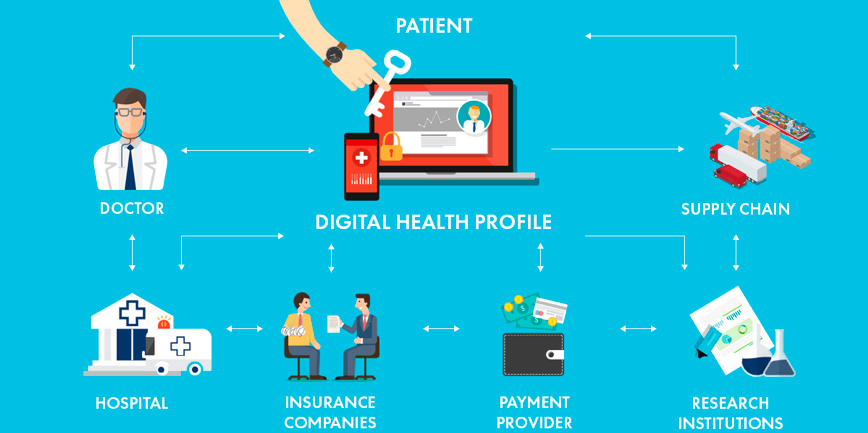
Even the world’s best health systems are typically fragmented. “You have hospitals, community clinics, general practitioners, specialists, diagnostic clinics, and so on,” says Matt Jackson, who leads blockchain research at Canada’s Institute on Governance.

There are many reasons you might want to give someone access to your medical data. Maybe you just moved to a new city and want to give your new doctor access to your medical history, or perhaps you want to nominate a healthcare proxy in case of emergency or have your prescription sent to your pharmacy.

Some places, like the UK or Canada, have viable national systems for exchanging patient records, but those can be vulnerable to hackers.

In the United States, healthcare comes from a patchwork of private companies, which means the handling of patient data is even more fragmented. John Halamka, chief information officer at Beth Israel Deaconess Medical Center in Boston, Massachusetts, told MIT Technology Review last year that there are 26 different electronic medical records systems in his home city alone.

In 2016, Halamka teamed up with a group of scientists at MIT to try to find a solution to the problem using blockchain. They published their white paper on the subject in August 2016, laying out their proposal for a system that would help all those disparate databases exchange data — a project they called MedRec.

Andy Lippman, a senior research scientist at MIT, co-authored the paper with Halamka. The system they outlined was to use Ethereum software — which, unlike bitcoin, can integrate and execute smart contracts — to build a private blockchain, linking healthcare providers together and allowing them to share their data.

On this blockchain, each of these instructions by a patient creates a specific smart contract on the blockchain that only the patient can cryptographically sign.

Security is one benefit: “Distribution makes the system more secure because there isn’t a single place of attack or failure,” Lippman says.

Medical providers run a program module on their computer to access the database, as instructed by the smart contracts, which are initiated by the patient.

That module does three core things: First, it allows the healthcare provider access to the data when the blockchain is instructed to give it. Second, it executes the patient’s instructions as and when needed, sending data to a pharmacy or a specialist for a referral — assuming the patient gives their consent. Third, the module allocates computing resources to maintaining the blockchain.

Taking Back Control

The first, Web 1.0, is characterized by openness, based on a global consensus as to the mechanism for webpages. “Everyone agrees as a community that we are going to use HTML,” Lippman says, “and your browser can display pages from all kinds of different people, as opposed to one company making webpages one way, another their way.” However, as the internet matured, companies like Facebook and Google monopolized some areas of information — search data, and social data — separating them into jealously guarded silos and databases. This is known as Web 2.0.

The era to come — Web 3.0, according to enthusiasts — will use blockchain technology to allow people to take back control of their personal information, returning the internet to its individualistic roots and breaking the database monopolies.

Read Also: Top 10 Startups that are Revolutionizing Healthcare Industry Using Blockchain Technology

“The nice thing about medical records is there is no Facebook for medical records yet,” Lippman says. “So maybe we can, in a timely way, do what we’re doing, which is a universal, open, noncommercial design — almost as if we’re designing a web and HTML for medical records.”

“Web 2.0 is when a central authority essentially tracks you, uses that data to help you — and also monetizes that data for themselves by essentially renting the algorithms that result from it to advertisers,” says Diego Espinosa, CEO of Linnia, a startup that is trying to build an ambitious health and lifestyle data-sharing platform on the Ethereum blockchain.

“All of the Web 2.0 giants do that; that’s their business model. So Web 3.0 is: Now we own our data, we have agency over it, and we need permission for others to see it,” Espinosa continues.

“The reason blockchain makes that possible is we can have decent data that can also be trusted. The blockchain is an immutable database and has other attributes, like being able to have digitally signed attestations about us. Those two things have the ability for individuals to keep their data — but also have that data be trusted by others.”

Blockchain Use Cases For The Healthcare Ecosystem

Blockchain enables companies to trace and track supply chain, end point distribution, thereby eliminating counterfeit drugs, associated patient risks and cost impact. It further prevents brand reputation damage and loss of revenue for the company. Meanwhile providing protection, privacy, and health data interoperability. 

Blockchain technology and distributed ledgers can enable faster secure Clinical Trials processes, unlocking real opportunity in healthcare. Blockchain empowers the healthcare ecosystem by giving patients power over one of their most valuable resources — data.

As a trusted mediator, it can enable novel healthcare solutions; and as an incentive machine, it can help novel business models that handle new emerging challenges of healthcare.

Our current healthcare infrastructure

The healthcare industry is one of the top global industries, contributing over 10% of the most developed nations’ gross domestic product (GDP). Numerous inefficiencies, errors, bureaucracy, and high administrative costs plague the healthcare industry. Patients have shown concern about their data being used to generate profits by third parties. The gap between providers and payers is the major issue in providing quality healthcare services. The dependency on intermediaries in the supply chain makes it even worse. 

And up to 40% of healthcare provider data records are filled with errors or misleading information. Healthcare data frauds in institutions are estimated to cost around $380 per record in the current times. Expect this amount to increase over time.

Blockchain to competently improve various areas of healthcare

A blockchain-powered health information exchange could unlock the true value of interoperability. Blockchain-based systems can potentially reduce or eliminate the friction and costs of current intermediaries.

The promise of blockchain has widespread implications for stakeholders in the healthcare ecosystem. Capitalizing on this technology has the potential to connect fragmented systems to generate high quality primary care. In the long term, a nationwide blockchain network for electronic medical records may improve efficiencies and support better patient health outcomes.

Let’s understand more about all the areas blockchain can significantly improve or automize.

Health and medical data collaborations and security

Blockchain technology is a perfected system for population health studies. It allows a safe passage for participants-volunteers to participate and monetize their data for any types of research. Moreover, better data sharing of population medical data can drastically improve primary care and sick care  across the global population. With more data sets, new technologies like AI and ML would be possible, which will result in discovering widespread risks to population health.

The security features of blockchain enable the scientific community to produce, share and distribute IP information without having to worry about duplication and fraud. Data on a blockchain is immutable and traceable. Any changes in data are not allowed unless validators within the blockchain approve the change. This prevents any data manipulation by vested interests. Blockchain and IoT can also help trace and track the entire supply chain for counterfeits, helping the future scientific community to focus solely on research and less on data security and data management.

Blockchain could facilitate nationwide interoperability of electronic health records, allowing providers access to patients’ medical histories, current medications, and prior imaging studies. Accordingly, full interoperability could save the global healthcare system hundreds of billions annually.

Faster Clinical Trials processes

Clinical research encounters myriad challenges, from patient registration to data privacy matters, regulatory provisions, and spiraling expenditures. Blockchain technology has the inbuilt features to overcome these challenges, thus pushing for governance throughout the value chain at the enterprise level, aiding efficient clinical trials, and building trust through equitable and open processes with all stakeholders. Its distinguishing features, such as data immutability and traceability, fool-proofs the system against fraud and cyber-attacks. The blockchain platform guarantees data security, improved collaboration, patient safety, and data traceability across the value chain.

When governed through smart contracts, the clinical research and trial notify and delegate tasks per the compliance procedures, ensuring faster and improved communication and reducing duplication and mistakes. The blockchain network implements a web-based user interface to conceive the data from the blockchain and facilitate the exchange. A proof of concept is protected under the blockchain without allowing any party to duplicate or manipulate data. Lastly, the research outcomes and results can be stored for a lifetime and traced and tracked at any given time. 

Blockchain technology makes clinical trials transparent and builds trust among various collaborators. The user interface improves communication between collaborators, sidetracking manual email communication, or data exchange over public cloud solutions. With blockchain, collaborators can access clinical data over a secure and distributed network.

A blockchain smart contract helps in automating rule-based communication using regulatory standards or key metrics. Besides, various service procedures associated with clinical trials, including participants’ identity management, medical data grouping, and audit query, are all stored under the blockchain smart contract.

Robust Drugs and Equipment supply chain

Smart-contract could facilitate automatic product re-ordering if a product is in transit or enable payment to be released from sender to recipient upon confirmed receipt of the product. A blockchain network might get developed to maximize the benefit of off-chain storage. For instance, a blockchain network may employ off-chain storage to store personal identifier details to streamline compliance with HIPAA or facilitate sharing large files or documents. In addition, blockchain may deem off-chain storage to maximize search query efficiency. 

Regardless, network designers must guarantee that the search capacities allowed by the off-chain database stick to the network’s existing authorization structure. The cryptography ingrained in blockchain promotes an immutable and verifiable chain of custody that can be employed to support product investigation. Further, network stakeholders could appoint a digital twin of a physical influence on blockchain by integrating blockchain with other technologies such as internet of things sensors (IoT) or ultra-high-resolution cameras. The digital twin could be leveraged to characterize an immutable ledger of product geolocation or temperature data and could also improve patient safety by guaranteeing that the product label has not been counterfeited.

Blockchain helps Pharma companies trace and track supply chain endpoint distribution, eliminating counterfeit drugs, associated patient risks, and cost impact. It further prevents brand reputation damage and loss of revenue for the company.

Faster claims settlement in medical insurance

Billing and insurance-related costs are an estimated 18% of global health expenditure. It is known that more than a quarter of procedures had to wait 4+ business days for prior authorization (acceptance from a patient’s insurer to cover a drug). Blockchain, aligned with data standards, can potentially speed up some of these processes and reduce costs. 

Insurance claim processing can be tedious, time-consuming, inefficient, and sensitive to human blunders, particularly when verification is done through paperwork. Furthermore, there is a deficiency of transparency in the submission of claims, and the processing is subject to unfavorable effects of delays and errors, leading to inadequate customer service. Insurance claims are an approach concerning several entities – insurer, insured, regulators, and intermediaries, mostly distinguished by inefficiencies and malevolent intents.

Blockchain can drastically reduce the claim settlement processing time and make it hassle-free. Insurance can utilize the blockchain to construct immutable and auditable information at the stages of insurance claim processing that can be re-accessed by all parties. It will also help with discounts, rebates, and refund tracking.

Genomics 

It is the study of complete sets of genes in organisms that incorporates elements of genetics. The genomics industry in healthcare intends to drastically improve human health’s future. It is only possible through blockchain to safely store massive genetic data points, where blockchain can significantly assist. It can enrich genomics knowledge and help scientists gather & store valuable information safely.

Genomics-based startups like EncrypGen maintain a blockchain-based DNA data marketplace known as Gene-chain. The platform facilitates genetic data searching, storing, communicating, and selling. Members of the Gene-Chain forum use genetic data to research and evolve healthcare by buying the information via protected and traceable DNA tokens. 

This startup is also looking forward to combining blockchain payments and auditing platforms with Gene-chain. This will help form meaningful collaborations with analytics creators and healthcare software firms while driving efficient and safe procedures.

Conclusion 

Blockchain can potentially enhance trust, collaboration, interoperability, auditability, and traceability across important functions of healthcare such as patient identity management, medical records, clinical trials, drug supply chain management, claims processing and financial transactions. Blockchain has the capability to improve collaboration among the healthcare ecosystem without compromising on data security. In the near time we will see many segments of the healthcare industry using blockchain to ease communication and collaboration, which will reduce research, product development life cycles of pharma, medical devices companies. 

Blockchain’s vast potential in areas such as fighting counterfeiting of drugs, easier licensure processes, and technical knowledge sharing makes it suitable for a specialized medical ecosystem. It will further improve the efficiencies of primary care, sick care by improving governance and business operations of hospitals and telemedicine companies. The technology has the potential to change processes, business models, and information flows in healthcare completely.

All About Utility NFTs, the Unique Tokens With Practical Applications

All About Utility NFTs, the Unique Tokens With Practical Applications

Binance NFT Marketplace offers a wide variety of NFTs, but did you know that there’s a special class of NFTs designed for utility and not just collecting? From virtual real estate to VIP passes, utility NFTs introduce new ways of interacting. Here’s a short list of practical applications utility NFTs are used for today. 

What Exactly Are Utility NFTs?

Utility NFTs are a broad class of NFTs with specific practical applications. Just like any other NFT, they are typically created with smart contracts and are unique. They also share the same properties of immutability, transparency, and security.

Read also: Securities Tokens vs Utility Tokens vs NFTs – How different are they?

Unlike regular NFTs, however, the core focus of utility NFTs is not their collectibility, but the real-world applications, rewards, or perks they offer NFT holders. 

Applications of Utility NFTs 

As a ticket for exclusive events and merchandise

Possibly one of the most relevant uses for NFTs is as digital versions of tickets that allow access to exclusive events. Already, some projects have been using their utility tokens to offer their holders exclusive access to closed-door events. Thanks to the uniqueness of each NFT, event organizers can verify these digital VIP tickets just like they would traditional tickets, without any fear of ticket fraud. 

In the gaming industry

Undoubtedly, NFT gaming has become a hot sector within the blockchain industry. Since NFTs are the building blocks of this ecosystem and the metaverse in general, it’s no surprise that utility NFTs are used to facilitate monetary transactions and general gameplay in the gaming world. This includes using NFTs to represent exclusive in-game assets and collectibles or as items of value that can be cashed out in a play-to-earn (P2E) model. For those who have not played blockchain games before, game NFTs can be sold on a secondary market like Binance NFT Marketplace for fiat currency.

In the fashion and art industry

Projects have also introduced utility NFTs in the fashion and art industries. Online auctions may sell digital copies of real-world luxury goods in the form of NFTs, after which successful bidders will receive their physical loot. Users may also be able to try on virtual outfits in the fashion metaverse in the near future, thanks to augmented reality (AR).

Additionally, unlike traditional NFTs where the token itself is the artwork, a physical art piece could be sent as proof of purchase, allowing art fanatics to curate and show off their valuable collection in real life. This is a popular way to add utility to an NFT — since NFTs are all about creating unique digital assets, their real-life counterparts being similarly unique pieces will increase the value of both the NFTs and their corresponding physical products.

For virtual real estate 

As we move towards a new Internet era, metaverse projects have started introducing virtual land represented by NFTs. To own a parcel of land, you simply need to do your own research (DYOR), invest, and receive your NFT plot. Some projects may also allow virtual real estate holders to become virtual landlords and rent their land to someone else. If you’re interested in owning virtual land, you can check out out our article on How to Buy Land in the Metaverse.

As a vehicle for passive income

Different projects offer different ways for NFT holders to grow their crypto, including renting virtual real estate (as mentioned above). P2E games may also offer passive income opportunities through staking, where users can lock up NFTs in smart contracts to generate rewards. As more creative passive income opportunities arise, NFT owners may find their digital assets increasingly useful.

Cool Utility NFTs on the Binance NFT Marketplace

Origins by Alan Walker

This NFT collection features three high-production value music videos from Alan Walker’s Origins album. NFT collectors and Alan Walker fans are treated to an online Alan Walker Origins NFT scavenger hunt. Fans can collect all the different NFT music video segments from the collection to piece the whole music video together, and all NFT holders can earn a share of the revenue from the music video streaming on YouTube.

Mystery by Franck Muller

This Mystery Box Collection has 28 NFT designs on four different rarity levels. NFT holders stand to win NFT watches to be worn in the metaverse, physical Franck Muller timepieces, a chance to attend private Franck Muller events in Dubai, Miami, and Singapore, and a private tour of Watchland, the Franck Muller factory in Geneva.

The Muhammad Ali Experience Mystery Box Collection

This Mystery Box Collection consists of six videos of NFTs of six rarity levels. Depending on its rarity, each video NFT will unlock a different perk — namely, a Membership Access Card to the upcoming Muhammad Ali Experience Museum and Muhammad Ali Experience Metaverse Museum, digital Muhammad Ali artwork, a print and canvas signed by Muhammad Ali, and one exclusive signed physical canvas by artist Mike Bundlie and Lonnie Ali, Muhammad Ali’s wife, which features $500 worth of gold flakes.

Conclusion

Even if you’re not an avid NFT collector, you might want to consider owning one of these utility NFTs as it may come with a useful perk. Be it earning passive income or having exclusive access to events and items, utility NFTs have a variety of uses and will likely see even more uses emerge. 

In addition to ownership of a unique NFT asset, an NFT’s utility gives it more value. NFT creators and platforms can continue to introduce new utilities in the future to help foster an exclusive community of NFT owners. With the evolution of Web 3.0, the utility of NFTs will grow in prominence for both their creators and owners. If you’re an investor thinking about adding NFTs to your portfolio, consider the utility of NFTs as they have more uses and value than purely collectible NFTs.

Blog Credits: Binance

WhatsApp Telegram