Talk to an Expert

How Generative AI is Shaping the Future of AR and VR Experiences?

How Generative AI is Shaping the Future of AR and VR Experiences?

Augmented Reality (AR) and Virtual Reality (VR) have witnessed significant advancements over the years, transforming how we interact with digital content and the physical world. These immersive technologies have applications in various fields, from gaming and entertainment to healthcare and education. However, the true potential of AR and VR lies in their ability to deliver lifelike, engaging experiences, and this is where Generative AI comes into play.

Generative AI, a subset of Artificial Intelligence, has been instrumental in pushing the boundaries of AR and VR by enabling the creation of highly realistic, interactive, and adaptive digital content. In this blog, we’ll explore how Generative AI is shaping the future of AR and VR experiences and its exciting possibilities.
The Role of Generative AI in Augmented Reality (AR) and Virtual Reality (VR) Learning

The Role of Generative AI in Augmented Reality (AR) and Virtual Reality (VR) Learning

Before delving into the exciting possibilities of augmented reality (AR) and virtual reality (VR) in education, it’s essential to recognize the pivotal role that Generative Artificial Intelligence (AI) plays in shaping the future of learning within these immersive realms.

At its core, Generative AI harnesses advanced neural networks to create dynamic content tailored to the individual needs and preferences of students. In the context of AR and VR, this technology acts as a virtual tutor, available 24/7, capable of adapting to each student’s unique learning journey within these interactive environments.

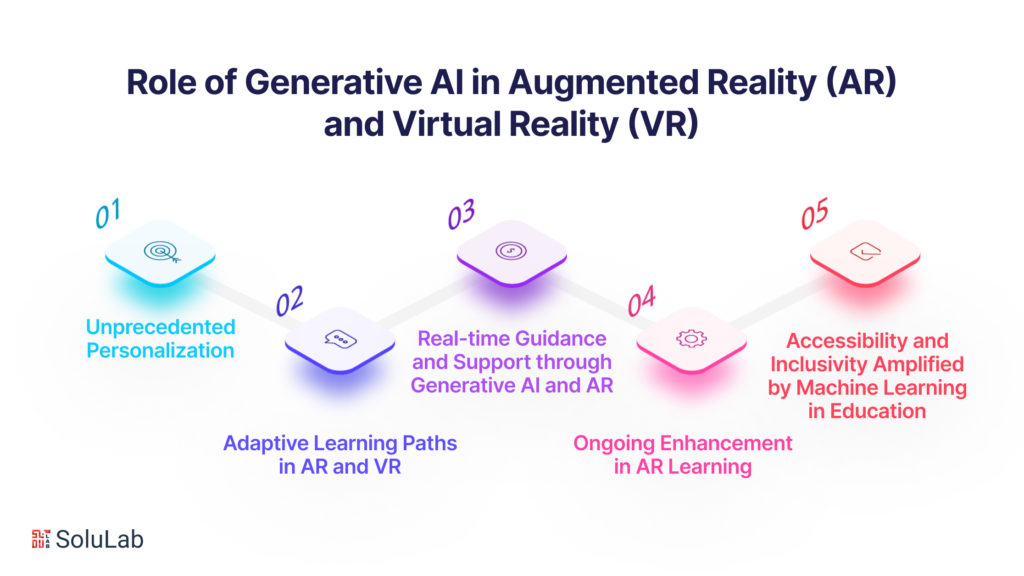
  • Unprecedented Personalization

Generative AI trends take personalized learning to new heights, surpassing the limitations of traditional teaching methods. The one-size-fits-all approach of textbooks and standardized curricula falls short of meeting the diverse learning needs of students.

In AR and VR, Generative AI ensures that learning materials are dynamically customized in real time. This means that students receive content aligned with their current knowledge levels and learning preferences, promoting more effective and engaging learning experiences.

Imagine a student immersed in an AR mathematics lesson. Generative AI, driven by machine learning algorithms, continuously evaluates the student’s progress within the virtual environment. If the AI detects areas of struggle, it generates additional practice problems or offers alternative explanations until the student comprehends the concept. Conversely, if the student is advancing rapidly, the AI can introduce more advanced topics or challenges to maintain their engagement and motivation.

  • Adaptive Learning Paths in AR and VR

Generative AI empowers educators to implement adaptive learning paths within AR and VR experiences. It can analyze students’ responses to AR/VR quizzes, assignments, and interactions with virtual learning materials to create personalized educational journeys. This approach ensures that students receive the appropriate level of challenge and support, thereby preventing boredom or frustration within these immersive environments.

For instance, consider an AR or VR language learning application enriched by Generative AI. The system can assess a student’s vocabulary and grammar proficiency within the virtual space. If a student excels in vocabulary but struggles with grammar, the AI may recommend tailored exercises and resources to address the grammar deficiency. As the student progresses, the AI dynamically adjusts the difficulty level, ensuring a learning experience that remains engaging and beneficial.

  • Real-time Guidance and Support through Generative AI and AR

Generative AI not only delivers tailor-made content but also provides immediate feedback and assistance within augmented reality (AR) environments. This means that students no longer have to wait for a teacher’s response or corrections; they receive real-time guidance. This feature not only accelerates the learning process but also bolsters students’ confidence as they can promptly correct errors and reinforce their understanding.

In a science class, for example, a student might be conducting a virtual experiment in an AR setting. Generative AI closely observes the student’s actions, identifying any misconceptions or errors in the experiment. Almost instantly, the AI offers feedback and suggests necessary adjustments. This iterative process ensures that students learn through their mistakes, a potent educational tool made possible by Generative AI and AR.

  • Ongoing Enhancement in AR Learning

Generative AI and Augmented Reality don’t limit themselves to customizing content; they also actively improve the teaching materials themselves. Over time, as it gathers data on how students interact with various learning resources in AR, it can optimize those resources for maximum educational effectiveness.

Imagine an online history course enriched by Generative AI within an AR framework. As students engage with the course materials, which might include textbooks, videos, and interactive timelines, the AI continuously monitors their preferences. If students exhibit a preference for video content to learn about historical events, the AI could generate more video-based modules. Similarly, if students respond positively to interactive timelines, the AI can create additional interactive content to reinforce their understanding. This dynamic optimization of AR learning materials by Generative AI ensures that the educational experience remains engaging and effective.

  • Accessibility and Inclusivity Amplified by Machine Learning in Education

One of the most promising facets of Machine Learning in education is its capacity to render learning more accessible and inclusive. This technology, driven by Machine Learning algorithms, proves to be a game-changer for students with varying learning needs, including those with disabilities, by accommodating their requirements. In effect, this fosters an all-encompassing learning environment where every student can not only participate but also excel.

Consider, for instance, a visually impaired student engaged in the study of literature. Thanks to Machine Learning, educational materials can be transformed to meet the specific needs of this student. Machine Learning algorithms can convert text into audio, providing the student with the option to listen to literary works. Moreover, the technology can offer detailed audio descriptions of visual elements within these literary works, enriching the student’s understanding of the content.

In tandem, Machine Learning can adjust the reading pace to align with the student’s preferences, ensuring comprehension without any undue haste. Essentially, Machine Learning is revolutionizing the entire educational landscape, transforming learning into a highly adaptive, personalized, and inclusive experience. This empowerment extends to both students and educators, enabling them to embark on educational journeys that are uniquely tailored to individual needs and aspirations. In doing so, Machine Learning paves the way for a more equitable and effective education system that caters to the diverse needs of every learner.

Related: Role AI in Transforming Education Industry

Defining Augmented Reality and Virtual Reality

Virtual Reality (VR) refers to a computer-generated, three-dimensional environment that a person can explore and interact with. When engaged in VR, an individual becomes an integral part of this virtual world, fully immersed in the computer-generated environment. Within this space, the person can manipulate objects and execute actions that influence the happenings within the virtual environment. VR technology primarily relies on devices such as headsets or goggles to create this immersive experience.

Conversely, Augmented Reality (AR) is an enhanced version of reality where a person’s direct or indirect view of the real physical world is enriched by the addition of computer-generated images. These digital elements are superimposed over the user’s perception of the real world, effectively enhancing their current reality. In simpler terms, AR users observe digital layers of information overlaid on real-world images, enhancing their overall perception of reality.
CTA1

AR technology comes in various forms:
  • Location-based AR: This system delivers supplementary information to users based on their geographic location, which holds immense potential, particularly in industries such as automotive and transportation.
  • Projection-based AR: In this instance, AR software projects light onto a physical object, creating an interactive interface within the real-time environment.
  • Superimposition-based AR: This form of AR permits users to either entirely or partially replace the actual image with new elements, thus augmenting their perspective. Superimposition-based AR is well-suited for applications in the fashion industry, architecture, and design.

Real-life Generative AI Use Cases in Enhancing Learning Experiences

Real-life Generative AI Use Cases in Enhancing Learning Experiences

The value of Generative AI in enhancing the learning experience becomes clearer when illustrated through concrete examples. These real-life Generative AI use cases provide insights into how these new technologies can aid educators in delivering knowledge more effectively and engagingly.

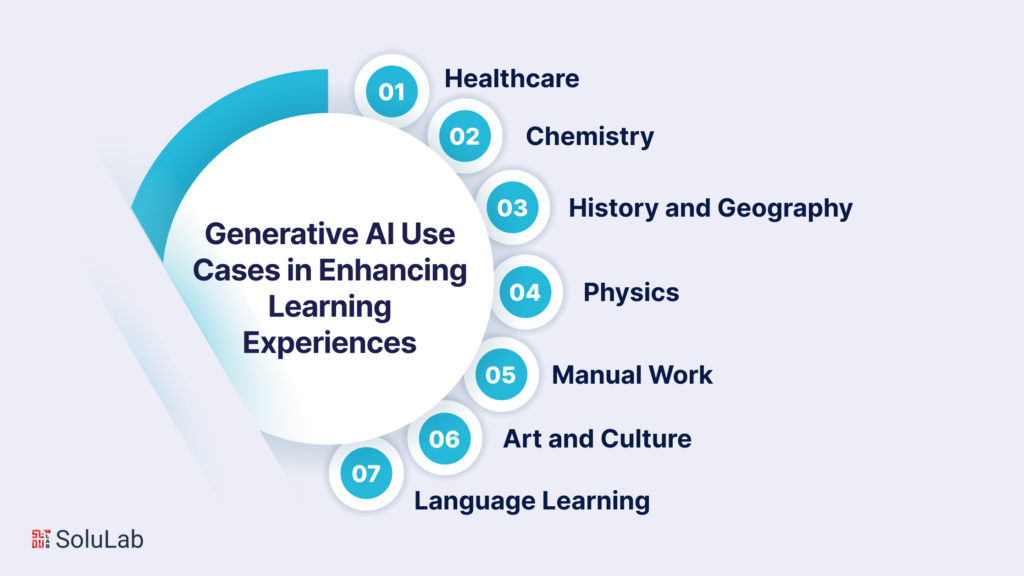
1. Healthcare: Traditionally, learning about healthcare necessitated real-life apprenticeships in hospitals. However, with the advent of Generative AI in healthcare education, students can engage in virtual surgeries and medical procedures, gaining valuable experience without any risk to patients. This makes healthcare learning safer and more efficient.

2. Chemistry: Teaching complex concepts in chemistry can be challenging. Generative AI introduces a new approach where students can perform experiments, mix substances, and gain a hands-on understanding of chemistry. This not only enhances safety but also reduces costs as schools no longer need to purchase various chemical substances for laboratory experiments.

3. History and Geography: The rich narratives of ancient civilizations can be daunting to students. Generative AI can bring history and geography to life through augmented and virtual reality. Virtual field trips transport students to distant lands and historical eras in a matter of minutes, making learning engaging and cost-effective.

4. Physics: Teaching classical mechanics and scientific theories can be dry and theoretical. With Generative AI, students can immerse themselves in virtual environments where they can put theory into practice. Whether it’s exploring the cosmos or experiencing interstellar journeys, Generative AI makes complex subjects more accessible.

5. Manual Work: Many vocational fields involve heavy machinery and tools, making hands-on training challenging in a traditional classroom. Generative AI, particularly in VR, enables students to safely engage in activities like driving trucks, conducting construction tasks, or simulating high-risk professions such as firefighting and coast guard operations.

6. Art and Culture: Generative AI, specifically superimposition-based AR, can be used to create engaging art and culture learning experiences. With AR, students can interact with famous artists’ styles and learn about artistic history. AI and VR allows them to attend cultural events and even travel back in time to witness historical performances.

Related: Generative AI Art

7. Language Learning: The best way to learn a new language is through immersion, often requiring travel. Generative AI can change this by offering virtual trips to foreign countries, enabling language learners to practice with native speakers and explore local cultures.

It’s important to note that the applications of Generative AI in education extend far beyond these seven examples. Furthermore, the potential for creating virtual classrooms where students from around the world can access top-tier educators remains an exciting prospect, although it is still evolving. These use cases illustrate the transformative potential of leveraging Generative AI in making learning more immersive, engaging, and accessible across various fields of study.

How Generative AI Enhances Realism in AR and VR Environments?

Generative Artificial Intelligence (AI) is revolutionizing Augmented Reality (AR) and Virtual Reality (VR) by significantly enhancing the realism of the environments experienced within these immersive technologies. Through the clever use of Generative AI, AR and VR experiences have become more convincing, engaging, and lifelike than ever before.

Generative AI, particularly through Generative Adversarial Networks (GANs), plays a pivotal role in creating hyper-realistic surroundings. GANs consist of two neural networks – a generator and a discriminator – that work in tandem to produce lifelike content. The generator creates synthetic data, such as images or 3D models, while the discriminator evaluates this content for authenticity. Through repeated iterations and fine-tuning, GANs can generate images and environments that are almost indistinguishable from reality.

In AR, this technology ensures that digital elements seamlessly blend with the physical world. For example, AR apps can superimpose virtual furniture into your living room, appearing so realistic that you might forget it’s not actually there.

In VR, Generative AI facilitates the creation of immersive, lifelike worlds. Whether exploring a historical era, visiting a far-off planet, or undergoing surgical training, AI and VR environments feel incredibly real, thanks to AI’s ability to generate detailed textures, landscapes, and interactive elements.

Ultimately, Generative AI is the magic wand that transforms AI and VR from mere technological novelties into powerful tools that offer users experiences that feel, look, and interact with the world just like reality. This not only enriches entertainment and gaming but also holds significant promise in domains such as education, training, and design.
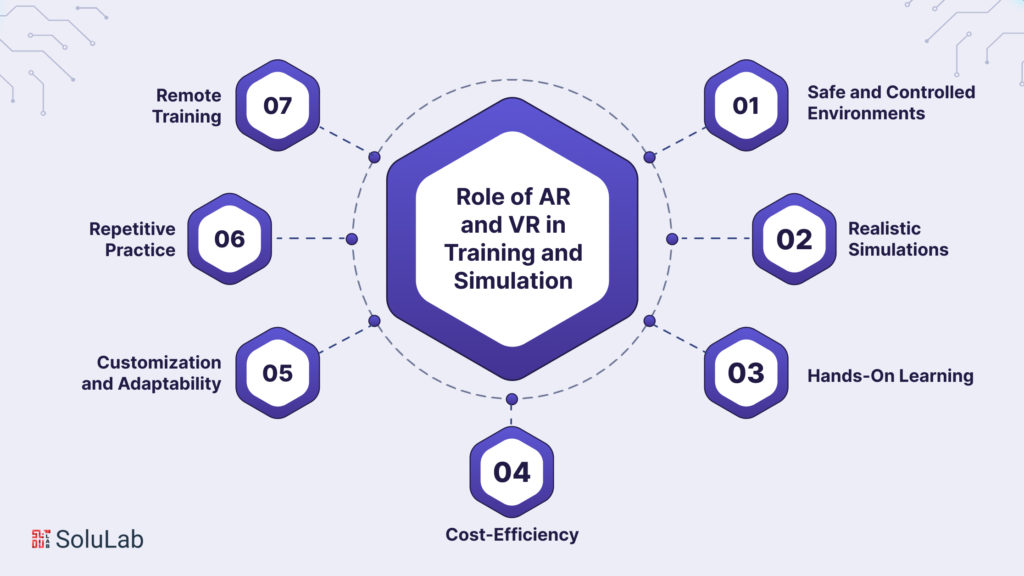
The Role of AR and VR in Training and Simulation

The Role of AR and VR in Training and Simulation 

Augmented Reality (AR) and Virtual Reality (VR) have emerged as transformative tools in the realm of training and simulation. These immersive technologies offer a unique and highly effective way to prepare individuals for various real-world scenarios, both in professional and educational contexts.

In training and simulation, AR and VR excel in several key ways:

  • Safe and Controlled Environments: AR and VR provide controlled, safe, and repeatable environments for training. Professionals in fields like medicine, aviation, and the military can rehearse complex procedures and emergency scenarios without real-world risks.
  • Realistic Simulations: VR, in particular, offers incredibly realistic simulations. Trainees can immerse themselves in highly detailed virtual environments that mimic real-world settings, complete with interactive elements. This level of realism enhances muscle memory and helps individuals develop practical skills.
  • Hands-On Learning: Both AR and VR enable hands-on learning. Trainees can manipulate virtual objects, perform tasks, and interact with simulated elements, making the learning experience more engaging and effective.
  • Cost-Efficiency: AR and VR reduce the need for physical resources, equipment, and facilities, saving costs associated with real-world training. This is especially valuable in industries with expensive or limited resources.

Related: How Generative AI is Revolutionizing Art?

  • Customization and Adaptability: AR and VR simulations can be customized to suit specific training needs. Training programs can be adapted to various skill levels and learning speeds, allowing for a more personalized training experience.
  • Repetitive Practice: Trainees can practice procedures as many times as needed until they achieve proficiency, which is particularly valuable in industries where repetition is critical, such as surgery or military exercises.
  • Remote Training: AR and VR technologies enable remote training and collaboration, breaking down geographical barriers. Experts from around the world can guide and assess trainees, making it easier to access specialized knowledge and instruction.

In brief, AR and VR have revolutionized training and simulation by offering highly realistic, safe, and cost-effective learning environments. These immersive technologies not only accelerate skill acquisition but also provide a flexible and adaptable platform for individuals to become experts in their respective fields.

CTA2

Concluding Remarks

The integration of generative AI in virtual reality and augmented reality is propelling these immersive technologies into the forefront of the digital era. The dynamic capabilities of Generative AI have ushered in a new era of hyper-realism, personalization, and interactivity within AR and VR experiences. It has rendered what was once considered the stuff of science fiction into a tangible, transformative force for a multitude of industries.

As we look to the future, the horizon for AR and VR powered by Generative AI is brimming with possibilities. These technologies are poised to redefine education, enabling personalized and engaging learning journeys, while also revolutionizing training and simulation by providing realistic, cost-effective, and risk-free environments for skill development. Furthermore, the potential applications span far beyond education, from healthcare to gaming, industry, and beyond. 

SoluLab worked on OmniSoft is a pre-made solution that may be customized for you. We have developed a solution that satisfies every requirement of our customers, you can host conferences, seminars, and other events in addition to business meetings in a metaverse. Our tools and infrastructures are designed to manage big teams so you can keep doing what you need to. With this, we can assist you in transferring your physical board rooms, conference rooms, and offices to the online space. We also provide avatars of your favorite characters to add to the excitement. 

FAQs

1. How does AI function in AR and VR?

Tracking and recognition are two of the most basic applications of AI in VR and AR. Behind the scenes, AI algorithms are actively working on tasks like object tracking, gesture detection, and facial recognition. 

2. Is AR a form of AI?

No AI and AR are not the same thing. Through the realistic augmented reality activity that air technology offers, consumers can see products in their environment and make better selections.

3. Which technology powers AR and VR?

Rendering and 3D modeling are used in AR to produce virtual imagery. They may be superimposed on the actual environment. Both the geometry and appearance of the virtual objects define them.

4. Which algorithm does virtual reality use?

POV-Ray is a freeware, standalone, outstanding renderer that uses a text file describing the scene in a scripting language called POV-Ray scene description language (SDL) as input to produce three-dimensional photo-realistic graphics. 

5. How does SoluLab’s expertise contribute to the development of Generative AI solutions for AR and VR applications? 

SoluLab offers experienced Generative AI developers who can integrate advanced AI models and algorithms to maximize the potential of Generative AI. This collaboration leads to groundbreaking advancements in education, training, and entertainment, shaping the future of AR and VR experiences.

10 Ways Generative AI is Revolutionizing Healthcare

10 Ways Generative AI is Revolutionizing Healthcare

In recent years, the healthcare industry has witnessed a significant transformation due to the emergence of innovative technologies. One such groundbreaking technology that has revolutionized healthcare is Generative Artificial Intelligence (AI). Generative AI applications have introduced a new era of possibilities and advancements, enabling healthcare professionals to streamline processes, enhance patient care, and improve overall outcomes. With the application of Generative AI, the healthcare sector has experienced a paradigm shift, leading to improved diagnostics, personalized treatment plans, and optimized drug development processes. In this blog, we will explore 10 key ways in which Generative AI is reshaping and revolutionizing the healthcare landscape.

Advanced Diagnostics and Imaging Techniques

Advanced Diagnostics and Imaging Techniques

With the aid of Generative Artificial Intelligence AI applications, healthcare providers can now delve into a realm of advanced diagnostics and imaging techniques. Leveraging Generative Artificial Intelligence (AI) models, medical professionals can enhance disease detection, improve imaging accuracy, and enable real-time diagnostic capabilities for improved patient care and treatment outcomes.

  • Application in Disease Detection

Generative AI applications in diagnostics enable healthcare professionals to detect diseases with greater precision and accuracy. By analyzing medical images and data, Generative AI can identify subtle patterns and indicators that may not be apparent to the human eye, facilitating early disease detection and proactive intervention.

  • Enhancing Imaging Accuracy

The integration of Generative AI models in imaging technologies has significantly improved imaging accuracy and quality. Through advanced image processing algorithms and pattern recognition capabilities, Generative AI enhances the clarity and detail of medical images, enabling healthcare providers to make accurate and informed diagnostic decisions.

CTA1

  • Real-Time Diagnostic Capabilities

Generative AI-powered diagnostic tools offer real-time capabilities, allowing healthcare professionals to access immediate diagnostic insights and recommendations. By leveraging Generative AI models, healthcare providers can expedite the diagnostic process, reduce waiting times, and deliver prompt and effective medical interventions, thereby improving patient outcomes and satisfaction.

Personalized Treatment Plans

Generative AI plays a crucial role in shaping personalized treatment plans for patients. By utilizing Generative AI tools, healthcare providers can tailor medication regimens, design customized therapy protocols, and recommend lifestyle modifications based on individual patient needs and medical history. This personalized approach to treatment fosters better patient engagement and overall healthcare experiences.

  • Tailoring Medication Regimens

Generative AI facilitates the customization of medication regimens based on patient-specific data and treatment requirements. By analyzing patient health records, medical history, and genetic predispositions, Generative AI models assist healthcare providers in developing personalized medication plans that address individual health needs and optimize treatment outcomes.

  • Customized Therapy Protocols

Generative AI-powered therapy protocols enable healthcare professionals to design customized treatment plans that align with the unique needs and preferences of each patient. By integrating patient data and therapeutic insights, Generative AI models recommend tailored therapy approaches, rehabilitation strategies, and lifestyle modifications, fostering patient engagement and adherence to treatment regimens.

  • Lifestyle Modification Recommendations

Generative AI applications offer comprehensive lifestyle modification recommendations based on patient health data and behavioral patterns. By analyzing patient behavior, dietary habits, and activity levels, Generative AI models provide personalized lifestyle modification suggestions, wellness strategies, and preventive measures that promote healthy living and disease prevention.

Read Also: How Healthcare Startups in the USA Leverage Generative AI to Cut 40% Costs? 

Drug Discovery and Development Processes

In the realm of drug discovery and development, Generative AI has emerged as a powerful tool. By leveraging AI-driven predictive modeling, healthcare professionals can identify potential drug candidates more efficiently, accelerate clinical trial processes, and enhance the efficacy and safety of new pharmaceutical interventions. Generative AI models have the potential to revolutionize the drug development landscape and bring about significant advancements in patient care.

  • Predictive Modeling for Drug Identification

Generative AI facilitates predictive modeling for efficient drug identification and development. By analyzing molecular structures, biochemical interactions, and pharmacological data, Generative AI models accelerate the drug discovery process, optimize compound selection, and improve the efficacy and safety of pharmaceutical products, leading to the development of novel treatments and therapies for various medical conditions.

  • Accelerating Clinical Trial Processes

Generative AI-powered clinical trial processes streamline the evaluation and validation of pharmaceutical products and treatments. By integrating data analysis tools and predictive modeling techniques, Generative AI expedites clinical trial phases, enhances participant recruitment and selection, and ensures accurate data interpretation, contributing to the timely approval and market launch of innovative drugs and therapies.

  • Improving Drug Efficacy and Safety

Generative AI plays a crucial role in enhancing drug efficacy and safety by optimizing drug formulation and dosage specifications. By conducting comprehensive data analysis and clinical simulations, Generative AI models predict the potential outcomes and adverse effects of pharmaceutical interventions, enabling healthcare professionals to design and administer safe and effective drug treatments that minimize risks and maximize patient well-being.

Precision Medicine and Genomic Analysis

Genomic analysis and precision medicine have been significantly enhanced with the integration of Generative AI technologies. Through the identification of genetic markers and the implementation of personalized disease risk assessments, healthcare providers can develop targeted treatment approaches for various health conditions. Generative AI’s role in precision medicine continues to expand, offering promising avenues for personalized healthcare solutions.

  • Genetic Marker Identification

Generative AI facilitates the identification of genetic markers and biomarkers associated with various health conditions and diseases. By analyzing genomic data and conducting in-depth genetic profiling, Generative AI models identify specific genetic variations and mutations that may contribute to disease susceptibility or therapeutic responses, enabling healthcare professionals to develop targeted interventions and personalized treatment approaches.

Read Blog Also : Influence of AI on Mobile Application Development 

  • Personalized Disease Risk Assessments

Generative AI-powered disease risk assessments provide comprehensive evaluations of individual health risks and predispositions. By integrating genetic data, medical histories, and lifestyle factors, Generative AI models assess patients’ susceptibility to specific diseases and health complications, allowing healthcare providers to offer personalized preventive measures, health management strategies, and early intervention plans that mitigate health risks and promote overall well-being.

  • Targeted Treatment Approaches

Generative AI supports the development of targeted treatment approaches that address the unique genetic characteristics and biological profiles of individual patients. By leveraging genetic insights and disease-specific data, Generative AI models recommend tailored therapeutic interventions, precision medicine strategies, and genetic-based treatments that optimize treatment efficacy and minimize adverse effects, leading to improved patient outcomes and satisfaction.

Virtual Health Assistants and Patient Support

Virtual health assistants and patient support systems have been transformed by the capabilities of Generative AI. By incorporating AI-powered symptom analysis and remote consultation services, healthcare providers can deliver comprehensive patient education and support. These virtual health assistants serve as a vital bridge between patients and healthcare professionals, offering timely assistance and guidance for various healthcare concerns.

  • Remote Consultation Services

Generative AI-powered virtual health assistants enable remote consultation services and telehealth solutions for patients and healthcare providers. By integrating natural language processing and machine learning capabilities, Generative AI models facilitate interactive virtual consultations, medical guidance, and patient education, enhancing the accessibility and convenience of healthcare services and fostering continuous patient engagement and support.

Read Blog Post: Strategies for Leveraging Generative AI in E-Commerce

  • AI-Powered Symptom Analysis

Generative AI-driven symptom analysis tools offer accurate and reliable assessments of patient symptoms and health conditions. By analyzing patient-reported data and medical histories, Generative AI models generate comprehensive symptom evaluations, differential diagnoses, and treatment recommendations, empowering patients to make informed healthcare decisions and enabling healthcare providers to deliver timely and effective medical interventions.

  • Patient Education and Support Systems

Generative AI applications support the development of patient education and support systems that provide comprehensive health information and wellness resources. By utilizing interactive learning modules and personalized health content, Generative AI models facilitate patient education, self-care management, and preventive health initiatives, promoting patient empowerment, health literacy, and active participation in healthcare decision-making processes.

Enhanced Medical Research and Data Analysis

Enhanced Medical Research and Data Analysis

Generative AI has significantly bolstered medical research and data analysis capabilities. By utilizing advanced data mining and analysis tools, healthcare organizations can identify emerging medical research trends and promote evidence-based practices. Generative AI applications enable healthcare professionals to gain deeper insights from vast datasets, paving the way for informed decision-making and enhanced research outcomes.

  • Data Mining and Analysis Tools

Generative AI-powered data mining and analysis tools enable comprehensive exploration and extraction of valuable insights from large-scale healthcare datasets and research repositories. By utilizing machine learning algorithms and predictive analytics, Generative AI models uncover hidden patterns, correlations, and trends within complex healthcare data, facilitating evidence-based research, clinical studies, and medical discoveries that drive advancements in patient care, disease management, and healthcare innovation.

  • Identifying Medical Research Trends

Generative AI models play a crucial role in identifying emerging medical research trends and research priorities within the healthcare industry. By analyzing scientific literature, clinical trials, and research publications, Generative AI applications highlight key areas of research interest, innovative technologies, and novel treatment modalities, providing valuable guidance and strategic direction for healthcare organizations, research institutions, and medical professionals involved in cutting-edge research and development initiatives.

  • Promoting Evidence-Based Practices

Generative AI promotes evidence-based practices and informed decision-making processes within the healthcare ecosystem. By evaluating clinical evidence, treatment outcomes, and real-world data, Generative AI models generate evidence-based guidelines, clinical recommendations, and best practice protocols that guide healthcare professionals in delivering high-quality, patient-centered care, fostering standardized treatment approaches, and ensuring optimal healthcare delivery across diverse clinical settings and specialties.

Streamlined Administrative Processes and Operational Efficiency

With the integration of Generative AI, healthcare institutions can streamline administrative processes and optimize operational efficiency. By automating workflow management and optimizing resource allocation, healthcare providers can ensure smoother operations and improved resource utilization. Moreover, Generative AI emphasizes the importance of data security and compliance, facilitating a secure and efficient healthcare ecosystem.

  • Automating Workflow Management

Generative AI-driven workflow management solutions streamline administrative processes and operational workflows within healthcare organizations and medical facilities. By automating routine tasks, appointment scheduling, and administrative procedures, Generative AI models optimize resource utilization, minimize operational inefficiencies, and enhance productivity. In mental health practices, for example, an AI therapy notes generator enables faster and more structured clinical note-taking without compromising quality.

  • Optimizing Resource Allocation

Generative AI supports the optimization of resource allocation and resource utilization strategies in healthcare settings. By analyzing resource demands, patient needs, and operational requirements, Generative AI models facilitate efficient resource planning, staff scheduling, and inventory management, enabling healthcare organizations to allocate resources effectively, reduce wastage, and enhance cost-effectiveness, leading to improved operational efficiency and financial sustainability within the healthcare sector.

  • Ensuring Data Security and Compliance

Generative AI applications ensure robust data security and compliance measures to safeguard sensitive healthcare information and protect patient privacy. By implementing advanced encryption protocols, data anonymization techniques, and regulatory compliance frameworks, Generative AI models establish secure data management practices, data governance standards, and data protection policies that adhere to industry regulations, compliance guidelines, and ethical data handling practices, fostering a secure and trustworthy healthcare environment for all stakeholders and ensuring data integrity and confidentiality at every stage of healthcare operations and service delivery.

Predictive Analytics and Early Disease Detection

Predictive Analytics and Early Disease Detection

Predictive analytics powered by Generative AI has empowered healthcare providers to engage in proactive health monitoring and early disease detection. By implementing early intervention strategies and disease prevention initiatives, healthcare professionals can mitigate potential health risks and promote proactive healthcare management. Generative AI’s role in predictive analytics is instrumental in enabling timely and effective healthcare interventions.

  • Proactive Health Monitoring

Generative AI-powered predictive analytics enable proactive health monitoring and early detection of potential health risks and medical conditions. By analyzing patient data, vital signs, and health metrics, Generative AI models can identify subtle changes and anomalies in patient health patterns, facilitating timely interventions, personalized health monitoring plans, and preventive care strategies that promote proactive wellness management and disease prevention initiatives, leading to improved health outcomes and enhanced patient well-being.

  • Early Intervention Strategies

Generative AI supports the development of early intervention strategies and preventive healthcare measures that aim to mitigate health risks and prevent the onset of chronic diseases. By leveraging predictive modeling and risk assessment algorithms, Generative AI models can identify high-risk populations, vulnerable patient groups, and individuals predisposed to specific health conditions, enabling healthcare providers to implement targeted interventions, preventive screenings, and wellness programs that promote early detection, disease prevention, and health promotion, fostering a culture of proactive healthcare and wellness management among diverse patient communities and population groups.

Read the Blog Post: Generative AI and Human-AI Collaboration

  • Disease Prevention Initiatives

Generative AI-driven disease prevention initiatives and public health campaigns play a vital role in promoting community health and fostering population wellness. By analyzing epidemiological data, disease patterns, and public health trends, Generative AI models can identify prevalent health concerns, community health disparities, and population-specific health challenges, facilitating the implementation of preventive measures, health education programs, and community outreach initiatives that raise awareness, promote healthy lifestyles, and address public health priorities, leading to improved health outcomes, reduced disease burden, and enhanced community well-being.

Robotic Surgery and Precision Procedures

Generative AI plays a vital role in facilitating robotic surgery and precision procedures. With AI-assisted surgical technologies and precision instrumentation, healthcare providers can perform minimally invasive surgical techniques with enhanced precision and control. Generative AI’s contribution to robotic surgery has transformed the landscape of surgical interventions, promoting safer and more efficient procedures for patients.

  • AI-Assisted Surgical Technologies

Generative AI-driven robotic surgery and AI-assisted technologies have transformed the landscape of modern surgical procedures and minimally invasive interventions. By integrating advanced robotics, machine learning algorithms, and surgical automation systems, Generative AI models enable precise, controlled surgical interventions, complex procedures, and intricate medical techniques that enhance surgical accuracy, improve patient safety, and optimize surgical outcomes, offering healthcare professionals advanced tools and technologies that redefine surgical precision and revolutionize the field of surgical medicine and healthcare delivery.

Read Also: Leveraging Generative AI for Data Analysis and Modeling

  • Minimally Invasive Surgical Techniques

Generative AI supports the development and implementation of minimally invasive surgical techniques and advanced medical procedures that minimize patient discomfort, reduce surgical risks, and promote faster recovery times. By leveraging robotic-assisted technologies, image-guided navigation systems, and real-time surgical visualization tools, Generative AI models enable healthcare professionals to perform complex surgeries, intricate interventions, and delicate procedures with greater precision, dexterity, and control, offering patients minimally invasive treatment options, less invasive alternatives, and advanced surgical therapies that enhance patient comfort, improve clinical outcomes, and redefine the standards of surgical excellence in modern healthcare practice.

  • Precision Instrumentation and Control

Generative AI-driven precision instrumentation and surgical control systems enhance the capabilities of healthcare professionals and surgical teams in delivering high-precision medical interventions and specialized surgical procedures. By integrating advanced robotics, AI-driven control mechanisms, and real-time feedback loops, Generative AI models enable precise instrument manipulation, accurate tissue handling, and controlled surgical maneuvers that optimize surgical performance, reduce the risk of surgical errors, and ensure exceptional surgical precision and accuracy, empowering healthcare providers with innovative surgical tools and technologies that elevate the standards of surgical care and redefine the future of surgical excellence in healthcare practice.

Read more : Generative AI for Enterprises

Remote Patient Monitoring and Telemedicine Solutions

Remote patient monitoring and telemedicine solutions have been significantly enhanced with the integration of Generative AI technologies. Through the deployment of virtual health monitoring devices and secure telehealth consultation platforms, healthcare providers can ensure secure data transmission and privacy protection for remote patient interactions. Generative AI’s role in remote patient monitoring has led to a more accessible and efficient healthcare system, enabling patients to receive quality care from the comfort of their homes.

  • Virtual Health Monitoring Devices

Generative AI-powered remote patient monitoring solutions and virtual health monitoring devices have transformed the landscape of remote healthcare delivery and patient care management. By integrating advanced sensor technologies, wearable devices, and data analytics platforms, Generative AI models enable real-time health monitoring, remote patient tracking, and virtual care management, empowering healthcare providers to monitor patient health metrics, vital signs, and medical data from a distance, facilitating timely interventions, remote consultations, and personalized care plans that enhance patient engagement, improve clinical outcomes, and redefine the standards of remote healthcare delivery and telemedicine practice.

  • Telehealth Consultation Platforms

Generative AI supports the development and implementation of telehealth consultation platforms and virtual healthcare delivery systems that facilitate seamless communication, remote consultations, and virtual care interactions between patients and healthcare providers. By leveraging advanced communication technologies, video conferencing tools, and secure data transmission channels, Generative AI models enable real-time telehealth consultations, remote medical assessments, and virtual healthcare interactions, enabling healthcare professionals to offer personalized care, expert medical advice, and comprehensive treatment recommendations to patients in remote locations, fostering patient convenience, enhancing care accessibility, and redefining the dynamics of virtual healthcare delivery and telemedicine practice.

  • Secure Data Transmission and Privacy Protection

Generative AI-driven secure data transmission protocols and privacy protection measures play a critical role in safeguarding patient information, maintaining data confidentiality, and ensuring regulatory compliance in remote healthcare settings. By integrating advanced encryption algorithms, data security protocols, and privacy-enhancing technologies, Generative AI models enable secure data transmission, protected data storage, and confidential information sharing, empowering healthcare providers to uphold patient privacy, comply with data protection regulations, and safeguard sensitive medical data during remote consultations, virtual care interactions, and telehealth engagements, establishing a secure and trusted virtual healthcare environment that prioritizes patient confidentiality, data security, and ethical data handling practices in telemedicine and remote patient care settings.

CTA2

Conclusion

In conclusion, the transformative impact of Generative AI in the healthcare sector cannot be overstated. From advanced diagnostics to remote patient monitoring, Generative AI has redefined the standards of patient care, operational efficiency, and medical research. Its role in fostering personalized treatment plans, streamlining administrative processes, and enhancing medical research capabilities has revolutionized the way healthcare services are delivered and managed.

SoluLab, as a leading Generative AI development company, remains committed to harnessing the power of Generative AI to drive innovation and excellence in healthcare. Our Generative AI consulting services, AI development solutions, and the expertise of our dedicated developers are geared towards leveraging Generative AI for the betterment of healthcare practices and patient outcomes.

As the Generative AI revolution continues to unfold, its potential to enhance healthcare services, improve patient experiences, and drive meaningful outcomes will remain at the forefront of transformative change in the healthcare industry. With the support of pioneering Generative AI models, tools, and applications, healthcare providers and organizations can embrace the future of healthcare delivery, ushering in an era of personalized, data-driven, and patient-centric care. Contact SoluLab today to discover how our expertise can shape this transformative journey.

FAQs

 1. How is Generative AI transforming the healthcare industry?

Generative AI is revolutionizing the healthcare industry by enabling advanced diagnostics, personalized treatment plans, streamlined administrative processes, and more. Its applications range from enhancing imaging accuracy to improving drug discovery and development processes, ultimately leading to better patient care and outcomes.

2. What are the key benefits of integrating Generative AI in healthcare practices?

The key benefits of integrating Generative AI in healthcare practices include improved diagnostic accuracy, personalized treatment approaches, streamlined operational efficiency, enhanced research capabilities, and proactive health monitoring. By leveraging Generative AI, healthcare providers can deliver more effective and tailored care to patients, leading to better overall healthcare experiences.

3. How can healthcare organizations leverage Generative AI for improved patient care and outcomes?

Healthcare organizations can leverage Generative AI to enhance patient care and outcomes through various means, such as implementing virtual health assistants for remote consultation, utilizing predictive analytics for early disease detection, and adopting robotic surgery for precision procedures. By leveraging Generative AI tools and models, healthcare providers can offer more efficient and effective healthcare services to their patients.

4.What are the challenges associated with the adoption of Generative AI in healthcare settings?

The adoption of Generative AI in healthcare settings may come with challenges, such as data security and privacy concerns, regulatory compliance issues, integration complexities, and the need for specialized expertise. Overcoming these challenges requires careful planning, robust security measures, and collaboration with experienced Generative AI development companies like SoluLab, which specialize in providing tailored Generative AI solutions for the healthcare sector.

5. What role does SoluLab play in providing Generative AI development and consulting services for the healthcare sector?

SoluLab plays a critical role in providing Generative AI development and consulting services for the healthcare sector. With a focus on leveraging cutting-edge Generative AI technologies, SoluLab offers comprehensive AI development services, including the development of custom Generative AI models, consulting on Generative AI use cases, and providing dedicated Generative AI developers with expertise in healthcare-specific applications.

6. How does Generative AI contribute to personalized treatment plans and precision medicine in healthcare?

Generative AI contributes to personalized treatment plans and precision medicine in healthcare by facilitating the identification of genetic markers, enabling tailored medication regimens, and supporting customized therapy protocols. By leveraging Generative AI, healthcare providers can deliver more targeted and effective treatment approaches, leading to improved patient outcomes and better management of various health conditions.

7. What are the security and privacy considerations when implementing Generative AI solutions in the healthcare domain?

When implementing Generative AI solutions in the healthcare domain, security and privacy considerations are crucial. Healthcare organizations must ensure compliance with data protection regulations, implement robust encryption and data security measures, and prioritize patient privacy at every step. By working with experienced Generative AI development companies like SoluLab, healthcare providers can ensure the implementation of secure and privacy-conscious Generative AI solutions tailored to their specific needs.
