Talk to an Expert

Web3 Security Stack– A Developer’s Guide

Web3 Security Stack

The advent of Web3 marks a transformative shift in the landscape of the Internet, representing a paradigmatic evolution from its predecessor, Web2. Web3 is not just an upgrade but a fundamental reimagining of the internet’s structure and functionality, encompassing decentralized technologies, blockchain, and a novel approach to user interactions.

Web2, characterized by centralized platforms, limited user control, and data silos, laid the groundwork for digital connectivity and collaboration. However, Web3 emerges as a decentralized ecosystem, driven by principles of trust, transparency, and user empowerment. This evolution signifies a departure from the hegemony of tech giants, offering a more inclusive and participatory online experience.

Web3 is distinguished by several key characteristics that define its nature and functionality. Decentralization is at its core, empowering users to have greater control over their data and digital identity. Blockchain technology plays a pivotal role, enabling secure and transparent transactions, while smart contracts facilitate trustless and automated interactions. Peer-to-peer networks and distributed storage systems further contribute to the decentralization ethos, reducing reliance on centralized servers.

What is the Importance of Security in Web3 Development?

Web3 development has ushered in a new era of decentralized and interconnected systems, transforming the way we interact with Web3 platforms. However, with this innovation comes an imperative need for robust security measures. The significance of security in Web3 development cannot be overstated, as it addresses the growing concerns and challenges that have emerged in this dynamic landscape.

Decentralization and Security

The fundamental principle of decentralization, a cornerstone of Web3, brings both promise and peril. While it fosters trustless transactions and reduces reliance on intermediaries, it introduces new security challenges. 

Traditional centralized security models may not be sufficient in this decentralized paradigm. Web3 security demands a paradigm shift, emphasizing distributed consensus mechanisms, cryptographic techniques, and blockchain immutability to safeguard data and transactions.

Smart Contracts Vulnerabilities

Smart contracts, the self-executing code on blockchains, are integral to Web3 applications. However, their complexities and the immutable nature of blockchains make them susceptible to vulnerabilities. 

Security in Web3 requires a meticulous approach to smart contract development, including rigorous testing, code audits, and adherence to best practices. Web3 security audits play a crucial role in identifying and mitigating vulnerabilities before deployment, ensuring the integrity of decentralized applications (DApps).

Identity and Privacy Risks

In the Web3 ecosystem, users have greater control over their digital identities. However, this empowerment comes with the risk of identity theft and privacy breaches. Securing user identities and sensitive information is paramount. 

Web3 security solutions must integrate privacy-centric technologies, such as zero-knowledge proofs and decentralized identity frameworks, to mitigate these risks. Implementing a comprehensive Web3 Security Stack is essential to fortify the layers of defense against potential threats.
What are the Fundamentals of Web3 Security?

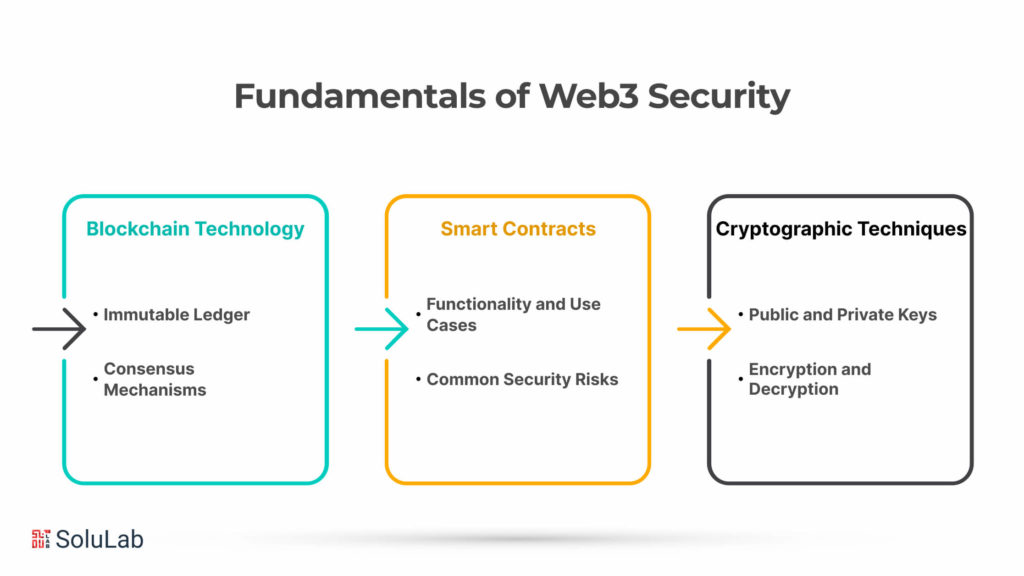
Fundamentals of Web3 Security

In the dynamic landscape of decentralized technologies, Web3 security emerges as a paramount concern, necessitating a comprehensive understanding of its foundational elements. This section delves into the core aspects of Web3 security, exploring the critical components that underpin its robustness.

A. Blockchain Technology

Blockchain technology forms the bedrock of Web3 security, introducing revolutionary concepts that redefine trust and transparency in digital transactions.

  • Immutable Ledger

At the heart of Web3 security lies the immutable ledger, a decentralized and tamper-resistant record of transactions. This characteristic ensures that once information is added to the blockchain platform, it becomes practically impossible to alter, enhancing data integrity and fostering a high level of security in Web3 environments.

  • Consensus Mechanisms

Consensus mechanisms play a pivotal role in maintaining the security and integrity of decentralized networks. Through protocols like Proof of Work (PoW) and Proof of Stake (PoS), blockchain systems ensure agreement among network participants, thwarting malicious activities and reinforcing the overall security in the realm of Web3.

B. Smart Contracts

Smart contracts, self-executing agreements with the terms of the contract directly written into code, are instrumental in Web3 ecosystems, revolutionizing the way transactions are conducted.

  • Functionality and Use Cases

Web3 security relies heavily on the innovative functionality and diverse use cases of smart contracts. These automated contracts enable trustless interactions, reducing the need for intermediaries and enhancing security in Web3 transactions, from financial agreements to supply chain management.

  • Common Security Risks

Despite their transformative potential, smart contracts are not immune to security risks. Vulnerabilities such as code bugs, reentrancy attacks, and Oracle manipulations pose challenges to Web3 security. Conducting a Web3 security audit becomes imperative to identify and rectify these issues, ensuring the robustness of decentralized applications.

C. Cryptographic Techniques

The implementation of cryptographic techniques is a cornerstone in fortifying Web3 security, providing the encryption and decryption mechanisms necessary for safeguarding sensitive information.

  • Public and Private Keys

In the Web3 security landscape, the use of public and private keys is fundamental to user authentication and data protection. Public keys act as addresses, while private keys are secret credentials that grant access. The asymmetric nature of this cryptographic approach bolsters security in Web3 environments.

  • Encryption and Decryption

Secure communication and data integrity are upheld through encryption and decryption processes. Web3 security relies on advanced cryptographic algorithms to encode information during transmission and decode it only for authorized recipients, creating a shield against unauthorized access.

CTA1

What are the Components of Web3 Security Stack?

A. Decentralized Identity Management

  • Self-Sovereign Identity (SSI)

In the realm of Web3 security, Self-Sovereign Identity (SSI) plays a pivotal role. It empowers individuals with control over their own identity without the need for intermediaries. SSI ensures that users have secure and private ownership of their digital identities, reducing the risk of identity-related fraud and enhancing overall security in the web3 environment.

  • Decentralized Identifiers (DIDs)

DIDs are fundamental to decentralized identity systems. They provide a mechanism for creating globally unique identifiers, enhancing security by eliminating reliance on central authorities. Incorporating DIDs in the DeFi in web3 era infrastructure ensures that entities can be uniquely identified and authenticated in a decentralized and secure manner.

B. Secure Communication Protocols

  • Interledger Protocol (ILP)

As an integral part of the web3 security landscape, ILP facilitates secure and efficient transactions across different ledgers. It ensures interoperability between various blockchain networks, enhancing the overall security and efficiency of decentralized transactions. ILP’s role is critical in achieving a seamless and secure flow of information in the web3 environment.

  • Whisper Protocol

Whisper Protocol is designed for secure communication within decentralized applications. Its emphasis on privacy and confidentiality aligns with the core principles of web3 security. By enabling private and encrypted messaging, the Whisper Protocol adds a layer of protection to communication channels, safeguarding sensitive information in the decentralized ecosystem.

C. Consensus Mechanisms

  • Proof of Work (PoW)

PoW, a well-known consensus mechanism, ensures the security of blockchain networks by requiring participants to solve complex mathematical problems. Its inclusion in the web3 security stack ensures the integrity of transactions and the overall network, providing a robust defense against malicious activities.

  • Proof of Stake (PoS)

PoS introduces an alternative consensus mechanism, relying on validators who hold a stake in the network. This approach enhances web3 security by reducing the environmental impact associated with PoW and promoting a more energy-efficient and sustainable decentralized ecosystem.
What are the Tools and Frameworks for Web3 Security?

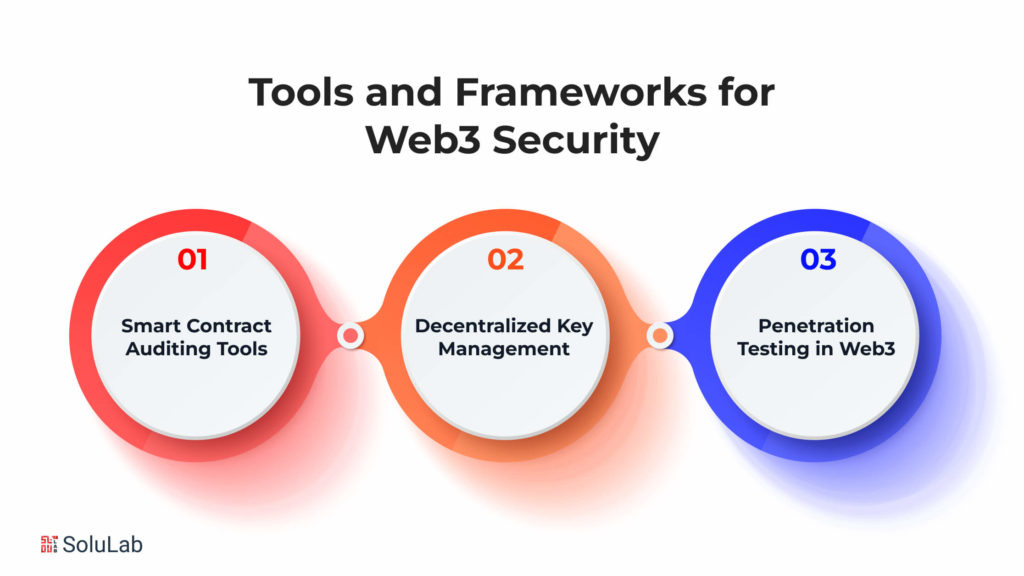
Tools and Frameworks for Web3 Security

In the rapidly evolving landscape of Web3, ensuring robust security measures is paramount to safeguard decentralized applications (dApps) and smart contracts. The Web3 Security Stack comprises various tools and frameworks designed to fortify the decentralized ecosystem. Here’s a comprehensive exploration of key elements:

A. Smart Contract Auditing Tools

  • MythX

MythX stands at the forefront of smart contract security auditing. Leveraging advanced analysis techniques, it meticulously scans smart contracts for vulnerabilities. This tool is indispensable for developers seeking to enhance the security posture of their Web3 applications. MythX contributes significantly to proactively identifying and eliminating potential threats in the web3 security landscape.

  • Securify

Securify is another robust tool tailored for smart contract auditing. Recognized for its precision in detecting vulnerabilities, it employs formal verification methods to ensure the reliability and security of smart contracts within the Web3 domain. Securify plays a pivotal role in fortifying code against potential exploits, fostering a resilient foundation for web3 security audit processes.

B. Decentralized Key Management

  • Key Management Service (KMS)

Within the Web3 Security Stack, KMS emerges as a key enabler for decentralized key management. This service facilitates secure key storage, ensuring that cryptographic keys vital for the integrity of Web3 transactions are safeguarded against unauthorized access. KMS forms an integral part of the broader security infrastructure, enhancing the overall security posture in the realm of web3 security.

  • Hardware Security Modules (HSMs)

HSMs provide an additional layer of security by physically securing cryptographic keys. These modules safeguard against both logical and physical attacks, making them a cornerstone in decentralized key management for Web3 applications. Integrating HSMs into the infrastructure enhances the robustness of web3 security audit mechanisms.

C. Penetration Testing in Web3

  • Challenges and Approaches

Penetration testing in the context of Web3 introduces unique challenges due to the decentralized nature of blockchain networks. Addressing issues such as consensus algorithm vulnerabilities and smart contract exploits requires specialized approaches. Robust penetration testing methodologies are crucial for identifying and mitigating potential risks, contributing to a comprehensive web3 security strategy.

  • Security Auditing Platforms

Security auditing platforms play a vital role in evaluating the overall security posture of Web3 applications. These platforms combine automated tools and manual assessments to identify vulnerabilities comprehensively. Their integration into the Web3 Security Stack reinforces the reliability and trustworthiness of decentralized ecosystems.

What are the Key Components of Secure Coding?

In the rapidly evolving landscape of Web3, ensuring robust security practices is paramount to safeguarding decentralized systems. Implementing the best practices for Web3 security development requires a comprehensive approach, encompassing secure coding practices, continuous monitoring, and incident response strategies.

A. Secure Coding Practices

  • Code Reviews

Conducting thorough code reviews is a cornerstone of Web3 security. Regularly scrutinizing code by multiple developers helps identify vulnerabilities and ensures compliance with established security standards. The emphasis should be on scrutinizing smart contracts and decentralized applications (DApps) to mitigate potential exploits.

  • Static Analysis Tools

Leveraging static analysis tools is instrumental in identifying security loopholes in the early stages of development. Tools like MythX and Slither can analyze smart contract code for vulnerabilities, aiding developers in proactively addressing issues related to Web3 security.

B. Continuous Monitoring and Incident Response

  • Real-time Monitoring Solutions

Web3 security demands real-time monitoring to detect and respond swiftly to potential threats. Utilizing solutions such as blockchain explorers and network analyzers helps in tracking transactions, identifying anomalies, and promptly addressing security incidents. Continuous monitoring ensures the integrity and security of decentralized networks.

  • Incident Response Plans

Develop comprehensive incident response plans specific to Web3 environments. These plans should outline procedures for detecting, reporting, and responding to security incidents. Collaborate with the broader community to establish a unified response strategy. Regularly test and update these plans to adapt to evolving threats in the dynamic Web3 landscape.
What are the Future Trends in Web3 Security?

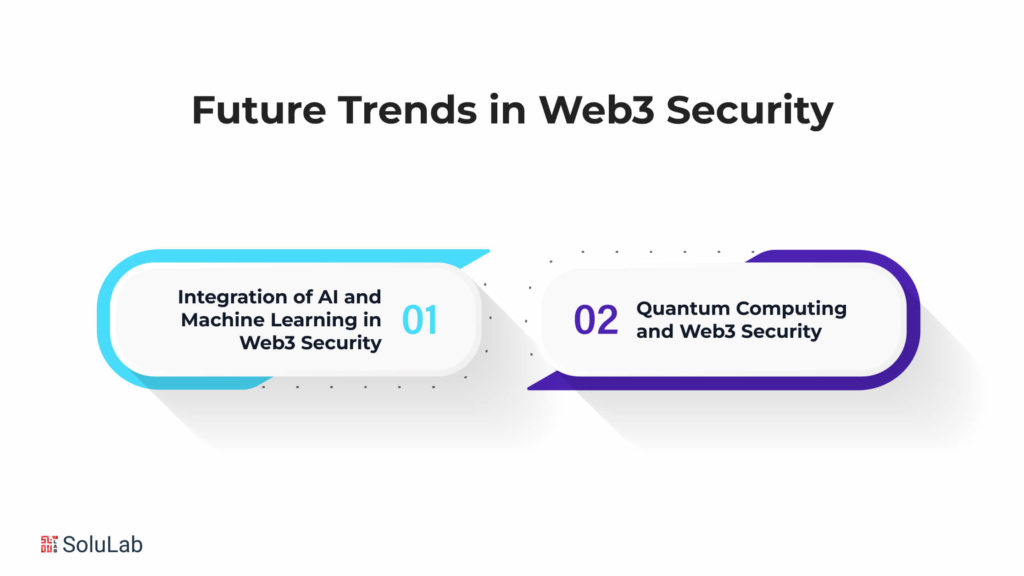
Future Trends in Web3 Security

In the ever-evolving landscape of the internet, the emergence of Web3 brings forth new challenges and opportunities in the realm of cybersecurity. As we navigate the complex terrain of decentralized networks, the future trends in Web3 security are poised to revolutionize how we safeguard digital assets and information. Here, we delve into two key aspects: the data integration of AI and machine learning, and the impact of quantum computing on Web3 security.

A. Integration of AI and Machine Learning in Web3 Security

  • Predictive Security Measures

In the dynamic environment of Web3, predictive security measures powered by AI and machine learning algorithms play a pivotal role. Traditional reactive approaches are being complemented by proactive strategies that anticipate potential threats. 

By analyzing patterns, user behaviors, and transactional data, these intelligent systems can predict and prevent security breaches before they occur. This shift from a reactionary to a preventative stance enhances the overall security posture in the Web3 landscape.

  • Anomaly Detection

Web3 security necessitates a heightened focus on anomaly detection mechanisms. AI and machine learning models excel in identifying deviations from normal behavior, enabling the rapid detection of suspicious activities. 

Whether detecting unauthorized access attempts or flagging irregularities in smart contract executions, anomaly detection adds a crucial layer of defense to Web3 ecosystems.

B. Quantum Computing and Web3 Security

  • Threats and Countermeasures

The advent of quantum computing poses unprecedented challenges to classical cryptographic methods, potentially compromising the security foundations of Web3. As quantum computers advance, they could break widely used encryption protocols, jeopardizing the confidentiality and integrity of data. 

To counter this, Web3 security must embrace quantum-resistant algorithms and cryptographic techniques to ensure the continued protection of sensitive information.

  • Post-Quantum Cryptography

Recognizing the imminent threat of quantum computing, the integration of post-quantum cryptography becomes imperative for Web3 security. 

This entails adopting cryptographic algorithms resilient to quantum attacks, safeguarding sensitive transactions and communications in a quantum-powered future. The proactive implementation of post-quantum cryptography serves as a crucial defense strategy against potential quantum threats.

What are the Regulatory Landscape and Compliance in Web3?

The regulatory landscape surrounding Web3 technologies is continually evolving, driven by global regulatory trends that aim to address the unique challenges posed by decentralized systems. In this section, we explore the shifting legal frameworks and compliance challenges within the Web3 space, emphasizing the critical aspect of security through concepts such as web3 security, security in web3, web3 security audit, and the Web3 Security Stack.

A. Evolving Legal Framework

  • Global Regulatory Trends

In the dynamic realm of Web3 technologies, global regulatory trends play a pivotal role in shaping the legal framework. Governments and regulatory bodies worldwide are increasingly recognizing the impact of decentralized technologies on traditional systems. 

As the Web3 landscape expands, regulators are responding with a mix of caution and innovation, attempting to strike a balance between fostering technological advancements and safeguarding against potential risks.

Key considerations in global regulatory trends include:

  • Recognition of decentralized finance (DeFi) and blockchain-based systems.
  • Efforts to establish clear definitions for cryptocurrencies and tokenized assets.
  • Formulation of guidelines for Initial Coin Offerings (ICOs) and Security Token Offerings (STOs).
  • Cross-border collaboration to address jurisdictional challenges in the decentralized space.
  • Compliance Challenges in Web3:
  • Navigating the Web3 landscape presents unique compliance challenges, primarily due to its decentralized and borderless nature. Compliance efforts must adapt to the decentralized ethos while addressing concerns related to financial regulations, data protection, and consumer rights. 

Organizations operating within the Web3 ecosystem encounter the following compliance challenges

  • Ambiguity in regulatory classifications for decentralized entities.
  • Ensuring adherence to anti-money laundering (AML) and know-your-customer (KYC) regulations.
  • Handling cross-border legal complexities arising from decentralized applications and global user participation.
  • Establishing frameworks for transparent governance and accountability in decentralized autonomous organizations (DAOs).

CTA2

B. Web3 Security Focus

Web3 Security is a critical aspect that underpins the successful integration of decentralized technologies into mainstream use. Various security measures are essential to fortify the Web3 ecosystem and ensure the protection of assets, data, and user privacy. Incorporating keywords such as web3 security, security in web3, web3 security audit, and the Web3 Security Stack becomes paramount in this context.

  • Web3 Security Audit

Conducting regular security audits is imperative to identify vulnerabilities within decentralized systems. A comprehensive web3 security audit involves:

  • Smart contract audits to ensure code integrity and protection against exploits.
  • Network security assessments to identify potential attack vectors and vulnerabilities.
  • Verification of cryptographic protocols and consensus mechanisms.
  • Evaluation of governance mechanisms to prevent malicious activities within DAOs.
  • Web3 Security Stack:
  • The Web3 Security Stack comprises a layered approach to fortify the decentralized ecosystem against threats. 

Key components include

  • Secure smart contract development practices.
  • Robust consensus algorithms ensure network integrity.
  • Encryption and privacy-focused protocols safeguarding user data.
  • Continuous monitoring and threat detection mechanisms.

Conclusion

In conclusion, SoluLab emerges as a pioneering force in the realm of Web3 security, providing an invaluable resource for developers navigating the complex landscape of decentralized technologies. This comprehensive guide not only elucidates the intricacies of the Web3 Security Stack but also underscores SoluLab’s commitment to empowering developers in safeguarding their decentralized applications.

By delving into the nuances of Web3 security, SoluLab’s guide serves as a beacon for developers seeking a profound understanding of the evolving threat landscape. The company’s emphasis on proactive measures and best practices demonstrates a forward-thinking approach to ensuring the integrity and resilience of Web3 applications.

In the competitive landscape of Web3 development, SoluLab stands out not only as a reliable source of knowledge but also as a premier web3 development company that bridges the gap between theoretical insights and practical implementation. Aspiring developers looking to bolster their projects can confidently turn to SoluLab’s expertise and, where necessary, hire web3 developers with the assurance of gaining access to a wealth of knowledge and experience.

SoluLab’s commitment to advancing Web3 security extends beyond the confines of this guide, as the company continues to contribute to the development of secure and robust decentralized ecosystems. In essence, this guide not only equips developers with the tools to navigate the challenges of Web3 security but also positions SoluLab as a leading force in the ever-evolving landscape of decentralized technologies. 

FAQs

1. What is Web3 Security Stack, and why is it essential for developers?

Web3 Security Stack is a comprehensive set of protocols and practices designed to ensure the security of decentralized applications (dApps) in the Web3 ecosystem. Developers must implement these measures to safeguard against potential vulnerabilities and threats.

2. How does Web3 Security differ from traditional web security?

Web3 Security focuses on securing decentralized applications and blockchain technologies, considering the unique challenges and risks associated with distributed systems. Traditional web security measures may need to be revised in the context of decentralized networks.

3. Why should developers prioritize security in Web3 development?

Security is paramount in Web3 development to protect sensitive data, and financial transactions, and ensure the integrity of decentralized systems. A strong security foundation also enhances user trust and confidence in dApps.

4. What are the key components of the Web3 Security Stack?

The Web3 Security Stack includes elements like smart contracts in Web3 security, decentralized identity management, secure key management, and secure decentralized data storage. Each component addresses specific aspects of security in Web3 development.

5. How can a Web3 Security Audit benefit developers?

A Web3 Security Audit is a thorough examination of a decentralized application’s codebase, smart contracts, and overall architecture to identify and mitigate security vulnerabilities. It helps developers preemptively address issues and enhance the overall security posture.

6. What role do Web3 developers play in ensuring security?

Web3 developers are instrumental in implementing secure coding practices, conducting regular security audits, and staying informed about the latest security threats. Their expertise is vital in building resilient and secure decentralized applications.

 

A Beginner’s Guide to Web3 Security

Guide to Web3 Security

The advent of Web3 has brought about a paradigm shift in the digital landscape, offering decentralized, transparent, and user-centric experiences. However, as we embark on this transformative journey, ensuring Web3 security becomes paramount. In this comprehensive guide, we delve into the intricacies of Web3 security, explore the tools available for safeguarding decentralized ecosystems, and shed light on the significance of Web3 security audits.

Unraveling the Basics of Web3 Security

Take a journey into the fundamental tenets that support the security of Web3. In this section, we delve into the fundamental aspects of securing decentralized ecosystems. From the significance of decentralization to the role of encryption and consensus mechanisms, gain a comprehensive understanding of the bedrock on which Web3 security is built.

Understanding Web3 Security 

Web3 is a new iteration of the World Wide Web that is built on blockchain and decentralized technologies. This new frontier introduces a number of new security challenges for users, as well as new opportunities for security innovation. One of the fundamental principles of Web3 security is decentralization. In a decentralized system, there is no single point of failure, which makes it more difficult for attackers to exploit. For example, if one node in a blockchain network is compromised, the rest of the network can continue to operate.

Another important principle of Web3 security is encryption. Encryption is used to protect data from unauthorized access. In Web3, encryption is often used to protect user data, such as private keys and transaction data. Finally, consensus mechanisms are used to ensure that all participants in a blockchain network agree on the state of the network. This is important for security, as it prevents attackers from being able to alter the history of the blockchain.

These are just a few of the fundamental principles of Web3 security. As Web3 continues to develop, new security challenges and opportunities will emerge. It is important for users and developers to stay up-to-date on the latest security developments in order to protect their digital assets.

The Imperative of Security in Web3

Imperative of Security in Web3

Delve into the complex landscape of threats and challenges that define security in the Web3 era. Uncover the unique vulnerabilities posed by decentralized technologies, including smart contract intricacies and DApp security. In this section, we emphasize the critical importance of robust security measures for both end-users and developers in ensuring a secure Web3 environment.

A. The Threat Landscape in Web3

The decentralized nature of Web3 poses a number of unique security challenges.

One challenge is the lack of a central authority to oversee security. In a traditional, centralized system, there is a single point of failure that can be targeted by attackers. In a decentralized system, there is no single point of failure, but this also makes it more difficult to identify and address security threats. Another challenge is the complexity of smart contracts. Smart contracts are self-executing pieces of code that are used to automate transactions on the blockchain. They are often written in complex programming languages, which can make it difficult to identify and fix security vulnerabilities.

Finally, the decentralized nature of Web3 makes it difficult to enforce security standards. In a traditional system, security standards can be enforced by a central authority. In a decentralized system, there is no central authority, so it is up to individual users and dedicated developers to take responsibility for their own security.

These challenges can lead to a number of potential threats and vulnerabilities in a Web3 environment. Some of the most common threats include:

  • Smart contract vulnerabilities: Smart contracts can be vulnerable to a variety of attacks, including code injection attacks, reentrancy attacks, and denial-of-service attacks.
  • Decentralized application (DApp) security: DApps are also vulnerable to a variety of attacks, including phishing attacks, man-in-the-middle attacks, and data breaches. Implementing a Secure Web Gateway (SWG) solution helps safeguard users by filtering malicious traffic, blocking harmful websites, and ensuring secure access to decentralized applications.
  • User security: Users who interact with Web3 applications are also at risk of a variety of attacks, including phishing attacks, malware attacks, and identity theft.

It is important to be aware of these threats and vulnerabilities in order to protect yourself when using Web3 applications. Here are some tips for staying safe:

  • Do your research: Before using a Web3 application, do your research to make sure it is legitimate and has a good reputation.
  • Use strong passwords: Use strong passwords and enable two-factor authentication on all of your Web3 accounts.

Related: Top 10 Web3 Use Cases

  • Be careful of phishing attacks: Be careful of phishing emails and websites that attempt to steal your private keys or other sensitive information.
  • Keep your software up to date: Keep your software up to date to patch any security vulnerabilities.

By following these tips, you can help to protect yourself from the security risks of Web3.

Web3 Development Services

B. Importance of Web3 Security for Users and Developers

Web3 is a new and evolving ecosystem, and as such, it is important to be aware of the security risks involved. Both end-users and developers play a crucial role in upholding Web3 security.

End-users

End-users are responsible for securing their own private keys and transactions. Private keys are used to sign transactions and authorize access to funds. If a private key is compromised, an attacker can steal funds from the user’s account. End-users should take steps to protect their private keys, such as:

  • Using a hardware wallet to store private keys offline
  • Using a strong password for their crypto wallet
  • Enabling 2FA (two-factor authentication) for their crypto wallet
  • Avoiding phishing attacks

Developers

Developers are responsible for creating robust smart contracts and secure DApps. Smart contracts are self-executing pieces of code that run on the blockchain. If a smart contract is not properly written, it can be exploited by attackers. Developers should take steps to secure their smart contracts, such as:

  • Using formal verification to check for errors in smart contract code
  • Using secure coding practices
  • Testing smart contracts thoroughly before deploying them

DApps are decentralized applications that run on the blockchain. If a DApp is not secure, it can be exploited by attackers. Developers should take steps to secure their DApps, such as:

  • Using secure APIs
  • Ensuring that DApps are properly tested
  • Using security best practices

By working together, end-users and developers can help to uphold Web3 security and protect users from cyberattacks.

Web3 Security Audit – A Deep Dive 

Take a deep dive into the world of Web3 security audits, where the integrity of decentralized systems is meticulously scrutinized. This section explores the intricate processes involved in conducting thorough security audits, from code analysis to vulnerability assessments. Understand why these audits are indispensable for fortifying the reliability and resilience of Web3 platforms.

Understanding Web3 Security Audits

Web3 security audits are a critical part of the development and deployment of decentralized applications (dApps). They help to identify and mitigate security vulnerabilities that could be exploited by attackers and can help to ensure that dApps are robust and reliable.

There are a number of different types of security audits that can be performed on dApps, including:

  • Smart contract audits: These audits focus on the security of the smart contracts that power dApps. Smart contracts are pieces of code that run on the blockchain and are responsible for managing the dApp’s logic and state. Smart contract audits can help to identify vulnerabilities that could allow attackers to steal funds or take control of the dApp.
  • Web3 API audits: These audits focus on the security of the web3 APIs that dApps use to interact with the blockchain. Web3 APIs are interfaces that allow dApps to interact with the blockchain, and they can be a source of security vulnerabilities. Web3 API audits can help to identify vulnerabilities that could allow attackers to steal user data or access sensitive information.
  • Infrastructure audits: These audits focus on the security of the infrastructure that dApps run on. This includes the servers, networks, and databases that dApps use. Infrastructure audits can help to identify vulnerabilities that could allow attackers to access dApp data or disrupt dApp services.

Security audits are an important part of the development and deployment of dApps. By performing security audits, dApp developers can help to identify and mitigate security vulnerabilities that could be exploited by attackers. This can help to ensure that dApps are robust and reliable and that users’ data and funds are protected.

There are a number of different types of Web3 security audits that can be performed, including:

  • Smart contract audits: These audits focus on identifying and mitigating security vulnerabilities in smart contracts, which are the programs that run on blockchains and govern the interactions between dApp users.
  • Infrastructure audits: These audits focus on identifying and mitigating security vulnerabilities in the infrastructure that supports dApps, such as the blockchains that they run on and the servers that host them.
  • Application audits: These audits focus on identifying and mitigating security vulnerabilities in the dApp itself, such as its user interface and its back-end code.

Web3 security audits are an important part of the development process for dApps and can help to protect users from security threats. However, it is important to note that no audit can guarantee that a dApp is completely secure. It is always important to exercise caution when using dApps and to only use dApps that have been audited by a reputable security firm.

In addition to comprehensive assessments and reviews, there are a number of other steps that can be taken to ensure the robustness of Web3 systems. These include:

  • Using secure coding practices: Developers should use secure coding practices to minimize the risk of introducing security vulnerabilities into their code.
  • Implementing security best practices: dApps should implement security best practices, such as user authentication, access control, and encryption.
  • Monitoring for security threats: dApps should be monitored for security threats, such as DDoS attacks and malware infections.

By taking these steps, developers can help to ensure that their dApps are robust and secure.

Conducting a Web3 Security Audit

Step into the shoes of a security auditor as we outline the processes involved in conducting a Web3 security audit. From code analysis to vulnerability assessments, learn how auditors identify and address potential threats to Web3 platforms. The Process of a Web3 Security Audit.

A Web3 security audit is a comprehensive review of a blockchain technology application or platform to identify and address potential security vulnerabilities. The process typically involves the following steps:

  • Initial assessment: The auditor will first conduct an initial assessment of the application or platform to identify any high-level security risks. This may involve reviewing the application’s architecture, design, and code, as well as conducting interviews with the development team.
  • Code analysis: The auditor will then conduct a detailed code analysis to identify specific security vulnerabilities. This may involve using static analysis tools to scan the code for known vulnerabilities, as well as manual code review, to identify more subtle issues.
  • Vulnerability assessments: The auditor will then conduct vulnerability assessments to test the application or platform’s defenses against real-world attacks. This may involve simulating attacks against the application or platform, as well as using penetration testing tools to exploit known vulnerabilities.
  • Reporting: The auditor will then produce a detailed report of their findings, including a list of all identified vulnerabilities and recommendations for how to address them.

Related: Web 3 vs Web 3.0

Identifying and Addressing Security Vulnerabilities

Security auditors use a variety of techniques to identify and address security vulnerabilities in Web3 applications and platforms. These techniques may include:

  • Static analysis: Static analysis tools scan code for known security vulnerabilities. This can be a useful way to identify vulnerabilities that are difficult to find through manual code review.
  • Manual code review: Manual code review is a critical step in any security audit. Auditors will carefully review the code to identify potential security vulnerabilities, such as:
    • Improper access control
    • Injection vulnerabilities
    • Insecure cryptographic implementations
  • Vulnerability assessments: Vulnerability assessments test the application or platform’s defenses against real-world attacks. This can help to identify vulnerabilities that may not be detected by static analysis or manual code review.

Addressing Security Vulnerabilities

Once security vulnerabilities have been identified, they must be addressed in a timely and effective manner. The specific steps taken to address a vulnerability will depend on the nature of the vulnerability. However, some common steps may include:

  • Patching the vulnerability: If a vulnerability is known to have a patch available, the patch should be applied as soon as possible.
  • Implementing mitigations: If a vulnerability does not have a patch available, mitigations can be implemented to reduce the risk of exploitation. For example, if a vulnerability is related to improper access control, access controls can be tightened to reduce the risk of unauthorized access.
  • Monitoring for attacks: Once vulnerabilities have been addressed, it is important to monitor the application or platform for signs of attack. This can help to identify and respond to attacks quickly before they can cause damage.

Web3 security audits are an essential part of securing blockchain technology applications and platforms. By following a comprehensive process, security auditors can help to identify and address potential security vulnerabilities, reducing the risk of attack and data breaches.

Tools for Web3 Security 

Navigate through an array of powerful tools designed to fortify Web3 security. From blockchain scanners to code analyzers, this section provides an overview of essential tools that empower both Web3 developers and users in their quest for a secure digital frontier. Explore best practices for implementing these tools and enhancing the security posture of decentralized ecosystems.

Overview of Web3 Security Tools

As the Web3 ecosystem grows and matures, the landscape of security tools is rapidly evolving.. However, some key tools have emerged as essential for securing blockchain networks, smart contracts, and DApps. Blockchain scanners

Blockchain scanners are a critical tool for identifying and mitigating security vulnerabilities in blockchain networks. They can be used to scan for a variety of issues, including:

  • Malicious smart contracts
  • Decentralized autonomous organizations (DAOs) with poor security practices
  • Vulnerabilities in blockchain protocols

Blockchain scanners can be either on-chain or off-chain. On-chain scanners scan the blockchain directly, while off-chain scanners use a copy of the blockchain to scan for vulnerabilities. 

Code analyzers are used to identify security vulnerabilities in smart contracts and DApps. They can be used to scan for a variety of issues, including:

  • Integer overflows
  • Buffer overflows
  • SQL injection vulnerabilities

Code analyzers can be either static or dynamic. Static code analyzers scan the code without running it, while dynamic code analyzers scan the code as it is being executed. 

Encryption solutions are used to protect data from unauthorized access. They can be used to encrypt data at rest, in transit, and in use.

There are a variety of different encryption solutions available, including:

  • Public key cryptography
  • Private key cryptography
  • Symmetric key cryptography

Encryption solutions can be either software-based or hardware-based. Software-based encryption solutions are typically less expensive than hardware-based solutions, but they may not be as secure. Hardware-based encryption solutions are typically more secure than software-based solutions, but they may be more expensive. 

The landscape of Web3 security tools is rapidly evolving as the ecosystem grows and matures. However, some key tools have emerged as essential for securing blockchain networks, smart contracts, and DApps. These tools include blockchain scanners, code analyzers, and encryption solutions. By using these tools, developers and businesses can help to protect their Web3 assets from security threats.

Best Practices for Implementing Web3 Security Tools

As the decentralized finance (DeFi) industry continues to grow, so too does the need for robust security measures. Web3 security tools can help protect decentralized applications (dApps) from a variety of threats, including:

  • Malicious smart contracts: These contracts can be used to steal funds, execute unauthorized transactions, or even take over a dApp.
  • DDoS attacks: These attacks can flood a dApp with traffic, making it inaccessible to users.
  • Social engineering attacks: These attacks can trick users into giving up their private keys or other sensitive information.

By integrating and implementing Web3 security tools, dApp developers can help mitigate these risks and protect their users’ funds and data. Best Practices for Integrating Web3 Security Tools

There are a number of best practices that dApp developers can follow when integrating Web3 security tools. These include:

  • Choosing the right tools: There are a variety of different Web3 security tools available, so it’s important to choose the ones that are right for your dApp. Some factors to consider when choosing tools include the specific threats you’re trying to protect against, your budget, and your technical expertise.
  • Properly configuring the tools: Once you’ve chosen your tools, it’s important to properly configure them. This includes setting up the tools to monitor for the specific threats you’re concerned about, and ensuring that the tools are properly integrated with your dApp.
  • Testing the tools: It’s important to test the tools to make sure that they’re working properly. This includes testing the tools to see if they can detect and respond to the threats you’re concerned about.
  • Monitoring the tools: Once the tools are in place, it’s important to monitor them to make sure that they’re working properly. This includes checking the logs to see if any threats have been detected and responding to any threats that are detected.

In addition to integrating and implementing Web3 security tools, there are a number of other strategies that dApp developers can use to fortify their decentralized Web3 ecosystem. These include:

  • Using a secure development lifecycle: A secure development lifecycle (SDL) is a process that helps developers build secure dApps. The SDL includes a number of steps, such as threat modeling, code review, and penetration testing.
  • Ensuring that your dApp is bug-free: Bugs can be exploited by attackers to gain access to your dApp and steal funds or data. It’s important to have a robust testing process in place to ensure that your dApp is free of bugs.
  • Educating your users: It’s important to educate your users about the risks of using dApps and how to protect themselves. This includes teaching users about the importance of using strong passwords, being careful about what information they share, and being aware of phishing scams.

By following these best practices and strategies, dApp developers can help to protect their users’ funds and data and fortify their Web3 ecosystem.

Hire Web3 Developers

Conclusion

Web3, where decentralized technologies redefine digital landscapes, security emerges as a cornerstone for a resilient and trustworthy ecosystem. As we conclude this comprehensive guide to Web3 security, the importance of fortifying decentralized platforms cannot be overstated. Understanding the fundamentals of Web3 security is crucial, given the unique challenges and opportunities that come with the decentralized paradigm. From the intricacies of securing smart contracts to the responsibilities of both users and developers, the imperative for robust security practices in Web3 is clear. The concept of Web3 security audits emerges as a pivotal element in ensuring the integrity and reliability of decentralized systems. Audits play a crucial role in identifying and addressing vulnerabilities, promoting transparency, and enhancing the overall resilience of Web3 platforms. The arsenal of Web3 security tools showcased in this guide underscores the proactive approach required to defend against emerging threats. From blockchain scanners to code analyzers, these tools empower both Web3 developers and users in fortifying their digital assets.

SoluLab stands out as a leading Web3 development company. With a commitment to innovation, SoluLab not only embodies excellence in Web3 development but also prioritizes security as a fundamental aspect of its service offerings. As the Web3 ecosystem continues to evolve, it becomes evident that security is not a solitary endeavor. Users, developers, and visionary companies like SoluLab must collaborate to navigate the complexities of security in Web3. It is through such collaborative efforts that the decentralized future can be safeguarded, ensuring a resilient and secure digital frontier. In conclusion, as we embark on the era of decentralized technologies, let this guide serve as a beacon for understanding and implementing robust Web3 security measures. Whether you are a Web3 developer, enthusiast, or a user navigating this digital frontier, embracing security is not just a choice but a necessity. SoluLab, with its expertise in Web3 development and a commitment to security, exemplifies the ethos required to thrive in the decentralized future. Secure your journey into Web3, empower your digital presence, and contribute to the resilient and decentralized evolution of the digital landscape.

FAQs

1. What is Web3 security, and why is it crucial for the decentralized landscape?

Explore the fundamentals of Web3 security, understanding its significance in fortifying decentralized finance platforms and ensuring the integrity of digital assets in the decentralized paradigm.

2. How do Web3 security audits contribute to the reliability of decentralized systems?

Uncover the role of Web3 security audits in identifying vulnerabilities, promoting transparency, and enhancing the overall resilience of decentralized platforms.

3. What are some common security challenges in Web3, and how can they be addressed?

Delve into the unique security challenges posed by Web3, including smart contract vulnerabilities, and discover strategies and best practices for addressing them.

4. Can you provide examples of Web3 security tools and their impact on decentralized ecosystems?

Explore a variety of Web3 security tools, from blockchain scanners to code analyzers, and understand how these tools empower both developers and users in safeguarding their digital assets.

5. Why is user responsibility crucial in upholding Web3 security, and what measures should users take?

Understand the responsibilities of Web3 users in securing private keys and transactions, and explore best practices for ensuring a secure user experience in a decentralized environment.

6. How does SoluLab contribute to Web3 security, and what sets it apart as a Web3 development company?

Learn about SoluLab’s commitment to security in Web3 development and discover how it stands out as a leading Web3 development company, contributing to the secure evolution of the decentralized landscape.

7. Are there real-world examples of security challenges in Web3 platforms, and how were they addressed?

Explore case studies highlighting real-world security challenges faced by Web3 platforms, gaining insights into how vulnerabilities were identified, addressed, and lessons learned for the future of Web3 security.

How to Stay Safe in Web3: Have You Read About Web3 Antivirus

How to Stay Safe in Web3 Have You Read About Web3 Antivirus

The digital landscape is evolving rapidly, and the emergence of Web3 is at the forefront of this transformation. Web3 platforms represent a new era of the internet, characterized by decentralization, blockchain technology, and the promise of enhanced security and user control. As Web3 gains traction, it’s crucial to understand the intricacies of staying safe within this innovative environment. In this blog, we’ll explore the concept of Web3, the unique security challenges it poses, and introduce you to the concept of Web3 antivirus.

What is Web3

Web3, short for “Web 3.0,” is a term used to describe the next evolution of the internet. Unlike the current web, which relies on centralized servers and authorities, Web3 is built on decentralized networks, enabling users to have more control over their data and interactions. It leverages technologies like blockchain, decentralized finance (DeFi), and non-fungible tokens (NFTs) to create a trustless and peer-to-peer online environment.

Key Concepts and Technologies

To navigate Web3 effectively, it’s essential to grasp some key concepts and technologies:

  • Blockchain: The distributed ledger technology that underpins Web3, ensuring transparency and immutability.
  • Cryptocurrencies: Digital assets like Bitcoin and Ethereum, which facilitate transactions and value exchange in Web3.

Web3 Development Company

Potential Risks and Vulnerabilities

While Web3 promises increased security, it also introduces new risks:

  • Decentralization and Trust Issues: Trust in a centralized authority is replaced by trust in code, which can be vulnerable to exploitation.
  • Smart Contract Vulnerabilities: Flaws in smart contracts can lead to financial losses for users.
  • Identity and Privacy Concerns: Maintaining online anonymity and data privacy becomes more challenging in a transparent, blockchain-based environment.

 Web3 Security Challenges

Web3 Security Challenges

Web3’s decentralization and innovative technologies bring about unique security challenges that users must be aware of:

  • Decentralization and Trust Issues

One of the key principles of Web3 is decentralization, eliminating the need for intermediaries and third-party authorities. While this offers enhanced security in many aspects, it also shifts the burden of trust onto the code and the network itself. Users must trust that the underlying blockchain technology and the code governing smart contracts are secure. However, as with any technology, vulnerabilities can exist, making it imperative to exercise caution and due diligence.

  • Smart Contract Vulnerabilities

Smart contracts are a cornerstone of Web3, automating agreements and transactions without the need for intermediaries. However, smart contracts are not immune to errors or malicious intent. Vulnerabilities within these contracts can be exploited, leading to financial losses for users. It’s vital to thoroughly audit and review smart contracts before interacting with them to minimize such risks.

  • Identity and Privacy Concerns

Web3’s transparency and immutability can make maintaining anonymity and data privacy challenging. Transactions on the blockchain are publicly recorded, and while they may not always reveal personal information, they can still create privacy concerns. Users must take precautions to protect their identities and data, especially when participating in DeFi platforms or NFT marketplaces.

Strategies for Staying Safe in Web3

Strategies for Staying Safe in Web3

Navigating the decentralized and innovative world of Web3 can be both exciting and daunting. To ensure your safety in this evolving digital landscape, consider implementing the following strategies:

  • Use Reputable Wallets and Services

Selecting a trusted wallet and reliable Web3 services is a crucial first step. Reputable wallets, like MetaMask and Trust Wallet, offer a secure way to manage your digital assets and interact with DApps. Make sure to download these tools from official sources to avoid potential scams.

  • Secure Your Private Keys and Seeds

Private keys and recovery seeds are your keys to the Web3 kingdom. Safeguard them with the utmost care. Store them offline in hardware wallets or secure offline backups. Never share these sensitive credentials and be cautious of phishing attempts.

  • Verify Smart Contracts

Before engaging with any smart contract, take the time to review and verify it. Use resources like Etherscan to audit contracts and check for potential vulnerabilities. Ensure that the code has been audited by reputable security firms to minimize risks.

  • Employ Decentralized Identity Solutions

To protect your identity and maintain privacy, consider using decentralized identity solutions like blockchain-based identity wallets. These solutions provide you with control over your personal information and data, allowing you to share only what’s necessary.

  • Stay Updated on Security Best Practices

Web3 is continuously evolving, and so are the associated security threats. Stay informed about the latest security best practices and emerging threats by following trustworthy sources, forums, and communities in the Web3 space. Education is your best defense.

Web3 Antivirus: What You Need to Know

In the ever-evolving landscape of Web3, where decentralized technologies and digital assets have taken center stage, a new kind of security solution has emerged – Web3 antivirus. This innovative tool is designed to provide a much-needed layer of protection for users navigating the complex and decentralized Web3 environment. In this section, we will delve deeper into Web3 antivirus, exploring how it distinguishes itself from traditional antivirus software and why it is becoming increasingly essential in this dynamic digital realm.

Web3 antivirus represents a specialized security solution tailored to safeguard users within the decentralized and blockchain-based Web3 ecosystem. Unlike traditional antivirus software, which mainly focuses on identifying and neutralizing threats that target local devices, Web3 antivirus takes a different approach. It is designed to address the unique security challenges posed by Web3, such as smart contract vulnerabilities, DeFi scams, and identity theft on blockchain networks.

How Web3 Antivirus Differs from Traditional Antivirus

How Web3 Antivirus Differs from Traditional Antivirus

Understanding how Web3 antivirus sets itself apart from conventional antivirus software is crucial to grasp its significance:

  • Blockchain Integration: Web3 antivirus operates in conjunction with blockchain technology. It continuously monitors blockchain activities, transactions, and smart contracts to detect and mitigate malicious actions. This real-time integration is vital in a trustless environment where every transaction is recorded and irreversible.
  • Smart Contract Auditing: In the world of Web3, smart contracts play a pivotal role. These self-executing contracts have their terms directly encoded into code, but they are not immune to vulnerabilities. Web3 antivirus conducts automated audits of smart contracts, identifying potential weaknesses and vulnerabilities. This capability allows users to make informed decisions about engaging with specific contracts and helps avoid potential financial risks.
  • Identity Protection: In Web3, your online identity and presence are intricately linked to your blockchain address. Web3 antivirus solutions often include features designed to safeguard decentralized identity. These tools enable you to maintain control over your personal information and data, allowing you to share only what is necessary while keeping the rest protected.
  • DeFi Security: The rise of decentralized finance (DeFi) platforms in Web3 has brought both exciting opportunities and new risks. Web3 antivirus solutions enhance the security of DeFi activities by continually monitoring transactions and platforms for any suspicious activities or scams. This proactive approach can help users avoid falling victim to DeFi-related frauds and rug pulls.

Benefits and Limitations

Benefits and Limitations

Web3 antivirus solutions offer several notable benefits:

  • Enhanced Security: Web3 antivirus enhances security by providing specialized protection against threats unique to Web3. This includes but is not limited to smart contract vulnerabilities, DeFi-related scams, and identity theft. By addressing these threats, Web3 antivirus reduces the risk of financial losses and data breaches, promoting a safer Web3 environment.
  • Real-time Monitoring: These solutions offer real-time monitoring of blockchain transactions and smart contracts. This continuous surveillance allows for the early detection of potential threats and vulnerabilities, which is crucial in a decentralized and fast-paced digital environment.
  • User Control: Web3 antivirus solutions empower users with greater control over their security. The decentralized nature of Web3 can be both liberating and challenging. Web3 antivirus bridges the gap, offering users more control and peace of mind as they navigate this new frontier.

However, it’s essential to understand that no security solution is entirely foolproof. Web3 antivirus, while a valuable tool, should be used in conjunction with other security best practices. Users must remain vigilant and cautious when navigating the Web3 landscape. Security is a shared responsibility, and being proactive about protecting your digital assets and data is paramount.

Hire Web3 Developers

Concluding remarks

In conclusion, as Web3 continues to shape the future of the internet, it’s crucial to stay informed about the evolving security challenges and embrace solutions like Web3 antivirus to protect your digital assets and data. By combining best practices and innovative security tools, you can explore the vast opportunities of Web3 with confidence.

The shift to decentralized systems, blockchain technology, and innovative digital experiences is accompanied by unique security challenges. To navigate this landscape successfully, users must adopt a proactive stance, combining established security strategies with cutting-edge solutions like Web3 antivirus. While Web3 promises a world of possibilities, it’s essential to remember that no security solution is infallible. By staying informed, cautious, and embracing the protective shield of Web3 antivirus, individuals can boldly explore the transformative Web3 world, secure in the knowledge that their digital assets and data are safeguarded. The journey through Web3 is exciting, and with the right security measures in place, it can be a safer one as well.

Solulab is a forward-thinking company at the forefront of the Web3 revolution, specializing in blockchain and decentralized exchange development solutions. With a commitment to innovation, Solulab offers a range of services, including blockchain development, smart contract creation, decentralized application (DApp) development, and blockchain consulting. In a world where Web3 security is of paramount importance, companies like Solulab play a vital role in providing cutting-edge solutions to ensure the safety and success of Web3 projects. Their knowledge and experience in blockchain technology contribute to a more secure and resilient Web3 environment, supporting the principles of decentralization, trust, and user empowerment.

FAQs

1. What is Web3, and why does it need special security measures?

Web3 represents the next generation of the internet, emphasizing decentralization and blockchain technology. It requires unique security measures due to the shift in trust from central authorities to code and the inherent risks in blockchain-based systems.

2. How does Web3 antivirus differ from traditional antivirus software?

Web3 antivirus focuses on protecting users in the decentralized Web3 environment. It monitors the blockchain, audits smart contracts, and offers specialized features like identity protection. Traditional antivirus software primarily scans for local device malware and may not cover blockchain-specific threats.

3.Why is it important to secure private keys and seeds in Web3?

Private keys and seeds are the keys to your Web3 kingdom, giving you control over your digital assets. Failing to secure them properly can lead to unauthorized access and loss of funds. Protecting these keys is vital in Web3.

4. What are the main security challenges in Web3?

Web3 security challenges include issues related to decentralization and trust, smart contract vulnerabilities, and identity and privacy concerns. Users need to be aware of these challenges and implement strategies to mitigate them.

5. Do Web3 antivirus solutions provide complete security?

While Web3 antivirus solutions offer enhanced security in the Web3 environment, no security solution can guarantee complete protection. Users should combine Web3 antivirus with other security best practices and remain vigilant to ensure their safety in Web3.
