


Return on Investment (ROI) is the bedrock of sound financial decision-making in the business world. Simply put, ROI measures the profitability of investments by evaluating the return, typically in monetary terms, generated from a specific investment relative to its cost. ROI is expressed as a percentage and is a powerful metric for assessing the effectiveness of various strategies, projects, or initiatives.
ROI = (Net Profit / Investment Cost) x 100
Understanding ROI is crucial because it provides valuable insights into the success or failure of investments. A positive ROI indicates that an investment has generated more revenue than its initial cost, while a negative ROI suggests the opposite. In essence, ROI with machine learning guides businesses in allocating resources wisely, ensuring that investments contribute positively to the bottom line.
In the fiercely competitive business landscape, the efficient allocation of resources is paramount. Maximizing ROI is the key to achieving this efficiency. When businesses prioritize projects or initiatives with higher ROI potential, they ensure that every dollar invested has the potential to yield the greatest return. This, in turn, leads to increased profitability and sustainable growth.
Maximizing ROI offers several significant advantages:

Machine learning, a subset of Artificial Intelligence, has emerged as a transformative technology in recent years. Its ability to analyze vast datasets, recognize patterns, and make predictions has made it a game-changer across various industries. Now, businesses are harnessing the power of machine learning to boost Business ROI with Machine Learning.
Machine learning enables businesses to make data-driven decisions, optimize operations, and predict market trends accurately. It has the potential to significantly impact ROI by automating processes, improving customer experiences, and identifying new revenue streams.
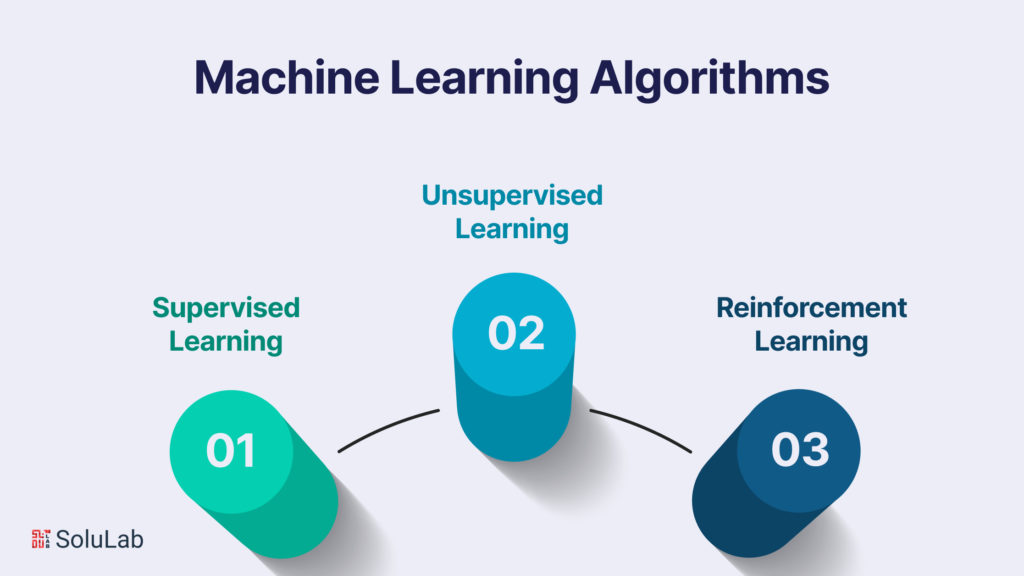
Machine learning is a branch of artificial intelligence (AI) that focuses on developing algorithms and models that allow computers to learn from data. Unlike traditional programming, where explicit instructions are provided, machine learning algorithms learn patterns and make predictions or decisions based on data inputs. This ability to learn from data is what makes machine learning so powerful and versatile.
Machine learning algorithms can be broadly categorized into three types:
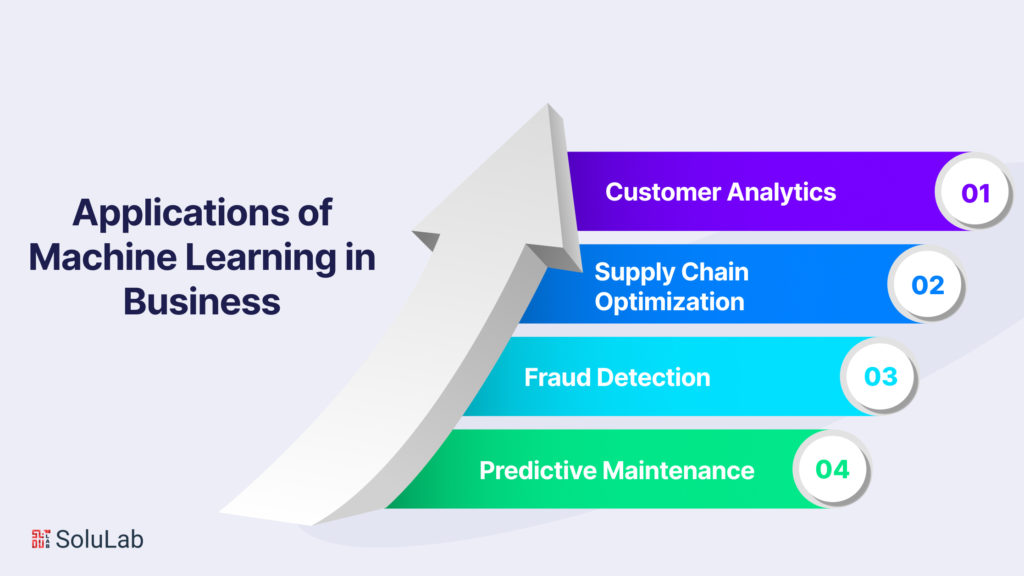
Machine learning’s applications in business are wide-ranging and impactful. Here are a few examples:
Before delving into machine learning models and strategies, it’s imperative to recognize that the quality of your data is the linchpin of success. The old adage “garbage in, garbage out” aptly applies here. In the context of machine learning, this means that the accuracy and effectiveness of your models are directly linked to the quality of the data they’re trained on.
High-quality data is:
The emphasis on data quality cannot be overstated. In machine learning, even state-of-the-art algorithms can only work with the data they’re given. Thus, meticulous data gathering and preprocessing set the stage for success. Without a solid foundation of clean, relevant, and complete data, the subsequent steps in your machine-learning journey will be compromised.
Moreover, it’s crucial to understand that data quality is an ongoing concern. As your business evolves, so do the data requirements. Regularly monitoring and maintaining data quality ensures that your machine-learning models continue to provide reliable results.
Data quality assurance involves not only addressing issues in historical data but also establishing processes to maintain data quality in the future. This may involve data governance frameworks, data validation checks, and data stewardship roles within your organization.
By placing data quality at the forefront of your machine learning initiatives, you set the stage for accurate, actionable insights that can drive ROI optimization.
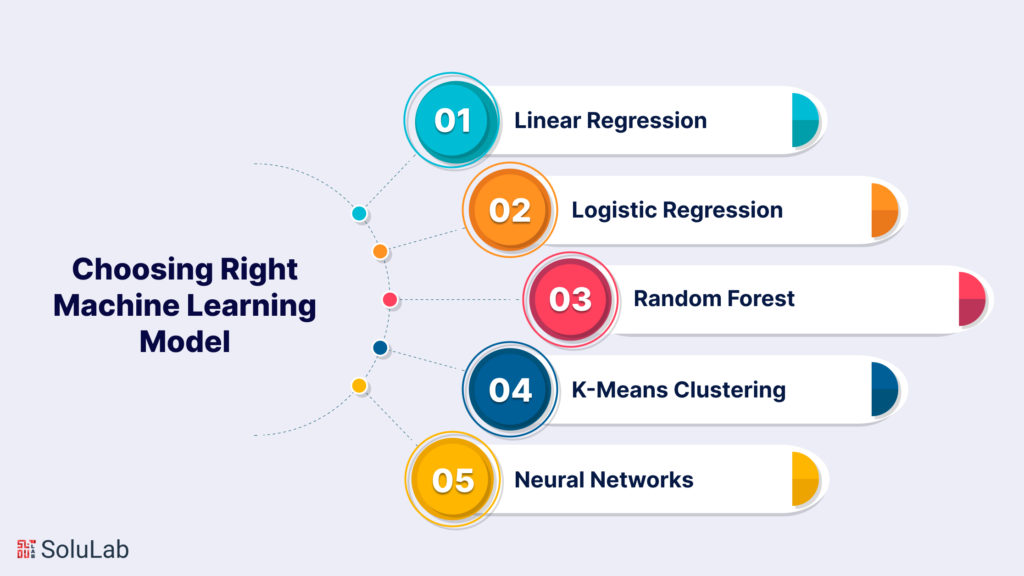
Now that we’ve laid the groundwork with high-quality data, let’s turn our attention to machine learning algorithms. These algorithms are the workhorses of predictive analytics and are used to make sense of data and generate valuable insights. There are various machine learning algorithms, each suited to different types of tasks.
Some of the most common machine learning algorithms include:
The choice of machine learning model should align with your specific ROI optimization goal. For instance:
Choosing the right model also involves considering the trade-offs between model complexity and interpretability. Some models, like deep neural networks, are highly complex and often described as “black boxes” because it’s challenging to understand how they arrive at their predictions. While they can achieve remarkable accuracy, they may lack transparency, which can be a concern in regulated industries or situations where interpretability is essential.
On the other hand, simpler models like linear regression or decision trees are more interpretable. You can readily examine the model’s coefficients or decision rules to understand why a specific prediction was made. However, they may not capture complex relationships in the data as effectively as more complex models.
The choice between model complexity and interpretability should be guided by your business’s needs and regulatory requirements. Sometimes, a hybrid approach, combining the strengths of different models, is the optimal solution.
With quality data in hand and a clear understanding of the machine learning model to use, the next crucial step is training the model. This is where the magic happens as the algorithm learns from the data to make predictions or decisions.
To ensure that the trained model generalizes well, it’s essential to split your dataset into two distinct subsets:
The separation between the training and testing sets is crucial to avoid a common pitfall known as overfitting. Overfitting occurs when a model learns the training data too well, capturing noise and random variations rather than genuine patterns. Such a model will perform poorly on new data because it has essentially memorized the training set.
Evaluating a machine learning model’s performance is a critical step in the process. Various evaluation metrics are used depending on the nature of the problem (classification, regression, etc.). Some commonly used metrics include:
During the evaluation phase, you may also employ techniques like cross-validation, which involves splitting the data into multiple subsets to obtain a more robust assessment of the model’s performance.
Model evaluation doesn’t stop at the initial training phase. It’s an ongoing process as your business evolves and the data landscape changes. Regularly re-evaluating and retraining your model ensures that it continues to provide accurate predictions, contributing to sustained ROI optimization.
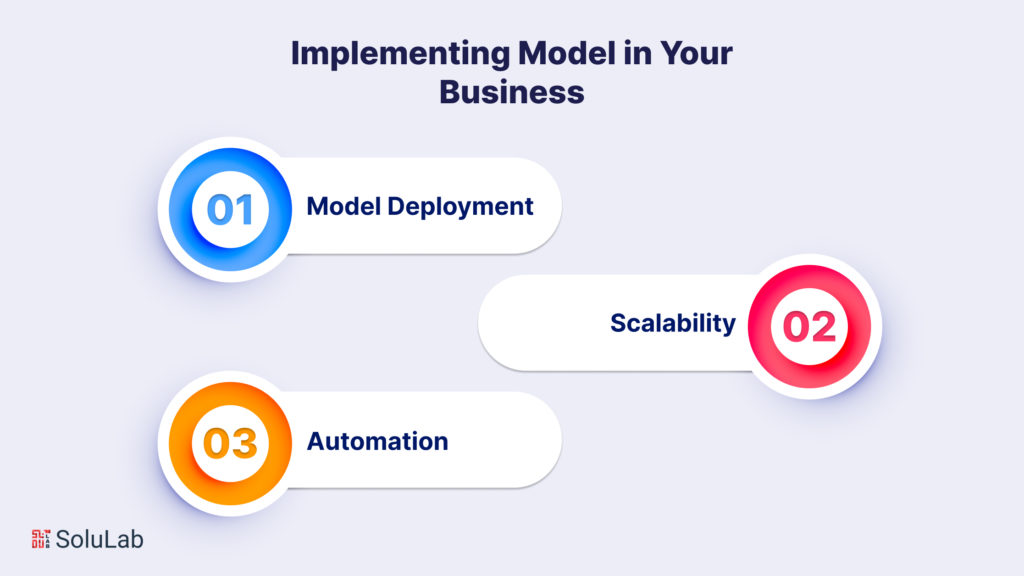
Once you have a well-trained machine learning model, the next challenge is seamlessly integrating it into your business operations. The implementation phase involves bridging the gap between data science and practical application.
The implementation phase often comes with its unique set of challenges:
Addressing these challenges requires a combination of technical expertise, data governance, and collaboration between data scientists and business stakeholders.
One of the significant advantages of implementing machine learning models in business operations is the ability to make real-time decisions. Whether it’s personalizing product recommendations for online shoppers or optimizing inventory levels, real-time decision-making can lead to immediate improvements in ROI.
Real-time decision-making powered by machine learning is a game-changer because it allows businesses to respond swiftly to changing conditions, adapt to customer preferences, and seize opportunities as they arise.
After deploying a machine learning model into your business operations, it’s crucial to recognize that the work is far from over. In fact, it’s just the beginning. The performance of your model in real-world scenarios needs ongoing, vigilant monitoring.
As your machine learning model operates in the real world, you’ll likely encounter situations where its performance starts to degrade or deviate from your desired ROI optimization goals. In such cases, fine-tuning becomes essential.
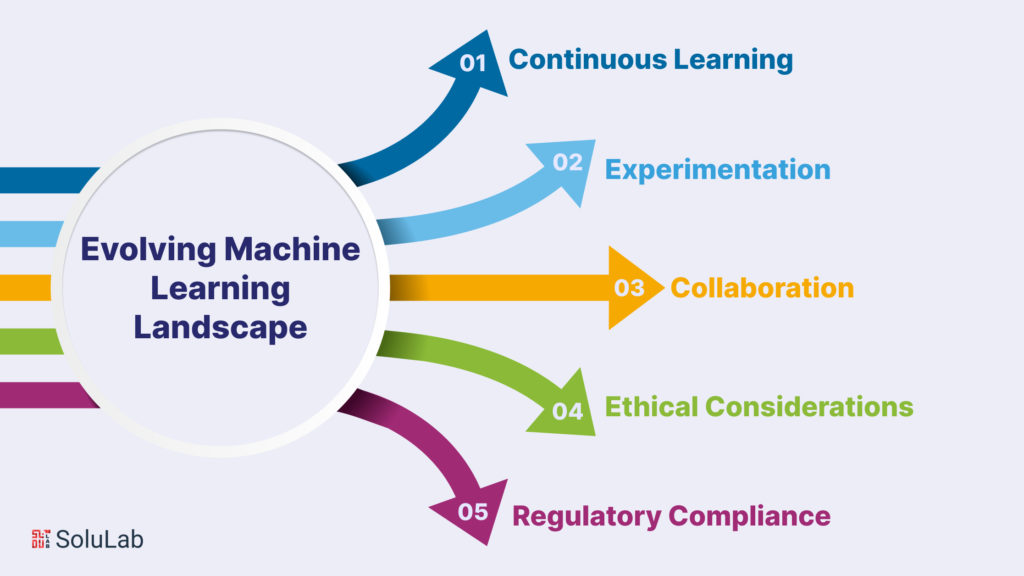
The world of machine learning is dynamic and ever-evolving. New algorithms, tools, and techniques emerge regularly. Staying up-to-date with the latest developments is crucial for maintaining the competitiveness and effectiveness of your machine learning initiatives.

In summary, monitoring and fine-tuning your machine-learning model is not a one-time task but an ongoing process. By continually assessing and improving your model’s performance, you can ensure that it continues to contribute to ROI optimization and business success.
SoluLab is a leading software development company specializing in innovative technologies like machine learning. They help businesses harness data-driven insights to maximize profitability and make informed decisions, aligning perfectly with the principles outlined in the guide on boosting ROI using machine learning. SoluLab, with its extensive expertise in machine learning development services, is the trusted partner for enhancing ROI through cutting-edge solutions in the ever-evolving tech landscape.
Partner with SoluLab to leverage their machine learning capabilities and propel your business towards greater success.
The primary role of machine learning in boosting ROI is to leverage data-driven insights and predictive analytics to optimize business processes. Machine learning models can analyze large datasets, identify patterns, and make accurate predictions, which enables businesses to allocate resources more efficiently, make informed decisions, and identify new revenue opportunities.
Ensuring data quality is paramount for a successful machine learning project. To achieve this, establish data collection processes that minimize errors, validate data for accuracy, and address missing values. Regularly perform data cleaning and preprocessing to maintain data integrity. Additionally, implement data governance practices to uphold data quality standards over time.
Model evaluation is critical because it assesses how well your machine-learning model performs in real-world scenarios. It provides an objective measure of accuracy and helps identify potential issues like overfitting. Accurate model evaluation ensures that the predictions made by the model contribute positively to ROI optimization, guiding business decisions effectively.
Businesses can adapt machine learning models to changing conditions through continuous monitoring and fine-tuning. Regularly retrain models with updated data to keep them aligned with evolving trends. Implement strategies such as hyperparameter tuning, feature engineering, and feedback loops to improve model performance. Be agile in responding to data drift and emerging challenges.
Businesses should be vigilant about ethical considerations in machine learning. Avoid bias in data and models that could lead to discriminatory outcomes. Ensure transparency in model predictions, especially in regulated industries. Safeguard customer privacy and comply with data protection laws. Ethical machine learning practices not only protect the business from reputational risks but also uphold trust with customers and stakeholders.


