Talk to an Expert

Why Dubai, London & New York Lead in Real Estate Tokenization?

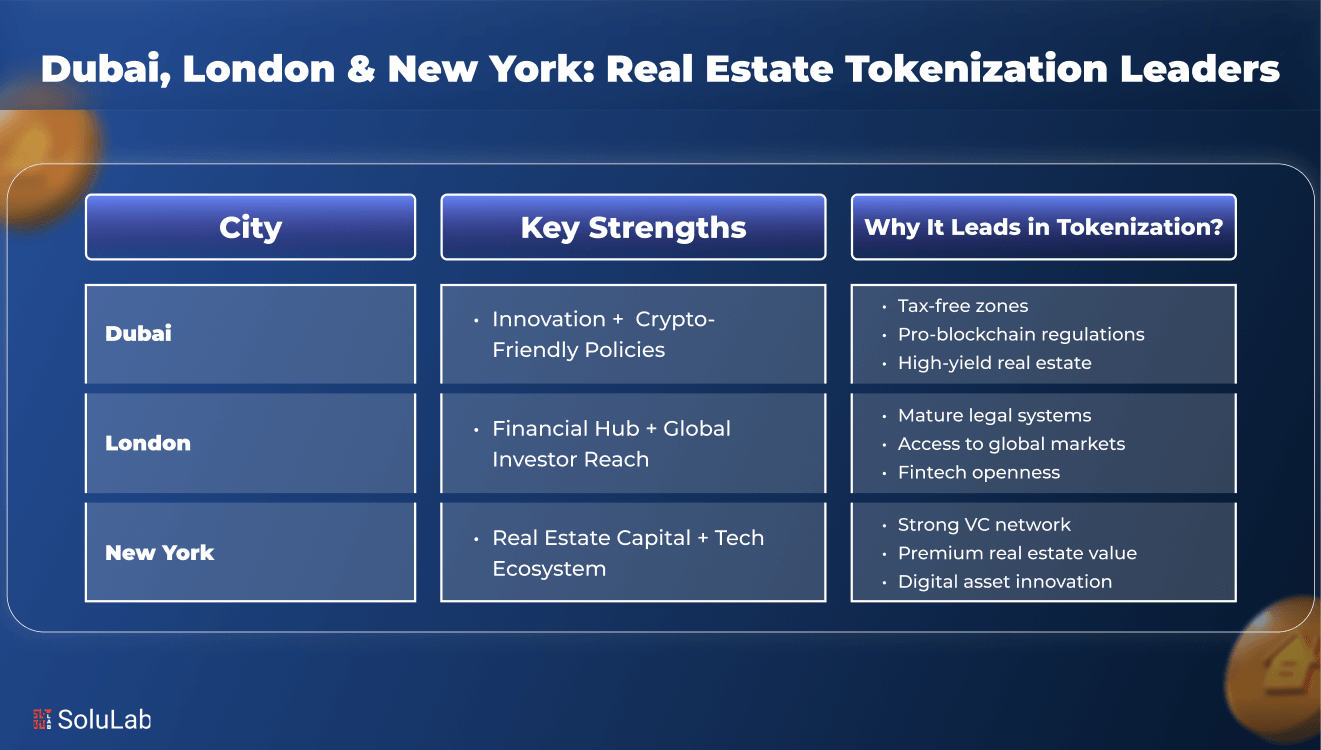
Dubai, London & New York_ Real Estate Tokenization Leaders

In 2025, Real Estate Tokenization is no longer a future concept; it’s already changing how the world buys, sells, and invests in real estate. According to Deloitte, tokenized real estate transactions are expected to surpass $4 billion by 2026, showing how fast the industry is growing.

Many developers, real estate firms, and investment companies are turning to tokenization of real estate assets to increase liquidity, reduce entry barriers, and attract global investors. With the right platform and strategy, property owners can fractionalize real estate and open up new revenue streams while staying compliant with evolving global regulations.

Whether you’re a real estate developer, a proptech startup, or an institutional investor, this guide will help you understand the opportunity and how to tap into it with the right tech and partners.

Why is Real Estate Tokenization Transforming Global Markets?

Real estate tokenization is changing the way businesses and investors handle property ownership. Instead of buying an entire property, investors can now own small digital shares of it. This approach, known as fractional ownership, makes it possible to invest in high-value real estate with much smaller amounts.

Through asset tokenization, real estate is turned into digital tokens on a blockchain. These tokens can be bought, sold, or traded, helping previously illiquid properties become easy to access and transfer.

This shift also boosts transparency and liquidity. Every transaction is recorded securely on the blockchain, giving businesses and investors more confidence.

More importantly, blockchain ensures compliance. Built-in KYC/AML processes verify users and track funds, making transactions safer and aligned with global regulations.
CTA1

Why Dubai, London & New York Are the Top 3 Cities for Real Estate Tokenization?

Choosing the right city to launch your real estate tokenization platform matters. Regulation, investor demand, and technology support play key roles. Here’s why Dubai, London, and New York lead the way in this fast-growing space.

1. Dubai

Dubai is leading the region in the tokenisation of real estate in the UAE. Government bodies like DIFC and ADGM have created regulatory sandboxes and clear frameworks that support digital assets. If you’re planning tokenized real estate developments in Dubai, this is one of the safest and most innovative environments.

Working with an experienced asset tokenization company in Dubai helps you stay compliant while reaching both local and global investors. Dubai is especially ideal for developers, investment firms, and proptech startups exploring fractional ownership and global liquidity.

2. London

London remains a stronghold for global finance, and now it’s blending that strength with blockchain and Web3. Leading tokenization companies in London are creating hybrid models that meet institutional standards while integrating modern digital infrastructure.

The city’s financial ecosystem supports an enterprise-grade real estate tokenization platform, making it a top pick for launching or expanding in the UK and Europe. Our team offers full support through our in-house Web3 development company and smart contract development company, so your platform can scale securely and legally.

3. New York

New York is where traditional finance and blockchain truly converge. Wall Street firms are already investing in real estate on-chain. Many are actively working to develop your real estate tokenization platform in New York as part of their digital transformation strategies.

Partnering with experienced tokenization companies in New York City ensures your platform meets U.S. legal standards and connects with high-value investors. Whether you’re building for commercial, residential, or REIT-based assets, New York offers both reach and trust.

Factor Dubai London New York
Regulatory Support Strong government backing via DIFC & ADGM sandboxes; pro-crypto stance Clear guidance evolving through the FCA; crypto is regulated under broader financial laws Strict but clear compliance under SEC, FinCEN, and state-level rules
Innovation & Technology Blockchain-first policies; early mover in tokenisation of real estate in the UAE Mature Web3 landscape with strong ties to legacy tech stacks Rapidly advancing with tech investments from Wall Street and large institutions
Access to Investors Growing global and regional investor interest, especially from Asia & GCC Access to institutional capital, VCs, and European property investment funds Home to high-net-worth investors, REITs, and U.S.-based funds
Ease of Market Entry Sandbox frameworks simplify testing and compliance Supportive but requires local partners for full compliance High legal barriers; requires strong local legal and compliance advisors
Ideal For Developers, tokenization startups, mid-sized real estate firms Institutional players, family offices, fintech, and proptech firms Large platforms, REITs, and established real estate investment funds
Tokenization Use Cases Fractional ownership, cross-border real estate investment Institutional-grade asset tokenization, cross-asset platforms Digitized securities, REITs, and commercial real estate tokenization
Local Expertise Availability An asset tokenization company in Dubai and a crypto-friendly talent pool High-quality tokenization companies in London, Web3, and legal experts Access to leading tokenization companies in New York City with finance and tech experience
Regulatory Speed & Flexibility Agile and proactive Balanced, evolving regulations Structured but less flexible; strict U.S. laws

What a Tokenization Platform Needs to Succeed in Dubai, London & New York?

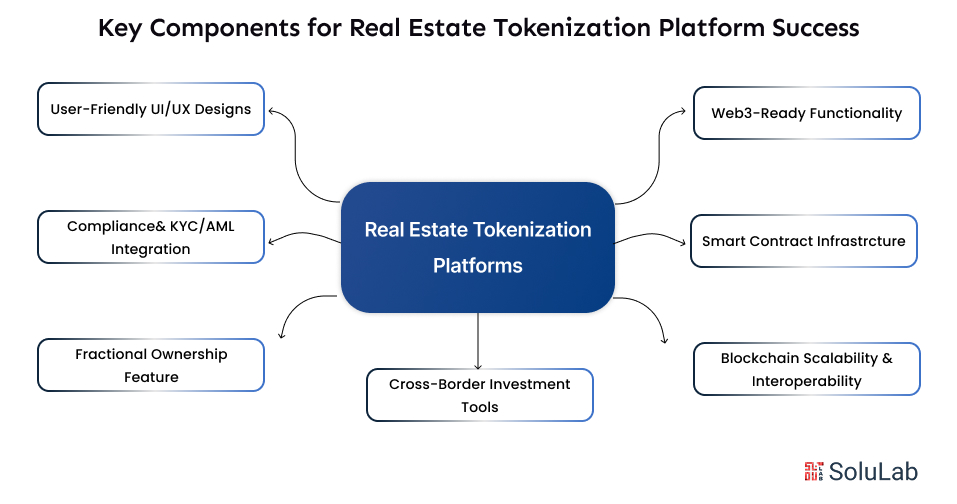
Key Components for Real Estate Tokenization Platform Success

If you’re planning to build a real estate tokenization platform, success in global cities like Dubai, London, or New York requires more than just a great idea. You need a solid foundation with the right technology, compliance features, and investor-friendly tools. Here’s what your platform must include:

1. Compliance & KYC/AML Integration

To operate in these cities, your platform must include KYC/AML processes that meet local regulatory standards. These help build trust with investors and ensure you meet legal requirements in Dubai, the UK, and the US.

2. Smart Contract Infrastructure

Operate with an experienced smart contract development company to create secure, transparent contracts that automate property transfers, dividends, and investor rights. Smart contracts are the backbone of safe and reliable real estate tokenization.

3. Blockchain Scalability & Interoperability

Your platform should be able to scale and operate across multiple blockchains. A trusted Blockchain Development Company can build a multi-chain architecture that supports a wide range of blockchains in the Real Estate ecosystem, making it future-ready and flexible.

4. Fractional Ownership Features

Integrate fractional ownership so users can buy and sell smaller portions of high-value properties. This opens access to more global investors and boosts liquidity on your platform.

5. User-Friendly UI/UX Design

A clean and easy interface matters. Work with a team that ensures smooth onboarding, dashboard navigation, and seamless property browsing for both issuers and investors. A good real estate tokenization development company will offer this as part of its service.

6. Web3-Ready Functionality

Partner with a Web3 development company to include wallet integration, DAO governance, staking, or even NFT support if needed. Web3 features can increase engagement and future-proof your platform.

7. Cross-Border Investment Tools

For platforms targeting Dubai, London, or New York, it’s critical to include multi-currency support, local compliance layers, and access to regional property databases. This makes your platform adaptable to different jurisdictions.

So, if you are looking for a solution, let’s build a platform that your investors trust and your competitors can’t match.

Read Also: How to Select the Best Crypto Development Company in the UAE?

What Is the Cost of Entering These Markets?

Building a successful real estate tokenization platform involves both technology and compliance costs.

  • Platform development: Typically starts from USD 50,000 and beyond, depending on features like smart contracts, investor dashboards, secondary market support, and wallet integration.
  • Regulatory & legal setup: Jurisdictions like the UAE, UK, and USA each have different licensing, KYC/AML processes, and legal frameworks.
  • Timeline to launch: On average, it takes 6 to 12 months to go from MVP (Minimum Viable Product) to full go-live.

Partnering with a proven real estate tokenization development company ensures faster execution, reliable compliance, and seamless integration. Teams that also specialize as a DeFi development company can help you enable token liquidity, secondary trading, and fractional investment, all crucial for scaling your tokenized assets globally.

For best results, work with a full-stack team that covers everything from smart contract development, blockchain infrastructure, and real estate tokenization services to platform deployment and investor onboarding.

Read Blog: Daos in Real Estate Tokenization
How to Build a Competitive Real Estate Tokenization Platform?

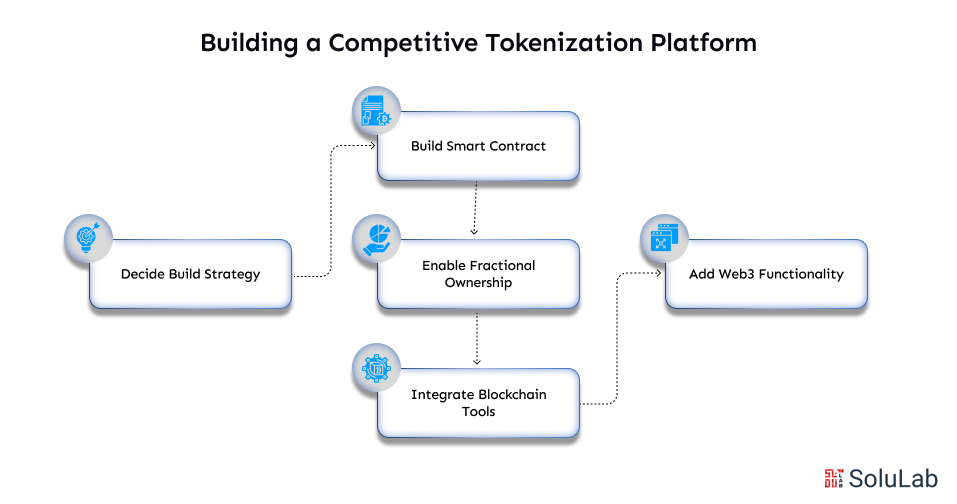
Building a Competitive Tokenization Platform

If you’re looking to enter the growing digital property investment space, building a solid and compliant real estate tokenization platform is key. Here’s how to do it right, especially if you’re a business looking to scale fast and attract global investors.

1. Decide Your Build Strategy

You have two options:

  • White-label: Faster and more affordable. Good for MVPs or pilot projects.
  • Custom Build: Ideal if you need advanced features, branding, or regulatory flexibility.

Work with an experienced tokenization platform development company that understands real estate compliance, tech scalability, and security.

2. Build Secure Smart Contracts

Smart contracts are the backbone of any tokenized platform. They handle asset issuance, ownership transfers, payouts, and more. Partner with a smart contract development company to write, test, and deploy these contracts on the right blockchain.

3. Enable Fractional Ownership

Fractional Ownership lets multiple investors own shares in a single property. This lowers the entry barrier and expands your investor pool. Your platform should allow users to buy, sell, and manage their fractions easily, with clear ownership records on-chain.

4. Integrate Blockchain Tools for Real Estate

Use tools that apply Blockchain in Real Estate, such as:

  • Title deed management
  • Real-time compliance tracking
  • Transparent property records
  • In-app trading UI

These tools reduce fraud, improve trust, and speed up transactions.

5. Add Web3 Functionality

To stay competitive, your platform should offer:

  • Web3 wallets for secure logins and payments
  • Secondary market support so investors can trade tokens
  • Built-in governance tools for investor voting and compliance changes

All the aforementioned steps will render you a fully functional and infallible platform. Though doing it on your own can be a bit risky and tricky as well, so it’s better to take professional assistance for a market-driven solution that ensures minimal effort but unmatchable ROI.

Read More: Top Countries to Launch Real Estate Tokenization Platform

CTA2

Conclusion

Dubai, London, and New York stand out because of their strong regulations, high liquidity, and fast adoption of new technology. To succeed in these markets, your business needs a trusted blockchain development company that provides complete solutions, from building your real estate tokenization platform and creating secure smart contracts to managing the tokenization of real estate assets and ensuring full KYC/AML processes compliance.

At SoluLab, we specialize in delivering end-to-end real estate tokenization development services that combine technology, strategy, and regulation. Partner with us to create a smooth, secure, and scalable platform that meets global standards and helps you lead in the tokenized real estate market.

Have a unique idea on your mind? Let’s connect today!

FAQs

1. Is real estate tokenization legal in Dubai?

Yes. Clear laws back tokenized real estate developments in Dubai. The government supports the Tokenization of Real Estate in the UAE, making it safe for businesses to operate. Work with a licensed Asset tokenization company in Dubai to ensure compliance.

2. What services do tokenization platforms offer?

A Real Estate Tokenization Platform helps you create and manage tokens, onboard investors, and stay compliant. Features often include KYC/AML processes, dashboards, and wallet integration.

3. What does it cost to build a tokenization platform?

Costs range from $100K to $500K, depending on features and regulations. Whether you’re doing real estate tokenization development in London or want to develop your Real Estate Tokenization Platform in New York, pricing depends on your scope.

4. Can one platform work for Dubai, London, and New York?

Yes, but you need market-specific KYC/AML processes and compliance tools. A well-built platform can work across Dubai, London, and New York when customized for each region.

5. What makes a tokenization platform competitive?

Top platforms offer easy onboarding, compliance tools, and real-time asset management. If you’re in a tokenized real estate development in Dubai or real estate tokenization development in London, work with a firm that offers full support.

 

Top Real Estate Tokenization Platforms in 2025

Real Estate Tokenization Platforms

With an expected worth of $613 trillion in 2022 and a projected value of $637.80 trillion in 2024, the global real estate services industry is predicted to stay one of the world’s largest. Almost everyone is involved with real estate, whether as a renter, owner, or employee in an office, retail business, or factory. The real estate market is experiencing a massive upheaval, with real estate tokenization heading the way. In the present day, the importance of these platforms in transforming real estate investing cannot be overemphasized. In this blog, we’ll look at the top 10 real estate tokenization platforms that are already transforming the property investing market.  

So, without any further ado, let’s get started!

What is Real Estate Tokenization?

Real estate tokenization in 2025 alters how individuals do transactions in the real estate market. It’s all about transforming real estate assets into digital tokens that may be owned by different individuals, allowing for speedier transactions. Smart contracts are extremely significant and function similarly to digital transactions. When certain requirements are satisfied, they immediately take effect, making the procedure easier.

Consider how smart contracts may automate things like land registration modifications, requiring no action on the part of anybody. The blockchain instantaneously checks and records everything, keeping the process secure and transparent.

By integrating blockchain marketing and tokenized real estate platforms, buyers and sellers may interact immediately, safely, and transparently on a peer-to-peer platform at a cheaper cost. The easiest option to tokenize real estate and split assets into smaller portions is to use ERC-721 tokens on the Ethereum network. These tokens introduce a standard that makes transactions safer and simpler to trace, providing a more seamless experience for buyers and property owners.

Tokenization is used to purchase and sell real estate, but it also provides new prospects for buyers and property owners. The potential impact on the real estate market is significant, increasing liquidity along with rendering the business process smoother.

As we approach 2025, the tokenized real estate market is projected to expand. This is due to advances in technology, as well as a desire for new investment opportunities.

How Does Real Estate Tokenization Work?

Tokenization is a realistic strategy for maximizing and releasing the potential of real estate transactions.

  • The usage of blockchain technology has contributed to making real estate ownership more accessible to those with limited financial resources.
  • Tokenizing real estate has simplified the process of buying and selling properties, reducing the time and money required to complete transactions.
  • Tokenization has transformed the real estate market by allowing for fractional ownership, making purchases more accessible and affordable.
  • Tokenization makes real estate transactions more efficient and transparent by utilizing smart contracts.
  • Tokenizing real estate offers various advantages, including increased transparency and liquidity. 

Benefits of Using Real Estate Tokenization Platforms

Tokenizing real estate benefits investors, property owners, real estate brokers, and real estate organizations in several ways.as mentioned below:

  • Tokenizing real estate unlocks additional cash flow opportunities by allowing individuals to own fractions of properties, freeing up capital otherwise tied up in less liquid assets, benefitting both buyers and sellers seeking quick transactions.
  • Participation in tokenization allows property owners to share ownership of valuable assets, offering investors a wider array of investment options and opportunities to diversify their portfolios.
  • Asset tokenization fosters accessibility on a global scale, enabling investors worldwide to engage in the real estate market regardless of their geographical location, thereby promoting inclusivity and diversity within the market.
  • Increased transparency and clarity in ownership are achieved through tokenization, as it provides clear insight into ownership structures and associated costs, benefiting real estate companies, investors, and property owners alike.
  • Tokenization can potentially lead to cost savings in traditional property transactions, as increased liquidity in the market results in more competitive pricing and a wider selection of available properties, offering benefits to all parties involved.
  • The 24/7 availability of tokenized real estate markets ensures flexibility and convenience for investors and real estate firms, allowing participation at any time regardless of geographical location or time zone.
  • Streamlined compliance processes associated with tokenized real estate transactions ensure adherence to legal requirements and regulations, instilling trust and confidence among stakeholders while reducing compliance burdens for all involved parties.

CTA

Top Real Estate Tokenization Platforms to Watch Out in 2025

The real estate market is experiencing a massive upheaval, with real estate tokenization paving the way. In today’s environment, the importance of these platforms in transforming real estate investing cannot be overemphasized. We’ll examine the top 10 real estate tokenization platforms in this part, which are already revolutionizing the real estate industry. These platforms are ready to transform the way we think about real estate, making it simpler to access, transparent, and productive for both investors and property owners.

  • RealIT

With the introduction of fractional ownership of single-family rental houses in the US, RealT has completely changed the real estate investing landscape. Due to the wide variety of properties available to them, both in urban and rural locations, investors may now create a well-rounded investment portfolio that suits their tastes and risk tolerance. In addition to democratizing access to the real estate market, the platform’s creative approach to real estate tokenization gives investors the freedom to choose properties that meet their goals, whether those goals are capital appreciation or long-term income creation.

RealT’s user-friendly platform, which makes investing easier for both new and experienced investors, is one of its main advantages. Investors can manage their assets, browse the site with ease, and monitor performance data in real-time because of its user-friendly features and tools. In addition, RealT has a group of seasoned real estate experts who offer insightful advice and direction, guaranteeing that investors make wise choices. RealT has become the best real estate tokenization platform by fusing accessibility, diversity, and knowledgeable assistance. This has enabled people to engage in the real estate market with confidence and ease.

  • Brickblock

One of the greatest platforms in the tokenized real estate marketplace is Brickblock, which enables investors to purchase real estate properties using both debt and equity tokens. Tokenized real estate bonds, tokenized real estate funds, and tokenized real estate development projects are just a few of the financial instruments that set Brickblock apart. In addition, Brickblock provides a variety of features, such as an intuitive platform and a group of knowledgeable real estate experts, that facilitate real estate investing.

Furthermore, Brickblock’s dedication to user experience is demonstrated by the simplicity of its platform design, which allows smooth transactions and expedites the investing process. Easy access to thorough information about potential investments, together with resources for managing portfolios and monitoring performance, is advantageous to investors. Furthermore, investors benefit from the knowledge and counsel provided by Brickblock’s team of experienced real estate experts, which helps them make well-informed decisions and increases their trust in the platform. Brickblock has become a dominant force in the real estate tokenization market with its powerful features and wide range of investment choices, enabling investors to take advantage of the potential that tokenized real estate assets afford.

  • Propy

Propy’s utilization of blockchain technology brings numerous benefits to the real estate market. By leveraging blockchain’s immutable ledger and smart contract capabilities, Propy ensures that property transactions are securely recorded and executed without the need for intermediaries. This not only reduces transaction costs but also minimizes the potential for disputes and delays, resulting in a more seamless and transparent process for all parties involved. Additionally, the transparency provided by blockchain enhances trust between buyers, sellers, and agents, fostering a more efficient marketplace for real estate transactions.

In addition to its technological advancements, Propy’s emphasis on strategic partnerships further solidifies its position as a leader in real estate tokenization. Collaborating with top real estate brokerages enables Propy to tap into established networks and leverage their expertise to drive the adoption of blockchain technology. Through these partnerships, Propy gains access to a broader pool of potential clients, expanding its reach and influence within the industry. By combining innovative solutions with strategic alliances, Propy continues to set new standards for efficiency and transparency in the real estate tokenization platform development, paving the way for a more accessible and inclusive ecosystem for property transactions.

  • RedSwan

RedSwan, a pioneering commercial real estate tokenization platform, empowers investors to access fractional ownership of prime commercial properties. Through tokenization, RedSwan transforms commercial real estate assets into tradable tokens, allowing investors to acquire shares via a decentralized exchange. Notably, RedSwan prioritizes liquidity, enabling investors to swiftly enter or exit their investments within the platform. This feature is particularly advantageous for investors seeking flexibility and responsiveness in managing their portfolios. By providing high liquidity, RedSwan ensures that investors can easily buy or sell their tokens, enhancing accessibility and convenience in real estate investment.

Investors leveraging RedSwan’s platform benefit from enhanced portfolio diversification opportunities. With the ability to invest in a range of commercial real estate assets, investors can spread their investments across various properties, sectors, and geographies. This diversification strategy mitigates risk and optimizes returns, as investors can capitalize on the potential growth of different sectors while safeguarding against market fluctuations. RedSwan’s commitment to providing access to diverse investment opportunities underscores its role as a leading real estate tokenization development company, facilitating seamless and efficient participation in the commercial real estate market.

  • Blockimmo

Blockimmo stands out as an attractive option for investors seeking a secure, transparent, and regulated real estate tokenization platform. With a low investment minimum, Blockimmo ensures accessibility for investors of all capital levels, democratizing access to real estate investment opportunities. Moreover, Blockimmo offers investors access to a diversified portfolio of real estate assets, enabling them to spread their investments across various properties and sectors. By reducing concentration risk, Blockimmo helps investors mitigate potential losses while maximizing returns, fostering a balanced and resilient investment strategy.

Utilizing blockchain technology, Blockimmo enhances transparency throughout the investment process, building trust between investors and the platform. Through blockchain’s immutable ledger and smart contract capabilities, Blockimmo provides investors with real-time visibility into transactions and asset performance. This transparency not only instills confidence in investors but also promotes accountability and integrity within the platform. As a trusted and regulated tokenized real estate platform, Blockimmo continues to drive innovation in real estate investment, offering a reliable and efficient avenue for investors to participate in the market.

  • Slice

Slice enables investors to acquire partial ownership of big commercial properties including office buildings and retail malls. This is a unique service, as most real estate tokenization systems specialize in smaller assets like single-family houses and flats. Slice provides high liquidity, meaning that investors can quickly purchase and sell tokens on the platform. This is critical for investors who wish to be able to exit their positions swiftly.

In addition to its focus on large commercial properties, Slice prioritizes liquidity, providing investors with the flexibility to easily buy or sell their tokens on the platform. This liquidity feature is particularly beneficial for investors who value the ability to exit their investments quickly when needed. By ensuring high liquidity, Slice empowers investors to manage their portfolios efficiently and respond promptly to changing market conditions or investment opportunities. Overall, Slice’s unique combination of access to large commercial properties and high liquidity makes it a compelling option for investors looking to diversify their real estate holdings while maintaining flexibility in their investment strategies. As a tokenized real estate marketplace, Slice revolutionizes the way investors access and manage their real estate investments.

  • Reido

Reido operates under the governance of a DAO (decentralized autonomous organization), granting users a voice in the platform’s development and operations. This unique approach ensures that the platform remains aligned with the interests and needs of its users, fostering a community-driven ecosystem. By empowering users to participate in decision-making processes, Reido enhances transparency and accountability, creating a more democratic and inclusive platform for real estate investment.

One of Reido’s key features is its crowdfunding mechanism, which enables a community of investors to pool resources and collectively invest in real estate properties. This mechanism significantly lowers the barrier to entry for individual investors who may not have the capital to purchase an entire property on their own. Through tokenization of real estate assets, Reido enhances liquidity in the market, as property tokens can be easily bought and sold compared to traditional real estate transactions. This increased liquidity not only provides investors with more flexibility in managing their investments but also expands access to real estate investment opportunities for a wider range of participants.

  • SolidBlock

SolidBlock stands out as a leading real estate tokenization platform, leveraging digital title deeds stored on blockchain technology to streamline the real estate transaction process. By utilizing blockchain, SolidBlock ensures that title deeds are tamper-proof and secure, providing investors with greater transparency and confidence in their investments. The platform’s commitment to digital title deeds not only simplifies the transaction process but also enhances security, mitigating the risk of fraud and unauthorized alterations.

In addition to its focus on security and transparency, SolidBlock prioritizes compliance with legal and regulatory requirements across jurisdictions. As a regulated platform, SolidBlock adheres to all applicable laws and regulations governing real estate and financial transactions. This regulatory compliance not only ensures the legality of real estate tokenization but also instills trust and confidence in investors, assuring them that their investments are protected and in compliance with industry standards. Overall, SolidBlock’s combination of innovative technology and regulatory adherence positions it as a trusted and reliable partner in the real estate tokenization platform development, providing investors with a safe and secure avenue for real estate investment.

  • BrickTrade

BrickTrade is a real estate tokenization platform, offering investors access to traditionally inaccessible real estate assets such as commercial properties and development projects. By tokenizing these assets, BrickTrade breaks down barriers to entry that have historically limited individual investors’ access to such lucrative opportunities. This unique focus on tokenizing a diverse range of real estate assets expands investors’ horizons, offering them a wider array of investment options to diversify their portfolios and potentially enhance returns.

Through its innovative platform, BrickTrade empowers investors to purchase shares of real estate tokens, providing them with fractional ownership of high-value assets. This democratization of access to commercial real estate and development projects enables investors to participate in opportunities that were previously reserved for institutional investors or high-net-worth individuals. By facilitating access to a broader range of investment opportunities, BrickTrade opens doors for investors to diversify their portfolios and potentially achieve their investment goals with greater flexibility and confidence.

  • Blocksquare

Blocksquare serves as a decentralized marketplace catering to property owners, developers, and investors, facilitating seamless connections and transactions within the real estate ecosystem. By leveraging blockchain technology, Blocksquare aims to simplify the process of discovering, investing in, and managing real estate assets. This innovative marketplace provides a transparent and efficient platform where investors can explore a diverse range of real estate investment opportunities, thereby enhancing accessibility and democratizing access to the real estate market.

For investors seeking a safe, transparent, and diversified approach to real estate investment, Blocksquare emerges as an attractive option. Notably, Blocksquare offers opportunities to invest in real estate assets that are typically unavailable through traditional means, expanding investors’ horizons and enabling them to access a broader range of investment options. Whether investors are looking to diversify their portfolios or explore new avenues in real estate investment, Blocksquare provides a secure and transparent marketplace that aligns with their investment objectives and preferences.

Conclusion

In conclusion, the real estate tokenization platforms in 2025 showcase a diverse array of innovative solutions catering to the evolving needs of investors, property owners, and real estate professionals. These platforms offer a wide range of benefits, including increased liquidity, accessibility, transparency, and cost-effectiveness, making real estate investment more accessible and efficient than ever before. As the industry continues to grow and evolve, these platforms are poised to play a crucial role in reshaping the real estate market and democratizing access to lucrative investment opportunities.

For those looking to capitalize on the benefits of real estate tokenization and develop innovative platforms tailored to their specific needs, SoluLab stands out as a leading real estate tokenization development company. With a team of expert developers and a track record of delivering high-quality solutions, SoluLab offers comprehensive services to guide clients through every stage of platform development. Whether you’re a property owner, investor, or real estate professional, SoluLab can help you harness the power of blockchain technology to unlock new opportunities in the real estate market. Contact us today to learn more and embark on your journey toward real estate tokenization success.

FAQs

1. What is real estate tokenization, and how does it work?

Real estate tokenization is the process of converting ownership rights of a property into digital tokens on a blockchain. These tokens represent fractional ownership of the property and can be bought, sold, and traded on digital platforms. This innovative approach democratizes access to real estate investment opportunities and enhances liquidity in the market.

2. How do real estate tokenization platforms benefit investors?

Real estate tokenization platforms offer investors increased liquidity, access to a wider range of investment opportunities, and greater transparency in property ownership and transactions. Additionally, tokenization allows investors to diversify their portfolios and invest in high-value assets that were previously inaccessible through traditional means.

3. Are real estate tokenization platforms regulated?

Yes, many real estate tokenization platforms adhere to regulatory requirements to ensure compliance with relevant laws and regulations governing real estate transactions. Regulation helps protect investors and ensures the integrity and transparency of transactions on these platforms.

4. What types of properties can be tokenized?

Real estate tokenization platforms typically tokenize a variety of properties, including residential, commercial, and development projects. These platforms may also offer fractional ownership of properties such as office buildings, shopping malls, and residential complexes, providing investors with a diverse range of investment options.

5. How can SoluLab assist in the development of real estate tokenization platforms?

SoluLab specializes in real estate tokenization development, offering comprehensive services to guide clients through every stage of platform development. From conceptualization to deployment and ongoing support, SoluLab’s team of expert developers leverages modern technologies and industry best practices to create tailored solutions that meet the unique needs of clients in the real estate sector. Whether you’re looking to tokenize properties, enhance liquidity, or streamline transactions, SoluLab provides the expertise and support needed to bring your vision to life. Contact us today to learn more about how SoluLab can help you unlock the potential of real estate tokenization.