


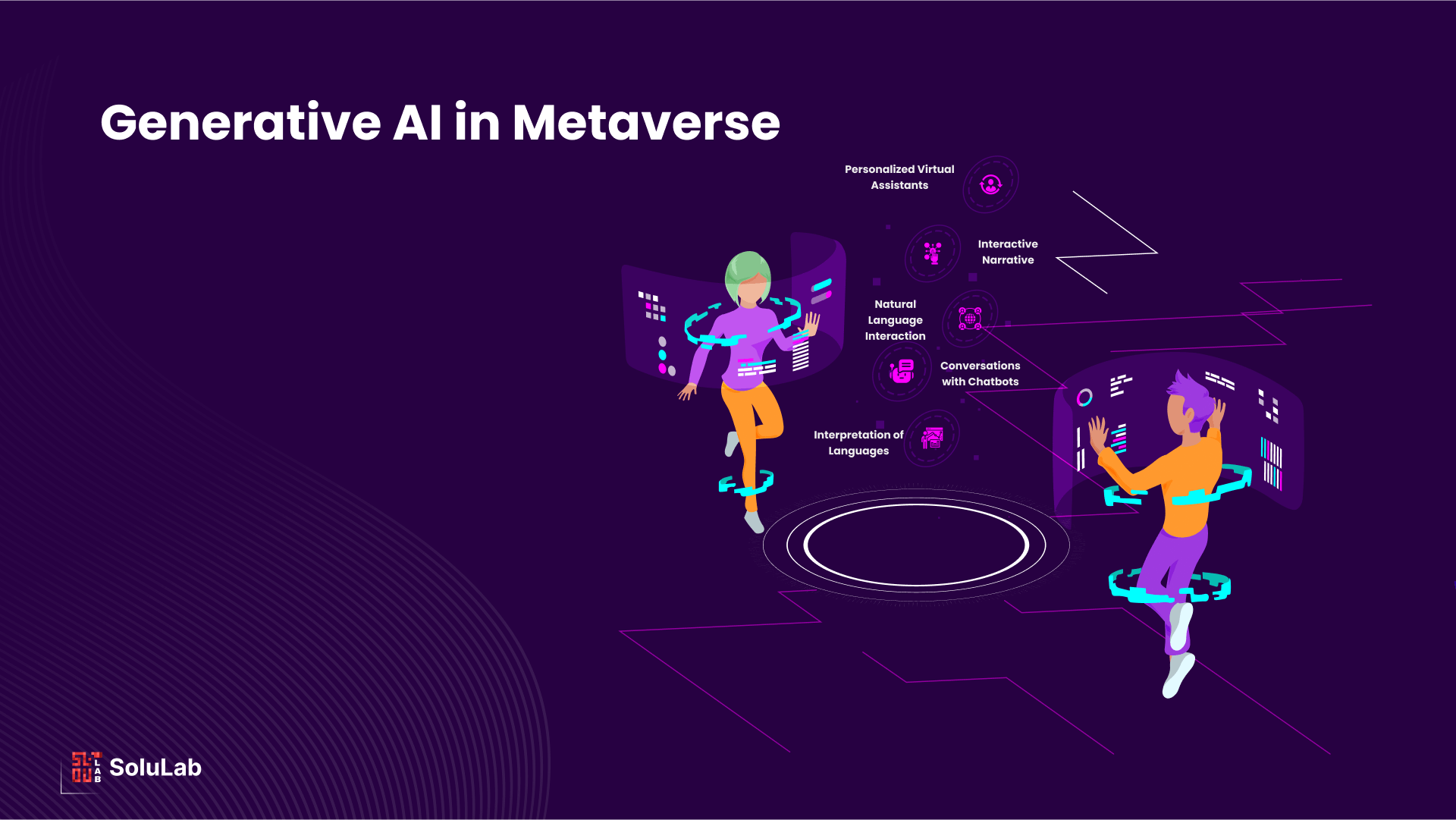
Generative AI is the most common type of artificial intelligence mentioned in conversations about new technological advancements. It is a kind of artificial intelligence that can generate new material autonomously, including video, photos, audio, and text. Interestingly, the potential for the use of generative AI in the metaverse has received a lot of interest. Generative AI has the potential to bring unique and novel techniques to content generation in the Metaverse.
For example, generative AI technologies such as ChatGPT might improve search experiences, rethink methods of creating and presenting content, and open up new avenues for internet traffic. It has the potential to affect established metaverse solutions while also increasing industrial innovation. In this blog, let’s look at how generative AI might have a huge impact on the metaverse.
By examining the connection between the two concepts, you may discover more about the effects of generative AI in the metaverse. Users can engage with one another in the vast array of immersive virtual locations that make up the Metaverse, a virtual universe. You could consider AI’s function in the metaverse and its possible advantages.
It’s crucial to remember that how well immersive and interactive experiences work determines how useful the metaverse is. In addition to enabling brand-new and creative interactions with material, the metaverse facilitates interpersonal connections, communication, and engagement. It’s interesting to note that modern advances in AI are entwined with the future of metaverse technology.
The development of artificial intelligence may have a significant impact on how the metaverse develops. How? Artificial Intelligence (AI) is a crucial instrument for the metaverse of the future, since it may improve user experiences by facilitating intelligent interactions and content generation automation. You need to understand the importance of generative AI for the metaverse if you want to know the answers to questions like “What is AI metaverse?” The development of dynamic virtual worlds, realistic virtual content, and efficient experience customization are all possible with the aid of generative artificial intelligence.
It is essential for providing fresh experiences in the metaverse and for raising user engagement. Generative artificial intelligence (AI) has the potential to facilitate the creation of vast and varied virtual worlds, landscapes, and architecture inside the metaverse.
Consequently, generative AI may guarantee distinct user experiences throughout the many virtual realms inside the metaverse.
A revolutionary idea that has the potential to combine elements of virtual and actual reality is the metaverse. It creates fresh chances for consumers to review their online interactions with other people in virtual settings. However, generative AI difficulties also give metaverse developers serious cause for concern.
Generative AI has the potential to significantly contribute to the growth of the metaverse by enabling immersive experiences, tailored interactions, and content creation. Future prospects for commerce, social relationships, entertainment, and other fields may arise from the successful integration of generative AI in the metaverse.
How does generative AI’s transformational power function in the metaverse? Text generation, video generation, picture generation, and 3D object production are the four key components in the metaverse’s evolution. These four areas might be improved with the help of generative AI technologies, improving the user experience as a whole.

The automated creation of text for the metaverse to enhance experiences might be supported by the technical use cases of generative AI. The creation of content, chatbot interactions, language translation, and interactive storytelling are a few of the most popular applications of generative AI for text production in the metaverse. Immersive, dynamic, and customized textual interactions in virtual metaverse settings might be made possible by generative AI. This is a summary of the several ways that generative AI might enhance metaverse text production.
Translation across languages in the metaverse could be possible in real-time through the use of sequence-to-sequence models, like Google Neural Machine Translation. Therefore, generative AI’s potential to facilitate smooth multilingual communication is evident from the function of AI in the metaverse.
Dynamic talks in the metaverse can be facilitated by automated AI-powered chatbots such as GPT. Furthermore, generative AI algorithms may guarantee that chatbots in the metaverse provide responses that are appropriate for the given context. Chatbots that function as virtual assistants, for instance, might lead players through their experience of metaverse games.
In the metaverse, generative AI models also enhance natural language interaction. Therefore, using AI-based avatars, generative AI may provide dynamic and lifelike interactions. On a virtual social network within the metaverse, for instance, people might engage in lifelike dialogues with one another.
One well-known example of solving generative AI issues in the metaverse is interactive storytelling. Narrative-generating techniques might be employed by generative AI models to enable interactive storytelling within the metaverse. Based on user inputs and particular choices, the models produce compelling and cohesive tales. For example, player choices in virtual role-playing games within the metaverse may have an impact on the game’s plot.
The potential for improving the metaverse through generative AI also suggests that deploying individualized virtual assistants may be done with flexibility. For example, virtual assistants might be trained to recognize significant user preferences, provide suggestions for virtual experiences, and support users as they navigate the metaverse.
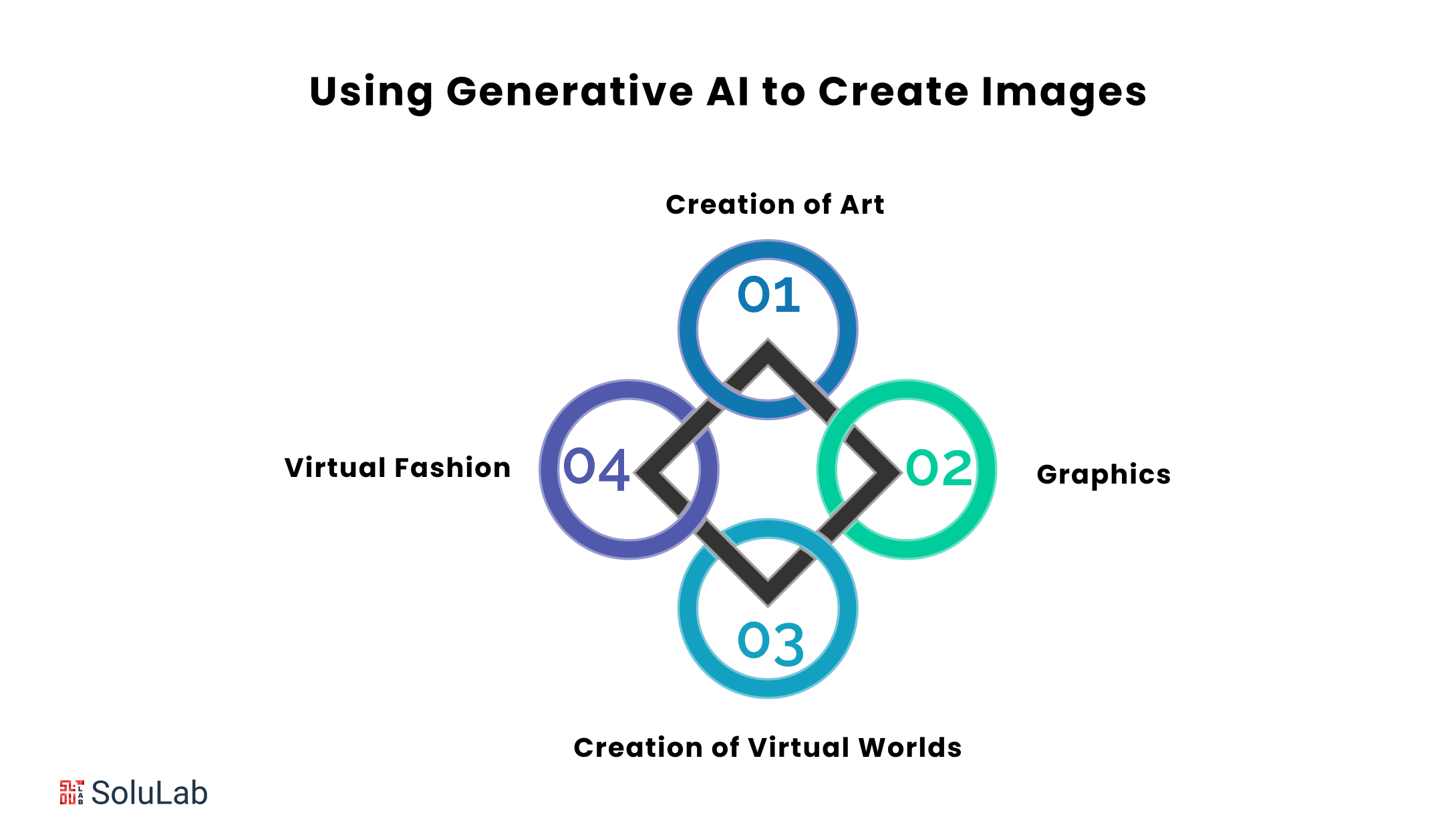
Image creation is the next noteworthy way that generative AI is affecting the metaverse. The use of modern machine learning techniques in generative AI picture synthesis has great promise for enhancing the metaverse. The answers to the question, “What is AI metaverse?” highlight the potential applications of Generative AI in the creation and improvement of metaverse visual content. These are a few of the intriguing applications of generative AI picture production for the metaverse.
The increase in picture production Numerous opportunities for utilizing AI in the metaverse have been made possible by AI models like DALL-E 2 and Midjourney. Responses to the question, “How does generative AI affect metaverse?” may be found under the application cases related to art creation. Generative AI might be used by artists to produce virtual art galleries with a variety of creative topics and styles.
Image morphing and visual effects are also highlighted by the use cases of generative AI in the metaverse. Midjourney, for instance, can assist in producing the transitional steps that separate certain pictures, allowing for smoother transitions and superior visual effects. The utilization of generative AI in virtual reality applications has the potential to improve the visual impact in the metaverse by producing realistic visual effects and picture morphing.
The creation of compelling virtual environments for the metaverse may also be assisted by generative AI. For lifelike representations of things, scenery, and structures, you may rely on Generative AI applications. The lifelike photos could contribute to the metaverse’s virtual environs seeming authentic.
The debates around the “what is AI metaverse” also highlight the potential applications of generative AI in the creation of virtual clothing. Generative AI is a new avenue for virtual designers to showcase their fashion lines and accessories in the metaverse. As you can see, virtual fashion shows have the potential to save a tonne of resources and offer realistic online buying experiences.
Because generative AI can generate videos, it also creates new possibilities for the metaverse. Generative AI may be used by metaverse creators to produce engaging user experiences in their movies. These are a few of the most prominent applications of generative AI in the metaverse for creating videos.
Related: Metaverse Use Cases and Benefits
AI’s function in metaverse video creation use cases is also evident in the generative diversity of video material produced under user-specified criteria and styles. It’s interesting to note that generative AI models for creating videos also encourage immersive virtual experiences and foster creative storytelling. For example, dynamically generated video content during metaverse virtual conferences might improve the conference’s aesthetic appeal and user experience.
Videos with adjustable effects and visual components that are aesthetically pleasing may be produced with the use of Generative AI models like Stable Diffusion. These kinds of generative AI models could offer greater metaverse content production and visual storytelling capabilities.
By fusing various components, generative AI applications in the metaverse may facilitate the creation of synthetic video content. Furthermore, synthetic video material is shown by generative AI apps with various visual effects and transitions that enhance its visual appeal.
Could you imagine being able to construct virtual actors with the aid of AI? In fact, studies indicate that by 2030, 90% of the labor in a big-budget picture will be completed by artificial intelligence. It’s interesting to note that the difficulties with generative AI for creating metaverse material are probably going to be cited as the main obstacles to this advancement.
But certain well-known Generative AI models, like Hour One, may produce virtual characters who seem realistic for movies, VR experiences, and video games. Additionally, the virtual actors might have interchangeable looks and expressions. You should also keep an eye out for chances to enhance character animation while making sure that interactive virtual worlds are created.
Examples of applying generative AI to create 3D models are included in the applications of GenAI in metaverse transformation. Several noteworthy instances of employing generative AI to generate 3D objects consist of:
a. 3D modeling and the development of virtual objects.
b. Creative customization and design.
c. 3D identification of objects.
d. 3D content generation and object reconstruction.
The potential for using generative AI to enhance user experiences in the metaverse demonstrates the potency of AI in enhancing user experiences in the metaverse. But before using generative AI to change the metaverse, it’s also critical to comprehend the difficulties raised by queries like “What is AI metaverse?”
The primary obstacle related to generative artificial intelligence for the metaverse is the problem of acquiring superior training data. Why? Obtaining high-quality training data in the metaverse is challenging due to its unique nature. To address such problems, it is crucial to create sophisticated data-gathering strategies, make use of artificial datasets, or apply data augmentation techniques.
Realism is indicated by the next noteworthy development in generative AI issues for the metaverse. For the metaverse, developers must produce realistic, high-fidelity material that creates immersive experiences. Realistic results, however, may only be attained by improving model architectures, unsupervised learning methods, and training algorithms.
One significant issue with the application of generative AI in the metaverse is the management and control of material. The metaverse’s virtual settings provide the perfect setting for the proliferation of user-generated content, necessitating the careful and secure creation of material. Implementing thorough content moderation and filtering systems is one of the suggested options for safe content creation.
The ethical issues surrounding the application of generative AI to enhance the metaverse must also be considered. The use of AI in the metaverse raises questions about permission, privacy, and ownership. The best defenses against these kinds of problems are well-defined laws, rules of conduct, and moral standards.
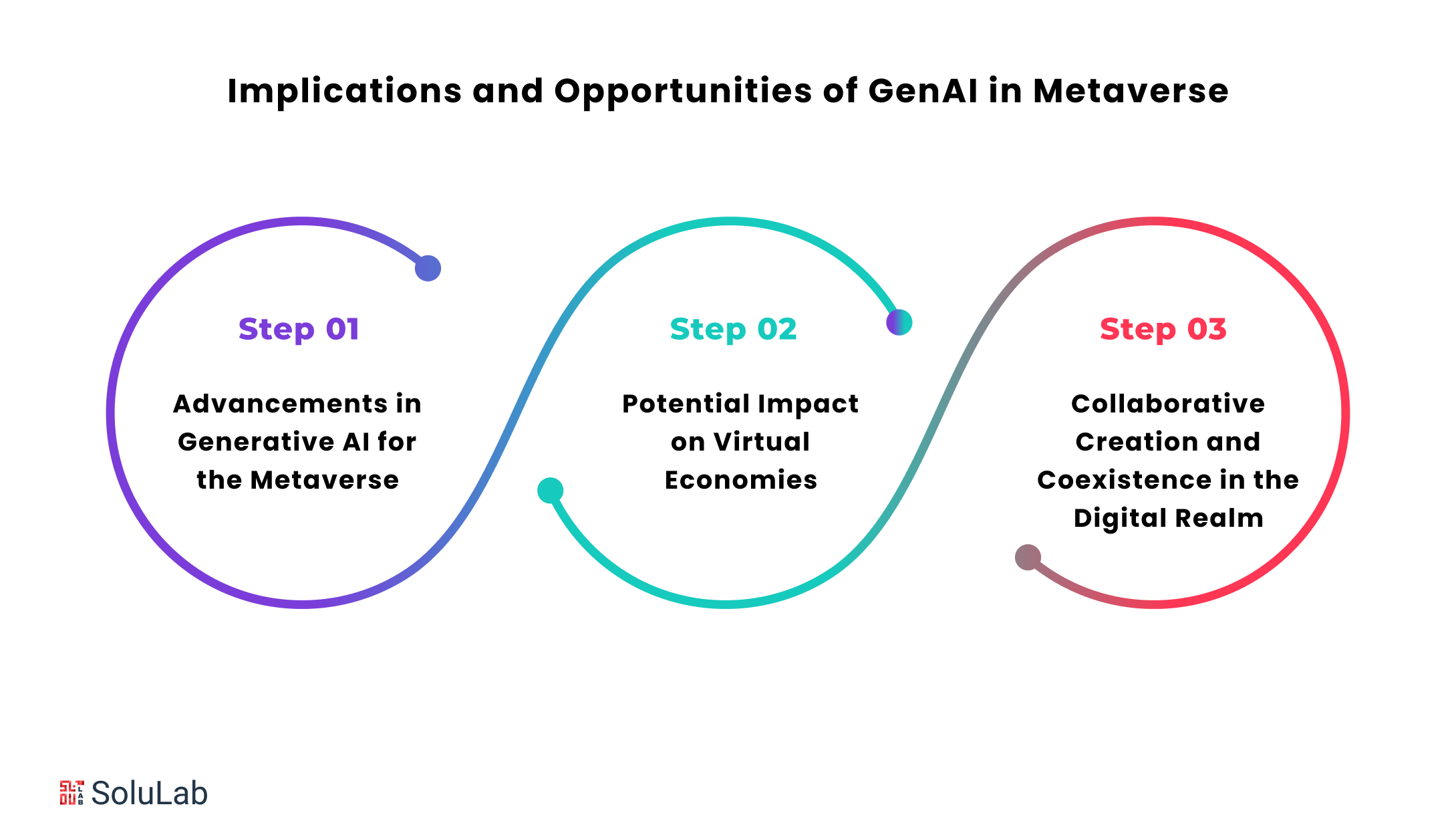
The convergence of the Metaverse and Generative AI presents an era rich with possibilities, shaping the way we interact with digital realms and unlocking innovative avenues for advancement. Here, we delve into the future implications and opportunities that lie ahead.
As we venture into this exciting future, the synergy between Generative AI and the Metaverse holds the promise of not only transforming how we experience digital realms but also redefining the very fabric of virtual existence. These advancements bring forth a multitude of opportunities, challenging us to embrace the responsibilities that come with shaping a collaborative and inclusive digital future.
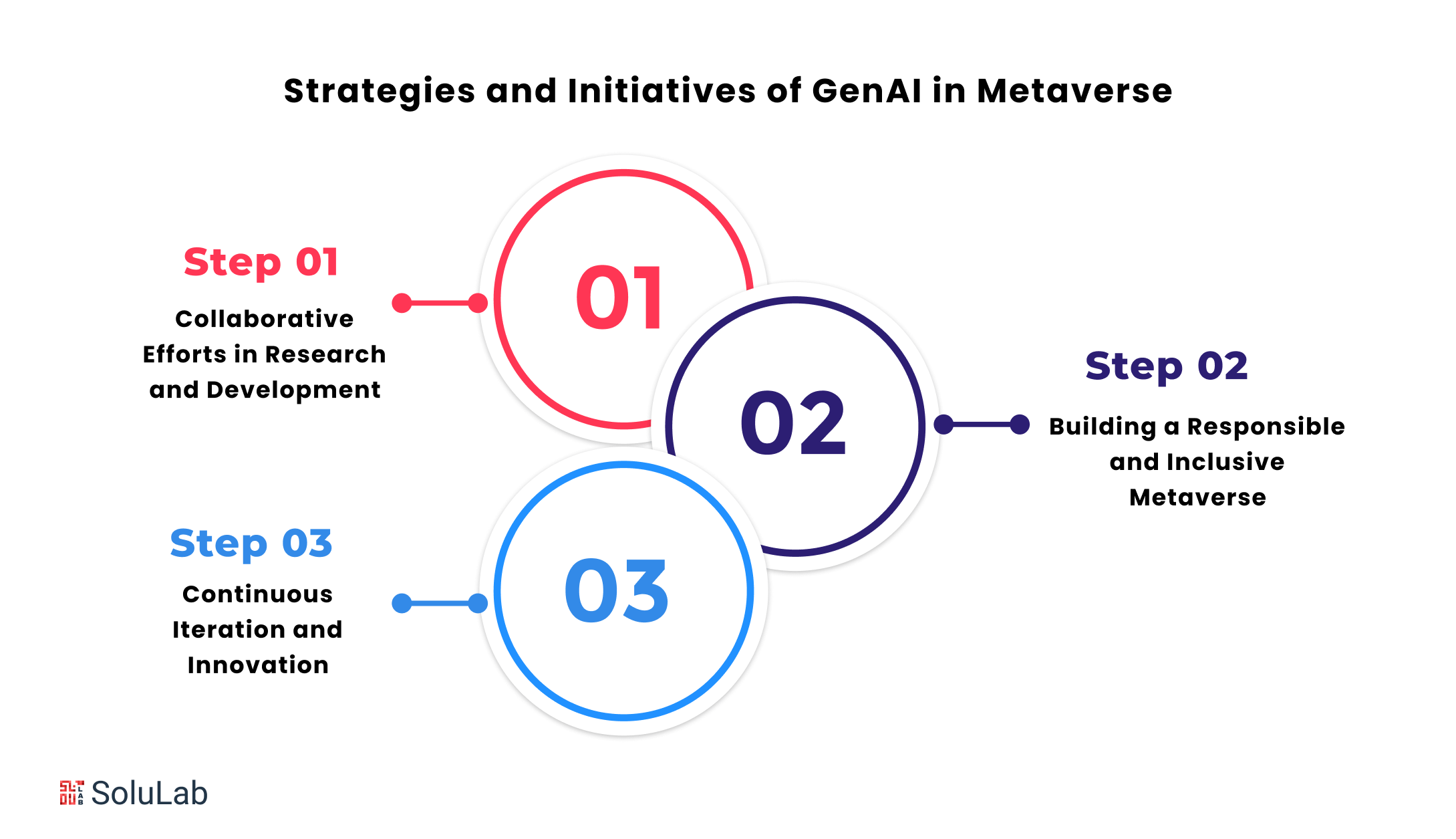
When we navigate the uncharted territories of the Metaverse and Generative AI, the road ahead is marked by collaborative efforts, ethical considerations, and an unwavering commitment to innovation. Here’s a glimpse into the strategies and initiatives that will shape the future of the digital frontier.
As we embark on this transformative journey, collaborative research, responsible development, and continuous innovation will be the pillars supporting the evolution of Generative AI in the Metaverse. By fostering an environment that prioritizes ethics, inclusivity, and adaptability, we pave the way for a digital future that is not only technologically advanced but also socially conscious and empowering. The future of Generative AI in metaverse, is a collaborative canvas waiting to be painted by the collective aspirations of humanity.

In conclusion, the intersection of Generative AI and the Metaverse propels us into a digital era where creativity knows no bounds and the boundaries between reality and imagination blur. The promises of enhanced realism, and collaborative creation within the Metaverse, fueled by the continuous advancements in Generative AI, open new horizons for innovation and exploration. However, it is imperative to tread responsibly, ensuring that ethical considerations, inclusivity, and user empowerment remain at the forefront of our endeavors. The shaping of a responsible and inclusive digital frontier requires collaborative efforts, user-centric design, and an unwavering commitment to continuous iteration and innovation.
For those seeking to gain the power of Generative AI in the Metaverse, SoluLab- a Generative AI development company, stands as a beacon of expertise and innovation. With a team of skilled professionals and a commitment to advanced technology, SoluLab offers comprehensive Metaverse development services. Whether you are looking to create immersive virtual environments, personalize avatars, or build dynamic economic ecosystems within the Metaverse, SoluLab provides the expertise needed to bring your vision to life. Hire AI developers from SoluLab to access a wealth of experience in Generative AI, ensuring that your journey into the digital frontier is marked by innovation, reliability, and a commitment to excellence. Contact us today!
Generative AI refers to a class of artificial intelligence techniques that involve training models to generate new content autonomously. In the context of the Metaverse, Generative AI plays a crucial role in creating realistic virtual environments, lifelike avatars, and dynamic content, enhancing the overall immersive experience for users.
Generative AI influences the virtual economy by enabling the creation of unique digital assets, dynamic pricing mechanisms, and the tokenization of virtual currencies. This leads to the emergence of AI-driven marketplaces, fostering entrepreneurship within the Metaverse and redefining how users engage with and contribute to the digital economy.
Ethical considerations include addressing issues of privacy, mitigating biases in AI algorithms, and establishing governance structures to ensure responsible and inclusive development. Striking a balance between innovation and ethical deployment is essential for creating a sustainable and user-centric digital environment.
Users can contribute to the collaborative creation of content in the Metaverse by engaging with platforms that facilitate real-time collaboration, participating in open-source initiatives, and providing feedback to shape the evolving virtual landscape. Collaborative efforts ensure a diverse and dynamic digital environment.
SoluLab is a leading provider of Generative AI development services, offering expertise in creating immersive virtual environments, personalized avatars, and dynamic economic ecosystems within the Metaverse. With a skilled team of professionals, SoluLab empowers businesses to harness the full potential of Generative AI for their digital initiatives.
Businesses can benefit from hiring AI developers from SoluLab by gaining access to a team with extensive experience in Generative AI development. SoluLab offers comprehensive services, from conceptualization to implementation, ensuring that businesses can leverage the latest advancements in Generative AI to create innovative and impactful solutions for the Metaverse and beyond.


