Talk to an Expert

How Secure and Scalable Is Tempo Blockchain for Stablecoin Transactions?

How to Secure Tempo Blockchain for Stablecoin Transactions

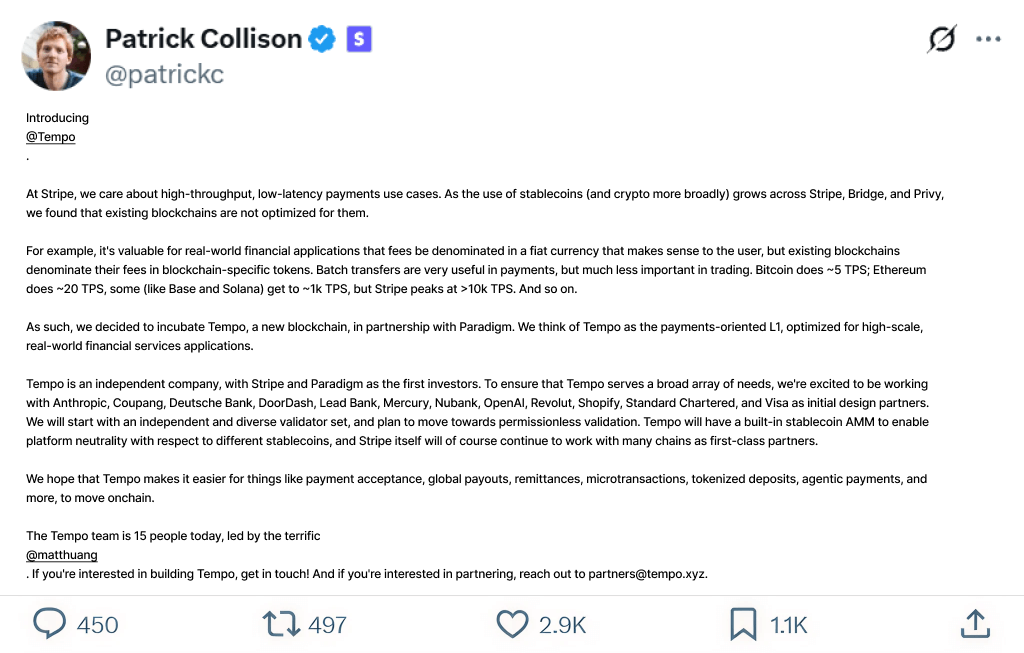
Stripe and Paradigm have officially launched Tempo, a high-speed blockchain platform designed for stablecoin payments. With the growing adoption of digital currencies, Tempo positions itself as a payment-first infrastructure to meet the rising demand for secure, scalable, and global stablecoin transactions.

While some industry experts compare Tempo to Meta’s abandoned Libra project, others believe it could as a serious challenger to established blockchains like Ethereum, Solana, and Tron. 

In this blog, we’ll explore how secure and scalable Tempo really is for stablecoin transactions, exploring its features, strengths, challenges, and future. Let’s get started!

What is the Tempo Blockchain?

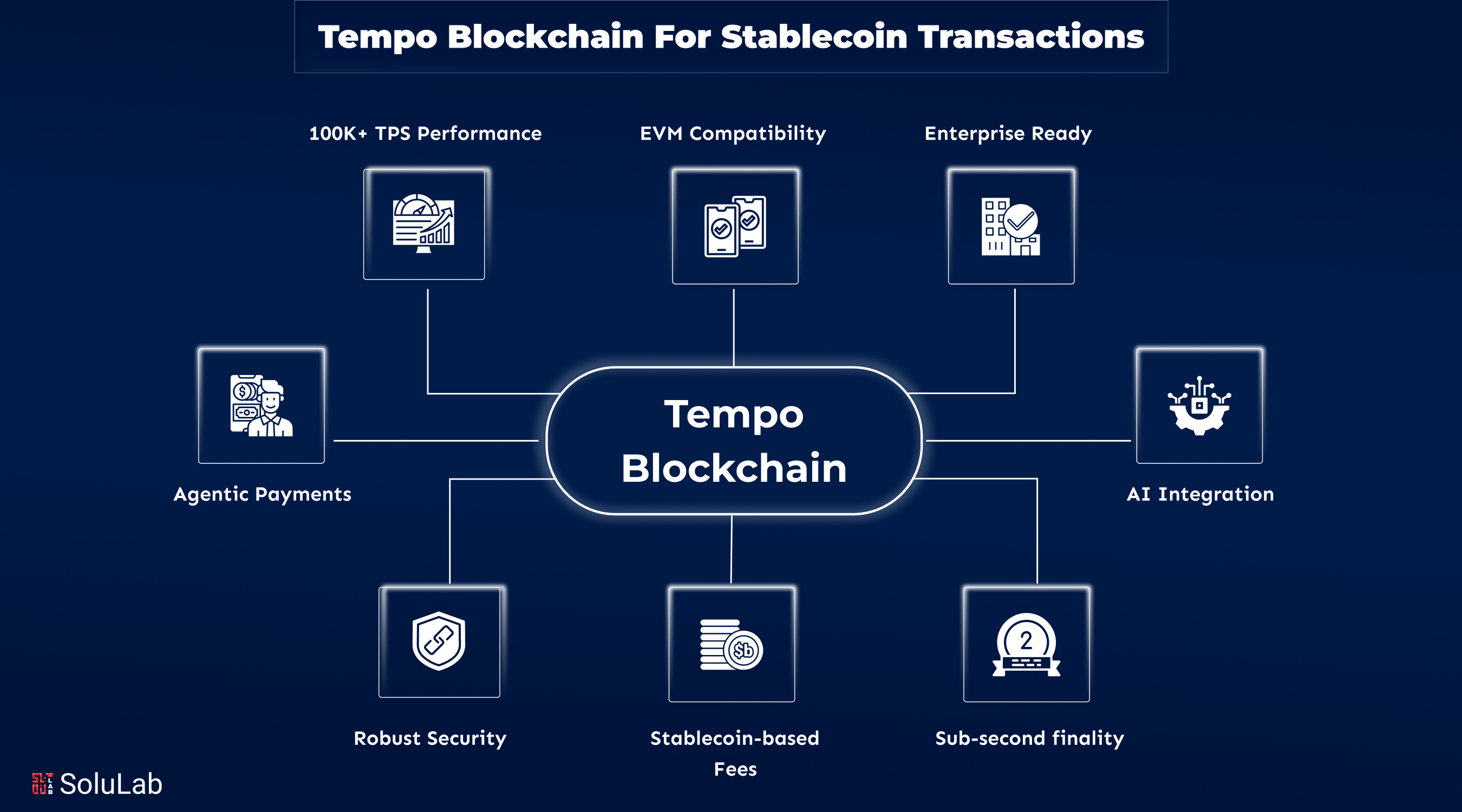
The Tempo blockchain is a payment-focused distributed ledger technology (DLT) currently operating in a private testnet phase. Its primary goal is to provide a more efficient, secure, and scalable platform for processing payments.

With a target of over 100,000 transactions per second with sub-second finality, it offers high-throughput stablecoin transactions, which are far faster than existing blockchain rates and are intended for real-world applications.

This acquisition shows Tempo’s commitment to building robust stablecoin capabilities, which are crucial for stable, real-world value transfers on a blockchain network.
X Post

How Does Tempo Make Stablecoin Transactions Secure?

Tempo makes stablecoin transactions safe and reliable through the combination of enhanced security measures, blockchain transparency, and compliance standards, providing businesses and users with full confidence in the digital transactions.

1. Blockchain Transparency: Tempo has employed blockchain technology, and transactions are documented on a public ledger. This will provide a great level of transparency so that data can hardly be changed or manipulated, which will enhance security and trust.

2. Smart Contract Audits: Every smart contract of Tempo is audited by third parties. This makes the code devoid of loopholes, which minimizes the occurrence of such risks as hacking, fraud, or unauthorized access to funds.
Blockchain Development Company

3. Encryption Protocols: Tempo protects the sensitive user data and transaction information with sophisticated encryption protocols. This avoids unauthorized interception or misuse of personal and financial data in the course of transactions in stablecoins.

4. Regulatory Compliance: Tempo is compliant with KYC and AML regulations. It prevents money laundering, fraud, and other financial crimes by authenticating user identities and tracking suspicious activity across stablecoin transactions.

5. Fraud Detection Systems: Artificial Intelligence fraud detection is constantly reviewed on Tempo to identify any fraud patterns in transactions. In case of abnormal activity detection, it raises alarms and defenses, which guarantee safe and authentic transfers of stablecoins.

Benefits of Using Tempo Blockchain for Stablecoins

Tempo Blockchain is a trusted stablecoin payment platform that brings efficiency, security, and global accessibility. It is a great option in digital finance due to its distinctive characteristics as a business and individual tool.
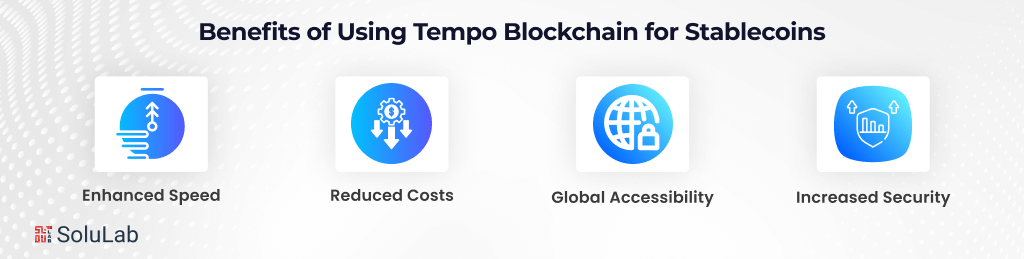
Benefits of Using Tempo Blockchain for Stablecoins

  • Enhanced Speed: Tempo Blockchain transactions are faster in processing stablecoins than traditional systems. Faster settlements imply that users and businesses can send and receive money instantly, enhancing efficiency, minimizing waiting times, and facilitating real-time and standard financial transactions across the globe.
  • Reduced Costs: Tempo Blockchain can reduce the cost of transactions when transferring stablecoins by eliminating several middlemen. This cost efficiency assists businesses in saving money, and cross-border payments are more affordable to ordinary users and organizations.
  • Global Accessibility: Tempo Blockchain facilitates international transfers of stablecoins, which allows the industry to make transactions across borders. The global economy offers businesses and individuals both easy access and additional opportunities in which location or banking infrastructure, and currency barriers are insignificant.
  • Increased Security: Tempo Blockchain runs on high-level cryptography to ensure the protection of transactions of stablecoins. This guarantees data integrity, minimizes fraud, and instills trust, and it provides users and businesses with confidence in safe financial transactions.

Read Also: UAE’s Dirham-Backed Stablecoin

Future for Digital Transactions with Tempo

Co-developed by Stripe and the cryptocurrency company Paradigm, Tempo is a payments-first Layer-1 blockchain that has the potential to alter digital payments. Tempo features an automated market maker to enable a smooth conversion process, allows fees to be paid in stablecoins (instead of native tokens), and is compatible with Ethereum’s EVM, which makes developer adoption easier. 

With partners including Visa, Deutsche Bank, Shopify, OpenAI, and Revolut, it is seated in a private testnet and is designed for microtransactions, payroll, worldwide payouts, money transfer, and AI-driven agentic payments. 

Allowlists/blocklists, memos for ISO-20022-style reconciliation, and opt-in privacy are further privacy and compliance elements that Tempo incorporates.
Stablecoin Development Company

Conclusion

Tempo Blockchain’s focus on security and scalability indicates that it has the potential to improve stablecoin transactions. It provides safe and effective transfers while managing massive transaction volumes by combining advanced consensus methods, fast processing, and strong security measures. This results in lower risks in handling digital assets, quicker settlement times, and more trust for investors and enterprises.

NovaPay Nexus partnered with SoluLab to integrate multi-crypto support, enhance security, and build a user-friendly interface. The result? A decentralized, fee-free payment solution for businesses with full control and privacy. NovaPay Nexus now drives wider adoption of ISO-compliant cryptocurrencies across industries, redefining how secure digital payments are made.

SoluLab, a prominent blockchain development company can help you leverage Tempo Blockchain for stablecoin payments. Connect with us today!

FAQs

1. How secure is Tempo Blockchain for stablecoin payments?

Tempo Blockchain for stablecoin payments ensures top security through advanced consensus mechanisms, optional privacy, and compliance tools like asset freezing, offering safe, reliable, and regulated transfers.

2. How does Tempo Blockchain compare to Ethereum?

Unlike Ethereum’s 15–30 TPS, Tempo handles 100,000+ TPS with sub-second finality, offering faster and cheaper stablecoin transfers while maintaining compatibility with Ethereum’s ecosystem.

3. Does Tempo Blockchain integrate with crypto wallets?

Yes. Tempo Blockchain is fully EVM-compatible, allowing seamless integration with any crypto wallet company for secure stablecoin storage, transfers, and enterprise-grade payment solutions.

4. Can Tempo Blockchain reduce cross-border payment costs?

Yes. With fast transaction speeds and stablecoin gas fees, Tempo drastically reduces costs compared to traditional banking systems, improving remittance and payroll efficiency.

5. What makes Tempo Blockchain unique among payment blockchains?

Its scalability, optional privacy, compliance tools, and partnerships set Tempo apart, positioning it as a payments-focused blockchain tailored for enterprise adoption.

 

Layer-1 Vs. Layer-2: The Blockchain Scaling Solutions

Layer-1 Vs. Layer-2

The number of individuals using blockchain technology is rapidly increasing from a small group to millions. Research experts reveal that around 420 million individuals worldwide are cryptocurrency owners as of early 2023. While this remarkable rise is admirable, it creates an infrastructure bottleneck that hinders the functionality of blockchain networks. This is where blockchain scalability becomes relevant. Blockchain cannot become widely used if we cannot achieve great scalability.  

To address this challenge, developers have devised a range of solutions aimed at enhancing blockchain scalability. Among these solutions, Layer-1 blockchain scaling and Layer-2 blockchain scaling mechanisms have gained prominence, each offering unique approaches to improving the throughput and performance of blockchain networks.

In this blog post, we’ll explore the differences between Layer-1 and Layer-2 scaling solutions, dissecting their respective advantages, drawbacks, and real-world applications. By the end of this discussion, you’ll gain a deeper understanding of these critical components in the quest to achieve scalable, efficient, and accessible blockchain infrastructure.

Importance of Scalability in Blockchain Technology

Scalability is a crucial consideration in blockchain technology due to its direct impact on the network’s performance, user experience, and potential for mass adoption. Several key reasons underscore the importance of scalability:

  • Transaction Throughput: Scalability directly affects the number of transactions a blockchain network can process per second (TPS). Higher throughput enables faster transaction confirmation times and smoother user experiences, essential for applications requiring real-time interactions or high transaction volumes.
  • Cost Efficiency: Scalability solutions that reduce transaction fees or energy consumption make blockchain technology more accessible and cost-effective for users and businesses. Lower transaction costs encourage broader adoption and support the viability of blockchain-based applications across various industries.
  • Network Stability and Reliability: Scalability improvements enhance the stability and reliability of blockchain networks by reducing the risk of congestion, network delays, and transaction backlogs during periods of high demand. A scalable blockchain can accommodate growing user bases and fluctuating transaction volumes without compromising performance or security.
  • Ecosystem Growth and Innovation: Scalability unlocks new opportunities for innovation and ecosystem growth by enabling the development of complex decentralized applications (DApps), decentralized finance (DeFi) platforms, and other blockchain-based solutions. As scalability improves, developers can explore novel use cases and functionalities that were previously hindered by network limitations.

Types of Blockchain Layers

1. Layer-1 (On-Chain Scaling)

Layer-1 Scaling: This refers to scaling solutions implemented directly within the underlying blockchain protocol to enhance its capacity for processing transactions and supporting a larger user base. These solutions aim to optimize the protocol’s core components, such as the consensus mechanism, block size, and data structure, to improve scalability and performance. 

2. Layer-2 (Off-Chain Scaling)

Layer-2 Scaling: Layer-2 solutions operate on top of the Layer-1 blockchain and focus on improving scalability by handling transactions off-chain or via secondary protocols. These solutions aim to alleviate congestion on the main chain and enhance transaction throughput without modifying the underlying protocol. 

CTA1

What is Layer-1 Blockchain Scaling?

Layer-1 blockchain scaling solutions are pivotal in the quest to enhance the scalability of blockchain networks. These solutions focus on refining the core protocol to augment transaction processing capabilities and improve overall network efficiency. Here’s a deeper exploration of Layer-1 scaling:

Layer-1 scaling revolves around making foundational adjustments to the underlying blockchain protocol to bolster its capacity for handling transactions and accommodating a larger user base. These modifications typically target key aspects of the protocol, such as the consensus mechanism, data structure, or block validation processes. By optimizing these elements directly within the protocol, Layer-1 scaling solutions aim to lay a robust foundation for scalability and sustainable network growth.

  • Targeted Protocol Enhancements: Layer-1 scaling solutions focus on optimizing the core aspects of the blockchain protocol to streamline transaction processing and enhance network scalability.
  • Foundational Changes: Unlike Layer-2 scaling solutions, which operate above the base protocol, Layer-1 solutions involve making fundamental modifications directly within the blockchain’s architecture.

Related: Business Lens on Blockchain Stack: From Layer 0 to Layer 3

Examples of Layer-1 Scaling Solutions

Layer-1 scaling encompasses various strategies and techniques aimed at fortifying the underlying protocol. Here are some prominent examples of Layer-1 scaling solutions:

1. Sharding

Sharding is a technique that divides the blockchain network into smaller, manageable segments known as shards. Each shard operates independently, processing a subset of transactions. This parallel processing significantly boosts transaction throughput, enabling the network to handle a larger volume of transactions concurrently. Sharding has been proposed as a solution to address Ethereum’s scalability issues, with Ethereum 2.0 aiming to implement sharding to enhance its transaction processing capabilities.

Related: Top Blockchain Development Companies

2. Consensus Algorithm Optimization

Consensus algorithm optimization plays a crucial role in enhancing Layer-1 scalability. Traditional consensus mechanisms like Proof of Work (PoW) require substantial computational resources for block validation, limiting scalability. Transitioning to more efficient consensus mechanisms, such as Proof of Stake (PoS) or Delegated Proof of Stake (DPoS), can significantly improve scalability by reducing the computational overhead and energy consumption associated with block validation. Projects like Cardano (PoS) and EOS (DPoS) have adopted alternative consensus mechanisms to enhance scalability and network efficiency.

Pros and Cons of Layer-1 Scaling Solutions

Pros and Cons of Layer-1 Scaling

Layer-1 scaling solutions offer both advantages and challenges. Let’s examine the pros and cons:

Pros:

  • Enhanced Scalability: Layer-1 scaling solutions directly address scalability concerns at the protocol level, resulting in substantial improvements in transaction throughput and network performance. By optimizing core protocol components, Layer-1 solutions lay the groundwork for long-term scalability and sustainable network growth.
  • Decentralization: Many Layer-1 solutions prioritize maintaining or enhancing decentralization, ensuring the network remains secure and resistant to censorship. By implementing scalable solutions that preserve decentralization, blockchain projects can uphold the core principles of transparency, immutability, and trustlessness.

Cons:

  • Complexity and Risk: Implementing Layer-1 scaling solutions often involves making fundamental changes to the blockchain protocol, which can introduce complexities and potential vulnerabilities. Modifying core protocol components requires careful planning and extensive testing to ensure compatibility, stability, and security. Additionally, the introduction of new features or consensus mechanisms may introduce unforeseen risks or attack vectors, necessitating thorough risk assessment and mitigation strategies.
  • Potential Centralization: Some Layer-1 solutions may inadvertently lead to increased centralization if they favor certain nodes or validators over others. For example, consensus mechanisms like Proof of Stake (PoS) or Delegated Proof of Stake (DPoS) rely on token ownership or voting power to determine block validators, potentially concentrating control in the hands of a few large stakeholders. This centralization risk undermines the network’s decentralization and security, necessitating measures to promote inclusivity, fairness, and decentralization.

Read Also: Layer 3 Blockchain

What is Layer-2 Blockchain Scaling?

Layer-2 scaling solutions operate above the base Layer-1 protocol and aim to improve blockchain scalability by handling transactions off-chain or through secondary protocols. Unlike Layer-1 scaling solutions, which involve making fundamental changes to the underlying protocol, Layer-2 solutions focus on enhancing scalability without directly modifying the core blockchain architecture. Instead, Layer-2 solutions enable faster and more efficient transaction processing by conducting transactions off-chain and settling them on the main chain only when necessary. This approach reduces congestion on the main chain, increases transaction throughput, and improves overall network performance.

  • Scalability Enhancement: Layer-2 scaling solutions aim to enhance blockchain scalability by processing transactions off-chain or via secondary protocols, alleviating congestion on the main chain and improving transaction throughput.
  • Off-Chain Transactions: Layer-2 solutions enable participants to conduct transactions off-chain, allowing for faster and more cost-effective transactions while maintaining security and trustlessness through cryptographic mechanisms.
  • Main Chain Settlement: Transactions conducted off-chain are settled on the main chain only when necessary, reducing the burden on the main chain and enhancing overall network efficiency.

Different Types of Layer-2 Scaling Solutions

Types of Layer-2 Scaling

Layer-2 scaling encompasses various techniques and protocols designed to improve scalability through off-chain transaction processing and secondary protocols. Here are some common types of Layer-2 scaling solutions:

1. State Channels

State channels enable participants to conduct multiple transactions off-chain while preserving security and trustlessness through cryptographic mechanisms. Participants exchange signed messages off-chain, updating the state of their transactions, and settling the final outcome on the main chain when necessary. State channels are well-suited for use cases requiring frequent interactions and real-time transaction processing, such as micropayments and gaming. 

2. Rollups

Rollups are a Layer-2 scaling solution for blockchain networks. They work by processing transactions off-chain, aggregating them into a single compressed data structure, and then periodically settling the aggregated data on the main blockchain. Rollups come in two main types: optimistic rollups, which rely on optimistic execution and dispute resolution, and zk-rollups, which use zero-knowledge proofs to provide cryptographic assurances of transaction validity without revealing sensitive data. Rollups significantly enhance blockchain scalability, reduce transaction costs, and improve overall network efficiency while maintaining security and trustlessness.

3. Sidechains

Sidechains are independent blockchains connected to the main blockchain, allowing for faster transaction processing and experimentation with different consensus mechanisms or features without congesting the main chain. Sidechains enable participants to transfer assets between the main chain and the sidechain, providing scalability benefits while maintaining interoperability with the main chain.

4. Plasma

Plasma is a framework for creating hierarchical tree structures of sidechains (child chains) anchored to the main blockchain (parent chain). Plasma enables high-throughput transaction processing by aggregating multiple transactions into blocks on the child chain and periodically settling the state on the main chain. Plasma is suitable for applications requiring high scalability and security, such as decentralized exchanges (DEXs) and tokenized assets.

Read Also: Blockchain Interoperability’s Impact Enterprise Adoption

A Comparative Analysis Between Layer-1 Blockchains vs. Layer-2 Blockchains

Layer-1 and Layer-2 scaling solutions each offer unique approaches to addressing blockchain scalability challenges. Here’s a comparative analysis of their key characteristics:

Scalability Approach

  • Layer-1: Layer-1 scaling solutions involve making fundamental changes to the underlying blockchain protocol to directly improve scalability. These solutions aim to optimize core protocol components, such as consensus mechanisms and block size limits, to increase transaction throughput and improve network performance.
  • Layer-2: Layer-2 scaling solutions operate above the base protocol and focus on improving scalability through off-chain transaction processing and secondary protocols. By handling transactions off-chain or via secondary layers, Layer-2 solutions alleviate congestion on the main chain and enhance transaction throughput without modifying the underlying protocol.

Transaction Processing

  • Layer-1: Transactions on Layer-1 are processed directly on the main chain, which may lead to congestion and slower transaction speeds during periods of high network activity. Layer-1 scaling solutions aim to improve transaction processing efficiency at the protocol level.
  • Layer-2: Layer-2 solutions enable transactions to be processed off-chain or via secondary protocols, reducing congestion on the main chain and enabling faster transaction speeds. Off-chain processing allows for more scalable and cost-effective transactions, particularly for use cases requiring frequent interactions and real-time processing.

Security and Decentralization

  • Layer-1: Layer-1 solutions typically prioritize maintaining or enhancing security and decentralization, as changes to the core protocol can impact the network’s integrity and trustlessness. Ensuring robust security and decentralization is crucial for maintaining user trust and network reliability.
  • Layer-2: Layer-2 solutions introduce additional security considerations, such as channel disputes and data availability challenges, which must be addressed to maintain the integrity and trustworthiness of off-chain transactions. While Layer-2 solutions offer scalability benefits, ensuring security and decentralization remains paramount.

Implementation Complexity

  • Layer-1: Implementing Layer-1 scaling solutions often requires making fundamental changes to the blockchain protocol, which can be complex and require coordination among network participants. Changes to the core protocol may also introduce risks and require extensive testing and validation.
  • Layer-2: Layer-2 solutions may involve less complexity in implementation compared to Layer-1 solutions, as they operate above the base protocol and focus on improving scalability through off-chain processing. However, ensuring compatibility, security, and interoperability with the main chain and other Layer-2 solutions is still essential.

Factors to Consider When Choosing Between Layer-1 and Layer-2 Scaling

When evaluating whether to implement Layer-1 or Layer-2 scaling solutions, several factors should be considered:

1. Scalability Requirements: Assess the specific scalability needs of the blockchain network, including transaction throughput, latency, and cost considerations. Determine whether Layer-1 or Layer-2 solutions are better suited to address the scalability challenges based on the network’s requirements.

2. Security and Trustlessness: Consider the security and trustlessness implications of implementing Layer-1 versus Layer-2 scaling solutions. Evaluate the trade-offs between scalability, security, and decentralization, and prioritize solutions that maintain the integrity and reliability of the network.

3. Implementation Complexity: Assess the complexity and feasibility of implementing Layer-1 versus Layer-2 scaling solutions. Consider factors such as development effort, coordination among network participants, and risks associated with modifying the core protocol versus implementing off-chain solutions.

4. Use Case and Application Requirements: Consider the specific use cases and application requirements that the blockchain network aims to support. Evaluate whether Layer-1 or Layer-2 scaling solutions are better aligned with the performance, functionality, and user experience needs of the applications running on the network.

CTA2

Use Cases Where Layer-1 or Layer-2 Scaling Might be More Suitable

The suitability of Layer-1 or Layer-2 scaling solutions depends on the specific use cases and requirements of the blockchain network. Here are some scenarios where each approach might be more suitable:

Layer-1 Scaling Use Cases

1. High-Volume Financial Transactions:

Blockchain networks supporting high-volume financial transactions, such as cryptocurrency exchanges or payment processing platforms, require fast and efficient transaction processing directly on the main chain. Implementing Layer-1 scaling solutions like sharding or consensus algorithm optimizations can increase transaction throughput and reduce latency, enabling the network to handle a larger volume of transactions without sacrificing security or decentralization. Layer-1 scaling solutions ensure that high-volume financial transactions are processed quickly and securely on the main chain, enhancing the overall efficiency and reliability of financial applications.

2. Decentralized Finance (DeFi) Protocols

DeFi protocols, including decentralized exchanges (DEXs), lending platforms, and liquidity pools, require fast and cost-effective transaction processing to support complex financial transactions and interactions. Enhancing Layer-1 scalability through protocol optimizations or consensus algorithm upgrades can improve transaction throughput and reduce transaction fees, making DeFi protocols more accessible and efficient for users. Layer-1 scaling solutions empower DeFi protocols to support a larger user base and handle a greater volume of transactions, fostering greater adoption and liquidity within the decentralized finance ecosystem.

Layer-2 Scaling Use Cases

1. Microtransactions and Micropayments

Applications requiring frequent microtransactions or micropayments, such as online gaming platforms, content monetization systems, or pay-per-use services, need fast and inexpensive transaction processing to provide a seamless user experience. Implementing Layer-2 scaling solutions like state channels or payment channels allows users to conduct off-chain transactions quickly and cost-effectively, reducing transaction fees and latency associated with on-chain transactions. Layer-2 scaling solutions enable applications to support microtransactions and micropayments at scale, unlocking new revenue streams and business models while minimizing transaction costs and delays for users.

2. Privacy-Preserving Applications

Applications handling sensitive data or requiring transaction privacy, such as healthcare record management, supply chain tracking, or identity verification systems, need robust privacy-preserving mechanisms to protect user confidentiality and data integrity. Leveraging Layer-2 solutions like zk-rollups, which use zero-knowledge proofs to provide cryptographic privacy guarantees, enables applications to maintain transaction privacy while ensuring transaction validity and integrity. Layer-2 scaling solutions enhance the privacy and confidentiality of transactions and data, enabling applications to comply with regulatory requirements and protect user privacy without sacrificing scalability or performance.

Which Blockchain Layer Will Rule the Future?

It is justifiable to assume that layer 2 blockchains will be the most widely used in the future given the facts provided above. They facilitate interoperability and increased blockchain adoption by offering cheaper transaction speeds. Although a layer 2 blockchain still requires a layer 1 to support it, it will prosper as long as it can maintain its increased efficiency and feature set.

But the solution is not that straightforward. The blockchain world is constantly expanding and changing at a fast pace. While Solana and other more recent third-generation blockchains provide hundreds of transactions per second, Cosmos’ distinctive network design allows for efficient interoperability and scalability. Ethereum is also going through major changes that will deal with its speed and scalability

Ultimately, layer 2 blockchains are significant because they address a gap in layer 1 blockchain development. Layer 2 scaling solutions might not be necessary if layer 1s can meet user demand on their own. If enough people choose layer 1 blockchains with interoperability and scalability built in, that will be determined over time. 

Conclusion

In conclusion, the trade-offs of Layer 1 and Layer 2 blockchains must be understood in order to select the best option for your use case. Although Layer 1 blockchains offer a high degree of decentralization and security, they could have issues with scalability and transaction speed. However, Layer 2 blockchains can forgo decentralization and security in favor of speed.

Blockchain technology is continually developing, with new developments appearing on a regular basis. At the moment, layer 2 blockchains are the most widely used method for increasing scalability and cutting expenses. But it’s crucial to keep a watch on more recent third-generation blockchains since they’re expanding the scope of what can be done on Layer 1.

SoluLab, a leading blockchain development company, specializes in offering innovative solutions to both Layer-1 and Layer-2 scaling issues. We provide personalized solutions to improve the scalability and performance of blockchain networks by using our blockchain technology experience and unique approach. Our experienced blockchain engineers focus on Layer-1 protocol advancements like sharding and consensus algorithm optimizations, as well as Layer-2 scaling solutions like state channels and zk-rollups. Whether you want to improve the scalability of your blockchain network or deploy off-chain scaling solutions, SoluLab is your reliable partner. Contact us today to hire blockchain developers and maximize the potential of your blockchain project.

FAQs

1. What is the difference between Layer-1 and Layer-2 scaling solutions?

Layer-1 scaling solutions involve making fundamental changes to the underlying blockchain protocol to directly improve scalability, while Layer-2 scaling solutions operate above the base protocol and focus on improving scalability through off-chain transaction processing and secondary protocols.

2. How do Layer-1 scaling solutions improve blockchain scalability?

Layer-1 scaling solutions improve blockchain scalability by optimizing core protocol components, such as consensus mechanisms and block size limits, to increase transaction throughput and improve network performance directly at the protocol level.

3. What are some examples of Layer-2 scaling solutions?

Examples of Layer-2 scaling solutions include state channels, sidechains, Plasma, rollups, and other off-chain scaling techniques that enable faster and more cost-effective transactions by processing transactions off-chain or via secondary protocols.

4. What are the advantages of Layer-2 scaling solutions?

Layer-2 scaling solutions offer several advantages, including improved scalability, reduced transaction fees, faster transaction speeds, enhanced privacy, and the ability to support a larger volume of transactions without congesting the main chain.

5. How do I choose between Layer-1 and Layer-2 scaling solutions for my blockchain project?

When choosing between Layer-1 and Layer-2 scaling solutions, consider factors such as scalability requirements, security and decentralization, implementation complexity, and specific use cases and application requirements to determine which approach is more suitable for addressing your project’s scalability challenges.


Top 10 Layer 1 Blockchains in 2026

Top Layer 1 Blockchains

The blockchain landscape is evolving rapidly, and a layer 1 crypto list is at the forefront of this transformation. These blockchains are responsible for processing transactions and securing the network, and they are becoming increasingly sophisticated and scalable. As a result, a layer 1 crypto list is becoming increasingly attractive to developers and businesses looking to build decentralized applications (dApps).

There are a number of factors driving the growth of Layer 1 blockchains. One factor is the increasing demand for decentralized applications. DApps offer a number of advantages over traditional, centralized applications, including security, transparency, and immutability. As the demand for dApps grows, so too does the demand for Layer 1 blockchains that can support them. A Layer 1 crypto list can help identify the top blockchains that are leading this growth.

Another factor driving the growth of Layer 1 blockchains is the increasing sophistication of these blockchains. Layer 1 blockchains are becoming more scalable, secure, and efficient. This makes them more attractive to developers and businesses who need a blockchain platform that can handle large volumes of transactions and data.

As Layer 1 blockchains continue to evolve, they are becoming increasingly capable of supporting a wide range of decentralized applications. This is making them an increasingly attractive option for developers and businesses who want to build dApps. The question arise here what is layer 1 blockchain.

Understanding Layer 1 Blockchains

Venture into the foundational layer of blockchain technology. This section explores the core principles and functionalities that define Layer 1 blockchains, which establish the groundwork for decentralized ecosystems.

What is a Layer 1 Blockchain?

Before we delve into the top performers, let’s unravel the essence of Layer 1 blockchains. A Layer 1 blockchain is the foundational layer of a blockchain network, the primary blockchain where transactions are directly recorded. It serves as the base blockchain ecosystem protocol, defining the core rules and consensus mechanisms of the network. Layer 1 blockchains are responsible for the security, scalability, and interoperability of the network.

They are typically built on a Proof-of-Work (PoW) or Proof-of-Stake (PoS) consensus mechanism. PoW blockchains, such as Bitcoin and Ethereum, use a computationally intensive process to verify transactions and add new blocks to the chain. PoS blockchains, such as Cardano and Solana, use a more energy-efficient process to verify transactions and add new blocks to the chain. Top layer 1 blockchains are often limited in their scalability, as they can only process a certain number of transactions per second.

This can lead to congestion and high transaction fees. To address this issue, some Layer 1 blockchains are implementing Layer 2 scaling solutions, such as sidechains and rollups. A Layer 1 blockchains list is the foundation of the blockchain ecosystem. They are responsible for securing the network, validating transactions, and storing data. When comparing Layer1 vs Layer2 solutions, Layer 1 blockchains will need to evolve to meet the demands of a larger and more complex network as the blockchain industry continues to grow.

CTA2

Top 10 Layer 1 Blockchains

1. Ethereum

Ethereum, often referred to as the “world computer” of blockchain technology, stands tall as one of the most influential and significant Layers 1 blockchain in the decentralized ecosystem. In 2026, Ethereum’s significance lies in its transition to Ethereum 2.0, a major upgrade aiming to address its scalability and sustainability challenges.

With the shift to a PoS consensus mechanism, Ethereum 2.0 promises greater energy efficiency, reducing its carbon footprint while enhancing its transaction throughput and overall network capacity. This upgrade is crucial to accommodate the growing demand for Ethereum-based applications, providing a seamless and cost-effective experience for users and developers alike.

2. Solana

Solana has emerged as a prominent player in the blockchain space, earning its place among the top 10 Layer-1 blockchain. Scalability is the key highlight of Solana’s design. Leveraging a combination of Proof-of-History (PoH) and a modified version of Proof-of-Stake (PoS), Solana can achieve blazing-fast speeds and high throughput.

PoH acts as a timekeeper, providing historical data to nodes and enabling them to process transactions with more accuracy and efficiency. This unique approach ensures that network nodes have consistent, verifiable information, reducing the risk of conflicts and enhancing scalability. Another standout feature of Solana is its sub-second block times.

3. Astar

In the ever-expanding landscape of blockchain technology, Astar has emerged as a rising star among the top 10 Layer-1 blockchains. Astar is a unique and promising platform that combines innovative features, scalability, and a strong focus on developer-friendly tools. As the decentralized ecosystem continues to evolve, Astar is making significant strides in establishing itself as a top-tier blockchain network.

Astar is built with scalability in mind, leveraging a unique consensus mechanism known as Consensus Algorithm for REal-time Transaction (CARET). This innovative approach enables high throughput and near-instant finality, making it ideal for applications that require fast and efficient transaction processing.

4. Cronos

In the rapidly evolving world of blockchain technology, Cronos has emerged as a promising contender among the best layer 1 blockchains. Launched by the Crypto.com ecosystem, Cronos has garnered attention for its innovative approach to scalability, interoperability, and adoption. As Layer-1 blockchain continues to shape the future of decentralized technology, let’s explore what sets Cronos apart and why it deserves a spot among the industry’s leading platforms.

One of Cronos’s key strengths lies in its scalability. The blockchain harnesses the power of Tendermint’s Byzantine Fault-Tolerant (BFT) consensus, allowing for faster and more efficient block confirmations. This feature enables Cronos to process a high number of transactions per second, making it suitable for DeFi applications, NFT marketplaces, and other high-throughput use cases.

5. Kadena

As the blockchain landscape continues to evolve, Kadena stands out as a prominent Layer 1 blockchain that has been making waves in the decentralized technology space. Kadena is an ambitious and innovative platform that combines scalability and security, positioning itself among the top 10 Layer-1 blockchains of the future.

The backbone of Kadena’s hybrid consensus, ScalableBFT, offers a novel solution to the scalability trilemma, a challenge faced by many blockchain networks. ScalableBFT ensures that the network remains secure, scalable, and decentralized, a rare combination in the blockchain world. This allows Kadena to cater to enterprise-level use cases while maintaining the principles of decentralization and security.

6. Injective Protocol

Injective Protocol has emerged as a powerful player in the blockchain space, positioning itself as one of the best layer 1 blockchains. As a decentralized exchange (DEX) platform, Injective Protocol focuses on providing a high-performance, secure, and user-friendly ecosystem for decentralized finance (DeFi) applications. Its unique design and innovative features set it apart from other Layer-1 blockchains, making it a force to be reckoned with in the evolving blockchain landscape.

Injective Protocol leverages Layer 2 scaling solutions, such as Optimistic Rollups, to enhance transaction throughput and reduce gas fees. By integrating Layer 2 technology, the platform can achieve a high degree of scalability without compromising security or decentralization. The platform allows the creation of custom markets and synthetic assets, offering unparalleled flexibility and enabling the trading of both traditional and crypto assets on a single platform.

7. Cosmos

As one of the top 10 layer one blockchain, Cosmos has emerged as a powerful force in the decentralized technology landscape, revolutionizing how blockchain networks interact and collaborate. Founded on the principles of interoperability and scalability, Cosmos aims to overcome the challenges of siloed blockchains and foster a more interconnected and efficient ecosystem.

At the heart of Cosmos lies the Inter-Blockchain Communication (IBC) protocol, which enables secure and trustless communication between independent blockchains. IBC facilitates the transfer of assets and data across different chains, allowing seamless interoperability and collaboration. This unique feature empowers developers to build dApps that can interact with various blockchains, unlocking new possibilities for cross-chain DeFi, asset swaps, and decentralized exchanges.

8. Avalanche

Avalanche, an innovative blockchain platform, has emerged as one of the top 10 Layer-1 blockchains, revolutionizing the decentralized finance (DeFi) space. Built to address the limitations of existing blockchains, Avalanche brings scalability, security, and high-throughput capabilities to the forefront of decentralized technology. Its groundbreaking consensus protocol and unique features have positioned it as a driving force in the blockchain ecosystem.

Avalanche’s versatility is another defining feature that sets it apart from other layer 1 blockchains list. The platform is designed to support custom subnets, providing developers with the flexibility to create and deploy their own blockchain applications within the Avalanche ecosystem. This capability encourages innovation and fosters a diverse range of use cases, from decentralized exchanges and automated market makers to gaming and non-fungible token (NFT) platforms.

9. BNB Chain

In the ever-expanding realm of blockchain technology, BNB Chain has emerged as a prominent player, solidifying its position as a top 10 layer one blockchain. Developed by Binance, one of the world’s largest cryptocurrency exchanges, BNB Chain brings innovation and efficiency to the forefront, offering a robust foundation for various decentralized applications (dApps) and token ecosystems.

BNB Chain stands out for its remarkable transaction throughput, capable of processing thousands of transactions per second. This high-speed performance is instrumental in catering to the ever-growing demand of users and dApps, ensuring a seamless experience for participants on the network. In addition to its impressive throughput, BNB Chain boasts remarkably low transaction fees, making it a cost-effective platform for users and developers.

10. Near

Near Protocol has swiftly emerged as a top-tier Layer 1 blockchain, garnering attention for its innovative approach to scalability, usability, and developer-friendliness. Near’s cutting-edge design has positioned it among the top 10 Layer-1 blockchains, making it a promising platform for decentralized applications (dApps) and the broader blockchain ecosystem.

Near Protocol has attracted a wide array of real-world applications, spanning from decentralized finance (DeFi) to gaming and NFT platforms. These use cases demonstrate the platform’s versatility and potential to revolutionize multiple industries. Near’s commitment to regulatory compliance sets a strong foundation for its long-term growth and adoption. By adhering to regulatory standards, Near aims to ensure a secure and compliant environment for businesses and users alike.

Conclusion

In conclusion, the top 10 Layer 1 blockchains of 2026 represent a dynamic and transformative force in the decentralized landscape. As we’ve explored the unique features, applications, and advancements of these blockchains, it becomes evident that blockchain technology plays a crucial role in shaping the future of digital innovation. These Layer 1 blockchains, including Bitcoin, Ethereum, Binance Smart Chain, Cardano, Solana, Avalanche, Polkadot, Tezos, Algorand, and NEAR Protocol, showcase diverse approaches to scalability, consensus mechanisms, and governance. Each platform brings its own strengths, contributing to the rich tapestry of blockchain use cases within the decentralized ecosystem.

As the blockchain space continues to evolve, SoluLab stands at the forefront, providing cutting-edge solutions in blockchain development. With a commitment to innovation, security, and scalability, SoluLab empowers businesses to navigate the complexities of Layer 1 crypto list technologies and harness the full potential of decentralized platforms. As we navigate the intricate landscape of top Layer 1 blockchains, it is SoluLab’s mission to guide and support organizations in adopting these transformative technologies. Embrace the future of decentralization with confidence, knowing that SoluLab is your trusted partner on the journey towards blockchain innovation and success.

FAQs

1. What makes a blockchain a Layer 1 blockchain?

A Layer 1 blockchain refers to the base protocol of a blockchain network where transactions are directly recorded. It serves as the foundational layer, defining the core rules and consensus mechanisms.

2. How were the top 10 Layer 1 blockchains selected?

The selection was based on a comprehensive analysis of each blockchain’s unique features, consensus mechanisms, scalability solutions, smart contract functionalities, and overall impact on the decentralized ecosystem.

3. What advantages do Layer 1 blockchains offer over other layers?

List of layer 1 blockchains provides direct access to the blockchain network, ensuring security, transparency, and decentralized consensus. Their primary advantage lies in serving as the foundational layer without relying on other protocols.

4. Can Layer 1 blockchain be used for applications beyond cryptocurrencies?

Yes, Layer 1 blockchains have diverse applications beyond cryptocurrencies. They are employed in decentralized finance (DeFi), supply chain management, healthcare, and various other industries, offering a broad spectrum of use cases.

5. How do Layer 1 blockchains contribute to global financial inclusion?

Layer 1 blockchains break down geographical barriers, enabling global access to financial services. Their decentralized nature ensures that individuals worldwide can participate in the financial ecosystem without traditional banking constraints.

6. What are the emerging trends in Layer 1 blockchain technology for 2026?

Emerging trends include increased collaboration among blockchain networks, integration with traditional finance, and technological advancements such as improved scalability solutions, interoperability, and enhanced consensus mechanisms.

7. How can businesses leverage SoluLab’s expertise in Layer 1 blockchain development?

SoluLab offers cutting-edge solutions in blockchain development, guiding businesses through the complexities of Layer 1 blockchains. Whether it’s for creating decentralized applications (DApps), implementing smart contracts, or navigating blockchain governance, SoluLab is your trusted partner for blockchain innovation.
