Talk to an Expert

How to Develop a Carbon Credit Education Platform?

Carbon Credit Education Platform

The global carbon market is projected to reach $2.68 trillion by 2028, yet most people, founders, startups, and even large enterprises still don’t fully understand what carbon credits are or how carbon credits work.

This lack of awareness is a massive opportunity. A carbon credit education platform can solve this gap by teaching users what carbon credits mean, how they reduce emissions, and how individuals or businesses can take real climate action. It’s more than education, it’s empowerment, transparency, and growth.

If you’re a sustainability startup, NGO, or a founder looking to build a mission-driven platform with monetization potential, now’s the time. This guide will show you how to build a carbon credit learning platform that blends blockchain, transparency, and user-friendly design, all built by a team that understands both climate impact and tech execution

How Carbon Markets Work & Why Education Is Crucial?

Before we explore how a carbon credit platform can create impact, let’s start with the basics: what are carbon credits, and how do carbon credits work?

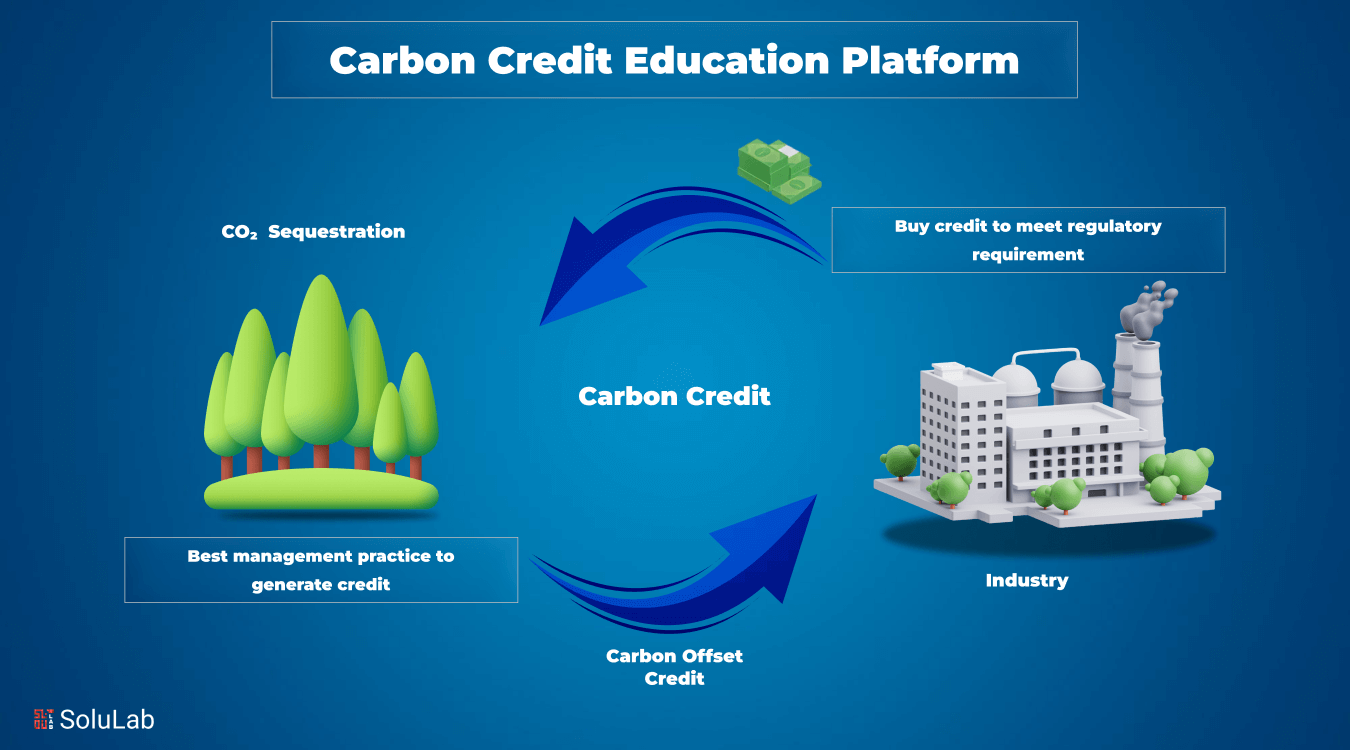
Carbon credits give companies or individuals the legal right to emit a certain amount of carbon dioxide (usually one metric ton). These credits can be bought or sold, which creates a system where those who reduce emissions can earn and sell extra credits. It’s a market-based approach to fight climate change.

But here’s the problem: most people don’t fully understand how these credits are created, verified, or traded. That’s why education is essential.

A carbon credit education platform helps bridge this knowledge gap. It teaches users how carbon markets work, clears up misinformation, and promotes transparency. This builds trust, which is essential for any climate-related initiative.

Many people also struggle to understand what carbon assets are or how they relate to real-world offset projects like planting trees or building renewable energy sources. If they don’t understand it, they won’t get involved. And without involvement, there’s no meaningful impact.

This is exactly where a carbon credit learning platform makes a difference. It simplifies complex topics, explains key concepts, and motivates users to participate. Whether you’re building for a nonprofit, startup, or government program, these platforms are key to turning awareness into action.

How Blockchain Can Transform Carbon Credit Education?

Traditional systems used in the carbon credit space are often slow, hard to trust, and lack transparency. This leads to confusion, low participation, and even fraud. Blockchain technology helps solve these problems by making the entire process transparent, secure, and tamper-proof.

These are real blockchain use cases that directly improve how users learn and engage with carbon credits:
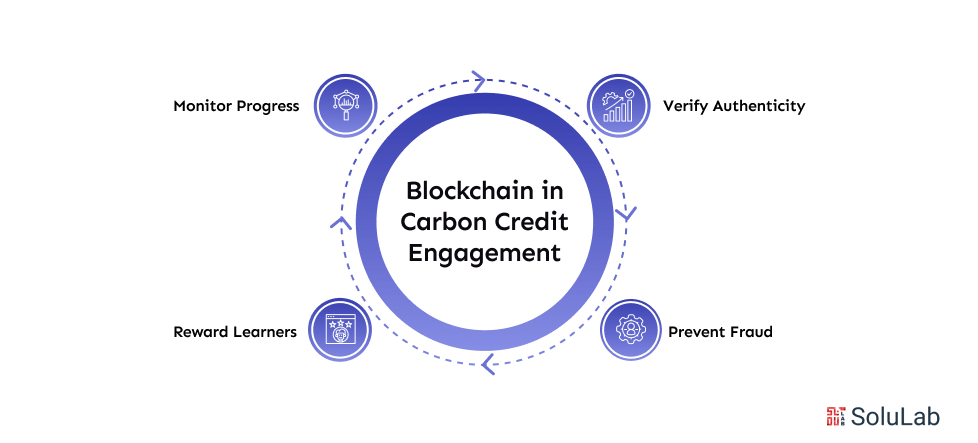
Blockchain in Carbon Credit Engagement

  • Verifies the authenticity of credits with immutable audit trails
  • Prevents fraud and double-counting with transparent tracking
  • Rewards learners using smart contracts and tokenized incentives
  • Monitors learning progress and offsets activity in real-time

This isn’t just hype; these are practical tools that build trust and drive real results.

Choosing the Right Blockchain Stack

Understanding the difference between Layer 1 vs. Layer 2 is important when scaling your platform:

  • Layer 1 (like Ethereum) offers strong security but can be slower and costly
  • Layer 2 (like Polygon) is faster and cheaper, ideal for education-based platforms

The right choice depends on your user base, budget, and growth plans

Want to discuss which blockchain setup is right for your project? Our team can guide you

Core Features of a Carbon Credit Education Platform

A well-designed carbon credit education platform should be simple to use, easy to scale, and built to drive real engagement. It helps people understand how carbon credits work while making learning interactive and trustworthy.

Here are the key features your platform should include:
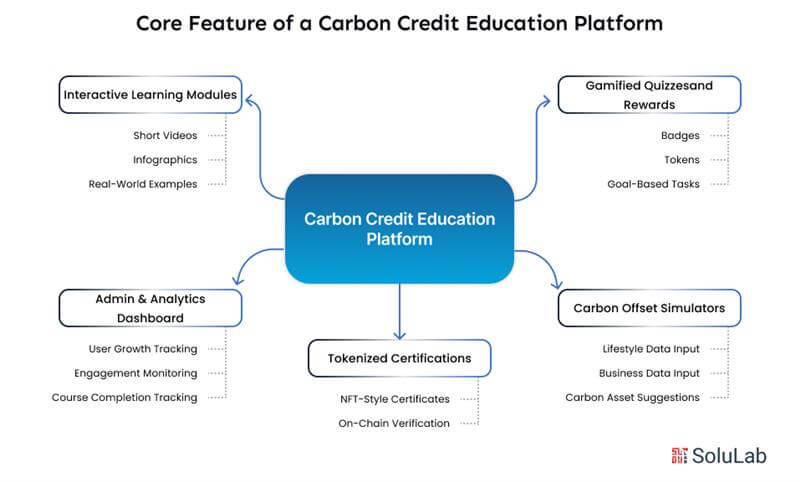
Core Feature of a Carbon Credit Education Platform

1. Interactive Learning Modules

Quick, engaging lessons that explain the basics of what are carbon credits and why they matter.

  • Use short videos, infographics, and real-world examples
  • Teach key terms like carbon offset, carbon assets, and emissions
  • Break complex ideas into bite-sized formats

2. Gamified Quizzes and Rewards

Make learning fun and rewarding with built-in gamification.

  • Earn badges or tokens for completing modules
  • Boost retention through small, goal-based tasks
  • Link quizzes to verified learning outcomes

3. Carbon Offset Simulators

Allow users to see their personal or business emissions and how to offset them.

  • Input basic lifestyle or business data
  • Get suggestions for carbon asset purchases
  • Connect actions to real environmental impact

Read Our Blog: What Makes Germany a Natural Fit for Carbon Credit Tokenization?

4. Tokenized Certifications

Reward learners with blockchain-based certificates for each milestone.

  • Issue NFT-style proof of completion
  • Verify progress on-chain for transparency
  • Build learner credibility with trusted digital records

5. Admin & Analytics Dashboard

Give your organization full control and visibility.

  • Track user growth, engagement, and course completion
  • Monitor carbon credit tokenization activities in real-time
  • Adjust content based on performance insights

At our blockchain development company, we integrate all these features with custom branding, secure backend systems, and smart contract logic.

We also ensure that the platform supports carbon credit tokenization, allowing users to learn about and take climate action by buying or retiring carbon credits as part of their educational journey.

Cost to Build a Carbon Credit Education Platform

The cost of building a carbon credit education platform depends on a few key factors. If you’re a startup founder or enterprise looking to build a platform that educates users on what carbon credits are and how carbon credits work, here’s what you need to consider:

Key Cost Factors

Cost Factor Details
Feature Set Basic education modules, tokenization, gamification, multilingual access
Blockchain Choice Depends on using Layer 1 vs. Layer 2 blockchains (Ethereum, Polygon, etc.)
Time-to-Market Faster timelines may increase development costs
Custom vs. White-Label Solution Custom builds cost more, white-label options are quicker and cost-effective
Maintenance & Scaling Ongoing updates, new features, and security upgrades

Estimated Pricing Ranges

Project Type Estimated Cost Description
MVP (Minimum Viable Product) $20,000 – $60,000 Covers essential features: education modules, dashboards, token support
Full-Scale Enterprise Platform $60,000+ Includes automation, multilingual content, analytics, and regulatory tools
Using Blockchain-as-a-Service Flexible pricing Ideal for faster deployment and reduced in-house technical requirements

Real-World Case Studies

Here are five real examples of how companies are using blockchain to improve how carbon credits are tracked, traded, and understood. These stories show how carbon credit tokenization, education, and compliance can be made easier and more trustworthy with the right tech.
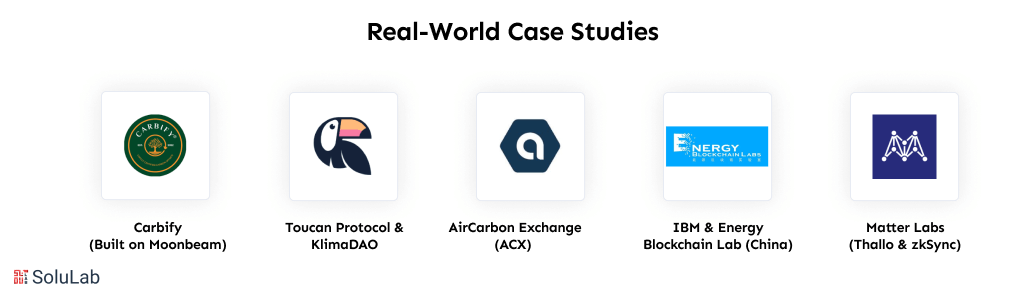
Real-World Case Studies

1. Carbify (Built on Moonbeam)

A creative project blending nature with tech.

  • Created NFTrees – tokens that represent real trees in the Amazon
    Built a dashboard to show CO₂ absorption over time
  • Used carbon credit tokenization to back learning with real-world value

Why it matters: It’s a great example of making carbon credit education platforms more engaging by connecting digital assets with physical impact. Also helps fight double-counting.

2. Toucan Protocol & KlimaDAO

Turning traditional carbon credits into tradable tokens.

  • Brought Verra-certified credits onto blockchain as BCT tokens
  • Enabled retirement and trading on-chain
  • Made climate actions traceable and public

Lesson learned: Tokenizing low-quality credits caused issues. This shows why blockchain use cases in carbon trading must prioritize quality control and verified standards.

3. AirCarbon Exchange (ACX)

A real exchange for buying and selling tokenized carbon credits.

  • Based in Singapore, aligned with Verra and Gold Standard
  • Supports real-time carbon trading with smart contracts
  • Built for serious businesses – a full carbon credit platform

Why it’s relevant: Shows how a blockchain development company can help create efficient B2B platforms with fast, transparent carbon trading tools.

4. IBM & Energy Blockchain Lab (China)

Industrial-level blockchain for government-backed systems.

  • Used Hyperledger to build a carbon trading system for China’s ETS
  • Integrated blockchain with national compliance tracking
  • Cut processing time and fraud risk with immutable records

Impact: This project proves how blockchain can go beyond education, enabling compliance for entire countries and industries.

5. Matter Labs (Thallo & zkSync)

A Web3 company leading by example.

  • Audited their own emissions with zkSync
  • Used Thallo’s Carbon-as-a-Service API to buy verified offsets
  • Shared full records on-chain for complete transparency

Takeaway: Shows how Web3 development companies and tech teams can merge carbon assets tracking with education and corporate responsibility.

How SoluLab Builds Carbon Credit Education Platforms?

As a full-stack blockchain development company, we help businesses, climate-focused startups, and NGOs bring their carbon credit education platform ideas to life. We focus on building custom, scalable, and easy-to-use platforms that solve real problems.

Here’s how we do it:

  • Design intuitive and clean UX/UI tailored for climate-tech users
  • Build smart contracts to track and verify carbon assets and user actions
  • Integrate third-party APIs for real-time carbon credit data and tokenization
  • Ensure the platform follows all regulations and is ready for audits or reporting

We also offer dedicated developer teams for faster execution and long-term support. Whether you’re an established company or a new venture, you can hire blockchain developers from our team to build and grow your platform with confidence.

Carbon Credit Tokenization Services

Conclusion

If you’re planning to build a carbon credit platform, there’s no better time than now. Education is key to creating real impact, and using blockchain technology makes that education reliable and transparent.

A well-designed, scalable, and engaging carbon credit education platform can help turn passive users into informed, climate-conscious decision-makers, driving both awareness and action.

As a trusted blockchain development company in the USA, we’re here to help you bring this vision to life. Let’s create something impactful together.

FAQs

1. What are carbon credits?

Carbon credits are tradable permits that allow an organization or individual to emit one metric ton of carbon dioxide or equivalent greenhouse gases. They create a financial incentive for reducing emissions by allowing those who reduce emissions to sell credits to others.

2. How do carbon credits work?

Carbon credits work by supporting projects that reduce or capture greenhouse gas emissions, such as reforestation or renewable energy. When a project reduces emissions, it generates credits that companies can buy to offset their own emissions, helping to meet regulatory or voluntary climate goals.

3. What makes a good carbon credit learning platform?

A great carbon credit learning platform offers interactive modules, real-time data, and easy-to-understand content that breaks down complex topics like carbon markets and offsets. It empowers users to grasp carbon assets and how they can participate in sustainable initiatives effectively.

4. What is a carbon credit platform?

A carbon credit platform is a digital marketplace or educational hub where carbon credits are issued, traded, or learned about. These platforms often use blockchain to increase transparency and prevent issues like double counting, making it easier for businesses to participate responsibly.

5. How much does it cost to build a carbon credit education platform?

The cost varies based on features and scale, but typically ranges from $20,000 to $60,000 for a minimum viable product (MVP). Factors affecting price include blockchain integration, user interface complexity, and support for carbon credit tokenization.

The Ultimate Guide To Creating a Carbon Credit Marketplace

The Ultimate Guide To Creating a Carbon Credit Marketplace

Carbon credit exchanges have developed as cutting-edge responses to the problem of reducing greenhouse gas emissions as worries about climate change and environmental sustainability continue to rise. These markets provide venues where businesses and private persons may purchase and sell carbon credits, reducing carbon footprints and assisting initiatives that encourage sustainable practices. The idea of what carbon credit marketplaces are, their importance, and how they contribute to a cleaner future will all be covered in this blog article.

What is a Carbon Credit Marketplace?

A carbon credit marketplace is a digital platform that facilitates the trading of carbon credits between entities looking to offset their carbon emissions and those involved in projects that generate verifiable emission reductions. Carbon credits represent the equivalent of one metric ton of carbon dioxide (or another greenhouse gas) that has been reduced, avoided, or removed from the atmosphere.

How Does a Carbon Credit Marketplace Work?

Carbon credit marketplaces operate on the principle of supply and demand. Project developers, such as renewable energy producers, reforestation initiatives, or energy efficiency programs, generate carbon credits through their efforts to reduce greenhouse gas emissions. These credits are then listed on the marketplace for potential buyers.

Buyers, such as businesses or individuals seeking to offset their carbon emissions, can browse through the available credits and purchase them to compensate for their own environmental impact. By purchasing carbon credits, buyers effectively support and finance projects that reduce greenhouse gas emissions, contributing to a more sustainable future.

What are the Benefits of Carbon Credit Marketplaces? 

  • Emissions Reduction

Carbon credit marketplaces incentivize the implementation of projects that directly reduce greenhouse gas emissions. By connecting emission reduction projects with interested buyers, these marketplaces drive real environmental change.

  • Financial Support for Sustainable Projects

The revenue generated from carbon credit sales provides financial support for projects aimed at mitigating climate change. This funding can enable the development and expansion of renewable energy installations, reforestation initiatives, and other sustainability-focused projects.

  • Market Efficiency and Transparency

Carbon credit marketplaces provide a transparent platform for buyers and sellers to engage in transactions. They ensure that carbon credits are properly verified and tracked, instilling trust and confidence in the marketplace.

  • Global Impact

Carbon credit marketplaces transcend geographical boundaries, allowing organizations and individuals worldwide to participate in emissions reduction efforts. This global reach maximizes the potential for positive environmental impact on a larger scale.

Read Our Blog Post: Top 10 Carbon Crypto Companies to Watch Out in 2023

What are the Different Types of Carbon Credits?

What are the Different Types of Carbon Credits?

In the pursuit of combating climate change and promoting sustainable practices, carbon credits have gained significant attention as valuable tools. These credits represent the reduction or removal of greenhouse gas emissions from the atmosphere. However, it’s important to understand that not all carbon credits are the same. In this article, we will explore the two different types of carbon credits: “Compliance” and “Voluntary,” their characteristics, and how they contribute to the global effort towards carbon neutrality.

  • Compliance Carbon Credits

Compliance carbon credits, also known as regulatory or mandatory carbon credits, are typically associated with government-imposed regulations or international agreements aimed at reducing greenhouse gas emissions. These credits are issued based on compliance with specific emission reduction targets or standards.

  • Certified Emission Reductions (CERs)

CERs are generated through Clean Development Mechanism (CDM) projects under the United Nations Framework Convention on Climate Change (UNFCCC). These projects are typically implemented in developing countries and contribute to sustainable development while reducing emissions. CERs can be used by companies to comply with their emission reduction obligations.

  • Emission Reduction Units (ERUs)

ERUs are created through Joint Implementation (JI) projects, which involve emission reduction efforts in developed countries. JI projects allow countries with emission reduction commitments to invest in emission reduction projects in other participating countries. ERUs can be used by companies to comply with their emission reduction targets.

  • Voluntary Carbon Credits

Voluntary carbon credits, as the name suggests, are not tied to any regulatory requirements but are purchased voluntarily by individuals, organizations, or businesses aiming to offset their carbon footprints and demonstrate environmental responsibility. These credits are typically used to support projects that go beyond regulatory requirements and make additional emission reductions.

  • Verified Carbon Units (VCUs)

VCUs are generated from projects that follow recognized methodologies and undergo rigorous third-party verification. These projects can include renewable energy installations, reforestation and afforestation efforts, energy efficiency initiatives, and more. VCUs allow individuals and organizations to voluntarily offset their emissions and demonstrate their sustainability commitment.

  • Gold Standard Credits

Gold Standard credits are a type of voluntary carbon credit that meet rigorous environmental and social criteria. They are issued to projects that demonstrate exceptional sustainable development outcomes, such as poverty reduction, biodiversity protection, and community engagement, in addition to emission reductions. Gold Standard credits provide an even higher level of confidence and credibility to buyers.

Check Out Our PR Article: SoluLab Bridging the Gap Between Technology And Innovation

Carbon Credits Explained: How Do Carbon Credits Work?

What are the Benefits of Carbon Credit Marketplaces? 

As the world tackles the challenges of climate change, carbon credits have emerged as a crucial mechanism to incentivize and facilitate the reduction of greenhouse gas emissions. This article aims to provide a comprehensive understanding of how carbon credits work, their purpose, and the underlying mechanisms that drive their effectiveness in combating climate change.

  • Carbon Credit Basics

A carbon credit represents a unit of measurement that quantifies the reduction, avoidance, or removal of one metric ton of carbon dioxide (CO2) or its equivalent in other greenhouse gases. The concept is based on the principle that each emission reduction has a positive environmental impact and contributes to achieving carbon neutrality.

  • Emission Calculation and Baseline

To initiate the process, a baseline or reference level of emissions is established. This baseline represents the projected amount of emissions that would occur without any emission reduction efforts. It serves as a benchmark against which the actual emissions are measured to determine carbon credit eligibility.

  • Emission Reduction Projects

Entities, such as businesses or organizations, can engage in emission reduction projects to lower their carbon footprint. These projects can encompass various strategies, including the adoption of renewable energy, energy efficiency improvements, afforestation or reforestation initiatives, or the implementation of clean technologies. The emission reductions achieved through these projects form the basis for carbon credits.

  • Verification and Certification

Once an emission reduction project is implemented, it undergoes a rigorous verification and certification process. Independent third-party organizations assess the project’s adherence to specific methodologies and criteria. The verification ensures the accuracy and validity of the emission reductions claimed, instilling confidence in the integrity of the carbon credits.

  • Carbon Credit Issuance

Upon successful verification, carbon credits are issued to the project owner or entity responsible for the emission reduction efforts. Each carbon credit represents one metric ton of CO2 equivalent reduction. These credits are registered and assigned a unique identification number to maintain traceability and prevent double-counting.

  • Carbon Credit Trading

The trading of carbon credits occurs through various mechanisms, including compliance markets and voluntary markets. Compliance markets operate under regulatory frameworks, where companies with emission reduction obligations can buy and sell carbon credits to meet their targets. Voluntary markets, on the other hand, facilitate the trading of carbon credits on a voluntary basis, allowing individuals and organizations to offset their carbon footprint or demonstrate environmental responsibility.

  • Offsetting Emissions

Buyers of carbon credits can use them to offset their own emissions. By purchasing carbon credits, individuals or organizations effectively finance emission reduction projects and contribute to global efforts in combating climate change. The offsetting process involves retiring the purchased carbon credits, ensuring that they are not reused or double-counted.

CTA 1

Why do People Use Carbon Credits?

As the world grapples with the challenges of climate change and the need for sustainable practices, carbon credits have gained significant traction as a valuable tool in the fight against greenhouse gas emissions. This article explores the reasons why individuals, organizations, and businesses choose to use carbon credits and highlights the benefits associated with their utilization.

  • Mitigating Carbon Footprint

One of the primary motivations for using carbon credits is the desire to mitigate one’s carbon footprint. By purchasing carbon credits, individuals and organizations can offset their own greenhouse gas emissions, taking responsibility for their environmental impact. This proactive approach allows them to contribute to the reduction of global emissions and support projects that foster sustainability.

  • Demonstrating Environmental Responsibility

Using carbon credits serves as a tangible demonstration of environmental responsibility. It sends a clear message that individuals and organizations are committed to mitigating climate change and taking action beyond regulatory requirements. By investing in emission reduction projects through carbon credits, they showcase their dedication to sustainability and inspire others to follow suit.

  • Achieving Carbon Neutrality

Carbon credits play a pivotal role in achieving carbon neutrality goals. By calculating and offsetting their emissions through the purchase of carbon credits, individuals and organizations can balance out their carbon footprints. This commitment to carbon neutrality aligns with the global objective of limiting global warming and transitioning to a low-carbon economy.

  • Supporting Sustainable Projects

Carbon credits provide a valuable source of financial support for sustainable projects. When individuals or organizations purchase carbon credits, they contribute to funding emission reduction initiatives, renewable energy projects, reforestation efforts, and other sustainability-focused endeavors. This financial backing not only promotes sustainable practices but also encourages the development and expansion of environmentally friendly projects.

  • Compliance with Regulatory Requirements

For businesses operating within regulatory frameworks, using carbon credits helps them meet mandatory emission reduction targets and comply with environmental regulations. By purchasing carbon credits, companies can offset a portion of their emissions, demonstrating their commitment to meeting regulatory obligations while supporting sustainable projects.

  • Enhancing Corporate Social Responsibility (CSR)

Carbon credits align with the principles of Corporate Social Responsibility (CSR) by enabling businesses to address their environmental impact and engage in sustainable practices. By incorporating carbon credits into their CSR initiatives, companies can demonstrate their commitment to the environment, strengthen their brand reputation, and attract environmentally conscious customers and partners.

  • Encouraging Innovation and Market Transformation

The utilization of carbon credits fosters innovation and market transformation. The demand for carbon credits incentivizes the development of new emission-reduction technologies, clean energy solutions, and sustainable practices. This drives market forces towards a low-carbon economy, encouraging businesses to adopt innovative approaches and transition to more sustainable business models.

Launch Your Own Carbon Credit NFT Marketplace with SoluLab

What do You Need to Know Before Using Carbon Credits?

How do carbon credits work and have gained prominence? As a tool to mitigate greenhouse gas emissions and promote sustainability. However, before diving into the world of carbon credits, it is essential to understand certain key aspects to ensure their effective and meaningful utilization. In this article, we will explore what you need to know before using carbon credits to maximize their environmental impact and align with your sustainability goals.

  • Carbon Footprint Calculation

Before purchasing carbon credits, it is crucial to calculate your carbon footprint accurately. Understanding your carbon emissions across various activities, such as energy consumption, transportation, and waste generation, provides a baseline to assess your offsetting needs. Consider utilizing reputable carbon calculators or engaging sustainability experts to help you in this process.

  • Setting Clear Objectives

Define your objectives and goals for using carbon credits. Whether it is achieving carbon neutrality, supporting specific emission reduction projects, or aligning with regulatory requirements, clarifying your intentions will guide your decision-making process. Clearly outlining your objectives will also help you choose the most appropriate carbon credit projects to support.

  • Quality Assurance and Certification

Ensure that the carbon credits you purchase are from verified and certified sources. Look for internationally recognized standards and certifications, such as the Verified Carbon Standard (VCS) or Gold Standard. These certifications guarantee that the emission reductions associated with the credits are accurately measured, verified by independent auditors, and adhere to robust methodologies.

  • Additionality and Permanence

Consider the concept of additionality when selecting carbon credits. Additionality ensures that the emission reductions achieved through supported projects would not have occurred without the financial support from carbon credit sales. Projects with strong additionality contribute to real and tangible emission reductions. Additionally, assess the permanence of the emission reductions to ensure the long-term sustainability of the projects you choose to support.

  • Project Selection and Impact

Research and evaluate the projects associated with the carbon credits. Understand the types of emission reduction activities, such as renewable energy, energy efficiency, reforestation, or waste management, and assess their alignment with your sustainability values. Consider the geographic location of the projects, their social and environmental co-benefits, and the transparency of project information to gauge their impact and credibility.

Check Out Our Press Release: SoluLab Honored By GoodFirms as the Winner of the Trusted Choice Award 2023

What are the Examples of Companies Using Carbon Credits? 

Numerous companies across different industries have recognized the importance of reducing their carbon footprint and have implemented carbon credit initiatives as part of their sustainability strategies. Here are a few examples of companies that have utilized carbon credits:

1. Microsoft

Microsoft has made a commitment to being carbon negative by 2030. To achieve this, they have implemented a carbon fee and have been purchasing carbon credits to offset their remaining emissions. They have also launched the Microsoft Carbon Removal Marketplace, which allows customers to purchase verified carbon removal credits.

2. Salesforce

Salesforce, a cloud computing company, has taken significant steps to reduce its environmental impact. They achieved net-zero greenhouse gas emissions in 2017 and continue to offset emissions through the purchase of high-quality carbon credits. They have invested in projects that promote renewable energy, energy efficiency, and reforestation.

3. Unilever

Unilever, a multinational consumer goods company, has set ambitious sustainability goals, including becoming carbon positive by 2030. They have been actively investing in renewable energy projects and have used carbon credits to offset their emissions. Unilever focuses on projects that align with its values and contribute to social and environmental co-benefits.

4. Delta Air Lines

Delta Air Lines, a major airline, has implemented various measures to reduce its carbon emissions. In addition to fleet efficiency improvements, they have invested in carbon offset projects, such as forest conservation and renewable energy. Delta offers customers the option to purchase carbon offsets to mitigate the emissions associated with their flights.

5. Apple

Apple has made significant progress in reducing its carbon footprint and has committed to being carbon-neutral across its entire supply chain by 2030. They have invested in renewable energy projects, improved energy efficiency, and implemented carbon offset initiatives. Apple has supported projects like forest conservation and the development of solar and wind farms.

CTA 2

Conclusion

What is a carbon credit marketplace? Creating a carbon credit marketplace is a complex undertaking that requires careful planning, collaboration, and a deep understanding of the principles underlying carbon offsetting. In this ultimate guide to creating a carbon credit marketplace, we have explored the key components and considerations involved in establishing an effective and successful platform.

From understanding the concept of carbon credits and their role in mitigating greenhouse gas emissions to the technical and operational aspects of building a marketplace, we have covered a wide range of topics. We have delved into the importance of robust verification and certification processes, the significance of transparency and traceability, and the role of technology in facilitating transactions and ensuring market integrity.

We have also discussed the various stakeholders involved in a carbon credit marketplace, including project developers, buyers, and verifiers, and emphasized the importance of fostering partnerships and collaboration among these actors. Furthermore, we have highlighted the need to align with internationally recognized standards and methodologies to ensure the credibility and quality of the carbon credits traded on the marketplace.

SoluLab, a well-known company in the field of carbon credit marketplace development, has a specialization in providing outstanding carbon credit marketplace development services and solutions. With a team of expert professionals, SoluLab has achieved remarkable success in creating Carbon NFTs for a wide range of business models. For more information, contact SoluLab today.

FAQs

1. What is a carbon credit marketplace?

A carbon credit marketplace is a platform or system that facilitates the buying and selling of carbon credits. It serves as a marketplace where buyers, such as companies or individuals, can purchase carbon credits to offset their carbon emissions, while sellers, such as emission reduction project owners, can sell their verified emission reductions in the form of carbon credits.

2. What is a carbon credit? Why create a carbon credit marketplace? 

Creating a carbon credit marketplace is important to promote and incentivize emission reduction efforts. It provides a transparent and efficient platform for buyers and sellers to engage in carbon credit transactions, encouraging the development of emission reduction projects and supporting the transition to a low-carbon economy.

3. How do carbon credits work?

A carbon credit marketplace typically operates by bringing together buyers and sellers of carbon credits. Sellers can register their emission reduction projects and have them verified by independent auditors. Once verified, the emission reductions are converted into carbon credits, which can be listed on the marketplace. Buyers can browse and purchase these credits to offset their own carbon emissions.

4. What are carbon credits and their key components?

A carbon credit marketplace consists of several key components, including project registration and verification processes, credit listing and trading mechanisms, robust tracking and accounting systems, and secure payment and settlement methods. It should also incorporate transparent reporting and auditing mechanisms to ensure the integrity and credibility of the marketplace.
