Talk to an Expert

Top NFT Trends That Will Build Revenue Streams to the Business

NFT Trends for Revenue Growth

In recent years, Non-Fungible Tokens (NFTs) have catapulted to the forefront of the digital economy, revolutionizing how we perceive and trade digital assets. These unique tokens, representing ownership and authenticity in the digital realm, are rapidly gaining traction across diverse industries. From art and entertainment to gaming, collectibles, and even real estate, NFT trends in 2024 have expanded their influence, making it imperative for businesses to grasp their implications. 

This blog embarks on an exploration of the burgeoning significance of NFTs in the business landscape and delves into the top NFT trends in 2024 that hold the potential to forge new revenue streams and transform the way enterprises operate in the digital age.

What are Non-Fungible Tokens?

Non-fungible tokens (NFTs) are unique digital assets that represent ownership and proof of authenticity of a specific item, piece of content, or collectible on the blockchain. Unlike cryptocurrencies such as Bitcoin or Ethereum, which are fungible and can be exchanged on a one-to-one basis, NFTs are indivisible and cannot be interchanged on an equal basis due to their distinct characteristics and data embedded within them. Each NFT is cryptographically secured, providing verifiable proof of its uniqueness and ownership, making it an invaluable tool for digital creators, collectors, and businesses in various industries.
The Growing Significance of NFT Trends in the Business Landscape

Significance of NFT Trends in the Business Landscape

Non-fungible tokens (NFTs) have surged in popularity and are significantly impacting the business landscape in various ways. These unique digital assets, which represent ownership and authenticity of digital or physical items on the blockchain, are reshaping industries and providing new avenues for revenue generation. Here, we delve into the expanding importance of NFT trends and their transformative potential for businesses:
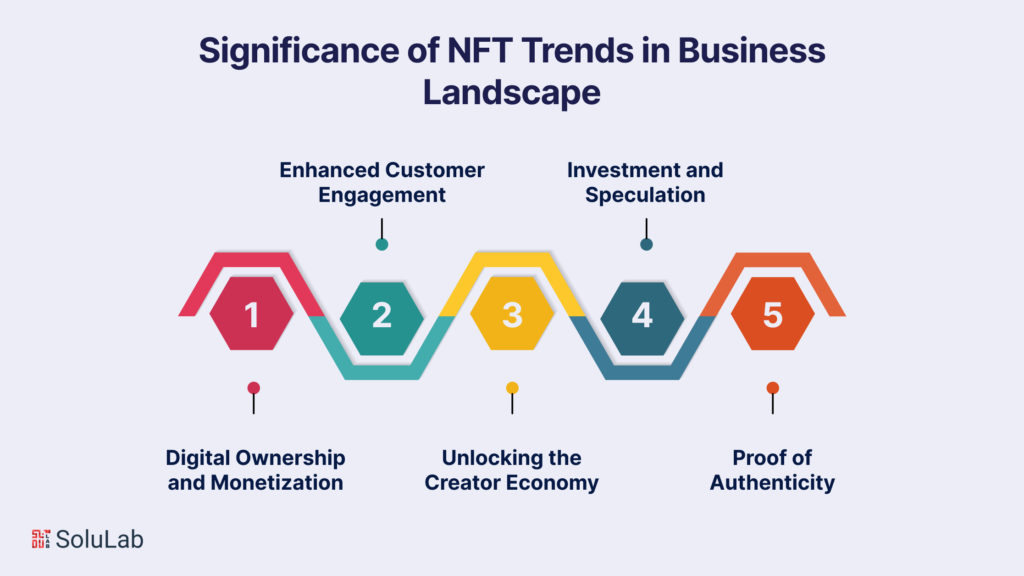
  • Digital Ownership and Monetization: NFTs enable businesses to digitize and monetize their assets like never before. Whether it’s art, music, virtual real estate, or in-game items, NFTs provide a secure and transparent way to prove ownership and sell these assets, creating new revenue streams.
  • Enhanced Customer Engagement: NFTs offer a novel way to engage with customers. Brands can create limited edition NFT collectibles, loyalty rewards, or unique digital experiences, fostering a deeper connection with their audience.
  • Unlocking the Creator Economy: NFTs empower content creators, artists, and influencers to directly monetize their work, bypassing traditional intermediaries. This democratization of revenue generation has the potential to reshape the entertainment and content industries.
  • Investment and Speculation: NFTs have become an investment asset class, attracting investors and speculators. Businesses can explore NFT-based financial products and services, opening up new opportunities in the finance sector.
  • Proof of Authenticity: NFTs serve as irrefutable proof of authenticity, making them valuable for verifying the legitimacy of luxury goods, collectibles, and rare items, reducing counterfeit concerns.

Top NFT Trends in 2024

Top NFT Trends

The world of Non-Fungible Tokens (NFTs) is constantly evolving, and 2024 promises to be a year of exciting developments. Here are the trending NFT trends to watch out for:

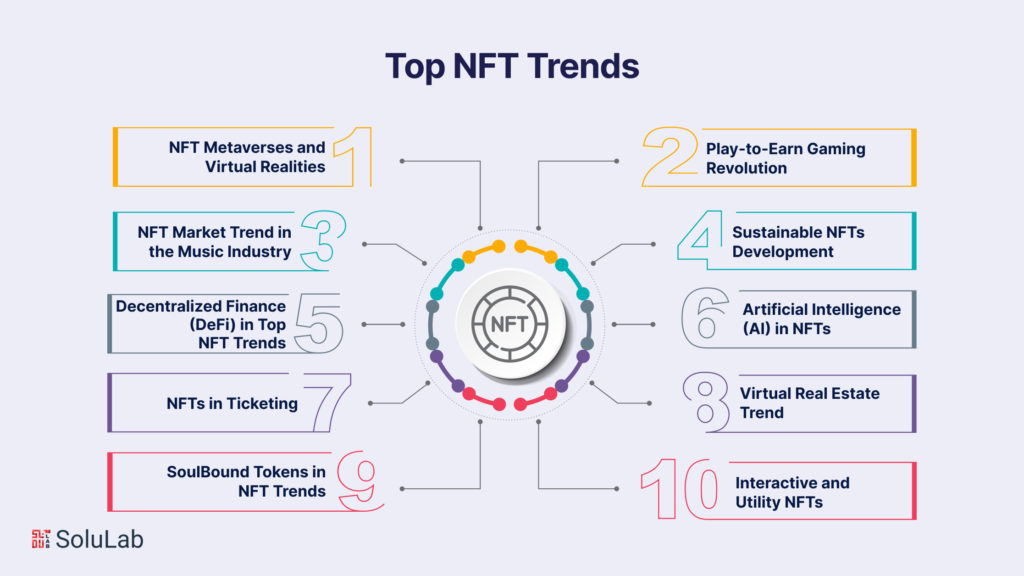
  • NFT Metaverses and Virtual Realities

In 2024, NFT-powered metaverse projects are poised to redefine the digital landscape. These immersive digital universes allow users to own, trade, and display their NFT assets within expansive virtual worlds. Metaverses are becoming hubs for social interaction, commerce, entertainment, and even work, with NFT space at the core of their economies. These digital environments hold the promise of a new era in social engagement, where users can monetize their creativity and participation. Companies are exploring opportunities for virtual brand activations, immersive events, and unique experiences within these metaverses, making them a focal point of innovation and revenue generation.

  • Play-to-Earn Gaming Revolution

The play-to-earn gaming model, powered by NFTs, is set to disrupt the gaming industry. Players can earn NFT-based rewards, tokens, and unique in-game items, allowing them to truly own and trade digital assets. The NFT industry is reshaping in-game economies, fostering a sense of ownership and value for gamers. As the trend gains momentum, we can expect an influx of blockchain-based games that prioritize player rewards and NFT integration. Game developers are increasingly focusing on creating engaging and rewarding experiences that incentivize players to invest time and resources, further blurring the line between gaming and digital asset ownership.
CTA1

  • NFT Market Trend in the Music Industry

The music industry is undergoing a transformative shift in 2024, with NFTs at the forefront. Musicians and artists are leveraging NFTs to directly engage with fans and create new revenue streams. The NFT market is being used to tokenize exclusive music releases, concert tickets, and unique merchandise. This enables artists to bypass traditional intermediaries, connect directly with their audience, and capture more of their creative value. For fans, owning music-related NFTs becomes a symbol of their support and fandom, creating a novel and personalized music experience. Expect to see more musicians and music platforms adopting NFTs as a fundamental component of their business models, redefining the way music is created, shared, and monetized.

  • Sustainable NFTs Development

With environmental concerns in focus, 2024 will witness the development of sustainable NFT Marketplace Platforms. These platforms aim to mitigate the carbon footprint associated with NFT creation and transactions. Sustainable NFT development initiatives explore blockchain networks with lower energy consumption, emphasizing eco-friendly practices. As sustainability becomes a significant concern for NFT enthusiasts and the broader public, sustainable NFTs will likely gain popularity, attracting environmentally-conscious collectors and creators. This trend aligns with the growing importance of sustainability in various industries and reflects a responsible approach to the NFT ecosystem, addressing concerns related to energy consumption and ecological impact.

  • Decentralized Finance (DeFi) in Top NFT Trends

Amid the top NFT trends of 2024, the integration of Decentralized Finance (DeFi) with the Non-Fungible Token (NFT) space is redefining how NFTs are leveraged. DeFi Protocols are enabling NFT holders to unlock liquidity and generate income from their digital assets. NFTs can now serve as collateral for DeFi loans, allowing collectors and creators to access capital without parting with their prized NFTs. Yield farming and liquidity pools are being introduced, providing opportunities for NFT holders to earn interest and rewards by staking their tokens in DeFi protocols. This synergy between NFTs and DeFi not only enhances the utility of NFTs but also addresses liquidity issues, making NFT markets more dynamic and accessible. As this trend continues to evolve, it is poised to reshape the NFT ecosystem, unlocking new financial opportunities for NFT enthusiasts and investors.

  • Artificial Intelligence (AI) in NFTs

In 2024, the convergence of Artificial Intelligence (AI) and Non-Fungible Tokens (NFTs) is a trend poised to reshape the NFT landscape. AI is being integrated into various aspects of the NFT ecosystem, enhancing the creation, curation, and management of NFTs. One notable application is AI-powered generative art. AI algorithms create unique, algorithmically generated art pieces that are tokenized as NFTs. These AI-generated artworks offer an exciting fusion of technology and creativity, pushing the boundaries of what constitutes art. AI is also playing a crucial role in NFT curation and discovery. AI-driven recommendation systems analyze user preferences and behavior to suggest NFTs tailored to individual tastes. This personalization improves the overall NFT collection browsing and buying experience, making it easier for collectors to discover new gems. Moreover, AI is being used for content verification and authentication. 

  • NFTs in Ticketing

The incorporation of Non-Fungible Tokens (NFTs) in ticketing is a transformative trend in 2024, revolutionizing the event industry. NFTs are being leveraged as digital event tickets, offering numerous advantages over traditional paper or digital tickets. These blockchain-based NFT tickets provide unparalleled security and authenticity, eliminating the risk of counterfeiting and scalping. NFTs also enable event organizers to embed dynamic features into tickets, such as exclusive content access, VIP upgrades, and even ownership rights to event-related digital assets. Furthermore, NFT development solutions are streamlining the creation and distribution of NFT tickets, making them easily accessible to event-goers. This trend not only enhances the fan experience but also introduces new revenue streams and opportunities for artists, performers, and event organizers in the entertainment and live events industry.

  • Virtual Real Estate Trend

The trend of virtual real estate is reshaping the NFT landscape, offering a glimpse into the future of digital ownership. In 2024, NFTs representing virtual land and properties within metaverses and decentralized virtual worlds are gaining unprecedented traction. These digital assets grant ownership rights to specific plots of virtual land, allowing users to develop, monetize, and customize their virtual properties. Investors, creators, and businesses are flocking to virtual real estate markets, envisioning a future where these digital landscapes become hubs for commerce, social interactions, entertainment, and even work. The concept of virtual real estate is driven by the idea that the metaverse will be the next frontier of human interaction, making ownership within these digital realms not only a status symbol but also a strategic move to participate in the emerging digital economy. As virtual real estate projects multiply and metaverse adoption grows, this trend is poised to redefine the way we perceive and utilize digital space.

  • SoulBound Tokens in NFT Trends

In the realm of NFT trends for 2024, the emergence of SoulBound Tokens is garnering significant attention. These tokens represent a novel approach to enhancing the value and uniqueness of NFT projects. SoulBound Tokens are designed to imbue NFTs with irrevocable connections to their creators or originators. This means that no matter how many times an NFT changes hands, the original creator retains a stake, such as a percentage of future sales or royalties. This innovation not only strengthens the bond between creators and their digital creations but also introduces a sustainable source of income for artists and content creators. As NFT projects 2024 continue to evolve, SoulBound Tokens are set to play a pivotal role in ensuring ongoing support for creators and enhancing the long-term value of NFT ecosystems.

  • Interactive and Utility NFTs

Interactive and Utility NFTs are a pivotal trend within the NFT space in 2024. These NFTs represent a departure from traditional static collectibles by offering holders more than just ownership. Interactive NFTs grant access to unique experiences or content, while utility NFTs confer special privileges or rights. For example, interactive NFTs can unlock exclusive virtual events, behind-the-scenes content, or even in-game interactions within the metaverse. Utility NFTs might grant voting rights in decentralized organizations, access to premium services, or real-world benefits like discounts or VIP access. This trend enriches the value proposition of NFTs, making them more engaging and practical for holders. It’s a testament to how NFTs are evolving beyond mere digital assets, becoming dynamic tools that empower users across various industries, from entertainment and gaming to finance and governance.
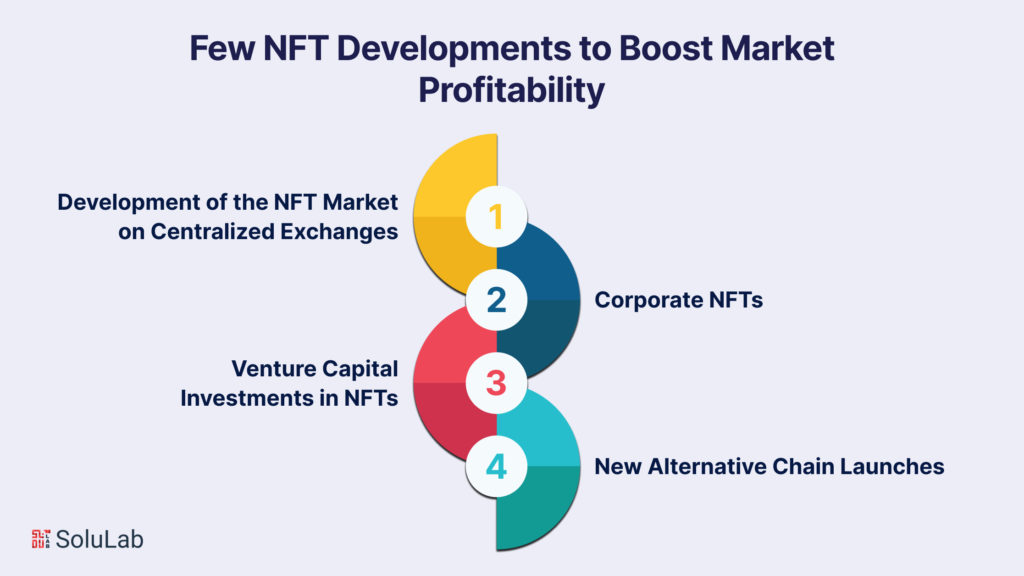
Few NFT Developments to Boost Market Profitability

Few NFT Developments to Boost Market Profitability

Many people are unsure whether the NFT sector will be viable as we approach 2024. The answer is that it relies on the patterns that develop throughout the course of the upcoming year. In this post, we’ll look at a few of the NFT developments that are most likely to boost market profitability in 2024.
  • Development of the NFT Market on Centralized Exchanges: The conventional method of purchasing NFTs is through exclusive auctions, but this can be scary for novice investors because it entails purchasing bitcoin on exchanges and running the risk of losing money due to errors. By including NFT markets on their platforms, cryptocurrency exchanges may benefit from this by giving better user experiences, lower risks, lower costs, and higher profit margins. Therefore, the idea of developing NFT Marketplaces on centralized exchanges is going to face criticism.
  • Corporate NFTs: Businesses are looking at how they may benefit both content producers and their viewers by using NFTs. NFTs, for instance, can help the music business since they offer a constant path of custody that cannot be changed, doing away with the need for expert authenticity certification services.
  • Venture Capital Investments in NFTs: Given that global NFT sales are expected to reach $634 million in September 2022, it is not surprising that venture capitalists would like to profit from the NFT mania. Many investors are seeking chances in this industry, which has led to a growth in the popularity of the practice of converting VC cash into NFTs.
  • New Alternative Chain Launches: Due to the expensive NFT transaction costs on Ethereum, developers have started using cheaper blockchains like Solana and Avalanche. As more investors and creators explore more affordable ways to mint and trade NFTs in 2024, this trend is expected to continue. Furthermore, when additional alternative chains enter the market, we could observe a rise in interoperability across various blockchain systems, giving NFT producers and consumers more freedom and accessibility.

CTA2

Conclusion

Despite the fact that NFT is just getting started, the technology has a lot of promise. The trends we’ve explored in this blog highlight the ever-evolving nature of this market and the numerous opportunities it offers to businesses looking to capitalize on digital assets. From the integration of NFTs in gaming and virtual worlds to the rise of utility NFTs and the continued growth of the metaverse, there are various avenues for businesses to explore and build revenue streams. However, it’s important to remember that the NFT market can be volatile, and success will require a thoughtful strategy, a keen understanding of market dynamics, and a focus on creating unique, valuable, and authentic digital assets.

As businesses adapt to these NFT trends and navigate the evolving landscape, it’s crucial to stay informed, remain agile, and prioritize the principles of sustainability and ethical creation. NFTs have the potential to reshape industries, and those who approach this space with innovation and integrity stand to reap the rewards while contributing positively to the broader digital ecosystem. In the coming year, we can anticipate NFTs continuing to redefine how businesses engage with their audiences, collaborate with creators, and generate revenue in the ever-expanding digital frontier.

SoluLab is at the forefront of empowering businesses in the NFT space with its cutting-edge NFT development services. By offering the ability to hire the best NFT developers, SoluLab ensures that clients have access to top-notch expertise in creating, deploying, and managing NFT projects. Whether it’s developing NFT marketplaces, minting unique digital assets, or implementing blockchain solutions for enhanced security and transparency, SoluLab’s dedicated team of experts is well-equipped to guide businesses through the complex and rapidly evolving NFT landscape. With their comprehensive NFT development services, SoluLab is a strategic partner for organizations looking to harness the immense potential of NFTs for revenue generation and digital innovation. Contact SoluLab Today and embark on a journey toward NFT-driven success.

FAQs

1. What are NFTs, and how can they benefit my business? 

NFTs, or Non-Fungible Tokens, are unique digital assets that represent ownership or proof of authenticity of digital or physical items. They can benefit your business by creating new revenue streams through the sale of digital collectibles, art, virtual real estate, or exclusive content, and by engaging your audience through tokenized experiences.

2. How can my business leverage the metaverse trend for revenue generation? 

The metaverse trend involves creating virtual, interconnected worlds where users can socialize, work, and play. Businesses can generate revenue by owning virtual real estate, hosting events, selling virtual goods, or offering immersive brand experiences within the metaverse, creating new opportunities for customer engagement and monetization.

3. What role do utility NFTs play in revenue generation? 

Utility NFTs provide access to specific services, products, or experiences. Businesses can use them to offer exclusive memberships, access to premium content, or in-game items. These NFTs not only boost customer loyalty but also create a sustainable revenue model.

4. How can NFTs be integrated into the gaming industry for profit? 

The gaming industry has embraced NFTs to enable players to own and trade in-game assets. Businesses can create and sell NFTs tied to unique in-game items, characters, or virtual real estate, creating a vibrant marketplace and monetizing the gaming ecosystem.

5. What should businesses consider when entering the NFT space to ensure profitability? 

To ensure profitability in the NFT space, businesses should carefully plan their NFT strategy, focus on creating high-quality and authentic digital assets, understand legal and regulatory considerations, and explore partnerships and collaborations within the NFT ecosystem to maximize revenue potential while adhering to ethical and sustainable practices.

Building Trust and Transparency in Your NFT Marketplace Ecosystem

Building Trust and Transparency in Your NFT Marketplace Ecosystem

The world of Non-Fungible Tokens (NFTs) has taken the digital landscape by storm, revolutionizing how we perceive ownership and exchange of digital assets. These unique, indivisible tokens, often associated with art, collectibles, virtual real estate, and even in-game items, have created new avenues for creators, investors, and enthusiasts alike.

As the NFT market continues to expand at an unprecedented rate, it has become increasingly evident that trust and transparency are the cornerstones upon which successful NFT marketplaces are built. In a realm where the value of a digital asset can stretch into the millions, establishing trust among buyers, sellers, and creators is paramount.

In this blog, we will delve deep into the intricate web of trust and transparency in the NFT marketplace ecosystem. So, without any further ado, let’s get started!

The Pivotal Role of Trust and Transparency in NFT Marketplace Ecosystem

The Pivotal Role of Trust and Transparency

Trust and transparency are the cornerstones upon which successful NFT (Non-Fungible Token) marketplaces are built. In a rapidly evolving digital landscape where the lines between the physical and virtual worlds are becoming increasingly blurred, establishing trust among buyers, sellers, and creators has become paramount. 

Here, we explore why trust and transparency play such a pivotal role in the NFT marketplace ecosystem:

Read Our Blog Also: Everything You Need to Know About Metaverse NFT Marketplace Development

1. Overcoming Skepticism

The concept of owning a digital asset, whether it’s a piece of digital art, a collectible, or virtual real estate, is still relatively new to many. Skepticism abounds, and potential participants need reassurance that their investments are not in vain. Trust and transparency provide this reassurance by demonstrating the legitimacy and authenticity of NFTs.

2. Mitigating Risk

In a marketplace where transactions can involve significant sums of money, trust and transparency are essential for risk mitigation. Buyers need to trust that they will receive the NFT they pay for, while sellers and creators want assurance that they will be compensated fairly. Transparent marketplace policies, smart contract audits, and secure authentication mechanisms help reduce the risk of fraud and disputes.

3. Fostering Community Engagement

NFT marketplaces are not just transactional platforms; they are vibrant communities of artists, collectors, gamers, and investors. These communities thrive on trust and transparency, as they form the foundation of lasting relationships. When participants feel secure and informed, they are more likely to actively engage with and contribute to the marketplace ecosystem.

Have A Look At Our Blog: How To Launch Your Own NFT Marketplace Website in Less Than 2 Days?

4. Building Reputation

In the digital age, reputation is everything. Trust and transparency contribute significantly to an NFT marketplace’s reputation. Marketplaces that consistently uphold these principles are more likely to attract high-quality creators, collectors, and investors, which, in turn, bolsters their standing in the industry.

5. Encouraging Innovation

NFT marketplace trust and transparency foster an environment where innovation can flourish. Creators are more likely to experiment and push the boundaries of what’s possible when they know their intellectual property rights are protected, and they will be compensated fairly for their work. This leads to a vibrant and dynamic marketplace with a diverse range of NFT offerings.

CTA1

6. Regulatory Compliance

As the NFT marketplace landscape matures, regulatory scrutiny is inevitable. Marketplaces that prioritize trust and transparency are better positioned to navigate the evolving regulatory landscape. They can demonstrate a commitment to compliance, protecting both themselves and their users from legal challenges.

The Significance of Trust in NFT Marketplaces

In the rapidly evolving world of NFTs (Non-Fungible Tokens), trust plays a pivotal role in shaping the success and sustainability of NFT marketplaces. These digital tokens, representing ownership of unique assets, have captured the imagination of creators, collectors, and investors worldwide. However, as the NFT ecosystem continues to expand, establishing trust has become a linchpin for marketplaces.

Read Our Blog: NFT Art for Beginners – How to Make and Sell

A. Why Trust is Crucial for NFT Marketplaces?

In the world of Non-Fungible Tokens (NFTs), trust isn’t just a desirable quality; it’s an absolute necessity. Here’s why trust is the cornerstone of NFT marketplaces:

  • Asset Authenticity: Trust is paramount to ensure that the NFTs being sold are genuine and not counterfeit. Buyers need confidence that the digital asset they are acquiring is indeed unique and verifiable.
  • Protection from Fraud: The digital realm can be a breeding ground for fraud and scams. Trustworthy NFT marketplaces employ robust security measures to protect users from fraudulent transactions and deceptive practices.
  • User Confidence: Trust breeds confidence. When users trust an NFT marketplace, they are more likely to participate actively, which, in turn, drives the growth and vibrancy of the ecosystem.
  • Marketplace Integrity: Upholding trust is essential for maintaining the integrity of the marketplace. Transparent, fair, and ethical dealings are the bedrock of reputable NFT marketplace platforms.
  • Creator Empowerment: Trust is crucial for creators who rely on NFT marketplaces to protect their intellectual property rights and ensure they are fairly compensated for their work.
  • Community Building: NFT marketplaces are more than transactional platforms; they are communities. Trust among participants fosters long-lasting relationships and a sense of belonging.

B. Impact of Trust on User Participation and Investment

Trust and transparency in the NFT marketplace have a profound impact on both user participation and investment. Here’s how it influences these crucial aspects:

  • Increased Participation: When users trust the platform, they are more likely to actively participate by buying, selling, and creating NFTs. This increases the overall activity within the marketplace, making it more dynamic and appealing.
  • Higher Investment Confidence: Trust instills confidence in investors. They are more willing to allocate significant capital to NFTs when they believe their investments are protected from fraud and counterfeit assets.
  • Marketplace Growth: Trust drives the growth of the NFT marketplace ecosystem. As more participants join and transact with confidence, the marketplace becomes a hub for digital asset exchange and innovation.

Know More: How will White-Label NFT Marketplace Development Benefit Your Business?

  • Quality Content Creation: Creators are more likely to produce high-quality content when they trust the platform to protect their rights and ensure they receive fair compensation. This benefits both creators and the marketplace.
  • Positive Feedback Loop: Trust creates a positive feedback loop. As users see the benefits of a trustworthy marketplace, they become advocates, attracting more participants and further reinforcing trust.

Establishing Trust in Your NFT Marketplace Ecosystem

Establishing Trust in Your NFT Marketplace

Building trust in your NFT (Non-Fungible Token) marketplace is not just a goal; it’s a necessity. Trust is the foundation upon which successful NFT ecosystems thrive. Users need to feel confident in the authenticity of the digital assets they’re buying, the fairness of transactions, and the security of their investments. Here are essential steps to establish trust in your NFT marketplace:

1. Robust Authentication Mechanisms

  • Two-Factor Authentication (2FA): Implement 2FA for user accounts. This adds an extra layer of security by requiring users to provide a second authentication factor, typically from a mobile app or SMS, in addition to their password.
  • KYC (Know Your Customer) Verification: To enhance trust further, consider implementing KYC procedures. This involves verifying the identity of users through documents like government-issued IDs. While it can be a more significant barrier to entry, it can significantly reduce fraudulent activities.

Read Also: Why Should You Start Your Own NFT Marketplace Business?

2. Transparent Marketplace Policies

  • Clear Terms and Conditions: Ensure that your marketplace’s terms and conditions are clearly defined and easily accessible to all users. This includes policies related to transactions, fees, refunds, and dispute resolution.
  • Detailed Fee Structures: Transparency in fee structures is vital. Users should know how much they will be charged for listing, selling, and withdrawing funds. Avoid hidden fees or unexpected charges.

3. Smart Contract Auditing

  • Importance of Secure and Transparent Smart Contracts: NFTs rely on smart contracts, and their security is paramount. Conduct thorough audits of your smart contracts to identify and address vulnerabilities. Users need assurance that the code governing their NFTs is robust and trustworthy.
  • Third-Party Audits: Consider hiring third-party audit firms to review your smart contracts. Independent audits add an extra layer of credibility, demonstrating your commitment to security and transparency.

4. User Ratings and Reviews

  • Encourage Honest Feedback: Enable a rating and review system for both buyers and sellers. This allows users to share their experiences openly. Encourage honest feedback and ensure that reviews are visible and easily accessible.
  • Address User Concerns Promptly: Show users that their concerns are taken seriously. Respond promptly to inquiries and complaints. A proactive customer support team can make a significant difference in building trust.

5. Regularly Communicate Updates

  • Platform Updates: Keep users informed about any changes, updates, or improvements to your platform. Transparency in your development process instills confidence that you are actively working to make the platform better.
  • Security Alerts: In the event of security breaches or potential threats, communicate openly and swiftly. Provide guidance on how users can protect their assets and what steps you are taking to rectify the situation.

Know More: Top NFT Development Companies To Look At In 2024

6. Secure Wallet Integration

  • Wallet Security: Emphasize the importance of wallet security to your users. Provide guidelines on how to secure their cryptocurrency wallets, including hardware wallet recommendations and best practices for private key management.
  • Multi-Signature Wallets: Consider integrating multi-signature wallets for added security, where multiple keys are required to authorize a transaction.

By implementing these strategies, you can establish trust in your NFT marketplace and create an environment where users feel confident, secure, and empowered to participate actively. Trust is a valuable asset in the NFT ecosystem, and its cultivation is essential for the long-term success of your platform.

Future Trends of Trust and Transparency within NFT Marketplace Ecosystem

Future Trends of Trust and Transparency

In the dynamic world of NFT (Non-Fungible Token) marketplaces, trust and transparency are evolving concepts that will continue to shape the industry’s trajectory. As technology advances and the ecosystem matures, several future trends are expected to play a significant role in enhancing trust and transparency within NFT marketplaces:

1. Advanced Smart Contracts

The future of NFT marketplaces will likely feature even more advanced and secure smart contracts. These contracts will not only govern ownership and transactions but also include self-executing agreements that automatically address disputes and conflicts. Advanced smart contracts in NFT Marketplace development solutions will further reduce the need for intermediaries and enhance transparency in transactions.

2. Blockchain Upgrades

Blockchain technology, which underpins NFTs, is continuously evolving. Future blockchain upgrades will focus on scalability, speed, and energy efficiency. These improvements will ensure that NFT marketplaces can handle increased traffic, reduce transaction costs, and have a lower environmental impact, thereby enhancing trust in the technology itself.

Check Out Our Blog: The Role of DAOs and Their Benefits in the NFT Ecosystem

3. Decentralized Identity Verification

Decentralized identity solutions, often based on blockchain technology, will become more prevalent. Users will have control over their personal information and identity verification, reducing the need for centralized KYC processes. This will enhance privacy while maintaining trust and security in NFT transactions.

4. Immutable Provenance

Blockchain’s immutable ledger will continue to be leveraged for provenance tracking. Users will be able to trace the entire history of an NFT, including its creation, ownership changes, and transactions, with timestamped records. Immutable provenance will further protect against fraud and enhance transparency.

5. Real-time Analytics

Advanced analytics and data visualization tools will provide users with real-time insights into the NFT marketplace’s health and performance. This transparency will help users make informed decisions about their investments, fostering trust in the marketplace.

CTA2

Conclusion

In the ever-evolving world of NFT marketplaces, trust and transparency are the bedrock upon which success and longevity are built. As we’ve explored the significance of trust, the impact it has on user participation and investment, and the strategies to establish it in NFT marketplaces, it’s clear that these principles are non-negotiable. They inspire confidence, foster community, and drive the growth of this exciting ecosystem.

Looking ahead, the future trends we’ve discussed, from advanced smart contracts to decentralized identity verification and sustainability measures, promise to elevate trust and transparency to new heights. These developments are not just beneficial; they are essential for the continued evolution of NFT marketplaces.

At SoluLab, we understand the importance of staying ahead of the curve in the world of NFT marketplace development. Being an NFT marketplace development company, with our expertise in blockchain technology and decentralized applications, we can provide solutions that align with these future trends, helping NFT marketplaces build the trust and transparency necessary for long-term success. Whether it’s implementing advanced smart contracts or creating secure and scalable blockchain solutions, hire skilled NFT developers from SoluLab as it is your partner in navigating the ever-changing landscape of NFT marketplaces. Together, we can shape a future where trust and transparency are not just aspirations but the very foundations of this digital revolution. Partner with SoluLab today and embark on a journey where innovation meets trust in the world of NFT marketplaces.

FAQs

1. What Are NFT Marketplaces, and Why Do They Need Trust and Transparency?

NFT (Non-Fungible Token) marketplaces are platforms where digital assets are bought, sold, and traded. Trust and transparency are crucial because they ensure the authenticity of NFTs, protect users from fraud, and create a secure environment for transactions.

2. How Can I Verify the Authenticity of an NFT in a Marketplace?

To verify the authenticity of an NFT, check for transparent provenance on the blockchain. Look for timestamped records of ownership changes and consider using reputable marketplaces that conduct smart contract audits. Also, read user reviews and ratings to gauge the marketplace’s credibility.

3. How Do NFT Marketplaces Ensure Fairness in Transactions?

NFT marketplaces promote fairness through transparent fee structures and clear terms and conditions. Many platforms also employ decentralized governance mechanisms like DAOs, where users have a say in platform policies, ensuring decisions are made collectively and transparently.

4. Are There Any Legal and Regulatory Considerations for NFT Marketplaces?

Yes, NFT marketplaces must navigate legal and regulatory requirements, including intellectual property rights and tax implications. Compliance with regional and international regulations is essential to maintain trust and transparency in the marketplace.

5. How Can SoluLab Assist in Enhancing Trust and Transparency in NFT Marketplaces?

SoluLab offers expertise in blockchain development solutions and decentralized applications. We can help NFT marketplaces implement advanced smart contracts, ensure secure transactions, and align with future trends in the industry, ultimately enhancing trust and transparency in your platform.

How to Market and Promote Your NFT Marketplace Effectively?

How to Market and Promote Your NFT Marketplace Effectively?

Non-fungible tokens (NFTs) have emerged as a game-changing innovation in the fast-growing field of digital assets. These unique, indivisible tokens, often representing digital or physical assets, have created a buzz in the art, entertainment, and collectibles industries. As NFTs gain widespread recognition, so do the platforms that facilitate their creation, sale, and exchange—NFT marketplaces.

Launching your NFT marketplace is an exciting venture, but in a landscape becoming increasingly crowded, effective marketing and promotion are key to standing out. In this blog, let’s explore strategies and best practices to help you successfully market and promote your NFT marketplace.

Understanding Your Niche-to-Market NFT Marketplace

Understanding Your Niche-to-Market NFT Marketplace

Know Your Audience: One of the first steps in marketing your NFT marketplace effectively is understanding your target audience. NFTs cover a broad spectrum, from digital art and music to virtual real estate and collectibles. To tailor your marketing efforts, you must identify your niche within the NFT space. Consider the following questions:

  • What types of NFTs will your platform primarily feature?
  • Who are the potential buyers and creators in your chosen niche?
  • What are their interests, preferences, and motivations for engaging with NFTs?

Conduct Market Research: Conducting thorough market research is crucial. It helps you gain insights into your potential users and competitors. Explore existing NFT marketplaces within your niche to understand what works and what gaps you can fill. Research your target audience’s online behavior and interests to craft targeted marketing campaigns.

Know Your Competitors: To succeed in your NFT marketplace venture, you need to be aware of the competition. Analyze other NFT marketplace platforms within your niche, noting their strengths, weaknesses, and strategies. Identify gaps or areas where your marketplace can offer something unique. Your goal is not just to replicate what others are doing but to find a distinct position in the market.

User Personas: Create detailed user personas to represent your target audience segments. These personas should include demographic information, behaviors, goals, and pain points. Understanding your users on a personal level will help you tailor your marketing efforts to resonate with them effectively.

Market Trends: Stay up-to-date with trends in the NFT space and your niche. Monitor the kinds of NFTs that gain attention and the artists or creators making waves. Knowing what’s trending can help you curate your platform’s content and anticipate user preferences.

Read Also: Solana NFT Marketplace: How to build your own NFT Marketplace on Solana

Creating a Unique Selling Proposition (USP) for Your NFT Marketplace

Creating a Unique Selling Proposition (USP) for Your NFT Marketplace

In a crowded NFT marketplace services/landscape, having a Unique Selling Proposition (USP) is paramount. Your USP should clearly communicate what sets your platform apart from the competition and why users should choose your marketplace. Consider the following strategies to create a compelling USP:

  • Exclusivity: Offer exclusive NFT drops or collaborations that users can’t find elsewhere. Limited editions and unique partnerships can generate buzz and attract both creators and collectors.
  • Ease of Use: Ensure your platform is user-friendly and intuitive. A seamless user experience, from creating an account to minting NFTs and making transactions, can be a strong selling point.
  • Low Fees: Consider competitive fee structures for creators and buyers. Transparent fee policies can be a significant attraction.

CTA1

  • Community Engagement: Build a strong and engaged user community around your platform. Active communities can foster loyalty, word-of-mouth marketing, and valuable feedback.
  • Quality Curation: Curation is the key to ensuring that your platform showcases high-quality NFTs. Avoid clutter and low-value items in your marketplace. Implement a rigorous curation process to ensure that only valuable and authentic NFTs are featured.
  • Exclusivity and Rarity: Exclusivity is a powerful driver in the NFT market. Offer limited edition NFT drops or partnerships with renowned creators to create a sense of rarity and value. Scarcity often drives demand, and collectors are often drawn to the idea of owning something unique or one-of-a-kind.
  • User-Friendly Experience: The user experience is critical. Make sure your platform is simple to use and comprehend. From creating accounts to minting NFTs and conducting transactions, every step should be intuitive. Complex or confusing processes can deter users.
  • Transparent Fee Structure: Be transparent about your fee structure. Hidden or unclear fees can lead to mistrust among users. Consider competitive fees for creators and buyers, and clearly communicate how fees are calculated and applied.

Know More: Best Tron NFT Marketplace Platforms of 2025

  • Building a Community: Community building is essential. Encourage interactions among users, such as discussions, feedback sharing, and collaborations. Actively engage with your community on social media and within your platform to foster a sense of belonging.

Marketing Strategies for Your NFT Marketplace

Marketing Strategies for Your NFT Marketplace

With a clear understanding of your niche and a compelling Unique Selling Proposition (USP), it’s time to dive into effective marketing strategies for your NFT marketplace. Successful promotion involves reaching your target audience, building trust, and creating a buzz. Here are essential strategies to consider:

1. Leveraging Social Media

  • Harness the Power of Visual Platforms: Visual content is a cornerstone of NFT marketing. Utilize platforms like Instagram and Pinterest to showcase NFT artwork and assets. Regularly post high-quality visuals and engage with your audience through comments, likes, and shares.
  • Twitter Engagement: Twitter is a hub for NFT discussions and announcements. Build a strong presence on Twitter by following key players in the NFT community, participating in conversations, and sharing updates about your marketplace.
  • Discord Communities: Discord is a popular platform for NFT communities. Create and manage a Discord server for your marketplace to facilitate discussions, host AMAs (Ask Me Anything sessions), and engage with your community.

2. Influencer Marketing

  • Identify Niche Influencers: Collaborate with influencers within your niche. These influencers can promote your platform to their dedicated followers who are interested in NFTs within your chosen category. Authentic endorsements can drive significant traffic.
  • Sponsored Content: Consider sponsoring influencer content, such as YouTube reviews, live streams, or blog posts that feature your platform. Make sure the material is relevant to your USP and connects with your target audience.

Have A Look At Our Blog: How to Build an NFT Marketplace from Scratch

3. Community Building

  • Foster Community Engagement: Actively engage with your community through regular updates, discussions, and contests. Encourage user-generated content, such as showcasing user-created NFTs on your platform or social media.
  • Feedback Loops: Listen to user feedback and implement changes based on their suggestions. When users feel heard and see improvements, they’re more likely to become loyal advocates for your platform.
  • Events and Virtual Gatherings: Host virtual events, webinars, or conferences related to your niche. To ensure seamless streaming and global reach, consider using a live TV CDN that can handle high traffic and deliver content without buffering or delays.

4. SEO and Content Marketing

  • Content Creation: Develop high-quality, informative content related to NFTs in your niche. Create blog posts, guides, tutorials, and videos that address common questions and challenges faced by your target audience.
  • Keyword Optimization: Optimize your content for relevant keywords. Use tools like Google Keyword Planner to identify search terms that your potential users are looking for.
  • Guest Posting: Contribute guest posts to established blogs and websites within your niche, either on your own or by working with a guest posting agency. This not only builds backlinks but also establishes your platform as an authority.

5. Paid Advertising and Partnerships

  • Targeted Ads: Invest in paid advertising efforts on sites such as Google Ads or Facebook. Target specific demographics, interests, and behaviors that align with your niche.
  • Strategic Partnerships: Collaborate with other NFT marketplaces, artists, or influencers for joint promotions. Partnerships can expand your reach and introduce your platform to new audiences.

Read Also: Benefits Of An NFT Marketplace On Cardano

6. Data Analytics and Iteration

  • Track User Behavior: Utilize web analytics tools to monitor user behavior on your platform. Analyze which NFTs are gaining traction, how users navigate your site, and where they drop off.
  • A/B Testing: Conduct A/B tests to optimize different elements of your platform, such as landing pages, call-to-action buttons, or email subject lines. Data-driven improvements can enhance user engagement and conversions.
  • Iterate and Adapt: Continuously iterate your marketing strategies based on data insights. What works today may not work tomorrow in the dynamic NFT landscape.

7. Security and Trust

Building and maintaining trust is paramount in the NFT marketplace development. Here are essential steps to enhance security and instill trust among users:

  • Secure Transactions: Implement robust security measures for transactions, including encryption and multi-factor authentication. Users should feel confident about the safety of their assets.
  • Smart Contract Audits: If your platform uses smart contracts, ensure they undergo rigorous security audits to prevent vulnerabilities and potential hacks.
  • QR Codes for Easy NFT Access: Beyond authentication, the QR code Generator can be used to simplify NFT transfers and access. Users can scan a QR code to view, share, or display their NFTs without needing to log into their wallets manually. This is particularly useful for physical NFT integrations such as digital artwork linked to QR codes on event tickets, merchandise, or real-world collectibles.
  • Verified Profiles: Offer profile verification for creators and collectors. Verified profiles can add a layer of trust, assuring users of the authenticity of participants.
  • Transparent Policies: Clearly communicate your platform’s policies, including fee structures, dispute resolution, and ownership rights. Transparency fosters trust among users.

Read Our Blog: What are some White-Label NFT Marketplace Solutions?

8. Legal and Compliance Considerations

Navigating the legal landscape is essential for the long-term sustainability of your NFT marketplace development :

  • Regulatory Compliance: Stay informed about regulations related to NFTs and cryptocurrencies in your jurisdiction. Comply with anti-money laundering (AML) and know-your-customer (KYC) requirements if necessary.
  • Intellectual Property Rights: Implement policies to protect intellectual property rights. Ensure that creators have the appropriate rights to mint and sell NFTs on your platform.
  • Terms of Service and Privacy: Draft comprehensive terms of service and privacy policies that govern user interactions on your platform. Clearly outline user responsibilities and data handling practices.

CTA2

Conclusion

Effectively marketing and promoting your NFT marketplace is a multifaceted endeavor that combines understanding your niche, creating a compelling USP, and implementing a range of strategies to reach your target audience. By leveraging social media, engaging influencers, building a strong community, and focusing on security and compliance, you can establish a reputable presence in the NFT ecosystem.

In this dynamic landscape, adaptability and data-driven decision-making are key. Continuously assess your marketing efforts, listen to user feedback, and evolve your strategies to meet the changing demands of NFT  development companies. With the right approach and dedication, your NFT marketplace can thrive and contribute to the growing world of digital assets.

SoluLab is a leading blockchain and software development company known for its innovative solutions in the digital landscape. With a commitment to cutting-edge technology and a track record of successful projects, SoluLab has established itself as a trusted partner for businesses seeking to navigate the evolving world of blockchain and NFTs (Non-Fungible Tokens). Their expertise extends to creating secure and user-friendly NFT marketplaces, aligning perfectly with the topic of effectively marketing and promoting such platforms. By leveraging SoluLab’s technical prowess and industry insights, businesses can not only develop unique NFT marketplaces but also gain the guidance needed to implement marketing and promotional strategies that resonate with their target audiences.

Our NFT Website Development Company offers secure and customizable NFT marketplace development services, emphasizing user-friendliness and security through digital wallets and smart contracts. We have a team of experienced NFT developers specializing in cryptocurrency and blockchain solutions, providing top-tier NFT services, including blockchain technology and smart contract development for process automation. Our user-friendly and advanced platform development, along with highly secure digital wallets tailored to your business needs, ensures a seamless NFT experience. Contact SoluLab today to explore our NFT solutions.

FAQs

1. What is the role of market research in promoting an NFT marketplace?

Market research is essential for understanding your target audience, competitors, and trends within your niche. It helps you tailor your marketing efforts, create user personas, and identify opportunities for differentiation. By conducting thorough research, you can make informed decisions and refine your strategies to effectively reach your audience.

2. How can I create a Unique Selling Proposition (USP) for my NFT marketplace?

Creating a USP involves identifying what makes your platform unique. You can do this by offering exclusive NFT drops, ensuring a user-friendly experience, setting transparent fee structures, fostering community engagement, and emphasizing quality curation. Your USP should clearly communicate why users should choose your marketplace over others.

3. Why is community building important for an NFT marketplace?

Community building is crucial for several reasons. It fosters user loyalty, encourages word-of-mouth marketing, and provides valuable feedback. A strong community can also enhance the reputation and credibility of your marketplace. Active engagement with your user base can create a sense of belonging and trust, making users more likely to return and participate.

4. How can I ensure the quality of NFTs in my marketplace?

Quality curation is key to maintaining the reputation and trustworthiness of your NFT marketplace. Implement a rigorous curation process that includes verifying the authenticity of NFTs and ensuring they meet your platform’s quality standards. Avoid clutter and low-value items by carefully selecting which NFTs to feature on your platform.

5. What legal and compliance considerations should I be aware of when operating an NFT marketplace?

Operating an NFT marketplace comes with legal and regulatory responsibilities. You may need to address issues such as copyright infringement, intellectual property rights, tax compliance, and data privacy. Consult with legal experts who specialize in blockchain and digital assets to ensure that your platform operates within the bounds of relevant laws and regulations.
