


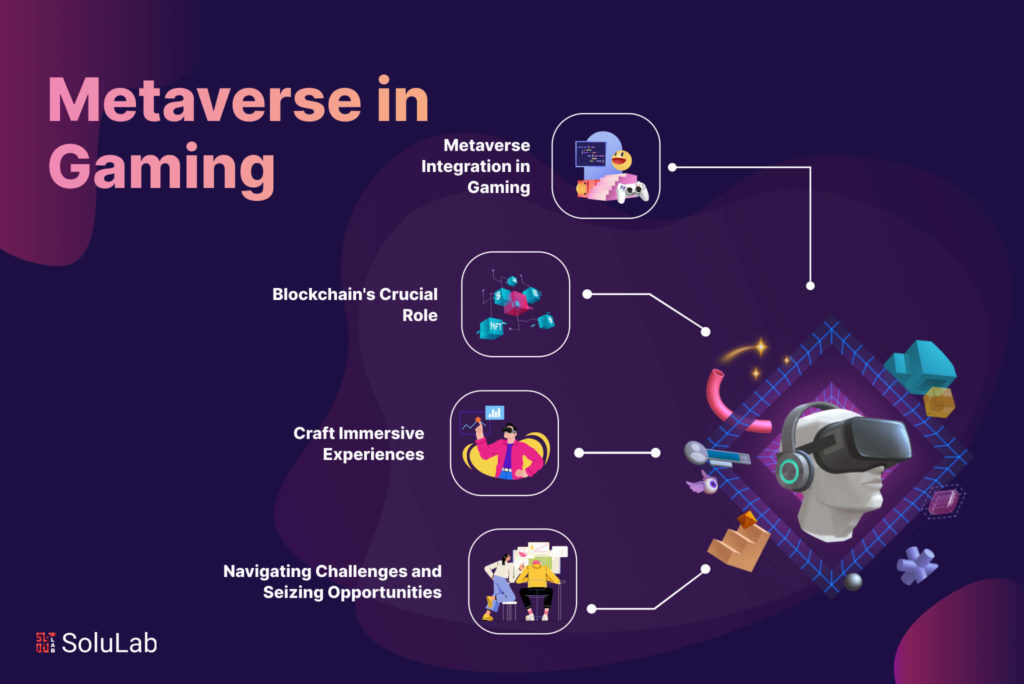
Welcome to the fascinating frontier where the virtual and real worlds collide, changing the gaming industry as we know it. With this blog, we encourage you to explore the Metaverse, a dynamic, networked virtual environment fundamentally changing the gaming industry. We will help you explore Metaverse gaming in detail and see how this significant idea goes beyond traditional boundaries to provide users with a distinctive experience interacting with virtual worlds.
Understanding the importance of layer 1 technology has been made easier with this blog which guarantees security and decentralized in this vast virtual environment. Through the use of layer 1 technologies, developers can construct safe virtual economies that give users ownership of assets, empowering them beyond just making games. Join us as we walk you through interesting instances and explore all you need to know about developing games for the metaverse.
Embark on a transformative journey where virtual landscapes converge with reality, and gaming transcends conventional limits. In this exploration of Metaverse Gaming, we delve into the foundation of blockchain, the nuances of game development, and the challenges and opportunities that define this dynamic space. From case studies illuminating success stories to glimpses into the future of gaming, join us in deciphering the Metaverse’s intricacies and unlocking a realm of limitless possibilities.
The Metaverse is a revolutionary concept that has permeated the gaming industry, offering an expansive, interconnected virtual space where gaming experiences transcend traditional boundaries. The integration of the Metaverse in gaming marks a paradigm shift, redefining how players engage with virtual environments. It’s not merely an evolution but a groundbreaking leap into a dynamic and shared virtual universe.
The significance of the Metaverse in gaming cannot be overstated. It introduces a novel way for developers to craft immersive experiences that seamlessly blend reality with the virtual realm. Metaverse Gaming goes beyond conventional gameplay, enabling players to navigate through interconnected game worlds, fostering a sense of continuity and shared experiences. As developers embark on creating games for the Metaverse, they enter a realm where creativity knows no bounds, and the virtual world becomes a canvas for infinite possibilities.
In the Metaverse, the integration of Layer 1 blockchain technology plays a pivotal role, ensuring decentralization and security at its core. The Metaverse in gaming relies on the robustness of Layer 1, as it provides the foundational structure for the creation of secure virtual economies and the protection of in-game assets. Developers leveraging Layer 1 solutions are not just building games; they are architects of a secure and transparent Metaverse where player autonomy and asset ownership are paramount.
In the fast-evolving landscape of Layer 1 blockchains, developers have a myriad of options to anchor their Metaverse projects securely and efficiently. Ethereum 2.0, Binance Smart Chain, Solana, and others constitute the forefront of this technological wave. Understanding the nuances of these blockchains becomes essential as developers navigate the Metaverse landscape, making informed choices that shape the future of gaming in this interconnected virtual universe.
Dive into the heart of Metaverse Gaming as we define this interconnected virtual space within the gaming landscape. Explore seamless transitions between game worlds, the evolution from virtual and augmented reality, and the key components shaping the Metaverse experience. Gain insights into crafting gaming narratives that align with the principles of this dynamic and shared virtual universe.
In the gaming context, the Metaverse is a collective and interconnected virtual space that transcends individual game worlds. Metaverse in gaming is an environment where players seamlessly transition between diverse virtual landscapes, fostering a sense of continuity and shared experiences. Developers crafting games for the Metaverse must embrace this definition, ensuring their creations align with the overarching principles of this dynamic and interconnected virtual universe.
The evolution from virtual reality (VR) metaverse and augmented reality (AR) has been instrumental in shaping the Metaverse in gaming. Virtual reality immerses players entirely in computer-generated environments, while augmented reality overlays digital content onto the real world. Metaverse in gaming ingeniously integrates these technologies, allowing developers to craft gaming experiences that seamlessly blend virtual and real-world elements.
The Metaverse in gaming is a multifaceted construct with interconnected game worlds, seamless transitions between VR and AR, and a robust infrastructure supporting a massive, persistent virtual universe. Developers need to comprehend and leverage these key components, creating Metaverse gaming experiences that captivate players and offer a sense of continuity across diverse virtual landscapes.
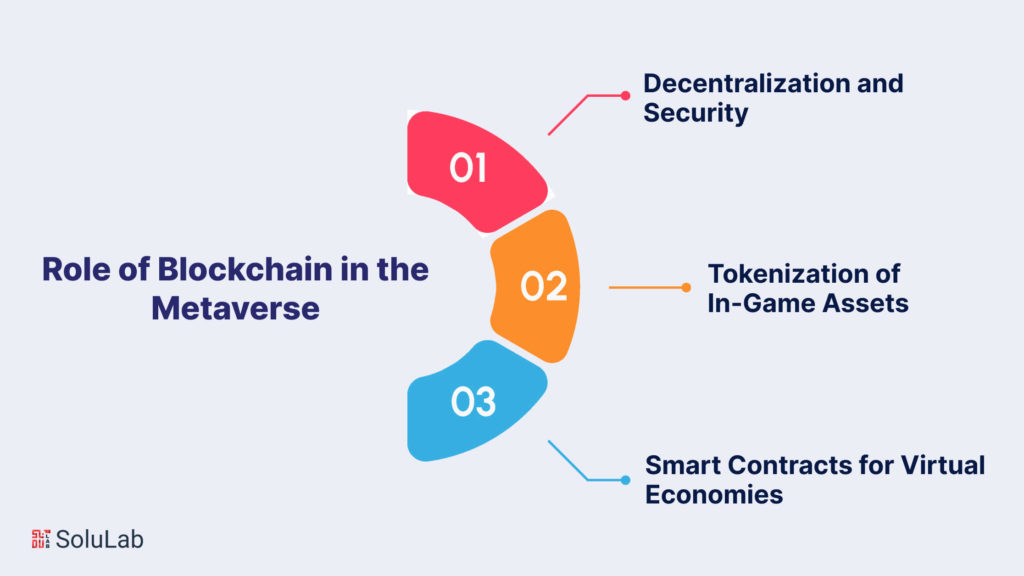
Uncover the pivotal role of blockchain technology in shaping the Metaverse. From ensuring decentralization and security to tokenizing in-game assets and deploying smart contracts, this section unveils how blockchain becomes the bedrock of player autonomy, transparent virtual economies, and the seamless integration of Metaverse in gaming.
Decentralization and security form the bedrock of the Metaverse gaming experience. The Metaverse in gaming thrives on blockchain’s capability to ensure that no central authority governs virtual worlds. This decentralized approach empowers players with autonomy and ownership over their in-game assets. Security features embedded in blockchain technology are instrumental in safeguarding these assets, preventing fraud, and contributing to the overall integrity of the gaming environment.
Tokenization is a transformative concept within the Metaverse gaming space. It redefines in-game assets by transforming them into unique, tradable tokens on the blockchain. This innovative approach not only adds real-world value to virtual items but also enables players to truly own and trade their in-game assets. Developers leveraging tokenization contribute to the creation of a player-driven economy within the Metaverse.
Smart contracts play a pivotal role in shaping virtual economies within the Metaverse. By automating transactions and agreements, smart contracts introduce dynamic economic interactions. Whether facilitating in-game purchases, managing asset exchanges, or implementing decentralized governance, smart contracts contribute to the creation of a player-centric, decentralized virtual economy.

Delve into the art and science of crafting Metaverse games. Discover design principles emphasizing interoperability and user-generated content. Navigate through technical considerations such as blockchain integration, scalability, and optimal performance, ensuring that your creations align with the immersive and interconnected nature of the Metaverse.
Designing games for the Metaverse demands a holistic approach grounded in key principles. Interoperability, the seamless transition between different game worlds, becomes paramount. Developers must prioritize designing transitions that allow players to explore different realms effortlessly. User-Generated Content (UGC) is another fundamental principle, empowering players to actively contribute to the evolving virtual universe. This inclusion transforms players from mere participants to active contributors, shaping the Metaverse gaming experience collaboratively.
Interoperability ensures fluid movement between diverse virtual landscapes. Creating a cohesive Metaverse experience involves prioritizing design for seamless transitions, allowing players to explore different realms without friction. Developers must craft interconnected narratives, enabling a continuous and immersive journey for players navigating through different game worlds.
User-Generated Content (UGC) fosters a sense of community and creativity within the Metaverse. Allowing players to contribute their content, whether designing virtual spaces, creating in-game assets, or shaping narratives, transforms them into active contributors. Developers must implement systems that facilitate and reward UGC, elevating the Metaverse experience by allowing players to leave their indelible mark on the virtual universe.
Technical considerations in Metaverse game development span various aspects, from integrating VR and AR technologies to ensuring scalability and optimal performance.
The integration of blockchain technology demands meticulous consideration. Developers must choose an appropriate blockchain platform, such as Ethereum, Binance Smart Chain, or specialized blockchains for gaming. Compatibility, scalability, and security are critical factors for successful blockchain integration within the Metaverse.
Scalability is a paramount concern in the Metaverse, where the virtual world must accommodate a potentially massive player base. Ensuring optimal performance guarantees a seamless and immersive experience, regardless of the player’s hardware capabilities. Developers must implement efficient server architectures, leverage content delivery networks, and employ optimization techniques to meet the demands of a dynamic and evolving Metaverse.
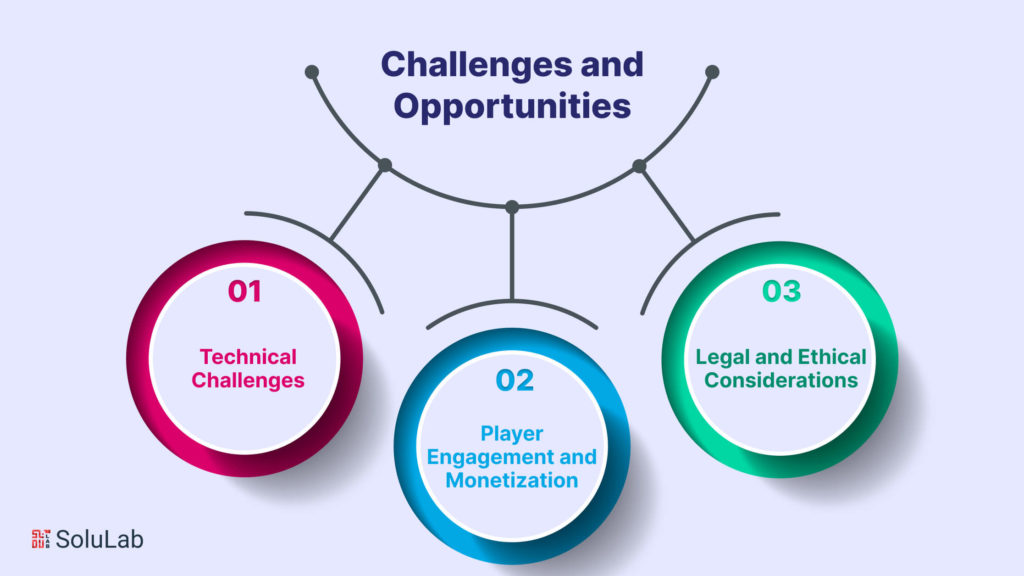
Explore the hurdles and possibilities within the Metaverse gaming landscape. From technical challenges in VR and AR integration to innovative monetization strategies, grasp the multifaceted nature of developing games that captivate players in this ever-evolving virtual frontier.
Metaverse game developers encounter technical challenges that demand innovative solutions. The seamless integration of VR and AR, especially across different devices, poses complexity. Real-time rendering and synchronization require meticulous attention to detail. Developers must innovate and overcome these challenges to deliver a Metaverse gaming experience that is not only immersive but also accessible to a diverse audience.
Player engagement is both a challenge and an opportunity within the Metaverse. Developers must craft narratives and gameplay mechanics that captivate players, encouraging prolonged interaction. Monetization strategies within the Metaverse can include innovative approaches like NFT-based in-game assets, subscription models, and virtual goods transactions. The evolving landscape provides a canvas for developers to explore novel ways of engaging players and generating revenue.
As the Metaverse evolves, legal and ethical considerations take center stage. Developers must address issues related to intellectual property, user privacy, and fair competition within the virtual economy. Crafting a framework that aligns with legal standards while fostering a vibrant virtual ecosystem is a delicate balancing act. Developers need to navigate these considerations to ensure a sustainable and ethically sound Metaverse gaming environment.
Embark on a journey through successful Metaverse game examples. From Decentraland’s decentralized virtual world to Cryptovoxels’ emphasis on user-generated content and The Sandbox’s pioneering use of NFTs, these case studies illuminate diverse approaches to Metaverse game development, offering valuable insights for aspiring creators.
Exploring successful Metaverse games provides invaluable insights for developers venturing into this dynamic space. Games like Decentraland, Cryptovoxels, and The Sandbox serve as prime examples of Metaverse Gaming done right. Decentraland, a blockchain-based virtual world, allows users to buy, develop, and sell parcels of land, creating a decentralized and player-driven ecosystem. Cryptovoxels, with its emphasis on user-generated content and virtual reality compatibility, showcases the potential for immersive experiences within the Metaverse. The Sandbox takes a unique approach by enabling players to create, own, and monetize their gaming experiences through the use of non-fungible tokens (NFTs). These case studies illuminate different facets of Metaverse game development, offering lessons in community engagement, economic models, and the seamless integration of blockchain technologies.
Early adopters of Metaverse game development provide a wealth of experiences that can guide developers on their journey. Understanding the challenges they faced, the strategies that proved successful, and the features that resonated with players is instrumental in making informed decisions. Lessons from early adopters range from the importance of fostering a vibrant community to the potential of embracing innovative monetization models. Learning from those who pioneered the Metaverse lays a solid foundation for developers to navigate challenges and innovate in this burgeoning space.
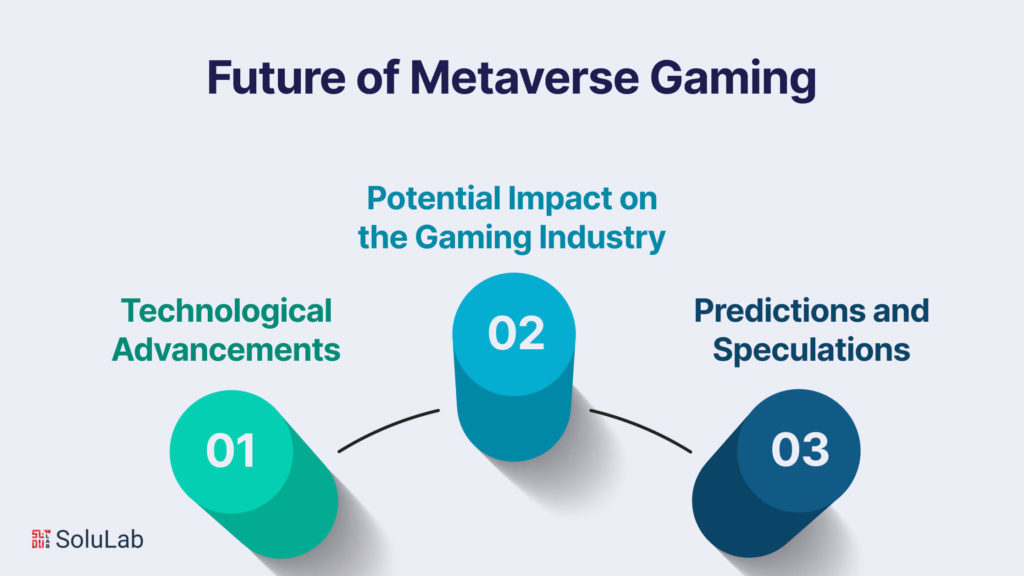
Peer into the horizon of Metaverse gaming. Anticipate technological advancements, potential impacts on the gaming industry, and predictions that shape the future of player interaction, creativity, and economic opportunities within this burgeoning virtual universe.
The future of Metaverse gaming holds the promise of groundbreaking technological advancements. The evolution of virtual and augmented reality hardware will contribute to more immersive and realistic experiences. Additionally, the integration of artificial intelligence into gameplay experiences is anticipated to create dynamic and personalized scenarios, enhancing player engagement. The continued convergence of emerging technologies like the Internet of Things (IoT) may further blur the lines between the physical and virtual worlds, elevating Metaverse gaming to unprecedented heights.
The Metaverse is poised to reshape the gaming industry fundamentally. Its impact extends beyond individual game titles, influencing player behavior, economic models, and the overall gaming ecosystem. Metaverse gaming introduces a new dimension of player interaction, fostering a sense of community and creativity. Developers stand to gain new revenue streams through innovative in-game asset monetization, subscription models, and the creation of virtual goods markets. The potential impact is not confined to a single genre or platform; it permeates the entire gaming industry, heralding a more democratized and interconnected gaming landscape.
While predicting the future is inherently uncertain, industry experts and analysts offer insights and speculations into the trajectory of Metaverse gaming. Predictions may encompass the widespread adoption of blockchain-based virtual economies, increased convergence of physical and virtual worlds, and the emergence of entirely new genres of Metaverse games. As technological advancements continue to unfold, the Metaverse is anticipated to become an integral part of the gaming experience, redefining how players interact with virtual worlds.
Equip yourself with essential tools and skillsets for Metaverse game development . Whether you’re a seasoned developer or an aspiring visionary, discover the technological toolkit and expertise needed to navigate this dynamic space successfully. Unleash your potential as a creator in the Metaverse gaming revolution.
Equipping developers with the right tools and platforms is essential for success in Metaverse game development. Game engines compatible with virtual and augmented reality, blockchain development frameworks, and collaboration tools form the foundational toolkit for developers venturing into this space. Staying abreast of advancements in these tools ensures that developers have the resources needed to bring their Metaverse visions to life.
Developing games for the Metaverse requires a unique set of skills beyond traditional game development expertise. Familiarity with virtual and augmented reality technologies, blockchain integration, and the nuances of creating interconnected virtual worlds is crucial. Collaboration and adaptability are key skills, as developers navigate the evolving landscape of Metaverse gaming. Acquiring and honing these skills positions developers to innovate and thrive in this dynamic and transformative space.

In conclusion, the journey through “Developing Games for the Metaverse: A Guide for Developers” has unveiled the dynamic landscape where gaming intersects with the Metaverse. From the foundational role of blockchain to the intricacies of crafting immersive experiences, developers are equipped with insights that transcend traditional gaming boundaries.
As the Metaverse continues its evolution, it becomes evident that it’s not merely a technological frontier but a cultural and economic shift within the gaming industry. The Metaverse in gaming is not a distant future—it’s a present reality shaping how gamers connect, create, and engage with virtual worlds.
In this vibrant ecosystem, SoluLab emerges as a key partner for developers and businesses seeking to pioneer Metaverse Gaming experiences. SoluLab’s expertise in blockchain, virtual reality, and augmented reality positions them as leaders in crafting innovative solutions. Whether you’re embarking on Metaverse game development or exploring blockchain integration, SoluLab’s commitment to excellence and cutting-edge technology makes them the ideal collaborator for navigating the evolving Metaverse landscape. With SoluLab as your guide, the journey into Metaverse Gaming becomes not just a technological endeavor but a transformative adventure in the ever-expanding universe of virtual experiences.
First, decide on a metaverse platform, you have to choose a metaverse platform before starting with the creation of a metaverse space or app. Next, create the metaspace and construct an interaction layer. Create a layer of interoperability.
You can earn money even when you are playing games in Metaverse. Trillium (TLM), a native token, is used in the economy that video games such as Alien Worlds have established. In the game, mining, trading NFTs, and staking can all earn you money.
You can easily download and experience Multiverse, a social metaverse app for free. There exists an incredible community of individuals, and destinations such as outlets, galleries, and districts to explore.
In 1922, the term metaverse was first used by American science fiction author Neal Stephenson in his book Snow Crash, imagines a bleak future in which wealthy people escape into another, linked three-dimensional reality.
With experience in virtual reality, augmented reality, and blockchain, SoluLab is a top partner for companies and developers operating in the metaverse. Our dedication to technology makes us your perfect collaborator for creating creative solutions in the development of the metaverse.


