Talk to an Expert

Developing Games for the Metaverse: A Guide for Developers

Developing Games for the Metaverse: A Guide for Developers

Welcome to the fascinating frontier where the virtual and real worlds collide, changing the gaming industry as we know it. With this blog, we encourage you to explore the Metaverse, a dynamic, networked virtual environment fundamentally changing the gaming industry. We will help you explore Metaverse gaming in detail and see how this significant idea goes beyond traditional boundaries to provide users with a distinctive experience interacting with virtual worlds. 

Understanding the importance of layer 1 technology has been made easier with this blog which guarantees security and decentralized in this vast virtual environment. Through the use of layer 1 technologies, developers can construct safe virtual economies that give users ownership of assets, empowering them beyond just making games. Join us as we walk you through interesting instances and explore all you need to know about developing games for the metaverse.

Embark on a transformative journey where virtual landscapes converge with reality, and gaming transcends conventional limits. In this exploration of Metaverse Gaming, we delve into the foundation of blockchain, the nuances of game development, and the challenges and opportunities that define this dynamic space. From case studies illuminating success stories to glimpses into the future of gaming, join us in deciphering the Metaverse’s intricacies and unlocking a realm of limitless possibilities.

  • The Metaverse and Its Impact on Gaming

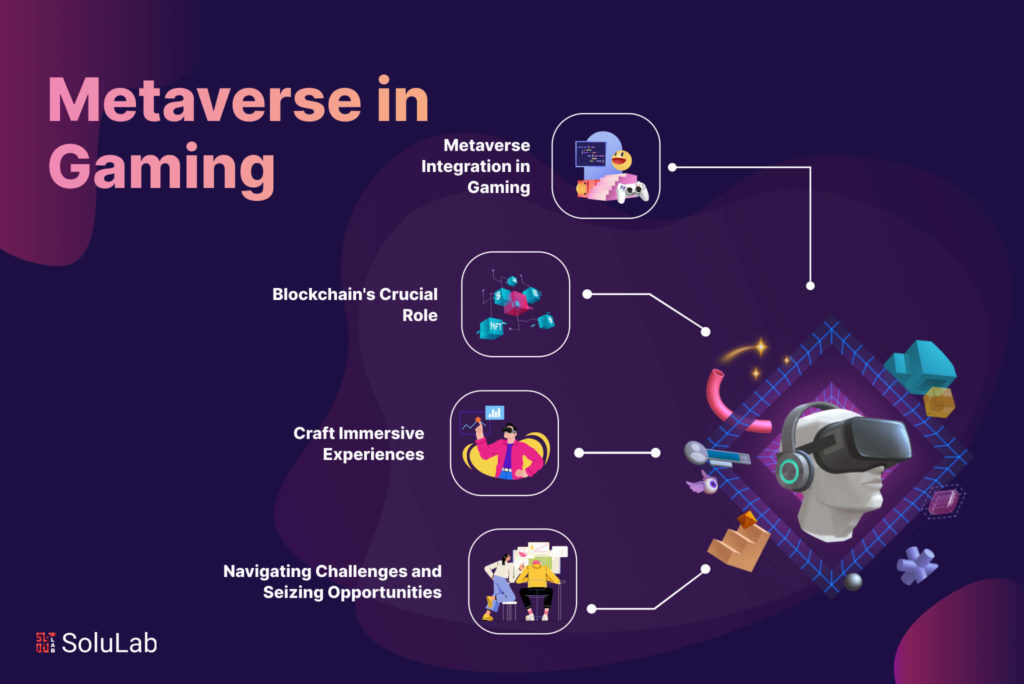
The Metaverse is a revolutionary concept that has permeated the gaming industry, offering an expansive, interconnected virtual space where gaming experiences transcend traditional boundaries. The integration of the Metaverse in gaming marks a paradigm shift, redefining how players engage with virtual environments. It’s not merely an evolution but a groundbreaking leap into a dynamic and shared virtual universe.

The significance of the Metaverse in gaming cannot be overstated. It introduces a novel way for developers to craft immersive experiences that seamlessly blend reality with the virtual realm. Metaverse Gaming goes beyond conventional gameplay, enabling players to navigate through interconnected game worlds, fostering a sense of continuity and shared experiences. As developers embark on creating games for the Metaverse, they enter a realm where creativity knows no bounds, and the virtual world becomes a canvas for infinite possibilities.

  • Significance of Layer 1 in the Blockchain Ecosystem

In the Metaverse, the integration of Layer 1 blockchain technology plays a pivotal role, ensuring decentralization and security at its core. The Metaverse in gaming relies on the robustness of Layer 1, as it provides the foundational structure for the creation of secure virtual economies and the protection of in-game assets. Developers leveraging Layer 1 solutions are not just building games; they are architects of a secure and transparent Metaverse where player autonomy and asset ownership are paramount.

  • Overview of the Top 10 Layer 1 Blockchains in 2025

In the fast-evolving landscape of Layer 1 blockchains, developers have a myriad of options to anchor their Metaverse projects securely and efficiently. Ethereum 2.0, Binance Smart Chain, Solana, and others constitute the forefront of this technological wave. Understanding the nuances of these blockchains becomes essential as developers navigate the Metaverse landscape, making informed choices that shape the future of gaming in this interconnected virtual universe.

Understanding the Metaverse in Gaming

Dive into the heart of Metaverse Gaming as we define this interconnected virtual space within the gaming landscape. Explore seamless transitions between game worlds, the evolution from virtual and augmented reality, and the key components shaping the Metaverse experience. Gain insights into crafting gaming narratives that align with the principles of this dynamic and shared virtual universe.

  • Defining the Metaverse in the Gaming Context

In the gaming context, the Metaverse is a collective and interconnected virtual space that transcends individual game worlds. Metaverse in gaming is an environment where players seamlessly transition between diverse virtual landscapes, fostering a sense of continuity and shared experiences. Developers crafting games for the Metaverse must embrace this definition, ensuring their creations align with the overarching principles of this dynamic and interconnected virtual universe.

  • Evolution from Virtual Reality and Augmented Reality

The evolution from virtual reality (VR) metaverse and augmented reality (AR) has been instrumental in shaping the Metaverse in gaming. Virtual reality immerses players entirely in computer-generated environments, while augmented reality overlays digital content onto the real world. Metaverse in gaming ingeniously integrates these technologies, allowing developers to craft gaming experiences that seamlessly blend virtual and real-world elements.

  • Key Components of the Metaverse in Gaming

The Metaverse in gaming is a multifaceted construct with interconnected game worlds, seamless transitions between VR and AR, and a robust infrastructure supporting a massive, persistent virtual universe. Developers need to comprehend and leverage these key components, creating Metaverse gaming experiences that captivate players and offer a sense of continuity across diverse virtual landscapes.
The Role of Blockchain in the Metaverse

Role of Blockchain in the Metaverse

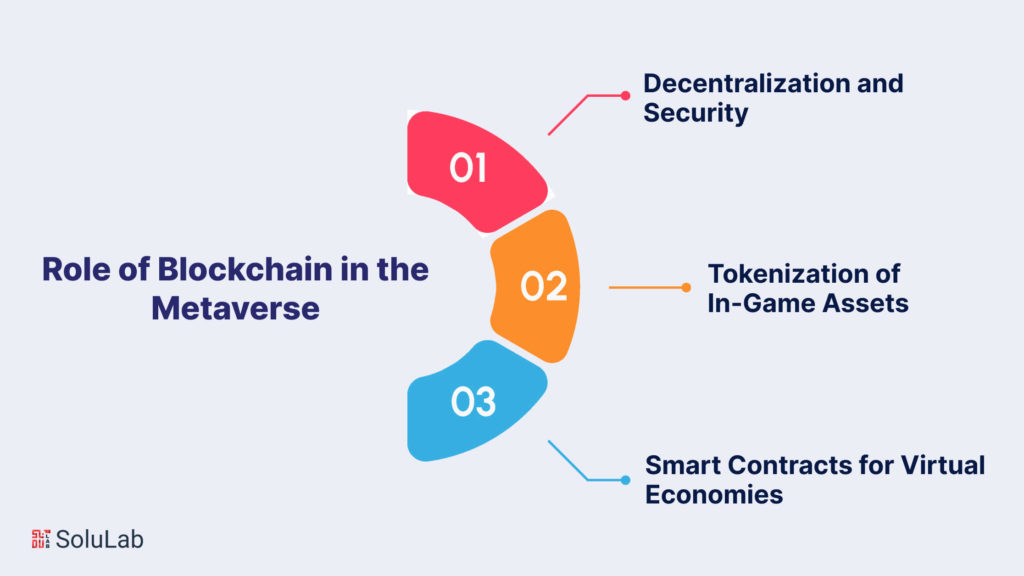
Uncover the pivotal role of blockchain technology in shaping the Metaverse. From ensuring decentralization and security to tokenizing in-game assets and deploying smart contracts, this section unveils how blockchain becomes the bedrock of player autonomy, transparent virtual economies, and the seamless integration of Metaverse in gaming.

  • Decentralization and Security

Decentralization and security form the bedrock of the Metaverse gaming experience. The Metaverse in gaming thrives on blockchain’s capability to ensure that no central authority governs virtual worlds. This decentralized approach empowers players with autonomy and ownership over their in-game assets. Security features embedded in blockchain technology are instrumental in safeguarding these assets, preventing fraud, and contributing to the overall integrity of the gaming environment.

  • Tokenization of In-Game Assets

Tokenization is a transformative concept within the Metaverse gaming space. It redefines in-game assets by transforming them into unique, tradable tokens on the blockchain. This innovative approach not only adds real-world value to virtual items but also enables players to truly own and trade their in-game assets. Developers leveraging tokenization contribute to the creation of a player-driven economy within the Metaverse.

  • Smart Contracts for Virtual Economies

Smart contracts play a pivotal role in shaping virtual economies within the Metaverse. By automating transactions and agreements, smart contracts introduce dynamic economic interactions. Whether facilitating in-game purchases, managing asset exchanges, or implementing decentralized governance, smart contracts contribute to the creation of a player-centric, decentralized virtual economy.

CTA1

Building Games for the Metaverse

Delve into the art and science of crafting Metaverse games. Discover design principles emphasizing interoperability and user-generated content. Navigate through technical considerations such as blockchain integration, scalability, and optimal performance, ensuring that your creations align with the immersive and interconnected nature of the Metaverse.

Design Principles for Metaverse Games

Designing games for the Metaverse demands a holistic approach grounded in key principles. Interoperability, the seamless transition between different game worlds, becomes paramount. Developers must prioritize designing transitions that allow players to explore different realms effortlessly. User-Generated Content (UGC) is another fundamental principle, empowering players to actively contribute to the evolving virtual universe. This inclusion transforms players from mere participants to active contributors, shaping the Metaverse gaming experience collaboratively.

  • Interoperability

Interoperability ensures fluid movement between diverse virtual landscapes. Creating a cohesive Metaverse experience involves prioritizing design for seamless transitions, allowing players to explore different realms without friction. Developers must craft interconnected narratives, enabling a continuous and immersive journey for players navigating through different game worlds.

  • User-Generated Content (UGC)

User-Generated Content (UGC) fosters a sense of community and creativity within the Metaverse. Allowing players to contribute their content, whether designing virtual spaces, creating in-game assets, or shaping narratives, transforms them into active contributors. Developers must implement systems that facilitate and reward UGC, elevating the Metaverse experience by allowing players to leave their indelible mark on the virtual universe.

Technical Considerations

Technical considerations in Metaverse game development span various aspects, from integrating VR and AR technologies to ensuring scalability and optimal performance.

  • Integration with Blockchain

The integration of blockchain technology demands meticulous consideration. Developers must choose an appropriate blockchain platform, such as Ethereum, Binance Smart Chain, or specialized blockchains for gaming. Compatibility, scalability, and security are critical factors for successful blockchain integration within the Metaverse.

  • Scalability and Performance

Scalability is a paramount concern in the Metaverse, where the virtual world must accommodate a potentially massive player base. Ensuring optimal performance guarantees a seamless and immersive experience, regardless of the player’s hardware capabilities. Developers must implement efficient server architectures, leverage content delivery networks, and employ optimization techniques to meet the demands of a dynamic and evolving Metaverse.
Challenges and Opportunities

Challenges and Opportunities

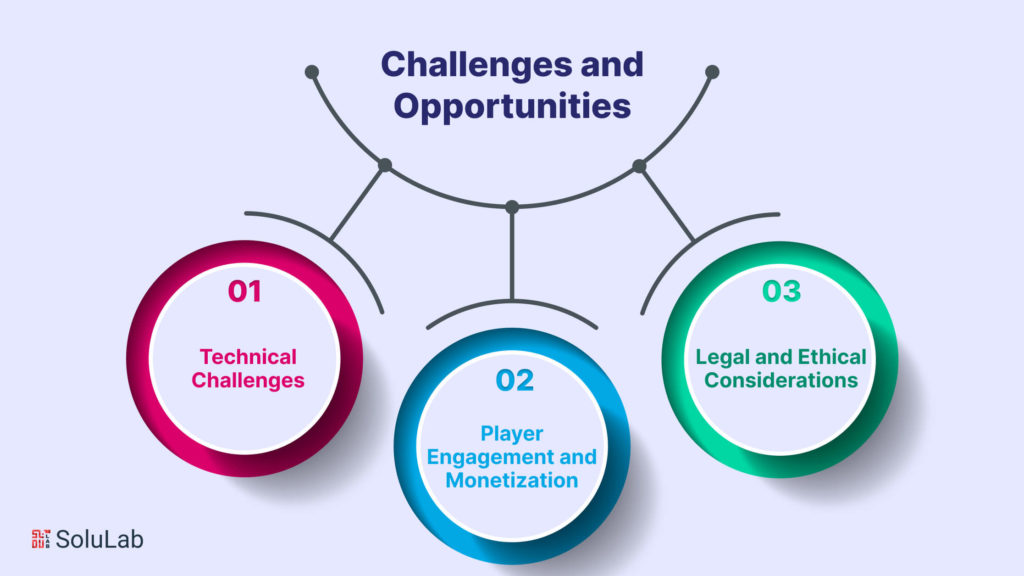
Explore the hurdles and possibilities within the Metaverse gaming landscape. From technical challenges in VR and AR integration to innovative monetization strategies, grasp the multifaceted nature of developing games that captivate players in this ever-evolving virtual frontier.

  • Technical Challenges

Metaverse game developers encounter technical challenges that demand innovative solutions. The seamless integration of VR and AR, especially across different devices, poses complexity. Real-time rendering and synchronization require meticulous attention to detail. Developers must innovate and overcome these challenges to deliver a Metaverse gaming experience that is not only immersive but also accessible to a diverse audience.

  • Player Engagement and Monetization

Player engagement is both a challenge and an opportunity within the Metaverse. Developers must craft narratives and gameplay mechanics that captivate players, encouraging prolonged interaction. Monetization strategies within the Metaverse can include innovative approaches like NFT-based in-game assets, subscription models, and virtual goods transactions. The evolving landscape provides a canvas for developers to explore novel ways of engaging players and generating revenue.

  • Legal and Ethical Considerations

As the Metaverse evolves, legal and ethical considerations take center stage. Developers must address issues related to intellectual property, user privacy, and fair competition within the virtual economy. Crafting a framework that aligns with legal standards while fostering a vibrant virtual ecosystem is a delicate balancing act. Developers need to navigate these considerations to ensure a sustainable and ethically sound Metaverse gaming environment.

Case Studies

Embark on a journey through successful Metaverse game examples. From Decentraland’s decentralized virtual world to Cryptovoxels’ emphasis on user-generated content and The Sandbox’s pioneering use of NFTs, these case studies illuminate diverse approaches to Metaverse game development, offering valuable insights for aspiring creators.

  • Successful Metaverse Game Examples

Exploring successful Metaverse games provides invaluable insights for developers venturing into this dynamic space. Games like Decentraland, Cryptovoxels, and The Sandbox serve as prime examples of Metaverse Gaming done right. Decentraland, a blockchain-based virtual world, allows users to buy, develop, and sell parcels of land, creating a decentralized and player-driven ecosystem. Cryptovoxels, with its emphasis on user-generated content and virtual reality compatibility, showcases the potential for immersive experiences within the Metaverse. The Sandbox takes a unique approach by enabling players to create, own, and monetize their gaming experiences through the use of non-fungible tokens (NFTs). These case studies illuminate different facets of Metaverse game development, offering lessons in community engagement, economic models, and the seamless integration of blockchain technologies.

  • Lessons Learned from Early Adopters

Early adopters of Metaverse game development provide a wealth of experiences that can guide developers on their journey. Understanding the challenges they faced, the strategies that proved successful, and the features that resonated with players is instrumental in making informed decisions. Lessons from early adopters range from the importance of fostering a vibrant community to the potential of embracing innovative monetization models. Learning from those who pioneered the Metaverse lays a solid foundation for developers to navigate challenges and innovate in this burgeoning space.
The Future of Metaverse Gaming

Future of Metaverse Gaming

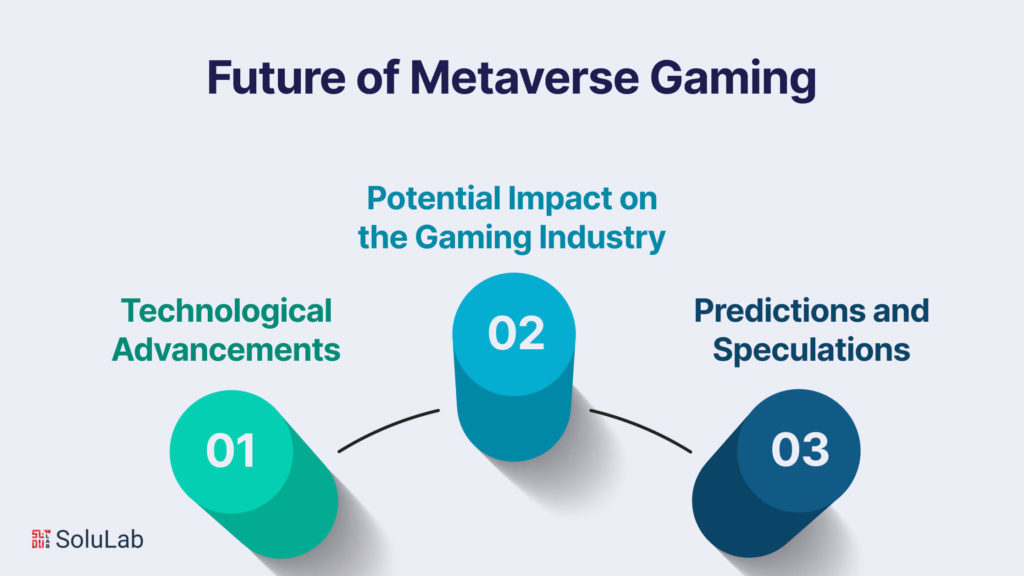
Peer into the horizon of Metaverse gaming. Anticipate technological advancements, potential impacts on the gaming industry, and predictions that shape the future of player interaction, creativity, and economic opportunities within this burgeoning virtual universe.

  • Technological Advancements

The future of Metaverse gaming holds the promise of groundbreaking technological advancements. The evolution of virtual and augmented reality hardware will contribute to more immersive and realistic experiences. Additionally, the integration of artificial intelligence into gameplay experiences is anticipated to create dynamic and personalized scenarios, enhancing player engagement. The continued convergence of emerging technologies like the Internet of Things (IoT) may further blur the lines between the physical and virtual worlds, elevating Metaverse gaming to unprecedented heights.

  • Potential Impact on the Gaming Industry

The Metaverse is poised to reshape the gaming industry fundamentally. Its impact extends beyond individual game titles, influencing player behavior, economic models, and the overall gaming ecosystem. Metaverse gaming introduces a new dimension of player interaction, fostering a sense of community and creativity. Developers stand to gain new revenue streams through innovative in-game asset monetization, subscription models, and the creation of virtual goods markets. The potential impact is not confined to a single genre or platform; it permeates the entire gaming industry, heralding a more democratized and interconnected gaming landscape.

  • Predictions and Speculations

While predicting the future is inherently uncertain, industry experts and analysts offer insights and speculations into the trajectory of Metaverse gaming. Predictions may encompass the widespread adoption of blockchain-based virtual economies, increased convergence of physical and virtual worlds, and the emergence of entirely new genres of Metaverse games. As technological advancements continue to unfold, the Metaverse is anticipated to become an integral part of the gaming experience, redefining how players interact with virtual worlds.

Recommendations for Developers

Equip yourself with essential tools and skillsets for Metaverse game development . Whether you’re a seasoned developer or an aspiring visionary, discover the technological toolkit and expertise needed to navigate this dynamic space successfully. Unleash your potential as a creator in the Metaverse gaming revolution.

  • Tools and Platforms for Metaverse Development

Equipping developers with the right tools and platforms is essential for success in Metaverse game development. Game engines compatible with virtual and augmented reality, blockchain development frameworks, and collaboration tools form the foundational toolkit for developers venturing into this space. Staying abreast of advancements in these tools ensures that developers have the resources needed to bring their Metaverse visions to life.

  • Skillsets Needed for Metaverse Game Development

Developing games for the Metaverse requires a unique set of skills beyond traditional game development expertise. Familiarity with virtual and augmented reality technologies, blockchain integration, and the nuances of creating interconnected virtual worlds is crucial. Collaboration and adaptability are key skills, as developers navigate the evolving landscape of Metaverse gaming. Acquiring and honing these skills positions developers to innovate and thrive in this dynamic and transformative space.

CTA2

Conclusion

In conclusion, the journey through “Developing Games for the Metaverse: A Guide for Developers” has unveiled the dynamic landscape where gaming intersects with the Metaverse. From the foundational role of blockchain to the intricacies of crafting immersive experiences, developers are equipped with insights that transcend traditional gaming boundaries.

As the Metaverse continues its evolution, it becomes evident that it’s not merely a technological frontier but a cultural and economic shift within the gaming industry. The Metaverse in gaming is not a distant future—it’s a present reality shaping how gamers connect, create, and engage with virtual worlds.

In this vibrant ecosystem, SoluLab emerges as a key partner for developers and businesses seeking to pioneer Metaverse Gaming experiences. SoluLab’s expertise in blockchain, virtual reality, and augmented reality positions them as leaders in crafting innovative solutions. Whether you’re embarking on Metaverse game development or exploring blockchain integration, SoluLab’s commitment to excellence and cutting-edge technology makes them the ideal collaborator for navigating the evolving Metaverse landscape. With SoluLab as your guide, the journey into Metaverse Gaming becomes not just a technological endeavor but a transformative adventure in the ever-expanding universe of virtual experiences.

FAQs

1. How can metaverse virtual simulation be developed? 

First, decide on a metaverse platform, you have to choose a metaverse platform before starting with the creation of a metaverse space or app. Next, create the metaspace and construct an interaction layer. Create a layer of interoperability. 

2. How is money made in metaverse games? 

You can earn money even when you are playing games in Metaverse. Trillium (TLM), a native token, is used in the economy that video games such as Alien Worlds have established. In the game, mining, trading NFTs, and staking can all earn you money. 

3. Is it free to play metaverse? 

You can easily download and experience Multiverse, a social metaverse app for free. There exists an incredible community of individuals, and destinations such as outlets, galleries, and districts to explore. 

4. Who was behind the creation of Metaverse?

In 1922, the term metaverse was first used by American science fiction author Neal Stephenson in his book Snow Crash, imagines a bleak future in which wealthy people escape into another, linked three-dimensional reality. 

5. How does SoluLab aid in the creation of Metaverse games?

With experience in virtual reality, augmented reality, and blockchain, SoluLab is a top partner for companies and developers operating in the metaverse. Our dedication to technology makes us your perfect collaborator for creating creative solutions in the development of the metaverse. 

 

Navigating the Challenges of Building Metaverse Game Worlds

Navigating the Challenges of Building Metaverse Game Worlds

A concept of Metaverse development that once seemed confined to the realms of science fiction has rapidly become a central focus in the world of technology and Entertainment. In this blog, we will delve into the exciting and dynamic realm of Metaverse Game Worlds, exploring the multifaceted challenges developers face as they strive to create these immersive digital universes.

What Do You Mean by Metaverse?

The term “metaverse” encompasses a vast, interconnected digital universe, often realized as a collective space where users can interact, socialize, work, and play. It’s a fusion of multiple virtual environments and experiences, brought together into a cohesive whole. This interconnected nature differentiates the metaverse from individual, isolated virtual worlds. Top metaverse platforms, such as Meta’s Horizon Workrooms, Decentraland, and Roblox, aim to provide users with a persistent, shared experience, where boundaries blur between the virtual and real worlds.

The Rise of Metaverse Game Worlds

Rise of Metaverse Game Worlds

The meteoric rise of metaverse game worlds is an undeniable testament to the ever-evolving landscape of technology and the boundless creativity of developers. This phenomenon is driven by several key factors that have converged to create a perfect storm of innovation and excitement in the world of digital entertainment.

  • Technological Advancements: The rapid progression of technology, particularly in areas such as graphics rendering, network infrastructure, and processing power, has paved the way for metaverse game worlds to flourish. High-quality, immersive experiences that were once the stuff of science fiction have now become attainable, thanks to state-of-the-art hardware and software innovations.
  • Internet Connectivity: With the widespread availability of high-speed internet, metaverse game worlds can seamlessly connect players from all corners of the globe. This interconnectedness fosters shared experiences, making it possible for users to collaborate, compete, or simply socialize within these virtual realms. The idea of a massive, shared digital universe has transitioned from a futuristic concept to a tangible reality.
  • Social Interaction: Metaverse game worlds aren’t solely about gameplay. They place a strong emphasis on social interaction and community building. Users can meet, communicate, and forge friendships with others in ways that mimic real-world interactions. This blend of gaming and social experiences has proven immensely appealing to a broad demographic of players.
  • Open-Ended Experiences: Unlike traditional video games with fixed storylines and objectives, metaverse games offer open-ended experiences. Users can explore, create, and shape their own adventures, making each visit to the metaverse a unique and personalized journey. This freedom of choice is a hallmark of metaverse game worlds, giving players agency and creativity.
  • Multifaceted Virtual Worlds: Metaverse games go beyond conventional gaming by creating rich, multifaceted virtual worlds. These worlds are often persistent, evolving spaces that can host a wide range of activities, from virtual concerts and business meetings to art exhibitions and educational events. The metaverse has transcended the boundaries of traditional gaming to become a dynamic, all-encompassing digital environment.
  •  Economic Opportunities: Metaverse game worlds offer economic opportunities to both developers and users. The virtual economies that emerge within these spaces allow for the creation, sale, and trade of virtual assets and currencies. Real-world businesses and entrepreneurs are increasingly looking to invest in or leverage the metaverse for a variety of purposes, from marketing to commerce.

In brief, the rise of metaverse game worlds represents a convergence of technology, social interaction, and open-ended experiences. These digital realms have captured the imagination of developers and players alike, providing a canvas for creativity that goes far beyond traditional gaming. As we explore the challenges faced in building metaverse game worlds, it’s essential to recognize the incredible potential and excitement that underpin this transformative phenomenon.

The Importance of Addressing Challenges

Building metaverse game worlds is not without its set of unique challenges. These challenges span technical, social, legal, and ethical dimensions, and addressing them is vital for the long-term success and sustainability of metaverse development. The sheer scale and complexity of metaverse game worlds necessitate a deep understanding of the issues at hand and a proactive approach to mitigating potential pitfalls. As top metaverse platforms continue to gain traction and investment, understanding these challenges is essential for anyone looking to make their mark in the metaverse development landscape. In the following sections, we will explore these challenges in-depth and discuss strategies for navigating the intricate journey of metaverse game world creation.

Technical Challenges in the Metaverse Game World

Technical Challenges in the Metaverse Game World

In the dynamic realm of metaverse game worlds, the creation and maintenance of these expansive digital environments bring forth a host of technical challenges that developers must confront. These challenges are instrumental in ensuring that metaverse game worlds deliver seamless, immersive, and enjoyable experiences to their users. Let’s delve into these technical hurdles and explore the keywords you’ve provided.

Scalability and Performance

  •  Server Infrastructure: The backbone of a metaverse game world lies in its server infrastructure. This component is responsible for handling the influx of users, data, and interactions. In the context of metaverse game development companies, investing in a scalable and robust server infrastructure is imperative. The Virtual Reality Metaverse is particularly relevant here, as VR experiences demand low-latency, high-performance servers to maintain immersion.
  • Network Bandwidth: As metaverse game worlds continue to expand, the demand for network bandwidth grows exponentially. Efficient and real-time data exchange is critical to facilitate seamless interactions. Augmented reality (AR) and Virtual Reality (VR) experiences within the metaverse are especially reliant on a well-optimized network infrastructure. In a VR context, Augmented reality comes into play as it highlights the need for efficient data transfer in AR environments.

Graphics and Rendering

  • Realism vs. Efficiency: The visual quality of a metaverse game world is often a double-edged sword. Striking a balance between delivering realistic graphics and ensuring efficient rendering is a perpetual challenge. Developers must employ strategies like Metaverse AI Integration to dynamically adjust rendering quality based on the user’s hardware capabilities, ensuring a smooth experience.
  • VR and AR Integration: Metaverse game worlds aim to provide support for both Virtual Reality (VR) and Augmented Reality (AR) experiences. This integration introduces complexity to graphics and rendering, as it involves specialized techniques to maintain immersion and interact with the real world. Ensuring a consistent user experience across different devices and platforms is a key challenge, where Virtual Reality Metaverse is relevant due to the importance of optimizing VR experiences.

CTA1

Content Creation and Management

  • Procedural Generation: Populating expansive metaverse environments with diverse and engaging content is no small task. Many metaverse game development companies turn to procedural generation, which utilizes algorithms to create content dynamically. This approach reduces the burden of manual content creation. The challenge here lies in maintaining a balance between variety and quality. The use of Metaverse AI Integration can aid in the optimization of procedural generation by adapting content generation to user preferences and capabilities.
  •  User-Generated Content: Allowing users to contribute their own creations to the metaverse is a fundamental aspect of many metaverse game worlds. However, managing user-generated content, ensuring it complies with community guidelines, and moderating it for inappropriate material is a significant challenge. The Metaverse AI Integration can be applied in this context to highlight the use of AI-powered automation for content moderation and filtering, as this technology plays a crucial role in maintaining a safe and enjoyable metaverse environment.

These technical challenges represent the intricate web of considerations that metaverse game developers navigate in their quest to provide users with immersive and compelling digital experiences. As technology evolves, so too will the strategies and solutions used to address these challenges and bring metaverse game worlds to new levels of creativity and interactivity.

User Engagement and Social Challenges

In the metaverse gaming landscape, creating and maintaining a thriving community is paramount. User engagement and social interaction are at the heart of these virtual worlds, making it essential to overcome the unique challenges they present.

Community Building

  • Building a Positive Community: One of the cornerstones of successful metaverse development lies in building a positive and inclusive community. Metaverse development companies prioritize fostering an environment where users feel welcomed, respected, and valued. Encouraging positive interactions, mutual support, and collaboration are key aspects of community building. The metaverse aims to be a space where users can connect, learn, and have fun, so maintaining a friendly atmosphere is vital.
  • Moderation and Safety: With vast numbers of users from diverse backgrounds, moderation and safety become critical components of a metaverse gaming community. Metaverse development companies need to establish robust moderation systems to address inappropriate behavior and content. The safety and well-being of users must be a top priority to ensure a positive experience for all participants. This challenge is closely linked to the “Metaverse gaming landscape,” as the landscape encompasses various platforms and communities, each with its unique moderation needs.

Monetization

  • In-Game Purchases: Monetizing metaverse game worlds is a crucial aspect of their sustainability and growth. In-game purchases, which can include virtual goods, skins, or even access to exclusive experiences, are common ways for metaverse development companies to generate revenue. However, balancing monetization with user satisfaction is a delicate challenge. Striking the right equilibrium ensures that users feel that their investments enhance their experience rather than detract from it.
  • Virtual Economies: Many metaverse game worlds feature complex virtual economies where users can trade, buy, and sell virtual assets or currencies. These economies often resemble real-world financial systems, and they introduce unique challenges related to supply, demand, inflation, and market manipulation. Managing these virtual economies and ensuring fairness and stability can be intricate tasks for metaverse development companies. As the metaverse gaming landscape continues to evolve, addressing user engagement and social challenges is paramount for creating an environment where users can connect, collaborate, and enjoy their digital experiences. The effective management of community dynamics and monetization strategies is pivotal for building metaverse communities that are not only engaging but also sustainable over the long term.

Legal and Ethical Considerations

The development of metaverse game worlds introduces a myriad of legal and ethical considerations that developers and users must navigate. Ensuring compliance with intellectual property laws and safeguarding user privacy and data security are paramount in the metaverse landscape.

Intellectual Property

  • Copyright and Trademark Issues: Metaverse development companies must be acutely aware of the potential copyright and trademark issues that can arise when creating virtual worlds. Incorporating real-world brands, music, or other copyrighted materials in a metaverse game world may lead to legal disputes if proper permissions and licenses are not obtained. Protecting the intellectual property rights of both creators and copyright holders is essential.
  •  Licensing and Fair Use: Licensing plays a critical role in metaverse development, allowing creators to obtain the necessary rights to use certain content. Understanding licensing agreements and adhering to fair use principles is crucial in metaverse game development. It’s imperative to respect intellectual property while promoting creativity and innovation within the metaverse.
    Privacy and Data SecurityPrivacy and Data Security
  • Data Collection and User Privacy: Metaverse development companies often collect a substantial amount of user data to enhance the user experience and support various metaverse use cases and benefits. However, respecting user privacy and complying with data protection regulations are paramount. Transparent data collection practices, robust data security measures, and user consent mechanisms should be in place to safeguard user information and instill trust.
  •  Cybersecurity Concerns: With metaverse game worlds growing in complexity and popularity, they become attractive targets for cyber threats and malicious actors. Protecting the metaverse against data breaches, hacking attempts, and other cybersecurity concerns is a constant challenge. Metaverse development companies must invest in robust security measures and continuously adapt to emerging threats.

As the metaverse continues to expand and intertwine with various metaverse use cases and benefits, addressing these legal and ethical considerations is essential. Developers and users must collaborate to ensure that metaverse game worlds can thrive within a framework that respects intellectual property rights and upholds user privacy and data security, fostering a trustworthy and enjoyable metaverse experience.

The Role of AI and Automation

Role of AI and Automation

In the realm of metaverse development, the integration of AI (Artificial Intelligence) and automation plays a pivotal role in shaping the user experience, enhancing efficiency, and addressing key challenges. Here, we delve into the multifaceted ways in which AI and automation are revolutionizing the metaverse landscape, highlighting their significance in three critical areas.

  • AI-driven NPCs and Storytelling

AI-driven Non-Playable Characters (NPCs) are the backbone of immersive metaverse game worlds. These intelligent entities are instrumental in shaping the user experience, driving storylines, and fostering engaging interactions. AI-driven NPCs can adapt to user behavior, create dynamic and personalized narratives, and provide users with a sense of agency within the metaverse. The Metaverse AI Integration emphasizes the integral role of AI in creating lifelike, interactive NPCs and crafting captivating narratives that transcend traditional gaming experiences.

  • Moderation and Content Filtering

Maintaining a safe and enjoyable metaverse environment hinges on effective moderation and content filtering. AI-powered systems have become instrumental in automating these processes. Metaverse development companies employ AI algorithms to scan, identify, and filter out inappropriate content, ensuring that user-generated content complies with community guidelines. This not only promotes a welcoming and secure metaverse community but also reduces the administrative burden on moderators. The keywords “Metaverse AI Integration” underscore the importance of AI in content moderation and filtering, which is essential for building a responsible and user-friendly metaverse.

  • Analytics and Player Behavior Prediction

AI-driven analytics and player behavior prediction are transformative tools in metaverse development. AI can process vast amounts of data to discern player preferences, habits, and trends. This information is instrumental in optimizing the user experience, from tailoring in-game content to predicting and preventing adverse behaviors. AI can forecast potential issues such as harassment or cheating, allowing metaverse development companies to address them proactively. The Metaverse AI Integration emphasizes the integral role of AI in analyzing player behavior, predicting trends, and enhancing the overall metaverse experience.

In metaverse development, AI and automation are catalysts for innovation, enriching the metaverse landscape by delivering personalized, secure, and dynamic experiences. As the metaverse continues to evolve, the seamless integration of AI-driven NPCs, advanced moderation and content filtering, and predictive analytics will be instrumental in creating immersive, user-centric metaverse game worlds that are both enjoyable and responsible.

Strategies for Overcoming Challenges of Building Metaverse Game World

The metaverse gaming industry presents a unique landscape filled with a multitude of intricate challenges. To effectively navigate these challenges and ensure the continued success and growth of metaverse game worlds, metaverse development companies and stakeholders must adopt strategic approaches that encompass collaboration, transparency, and innovation. Let’s delve deeper into these strategies that underscore their importance in addressing the pressing challenges within the metaverse gaming industry.

  • Cross-Industry Collaboration

Collaboration across diverse industries is a cornerstone strategy in addressing challenges within the metaverse gaming industry. Given the multifaceted nature of the metaverse, these cross-industry partnerships are crucial for finding holistic solutions. Metaverse development companies must engage with technology experts to harness innovations that can resolve technical challenges such as server infrastructure, graphics rendering, and network efficiency. Furthermore, collaboration with the entertainment industry can lead to unique content collaborations, offering immersive experiences that promote user engagement and community growth. Legal experts, on the other hand, provide essential guidance on navigating complex legal and ethical matters, particularly when it comes to intellectual property and data privacy concerns. The challenges in metaverse gaming underscore the importance of these multidisciplinary collaborations in addressing the unique and evolving issues faced by the metaverse gaming industry.

  • Transparency and User Education

Transparency is a cornerstone of trust within the metaverse gaming industry. It encompasses clear and open communication about data usage, privacy policies, and community guidelines. Metaverse development companies must provide transparency regarding how user data is collected, stored, and utilized to build user trust and confidence. These practices address concerns related to privacy and data security, promoting a safer and more trustworthy metaverse environment. Simultaneously, user education plays a pivotal role, empowering users to make informed decisions about their participation in the metaverse. An educated user base is more likely to engage responsibly, adhere to community guidelines, and understand the potential risks and benefits of metaverse gaming. The challenges in metaverse gaming emphasize the significance of these strategies in fostering a responsible and trustworthy metaverse gaming community.

  • Continuous Innovation and Adaptation

In the metaverse gaming industry, continuous innovation and adaptation are the pillars of resilience. Challenges within this dynamic landscape are ever-evolving, spanning cybersecurity, content moderation, and the rapid emergence of new technologies. Metaverse development companies must remain at the forefront of industry advancements to address challenges proactively. Innovation can involve embracing Metaverse AI Integration, which optimizes content moderation, enhances user experiences, and streamlines in-game experiences. Continuous adaptation ensures that metaverse game worlds remain agile, responsive to user needs, and capable of embracing emerging trends and technologies. The challenges in metaverse gaming emphasize the necessity of this strategy for metaverse development companies to thrive in a rapidly changing and competitive industry.

By actively implementing these strategies, metaverse development companies can effectively tackle the diverse challenges present within the metaverse gaming industry. Cross-industry collaboration, transparency, and user education, coupled with a commitment to continuous innovation and adaptation, create a holistic approach that empowers the metaverse gaming community to overcome challenges, build trust, and seize new opportunities in this exciting and evolving landscape.

CTA2

Final Words

In conclusion, the journey of building metaverse game worlds is marked by boundless opportunities and complex challenges. As the metaverse rapidly gains prominence in the gaming and technology spheres, it becomes clear that developers and stakeholders must approach this frontier with a strategic mindset, embracing multidisciplinary collaboration, transparency, and continuous innovation. The metaverse’s rise as a dynamic digital universe, brimming with interactive possibilities, transcends conventional gaming experiences, emphasizing the paramount importance of addressing technical, social, legal, and ethical intricacies.

Metaverse development companies and creators stand at the forefront of a digital renaissance, where AI and automation play pivotal roles in enhancing immersion, moderating content, and predicting player behavior. By embracing the evolution of technology, fostering cross-industry collaboration, and prioritizing the well-being and engagement of users, the metaverse can continue to flourish as an ever-evolving digital realm. In navigating the myriad challenges and harnessing the full potential of metaverse game worlds, we embark on an exhilarating journey, poised to define the future of interactive digital experiences, where creativity and community thrive in unison.

SoluLab, as a Metaverse game development company, plays a pivotal role in shaping the metaverse by providing innovative solutions that power immersive digital experiences. With a profound understanding of the metaverse’s complexities, SoluLab leverages its expertise in software development, artificial intelligence, and blockchain technologies to create cutting-edge applications and platforms. Their commitment to metaverse development extends to designing scalable, secure, and user-friendly environments that seamlessly integrate AI, automation, and data analytics, contributing to the seamless operation and enjoyment of metaverse game worlds. SoluLab’s contributions encompass the development of AI-driven NPCs, advanced content moderation, and predictive analytics that enhance user engagement and safety. With a holistic approach to metaverse development, SoluLab empowers businesses and creators to embark on the exciting journey of building dynamic and inclusive metaverse game worlds that redefine digital interaction and entertainment.

FAQs

1. What is the metaverse, and how does it differ from traditional gaming?

The metaverse is a vast interconnected digital universe that transcends traditional gaming. It combines elements of gaming, social interaction, and shared experiences, creating immersive, open-ended virtual worlds where users can explore, interact, and create content.

2. What role does AI play in metaverse game worlds?

AI is instrumental in metaverse development, driving AI-driven NPCs, enhancing content moderation and filtering, and predicting player behavior. It contributes to immersive storytelling, content quality control, and player engagement, making metaverse experiences more dynamic and user-centric.

3. How are metaverse development companies addressing challenges in user engagement and safety?

Metaverse development companies focus on community building, promoting positive interactions, and investing in robust moderation systems. They also employ AI-driven content filtering to ensure a safe and welcoming environment for users, fostering trust and user satisfaction.

4. What is the significance of cross-industry collaboration in metaverse development?

Cross-industry collaboration is essential to address the multifaceted challenges in metaverse gaming. It leverages expertise from technology, entertainment, and legal domains to find comprehensive solutions, ensuring the metaverse’s growth and sustainability.

5. How can users contribute to the metaverse’s growth and development?

Users can actively participate in metaverse game worlds by creating and sharing content, engaging in communities, and providing valuable feedback to developers. By adhering to community guidelines and respecting intellectual property, users contribute to the positive and vibrant metaverse ecosystem.

The Metaverse – A Revolution In Gaming

Anyone who has been staying up to date with news from the technology world has inevitably heard of the Metaverse. The Metaverse, as a concept, was first introduced in Neal Stephenson’s 1992 novel, Snow Crash. What was once a distant dystopia is now closer to our reach than ever. For a while now, virtual reality (VR) games have been in use. These games require the use of a headset, and lo and behold, you find yourself immersed in a virtual world.

Now, at the pace at which technology is evolving, we have far progressed beyond virtual games. While these games are at its core, the Metaverse has spanned several more industries, with even big brands venturing into the territory. However, gaming and the Metaverse are inextricably tied together. As of now, NFT games are the roadway to the Metaverse. In the future, we can expect the Metaverse to take gaming miles ahead in its turn.

Explaining the Metaverse

Before all else, let us first stop a moment and understand what exactly the Metaverse is all about. The Metaverse is simply a 3-dimensional network that consists of interconnected virtual and augmented reality. In this world, people can exist as digital avatars that represent them. Melding the real world with the virtual, the Metaverse will seamlessly integrate virtual reality, augmented reality, digital currency, and social networks.

Any task from buying an NFT to interaction with friends to playing a game of cricket can be done within the Metaverse. There have been two types of Metaverses that are the talk of the town. A Centralized Metaverse is, as the name suggests, under the authority of a single entity. While it has its benefits, the privacy of the user may be sacrificed. On the other hand, we have a Decentralized Metaverse wherein interoperable virtual platforms on a blockchain form an ecosystem. This is projected to have the ultimate immersive experience coupled with safe blockchain transactions.

You can also read :The Insane Future of Web 3.0 and the Metaverse

Changing the Game for Gaming

NFT gaming, which is set to be a key part of the Metaverse, has been gaining steam since 2021. These games provide opportunities for players to earn rewards and currency by simply playing. Understandably, NFT games have been the new name in the gaming sector, promising to take us forward into the future. Now, when the Metaverse finally arrives, it may take NFT gaming to a whole new level in a multitude of ways. Here are a few of them.

  1. P2E Gaming: We have already discussed how Play-to-earn NFT game has brought about a revolution in the gaming industry. Well, with Metaverse in the picture, it will only grow like never before. As these games become platforms for social connectivity, marketplaces may flourish, and buying and selling NFTs may be as easy as 1 2 3.
  2. Interoperability: Interoperability of platforms means that digital assets from one platform can be moved to and used in another. For instance, skins and weapons from a certain game can be used to play another NFT game.
  3. Mixed Reality: Mixed reality will play a huge role in the Metaverse. With the Metaverse, a user can seamlessly move from augmented reality to mixed reality to virtual reality.
  4. Immersive Experience: One of the most prominent features of the Metaverse is that it will be immersive. The user can lead a parallel life in the virtual world. Gaming, especially, would be taken to new heights as the Metaverse will render players capable of creating their own games, characters, and storylines.
  5. Social Connection: Above all else, the Metaverse is inherently social. Ever since we were children, games have brought people together. This will take on a whole new dimension with the Metaverse transcending geographical boundaries. Through the Metaverse, players can invite friends, form new connections, and simply play as a team.

Final Thoughts

The Metaverse is close at hand; there is no denying that. With Meta foraying further into the Metaverse day by day, and Disney exploring Web3, the Metaverse is fast becoming a reality that will take every industry by storm. With gaming already at the forefront of technology, the two can do so much more for each other beyond anything we can imagine.

The Metaverse has all the potential to be the future of the internet. It will revolutionize the way we think about and interact with technology. The fact that something as tangible as real estate has found a place in virtual reality is testimony to the fact that the Metaverse will bring all boundaries crashing down.

With technology such as this, it is also possible for people from all walks of life to find solace in the Metaverse. With due consideration, the Metaverse could be the most inclusive thing to ever happen in history bringing everyone together and fostering authentic expression. Disabilities, which may constrain gaming, too, may be overcome in the Metaverse.

You can also read : 10 Profitable Metaverse Opportunities and How Businesses Can Benefit From It?

Therefore, if properly developed, the Metaverse could be the future of not just gaming, but the world as a whole.

Credit : Medium

Metaverse – The Next Generation Gaming Experience

Metaverse Gaming Experience

The metaverse gaming offers a huge, immersive universe in which players may interact with one another and their surroundings in ways that are similar to real-life activities.

This digital environment is built with modern innovations including virtual reality (VR), augmented reality (AR), and blockchain, allowing players to connect in complex, dynamic networks of virtual locations.

With 97% of experts claiming that gaming plays an important part in the development of the metaverse and sales expected to reach $800 billion by 2024, more than half of which would be ascribed to gaming, the sector displays no signs of slowing.

This technological fusion attempts to reshape how we view digital engagement and community creation, as well as to enhance entertainment. In this blog, we delve into the concept of the metaverse, exploring its evolution, significance, and the transformative impact it promises to have on the gaming industry. But first, let’s get to know what is metaverse gaming in brief!

What is Metaverse in Gaming?

The concept of gaming in metaverse represents a virtual universe where players can interact, socialize, and engage in various activities in a highly immersive and interconnected environment. In the metaverse, users can create digital avatars to represent themselves and explore expansive virtual worlds filled with endless possibilities.

At its core, the metaverse game blurs the lines between the virtual and physical worlds, offering a shared space where gamers from around the globe can come together to collaborate, compete, and create. Unlike traditional video games that are confined to specific narratives or gameplay mechanics, the metaverse is a dynamic and evolving ecosystem that continuously grows and evolves based on user interactions and contributions.

In the metaverse, players have the freedom to explore diverse landscapes, participate in virtual events and activities, and even build and customize their own virtual spaces. Whether it’s attending virtual concerts, exploring virtual museums, or engaging in epic multiplayer battles, the metaverse offers a rich and immersive gaming experience that transcends the boundaries of traditional gaming platforms.

The Development Of Gaming

Prior to the introduction of blockchain-powered games, multiplayer games had become popular among gamers. However, blockchain technology has fundamentally altered the way online games are played.

It has offered the ability to tokenize in-game products and sell them for cryptocurrency, which has astounded players with the possible applications of NFTs and cryptocurrencies.

Players can sell their assets or keep them till they obtain incentives for achievements in the game. Gamers interested in real money and cryptocurrencies have been particularly intrigued by the global popularity of NFT games.

The games have grown in popularity not just because of the monetary rewards, but also because of their accurate depiction of real-world things and stunning visuals. The metaverse game development is the culmination of decades of technology breakthroughs in the gaming industry.

The next level of gaming drives corporations to pursue decentralized initiatives since the future appears to favor the decentralization method, with gamers accessing Web3-based games.

Types of Metaverse Gaming

Metaverse gaming comprises social gaming, play-to-earn games, portable game assets, and mixed reality experiences. These games provide immersive encounters as well as the development of one-of-a-kind digital goods.

  • Social Gaming

Social gaming changes the virtual world via making interactions with other players an integral component of the experience. It is fast growing in online gaming, fostering communities and developing bonds via shared activities and goals. Players participate in games that promote teamwork, communication, and sociability, as well as competitiveness. This trend is pushing increased demand for multiplayer games in which friends and strangers may join, communicate, and go on virtual journeys together.

The rise of social gaming indicates a trend towards enhanced metaverse experiences. Using technologies like artificial intelligence (AI) and augmented reality (AR), these games are more than just pleasures; they provide deep involvement by including digital avatars, in-game economies, and real-time interactions between players.

As part of this emerging sector, dedicated developers are using blockchain technology to make safe transactions while also providing special digital assets like non-fungible tokens (NFTs). The worldwide metaverse industry is anticipated to grow to $1,527.55 billion by 2029, demonstrating the enormous potential for merging social features into virtual worlds and offering a future in which online gaming is inextricably linked to powerful social networks.

Metaverse Game Development Services

  • Play-to-earn

Play-to-earn games are altering how players engage with virtual worlds by permitting them to earn real-world currency for in-game products. Players accomplish activities and goals to earn digital assets like cryptocurrencies and NFTs (non-fungible tokens), which are valuable both within and outside the game.

This strategy not only makes gaming more enjoyable but also creates new opportunities for gamers to benefit. The metaverse expands this potential by providing a platform for trading assets with other crypto gamers. Gamers may also produce content or design their own sub-games.

With an estimated industry value of $800 billion by 2024, play-to-earn has quickly become the foundation of the metaverse gaming industry, converting it into a rich digital economy where everyone has the opportunity to earn.

  • Portable Game Assets

A distinct variation in the gaming metaverse is provided by portable game assets, which shift from play-to-earn models. These items, such as enhanced avatars or weaponry, follow you into and out of virtual spaces.

No matter where they are utilized, gamers always maintain ownership of their digital goods because of NFT (Non-Fungible Token) regulations. This adaptability gives each object more worth beyond only its use in the game, improving the whole gameplay experience.

There is a lot of interest from both developers and players in using NFTs to represent these portable game elements. Because players can really see the return on their gaming investments and efforts, consumer satisfaction might rise as a result.

Additionally, it gives products access to additional exposure channels across various metaverse platforms. Although work has to be done on workable business models to fully realize the value of these NFT-based assets, it is clear that these assets have the potential to fundamentally change our understanding of ownership and trading in virtual environments.

  • Mixed Reality Experience

Immersive gaming is made possible by the seamless blending of the real and virtual worlds in mixed-reality experiences. The Metaverse virtual reality game leverages both augmented reality (AR) and virtual reality (VR) technology to let players engage with realistic digital elements inside their real-world surroundings.

This innovative method pushes the limits of conventional gameplay and improves the entire gaming experience by incorporating real-world components into virtual surroundings.

In order to generate intriguing and extremely engaging gameplay, metaverse gaming uses mixed reality experiences as a crucial element, bridging the gap between the actual and virtual worlds.

Key Features of Metaverse Games

With experiences that go much beyond conventional gaming frameworks, the universe of metaverse games is enormous and ever-evolving. These games can be distinguished from one another by a number of distinctive features:

  • Persistent Worlds: Metaverse games are infinite, in contrast to typical games that reset after each play. Every modification, action, or occurrence persists in the environment, impacting gameplay in the future and building a dynamic history. Players will always find something fresh and significant when they check in thanks to its continual nature.
  • Economic Ecosystem: Metaverse games frequently mimic commercial systems. Using in-game currencies—some of which may be converted into real money—players can purchase, sell, and trade virtual goods. These games are now recognized as real commercial platforms thanks to the development of blockchain technology and NFTs.
  • Interoperability Among Games: In the metaverse, distinctions between different games get blurred. A character or item obtained in one game may be able to be used in another, providing players with different cross-over experiences and more options for gaming.
  • User-generated Content: Player contributions are essential to the metaverse’s survival. Gamers are now makers as well as consumers. They may add to the common universe by creating new game mechanisms, structures, tales, and even landscapes.
  • Social Engagement: These games operate as virtual gathering places for people. Users may do much more in a virtual environment than just play games; they can also make friends, go to concerts, take part in events, network professionally, and more.
  • High-degree of Customization: Each player may make their own impression on the metaverse. With a plethora of customization possibilities, players may create avatars, personal areas, or gaming experiences that are tailored to their preferences.
  • Immersive Realism: Metaverse games provide immersive experiences by utilizing AR and VR. The ability to inhabit a parallel reality enhances player engagement and emotional ties.
  • Adaptive Narratives: A lot of metaverse games include an evolving plot. Rather, it changes as a result of the actions made by all players together, guaranteeing a dynamic and constantly shifting story.

Metaverse Applications in Virtual Gaming

Metaverse Applications in Virtual Gaming

A number of virtual game components might be revolutionized by the introduction of gaming in metaverse. The Metaverse, which mimics real-world situations, provides a more accessible platform without the need for specialist equipment, in contrast to typical AR and VR technologies.

The following domains are significantly impacted by Metaverse application cases in the gaming industry:

1. Having Conversations and Building Connections

Users interact with the world in the metaverse in ways that promote relationships. With multiplayer gaming, relationships may be forged, communication between users is facilitated, and connections with friends in real life are forged.

2. Prospects for Monetization

Within the metaverse, users may profit from profitable activities including trading virtual objects obtained in-game with other players and taking part in cryptocurrency games.

3. Flexibility in a Game Setting

The game environment in the metaverse is incredibly flexible. In addition to creating content, adding new players, and starting subgames inside a league, users may also use their gameplay experiences as platforms for additional virtual gaming activities.

4. Portability of Assets

Because of its expandable nature, asset mobility in the metaverse is effortless. The ownership of equipment and avatar improvements obtained in one game can be transferred to another by users; however, NFT limitations apply.

5. Immersive Experiences

Users can have immersive experiences in the Metaverse by utilizing MR and AR technology. Complete virtual reality experiences within the metaverse are made possible by mixed reality functions, which enable smooth transitions from augmented reality messages to mixed reality gaming.

Popular Companies That Provide Metaverse Gaming

The design, development, and commercialization of metaverse platforms and applications are receiving significant funding from well-known firms and R&D departments. These businesses are in a strong position to drive the metaverse gaming industry forward. If you’re looking to break into this sector, they’re also a great source of possible employment prospects.

1. Decentraland

A decentralized platform based on blockchain technology, Decentraland creates tools and apps for content creators to create games and other media. It was the first blockchain-powered digital world in the metaverse, having debuted in February 2020. You could be active in several facets of metaverse gaming if you work at Decentraland. Coins, VR, 3D design, and game design are a few examples.

2. Sandbox

The Ethereum blockchain was used to construct the Sandbox. You may construct, purchase, and trade real estate on this metaverse platform using a variety of decentralized land parcels to generate virtual assets. On your piece of land, you may develop play-to-earn games and generate things to earn tokens. Sandbox offers a variety of employment options, from marketing and talent recruitment to more technical roles like:

  • 3-C programming for games
  • Blockchain creation
  • Development of frontend and backend
  • Designing games and experiences 

3. Epic Games

Fortnite is created by Epic Games. It makes significant investments in the metaverse, and many consider Epic to be one of the major participants in the metaverse’s future. You may build games like Fortnite, Fall Guys, or Rocket League if you work here. Perhaps you work on infrastructure-focused software, such as Unreal Engine, a 3-D graphics engine.

Read Blog: Navigating the Challenges of Building Metaverse Game Worlds

4. Facebook Meta

Facebook changed its name since it has made such a significant investment in the metaverse. Meta committed billions of dollars with the intention of transitioning to full immersion in the metaverse within the next several years. Additionally, it brought on a thousand new employees to create infrastructure and metaverse assets. Working here might involve creating and developing virtual environments similar to Meta’s Horizon Worlds, where you can socialize and play.

5. Microsoft

Microsoft is working on many metaverse apps that will work with Mesh, one of which is an augmented reality chipset that will make metaverse integrations easier to do. Additionally, the business landed a huge multibillion-dollar contract to create metaverse games supported by Microsoft. Possible positions that might become available include:

  • Business expansion
  • Designing games
  • Engineering software
  • Creation of products

6. Roblox

You may already access Roblox’s own metaverse and join the over 40 million users who explore the virtual world on a regular basis. Apart from being one of the first virtual worlds you can play in without VR gear, Roblox keeps making investments to develop easy-to-use metaverse gaming alternatives. If you apply for a job at Roblox, you could be able to work in marketing or accountancy, or in a role that is related to the metaverse. Typical employment consist of:

  • Information engineering
  • Platform engineering for machine learning
  • Data analysis
  • Product oversight

7. Niantic

The business that created Pokemon Go is still creating and inventing games and platforms to enhance the metaverse and gaming experiences for users. With the goal of combining virtual and real-life experiences, it raised a significant amount of money in 2022 to construct a metaverse in the actual world.

Working for this startup, which describes itself as the “only planet-scale AR platform,” may lead to creative roles as a technical artist or user experience designer, or it could include exploring potential markets and supporting corporate development. In addition to marketing and operations management, other possible positions to think about include software engineers, accounting managers, and security engineers.

What Challenges Exist for Metaverse Gamers?

The Challenges of Metaverse Gamers

The creation and execution of gaming in metaverse present a number of difficulties, such as:

1. Technical Challenges: Creating a fully functional, networked metaverse is a difficult endeavor requiring a great deal of experience in fields like virtual reality, blockchain technology, and artificial intelligence.

2. Interoperability: Ensuring that various virtual environments and video games can easily communicate and exchange data is a significant problem. It necessitates creating universal standards and protocols that work with many systems.

3. Security and Privacy: Ensuring strong security and privacy safeguards will be essential to fostering user confidence since the metaverse will entail significant volumes of personal data and financial activities.

4. Legal and Regulatory Concerns: The use of virtual currencies, NFTs, and other digital assets gives rise to a number of legal and regulatory concerns, including those pertaining to intellectual property rights, taxes, and consumer protection.

5. Inclusivity: Some user groups may be left out of the metaverse, such as those with poor Internet connection or those who are unable to purchase the necessary gear. Long-term viability of the metaverse will depend on making sure it is inclusive and accessible to all users.

The Future of Metaverse in Game Development

The idea of the metaverse is beginning to take shape, and web3 technology made possible by blockchain technology is being incorporated into it. Here is what the future of metaverse in game development will look like:

  • The ability to employ NFTs in metaverse games for footwear and apparel has already been made possible by a few NFT development service providers.
  • Some people believe that now is the greatest time to purchase land on Metaverse as it won’t be available for long.
  • Every X-ray model depends on displays and conventional control methods, whereas BCI intends to completely replace screens and hardware. Neural connections technology involves brain surgery to implant electronics in the brain. Neural interfaces are being developed by researchers to assist those who have lost their capacity to write and talk.
  • From one angle, the Metaverse’s future appears bright: massive tech businesses are seizing this chance to expand. On the other hand, NFT developers are urging users to use NFTs in in-game items in order to bring about the decentralization of the virtual economy.
  • The confident entry of major firms like as Amazon and Metaverse into the Metaverse market portends better things to come for the Metaverse.
  • Big IT companies will gradually join them on this journey, resulting in an exponential expansion of the metaverse’s bounds and revealing a new reality to us. 

Hire Metaverse Developers

The Bottom Line

In a nutshell the metaverse offers immersive, networked experiences that go beyond conventional bounds, signaling a fundamental change in the game industry. The metaverse offers participants previously unheard-of chances for engagement, innovation, and ownership by utilizing advanced technology like blockchain, virtual reality, and augmented reality. Because players may delve into vast virtual worlds, participate in vibrant social interactions, and even make money from their in-game activities, the metaverse is a constantly changing and exciting area of the digital entertainment market. The metaverse’s potential will only grow as technology develops, offering gamers everywhere the chance to partake in even more revolutionary discoveries and experiences.

As a leading metaverse development company, SoluLab is at the forefront of this exciting evolution. Our team of experts specializes in creating customized metaverse environments that cater to a wide range of gaming and business needs. From conceptualization and design to development and deployment, SoluLab offers comprehensive solutions to help you realize your vision of a fully immersive, engaging virtual world. Ready to take your gaming experience to the next level? Contact us today to discover how we can help you bring your metaverse project to life.

FAQs

1. What is the metaverse in the context of gaming?

The metaverse refers to a collective virtual shared space, created by the convergence of virtually enhanced physical reality and physically persistent virtual space, including the sum of all virtual worlds, augmented reality, and the Internet. In gaming, the metaverse offers an immersive environment where players can interact with each other and the game world in ways that go beyond traditional gaming experiences.

2. How does the metaverse enhance the gaming experience?

The metaverse enhances the gaming experience by providing a more immersive and interactive environment. Players can explore expansive virtual worlds, engage in real-time social interactions, participate in complex, user-generated content, and even own and trade virtual assets. This level of immersion and interaction makes the gaming experience more engaging and dynamic compared to traditional games.

3. What technologies are driving the development of the metaverse?

Several advanced technologies are driving the development of the metaverse, including virtual reality (VR), augmented reality (AR), blockchain, and artificial intelligence (AI). VR and AR create immersive environments, while blockchain ensures secure ownership and transfer of digital assets. AI enhances the interactivity and responsiveness of the virtual world, making the metaverse a seamless and engaging experience.

4. Can I monetize my activities in the metaverse?

Yes, the metaverse offers various opportunities for monetization. Players can earn through creating and selling virtual goods, participating in play-to-earn games, offering services, or even owning virtual real estate. Blockchain technology facilitates these transactions, ensuring that ownership and transfers of digital assets are secure and verifiable.

5. How can SoluLab help with metaverse development?

SoluLab is a leading metaverse development company that provides end-to-end solutions for creating immersive virtual environments. Our team of experts can help with everything from the initial concept and design to development and deployment, ensuring that your metaverse project is tailored to your specific needs and goals. Whether you’re looking to develop a new game or enhance an existing one, SoluLab has the expertise and experience to bring your vision to life. Contact us today to get started on your metaverse journey.
