


In cryptocurrency trading, understanding the subtleties of various trading methods is essential. Margin trading and leverage cryptocurrency trading are two of the most effective techniques that traders can use. Both strategies can increase your revenues, but each comes with its own set of dangers and rewards. Whether you’re an experienced trader or new to the crypto market, understanding the distinctions between margin trading vs leverage trading is critical for making sensible choices and maximizing your trading approach.
Margin trading lets traders borrow funds to expand the size of their positions, perhaps leading to larger returns on investment. Leverage crypto trading, on the contrary, uses borrowed funds to get more market exposure than one’s current balance would allow. These tactics expose traders to more risk and possible losses, even though they can greatly improve earnings. Especially in markets like leverage crypto trading USA, the volatility adds an extra layer of complexity.
In this blog, we will explore the different aspects of leverage trade crypto and margin trading. We’ll go over each method’s operation, benefits and drawbacks, and important things to think about as traders. By the time you finish reading, you will have a solid grasp of margin vs leverage trading in the cryptocurrency world, allowing you to trade with additional knowledge and confidence.
Users can use the funds in their trading accounts as collateral when borrowing money from a crypto leverage trading exchange with this method. This increases their buying power and allows them to trade more cryptocurrencies than they could if they used only their own money. Companies can use bots to automate leveraged crypto trading. It’s critical to comprehend what margin is in order to properly appreciate the idea of margin trading.
The minimum capital needed to keep a trade open is called the maintenance margin, and a user’s account balance needs to stay over this minimum in order to keep their position from being liquidated. Your position could be liquidated by the crypto leverage trading exchange once your account reaches the maintenance margin threshold.
The user can prevent this by maintaining their account balance over the maintenance margin threshold by either adding more money to their account or selling a portion of their assets.
Increasing your purchasing power with a loan from the exchange is how margin trading operates. Increasing prospective returns is the main goal here. Let’s take a quick look at some advantages and disadvantages.
Here are some of the margin trading benefits:
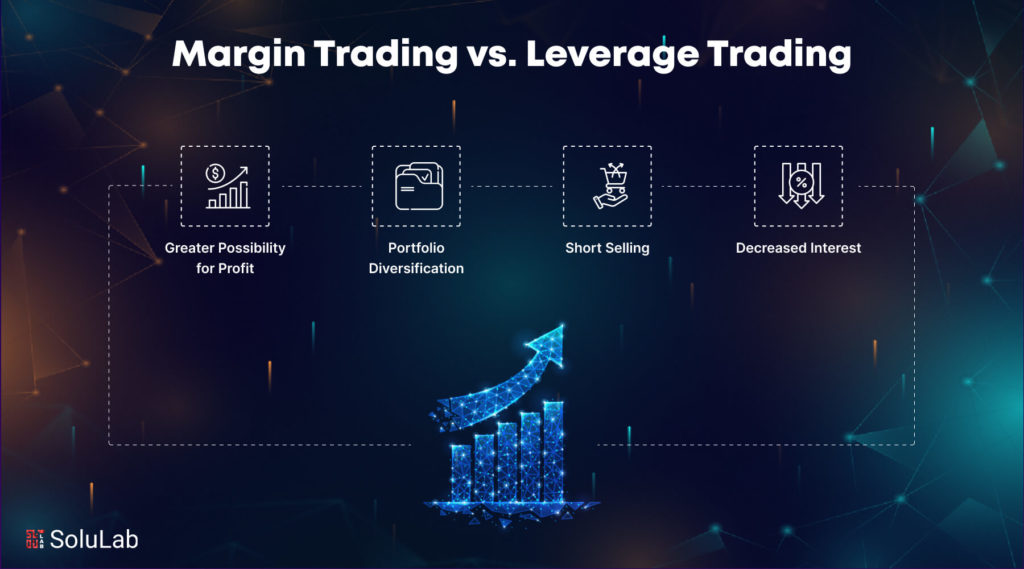
1. Greater Possibility for Profit: If the trade works out well, your purchasing power will allow you to take on bigger positions, which might result in higher profits.
2. Portfolio Diversification: You are able to buy a variety of assets thanks to your improved buying power, which helps to diversify your holdings.
3. Short Selling: In contrast to spot markets, in which you can only go long, with leverage crypto trading you may go either short or long, profiting in both bull and bear markets.
4. Decreased Interest: Compared to trading with cash and taking out a loan, you would have paid a lot less interest regardless of whether you had to repay the margin that was provided to you. This is especially relevant for leverage crypto trading USA, where cost efficiency is key.
Here are some of the drawbacks of crypto margin trading:
Depending on the amount of money you have placed in your trading account, leverage trading entails employing a credit facility that the trading platform gives to you to magnify your position. In essence, leverage trading meaning is a position multiplier. It’s only a tool that lets you reach a wider audience.
One of the most widespread myths is that using leverage in trading is like borrowing money. Leverage is not a loan; unlike bitcoin margin trading, where the exchange lends you more money that you have to pay back with interest, you won’t have any money to return. You own all of the money you make from leveraged trading, which is also true when engaging in the best crypto margin trading platforms.
Leverage is often stated as a ratio or by indicating the multiplier with an “X.” A leverage trading example is 10X, which allows you to establish a position 10 times larger than your initial investment. In general, you have the freedom to select the desired leverage, which ranges from 2X to 1000X. For instance, you may start a $10,000 trade with $1,000 and a 10X leverage ratio. Keep in mind that the maximum leverage differs according to the cryptocurrency exchange you are using and where you live.
Margin trading and cryptocurrency leverage trading have comparable benefits and drawbacks.
Here are some of the leverage trading benefits:
Here are some of the drawbacks of leverage trading:
Crypto margin trading and leverage trading are often used interchangeably, but they have distinct characteristics and Blockchain applications. While both involve borrowing funds to increase potential returns, they differ in terms of the markets they operate in, the assets traded, and the associated risks and regulations. Below is a comparison highlighting the key differences between crypto margin trading and leverage trading:
| Aspect | Crypto Margin Trading | Leverage Trading |
| Definition | Trading by borrowing funds to increase one’s trading position in cryptocurrencies. | Trading by using borrowed capital (leverage) to increase the potential return of an investment. |
| Market Focus | Specifically, it involves cryptocurrencies such as Bitcoin, Ethereum, etc. | It can involve any market, including stocks, forex, commodities, and cryptocurrencies. |
| Trading Platforms | Crypto exchanges like Binance, BitMEX, Kraken, etc. | Brokerage firms and trading platforms like Robinhood, ETRADE, forex brokers, and crypto exchanges. |
| Assets Traded | Primarily digital currencies. | A wide range of assets including stocks, bonds, forex, commodities, and cryptocurrencies. |
| Regulation | Often less regulated, varying by country. | Generally more regulated, especially in traditional financial markets. |
| Collateral Requirement | Requires collateral in the form of cryptocurrencies or stablecoins. | Requires collateral, which can be cash, securities, or other assets depending on the market. |
| Risk Management | Liquidation thresholds are usually higher due to the volatility of cryptocurrencies. | Risk management varies; traditional markets often have more stable and predictable risk parameters. |
| Interest Rates | Interest rates on borrowed funds can be high and vary significantly across different platforms. | Interest rates vary by broker and asset class, generally lower in traditional markets. |
| Accessibility | Accessible to anyone with access to a crypto exchange, typically with fewer barriers to entry. | Accessibility depends on the market; traditional markets may require more formal processes and approvals. |
| Volatility | Higher volatility due to the nature of cryptocurrencies. | Volatility varies by market; it is generally lower in traditional assets compared to cryptocurrencies. |
| Leverage Levels | Can offer extremely high leverage (e.g., 100x or more on some platforms). | Leverage levels vary by market and regulation; typically lower than in crypto markets (e.g., 2x to 20x). |
Let’s now explore the similarities between margin trading and leverage trading:
In margin and leverage trading, you use borrowed funds to amplify your trading positions beyond your capital’s limits. This strategy magnifies your profit or loss potential based on market fluctuations. Trade crypto with leverage can be highly rewarding but also comes with significant risks if the market moves against your position.
While both trading methods allow traders to amplify profits with a relatively modest initial investment, they also carry the risk of magnified losses if the market conditions work against the trader’s position. Leverage trading cryptocurrency can lead to substantial gains, but it is essential to be aware of the potential for equally significant losses.
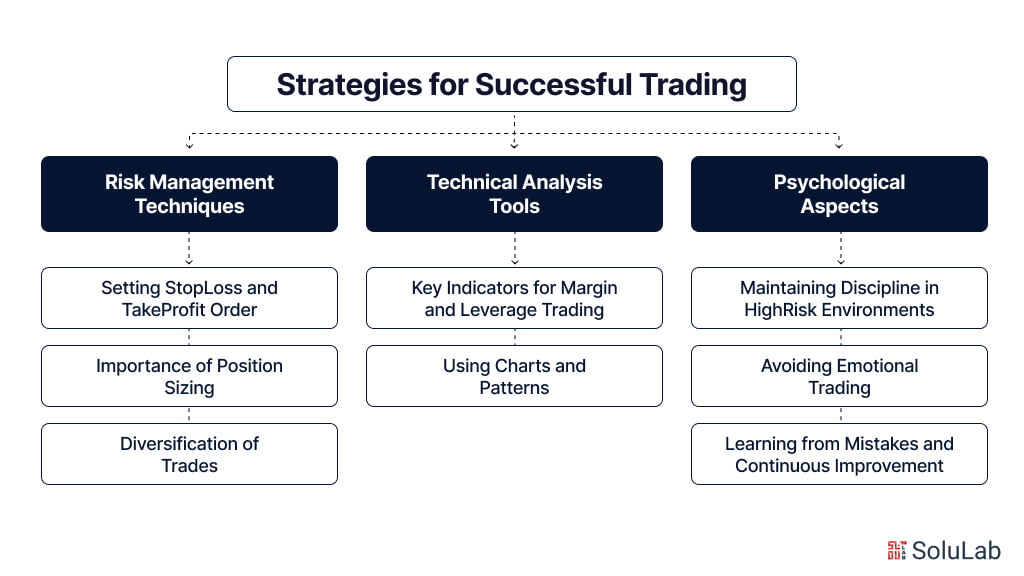
In margin and leverage trading, efficient risk management is essential. To minimize potential losses caused by market volatility, traders must implement appropriate stop-loss orders, meticulously manage margin requirements or trade cryptocurrency leverage ratios, and diversify their investment portfolios.
The impact of trading methods on trading psychology cannot be overstated. The potential for amplified gains can foster a sense of overconfidence, leading traders to engage in aggressive trading behaviors. On the flip side, amplified losses can induce heightened stress, fear, and margin trading cryptocurrency emotionally driven trading decisions.
Related: Rise of Cryptocurrency Wallets

Choosing the right platform for crypto margin trading versus leverage trading involves understanding the nuances and distinct features of each, assessing your risk tolerance, trading goals, and the functionality provided by the Blockchain platforms. Here’s a detailed guide to help you make an informed decision:
Margin Trading: In margin trading, you borrow funds to trade a larger position than your account balance. The leverage is provided by the broker or exchange.
Leverage Trading: Often used interchangeably with margin trading, leverage trading refers to using borrowed capital to increase the potential return of an investment. The key distinction is that leverage can sometimes be provided in the form of derivatives like futures contracts rather than direct borrowing.
Margin Trading Risks: Higher potential for both profits and losses. Margin calls can force the liquidation of positions if the market moves against you, resulting in losses that can exceed your initial investment.
Leverage Trading Risks: Similarly, leverage magnifies both gains and losses. Instruments like futures and options can expire worthless, potentially leading to a complete loss of invested capital.
Read Also: Launch Your RWA Tokenization in 7 Days
Security: Choose platforms with strong security measures, such as two-factor authentication (2FA), cold storage for assets, and a good reputation for safeguarding user funds.
Liquidity: High liquidity ensures that you can enter and exit trades smoothly without significant slippage.
Fees: Consider trading fees, margin interest rates, and any hidden charges. Platforms with lower fees can enhance your profitability.
Leverage Options: Different platforms offer varying leverage levels. Ensure the platform provides leverage options that align with your trading strategy.
User Interface and Experience: A user-friendly interface can make trading more efficient and less error-prone. Look for platforms with intuitive design and robust trading tools.
Ensure the platform is compliant with relevant regulations in your jurisdiction. Regulatory oversight can provide an additional layer of security and recourse in case of disputes.
Customer Support: Reliable customer support can be crucial, especially when dealing with technical issues or account problems. Look for platforms with responsive and knowledgeable support teams.
Educational Resources: Some platforms offer educational resources, webinars, and tutorials that can be invaluable for both novice and experienced traders.
Community Feedback: Engaging with trading communities and forums can provide insights into the platform’s reliability and user experiences.
Reviews and Ratings: Check reviews and ratings on independent review sites to gauge the platform’s reputation and performance.
Demo Accounts: Utilize demo accounts offered by many platforms to get a feel for the trading environment without risking real money.
Trial and Error: Sometimes, the best way to choose is by trying multiple platforms with small amounts of capital to see which one aligns best with your trading style and preferences.
Selecting the right platform for crypto margin or leverage trading requires careful consideration of various factors, including risk tolerance, platform features, regulatory compliance, support, and community feedback. By thoroughly evaluating these aspects, you can choose a platform that not only meets your trading needs but also provides a secure and efficient trading environment.
Understanding the differences between margin trading and leverage trading is crucial for optimizing your investment strategy. Both methods offer the potential for amplified returns, but they also come with heightened risks that require careful management. By assessing your risk tolerance, evaluating platform features, and considering regulatory compliance, you can make informed decisions that align with your financial goals. Whether you are a seasoned trader or a newcomer to the crypto market, taking the time to choose the right trading platform can significantly impact your overall success.
Trading cryptocurrencies, whether through margin or leverage, presents several challenges, including market volatility, complex platform interfaces, and the constant need for up-to-date market information. SoluLab- a crypto development company can help you overcome these challenges by providing robust and secure trading platforms designed to meet your specific needs. Our expertise in blockchain technology and cryptocurrency solutions ensures that you have access to reliable, user-friendly tools to enhance your trading experience. To learn more about how we can assist you in achieving your trading goals, contact us today.
Crypto margin trading involves borrowing funds from a broker to increase your buying power, whereas leverage trading crypto uses borrowed capital to amplify potential returns from a trade. Both methods magnify gains and losses.
In crypto margin trading, traders borrow funds to increase their trading position beyond their actual account balance. This can be done through crypto margin trading exchanges, allowing you to potentially earn higher profits or face amplified losses.
When you trade cryptocurrency with leverage, your potential losses are amplified alongside your profits. Without proper risk management, leverage trading crypto can lead to significant losses, especially in volatile markets.
Yes, you can trade cryptocurrency leverage in the USA, but it’s essential to ensure you’re using platforms that comply with U.S. regulations. Some platforms specifically cater to crypto leverage trading USA traders.
Leverage trading cryptocurrency allows traders to increase their market exposure without committing to the full value of the position upfront. This can lead to higher profits, but the risk of substantial losses is also present.
Several crypto margin trading exchanges offer leverage crypto trading in the USA. It’s crucial to choose platforms that provide proper security, liquidity, and leverage options suitable for your trading strategy.
To manage risks when trading crypto on margin, it’s advisable to set stop-loss orders, monitor your leverage ratio, and ensure you’re using a reliable crypto exchange margin trading platform to minimize the chances of liquidation.


