Talk to an Expert

Top 7 Generative AI Integration Services For Your Business

Generative AI Integration Services for Businesses

Businesses today are under constant pressure to innovate, stay efficient, and personalize customer experiences. But doing all that manually? It’s time-consuming, expensive, and often inconsistent. Many companies feel stuck wanting to explore generative AI but not knowing where to begin or who to trust with integration. 

That’s where the right service provider makes all the difference. With the right generative AI integration, you can automate content creation, improve operations, and gain powerful insights—without reinventing the wheel. 

Spending on systems integration services is projected to grow, reaching $153.8 billion in 2024 and $183.42 billion by 2027 as generative AI accelerates the setup and integration of corporate software systems.

In this blog, we’ll walk you through the top 7 generative AI integration services that can help future-proof your business and give you the edge you’ve been looking for.

What is genAI, and why does it matter?

A subtype of AI called GenAI is designed to produce unique, human-like content.  Unlike traditional AI, which adheres to predetermined rules, GenAI learns from data patterns to produce text, graphics, code, music, and more.  Its importance lies in its capacity to:

  •  Automate daily tasks.
  •  Boost your creative flair and originality
  •  Boost productivity in all sectors
According to Microsoft, Generative AI is being used by 75% of knowledge workers this has grown to an unexpected scale from the past six months as there were only 46% of workers using AI.

GenAI tools are changing processes, decreasing manual labor, and creating endless opportunities in fields like gaming and content development.
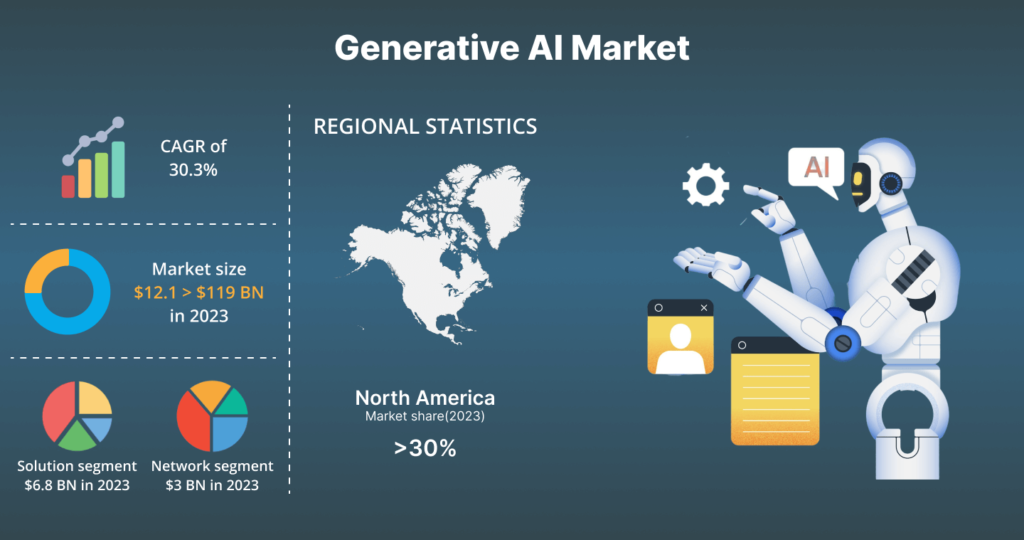
Generative AI Market

How do Generative AI Integration Services Assist Businesses?

Generative AI business integration services are one of the most transformative services that are currently sweeping the market because they adapt advanced AI solutions into existing processes effortlessly while allowing businesses to operate efficiently.

These services leverage generative AI integration but are not limited to GPT-3 and GPT-4 to boost efficiency, streamline work, and support decisions. It can be said that this is one of the most comprehensive overviews of the advantages companies get from such services.

Two third of businesses are constantly raising their investments as 58% of users have shared a list of various advantages they notice every day by using GenAI. 

A. Customized Solutions

One of the key benefits of generative AI integration services involves their ability to provide a company with specific solutions that will be able to help it function more efficiently. These services can recommend and implement generative AI applications that smoothly integrate into the existing network since these services study the contemporary systems and understand the specific challenges that the company cannot overcome. This makes it a very good strategy for customization since it ensures minimal interferences while at the same time maximizing the advantages.

B. Optimizing the Flow of Operations

Through the use of generative AI integrations, employees can focus on better tasks since repetitive and dull tasks harm the organization. For instance, some businesses can employ the use of artificial assistants such as chatbots to handle many customer complaints at the same time while delegating complex problem-solving tasks to human staff. Since they are bright and quick to respond and assist as well this automation helps in enhancing the general customer experience while at the same time helping in better productivity.

Contact Us

C. Data-Based Perspectives

The capacity of generative AI to rapidly and efficiently analyze big amounts of data is still another benefit of integrating it. Of course, a big data set is where the actual value of AI algorithms shows through because it is only with them that pertinent information can be sought out, for instance. This integration of generative AI capacity assists firms in the use of data and analytics to make better decisions hence enhancing effectiveness and strategy in organization operations.

D. Flexibility and Scalability

When organizations grow they have different requirements. When you integrate generative AI services for the service-oriented architecture brings the flexibility required for change as dictated by customer demand. AI can be easily expanded by integrating the current and new tools and applications that do not necessarily have to replace the existing structures. Due to this flexibility, businesses are in a position to exploit new opportunities that happen to exist in the market as they are seen to emerge.
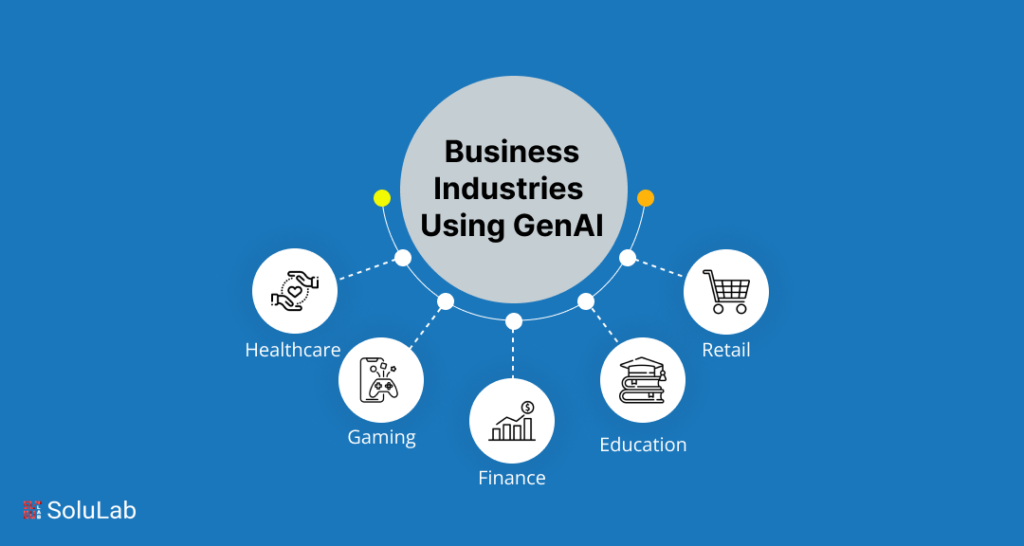
Which Business Industries Are Already Using Generative AI? 

Business Industries Using GenAI

A quickly advancing part of generative artificial intelligence, a future already affecting many different industries. It is said that this technology has the potential to disrupt the business world because it can enhance customers’ experiences and optimize such processes. Here are the sectors that are consistently using Generative AI for better customer experiences and efficiency

1. Healthcare: Generative AI in healthcare is playing a significant role in moving towards the customization of diagnoses and therapies. Through analysis of large amounts of client information including genetic data, medical records, and real-time health monitoring, generative AI models in healthcare can find out trends and anticipate the risk factors of illness. That is why it becomes easy to develop patient-specific treatment and preventive plans that the patient and the medical practitioners will embrace.

2. Gaming: While still fitting into a relatively novel category of machine learning tools, there is no doubt that generative AI has been rapidly adopted by various industry sectors, but none perhaps as quickly and visibly as the gaming industry, where it serves from the creation of personalized gaming experiences to the generation of procedural content. Concerning preprogrammed guidelines and player decisions, generative AI is susceptible to formulating new game environments, characters, or even whole levels.

Read Blog: How AI in Gaming is Changing the Future of Industry?

3. Finance: There is a high potential for using Generative AI in Insurance when it comes to risk management and fraud detection. Machine learning-based generative AI can recognize fraudulent actions in real time and further avoid financial loss both to organizations and customers through analysis of patterns in transactional histories for outlier recognition.

4. Education: Due to the need to deliver fun-based lessons to engage learners while at the same time enhancing the delivery of education by proposing personalized lessons, the education industry is incorporating generative AI. Often, tutoring programs based on generative AI can be designed such that they are effective according to a student’s pace and are capable of providing support by way of a tutor.

5. Retail: Self-organizing personalized experiences in the retail sector are appearing due to the use of generative AI in retail for content creation. Since most customers have their individual browsing and purchasing history reflected on the clique, generative AI models can recommend one product or service that another one depending on the customer’s history.

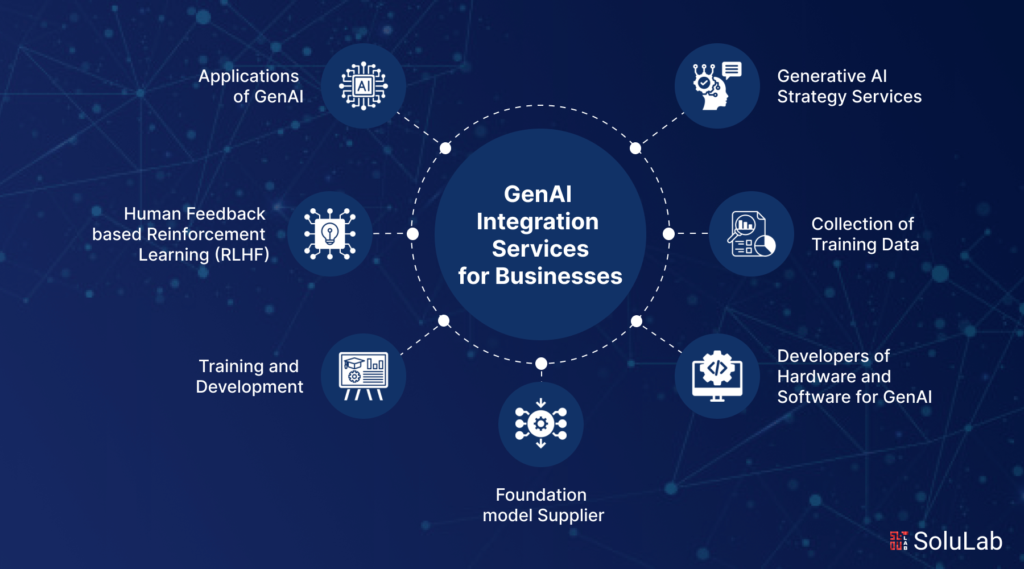
Top 7 Generative AI  Integration Services

Many organizations across many industries are already employing such innovative solutions to enhance their operations as generative AI technology advances, you can also leverage this with the help of a generative AI development company.  If the business dreams of proper utilization of this technology then generative AI automation spans across the range of making the customer care system efficient to the content creation process.

These are the top seven services that need to be incorporated to ensure the gen AI model is implemented in enterprises to provide an edge over competitors.

1. Generative AI Strategy Services

This is why a clear approach that shows how generative AI integration services are going to work within a particular business process has to be presented. This service involves assessing the workload, the skills of the employees, and the ethical implications of laying down blueprints for artificial intelligence. Currently, entities like Bain & Company as well as McKinsey can create bespoke tactics to help businesses understand which generative AI use cases could be optimally valuable.

Related: Effective Generative AI Strategy For Your Enterprise

2. Collection of Training Data for Generative AI

This is usually the case with GenAI models since they require large-quality datasets to be trained well. Clickworker’s generative AI training data services help enterprises get, clean, and label the data needed for learning. Firms can also reduce the time taken in training AI models by outsourcing data gathering so that more time is spent on creating models.

3. Developers of Hardware and Software for Generative AI

The generative AI integration training and deployment are computationally intensive tasks that inevitably need big computer power. Some major hardware solution vendors whose specialized HW is designed to satisfy the computing requirements of AI loads are NVIDIA and Google with their proprietary TPU. Companies may additionally ensure that, with the help of these superb providers, they have the proper infrastructure to support their generative AI plans.

4.  Foundation model Supplier

The GenAI use cases are based on foundation models, where the companies, which practice generative AI applications can use the trained models for any kind of application. Google has a BERT model, which is rather good for NLP, while OpenAI presents a strong language generation with well-known GPT-3 and GPT-4 models. Such foundation models help companies to incorporate generative AI solutions without a fresh lot of training as these models already have learned a fair amount of foundational knowledge.

5. Training and Development in Generative AI

Due to the nature of the Generative AI consulting company, getting them trained is challenging and may require large datasets and complex algorithms most of which businesses may not have in-house. Through companies such as H2O, model-building is simplified. ai, DataRobot, Microsoft Azure, and AWS SageMaker which has distinguished training as well as development facilities.

6. Reinforcement Learning with Human Feedback (RLHF)

Part of reinforcement learning called Reinforcement Learning with Human Feedback (RLHF) incorporates human feedback into an AI model. Services from such websites as Clickworker and Prolific can be used to gather opinions from people, which then help to fine-tune AI-driven algorithms to reflect human values and preferences. Through this method, the content is refined in terms of both quality and relevance and thereby the AI outputs are made more suitable for practical use.

7. Applications of Generative AI

That way, the presence of numerous existing applications makes it possible for companies that may wish to integrate generative AI into their operations within the shortest time possible to do so. Many of the manufacturers offer preset generative AI which tailor made for many areas of a business, such as customer support and content generation. By adopting these apps, businesses may design generative designs without effectively costly and time-consuming techniques.

GenAI Integration Services

How Can SoluLab Elevate Your Solutions Using Generative AI?

Integrating generative AI into your business isn’t just a trend; it’s a game-changer. The services we’ve listed above can help you improve operations, create personalized customer experiences, and stay ahead in a competitive market. 

Whether you’re in marketing, design, customer service, or software development, there’s a solution tailored for your needs. The key is choosing the right partner who understands your goals and can scale with your growth.

Amanbank, a leading Libyan bank with 750,000+ customers, partnered with SoluLab to build an intuitive mobile banking solution. Facing outdated onboarding, limited support, and inconsistent service, the bank adopted generative AI-powered chatbots and voice AI agents. These innovations enabled 24/7 multilingual support, personalized banking, automated KYC, and streamlined operations—enhancing customer experience and boosting digital transformation. 

SoluLab, a top generative AI development company, can help you solve your business problems. Contact us today to discuss further.

FAQs

1. What is generative AI? How does it work for businesses?

Generative AI is the new trend of technology for generating texts, images, and music according to data patterns from current data. It can assist in automating tasks, tailored content, and efficient workflow. 

2. How long does it take to integrate generative AI into a business?

It depends on the complexity of your operations and the type of AI service. For small businesses, basic integrations like AI chatbots or content tools can take 2–4 weeks. For larger systems—like AI-powered CRMs or workflow automation—it might take 2–3 months, including testing and training.

3. How can business benefits from Generative AI integration services?

Automation of content, better customer experiences, improved decision-making, predictive analysis, and gaining competition along with a lot more benefits can be gained with using Generative AI. 

4. How much does it cost to integrate generative AI services?

Costs can vary widely based on the service and scale. Basic tools start at ₹5,000–₹20,000/month. Custom enterprise-level integrations could range from ₹5 lakhs to ₹25 lakhs+, depending on the features, data requirements, and vendor expertise. 

5. How can SoluLab’s Generative AI Services benefit businesses?

SoluLab’s Generative AI services keep businesses empowered with automating tasks, valuable insights, and data-driven decision-making. This will help organizations with progressive growth in the market dynamics. 

How Generative AI is Shaping the Future of AR and VR Experiences?

How Generative AI is Shaping the Future of AR and VR Experiences?

Augmented Reality (AR) and Virtual Reality (VR) have witnessed significant advancements over the years, transforming how we interact with digital content and the physical world. These immersive technologies have applications in various fields, from gaming and entertainment to healthcare and education. However, the true potential of AR and VR lies in their ability to deliver lifelike, engaging experiences, and this is where Generative AI comes into play.

Generative AI, a subset of Artificial Intelligence, has been instrumental in pushing the boundaries of AR and VR by enabling the creation of highly realistic, interactive, and adaptive digital content. In this blog, we’ll explore how Generative AI is shaping the future of AR and VR experiences and its exciting possibilities.

The Role of Generative AI in Augmented Reality (AR) and Virtual Reality (VR) Learning

The Role of Generative AI in Augmented Reality (AR) and Virtual Reality (VR) Learning

Before delving into the exciting possibilities of augmented reality (AR) and virtual reality (VR) in education, it’s essential to recognize the pivotal role that Generative Artificial Intelligence (AI) plays in shaping the future of learning within these immersive realms.

At its core, Generative AI harnesses advanced neural networks to create dynamic content tailored to the individual needs and preferences of students. In the context of AR and VR, this technology acts as a virtual tutor, available 24/7, capable of adapting to each student’s unique learning journey within these interactive environments.

  • Unprecedented Personalization

Generative AI trends take personalized learning to new heights, surpassing the limitations of traditional teaching methods. The one-size-fits-all approach of textbooks and standardized curricula falls short of meeting the diverse learning needs of students.

In AR and VR, Generative AI ensures that learning materials are dynamically customized in real time. This means that students receive content aligned with their current knowledge levels and learning preferences, promoting more effective and engaging learning experiences.

Imagine a student immersed in an AR mathematics lesson. Generative AI, driven by machine learning algorithms, continuously evaluates the student’s progress within the virtual environment. If the AI detects areas of struggle, it generates additional practice problems or offers alternative explanations until the student comprehends the concept. Conversely, if the student is advancing rapidly, the AI can introduce more advanced topics or challenges to maintain their engagement and motivation.

  • Adaptive Learning Paths in AR and VR

Generative AI empowers educators to implement adaptive learning paths within AR and VR experiences. It can analyze students’ responses to AR/VR quizzes, assignments, and interactions with virtual learning materials to create personalized educational journeys. This approach ensures that students receive the appropriate level of challenge and support, thereby preventing boredom or frustration within these immersive environments.

For instance, consider an AR or VR language learning application enriched by Generative AI. The system can assess a student’s vocabulary and grammar proficiency within the virtual space. If a student excels in vocabulary but struggles with grammar, the AI may recommend tailored exercises and resources to address the grammar deficiency. As the student progresses, the AI dynamically adjusts the difficulty level, ensuring a learning experience that remains engaging and beneficial.

  • Real-time Guidance and Support through Generative AI and AR

Generative AI not only delivers tailor-made content but also provides immediate feedback and assistance within augmented reality (AR) environments. This means that students no longer have to wait for a teacher’s response or corrections; they receive real-time guidance. This feature not only accelerates the learning process but also bolsters students’ confidence as they can promptly correct errors and reinforce their understanding.

In a science class, for example, a student might be conducting a virtual experiment in an AR setting. Generative AI closely observes the student’s actions, identifying any misconceptions or errors in the experiment. Almost instantly, the AI offers feedback and suggests necessary adjustments. This iterative process ensures that students learn through their mistakes, a potent educational tool made possible by Generative AI and AR.

  • Ongoing Enhancement in AR Learning

Generative AI and Augmented Reality don’t limit themselves to customizing content; they also actively improve the teaching materials themselves. Over time, as it gathers data on how students interact with various learning resources in AR, it can optimize those resources for maximum educational effectiveness.

Imagine an online history course enriched by Generative AI within an AR framework. As students engage with the course materials, which might include textbooks, videos, and interactive timelines, the AI continuously monitors their preferences. If students exhibit a preference for video content to learn about historical events, the AI could generate more video-based modules. Similarly, if students respond positively to interactive timelines, the AI can create additional interactive content to reinforce their understanding. This dynamic optimization of AR learning materials by Generative AI ensures that the educational experience remains engaging and effective.

  • Accessibility and Inclusivity Amplified by Machine Learning in Education

One of the most promising facets of Machine Learning in education is its capacity to render learning more accessible and inclusive. This technology, driven by Machine Learning algorithms, proves to be a game-changer for students with varying learning needs, including those with disabilities, by accommodating their requirements. In effect, this fosters an all-encompassing learning environment where every student can not only participate but also excel.

Consider, for instance, a visually impaired student engaged in the study of literature. Thanks to Machine Learning, educational materials can be transformed to meet the specific needs of this student. Machine Learning algorithms can convert text into audio, providing the student with the option to listen to literary works. Moreover, the technology can offer detailed audio descriptions of visual elements within these literary works, enriching the student’s understanding of the content.

In tandem, Machine Learning can adjust the reading pace to align with the student’s preferences, ensuring comprehension without any undue haste. Essentially, Machine Learning is revolutionizing the entire educational landscape, transforming learning into a highly adaptive, personalized, and inclusive experience. This empowerment extends to both students and educators, enabling them to embark on educational journeys that are uniquely tailored to individual needs and aspirations. In doing so, Machine Learning paves the way for a more equitable and effective education system that caters to the diverse needs of every learner.

Related: Role AI in Transforming Education Industry

Defining Augmented Reality and Virtual Reality

Virtual Reality (VR) refers to a computer-generated, three-dimensional environment that a person can explore and interact with. When engaged in VR, an individual becomes an integral part of this virtual world, fully immersed in the computer-generated environment. Within this space, the person can manipulate objects and execute actions that influence the happenings within the virtual environment. VR technology primarily relies on devices such as headsets or goggles to create this immersive experience.

Conversely, Augmented Reality (AR) is an enhanced version of reality where a person’s direct or indirect view of the real physical world is enriched by the addition of computer-generated images. These digital elements are superimposed over the user’s perception of the real world, effectively enhancing their current reality. In simpler terms, AR users observe digital layers of information overlaid on real-world images, enhancing their overall perception of reality.

CTA1

AR technology comes in various forms:

  • Location-based AR: This system delivers supplementary information to users based on their geographic location, which holds immense potential, particularly in industries such as automotive and transportation.
  • Projection-based AR: In this instance, AR software projects light onto a physical object, creating an interactive interface within the real-time environment.
  • Superimposition-based AR: This form of AR permits users to either entirely or partially replace the actual image with new elements, thus augmenting their perspective. Superimposition-based AR is well-suited for applications in the fashion industry, architecture, and design.

Real-life Generative AI Use Cases in Enhancing Learning Experiences

Real-life Generative AI Use Cases in Enhancing Learning Experiences

The value of Generative AI in enhancing the learning experience becomes clearer when illustrated through concrete examples. These real-life Generative AI use cases provide insights into how these new technologies can aid educators in delivering knowledge more effectively and engagingly.

1. Healthcare: Traditionally, learning about healthcare necessitated real-life apprenticeships in hospitals. However, with the advent of Generative AI in healthcare education, students can engage in virtual surgeries and medical procedures, gaining valuable experience without any risk to patients. This makes healthcare learning safer and more efficient.

2. Chemistry: Teaching complex concepts in chemistry can be challenging. Generative AI introduces a new approach where students can perform experiments, mix substances, and gain a hands-on understanding of chemistry. This not only enhances safety but also reduces costs as schools no longer need to purchase various chemical substances for laboratory experiments.

3. History and Geography: The rich narratives of ancient civilizations can be daunting to students. Generative AI can bring history and geography to life through augmented and virtual reality. Virtual field trips transport students to distant lands and historical eras in a matter of minutes, making learning engaging and cost-effective.

4. Physics: Teaching classical mechanics and scientific theories can be dry and theoretical. With Generative AI, students can immerse themselves in virtual environments where they can put theory into practice. Whether it’s exploring the cosmos or experiencing interstellar journeys, Generative AI makes complex subjects more accessible.

5. Manual Work: Many vocational fields involve heavy machinery and tools, making hands-on training challenging in a traditional classroom. Generative AI, particularly in VR, enables students to safely engage in activities like driving trucks, conducting construction tasks, or simulating high-risk professions such as firefighting and coast guard operations.

6. Art and Culture: Generative AI, specifically superimposition-based AR, can be used to create engaging art and culture learning experiences. With AR, students can interact with famous artists’ styles and learn about artistic history. AI and VR allows them to attend cultural events and even travel back in time to witness historical performances.

Related: Generative AI Art

7. Language Learning: The best way to learn a new language is through immersion, often requiring travel. Generative AI can change this by offering virtual trips to foreign countries, enabling language learners to practice with native speakers and explore local cultures.

It’s important to note that the applications of Generative AI in education extend far beyond these seven examples. Furthermore, the potential for creating virtual classrooms where students from around the world can access top-tier educators remains an exciting prospect, although it is still evolving. These use cases illustrate the transformative potential of leveraging Generative AI in making learning more immersive, engaging, and accessible across various fields of study.

How Generative AI Enhances Realism in AR and VR Environments?

Generative Artificial Intelligence (AI) is revolutionizing Augmented Reality (AR) and Virtual Reality (VR) by significantly enhancing the realism of the environments experienced within these immersive technologies. Through the clever use of Generative AI, AR and VR experiences have become more convincing, engaging, and lifelike than ever before.

Generative AI, particularly through Generative Adversarial Networks (GANs), plays a pivotal role in creating hyper-realistic surroundings. GANs consist of two neural networks – a generator and a discriminator – that work in tandem to produce lifelike content. The generator creates synthetic data, such as images or 3D models, while the discriminator evaluates this content for authenticity. Through repeated iterations and fine-tuning, GANs can generate images and environments that are almost indistinguishable from reality.

In AR, this technology ensures that digital elements seamlessly blend with the physical world. For example, AR apps can superimpose virtual furniture into your living room, appearing so realistic that you might forget it’s not actually there.

In VR, Generative AI facilitates the creation of immersive, lifelike worlds. Whether exploring a historical era, visiting a far-off planet, or undergoing surgical training, AI and VR environments feel incredibly real, thanks to AI’s ability to generate detailed textures, landscapes, and interactive elements.

Ultimately, Generative AI is the magic wand that transforms AI and VR from mere technological novelties into powerful tools that offer users experiences that feel, look, and interact with the world just like reality. This not only enriches entertainment and gaming but also holds significant promise in domains such as education, training, and design.

The Role of AR and VR in Training and Simulation

The Role of AR and VR in Training and Simulation 

Augmented Reality (AR) and Virtual Reality (VR) have emerged as transformative tools in the realm of training and simulation. These immersive technologies offer a unique and highly effective way to prepare individuals for various real-world scenarios, both in professional and educational contexts.

In training and simulation, AR and VR excel in several key ways:

  • Safe and Controlled Environments: AR and VR provide controlled, safe, and repeatable environments for training. Professionals in fields like medicine, aviation, and the military can rehearse complex procedures and emergency scenarios without real-world risks.
  • Realistic Simulations: VR, in particular, offers incredibly realistic simulations. Trainees can immerse themselves in highly detailed virtual environments that mimic real-world settings, complete with interactive elements. This level of realism enhances muscle memory and helps individuals develop practical skills.
  • Hands-On Learning: Both AR and VR enable hands-on learning. Trainees can manipulate virtual objects, perform tasks, and interact with simulated elements, making the learning experience more engaging and effective.
  • Cost-Efficiency: AR and VR reduce the need for physical resources, equipment, and facilities, saving costs associated with real-world training. This is especially valuable in industries with expensive or limited resources.

Related: How Generative AI is Revolutionizing Art?

  • Customization and Adaptability: AR and VR simulations can be customized to suit specific training needs. Training programs can be adapted to various skill levels and learning speeds, allowing for a more personalized training experience.
  • Repetitive Practice: Trainees can practice procedures as many times as needed until they achieve proficiency, which is particularly valuable in industries where repetition is critical, such as surgery or military exercises.
  • Remote Training: AR and VR technologies enable remote training and collaboration, breaking down geographical barriers. Experts from around the world can guide and assess trainees, making it easier to access specialized knowledge and instruction.

In brief, AR and VR have revolutionized training and simulation by offering highly realistic, safe, and cost-effective learning environments. These immersive technologies not only accelerate skill acquisition but also provide a flexible and adaptable platform for individuals to become experts in their respective fields.

CTA2

Concluding Remarks

The integration of generative AI in virtual reality and augmented reality is propelling these immersive technologies into the forefront of the digital era. The dynamic capabilities of Generative AI have ushered in a new era of hyper-realism, personalization, and interactivity within AR and VR experiences. It has rendered what was once considered the stuff of science fiction into a tangible, transformative force for a multitude of industries.

As we look to the future, the horizon for AR and VR powered by Generative AI is brimming with possibilities. These technologies are poised to redefine education, enabling personalized and engaging learning journeys, while also revolutionizing training and simulation by providing realistic, cost-effective, and risk-free environments for skill development. Furthermore, the potential applications span far beyond education, from healthcare to gaming, industry, and beyond. 

SoluLab worked on OmniSoft is a pre-made solution that may be customized for you. We have developed a solution that satisfies every requirement of our customers, you can host conferences, seminars, and other events in addition to business meetings in a metaverse. Our tools and infrastructures are designed to manage big teams so you can keep doing what you need to. With this, we can assist you in transferring your physical board rooms, conference rooms, and offices to the online space. We also provide avatars of your favorite characters to add to the excitement. 

FAQs

1. How does AI function in AR and VR?

Tracking and recognition are two of the most basic applications of AI in VR and AR. Behind the scenes, AI algorithms are actively working on tasks like object tracking, gesture detection, and facial recognition. 

2. Is AR a form of AI?

No AI and AR are not the same thing. Through the realistic augmented reality activity that air technology offers, consumers can see products in their environment and make better selections.

3. Which technology powers AR and VR?

Rendering and 3D modeling are used in AR to produce virtual imagery. They may be superimposed on the actual environment. Both the geometry and appearance of the virtual objects define them.

4. Which algorithm does virtual reality use?

POV-Ray is a freeware, standalone, outstanding renderer that uses a text file describing the scene in a scripting language called POV-Ray scene description language (SDL) as input to produce three-dimensional photo-realistic graphics. 

5. How does SoluLab’s expertise contribute to the development of Generative AI solutions for AR and VR applications? 

SoluLab offers experienced Generative AI developers who can integrate advanced AI models and algorithms to maximize the potential of Generative AI. This collaboration leads to groundbreaking advancements in education, training, and entertainment, shaping the future of AR and VR experiences.

10 Ways Generative AI is Revolutionizing Healthcare

10 Ways Generative AI is Revolutionizing Healthcare

In recent years, the healthcare industry has witnessed a significant transformation due to the emergence of innovative technologies. One such groundbreaking technology that has revolutionized healthcare is Generative Artificial Intelligence (AI). Generative AI applications have introduced a new era of possibilities and advancements, enabling healthcare professionals to streamline processes, enhance patient care, and improve overall outcomes. With the application of Generative AI, the healthcare sector has experienced a paradigm shift, leading to improved diagnostics, personalized treatment plans, and optimized drug development processes. In this blog, we will explore 10 key ways in which Generative AI is reshaping and revolutionizing the healthcare landscape.

Advanced Diagnostics and Imaging Techniques

Advanced Diagnostics and Imaging Techniques

With the aid of Generative Artificial Intelligence AI applications, healthcare providers can now delve into a realm of advanced diagnostics and imaging techniques. Leveraging Generative Artificial Intelligence (AI) models, medical professionals can enhance disease detection, improve imaging accuracy, and enable real-time diagnostic capabilities for improved patient care and treatment outcomes.

  • Application in Disease Detection

Generative AI applications in diagnostics enable healthcare professionals to detect diseases with greater precision and accuracy. By analyzing medical images and data, Generative AI can identify subtle patterns and indicators that may not be apparent to the human eye, facilitating early disease detection and proactive intervention.

  • Enhancing Imaging Accuracy

The integration of Generative AI models in imaging technologies has significantly improved imaging accuracy and quality. Through advanced image processing algorithms and pattern recognition capabilities, Generative AI enhances the clarity and detail of medical images, enabling healthcare providers to make accurate and informed diagnostic decisions.

CTA1

  • Real-Time Diagnostic Capabilities

Generative AI-powered diagnostic tools offer real-time capabilities, allowing healthcare professionals to access immediate diagnostic insights and recommendations. By leveraging Generative AI models, healthcare providers can expedite the diagnostic process, reduce waiting times, and deliver prompt and effective medical interventions, thereby improving patient outcomes and satisfaction.

Personalized Treatment Plans

Generative AI plays a crucial role in shaping personalized treatment plans for patients. By utilizing Generative AI tools, healthcare providers can tailor medication regimens, design customized therapy protocols, and recommend lifestyle modifications based on individual patient needs and medical history. This personalized approach to treatment fosters better patient engagement and overall healthcare experiences.

  • Tailoring Medication Regimens

Generative AI facilitates the customization of medication regimens based on patient-specific data and treatment requirements. By analyzing patient health records, medical history, and genetic predispositions, Generative AI models assist healthcare providers in developing personalized medication plans that address individual health needs and optimize treatment outcomes.

  • Customized Therapy Protocols

Generative AI-powered therapy protocols enable healthcare professionals to design customized treatment plans that align with the unique needs and preferences of each patient. By integrating patient data and therapeutic insights, Generative AI models recommend tailored therapy approaches, rehabilitation strategies, and lifestyle modifications, fostering patient engagement and adherence to treatment regimens.

  • Lifestyle Modification Recommendations

Generative AI applications offer comprehensive lifestyle modification recommendations based on patient health data and behavioral patterns. By analyzing patient behavior, dietary habits, and activity levels, Generative AI models provide personalized lifestyle modification suggestions, wellness strategies, and preventive measures that promote healthy living and disease prevention.

Read Also: How Healthcare Startups in the USA Leverage Generative AI to Cut 40% Costs? 

Drug Discovery and Development Processes

In the realm of drug discovery and development, Generative AI has emerged as a powerful tool. By leveraging AI-driven predictive modeling, healthcare professionals can identify potential drug candidates more efficiently, accelerate clinical trial processes, and enhance the efficacy and safety of new pharmaceutical interventions. Generative AI models have the potential to revolutionize the drug development landscape and bring about significant advancements in patient care.

  • Predictive Modeling for Drug Identification

Generative AI facilitates predictive modeling for efficient drug identification and development. By analyzing molecular structures, biochemical interactions, and pharmacological data, Generative AI models accelerate the drug discovery process, optimize compound selection, and improve the efficacy and safety of pharmaceutical products, leading to the development of novel treatments and therapies for various medical conditions.

  • Accelerating Clinical Trial Processes

Generative AI-powered clinical trial processes streamline the evaluation and validation of pharmaceutical products and treatments. By integrating data analysis tools and predictive modeling techniques, Generative AI expedites clinical trial phases, enhances participant recruitment and selection, and ensures accurate data interpretation, contributing to the timely approval and market launch of innovative drugs and therapies.

  • Improving Drug Efficacy and Safety

Generative AI plays a crucial role in enhancing drug efficacy and safety by optimizing drug formulation and dosage specifications. By conducting comprehensive data analysis and clinical simulations, Generative AI models predict the potential outcomes and adverse effects of pharmaceutical interventions, enabling healthcare professionals to design and administer safe and effective drug treatments that minimize risks and maximize patient well-being.

Precision Medicine and Genomic Analysis

Genomic analysis and precision medicine have been significantly enhanced with the integration of Generative AI technologies. Through the identification of genetic markers and the implementation of personalized disease risk assessments, healthcare providers can develop targeted treatment approaches for various health conditions. Generative AI’s role in precision medicine continues to expand, offering promising avenues for personalized healthcare solutions.

  • Genetic Marker Identification

Generative AI facilitates the identification of genetic markers and biomarkers associated with various health conditions and diseases. By analyzing genomic data and conducting in-depth genetic profiling, Generative AI models identify specific genetic variations and mutations that may contribute to disease susceptibility or therapeutic responses, enabling healthcare professionals to develop targeted interventions and personalized treatment approaches.

Read Blog Also : Influence of AI on Mobile Application Development 

  • Personalized Disease Risk Assessments

Generative AI-powered disease risk assessments provide comprehensive evaluations of individual health risks and predispositions. By integrating genetic data, medical histories, and lifestyle factors, Generative AI models assess patients’ susceptibility to specific diseases and health complications, allowing healthcare providers to offer personalized preventive measures, health management strategies, and early intervention plans that mitigate health risks and promote overall well-being.

  • Targeted Treatment Approaches

Generative AI supports the development of targeted treatment approaches that address the unique genetic characteristics and biological profiles of individual patients. By leveraging genetic insights and disease-specific data, Generative AI models recommend tailored therapeutic interventions, precision medicine strategies, and genetic-based treatments that optimize treatment efficacy and minimize adverse effects, leading to improved patient outcomes and satisfaction.

Virtual Health Assistants and Patient Support

Virtual health assistants and patient support systems have been transformed by the capabilities of Generative AI. By incorporating AI-powered symptom analysis and remote consultation services, healthcare providers can deliver comprehensive patient education and support. These virtual health assistants serve as a vital bridge between patients and healthcare professionals, offering timely assistance and guidance for various healthcare concerns.

  • Remote Consultation Services

Generative AI-powered virtual health assistants enable remote consultation services and telehealth solutions for patients and healthcare providers. By integrating natural language processing and machine learning capabilities, Generative AI models facilitate interactive virtual consultations, medical guidance, and patient education, enhancing the accessibility and convenience of healthcare services and fostering continuous patient engagement and support.

Read Blog Post: Strategies for Leveraging Generative AI in E-Commerce

  • AI-Powered Symptom Analysis

Generative AI-driven symptom analysis tools offer accurate and reliable assessments of patient symptoms and health conditions. By analyzing patient-reported data and medical histories, Generative AI models generate comprehensive symptom evaluations, differential diagnoses, and treatment recommendations, empowering patients to make informed healthcare decisions and enabling healthcare providers to deliver timely and effective medical interventions.

  • Patient Education and Support Systems

Generative AI applications support the development of patient education and support systems that provide comprehensive health information and wellness resources. By utilizing interactive learning modules and personalized health content, Generative AI models facilitate patient education, self-care management, and preventive health initiatives, promoting patient empowerment, health literacy, and active participation in healthcare decision-making processes.

Enhanced Medical Research and Data Analysis

Enhanced Medical Research and Data Analysis

Generative AI has significantly bolstered medical research and data analysis capabilities. By utilizing advanced data mining and analysis tools, healthcare organizations can identify emerging medical research trends and promote evidence-based practices. Generative AI applications enable healthcare professionals to gain deeper insights from vast datasets, paving the way for informed decision-making and enhanced research outcomes.

  • Data Mining and Analysis Tools

Generative AI-powered data mining and analysis tools enable comprehensive exploration and extraction of valuable insights from large-scale healthcare datasets and research repositories. By utilizing machine learning algorithms and predictive analytics, Generative AI models uncover hidden patterns, correlations, and trends within complex healthcare data, facilitating evidence-based research, clinical studies, and medical discoveries that drive advancements in patient care, disease management, and healthcare innovation.

  • Identifying Medical Research Trends

Generative AI models play a crucial role in identifying emerging medical research trends and research priorities within the healthcare industry. By analyzing scientific literature, clinical trials, and research publications, Generative AI applications highlight key areas of research interest, innovative technologies, and novel treatment modalities, providing valuable guidance and strategic direction for healthcare organizations, research institutions, and medical professionals involved in cutting-edge research and development initiatives.

  • Promoting Evidence-Based Practices

Generative AI promotes evidence-based practices and informed decision-making processes within the healthcare ecosystem. By evaluating clinical evidence, treatment outcomes, and real-world data, Generative AI models generate evidence-based guidelines, clinical recommendations, and best practice protocols that guide healthcare professionals in delivering high-quality, patient-centered care, fostering standardized treatment approaches, and ensuring optimal healthcare delivery across diverse clinical settings and specialties.

Streamlined Administrative Processes and Operational Efficiency

With the integration of Generative AI, healthcare institutions can streamline administrative processes and optimize operational efficiency. By automating workflow management and optimizing resource allocation, healthcare providers can ensure smoother operations and improved resource utilization. Moreover, Generative AI emphasizes the importance of data security and compliance, facilitating a secure and efficient healthcare ecosystem.

  • Automating Workflow Management

Generative AI-driven workflow management solutions streamline administrative processes and operational workflows within healthcare organizations and medical facilities. By automating routine tasks, appointment scheduling, and administrative procedures, Generative AI models optimize resource utilization, minimize operational inefficiencies, and enhance productivity. In mental health practices, for example, an AI therapy notes generator enables faster and more structured clinical note-taking without compromising quality.

  • Optimizing Resource Allocation

Generative AI supports the optimization of resource allocation and resource utilization strategies in healthcare settings. By analyzing resource demands, patient needs, and operational requirements, Generative AI models facilitate efficient resource planning, staff scheduling, and inventory management, enabling healthcare organizations to allocate resources effectively, reduce wastage, and enhance cost-effectiveness, leading to improved operational efficiency and financial sustainability within the healthcare sector.

  • Ensuring Data Security and Compliance

Generative AI applications ensure robust data security and compliance measures to safeguard sensitive healthcare information and protect patient privacy. By implementing advanced encryption protocols, data anonymization techniques, and regulatory compliance frameworks, Generative AI models establish secure data management practices, data governance standards, and data protection policies that adhere to industry regulations, compliance guidelines, and ethical data handling practices, fostering a secure and trustworthy healthcare environment for all stakeholders and ensuring data integrity and confidentiality at every stage of healthcare operations and service delivery.

Predictive Analytics and Early Disease Detection

Predictive Analytics and Early Disease Detection

Predictive analytics powered by Generative AI has empowered healthcare providers to engage in proactive health monitoring and early disease detection. By implementing early intervention strategies and disease prevention initiatives, healthcare professionals can mitigate potential health risks and promote proactive healthcare management. Generative AI’s role in predictive analytics is instrumental in enabling timely and effective healthcare interventions.

  • Proactive Health Monitoring

Generative AI-powered predictive analytics enable proactive health monitoring and early detection of potential health risks and medical conditions. By analyzing patient data, vital signs, and health metrics, Generative AI models can identify subtle changes and anomalies in patient health patterns, facilitating timely interventions, personalized health monitoring plans, and preventive care strategies that promote proactive wellness management and disease prevention initiatives, leading to improved health outcomes and enhanced patient well-being.

  • Early Intervention Strategies

Generative AI supports the development of early intervention strategies and preventive healthcare measures that aim to mitigate health risks and prevent the onset of chronic diseases. By leveraging predictive modeling and risk assessment algorithms, Generative AI models can identify high-risk populations, vulnerable patient groups, and individuals predisposed to specific health conditions, enabling healthcare providers to implement targeted interventions, preventive screenings, and wellness programs that promote early detection, disease prevention, and health promotion, fostering a culture of proactive healthcare and wellness management among diverse patient communities and population groups.

Read the Blog Post: Generative AI and Human-AI Collaboration

  • Disease Prevention Initiatives

Generative AI-driven disease prevention initiatives and public health campaigns play a vital role in promoting community health and fostering population wellness. By analyzing epidemiological data, disease patterns, and public health trends, Generative AI models can identify prevalent health concerns, community health disparities, and population-specific health challenges, facilitating the implementation of preventive measures, health education programs, and community outreach initiatives that raise awareness, promote healthy lifestyles, and address public health priorities, leading to improved health outcomes, reduced disease burden, and enhanced community well-being.

Robotic Surgery and Precision Procedures

Generative AI plays a vital role in facilitating robotic surgery and precision procedures. With AI-assisted surgical technologies and precision instrumentation, healthcare providers can perform minimally invasive surgical techniques with enhanced precision and control. Generative AI’s contribution to robotic surgery has transformed the landscape of surgical interventions, promoting safer and more efficient procedures for patients.

  • AI-Assisted Surgical Technologies

Generative AI-driven robotic surgery and AI-assisted technologies have transformed the landscape of modern surgical procedures and minimally invasive interventions. By integrating advanced robotics, machine learning algorithms, and surgical automation systems, Generative AI models enable precise, controlled surgical interventions, complex procedures, and intricate medical techniques that enhance surgical accuracy, improve patient safety, and optimize surgical outcomes, offering healthcare professionals advanced tools and technologies that redefine surgical precision and revolutionize the field of surgical medicine and healthcare delivery.

Read Also: Leveraging Generative AI for Data Analysis and Modeling

  • Minimally Invasive Surgical Techniques

Generative AI supports the development and implementation of minimally invasive surgical techniques and advanced medical procedures that minimize patient discomfort, reduce surgical risks, and promote faster recovery times. By leveraging robotic-assisted technologies, image-guided navigation systems, and real-time surgical visualization tools, Generative AI models enable healthcare professionals to perform complex surgeries, intricate interventions, and delicate procedures with greater precision, dexterity, and control, offering patients minimally invasive treatment options, less invasive alternatives, and advanced surgical therapies that enhance patient comfort, improve clinical outcomes, and redefine the standards of surgical excellence in modern healthcare practice.

  • Precision Instrumentation and Control

Generative AI-driven precision instrumentation and surgical control systems enhance the capabilities of healthcare professionals and surgical teams in delivering high-precision medical interventions and specialized surgical procedures. By integrating advanced robotics, AI-driven control mechanisms, and real-time feedback loops, Generative AI models enable precise instrument manipulation, accurate tissue handling, and controlled surgical maneuvers that optimize surgical performance, reduce the risk of surgical errors, and ensure exceptional surgical precision and accuracy, empowering healthcare providers with innovative surgical tools and technologies that elevate the standards of surgical care and redefine the future of surgical excellence in healthcare practice.

Read more : Generative AI for Enterprises

Remote Patient Monitoring and Telemedicine Solutions

Remote patient monitoring and telemedicine solutions have been significantly enhanced with the integration of Generative AI technologies. Through the deployment of virtual health monitoring devices and secure telehealth consultation platforms, healthcare providers can ensure secure data transmission and privacy protection for remote patient interactions. Generative AI’s role in remote patient monitoring has led to a more accessible and efficient healthcare system, enabling patients to receive quality care from the comfort of their homes.

  • Virtual Health Monitoring Devices

Generative AI-powered remote patient monitoring solutions and virtual health monitoring devices have transformed the landscape of remote healthcare delivery and patient care management. By integrating advanced sensor technologies, wearable devices, and data analytics platforms, Generative AI models enable real-time health monitoring, remote patient tracking, and virtual care management, empowering healthcare providers to monitor patient health metrics, vital signs, and medical data from a distance, facilitating timely interventions, remote consultations, and personalized care plans that enhance patient engagement, improve clinical outcomes, and redefine the standards of remote healthcare delivery and telemedicine practice.

  • Telehealth Consultation Platforms

Generative AI supports the development and implementation of telehealth consultation platforms and virtual healthcare delivery systems that facilitate seamless communication, remote consultations, and virtual care interactions between patients and healthcare providers. By leveraging advanced communication technologies, video conferencing tools, and secure data transmission channels, Generative AI models enable real-time telehealth consultations, remote medical assessments, and virtual healthcare interactions, enabling healthcare professionals to offer personalized care, expert medical advice, and comprehensive treatment recommendations to patients in remote locations, fostering patient convenience, enhancing care accessibility, and redefining the dynamics of virtual healthcare delivery and telemedicine practice.

  • Secure Data Transmission and Privacy Protection

Generative AI-driven secure data transmission protocols and privacy protection measures play a critical role in safeguarding patient information, maintaining data confidentiality, and ensuring regulatory compliance in remote healthcare settings. By integrating advanced encryption algorithms, data security protocols, and privacy-enhancing technologies, Generative AI models enable secure data transmission, protected data storage, and confidential information sharing, empowering healthcare providers to uphold patient privacy, comply with data protection regulations, and safeguard sensitive medical data during remote consultations, virtual care interactions, and telehealth engagements, establishing a secure and trusted virtual healthcare environment that prioritizes patient confidentiality, data security, and ethical data handling practices in telemedicine and remote patient care settings.

CTA2

Conclusion

In conclusion, the transformative impact of Generative AI in the healthcare sector cannot be overstated. From advanced diagnostics to remote patient monitoring, Generative AI has redefined the standards of patient care, operational efficiency, and medical research. Its role in fostering personalized treatment plans, streamlining administrative processes, and enhancing medical research capabilities has revolutionized the way healthcare services are delivered and managed.

SoluLab, as a leading Generative AI development company, remains committed to harnessing the power of Generative AI to drive innovation and excellence in healthcare. Our Generative AI consulting services, AI development solutions, and the expertise of our dedicated developers are geared towards leveraging Generative AI for the betterment of healthcare practices and patient outcomes.

As the Generative AI revolution continues to unfold, its potential to enhance healthcare services, improve patient experiences, and drive meaningful outcomes will remain at the forefront of transformative change in the healthcare industry. With the support of pioneering Generative AI models, tools, and applications, healthcare providers and organizations can embrace the future of healthcare delivery, ushering in an era of personalized, data-driven, and patient-centric care. Contact SoluLab today to discover how our expertise can shape this transformative journey.

FAQs

 1. How is Generative AI transforming the healthcare industry?

Generative AI is revolutionizing the healthcare industry by enabling advanced diagnostics, personalized treatment plans, streamlined administrative processes, and more. Its applications range from enhancing imaging accuracy to improving drug discovery and development processes, ultimately leading to better patient care and outcomes.

2. What are the key benefits of integrating Generative AI in healthcare practices?

The key benefits of integrating Generative AI in healthcare practices include improved diagnostic accuracy, personalized treatment approaches, streamlined operational efficiency, enhanced research capabilities, and proactive health monitoring. By leveraging Generative AI, healthcare providers can deliver more effective and tailored care to patients, leading to better overall healthcare experiences.

3. How can healthcare organizations leverage Generative AI for improved patient care and outcomes?

Healthcare organizations can leverage Generative AI to enhance patient care and outcomes through various means, such as implementing virtual health assistants for remote consultation, utilizing predictive analytics for early disease detection, and adopting robotic surgery for precision procedures. By leveraging Generative AI tools and models, healthcare providers can offer more efficient and effective healthcare services to their patients.

4.What are the challenges associated with the adoption of Generative AI in healthcare settings?

The adoption of Generative AI in healthcare settings may come with challenges, such as data security and privacy concerns, regulatory compliance issues, integration complexities, and the need for specialized expertise. Overcoming these challenges requires careful planning, robust security measures, and collaboration with experienced Generative AI development companies like SoluLab, which specialize in providing tailored Generative AI solutions for the healthcare sector.

5. What role does SoluLab play in providing Generative AI development and consulting services for the healthcare sector?

SoluLab plays a critical role in providing Generative AI development and consulting services for the healthcare sector. With a focus on leveraging cutting-edge Generative AI technologies, SoluLab offers comprehensive AI development services, including the development of custom Generative AI models, consulting on Generative AI use cases, and providing dedicated Generative AI developers with expertise in healthcare-specific applications.

6. How does Generative AI contribute to personalized treatment plans and precision medicine in healthcare?

Generative AI contributes to personalized treatment plans and precision medicine in healthcare by facilitating the identification of genetic markers, enabling tailored medication regimens, and supporting customized therapy protocols. By leveraging Generative AI, healthcare providers can deliver more targeted and effective treatment approaches, leading to improved patient outcomes and better management of various health conditions.

7. What are the security and privacy considerations when implementing Generative AI solutions in the healthcare domain?

When implementing Generative AI solutions in the healthcare domain, security and privacy considerations are crucial. Healthcare organizations must ensure compliance with data protection regulations, implement robust encryption and data security measures, and prioritize patient privacy at every step. By working with experienced Generative AI development companies like SoluLab, healthcare providers can ensure the implementation of secure and privacy-conscious Generative AI solutions tailored to their specific needs.


Exploring the Current State of Generative AI: An In Depth Analysis

Generative Artificial Intelligence (AI) stands as a pioneering advancement in the realm of artificial intelligence, bringing to life the ability to create original and unique content, such as images, text, music, and more. At its core, Generative AI refers to the technology that empowers machines to generate content that closely resembles human-created creations. It operates on complex algorithms and models that learn from vast datasets, allowing them to produce new content that exhibits patterns, styles, and characteristics present in the training data.

The concept of Generative AI revolves around the idea of enabling machines to autonomously create content that goes beyond simple replication. Unlike traditional AI systems that primarily focus on classification and prediction, Generative AI goes a step further by creating something novel, often presenting unforeseen combinations or variations that challenge conventional creativity boundaries.

Read Our Blog Post: Top 10 Generative AI Development Companies

At the crossroads of technology and creativity, Generative AI beckons us to peer into a future where machines and human creativity collaborate, weaving a tapestry of possibility that was once confined to human hands alone. As we immerse ourselves in this in-depth analysis, we uncover the intricacies of this remarkable technology and its potential to reshape industries, redefine artistic expression, and inspire a new era of innovation.

What are the Evolution and Advancements in Generative AI Technology?

The evolution and Advancements in Generative AI Technology

The evolution of Generative AI technology is a remarkable journey that spans multiple decades, marked by significant milestones and breakthroughs:

  • Early Experiments and Beginnings

In the early days of AI, researchers began experimenting with simple rule-based systems that generated basic patterns. These rudimentary systems laid the groundwork for later advancements.

Read Also: Top 10 Generative AI Trends To Watch Out In 2024

  • Emergence of Neural Networks

The resurgence of neural networks, particularly deep learning, brought a new wave of progress in the field of Generative AI. Neural networks allowed for more sophisticated learning from data and better capturing of complex patterns.

  • Variational Autoencoders (VAEs)

VAEs introduced probabilistic thinking into Generative AI. These models could generate new content by learning the underlying statistical distributions of data, enabling them to generate similar but distinct outputs.

  • Generative Adversarial Networks (GANs)

GANs, introduced by Ian Goodfellow in 2014, revolutionized the Generative AI landscape. GANs consist of two neural networks – a generator and a discriminator – engaged in a competitive learning process. The generator aims to produce content that is indistinguishable from real data, while the discriminator tries to differentiate between real and generated data. This adversarial training results in remarkably realistic content generation.

  • Style Transfer and Beyond

Generative AI models like GANs paved the way for style transfer, where the style of one image or piece of content could be applied to another, merging art and technology in novel ways.

  • Text and Language Generation

The evolution of Generative AI expanded to include text and language generation. Models like OpenAI’s GPT-3 demonstrated the capability to generate coherent and contextually relevant text, revolutionizing content creation and automated text generation.

  • Cross-domain and Multimodal Generative Models

Recent advancements have focused on generating content across domains or even across different modes, such as generating images from textual descriptions or vice versa.

What are the Generative AI Solutions in the Industry?

the Generative AI Solutions in the Industry

Generative AI has transcended its experimental origins and found its way into a multitude of industries, revolutionizing processes, igniting innovation, and pushing the boundaries of what’s possible. As industries recognize the transformative potential of Generative AI, its applications have evolved to cater to specific needs and challenges across diverse sectors.

  • Creative Industries

In the realm of creative expression, Generative AI has become a muse that collaborates with artists, designers, and musicians to produce captivating and novel works. Artists are leveraging generative models to create unique visual art pieces, blending their creativity with the algorithms’ ability to produce unexpected variations. Music composers are experimenting with AI-generated compositions that span genres, allowing them to explore new melodies and harmonies that might have never been considered. 

This intersection of human ingenuity and algorithmic creativity fosters an environment where artistic boundaries are continually stretched and redefined.

Check Out Our New Blog: Generative AI and Human-AI Collaboration: A Look into the Future

  • Healthcare and Medicine

The healthcare and medical sectors have embraced Generative AI to tackle complex challenges, from drug discovery to medical imaging analysis. AI models are being trained to generate molecular structures for potential drugs, expediting the drug development process. 

In medical imaging, Generative AI assists in enhancing and denoising images, aiding in accurate diagnosis and treatment planning. Additionally, the technology is being used to simulate biological processes, contributing to advancements in understanding diseases and their mechanisms.

CTA1

  • Fashion and Design

Fashion designers and architects are harnessing the power of Generative AI to create innovative designs that blend aesthetics and functionality. In fashion, AI-generated patterns and textures provide designers with fresh ideas and inspirations. 

Architects are using generative models to design structures that optimize space utilization and environmental sustainability. By incorporating AI-generated concepts into design processes, the industry is pushing the boundaries of creativity while maintaining a practical focus.

  • Gaming and Entertainment

The gaming and entertainment sectors have embraced Generative AI to enhance user experiences and create immersive virtual worlds. Game developers are utilizing AI to generate intricate landscapes, characters, and scenarios, resulting in dynamic and evolving gameplay. 

Procedural content generation driven by Generative AI ensures that no two gaming experiences are alike. Moreover, in the entertainment industry, AI-driven algorithms are used to generate realistic special effects and visualizations, elevating storytelling to new heights.

Read Blog Post: Top Artificial Intelligence Solution Companies

  • Manufacturing and Engineering

In the domain of manufacturing and engineering, Generative AI is redefining the design and production processes. Engineers are using AI-generated designs to optimize product geometries for enhanced performance and reduced material usage.

This approach is particularly valuable in fields like the aerospace and automotive industries. Additionally, Generative AI aids in generating prototypes and testing scenarios, accelerating the iterative design process and enabling faster product development cycles.

What are the Challenges and Ethical Considerations in Generative AI?

As Generative AI continues to make strides in reshaping industries and creative processes, it brings forth a series of challenges and ethical considerations that demand careful attention. These complexities arise from the unprecedented capabilities of AI models to create convincing and realistic content, as well as the potential consequences of their misuse. Here, we explore the key challenges and ethical dimensions surrounding Generative AI.

  • Misinformation and Manipulation

Generative AI models can generate highly realistic but entirely fabricated content, raising concerns about misinformation and manipulation. Deepfakes, for instance, can convincingly swap faces in videos, potentially leading to the spread of falsified information or malicious intent.

Know More: From Data to Business Success: Role of AI in Sentiment Analysis

  • Intellectual Property and Ownership

The question of who owns AI-generated content remains a legal and ethical gray area. As these models blend existing data to create new works, determining intellectual property rights and fair compensation for creators becomes complex.

  • Creative Originality

Generative AI’s ability to generate art, music, and literature prompts questions about the nature of creativity. If machines can produce creative works, how does this impact the value and definition of human creativity?

  • Unintended Bias and Fairness

Generative AI models learn from large datasets, which may inadvertently embed biases present in the data. These biases can be perpetuated in the generated content, raising concerns about the fairness and inclusivity of AI-generated outputs.

  • Privacy and Consent

Using AI to generate content often involves using existing data, raising privacy concerns if the data used wasn’t originally intended for such purposes. Additionally, AI-generated content might inadvertently reveal sensitive information or breach privacy boundaries.

  • Reliability and Authenticity

The authenticity of AI-generated content can be challenging to discern. This poses potential threats to the reliability of digital media and could undermine trust in online content.

Check Our Post: Generative AI for Enterprises: Understanding Architecture, Implementation, and Implications

  • Technological Accessibility

The complexity of Generative AI development may lead to a technology gap, where only those with significant technical expertise can create and control these systems. This could limit equal participation and hinder widespread understanding.

  • Ethical Deployment

Deciding how Generative AI should be used and where the line should be drawn in terms of its applications is an ongoing ethical debate. Determining which Generative AI use cases align with societal values and avoiding harmful applications is a complex task.

What Skills and Expertise Are Required for Generative AI Development?

Generative AI development demands a specialized skill set that combines expertise in machine learning, data science, and creative problem-solving. Creating AI models that generate new and imaginative content requires a deep understanding of algorithms, neural networks, and the nuances of the data they learn from. Here are the essential skills and expertise required for Generative AI development:

Skills and Expertise are Required for Generative AI Development

  • Machine Learning Fundamentals

A solid grasp of machine learning concepts is foundational. Understanding supervised and unsupervised learning, classification, regression, and clustering provides the basis for more advanced Generative AI techniques.

  • Neural Networks and Deep Learning

Deep learning is at the core of Generative AI. Proficiency in building and training various types of neural networks, including convolutional neural networks (CNNs) and recurrent neural networks (RNNs), is essential.

  • Mathematics and Statistics

Strong mathematical skills are crucial. Linear algebra, calculus, and probability theory are used extensively in designing, optimizing, and understanding the behavior of generative models.

Check This Blog Also: 10 Benefits of Incorporating Generative AI in the Manufacturing Process

  • Generative Model Architecture

Developers need a deep understanding of various generative model architectures, such as Generative Adversarial Networks (GANs), Variational Autoencoders (VAEs), and autoregressive models. Each architecture has its intricacies and applications.

  • Programming Proficiency

Fluency in programming languages such as Python is essential. Frameworks like TensorFlow, PyTorch, and Keras are commonly used to implement and train generative models.

  • Data Preprocessing and Augmentation

Manipulating and preparing data for generative tasks is vital. Skills in data preprocessing, augmentation, and normalization ensure that the input data is suitable for training the models effectively.

  • Optimization Techniques

Understanding optimization algorithms, gradient descent, and backpropagation is crucial for training generative models and fine-tuning their performance.

Read Also: From Theory to Reality: Real-World Applications of Generative AI and GPT

  • Domain Knowledge

Depending on the application of Generative AI, having domain-specific knowledge can greatly enhance the effectiveness of the models. For example, medical imaging requires knowledge of medical processes.

  • Creativity and Innovation

Generating novel content requires a creative touch. Developers need to think innovatively to push the boundaries of what AI-generated content can achieve.

  • Ethical Considerations

Awareness of ethical implications and considerations related to AI-generated content, such as privacy, bias, and authenticity, is vital to developing responsible and socially aware solutions.

  • Problem-Solving Skills

Generative AI development often involves solving complex challenges, from fine-tuning models to optimizing hyperparameters. Strong problem-solving abilities are a must.

Check Out Our Post: Top 7 Generative AI Integration Services For Your Business

  • Continuous Learning

Given the rapidly evolving nature of AI, a passion for continuous learning and staying updated with the latest research and advancements is crucial

Where to Find Generative AI Developers: A Spotlight on SoluLab

In the quest to find skilled and proficient Generative AI developers, SoluLab emerges as a noteworthy destination that combines expertise, innovation, and a proven track record in cutting-edge AI development. As the demand for Generative AI solutions grows, the search for top-tier talent becomes crucial, and SoLulab offers a compelling solution.

  • Diverse and Proficient Team

SoluLab boasts a team of seasoned AI experts who specialize in Generative AI development. Their multidisciplinary skill set spans machine learning, data science, neural networks, and more. This diversity enables them to tackle complex Generative AI projects with finesse.

  • Expertise in AI Frameworks

Generative AI often relies on frameworks like TensorFlow, PyTorch, and Keras. SoluLab’s developers are well-versed in these platforms, allowing them to efficiently build and deploy generative models tailored to your specific needs.

Read Also: Top 10 Enterprise AI Development Companies

  • Collaborative Approach

Collaboration is key in AI development, especially in a domain as intricate as Generative AI. SoluLab’s team adopts a collaborative approach, working closely with clients to understand their requirements, offer expert insights, and create tailor-made solutions that align with their vision.

  • Project Portfolio

SoluLab’s portfolio showcases an array of successful AI projects, including those in the realm of Generative AI. This proven track record underscores their ability to deliver innovative solutions that cater to diverse industries and challenges.

  • Industry Integration

Generative AI’s applications span various industries, and SoluLab’s expertise extends across sectors like healthcare, finance, e-commerce, and more. This diverse integration showcases their adaptability and commitment to addressing industry-specific challenges.

  • Thought Leadership

SoluLab maintains an active presence in the AI community through research, participation in conferences, and sharing insights. Their thought leadership reflects their dedication to staying at the forefront of AI advancements.

Check Blog Post: Unleashing Business Value: How Generative AI is Transforming Industries

  • Ethical Approach

Addressing ethical considerations in Generative AI is of paramount importance. SoluLab prioritizes the responsible use of AI technologies, ensuring that solutions align with ethical guidelines and societal norms.

  • Holistic Solutions

SoluLab offers end-to-end solutions, from ideation and development to deployment and maintenance. This comprehensive approach streamlines the development process.

What Are the Benefits of Collaborating with Generative AI Development Experts?

The Benefits of Collaborating with Generative AI Development Experts

Collaborating with Generative AI development experts can bring transformative advantages to your projects and initiatives. As the field of AI rapidly evolves, these specialists offer a wealth of knowledge and experience that can shape innovative solutions and drive progress. Here’s a closer look at the benefits of partnering with Generative AI development experts:

  • Technical Excellence and Expertise

Generative AI development experts possess a deep understanding of AI algorithms, neural network architectures, and cutting-edge frameworks. Their technical prowess ensures that your generative models are designed, implemented, and fine-tuned for optimal performance and innovation.

  • Creative Problem-Solving

Generative AI is as much about creativity as it is about technology. Collaborating with experts allows you to harness their creative problem-solving skills to produce novel and imaginative outputs that align with your project goals.

Read Also: What is an AI-powered chatbot?

  • Industry Knowledge and Versatility

Generative AI has applications across various industries, from art and entertainment to healthcare and manufacturing. Development experts can tailor their solutions to suit your specific industry requirements, bringing a versatile approach to your projects.

  • Ethical Considerations and Responsible AI

Responsible AI development involves addressing ethical concerns such as bias, privacy, and authenticity. Generative AI experts are well-versed in navigating these complexities, ensuring that the AI-generated content adheres to ethical guidelines and societal norms.

  • Resource Efficiency and Time Savings

Building Generative AI models from scratch can be resource-intensive and time-consuming. By collaborating with experts, you can tap into their pre-existing knowledge, tools, and workflows, saving valuable time and resources.

  • Access to Cutting-Edge Technology

The AI landscape evolves rapidly, with new techniques and advancements emerging frequently. Generative AI experts stay updated with the latest developments, ensuring that your projects benefit from state-of-the-art technology and methodologies.

  • Comprehensive Solutions

From ideation to deployment and maintenance, Generative AI development experts offer end-to-end solutions. This holistic approach streamlines the entire development process and ensures that your projects are seamlessly integrated and effectively managed.

  • Learning and Knowledge Exchange

Collaborating with experts provides a unique learning opportunity. You gain insights into AI techniques, best practices, and industry trends, fostering knowledge exchange that can empower your team’s future projects.

  • Innovation and Competitive Edge

Innovation often requires thinking beyond the conventional. Generative AI development experts introduce fresh perspectives, helping your projects stand out and maintain a competitive edge in rapidly evolving markets.

  • Customization for Unique Challenges

No two projects are exactly alike. Generative AI experts can customize solutions to address your project’s unique challenges, ensuring that your goals are met with precision.

CTA2

Conclusion

In conclusion, delving into the current landscape of generative AI has unveiled a realm of innovation that holds immense potential across various domains. The evolution of generative AI models has paved the way for groundbreaking solutions that redefine creativity, problem-solving, and user experiences. From art and content generation to complex data synthesis, generative AI demonstrates its prowess by producing outputs that often transcend human capabilities.

Generative AI solutions are witnessing a surge in adoption, driven by their remarkable versatility and ability to cater to a wide array of use cases. This technology has showcased its prowess in fields as diverse as art, design, music, text generation, and even scientific research. The power to create novel and contextually relevant content is empowering businesses and individuals alike, opening new avenues for exploration and expression.

However, it’s worth noting that while generative AI tools continue to astound with their capabilities, they are not without challenges. Fine-tuning these models, ensuring ethical usage, and maintaining quality control are important considerations to navigate this evolving landscape successfully.

Unlock the potential of Generative AI for your digital creations with SoluLab. Our team of experts harnesses the power of cutting-edge Generative AI models like ChatGPT, DALL-E, and Midjurney, offering tailor-made solutions for your specific AI needs. When it comes to state-of-the-art Generative AI Development Services designed specifically for your company’s requirements, look no further. We stand out in the crowded Generative AI landscape by prioritizing agile development and a steadfast commitment to delivering exceptional business outcomes. Hire Generative AI Developers from SoluLab today to harness the creative force of Generative AI for your success. Contact SoluLab Now to explore the possibilities.

FAQs

1. What is Generative AI?

Generative AI refers to a subset of artificial intelligence that involves creating or generating new content, such as images, text, music, or even entire virtual worlds, using algorithms and data.

2. How does a Generative AI model work?

Generative AI models work by learning patterns and features from a dataset and then generating new content that resembles the input data. These models utilize techniques like neural networks and probabilistic models to generate creative and novel outputs.

3. What are some use cases for Generative AI?

Generative AI has diverse applications, including creating realistic images, text generation, video game content generation, style transfer, music composition, drug discovery, and more. It’s used wherever creativity and content creation are needed.

4. What sets Generative AI apart from other AI approaches?

Generative AI focuses on creativity and content generation, distinguishing it from other AI applications that primarily involve classification, prediction, or optimization tasks.

5. What are Generative AI solutions?

Generative AI solutions are software applications or platforms that leverage generative AI technology to create new content. They can range from text generators and image synthesis tools to more complex systems like virtual environment creation engines.


Why Every Modern Enterprise Needs Generative AI in 2026?

Generative AI For Enterprises

Does your business get stuck with repetitive tasks, slow decision-making, or high content demands? Many enterprises face these hurdles daily, draining time and resources.

Traditional tools just can’t keep up. Manual processes delay outcomes, data overload overwhelms teams, and scaling creativity feels impossible. It’s not just inefficient, it’s unsustainable. However, what if we tell you that you can auto-create reports to streamline customer chats and generate design mockups in minutes? Generative AI cuts manual grind and speeds up innovation. Businesses need to know what works, where it fits, and how to sidestep risks. 

78% of companies globally use AI in at least one function, with 71% regularly deploying generative AI tools, though only 1% have reached full AI maturity. 

This blog breaks down how enterprises can apply Generative AI to real workflows, what challenges to watch out for, and how to make it work.

How Generative AI Differs from Traditional AI Models?

Generative artificial intelligence offers unique features that set it apart in the industry, and its integration, acceptance, and refinement represent a significant step above conventional AI models.

Although data is used by both generative and traditional artificial intelligence, such as machine learning, to produce insights and solutions, their approaches and effects on the business are very different.

  • Creation vs. Prediction: Artificial intelligence examines the information available to identify trends, predict outcomes, and offer suggestions, whereas traditional models are primarily made for classification and prediction. It may generate text, pictures, music, and even intricate designs, enabling businesses to be creative or envision new possibilities.
  • Autonomy in Output: GAN and transformational models are examples of generative AI models that can generate outcomes without human intervention. They can provide fresh and unique results because of their independence, which is highly beneficial in the creative industries and design processes.
  • Complexity and Flexibility: They produce rich, contextually relevant, nuanced outputs and can be swiftly incorporated into a variety of tasks. Businesses may employ generative AI in a variety of fields due to its application versatility.
  • Innovation and Exploration: Generative AI stimulates innovation, whereas traditional AI focuses on refining and increasing the effectiveness of a certain process. Regulation and innovation in this field are increasingly important for any market to be competitive.

Real-world Applications of Generative AI in Enterprises

Applications of Generative AI in Enterprises

Incorporating generative AI into these fields has the potential to revolutionize how enterprises operate, fostering innovation and enabling them to offer more personalized and creative solutions to their customers. Generative AI’s potential for innovation has led to its incorporation into numerous real-world enterprise applications:

1. Marketing and Personalization: Generative AI can create tailored advertisements and promotional content that resonate with individual customer preferences, thereby enhancing engagement and conversion rates.

For example: Coca Cola used generative AI to make ads that are more relevant to each customer’s tastes or interests. They made customized marketing strategies that greatly interested conversion rates and engagement by looking at the data about their customers.

2. Design and Fashion: In the design realm, generative AI can assist in generating intricate patterns, architectural designs, and fashion styles that are both unique and in line with trends.

3. Content Creation: For content creators, generative AI offers tools that automate the generation of blog posts, articles, and even scripts. This can significantly speed up the content creation process.

For example: The Associated Press has been using Generative AI to write news stories automatically, especially financial reports, because of this automation, they can quickly write thousands of pieces without sacrificing accuracy. This frees up reporters to do more in-depth reporting. 

4. Product Prototyping: In product design, generative AI can swiftly generate and iterate through multiple design options, accelerating the prototyping phase.

5. Healthcare and Drug Discovery: Generative models can be utilized to generate molecular structures and predict potential drug candidates, aiding in drug discovery efforts.

For example: Insilico Medicine is making molecular structures, that use generative models to find possible drug options. This method speeds up the process of finding new drugs, which means that potential candidates could go into clinical trials faster than the traditional methods.

6. Art and Music Creation: Artists and musicians are using generative AI to produce new forms of creative expression, generating art pieces, musical compositions, and more.

7. Product Design and Development: Generative AI algorithms are being used by businesses such as Autodesk to evaluate a variety of design options to optimize production, cost, and material usage. Speeding up the design process encourages creativity by revealing solutions that might not have been thought of otherwise.

8. Risk management and financial services: Systems can identify fraudulent activity with remarkable accuracy by analyzing transaction data and any abnormalities. Second, financial institutions can reduce possible losses and develop well-informed lending arrangements by using AI-based modeling to examine credit risks.

Related: Effective Generative AI Strategy For Your Enterprise

Why Modern Businesses Plan Generative AI Integration?

Integrating Generative AI into your business isn’t just about adopting new tech—it’s about reshaping how you operate, innovate, and deliver value. Here’s how you can make a smooth and effective transition into the world of Generative AI:

  • Identify Business Use Cases: Start by pinpointing areas where Generative AI can add value, such as automating content creation, enhancing customer support, or generating data insights. Focus on high-impact problems that AI can solve faster or more creatively than traditional methods.
  • Choose the Right AI Models: Select models that align with your objectives. For text, image, or code generation, options like GPT, DALL·E, or Codex are ideal. Open-source or custom-trained models may offer more control and flexibility based on your industry.
  • Prepare and Curate Quality Data: Generative AI thrives on good data. Clean, structured, and relevant datasets are critical for model training or fine-tuning. Ensure data privacy compliance, especially when working with customers or sensitive information.
  • Start with a Pilot Project: Before a full-scale rollout, test AI in a limited scope. A pilot project helps you assess ROI, gather feedback, and fine-tune the implementation without major risk or investment.
  • Integrate with Existing Workflows: Ensure the AI solution fits into your current systems. Use APIs or low-code tools to connect it with CRMs, ERPs, or content platforms. Seamless integration enhances adoption and productivity.
  • Train Teams and Upskill Employees: Generative AI works best when your team understands it. Conduct training sessions to demystify the tools and help employees use them efficiently, responsibly, and creatively.
  • Monitor, Evaluate, and Iterate: Track performance continuously. Use KPIs to measure the impact on efficiency, cost, or customer satisfaction. Based on the results, refine the model, update use cases, or scale further.
  • Address Ethical and Legal Considerations: Build AI responsibly. Implement guardrails for bias detection, transparency, and misuse prevention. Stay updated on regulations like data protection laws to avoid compliance issues.

CTA 1

Ethical Considerations in Generative AI

As with any technology, the implementation of generative AI raises ethical considerations. Enterprises must ensure that the content generated by their AI models adheres to ethical guidelines and does not propagate misinformation, hate speech, or other harmful content. Steps must be taken to prevent the model from generating biased or inappropriate outputs.

To address these concerns, AI developers can introduce constraints during training that encourage the model to generate content aligned with desired ethical values. Continuous monitoring of the model’s outputs is essential to identify and rectify any deviations from the intended ethical standards.

Key Benefits of Generative AI for Enterprises

Benefits of Generative AI for Enterprises

Generative Artificial Intelligence (generative AI) is poised to have a profound impact on how enterprises operate and innovate. Its ability to create new content, solve complex problems, and enhance customer experiences introduces a host of implications that extend across various aspects of the business.

Check Out Our Blog: Top 25 Generative AI Use Cases in 2026

  •  Enhanced Creativity and Innovation

Generative AI offers enterprises a powerful tool to amplify their creativity and foster innovation. By generating novel ideas, designs, and concepts, businesses can break free from conventional thinking and explore uncharted territories. This can lead to the development of unique products, services, and solutions that stand out in competitive markets.

In creative industries like design, art, and fashion, generative AI provides a wellspring of inspiration. Designers can collaborate with AI to explore unconventional patterns and aesthetics, giving birth to entirely new artistic expressions. By automating certain aspects of the creative process, generative AI enables artists to focus on refining and elevating their work.

  • Personalized Customer Experiences

Customer-centricity is a cornerstone of modern business strategies, and generative AI empowers enterprises to deliver highly personalized experiences. By analyzing customer data, generative models can create content tailored to individual preferences. This ranges from personalized product recommendations in e-commerce to generating unique marketing content that resonates with each customer segment.

Generative AI’s ability to create personalized content at scale revolutionizes customer engagement. Enterprises can engage customers with targeted and relevant content across various touchpoints, leading to higher customer satisfaction, loyalty, and ultimately, increased revenue.

  • Accelerated Content Creation

Content creation is an essential component of marketing, branding, and communication strategies. Generative AI streamlines this process by automating the generation of content such as blog posts, social media updates, and product descriptions. This not only saves time but also ensures a consistent and frequent content output.

Enterprises can leverage generative AI to create content templates that align with their brand voice and messaging. These templates can be customized and iterated upon, enabling marketing teams to focus on strategy and refinement rather than the repetitive task of content generation.

  • Streamlined Product Design and Prototyping

In industries involving physical products, generative AI has the potential to revolutionize the design and prototyping phases. By inputting design parameters and constraints, generative AI can explore a multitude of design possibilities, offering a range of options that human designers might not have considered.

Generative AI’s iterative nature also accelerates the prototyping process. Enterprises can quickly generate and assess different prototypes, facilitating a more efficient design validation process. This agility enables businesses to bring innovative products to market faster, gaining a competitive edge in rapidly evolving industries.

  • Predictive Maintenance

By examining data from sensors and equipment, algorithms can predict future failures before they occur.  By scheduling inspections at the best possible moment, this proactive strategy helps businesses cut down on downtime and, consequently, repair expenses.

Preventive services lower expenses by extending the lifespan of machinery and equipment and lowering the need for replacements.

  • Automation

Numerous repetitive, time-consuming, and routine tasks can be eliminated by automating applications like data entry and report production and providing artificial intelligence-based customer support for clients who are looking for information.

Once more, as automation develops, the range of opportunities will increase, offering additional opportunities to cut expenses and succeed as a business.

Read More: How Can AI Help Businesses Cut Costs?

Challenges and Considerations

While the implications of generative AI for enterprises are promising, there are challenges and considerations to navigate:

  • Ethical Considerations: Ensuring that generative AI outputs align with ethical guidelines is crucial. Enterprises must actively prevent the creation of biased, offensive, or inappropriate content.
  • Intellectual Property: Determining ownership of AI-generated content can be complex, raising questions about copyright and intellectual property rights.
  • Quality Assurance: While generative AI can produce impressive outputs, not all generated content may meet the desired quality standards. Implementing quality assurance mechanisms is vital to maintain credibility.
  • Data Security: Enterprises need to safeguard the data used to train generative models to prevent unauthorized access and potential breaches.

CTA 2

Conclusion

Generative AI is changing how enterprises operate, create, and compete. It improves content generation, automates complex workflows, and personalizes customer experiences at scale. By integrating smart models and quality data, businesses can get new efficiencies and innovations. 

However, challenges like data privacy, model bias, and implementation costs require careful handling. Enterprises must invest in upskilling, ethical frameworks, and continuous monitoring to drive real value. Instead of treating it as a tech trend, businesses should embed Generative AI into their strategy to stay relevant and agile. 

SoluLab, a leading generative AI development company in the USA, can help you integrate generative AI services into your business and reduce costs. Contact us today to discuss further.

FAQs

1. What is enterprise generative AI?

Generative AI can forecast machine breakdowns using enormous datasets, enabling proactive maintenance. This decreases downtime, machine life, and maintenance expenses. Generative AI developers optimize manufacturing processes using machine learning and data analysis.

2. How may generative AI alter your business?

Generative AI Solutions may produce unique ideas based on trending market trends, product data, and customer preferences. AI technology can inspire and encourage organizations to explore creative ideas for product development.

3. What are generative AI examples?

Generative AI uses AI to create fresh images, texts, audio, videos, and music. Generative AI uses foundation models (big AI models) that can multitask and do unique tasks such as Q&A, classification, and more.

4. Which industry is benefiting the most from deep learning? 

Medical and financial applications have shown the significance of deep learning and are benefiting the most from it. These models have improved the diagnosis of cancer and fraud detection in finance.

5. How can SoluLab use Generative AI to improve your operations?

Solulab is using generative AI to improve chatbot interactions, automate content creation, expedite code, and documentation, and optimize decision-making by creating data insights, improving operations efficiency and creativity.
