


A concept of Metaverse development that once seemed confined to the realms of science fiction has rapidly become a central focus in the world of technology and Entertainment. In this blog, we will delve into the exciting and dynamic realm of Metaverse Game Worlds, exploring the multifaceted challenges developers face as they strive to create these immersive digital universes.
The term “metaverse” encompasses a vast, interconnected digital universe, often realized as a collective space where users can interact, socialize, work, and play. It’s a fusion of multiple virtual environments and experiences, brought together into a cohesive whole. This interconnected nature differentiates the metaverse from individual, isolated virtual worlds. Top metaverse platforms, such as Meta’s Horizon Workrooms, Decentraland, and Roblox, aim to provide users with a persistent, shared experience, where boundaries blur between the virtual and real worlds.
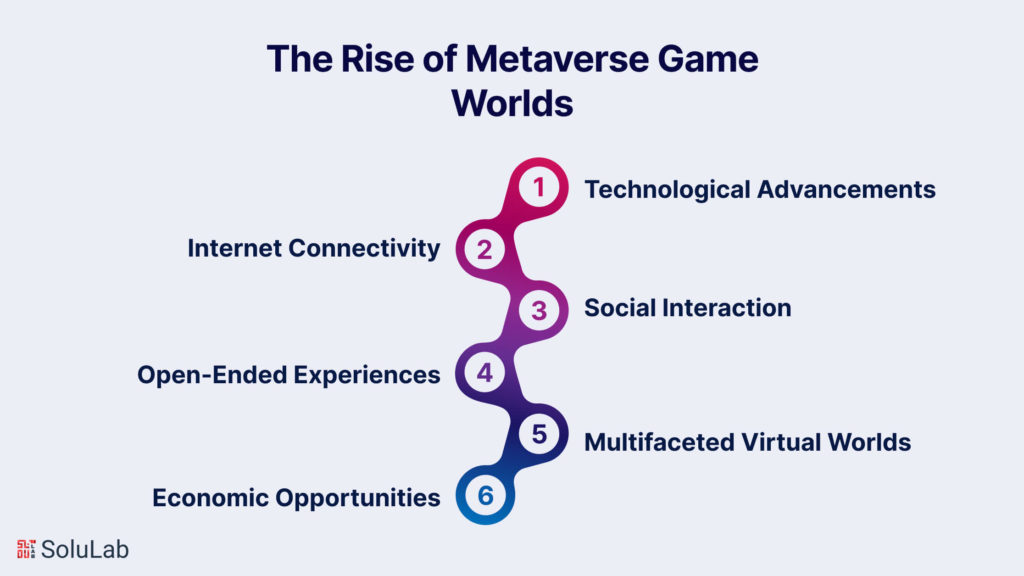
The meteoric rise of metaverse game worlds is an undeniable testament to the ever-evolving landscape of technology and the boundless creativity of developers. This phenomenon is driven by several key factors that have converged to create a perfect storm of innovation and excitement in the world of digital entertainment.
In brief, the rise of metaverse game worlds represents a convergence of technology, social interaction, and open-ended experiences. These digital realms have captured the imagination of developers and players alike, providing a canvas for creativity that goes far beyond traditional gaming. As we explore the challenges faced in building metaverse game worlds, it’s essential to recognize the incredible potential and excitement that underpin this transformative phenomenon.
Building metaverse game worlds is not without its set of unique challenges. These challenges span technical, social, legal, and ethical dimensions, and addressing them is vital for the long-term success and sustainability of metaverse development. The sheer scale and complexity of metaverse game worlds necessitate a deep understanding of the issues at hand and a proactive approach to mitigating potential pitfalls. As top metaverse platforms continue to gain traction and investment, understanding these challenges is essential for anyone looking to make their mark in the metaverse development landscape. In the following sections, we will explore these challenges in-depth and discuss strategies for navigating the intricate journey of metaverse game world creation.
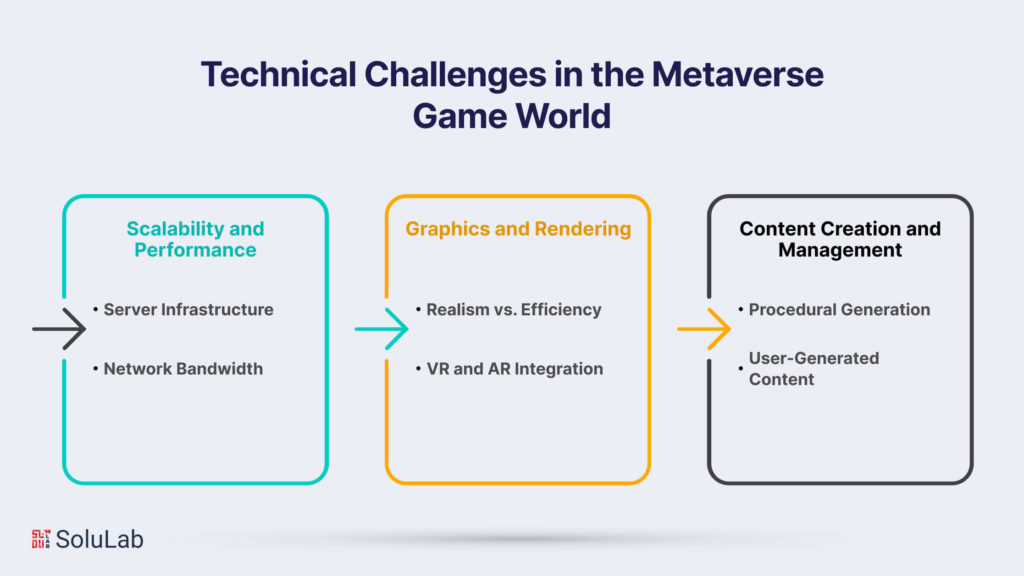
In the dynamic realm of metaverse game worlds, the creation and maintenance of these expansive digital environments bring forth a host of technical challenges that developers must confront. These challenges are instrumental in ensuring that metaverse game worlds deliver seamless, immersive, and enjoyable experiences to their users. Let’s delve into these technical hurdles and explore the keywords you’ve provided.

These technical challenges represent the intricate web of considerations that metaverse game developers navigate in their quest to provide users with immersive and compelling digital experiences. As technology evolves, so too will the strategies and solutions used to address these challenges and bring metaverse game worlds to new levels of creativity and interactivity.
In the metaverse gaming landscape, creating and maintaining a thriving community is paramount. User engagement and social interaction are at the heart of these virtual worlds, making it essential to overcome the unique challenges they present.
The development of metaverse game worlds introduces a myriad of legal and ethical considerations that developers and users must navigate. Ensuring compliance with intellectual property laws and safeguarding user privacy and data security are paramount in the metaverse landscape.
As the metaverse continues to expand and intertwine with various metaverse use cases and benefits, addressing these legal and ethical considerations is essential. Developers and users must collaborate to ensure that metaverse game worlds can thrive within a framework that respects intellectual property rights and upholds user privacy and data security, fostering a trustworthy and enjoyable metaverse experience.
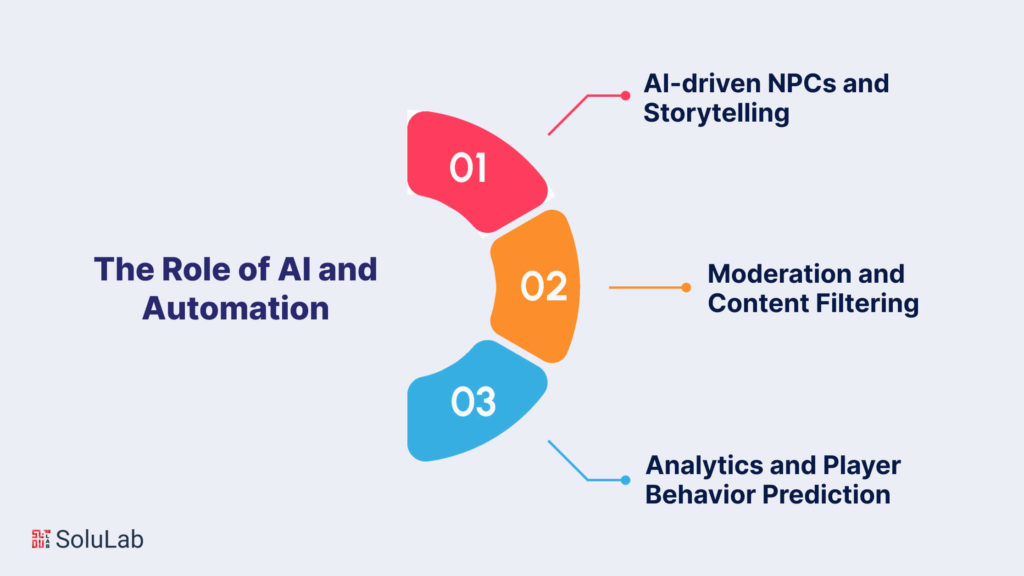
In the realm of metaverse development, the integration of AI (Artificial Intelligence) and automation plays a pivotal role in shaping the user experience, enhancing efficiency, and addressing key challenges. Here, we delve into the multifaceted ways in which AI and automation are revolutionizing the metaverse landscape, highlighting their significance in three critical areas.
AI-driven Non-Playable Characters (NPCs) are the backbone of immersive metaverse game worlds. These intelligent entities are instrumental in shaping the user experience, driving storylines, and fostering engaging interactions. AI-driven NPCs can adapt to user behavior, create dynamic and personalized narratives, and provide users with a sense of agency within the metaverse. The Metaverse AI Integration emphasizes the integral role of AI in creating lifelike, interactive NPCs and crafting captivating narratives that transcend traditional gaming experiences.
Maintaining a safe and enjoyable metaverse environment hinges on effective moderation and content filtering. AI-powered systems have become instrumental in automating these processes. Metaverse development companies employ AI algorithms to scan, identify, and filter out inappropriate content, ensuring that user-generated content complies with community guidelines. This not only promotes a welcoming and secure metaverse community but also reduces the administrative burden on moderators. The keywords “Metaverse AI Integration” underscore the importance of AI in content moderation and filtering, which is essential for building a responsible and user-friendly metaverse.
AI-driven analytics and player behavior prediction are transformative tools in metaverse development. AI can process vast amounts of data to discern player preferences, habits, and trends. This information is instrumental in optimizing the user experience, from tailoring in-game content to predicting and preventing adverse behaviors. AI can forecast potential issues such as harassment or cheating, allowing metaverse development companies to address them proactively. The Metaverse AI Integration emphasizes the integral role of AI in analyzing player behavior, predicting trends, and enhancing the overall metaverse experience.
In metaverse development, AI and automation are catalysts for innovation, enriching the metaverse landscape by delivering personalized, secure, and dynamic experiences. As the metaverse continues to evolve, the seamless integration of AI-driven NPCs, advanced moderation and content filtering, and predictive analytics will be instrumental in creating immersive, user-centric metaverse game worlds that are both enjoyable and responsible.
The metaverse gaming industry presents a unique landscape filled with a multitude of intricate challenges. To effectively navigate these challenges and ensure the continued success and growth of metaverse game worlds, metaverse development companies and stakeholders must adopt strategic approaches that encompass collaboration, transparency, and innovation. Let’s delve deeper into these strategies that underscore their importance in addressing the pressing challenges within the metaverse gaming industry.
Collaboration across diverse industries is a cornerstone strategy in addressing challenges within the metaverse gaming industry. Given the multifaceted nature of the metaverse, these cross-industry partnerships are crucial for finding holistic solutions. Metaverse development companies must engage with technology experts to harness innovations that can resolve technical challenges such as server infrastructure, graphics rendering, and network efficiency. Furthermore, collaboration with the entertainment industry can lead to unique content collaborations, offering immersive experiences that promote user engagement and community growth. Legal experts, on the other hand, provide essential guidance on navigating complex legal and ethical matters, particularly when it comes to intellectual property and data privacy concerns. The challenges in metaverse gaming underscore the importance of these multidisciplinary collaborations in addressing the unique and evolving issues faced by the metaverse gaming industry.
Transparency is a cornerstone of trust within the metaverse gaming industry. It encompasses clear and open communication about data usage, privacy policies, and community guidelines. Metaverse development companies must provide transparency regarding how user data is collected, stored, and utilized to build user trust and confidence. These practices address concerns related to privacy and data security, promoting a safer and more trustworthy metaverse environment. Simultaneously, user education plays a pivotal role, empowering users to make informed decisions about their participation in the metaverse. An educated user base is more likely to engage responsibly, adhere to community guidelines, and understand the potential risks and benefits of metaverse gaming. The challenges in metaverse gaming emphasize the significance of these strategies in fostering a responsible and trustworthy metaverse gaming community.
In the metaverse gaming industry, continuous innovation and adaptation are the pillars of resilience. Challenges within this dynamic landscape are ever-evolving, spanning cybersecurity, content moderation, and the rapid emergence of new technologies. Metaverse development companies must remain at the forefront of industry advancements to address challenges proactively. Innovation can involve embracing Metaverse AI Integration, which optimizes content moderation, enhances user experiences, and streamlines in-game experiences. Continuous adaptation ensures that metaverse game worlds remain agile, responsive to user needs, and capable of embracing emerging trends and technologies. The challenges in metaverse gaming emphasize the necessity of this strategy for metaverse development companies to thrive in a rapidly changing and competitive industry.
By actively implementing these strategies, metaverse development companies can effectively tackle the diverse challenges present within the metaverse gaming industry. Cross-industry collaboration, transparency, and user education, coupled with a commitment to continuous innovation and adaptation, create a holistic approach that empowers the metaverse gaming community to overcome challenges, build trust, and seize new opportunities in this exciting and evolving landscape.

In conclusion, the journey of building metaverse game worlds is marked by boundless opportunities and complex challenges. As the metaverse rapidly gains prominence in the gaming and technology spheres, it becomes clear that developers and stakeholders must approach this frontier with a strategic mindset, embracing multidisciplinary collaboration, transparency, and continuous innovation. The metaverse’s rise as a dynamic digital universe, brimming with interactive possibilities, transcends conventional gaming experiences, emphasizing the paramount importance of addressing technical, social, legal, and ethical intricacies.
Metaverse development companies and creators stand at the forefront of a digital renaissance, where AI and automation play pivotal roles in enhancing immersion, moderating content, and predicting player behavior. By embracing the evolution of technology, fostering cross-industry collaboration, and prioritizing the well-being and engagement of users, the metaverse can continue to flourish as an ever-evolving digital realm. In navigating the myriad challenges and harnessing the full potential of metaverse game worlds, we embark on an exhilarating journey, poised to define the future of interactive digital experiences, where creativity and community thrive in unison.
SoluLab, as a Metaverse game development company, plays a pivotal role in shaping the metaverse by providing innovative solutions that power immersive digital experiences. With a profound understanding of the metaverse’s complexities, SoluLab leverages its expertise in software development, artificial intelligence, and blockchain technologies to create cutting-edge applications and platforms. Their commitment to metaverse development extends to designing scalable, secure, and user-friendly environments that seamlessly integrate AI, automation, and data analytics, contributing to the seamless operation and enjoyment of metaverse game worlds. SoluLab’s contributions encompass the development of AI-driven NPCs, advanced content moderation, and predictive analytics that enhance user engagement and safety. With a holistic approach to metaverse development, SoluLab empowers businesses and creators to embark on the exciting journey of building dynamic and inclusive metaverse game worlds that redefine digital interaction and entertainment.
The metaverse is a vast interconnected digital universe that transcends traditional gaming. It combines elements of gaming, social interaction, and shared experiences, creating immersive, open-ended virtual worlds where users can explore, interact, and create content.
AI is instrumental in metaverse development, driving AI-driven NPCs, enhancing content moderation and filtering, and predicting player behavior. It contributes to immersive storytelling, content quality control, and player engagement, making metaverse experiences more dynamic and user-centric.
Metaverse development companies focus on community building, promoting positive interactions, and investing in robust moderation systems. They also employ AI-driven content filtering to ensure a safe and welcoming environment for users, fostering trust and user satisfaction.
Cross-industry collaboration is essential to address the multifaceted challenges in metaverse gaming. It leverages expertise from technology, entertainment, and legal domains to find comprehensive solutions, ensuring the metaverse’s growth and sustainability.
Users can actively participate in metaverse game worlds by creating and sharing content, engaging in communities, and providing valuable feedback to developers. By adhering to community guidelines and respecting intellectual property, users contribute to the positive and vibrant metaverse ecosystem.


