


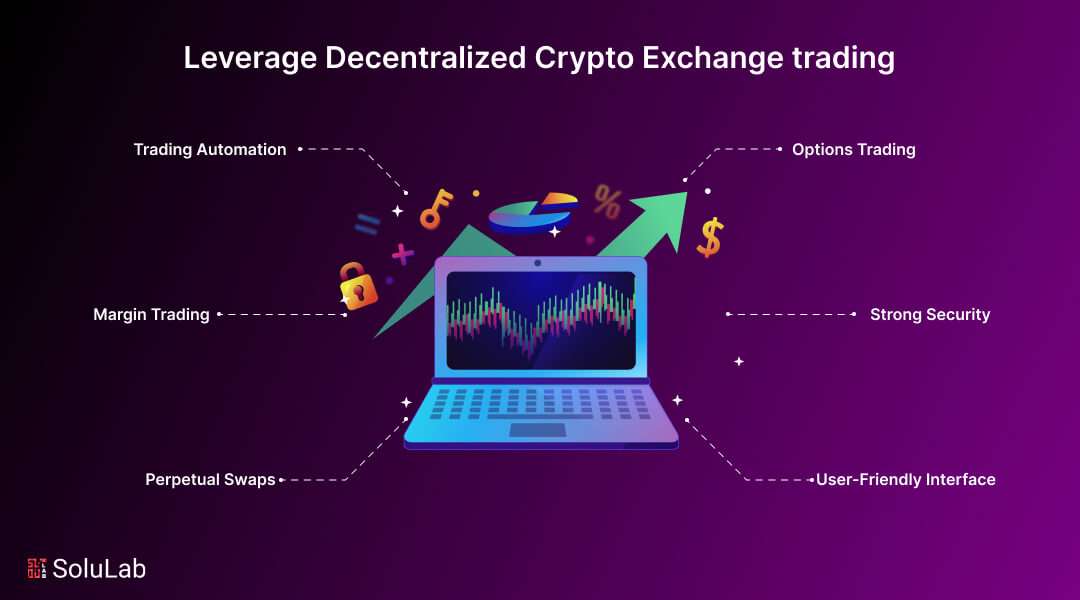
Our strategies for trading and investing in these digital assets are always changing along with the cryptocurrency industry. One of the most recent and exciting advancements in cryptocurrency trading is the advent of decentralized exchanges or DEX. How can you improve the way you trade? Leveraged trading that is decentralized allows you to make more money.
Let’s learn more about how decentralized leverage trading exchanges operate, as well as about their benefits, drawbacks, and potential to influence financial technology in the future.
Decentralized exchange, or DEX for short, is a direct cryptocurrency trading platform that eliminates the need for middlemen to manage money transfers. DEXs employ blockchain-based smart contracts to replace traditional institutions in the facilitation of asset exchange. By doing away with the opaqueness of conventional financial systems, this strategy fully transparently processes transactions.
DEXs minimize centralization issues and counterparty risk in the crypto ecosystem by eschewing third-party wallets. Because of their permissionless composability, DEXs are a crucial component of decentralized finance (DeFi) and offer a strong platform for the creation of sophisticated financial products.
By borrowing money, traders can increase their exposure to an asset through leverage. This raises the possibility of losses even as it might enhance possible gains. Leverage trading usually includes middlemen like banks or brokers in conventional finance. Decentralized leverage trading, on the other hand, allows users to gain access to leveraged positions using blockchain-based smart contracts.
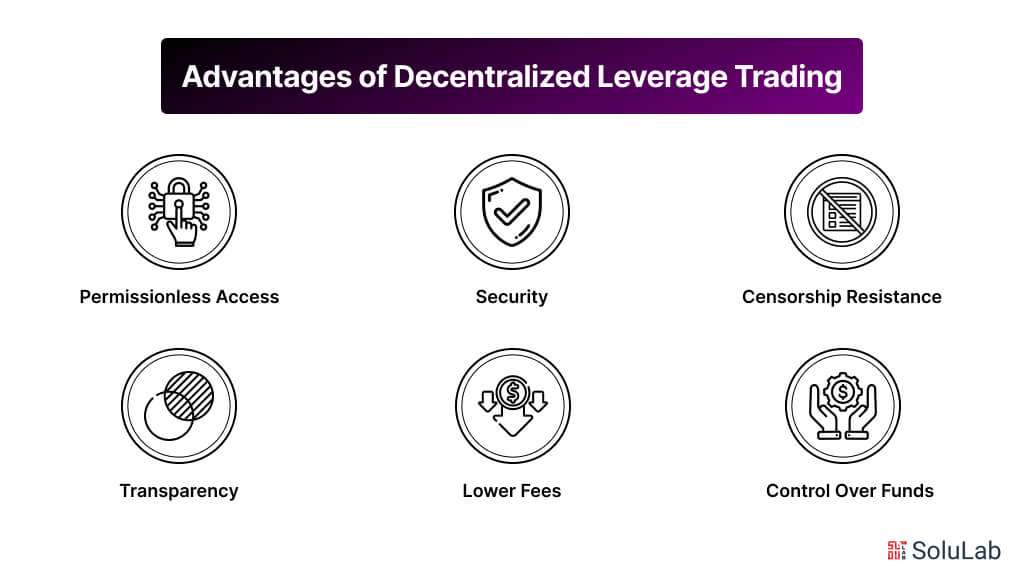
Businesses might gain many advantages from the development of decentralized leverage trading crypto exchanges in the following ways:
Entry obstacles are typically imposed by traditional banking systems, which demand that users fulfill specific requirements or undergo an extensive onboarding procedure. One of the main benefits of DEX is that it provides permissionless access, enabling anybody with a cryptocurrency wallet and an internet connection to begin trading right away. Because of its accessibility, financial markets become more democratic, enabling those who would not have had access to conventional finance because of socioeconomic, regional, or legal limitations.
In the financial industry, where money loss or theft can have disastrous repercussions, security is crucial. Decentralized exchange with leverage runs on blockchain networks and protects user funds and transactions via cryptographic methods. Blockchain transactions are resistant to fraud and manipulation because they are transparent and unchangeable. Furthermore, because a decentralized leverage trading crypto exchange has no dependence on centralized servers, it is less vulnerable to single-point-of-failure hacking assaults.
Exchanges for decentralized leverage trading are immune to censorship, which means that no central authority can halt or reverse transactions on them. Financial intermediaries, including banks and governments, have the authority to impose transaction limitations or freeze account balances in the context of conventional finance. By enabling peer-to-peer trading between users without the intervention of third parties, decentralized exchanges remove this danger. This resilience to censorship is especially useful in areas where people may look for alternatives to traditional banking services due to autocratic regimes or shaky financial systems.
Blockchain technology, which logs all transactions on a public ledger accessible to everyone with an internet connection, is based on the fundamental idea of transparency. This transparency is used by a decentralized leverage trading cryptocurrency exchange to give consumers instant access to trading information, including trade history, order book depth, and market liquidity. Because users are able to independently confirm the correctness and fairness of transactions, this openness increases trust and confidence in the reliability of the trading platform. Since all trading activity is available to the public, the openness of decentralized exchanges also lowers the possibility of insider trading and manipulation of the markets.
Decentralized leverage trading usually charges less than those for centralized trading. This is due to the fact that decentralized exchanges function without the use of middlemen like clearinghouses or brokers, who frequently charge for their services. Decentralized exchanges, on the other hand, do away with the need for middlemen by using automated smart contracts to enable trading directly between users. Users benefit from increased profit margins, decreased trading costs, and more control over their financial activities as a consequence.
Self-custody—a decentralized financial concept that grants users complete control over their cash at all times—is one of its core tenets. Users may trade straight from their cryptocurrency wallets on decentralized leverage trading platforms, eliminating the need to transfer money to a centralized exchange or give it to a third party. This removes the possibility of money being lost or stolen as a result of fraud, insolvency, or exchange hacking. Furthermore, consumers may take their assets out whenever they want without being constrained by centralized exchanges’ withdrawal policies or waiting periods because they still have authority over their money. In the decentralized finance ecosystem, this financial sovereignty and autonomy are crucial to preserve.
Decentralized crypto exchanges (DEXs) with leverage trading have the potential to disrupt traditional financial systems in several ways:
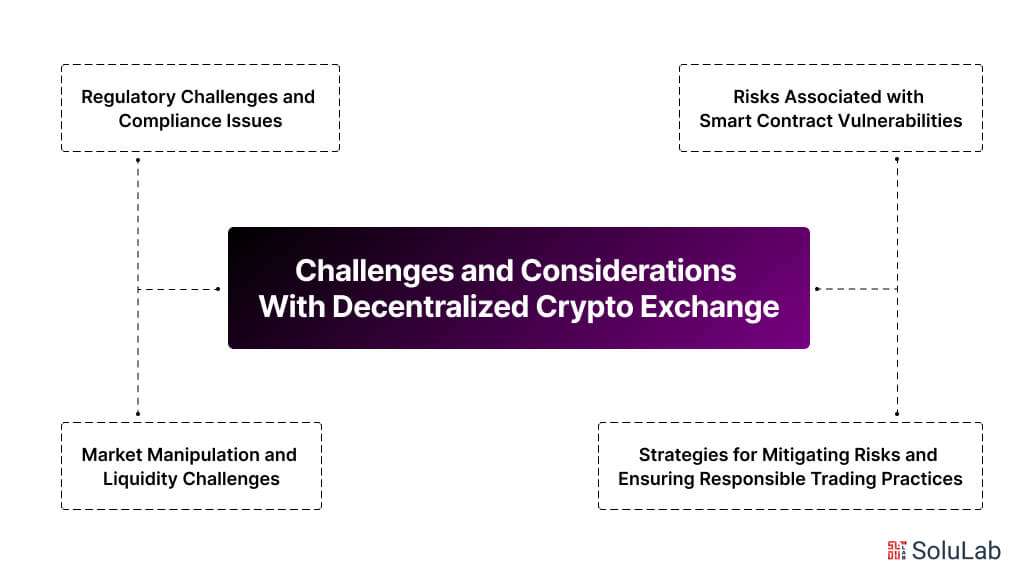
Decentralized exchanges with leverage and decentralized leverage trading platforms offer exciting opportunities for investors and traders, but they also present several challenges and considerations that must be carefully addressed.
Addressing these challenges and considerations requires a collaborative effort from platform operators, developers, regulators, and users to build a resilient and trustworthy ecosystem for decentralized leverage trading. By implementing robust security measures, promoting transparency, and fostering responsible trading practices, decentralized platforms can mitigate risks and maximize the potential of leverage trading in decentralized finance.
The intersection of decentralized finance (DeFi) and leverage trading opens up a myriad of opportunities for innovation and growth. Here’s a closer look at some of the key areas where decentralized leverage trading platforms can drive innovation:
Crypto exchange systems that combine decentralized finance with leverage trading provide consumers with unparalleled access to financial markets while adhering to decentralization, security, and transparency ideals. While problems persist, continued innovation and growth are paving the path for a future in which decentralized finance is crucial to creating the global financial environment. As the DeFi exchange market matures, the creation of decentralized leverage trading crypto exchanges is set to open up new avenues of opportunity and revolutionize the way we approach finance.
For businesses and entrepreneurs looking to capitalize on the opportunities presented by decentralized crypto exchanges, SoluLab offers comprehensive development services tailored to meet their unique needs. As a leading decentralized exchange development company, SoluLab specializes in building secure, scalable, and feature-rich decentralized trading platforms that empower users to trade with confidence. Whether you’re launching a new decentralized exchange or enhancing an existing platform, SoluLab’s team of experienced developers and blockchain experts can help you navigate the complexities of decentralized finance and leverage trading. Contact us today to learn more and embark on your journey towards building the future of finance.
Decentralized leverage trading allows users to trade financial assets with borrowed funds, amplifying potential gains or losses. Unlike traditional trading, which often relies on centralized intermediaries like banks or brokers, decentralized leverage trading occurs directly between users on blockchain-based platforms, offering greater transparency, accessibility, and control over one’s funds.
While decentralized leverage trading offers opportunities for enhanced returns, it also carries inherent risks, including the potential for significant losses. Factors such as market volatility, smart contract vulnerabilities, and liquidity challenges can expose traders to heightened risks. It’s essential for users to conduct thorough research, implement risk management strategies, and only trade with funds they can afford to lose.
Decentralized leverage trading platforms democratize access to financial markets by removing barriers to entry, such as geographic restrictions, account minimums, and credit checks. This enables individuals worldwide, including those in underserved or unbanked regions, to participate in leveraged trading and wealth creation, promoting financial inclusion and empowerment.
Users should be aware of the regulatory landscape surrounding decentralized finance (DeFi) and leverage trading, which varies by jurisdiction. Regulatory concerns may include compliance with Know Your Customer (KYC) and Anti-Money Laundering (AML) regulations, securities laws, and investor protection measures. It’s important for users to stay informed about regulatory developments and ensure compliance with applicable laws and regulations.
SoluLab offers comprehensive development services for businesses looking to build decentralized crypto exchanges with leverage trading capabilities. Our team of experienced developers and blockchain experts can design, develop, and deploy secure, scalable, and feature-rich trading platforms tailored to your specific requirements. Whether you’re launching a new exchange or enhancing an existing platform, SoluLab provides end-to-end support to help you navigate the complexities of decentralized finance and leverage trading.


