


Organizations struggle with inconsistent or inadequate data in the absence of well-organized data integration, which can result in bad decisions and lost opportunities. Additionally, inaccurate data can hinder teamwork and restrict the capacity to do thorough studies. The inability to integrate several data types is the real reason behind over 40% of project failures. Thus, obtaining a comprehensive understanding of the company, increasing functioning effectiveness, and promoting strategic expansion all depend on data integration.
By offering advanced instruments that smooth procedures, intensify decision-making, and refine data value, artificial intelligence and machine learning are altering data integration. These tools facilitate better data navigation for businesses, which makes it simpler to gain insights and stimulate expansion.
Data integration is the linchpin that binds together disparate datasets from various sources into a harmonious and unified structure. At its essence, it is the process of ensuring that data is not confined to silos but flows seamlessly, fostering a holistic view for informed decision-making. This section delves into the definition, significance, and multifaceted nature of data integration.
The significance of data integration lies in its ability to break down organizational data silos, creating a cohesive narrative from fragmented information. By providing a unified perspective, data integration enhances operational efficiency, enables accurate reporting, and forms the foundation for strategic decision-making.
As businesses struggle to manage numerous data sources dispersed across multiple systems and cloud platforms, data integration is a crucial concern. To overcome these obstacles and fully utilize data assets in an erratic corporate environment.
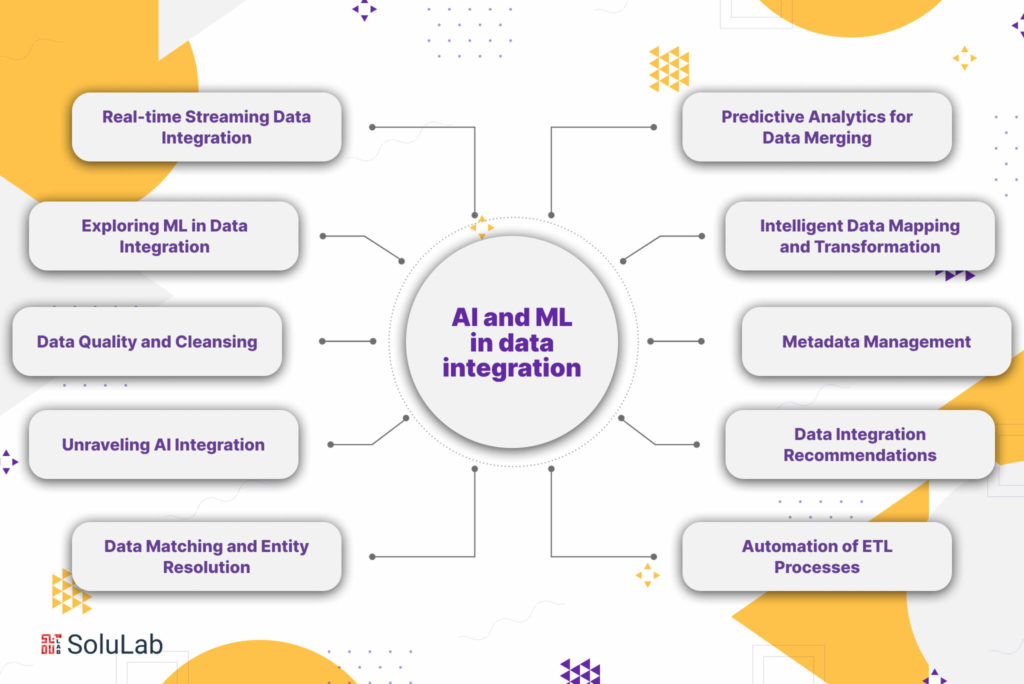
AI and ML play a critical role in transforming data integration procedures. These are the major role played by AI and ML in data integration:
Data integration initiatives usually entail a greater deal of manual data mapping from multiple sources to a common format that can be surveyed. Automating, data mapping AI, and power data integration tools greatly less than their burden. Making use of machine learning algorithms can swiftly and precisely map customer data, facilitating quicker decision-making based on current data.
Traditional legacy systems may find it difficult to handle and examine big data accurately and 50 when companies deal with an increasing amount of data. Massive data sets may be ingested, integrated, and surveyed with great efficiency using machine learning techniques and AI. Businesses can work with large data with the help of these technologies without needing a lot of code and have the capacity to build complex data models from enormous data sets.
AI enables business users to interact with the data mode deeply by simplifying the transformation of the data mapping process. Business users may concentrate on understanding patterns, seeing trends, and using statistical modeling to extract insightful business information from carefully selected datasets while AI takes care of the technical part of the integration.
ML and AI techniques can greatly improve data quality procedures, which a crucial for data integration. Higher data accuracy is ensured by these technologies’ ability to identify and fix errors, duplication, and inconsistencies in data. Organizations can proactively clean and improve data before integration by using a machine learning algorithm, which can recognize possible problems with data quality and learn from past data trance. Data integration procedures can produce high-quality data by utilizing AI and ML, which will result in more trustworthy insights and decision-making.
When working with data from different sources, information, matching, and resolution of entities are essential phases in data integration. Even when working with inconsistent or sufficient data, AI and ML algorithms are excellent at finding comparable or identical data across several databases. These algorithms use machine learning models and pro ballistic matching approaches to precisely match and combine data, reducing duplication and improving data consolidation.
Read Also: How to Build an MLOps Pipeline?
Navigating the principles of Machine Learning in data integration, we focus on adaptive algorithms and their transformative impact. As ML continues to evolve, we examine its pivotal role in enhancing pattern recognition and shaping the future of integration processes.
Machine Learning amplifies data integration by introducing algorithms that evolve based on patterns and insights. Unlike traditional programming, ML systems adapt to new data, improving their performance over time. This section navigates the core principles of ML in data integration.
Machine Learning integration excels in pattern recognition. Algorithms such as clustering and classification become the backbone of data integration systems, uncovering relationships and correlations within diverse datasets. This capability is indispensable for creating a unified and coherent view of data.
The adaptability of ML is a game-changer. ML algorithms continuously learn from new data, refining their models and predictions. This adaptive evolution ensures that the integration process remains relevant and effective, even in the face of evolving business requirements and data landscapes.
This chapter dissects the two primary forms of data integration—batch processing and real-time integration. Delving into their distinct characteristics and applications, we uncover how these types cater to different data needs within the integration spectrum.
Data integration manifests in two primary forms: batch processing and real-time integration. Understanding these types is crucial for organizations crafting efficient data integration strategies.
Batch processing involves collecting and processing data in scheduled intervals. This section explores the use cases where batch data integration in machine learning shines, such as handling large volumes of historical data, facilitating routine reporting, and optimizing resource utilization.
Real-time integration focuses on processing data as it is generated. Explore applications where real-time integration is indispensable, including scenarios where immediate insights, rapid decision-making, and dynamic data synchronization are paramount.
Here is a thorough breakdown of the advantages that AI-based data integration offers within different industries:
Read Our Blog: AI and ML in Automotive Industry
Addressing ethical implications, challenges, and considerations in AI and ML integration, this chapter navigates through potential biases, emphasizing the need for transparency and responsible AI integration practices.
As AI and ML become integral to data integration, ethical considerations come to the forefront. This section delves into potential ethical implications, addressing concerns such as algorithmic bias, data privacy, and responsible integration practices.
While automation enhances efficiency, finding the right balance with human oversight is crucial. Explore strategies for ensuring that automated processes align with organizational goals and ethical standards, avoiding unintended consequences and fostering responsible integration practices.
AI algorithms are not immune to bias. This section examines the challenges associated with bias in AI-driven integration, emphasizing the need for transparency, fairness, and ongoing monitoring to address and mitigate potential biases.
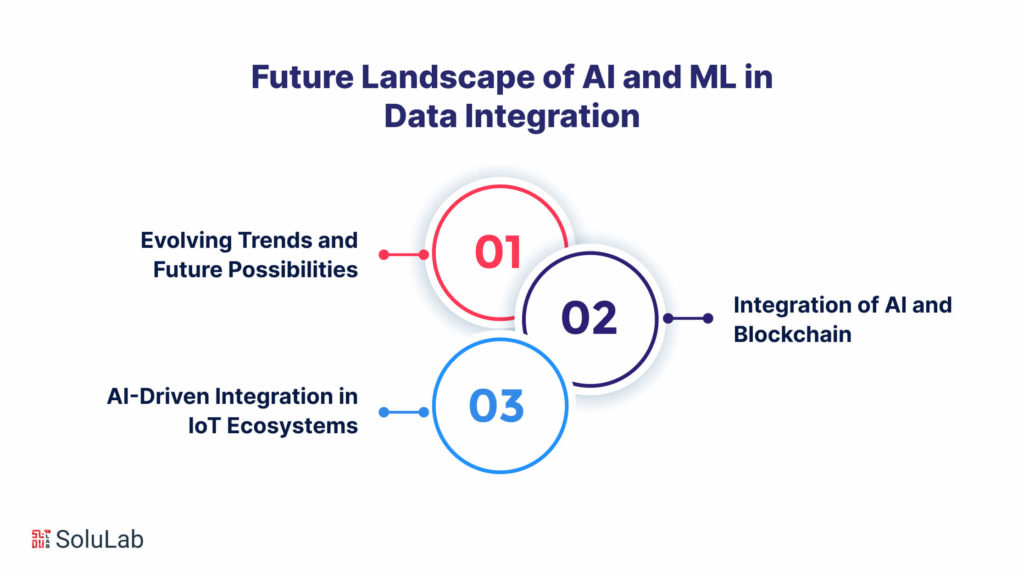
Anticipating future trends, this chapter explores the integration of AI and blockchain, offering insights into AI-driven integration within the Internet of Things (IoT) ecosystems. As technology advances, the chapter provides a glimpse into the future of data integration.
Anticipate the future trends and possibilities as AI and ML continue to evolve in the data integration landscape. From advancements in integration with emerging technologies to novel applications, this section provides insights into the evolving landscape.
Explore the potential integration of AI and blockchain technologies, envisioning a future where the decentralized and secure nature of blockchain intersects with the intelligent automation capabilities of AI in data integration.
The Internet of Things (IoT) is a rapidly growing ecosystem. Understand how AI-driven integration plays a pivotal role in handling the vast and diverse data generated by IoT devices, ensuring seamless connectivity and actionable insights.
In the grand tapestry of data evolution, the fusion of Artificial Intelligence integration (AI) and Machine Learning integration (ML) has woven a transformative narrative within the sphere of data integration. As we reflect on the intricate dance of algorithms and the seamless unison of technologies, it becomes evident that the synergy of AI and ML has not merely streamlined data integration but propelled it into a new era of intelligence and efficiency.
From unraveling the core concept of data integration to exploring the roles of AI and ML, each chapter has contributed to a holistic understanding of how these technologies converge to reshape the way organizations manage and utilize their data. As we stand at the cusp of this data revolution, the significance of AI integration in data processes cannot be overstated. It is not just about automation; it’s about unlocking insights, enhancing decision-making, and fostering a data-centric culture.
SoluLab, at the forefront of technological innovation, stands as a beacon in this transformative landscape. Leveraging the power of AI and ML, SoluLab pioneers machine learning solutions that transcend traditional boundaries. With a commitment to excellence and a focus on the future, SoluLab empowers organizations to harness the full potential of data integration.
In this ever-evolving journey of data exploration, SoluLab emerges as a trusted companion, offering not just solutions but a roadmap to navigate the complexities of AI and ML in data integration. As we conclude this exploration, let SoluLab be your guiding light in the realm of intelligent information management, where AI and ML converge to redefine the possibilities of data integration.
AI in data integration plays a crucial role in automating tasks, improving efficiency, and enhancing accuracy. Its ability to adapt and learn from patterns makes it an invaluable asset in creating a seamless and agile data integration process.
Machine Learning enhances data integration by introducing adaptive algorithms that evolve based on patterns and insights. ML algorithms excel in pattern recognition, contributing to improved accuracy and efficiency in data matching and merging processes.
Common challenges in AI data integration include inconsistent data formats, varying sources, and the need for real-time integration. These challenges are addressed through the intelligent automation and adaptive capabilities of AI and ML.
Real-time integration processes data as it is generated, providing immediate insights and dynamic synchronization. In contrast, batch processing collects and processes data at scheduled intervals, making it suitable for handling large volumes of historical data and routine reporting.
The future of AI and ML in data integration holds exciting possibilities, including integration with emerging technologies like blockchain and novel applications in the Internet of Things (IoT) ecosystems. These advancements promise to reshape the landscape of data integration.
Addressing ethical considerations in AI and ML integration involves ensuring transparency, fairness, and ongoing monitoring of algorithms. Organizations should also balance automation with human oversight and adhere to responsible integration practices.


