Talk to an Expert

How Can Blockchain Enable Green Real Estate Platforms in the UAE?

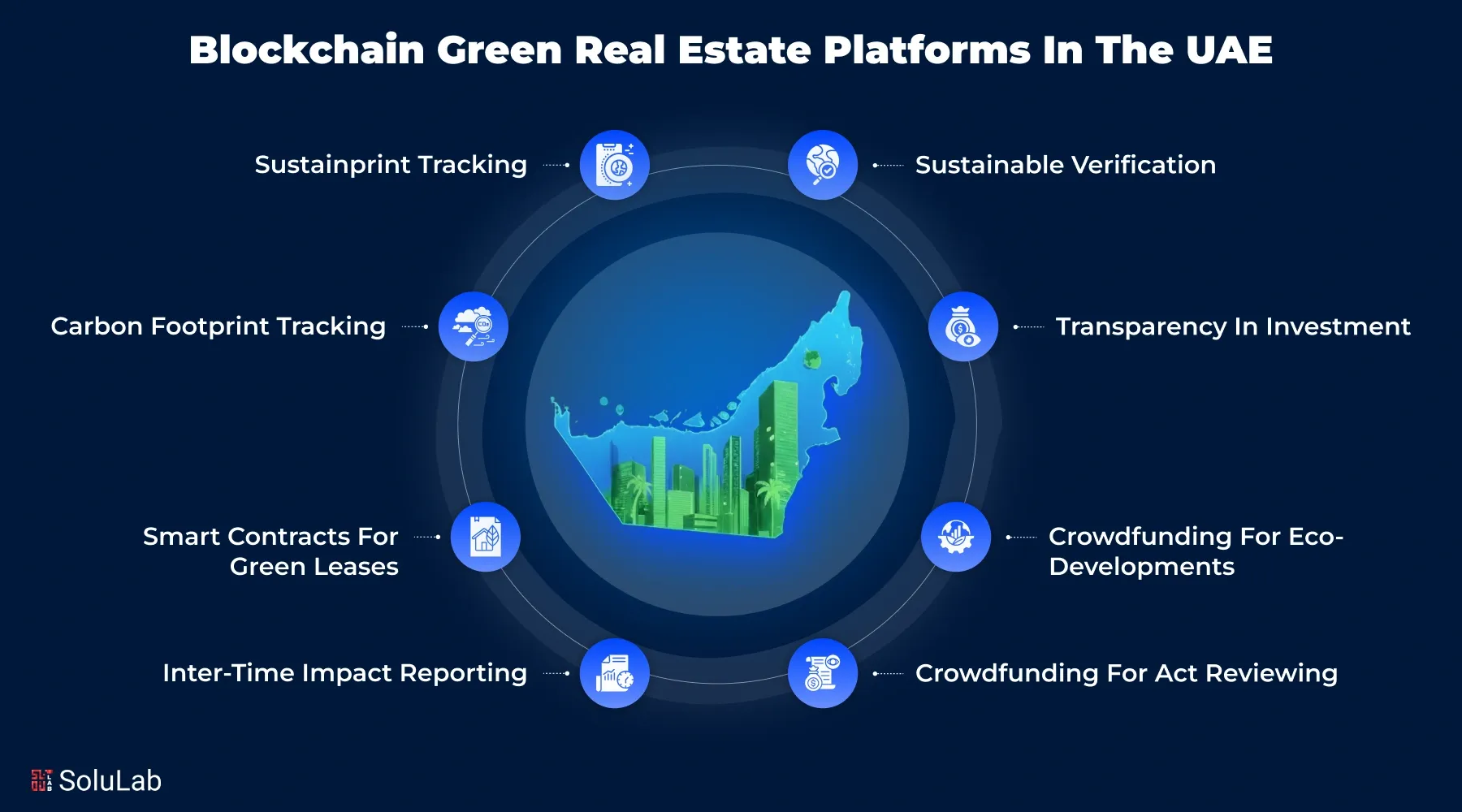
Blockchain Green Real Estate Platforms in the UAE

Dubai’s real estate market is shifting from bold architecture to measurable sustainability. UAE strategies: UAE Vision 2021, the Energy Strategy 2050, and Dubai Clean Energy Strategy 2050 are directing towards green real estate growth. 

Also, landmark projects like Masdar City and The Sustainable City demonstrate how blockchain plays a key role in sustainable real estate enhancement. 

UAE climate-forward development looks like: energy-efficient design, extensive water recycling, and integrated renewable systems. With blockchain technology support UAE is trying to reduce emissions and build sustainable real estate.  

Key Takeaways

  • Through green real estate, you can reduce its environmental footprint, especially in a sector responsible for nearly 40% of global CO₂ emissions.
  • Blockchain technology strengthens sustainable real estate in the UAE by providing verifiable data to get certificates like LEED and Estidama. 

Dubai’s Green Real Estate Market Is Entering Its Next Phase

Dubai is shifting from basic green initiatives to data-driven, digitally monitored, and finance-ready sustainability models. This new phase is powered by technologies like AI-based energy optimization, IoT-driven real-time monitoring, blockchain for water management, and Web3-enabled ESG verification, ensuring every sustainability claim is backed by transparent, tamper-proof data.

  • Market evolution emphasizes continuous performance data rather than single-point green features on buildings.
  • Investors now reward verified operational savings and transparent ESG reporting when pricing assets and risk.
  • Green buildings are becoming essential because the real estate sector is responsible for nearly 40% of global CO₂ emissions. Of this footprint, 70% comes from building operations, and 30% comes from construction activity.
  • The UAE aims for net-zero emissions by 2050, increasing pressure on developers and investors to adopt sustainable practices.
  • Developers who embed monitoring and measurement early gain certification advantages and faster project approvals.

CTA1

Why Is Blockchain Becoming a Must-Have for Green Real Estate Platforms?

Blockchain combines immutable records, real-time data flows, and programmable rules, a strong match for sustainability needs. And Dubai is not an exception to using blockchain and AI for futuristic growth. With this integration in the green real estate sector verification, automation of tasks, and compliance quickens.

  • Buildings with verified green credentials command 7-10% higher rental premiums.
  • Verified performance also reduces insurance premiums by 5–15% for compliant buildings.
  • Increase the installed clean energy capacity from 14.2 GW to 19.8 GW by 2030
  • Efficient blockchain-enabled systems can reduce operational energy costs by 20–30%.

 Below are the concrete benefits written as solution-focused statements for business readers.

Ensures transparent tracking of sustainable real estate materials and provenance

Blockchain in supply chain events is immutable; developers can prove origin, certifications, and recycled content.

  • Verifiable material origin reduces greenwashing and supports certification audits quickly and reliably for regulators worldwide.
  • Immutable supplier records speed up procurement approvals and lower disputes between contractors and buyers.
  • On-chain provenance enables faster, clearer claims for recycled or low-carbon construction materials.

Makes compliance and certification straightforward with verifiable evidence

Certifications like LEED and Estidama require proof. Therefore, blockchain integration comes into the picture: to store audit trails and performance data for easy verification.

  • On-chain documentation simplifies audits and reduces the administrative time required for certification submission and review.
  • Automated evidence pulls lower manual reconciliation and provides assessors with clean, tamper-proof files.
  • Continuous performance logs demonstrate compliance over time, improving certification renewal outcomes and investor confidence.

Automates payments and approvals to reduce project delays

Smart contracts execute payments, incentives, and warranty releases automatically when predefined performance or delivery milestones are met.

  • Smart contracts reduce payment disputes and accelerate cash flow for real estate contractors and suppliers working on green measures.
  • Milestone-based automated disbursements improve trust among stakeholders and shorten project timelines substantially.
  • Programmable incentives align subcontractors with sustainability real estate outcomes, improving delivery quality and schedule adherence.

Enables verified carbon accounting and blockchain carbon credits

Immutable energy and emissions records permit credible carbon accounting and creation of tradable, verifiable carbon credits.

  • On-chain emissions ledgers create trusted data for carbon credit minting, sale, and retirement processes.
  • Verified carbon credits open new revenue lines and funding options for developers and building owners.
  • Transparent carbon accounting supports investor due diligence and strengthens environmental claims for assets.

Strengthens investor trust through tamper-proof sustainability performance

Investors need credible, auditable data. Blockchain solutions deliver a single source of truth for operational performance and ESG metrics.

  • Tamper-proof performance data reduces perceived investment risk and supports better pricing for green assets.
  • Clear audit trails make underwriting simpler and shorten investment committee review cycles.
  • Transparent metrics help asset managers report reliably to stakeholders and regulatory requirements.

Applications of Blockchain in Sustainable Real Estate Development, UAE 

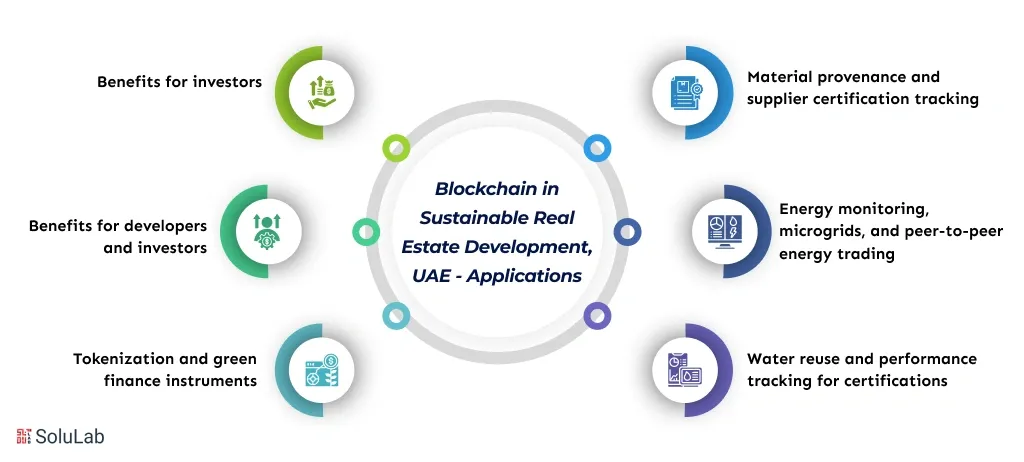
Blockchain in Sustainable Real Estate Development, UAE - Applications

Blockchain trends can be woven into multiple use cases across design, construction, operations, and finance. Each application drives business outcomes and supports Dubai’s sustainable real estate development targets. Luxury under a safe environment is the main action in the UAE’s Net Zero Emission 2050. 

1. Material provenance and supplier certification tracking

Record every supply event on-chain from quarry to site, enabling verifiable material claims and faster approvals.

  • Traceable supply chains reduce procurement friction and help validate low-carbon or recycled material claims instantly.
  • On-chain supplier ratings encourage sustainable sourcing through market visibility and accountability.
  • Integration with certification bodies speeds acceptance of innovative eco-materials in projects.
  • Material transparency matters because 30% of real estate emissions come from construction.

2. Energy monitoring, microgrids, and peer-to-peer energy trading

Combine smart meters with blockchain to record production, consumption, and enable direct trading of surplus renewable energy.

  • Real-time energy data on-chain enables automated billing, settlement, and renewable energy tracking.
  • Microgrid settlements reduce system losses and let owners monetize excess solar generation reliably.
  • P2P trading supports local resilience and creates tangible returns from embedded renewables.

3. Water reuse and performance tracking for certifications

Log greywater and rainwater recycling performance to prove water efficiency gains and support Estidama or local regulations.

  • On-chain water performance evidence simplifies the demonstration of targeted freshwater reductions during certification.
  • Reliable water data supports operational optimization and tenant engagement programs for conservation.
  • Measured savings improve asset valuation and unlock water-focused green financing instruments.

4. Tokenization and green finance instruments

Fractional ownership and tokenized green assets expand investor pools and enable new funding for sustainable development.

  • Tokenized assets increase liquidity for green projects and diversify capital sources for developers.
  • Blockchain-enabled green bonds or sukuk can deliver automated interest and environmental reporting.
  • Fractional ownership attracts smaller investors into high-quality, certified sustainable real estate.

5. Benefits for developers and investors

Blockchain reduces barriers to green building delivery and improves margins through automation and better capital access.

  • Verified operational savings of 20–30% increase long-term competitiveness.
  • Buildings with verified credentials achieve 7–10% higher rental premiums.
  • On-chain data improves financing access due to transparent sustainability performance metrics.

6. Benefits for investors

Investors gain clearer signals on risk, verified sustainability returns, and optional liquidity from tokenized instruments.

  • 10 to 15% operational savings increase the predictability of cash flows and support stronger valuation models.
  • Transparent ESG records reduce compliance risk and simplify reporting to limited partners or institutions.
  • Tokenization creates exit options and fractional exposure to high-quality green assets. 

Implementation Roadmap of Blockchain in Green Real Estate in Dubai

Adopt a phased, pragmatic roadmap that aligns policy, certification needs, and operational targets. Start small, prove value, then scale.

Pilot and data foundation

Deploy smart meters, integrate building management systems, and record baseline data on a permissioned chain.

  • Pilots show measurable energy and water savings and validate smart contract workflows before wider rollout.
  • Establish data governance, privacy controls, and stakeholder access rules to ensure regulatory compliance.
  • Use pilot results to refine KPI definitions used for certifications and investor reporting.

Green certification and finance integration

Connect on-chain performance to certification processes and green finance instruments like green sukuk or bonds.

  • Link verified performance to finance triggers and automate reporting for lenders and rating agencies.
  • Enable tokenization pilots for fractional investment and test secondary market liquidity options.
  • Scale supplier onboarding to include provenance data for major building materials across projects.

Sustainable real estate ecosystem scale and marketplace

Open access to a broader set of developers, auditors, and investors to create network effects and liquidity.

  • Create standardized on-chain data models and APIs for seamless integration across PropTech platforms.
  • Launch a marketplace for verified carbon credits, green certificates, and tokenized assets to attract global capital.
  • Embed automated compliance and reporting as standard operating procedure across new developments.

Future of Blockchain-Powered Green Real Estate Development in Dubai

The long-term outcome is a resilient real estate ecosystem where sustainability is measurable, financeable, and valuable. Buildings will be judged by continuous performance, not claims. 

Companies that combine design excellence with verified operational data will command premiums and easier financing. Investors will favor assets with immutable sustainability proofs. Dubai, with clear national targets and leading projects, is well-positioned to lead this transition.

  • Verified performance will become the baseline for asset valuation and investor decision-making across the UAE.
  • Blockchain carbon credits and tokenized assets will unlock new capital and monetize sustainability outcomes.
  • Early adopters will gain regulatory headroom, faster certification, and stronger market positioning.
  • AI-powered green real estate will take a new shape in the coming days. 

Conclusion

Dubai’s real estate sector is entering a new era where sustainability is no longer optional. As mentioned above, blockchain supporting green real estate is adding a long list of benefits to businesses. Tokenization, carbon credits, and real-time ESG reporting will only accelerate the UAE’s moves towards its Net Zero 2050 target.

At SoluLab, we help in developing blockchain platforms for material provenance, smart contracts, certification automation, tokenization, and carbon accounting. Whether you plan to build a green real estate platform, integrate energy monitoring, introduce tokenization, or automate LEED/Estidama reporting. Our expert blockchain developers can build solutions for:

  • Up to 40% lower operational and administrative costs by replacing paper-heavy processes with secure blockchain transactions. 
  • Enterprise-grade blockchain APIs built for real estate, asset management, and green building platforms.

If you are ready to accelerate your sustainable real estate business in the UAE, contact us today to make your vision come true!

FAQs

1. How much does it cost to build a blockchain-powered green real estate platform?

Costs typically start from $10k. Most projects fall between moderate MVP budgets and enterprise-level investments, depending on certification, tracking, and automation needs.

2. How long does it take to develop a blockchain-based green real estate solution?

Most platforms take 2–4 months, depending on complexity, required integrations, certification workflows, smart contracts, and data pipelines.

3. How do carbon credits and green real estate reduce operational costs?

Verified performance improves resource efficiency, enabling 20–30% energy savings while generating revenue through carbon credits, lowering long-term operating expenses.

4. Why should I choose SoluLab for blockchain-enabled green real estate development?

SoluLab offers deep PropTech experience. It has blockchain experts and proven experience with sustainability tracking, tokenization, and certification automation. 

5. Is a blockchain-based green real estate platform secure?

Yes. Blockchain ensures tamper-proof data, encrypted transactions, permissioned access, and decentralized verification, providing a highly secure environment for sustainability and compliance workflows.


Revolutionising Real Estate With Blockchain Technology

Real Estate With Blockchain Technology

Blockchain technology, a groundbreaking innovation originally devised for the cryptocurrency realm, has now transcended its initial confines and is making significant inroads into diverse industries. One sector where its transformative potential is particularly conspicuous is the real estate industry. This introduction aims to provide a concise yet comprehensive overview of blockchain technology, its relevance in real estate, and the challenges facing the real estate industry today.

At its core, blockchain is a decentralized, distributed ledger that records transactions across a network of computers securely and transparently. Utilizing cryptographic principles, each block in the chain is linked to the previous one, creating an immutable and tamper-resistant record. This technology ensures trust and transparency by eliminating the need for intermediaries and central authorities, offering a peer-to-peer approach to transactions.

The real estate industry is confronted with a myriad of challenges, ranging from cumbersome and time-consuming processes to issues of transparency and fraud. Traditional methods of property transactions involve numerous intermediaries, leading to inefficiencies, delays, and increased costs. Additionally, the lack of transparency in property records and the susceptibility to fraudulent activities have created a pressing need for innovative solutions.

What are the Fundamental Principles of Blockchain?

Blockchain, at its core, is a decentralized and distributed ledger technology that underpins a secure and transparent system for recording and verifying transactions. The fundamental principles of blockchain include decentralization, transparency, immutability, and consensus. Unlike traditional centralized systems, blockchain operates on a network of nodes, each contributing to the validation and verification of transactions. 

The decentralized nature of blockchain ensures that no single entity controls the entire network, fostering trust and eliminating the need for intermediaries.

A. Decentralization and Security Aspects

Decentralization is a cornerstone of blockchain, ensuring that data is not stored in a single location but is distributed across the network. This mitigates the risk of a single point of failure and enhances the system’s resilience. Security in the blockchain is achieved through cryptographic techniques, making it nearly impossible for malicious actors to tamper with or alter the stored information. The use of consensus mechanisms, such as proof-of-work or proof-of-stake, further fortifies the integrity of the blockchain network.

B. Blockchain in Real Estate

The application of blockchain in the real estate sector has the potential to revolutionize traditional processes, offering benefits that include increased transparency, efficiency, and security. One notable advantage is the reduction of fraud, as blockchain’s immutability ensures that once a transaction is recorded, it cannot be altered. Additionally, smart contracts, self-executing agreements with predefined rules, automate and streamline various real estate processes, eliminating the need for intermediaries and reducing the risk of errors.

Real Estate Tokenization Services

What is the Transformative Impact of Blockchain on Real Estate?

Blockchain technology has emerged as a revolutionary force across various industries, and the real estate sector is no exception. Its decentralized and transparent nature brings forth a myriad of benefits, fundamentally reshaping the way property transactions are conducted. This article delves into the profound impact of blockchain on real estate, exploring key aspects such as transparency, smart contracts, and the tokenization of real estate assets.

1. Transparency and Trust in Property Transactions

One of the primary advantages of integrating blockchain in real estate is the enhanced transparency it brings to property transactions. Traditional real estate processes often involve multiple intermediaries, leading to a lack of transparency and increased potential for fraud. With blockchain, a decentralized and tamper-proof ledger ensures that all transaction data is securely recorded and easily accessible to relevant parties.

Blockchain technology promotes trust by providing a single source of truth for property records. This transparency mitigates the risk of fraudulent activities, as every transaction is verifiable and cannot be altered retroactively. Real estate stakeholders, including buyers, sellers, and regulatory bodies, can confidently rely on the accuracy and immutability of the information stored on the blockchain, fostering a more trustworthy and efficient property transaction ecosystem.

2. Smart Contracts Revolutionizing Deal Processes

Smart contracts, enabled by blockchain technology, are automating and revolutionizing deal processes in the real estate industry. These self-executing contracts automatically enforce and execute the terms of an agreement when predefined conditions are met. This eliminates the need for intermediaries, streamlining the overall transaction process and reducing the potential for errors or disputes.

Smart contracts in real estate facilitate quicker and more secure transactions, as they eliminate the need for manual verification and approval. From property sales to lease agreements, the automation provided by smart contracts not only increases efficiency but also reduces transaction costs. This innovation is a testament to the transformative power of blockchain in simplifying complex real estate processes.

3. Tokenization of Real Estate Assets

The concept of tokenization involves representing real-world assets, such as real estate properties, as digital tokens on a blockchain. This fractional ownership model allows investors to buy and trade fractions of real estate assets, providing liquidity and access to a broader pool of potential investors.

Blockchain facilitates the tokenization of real estate assets by dividing them into tradable tokens, each representing a share of the property. This democratizes real estate investment, allowing individuals to participate in high-value properties with smaller investments. Asset Tokenization not only enhances liquidity but also reduces the barriers to entry, opening up new opportunities for both investors and property owners.

What are the Key Challenges Associated With the Adoption of Blockchain Technology in the Real Estate Industry?

Challenges of Blockchain Technology in the Real Estate Industry

The adoption of blockchain technology in the real estate industry has gained significant traction, promising transformative benefits and revolutionizing traditional processes. However, like any innovation, it is not without its challenges and concerns. In this article, we delve into the key obstacles associated with incorporating blockchain in real estate and explore potential solutions.

1. Lack of Standardization

One major challenge in the integration of blockchain in real estate is the absence of standardized protocols. The industry requires universally accepted standards to ensure interoperability, data consistency, and seamless collaboration between different stakeholders.

2. Complex Regulatory Environment

Real estate transactions are subject to a myriad of regulations, varying across jurisdictions. Navigating this complex regulatory landscape poses a significant hurdle for the widespread adoption of blockchain in real estate. Developing a framework that aligns with existing regulations is crucial for fostering trust and compliance.

3. Security Concerns

While blockchain is renowned for its robust security features, the real estate industry’s adoption is hindered by the fear of cyber threats and unauthorized access. Building trust in the technology necessitates implementing robust security measures, and encryption techniques, and educating stakeholders on the resilience of blockchain against cyber attacks.

4. Integration Challenges

Many real estate processes are deeply entrenched in traditional systems, making the integration of blockchain a daunting task. Overcoming technical challenges and seamlessly integrating blockchain applications in real estate workflows requires a comprehensive strategy, skilled professionals, and a phased approach.

5. Scalability Issues

As the real estate industry generates vast amounts of data, scalability becomes a concern. Ensuring that blockchain technology can handle the scale of transactions and data storage required for real estate applications is vital for its successful adoption.

6. Cost Implications

Initial setup costs and infrastructure investment can be a deterrent for real estate businesses considering blockchain adoption. Convincing stakeholders of the long-term benefits and potential cost savings is essential for overcoming this challenge.

7. Resistance to Change

Resistance to change is a common hurdle in any industry, and real estate is no exception. Overcoming skepticism and convincing stakeholders, including property owners, buyers, and regulatory bodies, about the advantages of blockchain in real estate is a critical aspect of its successful implementation.

How is Blockchain Technology Reshaping the Future of the Real Estate Industry?

In recent years, the real estate industry has witnessed a paradigm shift with the integration of blockchain technology. This transformative force is not only reshaping traditional processes but also paving the way for numerous emerging trends that promise to redefine the sector. Let’s delve into the future trends of Blockchain in Real Estate, exploring potential advancements, innovations, and the benefits that this revolutionary technology brings to the industry.

A. Emerging Trends in Blockchain and Real Estate

  • Tokenization of Real Estate Assets

Blockchain facilitates the fractional ownership of real estate through tokenization. This allows investors to own a share of high-value properties, making real estate investment more accessible and liquid.

  • Smart Contracts Streamlining Transactions

Smart contracts, powered by blockchain, automate and streamline various processes in real estate transactions, from property listings to payments and contract execution. This not only reduces the need for intermediaries but also enhances transparency and security.

  • Decentralized Property Listings

Blockchain enables the creation of decentralized and tamper-proof property listings, preventing fraudulent activities and ensuring the authenticity of property information. This contributes to a more trustworthy and efficient real estate market.

B. Potential Advancements and Innovations

  • Enhanced Security and Transparency

Blockchain’s immutable and decentralized nature ensures the security of sensitive data in real estate transactions. This reduces the risk of fraud and ensures that all parties involved have access to a transparent and unalterable record of the transaction history.

  • Blockchain-Based Real Estate Platforms

Innovative platforms are emerging, utilizing blockchain for property transactions, rental agreements, and property management. These platforms enhance efficiency, reduce costs, and provide users with a seamless and secure experience.

  • Integration with Emerging Technologies

The integration of blockchain with other emerging technologies like AI and Internet of Things (IoT) is on the horizon. This convergence can lead to intelligent property management systems, automated maintenance, and even predictive analytics for property values.

What are the Risks and Mitigations in Harnessing Blockchain for Real Estate?

Risks and Mitigations in Harnessing Blockchain for Real Estate

Blockchain technology has emerged as a revolutionary force in various industries, including real estate. Its decentralized and secure nature promises to streamline processes, enhance transparency, and reduce fraud. However, as with any innovative technology, implementing blockchain in real estate is not without its challenges. In this section, we delve into the risks associated with blockchain in real estate and explore effective strategies to mitigate these challenges for a successful implementation.

A. Analyzing Risks Associated with Blockchain in Real Estate

  • Data Security Concerns

The decentralized nature of blockchain is both its strength and potential weakness. While it minimizes the risk of a single point of failure, it introduces concerns related to data security. Unauthorized access to sensitive information could compromise the integrity of real estate transactions.

  • Mitigation Strategy

Employing robust encryption protocols and implementing permissioned blockchain networks can enhance data security, ensuring that only authorized parties have access to sensitive information.

  • Integration Complexity

The existing real estate infrastructure may not seamlessly integrate with blockchain technology, leading to complexities in implementation. This could result in disruptions to ongoing processes and hinder the adoption of blockchain.

  • Regulatory Compliance

The real estate industry is subject to stringent regulations that may vary across regions. Adhering to these regulations while incorporating blockchain poses a significant challenge, potentially leading to legal issues and setbacks.

B. Strategies to Mitigate Challenges and Ensure Successful Implementation

  • Thorough Education and Training

Educating stakeholders, including real estate professionals, on the benefits of blockchain in real estate is crucial. Training programs should cover both the conceptual understanding of blockchain technology and its practical applications.

  • Mitigation Strategy

Elaborating with educational institutions and industry experts to develop targeted training programs can ensure that all parties involved possess the necessary knowledge to harness the benefits of blockchain.

  • Creating Interoperable Solutions

Developing blockchain solutions that seamlessly integrate with existing real estate systems is essential. Interoperability ensures a smooth transition and minimizes disruptions during the implementation phase.

  • Engaging Stakeholders Proactively

Involving all relevant stakeholders in the planning and implementation process fosters collaboration and addresses concerns at an early stage. Proactive engagement ensures that everyone is aligned with the objectives of integrating blockchain in real estate.

How is Blockchain Technology Reshaping the Global Real Estate Landscape?

Blockchain technology has rapidly gained traction across various industries, and the real estate sector is no exception. The adoption of blockchain in real estate has witnessed a global surge, with notable benefits reshaping traditional practices. This article delves into an overview of the international adoption of blockchain in real estate, highlighting regional variances and success stories that underscore the transformative potential of this technology.

A. Overview of International Adoption of Blockchain in Real Estate

  • Transforming Transactions

Blockchain in real estate streamlines property transactions by providing a decentralized and transparent ledger. This ensures secure and tamper-proof documentation, reducing the risk of fraud and enhancing trust among the parties involved.

  • Efficient Title Management

Blockchain facilitates efficient title management, minimizing the complexities associated with verifying property titles. Smart contracts, powered by blockchain, automate the transfer of ownership, ensuring accuracy and speed in title transfers.

  • Tokenization of Assets

Blockchain enables the tokenization of real estate assets, dividing them into tradable digital tokens. This fractional ownership model enhances liquidity in the real estate market, allowing smaller investors to participate in high-value properties.

B. Regional Variances and Success Stories

  • North America

North America has witnessed significant adoption of blockchain in real estate. The use of blockchain technology for transparent and efficient property transactions has gained momentum, with success stories emerging from major cities like New York and Toronto.

  • Europe

European countries are exploring blockchain applications in real estate to address regulatory challenges and improve transactional efficiency. Pilot projects in countries like Sweden showcase the potential for blockchain in streamlining property registration processes.

  • Asia-Pacific

In the Asia-Pacific region, blockchain adoption in real estate is growing, driven by initiatives in countries like Singapore and Japan. Blockchain’s role in enhancing transparency and reducing fraud is particularly crucial in markets with high property investment activities.

  • Middle East and Africa

The Middle East and Africa are embracing blockchain for land registry systems and property transactions. Blockchain’s ability to reduce paperwork and streamline processes aligns with the region’s vision for modernizing real estate practices.

White Label Real Estate services

Conclusion

In conclusion, SoluLab- a blockchain development company, has emerged as a pioneering force in revolutionizing the real estate industry through the transformative power of blockchain technology. The integration of blockchain in real estate has ushered in a new era of transparency, efficiency, and security, fundamentally reshaping traditional practices.

SoluLab’s commitment to harnessing blockchain technology in real estate is evident in its innovative blockchain development solutions and customizable platforms. The company’s expertise extends to diverse blockchain use cases in real estate, offering tailored applications that cater to the specific needs of clients. Whether it’s streamlining property transactions, enhancing data security, or optimizing workflow efficiency, SoluLab’s solutions leverage the full potential of blockchain technology to bring about tangible improvements in the real estate landscape.

As the real estate industry continues to evolve, blockchain technology remains a cornerstone of this transformation. SoluLab’s initiatives exemplify the impact and adaptability of blockchain in real estate, providing a glimpse into the future of a more transparent, efficient, and secure property ecosystem. In essence, the strategic incorporation of blockchain technology by SoluLab marks a pivotal moment in the ongoing narrative of how innovation is reshaping the dynamics of the real estate industry.

FAQs

1. How is Blockchain Technology Transforming the Real Estate Industry?

Blockchain in Real Estate is revolutionizing traditional practices by introducing transparent and secure transaction processes. This technology ensures tamper-proof record-keeping, reducing fraud and enhancing trust among stakeholders.

2. What Are the Key Benefits of Integrating Blockchain in Real Estate?

The Benefits of Blockchain in Real Estate include increased transparency, reduced paperwork, faster transactions, and enhanced security. Smart contracts, a blockchain application in real estate, automate and enforce agreements, streamlining processes.

3. Can You Explain Blockchain Use Cases in Real Estate?

Blockchain technology in real estate finds diverse applications. These use cases encompass property tokenization, ensuring fractional ownership, and establishing immutable property records. This decentralized approach adds efficiency to transactions and minimizes disputes.

4. How Does Blockchain Ensure Security in Real Estate Transactions?

Blockchain applications in real estate bring unparalleled security by employing cryptographic techniques. Each transaction is recorded in a block, linked to the previous one, making alteration virtually impossible. This tamper-resistant structure safeguards sensitive information.

5. How Does Blockchain Streamline Property Transactions?

Blockchain technology in real estate expedites property transactions by eliminating intermediaries and reducing the need for manual verification. This leads to faster and more cost-effective processes, making property acquisition and transfer more efficient.

6. Are There Any Challenges Associated with Implementing Blockchain in Real Estate?

While the benefits of blockchain in real estate are significant, challenges include regulatory concerns and the need for industry-wide adoption. Overcoming these obstacles is crucial for maximizing the potential of blockchain technology in the real estate sector.