Talk to an Expert

How Telegram Tap-to-Earn Bot Games Showcase the Future of AI & Blockchain Gaming?

Telegram Tap-to-Earn Bot Games

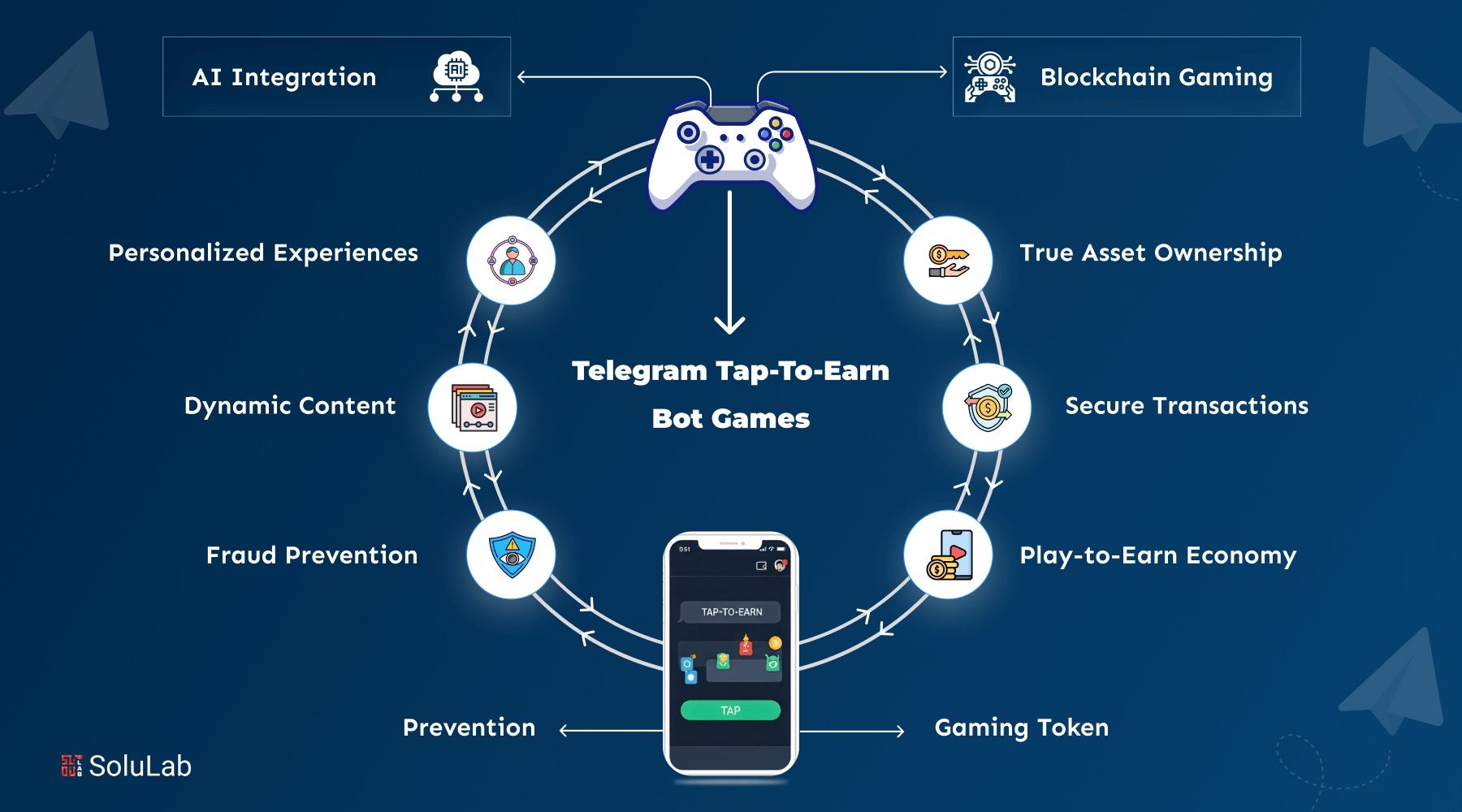
Tap-to-Earn (T2E) is quickly adopting AI and blockchain technology and making a new wave of innovation. Several entrepreneurs, developers, and investors are taking a keen interest in these games. These simple models are changing how players interact and monetize. Unlike many Web3 games, these bots offer instant access inside Telegram chats. 

TapSwap reached over 55 million users globally, with 18 million daily active users by late 2024.

Through the integration of AI and blockchain, T2E and online gaming are raising the standards beyond entertainment. They showcase the future of scalable, secure, and rewarding gaming ecosystems that appeal to players while opening new opportunities for businesses and startups.

What is a Telegram Tap-to-Earn Bot Game?

A Telegram Tap-to-Earn bot game is a mini-application hosted directly within the Telegram platform. These games require no downloads, separate accounts, or complex onboarding. Players engage by tapping, completing micro-tasks, or interacting with automated challenges to earn in-game rewards.

Unlike conventional games, these bots combine gaming, earning, and social engagement in one ecosystem. The instant accessibility and freedom of choice make them attractive compared to traditional Web3 gaming

Telegram Tap-to-Earn vs. Other Game Models

Let’s check how these T2E games are different from Web3 games and what makes them viral among users. 

Feature Telegram Tap-to-Earn Bot Games Traditional Web3 Games
Access & Onboarding Launch instantly inside Telegram chats with no downloads or wallets needed. Instant play keeps users engaged. Require browser access, wallet extensions, and long onboarding, creating friction.
Wallet Integration Secure integration with Tonkeeper or MetaMask inside Telegram Mini Apps ensures seamless token earning. Wallet connections are often fragmented, making transactions slower and less intuitive.
Community Growth Games spread organically via group chats, leaderboards, and invites. Depend heavily on external marketing and paid campaigns for growth.
Development Costs Bots, APIs, and contracts reduce deployment costs and time. Full-scale Web3 infrastructure demands higher costs and longer timelines.
User Experience Combines gaming, earning, and social interaction within one platform. Experiences are fragmented across gaming, wallets, and social channels.

Blockchain Integration in Tap-to-Earn Games

Blockchain integration powers the core value of Telegram Tap-to-Earn games. It ensures security, ownership, and transparent economies.

1. Immutable Asset Ownership 

Blockchain records every purchase or transfer permanently. This transparency guarantees that player-owned assets remain secure and verifiable at all times. Players trust the ecosystem more.

2. Cross-Game Usability 

Items such as characters, weapons, or skins can be carried across games. This interoperability increases value for players and expands opportunities for developers.

3. Decentralized Transactions 

Every token movement occurs on decentralized networks. This reduces risks of fraud and makes transactions faster, fairer, and verifiable by all participants.

4. Reduced Cheating Risks 

Blockchain validation ensures fairness. Once assets and rules are coded into smart contracts, manipulation becomes almost impossible, reducing cheating and hacks.

The Role of AI in Tap-to-Earn Bot Games

Artificial intelligence transforms how players experience these games. AI makes personalization, fairness, and monetization smarter.

1. Dynamic Difficulty Adjustment 

AI tracks player actions in real time and adjusts challenges. Players remain engaged without becoming frustrated or bored. Balanced gameplay builds loyalty.

2. Personalized Rewards 

Machine learning identifies individual preferences and tailors rewards accordingly. Players receive offers aligned with their habits, which strengthens satisfaction.

3. Smart Monetization 

AI predicts which players prefer video ads, banners, or in-app purchases. Targeted recommendations increase conversions without disrupting gameplay.

4. Predictive Engagement Analytics 

AI analyzes player retention and churn risk. This data helps developers improve content, ensuring players return consistently over time.

Tokenomics, Micro-Economies and Monetization Models

Tokenomics forms the backbone of Tap-to-Earn games. A balanced economy ensures sustainability, growth, and value. Micro-economies within these games enable players to earn, trade, or stake tokens. 

AI enhances these models with tailored incentives, subscription suggestions, and revenue optimization. Monetization channels include in-game ads, cosmetic upgrades, and reward-based video ads. 

Blockchain ensures tokens retain value through scarcity mechanisms like burns. Together, these models create sustainable revenue for developers while rewarding players for engagement.

Why Tap-to-Earn Is More Than Just Gaming?

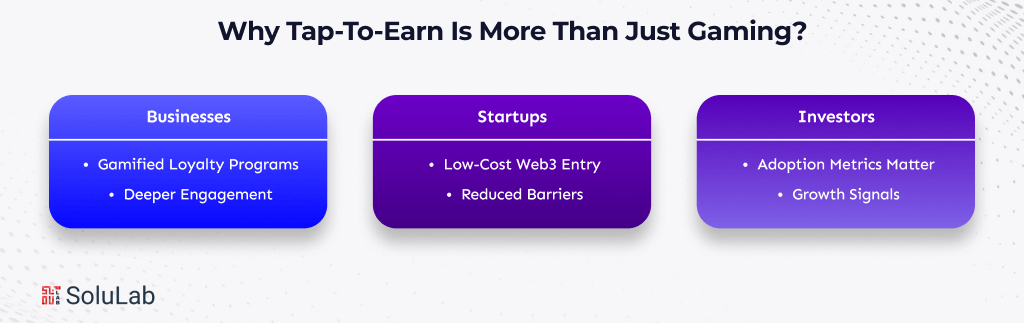
Tap-to-Earn represents more than entertainment. It is a proof-of-concept for scalable Web3 economies.

  • Businesses can adapt gamified customer loyalty programs using tokenized incentives. Customers engage deeper and return more often.
  • Startups find a low-cost entry point into Web3 through bots instead of heavy infrastructure investment. This reduces barriers to innovation.
  • Investors view user adoption metrics in Tap-to-Earn as signals of broader blockchain gaming potential. Strong engagement forecasts market growth.

This model provides a blueprint for integrating AI, blockchain, and social gaming into multiple sectors.
Why Tap-to-Earn Is More Than Just Gaming

How to Overcome AI and Blockchain Game Development Challenges?

AI and blockchain integration in games is not an easy task; there will be challenges. But every challenge has a solution. Let’s check some challenges you might face during AI and blockchain game development, and what the solutions are.

  • Scalability and Server Load Management

High traffic can overwhelm servers during rapid adoption. Cloud-based infrastructure, sharding, and load balancing distribute demand. Optimized engines and database tuning ensure smooth operations under heavy loads. Developers must scale efficiently to protect performance.

  • Botting and Cheating

Bots exploit games by tapping faster than humans. Timestamp checks, behavior analysis, and dynamic task changes counter these risks. Advanced cheat detection software and frequent audits reinforce trust and fairness within the ecosystem.

  • Designing Sustainable Tokenomics

Unbalanced supply or inflation can destroy token value. Developers must monitor token flow, introduce burns, and expand utility cases. Incentives for staking or participation prevent sell pressure and support a strong economic model.

  • Player Retention

Repetitive gameplay reduces engagement. Regular updates, meaningful rewards, and seasonal events keep players active. Building communities through leaderboards or group challenges strengthens long-term interest and loyalty within the game.

  • Designing an Engaging User Interface

Confusing UI designs drive churn. Responsive layouts, intuitive navigation, and consistent branding are critical. Testing and iteration ensure the interface adapts to player needs. Unique characters or interactive visuals enhance user satisfaction.

Why Businesses Should Care About AI+Blockchain Gaming?

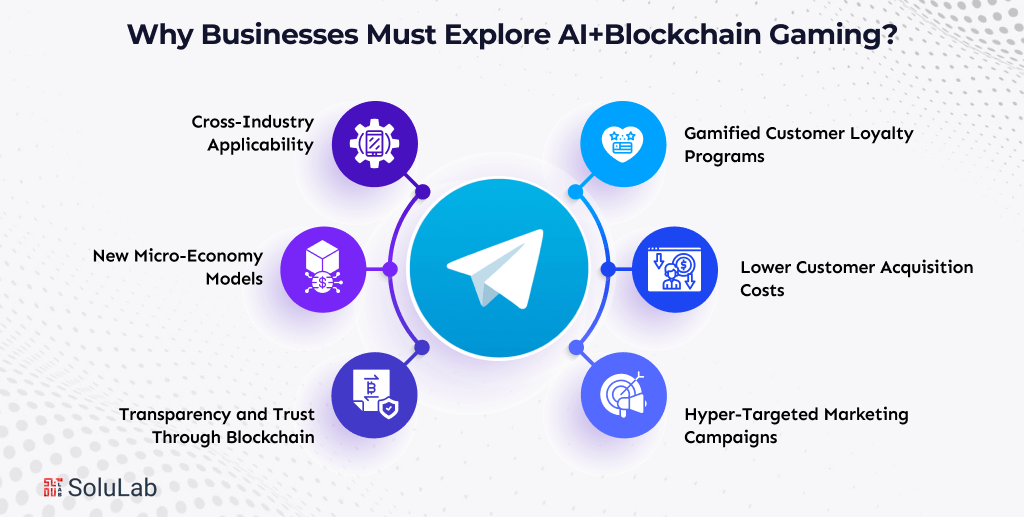
As of now, you might have already understood the importance of AI and blockchain in the gaming industry. Here are some convincing reasons:
Why Businesses Must Explore AI+Blockchain Gaming

  • Gamified Customer Loyalty Programs

Businesses can design blockchain-based loyalty tokens that reward customer actions. A Deloitte survey found that gamified loyalty programs can increase engagement rates by up to 47%, improving retention.

  • Lower Customer Acquisition Costs

AI-driven personalization reduces marketing spend by targeting the right users. According to McKinsey, personalization can drive 40% more revenue growth while lowering acquisition costs.

  • Hyper-Targeted Marketing Campaigns

AI analyzes user behavior such as purchase history and activity patterns. This enables businesses to launch tailored campaigns that raise conversion rates by 10-15% compared to generic promotions.

  • Transparency and Trust Through Blockchain

Blockchain records are immutable, creating verifiable proof of ownership and transactions. PwC reports that 45% of consumers trust blockchain systems more than centralized databases for digital value.

  • New Micro-Economy Models

Businesses can tokenize in-game assets, loyalty points, or digital goods. These tokens can be exchanged, staked, or burned, creating sustainable value ecosystems that boost long-term engagement.

  • Cross-Industry Applicability

AI+Blockchain gaming models apply to multiple industries. Retail brands can tokenize rewards, financial firms can gamify investments, and entertainment companies can build fan economies around exclusive digital assets.

If you are thinking of developing a game that gives a wide virtual world experience with catchy rewards, consider consulting a third party. It is a good choice for AI and blockchain solutions and integration.

Future of AI & Blockchain Gaming Beyond Telegram

AI and blockchain integration in gaming is widening the innovative ideas and shaping the world’s technology. Not just games, from daily actions to global economics, AI, and beyond, blockchain solutions simplify complex actions. 
  • In the near future, gaming platforms will become cross-platform assets. These are usable in the virtual world, metaverse, and traditional gaming consoles. 
  • AI will expand personalization, analyzing behavior across networks to deliver unified experiences. 
  • Blockchain economies will underpin not just games but entire social and business ecosystems. 
  • Telegram Tap-to-Earn bots mark the first step in a broader transformation where AI, blockchain, and gaming converge to define future digital engagement.

Blockchain Development Company

Conclusion

AI and blockchain integration in games is a great innovative step. As discussed above, this brings several futuristic ideas and transformations in world economics and technology. So, if you are also thinking of building AI+blockchain games or want custom changes, then consult SoluLab. 

We, at Solulab, a top blockchain game development company, aid you in designing scalable, secure, and transparent solutions. Our expert team and enhanced technology applications help you in building a user-friendly ecosystem and craft your ideas into real-world applications. 

If you are also looking for AI and Blockchain solutions, contact us today to get started!

FAQs

1. What makes Telegram Tap-to-Earn bot games different from other Web3 games? 

Telegram Tap-to-Earn games run directly inside chats, require no downloads, and spread virally through communities, making them faster, cheaper, and more engaging than traditional Web3 models.

2. How does blockchain improve security and ownership in Tap-to-Earn games? 

Blockchain ensures every asset and transaction is transparent and permanent. This guarantees real ownership, reduces fraud, and builds stronger trust among players within the gaming ecosystem.

3. What role does AI play in enhancing Tap-to-Earn gameplay? 

AI personalizes player rewards, adjusts difficulty in real-time, and predicts engagement trends. These improvements keep players interested, reduce churn, and make gameplay rewarding without overwhelming users.

4. Why should businesses or startups consider SoluLab for AI+Blockchain game development? 

SoluLab offers tailored blockchain and AI development with proven expertise. The team builds secure, scalable, and user-friendly ecosystems, making it easier for startups and enterprises to launch innovative Web3 solutions.

5. Could Tap-to-Earn games influence industries beyond gaming? 

Yes. The tokenized incentives and AI-driven engagement models can be applied to loyalty programs, e-commerce, or even workplace training, proving that this concept can reshape multiple industries outside gaming.

Top 25 Blockchain Gaming Companies in 2026

Top blockchain games have been on the rise over the past few years. The popularity of these games has been soaring in recent times and has entered the mainstream gaming industry. Top blockchain games play a significant role in ensuring that all the interactions and transactions between different parties are completely verified and legitimate. This, in turn, plays a vital role in preventing fraud, which happens to be one of the major challenges in today’s games and gaming platforms. This is exactly why game blockchain development and services have been in high demand.

This blog delves into the top 25 blockchain gaming companies at the forefront of this revolution, paving the way for decentralized ecosystems, play-to-earn dynamics, and true digital asset ownership. From virtual worlds and collectibles to online casinos and decentralized applications, these companies offer players a glimpse into the future where the boundaries between the virtual and real worlds blur in exciting and unprecedented ways.

So, let’s get started!

Evaluation Criteria for Selecting Top Blockchain Gaming Companies

As gaming continues to evolve, blockchain technology has emerged as a game-changer, revolutionizing the gaming industry. With the growing number of blockchain gaming companies, it’s crucial to understand the key evaluation criteria for choosing the best among them. This blog explores the factors to consider when selecting a company that develops top blockchain games in 2026.

  • Technology and Blockchain Integration: Evaluate how well the company integrates game blockchain technology into its gaming ecosystem. Look for robust blockchain infrastructure, smart contract development capabilities, decentralized asset ownership, and transparent and secure transaction mechanisms.
  • Gaming Experience and Quality: Consider the overall gaming experience offered by the company. Assess the quality of graphics, gameplay, user interface, and responsiveness. Look for immersive and engaging gaming experiences that leverage game blockchain technology effectively.
  • Game Diversity and Innovation: Examine the company’s portfolio of games. Look for various genres: action, strategy, role-playing, and more. Consider the level of innovation in terms of unique gameplay mechanics, creative storytelling, and novel features enabled by game blockchain.
  • Community and Player Engagement: Evaluate the company’s community and player engagement initiatives. Look for active player communities, social features, and opportunities for player interaction. Consider the company’s approach to fostering a vibrant and supportive gaming community.
  • Blockchain Transparency and Security: Assess the transparency and security features provided by the company’s blockchain infrastructure. Look for open and auditable smart contracts, secure asset storage, and robust anti-cheat mechanisms. Consider the company’s commitment to ensuring fair play and protecting user data.
  • Partnerships and Ecosystem: Examine the company’s partnerships and collaborations within the blockchain and gaming industries. Consider alliances with prominent game developers, blockchain platforms, and gaming influencers. Evaluate how these partnerships contribute to the overall ecosystem and growth potential.
  • Scalability and Performance: Evaluate the company’s ability to handle a large user base and maintain smooth performance. Look for scalability solutions that enable high transaction throughput and low latency. Consider the company’s approach to managing increased demand and growth.
  • Monetization and Token Economy: Assess the company’s monetization model and token economy. Look for fair and sustainable monetization mechanisms that value players and the company. Consider the utility and potential value appreciation of in-game tokens.

As gaming continues to evolve, blockchain technology has emerged as a game-changer, revolutionizing the gaming industry. With the growing number of blockchain-based gaming companies, it’s crucial to understand the key evaluation criteria for choosing the best among them. This blog explores the factors to consider when selecting a top blockchain-based gaming company in 2026.

Here is a List of the Top 25 Blockchain-Based Gaming Companies 2026

1. SoluLab

SoluLab is a leading blockchain game development company that has made a name for itself with innovative solutions and exceptional game development expertise. Their diverse portfolio of games spans various genres and showcases their commitment to delivering high-quality graphics, engaging gameplay, and a thriving community. SoluLab’s dedication to transparency, security, and scalability positions them as a top contender in the evolving blockchain-based gaming landscape.


$25-$49


50-249


2014


Los Angeles, CA, USA


Morpheus, NovaPay Nexus

2. Playkey

Playkey is a cloud gaming service that allows gamers worldwide to play the latest and hottest video games —even the most modern and system-intensive— on low-spec PCs and laptops and MacOS-based machines. All that is needed is a decent internet connection. Games are available “as is” with all their specific features, including Multiplayer, social features, and achievements.


$50-$70


51-100


2012


Perm, Russian Federation


Forbes, Fox

3. Immutable

Immutable is advancing the world of NFTs through Immutable X, an industry-leading NFT minting and trading platform, and Immutable Studios, an NFT game development studio. Their Apollo platform allows game publishers to integrate decentralized assets accurately at scale. They integrate with games developers have already built, reducing friction and barriers to entry.


$25-$49


201-500


2018


Sydney, New South Wales


T-Mobile, World Wide Web Consortium (W3C)

4. Horizon Blockchain Games Inc.

Horizon makes blockchain-powered video games for people interested in a new digital gaming experience. Their goal is to create gaming marketplaces and universes controlled by players. They are building a community-driven platform for decentralized games where players can experience digital ownership, open economies, transparency, privacy, and the ability to earn real-world value.


$72-$450


51-100


2017


Toronto, Ontario


Visa, American Express, Mastercard

5. Worldwide Asset eXchange (WAX)

WAX has created a full suite of blockchain-based tools that allows anyone to trade digital or even physical items instantly and securely to anyone, anywhere. Participants of the Worldwide Asset eXchange gain access to a global community of collectors and traders, buyers and sellers, creators and gamers, merchants, dApp creators, and game developers.


$54-$85


51-200


2015


Grand Cayman


HSBC, Standard Chartered, Barclays

6. DMarket

DMarket is an in-game item, NFTs trading platform, and technology for building metaverses. DMarket is a gaming provider working on expanding the use of blockchain in gaming marketplaces and in-game purchases.


$20-$40


51-100


2017


California, USA


Binance, Kraken, Bitstamp

7. The Abyss

The Abyss is a digital distribution game platform and a one-space place for the best online multiplayer games with built-in solutions for all MMO/MMORPG fans. The Abyss provides special terms and conditions for gamers and developers by delivering multiple social and income-generating opportunities through blockchain-powered services.


$45-$63


51-200


2017


Birkirkara, Malta


Deutsche Bank, Commerzbank, Allianz

8. Enjinstarter

Enjinstarter is the premiere IDO & INO launchpad for gaming, metaverse & P2E projects. They are bringing together gamers, guilds, publishers, gaming studios, etc., to build a sustainable metaverse gaming & entertainment ecosystem. Their goal is to expand the crypto collectibles movement in scalable and user-friendly ways.


$120-$200


1-10


2021


Singapore


Apple, Microsoft, Intel

9. Mythical Games

Mythical is a next-generation game technology studio. Mythical Games believes that true ownership of digital assets, verifiable scarcity, and integrated secondary markets will spawn a new generation of games. Based on digital rights, these new economies will bring players, developers, and content creators closer to the games they love.


$75-$90


101-250


2018


California, USA


Zara, H&M

10. Gala Games

Gala Games stands at the forefront of blockchain gaming, empowering players and creators. By embracing the decentralized nature of blockchain technology, Gala Games creates an ecosystem where participants are rewarded for their engagement. With GALA tokens as the medium of exchange, players can explore unique gaming experiences, earn rewards, and shape the gaming industry’s future. Gala Games paves the way for a new era of player-owned economies and immersive gameplay possibilities.


$14-$54


11-50


2018


Wyoming, USA


Meta, Apple

11. Axie Infinity

Axie Infinity is a groundbreaking blockchain game that revolutionizes the concept of play-to-earn. With its collection, breeding, and battling of digital creatures called Axies, Axie Infinity has captivated the gaming and NFT communities. Players can explore a vibrant metaverse, compete in strategic battles, and earn cryptocurrency rewards. Axie Infinity offers an immersive gameplay experience, fostering a passionate community and opening new opportunities for players to monetize their gaming skills.


$71-$85


11-50


2018


Vietnam


Netflix, Amazon

12. Dapper Lab

Dapper Labs uses the power of play to deliver blockchain-based experiences made for you and ready for the real world. The serious business of fun and games on the blockchain. No jargon or nonsense. Just good fun.


$45-$89


101-250


2018


Vancouver, Canada


Binance, Coinbase, Kraken

13. The Sandbox

The Sandbox is a user-generated gaming platform where creators can create assets and gaming experiences to monetize them on the Ethereum blockchain. Imagine Minecraft ft. Roblox on the blockchain. It features three main components: a Voxel editor software (Vox Edit), a Marketplace, and the Game Maker.


$100-$149


101-250


2011


California, USA


Netflix, Target, Slack

14. Lucid Sight Inc.

Lucid Sight has innovated on and explored new technologies across multiple platforms (iOS, Android, VR, Console, and PC), working with major IPs and brands. Lucid Sight has built over two dozen games, apps, and experiences using its cutting-edge multiplayer tech stack. These games include MLB Champions, CSC x Star Trek, and Justice League for PSVR. In 2021 Lucid Sight acquired Colyseus, a 6-year-old open-source multiplayer engine built on JavaScript. Colysues joins Lucid Sight’s existing technology stack to create Colyseus Arena, a cloud solution for democratizing multiplayer game development.


$45-$55


11-50


2015


Los Angeles, CA, USA


Alibaba, China Mobile

15. World of Ether

World of Ether is the world’s first decentralized game using Ethereum to buy and store collectible characters (Etherians) on the blockchain. The game allows players to breed feelings to create legendary monsters, buy Etherians in the marketplace, or battle other players over rare Etherian breeds. The blockchain traces each player’s moves on its transparent ledger to prevent cheating or hacking.


$20-$30


1-10


2017


New York, USA


Gemini, Bitstamp, Bitso

16. Alien Worlds

Alien Worlds is an NFT metaverse where players explore seven planets. Planets in Aliens World are like districts in real life. Each planet has its characteristics and is governed by different rules. Players can earn by mining assets, battling other explorers, and from rental commissions from the land they own.


$45-$65


51-200


2020


Zug, Switzerland


Trestle Labs, Nokia

17. Uplandme Inc.

Upland is a property trading game paired with a decentralized economy. Players buy, sell, trade, and develop virtual properties based on real-world addresses. Blockchain technology ensures true ownership. Uplanders collect in-game currency as a reward for their right and completion of Collections that group a predefined amount of properties.


$70-$80


51-200


2018


California, USA


TokenSoft, Ankr, TradeBlock

18. Sky Mavis

Sky Mavis develops blockchain-based games and products. Its first game, Axie Infinity, is a digital pet universe where players battle, raise, and trade cute creatures called Axies. Each Axie can possess 6 body parts. Each body part has its battle move, so combinations are infinite.


$70-$80


101-250


2019


Vietnam


Grayscale, Unchained Capital, BitPay

19. Sorare

Sorare offers a platform to buy, sell and play with official football Cryptogoods. Sorare’s goal is to create a digital environment where football enthusiasts may collect, trade, and interact innovatively with the beautiful game.


$150-$199


51-100


2018


Paris, France


Atari, Ethereum Classic, Ravencoin

20. Yield Guild Games

Yield Guild Games is a play-to-earn gaming guild that brings players together to earn via blockchain-based economies. We are the settlers of new worlds in the Metaverse.


$147-$369


11-50


2020


Quezon City, Philippines


Siemens, Bosch, Daimler

21. gDEX Metaverse

gDEX Metaverse is a revolutionary Web3 community gaming platform powering gamers, creators, and guilds in the Metaverse.

gDEX enables interoperability with a robust suite of Web3 chain agnostic tools that allow gamers, creators, and guilds to seamlessly manage all their Web3 gaming virtual assets, identity, activity, & experience from one platform across the metaverse.


$50-$65


11-50


2021


Singapore


European Space Agency, F. Iniciativas

22. Rage.Fan

Rage Fan is a platform offering Fantasy Sports and Quizzing games that require skill, knowledge, and interaction. Underpinned by blockchain technology, Rage. The fan will systematically solve players’ different issues, such as eliminating high entry, rake, and withdrawal fees, making operations completely transparent, and increasing the fan’s influence on the in-game decision-making.


$90-$130


11-50


2021


British Virgin Islands


Google, Facebook

23. Double Jump Tokyo Inc.

Double Jump Tokyo is Japan’s leading startup specializing in developing blockchain games. Their international team and group of engineers bring expertise in gaming, finance, blockchain technologies, and cryptocurrency. Double Jump Tokyo is the leader in Japan for cumulative NFT transaction volumes.


$78-$150


11-50


2018


Tokyo, Japan


Accenture, Deloitte, PwC

24. AnRKey X

AnRKey X is a multi-release DeFi game studio and all-in-one Play to Earn powering platform gamers and creators in the metaverse. We enable a community-owned and fully decentralized gaming economy making it easy for billions of gamers and creators worldwide to easily monetize their gameplay, participate in ownership & earn real money.


$100-$149


11-50


2020


Singapore


Google, Disney, Spotify

25. Playcent

Playcent is a blockchain-based user-generated content platform for interactive apps and games. It’s a remix tool that anyone can use to make interactive games, mini-apps, and memes based on the various templates created by independent developers.


$150-$199


2-10


2014


Hyderabad


Pepsi, CEAT

Closing Thoughts

Each name mentioned above has significantly contributed to the blockchain gaming industry. Integrating blockchain technology into the gaming industry has brought about higher transparency and security, proving extremely beneficial. Many of the top blockchain games have already showcased the advantages of this technology. The fullest potential of blockchain technology has yet to be utilized since it is evolving. However, it is expected that the utilization will be more and better in the future for the gaming industry’s further benefit.

SoluLab, a leading blockchain development company, has significantly contributed significantly to the gaming industry. As a reputable blockchain game development company, SoluLab offers innovative blockchain game development services that leverage decentralized technology’s power. Their commitment to seamless blockchain integration, high-quality graphics, engaging gameplay, and community building has positioned them as a trusted partner for blockchain-based gaming projects. With its focus on transparency, security, and scalability, SoluLab continues to drive the growth and advancement of the blockchain gaming industry.

Blockchain Development Services

FAQs

1. What is blockchain gaming?

Blockchain gaming refers to integrating blockchain technology into video games, enabling unique features such as decentralized asset ownership, secure transactions, and provable fairness.

2. How does blockchain technology enhance gaming?

Blockchain technology enhances gaming by providing transparent and immutable records of in-game transactions, enabling players to own and trade digital assets truly, and fostering trust among players through decentralized systems.

3. Are blockchain games only for cryptocurrency enthusiasts?

No, blockchain games are designed for cryptocurrency enthusiasts and traditional gamers. While blockchain technology powers these games, players can enjoy immersive gameplay and unique experiences regardless of their familiarity with cryptocurrencies.

4. Are blockchain games secure?

Yes, blockchain games are inherently secure due to the decentralized nature of blockchain technology. Transactions and ownership records are stored on a distributed ledger, making it extremely difficult for malicious actors to tamper with or manipulate game assets.

5. Can I earn real money by playing blockchain games?

Yes, playing blockchain games can offer opportunities to earn real money through various mechanisms, such as in-game item trading, play-to-earn models, and participating in decentralized finance (DeFi) features within the game ecosystem.

6. Do I need knowledge of blockchain technology to play blockchain games?

No, prior knowledge of blockchain technology is unnecessary to play blockchain games. Game interfaces are designed to be user-friendly, allowing players to enjoy the game mechanics without understanding the underlying technology.

7. Can I transfer my blockchain game assets between different games?

Interoperability between blockchain games is an emerging trend. While only some games offer this functionality, platforms, and protocols are being developed to enable the transfer and interoperability of game assets across different blockchain-based games.
