Talk to an Expert

Top 7 Blockchain Development Use Cases Where Enterprises Saved Millions

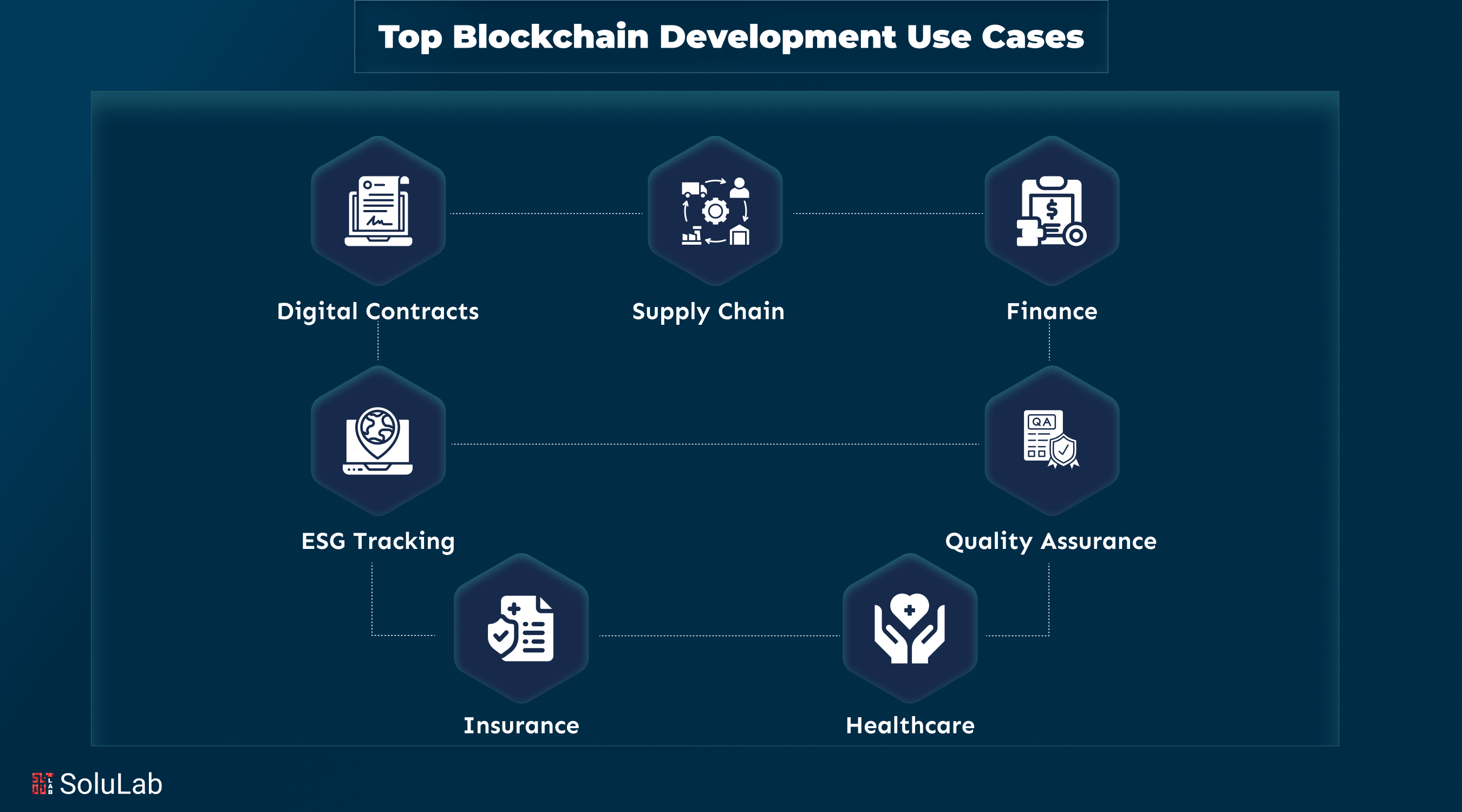
Top Blockchain Development Use Cases

You might have heard how startups build innovative platforms at low cost. Businesses are now focusing on making their system smarter, faster, and more transparent to save expenses. This is where blockchain technology plays a key role. Blockchain for enterprises supports cutting suppliers’ onboarding time to ensure instant payouts. 

Mike Cagney, Co-founder of Figure, said, “Blockchain represents the democratization of financial services, offering retail investors one of the largest allocations ever seen in an IPO.”

Not only that, but businesses are enhancing it to ensure user data security, customer trust, and regulatory compliance. With this automatic smart technology, enterprises saved millions. Let’s get into some major use cases that can reshape your business.

Why Enterprises Need Blockchain Development?

Blockchain for enterprise builds trust and transparency. Every stakeholder can access the same verified data without disputes. It enhances your customer security and helps protect against fraud and technical breaches. Some convincing reasons to invest in blockchain are:

1. Blockchain for digital identity streamlines verification. Users control their credentials while reducing compliance delays.

2. Smart contracts automate processes. Enterprises save time, reduce errors, and eliminate unnecessary intermediaries.

3. Supply chain tracking improves accountability. Companies trace goods in real time, ensuring authenticity and reducing counterfeits.

4. Blockchain reduces costs significantly. Enterprises cut transaction, auditing, and reconciliation expenses.

5. Faster settlements boost efficiency. Payments, cross-border transfers, and vendor payouts are complete in near real time.

6. Blockchain innovation ensures future readiness. Businesses stay competitive as industries shift to Web3 and tokenization.
Blockchain Development Company

Top 7 Blockchain Development Use Cases

Now that you have a clear idea of how blockchain helps your business, let’s get to know some case studies that took the businesses to new heights. 

1. Digital Contracts and Transactions Using Blockchain

In the following two case studies, the companies automated the contracts by leveraging blockchain. By doing this, they not only saved time but also improved the efficiency and reduced the manual delay. Let’s check each one in detail. 

  • Hitachi

Hitachi was managing contracts with around 2000 companies. Their traditional paper-based system slowed down procurement and invited errors. To overcome this, Hitachi adopted a blockchain-based paperless procurement system using Hyperledger Fabric. This new system digitized contract approvals and document sharing with suppliers.

Blockchain ensured documents were tamper-proof and traceable. As a result, Hitachi could handle at least one contract per company monthly with greater efficiency and less risk of fraud. The blockchain for enterprise system helped reduce manual delays and secured sensitive procurement data, saving both time and operational costs.
Hitachi

  • BlockTower Credit

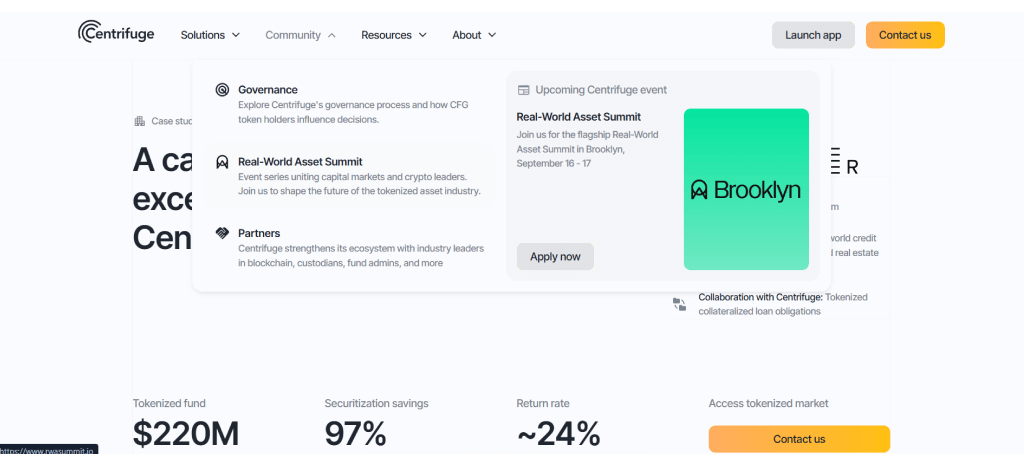
Capital markets have begun leveraging blockchain for faster settlements and improved access to capital. BlockTower Capital partnered with Centrifuge to modernize credit securitization using blockchain. The move cut costs by 97% and improved transparency.

Blockchain applications enable near-instant trade settlement, removing the need for third-party intermediaries. Traditional assets like stocks and bonds can be tokenized, allowing fractional ownership. This increases liquidity and lowers capital entry barriers, saving institutions millions in operational inefficiencies and errors.
BlockTower Credit

2. Blockchain made Supplier Management and Compliance Easy

As countries introduce new rules and regulations to protect user details, businesses must adapt to them. Let’s examine how companies manage these changes and how they minimize the cost of updates.

  • Trust Your Supplier

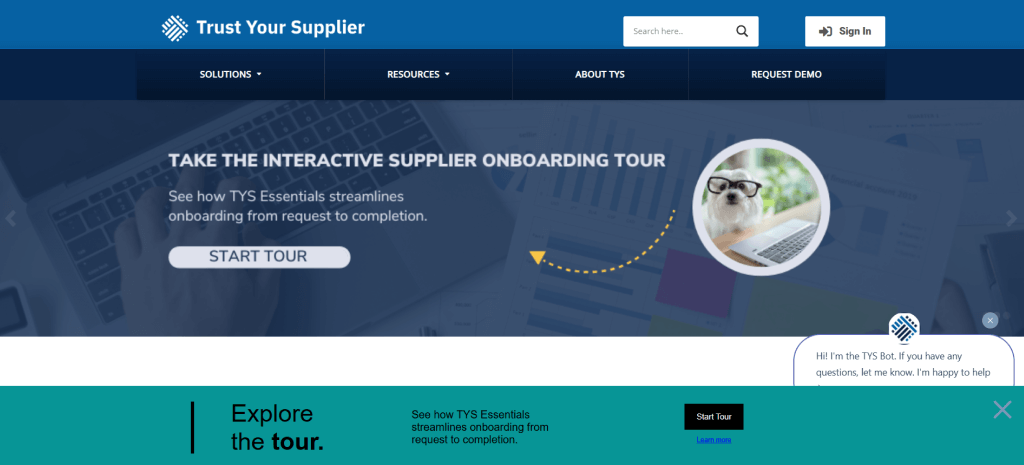
Trust Your Supplier, developed in partnership with IBM, simplifies supplier onboarding and verification using blockchain. Traditionally, verifying supplier credentials took weeks and involved repetitive checks. Using blockchain, data is verified once by trusted sources like Dun & Bradstreet or EcoVadis.

Then, a digital “supplier passport” is created and shared securely across business networks. This blockchain for business solution cut onboarding time by over 70% and slashed data verification costs by 50%. Blockchain’s transparency also improved regulatory compliance and risk management across global supply chains.
Trust Your Supplier

  • Walmart

In global commerce, tracking a product’s origin and movement is crucial for safety and ethics. Blockchain allows each supply chain participant to log verified data in real-time. For example, Walmart and IBM’s Food Trust blockchain solution traces food items from farm to shelf.

This ensures product freshness, reduces food waste, and speeds up recalls during contamination events. Consumers and regulators gain access to reliable data on sourcing, handling, and transit, all verifiable on the blockchain. Such blockchain technology in financial services saves millions in quality control and fraud prevention.
walmart

3. Trade Finance and Commerce Process Simplified

As blockchain technology grows, world trade is writing new chapters in the economy. Here is how companies handle transactions without delay and errors, which reduces the transactional costs. 

  • Marco Polo Network

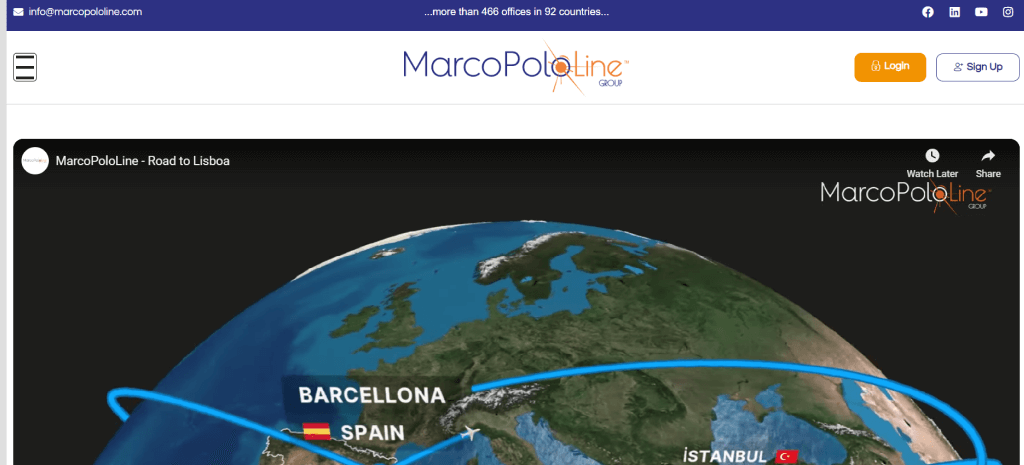
International trade often involves complex paperwork and delayed payments. To solve this, Marco Polo Network introduced a blockchain platform for trade finance. It connects buyers, sellers, and banks through a shared ledger, integrating with ERP systems. Smart contracts ensure that payment is automatically released once delivery is confirmed. This removed the need for letters of credit and reduced manual errors. It shortened settlement time, reduced bank fees, and improved trust in global transactions.
Marco polo network

  • Barclays PLC

Traditional letters of credit can take weeks and involve multiple layers of verification. For the first time in 2016, Barclays PLC automated this using smart contracts programmed with trade terms. Once conditions are met, payments are released without human intervention. This automation reduces fraud risk and eliminates the need for constant follow-ups. Enterprises using blockchain in trade finance report improved cash flow and reduced transaction costs.
Barclays PLC

4. Blockchain Enhanced ESG Tracking

With the green certification and carbon credits, companies are gaining external financial support. Let’s see how this actually works. 

  • Renault

Renault must comply with over 6,000 safety and quality standards across its operations. Tracking components from multiple suppliers was complex and error-prone. To solve this, Renault and IBM built a blockchain-based compliance platform. This solution ensures traceability of every part from suppliers to assembly lines. 

It helps meet internal and external compliance requirements without duplication. Renault reduced non-compliance expenses by 50% and plans to expand blockchain use for tracking carbon footprints and recycling efforts.

Renault

  • Brooklyn Microgrid

Blockchain also plays a role in clean energy and sustainability. Projects like the Brooklyn Microgrid enable peer-to-peer energy trading without intermediaries. Participants sell excess solar energy to neighbors through a blockchain ledger. This creates a transparent, local energy market and boosts renewable energy adoption. Blockchain also tracks carbon emissions and green certifications, helping organizations meet ESG goals with verified data.

Brooklyn Microgrid

5. Raw Material and Product Quality Verified Through Blockchain Technology

Nowadays, industries use technology to reduce manual labor and reduce their costs. 

  • Ford

Ford aimed to ensure the ethical sourcing of cobalt used in electric vehicle batteries. They partnered with IBM and RCS Global to build a blockchain tracking system. The system recorded the cobalt’s journey from certified mines through logistics to factories. IoT sensors and supplier declarations verified authenticity and compliance at each stage. This gave Ford end-to-end visibility into its sourcing, reducing ESG risks and improving transparency for stakeholders.

Ford

  • Nestlé

After China’s 2008 milk scandal, parents were cautious about baby food safety. Nestlé introduced NAN A2 infant formula with full blockchain traceability in China. Customers scanned QR codes to view the product’s origin, ingredients, and packaging details. All data was stored on a public blockchain, accessible via mobile apps. This move helped Nestlé gain significant consumer trust and grow its market share in infant nutrition.
Nestle

6. Insurance Claims and Fraud Reduced Rapidly

Blockchain technology in the insurance industry is improving customer satisfaction levels without any delays. Here is how companies use smart contracts to gain users’ trust.

  • AXA Fizzy

AXA tackled slow and frustrating flight delay claims with a product called Fizzy. It used blockchain smart contracts and flight data oracles to detect delays automatically. If a flight was delayed over two hours, a smart contract triggered an automatic payout. No paperwork or claim filing was needed. This innovation improved customer satisfaction and reduced administrative overhead for AXA.
AXA

  • Etherisc

Etherisc created blockchain-based insurance for events like crop failure or flight delays in Kenya. Smart contracts automated payouts when conditions were met using third-party data. For instance, if weather data confirmed a drought, a payout was made instantly. This reduced fraud, sped up claim settlements, and brought insurance access to underserved communities.

Etherisc

7. Identity, Health, and Legal Records Secured

Blockchain is evolving into the next stage as industries use it in every application. From private to government, everyone is adopting blockchain technology to make things easy. Enterprises are also adopting it and innovating new ideologies to enhance their system and reduce expenses.

  • OpenLaw

OpenLaw uses blockchain to create smart legal agreements. Lawyers and clients use templates with embedded code for execution. These smart contracts handle actions like payments and asset transfers once triggered. This reduces manual revisions and offers an auditable legal record on-chain. It saves time, lowers legal costs, and increases contract reliability. This makes it one of the top blockchain applications and use cases in business

Open Law

  • IPwe

IPwe collaborated with IBM to build a blockchain-based IP marketplace. They tokenized over 80% of the world’s patents for transparent tracking. Businesses now display, value, and trade IP more efficiently. This unlocks investment opportunities and ensures fair licensing practices.
IPwe

  • American Hospital Association

Healthcare providers store patient data on blockchain for better security and access control. The American Hospital Association also mentioned how Blockchain is changing clinical operations. With this, patients decide who can access their records. Doctors’ credentials are also verified and stored on-chain. This reduces fraud and ensures licensed professionals deliver care. Data integrity is preserved with a full audit trail.
American Hospital Association

  • Governments

Public sector bodies now use blockchain to manage land records, identity documents, and licenses. States like Illinois and Delaware have launched blockchain pilots. This ensures tamper-proof public records and secure citizen data. Governments benefit from higher transparency and reduced administrative costs.
Governments

Conclusion

As per the above case studies and use cases, blockchain proves its worth in the technology world. If you are also thinking of adopting blockchain technology, then Solulab, the top blockchain consulting company, is here to assist you. 

We at Solulab provide hands-on guidance, helping you design and implement large-scale blockchain systems. Our blockchain consultants assist businesses in implementing this innovative technology effectively. This makes you stay ahead of the competition. 

Contact us today for secure, reliable, and efficient blockchain adoption. 

FAQs

1. How exactly does blockchain help companies save money?

Blockchain removes middlemen, automates contracts, and prevents fraud. It reduces paperwork, human errors, and processing time, saving millions in administrative costs, compliance issues, and delayed payments across global operations.

2. Is blockchain only useful for big companies like Hitachi or Ford?

Not at all. While large companies adopted it first, small and mid-sized businesses now use blockchain for supply tracking, digital identity, or automated contracts, especially with today’s easier-to-access blockchain platforms.

3. How can SoluLab help enterprises adopt blockchain solutions for procurement and trade finance?

At SoluLab, we design secure, efficient blockchain solutions that help you reduce costs, automate contracts, and boost trust across procurement and trade finance.

4. How does blockchain improve product safety for consumers?

It tracks every step in the supply chain, from farm to shelf. That means consumers can scan a code and instantly see where, when, and how a product was made, with total transparency.

5. Could I ever use blockchain to track my coffee beans or shoes? 

Yes, really! Some companies already let you trace your coffee or sneakers back to the farm or factory. Blockchain lets everyday people see the full story behind what they buy. 

What are the Benefits of Using Digital Identity with Blockchain in 2025?

Benefits of Using Digital Identity with Blockchain

Blockchain digital identity has transformed the verification of our identities—securely, confidentially, and universally. By 2026, over 5.2 million digital ID wallets are anticipated, indicating a transition from conventional IDs to more intelligent, decentralized alternatives.

With digital identity verification in blockchain, users gain full ownership of their data and can share only what’s necessary, when it’s required. This shift is not just about convenience; it’s about building trust and transparency in digital interactions.

This article will examine the primary benefits of utilizing digital identification through blockchain, including improved privacy and expedited cross-border access. So let’s get started!

What is Blockchain Digital Identity, and Why is it Essential?

Before addressing fresh uses of identity management in blockchain, it is essential to determine the importance and benefits of digital identity. Why is the use of blockchain technology in digital identification causing concern? The concept of digital identity has grown extremely broad, resulting in the assumption that it only refers to publicly accessible personal information online. You’d be incorrect if you thought your digital identity was limited to your social media profiles, email addresses, and home address.

Digital identity displays a person’s finest actual and online personas. Your online presence, which includes images, purchase decisions, website usage trends, and bank account information, forms a part of your digital identity. However, discrepancies exist in how digital identity is displayed across numerous platforms, such as banking systems, social networking sites, and telecom networks.

The relevance of digital identity would be the basis for answering the question, “What is digital identity management in blockchain?” The customer onboarding process must be sped up while accuracy is guaranteed. Digital identity is also necessary for combating fraud and money laundering, which are inextricably linked. With digital identity management, government services to people may be streamlined and standardized.

The capability of social transformation projects and the assurance of economic advantages for diverse communities by citizen welfare measures highlight the need for blockchain and identity management. One such digital identification application example is Singapore’s Smart Nation plan’s National Digital Identification, or NDI, system. The NDI system would make citizens’ involvement in e-government services more secure.

Issues With the Current Identity Management System

The issue of digital identity remains significant. If it’s paper-based, like birth certificates stored in a town hall basement, it might be lost, subject to identity theft, or vulnerable to fraud. Digital identity management reduces bureaucracy and expedites business processes within enterprises by enabling improved interoperability between departments and other organizations. However, if this digital identity is stored in a centralized institution, it remains a target for hacking. Since 2017, almost 600 million pieces of personally identifiable data, including addresses and credit card details, have been stolen from companies.

The vast majority of current digital identity management solutions require improvement and modernization. Identity portability and verification are now feasible anywhere, at any time, thanks to digitization. But being digital alone is insufficient; identity needs to be secure and private. A comparison between Multi-Chain vs. Cross-Chain solutions can be crucial in determining the future of secure identity management, as both approaches offer different methods of data sharing and verification across multiple blockchain networks. Numerous sectors face challenges due to current digital identity management techniques, signaling a strong need for more advanced, decentralized solutions.

  • Government

The requirement for interoperability between departments and levels of governmental services leads to excessive bureaucracy. Overall process durations and costs lengthen as a result.

  • Healthcare

The majority of people on the planet do not have access to quality healthcare. The lack of interoperability across healthcare providers (hospitals, clinics, insurance firms, doctors, pharmacies, etc.) results in ineffective healthcare, delayed care, and unhappy patients.

Related: AI Agents in Healthcare

  • Education

It’s estimated that 200,000 fake academic degrees are peddled each year in the United States. Unqualified candidates are employed as a result of the challenges in verifying the validity of these credentials, which damages institutions’ and hiring companies’ reputations.

Read Our Blog: Role of AI in Education Industry

  • Banking

Users’ access to their bank accounts is less secure when login details like passwords are required.

  • Businesses in General

The requirement to preserve client and employee personal data breaches is a cause of corporate liability. Due to GDPR infringements, as in the British Airways case, or just as a result of a loss of customer confidence and associated brand harm, personal data breaches may result in significant penalties.

CTA1

How Blockchain Digital Identity Acts As A Problem Solver?

Blockchain technology is demonstrating efficacy as a robust solution to worldwide identity issues. Blockchain for digital identity is revolutionizing the management and verification of identities for individuals and businesses through a decentralized, secure, and user-controlled framework.

  • Eradicates Centralized Vulnerabilities: Conventional identification methods depend on central databases frequently targeted by cybercriminals. Blockchain and digital identity together mitigate this risk by disseminating data throughout a secure network, therefore diminishing single points of failure.
  • Helps Users to Manage Their Data: Blockchain enables consumers to control access to their personal data, rather than having third parties own their identifying information. This guarantees confidentiality and selective dissemination.
  • Provides Data Integrity: Each ID record maintained on a blockchain is time-stamped and impervious to tampering. Upon verification, it cannot be modified without consensus, hence maintaining elevated levels of confidence.
  • Facilitates Cross-Border Verification: Decentralized systems enable universal identity verification across institutions and boundaries, making them suitable for global travel, finance, and digital services.
  • Increases Access to Legal Identification: Millions lacking formal documentation may now establish digital identities on the blockchain, therefore addressing the worldwide identity disparity.

How Does Blockchain for Digital Identity Verification Work?

For an understanding of the benefits of blockchain-based identification systems, it is essential to understand their underlying mechanisms. The integration of cryptographic techniques, key management, and decentralized consensus guarantees the security, privacy, and tamper-resistance of digital identification.

  • Immutable Records Using Hashing

Blockchain safeguards identification information using cryptographic hashes, which serve as unique digital identifiers for each data entry. Upon the addition of a user’s identification information to the network, it is converted into a static hash. Any alteration to this data modifies the hash, rendering illegal changes easily identifiable. This assures that digital identity verification in blockchain is reliable and impervious to manipulation.

  • Secure Access Utilizing Public-Private Key Pairs

Every individual is allocated a distinct pair of keys: a public key (serving as a digital address) and a private key (used for access authorization). Access to identity data is restricted to individuals with the appropriate private key, hence guaranteeing safe and user-governed verification procedures.

  • Decentralized Trust via Consensus

Blockchain networks utilize consensus techniques such as Proof of Stake or Proof of Authority to authenticate new entries. Upon submission of identification credentials, they are verified by many separate nodes. This decentralized approval mechanism obviates the necessity for central authority and secures the integrity of identification data throughout the network.

  • Privacy by Design

Blockchain systems provide selective disclosure, allowing individuals to reveal only particular aspects of their identities. This mitigates data exposure, augments privacy, and facilitates adherence to data protection rules.

  • Global Interoperability

In contrast to isolated conventional identity systems, blockchain IDs are transferable. Individuals may authenticate their credentials across several platforms and jurisdictions without redundant manual procedures, optimizing processes from onboarding to KYC.

Benefits of Using Digital Identity With Blockchain 

Benefits of Using Digital Identity With Blockchain 

With the advent of Bitcoin in 2008, blockchain technology arose, giving an efficient, transparent, and decentralized system distributed across a network of computers with the help of a blockchain development company. Have you ever imagined gaining complete control of your personal data and deciding how it is used? Managing and safeguarding your online identity is now a reality thanks to blockchain services. It has already altered areas such as finance, banking, healthcare, and insurance, and it is now set to redefine digital identity management.

Several significant benefits of using blockchain in identity management are listed below:

  • User-Owned Identity

Blockchain digital identity enables individuals to be independent of centralized entities for the issuance or management of their personal credentials. Users dictate the timing, location, and recipients of their information, facilitating genuine data ownership.

  • Tamper-Proof Verification

Identity data recorded on the blockchain is unalterable. Once included, it cannot be modified or removed without agreement, so rendering identity fraud, document tampering, and impersonation far more challenging to perpetrate.

  • Faster and Frictionless Access

Blockchain-based IDs expedite verification processes for onboarding to banking applications, age verification for digital services, and applications for public benefits while removing delays associated with paperwork.

  • Selective Disclosure for Privacy

Users may disclose just the essential data necessary for verification—such as validating age without disclosing a birthdate—thereby augmenting privacy and mitigating data leakage threats.

  • Cross-Platform and Borderless Use

Digital identity on blockchain is transferable. It operates flawlessly across applications, platforms, and nations—perfect for travelers, expatriates, and international professionals requiring universal acknowledgment.

DO YOU KNOW?
The global blockchain market, valued at $3 billion in 2020, is projected to witness remarkable growth in the coming years. This market is anticipated to reach a staggering $39.7 billion by 2025.

  • Cost Savings for Institutions

Organizations also get advantages by decreasing compliance expenses, removing middlemen, and automating verification procedures using smart contracts.

  • Built-in Compliance Support

Blockchain identifiers may be structured to comply with KYC/AML rules, GDPR, and other international standards, facilitating audits and enhancing regulatory transparency.

How Blockchain Works in Online Verifiable Identity?

How Blockchain Works in Online Verifiable Identity?

Blockchain technology has the potential to revolutionize online verifiable identity by providing a secure, transparent, and decentralized platform for managing digital identities. Here’s a step-by-step explanation of how blockchain works in online verifiable identity:

  • Decentralized Identifiers

Decentralized identifiers (DIDs) are used by blockchain-based identification systems to validate and securely share identities with verified parties. By ensuring openness, effectiveness, and tamper-proof administration of digital identities, these cryptographic keys do away with the need for several identity papers.

  • Distributed Ledger Technology

Each component of a blockchain has a significant function. DLT, or distributed ledger technology, offers security and openness. It serves as an impenetrable database that keeps track of all transactions and updates identification data.

  • Tokens

Tokens serve as identity representations in the digital realm. Without divulging all of your personal information, you may authenticate your identity using tokens. However, the capacity of the blockchain to encrypt and retain data immutably is a prerequisite for all of this.

  • Encryption

You are the only one with access to the data kept on a block since you are a registered user. Unless you add to the encrypted data, it will remain untouched. By doing so, you deter identity thieves and safeguard your personal information.

  • Immutability

A crucial characteristic of blockchain technology is immutability, where finished transactions are time-stamped, cryptographically signed, and consecutively added to the ledger. Without the consent of all parties involved, the records kept on the blockchain cannot be changed or distorted.

Blockchain systems are an effective tool because of the integration of DIDs and other crucial components. They assist in enhancing the blockchain ecosystem’s safety and confidentiality.

CTA2

Conclusion

The future of identification is in decentralized, granting individuals total ownership over their data while ensuring that verification is rapid, safe, and impenetrable. Blockchain-based digital identification facilitates a revolutionary transition from antiquated, centralized systems to dynamic, user-centric frameworks that are global and designed for the digital era. This technology is establishing a more intelligent identity infrastructure for the future, encompassing safe onboarding, real-time verification, and privacy-centric sharing.

SoluLab specializes in developing scalable and secure identification systems customized for diverse sectors. As a reputable blockchain development company, we have enabled international clients with custom blockchain ecosystems that enhance identity management and regulatory compliance. Morpheus Network is a blockchain-based SaaS platform transforming the logistics sector through the integration of blockchain technology, IoT, and real-time communication technologies. 

Ready to explore how blockchain can transform your identity systems or business infrastructure? Let us collaborate to create something exceptional!

FAQs

1. How does blockchain improve the security of digital identities?

Blockchain ensures that digital identity data is encrypted, time-stamped, and stored across a decentralized network. This structure makes it nearly impossible for unauthorized parties to alter or tamper with identity information, significantly reducing the risk of fraud or data breaches.

2. Can blockchain digital identities be used across different platforms and countries?

Yes, one of the major benefits of digital identity on blockchain is its portability. A verified blockchain ID can be used globally across various platforms, industries, and borders, making it ideal for cross-border transactions, digital services, and travel.

3. Is it possible to control what information I share through a blockchain-based identity?

Absolutely. Blockchain-based identity systems support selective disclosure, allowing users to share only the necessary information (e.g., verifying age without revealing full birthdate), enhancing privacy while still meeting verification requirements.

4. How does digital identity verification in blockchain help organizations?

Organizations can streamline onboarding, reduce verification costs, comply with regulatory requirements, and prevent identity fraud more effectively. Blockchain also automates trust through smart contracts, reducing the need for manual checks.

5. What industries benefit most from blockchain digital identity solutions?

While blockchain identity benefits nearly every sector, industries like finance, healthcare, logistics, education, and government services see the greatest impact due to their high demand for secure, efficient, and compliant identity management.