Talk to an Expert

Importance of Generative AI in Cybersecurity

Importance of Generative AI in Cybersecurity

Generative AI, or generative artificial intelligence, is similar to a clever digital artist. This type of technology can produce text, pictures, and even thoughts on its own. Think of it as a robotic artist who can write, draw, or create new things by absorbing vast amounts of previously viewed knowledge. Why is generative AI important in the context of cybersecurity? Well, until recently, cyber threats were like puzzles that were simple to solve. However, with the advent of generative AI, the challenge has expanded. This implies that cybercriminals are also armed with more intelligent weapons, resulting in more potent and advanced attacks.

It is the goal of cybersecurity to keep our digital world safe. Generative AI provides us with both a weapon and a shield. On the one hand, generative AI helps cyber defenders by providing them with defense mechanisms against online intrusions. Nevertheless, there is a chance. Generative AI is another tool available to cybercriminals to enhance the stealth and potency of their assaults. 

In this blog, we will go through the importance of Generative AI in Cybersecurity along with the benefits associated with it. So, let’s get started!

Knowing the Effects Of Generative AI

In the field of machine learning known as “generative AI,” models are trained to produce new data that bears similarities to the features and patterns of the input data. With the use of this technology, there are countless opportunities now available for advances in problem-solving, creativity, and content production. According to McKinsey, generative AI has the potential to boost the world economy by trillions of dollars per year.

But because generative AI uses a lot of data, businesses need to be careful about data security and privacy. Large language models (LLMs) and other Generative AI models create privacy problems due to their nature, which involves memory and association. Large volumes of training data, including potentially sensitive information that might be exploited or leaked, can be memorized by LLMs. 

Generative AI solutions

Role of Generative AI in Cybersecurity

What part does generative AI play in cybersecurity, then? There are several possible uses for this, like:

  • Creating Phishing Emails: Using GenAI in cybersecurity, cybercriminals may generate realistic phishing emails that deceive recipients into clicking on dangerous links or divulging personal information.
  • Making Fake Websites: With generative AI, malicious actors may produce phony websites that look real. Users may be tricked by this into downloading malicious files or divulging personal information.
  • Creating Malicious Code: Viral AI may be used by malevolent actors to create code that targets security holes in computer systems.

There might be drawbacks and benefits to using generative AI in cybersecurity. It may also be utilized to craft complex attacks that are challenging to counter. 

However, AI may also be utilized to provide fresh approaches to security. Attack detection and prevention may be improved by these strategies.

The Working of Generative AI

Machine learning (ML) is a subset of AI that gives rise to generative AI. Machine learning (ML) uses algorithms that automatically get better by identifying patterns in massive volumes of data. One of the many applications of machine learning is deep learning, which makes use of layered algorithms, or neural networks, to simulate how neurons in the human brain work. This gives systems the ability to learn and decide for themselves.

Transformers are a particular kind of neural network architecture used in deep learning. The transformer model analyzes incoming data in parallel by using layers of artificial neurons, which results in a very efficient process. Among them, the Generative Pre-Trained Transformer model (abbreviated GPT) is one of the most well-known. 

In a nutshell, generative AI comprises the following actions:

  • The model starts using an enormously big dataset for training.
  • The fundamental structures and patterns in the data are recognized and understood by the model.
  • The generative method makes it possible to generate fresh data that replicates these discovered structures and patterns.

Benefits and Drawbacks of Generative AI in Cybersecurity

Generative AI in cybersecurity offers major benefits and answers to many of the problems that cybersecurity experts are currently facing.

  • Efficiency: Cyber threat detection and response may be made more effective with the help of GenAI. An AI-native system can assist security analysts in finding the information they need to make choices fast as it picks up new skills. This speeds up analyst processes, allowing them to concentrate on other projects and increasing the production of their team.
  • Comprehensive Analysis and Summarization: GenAI can help teams examine data from various modules or sources, allowing them to quickly and accurately do laborious, time-consuming data analysis that was previously done by hand. Additionally, using GenAI to provide natural language summaries of occurrences and threat assessments and multiplying team output.
  • Proactive Threat Detection: The transition from reactive to proactive cybersecurity is arguably the biggest benefit of GenAI. GenAI enables teams to take preventative measures before a breach happens by warning them about possible risks based on learned patterns.

Even though AI-based cybersecurity has many applications, it’s vital to take into account the difficulties that accompany it. Its usage needs to be handled carefully, just like any other technology, to reduce hazards and potential abuse.

  • High Processing Resources: A significant amount of processing power and storage are needed for training GenAI models. This might be a barrier for smaller businesses.
  • Threat of Attackers Using AI: Open-source, low-cost, cloud-based methods are making GenAI models and associated tools more and more available. Cybercriminals may utilize GenAI to create complex assaults that are skilled at eluding cybersecurity defenses, just as corporations can use it for cybersecurity. GenAI is reducing the barrier to extremely sophisticated assault by new threat actors through an expanding ecosystem of GPT-based tools.
  • Ethical Issues: Discussions nowadays are bringing up moral issues pertaining to data control and privacy, particularly in relation to the kinds of data AI models utilize for training datasets.

Read Blog: Generative AI Use Cases

How Generative AI Enhances Cybersecurity?

Let’s examine how Gen AI is assisting security teams in protecting their enterprises in a more precise, effective, and productive manner below. 

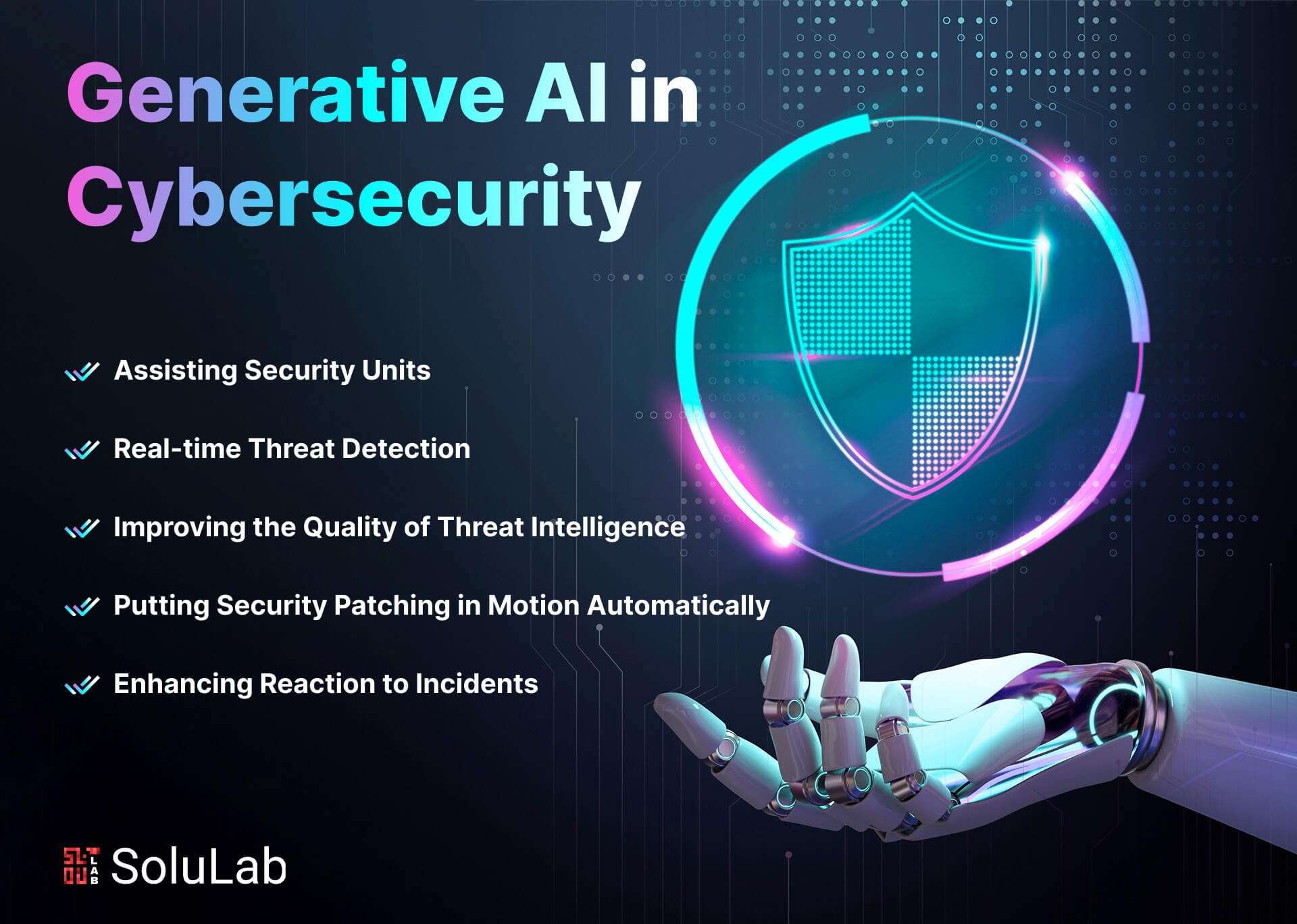
1. Assisting Security Units That are Understaffed

Artificial Intelligence security is being utilized to enhance security results and support security staff. The majority of IT leaders (93%) are either exploring or are using AI and ML to improve their security capabilities. These AI adopters have already seen gains in performance in terms of reducing false positives and noise, identifying zero-day assaults and threats, and prioritizing Tier 1 threats. More than half of managers (52%) believe that generative AI security will enable businesses to more effectively allocate people, resources, capacity, or skills as a consequence of these early success indicators.

2. Real-time Threat Detection

One of the most popular applications of generative AI nowadays is threat detection. Organizations may greatly accelerate their capacity to discover new threat vectors by employing them to sift event alerts more effectively, eliminate false positives, and spot trends and anomalies quickly.

3. Improving the Quality of Threat Intelligence

Threat intelligence is also improved by generative AI. In the past, analysts had to examine enormous volumes of data to comprehend risks using complicated query languages, procedures, and reverse engineering. They may now make use of generative AI algorithms, which automatically look for dangers in code and network traffic and offer insightful information to assist analysts in comprehending how malicious scripts and other threats behave.

4. Putting Security Patching in Motion Automatically

Patch analysis and application processes may be automated with generative AI. It can apply or recommend suitable fixes using natural language processing (NLP) pattern matching or a machine learning approach called the K-nearest neighbors (KNN) algorithm. Neural networks are used to scan codebases for vulnerabilities.

5. Enhancing Reaction to Incidents

Incident response is a successful area in which generative AI is used in cybersecurity. Security analysts can expedite incident response times by using generative AI to generate response plans based on effective techniques from previous occurrences. Additionally, as events unfold, Gen AI may keep learning from them and modify these reaction plans accordingly. Additionally, generative AI may be used by organizations to automate the generation of incident response reports. 
Examples of Generative AI in Cybersecurity

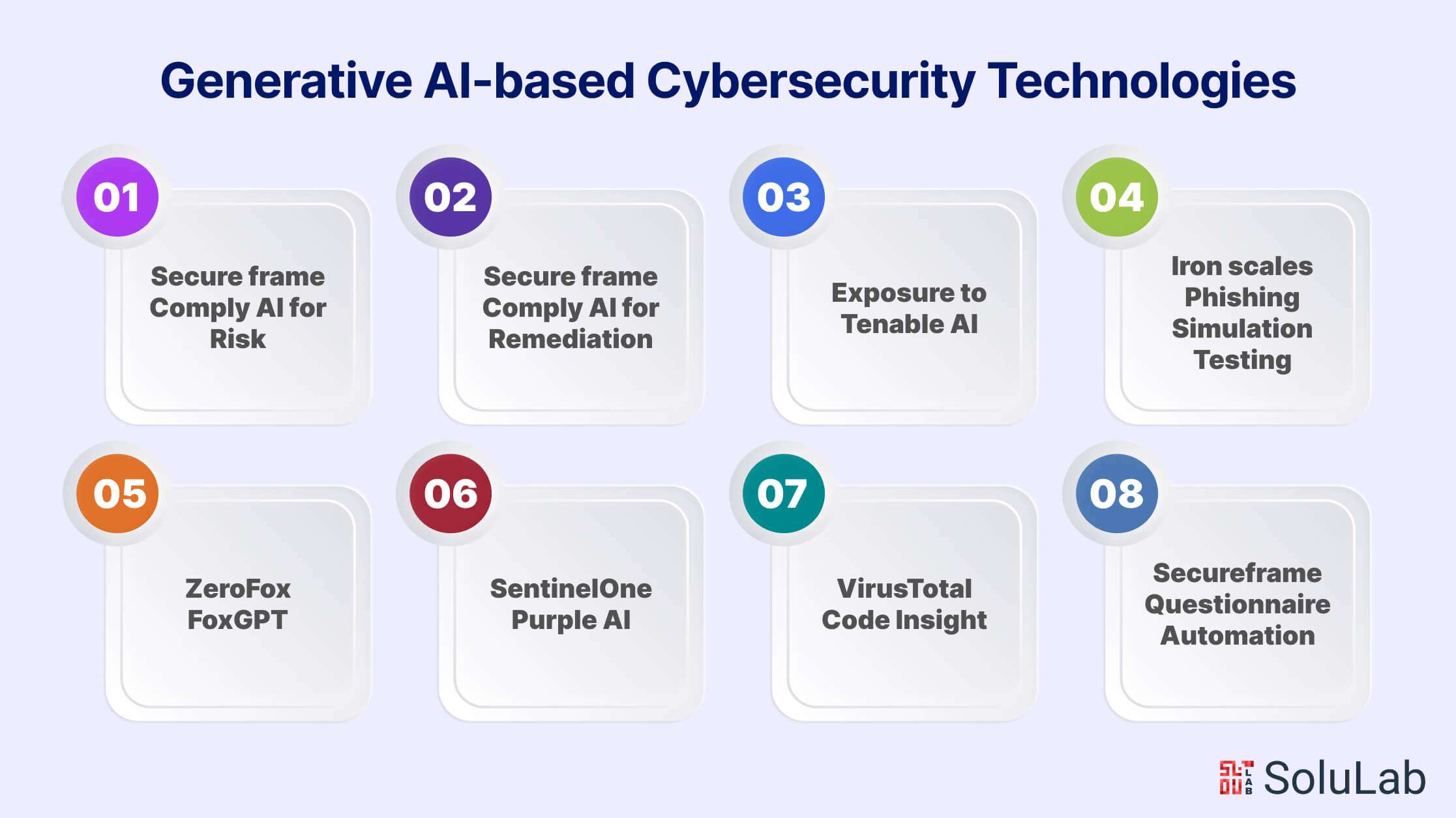
Generative AI based Cybersecurity Technologies

After learning about some of the broad uses of Generative AI in cybersecurity, let’s examine a few particular generative AI-based cybersecurity technologies. 

  • Secureframe Comply AI for Risk 

Recently, Secureframe Comply AI for Risk was introduced to automate risk assessment, saving time and money for businesses. 

Comply AI for Risk generates comprehensive insights into risk, including the chance and effect of the risk before a response, a treatment plan to address the risk, and the probability and effect of the risk that remains after treatment, all from a risk description and corporate information. Organizations may improve their risk awareness and reaction by using these comprehensive Comply AI for Risk outputs, which help them better comprehend the possible effect of risk and appropriate mitigation techniques.

  • Secureframe Comply AI for Remediation

In order to give enterprises a more relevant, accurate, and customized user experience for fixing failed tests and expediting time-to-compliance, Secureframe introduced Comply AI for Remediation.

With the help of Comply AI for Remediation, users can simply correct the underlying problem causing the failing configuration in their environment by receiving remediation information that is specifically targeted to their environment. As a result, they can quickly become audit-ready, strengthen their overall security and compliance posture, and repair failed controls to pass tests.

In order to receive further information on the remediation code or more specialized advice for their unique security and compliance needs, users may also use the chatbot to ask follow-up questions. 

  • Exposure to Tenable AI

Tenable introduced ExposureAI to give analysts fresh, in-depth insights and to facilitate easier exposure management. These new generative AI capabilities speed up the search, analysis, and decision-making process for analysts about exposures by:

  • Enabling analysts to search for specific exposure and asset data Using natural language search queries.
  • Providing a written narrative summary of the entire attack path to help analysts better understand exposures.
  • Presenting insights into high-risk exposures and suggesting actions to help analysts more easily prioritize and address high-risk exposures.
  • Ironscales Phishing Simulation Testing

Phishing Simulation Testing (PST) powered by GPT was introduced by Ironscales as a beta feature. This application creates phishing simulation testing campaigns that are tailored to employees and the sophisticated phishing assaults they could come across using Ironscales’ proprietary big language model. 

The objective is to assist businesses in quickly customizing security awareness seminars in order to counter the increasing sophistication and prevalence of socially engineered assaults.

  • ZeroFox FoxGPT

FoxGPT, a generative AI tool created by ZeroFox, is intended to speed up the study and summarization of intelligence throughout big datasets. Security teams may use it to examine and put phishing scams, harmful material, and possible account takeovers in perspective. 

  • SentinelOne Purple AI

SentinelOne revealed a threat-hunting platform driven by generative AI, which blends a large language model (LLM)-based natural language interface with real-time embedding neural networks to assist analysts in identifying, analyzing, and mitigating threats more quickly.

Analysts may manage their corporate environment by posing sophisticated threats and adversary-hunting queries using natural language, and they can receive prompt, precise, and comprehensive answers in a matter of seconds. In addition to analyzing hazards, Purple AI may offer insights into observed behavior and suggest actions to do next. 

  • VirusTotal Code Insight

VirusTotal Code Insight generates natural language summaries of code snippets using Sec-PaLM, one of the generative AI models provided on Google Cloud AI. This can assist security teams in examining and comprehending the actions of scripts that may be harmful. VirusTotal Code Insight is designed to be a potent tool for cybersecurity analysts, supporting them around the clock to improve productivity and efficacy.

  • Secureframe Questionnaire Automation

Security analysts and other stakeholders may find it time-consuming and laborious to respond to security questionnaires since there is no established structure, set of questions, or sequence for the inquiries, and the questions differ from client to customer.

Generative AI is used by Secureframe’s Questionnaire Automation to automate and simplify the procedure. In order to provide more accuracy, this tool makes suggestions for questionnaire answers based on authorized previous responses as well as the context and subject matter from the Secureframe platform. Users may share completed surveys back to prospects and customers in the same way they were submitted after quickly assessing the responses and making any necessary modifications.

The Hazards That Make Cybersecurity For Generative AI Essential

Generative AI, while promising tremendous advancements in various fields, poses significant cybersecurity risks that cannot be ignored. These risks stem from the potential misuse of AI-generated content for malicious purposes, such as deepfakes, fake news dissemination, and phishing attacks. As generative AI algorithms become more sophisticated, the need for robust cybersecurity measures becomes increasingly imperative to safeguard against potential threats to privacy, security, and societal trust.

Here are some of the hazards associated with Generative AI security.

1. Data Overflow: Users are frequently able to enter a variety of data kinds, including private and sensitive information, using generative AI services. This gives rise to worries over the possible disclosure of private customer information or intellectual property, which is why generative AI cybersecurity controls and protections must be put in place.

2. IP Leak: Because web-based Generative AI tools are so user-friendly, there is a greater chance of IP leakage and confidentiality violations due to the shadow IT that results from data being sent and processed online. Employing techniques like virtual private networks (VPNs) can give an extra degree of protection by disguising IP addresses and encrypting data while it’s being sent.

3. Data Training: Large volumes of data are needed to train generative AI models, and if this data is not handled properly, privacy concerns might surface. It is imperative to guarantee that confidential information is not inadvertently disclosed, so contravening privacy laws.

4. Data Storage: Businesses must safely store this data as generative AI models get better with additional input. If private company information is kept in unprotected third-party storage facilities, it may be misused or leaked. To stop breaches, it’s essential to put in place a thorough data strategy that includes access restrictions and encryption.

5. Compliance: Sending sensitive data to other sources is a common practice for generative AI services. Compliance problems might occur if this data contains personally identifiable information (PII), necessitating adherence to data protection laws like the GDPR or CPRA.

6. Synthetic Data: Generative AI has the ability to produce synthetic data that closely mimics actual data, which may allow for the identification of specific people or delicate characteristics. It is imperative that great care be taken to minimize the hazards posed by the possibility of person identification using fake data.

7. Unintentional Leaks: Information from the training data that ought to have stayed private may inadvertently be included by generative models. This emphasizes the significance of carefully reviewing and validating the outputs of generative AI, as they may contain private or sensitive company information.

8. Hostile Attacks and AI Misuse: Deepfakes and misleading information may be produced by hostile actors using generative AI, which helps disseminate misinformation and fake news. 
Reducing Hazards: An Active Strategy for Generative AI Cybersecurity

Strategy for Generative AI Cybersecurity

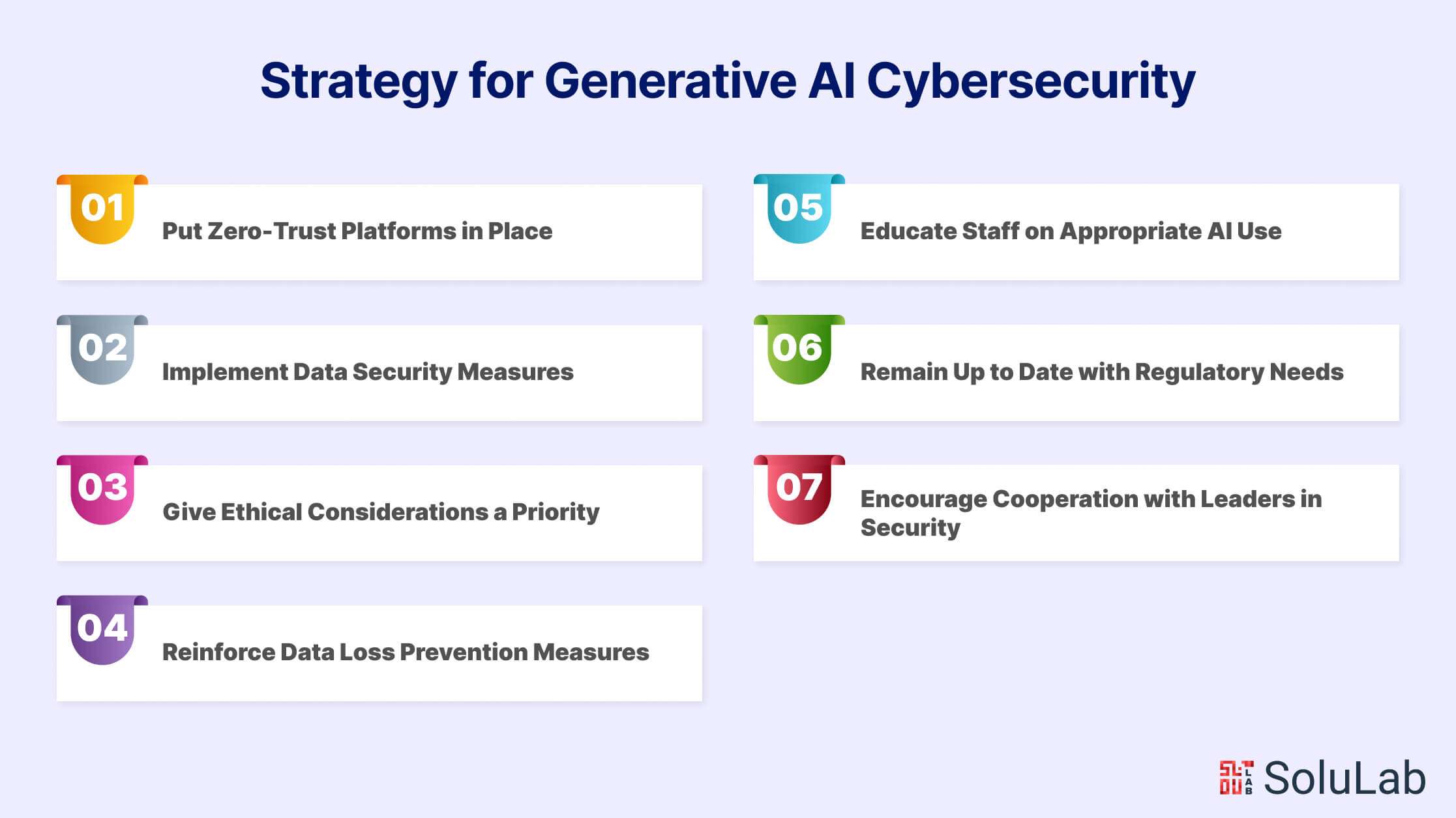
In order to fully benefit from generative AI security, companies need to take a proactive, all-encompassing strategy to generative AI cybersecurity. The following are some crucial methods for reducing risks:

  • Put Zero-Trust Platforms in Place

The complex cyber threats linked to generative AI may be too advanced for standard antivirus software to handle. Anomaly detection-based zero-trust systems can improve threat identification and mitigation, reducing the likelihood of cybersecurity breaches.

  • Implement Data Security Measures

Controls must be incorporated into the model-building procedures in order to reduce hazards. Companies must set aside enough funds to guarantee that models abide by the strictest security requirements. In order to manage AI initiatives, tools, and teams while reducing risk and guaranteeing adherence to industry standards, data governance frameworks should be put in place.

  • Give Ethical Considerations a Priority

When using Generative AI, corporate operations need to prioritize ethical issues. Organizations should include ethical concerns in their operations in order to reduce prejudice and guarantee the ethical usage of technology. Ignoring ethical issues can cause data to become accidentally biased, which can produce AI products that are discriminatory.

  • Reinforce Data Loss Prevention Measures

To properly secure digital assets, endpoints, and perimeters must have improved data loss prevention policies. Preventing unwanted access and data breaches may be achieved by the use of encryption and access restrictions, as well as routine audits and risk assessments.

  • Educate Staff on Appropriate AI Use

Workers are essential to maintaining the ethical use of generative AI and advancing generative AI cybersecurity. Employee understanding of the dangers and possible effects on data security and privacy may be improved by offering Cyber Security Course and training on the appropriate and safe use of AI technology. Risks may be considerably reduced by giving staff members the tools they need to assess generative AI results critically and follow best practices.

  • Remain Up to Date with Regulatory Needs

Laws and rules pertaining to data protection and privacy apply to generative AI. Companies need to be aware of the most recent laws, including CPRA, GDPR, and industry-specific standards. It is imperative to comply with these requirements in order to prevent noncompliance and possible fines.

  • Encourage Cooperation with Leaders in Security

Organizations may successfully handle the cybersecurity concerns related to generative AI by working closely with security executives. Through proactive efforts such as risk identification, mitigation strategy development, and corporate policy enforcement, businesses may enhance generative AI cybersecurity by safeguarding data privacy and security.
Generative AI Developers

Final Words

Generative AI opens up vast prospects for innovation and advancement across sectors. However, enterprises must not underestimate the significance of cybersecurity and data privacy. Organizations may benefit from generative AI while limiting possible hazards by taking a proactive approach to cybersecurity, installing strong controls, and addressing ethical issues. Staying compliant with legislation, educating personnel, and developing partnerships with security professionals are all critical steps toward ensuring the responsible and secure usage of generative AI in the digital age.

SoluLab- a Generative AI development company provides modern generative AI services to support cybersecurity efforts with unique solutions. Our team of skilled AI developers harnesses the power of advanced algorithms to develop robust systems capable of detecting and mitigating emerging threats, including deepfakes and AI-generated cyberattacks. With SoluLab, organizations can hire expert AI developers to create tailored cybersecurity solutions that safeguard digital assets and enhance resilience against evolving cyber threats. Take a proactive step in securing your digital infrastructure today by partnering with SoluLab for your generative AI cybersecurity needs.

FAQs

1. What is generative AI, and how does it relate to cybersecurity?

Generative AI refers to a subset of Artificial Intelligence that focuses on generating new content, such as images, text, or even videos, that mimic real data. In cybersecurity, generative AI is crucial for detecting and combating emerging threats like deepfakes and AI-generated malware, as it can help in creating robust defense mechanisms against these evolving cyber risks.

2. How does generative AI enhance traditional cybersecurity measures?

Generative AI adds an extra layer of protection by leveraging advanced algorithms to identify patterns and anomalies in large datasets more efficiently than traditional methods. This enables faster detection of cyber threats and enables cybersecurity professionals to proactively address potential vulnerabilities before they are exploited.

3. What are some potential risks associated with the use of generative AI in cybersecurity?

While generative AI offers significant benefits, its misuse can lead to the creation of sophisticated cyber threats, such as convincing deepfake videos or AI-generated phishing emails. Additionally, there are concerns about the ethical implications of using AI to create deceptive content and the potential for AI systems to be manipulated or biased.

4. How can organizations leverage generative AI in their cybersecurity strategies?

Organizations can integrate generative AI into their cybersecurity frameworks by implementing AI-powered threat detection systems, deploying AI-driven authentication mechanisms, and utilizing AI-generated simulations to test the resilience of their networks against cyberattacks.

5. How does SoluLab contribute to generative AI in cybersecurity?

SoluLab offers comprehensive generative AI services that empower organizations to strengthen their cybersecurity posture. By leveraging its expertise in AI development, SoluLab helps businesses deploy advanced algorithms tailored to detect and mitigate emerging cyber threats effectively. With a team of skilled AI developers, SoluLab enables organizations to stay ahead of cyber threats and safeguard their digital assets effectively.

The Evolution of AI in Cybersecurity: From Rules to Deep Learning

The Evolution of AI in Cybersecurity: From Rule Based Systems to Deep Learning

In the ever-expanding digital landscape, the importance of robust cybersecurity measures cannot be overstated. With cyber threats becoming increasingly sophisticated, the need for intelligent, adaptable defense mechanisms has grown exponentially. Artificial Intelligence (AI) has emerged as a game-changer in this realm, revolutionizing the way we protect our digital assets. 

This blog delves into the captivating journey of AI in cybersecurity, tracing its evolution from the rudimentary rule-based systems to the cutting-edge realm of deep learning.

Rule-Based Systems in Cybersecurity

Before AI made its presence felt, cybersecurity heavily relied on rule-based systems. These systems operated on predefined sets of rules and signatures. They were effective to some extent in thwarting known threats but had glaring limitations, which is why many companies today depend on managed IT services Dallas providers for proactive protection. Rule-based systems struggled with zero-day attacks and evolved threats that didn’t fit neatly into predetermined patterns.

For example, an antivirus software employing rule-based systems could detect and quarantine a virus only if it matched a predefined signature. If a new strain of malware emerged, the system remained blind to it until a new rule was created. This reactive approach left systems vulnerable during the crucial time gap between a new threat’s emergence and the update of the security rules.

Machine Learning in Cybersecurity

Machine learning marked the first significant leap in AI cybersecurity. Unlike rule-based systems, machine learning systems/algorithms could learn from data. They analyzed patterns, anomalies, and behaviors to detect threats, even those with no predefined rules. This proactive approach opened new possibilities in the battle against cyber adversaries.

Supervised learning, a branch of machine learning, allowed security systems to be trained on labeled datasets. By learning from historical data, these systems could make informed decisions about the nature of incoming data and identify potential threats. For instance, a supervised learning model could identify known phishing emails by recognizing common characteristics shared among them.

Unsupervised learning algorithms, on the other hand, didn’t rely on labeled data. They analyzed incoming data to identify anomalies or deviations from the norm. This made them effective in detecting novel threats or insider attacks, where the patterns might not be predefined.

Semi-supervised learning blended the best of both worlds, combining labeled data for known threats with unsupervised techniques to uncover new ones. This approach improved detection accuracy and reduced false positives.

Reinforcement learning, often associated with AI in gaming, found its application in cybersecurity as well. It enabled systems to adapt and learn in real-time, making them more agile in responding to evolving threats.

CTA1

Emergence of Deep Learning

Deep learning, a subset of machine learning, brought about a paradigm shift in AI cyber-security. At its core were neural networks, models inspired by the human brain’s interconnected neurons. These networks could process vast amounts of data, automatically extract features, and make complex decisions.

Neural networks, with their ability to analyze unstructured data like images, texts, and network traffic, became invaluable in cybersecurity systems. They excelled in tasks such as anomaly detection, where identifying subtle deviations from normal behavior was critical. Deep learning models could recognize not only known malware but also previously unseen variants based on their underlying characteristics.

Deep learning also revolutionized the fight against phishing attacks. Neural networks could analyze email content, sender behavior, and contextual information to flag potentially malicious emails, even if they lacked familiar hallmarks of phishing attempts.

The use of deep learning in malware detection was another breakthrough. These models could identify malicious code by scrutinizing its structure and behavior, without relying on predefined signatures.

Challenges in Implementing Deep Learning for Cybersecurity

Challenges in Implementing Deep Learning for Cybersecurity

While deep learning has ushered in a new era of AI development companies, it’s not without its challenges and ethical considerations.

  • Data Quality and Quantity: Deep learning models hunger for data. In AI cybersecurity services, obtaining large, high-quality labeled datasets for training can be a significant hurdle. Additionally, the fast-paced nature of cyber threats demands real-time data, making the challenge even more daunting.
  • Interpretability: Deep learning models, particularly deep neural networks, are often considered “black boxes.” Their decision-making processes are complex and not easily interpretable. This opacity can be problematic when trying to understand why a model flagged a certain activity as malicious, hindering incident response and forensic analysis.
  • Adversarial Attacks: Cyber adversaries are getting smarter. They can craft attacks specifically designed to bypass deep learning models. Adversarial attacks manipulate input data in subtle ways to deceive the model, making them a serious concern.
  • Resource Intensiveness: Training and deploying deep learning models require substantial computational resources. This can be a roadblock for smaller organizations with limited IT infrastructure.

Ethical Concerns Surrounding AI in Cybersecurity

  • Privacy: AI systems, particularly those using deep learning, can process vast amounts of personal data. The line between legitimate cybersecurity monitoring and privacy invasion can become blurry. Striking the right balance between security and privacy is crucial.
  • Bias and Fairness: Deep learning models are susceptible to biases present in training data. If the data used to train these models is biased in terms of race, gender, or other attributes, the AI cybersecurity system can unintentionally discriminate against certain groups.
  • Transparency: As mentioned earlier, deep learning models are often seen as black boxes. This lack of transparency can hinder accountability and make it difficult to comply with regulations that require explanations for decisions made by AI systems.
  • Over-Reliance on AI: While AI can enhance cybersecurity, an over-reliance on AI systems without human oversight can lead to complacency. Cybersecurity professionals should always be in the loop to make critical decisions and understand the context.

Real-World Examples

Despite these challenges and ethical concerns, numerous organisations have embraced deep learning for cybersecurity, achieving remarkable results:

  • Darktrace: Darktrace utilises unsupervised machine learning and AI to detect and respond to cyber threats in real-time. Its “Enterprise Immune System” learns and understands the unique behaviours of a network and can identify deviations indicative of attacks.
  • Cylance: Acquired by BlackBerry, Cylance employs AI-driven threat detection to prevent malware and other security threats. Its approach is based on Generative AI tools trained to recognize both known and unknown threats.
  • FireEye: FireEye’s Mandiant Threat Intelligence uses AI and machine learning for cybersecurity i.e. to detect and respond to cyber threats. It leverages deep learning for rapid threat detection and offers automated response capabilities.
  • Google’s Chronicle: Chronicle, a subsidiary of Google, offers a cybersecurity platform that employs machine learning to help organizations analyze and detect threats in their network data.

These examples illustrate the practical application of deep learning in real-world cybersecurity scenarios. Organizations are increasingly relying on AI to bolster their defenses and respond swiftly to emerging threats.

The Future of AI in Cybersecurity

Future of AI in Cybersecurity

As we look ahead, the future of AI in cybersecurity promises continued evolution and transformation. Several key trends and developments are shaping the landscape:

  • AI-Driven Threat Hunting: AI-powered threat-hunting tools are becoming more sophisticated. Implementing these AI-driven detection capabilities typically requires robust managed security operations center (SOC) services that combine automated monitoring with expert human oversight.
  • Enhanced Anomaly Detection: Deep learning models are continuously improving in their ability to detect subtle anomalies and deviations from normal behavior, making them invaluable for identifying sophisticated threats.
  • Natural Language Processing (NLP): NLP techniques are being applied to cybersecurity to analyze text-based threats, such as phishing emails or social engineering attempts. This helps in the early detection and mitigation of such threats.
  • Automated Incident Response: AI is being used to automate incident response processes. AI-driven systems can not only detect threats but also take actions to mitigate them in real time, reducing the burden on cybersecurity teams.
  • AI in IoT Security: With the proliferation of Internet of Things (IoT) devices, AI is being used to secure these interconnected devices and networks. Machine learning models can detect unusual behavior or vulnerabilities in IoT ecosystems.
  • Zero Trust Security: AI plays a pivotal role in implementing the zero-trust security model. It continuously verifies the identity and security posture of devices and users accessing a network, enhancing overall security.
  • Federated Learning: This emerging approach allows organizations to collaborate on threat detection without sharing sensitive data. Generative AI models are trained collectively, enhancing the security of shared threat intelligence.

The Evolving Role of Human Experts

While AI is a powerful ally in the fight against cyber threats, human expertise remains irreplaceable:

  • Contextual Understanding: Human experts bring context to cybersecurity. They can understand the unique nuances of an organization’s environment, making judgment calls that AI may struggle with.
  • Adaptation and Innovation: Cyber adversaries continually evolve their tactics. Human cybersecurity professionals can adapt strategies and innovate responses, staying one step ahead.
  • Ethical Decision-Making: Ethical considerations in cybersecurity often require human judgment. Decisions regarding privacy, compliance, and the ethical use of AI are guided by human values.
  • Complex Investigations: In complex cyber incidents, human investigators are essential. They can piece together the puzzle, combining technical analysis with a broader understanding of the threat landscape.

In essence, the future of AI in cybersecurity is a collaboration between human expertise and artificial intelligence. AI enhances the capabilities of cybersecurity professionals, enabling them to work more efficiently and effectively.

CTA2

Conclusion

The evolution of AI in cybersecurity, from rule-based systems to deep learning, has been a remarkable journey. It has equipped us with powerful tools to defend against an ever-evolving threat landscape. As AI continues to advance, we must remain vigilant, addressing challenges such as data privacy and bias, while also recognizing the crucial role that human experts play in keeping our digital world secure.

In this era of rapid technological change, the fusion of human intelligence and AI-driven automation will be the key to staying resilient in the face of cyber threats. As we move forward, the synergy between human expertise and AI innovation will be our strongest defense in the dynamic and complex world of cybersecurity.

SoluLab, a forward-thinking technology company, is renowned for innovative solutions across domains, including cybersecurity. They excel in AI development services and hire AI developers, contributing significantly to AI’s evolution in cybersecurity. Leveraging advanced AI and deep learning, they shape a proactive defense against evolving threats. SoluLab exemplifies how tech companies integrate AI to create adaptive, proactive, and robust defense mechanisms, shaping the future of cybersecurity and providing AI development services and AI developer hiring solutions for organizations.

FAQs

1. What is the primary difference between rule-based systems and deep learning in cybersecurity?

Rule-based systems rely on predefined rules and signatures to detect threats, while deep learning uses neural networks to analyze data and make decisions based on learned patterns. Deep learning is more adaptable to evolving threats.

2. How does AI in cybersecurity address ethical concerns, such as privacy and bias?

AI in cybersecurity must be implemented with strict privacy policies and data protection measures. To address bias, diverse and unbiased training data should be used, and models should be regularly audited for fairness.

3. Can AI completely replace human cybersecurity professionals?

No, AI complements human expertise but cannot replace it entirely. Human professionals bring contextual understanding, ethical decision-making, and adaptability that AI lacks. They play a vital role in complex investigations and decision-making.

4. What are some real-world examples of organisations successfully using AI for cybersecurity?

Organisations like Darktrace, Cylance, FireEye, and Google’s Chronicle have successfully implemented AI-driven cybersecurity solutions. These companies employ AI for threat detection, incident response, and real-time monitoring.

5. What are the key trends shaping the future of AI in cybersecurity?

The future of AI in cybersecurity is marked by trends such as AI-driven threat hunting, enhanced anomaly detection, natural language processing (NLP), automated incident response, AI in IoT security, zero-trust security models, and federated learning for threat intelligence sharing. These trends aim to bolster cyber defenses and adapt to evolving threats.

The Role of Artificial Intelligence (AI) in Modern Cybersecurity

AI in Modern Cybersecurity

In today’s environment, artificial intelligence (AI) has completely changed the game.  The use of artificial intelligence (AI) in cybersecurity problems is quite beneficial. It facilitates the development of intelligent agents, which might be software or hardware. These agents are made to observe, learn, and make deft judgments in order to cope with certain security concerns in an efficient manner. They are able to detect vulnerabilities in intricate code, observe peculiar trends in user login behavior, and even detect novel forms of malicious software that conventional tools could overlook.

Intelligent agents analyze large amounts of data in order to spot trends. These insights are applied in defensive systems to examine incoming data, including previously unseen information.

AI is becoming more and more important in cybersecurity, and many businesses are using it as a vital component of their security plans.

Why Does AI Matter For Cybersecurity?

AI’s capacity to offer sophisticated threat detection, automate responses, adjust to changing threats, and manage extensive data analysis makes it crucial for cybersecurity. Al in Modern Cybersecurity tactics is becoming more and more necessary as cyber threats continue to change in order to maintain strong and efficient defenses.

  • Advanced Threat Detection

More precise and advanced threat detection is made possible by AI. Large datasets may be analyzed by machine learning algorithms, which can then quickly spot trends, abnormalities, and possible dangers. This proactive strategy makes it possible to identify new risks early on, even complex and yet undetected attacks.

  • Behavioral Analytics

AI in Cybersecurity is particularly good at behavioral analytics, which examines trends in network activity and user behavior. AI security systems may identify abnormalities or departures from the norm that can point to a security risk by setting up a baseline of typical activity. This assists in detecting zero-day attacks and insider threats that conventional security procedures could overlook.

  • Automated Reaction to Events

Processes for automating incident response are made easier by AI. AI systems have the capacity to quickly and efficiently respond to security problems because they can learn from past data and adjust to new information. Automated reactions can lessen the effects of an attack and cut down on the amount of time needed to find, stop, and fix security breaches.

  • Modular Security Protocols

Security systems may change and adapt thanks to artificial intelligence (AI) when the threat shifts. Artificial intelligence (AI) can adapt and upgrade its algorithms on a constant basis to keep ahead of new dangers as they arise. This flexibility is essential to keeping strong Al for Cybersecurity protections in place.

  • Extensive Data Interpretation

Massive volumes of data are produced by cybersecurity from a variety of sources, including network traffic, user activity, and logs. Large-scale data handling and analysis are capabilities of AI, which it may use to spot patterns and trends that could point to a security risk. Big data processing skills are necessary for efficient cybersecurity in today’s networked and data-driven workplaces.

  • Cut Down on False Positives

AI can assist in lowering the quantity of security warnings that are false positives. Conventional security systems frequently produce false alerts, which can cause alert fatigue and cause users to miss actual dangers. Artificial intelligence (AI) aids in differentiating between real dangers and false alarms by contextualizing data and understanding typical behavior patterns.

Related: Evolution of AI in Cybersecurity

  • Constant Observation and Flexible Education

AI makes it possible to continuously monitor systems and networks, giving real-time insights on any security threats. Furthermore, AI systems are able to update their knowledge of typical behavior over time, adjust to changes in the environment, and learn from current actions.

Is Cybersecurity Automation Safe?

Like every technology, cybersecurity automation has its drawbacks and concerns, but it may also be a useful and effective strategy. Although there are many advantages to automating cybersecurity, it’s important to find a balance and combine automation with human knowledge. A strong defense against the wide range of cyber threats requires the cooperation of automated technologies and knowledgeable cybersecurity experts.

1. Quickness and Effectiveness

Cybersecurity process speed and efficiency may be greatly increased by automation. When compared to human approaches, automated systems are far faster at analyzing large volumes of data, identifying dangers, and responding to incidents. This speed is essential given how quickly cyber threats are changing.

2. Cut Down on Human Error

Automation lessens the possibility of human mistakes, which frequently contribute to cybersecurity events. Automated systems reduce the possibility of errors that might result in security vulnerabilities by reliably adhering to predetermined security procedures.

3. 24×7 Observation And Reaction

Constant network and system monitoring is made possible by automated cybersecurity solutions, which offer a preventative measure against any attacks. Maintaining this ongoing watchfulness manually is difficult, particularly in expansive and complicated IT infrastructures.

4. The Ability To Scale

Systems that are automated can readily grow to manage a lot of data and a variety of security jobs. Scalability like this is crucial for enterprises with intricate infrastructures and lots of network traffic.

5. Typical and Repeated Tasks

Routine and repetitive duties are best left to automation, freeing up human cybersecurity experts to concentrate on more intricate and strategic areas of security. This raises job happiness and makes the best use of human knowledge.

But there are things to think about and possible difficulties:

6. Inaccurate Positive Results

If automation is used excessively, there may be more false positives—legitimate actions that are mistakenly reported as possible threats. Cybersecurity experts may get alert fatigued as a result, missing real dangers.

7. Intelligent Opponents

The sophistication of cyber attackers is on the rise, and some of them may deliberately craft assaults that evade automated detection systems. It still takes human judgment and analysis to spot sophisticated, focused assaults.

CTA1

8. Legal and Ethical Issues to Consider

Legal and ethical concerns arise when cybersecurity procedures are automated, especially when it comes to autonomous decision-making. In cybersecurity, figuring out how much autonomy and accountability is right is a constant struggle.

How Can Artificial Intelligence Help Cybersecurity Professionals?

Security experts benefit from artificial intelligence (AI) in cybersecurity because it can recognize complex data patterns, provide insightful guidance, and enable automatic problem-solving. It facilitates decision-making, expedites incident response, and makes it simpler to identify possible threats.

Three basic approaches are used by AI to handle complex security issues:

1. Pattern Recognition

AI excels at identifying and classifying data patterns that humans may find challenging to comprehend. Security experts may examine these patterns more closely thanks to this display.

2. Practical Suggestions

Based on the patterns found, intelligent computer programs (also known as intelligent agents) recommend doable actions. This makes it easier for security experts to know what to do.

3. Independent Mitigation

Certain intelligent algorithms are capable of resolving security issues on their own, eliminating the need for security experts to do it in person.

These astute initiatives seek to improve even the most proficient security personnel and well-equipped facilities that a firm may currently possess. They strengthen the defense as a whole by providing additional assistance. A crucial first step in protection is identifying vulnerabilities that an attacker may exploit. Artificial intelligence (AI) improves the accuracy of source code scanning, which reduces errors and aids engineers in identifying security issues prior to deploying programs.

AI aids in danger response as well. Assisting the security team with specifics and threat intelligence, intelligent AI systems provide information. The team can react to situations more swiftly and efficiently with the additional information, which improves incident response overall.

Al in Modern Cybersecurity transforms how businesses safeguard their systems and data, going beyond conventional techniques. Security experts grow more adept at identifying concerns, responding to risks before they become serious problems, and using intelligent automation to keep one step ahead of cyber dangers in a constantly evolving environment by combining Al for Cybersecurity.

What Are The Benefits Of AI For Cybersecurity?

Benefits Of AI For Cybersecurity

Because AI offers real-time monitoring, automated incident response, behavioral analytics, and enhanced threat identification, cybersecurity benefits greatly from AI. However, we must examine how cybersecurity experts are equipped with more potent tools to combat the ever-changing environment of cyber threats as a result of the integration of AI security. The methods to improve human teams’ intelligence in several cybersecurity fields are listed below, including:

1. Modular Security Protocols

By constantly learning and upgrading their algorithms, AI systems are able to adjust to changes in the threat scenario. Compared to static security measures, this flexibility offers more protection against emerging and changing cyber threats.

Related: Importance of Generative AI in Cybersecurity

2. Identification of Phishing

AI security improves phishing attempt detection by examining email content, sender behavior, and other aspects. Employee vulnerability to social engineering attacks can be decreased by using machine learning algorithms to detect trends linked to phishing emails.

3. Asset Arrangement

AI can guarantee an accurate and complete log of all the devices, users, and apps that are gaining access to information systems. Sort and assess their significance to the company in order to ensure efficient administration and organization.

4. Intelligence regarding threats

Keep up with threats that are particular to your sector and the world at large so that firms may rank security measures according to likelihood and possible impact. This enhances security by enabling strategic decision-making.

5. Assessment of Security Controls

To strengthen the overall security posture, assess the influence and efficacy of the security tools and procedures currently in place. This entails evaluating the effectiveness of our present security measures and pinpointing areas in need of development.

6. Breach Risk Prediction

By taking into account variables like IT asset inventory, threat exposure, and the efficacy of security controls, AI may assist in anticipating vulnerabilities and possible security breaches. By being proactive, resources may be allocated to reduce hazards before they become significant occurrences.

By integrating Al in Modern Cybersecurity, companies may improve resilience against cyberattacks, fortify their defenses, and enable effective communication and decision-making in the risk environment.

Conclusion

Artificial intelligence (AI) is revolutionizing the field of cybersecurity, offering advanced tools and techniques to combat evolving threats. From real-time threat detection and response to enhanced security protocols, AI applications in cybersecurity are proving to be indispensable. The benefits of AI in cybersecurity are vast, including improved accuracy, speed, and efficiency in identifying and mitigating risks. As cyber threats continue to grow in complexity, the integration of AI in cybersecurity strategies will be essential for organizations seeking to protect their digital assets.

At SoluLab, we are at the forefront of this technological revolution. Our expertise in AI and cybersecurity enables us to provide cutting-edge solutions tailored to your specific needs. We leverage the latest AI technologies to enhance your security posture, ensuring your organization is well-protected against cyber threats. Partner with SoluLab an AI development company and experience the future of advanced cybersecurity with AI. Contact us today to learn how we can help you safeguard your digital environment.

FAQs

1. What is the role of AI in modern cybersecurity?

AI in modern cybersecurity plays a crucial role by automating threat detection, enhancing response times, and providing advanced analytics to identify potential security breaches before they occur. Professionals looking to build expertise in these evolving tactics are increasingly pursuing programs like an online cybersecurity masters to stay updated and competitive in the field.

2. How does AI improve cybersecurity threat response?

AI improves cybersecurity threat response by analyzing vast amounts of data in real time, identifying anomalies, and providing automated responses to mitigate threats quickly and efficiently.

3. What are the benefits of AI in cybersecurity?

The benefits of AI in cybersecurity include faster threat detection, reduced response times, improved accuracy in identifying threats, and the ability to handle large volumes of security data without human intervention.

4. What AI applications are commonly used in cybersecurity?

Common AI applications in cybersecurity include machine learning algorithms for anomaly detection, predictive analytics for threat forecasting, and natural language processing for analyzing security reports and identifying potential risks.

5. How does AI contribute to advanced cybersecurity strategies?

AI contributes to advanced cybersecurity strategies by providing deeper insights through data analysis, enabling proactive threat prevention, and enhancing the overall effectiveness of security protocols and measures.

6. What is the role of AI in cybersecurity and how does it enhance security measures?

The role of AI in Cybersecurity involves automating the detection and response to cyber threats, enhancing the accuracy of threat identification, and providing continuous monitoring to ensure robust security measures are in place.

7. Can you explain the impact of AI for cybersecurity in handling sophisticated cyber threats?

AI in Cybersecurity significantly impacts the handling of sophisticated cyber threats by leveraging machine learning to recognize patterns, predict potential attacks, and implement automated responses, thereby strengthening an organization’s defense mechanisms
