Talk to an Expert

How Is AI Healthcare in the UAE Elevating Medical Efficiency?

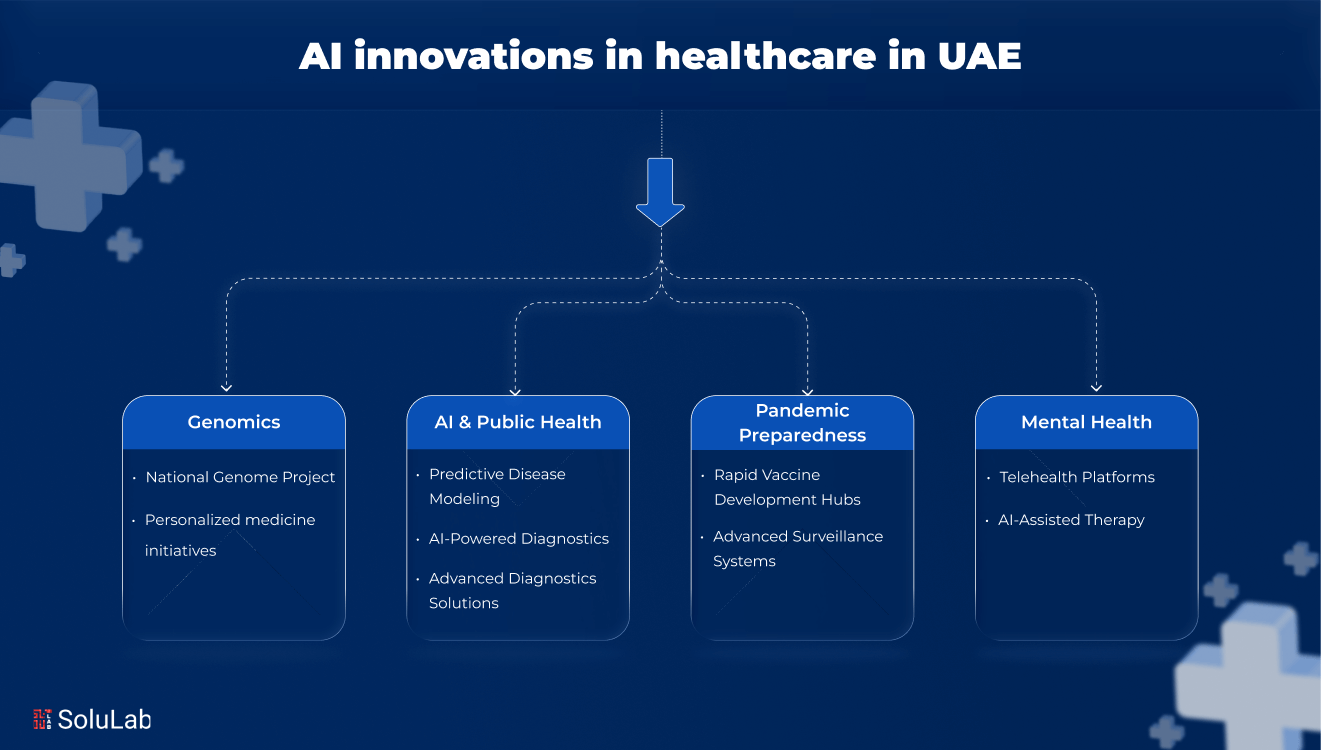
AI innovations in healthcare in UAE

Artificial intelligence isn’t just entering hospitals; it’s taking on real roles in surgeries, diagnostics, hospital operations, and even virtual patient care. In the UAE, this isn’t a concept for tomorrow. It’s already in motion. With a national AI strategy and major investments in digital health, the country is fast becoming a global hub for AI innovations in healthcare.

From AI-powered genomic analysis that predicts diseases early to generative AI in healthcare creating personalized treatment plans, the UAE is redefining modern medicine. It’s all about faster diagnoses, smarter systems, and better outcomes.

So how exactly is AI transforming care in the UAE? What does it mean for patients, doctors, and hospitals? And who’s behind these AI-based healthcare applications? Let’s dive in and find out.

What Makes The UAE a Global Leader In Adopting AI in Healthcare So Quickly?

Because the UAE doesn’t wait for change, it builds it!

While many countries are still drafting AI roadmaps, the UAE has already rolled out a national AI strategy, invested billions into digital health, and made AI a central pillar of its healthcare vision. The leadership is clear: smarter tech means better care.

Add to that a diverse population, world-class infrastructure, and a government that moves fast, and you’ve got the perfect testing ground for AI-based healthcare applications. Whether it’s AI in diagnostics, hospital management, or personalized medicine, the UAE is turning ambition into real, working systems and doing it at record speed.

CTA1

Game-Changing Medical Innovations for Healthcare in the UAE

From AI-driven diagnostics to culturally tuned mental health tools, the UAE is embracing healthcare innovation at every level. These breakthroughs are not just futuristic ideas; they are real solutions transforming how care is delivered, personalized, and experienced across the country.

Genomics–Powered Personalization

  • AI-Powered Polygenic Risk Scoring: Uses machine learning and genetic markers to predict a person’s lifetime risk for complex diseases like diabetes, cancer, and heart conditions.
  • Personalized Drug Response Algorithms: AI evaluates genetic variants to predict how patients will respond to medications, reducing trial-and-error and adverse drug reactions.
  • Nutrigenomics Platforms: AI-driven systems that combine DNA analysis with lifestyle data to deliver custom diet and fitness plans.
  • Cancer Genomics Decision Tools: AI models trained on tumor genomics help oncologists personalize treatments by targeting mutation-specific therapies.

 AI-Driven Public Health

  • AI Epidemiological Forecasting Models: Predicts potential disease outbreaks by analyzing large-scale data sources like travel, climate, and human behavior, helping governments act early.
  • AI-Powered Environmental Health Sensors: Tracks real-time air, water, and soil quality using IoT and AI to flag emerging public health threats.

Pandemic Preparedness

  • Wastewater Surveillance with AI Analytics: Analyzes viral and bacterial loads in sewage systems to detect outbreaks before they reach hospitals.
  • AI-Enhanced Pathogen Genome Tracking: Uses AI to monitor mutations in viruses (like SARS-CoV-2) during pandemics, enabling rapid vaccine updates and targeted interventions.

Culturally-Tuned AI for Mental Health

  • Multilingual Mental Health Chatbots: AI chatbots are designed with cultural awareness, supporting users in different languages and respecting regional values and communication styles.
  • AI-Curated VR Therapy for PTSD and Phobias: Combines virtual reality with adaptive AI to deliver immersive therapy sessions that adjust in real time to a user’s emotional and cultural needs.

Read More: AI In Dubai’s Public Services

How AI in Healthcare is Improving Lives in the UAE?

How AI in Healthcare is Improving Lives in UAE

Medical innovation sounds big and technical, but what does it do for people like you and me? In the UAE, the benefits of AI and genomics are already making care faster, smarter, and more personalized. Here’s how:

1. Know Your Health Risks Early

Knowing your risk of diabetes, heart disease, or cancer years in advance, based on your DNA, is now possible. That’s already achievable in the UAE thanks to AI-powered genetic testing. It gives you a chance to make changes early and avoid long-term health issues.

2. Get Medications That Work for You

Ever tried a medicine that didn’t help or worse, made you feel worse? AI in UAE healthcare is now assisting doctors to match medications to your genetic makeup. That means fewer side effects, faster recovery, and no more wasted time on trial and error.

3. Care That Feels Personal

Whether you’re Emirati, Indian, Filipino, or British, healthcare in the UAE is becoming more culturally aware. AI chatbots and wellness apps now speak your language, understand your lifestyle, and tailor recommendations that feel relevant to you.

4. Safer, Smarter Cities

AI-powered sensors in cities like Dubai and Abu Dhabi track air quality and potential health hazards in real time. That means faster alerts about pollution spikes, water safety, or potential outbreaks before they reach your doorstep.

5. Better Outbreak Preparedness

The UAE learned from COVID-19. Today, AI monitors sewage systems, tracks virus mutations, and predicts where illness might spread next. This helps keep communities ahead of the curve so you’re not caught off guard.

6. Smarter Hospitals and Surgery

AI is streamlining hospital operations in the UAE, from smart facility design and patient flow to inventory management and supply tracking. AI-powered robots are also assisting with care tasks, improving efficiency and easing staff workloads.

7. Mental Health That Understands You

Mental health support in the UAE is becoming more accessible and culturally respectful. AI-powered chatbots and VR therapy tools can now recognize emotional distress, offer guidance in your preferred language, and respond in a way that feels human, not robotic.

Read Also: How Founders and Businesses Can Leverage Digital Asset Treasury in UAE?

Ethics and AI Regulations in Healthcare

Let’s be real, AI doesn’t come without ethical baggage. But the UAE isn’t ignoring it. The country is actively shaping frameworks to ensure AI is not only powerful but also responsible.

  • Protecting Patient Data in a Connected World: As healthcare data travels across borders, privacy becomes a global concern. The UAE is drafting policies that ensure medical data used in AI systems stays secure, anonymized, and ethically sourced without slowing down collaboration or innovation.
  • Building Bias-Free AI for a Diverse Population: AI in healthcare must work for everyone, not just the demographic it was trained on. In the UAE, systems are being audited and stress-tested for fairness to prevent discrimination based on race, gender, language, or socioeconomic background.
  • Who’s Responsible When AI Gets It Wrong: If an AI tool makes the wrong call on a diagnosis, who’s liable: the developer, the doctor, or the hospital? The UAE is addressing these grey areas by working on legal frameworks to define accountability as AI becomes more involved in clinical decision-making.

Artificial Intelligence at Every Step of the Patient Journey

AI isn’t just used in high-tech labs or emergency rooms. In the UAE, it’s becoming part of the patient journey from the very first symptom search to long-term recovery.

1. Smarter Symptom Checks and Triage

Many clinics now offer smart digital assistants that help patients assess symptoms and recommend next steps. These tools reduce unnecessary ER visits and connect patients to the right care faster.

2. AI as Your Doctor’s Second Brain

Doctors are using AI to double-check diagnoses, analyze scans, and personalize treatment plans based on real-time data and global research. It’s not replacing physicians; it’s making them faster, more accurate, and better informed.

3. Keeping Tabs on Recovery After You Leave the Hospital

From wearables to mobile apps, AI tracks recovery and alerts doctors if something’s off. This is a game-changer for managing chronic conditions like diabetes, heart disease, or post-surgical recovery, especially in remote areas or busy urban centers.

How SoluLab Can Help Build the Future of Healthcare in the UAE?

All these breakthroughs, like personalized medicine, AI-powered hospitals, and mental health chatbots, don’t happen on their own. They need expert hands to design, build, and scale them. That’s where SoluLab can assist.

As a leading AI development company in the UAE, SoluLab helps healthcare providers, hospitals, startups, and government projects turn ambitious ideas into real, working solutions. Whether you’re looking to develop:

  • AI-based healthcare applications
  • Custom generative AI tools for diagnostics or triage
  • AI-powered patient engagement platforms or hospital management systems
  • Robotics-integrated systems for elderly care or surgery support
  • Or even a multilingual AI chatbot tuned for cultural sensitivity in the UAE

SoluLab has the technical depth, domain expertise, and UAE-specific healthcare experience to make it happen.

CTA2

Conclusion

The UAE isn’t just adopting AI in healthcare; it’s actively shaping what the future of medicine looks like. From genomics-powered personalization to AI-driven public health strategies, pandemic readiness, mental health support, and smart hospital infrastructure, the country is building a system that’s faster, smarter, and more human-centered.

By blending advanced technology with cultural sensitivity and real-world needs, the UAE is proving that healthcare innovation isn’t just about machines, it’s about people. And in that vision, AI is becoming not just a tool, but a trusted partner in care.

Get in touch with SoluLab today and start building AI solutions that will shape the future of healthcare in the UAE!

FAQs

1. How is AI improving medical efficiency in the UAE?

AI streamlines hospital operations, automates administrative tasks, assists in accurate diagnostics, predicts patient outcomes, and optimizes resource management, reducing delays and costs.

2. What are the benefits of AI in UAE hospitals?

Key benefits include faster and accurate diagnosis, improved patient outcomes, optimized resource allocation, reduced human error, and better decision-making for doctors and management.

3. Can AI assist doctors without replacing them?

Absolutely. AI acts as a support system, providing insights, diagnostics, and predictive analytics, while doctors make the final clinical decisions, ensuring human oversight.

4. How is AI helping with patient monitoring in the UAE?

AI-powered wearables and remote monitoring systems track vital signs in real time, alerting doctors to potential issues and allowing proactive care, reducing hospital readmissions.

5. How can SoluLab help implement AI in healthcare?

SoluLab builds custom AI solutions tailored for healthcare providers in the UAE. From predictive analytics and smart diagnostics to workflow automation, SoluLab delivers scalable, secure, and patient-centric AI applications that elevate efficiency and improve outcomes.

 

From Cancer to COVID: How AI Agents in Healthcare Are Saving Lives in 2025

AI Agents in Healthcare - Tackling Cancer and COVID

In 2025, artificial intelligence (AI) is doing more than assisting doctors, it’s changing how healthcare works. From hospitals to health tech startups, everyone is now exploring how to use AI agents in healthcare to make care faster, smarter, and more personal.

A recent study by McKinsey estimates that AI in healthcare can save $360 billion annually in the U.S. alone by improving efficiency and accuracy. Global spending on AI-powered health-tech is expected to cross $187 billion by 2030, which is a signal that this isn’t just hype; it’s the future.

If you’re a hospital, health-tech startup, or research institute exploring AI, this guide will show you why it’s worth investing in AI agent healthcare solutions and how your business can benefit.

What Are AI Agents in Healthcare?

AI agents are smart software programs that can understand information, make decisions, and take actions, all without human help. In healthcare, they act like digital assistants or analysts. They go through huge amounts of medical data like lab reports, scans, and patient histories to help doctors make faster, more accurate decisions.

These systems are at the heart of how AI agents work in healthcare. They don’t just follow rules, they learn from data and get better over time.

Types of AI Agents in Healthcare

Different types of AI agents are used in hospitals and health tech platforms, depending on the need:

  • Reactive agents – best for AI chatbots in healthcare or symptom checkers.
  • Goal-based agents – help suggest treatment plans based on medical goals.
  • Utility-based agents – used in complex areas like surgical planning or drug testing.

How Do They Help in Real Life?

Thanks to improvements in AI applications in healthcare, these tools now do much more than basic tasks. They can think, adapt, and even talk to patients through voice or chat interfaces.

  • They help in real-time diagnosis and triage.
  • They reduce doctors’ workload by automating reports.
  • They spot patterns that humans may miss in scans or blood tests.

More hospitals and companies are now exploring AI in healthcare as a long-term solution. Whether it’s for robotic surgery, remote consultations, or clinical trials, these tools are becoming the brains behind modern healthcare systems.

Read Also: AI Healthcare in the UAE

How Is AI Used to Predict, Detect, and Treat New Diseases?

Emerging diseases like COVID-19 proved that healthcare needs faster, smarter solutions. This is where AI agents for healthcare truly stand out.

These AI systems help medical teams act faster by analyzing health data, predicting risks, and suggesting treatments in real time. They’re especially useful when dealing with unknown or fast-spreading diseases.

1. Faster Diagnosis and Risk Detection

AI tools analyze patient data and medical scans to catch problems early.

  • AI agent healthcare solutions scan CTs and MRIs to spot early signs of infection
  • AI models identify high-risk patients using real-time health records
  • Predictive tools help hospitals plan ahead during outbreaks

2. Speeding Up Vaccine and Drug Development

AI helped researchers save time during the COVID-19 crisis.

  • AI models found possible vaccine targets faster than manual methods
  • It helped repurpose existing drugs to fight new viruses
  • AI simulations tested how viruses mutate and spread

3. Reaching Remote Areas with Virtual Care

The implementation of AI agents in virtual healthcare helps reach underserved regions.

  • Smart devices collect health data and offer real-time guidance
  • AI assistants do risk assessments from mobile apps
  • Doctors can remotely monitor symptoms and suggest next steps

These AI applications in healthcare are not just an innovation, they’re a necessity. For B2B healthcare providers, AI offers scalable, cost-effective ways to prepare for what’s next.

If you’re building tools for disease control or virtual care, it’s time to invest in AI agent healthcare solutions that are ready for real-world impact.

Can AI Agents Help Find Cures for Cancer, HIV/AIDS, and COVID-19?

Yes and it’s already happening. Today, Healthcare AI agents are helping researchers, hospitals, and biotech firms move faster in finding treatments and potential cures. These agents process massive datasets, simulate results, and improve decision-making across medical research.

Use AI Agent to Predict, Detect, and Treat New Diseases

1. Cancer Treatment & Drug Discovery

AI is helping scientists find new ways to fight cancer faster and more accurately.

  • Simulates how different molecules interact with cancer cells
  • Helps design personalized treatments using patient-specific data
  • Speeds up drug discovery by months or even years

2. HIV/AIDS Prediction & Prevention

Using AI to better target and prevent the spread of HIV/AIDS.

  • Identifies high-risk groups faster than traditional methods
  • Recommends preventive care (e.g., PrEP) using data models
  • Supports screening and detection in remote regions

3. Long COVID Research

AI agents help track and treat the ongoing effects of COVID-19.

  • Analyze patient history to predict long-term risks
  • Personalize rehab and recovery plans
  • Support resource allocation in public health planning

These are real-world agentic AI use cases in healthcare that are reshaping what’s possible in medical science, not years from now, but today!

How Are AI Agents Revolutionizing Oncology?

Cancer is one of the biggest health challenges in the world and every second matters when it comes to diagnosis and treatment. This is where AI agents in healthcare are making a big difference. They help doctors find cancer early, suggest the right treatments, and even assist in developing new medicines.

Here’s how they’re helping:

  • MIT’s Sybil AI model can predict the risk of lung cancer up to 6 years in advance, just by reading CT scans.
  • Autonomous AI tools can scan biopsy and pathology slides to detect tumor grades, which helps doctors decide how to treat each patient.
  • Generative AI is now creating custom cancer drugs in just a few weeks, a process that used to take years.

These tools are fast, smart, and highly accurate. This kind of work is possible only because of the integration of AI agents in healthcare systems that support doctors, labs, and hospitals.

If you’re in the business of cancer diagnostics, treatment planning, or oncology research, now is the time to adopt AI. It’s not just innovation, it’s a real competitive advantage.

Read Also: How Businesses in Every Industry Are Benefiting from AI Agents?

What Are the Broader Applications of AI Agents in Healthcare?

AI agents are not limited to cancer or diagnostics, they’re being used across healthcare systems to make operations smoother, faster, and smarter. These AI applications in healthcare are helping hospitals and health-tech companies cut costs, save time, and serve patients better.

1. Remote Diagnostics with Chatbots

AI-powered chatbots in healthcare are being used for symptom checking, appointment scheduling, and follow-up care, especially in virtual care setups.

  • Reduces doctor-patient wait time
  • Supports telemedicine growth
  • Helps patients get quick answers without staff overload

2. Smarter Resource Allocation

During health emergencies, AI agents for healthcare help predict ICU demand, staff shortage, or equipment needs in advance.

  • Prevents last-minute overloading
  • Helps hospital admins plan better
  • Saves critical care time

3. AI Tools for Doctors & Staff

AI assistant tools automate routine tasks like documentation and report writing, freeing up time for actual care.

  • Cuts down paperwork
  • Boosts doctor efficiency
  • Lowers burnout rates

Companies that hire AI developers to build such tools often see higher efficiency and lower operational costs. These solutions are especially powerful when paired with Healthcare AI agents to create a connected care ecosystem.

What’s the Future of AI Agents in Healthcare?

The future of AI agents in healthcare is fast-moving and full of potential, especially for hospitals, labs, and health tech companies looking to innovate.

Here’s what’s coming next:

  • Multimodal AI agents that can understand both medical images (like X-rays or CT scans) and patient records or doctor’s notes. This allows for faster, more accurate decision-making.
  • Responsible AI and strong governance frameworks that ensure patient safety, data privacy, and compliance with regulations are especially important for enterprise adoption.
  • Open-source agentic systems designed for low-resource hospitals and clinics. These tools will make smart healthcare more accessible and affordable, especially in developing regions.

The most exciting shift? AI agent healthcare solutions are now being built directly into wearables, smart health monitors, and digital hospital systems. These tools can automatically track vital signs, flag early warnings, and even support clinical staff, all without adding extra workload.

Why Should Your Company Invest in AI Healthcare Solutions?

If you’re a hospital, research lab, or health-tech company, now is the time to explore AI in healthcare.

Here’s why it matters:

  • It helps improve patient care and clinical outcomes.
  • It reduces errors in diagnosis and treatment.
  • It speeds up research and drug development.
  • It saves time by automating repetitive tasks.

Partnering with an experienced AI development company gives you access to custom, compliant, and scalable solutions that actually work in real clinical settings.

AI Agents Deveopment Company

Conclusion

The future of healthcare is becoming smarter, faster, and more personalized. From cancer diagnosis to COVID-19 care to HIV prevention, AI agents in healthcare are helping doctors make better decisions and improve patient outcomes.

Whether you run a hospital, health-tech startup, research lab, or digital platform, this is the right time to invest in AI-powered healthcare solutions. The technology is ready, the demand is growing, and the impact is real. 

If you’re looking to build, scale, or integrate AI into your healthcare product, SoluLab, a leading AI agent development company in the USA, is here to help. We specialize in custom AI development designed for real-world medical challenges.

Contact us to build the future of healthcare!

FAQs

1. What are the benefits of using AI agents in healthcare?

AI agents help healthcare providers work faster and smarter. They improve diagnosis accuracy, speed up decision-making, reduce manual work, and offer personalized treatments. These benefits lead to better outcomes for patients and lower operational costs for hospitals or clinics. 

2. What are some real agentic AI use cases in healthcare?

Agentic AI is being used in cancer diagnosis, patient triage, health monitoring apps, and hospital automation. For example, AI can detect cancer earlier through imaging or help hospitals allocate ICU beds based on real-time data. These agentic AI use cases in healthcare are growing quickly and offer great ROI for B2B adopters.

3. How do AI agents work in healthcare? 

AI agents in healthcare collect data (like images, symptoms, or patient history), analyze it using algorithms, and then suggest or take action, like flagging a diagnosis or recommending a drug. That’s the core of how AI agents work in healthcare, whether it’s through automation, prediction, or recommendation.

4. What can AI agents be used for in healthcare?

AI agents for healthcare are used in disease prediction, patient communication, medication management, diagnostics, and even surgery assistance. Their job is to assist both doctors and patients, making care faster and more reliable.

5. What are some common AI applications in healthcare?

AI is used in radiology, cancer treatment, predictive analytics, medical imaging, and chatbot-based consultations. These AI applications in healthcare help providers reduce costs and improve accuracy while scaling services for more patients.

6. How is the implementation of AI agents in virtual healthcare improving care?

The implementation of AI agents in virtual healthcare has helped reach remote areas, automate basic care, and provide 24/7 assistance through apps and chatbots. This improves accessibility, especially in under-resourced locations.


Artificial Intelligence in Healthcare: Future Outlook

Artificial Intelligence in Healthcare

Artificial Intelligence (AI) has emerged as a transformative force in healthcare, revolutionizing how medical professionals diagnose, treat, and manage patient care. AI is making a significant impact on multiple facets of the healthcare industry:

  • Enhanced Diagnostics: AI-driven diagnostic tools sift through extensive databases, identifying subtle patterns and anomalies, leading to earlier disease detection and improved patient outcomes.
  • Personalized Treatment Plans: AI algorithms analyze vast amounts of data to tailor treatment strategies to individual needs, considering factors such as genetics, lifestyle, and medical history.
  • Virtual Health Assistants: AI-powered virtual health assistants offer real-time symptom analysis, medication reminders, and preliminary health advice, enhancing accessibility to healthcare services and facilitating proactive self-care.
  • Drug Discovery and Development: AI expedites the drug discovery process by analyzing chemical databases and predicting potential drug candidates, reducing the time and cost associated with traditional drug development.
  • Remote Patient Monitoring: AI-enabled remote patient monitoring tools track vital signs and physiological data, allowing healthcare providers to monitor patients remotely and foster proactive interventions.
  • Predictive Analytics: AI algorithms analyze data to predict patient outcomes, hospital readmission rates, and potential health risks, enabling proactive care management and effective resource allocation.

AI’s potential to revolutionize healthcare delivery and improve patient outcomes is boundless as it continues to evolve.

Artificial Intelligence in Healthcare

Welcome to a new era in healthcare, where technology merges with medical expertise. Artificial Intelligence (AI) is revolutionizing the industry by transforming healthcare practices, enhancing patient care, and fueling remarkable advancements in medical research. Discover how this remarkable integration is reshaping the landscape and ushering in unparalleled possibilities for improving lives.

  • Definition and Scope of AI in Healthcare

Artificial Intelligence (AI) is revolutionizing healthcare by utilizing advanced algorithms and computational models to process and analyze vast medical data. It offers numerous benefits, including enhanced diagnostic accuracy through AI-powered algorithms that detect subtle patterns in medical images. AI also assists in personalized treatment planning by analyzing patient data and medical literature, leading to improved decision-making. Additionally, AI streamlines administrative tasks, reducing the burden on healthcare staff and improving efficiency. The implementation of AI in healthcare brings forth advantages such as enhanced precision, time efficiency, personalized care, cost savings, and improved accessibility. However, challenges like data privacy, ethical considerations, and infrastructure requirements must be addressed to ensure responsible implementation and maximize the potential of AI in transforming healthcare.

  • Evolution and Adoption in the Healthcare Sector

The integration of AI in healthcare has undergone significant changes, with increasing adoption across the industry. Initially, rule-based systems were used, but they lacked adaptability and handled complex data. Machine learning (ML) models emerged, enabling learning from data and improving performance over time, and have been successfully applied in various healthcare areas. Deep learning, a subset of ML, has further advanced AI’s capabilities in healthcare, enabling it to excel in visual recognition, natural language processing, and speech recognition. AI integration has led to transformative advancements, such as AI-powered image analysis systems, ML algorithms for predicting health risks, and AI-driven chatbots for providing support. The future of AI in healthcare holds immense potential, with the ability to revolutionize medical care delivery and improve patient outcomes.

  • Challenges and Opportunities

The utilization of Artificial Intelligence (AI) in healthcare presents promising opportunities for enhanced diagnostics, personalized treatments, and better patient outcomes. However, it also brings unique challenges that must be carefully addressed to harness its full potential.

Key challenges in AI for healthcare include data privacy and security, with the need to protect sensitive patient information from unauthorized access and breaches. Ethical considerations arise regarding bias and fairness in algorithms, job displacement, and the necessity for human oversight and accountability. Integration hurdles exist due to legacy systems, fragmented data, and the lack of standardized data collection protocols.

To address these challenges, proactive and multi-faceted approaches are required:

  • Establish clear data governance policies and privacy frameworks for responsible data usage.
  • Develop AI algorithms with transparency and accountability to mitigate bias and ensure fairness.
  • Promote collaboration and standardization among stakeholders to overcome integration challenges.

By addressing these challenges through thoughtful planning, ethical considerations, and collaborative efforts, healthcare organizations can unlock the transformative potential of AI to revolutionize patient care and improve health outcomes.

CTA1

  • Key Components of AI in Healthcare

Artificial Intelligence (AI) is transforming healthcare by offering a wide range of applications. These applications have the potential to revolutionize patient care, streamline clinical processes, and enhance overall healthcare delivery. AI in healthcare encompasses three core components:

Machine Learning (ML): ML enables computers to learn from and make decisions based on data.

Applications in healthcare:

  • Disease diagnosis
  • Treatment recommendations
  • Predictive analytics

Natural Language Processing (NLP): NLP involves the interaction between computers and human language.

Applications in healthcare:

Computer Vision (CV): CV enables computers to interpret and understand visual information.

Applications in healthcare:

  • Medical imaging
  • Surgical robotics
  • Wearable devices

These components of AI work together to enhance clinical decision-making, streamline workflows, and improve patient outcomes. As AI continues to evolve, its impact on healthcare is expected to expand.

Read Also: AI Healthcare in the UAE

Benefits of AI in Healthcare

Benefits of AI in Healthcare

A journey to explore the vast array of advantages that Artificial Intelligence(AI) offers to the dynamic healthcare ecosystem. Witness how AI is revolutionizing patient care, from enhancing diagnostic accuracy to shaping personalized treatment plans. Let’s delve deeper into the transformative impact AI is making on patient outcomes, operational efficiency, and the overall landscape of healthcare delivery.

1. Enhanced Diagnostics and Imaging

The integration of AI in medical image diagnostics has revolutionized healthcare. AI algorithms analyze vast data, identify subtle abnormalities, and provide real-time decision support. This improves diagnosis accuracy, enhances patient outcomes, and reduces workload for healthcare professionals. AI assists in the early detection of diseases, enabling timely interventions and improved prognoses. By automating routine tasks, AI frees up radiologists’ time for more intricate aspects of patient care, potentially easing the burden on radiologist staffing firms who are striving to meet the demand for qualified professionals.

2. Personalized Treatment Plans

The integration of Artificial Intelligence (AI) in healthcare has brought about transformative changes in patient treatments. By leveraging advanced algorithms and data analysis, AI enables the creation of customized treatment plans tailored to each patient’s unique characteristics. This shift offers several key advantages:

  • Precision Medicine: AI facilitates the analysis of extensive patient data, including genetic information and lifestyle factors, enabling healthcare professionals to identify patterns and predict treatment outcomes accurately. It empowers doctors to provide targeted and personalized interventions that cater to each patient’s needs.
  • Optimized Treatment Outcomes: Customized treatment plans guided by AI significantly enhance the effectiveness of interventions. By identifying the most suitable options, AI minimizes trial-and-error approaches, reduces adverse side effects, and leads to improved outcomes, higher success rates, and faster recovery times.
  • Patient-Centric Approach: AI actively involves patients in the decision-making process through AI-driven tools and platforms. Patients can access information about their conditions, treatment options, and potential outcomes. This transparency fosters collaboration between patients and healthcare providers, ensuring treatment plans align with individual preferences and values.
  • Cost-Effective Healthcare: AI-enabled customization contributes to cost savings by optimizing treatments and reducing adverse events. It also analyzes large datasets to identify cost-effective options, aiding healthcare providers in making informed resource allocation decisions.

AI in healthcare has opened new avenues for personalized and precise treatment plans. Customizing interventions based on individual patient data leads to more effective outcomes, empowers patients, and promotes a patient-centric approach. As AI continues to evolve, its potential to revolutionize healthcare delivery and enhance patient experiences remains immense.

Read Blog: AI Use Cases and Applications

3. Predictive Analytics for Patient Outcomes

Artificial Intelligence (AI) is transforming healthcare by enhancing patient outcomes through advanced predictive capabilities. AI algorithms analyze vast amounts of historical data to identify patterns, risk factors, and potential disease progression. This predictive power enables healthcare professionals to take proactive and preventive measures, personalize care plans, and optimize treatment strategies.

For instance, in cardiology, AI algorithms can assess cardiovascular risks and predict heart disease, enabling early identification and timely interventions. In oncology, AI analyzes genetic data and imaging results to predict cancer progression and response to treatments, enabling personalized therapies and improved outcomes.

AI’s predictive capabilities extend to population health management, helping identify trends, predict disease outbreaks, and allocate resources efficiently. By harnessing AI’s predictive power, healthcare systems can shift to proactive care models, empowering individuals to take control of their health and enhancing overall quality of life.

4. Efficient Healthcare Operations

Artificial Intelligence (AI) has significantly transformed healthcare administration, streamlining mundane tasks and enhancing efficiency. AI-powered systems now handle various administrative responsibilities, including scheduling appointments, processing medical bills, and optimizing resource allocation. These automation efforts result in substantial cost reductions and improved healthcare delivery quality and efficiency. In specialized care settings, tools such as behavioral health RCM software further strengthen financial and operational performance by automating claims management, reducing denials, and ensuring accurate reimbursement workflows. By combining AI-driven analytics with dedicated RCM systems, healthcare organizations can improve revenue cycles, reduce administrative overhead, and maintain smoother clinical operations.

AI-driven scheduling platforms leverage historical data and patient preferences to create optimized schedules, reducing wait times and maximizing satisfaction. Automated billing processes, facilitated by AI, minimize errors and improve cash flow for healthcare providers. Additionally, AI algorithms analyze vast amounts of data, enabling strategic resource allocation, leading to cost reduction, enhanced operational efficiency, and critical resource availability. By utilizing AI, healthcare administration can shift its focus from administrative tasks to exceptional patient care. AI’s potential to transform healthcare administration is limitless, aiming for a more efficient, cost-effective, and patient-centered healthcare system.

AI Applications in Healthcare

Delve into the multifaceted applications of Artificial Intelligence (AI) in the healthcare industry. Discover how AI transcends its role as a mere tool and becomes a catalyst for transformation, impacting diagnostics, drug discovery, predictive analytics, and more. Explore the profound ways in which AI is reshaping the healthcare landscape, bringing about tangible advancements and revolutionizing patient care.

1.  AI in Drug Discovery and Development

Artificial Intelligence (AI) is revolutionizing drug discovery, leading to significant advancements in the pharmaceutical industry. AI enables scientists to analyze vast complex data, identify promising drug candidates, and optimize clinical trials, resulting in faster and more cost-effective development of new medications.

2. AI contributes to drug discovery in several ways:

  • Data Analysis: AI algorithms uncover hidden patterns in large datasets, providing deeper insights into disease mechanisms and potential treatments.
  • Virtual Screening: AI-powered tools rapidly assess compound libraries, reducing the time and costs associated with traditional screening methods.
  • Drug Design: AI algorithms design and optimize novel drug molecules with improved properties based on specific criteria.
  • Clinical Trial Optimization: AI identifies suitable patient populations, designs adaptive protocols, and predicts patient outcomes, leading to more efficient and informative trials.
  • Safety and Efficacy Evaluation: AI algorithms analyze clinical trial data to identify safety and efficacy signals early, ensuring patient safety and effective drug development.
  • Predictive Modeling: AI models predict drug efficacy and side effects based on structural and biological properties, guiding researchers in selecting promising compounds for further development.

The integration of AI into drug discovery transforms the pharmaceutical industry, making the process faster, more efficient, and more precise. It accelerates the delivery of new and effective treatments, improving healthcare outcomes and saving lives.

3. Virtual Health Assistants and Chatbots

Virtual health assistants powered by AI revolutionize the healthcare experience. They provide instant access to support, information, and assistance. These chatbots offer personalized recommendations, answer questions, and promote proactive healthcare habits. By handling routine queries, they free up valuable time for healthcare professionals to focus on more complex patient needs. Virtual health assistants enhance communication, foster patient engagement, and optimize resource allocation. As these technologies advance, they hold the potential to transform healthcare delivery and the patient experience.

4. Remote Patient Monitoring

Artificial Intelligence (AI) applications are revolutionizing remote patient monitoring by enabling continuous tracking of patient health. This groundbreaking technology empowers healthcare providers to make timely interventions and effectively manage chronic conditions without the need for constant hospital visits. Here’s how AI enhances remote patient monitoring:

  • Real-Time Data Collection and Analysis: AI-driven remote monitoring devices collect vast amounts of patient data, including vital signs, activity levels, and medication adherence. Advanced algorithms analyze this data in real time, providing healthcare professionals with a comprehensive view of a patient’s health status.
  • Early Identification of Health Issues: AI algorithms can detect subtle changes in patient data that may indicate potential health issues. This early identification allows for prompt intervention, preventing complications and the need for emergency care.
  • Personalized Treatment Plans: AI assists in developing personalized treatment plans by analyzing patient data and identifying patterns. This data-driven approach ensures that treatment is tailored to individual needs, leading to better outcomes.
  • Enhanced Medication Management: AI helps monitor medication adherence and provides reminders, reducing the risk of missed or incorrect doses. It can also detect potential drug interactions, ensuring patient safety.
  • Remote Care Coordination: AI facilitates seamless coordination between healthcare providers by sharing patient data securely. This enables specialists from different fields to collaborate and provide comprehensive care, even if they are not physically present with the patient.
  • Improved Patient Engagement: AI-powered remote monitoring platforms offer user-friendly interfaces, empowering patients to actively engage in their healthcare journey. They can access their health data, communicate with healthcare providers, and receive educational resources, fostering a sense of control and well-being.

By leveraging AI in remote patient monitoring, healthcare systems can enhance the quality of care, reduce costs, and improve patient outcomes. This technology is transforming healthcare delivery by making it more accessible, proactive, and personalized.

Read Also: How Healthcare Startups in the USA Leverage Generative AI to Cut 40% Costs? 

5. Natural Language Processing in Healthcare

Natural Language Processing (NLP) technology enables AI systems to understand and interpret human language in medical records. This advancement has major implications in healthcare, improving data extraction, documentation accuracy, and information retrieval. NLP uses algorithms and machine learning to analyze unstructured medical data, identifying clinical concepts and relationships. It aids in creating structured electronic health records, which are more accessible and facilitate better patient care, diagnoses, and clinical decisions. NLP also extracts vital information from medical literature, enhancing literature reviews and clinical decision-making. Its applications in healthcare are broad, ranging from automating administrative tasks to supporting personalized medicine and real-time clinical decisions. NLP holds the potential to transform patient care and clinical practice in the healthcare industry.

Use of AI in Healthcare

Discover the practical applications of AI in healthcare environments. Explore how AI enhances healthcare delivery by streamlining administrative tasks, augmenting medical decision-making, and promoting efficiency and effectiveness across various facets of the healthcare system

1. Telemedicine and Telehealth

AI has revolutionized telemedicine by facilitating remote consultations through virtual assistants and chatbots. It enables patients to receive medical advice and initial assessments conveniently from their homes. AI also plays a crucial role in monitoring patient’s health remotely by analyzing data from wearable devices and sensors, allowing healthcare providers to intervene proactively and personalize treatment plans. Furthermore, AI supports diagnosis and decision-making by analyzing medical images and EHRs to identify abnormalities and uncover patterns. Integrating AI into telemedicine software enhances accessibility, effectiveness, and efficiency, leading to improved healthcare delivery and outcomes for patients.

2. Robotics in Surgical Procedures

AI-driven robotics in surgical procedures bring numerous benefits:

  • Improved Precision: Robotic systems offer unparalleled precision and accuracy, reducing the risk of human error and enabling delicate procedures.
  • Minimally Invasive Surgeries: AI allows for smaller incisions, less pain, faster recovery, and improved cosmetic outcomes.
  • Enhanced Patient Safety: Safety protocols and real-time feedback minimize risks and errors during surgery.
  • Reduced Recovery Times: Minimally invasive surgeries result in smoother recoveries and quicker returns to daily activities.
  • Personalized Surgical Plans: AI helps create customized plans based on each patient’s unique anatomy and condition.
  • Remote Surgery Potential: Advanced telecommunication technologies may enable remote surgeries in the future.

AI-driven robotics are revolutionizing surgery by enhancing precision, safety, and patient outcomes.

3. AI for Mental Health Diagnosis

AI is having a major impact on mental health assessment and treatment. AI algorithms can analyze vast amounts of data to detect patterns and provide insights into mental health conditions. This technology has the potential to revolutionize the way we identify, diagnose, and manage mental health disorders. One advantage of AI in mental health assessment is its ability to analyze large datasets quickly and accurately. This allows clinicians to make more informed decisions about diagnosis and treatment plans. AI can also identify individuals at risk of developing mental health disorders, facilitating early intervention and prevention strategies.

Furthermore, AI-powered tools can offer personalized mental health interventions tailored to each individual’s unique needs and preferences. This tailored approach enhances the effectiveness of interventions, promotes patient engagement, and fosters better mental health outcomes. The integration of AI in mental health assessment and treatment has the potential to revolutionize the delivery of mental healthcare services. By leveraging AI’s analytical capabilities and vast data processing power, we can enhance our understanding of mental health conditions, improve diagnostic accuracy, and provide more personalized and effective interventions.

4. Predictive Analytics in Preventive Healthcare

AI is transforming preventive healthcare through its predictive analytics capabilities. By analyzing patterns and risk factors, AI can identify individuals at an increased risk of developing certain medical conditions. This enables early intervention, reducing the burden on healthcare systems and improving patient outcomes. Preventive measures, such as lifestyle changes and targeted treatments, can be implemented to mitigate the likelihood of serious illnesses. AI also helps identify genetic predispositions and assess treatment effectiveness, empowering individuals to make informed decisions about their health. Incorporating AI into preventive healthcare has the potential to revolutionize health management, shifting the focus from reactive treatment to proactive prevention.

Future of AI in Healthcare

Future of AI in Healthcare

Gaze into the crystal ball of healthcare technology and catch a glimpse of the AI-shaped future. Discover emerging trends, groundbreaking innovations, and the potential for AI to revolutionize healthcare as we know it. Embark on a journey of envisioning a healthcare landscape transformed by cutting-edge AI technologies

Emerging Technologies

The future of AI in healthcare holds immense promise, driven by emerging technologies like quantum computing, advanced robotics, and sophisticated AI models. These advancements can revolutionize healthcare delivery, transforming patient care, improving outcomes, and enhancing the overall experience.

Quantum computing introduces unprecedented computational power, accelerating drug discovery, analyzing genetic data, and optimizing treatment plans. Advanced robotics automates mundane tasks, allowing healthcare providers to focus on patient care, while surgical robots improve precision and outcomes. Sophisticated AI models can diagnose diseases, predict treatment responses, and identify risks, and can also power virtual health assistants for personalized support.

The convergence of these technologies can transform healthcare delivery, but ethical and regulatory considerations must be addressed. Data privacy, security, and transparency are paramount, and robust frameworks and standards must be established to balance innovation with patient safety and trust. By harnessing the power of emerging technologies, we can create a future where AI augments healthcare professionals, leading to better care, improved outcomes, and a more efficient and sustainable healthcare system.

AI Ethics and Regulations in Healthcare

The adoption of AI in healthcare demands ethical considerations and regulatory frameworks. Ethical guidelines should focus on privacy, patient consent, and bias mitigation. Regulatory frameworks should establish data governance, certification processes, accountability, and transparency standards. By adhering to these guidelines, we can ensure the responsible use of AI in healthcare for improved patient outcomes and better healthcare delivery.

Patient Data Privacy and Security

Securing patient data is crucial for the successful implementation of AI in healthcare. Robust privacy and security protocols build trust among patients, healthcare professionals, and regulatory bodies.

Privacy Measures:

  • De-identification of data: Removing direct identifiers like names and addresses before AI training or analysis.
  • Encryption of data: Protecting patient data at rest and in transit.
  • Access controls: Restricting access to authorized personnel using passwords and biometrics.

Security Measures:

  • Firewalls and intrusion detection systems: Protecting against external threats like hackers and malware.
  • Secure networks: Transmitting patient data over secure networks to prevent eavesdropping.
  • Regular security audits: Identifying and addressing vulnerabilities in security systems.

Implementing robust privacy and security protocols is essential for the successful and trustworthy integration of AI in healthcare.

Global Impact of AI in Healthcare

The global impact of Artificial Intelligence (AI) in healthcare transcends individual healthcare systems, fostering collaboration and a connected approach to healthcare delivery and improvement. Collaborative efforts, shared data, global initiatives, and a unified approach to global health improvement are key aspects of AI’s transformative role.

Collaborative efforts involve the sharing of best practices, algorithms, and insights between healthcare organizations, research institutions, and technology companies, leading to enhanced AI solutions and improved healthcare outcomes. Effective utilization of AI requires large and diverse datasets, and collaborative data-sharing promotes the development of more accurate AI models.

Global initiatives set standards, provide funding, and facilitate knowledge exchange to accelerate the integration of AI into healthcare systems. AI plays a crucial role in addressing global health challenges, such as tracking disease outbreaks, monitoring health indicators, and delivering remote healthcare services, contributing to improved global health equity.

In essence, AI’s global impact extends beyond individual systems, fostering collaboration, data sharing, and a shared vision to revolutionize healthcare delivery and improve the health and well-being of people worldwide.

Applications of AI in Healthcare

Explore the remarkable advancements of AI in healthcare across pivotal applications. From radiology and pathology to virtual health assistants, witness how AI applications are transforming traditional practices, ushering in an era of heightened intelligence and responsiveness in healthcare delivery systems.

AI in Epidemiology and Disease Tracking

The integration of AI into epidemiology has revolutionized disease tracking and prediction through advanced algorithms and real-time data analysis. AI plays a crucial role in enhancing disease pattern understanding, optimizing resource allocation, and implementing effective containment measures.

Key applications of AI in epidemiology include disease surveillance, where AI algorithms identify and detect outbreaks in near real-time, enabling swift responses and targeted interventions. Further, AI processes vast data to identify risk factors and forecast disease trends, guiding resource allocation and prevention strategies.

AI also contributes to tracking disease spread by integrating data from various sources and generating detailed transmission maps. This information facilitates containment efforts, hotspot identification, and targeted interventions. Additionally, AI’s potential extends to long-term public health planning, assisting in prevention strategy development and building resilient communities and healthcare systems.

In conclusion, AI integration in epidemiology has brought transformative advancements in outbreak tracking, prediction, and response. AI empowers epidemiologists and public health experts to safeguard populations, mitigate the impact of infectious diseases, and create a healthier and more resilient world.

AI in Genomics and Precision Medicine

The integration of artificial intelligence (AI) in genomic data analysis has revolutionized precision medicine. AI algorithms can extract insights from vast amounts of genomic data, leading to more accurate diagnoses, personalized treatment plans, and improved patient outcomes.

Key areas where AI shines include identifying genetic markers associated with diseases or traits, predicting treatment responses, and tailoring therapies to individual patients. AI-driven models can simulate drug interactions and treatment outcomes, helping to identify the most effective and safest options for each patient.

In drug discovery and development, AI can identify novel drug targets and predict the efficacy and toxicity of potential drug candidates, significantly accelerating the drug development process.

As AI continues to evolve, it will play an increasingly significant role in transforming medicine and improving the lives of patients worldwide.

AI in Health Wearables

The integration of wearable technology and AI has revolutionized healthcare monitoring and management. Health wearables with advanced sensors and AI algorithms offer continuous monitoring of vital signs and provide valuable health insights. This technology enables early detection of health issues, promotes preventive care, and fosters a proactive approach to maintaining optimal well-being. By analyzing data, AI algorithms identify trends and potential health risks, empowering individuals to take timely action. Health wearables encourage healthier habits and lifestyles, reducing the risk of chronic diseases. They promote proactive healthcare by providing personalized recommendations and fostering a sense of ownership for one’s health. The synergy between wearable technology and AI transforms healthcare from reactive to proactive, empowering individuals to achieve optimal health and well-being.

AI-Enabled Rehabilitation

Artificial Intelligence (AI) is revolutionizing personalized rehabilitation by analyzing patient data, tracking progress, and adjusting interventions. AI applications enable healthcare professionals to create personalized rehabilitation plans, leading to improved outcomes for conditions like stroke, spinal cord injuries, orthopedic injuries, and chronic pain.

Key ways AI enhances personalized rehabilitation plans:

  • Data Analysis: AI algorithms analyze patient data to identify patterns and trends, providing a deeper understanding of the patient’s condition and targeted rehabilitation strategies.
  • Progress Tracking: AI continuously monitors patient progress through wearable devices and sensors, evaluating metrics like range of motion and muscle strength to identify areas needing improvement.
  • Intervention Adjustment: AI assists healthcare professionals in adjusting and personalizing rehabilitation interventions, recommending changes to exercises, modalities, or intensity levels to optimize the patient’s recovery.
  • Outcome Prediction: AI algorithms predict potential outcomes and rehabilitation trajectories based on historical data, helping set realistic goals, manage expectations, and facilitate early intervention.
  • Patient Engagement: AI-powered applications enhance patient engagement by providing educational resources, reminders, and motivational support, empowering patients and promoting compliance.

AI is transforming personalized rehabilitation, allowing healthcare professionals to deliver more precise, efficient, and patient-centered care, significantly improving outcomes and empowering individuals to achieve their full potential.

Advantages of AI in Healthcare

Advantages of AI in Healthcare

Discover the myriad of benefits Artificial Intelligence (AI) brings to the healthcare industry. From significantly enhancing diagnostic accuracy to tailoring personalized treatment plans, AI stands as a catalyst for improving patient outcomes and elevating the quality of healthcare services.

Improved Patient Outcomes

The integration of Artificial Intelligence (AI) in healthcare has led to numerous advancements, enhancing patient outcomes and the quality of healthcare delivery. AI offers key advantages including accurate diagnostics through analyzing vast medical data, enabling personalized treatments tailored to individual needs, and providing predictive analytics to anticipate potential health issues. Additionally, AI streamlines administrative tasks, improving efficiency and accessibility, and accelerates drug discovery and development processes. These transformative capabilities of AI are revolutionizing healthcare and benefiting patients worldwide.

Increased Efficiency and Cost Savings

AI applications in healthcare offer substantial financial benefits:

  • Streamlined Processes: AI automation reduces costs associated with manual processes.
  • Reduced Errors: AI algorithms minimize human errors, improving patient safety and eliminating financial implications.
  • Optimized Resource Allocation: AI analyzes data to direct resources where needed, leading to cost savings and better patient outcomes.
  • Enhanced Revenue Cycle Management: AI automates tasks like insurance verification, accelerating the revenue cycle and improving cash flow.
  • Predictive Analytics for Cost Containment: AI identifies high-risk patients and patterns, enabling proactive care and reducing costly interventions.
  • Improved Supply Chain Management: AI optimizes the supply chain by identifying cost-saving opportunities and maintaining optimal stock levels.

These benefits allow healthcare providers to invest in new technologies, expand services, and enhance the quality of healthcare delivery.

Accessibility to Healthcare Services

AI-driven technologies such as telemedicine and virtual health assistants have revolutionized healthcare delivery and accessibility, especially for individuals in remote or underserved regions. Telemedicine platforms use digital communication tools to connect patients with healthcare providers remotely, eliminating the need for physical visits. Virtual health assistants, powered by AI algorithms, provide 24/7 access to health information, symptom checkers, and personalized recommendations. These technologies benefit both patients and healthcare providers by improving accessibility, accuracy, and efficiency. As AI advances, its applications in healthcare are poised to expand, transforming healthcare delivery and experiences.

CTA2

Enhanced Decision-Making for Healthcare Professionals

The use of AI-supported decision-making tools is rapidly increasing in healthcare. These tools offer a range of valuable features that assist healthcare providers in making informed and data-driven choices, leading to improved patient outcomes. They provide deep insights and recommendations, enabling more accurate diagnoses and treatment plans. Real-time guidance is offered by integrating with various data sources, aiding in time-sensitive decisions and reducing errors. Positive impacts have been observed, including reduced diagnostic errors, improved patient safety, and optimized treatment plans. AI-supported decision-making tools are revolutionizing healthcare delivery, making it more efficient, effective, and personalized. Specific examples of successful implementation include radiology, oncology, and cardiology. As AI advances, even greater developments in the use of these tools are anticipated.

Conclusion

In conclusion, the integration of Artificial Intelligence (AI) in healthcare marks a significant milestone in the evolution of the medical industry. The benefits of AI in healthcare, from enhanced diagnostics to personalized treatment plans, underscore its transformative impact on patient outcomes and operational efficiency. As the future of AI in healthcare unfolds, promising technologies and ethical considerations will play pivotal roles. The applications of AI in epidemiology, genomics, health wearables, and rehabilitation showcase its versatility in addressing diverse healthcare challenges.

SoluLab, as a leading AI Development Company, contributes to the positive transformation of healthcare through innovative solutions. Our team of dedicated AI Developers and comprehensive AI Development Services align with the industry’s best practices. SoluLab helped Medicgraph improve its ECG data analytics and patient management software by developing a secure, user-friendly platform. We digitized patient registration, integrated Amazon EMR, and enabled real-time notifications. With GDPR & HIPAA compliance, role-based access control, and fast reporting, our solution improved clinical workflows, accelerated disease diagnosis, and enhanced arrhythmia monitoring accuracy.

For all your AI Development needs, trust SoluLab – Your Partner in Shaping the Future of Healthcare.

FAQs

1. How is AI used in healthcare?

AI is employed in healthcare for tasks like diagnostics, personalized treatment plans, and predictive analytics. It enhances efficiency and aids in making data-driven decisions for improved patient care.

2. What are the benefits of AI in healthcare?

The benefits include faster and more accurate diagnostics, personalized treatment, improved operational efficiency, predictive analytics, and enhanced patient outcomes.

3. What AI applications are prevalent in healthcare?

AI applications in healthcare span various domains, including diagnostics, virtual health assistants, predictive analytics, robotics in surgery, and personalized medicine.

4. How does AI contribute to the future of healthcare?

AI is expected to revolutionize healthcare by providing more precise diagnostics, personalized treatment plans, efficient administrative processes, and fostering medical research and drug discovery.

5. What are the ethical considerations in AI healthcare?

Ethical concerns include data privacy, bias in algorithms, maintaining transparency in AI decision-making, and ensuring that AI applications prioritize patient well-being.

6. What is SoluLab’s role in AI healthcare development?

SoluLab is a leading AI consulting Company, specializing in creating innovative AI solutions for healthcare. Our dedicated AI Developers offer comprehensive AI Development Services, ensuring ethical and impactful AI integration.

7. How can AI enhance patient outcomes in healthcare?

AI contributes to improved patient outcomes by providing faster and more accurate diagnostics, enabling personalized treatment plans, and facilitating proactive healthcare management through predictive analytics.
