
Talk to an Expert

How to Stay Safe in Web3: Have You Read About Web3 Antivirus

How to Stay Safe in Web3 Have You Read About Web3 Antivirus

The digital landscape is evolving rapidly, and the emergence of Web3 is at the forefront of this transformation. Web3 platforms represent a new era of the internet, characterized by decentralization, blockchain technology, and the promise of enhanced security and user control. As Web3 gains traction, it’s crucial to understand the intricacies of staying safe within this innovative environment. In this blog, we’ll explore the concept of Web3, the unique security challenges it poses, and introduce you to the concept of Web3 antivirus.

What is Web3

Web3, short for “Web 3.0,” is a term used to describe the next evolution of the internet. Unlike the current web, which relies on centralized servers and authorities, Web3 is built on decentralized networks, enabling users to have more control over their data and interactions. It leverages technologies like blockchain, decentralized finance (DeFi), and non-fungible tokens (NFTs) to create a trustless and peer-to-peer online environment.

Key Concepts and Technologies

To navigate Web3 effectively, it’s essential to grasp some key concepts and technologies:
  • Blockchain: The distributed ledger technology that underpins Web3, ensuring transparency and immutability.
  • Cryptocurrencies: Digital assets like Bitcoin and Ethereum, which facilitate transactions and value exchange in Web3.

Web3 Development Company

Potential Risks and Vulnerabilities

While Web3 promises increased security, it also introduces new risks:
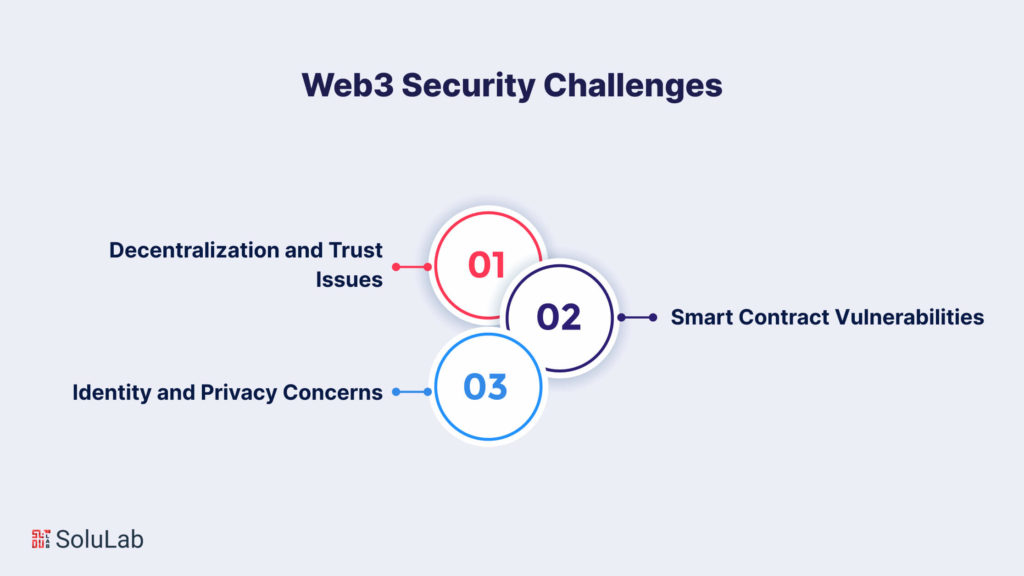
  • Decentralization and Trust Issues: Trust in a centralized authority is replaced by trust in code, which can be vulnerable to exploitation.
  • Smart Contract Vulnerabilities: Flaws in smart contracts can lead to financial losses for users.
  • Identity and Privacy Concerns: Maintaining online anonymity and data privacy becomes more challenging in a transparent, blockchain-based environment.

 Web3 Security Challenges

Web3 Security Challenges

Web3’s decentralization and innovative technologies bring about unique security challenges that users must be aware of:

  • Decentralization and Trust Issues

One of the key principles of Web3 is decentralization, eliminating the need for intermediaries and third-party authorities. While this offers enhanced security in many aspects, it also shifts the burden of trust onto the code and the network itself. Users must trust that the underlying blockchain technology and the code governing smart contracts are secure. However, as with any technology, vulnerabilities can exist, making it imperative to exercise caution and due diligence.

  • Smart Contract Vulnerabilities

Smart contracts are a cornerstone of Web3, automating agreements and transactions without the need for intermediaries. However, smart contracts are not immune to errors or malicious intent. Vulnerabilities within these contracts can be exploited, leading to financial losses for users. It’s vital to thoroughly audit and review smart contracts before interacting with them to minimize such risks.

  • Identity and Privacy Concerns

Web3’s transparency and immutability can make maintaining anonymity and data privacy challenging. Transactions on the blockchain are publicly recorded, and while they may not always reveal personal information, they can still create privacy concerns. Users must take precautions to protect their identities and data, especially when participating in DeFi platforms or NFT marketplaces.
Strategies for Staying Safe in Web3

Strategies for Staying Safe in Web3

Navigating the decentralized and innovative world of Web3 can be both exciting and daunting. To ensure your safety in this evolving digital landscape, consider implementing the following strategies:

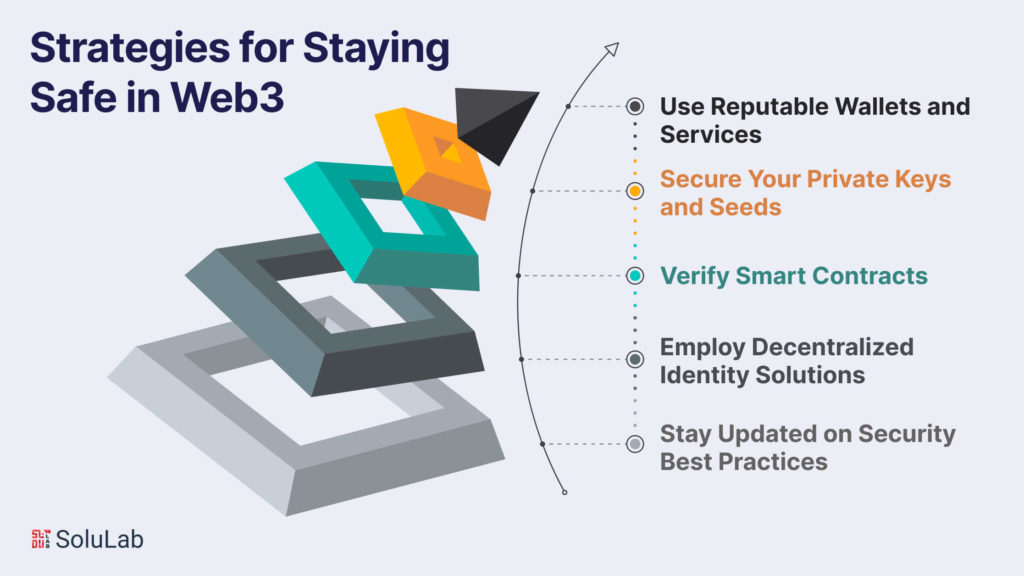
  • Use Reputable Wallets and Services

Selecting a trusted wallet and reliable Web3 services is a crucial first step. Reputable wallets, like MetaMask and Trust Wallet, offer a secure way to manage your digital assets and interact with DApps. Make sure to download these tools from official sources to avoid potential scams.

  • Secure Your Private Keys and Seeds

Private keys and recovery seeds are your keys to the Web3 kingdom. Safeguard them with the utmost care. Store them offline in hardware wallets or secure offline backups. Never share these sensitive credentials and be cautious of phishing attempts.

  • Verify Smart Contracts

Before engaging with any smart contract, take the time to review and verify it. Use resources like Etherscan to audit contracts and check for potential vulnerabilities. Ensure that the code has been audited by reputable security firms to minimize risks.

  • Employ Decentralized Identity Solutions

To protect your identity and maintain privacy, consider using decentralized identity solutions like blockchain-based identity wallets. These solutions provide you with control over your personal information and data, allowing you to share only what’s necessary.

  • Stay Updated on Security Best Practices

Web3 is continuously evolving, and so are the associated security threats. Stay informed about the latest security best practices and emerging threats by following trustworthy sources, forums, and communities in the Web3 space. Education is your best defense.

Web3 Antivirus: What You Need to Know

In the ever-evolving landscape of Web3, where decentralized technologies and digital assets have taken center stage, a new kind of security solution has emerged – Web3 antivirus. This innovative tool is designed to provide a much-needed layer of protection for users navigating the complex and decentralized Web3 environment. In this section, we will delve deeper into Web3 antivirus, exploring how it distinguishes itself from traditional antivirus software and why it is becoming increasingly essential in this dynamic digital realm.

Web3 antivirus represents a specialized security solution tailored to safeguard users within the decentralized and blockchain-based Web3 ecosystem. Unlike traditional antivirus software, which mainly focuses on identifying and neutralizing threats that target local devices, Web3 antivirus takes a different approach. It is designed to address the unique security challenges posed by Web3, such as smart contract vulnerabilities, DeFi scams, and identity theft on blockchain networks.
How Web3 Antivirus Differs from Traditional Antivirus

How Web3 Antivirus Differs from Traditional Antivirus

Understanding how Web3 antivirus sets itself apart from conventional antivirus software is crucial to grasp its significance:
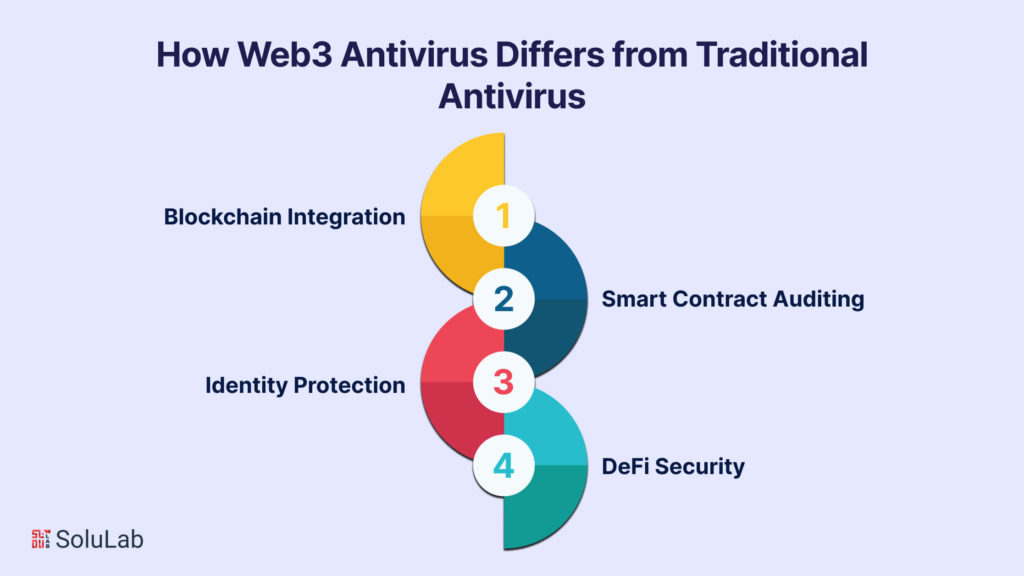
  • Blockchain Integration: Web3 antivirus operates in conjunction with blockchain technology. It continuously monitors blockchain activities, transactions, and smart contracts to detect and mitigate malicious actions. This real-time integration is vital in a trustless environment where every transaction is recorded and irreversible.
  • Smart Contract Auditing: In the world of Web3, smart contracts play a pivotal role. These self-executing contracts have their terms directly encoded into code, but they are not immune to vulnerabilities. Web3 antivirus conducts automated audits of smart contracts, identifying potential weaknesses and vulnerabilities. This capability allows users to make informed decisions about engaging with specific contracts and helps avoid potential financial risks.
  • Identity Protection: In Web3, your online identity and presence are intricately linked to your blockchain address. Web3 antivirus solutions often include features designed to safeguard decentralized identity. These tools enable you to maintain control over your personal information and data, allowing you to share only what is necessary while keeping the rest protected.
  • DeFi Security: The rise of decentralized finance (DeFi) platforms in Web3 has brought both exciting opportunities and new risks. Web3 antivirus solutions enhance the security of DeFi activities by continually monitoring transactions and platforms for any suspicious activities or scams. This proactive approach can help users avoid falling victim to DeFi-related frauds and rug pulls.

Benefits and Limitations

Benefits and Limitations

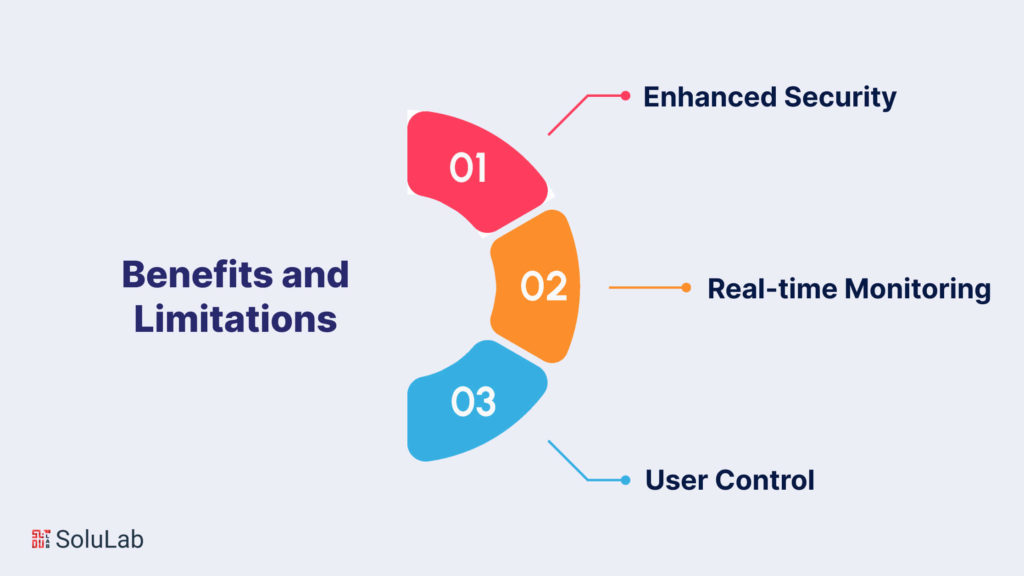
Web3 antivirus solutions offer several notable benefits:

  • Enhanced Security: Web3 antivirus enhances security by providing specialized protection against threats unique to Web3. This includes but is not limited to smart contract vulnerabilities, DeFi-related scams, and identity theft. By addressing these threats, Web3 antivirus reduces the risk of financial losses and data breaches, promoting a safer Web3 environment.
  • Real-time Monitoring: These solutions offer real-time monitoring of blockchain transactions and smart contracts. This continuous surveillance allows for the early detection of potential threats and vulnerabilities, which is crucial in a decentralized and fast-paced digital environment.
  • User Control: Web3 antivirus solutions empower users with greater control over their security. The decentralized nature of Web3 can be both liberating and challenging. Web3 antivirus bridges the gap, offering users more control and peace of mind as they navigate this new frontier.

However, it’s essential to understand that no security solution is entirely foolproof. Web3 antivirus, while a valuable tool, should be used in conjunction with other security best practices. Users must remain vigilant and cautious when navigating the Web3 landscape. Security is a shared responsibility, and being proactive about protecting your digital assets and data is paramount.
Hire Web3 Developers

Concluding remarks

In conclusion, as Web3 continues to shape the future of the internet, it’s crucial to stay informed about the evolving security challenges and embrace solutions like Web3 antivirus to protect your digital assets and data. By combining best practices and innovative security tools, you can explore the vast opportunities of Web3 with confidence.

The shift to decentralized systems, blockchain technology, and innovative digital experiences is accompanied by unique security challenges. To navigate this landscape successfully, users must adopt a proactive stance, combining established security strategies with cutting-edge solutions like Web3 antivirus. While Web3 promises a world of possibilities, it’s essential to remember that no security solution is infallible. By staying informed, cautious, and embracing the protective shield of Web3 antivirus, individuals can boldly explore the transformative Web3 world, secure in the knowledge that their digital assets and data are safeguarded. The journey through Web3 is exciting, and with the right security measures in place, it can be a safer one as well.

Solulab is a forward-thinking company at the forefront of the Web3 revolution, specializing in blockchain and decentralized exchange development solutions. With a commitment to innovation, Solulab offers a range of services, including blockchain development, smart contract creation, decentralized application (DApp) development, and blockchain consulting. In a world where Web3 security is of paramount importance, companies like Solulab play a vital role in providing cutting-edge solutions to ensure the safety and success of Web3 projects. Their knowledge and experience in blockchain technology contribute to a more secure and resilient Web3 environment, supporting the principles of decentralization, trust, and user empowerment.

FAQs

1. What is Web3, and why does it need special security measures?

Web3 represents the next generation of the internet, emphasizing decentralization and blockchain technology. It requires unique security measures due to the shift in trust from central authorities to code and the inherent risks in blockchain-based systems.

2. How does Web3 antivirus differ from traditional antivirus software?

Web3 antivirus focuses on protecting users in the decentralized Web3 environment. It monitors the blockchain, audits smart contracts, and offers specialized features like identity protection. Traditional antivirus software primarily scans for local device malware and may not cover blockchain-specific threats.

3.Why is it important to secure private keys and seeds in Web3?

Private keys and seeds are the keys to your Web3 kingdom, giving you control over your digital assets. Failing to secure them properly can lead to unauthorized access and loss of funds. Protecting these keys is vital in Web3.

4. What are the main security challenges in Web3?

Web3 security challenges include issues related to decentralization and trust, smart contract vulnerabilities, and identity and privacy concerns. Users need to be aware of these challenges and implement strategies to mitigate them.

5. Do Web3 antivirus solutions provide complete security?

While Web3 antivirus solutions offer enhanced security in the Web3 environment, no security solution can guarantee complete protection. Users should combine Web3 antivirus with other security best practices and remain vigilant to ensure their safety in Web3.

Navigating the Future: Web3 Development and DeFi Integration

Navigating the Future: Web 3 Development and DeFi Integration

Web 3 development and DeFi integration are at the forefront of technological innovation, revolutionizing the way we interact with digital ecosystems. With the rise of decentralized finance (DeFi) and the evolution of Web3 technology, the digital landscape is undergoing a transformative shift towards a more decentralized, secure, and user-centric experience. In this blog, we delve into the realm of DeFi development, exploring the intricacies of DeFi lending platforms, the top DeFi protocols, and the expanding DeFi ecosystem. Furthermore, we navigate the promising landscape of Web3 development, uncovering the use cases of Web3 technology, the top Web3 platforms, and the emerging trends in Web3.0 development. Let’s embark on a journey to understand the convergence of Web 3 and DeFi and its implications for the future of digital interactions and transactions.

Understanding DeFi Development

In the rapidly evolving landscape of decentralized finance (DeFi), understanding DeFi development is essential for comprehending the underlying principles and mechanisms driving the growth and adoption of decentralized financial solutions. This section delves into the fundamental aspects and key components of DeFi development, providing insights into the foundational elements that shape the DeFi ecosystem and its expanding influence in the global financial landscape.

  • Exploring the DeFi Ecosystem

The DeFi ecosystem encompasses a wide array of decentralized financial applications that operate on blockchain networks, offering various financial services without the need for traditional intermediaries. Within the DeFi landscape, users can access services such as lending, borrowing, yield farming, and decentralized exchanges, among others. These DeFi platforms leverage smart contracts to automate processes and ensure transparent and efficient transactions. The decentralized nature of the DeFi ecosystem promotes financial inclusivity, enabling users worldwide to access financial services with minimal barriers. Moreover, the open-source nature of many DeFi protocols fosters innovation and collaboration, allowing developers to build upon existing infrastructure and create novel financial products tailored to specific user needs.

  • The Rise of DeFi Lending Platforms

DeFi lending platforms have emerged as a crucial component within the DeFi ecosystem, providing users with opportunities to lend or borrow digital assets in a decentralized manner. These platforms enable users to lend their cryptocurrencies and earn interest, while borrowers can utilize these assets as collateral to obtain loans. DeFi lending protocols typically operate through smart contracts, ensuring the secure and automated execution of lending and borrowing activities. By eliminating the need for traditional financial institutions and intermediaries, DeFi lending platforms offer a more accessible and efficient avenue for users to access liquidity and generate returns on their digital assets.

  • Unraveling the Top DeFi Protocols

Within the DeFi space, various protocols have gained prominence for their contributions to the development of decentralized financial applications. These protocols often serve as the foundational infrastructure for a range of DeFi services, including decentralized exchanges (DEXs), liquidity provision, asset management, and yield farming. Some of the notable DeFi protocols include Compound, Aave, MakerDAO, Uniswap, and Synthetix, among others. These protocols play a crucial role in fostering a decentralized and permissionless financial environment, enabling users to engage in a diverse set of financial activities with increased autonomy and flexibility.

  • Analyzing the Best DeFi Exchanges

DeFi exchanges, also known as decentralized exchanges (DEXs), facilitate the peer-to-peer trading of digital assets without the need for intermediaries or centralized authorities. These exchanges operate on blockchain networks and leverage automated market-making (AMM) algorithms to enable seamless and efficient asset swaps. DeFi exchanges offer users enhanced security, improved liquidity, and reduced trading fees compared to traditional centralized exchanges. Some of the prominent DeFi exchanges include Uniswap, SushiSwap, and PancakeSwap, which have garnered significant attention for their contributions to the growth and accessibility of decentralized trading within the DeFi ecosystem.

Exploring Web3 Development

Exploring the realm of Web3 development unveils the transformative potential of next-generation web technologies in driving the evolution of decentralized systems and applications. This section delves into the innovative aspects and functionalities of Web3 development, shedding light on the cutting-edge technologies and tools that facilitate the development of user-centric and decentralized solutions, fostering a more inclusive and secure digital environment.

CTA1

  • Understanding the Concept of Web3 Technology

Web3 technology represents the next phase of internet evolution, characterized by the integration of decentralized protocols, blockchain technology, and peer-to-peer networks. Unlike its predecessor, Web2, which primarily focuses on centralized platforms and data control by corporations, Web3 emphasizes user sovereignty, data ownership, and enhanced privacy. The core principles of Web3 technology revolve around decentralization, transparency, and user empowerment, enabling individuals to interact and transact directly without relying on intermediaries. Through the utilization of blockchain and distributed ledger technology, Web3 applications foster trustless and secure interactions, providing users with greater control over their digital footprint and online activities.

  • Key Use Cases of Web3 Technology

Web3 technology has paved the way for various innovative use cases across multiple industries, offering solutions that prioritize data privacy, security, and decentralized governance. Some of the prominent use cases of Web3 technology include decentralized finance (DeFi), non-fungible tokens (NFTs), decentralized autonomous organizations (DAOs), decentralized social networks, and supply chain management solutions, among others. By leveraging the capabilities of blockchain and distributed ledger technology, Web3 applications enable the seamless exchange of value, transparent data management, and secure digital interactions, revolutionizing the way individuals and organizations engage with digital platforms and services.

  • Top Web3 Platforms in the Market

Within the Web3 ecosystem, several platforms have emerged as key players, driving the adoption and integration of decentralized technologies across various industries. These platforms offer users and developers a comprehensive set of tools and services to build, deploy, and manage Web3 applications effectively. Some of the leading Web3 platforms include Ethereum, Polkadot, Cardano, Binance Smart Chain, and Solana, each offering unique features and functionalities that cater to diverse use cases and development requirements. These platforms serve as the backbone for the development of decentralized applications (dApps) and facilitate the seamless integration of blockchain technology into existing digital infrastructures.

  • Uncovering the Web3.0 Development Trend

The emergence of Web 3.0 signifies a paradigm shift in internet architecture, emphasizing the decentralization of data, applications, and digital interactions. Web 3.0 development trends focus on enhancing user privacy, data security, and user-centric experiences, enabling individuals to regain control over their digital identities and online activities. As the demand for decentralized applications and services continues to grow, the Web 3.0 development trend emphasizes the creation of interoperable protocols, scalable blockchain solutions, and user-friendly interfaces, fostering a user-centric and transparent digital environment that prioritizes data ownership and security.

DeFi Development and Integration

DeFi Development and Integration

The seamless integration of DeFi solutions within the broader framework of Web3 technologies plays a pivotal role in shaping the future of decentralized finance and digital ecosystems. This section provides insights into the intricate processes and strategies involved in the development and integration of DeFi services, highlighting the synergistic relationship between DeFi development and the broader spectrum of Web3 technologies.

  • Navigating the DeFi Ecosystem

DeFi development has transformed the traditional financial landscape by enabling decentralized lending, borrowing, and trading activities without the need for intermediaries. The DeFi ecosystem comprises a diverse range of protocols, platforms, and applications that facilitate the seamless exchange of digital assets, yield farming, liquidity provision, and decentralized trading. Through the utilization of blockchain and smart contract technology, DeFi protocols ensure transparency, security, and efficiency in financial transactions, offering users a range of options to earn passive income and participate in various decentralized financial activities.

  • Leveraging DeFi Lending Platforms

DeFi lending platforms play a crucial role in enabling users to lend and borrow digital assets without the need for traditional financial institutions. These platforms utilize smart contracts to automate the lending process, allowing users to earn interest on their deposited assets or access loans using their cryptocurrency holdings as collateral. By eliminating the need for intermediaries and central authorities, DeFi lending platforms provide users with greater control over their funds and offer competitive interest rates and flexible borrowing options, fostering a more inclusive and accessible financial ecosystem for users worldwide.

  • Exploring Top DeFi Protocols

Within the DeFi space, several protocols have gained prominence for their innovative approaches to decentralized finance and their contribution to the expansion of the DeFi ecosystem. These protocols encompass a range of services, including decentralized exchanges (DEXs), lending and borrowing platforms, yield farming protocols, and liquidity provision mechanisms. Some of the top DeFi protocols include Uniswap, Aave, Compound, MakerDAO, and Synthetix, each offering unique features and functionalities that cater to diverse DeFi use cases and financial needs.

  • DeFi Trading Platforms and Exchanges

DeFi trading platforms and exchanges have revolutionized the way users access and trade digital assets, offering decentralized, non-custodial solutions that prioritize security and user control. These platforms facilitate the seamless exchange of cryptocurrencies, tokens, and other digital assets, enabling users to trade directly with one another without the need for intermediaries. By leveraging the capabilities of blockchain and smart contract technology, DeFi trading platforms provide users with secure and transparent trading experiences, offering a range of trading pairs, liquidity pools, and yield farming opportunities to maximize their returns and diversify their investment portfolios.

Advancements in Web3 Development

The ongoing advancements in Web3 development represent a critical milestone in the evolution of decentralized technologies, underscoring the continuous innovation and refinement of digital infrastructures and platforms. This section explores the latest advancements in Web3 development, emphasizing the transformative capabilities and potential implications for the future of decentralized systems and services.

  • Harnessing the Power of Web3 Technology

Web3 technology has ushered in a new era of internet capabilities, emphasizing decentralized, peer-to-peer interactions and data ownership. This advancement has led to the development of innovative solutions that prioritize user privacy, security, and digital sovereignty. By leveraging blockchain, distributed ledger technology, and decentralized protocols, Web3 development promotes the creation of user-centric applications and platforms that empower individuals to control their digital identities and engage with online services in a secure and transparent manner.

  • Top Web3 Platforms and Their Capabilities

Several leading Web3 platforms have emerged as key players in the development and integration of decentralized technologies, offering developers and users a wide range of tools and services to build and deploy Web3 applications effectively. These platforms provide comprehensive solutions for decentralized application development, blockchain integration, and digital asset management, fostering the creation of user-friendly and secure digital environments that prioritize data privacy and transparency. Some of the top Web3 platforms include Ethereum, Polkadot, IPFS, Filecoin, and Holochain, each contributing to the advancement of decentralized technologies and the expansion of the Web3 ecosystem.

  • Exploring Web3 Use Cases and Applications

The integration of Web3 technology has led to the development of various use cases and applications across multiple industries, enabling the creation of decentralized applications, peer-to-peer networks, and transparent data management systems. Web3 use cases encompass a wide range of applications, including decentralized finance (DeFi), non-fungible tokens (NFTs), decentralized social networks, supply chain management solutions, and decentralized autonomous organizations (DAOs), among others. These use cases demonstrate the transformative potential of Web3 technology in revolutionizing digital interactions, data management, and online transactions, fostering a more inclusive and user-centric digital landscape for individuals and organizations worldwide.

  • Emerging Web3.0 Development Trends

The evolution of Web 3.0 development trends signifies the continuous advancement and adoption of decentralized technologies, emphasizing the creation of interoperable protocols, scalable blockchain solutions, and user-friendly interfaces. Web 3.0 development trends focus on enhancing data privacy, user security, and digital sovereignty, promoting the creation of decentralized applications and platforms that empower users to control their digital experiences and engage with online services in a secure and transparent manner. As the demand for decentralized technologies and applications continues to grow, Web 3.0 development trends emphasize the need for scalable, efficient, and user-centric solutions that prioritize data privacy, security, and user empowerment.

Integrating DeFi with Web3 Technologies

Integrating DeFi with Web3 Technologies

The integration of DeFi services with Web3 technologies marks a significant paradigm shift in the digital landscape, fostering a more cohesive and interconnected ecosystem for decentralized financial solutions. This section delves into the intricacies of integrating DeFi with Web3 technologies, elucidating the key strategies and benefits of this collaborative approach, which leads to the development of innovative and user-friendly financial solutions.

  • Synergizing DeFi and Web3 Ecosystems

The integration of DeFi with Web3 technologies marks a significant step toward creating a more interconnected and user-centric financial landscape, emphasizing decentralized, transparent, and secure financial services and applications. The collaboration between DeFi and Web3 ecosystems enables the seamless integration of decentralized financial protocols with blockchain-based technologies, promoting the development of user-friendly and accessible financial solutions that prioritize data privacy, security, and user empowerment. By leveraging the capabilities of blockchain, smart contracts, and decentralized networks, the integration of DeFi with Web3 technologies fosters the creation of a robust and inclusive financial ecosystem that caters to the diverse financial needs and preferences of users worldwide.

  • Exploring DeFi Lending and Borrowing Platforms in Web3

The integration of DeFi lending and borrowing platforms within the Web3 ecosystem has facilitated the seamless exchange of digital assets and the provision of secure and transparent lending and borrowing services for users. These platforms leverage the capabilities of blockchain and smart contract technology to automate lending processes, enable instant fund transfers, and ensure transparent and secure transactions. By integrating DeFi lending and borrowing platforms with Web3 technologies, users can access a wide range of financial services, including peer-to-peer lending, decentralized borrowing, and yield farming, fostering a more accessible and inclusive financial landscape for individuals and businesses.

  • Leveraging Top DeFi Protocols in Web3 Applications

Top DeFi protocols play a pivotal role in driving the integration of decentralized financial services within the Web3 ecosystem, offering users a diverse range of financial tools and services to manage and grow their digital assets effectively. These protocols enable users to participate in various financial activities, including lending, borrowing, liquidity provision, and yield farming, while ensuring transparency, security, and efficiency in financial transactions. By leveraging the capabilities of top DeFi protocols within Web3 applications, users can access decentralized financial services seamlessly, diversify their investment portfolios, and maximize their returns, fostering a more inclusive and accessible financial environment for users worldwide.

  • Facilitating DeFi Trading and Exchanges in Web3 Environments

The integration of DeFi trading platforms and exchanges within Web3 environments has revolutionized the way users access and trade digital assets, offering decentralized, secure, and transparent trading solutions for individuals and businesses. These platforms leverage blockchain and smart contract technology to facilitate the seamless exchange of digital assets, provide users with greater control over their funds, and ensure transparency and security in financial transactions. By integrating DeFi trading platforms and exchanges with Web3 technologies, users can access a wide range of trading pairs, liquidity pools, and yield farming opportunities, fostering a more inclusive and accessible trading landscape for users worldwide.

Enhancing Web3 Technologies with DeFi Integration

The enhancement of Web3 technologies through the integration of DeFi principles and functionalities represents a crucial step in advancing the capabilities and applications of decentralized systems. This section examines the ways in which DeFi integration enhances the functionalities and user experiences of Web3 technologies, paving the way for the development of secure, transparent, and inclusive digital ecosystems.

  • Amplifying Web3 Use Cases with DeFi Applications

The integration of DeFi applications within the Web3 environment has expanded the scope and utility of Web3 technologies, enabling the seamless integration of decentralized financial services and applications with blockchain-based platforms and solutions. This integration has empowered users to access a diverse range of financial tools and services, including decentralized lending and borrowing, liquidity provision, asset trading, and yield farming, fostering a more interconnected and user-centric financial landscape that prioritizes accessibility, transparency, and security. By amplifying Web3 use cases with DeFi applications, users can benefit from a wide range of decentralized financial services, access advanced financial tools, and participate in various financial activities, promoting financial inclusivity and empowerment for users worldwide.

  • Exploring the Synergy Between DeFi and Web3 Technology

The synergy between DeFi and Web3 technology has catalyzed the development of innovative and user-friendly financial solutions, emphasizing decentralized, transparent, and secure financial services and applications for users worldwide. This synergy leverages the capabilities of blockchain, smart contract technology, and decentralized networks to foster the seamless integration of decentralized financial protocols with Web3 applications, promoting the development of user-centric and inclusive financial ecosystems that prioritize data privacy, security, and user control. By exploring the synergy between DeFi and Web3 technology, users can access a wide range of financial tools and services that facilitate secure and efficient financial transactions, fostering a more accessible and user-centric financial landscape for individuals and businesses.

  • Navigating Web3.0 Development Trends and DeFi Integration

Navigating Web 3.0 development trends and the integration of DeFi within the Web3 ecosystem highlights the evolution of decentralized technologies and financial services, emphasizing the importance of creating an interconnected and user-centric financial environment that prioritizes accessibility, transparency, and security. This integration navigates the advancements in blockchain, smart contract technology, and decentralized networks to foster the development of user-friendly and inclusive financial solutions that cater to the diverse financial needs and preferences of users worldwide. By embracing Web 3.0 development trends and DeFi integration, users can navigate a rapidly evolving financial landscape, access advanced financial tools and services, and participate in various financial activities, fostering financial empowerment and inclusivity for individuals and businesses.

  • Embracing the Role of Top Web3 Development Companies in DeFi Integration

The role of top Web3 development companies in DeFi integration underscores the significance of collaboration and innovation in driving the development and adoption of decentralized financial services and applications. These companies leverage their expertise in blockchain, smart contract technology, and decentralized networks to facilitate the seamless integration of DeFi solutions within the Web3 ecosystem, offering users a diverse range of financial tools and services that promote accessibility, transparency, and security. By embracing the role of top Web3 development companies in DeFi integration, users can benefit from the expertise and knowledge of industry-leading professionals, access cutting-edge financial solutions, and participate in a dynamic and user-centric financial landscape that prioritizes user control and empowerment.

The Role of Top Web3 Development Companies in the DeFi Ecosystem

The Role of Top Web3 Development Companies in the DeFi Ecosystem

The active participation of leading Web3 development companies in the DeFi ecosystem underscores the pivotal role these firms play in driving innovation and fostering the adoption of decentralized financial solutions. This section emphasizes the significant contributions and expertise of top Web3 development companies, highlighting their role in shaping the future of the DeFi landscape and accelerating the adoption of user-centric and secure financial services.

  • Leveraging Expertise for Seamless DeFi Integration

The role of top Web3 development companies in the DeFi ecosystem revolves around leveraging their expertise in blockchain, smart contract technology, and decentralized networks to facilitate the seamless integration of DeFi applications and protocols within the Web3 environment. These companies prioritize the development of user-friendly and innovative financial solutions that cater to the diverse financial needs and preferences of users worldwide, fostering a more accessible and inclusive financial landscape that emphasizes transparency, security, and user control. By leveraging their expertise for seamless DeFi integration, these companies enable users to access a wide range of financial tools and services, participate in various financial activities, and explore new opportunities for financial growth and empowerment.

  • Collaborative Innovations for Enhanced DeFi Ecosystem

Collaborative innovations for the enhanced DeFi ecosystem emphasize the importance of fostering partnerships and collaborations among top Web3 development companies to drive the development and adoption of user-centric and inclusive financial solutions. These collaborative efforts focus on promoting the integration of decentralized financial protocols with Web3 applications, fostering the development of a more interconnected and user-friendly financial landscape that prioritizes accessibility, transparency, and security. By engaging in collaborative innovations for the enhanced DeFi ecosystem, top Web3 development companies can contribute to the advancement of decentralized technologies and financial services, promote financial inclusivity and empowerment, and facilitate the growth and expansion of the DeFi ecosystem for users worldwide.

  • Promoting User-Centric Financial Solutions and Services

Promoting user-centric financial solutions and services highlights the commitment of top Web3 development companies to create innovative and inclusive financial ecosystems that cater to the diverse financial needs and preferences of users worldwide. These companies prioritize the development of user-friendly and accessible financial tools and services, emphasizing the importance of transparency, security, and user control in facilitating seamless and efficient financial transactions. By promoting user-centric financial solutions and services, top Web3 development companies enable users to access advanced financial tools, participate in various financial activities, and explore new opportunities for financial growth and empowerment, fostering a more dynamic and user-friendly financial landscape that prioritizes user experience and satisfaction.

  • Driving Innovation and Advancements in DeFi and Web3 Technology

The drive for innovation and advancements in DeFi and Web3 technology underscores the commitment of top Web3 development companies to foster the development and adoption of cutting-edge and user-friendly financial solutions that promote accessibility, transparency, and security. These companies focus on driving innovation and advancements in blockchain, smart contract technology, and decentralized networks to create a more interconnected and inclusive financial ecosystem that caters to the diverse financial needs and preferences of users worldwide. By driving innovation and advancements in DeFi and Web3 technology, top Web3 development companies contribute to the evolution of decentralized technologies and financial services, promote financial inclusivity and empowerment, and facilitate the growth and expansion of the DeFi ecosystem for individuals and businesses.

The Growing Significance of Web3.0 Development Trends in DeFi Ecosystem

The growing significance of Web 3.0 development trends in the DeFi ecosystem reflects the increasing focus on next-generation web technologies and their transformative potential in revolutionizing the global financial landscape. This section explores the emerging trends and developments in Web 3.0, emphasizing their impact on the DeFi ecosystem and the broader digital environment, signaling a shift toward more advanced and inclusive digital infrastructures.

  • Embracing Decentralized Finance with Web3.0 Innovations

The growing significance of Web 3.0 development trends in the DeFi ecosystem highlights the industry’s shift towards embracing decentralized finance with the integration of advanced Web 3.0 innovations. These trends emphasize the importance of leveraging blockchain, smart contract technology, and decentralized networks to create a more interconnected and accessible financial landscape that prioritizes transparency, security, and user control. By embracing Web 3.0 innovations, the DeFi ecosystem can foster the development and adoption of user-centric and inclusive financial solutions, promoting financial inclusivity, accessibility, and empowerment for individuals and businesses worldwide.

  • Driving Technological Advancements for Enhanced DeFi Offerings

Driving technological advancements for enhanced DeFi offerings underscores the industry’s commitment to fostering the development and adoption of cutting-edge and user-friendly financial solutions that cater to the diverse financial needs and preferences of users worldwide. These advancements focus on driving innovation in blockchain, smart contract technology, and decentralized networks to create a more dynamic and inclusive financial ecosystem that promotes accessibility, transparency, and security. By driving technological advancements for enhanced DeFi offerings, the industry can facilitate the growth and expansion of the DeFi ecosystem, foster financial inclusivity and empowerment, and promote the evolution of decentralized technologies and financial services.

  • Fostering Collaboration and Integration Across DeFi and Web3.0 Landscape

Fostering collaboration and integration across the DeFi and Web 3.0 landscape highlights the industry’s emphasis on promoting partnerships and collaborations among key stakeholders to drive the development and adoption of user-centric and interconnected financial solutions. These collaborative efforts aim to foster the integration of decentralized financial protocols with Web 3.0 applications, creating a more seamless and efficient financial ecosystem that prioritizes user experience, security, and transparency. By fostering collaboration and integration across the DeFi and Web 3.0 landscape, the industry can promote the development of a more interconnected and user-friendly financial landscape, facilitate the growth and expansion of the DeFi ecosystem, and drive the evolution of decentralized technologies and financial services for users worldwide.

  • Exploring Future Possibilities and Innovations in DeFi and Web3.0

Exploring future possibilities and innovations in DeFi and Web 3.0 underscores the industry’s dedication to exploring new opportunities and advancements in decentralized finance and technology. These explorations focus on identifying emerging trends and technologies that can shape the future of the DeFi ecosystem, fostering the development and adoption of innovative and user-friendly financial solutions that cater to the evolving needs and preferences of users worldwide. By exploring future possibilities and innovations in DeFi and Web 3.0, the industry can contribute to the advancement of decentralized technologies and financial services, promote financial inclusivity and empowerment, and drive the evolution of the global financial landscape for individuals and businesses.

CTA2

Conclusion

In the fast-evolving landscape of DeFi and Web3 development, the role of pioneering companies such as SoluLab stands out as an essential catalyst for innovation and transformative growth. As a leading Web3 development company with a focus on DeFi solutions, SoluLab continues to drive the advancement of cutting-edge technologies and tools, empowering businesses to thrive in the rapidly changing digital ecosystem. With its expertise in DeFi development and a profound understanding of the intricate nuances of Web3 technologies, SoluLab remains at the forefront of revolutionizing the digital landscape, providing comprehensive solutions that cater to the diverse needs of modern businesses and industries.

By leveraging the expertise of a top DeFi development service and Web3 development company like SoluLab, businesses can unlock a world of possibilities and tap into the immense potential offered by DeFi and Web3 technologies. With a focus on delivering seamless and innovative solutions, SoluLab empowers businesses to stay ahead of the curve, embrace the latest trends, and capitalize on the transformative capabilities of DeFi and Web3. As a leading DeFi development service and Web3 development company, SoluLab’s dedicated team of skilled professionals and commitment to excellence continue to set new benchmarks in DeFi and Web3 development, ensuring that businesses are well-equipped to navigate the dynamic landscape and thrive in the digital age.

FAQs

1. What is the role of DeFi in the Web3 development landscape?

The role of DeFi in the Web3 development landscape is primarily centered around enabling decentralized financial services and applications, creating a more open and accessible financial ecosystem powered by blockchain technology.

2. How can businesses benefit from integrating DeFi with Web3 technologies?

Businesses can benefit from integrating DeFi with Web3 technologies by gaining access to a more secure, transparent, and efficient financial infrastructure. This integration allows for the development of decentralized applications (dApps) and the facilitation of peer-to-peer transactions with reduced intermediation.

3. What are the key features to look for when choosing a top Web3 development company?

When selecting a top Web3 development company, it is crucial to consider factors such as expertise in blockchain technology, experience in developing decentralized applications, a track record of successful projects, and a strong understanding of DeFi protocols and ecosystems.

4. How does SoluLab contribute to the advancement of DeFi and Web3 technologies?

SoluLab contributes to the advancement of DeFi and Web3 technologies through its comprehensive development services, including DeFi development, blockchain solutions, and Web3 integration. The company’s expertise and commitment to innovation make it a valuable contributor to the growth of these sectors.

5. What are the emerging trends and future prospects for DeFi and Web3 development?

The emerging trends and future prospects for DeFi and Web3 development are promising, with increased adoption of decentralized financial services, expansion of blockchain applications, and the integration of advanced technologies to enhance security, scalability, and usability within the ecosystem.

6. How does the integration of DeFi and Web3 technologies impact the financial sector?

The integration of DeFi and Web3 technologies significantly impacts the financial sector by revolutionizing traditional financial processes, promoting financial inclusion, enabling global access to financial services, and fostering innovation in the way financial transactions are conducted.

7. What are the challenges and opportunities for businesses looking to adopt DeFi and Web3 solutions?

Businesses looking to adopt DeFi and Web3 solutions face challenges related to regulatory compliance, security risks, scalability issues, and user adoption. However, these challenges present opportunities for companies to pioneer groundbreaking solutions, establish new standards for financial services, and contribute to the growth and development of the DeFi and Web3 landscape.

The Role of Blockchain in Web 3 Development

The Role of Blockchain in Web 3 Development

The Internet has experienced major developments over the last two decades. Web 1.0 brought us static web pages, Web 2.0 introduced dynamic and interactive content, and now, Web 3.0 is poised to revolutionize the way we interact with the digital world. At the heart of this transformation is blockchain technology. 

In this blog, we will explore the crucial role of blockchain in Web 3 development and its potential to reshape the Internet as we know it.

The Evolution of the Internet Leading to Web 3.0

To understand the significance of blockchain in the context of Web 3 technology, it’s essential to trace the journey of the Internet itself. We’ve witnessed two distinct phases, known as Web 1.0 and Web 2.0, each representing a unique stage in the Internet’s development.

Web 1.0 marked the internet’s initial foray, originating in the late 1980s. This phase primarily featured static, ‘read-only’ web content and was the creation of a select few participants. At the time, Web 1.0 was groundbreaking, as it allowed people to access information from around the world. However, it came with significant limitations, particularly in terms of user interaction.

Following Web 1.0, we witnessed the rise of Web 2.0, which brought substantial advancements in user engagement and interaction. Web 2.0 empowered users to create personal accounts through various applications, enabling them to build unique digital identities on the internet. This development led to the expansion of e-commerce and social media platforms, exploring new avenues to reach a broader audience. Additionally, Web 2.0 fostered the emergence of transformative web technologies like HTML5, CSS3, and JavaScript.

Read Our Blog: Top 10 Web3 Development Companies 2024

Now, the world is on the cusp of a new era in internet development, often referred to as Web 3.0. What does this latest iteration of the internet promise, and how does blockchain fit into this new landscape?

The Emergence of Web 3.0 and the Role of Blockchain Platforms

Web 3.0 represents a paradigm shift in the way we approach the Internet. It focuses on decentralization, user control, and data security. In this new era, blockchain platforms play a central role in shaping the future of the internet.

Web 3.0 harnesses the power of blockchain technology applications to ensure that data is stored in a decentralized, tamper-resistant manner. This decentralization eliminates the need for central servers, enhancing security and reducing the risk of data breaches. Furthermore, blockchain technology is pivotal in creating self-sovereign digital identities, giving users complete control over their personal data and digital interactions.

Smart contracts, a product of blockchain platforms like Ethereum, play a crucial role in automating various processes and agreements, allowing for more efficient and trust-based transactions. Moreover, these smart contracts power decentralized applications (DApps), opening up new frontiers in areas such as decentralized finance (DeFi) and non-fungible tokens (NFTs).

CTA1

In Web 3.0, blockchain platforms promote interoperability, facilitating seamless data and asset exchange across various networks. This interconnectedness enables users to navigate the decentralized web more smoothly.

As we journey into the era of top Web platforms, blockchain technology is the linchpin, underpinning the principles of decentralization, user sovereignty, and data security. It’s revolutionizing the Internet, offering us a new digital landscape that’s more inclusive, secure, and user-centric.

Defining Web 3.0: The Next Phase of the Internet

When we delve into the concept of the latest iteration of the Internet, Web 3.0, it’s important to establish a clear definition. Web 3.0 represents the third generation of Internet services, empowered by cutting-edge technologies such as Artificial Intelligence (AI), the Internet of Things (IoT), and blockchain. This new internet phase places a strong emphasis on innovations like AI and machine learning while prioritizing enhanced security measures. To fully grasp the essence of Web 3.0, it’s essential to examine the backdrop against which it has evolved.

Web 2.0 was a pivotal turning point that transformed our understanding of online social interactions. It brought together producers and consumers of products, services, and information within a single digital arena. More significantly, Web 2.0 expanded the horizons of peer-to-peer (P2P) transactions on a global scale. However, a significant challenge with Web 2.0 became apparent through the role of platforms that had to act as trusted intermediaries between parties with mutual distrust. While Web 2.0 platforms facilitated P2P economies and efficient value settlement, they simultaneously wielded substantial control, dictating transaction rules and managing user data. These issues set the stage for the emergence of Web 3.0.

Read Also: Top Blockchain Trends in 2024

Web 3.0: Applications and Use Cases

Web 3.0: Applications and Use Cases

Web 3.0 introduces a range of innovative applications and use cases, building upon the shortcomings of its predecessor:

  • Decentralized Social Networks: Web 3 use cases allow for decentralized social platforms that put users in control of their data and interactions. This mitigates concerns over centralized data control and content censorship.
  • DeFi (Decentralized Finance): One of the standout applications of Web 3.0, DeFi platforms, leverages blockchain and smart contracts to create an open and transparent financial ecosystem. This empowers users with more control over their financial assets and transactions.
  • Digital Identity Management: Web 3.0 brings forth self-sovereign identity solutions, giving individuals complete authority over their digital identities and reducing reliance on central authorities.
  • Supply Chain Transparency: Utilizing blockchain, Web 3.0 offers immutable supply chain management systems that ensure the authenticity and traceability of products.
  • Content and Intellectual Property: Blockchain technology in Web 3.0 aids in fair compensation for content creators, particularly through NFTs, thus revolutionizing content monetization and intellectual property management.

In brief, Web 3.0 signifies the next step in the evolution of the Internet, driven by advanced technologies and a focus on user empowerment and data security. This new digital era addresses the limitations of Web 2.0 and introduces a diverse array of Web 3 use cases, promising a more decentralized, secure, and user-centric online experience.

The Role of Blockchain in Web 3.0 Advancements

The significance of Web 3.0, exemplified by innovations like voice assistants such as Siri and Alexa, showcases the transformative potential of machine learning in shaping new internet services. In addition to the integration of machine learning and the interconnection of IoT devices, the third generation of the Internet is underpinned by the utilization of decentralized protocols. This underscores the need to explore the pivotal role of blockchain technology within the Web 3.0 landscape.

In Web 3.0, networks exhibit remarkable features, including interoperability and automation facilitated by smart contracts. This results in seamless integration and the establishment of a censorship-resistant framework for the storage of peer-to-peer (P2P) data files. It becomes abundantly clear that blockchain technology is poised to become a driving force in shaping the next era of the Internet.

Check Our Blog Post: Top 5 Enterprise Blockchain Platforms of 2024

Blockchain technology plays a central role in redefining conventional approaches to data storage and management. In simpler terms, blockchain provides a distinct data collection framework or a universal state layer that operates under collective management. This state layer not only serves as the foundation for a value settlement layer on the internet but also facilitates secure, copy-protected file transfers, enabling efficient peer-to-peer transactions without the need for intermediaries.

In the realm of Web 3.0, blockchain development companies and blockchain ecosystem protocols are instrumental in harnessing the full potential of blockchain technology, revolutionizing data management, and paving the way for a more decentralized and efficient digital landscape.

How Blockchain Paved the Way for Web 3.0?

The emergence of Bitcoin marked a significant milestone in charting the course for Web 3.0. Bitcoin’s blockchain and other protocols played a crucial role in establishing networks where malicious actors would need to breach multiple global locations to access data stored in a single location. Blockchain laid the foundational principles that have come to define the Web 3.0 landscape by enabling data storage across multiple copies within a peer-to-peer (P2P) network. The protocol not only outlines clear rules for governing the network but also ensures data security through a consensus mechanism involving all network participants. Incentives in the form of native network tokens are provided to these participants for their contributions towards network security and maintenance.

Read Our Blog: Top 10 Blockchain Ecosystem Protocols of 2024

Indeed, blockchain serves as the bedrock upon which Web 3.0 is constructed, particularly in its transformation of the data structures underpinning the internet’s infrastructure. Furthermore, blockchain technology has given rise to a governance layer that operates in tandem with the existing internet. This governance layer facilitates the ability for two parties, even if they are unfamiliar with each other and harbor mutual distrust, to reach agreements and execute transactions over the internet securely.

The role of blockchain in Web 3 development is predominantly focused on effecting a transformation in the backend infrastructure. From a technical standpoint, Web 3.0 can be envisioned as an assemblage of blockchain-based protocols designed to reconfigure the foundational structure of the Internet. Blockchain, in essence, serves as a distributed global computer, poised to revolutionize our perception of the internet.

Blockchain in Web 3.0: Practical Applications

Blockchain technology entails the utilization of distributed ledgers for the storage of data, ensuring immutability, a high degree of security, and interconnectivity. Additionally, this technology incorporates smart contracts, which are self-executing programs triggered by predefined conditions.

In essence, blockchain technology presents a substantial departure from traditional methods, offering the potential to enhance and transform the Internet significantly.

  • Digital Universal Identification Through Blockchain

Presently, websites heavily rely on third-party cookies for user identification, a method that proves to be both unreliable and insecure. Furthermore, this approach is anticipated to become increasingly untenable in the future. The limitations of Web 2.0 become evident when it comes to managing the identities of individuals, objects, and organizations. As a result, most consumer identity management processes hinge on centralized and isolated service providers.

Read Also: Web 3.0 Development Trends: What’s Next for the Internet

  • How Does the Current Consumer Identity Management Process Function?

Users create IDs on platforms using email IDs from providers like Google, Yahoo, or Meta. These service providers collect and control the data generated through email permissions and tracking.

With the continuous evolution of enterprise blockchain consulting firms and blockchain technology, there is the potential for an alternative global digital identification system. Through this technology, self-sovereign and encrypted digital identities can be created. These digital IDs offer enhanced protection against online theft and breaches while eliminating the need for multiple usernames and passwords.

Benefits of Employing Blockchain in Identity Management

Benefits of Employing Blockchain in Identity Management

  • Unique User IDs: Blockchain facilitates the creation of distinct and individualized identification for each user, enhancing security and user control.
  • Data Control: Users gain greater authority over the utilization of their data, determining who can access and use it.
  • Decentralized Data: Blockchain enables data to be stored in a decentralized manner, reducing dependence on central authorities and enhancing data security.
  • Universal User Identity: Through blockchain, the possibility of establishing a universal digital identity for each user becomes feasible, streamlining interactions across various platforms.
  • Individual Monetization: Blockchain empowers users to monetize their data and digital presence, providing opportunities for individuals to benefit from their online activities.

Read Our Blog Post: The Rise of Web 3.0: Exploring its Impact on the Digital Landscape

Leveraging Blockchain Technology in Marketing

Smart Contracts, an extension of blockchain technology, offers the capacity for individuals to engage in transactions of value online without the need for intermediaries. This ensures transparency and eliminates conflicts, presenting the potential to transform how marketing operates in the context of Web 3.0.

Smart contracts reside at specific addresses on the blockchain, functioning based on predefined rules and penalties for every agreement. Notably, they do not rely on external entities or third parties, such as banks, to enforce these rules.

Blockchain technology, particularly smart contracts, has the potential to reshape the landscape of online marketing in the Web3 era. Organizations, including a Web3 game development company, can explore innovative and decentralized marketing strategies powered by these technologies.

Utilizing Blockchain in the Digital Advertising Sector

Blockchain technology is supposed to revolutionize the digital advertising industry in several impactful ways. Initially, it empowers publishers with the capability to access consumer metadata, enabling them to enhance the efficiency of their advertising campaigns. Furthermore, blockchain immutable ledger system offers a practical solution for combatting fraudulent activities by recording impressions securely.

To enhance transparency and trust, the adoption of smart contracts is encouraged as they provide a reliable and visible audience, ensuring that advertising operations run smoothly. Additionally, blockchain plays a pivotal role in anonymizing metadata, aligning with privacy regulations, and ensuring a superior brand experience for users while safeguarding their personal information.

In the era of Web 3.0, which embraces blockchain technologies, the way we store, access, and manage data on the Internet is set to undergo a transformative shift. This shift empowers individuals and elevates their web experiences by offering enhanced control over their data and interactions.

Blockchain Technology in the Healthcare Sector

The healthcare industry has witnessed substantial advantages from the progress in enterprise blockchain solutions and services. These innovations have fundamentally altered how information is exchanged within various sectors of the healthcare ecosystem.

Processes like drug development, research activities, and other essential facets of healthcare necessitate secure contracts. Blockchain technology presents a means of creating immutable documents that companies can utilize for contract purposes.

Read Also: Blockchain Security: Best Practices Every Developer Should Know

Moreover, the integration of blockchain-powered Learning Management Systems (LMS) has revolutionized the sharing of information among healthcare stakeholders. This technological advancement has made information more accessible on a global scale while ensuring that users receive pertinent and accurate data from trusted sources.

Blockchain in Web 3.0: Real-World Examples

One standout illustration of blockchain’s functionalities within the Web 3.0 landscape is the platform known as Follow. This decentralized, autonomous organization has introduced an innovative decentralized social protocol, ushering in a new era of web services. The core objective of Follow’s blockchain-based social protocol is to grant users complete control over their social identities and data. As the development of Web 3.0 unfolds, there is a concerted effort to establish novel social infrastructures that align with the foundational principles of the Internet. Blockchain’s role in this context is to eliminate the necessity for trusted intermediaries while enabling networks to collectively record and remember user interactions and past events. Clearly, blockchain stands as a formidable catalyst, unlocking the potential for a more decentralized internet.

Businesses and organizations looking to embrace blockchain technology within the Web 3.0 paradigm can consider options like to hire blockchain developers or hire dedicated developers to harness the full potential of this transformative technology.

CTA2

Conclusion

In conclusion, the role of blockchain in Web 3 development cannot be overstated. This technology is at the forefront of ushering in a new era of the internet, one that is more decentralized, secure, and user-centric. As Web 3.0 emerges, we witness the transformation of data management, digital identities, and online interactions. Blockchain’s core principles of decentralization, data immutability, and smart contracts have laid the foundation for a web where users have more control over their data and transactions, privacy is prioritized, and trust is fostered through transparency. This paradigm shift extends to various industries, from decentralized finance and supply chain management to digital content and intellectual property, all of which stand to benefit from the innovative potential of blockchain technology.

Web 3.0 represents not only a technological advancement but a paradigm shift towards a more equitable and user-driven digital future. With blockchain technology as a cornerstone, we embark on a journey where individuals have greater sovereignty over their online presence, and the internet evolves into a space that empowers rather than centralizes. As we continue to explore the vast potential of blockchain in this new web era, it is evident that it will play a pivotal role in shaping the internet of tomorrow, providing us with a more resilient, secure, and inclusive digital landscape.

SoluLab, a well-known Blockchain development company and Web3 development company is a leading provider of blockchain technology and Web3 development solutions. With our team of experienced blockchain developers and experts, we offer comprehensive services to help businesses and organizations harness the power of blockchain in building decentralized applications, and smart contracts, and integrating blockchain into existing systems. Our expertise spans a wide range of blockchain platforms and protocols, ensuring tailored solutions that align with the unique needs of clients in various industries. SoluLab’s commitment to innovation and our deep understanding of Web3 technologies make us a valuable partner for those looking to navigate the evolving landscape of blockchain and Web3 development. So, if you are looking to hire Web3 developers, look no further than SoluLab!

FAQs

1. What is Web 3.0, and how does it differ from previous iterations of the Internet? 

Web 3.0, often referred to as the “decentralized web,” is the next evolution of the internet. Unlike Web 1.0 and Web 2.0, Web 3.0 focuses on decentralization, user control, and data security. It aims to empower users, enhance data privacy, and promote interoperability among various online services.

2. How does blockchain technology enhance data security and decentralization in the context of Web 3.0? 

Blockchain provides a tamper-proof and decentralized ledger for storing data. It removes the need for centralized servers, reducing the risk of data breaches. Users gain control over their data and digital identities, and smart contracts automate and secure transactions, contributing to a more secure and decentralized internet.

3. What are some real-world applications of blockchain in Web 3.0 development? 

Blockchain in Web 3.0 is being utilized in various domains, including decentralized social networks, decentralized finance (DeFi) platforms, digital identity management, supply chain transparency, and content monetization through non-fungible tokens (NFTs).

4. How can businesses and individuals benefit from Web 3.0 and blockchain technology?

Businesses can leverage Web 3.0 and blockchain for increased security, cost-effective transactions, and innovative business models. Individuals gain more control over their online presence, better data privacy, and opportunities for monetizing their digital activities.

5. What challenges and obstacles does the integration of blockchain and Web 3.0 face, and how can they be addressed? 

Challenges include scalability, energy consumption, and regulatory issues. Solutions like layer 2 scaling, energy-efficient consensus algorithms, and regulatory frameworks can help address these challenges and pave the way for a smoother transition to Web 3.0 powered by blockchain technology.

Top 10 Web3 Use Cases You Should Know For 2026

Web3 Use Cases

In the fast-changing internet ecosystem, the introduction of Web3 has become a major point of innovation and revolution. Web3, often known as the next generation of the internet, represents a change away from the traditional centralized architecture of Web1 and Web2 and toward a decentralized, user-centered approach. This phase provides Web3 application cases that are expected to revolutionize the digital environment in 2026 and beyond.

Web3 is the next version of the internet, based on decentralized protocols and powered by blockchain technology. Web3 aspires to give people more control over their data, identities, and digital interactions. 

As we approach 2026, the importance of Web3 becomes more apparent. The top web3 use cases are set to transform many sectors and reshape our interactions with digital platforms. With an emphasis on user empowerment, privacy, and security, Web3 is well-positioned to solve the limits and shortcomings of its predecessors. The decentralized structure of Web3 alleviates concerns about data breaches, online privacy, and monopolistic control over information, giving people unparalleled autonomy over their digital presence.

What Makes Web3 Different from Web2?

In the constantly shifting web ecosystem, the shift from Web1 to Web2 represented a substantial increase in interaction and user engagement. What distinguishes Web3 from its predecessor, Web2, are its ground-breaking capabilities and creative use cases, which are expected to revolutionize the digital environment by 2026.

Web3, unlike Web2, is founded on the concept of decentralization. While Web2 is based on centralized servers and control structures controlled by companies, Web3 uses blockchain technology to share power among its users. This fundamental change eliminates the need for middlemen, resulting in a more transparent and trustless environment.

Web3 provides smart contracts, which are self-executing contracts with programmed terms embedded directly into lines of code. These contracts automate procedures, eliminating the need for intermediaries and facilitating transactions. Web 3.0 use cases include automating a variety of operations, ranging from financial transactions to supply chain management, hence increasing efficiency and cost-effectiveness.

CTA1

What is Web3?

Instantaneous immersion in the digital world is emphasized by Web 3.0, this version of the web places a strong emphasis on using cryptocurrencies and blockchain technology, as well as owning personal data. Although 3.0 is still in its infancy, its objective is to create a decentralized, open Internet platform that provides users with more security and value. The goal is to make the internet more user-centric so that users can manage their data and transact with one another without relying on centralized organizations. 

It is anticipated that Web 3.0 technologies will be open, distributed, and trustless. Open-source technology will be used in the construction of content creation platforms, ensuring transparency and accessibility. In a trustless setting, everyone will follow the zero-trust principles and network security will be extended to the furthest. This suggests that interaction between people, devices, and services is possible without a single authority’s consent. 

Top 10 Real-World Use Cases for Web 3.0 Development

Use Cases for Web 3.0 Development

As we enter 2026, the internet’s transformation continues with the emergence of Web 3.0, which promises a decentralized and user-centric online experience. This article delves into the top ten real-world use cases for Web 3.0 development, highlighting the revolutionary impact of these advancements.

  • Decentralized financing (DeFi)

With the rise of Decentralized Finance (DeFi) development, Web3 use cases are gaining prominence in the financial world. Decentralized exchanges (DEX), lending and borrowing platforms, and yield farming are altering traditional financial institutions by giving consumers greater control over their assets.

  • Non-fungible tokens (NFTs)

Non-fungible tokens (NFTs) enable Web 3.0 application cases in the creative world. From digital art to tokenizing real-world assets, NFTs are transforming ownership by allowing artists and investors to interact in a decentralized marketplace.

  • Decentralized autonomous organizations (DAOs)

Web 3.0 lays the path for new governance systems, including Decentralized Autonomous Organizations (DAOs). These entities use transparent, community-driven decision-making procedures to challenge traditional hierarchical theories.

  • Blockchain-Based Identity

Web 3.0 use cases, notably blockchain-based identification solutions, represent a significant shift in identity management. Self-sovereign identification models improve privacy and security while giving users more control over their personal information.

  • Web3 and Internet of Things (IoT)

The combination of Web3 and IoT creates new prospects. Decentralized data markets and smart contracts in IoT applications improve security while also paving the way for a more connected and efficient digital environment.

  • Supply Chain Management on Blockchain

Blockchain’s impact on supply chain management is evident, with Web 3.0 applications emphasizing transparency and traceability. Tokenization lowers fraud and results in a more trustworthy and responsible supply chain.

  • Decentralized Storage Solutions

Web 3.0 addresses the difficulties of centralized storage with novel methods. Decentralized storage solutions, rewarded by tokenization, not only improve data security but also promote distributed and robust storage infrastructures.

  • Decentralized Social Media

Web 3.0 use cases improve the social media ecosystem by addressing challenges such as privacy and content regulation. Token-based incentives and community governance transform user participation, resulting in a more democratic online environment.

  • Web3 and the Future of the Internet

As Web 3.0 development proceeds, the influence on Internet infrastructure becomes clearer. A decentralized internet concept challenges the standard client-server architecture, offering a more user-centric and dependable online experience.

  • Web3 in Healthcare

Web 3.0 use cases arise in the healthcare industry, with blockchain-based systems enabling safe and interoperable health data management. Decentralized solutions enable patient privacy, data security, and efficient communication among healthcare stakeholders.

What are the Benefits of Web3?

Benefits of Web3

Web3 has emerged as a game-changing fundamental shift, providing several benefits that are transforming the digital world. Web3 use cases range from decentralized banking to non-fungible coins, and they are having a lasting impact on how we engage with technology. Let us look at the several benefits that Web3 brings to the table.

  • Decentralization

Web3’s key strength is its decentralized design. Web3 decreases reliance on central authority, enabling better resilience against censorship and single points of failure. This decentralized nature distributes authority among players, resulting in a more democratic and inclusive digital environment.

  • Improved Security

The use of blockchain technology in Web3 guarantees strong security protocols. Cryptographic techniques that protect transactions and data lower the danger of cyber attacks dramatically. This not only secures user data, but it also builds confidence in the digital environment.

  • Transparent transactions

Web3’s connection with blockchain increases transparency in financial transactions and data transfers. This improved transparency is most visible in decentralized financial (DeFi) development services, which record each transaction on an unchangeable ledger. This transparency reduces fraud, increases confidence, and simplifies auditing procedures.

  • Tokenization and monetization

Tokenization is a common feature in Web3 use cases, in which digital tokens represent assets. This has far-reaching ramifications, ranging from fractional ownership of real-world assets to the development of non-fungible tokens (NFTs) in the fields of digital art and gaming. Tokenization opens up new investment opportunities while also allowing producers to directly monetize their digital work.

  • User Control

Web3 gives people unparalleled control over their data and digital identities. Self-sovereign identification systems incorporated in Web3 enable users to securely control their personal information. This gives consumers control over how and when their data is shared, solving common privacy concerns on traditional online platforms.

  • Effective supply chain management

Blockchain-based supply chain solutions, a significant Web3 use case, improve efficiency and transparency in the logistics sector. The blockchain’s decentralized structure ensures that every step of the supply chain is documented and verified, lowering the risk of fraud and increasing traceability.

  • Incentives for Collaboration

The incorporation of token-based incentives into Web3 encourages collaboration across decentralized ecosystems. Tokens motivate users in decentralized social media platforms and blockchain-based governance systems, resulting in a participative environment in which every input is rewarded.

  • Interoperability

Web3 supports interoperability by allowing for seamless communication and interaction across diverse systems. This interoperability is critical in cases where decentralized apps (dApps) must collaborate to maintain a coherent and linked digital ecosystem.

Why choose for Web3 Solutions?

In the continuously shifting technological landscape, the Web3 platform has emerged as a revolutionary force that has the potential to transform how we engage with the digital world. Aside from the buzzwords and technical language, there are compelling reasons to consider using Web3 solutions in numerous parts of our lives. Let’s look into the reasons behind the increased interest in this breakthrough technology.

  • Empowering Ownership and Control

Web3 solutions profoundly alter the nature of ownership and power in the digital world. Traditional approaches frequently concentrate on authority, raising worries about privacy and data control. With Web3, users get unparalleled control over their digital assets, resulting in a fairer and safer online experience.

  • Beyond Transactions

The Web3 environment includes more than simply financial transactions. Its decentralized finance (DeFi) solutions provide a more comprehensive financial ecosystem that extends beyond traditional banks. From lending and borrowing to innovative decentralized exchanges (DEX), Web3 is democratizing money and promoting inclusion.

  • Redefining digital value

Non-Fungible Tokens (NFTs) under the Web3 architecture is changing the idea of digital ownership. Artists, producers, and even ordinary users may tokenize their work to establish a direct link with customers. This transition has significant ramifications for the arts, entertainment, and gaming sectors.

  • Transparency and Trust with Blockchain

The blockchain platform, a key component of Web3, provides unrivaled transparency and trust. Supply chain management, for example, is experiencing a change in which every step of a product’s path can be tracked, minimizing fraud and guaranteeing authenticity.

  • Web3 and Personality

Traditional identification systems are frequently compromised and misused. Web3 technologies, notably in the field of self-sovereign identification, provide a more secure and private means for individuals to manage and control their personal information.

Have a Web3 Business Idea?

Imagine a decentralized environment in which your concept is seamlessly integrated with blockchain technology, smart contracts, and decentralized apps (DApps). Whether it’s challenging traditional finance with decentralized finance (DeFi) solutions, changing digital identification with blockchain-based systems, or improving supply chain transparency with distributed ledgers, the possibilities are endless.

Hiring Web3 engineers is an important step towards managing the complexities of this changing world. A competent team can bring your concept to reality by using their experience in blockchain, decentralized protocols, and smart contract development. SoluLab, a top Web3 development firm, can provide bespoke solutions that are aligned with your business objectives.

Web3 is a collaborative environment. SoluLab, with its industry contacts and experience, can promote these collaborations, ensuring your concept becomes part of a wider, linked ecosystem.

CTA2

Conclusion

To summarize, the technology environment is fast changing, and Web3 is emerging as a revolutionary force in creating the digital universe. As we explore the complicated network of decentralized solutions, it becomes clear that Web3’s potential uses go well beyond what is now possible. The different use cases discussed in this investigation demonstrate Web3’s complex influence on various sectors.

Looking ahead to 2026 and beyond, organizations and people should understand the importance of incorporating Web3 into their operations. Decentralized finance, non-fungible coins, and blockchain-based identification solutions have the potential to significantly disrupt existing processes. Furthermore, the seamless integration of Web3 and the Internet of Things foreshadows a future in which connection and security combine to revolutionize our digital experiences.

To summarize, the Web3 adventure has only just begun, and the future holds a decentralized environment that enables individuals, revolutionizes industries, and promotes creativity. To begin this transforming journey, consider hiring the help of specialized web3 developers and development businesses who can walk you through the complexities of this breakthrough period.

FAQs

1. What is Web3, and how does it differ from Web1 and Web2?

Web3 represents the next phase of the internet, emphasizing decentralization, blockchain technology, and user empowerment. It builds upon the centralized nature of Web1 and the interactive, social features of Web2.

2. What are the key use cases of Web3 in 2026?

Web3 encompasses various use cases, including Decentralized Finance (DeFi), Non-Fungible Tokens (NFTs), Decentralized Autonomous Organizations (DAOs), Blockchain-based Identity, IoT integration, Supply Chain Management, Decentralized Storage, and more.

3. How does Decentralized Finance (DeFi) work within the Web3 framework?

DeFi leverages blockchain technology to provide financial services without traditional intermediaries. This includes decentralized exchanges, lending and borrowing platforms, yield farming, and liquidity pools, all facilitated through smart contracts.

4. What role do Non-Fungible Tokens (NFTs) play in the Web3 ecosystem?

NFTs are unique digital assets representing ownership of digital or real-world items. In 2026, they find applications in digital art, tokenization of real-world assets, gaming, and collectibles, providing authenticity and ownership verification.

5. How can Decentralized Autonomous Organizations (DAOs) impact industries?

DAOs are entities governed by smart contracts, allowing for decentralized decision-making. They can revolutionize industries by enhancing transparency, reducing bureaucracy, and enabling community-driven governance.

6. How does Web3 address identity management challenges?

Web3 introduces self-sovereign identity, giving individuals control over their digital identities. It offers secure and privacy-focused solutions for identity verification, reducing reliance on centralized authorities.
