


The advent of Web3 has brought about a paradigm shift in the digital landscape, offering decentralized, transparent, and user-centric experiences. However, as we embark on this transformative journey, ensuring Web3 security becomes paramount. In this comprehensive guide, we delve into the intricacies of Web3 security, explore the tools available for safeguarding decentralized ecosystems, and shed light on the significance of Web3 security audits.
Take a journey into the fundamental tenets that support the security of Web3. In this section, we delve into the fundamental aspects of securing decentralized ecosystems. From the significance of decentralization to the role of encryption and consensus mechanisms, gain a comprehensive understanding of the bedrock on which Web3 security is built.
Web3 is a new iteration of the World Wide Web that is built on blockchain and decentralized technologies. This new frontier introduces a number of new security challenges for users, as well as new opportunities for security innovation. One of the fundamental principles of Web3 security is decentralization. In a decentralized system, there is no single point of failure, which makes it more difficult for attackers to exploit. For example, if one node in a blockchain network is compromised, the rest of the network can continue to operate.
Another important principle of Web3 security is encryption. Encryption is used to protect data from unauthorized access. In Web3, encryption is often used to protect user data, such as private keys and transaction data. Finally, consensus mechanisms are used to ensure that all participants in a blockchain network agree on the state of the network. This is important for security, as it prevents attackers from being able to alter the history of the blockchain.
These are just a few of the fundamental principles of Web3 security. As Web3 continues to develop, new security challenges and opportunities will emerge. It is important for users and developers to stay up-to-date on the latest security developments in order to protect their digital assets.
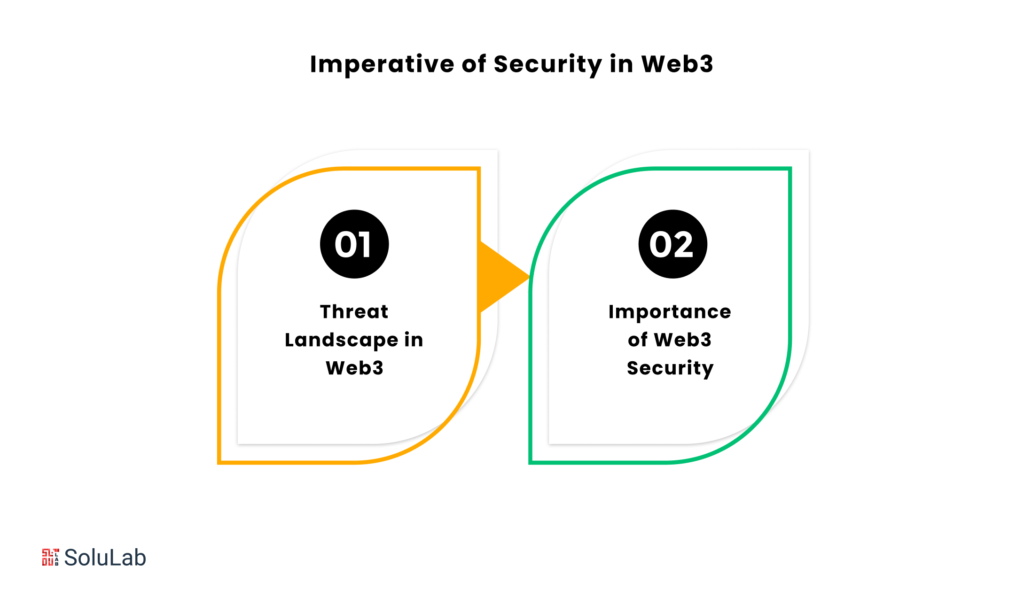
Delve into the complex landscape of threats and challenges that define security in the Web3 era. Uncover the unique vulnerabilities posed by decentralized technologies, including smart contract intricacies and DApp security. In this section, we emphasize the critical importance of robust security measures for both end-users and developers in ensuring a secure Web3 environment.
The decentralized nature of Web3 poses a number of unique security challenges.
One challenge is the lack of a central authority to oversee security. In a traditional, centralized system, there is a single point of failure that can be targeted by attackers. In a decentralized system, there is no single point of failure, but this also makes it more difficult to identify and address security threats. Another challenge is the complexity of smart contracts. Smart contracts are self-executing pieces of code that are used to automate transactions on the blockchain. They are often written in complex programming languages, which can make it difficult to identify and fix security vulnerabilities.
Finally, the decentralized nature of Web3 makes it difficult to enforce security standards. In a traditional system, security standards can be enforced by a central authority. In a decentralized system, there is no central authority, so it is up to individual users and dedicated developers to take responsibility for their own security.
These challenges can lead to a number of potential threats and vulnerabilities in a Web3 environment. Some of the most common threats include:
It is important to be aware of these threats and vulnerabilities in order to protect yourself when using Web3 applications. Here are some tips for staying safe:
Related: Top 10 Web3 Use Cases
By following these tips, you can help to protect yourself from the security risks of Web3.

Web3 is a new and evolving ecosystem, and as such, it is important to be aware of the security risks involved. Both end-users and developers play a crucial role in upholding Web3 security.
End-users are responsible for securing their own private keys and transactions. Private keys are used to sign transactions and authorize access to funds. If a private key is compromised, an attacker can steal funds from the user’s account. End-users should take steps to protect their private keys, such as:
Developers are responsible for creating robust smart contracts and secure DApps. Smart contracts are self-executing pieces of code that run on the blockchain. If a smart contract is not properly written, it can be exploited by attackers. Developers should take steps to secure their smart contracts, such as:
DApps are decentralized applications that run on the blockchain. If a DApp is not secure, it can be exploited by attackers. Developers should take steps to secure their DApps, such as:
By working together, end-users and developers can help to uphold Web3 security and protect users from cyberattacks.
Take a deep dive into the world of Web3 security audits, where the integrity of decentralized systems is meticulously scrutinized. This section explores the intricate processes involved in conducting thorough security audits, from code analysis to vulnerability assessments. Understand why these audits are indispensable for fortifying the reliability and resilience of Web3 platforms.
Web3 security audits are a critical part of the development and deployment of decentralized applications (dApps). They help to identify and mitigate security vulnerabilities that could be exploited by attackers and can help to ensure that dApps are robust and reliable.
There are a number of different types of security audits that can be performed on dApps, including:
Security audits are an important part of the development and deployment of dApps. By performing security audits, dApp developers can help to identify and mitigate security vulnerabilities that could be exploited by attackers. This can help to ensure that dApps are robust and reliable and that users’ data and funds are protected.
There are a number of different types of Web3 security audits that can be performed, including:
Web3 security audits are an important part of the development process for dApps and can help to protect users from security threats. However, it is important to note that no audit can guarantee that a dApp is completely secure. It is always important to exercise caution when using dApps and to only use dApps that have been audited by a reputable security firm.
In addition to comprehensive assessments and reviews, there are a number of other steps that can be taken to ensure the robustness of Web3 systems. These include:
By taking these steps, developers can help to ensure that their dApps are robust and secure.
Step into the shoes of a security auditor as we outline the processes involved in conducting a Web3 security audit. From code analysis to vulnerability assessments, learn how auditors identify and address potential threats to Web3 platforms. The Process of a Web3 Security Audit.
A Web3 security audit is a comprehensive review of a blockchain technology application or platform to identify and address potential security vulnerabilities. The process typically involves the following steps:
Related: Web 3 vs Web 3.0
Security auditors use a variety of techniques to identify and address security vulnerabilities in Web3 applications and platforms. These techniques may include:
Once security vulnerabilities have been identified, they must be addressed in a timely and effective manner. The specific steps taken to address a vulnerability will depend on the nature of the vulnerability. However, some common steps may include:
Web3 security audits are an essential part of securing blockchain technology applications and platforms. By following a comprehensive process, security auditors can help to identify and address potential security vulnerabilities, reducing the risk of attack and data breaches.
Navigate through an array of powerful tools designed to fortify Web3 security. From blockchain scanners to code analyzers, this section provides an overview of essential tools that empower both Web3 developers and users in their quest for a secure digital frontier. Explore best practices for implementing these tools and enhancing the security posture of decentralized ecosystems.
As the Web3 ecosystem grows and matures, the landscape of security tools is rapidly evolving.. However, some key tools have emerged as essential for securing blockchain networks, smart contracts, and DApps. Blockchain scanners
Blockchain scanners are a critical tool for identifying and mitigating security vulnerabilities in blockchain networks. They can be used to scan for a variety of issues, including:
Blockchain scanners can be either on-chain or off-chain. On-chain scanners scan the blockchain directly, while off-chain scanners use a copy of the blockchain to scan for vulnerabilities.
Code analyzers are used to identify security vulnerabilities in smart contracts and DApps. They can be used to scan for a variety of issues, including:
Code analyzers can be either static or dynamic. Static code analyzers scan the code without running it, while dynamic code analyzers scan the code as it is being executed.
Encryption solutions are used to protect data from unauthorized access. They can be used to encrypt data at rest, in transit, and in use.
There are a variety of different encryption solutions available, including:
Encryption solutions can be either software-based or hardware-based. Software-based encryption solutions are typically less expensive than hardware-based solutions, but they may not be as secure. Hardware-based encryption solutions are typically more secure than software-based solutions, but they may be more expensive.
The landscape of Web3 security tools is rapidly evolving as the ecosystem grows and matures. However, some key tools have emerged as essential for securing blockchain networks, smart contracts, and DApps. These tools include blockchain scanners, code analyzers, and encryption solutions. By using these tools, developers and businesses can help to protect their Web3 assets from security threats.
As the decentralized finance (DeFi) industry continues to grow, so too does the need for robust security measures. Web3 security tools can help protect decentralized applications (dApps) from a variety of threats, including:
By integrating and implementing Web3 security tools, dApp developers can help mitigate these risks and protect their users’ funds and data. Best Practices for Integrating Web3 Security Tools
There are a number of best practices that dApp developers can follow when integrating Web3 security tools. These include:
In addition to integrating and implementing Web3 security tools, there are a number of other strategies that dApp developers can use to fortify their decentralized Web3 ecosystem. These include:
By following these best practices and strategies, dApp developers can help to protect their users’ funds and data and fortify their Web3 ecosystem.

Web3, where decentralized technologies redefine digital landscapes, security emerges as a cornerstone for a resilient and trustworthy ecosystem. As we conclude this comprehensive guide to Web3 security, the importance of fortifying decentralized platforms cannot be overstated. Understanding the fundamentals of Web3 security is crucial, given the unique challenges and opportunities that come with the decentralized paradigm. From the intricacies of securing smart contracts to the responsibilities of both users and developers, the imperative for robust security practices in Web3 is clear. The concept of Web3 security audits emerges as a pivotal element in ensuring the integrity and reliability of decentralized systems. Audits play a crucial role in identifying and addressing vulnerabilities, promoting transparency, and enhancing the overall resilience of Web3 platforms. The arsenal of Web3 security tools showcased in this guide underscores the proactive approach required to defend against emerging threats. From blockchain scanners to code analyzers, these tools empower both Web3 developers and users in fortifying their digital assets.
SoluLab stands out as a leading Web3 development company. With a commitment to innovation, SoluLab not only embodies excellence in Web3 development but also prioritizes security as a fundamental aspect of its service offerings. As the Web3 ecosystem continues to evolve, it becomes evident that security is not a solitary endeavor. Users, developers, and visionary companies like SoluLab must collaborate to navigate the complexities of security in Web3. It is through such collaborative efforts that the decentralized future can be safeguarded, ensuring a resilient and secure digital frontier. In conclusion, as we embark on the era of decentralized technologies, let this guide serve as a beacon for understanding and implementing robust Web3 security measures. Whether you are a Web3 developer, enthusiast, or a user navigating this digital frontier, embracing security is not just a choice but a necessity. SoluLab, with its expertise in Web3 development and a commitment to security, exemplifies the ethos required to thrive in the decentralized future. Secure your journey into Web3, empower your digital presence, and contribute to the resilient and decentralized evolution of the digital landscape.
Explore the fundamentals of Web3 security, understanding its significance in fortifying decentralized finance platforms and ensuring the integrity of digital assets in the decentralized paradigm.
Uncover the role of Web3 security audits in identifying vulnerabilities, promoting transparency, and enhancing the overall resilience of decentralized platforms.
Delve into the unique security challenges posed by Web3, including smart contract vulnerabilities, and discover strategies and best practices for addressing them.
Explore a variety of Web3 security tools, from blockchain scanners to code analyzers, and understand how these tools empower both developers and users in safeguarding their digital assets.
Understand the responsibilities of Web3 users in securing private keys and transactions, and explore best practices for ensuring a secure user experience in a decentralized environment.
Learn about SoluLab’s commitment to security in Web3 development and discover how it stands out as a leading Web3 development company, contributing to the secure evolution of the decentralized landscape.
Explore case studies highlighting real-world security challenges faced by Web3 platforms, gaining insights into how vulnerabilities were identified, addressed, and lessons learned for the future of Web3 security.


