Talk to an Expert

How Non-Fungible Tokens Are Changing the Digital World?

How Non-Fungible Tokens Are Changing the Digital World?

In recent years, the digital landscape has witnessed a transformation that has left the world in awe. A new wave of innovation and disruption has swept through the realms of art, entertainment, real estate, and more, reshaping the way we perceive and interact with the digital world. Non-Fungible Tokens (NFTs), heralded as the future of digital ownership and representation, have played an instrumental role in this paradigm shift. NFTs have transcended the boundaries of traditional digital assets and have introduced a concept that is poised to redefine the very essence of ownership, authenticity, and value in the virtual realm. This phenomenon is not merely a passing trend but a substantial force that is rewriting the rules of the digital world. In this blog, we will explore how Non-Fungible Tokens are leaving an indelible mark on the digital landscape, ushering in a new era of possibilities and reshaping the way we perceive, create, and trade in the digital space.

Understanding NFTs

The advent of Non-Fungible Tokens (NFTs) has brought about a transformative shift in the digital world. To grasp the full extent of their impact on the digital realm, it is essential to delve into the fundamentals of NFTs, understanding what makes them unique, how they are created, and the implications for ownership and authenticity.

A. What Makes an NFT Unique?

NFTs derive their uniqueness from their cryptographic properties and the underlying blockchain technology. Unlike traditional digital assets, NFTs are indivisible, irreplaceable, and cannot be exchanged on a one-to-one basis. Each NFT is a distinct entity with a specific digital signature, making it impossible to forge or replicate. This uniqueness is at the core of NFTs’ value proposition in the digital world.

The impact of NFTs on the digital world is profound in the way they confer ownership and authenticity to digital content. Artists, creators, and even individuals can mint NFTs to represent digital art, music, videos, and virtual assets, establishing a sense of ownership that was previously elusive in the digital realm.

B. How are NFTs Created?

The process of creating NFTs is a testament to the revolutionary power of blockchain technology. NFTs are generated through a process called minting, which involves registering a digital asset on a blockchain. This process creates a unique token associated with the asset, effectively transforming it into an NFT.

The ownership and provenance of NFTs are stored securely on the blockchain, providing a transparent and immutable record of transactions. As a result, the creation and transfer of NFTs are not only secure but also entirely transparent, enhancing trust and authenticity in the digital world.

C. Ownership and Authenticity in the Digital Realm

The impact of NFTs on the digital world extends to the concepts of ownership and authenticity. Prior to NFTs, establishing ownership and proving the authenticity of digital assets were significant challenges. NFTs provide a solution to these issues by allowing creators and buyers to assert ownership with confidence.

Ownership of NFTs is cryptographically verified and recorded on the blockchain, eliminating doubts about the legitimacy of ownership claims. This has profound implications for artists, creators, and collectors, who can now monetize their digital works with a sense of security that was previously unattainable.

In essence, NFT in the digital world has transformed by introducing a novel, secure, and transparent method of asserting ownership and authenticity for a wide range of digital assets. This newfound assurance has opened up exciting possibilities for creators, collectors, and investors, reshaping the way we interact with and perceive the value of digital content.
CTA1

NFTs in Art and Creativity

The world of art and creativity has been profoundly impacted by the emergence of Non-Fungible Tokens (NFTs). Here, we explore how NFTs have revolutionized this space, serving as a game-changer for digital artists while also making significant waves in traditional art markets.

A. NFTs as a Game-Changer for Digital Artists

Digital artists, who have long grappled with the challenge of proving ownership and authenticity of their creations, have found a lifeline in NFTs. NFTs provide a groundbreaking solution, enabling artists to mint their digital works as unique tokens on blockchain platforms.

This development has been nothing short of revolutionary. Digital artists can now attach a sense of rarity and ownership to their creations, allowing them to sell their art directly to a global audience. With NFTs, artists have the potential to earn royalties every time their work is sold or traded on NFT marketplaces.

The impact of NFTs on the digital world in the realm of art is immense. It has democratized the art world, breaking down traditional barriers to entry and recognition for digital artists. Through NFTs, artists can gain more control over their work and financial opportunities they may have struggled to find in the past.

B. Impact on Traditional Art Markets

The emergence of NFTs has not only transformed the digital art landscape but also made waves in traditional art markets. This disruption stems from the growth of NFT marketplaces and the way they have reshaped the dynamics of buying and selling art.

NFT marketplaces, such as OpenSea, Rarible, and SuperRare, have become the platforms of choice for trading NFT art. NFT marketplace development and features have made it easier for artists to mint NFTs, connect with collectors, and secure the value of their digital creations. As NFT marketplaces have matured, they have provided a seamless bridge between digital and traditional art markets, enhancing accessibility and liquidity for art buyers and sellers.

The art world has had to adapt to this evolving landscape. Traditional art institutions and galleries are increasingly exploring partnerships with NFT marketplaces to connect with a broader, tech-savvy audience. As a result, the impact of NFTs on the digital world is not confined solely to the digital realm but extends its influence to the broader art industry.

In brief, NFTs have ushered in a new era of possibilities for artists and collectors alike. They have democratized the art world, providing digital artists with opportunities and control, while also disrupting traditional art markets and opening doors for collaboration and innovation. The NFT marketplace development services have played a pivotal role in these transformations, reshaping how we perceive and engage with art in the digital age.
NFTs in the Gaming Industry

NFTs in the Gaming Industry

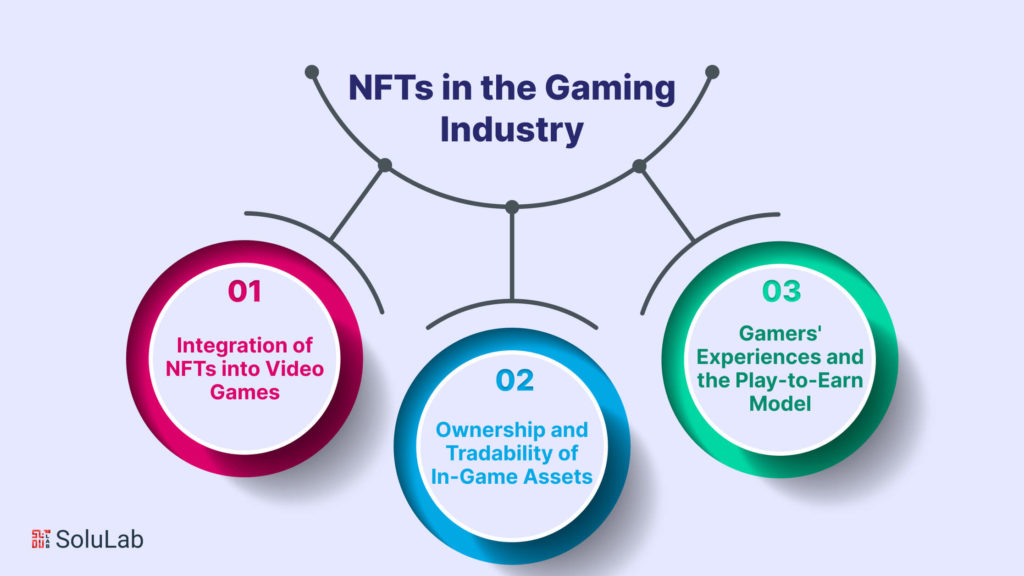
The gaming industry has been significantly impacted by the introduction of Non-Fungible Tokens (NFTs), leading to novel experiences and economic opportunities for both players and developers. Here, we explore the integration of NFTs into video games, ownership and tradability of in-game assets, and how NFTs have given rise to the “play-to-earn” model.

A. Integration of NFTs into Video Games

Traditionally, in-game assets like skins, weapons, and character outfits were owned by the game developers, limiting players’ control over their investments. With the advent of NFTs, these assets can now be tokenized and owned by players as verifiable digital possessions. Game developers are leveraging blockchain technology to create unique NFTs representing these in-game items.

This integration allows players to buy, sell, and trade their assets in a decentralized marketplace. These assets can be used across multiple games that support the same standards, providing players with a sense of ownership and control over their digital collections.

B. Ownership and Tradability of In-Game Assets

NFTs enable true ownership of in-game assets. Players have the freedom to trade, sell, or even lend their digital items, giving them a stake in the gaming ecosystem beyond their gameplay skills. This has led to a thriving secondary market for in-game assets, where players can monetize their investments by selling rare or sought-after items to other players.

Moreover, ownership of in-game assets becomes truly provable through the blockchain, reducing the risk of fraud or counterfeit items. The transparent and immutable nature of the blockchain ensures that the asset’s history and authenticity can be easily verified, making it a safe and trustworthy environment for players and collectors.

C. Gamers’ Experiences and the Play-to-Earn Model

NFTs pioneered the notion of “play-to-earn” in the gaming industry. Traditionally, gamers spent countless hours playing without direct financial gains. With NFTs, they can now accumulate valuable in-game assets that have real-world value. This shift has attracted a new audience of players who see gaming as a way to generate income.

In play-to-earn games, players can earn NFTs through gameplay, and these NFTs can be sold on marketplaces for cryptocurrencies or exchanged for other digital or real-world assets. This model has the potential to empower players, particularly in regions with limited economic opportunities, to earn a living by engaging in their favorite pastimes.

However, the play-to-earn model also comes with challenges, including concerns about the balance between gameplay and income generation, the potential for pay-to-win scenarios, and the need for regulations to protect players from exploitation.

In short, the integration of NFTs into the gaming industry has brought about a paradigm shift in the way players perceive and interact with in-game assets. The ownership, tradability, and play-to-earn model are transforming the gaming experience, opening new doors for both gamers and developers. As NFTs continue to evolve, they are likely to shape the future of gaming in ways that we have yet to fully explore.

NFTs in Real Estate and Virtual Land

The innovation of Non-Fungible Tokens (NFTs) extends beyond the realms of digital collectibles and gaming, venturing into the world of real estate and virtual land. This development brings forth the tokenization of real-world assets, virtual land ownership within metaverse platforms, and its potential impact on the real estate industry.

A. Tokenization of Real-World Assets

NFTs have paved the way for the tokenization of real-world assets, such as real estate properties. Tokenization involves breaking down physical assets into digital tokens, making them easily tradable and divisible. Through NFTs, individuals can hold digital ownership rights to specific portions or properties within the real estate market.

This tokenization opens up a range of possibilities, from enabling fractional ownership where multiple investors can hold shares in a single property to simplifying the process of buying and selling real estate. NFTs offer transparency and security by recording ownership and transaction history on a blockchain, reducing the need for intermediaries and enhancing trust in real estate transactions.

Real estate NFTs are often listed on NFT marketplaces, facilitating easy trade and providing a global platform for investors and buyers. Businesses and developers looking to engage in real estate tokenization can hire top NFT developers to create customized NFT marketplace development services that cater to their specific needs.

B. Virtual Land Ownership in Metaverse Platforms

Metaverse platforms, immersive virtual environments where people interact and socialize in digital spaces, have seen a surge in virtual land ownership through NFTs. Within metaverse worlds, parcels of virtual land are represented as NFTs, allowing users to purchase, develop, and trade virtual real estate.

Virtual land in metaverses serves various purposes, from creating digital businesses and virtual storefronts to hosting events and social gatherings. Some popular metaverse platforms include Decentraland, The Sandbox, and Somnium Space, where virtual land ownership has become a fundamental aspect of the user experience.

This development has encouraged businesses and entrepreneurs to invest in virtual land, further boosting the metaverse’s growth. Virtual landowners can develop their properties to generate revenue or simply hold them as digital assets with the potential for appreciation.

C. The Potential Impact on the Real Estate Industry

The integration of NFTs in real estate and virtual land ownership has the potential to disrupt the traditional real estate industry. Here are some of the potential impacts:

  • Accessibility: Real estate tokenization can lower the barriers to entry, making it possible for a broader range of investors to participate in real estate markets.
  • Efficiency: NFTs can streamline the buying and selling process by reducing paperwork and the involvement of intermediaries.
  • Globalization: NFTs enable cross-border investments, allowing investors to diversify their portfolios across different countries.
  • Liquidity: Fractional ownership and NFT-based real estate can increase liquidity, making it easier for investors to exit their positions.
  • Metaverse Integration: As virtual land ownership becomes more popular, the metaverse may emerge as a new dimension for real estate transactions and business opportunities.

In brief, NFTs have brought real estate into the digital age, offering new avenues for investment and diversification. The tokenization of real-world assets and virtual land ownership within metaverse platforms have the potential to revolutionize the real estate industry and redefine how we interact with both physical and digital properties. Businesses looking to leverage this trend can explore the services of top NFT developers to create their own NFT marketplace development solutions.
Challenges and Controversies

Challenges and Controversies

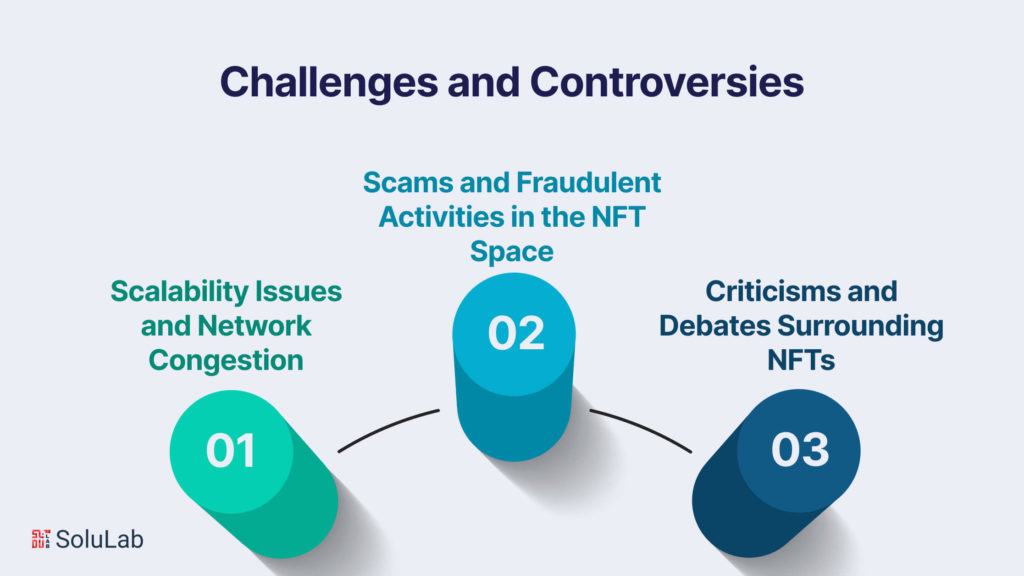
While Non-Fungible Tokens (NFTs) have gained significant attention and adoption, they are not without their share of challenges and controversies. In this section, we’ll explore some of the key issues that have emerged.

A. Scalability Issues and Network Congestion

One of the primary concerns associated with NFTs is the scalability of blockchain networks, particularly Ethereum. As NFTs gained popularity, they led to network congestion and increased transaction fees. The limited capacity of Ethereum and other blockchains has resulted in slow transaction times and high gas costs, making it less accessible for creators and collectors. These scalability issues have prompted discussions about the need for blockchain upgrades and the exploration of Layer 2 solutions to improve the overall NFT ecosystem.

Developers and blockchain communities are actively working on addressing these scalability challenges, but until a scalable solution is widely implemented, network congestion remains a significant hurdle for NFT enthusiasts.

B. Scams and Fraudulent Activities in the NFT Space

The rapid growth of the NFT market has attracted the attention of scammers and fraudsters. There have been instances of fake NFT listings, counterfeit art, and even fraudulent NFT marketplaces. These activities undermine trust in the NFT ecosystem and can lead to financial losses for unsuspecting buyers and creators.

It’s crucial for participants in the NFT space to exercise caution, conduct due diligence, and be aware of the risks associated with fake NFTs and deceptive practices. Emerging NFT marketplaces and services must implement rigorous verification and authentication processes to reduce the prevalence of scams.

C. Criticisms and Debates Surrounding NFTs

NFTs have sparked various criticisms and debates within the digital, artistic, and environmental communities. Some common criticisms include:

  • Environmental Concerns: The energy consumption associated with blockchain networks, particularly in the case of proof-of-work chains like Ethereum, has raised concerns about the carbon footprint of NFTs. These concerns have led to discussions about transitioning to more eco-friendly blockchain technologies.
  • Speculative Bubbles: Some argue that the NFT market has seen speculative bubbles, with overinflated prices for digital assets that may not hold long-term value. The concern is that this speculative behavior could lead to a market crash.
  • Exclusivity and Elitism: NFTs are seen by some as a means for wealthy individuals and celebrities to profit from their digital assets, leaving little room for emerging artists and creators. The question of whether NFTs are democratizing or exacerbating inequalities is a topic of ongoing debate.
  • Lack of Regulation: The lack of regulatory oversight in the NFT space has raised questions about consumer protection, copyright infringement, and legal challenges in case of disputes.

In response to these criticisms, the NFT community and industry are actively engaged in discussions about how to address these issues. This includes exploring more energy-efficient blockchain alternatives, promoting inclusivity supporting emerging artists, and advocating for responsible and ethical practices in the NFT space.

In conclusion, while NFTs have opened up new opportunities and possibilities, they are not immune to challenges and controversies. Addressing scalability, fraudulent activities, and criticisms are essential steps for the NFT ecosystem to mature and establish itself as a sustainable and responsible part of the digital world.
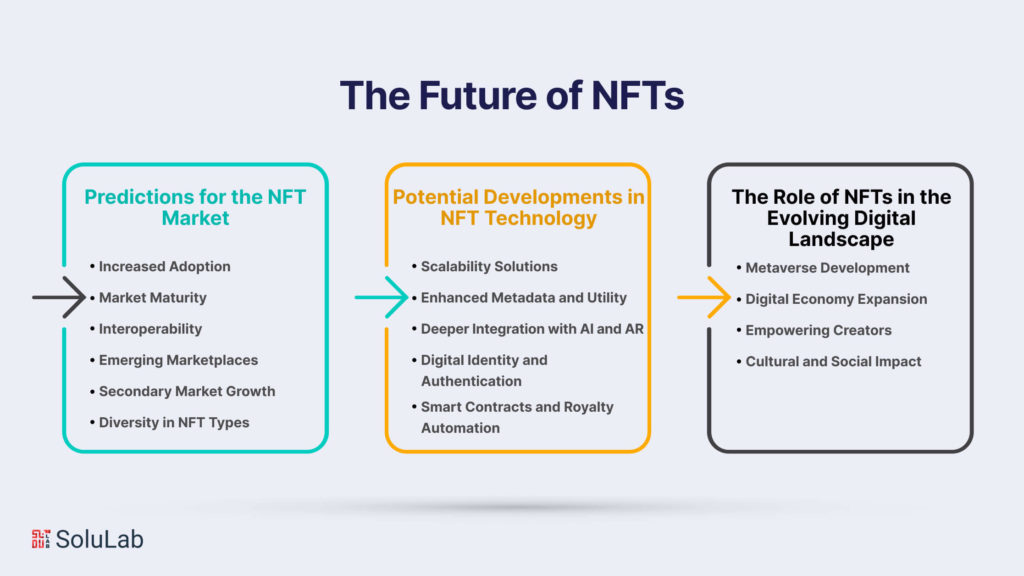
The Future of NFTs

Future of NFTs

As Non-Fungible Tokens (NFTs) continue to reshape various industries and capture the imagination of creators and collectors, it’s essential to consider what the future holds for this innovative technology. In this section, we’ll explore predictions for the NFT market, potential developments in NFT technology, and the evolving role of NFTs in the digital landscape.

A. Predictions for the NFT Market

The NFT market has shown remarkable growth, and its trajectory is likely to continue in the coming years. Here are some predictions for the NFT market:

  • Increased Adoption: NFTs are expected to see broader adoption in industries beyond art and gaming. Sectors like fashion, education, and healthcare may incorporate NFTs for provenance, authentication, and unique experiences.
  • Market Maturity: As the NFT market matures, we can anticipate increased regulation and standardization to address challenges related to fraud, copyright issues, and environmental concerns. This regulatory clarity may help build trust among users.
  • Interoperability: The development of cross-chain NFT solutions may promote interoperability between different blockchain ecosystems, making it easier for users to access and trade NFTs across multiple platforms.
  • Emerging Marketplaces: NFT marketplaces will continue to evolve, offering features such as social interactions, virtual exhibitions, and new ways to showcase and trade digital assets.
  • Secondary Market Growth: The secondary market for NFTs is expected to grow as collectors and investors seek opportunities for trading, flipping, and investing in digital assets. High-value NFTs may appreciate over time.
  • Diversity in NFT Types: New forms of NFTs, such as time-based NFTs, multi-chain NFTs, and NFTs representing real-world assets, will likely emerge, expanding the diversity of the market.

B. Potential Developments in NFT Technology

NFT technology is not static; it continues to evolve and expand its capabilities. Some potential developments include:

  • Scalability Solutions: Scalability issues will drive the development of Layer 2 solutions and the transition to more energy-efficient blockchains, reducing environmental concerns.
  • Enhanced Metadata and Utility: NFTs may become more programmable and dynamic, with metadata that can be updated, and NFTs can carry additional utility beyond ownership, such as granting access to exclusive content or experiences.
  • Deeper Integration with AI and AR: NFTs may be used in conjunction with artificial intelligence (AI) and augmented reality (AR) technologies, creating interactive and adaptive digital experiences.
  • Digital Identity and Authentication: NFTs may play a role in digital identity verification, helping to secure online interactions and protect users’ data and assets.
  • Smart Contracts and Royalty Automation: Smart contracts linked to NFTs will enable automated royalty payments to creators whenever their NFTs are resold, enhancing the fairness of the digital art market.

C. The Role of NFTs in the Evolving Digital Landscape

NFTs are poised to play an integral role in the ongoing transformation of the digital landscape:

  • Metaverse Development: NFTs will become foundational to metaverse environments, enabling users to own, create, and trade digital assets within these immersive virtual worlds.
  • Digital Economy Expansion: NFTs will extend beyond collectibles and art, infiltrating the digital economy as integral components in e-commerce, virtual real estate, and decentralized finance (DeFi) systems.
  • Empowering Creators: NFTs will empower creators and artists by providing more direct access to their audiences, bypassing intermediaries, and granting them greater control over their work and intellectual property.
  • Cultural and Social Impact: NFTs will continue to influence and shape cultural trends, art movements, and the ways we connect and interact in digital spaces.

In conclusion, the future of NFTs appears bright, with the potential for broader adoption, technological advancements, and a growing role in shaping the evolving digital landscape. As NFTs continue to mature, they will bring new opportunities and challenges, ultimately redefining how we perceive and interact with the digital world.
CTA2

Conclusion

In conclusion, the rise of Non-Fungible Tokens (NFTs) has ushered in a transformative era, reshaping how we interact with digital assets and the broader digital world. The impact of NFTs goes well beyond the creative and collectible realms, reaching into areas such as real estate, digital identity, and the metaverse. The emergence of NFT marketplace platforms and white-label NFT marketplace solutions has laid the foundation for a vibrant ecosystem where creators and collectors can connect, exchange, and create value in entirely new ways. These innovations have provided opportunities for entrepreneurs to explore and develop niche marketplaces tailored to specific industries and niches.

As we journey forward, the enduring significance of NFTs in the digital realm becomes more evident. The potential for NFTs to disrupt, innovate, and influence various facets of our digital lives is substantial. This is a world where the boundaries of ownership, creativity, and entrepreneurship are being redefined. It’s a world where opportunities for innovation are boundless, and where the role of NFTs in shaping the future of the digital landscape remains central. The NFT ecosystem continues to evolve, promising a future where the possibilities are as diverse as the digital assets themselves.

SoluLab, a leading blockchain and software development company, plays a pivotal role in the dynamic world of Non-Fungible Tokens (NFTs). As NFTs continue to transform the digital landscape, SoluLab has been at the forefront of innovation, offering NFT marketplace development solutions and white-label NFT marketplace services that empower businesses and entrepreneurs to explore the vast potential of this groundbreaking technology. With a strong commitment to blockchain technology, SoluLab is enabling clients to create custom NFT marketplaces that cater to specific industries and niches, ensuring they stay ahead in the rapidly evolving NFT ecosystem. Their expertise and dedication contribute to the enduring significance of NFTs, driving the digital realm toward a future that is more inclusive, innovative, and interconnected.

FAQs

1. What exactly is an NFT?

An NFT, or Non-Fungible Token, is a digital asset representing ownership or proof of authenticity of a unique item or piece of content, stored on a blockchain. Unlike cryptocurrencies like Bitcoin or Ethereum, NFTs are indivisible and each one has its own distinct value.

2. How can I create my own NFT?

To create your own NFT, you can use various NFT marketplaces like OpenSea, Rarible, or Mintable. You’ll need a digital wallet, connect it to a compatible marketplace, and then follow the platform-specific steps to mint your NFT. You’ll typically need to upload your digital content, set metadata, and determine any royalties for future resales.

3. Are NFTs environmentally friendly?

NFTs on certain blockchains, like Ethereum, have faced criticism for their environmental impact due to energy-intensive proof-of-work consensus mechanisms. However, the industry is actively exploring more eco-friendly solutions through the adoption of proof-of-stake blockchains and Layer 2 scaling solutions to mitigate these concerns.

4. How can NFTs be used in the real estate industry?

NFTs have the potential to revolutionize real estate by enabling the tokenization of property, making it easier to buy, sell, and trade real estate assets. They also offer fractional ownership opportunities, which can lower barriers to entry for real estate investment and make property ownership more accessible to a wider audience.

5. What are white label NFT marketplace solutions?

White label NFT marketplace solutions are customizable platforms provided by companies like SoluLab that allow businesses to create their own NFT marketplaces. They offer a pre-built infrastructure with the flexibility to be tailored to specific needs, industries, and branding, facilitating entrepreneurs and businesses in launching their NFT trading platforms more efficiently.

Twitter NFT; First Social Media Platform to Support NFT Technology

Twitter NFT; First Social Media Platform to Support NFT Technology

In recent years, the term “NFTs” has become increasingly prevalent in the digital world, sparking a revolution in how we perceive and exchange digital assets. NFTs, or Non-Fungible Tokens, represent unique digital items that are indivisible and provably scarce, thanks to blockchain technology. Their significance in the digital world cannot be overstated, as they have reshaped the way we value, own, and trade digital assets.

One of the most notable developments in the NFT space is the emergence of the first social media platform to fully embrace this transformative technology. This NFT social media platform has not only recognized the immense potential of NFTs but has also positioned itself as a pioneer in integrating NFTs into the social media landscape.

The significance of this venture lies in the synergy between NFTs and social media. Social media platforms have evolved into powerful communication channels with vast user bases, making them ideal for promoting and distributing NFTs. By becoming the first social media platform to embrace NFT technology, it has opened up new avenues for creators, collectors, and enthusiasts alike to engage with NFTs on a massive scale.

What’s the Significance of Being the First Social Media Platform to Integrate NFT Technology?

As the first social media platform to embrace NFT technology, our foray into the world of NFTs is not just an innovative step but one with significant implications for the broader NFT ecosystem. Here, we explore the pioneering role in integrating NFT technology and its implications, touching upon key factors such as the best NFT promoters on Twitter, top NFT Twitter accounts, and the development of social media NFT platforms.

A. First Social Media Platform to Adopt NFT Technology

Being the first social media platform to incorporate NFT technology, we’ve opened a new avenue for creators and collectors alike. This move bridges the gap between the NFT community and social media, creating a seamless and engaging experience for users interested in NFTs. It signifies our commitment to staying at the forefront of technological advancements and catering to the evolving interests of our user base.

B. Implications for the NFT Ecosystem

  • NFT Social Media Integration

Our integration of NFT technology signifies the convergence of two digital worlds. Users can now easily showcase their NFT collections, engage with NFT-related content, and even trade NFTs within the platform. This integration not only boosts user engagement but also fosters a sense of community among NFT enthusiasts.

  • Best NFT Promoters on Twitter

With our platform, we aim to amplify the voices of the best NFT promoters on Twitter. We offer them a space to extend their reach, connect with a wider audience, and further promote the NFT movement. This collaboration strengthens the NFT ecosystem as a whole by bringing together influencers and creators.

CTA1

  • Top NFT Twitter Accounts

Our platform’s integration of NFTs opens up opportunities for top NFT Twitter accounts to engage with their audience in a more immersive way. It provides a dedicated space for them to showcase their NFT collections and foster discussions around NFT-related topics, further solidifying their influence in the NFT space.

  • NFT Twitter Engagement

The introduction of NFT technology on our platform facilitates increased NFT Twitter engagement. Users can interact with NFT content, participate in discussions, and discover new artists and collectors. This heightened engagement is vital for the growth and sustainability of the NFT ecosystem.

  • Social Media NFT Platform Development

Our journey into NFTs has also led to advancements in social media NFT platform development. We continuously work on enhancing our platform’s features, making it more user-friendly for NFT enthusiasts. Additionally, we offer NFT marketplace development to empower creators to start their NFT journeys.

  • Hire Best NFT Developers

At SoluLab, we understand the critical role that NFT technology plays in revolutionizing the digital landscape. To maintain our pioneering position in the integration of NFT technology, we have made a steadfast commitment to hiring the best NFT developers. These skilled professionals are the backbone of our journey into the NFT ecosystem, and their expertise is instrumental in shaping the future of our platform.

What are the key features of the NFT social media platform?

key features of the NFT social media platform

In the ever-evolving landscape of social media, this NFT social media platform stands out as the first social media platform to fully embrace and integrate NFT technology. Its unique features set it apart in several key ways:

  • NFT Integration

At its core, this platform seamlessly integrates NFT technology, allowing users to create, showcase, trade, and collect NFTs directly within their profiles. It’s not just a social media platform; it’s a thriving NFT ecosystem.

  • Marketplace

The platform boasts a robust NFT marketplace, making it incredibly convenient for both creators and collectors to transact. NFT creators can list their digital assets, while collectors can easily discover and purchase them.

  • Engagement Metrics

Understanding the importance of NFT Twitter engagement, the platform offers detailed analytics to track the performance of NFT-related content. Creators can measure their impact, and collectors can gauge the popularity of their collections.

  • Top NFT Twitter Accounts

A unique feature is its integration with Twitter, bridging the gap between these two worlds. Users can link their Twitter accounts, enabling cross-promotion and enhancing their reach to some of the biggest NFT Twitter accounts.

How does the NFT social media platform provide support and tools for NFT creators?

  • Creator Tools

The platform provides a suite of tools for NFT creators, including easy-to-use NFT minting, customizable storefronts, and the ability to set royalties on secondary sales. These features empower creators to monetize their digital content effectively.

  • Collector Benefits

Collectors can explore a vast array of NFTs, follow their favorite creators, and build unique collections. The platform also offers secure digital wallets to ensure the safety of these valuable assets.

  • Collaboration Opportunities

Collaboration is encouraged through the platform’s innovative features, enabling creators to work together on NFT projects and even share ownership of NFT collections.

What are the Development Processes of the Platform’s NFT Marketplace? 

Development Processes of the Platform's NFT Marketplace

Developing a successful NFT marketplace within the framework of the first social media platform, which integrates seamlessly with the broader concept of an NFT social media platform, is a multifaceted process that demands careful planning and execution. Here’s an insight into the development processes involved:

  • Ideation and Conceptualization

The journey begins with ideation, where the platform’s vision is defined. This process involves brainstorming and understanding how the NFT marketplace will fit within the overarching framework of the first social media platform.

Key objectives are set, including enhancing social media engagement with NFTs and fostering interaction among users and NFT creators.

  • Design and Prototyping

Design and prototyping are pivotal steps to ensure the marketplace is user-friendly and visually appealing. The goal is to create an interface that seamlessly integrates with the social media aspect.

Usability testing is carried out to identify areas of improvement and refine the user experience.

  • NFT Technology Integration

Integrating NFT technology is at the core of the marketplace development process. This involves understanding various blockchain standards (such as Ethereum’s ERC-721 and ERC-1155) and implementing them effectively.

Robust and secure smart contracts are created to govern NFT creation, ownership, and transactions.

  • Marketplace Development

The development team builds the NFT marketplace with a focus on scalability, ensuring it can accommodate a growing number of NFTs and users.

Features like auctions, bidding, instant purchases, and NFT discovery tools are integrated to enhance the marketplace’s functionality.

  • Security and Compliance

Implementing stringent security measures to safeguard user data and NFT assets is imperative. This includes encryption, authentication, and authorization protocols.

Compliance with relevant regulations and legal frameworks, especially in the context of social media NFTs, is meticulously followed to instill trust among users.

  • Testing and Quality Assurance

Rigorous testing is conducted to identify and rectify any technical glitches or vulnerabilities in the marketplace. Quality assurance ensures the marketplace functions smoothly and securely.

  •  Launch and User Onboarding

A well-thought-out launch strategy is executed to attract NFT creators and collectors to the platform. Integration with the social media aspect allows for seamless promotion.

User onboarding resources and guides are provided to help users navigate the platform effectively.

  • Continuous Improvement

Post-launch, the development process doesn’t end; it evolves. Continuous improvement involves regular updates and feature enhancements based on user feedback and emerging NFT trends.

Staying at the forefront of NFT technology is crucial, as it contributes to the platform’s long-term success.

What are the Benefits of using the platform’s NFT marketplace?

Benefits of using the platform's NFT marketplace

As the first social media platform to embrace NFT technology and create an integrated NFT marketplace within its ecosystem, there are several compelling benefits for users and the NFT community at large:

  • Seamless Integration with Social Media

The NFT marketplace platforms seamlessly integrates with its existing social media features. Users can effortlessly access NFT-related content, auctions, and collections while enjoying their social interactions. This integration enhances the overall user experience.

  • Enhanced Visibility and Engagement

By participating in the platform’s NFT marketplace, users gain access to a broader audience within the social media platform. This exposure can significantly boost engagement with their NFT creations or collections, driving more interactions and discussions.

  • Direct Connection with Top NFT Promoters on Twitter

The platform’s integration with Twitter allows users to connect directly with the best NFT promoters on the platform. This means creators can collaborate with influential figures and leverage their reach to promote their NFTs effectively.

  • Access to Top NFT Twitter Accounts

Users of the platform’s NFT marketplace have the unique advantage of accessing and interacting with the top NFT Twitter accounts. This direct connection facilitates networking, learning, and staying updated on the latest trends in the NFT space.

  • Increased NFT Twitter Engagement

Engaging with the NFT community on the platform not only enhances your social media experience but also boosts your NFT Twitter engagement. Increased interactions, retweets, and discussions related to your NFTs can lead to higher visibility and interest from potential buyers or collectors.

  • Trust in Secure NFT Technology

The platform’s NFT marketplace is built on robust and secure NFT technology. Users can trust the platform’s smart contracts and blockchain integration for transparent and secure NFT transactions. This level of trust is essential for both creators and collectors.

  • Transparency in NFT Ownership and Transactions

Users benefit from the transparency provided by the platform’s NFT technology. Ownership of NFTs is clear, and transaction histories are easily traceable on the blockchain platforms. This transparency adds an extra layer of confidence in NFT transactions.

  • Expertise and Support from NFT Developers

The platform collaborates with the best NFT developers, ensuring that users receive expert guidance and support throughout their NFT journey. Whether you’re a creator looking to mint NFTs or a collector seeking assistance, you can rely on the platform’s expertise.

  • Continuous Growth and Innovation

The platform is committed to continuous growth and innovation in the NFT space. Regular updates and improvements keep users at the forefront of the NFT ecosystem, allowing them to embrace evolving NFT technology and trends.

How Can You Boost Engagement for NFT-Related Content While Leveraging NFT Trends and Discussions for Social Media Growth?

In the dynamic realm of NFTs, where the intersection of art, technology, and social media converges, boosting engagement on the first social media platform dedicated to NFTs is paramount. To navigate this landscape successfully and harness the potential of NFT trends and discussions for social media growth, consider these strategies:

  • Collaborate with the Best NFT Promoters on Twitter

When aiming to increase engagement on your NFT social media platform, collaborating with influential figures in the NFT community is key. Identify and partner with the best NFT promoters on Twitter. Their vast follower base and credibility can significantly amplify your platform’s reach. By forming partnerships and cross-promotions, you tap into their expertise and network, ultimately driving more users to your platform.

  • Spotlight Top NFT Twitter Accounts

To enhance engagement, showcase top NFT Twitter accounts and their activities on your platform. Share and engage with their content, reply to their tweets, and tag them when relevant. This not only encourages reciprocity but also increases your content’s visibility among their followers. Building relationships with these influencers can be instrumental in expanding your platform’s reach.

  • Craft Niche-Targeted Content

Tailor your content to specific NFT niches, catering to the interests and passions of your audience. Staying aligned with current NFT trends and discussions is vital. Create content that offers unique insights, educates, or entertains, ensuring it resonates with your platform’s user base. Niche-specific content fosters a sense of belonging and encourages engagement among like-minded individuals.

  • Actively Participate in NFT Discussions

Engage actively in ongoing NFT discussions and trending topics across social media platforms. Share your perspectives, ask questions, and contribute meaningful insights to establish your platform as a credible source within the NFT community. By actively participating in these conversations, you not only raise awareness but also attract users interested in the discussions you’re contributing to.

  • Collaborate with NFT Developers

Collaborate with NFT developers to create content that educates your audience about the technology behind NFTs. Highlight the role of NFT developers in shaping the NFT ecosystem and their contributions to your platform. These partnerships not only provide valuable content but also attract users interested in the technical aspects of NFTs.

  • Integrate NFT Technology for Engagement

Explore ways to integrate NFT technology within your platform to reward user engagement. Consider creating NFT-based incentives, such as limited-edition collectibles, for active users who contribute to NFT-related discussions. This not only gamifies engagement but also encourages users to stay active and participate in platform activities.

  • Showcase Success Stories

Share success stories of individuals who have achieved significant milestones or financial gains through NFT investments or creations on your platform. Real-world success stories serve as powerful testimonials, inspiring and encouraging engagement. They showcase the tangible benefits of participating in the NFT space on your social media platform.

  • Provide Regular Updates

Keep your audience informed about the development progress of your social media NFT platform and marketplace. Share updates, milestones, and sneak peeks to generate anticipation and excitement among users. Transparency about the platform’s growth can foster a sense of community and belonging.

  • Host NFT-Related Events and Challenges

Organize events, contests, or challenges related to NFTs on your platform. Encourage users to participate by offering NFT rewards, recognition, or exclusive access to unique content. These initiatives not only boost engagement but also create a sense of excitement and community participation. CTA2

Conclusion

In a digital age where innovation and creativity thrive, SoluLab has proven itself to be a pioneer in the realm of social media and NFT technology. As the first social media platform to wholeheartedly embrace NFT technology, it has etched its name in the annals of tech history. SoluLab’s NFT social media platform represents a significant leap forward, blending the world of social networking with the exciting possibilities of blockchain technology.

As we navigate the vast landscape of social media, it’s evident that SoluLab stands as a testament to the ever-evolving nature of the digital world. By becoming one of the best NFT promoters on Twitter, it has solidified its position as a trailblazer in the social media NFT space. Through its innovative approach, SoluLab has seamlessly integrated NFTs into the Twitter ecosystem, opening doors for content creators and collectors alike.

SoluLab’s platform has not only propelled it to the ranks of the top NFT Twitter accounts but has also cemented its status among the biggest NFT Twitter accounts globally. The engagement and excitement surrounding their NFT endeavors are a testament to their commitment to this groundbreaking technology. If you’re seeking top-tier NFT developers and NFT marketplace development services tailored to the Twitter NFT, the first social media platform to embrace NFT technology, our NFT marketplace Development Company is your ideal choice. For further inquiries, please don’t hesitate to contact SoluLab, your trusted partner in NFT technology.

FAQs

1. What is Twitter NFT?

Twitter NFT is a groundbreaking initiative that makes Twitter the first social media platform to fully embrace NFT (Non-Fungible Token) technology. It allows users to mint, trade, and showcase NFTs directly on the platform.

2. What is the significance of Twitter becoming the first social media platform to support NFT technology?

Twitter’s adoption of NFT technology marks a major milestone in the NFT space. It opens up new avenues for creators, artists, and collectors to engage with NFTs within a familiar social media environment.

3. How does Twitter NFT differ from traditional NFT marketplaces?

Twitter NFT integrates NFT technology seamlessly into the social media experience. Users can mint NFTs from their tweets, share them with their followers, and engage in NFT-related activities without leaving the platform.

4. Who are some of the best NFT promoters on Twitter?

Twitter NFT has attracted a vibrant community of NFT enthusiasts. To discover the best NFT promoters, explore hashtags like #NFTCommunity and #NFTPromoters or follow notable accounts that are actively involved in NFT discussions.

5. Can you recommend some top NFT Twitter accounts to follow?

Certainly! For the latest NFT updates and discussions, consider following some of the biggest NFT Twitter accounts, such as @NFTInsider, @CryptoPunks_Bot, and @NFTBeeple.

6. How can I boost my Twitter NFT engagement?

Engaging with the NFT community on Twitter involves active participation. Share your NFT creations, comment on NFT-related tweets, and use relevant hashtags to increase visibility. Collaboration with other NFT enthusiasts can also enhance engagement.
