Talk to an Expert

Top NFT Marketplace Platforms in 2026

Best NFT Marketplace Platforms

With the NFT market evolving at a gradual pace, finding the right marketplace is more important than ever. New platforms are emerging, established ones are upgrading, and competition is driving better features, lower fees, and enhanced security. But which NFT marketplaces truly stand out in 2026?

Whether you’re an artist, collector, or investor, choosing the right platform can impact your profits and overall experience. In this guide, we’ll break down the top NFT marketplaces of the year, helping you navigate the best options for trading digital assets. 

1. OpenSea

2. Rarible

3. Magic Eden

4. Blur

5. CryptoPunks

6. Mintable

7. SuperRare

8. Foundation

9. AtomicMarket

10. Binance NFT

Let’s dive in! 

Emerging Trends of NFT Marketplaces

In 2026, the landscape of NFT marketplaces has evolved dramatically, presenting a diverse array of platforms for buying, selling, and trading digital assets. Among the prominent players, SuperRare, OpenSea, and Rarible stand out for their exceptional offerings and user-friendly interfaces. These platforms cater to a wide spectrum of digital assets, encompassing digital art, collectibles, and virtual real estate. As a result, they have become preferred destinations for NFT enthusiasts.

Key trends shaping the NFT marketplace in 2026 include:

  • Metaverse Integration: Seamless connection with virtual worlds, enabling immersive experiences in the best NFT marketplaces.
  • Social Tokenization: Creation of community-driven value and engagement through NFT marketplaces.
  • Utility NFTs: NFTs that extend beyond art, offering real-world utility and benefits within the best NFT marketplace platforms.
  • Environmental Sustainability: A shift towards eco-friendly blockchain solutions within NFT marketplaces to mitigate carbon footprints.

Furthermore, the NFT marketplace is characterized by:

  • Royalty Structures: Leveraging smart contracts for fair creator compensation in the best NFT marketplaces.
  • Cross-Platform Integration: Expanding reach by connecting with social media, gaming, and VR platforms within NFT marketplaces.
  • Community Engagement: Events and collaborations to foster a vibrant ecosystem in the best NFT marketplace platforms.
  • Enhanced Security Measures: Advanced solutions for fraud prevention and transaction integrity in the best NFT marketplaces.

These developments reflect the NFT marketplace’s commitment to innovation, inclusivity, and sustainability, ensuring a robust and dynamic ecosystem for both creators and collectors.

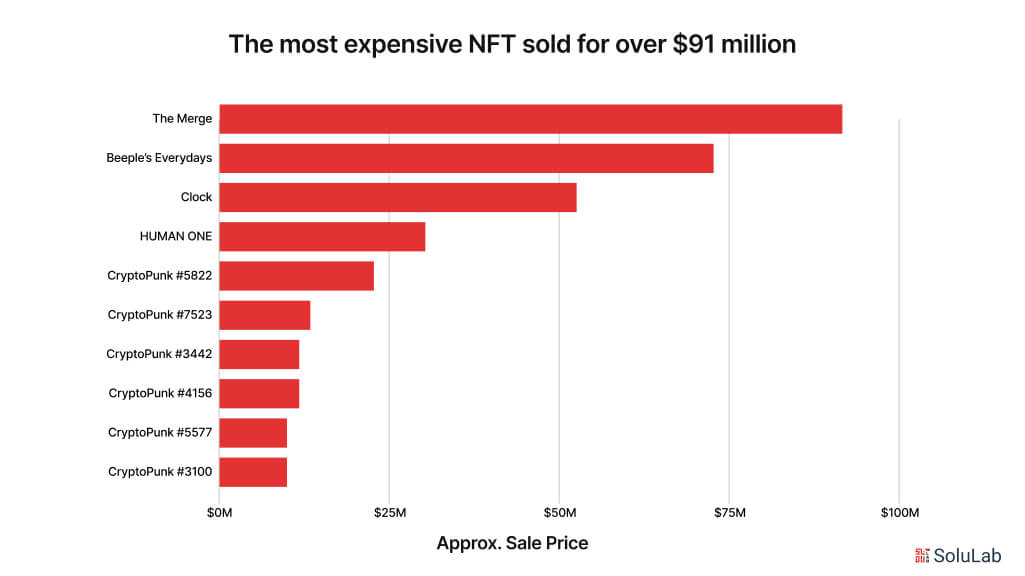
Most Expensive NFT Sold

How Do NFT Marketplaces Work?

NFT marketplaces are digital platforms where users can buy, sell, and trade unique digital assets, such as art, collectibles, and virtual real estate. Here’s a step-by-step breakdown of how they work:

1. Set Up a Wallet: To start with, users need to choose a compatible digital wallet to store NFTs and cryptocurrency.

2. Fund Your Wallet: Users must add cryptocurrency to their wallet to cover the cost of NFTs and any associated transaction fees

3. Select a Marketplace: With many options available, users should select a marketplace that suits their needs based on features, fees, and blockchain support.

4. Buy NFTs: Marketplaces allow users to explore various NFT collections, filter by category, and review details before purchasing.

5. Mint & Sell: Creators can upload digital content, set metadata, and mint NFTs directly on supported marketplaces.

6. Trade & Manage: Once purchased, NFTs can be held, resold, or even used in metaverse environments and blockchain games.

As we enter 2026, for NFT marketplaces we can expect enhanced security, better blockchain interoperability, and more seamless user experiences, making NFT trading easier and more accessible than ever.

Here are some Best NFT Marketplace Platforms in 2026

1. Rarible

Rarible is a community-driven NFT marketplace so it stands out with its decentralized governance model, where RARI token holders influence platform decisions. It supports Ethereum, Tezos, and Flow blockchains, allowing artists to create, buy, and sell NFTs with ease. Rarible is known for its strong focus on creator royalties and community engagement. The marketplace supports a wide variety of NFTs, including digital art, music, virtual goods, and more. Additionally, the platform’s decentralized nature provides increased security and autonomy, which appeals to users who value control and transparency. Rarible is solidifying its standing as a leading option in the NFT ecosystem with its increasing popularity.

2. OpenSea

OpenSea is considered the largest and most versatile NFT marketplace. As one of the top NFT marketplaces, it offers a P2P platform that enables direct interactions between buyers and sellers, facilitating frictionless NFT transactions through non-custodial wallets. Compatible with multiple blockchains, it prioritizes security through its verification process. OpenSea caters to a wide range of users, from digital artists to blockchain game developers. Its partnerships with big brands namely Adidas and Disney reflect its potential as a top marketplace. It is a go-to choice for both beginners and experienced traders.

3. Blur

Blur has emerged as a prominent player in the NFT marketplace, attracting traders and collectors with its innovative features. It caters to advanced NFT traders with real-time data, batch sweeping, and zero marketplace fees. It has quickly become the preferred platform for high-volume traders and collectors looking for fast execution and deep liquidity. Its incentive-based trading model makes it stand out in the competitive NFT market. Blur’s exclusive use of the Ethereum network ensures higher gas fees but provides unmatched tools and insights for NFT enthusiasts, reinforcing its status as one of the best NFT platforms for advanced traders.

4. Magic Eden

Magic Eden has established itself as the premier NFT marketplace for the Solana blockchain, offering fast transactions with low fees. It also supports Ethereum and Bitcoin Ordinals, making it a versatile platform for NFT enthusiasts. The marketplace is known for its strong gaming and metaverse integrations. Its user-friendly interface and features cater to the needs of both beginners and experienced traders. The platform caters to digital art, gaming assets, and collectibles. It has become a popular choice for creators and collectors looking for cost-efficient NFT trading.

5. Superrare

SuperRare another leading NFT marketplace platform specializes in crypto art, offering a unique platform for viewing and experiencing digital artworks. As part of the nft marketplace list, it focuses on high-quality, curated digital art, offering exclusive, limited-edition pieces from renowned artists. It operates more like a digital art gallery, emphasizing scarcity, originality, and artist royalties. Collectors seeking premium artwork prefer this Ethereum-based platform. In the environmentally conscious NFT sector, SuperRare stands out as a significant participant by emphasizing the finest and rare artwork and making a commitment to sustainability.

6. CryptoPunks

CryptoPunks, originally launched by Larva Labs and now owned by Yuga Labs, is one of the most iconic NFT collections. It is often considered as the “birth of NFTs.” While it isn’t a traditional marketplace, its exclusive marketplace allows verified sales and trades of these highly valuable pixel-art characters, making it a go-to destination for high-end collectors. Each of the 10,000 pixelated figures in the collection has distinctive characteristics, including various hairstyles, outfits, and accessories. These rare objects have acquired cultural significance and grown to be highly valuable digital assets.

7. Mintable

Mintable simplifies NFT creation and trading, making it accessible for beginners. It supports gas-free minting on Ethereum and offers an intuitive interface for buying and selling NFTs. With strong backing from Mark Cuban, Mintable is positioned as a user-friendly marketplace for digital creators. This platform allows for the creation of gasless, printable, transaction-based, and open-biddable NFTs. Users of Mintable can exchange NFTs in a variety of categories, including digital art, photography, games, videos, and domain names.

8. Binance NFT

Binance is a popular cryptocurrency exchange platform that now supports trading and holding NFTs, including digital artwork and collectibles. It also permits listing and trading Mystery Boxes containing mystery NFTs on its NFT marketplace platforms. Binance NFT provides limited edition gaming NFTs through its gaming NFT trading platform. Creators receive 1% royalties on future sales, and users can place bids in auctions or make offers to vendors. It is suitable for frequent and sporadic NFT traders, collectors, artists, and those interested in NFT branding, among the different NFT marketplaces available today.

9. Foundation

Foundation is a creator-centric NFT marketplace platform that uses an invite-only model, ensuring a high standard of content. It supports various payment methods, including credit/debit cards, PayPal, and direct fiat purchases, as well as cryptocurrencies like Ethereum. It is designed for digital artists and creators looking for a direct and decentralized way to sell their work. One of the key features is auctions of NFTs, giving artists more control over pricing and sales. This whole setup assures that only the best and most genuine talent can join in. This curated model offers users a polished, top-notch experience that’s setting the benchmark for NFT marketplaces.

10. AtomicMarket

AtomiMarket is a top marketplace for NFTs on the WAX blockchain, known for gaming-related assets, digital collectibles, and environmentally friendly transactions. It’s widely used for play-to-earn (P2E) games and trading digital goods in a cost-effective manner. It operates as a shared liquidity marketplace, meaning that listings are shared across multiple platforms, increasing visibility and trading opportunities for NFT sellers and buyers. It is a seamless marketplace for in-game assets, virtual items, and branded NFTs from projects like Alien Worlds, Farmers World, and more.

CTA 2

Conclusion

Whether you’re an artist, collector, or investor, choosing from the top NFT marketplaces ensures you have access to a reliable, user-friendly platform that aligns with your goals. This list of NFT marketplaces has provided insights into the best NFT platforms available in 2026, each offering unique features and opportunities for growth. 

As you explore different NFT marketplaces, consider the factors that matter most to you—such as user experience, fees, and community engagement—when selecting from the best NFT trading platforms. Xinfin NFT Marketplace is an example of such a thriving NFT marketplace crafted by the experts at SoluLab. The platform is powered by the hybrid blockchain of Xinfin itself and offers a feature-packed solution. 

With the right NFT marketplace platform, you can maximize your potential in this dynamic digital ecosystem. For businesses and entrepreneurs looking to create their own NFT marketplace platform, SoluLab stands out as a leading provider of NFT marketplace development services. Partner with SoluLab to join the list of the top NFT marketplace platforms in 2026!

FAQs

1. What is an NFT marketplace?

An NFT marketplace is a digital platform where users can buy, sell, and trade non-fungible tokens (NFTs). These marketplaces support various types of NFTs, including digital art, collectibles, music, and virtual real estate, providing a secure environment for transactions.

2. How do I choose the best NFT marketplace?

To find the best NFT marketplace, consider factors such as user experience, transaction fees, the type of NFTs offered, and community engagement. Researching a list of NFT marketplaces and comparing the features of each can help you make an informed decision.

3. What are the top NFT marketplaces in 2026?

The top NFT marketplaces in 2026 include platforms that offer a wide range of NFTs, have a strong user base, and provide robust security features. This nft marketplace list highlights the leading platforms that cater to different needs, from art and collectibles to virtual worlds.

4. What should I consider during NFT marketplace development?

When embarking on NFT marketplace development, it’s important to consider factors such as the integration of blockchain technology, ease of use, security features, and scalability. Partnering with an experienced provider for nft marketplace platform development can ensure a successful launch.

5. Are there different NFT marketplaces for specific types of NFTs?

Yes, there are different NFT marketplaces that specialize in specific types of NFTs, such as digital art, music, or gaming assets. Understanding your needs and researching the top NFT platforms can help you find a reliable NFT marketplace tailored to your interests.

6. What makes a reliable NFT marketplace?

A reliable NFT marketplace offers strong security measures, a user-friendly interface, transparent fees, and active community support. Evaluating these aspects across the best NFT platforms will help ensure you’re using a trustworthy platform.

7. How can I stay updated on the best NFT marketplaces?

Staying informed about the best NFT marketplaces involves regularly checking industry news, following updates from leading NFT marketplace platforms, and participating in community discussions. This ensures you’re aware of the latest trends and top NFT marketplace platforms in the evolving NFT space.

How to Build an NFT Marketplace from Scratch

How to Build an NFT Marketplace from Scratch

As the digital world continues to evolve, new opportunities arise for those ready to take the plunge. One such opportunity is the emergence of Non-Fungible Tokens (NFTs) and their associated marketplaces, which have taken the world by storm. This guide will walk you through creating your own NFT marketplace, including identifying your niche, choosing the right blockchain platform, designing and developing your marketplace, establishing smart contracts and tokenization, and launching and marketing your NFT marketplace.

Introduction

Have you heard of individuals purchasing items such as works of art featuring Vladimir Putin, digital kittens, or an NBA play? Do you, however, understand where these items originate from or how they are bought?

NFTs or Non-Fungible Tokens represent a unique digital asset whose uniqueness is determined by a unique value and set of metadata, making them impossible to interchange. They exist on a blockchain, ensuring their authenticity and ownership. From digital art to music, photography, and collectibles, NFTs can represent virtually anything. Consequently, and to build an NFT marketplace is a digital platform where these tokens can be bought and sold. Some marketplaces are general, while others specialize in specific types of NFTs and target a specific audience.

Build the NFT marketplace from scratch, The NFT market is the clear solution to the problem. (NFT, or non-fungible tokens, is used here.) “A digital token is an abbreviation to build an NFT marketplace. It was created expressly to be used as evidence of a digital certificate of ownership rights for items like tweets, real or imagined materials, codes, films, and much more. For instance, Jack Dorsey’s first tweet—best known as the co-founder of Twitter—was purchased as an NFT for $2.9 million.

Read Also: How to Build an NFT Marketplace on Ethereum Blockchain?

The NFT market is also sometimes referred to as a public Blockchain platform. Adding to it, NFTs evolved into the most extravagant cryptocurrency trend as a result of the convergence of more traditional investors looking to acquire these incredible blockchain-based assets and trying to build their own NFT marketplace. Most people do not know how to build an NFT marketplace

Why not create an NFT marketplace then, given the drastic reversal in NFTs? Awaken, Listen! The NFT market is something you need to consider whether you’re an established firm, a crypto enthusiast, or a startup co-founder. (Your ROI could benefit in a variety of ways; you just never know.) Maybe you were looking for information on how to build an NFT marketplace from scratch when you came to this post. However, we are confident that after reading this essay, you will have taken a step toward creating an NFT market. Everything you want to know is covered here. Examples include how to build an NFT marketplace; proposals for an NFT marketplace; well-known NFT apps and websites; and so forth. Here, we take a deep dive into the expanding NFT market! 

What is NFT?

A non-fungible token is an unchangeable data storage unit that is kept on a blockchain. A type of digital ledger that may be traded and sold is the NFT. These tokens are distinctive digital assets, and the Ethereum NFT blockchain allows for ownership tracking.

What is an NFT Marketplace?

An NFT marketplace is what it sounds like if you’re considering building an NFT marketplace, but here’s the quick version: To build an NFT marketplace, to put it simply, a venue for the exchange of digital assets.

Anyone can build an NFT marketplace to sell or buy art, including music, in the virtual world, it doesn’t matter whether you are creating an NFT marketplace app or website but how do you create an NFT marketplace? The blockchain architecture used by NFT marketplaces provides a read-only record that contains a singular, non-fungible token.

Hans Hansen, CEO of Brand3D, a 3D technology company that develops immersive experiences for customers in a variety of industries including AI, 3D technologies, M2M automation, and more, says that once a token has been burned onto the blockchain, it offers the buyer of the NFT with a shred of foolproof ownership evidence that can be verified in the public domain.

Who can Create NFT?

Anyone can construct the NFT, including businesspeople, artists, photographers, writers, and producers. In this sector, experience is not necessary. The only thing you require is ownership of the NFT, which you intend to sell for a profit.

Who can Purchase the NFT?

Anyone who produced the NFT has the ability to mint and buy the NFT on the open market. You will be able to establish a special token on the blockchain with your name and artwork once you have the opportunity to buy the NFT.

CTA 1

Why Should You Invest in NFT Marketplace Today? 

Because the market for NFT is expanding quickly, many investors are looking to invest in digital collectibles. There appears to have been a significant increase in the NFT Market starting in 2021. No one will be able to make duplicate works of art or digital collectibles at the same time as the original works since they will all be tokenized. The NFT Market has a lot of variables to take into account. Let’s talk about the benefits of making an investment in the NFT Marketplace right now.

  • Support to the creators
  • Remove redundancy in the artwork
  • Display unique ownership 
  • Exclusive monetary benefits

Read Our Blog: Benefits Of An NFT Marketplace On Cardano

Most Popular NFT Marketplace of 2023

Whenever you are looking to acquire an NFT, it’s very important to understand which marketplace is appropriate for you and choose wisely. You can use these NFT marketplaces as examples:

  • SoluLab
  • NFT launchPad
  • Crypto.com
  • Binance
  • OpenSea
  • Nifty Gateway
  • Rarible

Most Popular NFTs 

We will now discuss the most well-liked NFTs of 2022.

  • Yubo – Our Favorite NFT Project for 2022
  • Crypto Baristas – NFTs for Coffee Lovers
  • Doodles – Vote on the Future of Your NFT Community
  • Invisible Friends – Best Animated NFT
  • Mutant Ape Yacht Club – A Fresh Take on a Popular NFT Collection

Key Features of NFT Marketplace

  • An attractive & intuitive Storefront for NFT Marketplace.
  • The storefront will contain information such as previews, price history, bids, owner’s information, etc. 
  • Separate seller and buyer account inside
  • Users can create and sell collectibles 
  • The NFT Marketplace platform gives you the opportunity to bid on your listed NFTs.
  • Here you need to set up the Wallet first, named MetaMask 
  • The NFT marketplace platform will provide you to search the items or tokens

Read Also: Solana NFT Marketplace: How to build your own NFT Marketplace on Solana

How to Create Your Own NFT Marketplace from Scratch?

How to Create Your Own NFT Marketplace from Scratch?

Step 1: Define Your Goals and Target Audience

The first step in creating an NFT marketplace is defining your goals and identifying your target audience. Do you want to create a general marketplace or one that specializes in a particular type of NFT? What do you hope to achieve with your marketplace? Answering these questions will help guide your decision-making process throughout the development of your marketplace.

Next, identify your target audience. Are they artists, collectors, gamers, or perhaps a mix of these groups? Understanding your audience’s needs and preferences will enable you to tailor your marketplace to their requirements, increasing its chances of success.

For example, if your target audience consists mainly of artists, you may want to focus on features that make it easy for them to upload and display their work. If your audience comprises collectors, features that ensure the authenticity and rarity of the NFTs might be more critical.

Step 2: Choose the Right Blockchain Platform

Choosing the right blockchain platform for hosting your NFTs is crucial. Different platforms offer varying degrees of scalability, security, and community support. Research the pros and cons of each platform and select the one that best aligns with your goals and requirements.

One popular choice for NFT marketplaces is Ethereum, thanks to its robust smart contract functionality and widespread adoption. However, other platforms like Binance Smart Chain, Flow, and Tezos are also gaining popularity due to lower transaction fees and faster transaction times.

Remember, the chosen platform will significantly influence your users’ experience, so it’s important to make an informed decision.

Step 3: Design and Develop Your Marketplace

Designing and developing your marketplace involves creating a user-friendly interface and implementing various features. This includes search and filtering options, user profiles, and payment integration. It’s also crucial to consider the overall aesthetic of your site, as this can greatly influence how users perceive your marketplace.

From a technical standpoint, developing an NFT marketplace involves front-end and back-end development. Frontend development focuses on the user interface and user experience, while backend development deals with the server side of the application, including database interactions and server logic.

It’s worth noting that the cost of NFT marketplace development typically falls within the range of $15,000 to $25,000. However, the actual cost can vary depending on various factors such as project complexity, desired features, and customization requirements.

Step 4: Establish Smart Contracts and Tokenization

Smart contracts are self-executing contracts with the terms of the agreement directly written into code. In the context of NFTs, smart contracts are used for minting and trading tokens. They ensure that each NFT is unique, authentic, and cannot be duplicated. Moreover, they facilitate transactions by automatically transferring ownership of the NFT from the seller to the buyer upon payment.

Tokenization is the process of converting rights to an asset into digital tokens on a blockchain. This is a critical aspect of NFTs, as it ensures the authenticity and ownership verification of the tokens.

Therefore, when establishing your NFT marketplace, it’s important to develop reliable smart contracts and implement robust tokenization protocols. This not only guarantees the functionality of your marketplace but also builds trust among your users.

Step 5: Launch and Market Your NFT Marketplace

After you’ve developed your NFT marketplace, it’s time to launch and market it. Here, a comprehensive marketing strategy can go a long way in attracting artists and collectors to your platform. Utilize social media, influencers, and partnerships to generate buzz around your marketplace and attract potential users. Also, consider offering exclusive content or promotions to entice users to check out your platform.

Furthermore, remember that launching your marketplace is just the beginning. To maintain interest and engagement, continuously promote your platform and update it with fresh content. Listen to your users’ feedback and make necessary improvements to better serve their needs.

Read Also: How To Launch Your Own NFT Marketplace Website in Less Than 2 Days?

How Much Does it Cost to Develop NFT Marketplace from Scratch?

The NFT Marketplace’s price is entirely determined by its size, available technology, client requirements, and list of market features. You now have a thorough knowledge of the market that we plan to create. The following factors determine the NFT market’s price:

  • Number of features you want
  • Tech Stack
  • Developer’s cost 
  • Time for development 
  • Third-party APIs integration

How to Earn Money from NFTs?

The majority of NFT creators profit from the commissions they receive from the sale of NFTs. The NFT Marketplace system offers a variety of options to earn royalties:

  • Listing Fee

The user can be charged for the listing fee.

  • Gas Fee

To mint, purchase, and sell NFT and execute a blockchain transaction, you must pay the gas fee.

  • Trade NFTs

NFTs can now be purchased through trading. When you buy and sell NFTs, you can make a profit on the margin.

CTA 2

Conclusion

In conclusion, creating your own NFT marketplace can be a rewarding endeavor, given the rapid growth and popularity of NFTs. However, it requires careful planning, strategic decision-making, and technical know-how. By following the steps outlined in this guide, you can navigate the process more smoothly and increase the likelihood of your marketplace’s success. Remember, the key is to create a platform that caters to the needs of your target audience and offers a seamless user experience. So, whether you’re an entrepreneur looking for a new business venture or an artist wanting to monetize your digital creations, building an NFT marketplace could be a great opportunity.

SoluLab, a leading NFT development company, offers specialized NFT marketplace development services to businesses aiming to achieve their goals. With years of experience, SoluLab provides unparalleled NFT Marketplace Development Solutions tailored to the unique needs of its clients. The team of skilled NFT developers at SoluLab possesses extensive expertise, knowledge, and experience to deliver highly customizable solutions that effectively drive business growth. Standing out in the competitive NFT development space is made possible by hiring SoluLab’s team, which focuses on agile development and is committed to delivering exceptional business results. For a distinguished NFT development experience, contact SoluLab today.

FAQs

1. Can I build an NFT marketplace without any technical knowledge or experience?

Building an NFT marketplace from scratch typically requires a solid understanding of blockchain technology and web development. While it’s beneficial to have technical knowledge, you can still collaborate with a development team or hire experts who specialize in NFT marketplace development to bring your vision to life.

2. What are the key features to consider when building an NFT marketplace?

When building an NFT marketplace, it’s crucial to include features such as user authentication, NFT minting and listing, bidding and buying options, secure transactions, smart contract integration, wallet integration, metadata storage, and a user-friendly interface. These features ensure a seamless user experience and efficient marketplace operations.

3. Which blockchain network should I choose for my NFT marketplace?

Ethereum is the most popular blockchain network for NFTs, known for its robust smart contract functionality and large user base. However, other blockchain networks like Binance Smart Chain, Flow, and Polygon are also gaining traction in the NFT space. Consider factors such as scalability, transaction costs, and community support when selecting the blockchain network for your NFT marketplace.

4. How can I monetize my NFT marketplace?

There are several monetization options for an NFT marketplace. You can charge transaction fees or commissions on NFT sales, offer premium listing options for higher visibility, provide advertising spaces for brands, or offer subscription-based services to access exclusive features. Choose a monetization strategy that aligns with your business goals and provides value to your users.

5. What security measures should I implement in my NFT marketplace?

Security is paramount in an NFT marketplace to protect users’ digital assets and ensure trust. Implement robust security measures such as two-factor authentication, encrypted data storage, secure payment gateways, comprehensive smart contract audits, and regular security assessments. Collaborate with cybersecurity experts to identify and address potential vulnerabilities in your marketplace.

How to Develop an NFT Marketplace in 2023

How to Develop an NFT Marketplace in 2023

Unquestionably, the NFT (Non-Fungible Token) market is expanding rapidly. Particularly in the field of art and collectibles, NFTs are quite common. However, they have more promise than just digital art. They can be used to buy event tickets, access limited-edition digital goods, publish and license next-generation music, access gaming elements like avatars, and buy digital lands in virtual worlds. You’ll be astounded to learn what the data reveal regarding the task of how to develop NFTs.  The size of the global NFT market is anticipated to increase from 1894.4 million USD through 2021 to 5093.3 million USD by 2028, growing at a CAGR of 17.9% from 2022 to 2028.

As an outcome, NFT-based marketplaces have developed throughout the crypto industry and are now widely used. Companies are looking into ways to interact with the NFT market in response to this type of multifold increase.

Are you considering designing and establishing your own NFT market? Are you interested in learning how to develop NFT marketplace can help you? Yes? Here is a step-by-step instruction manual that will address all of your concerns. Let’s start now!

What is an NFT?

First, let’s define the word NFT. Infusible Token is referred to as NFT. It is a blockchain-based digital asset with a special identification code that keeps it distinct. The inability to copy or tamper with NFTs is another intriguing aspect of them.  Similar programming is utilized to create NFTs as it is for cryptocurrencies. Both, yet, are distinct.

Cryptocurrencies represent fungible tokens with equal values that are similar. However, NFTs stand out. Each NFT can only exist in a single instance at any one time. Thus, if you hold 50 Ethereum tokens (cryptocurrencies), for instance, they will all be the same, yet if you own 50 CryptoKitties (NFTs), they will all be distinctive and different.

Simply described, NFTs are virtual representations of real-world objects like artwork, gaming assets, & real estate. Because of this, tokenizing them reduces the likelihood of fraud within the transaction while also making it simple to buy, sell, and trade them.

Now that we’ve discussed what NFTs are, let us discuss how they function

NFT management happens on a blockchain. One of the most used blockchains for non-fungible tokens is Ethereum, which you might take into consideration. These blockchains serve as a distributed ledger that may be used to track each NFT’s ownership and transaction history. Additionally, the NFT’s coding and distinctive ID ensure that no other token can imitate it.

The last step is to acquire digital currency, like ether (ETH), and store it in a wallet like Trezor or Electrum. On an NFT platform/marketplace like the OpenSea platform or SuperRare, users can create and trade their digital assets. Here are some interesting NFT statistics that you should be aware of.

The NFT market is valued at $100 million in 2020. This increased 30 times to $3 billion by mid-2022.

  • The millennial population in America is 23% NFT collectors.
  • The Merge sold for 91.8 million USD and was the most expensive NFT ever.
  • On the OpenSea platform, about 2,50,000 people trade NFTs each month.

NFT Marketplace and How Does It Work?

NFTs cannot be directly traded, unlike Bitcoins or any other fungible tokens. Instead, you must use a unique system called NFT marketplace. NFT marketplaces are online or virtual markets where anyone can buy and trade NFTs.

An NFT marketplace can be compared to the “Amazon of the crypto world.” Users can register, add digital artwork or other items, and sell or buy things using their accounts.

The tokens or digital assets can be easily auctioned, bought, and sold here for a defined price. To store and exchange NFT tokens within to develop NFT marketplace, you will need crypto wallets.

Benefits of NFT Marketplace

The emergence of NFT marketplaces is changing how people conduct business online by providing a faster, safer, and more efficient means of exchanging assets. Here is a summary of the main advantages of NFT marketplaces that demonstrates why they are the ideal choice for you and the greatest approach to doing online business.

1. Transparency

The majority of traditional markets fall short of gaining the confidence and trust necessary for business transactions. NFTs are built on blockchain technology, which guarantees that all NFT transactions remain transparent to their users. This increases users’ trust in a distributed database by providing them with error-free payment processes and a smooth transacting experience.

2. Increased Security

Blockchain technology is used to secure every transaction made in the NFT marketplace. You can enjoy all the advantages of highly secure transactions, which protect you from transaction loss and guarantee that no one can steal your digital assets or engage in fraud. Your assets won’t be deleted, changed, or lost from the blockchain network because it is immutable.

3. Liquidity

There is a growing market for cryptocurrencies and NFTs, so you should invest in one. Decentralization also encourages active investment in digital assets. As a result, the NFT now has more liquidity. NFT marketplaces also have built-in liquidity capabilities that make it simple to exchange or trade NFTs for other assets. Simply said, you may quickly convert your NFTs into other assets without having to wait for purchasers to materialize.

4. Easy Transfer of Assets

The NFT marketplace enables you to possess a genuine item and offers integrated authentication as proof of ownership. You can also tokenize your assets & market them on the NFT platform.

5. Decentralization

The key to developing an NFT marketplace is developing a decentralized platform. Users can freely exchange assets here without relying on regulators, conventional financial institutions, etc. With the help of blockchain technology, this is doable.

6. Instant Payments

On the NFT marketplace, cryptocurrency transactions and payments can be done without a user’s full name, address, or credit card number. This enables making rapid payments for anyone simple, quick, and private.

7. Decreased Fees

It is well known that NFT marketplaces have cheaper fees than conventional marketplaces. This is because they do not require a middleman or agents to complete deals.

8. Greater Independence

NFT marketplaces are not subject to the same laws and restrictions as conventional internet marketplaces because of their decentralized structure. Users now have the choice and flexibility to buy, sell, and trade digital goods.

9. Growth Potential

The increasing excitement around NFTs and cryptocurrencies puts the NFT sector in a great position to draw attention from investors all over the world. This may facilitate its rapid growth.

10. Traceability

You can trace & verify the ownership of NFTs thanks to blockchain technology, which underpins the NFT market. Users can confirm the NFT’s uniqueness and determine its value because of the traceability feature of the NFT. Celebrities and fashion brands can sell NFTs worth millions of dollars because of this.

Read more: Create Your Own NFT Marketplace In Just 48 Hours With This Nft Website Builder

Must-Have Features in an NFT Marketplace

Make sure your NFT platform has all the essential elements required to enable the smooth operation of the market. Here is a list of every characteristic your NFT solution must have.

1. Storefront

The majority of NFT markets provide a capability similar to a dashboard called a storefront. By giving them access to all the information about an NFT, including its owners, offers, transactions, previews, price history, etc., it draws users to the site.

2. Advanced Token Search

Users can quickly search for available NFT assets with this functionality, according to their preferences. To do that, all assets must be arranged according to several categories. This fantastic feature improves the user experience.

3. NFT Rankings

Here, traders can rank and review NFTs based on their price, trading volume, as well as other characteristics. Other users will benefit from knowing more about the NFTs’ ratings and standards thanks to this.

4. NFT Listings

The platform allows all users (creators) who have registered to mint their assets and list them. Customers can then sort assets based on a variety of criteria after this is completed. The prices of their NFTs can be mentioned, and the creators can include descriptions.

5. Listing Status

For someone who offers NFT items and completes their verification process, listing status is crucial. It assists with NFT verification and keeps track of the status of the confirmation procedure.

6. Crypto Wallet Integration

Your NFT platform should provide crypto wallet integration to store & trade NFTs since customers must sign up with a crypto wallet.

7. Selling and Auctioning

Bidding always improves the likelihood of sales and secures the greatest price. As a result, consumers should have access to real-time bidding on your marketplace for NFT assets. The winner of the auction will take possession of the digital asset. They can choose to sell their NFTs for a set price.

How to develop an NFT Marketplace

If you’re thinking about developing an NFT marketplace for your company, you must do the following actions:

1. Focus On Your Niche

Your bespoke NFT marketplace design must first match the niche you have chosen. It might be based on video game characters, sports memorabilia, other collectibles, digital artwork, or even a soundtrack. Remember that you’ll be in a better position to attract more traffic and expand your client base if you tailor the structure of your NFT platform to meet the needs of your particular target audience.

2. Select the Right Blockchain Network

As we are all aware, a blockchain is a distributed system that records all information related to NFT transactions. NFT creators use NFT platforms and marketplaces to sell their NFTs & collect royalties. In a similar vein, other users purchase, store, & resell NFTs via NFT platforms. These NFT marketplace transactions are all documented on the pertinent blockchains. Blockchain networks must be reliable, secure, scalable, & interoperable for NFT marketplaces. Making the right decision for your blockchain network is therefore the first step in developing the NFT platform. You should take into account some of the most popular blockchain networks, such as Ethereum, Polkadot, Stellar, and Tezos, as well as others. Ethereum is one of the most well-known blockchain networks out of all of these. Before choosing a blockchain, you might consider the following points.

  • Transaction and NFT development cost
  • Robustness of smart contracts
  • How fork-proof is the blockchain
  • Speed of transaction

3. Choose the Most Advanced, Top-Notch Features

Make sure to integrate all the best features into your NFT platform & enhance its performance. Your NFT marketplace’s value in the market can be increased by offering distinctive features that set it apart from competing platforms. Because of this, you must give considerable thought to the features you intend to include while developing your NFT marketplace. Be very clear about the features you wish to include depending on the specifications of your project. Use a range of alternatives in addition to the required capabilities, such as 3D display, interoperability, social media involvement, and others.

4. Build an Intuitive User Interface

You absolutely must have an appealing, simple, and intuitive user experience for your NFT marketplace. To enable secure and trouble-free trading of NFTs without glitches or problems, this is crucial. Additionally, a strong user interface can enhance the perception of your NFT marketplace. Therefore, the secret is to maintain its aesthetic appeal while making sure that it is uncomplicated, responsive, and user-friendly. You can choose to incorporate tutorials and signposts in addition to an intuitive user interface to help new users.

5. Build IPFS & Database Storage

The next step is to create a secure, immutable database that will house all of the user & admin profile’s private and sensitive information. Additionally, the database has details regarding their NFTs. Data is stored and shared in distributed files & database systems by the IPFS, or Interplanetary File System. NFTs can represent data in any format and size using IPFS in a distributed, secure manner that will stand the test of time.

6. Integrate Other Third-party Services

Integration with payment gateways, cryptocurrency wallets, social media, and email services are all necessary for an NFT marketplace to be successful. Verify whether these are the only tools you require or whether your platform calls for additional integration. Everything is based on the demands of your business.

7. Build Smart Contracts

You should construct smart contracts at this time to launch transactions & mint NFTs automatically when sales requirements are satisfied. The creation of smart contracts is necessary for several reasons. They are first supported by their dependability and trustworthiness. The smart contract your design needs to be compatible with the tasks that your NFT marketplace is supposed to handle.

8. Testing and Deploying

On a platform, faults and bugs frequently ruin the user experience. Testing is therefore an essential step in ensuring a hassle-free user experience. Once your NFT platform is operational, you can test various parameters. For instance, you can use quality testers to verify the usability, functionality, as well as other components of an NFT marketplace. A thoroughly tested solution that closes all real-time gaps and inconsistencies, both anticipated and unanticipated, is ready for release.

Conclusion

It is not surprising that NFT-verse is growing beyond anyone’s wildest dreams. The range of the NFT collectibles, its artists, and most importantly, the desire to promote creativity, are all rising enormously as a result of the best marketing services supporting the NFT marketplace development. Even well-known brands like Nike, Gucci, & Starbucks are joining the stream due to the booming NFT sales volume & tokenization of many new assets. The blog that was mentioned is only the very beginning. The market is considerably more exciting after development, though. If you want to write your own captivating account of the NFT journey because you’re an ambitious NFT enthusiast? Hold on tight and start developing nft markletplace!

Create Your Own NFT Marketplace In Just 48 Hours With This Nft Website Builder

Create Your Own NFT Marketplace In Just 48 Hours With This Nft Website Builder

There have been many years of uncertainty and worry about the useful use cases that could propel the widespread use of blockchain technology. With the growing acceptance of NFTs, 2023 may mark the beginning of a new era for blockchain technology applications. A totally new standard for NFTs was established with the $69 million sale of an NFT collection of art by digital artist Beeple. As a result, numerous singers, artists, and creators—including Sophia the AI robot—have started making and selling NFTs. An NFT marketplace, on the other hand, is crucial for listing your NFT & making sure that it is simple to trade in. What role does the marketplace play in the NFT ecosystem, and how will you choose the best substitute? The talk that follows attempts to help you understand how to establish your own NFT marketplace using this incredible NFT website builder.

What are NFTs?

It is crucial to think critically about the fundamental notion of NFT before delving into the NFT markets. A collectible digital asset is what is known as a non-fungible token, or NFT. It has value both as a form of cryptocurrency and as an ambassador for a certain form of art or culture. NFTs profit from the value in the same way that art is a prospective investment with significant value.

To comprehend “what is an NFT marketplace?” You must be aware of what an NFT is. As it is a digital token, it is a type of cryptocurrency. On the other hand, it differs in that it is special and prohibits like-for-like trades. NFTs, for instance, cannot be exchanged for paper money. If you exchange your NFT for another NFT, you will then be in control of an entirely separate digital asset.

What is an NFT Marketplace?

A key factor in reducing the distance between sellers and buyers is NFT marketplaces. NFT marketplaces may occasionally provide extra tools for quickly creating NFTs.

It is possible for artists to list their NFT works for sale on specialized marketplaces. Customers might search the market for NFTs and then use bidding to buy the item of their choice. Therefore, to ensure lucrative agreements on the artwork, collectibles, as well as other digital assets, any NFT developer/enthusiast must browse the NFT marketplace list.

Alluring features of NFT Marketplace Development

Storefront

The passing users become your marketplace active users with the first impression of your marketplace. Developing the best attractive storefront with all features would gain users for your marketplace.

Auction

The most prominent feature that most users like, putting the NFT in an auction and selling it for the best price. This would retain your users for a long period of time and gain new users with respect to NFTs on auction.

Security

The most dominant one is where the marketplace has to gain the trust of the users and developing a secured marketplace with DDOS, CSRF, SSRF, and more features to prevent invasive hack attacks will gain your trust and the marketplace would free from cyber attacks.

Dashboard

A most informative dashboard for users as well as admin. The users would be allowed to find all the information of the NFTs as well as their previous history in transactions and listing of each and particular NFT.

Read more: How to build the best white label NFT marketplace?

Need for your own NFT Marketplace

NFTs and blockchain technology can provide the ideal way for artists & content producers to receive payment for their creations. Artists are no longer required to sell their works through galleries or auction houses. On the other hand, an artist could simply offer NFT to a customer in exchange for their work. Additionally, it increases the percentage of profits that go to the artists.

It’s interesting to note that NFTs also include the possibility of royalties, which provide the original artist with a specific percentage of any future revenue of the artwork. Many people who are curious about the best NFT market would be glad to understand how to begin an NFT collection. Interested buyers may be seeking ways to purchase NFTs. Let’s examine the processes involved in making NFTs available for sale and purchase.

  • You require a digital wallet to store bitcoin and NFTs to complete transactions on the blockchain platform of your choice.
  • Purchase cryptocurrencies, maybe Ether, or the one that is accepted by the NFT service you have chosen.
  • Credit cards can be used to purchase cryptocurrency on a variety of sites, including PayPal, Coinbase Wallet, eToro, & Kraken.
  • Cryptocurrency might be transferred by users from exchangers to their chosen wallets.

Key Benefits of Creating Your Own NFT Marketplace

NFTs use blockchain technology, much like cryptocurrencies. It is also true for non-fungible token marketplaces. As a result, all the blockchain’s advantages apply to your digital platform for NFT sales. Let’s take a look at the main benefits.

Complete Transparency

Blockchain technology implies that all NFT transactions are visible in a distributed database. You can think of it as a book of all transactions, which displays all the actions on your marketplace in real-time.

Decentralization

Developing an NFT marketplace means building a decentralized platform where users can trade assets freely and not depend on traditional financial institutions, regulators, etc. This decentralization is possible through the use of blockchain technology.

NFT’s Indivisible Nature

Each NFT has its unique digital ID and special features. Users can access exclusive assets instantly available via your marketplace. The uniqueness makes indivisible tokens so desirable.

Liquidity

The demand for cryptocurrencies and NFTs is constantly growing. People appreciate decentralization and the absence of standardized regulation, so they actively invest in digital assets. As a result, many users see increased liquidity in the NFT sector.

Authenticity and Unique Ownership

Another benefit of building an NFT marketplace is the chance to earn your users’ loyalty and trust. A non-fungible token is a publicly accessible record of ownership that may be checked if necessary. As a result, an NFT is impossible to forge.

High Level of Security

Blockchain technologies allow NFT marketplaces to experience all the benefits of first-class security features. Such features include cryptography and consensus algorithms.

Create Your Own NFT Marketplace In Just 48 Hours With This Nft Website Builder

You receive a fully customized NFT marketplace platform with support for different blockchains when you use Solulab’s custom NFT marketplace. where you may exchange your NFTs and give the purchasers a seamless bidding and purchasing experience. The main characteristics of the marketplace & reasons for integrating them into your own nft marketplace are listed below:

Features:

Launching an NFT platform can help you increase your online visibility in the world of cryptocurrency trading. Utilize the integrated NFT marketplace to create, list, and sell your favorite works of art.

  • Admin Dashboard: Keep track of your buyers & NFT collections, and use powerful analytics to completely control transactional reporting.
  • Buyer Website and Application: Centralised setting for viewing and bidding on NFTs. Simple NFT transactions using FIAT money.

Versatility:

Solulab’s NFT Marketplace targets Tailor-made Solutions for almost Every Business around the market:

  • Art: Exhibit astounding and unique art pieces on your own NFT marketplace platform and encompass art fascinators worldwide to bid, buy, and exchange golden art.
  • Sports: Stimulate sports enthusiasts worldwide to purchase and hold virtual sports assets as per their interests and requirements.
  • Digital Collectibles: Showcase your precious digital collections through an auction and gain profits by selling them to interesting folks.
  • Games: Get ready to benefit from the flame of online gaming and strike it by building your own NFT marketplace. Allow gamers to buy and sell unique assets.
  • Accessories: List and sell your favorite accessories on your NFT platform and earn them deliberately.
  • GIFs: Mint your GIFs on the white label NFT platform, making them more special for the collectors to add to their collections.

Development process

Extend the functionalities of the NFT marketplace platform with various tools to shine bright in the digital asset industry.

  • Blockchain Networks: Most stable and reliable multiple blockchain platforms to aid money transfer, process smart contracts, etc.
  • Smart Contracts: Implement swift sale agreements with your buyers using different smart contract techniques.
  • Wallets: Allow payments for your NFTs through various payment options.

What makes us different?

There are several key attributes of our feature-packed NFT marketplace:

  • Minimal Gas Fees
  • Customizable (Centralised & Decentralised)
  • Royalties
  • Multiple Blockchain Support
  • Lazy Minting
  • Rent Ecosystem
  • Variable Platform Fees
  • Multi-Wallet Support

Conclusion

Today, there is a growing acceptance of the possibilities of non-fungible tokens. They have shown themselves to be adaptable and effective, able to inspire and determine the future of practically any business. We haven’t even begun to scratch the surface of NFTs’ remarkable superpowers, therefore it is reasonable to say that they will be with us for a very long time, possibly forever.

The necessity for as well as interest in the creation of own NFT marketplace to expedite transactions and unite NFT evangelists will also be sparked by the NFTs’ increasing popularity. Numerous factors need to be considered while developing an NFT platform, including the target market, key features, development stages, marketplace security, the details and potential of the underlying blockchain technology, etc.

Things you need to know about NFT Marketplace

Things you need to know about NFT Marketplace

There have been many years of uncertainty and worry about the useful use cases that could propel the widespread use of blockchain technology. With the growing acceptance of NFTs, 2021 may mark the beginning of a new era for blockchain technology applications. A totally new standard for NFTs was established with the $69 million sale of an NFT art collection via digital artist Beeple. As a result, numerous singers, artists, and creators—including Sophia the AI robot—have started making and selling NFTs. An NFT marketplace, on the other hand, is crucial to list your NFT & making sure that it is simple to trade in. What role does the marketplace play in the NFT ecosystem, and how can you choose the best substitute? Along with a detailed list of NFT marketplaces, the discussion that follows seeks to educate you on everything there is to know about NFT marketplaces.

What is NFT?

NFT refers to digital assets which represent real possessions like works of art, music, virtual goods, and films that are associated with ownership documentation. There is no alternative way to duplicate NFTs like other tokens because NFTs have identifiable information with smart contracts.

Cryptocurrencies and NFTs are completely unrelated. The value of some cryptocurrencies is the same as that of other cryptocurrencies. In contrast, NFTs’ values weren’t comparable to those of any other NFTs. Because of this, a lot of artists and innovators are now investing in NFT Development & selling their ideas through the NFT Marketplace for enormous rewards.

What is the NFT Marketplace?

The only way to sell and buy NFTs is on NFT Marketplace. The only thing the NFT Marketplace is a place to store assets. To sell and buy your digital assets, there are a tonne of NFT Marketplaces available. However, not every market is the same.

Finding the right marketplace is necessary because each of them has its own special characteristics and functionalities. There are numerous well-known NFT marketplaces, including Opensea, Raible, and others. Unchangeable fact: NFT marketplace owners make more money than NFT developers.

Read more: The Complete Guide to White-Label NFT Marketplace

Functioning of NFTs

We now understand what an NFT is, some well-known examples of them, and the market for NFTs. Let’s learn about how they operate since it is crucial to select the best NFT marketplace. NFT is a public distributed ledger that records all transactions and serves as a digital form of an item. Blockchain is primarily recognized for its range of financial applications.

Along with the support provided by other blockchains for transactions on Ethereum, Ethereum is the most widely used blockchain platform for keeping NFTs. In order to “mint” or create an NFT, digital artifacts that reflect both tangible and intangible entities are typically used. Along with video game skins, the things may also include virtual avatars, designer footwear, collectibles, music, films, sports highlights, and art. In a world of NFTs, uncommon items like tweets have also gained recognition.

As a result, it is simpler to think of NFTs as physical collectibles only in the digital realm. The buyer has the option of receiving a digital file with exclusive ownership rights rather than a real painting. Another crucial element in any consideration of the greatest NFT marketplace is this. NFTs might only have one owner at any given moment.

Additionally, the NFTs’ distinctive data makes it simpler to verify ownership and transfer tokens between owners. It’s also vital to remember that an NFT’s owner or author may choose to store particular data there. The assurance of authenticity in ownership data is demonstrated by the idea of artists signing artwork by including signatures in the metadata of an NFT.

Advantages of the NFT Market

Advantages of the NFT Market

NFTs are dependent on blockchain technology, just like cryptocurrencies. Exchanges of non-fungible tokens are also true of this. As a result, your digital platform for NFT transactions has all of the advantages of blockchain. Let’s go over the main advantages.

  • Individuality

Each NFT has a unique digital ID and also distinguishing features. Through your marketplace, customers can gain instant access to exclusive assets. Indivisible tokens become highly sought after because of how unique they are.

  • Transparency

All NFT transactions are now visible in a distributed system thanks to blockchain technology. Consider it as a record of all activities that instantly displays all deals on your site.

  • Liquidity

The demand for cryptocurrency and NFT services keeps rising. People deliberately profit from digital assets because they value the lack of uniform regulation. As a result, the NFT market is now more liquid, which is being seen by many consumers.

  • Protection

Protection of NFT markets using blockchain technology can benefit from top-notch security features. Examples of these features include consensus algorithms and cryptography.

  • Decentralization

Establishing a white label Creating a decentralized platform for clients to exchange assets willingly without relying on traditional financial organizations, regulators, or groups is what the NFT marketplace entails. Blockchain technology is used to enable this decentralization.

  • Authenticity and distinct holding

Building an NFT marketplace also gives you the potential to win the trust and loyalty of your users. A non-fungible token has a single owner and can be verified if necessary, making it impossible to duplicate an NFT.

How much does it cost to set up an NFT market?

How Much Does it Cost to Setup an NFT Market

The complexity and number of features, the cost of the services offered by a particular NFT marketplace development business, and the technology selected all affect how much it will cost to construct an NFT marketplace website.

  • Estimation, research, design, and discovery

It is used to carry out a thorough examination of your business concept in order to determine the specifications that your NFT service would need. In this step, you should form the market, identify the necessary & optional NFT products, and assemble a team to conduct customer research. After completing this discovery step, you will be adequately informed of your primary difficulties, goals, scope, and audience. The anticipated cost is $11 200.

  • Development of the NFT marketplace

In addition to connecting systems to data flow and other functions, developers also construct architecture. The NFT platform’s user interface is created by user interface designers, who also include cloud synchronization, which improves the entire user experience.

  • Evaluation

You will need QA specialists to test your MVP once it is finished for bugs. As a result, any issue that is found needs to be fixed to ensure the high caliber of your goods.

  • Specialized Documentation and launching  

Bring your MVP to market and observe how users react to it. If your marketplace app is a success, you can add features and enhance it in every way you can think of over time. Making a document with all the necessary information regarding your application is a requirement at this stage.

The NFT Marketplace is growing

On an NFT marketplace, non-fungible tokens are different from equal fungible entities. Since the majority of NFTs are now digital, producers may discover new chances to offer their fans something unique and exceptional by creating new revenue streams.

Several well-known NFTs including Jack Dorsey’s first tweet and also the cartoon “Nyan Cat,”  to Beeple’s $69 million NFT. In 2020, the NFT market was estimated to be worth $250 million, according to a study by nonfungible.com and renowned tech tracking company L’Atelier BNP Paribas.

The NFT markets are expected to grow by 290% in 2020, according to the report. Additionally, NFT marketplaces have been successful in producing transactions of more than $1 billion, according to CryptoSlam. Therefore, it is simple to understand the grounds for thinking about the significance of NFT and an NFT market.

List of Top NFT Marketplace

You’ll see that the interesting new trends of NFTs include NFT marketplaces as a crucial component. NFT marketplaces have made it easier and much more flexible for people to access NFTs while also fixing long-standing problems with artists’ income streams. However, the topic of NFT marketplaces as a whole always comes back to the same question. Naturally, in order to maximize value, NFT producers and consumers would seek solutions to the question, “What is the ideal NFT marketplace?”

Most importantly, there is cause for concern regarding the significant growth in a variety of NFT markets. A summary of some of the well-known NFT marketplaces with such a detailed description can be quite helpful in this situation. Below is a collection of some of the well-known NFT marketplaces that may be able to assist you to discover new NFT terrain.

1. Solulab

Solulab White label marketplace

Launch & manage your NFT company in a matter of minutes. The Solulab White Label Marketplace has been available for some time but is slowly gaining popularity because of its excellent feature selection and straightforward onboarding procedure.

The platform’s abundance of templates and user-friendly UI/UX will surprise you when you use it for the first time. Solulab has successfully worked with a number of businesses, including Cigna, Centene, Merck, Biosplice, Quest Diagnostics, City Block Health, & others, showcasing its expertise via notable launches like White label NFT Marketplace, CEX/DEX, etc. Solulab is ranked as the best NFT marketplace development firm.

2. OpenSea

OpenSea

Several non-fungible token types, including arts, virtual social worlds, sports, censorship-resistant domains, collectibles, & trading cards, are offered by OpenSea. The inclusion of ERC1155 & ERC721 assets makes OpenSea an intriguing feature.

You can use it to buy, sell, and explore a variety of premium digital assets, including those from Decentraland, Axis, CryptoKitties, ENS brands, and others. More than 700 projects of all kinds are available on OpenSea, including digital art endeavors, TCG, name services like Ethereum Name Service / ENS, and collecting games.

One of the best features of OpenSea like an NFT marketplace is the item mining tool. Creators can design their products and build their own NFT collections using the minting tool. For producers creating their own smart contracts for games and digital artifacts, OpenSea is the ideal marketplace.

3. Nifty Gateway

NiftyGateway Logo

The next possible response to the question “What is the finest NFT marketplace?” is Nifty Gateway. It is undoubtedly one of the most reliable high-end NFT markets for trading in cryptographic works of art. The collaboration of Nifty Gateway with leading companies, athletes, and artists benefits the company. In actuality, the collaboration offers only one-of-a-kind pieces to interested crypto art collectors.

When it concerns crypto artwork marketplaces, it is challenging to be accepted on Nifty Gateway. As a result, famous innovators, companies, and top artists have access to this platform. The site uses three various auction formats, including time, silent, and “Buy It Now” auctions. Royalties are also possible with Nifty Gateway because artists can choose what portion of secondary sales they want to receive. It accepts payments via credit cards, and debit cards, including as a leading NFT marketplace (ETH).

4. SuperRare

SuperRare

One of the top options that springs to mind is SuperRare, another promising NFT market. The site places a strong emphasis on acting as a marketplace where individuals might exchange one-of-a-kind, limited-edition works of artwork. Genuine artwork is produced by a SuperRare network artist.

The artwork is then tokenized by the network into a crypto asset/collectible that can be owned and traded. Many business professionals applaud SuperRare for offering a fresh way to engage with art, culture, & collecting online. The most notable aspect of SuperRare emphasizes the rise of social networks above traditional marketplaces.

Digital collectibles can be appropriate for a social setting because they come with such a transparent record of ownership. Beginner artists with such a flair for originality and inventiveness may choose SuperRare. The native coin of the Ethereum network, Ether, is supported.

5. Rarible

Rarible

Without mentioning Rarible, any description of the top NFT marketplace will be lacking. It is a very straightforward and user-friendly NFT platform with few barriers to entry for artists. Rarible can therefore be used to its full potential by those who are only beginning to explore the world of NFT.

The user experience, which is affected by a confusing layout, suffers a little setback as a result. Its own token, RARI, is what makes Rarible intriguing. RARI is useful for rewarding platform users who are engaged.

Running on the Ethereum network, it charges 2.5% in transaction fees for each sale and, along with RARI and ETH, supports cryptocurrencies including WETH, ATRI, and DAI. Rarible is a trustworthy NFT marketplace for royalties as well since artists can choose the percentage of sales proceeds they want to receive from secondary sales.

Conclusion

Last but not least, it can be challenging to select the top NFT marketplace from among the available options. Each item on the list can be tailored to meet the needs of various target markets. Whenever it comes to turning their works into NFTs, experienced artists and newer producers have varied tastes. The worries about royalties and expenses related to NFT sales on the marketplaces, however, are distinct. You might locate the ideal market if you had a clear understanding of what NFT marketplaces are and instructions on how they operate. Choose from the top NFT marketplaces right now to make your decision! 


The Complete Guide to White-Label NFT Marketplace

The Complete Guide to White Label NFT Marketplace

The murky picture of NFTs has suddenly become crystal obvious as a result of the enormous growth in NFT sales over the past year. By beginning the development of your White-Label NFT Marketplace, you can become the Picasso in your artistic business talent.

The development of technologies has always led to changes in investment decisions throughout time. Gary Vaynerchuck compared non-fungible Tokens (NFTs) to beanie babies, but they are unique blockchain-linked digital assets that have revolutionized investment decisions since early 2021.

What Is A White-label NFT Marketplace Platform?

White label NFT marketplace is a pre-built, modifiable NFT platform that is tailored to your unique business requirements. Similar to NFT platforms, White label NFT Marketplace exchanges NFTs from diverse domains. With their crypto sphere businesses, the majority of entrepreneurs choose white label NFT marketplace creation over NFT platform development.

The relevance of NFTs is evident from their scarcity and singularity. The site cannot be used by a third party / anonymous user to sell fake work. As an outcome, the market will initially check the legitimacy of the NFTs and the owners. They operate in the same way to auction houses that demand authentication of a product before bidding. The platform will next evaluate the NFTs to discover who owns them and whether they are genuine.

What Makes The Platform Special?

A white label-based NFT marketplace Software is the most well-liked platform in the crypto sector for generating billion-dollar gains. As a result, the most popular justification for business owners to pick it is to build a white label NFT marketplace.

1 Cost-effective Platform

The biggest benefit of a white-label NFT marketplace is its much cheaper cost when compared to creating a custom solution. The early development expenditures of creating an NFT marketplace from scratch will be reduced, to start. With a white-label NFT marketplace, you won’t have to pay continuing maintenance fees as you would with such a custom marketplace because your service provider will look after the platform and be accessible anytime you need them.

2 Built-in Security

Due to the unique nature of each NFT token, more care must be taken when establishing ownership of these NFT tokens. As a result, when creating security measures for the NFT market, extra consideration must be given. Data security and integrity, for instance, could be compromised by subpar data encryption techniques. On the other side, a white label NFT marketplace has built-in security and doesn’t require any more work. Furthermore, you won’t have to worry about the effort and price of security auditing because the development company thoroughly tested & audited the white-label NFT marketplace platform.

3 Seamless Customizations

You may get the customization & flexibility of a custom NFT shop with a white-label NFT marketplace without the expensive cost or protracted development time. To guarantee to ensure your NFT marketplace properly reflects the branding of your game, it contains specific features dedicated to your NFT project as well as a configurable design and domain name. By personalizing your NFT marketplace, you may stand out from other gaming projects, give your customers more value, and boost your revenue per transaction & conversion rate.

Read more: 9 Trending White-Label NFT Marketplace Solutions

Pros & cons of an NFT marketplace white-label solution

Weighing the advantages and disadvantages can help you choose whether a white-label NFT marketplace is indeed the best choice for you in order to fully understand what you’re getting into.

Pros

  • For the best user experience, a white label NFT marketplace must be created with all the necessary features and functionalities.
  • The NFT market may be customized with your branding to make it uniquely yours. The white label NFT marketplace solution supplier can work to create a unique NFT marketplace with your demands in mind depending on your needs.
  • You can quickly build your personal branded NFT marketplace by customizing a white label NFT marketplace, which is already made.
  • Your NFT marketplace won’t be created from the start because white label NFT marketplaces are pre-made, which lowers the overall development expenses.

Cons

  • Because it’s pre-made, creating wholly new, personalized features that are targeted to your business requirements can be difficult and take some time.
  • You may experience problems where your NFT marketplace is difficult to differentiate from other NFT marketplaces utilizing the same solution, depending on the level of customization permitted within the UI/UX of the white label NFT marketplace solution. 

Monetize The White-label Platform

Your cryptocurrency business’s foundation is monetizing a platform. A platform that shines brighter is the white-label NFT platform.

  • Commission For making, offering for sale, and purchasing NFT via your marketplace platform, you can charge a commission fee. As a result, one of the sources of income for the NFT marketplace platform is the commission fee.
  • Listing Fee In your NFT Marketplace’s shop, you can charge a price for listing user NFTs, and the platform fee is based on the NFT’s pricing value.
  • Ad Spaces Within your marketplace platform, you must implement customized Advertising areas for brands so that you can monetize your operation.

We can start creating now that we have a general understanding of how to make money with white-label NFT markets.

Route to the NFT Marketplace Platform

The first and most important stage in creating an NFT marketplace platform must be selecting your specialization. Due to the size of NFT markets, people have a lot of possibilities. Furthermore, it means that particular NFT platforms concentrate only on that one element. For instance, you can swap your NFT sports collectibles on marketplaces for NFT sports. Similar to this, a number of specifications focus on various NFT use cases, including gaming, virtual worlds, music, art, or crypto arts.

The following step is to choose the perfect blockchain network. Several blockchain networks are available to you, like Ethereum, TRON, Polygon, Cardano, BSC, and many others. More customers will come to your marketplace if you select a smart blockchain with superior features & low transaction fees. Unfortunately, users have been put off by Ethereum’s prohibitive gas charge.

Move Forward with A White-label Service Provider

White-labeling (in general) has been practiced for a long time, however, the White-label NFT marketplace platform could be a novel idea. By developing the services or products themselves, white labeling offers businesses an easy option to broaden their service offerings to potential clients.

Many businesses don’t want to invest time or money developing internal resources that could be better used elsewhere. You can focus on your area of expertise while simultaneously offering your clientele outstanding real-time customer support by integrating a white-label NFT marketplace platform. Although creating your platform from start may be appealing to you, doing so will take time and money away from your primary business. Additionally, there is no assurance that your target audience will favorably evaluate your finished product. Spending money on a pre-built, tried-and-true white label solution will help you save time, money, and labour.

This is among the most important benefits of white labeling. White labelling can assist you in creating new revenue streams by expanding the services you provide to your clientele. It’s also a fantastic technique to attract new clients to your business.

In any industry, historically, smaller players have had a hard time competing with bigger names. They simply lack the staff necessary to offer the services as larger businesses can. White labeling can help even the playing field in this situation.

You have more control over the promotion side when using a white-label NFT marketplace platform. It has historically been challenging to decline a customer’s request for a new service when you lack the resources or time to do so. White labelling enables you to swiftly and simply add the categories of NFTs that your clients require.

Picking out an NFT Marketplace solution

We’ll aim to select the white label NFT marketplace solution upon the following standards in order to make the list as impartial as possible:

Reliability: The solution has to be dependable, stable, and have acceptable performance and levels of bugs.

Features: The solution must offer a sufficient number of components essential to an NFT marketplace’s operations. If more important advanced features are offered, bonus points are added.

Cost: the overall cost of operating your own NFT (transaction costs, subscription costs, or one-time payment).

Support: if a problem arises during in-store operations, assistance must be given promptly and accurately. Cost: The marketplace must be less expensive than competing white label NFT marketplace solutions.

Best white label NFT marketplace solutions

The difficult aspect now is choosing a solution provider to entrust with the creation of your NFT marketplace. We’ll select the top 5 white label NFT marketplace services based on our criteria to assist you with the entire process.

1. Solulab White label marketplace 

Solulab White label marketplace

Within minutes, launch and manage your NFT business. Despite being out there for a while, the Solulab White Label Marketplace is gradually becoming popular thanks to its great feature selection and simple onboarding process.

When using the platform for the first time, you’ll be astounded by how many templates are offered, as well as how engaging the UI/UX is. Solulab is ranked also as the best NFT marketplace development firm solulab has successfully collaborated with a number of companies, including Cigna, Centene, Merck, Biosplice, Quest Diagnostics, City Block Health, and others, demonstrating its expertise through notable launches like White label NFT Marketplace, CEX/DEX, etc.

2. NFTically 

NFTically White-Label NFT Marketplace

Another appealing option for NFT business owners. Although it doesn’t really paint the whole picture, the platform outperforms NFTify in terms of the sheer amount of functionalities and features provided.

The platform is notorious for having unstable performance that doesn’t truly match its high price tags. It is difficult to promote NFTICALLY to novices to the NFT market because, if you’re just getting started, it’s likely that you won’t be using a platform’s complete feature set anyhow. Add to those other problems with high transaction fees & expensive membership plan rates.

3.  Curios 

Curios White-Label NFT Marketplace

Curios are one term that has recently come up, and fortunately, with good reason. They presently power 8,366 NFT marketplaces, thanks to their strong API and feature-rich platform.

The platform offers a wide range of customization possibilities, including the ability to create bespoke pages using CSS. For purchasers who haven’t yet made a cryptocurrency wallet, Curios provides custodial wallets, which customers may use to buy NFTs without having any prior knowledge of cryptocurrency. You can even construct your own email marketing strategy using custom email templates.

4. NFTify

NFTify NFT marketplaces

For anyone wishing to launch their NFT business, the recognized NFT marketplace solution is the best option. The platform has a tonne of functionality, including first-on-the-market capabilities such as built-in bulk NFT upload, and custom payment token, with compatibility for three widely used chains (Ethereum, BNB, Polygon, and Cardano).

The nicest aspect about NFTify is that it is completely free with just a 2.5% transaction charge to keep the platform running. It has a strong community of NFT marketplace entrepreneurs supporting it as well as responsive customer service. It is simpler to import existing NFT collections to certain other NFT marketplaces as OpenSea & Rarible since NFTify gives you full control over your NFTs through your own smart contract.

5. NFT Kred 

NFT Kred NFT marketplaces

NFT Kred, which boasts being 100% white label and having no transaction fees, is pretty much up there on our list of the finest white label NFT marketplace options right now, but it has a hefty price tag.

The platform has a tonne of features, is reliable, and has a helpful crew that can address any queries you may have. You can build up to 50 white label NFT hubs including its subscription plan for moderate projects, which costs $10k per month, sell NFTs both on your NFT hub and OpenSea, and design your store with both the designed theme customizer or even with custom CSS. Overall, NFT Kred is about as excellent a solution as it gets for NFT projects (high-budget NFT gaming projects, for example), for those who believe that the pricing won’t make a significant difference in your budget. 

Conclusion

The NFTs industry has exploded & this is never going to slow down, making it the most popular issue in 2021 and 2022. The market value of NFTs exceeded a billion dollars in 2021, and it is anticipated that NFTs will surpass and set new records in 2022 as opposed to 2021. Entrepreneurs who use white label NFT marketplace to build their cryptocurrency businesses will reap millions in revenues. Your world-class NFT platform will be planned by Maticz, a white label NFT marketplace development business, on a variety of blockchain networks such as Ethereum, Binance Smart Chain, Tron, Cardano, Polygon, Solana, and much more.


9 Trending White-Label NFT Marketplace Solutions

Trending White Label NFT Marketplace Solutions

According to DappRadder, NFT Marketplaces had a steep increase in trading volume of 700%, worth $10.67 billion, in the q3 of 2021. NFT and digital trading’s rising popularity, White label Your prospects of expanding your business in the digital market in various ways have grown thanks to White-Label NFT Marketplace development models.

Even though it has existed since 2008, Blockchain technology remains a relatively young idea, and it has seen numerous changes in the industry over the years. Blockchain technology has grown in popularity and has become the center of any firm in today’s market because of the numerous technological developments that produce something new in this area every year. The market is the latest change to the NFT & NFT trading marketplaces because of the popularity of blockchain technology.

The Non-fungible Tokens have been there since 2014, but it took them almost five years to become well-known and feel their presence in the market. NFTs are now valued at over $200 million in just a few short months, having grown more quickly when their existence became known. Nearly 90% of it actually peaked in February 2021.

The most fascinating and lucrative aspect of the current NFT Marketplace Solution is that its potential is still mostly unrealized because of how plain the surface appears. It also offers anyone joining the market a very lucrative business opportunity. The smartest people in the field also have many opportunities to advance more quickly.

All you need is a flawless marketplace brimming with possibilities and skills. Here is a list of the top White Label NFT marketplace solutions from across the world that people value highly for their potential and capacity to make business operations easier.

The industry has several well-established companies, some still in the background. And for you to exalt your innovative business concept, navigate through this Readymade NFT marketplace, which may be elevating you to a false sense of potential. Below is a list of reputable NFT Market Place Solution markets to keep up with current trends, thanks to a greatly enhanced user experience.

White label NFT marketplace — what is it?

A pre-built, customizable white-label NFT marketplace is what your NFT business requires. An NFT white-label marketplace must be pre-integrated with the necessary functionality to support customers and creators in their free creation, purchase, exchange, and sale of NFTs. You must add your own NFT business labeling to make the NFT marketplace appear your own.

Highlighting Features of an NFT Marketplace

1. NFT Minting Process through White-Label NFT Marketplace

Daily NFT transactions occur in an NFT marketplace, so the entire NFT minting procedure must be, at the very least, reliable and error-free. There are currently some white-label NFT minting platforms that provide both lazy minting (where NFT gas fees are charged at the moment of purchase) as well as traditional minting methods (where gas fees are charged at the moment of NFT creation), each of which has a different purpose and a different target audience.

2. Crypto Payment

An NFT marketplace must support crypto payment for most of its transactions in addition to NFT minting, making it a crucial component you cannot do without. Through crypto payment, buyers and sellers can interact in a safe, secure, & transparent manner using cryptocurrency. The transactions are recorded on the blockchain for all time and are fully accessible and readable.

3. Customization & Customizable

The white-label nature of an NFT marketplace means that it has a level of customizability with which you can apply your branding – and popular white-label NFT marketplaces should all support this. At the base level, you should expect basic customizability, such as the ability to change the header & footer of the NFT marketplaces to add some touches to your brand. On a more advanced level, you should expect the ability to deep-customize your NFT marketplace further with theme customization, add-ons, and so on.

4. Dashboard of Management

Because NFT marketplaces are white-label, you can customize them to add your branding, and all well-known white-label NFT marketplaces ought to enable this. You can expect some basic customization at the most basic level, like the ability to alter the NFT marketplaces’ header and footer to represent your brand better. At a more advanced level, you should anticipate having the option to further deep-customize your NFT marketplace with add-ons, theme customization, etc.

CTA 1

9 White-Label NFT Marketplace present In The Market

A few NFT markets with substantial trading volume and rising recognition are listed below. Each White label NFT Marketplace Solution platform is limited to a particular demographic and has a special feature to draw users and artists. You will find the greatest Pre made NFT Marketplace model featuring enhanced and greatly expanded capabilities to operate the business while immersed in the flow.

Here, we’ve provided a list of them that may be motivating for you, ultimately igniting your desire to create your own White Label NFT platform & turning it into a success story that will serve as an inspiration for your commercial operations.

1. SoluLab

Solulab offers comprehensive white label NFT marketplace services that empower businesses to establish their own NFT platforms with seamless bidding and buying experiences for buyers. Their solution encompasses a network of NFT Marketplace development services, carefully crafted with a focus on user interface and international NFT trading to enhance comfort and reduce time-to-market. Leveraging Solulab’s expertise, businesses can effortlessly create a sophisticated white label NFT marketplace platform that supports multiple blockchains, expanding the possibilities for trading and engaging with NFTs.


$25-$49


50-249


2014


Los Angeles, CA, USA


Disney, Microsoft, Georgia Tech

2. OpenSea

OpenSea is among the primary NFT markets with rising user traffic and fairly good market credibility. A multifaceted NFT trading platform comparable to Rare that can exchange special digital assets, The 20th Century Fox collaborators created and sold a limited edition of Deadpool Two unique digital posters thanks to OpenSea’s reputation in the market. We can also argue that OpenSea appeared worldwide, eliminating the restriction and allowing the crypto industry to explore the market fully.


$80-$95


201-500


2017


New York, United States


DeFi Republic, Aramco

3. Rarible

Rarible is the market pioneer who introduced NFT trading. The first & most well-known marketplace on the international market, NFT Marketplace, is infallible. This is the first place in the developing digital era for creators to discover their ideas, works, and invocations with value. Additionally, it provided a platform for makers and collectors to work together to understand and adapt to their respective markets. Not only that, but Rarible has continued to maintain its originality. Technology was able to easily transition into improved technology thanks to the interface’s simplification and simplicity. Furthermore, it is indisputable that Rarible created the opportunity for developers to acquire stock in the company.


$55-$90


51-200


2020


Delaware, United States


Siemens, Nestle, Liveramp

4. SuperRare

The more useful SuperRare becomes superior as a marketplace. For platform creators, there is room for growth. It provides a venue to transact and exchange NFT and enables social interaction. The idea of a social network in marketplaces similar to SuperRare has acquired traction and expanded the platform’s functionality. In the forum, the buyers and sellers converse, talk about NFTs, and interact with locals.


$25-$50


10-50


2018


Delaware, United States


Eduvalue, Etisalat, Landmark

5. Axie Infinity

The gaming platforms that have equally positioned themselves on the front row in the digital trading market must be noticed within the list of talkies on Blockchain technology, NFT, and other topics. Axie Infinity-style game NFT marketplaces were established to link popular gaming cultures with the technology trend. Users and gamers on the site can breed and engage in combat, and they can also exchange their Axies as NFT in the market, together with their qualities, powers, and other characteristics, using Ethereum blockchain networks. The most valuable collectible generated $42 million in sales by June 2021 because of the pioneering information about NFT Marketplace, which includes Axie Infinity.


$55-$90


11-50


2018


Vietnam


JABIIL, SITA, J2 Global

6. CryptoPunks

Since its inception with Ethereum blockchain networks in June 2017, The CryptoPunks has experienced both the first-generation NFT’s speed and the eventual rush. For their uniqueness, around 10,000 Cryptopunks are establishing rarity & producing scarcity in the ecosystem.


$55-$90


10-49


2017


New York, USA


Fedex, KraftFoods

7. DecentraLand

The NFT revolution’s entirely transactional nature is the most astounding development, & Decentraland is such a prime illustration. In June 2018, during DecentraLand’s early phases, a real estate company got close to a $1 million transaction for 259 parcels with an ambition to build a virtual metropolis known as the Metaverse, according to the Welcome of a Digitized Real Estate Trade. The Ethereum blockchain, which has generated significant fanfare and has a place in the cryptocurrency world, powers this 3-D VR platform.


$55-$99


11-50


2017


Beijing, China


Amazon, Mitsubishi

8. Foundation

Artists can play games on a unique platform called Marketplace Like Foundation. All selected artists & collectors have more room to delve into their specialized areas. These platforms clarified that they wanted to enable consumers to experience the entire range of the creative economy’s characteristics.


$25-$50


11-50


2020


California, USA


Airbnb, Sony, Nintendo

9. NBA Top Shots

The National Basketball Association joins the NFT bandwagon. It’s the most technologically significant time in basketball and NFTs history. The fans were ecstatic to purchase NBA Top Shots, Video clips, and more. There is room for NFT, which has overflowed with opportunities for participants and enterprises with improved profitability. The Blockchain enabled this to happen.


$25-$50


50-100


2020


Vancouver, Canada


Airbnb, Sony, Nintendo

Conclusion

These are some markets with expanded capabilities and distinctive action tales. You can select the best option available and the one that is most appropriate for your company, launch it and then make any necessary customizations based on customer expectations and operational needs. Although it doesn’t look like the party has begun, it is already hopping. Although anything may appear simple and magical from the outside, many technical & logical inputs must be processed internally. Additionally, there’s always room for fresh updates and innovations. With your carefully built White Label NFT platform, which includes the necessary adaptations and input from the top local developers, you may explore your ideas and progress among the NFT industry’s titans.

SolubLab offers white label NFT marketplace development services that enable businesses to build their own NFT marketplace platform from scratch. With a focus on user interface and international NFT trading, SolubLab’s solution provides a comprehensive package of NFT marketplace development services with support for multiple blockchains. Their experienced team has a proven track record in developing NFT solutions across various domains such as artwork, digital collectibles, gaming, and asset tokenization. By leveraging SolubLab’s expertise, businesses can create a seamless white label NFT marketplace platform and benefit from increased comfort and reduced time-to-market. To get started, contact SolubLab today.

FAQs

1. What is a White-Label NFT Marketplace Solution?

A White-Label NFT Marketplace Solution is a pre-built, customizable platform that allows businesses to create their own branded NFT marketplace. It offers a ready-to-deploy solution for buying, selling, and bidding NFTs in the form of digital collectibles. This platform can be customized with specific branding and features, making it an efficient and cost-effective way for businesses to enter the NFT market.

2. What are some benefits of using a White-Label NFT Marketplace Solution?

White-Label NFT Marketplace Solutions offer several benefits. They provide a time and cost-efficient way to launch an NFT marketplace, eliminating the need to develop a platform from scratch. These solutions also allow for customization, enabling businesses to tailor the platform to their needs and branding. Additionally, they offer increased revenue potential, security, scalability, and access to a global market.

3. What are some common features of White-Label NFT Marketplace Solutions?

White-Label NFT Marketplace Solutions come with a range of features. These include customizable front-end design, flexible smart contract creation, secure storage of NFTs, and integration with popular wallets. They also offer features like product listings, payment processing, and order management, which are essential for running an online marketplace.

4. What are some examples of White-Label NFT Marketplace Solutions?

There are several White-Label NFT Marketplace Solutions available in the market. Some of the most popular ones include SoluLab, Opensea Clone, Rarible Clone, Enjin Clone, Sorare Clone, SuperRare Clone, Foundation Clone, Solanart Clone, and Solsea Clone. These platforms are developed on various blockchain networks and can be customized according to business requirements.

5. What are the benefits of developing a White-Label NFT Marketplace Solution?

Developing a White-Label NFT Marketplace Solution offers numerous benefits. One advantage is scalability, allowing the platform to handle a growing number of transactions efficiently. Additionally, the solution provides enhanced security measures, seamless integration with multiple wallets, and the ability to adapt to the ever-changing trends of the NFT market.

Top 10 NFT Marketplace Development Companies

NFT Marketplace Companies

In a world full of popularizing things, from the smallest things to setting up the crowd to change the world, digital content is on the trend. With the power of a pen, well, in this case, the internet, content holds the key to the success of anything or anyone. NFTs or Non-Fungible Tokens are perking up in the ears of the public, regardless of age, in this technologically advanced era. Likewise, the advantages of investing in digital assets and cryptos with a powerful creation will no longer keep you dilly-dallying with doubts about raking profits. Building an NFT marketplace development company that delivers the envisioned futuristic business is about understanding your NFT agency’s key points.

In 2022, the NFT market has gone a tad bit further, trying the waters of its highs and exploring new trends. The trajectory of its growth needs no explanation, but to set the records straight, the common usage of these intangible tokens in the domains, especially the metaverse, has proved its success with sales of 514 million US Dollars.

A Peek Into The Impeccable Non-Fungible Tokens

Non-fungible tokens have gotten huge with their scale. Thanks to the analysis showing the future of the NFT market to be bright enough to secure $231 billion by the year 2030. The flourishing industry of cryptos has already spread into domains unimaginable, like healthcare, education, and the metaverse. If you weren’t living under the rocks, you must know since their entry in 2014, getting arts into the digital monetizable form is continuing to be a mass success. It is no understatement to say that, today, NFTs have long entered the mainstream market, like games, art, sports, etc.

NFT Market In The Upcoming Years

Games and the Players, With the NFT space getting wider and wider owing to the rise of better graphics and gameplay, it is deemed a success by various companies. Now, players holding these NFTs with all the benefits of blockchain have been given the taste of the exhilaration of earning while gaming. ‘Life is more fun if you play games,’ says Roald Dahl for all the adrenaline it produces. The next in line is the Metaverse. Metaverse is a massive stage for all real-like features in a 3D space. The graphical iteration has attracted users and established itself in the NFT market as a giant leap into the future.

The seed of the metaverse has emerged to be solid; further developments strengthen strategic applications in the field. This domain in web3 is showing tendencies to show grand gaming platforms for users in the upcoming years. The NFT market’s development companies have lunged to grab their brands’ names with creative assets. Some of the most-known celebrities in the NFT space are Eminem, Snoop Dogg, Ha Dong Hoon, etc. Even the younger ones in this NFT Frenzy, in their social media, add value to the tokens, with their Fashion forefront of creating digital ownership for the creators.

According to the market analysis, collaborations with all these latitudes in any possible way will be the best for future investments. Such a spotless NFT market with millions of revenue generations has several NFT marketplace development companies that can help NFT dreams come true. Below are the top development companies for you based on hard scrutiny.

How To Choose The Best NFT Marketplace Development Company?

The crypto world is full of organizations trying to offer services for NFTs. With the expanding crypto universe, their utility and use cases keep growing endlessly, generating revenues worth billions. 

Key attributes for a successful Development

  • Accurate delivery of the projects and managing them.
  • An interactive platform that is reciprocation
  • Trailblazing designs for the applications and marketplace of quality
  • Predominant development results with UI/UX in the platform
  • Knowledgeable maven developers.

10 Leading NFT Marketplace Development Companies

1. SoluLab

SoluLab

Solulab is top as the best NFT marketplace development company. Established as a blockchain solution development company in the year 2014. They blended into blockchain development quickly and shortly rose to the throne for their successful launches of projects. Solulab has partnered with Cigna, Centene, Merck, Biosplice, Quest Diagnostics, City Block Health, and many more successfully, proving their proficiency with noticeable launches like White label NFT Marketplace, CEX/DEX, etc.

2. INORU

INORU

INORU specializes in software development, leading in uplifting the web3 space with solutions and marketing services since 2006. They are also most known for their groundbreaking launches in game development. They assist regardless of the business scale and have established a name for themselves with exceptional software development tools taking the enterprises to their next level of success.

3. Blockchain App Factory

Blockchain App Factory

Blockchain App Factory is next on the list! It first launched in 2017 and rose to the sky with its high-end protocols for its blockchain development. They are some tough contenders in the crypto industry for their blockchain development, which essentially makes up the world of cryptos. Partnering with them gets you an array of services like Non-Fungible Tokens, Decentralized Applications (dApps), and Decentralized Finance (DeFi) solution development that covers business verticals all around the world. Alike, Appdupe, their range of services is not limited to one but varied industries, like sports, games, education, real estate, etc.

4. Turnkeytown

Turnkeytown

TurnkeyTown is a blockchain development company with many projects deployed in the market and is famed for its staggering websites and applications. Crypto Preneurs can seek them for their esteemed tech stack-featured developments that stay cohesive to the crypto society. To name a few of their services, they deliver highly customizable clone app development, mobile application services, blockchain application development, AR-VR-based metaverse development services, and much more.

5. Infinite Block Tech

Infinite Block Tech

Infinite Block Tech has been in the crypto world with its impeccable services for several industries. Some of their platforms are Initial Coin Offerings (ICO), Smart Contracts development, Smart digital Wallets, Blockchains-based dApps, and varied blockchain-based solutions. Their decentralized approach and a highly commendable customizing feature with every development are automated.

6. Chaincella

Chaincella

To put it out, Chaincella is one of the first NFT development companies to work with blockchain technology. The end-to-end development service offered by the company is result-driven, delivering marketing for several domains like NFT for music, real estate, sports, gaming, memes, and arts. Their superior service in developing NFT marketplaces are NFT Token Development, NFT games, and their platforms, along with marketing services such as social media marketing, community management, telegram marketing, reputation management, growth hacking, NFT listing, and many more.

7. Kellton

Kellton

Kellton is a unique and constantly evolving digital end-to-end solution providing the company with some original skills that can shift the industry verticals, travel, e-commerce, education, banking, manufacturing, NGOs, logistics, insurance, etc. They are well-known for their cutting-edge technological development solutions as well as the global capability to provide services that will shape the future. They are a utility-driven and result-driven organization, making headway for seamless and ceaseless growth.

8. Hashstudioz

Hashstudioz

Hashstudioz is a leading product development agency that is a one-stop destination for all crypto prenuers in the market. The mavens’ team for designing and developing the product gives a mobile and automated final product. Their areas of expertise lie in SaaS application development, Cloud migration services, Cloud Computing Architecture, Cloud Document verification, Crypto Exchange development, Smart contract development, and so on.

9. Pixbit Solutions

pixbitsolutions

Pixbit Solutions comes with a great team of web designers and developers delivering inventive, unique, and result-driven solutions for the software. This Indian-made high-quality digital software development in the market facilitates any and every requirement of the users from end to end. Some of the explicable services include Android App Development, iOS App Development, E-commerce App Development, Social Media App Development, and so on, which will keep up with the trends.

10. Alwin Technologies

Alwin Technologies

Alwin Technologies is a world-renowned blockchain solution and user-biased NFT development agency that provides services for all businesses: small to huge enterprises. The expert developers gathered in the company always strive to go beyond expectations and land success. Some of the benefits most availed from Alwin Technologies are Crypto exchange, Decentralized Finance, Software development, etc.

Guide on How to Create an NFT Marketplace

The foremost thing in hand before owning an NFT marketplace is objectively thinking through all the pros and cons. This is so because knowing which genre or niche the platform will be in can help the NFT marketplace development agency cater to your requirements more precisely.

  • Select a blockchain network
  • Decide whether it is an Open or Closed market
  • Choose a niche
  • Decide on a commission fee
  • Plan the UI/UX design development
  • Front-End development
  • Smart contract integration
  • Testing and Launching

Conclusion

NFT development services gaining more popularity and attention have constantly instigated crypto enthusiasts, tech-savvies, and even top stars to participate in the NFT wave. The blog has covered only the tip of the iceberg, as the web3 space is not something that is going to halt with this development. There are many NFT marketplace development companies out there that can give your project the reach it deserves. The listed 10 in the top NFT marketplace development companies are arranged as they are predominant and according to my analysis. Needless to say, If you are looking for the best NFT marketplace development company, heed the suggestions and generate revenue worth millions.