Talk to an Expert

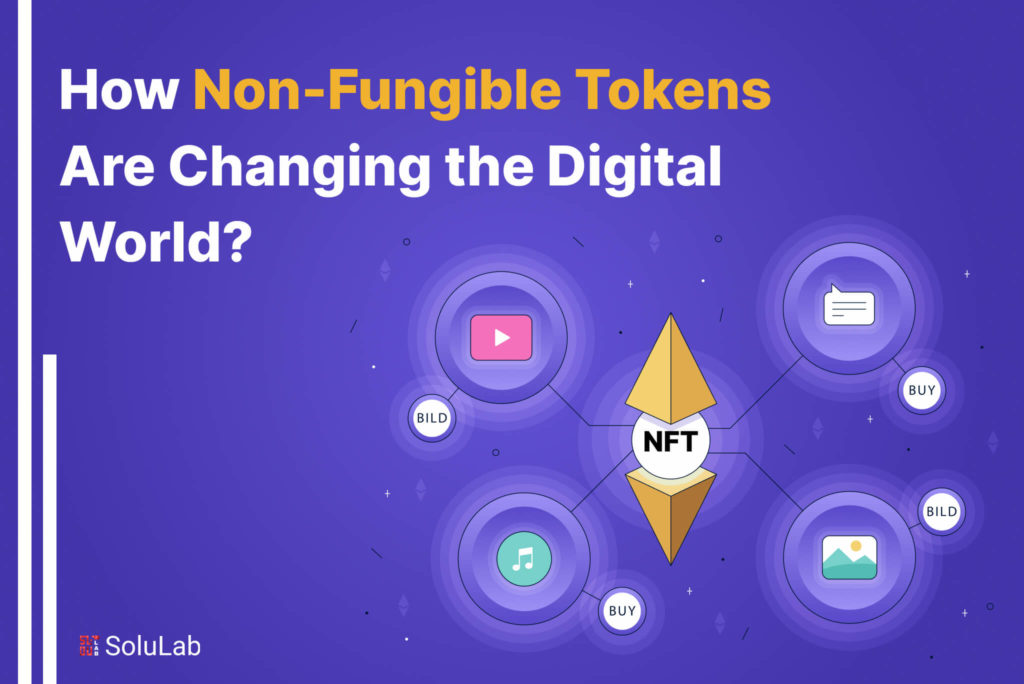
How Non-Fungible Tokens Are Changing the Digital World?

How Non-Fungible Tokens Are Changing the Digital World?

In recent years, the digital landscape has witnessed a transformation that has left the world in awe. A new wave of innovation and disruption has swept through the realms of art, entertainment, real estate, and more, reshaping the way we perceive and interact with the digital world. Non-Fungible Tokens (NFTs), heralded as the future of digital ownership and representation, have played an instrumental role in this paradigm shift. NFTs have transcended the boundaries of traditional digital assets and have introduced a concept that is poised to redefine the very essence of ownership, authenticity, and value in the virtual realm. This phenomenon is not merely a passing trend but a substantial force that is rewriting the rules of the digital world. In this blog, we will explore how Non-Fungible Tokens are leaving an indelible mark on the digital landscape, ushering in a new era of possibilities and reshaping the way we perceive, create, and trade in the digital space.

Understanding NFTs

The advent of Non-Fungible Tokens (NFTs) has brought about a transformative shift in the digital world. To grasp the full extent of their impact on the digital realm, it is essential to delve into the fundamentals of NFTs, understanding what makes them unique, how they are created, and the implications for ownership and authenticity.

A. What Makes an NFT Unique?

NFTs derive their uniqueness from their cryptographic properties and the underlying blockchain technology. Unlike traditional digital assets, NFTs are indivisible, irreplaceable, and cannot be exchanged on a one-to-one basis. Each NFT is a distinct entity with a specific digital signature, making it impossible to forge or replicate. This uniqueness is at the core of NFTs’ value proposition in the digital world.

The impact of NFTs on the digital world is profound in the way they confer ownership and authenticity to digital content. Artists, creators, and even individuals can mint NFTs to represent digital art, music, videos, and virtual assets, establishing a sense of ownership that was previously elusive in the digital realm.

B. How are NFTs Created?

The process of creating NFTs is a testament to the revolutionary power of blockchain technology. NFTs are generated through a process called minting, which involves registering a digital asset on a blockchain. This process creates a unique token associated with the asset, effectively transforming it into an NFT.

The ownership and provenance of NFTs are stored securely on the blockchain, providing a transparent and immutable record of transactions. As a result, the creation and transfer of NFTs are not only secure but also entirely transparent, enhancing trust and authenticity in the digital world.

C. Ownership and Authenticity in the Digital Realm

The impact of NFTs on the digital world extends to the concepts of ownership and authenticity. Prior to NFTs, establishing ownership and proving the authenticity of digital assets were significant challenges. NFTs provide a solution to these issues by allowing creators and buyers to assert ownership with confidence.

Ownership of NFTs is cryptographically verified and recorded on the blockchain, eliminating doubts about the legitimacy of ownership claims. This has profound implications for artists, creators, and collectors, who can now monetize their digital works with a sense of security that was previously unattainable.

In essence, NFT in the digital world has transformed by introducing a novel, secure, and transparent method of asserting ownership and authenticity for a wide range of digital assets. This newfound assurance has opened up exciting possibilities for creators, collectors, and investors, reshaping the way we interact with and perceive the value of digital content.
CTA1

NFTs in Art and Creativity

The world of art and creativity has been profoundly impacted by the emergence of Non-Fungible Tokens (NFTs). Here, we explore how NFTs have revolutionized this space, serving as a game-changer for digital artists while also making significant waves in traditional art markets.

A. NFTs as a Game-Changer for Digital Artists

Digital artists, who have long grappled with the challenge of proving ownership and authenticity of their creations, have found a lifeline in NFTs. NFTs provide a groundbreaking solution, enabling artists to mint their digital works as unique tokens on blockchain platforms.

This development has been nothing short of revolutionary. Digital artists can now attach a sense of rarity and ownership to their creations, allowing them to sell their art directly to a global audience. With NFTs, artists have the potential to earn royalties every time their work is sold or traded on NFT marketplaces.

The impact of NFTs on the digital world in the realm of art is immense. It has democratized the art world, breaking down traditional barriers to entry and recognition for digital artists. Through NFTs, artists can gain more control over their work and financial opportunities they may have struggled to find in the past.

B. Impact on Traditional Art Markets

The emergence of NFTs has not only transformed the digital art landscape but also made waves in traditional art markets. This disruption stems from the growth of NFT marketplaces and the way they have reshaped the dynamics of buying and selling art.

NFT marketplaces, such as OpenSea, Rarible, and SuperRare, have become the platforms of choice for trading NFT art. NFT marketplace development and features have made it easier for artists to mint NFTs, connect with collectors, and secure the value of their digital creations. As NFT marketplaces have matured, they have provided a seamless bridge between digital and traditional art markets, enhancing accessibility and liquidity for art buyers and sellers.

The art world has had to adapt to this evolving landscape. Traditional art institutions and galleries are increasingly exploring partnerships with NFT marketplaces to connect with a broader, tech-savvy audience. As a result, the impact of NFTs on the digital world is not confined solely to the digital realm but extends its influence to the broader art industry.

In brief, NFTs have ushered in a new era of possibilities for artists and collectors alike. They have democratized the art world, providing digital artists with opportunities and control, while also disrupting traditional art markets and opening doors for collaboration and innovation. The NFT marketplace development services have played a pivotal role in these transformations, reshaping how we perceive and engage with art in the digital age.
NFTs in the Gaming Industry

NFTs in the Gaming Industry

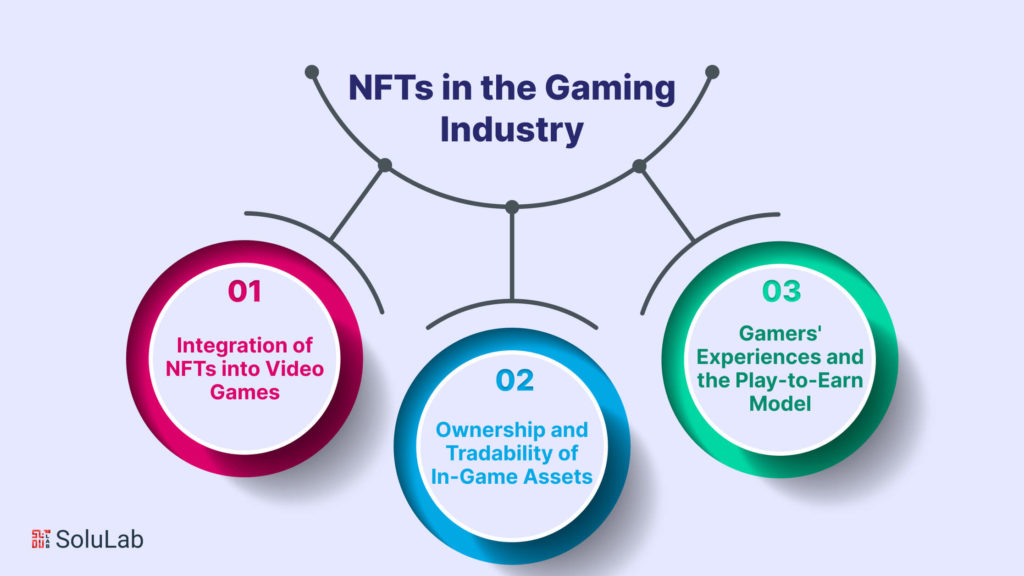
The gaming industry has been significantly impacted by the introduction of Non-Fungible Tokens (NFTs), leading to novel experiences and economic opportunities for both players and developers. Here, we explore the integration of NFTs into video games, ownership and tradability of in-game assets, and how NFTs have given rise to the “play-to-earn” model.

A. Integration of NFTs into Video Games

Traditionally, in-game assets like skins, weapons, and character outfits were owned by the game developers, limiting players’ control over their investments. With the advent of NFTs, these assets can now be tokenized and owned by players as verifiable digital possessions. Game developers are leveraging blockchain technology to create unique NFTs representing these in-game items.

This integration allows players to buy, sell, and trade their assets in a decentralized marketplace. These assets can be used across multiple games that support the same standards, providing players with a sense of ownership and control over their digital collections.

B. Ownership and Tradability of In-Game Assets

NFTs enable true ownership of in-game assets. Players have the freedom to trade, sell, or even lend their digital items, giving them a stake in the gaming ecosystem beyond their gameplay skills. This has led to a thriving secondary market for in-game assets, where players can monetize their investments by selling rare or sought-after items to other players.

Moreover, ownership of in-game assets becomes truly provable through the blockchain, reducing the risk of fraud or counterfeit items. The transparent and immutable nature of the blockchain ensures that the asset’s history and authenticity can be easily verified, making it a safe and trustworthy environment for players and collectors.

C. Gamers’ Experiences and the Play-to-Earn Model

NFTs pioneered the notion of “play-to-earn” in the gaming industry. Traditionally, gamers spent countless hours playing without direct financial gains. With NFTs, they can now accumulate valuable in-game assets that have real-world value. This shift has attracted a new audience of players who see gaming as a way to generate income.

In play-to-earn games, players can earn NFTs through gameplay, and these NFTs can be sold on marketplaces for cryptocurrencies or exchanged for other digital or real-world assets. This model has the potential to empower players, particularly in regions with limited economic opportunities, to earn a living by engaging in their favorite pastimes.

However, the play-to-earn model also comes with challenges, including concerns about the balance between gameplay and income generation, the potential for pay-to-win scenarios, and the need for regulations to protect players from exploitation.

In short, the integration of NFTs into the gaming industry has brought about a paradigm shift in the way players perceive and interact with in-game assets. The ownership, tradability, and play-to-earn model are transforming the gaming experience, opening new doors for both gamers and developers. As NFTs continue to evolve, they are likely to shape the future of gaming in ways that we have yet to fully explore.

NFTs in Real Estate and Virtual Land

The innovation of Non-Fungible Tokens (NFTs) extends beyond the realms of digital collectibles and gaming, venturing into the world of real estate and virtual land. This development brings forth the tokenization of real-world assets, virtual land ownership within metaverse platforms, and its potential impact on the real estate industry.

A. Tokenization of Real-World Assets

NFTs have paved the way for the tokenization of real-world assets, such as real estate properties. Tokenization involves breaking down physical assets into digital tokens, making them easily tradable and divisible. Through NFTs, individuals can hold digital ownership rights to specific portions or properties within the real estate market.

This tokenization opens up a range of possibilities, from enabling fractional ownership where multiple investors can hold shares in a single property to simplifying the process of buying and selling real estate. NFTs offer transparency and security by recording ownership and transaction history on a blockchain, reducing the need for intermediaries and enhancing trust in real estate transactions.

Real estate NFTs are often listed on NFT marketplaces, facilitating easy trade and providing a global platform for investors and buyers. Businesses and developers looking to engage in real estate tokenization can hire top NFT developers to create customized NFT marketplace development services that cater to their specific needs.

B. Virtual Land Ownership in Metaverse Platforms

Metaverse platforms, immersive virtual environments where people interact and socialize in digital spaces, have seen a surge in virtual land ownership through NFTs. Within metaverse worlds, parcels of virtual land are represented as NFTs, allowing users to purchase, develop, and trade virtual real estate.

Virtual land in metaverses serves various purposes, from creating digital businesses and virtual storefronts to hosting events and social gatherings. Some popular metaverse platforms include Decentraland, The Sandbox, and Somnium Space, where virtual land ownership has become a fundamental aspect of the user experience.

This development has encouraged businesses and entrepreneurs to invest in virtual land, further boosting the metaverse’s growth. Virtual landowners can develop their properties to generate revenue or simply hold them as digital assets with the potential for appreciation.

C. The Potential Impact on the Real Estate Industry

The integration of NFTs in real estate and virtual land ownership has the potential to disrupt the traditional real estate industry. Here are some of the potential impacts:

  • Accessibility: Real estate tokenization can lower the barriers to entry, making it possible for a broader range of investors to participate in real estate markets.
  • Efficiency: NFTs can streamline the buying and selling process by reducing paperwork and the involvement of intermediaries.
  • Globalization: NFTs enable cross-border investments, allowing investors to diversify their portfolios across different countries.
  • Liquidity: Fractional ownership and NFT-based real estate can increase liquidity, making it easier for investors to exit their positions.
  • Metaverse Integration: As virtual land ownership becomes more popular, the metaverse may emerge as a new dimension for real estate transactions and business opportunities.

In brief, NFTs have brought real estate into the digital age, offering new avenues for investment and diversification. The tokenization of real-world assets and virtual land ownership within metaverse platforms have the potential to revolutionize the real estate industry and redefine how we interact with both physical and digital properties. Businesses looking to leverage this trend can explore the services of top NFT developers to create their own NFT marketplace development solutions.
Challenges and Controversies

Challenges and Controversies

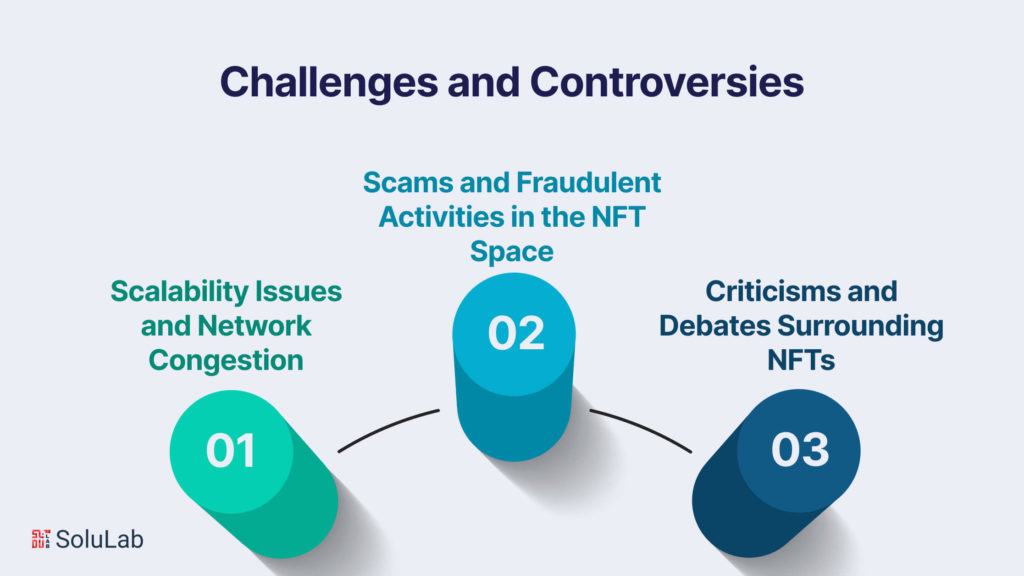
While Non-Fungible Tokens (NFTs) have gained significant attention and adoption, they are not without their share of challenges and controversies. In this section, we’ll explore some of the key issues that have emerged.

A. Scalability Issues and Network Congestion

One of the primary concerns associated with NFTs is the scalability of blockchain networks, particularly Ethereum. As NFTs gained popularity, they led to network congestion and increased transaction fees. The limited capacity of Ethereum and other blockchains has resulted in slow transaction times and high gas costs, making it less accessible for creators and collectors. These scalability issues have prompted discussions about the need for blockchain upgrades and the exploration of Layer 2 solutions to improve the overall NFT ecosystem.

Developers and blockchain communities are actively working on addressing these scalability challenges, but until a scalable solution is widely implemented, network congestion remains a significant hurdle for NFT enthusiasts.

B. Scams and Fraudulent Activities in the NFT Space

The rapid growth of the NFT market has attracted the attention of scammers and fraudsters. There have been instances of fake NFT listings, counterfeit art, and even fraudulent NFT marketplaces. These activities undermine trust in the NFT ecosystem and can lead to financial losses for unsuspecting buyers and creators.

It’s crucial for participants in the NFT space to exercise caution, conduct due diligence, and be aware of the risks associated with fake NFTs and deceptive practices. Emerging NFT marketplaces and services must implement rigorous verification and authentication processes to reduce the prevalence of scams.

C. Criticisms and Debates Surrounding NFTs

NFTs have sparked various criticisms and debates within the digital, artistic, and environmental communities. Some common criticisms include:

  • Environmental Concerns: The energy consumption associated with blockchain networks, particularly in the case of proof-of-work chains like Ethereum, has raised concerns about the carbon footprint of NFTs. These concerns have led to discussions about transitioning to more eco-friendly blockchain technologies.
  • Speculative Bubbles: Some argue that the NFT market has seen speculative bubbles, with overinflated prices for digital assets that may not hold long-term value. The concern is that this speculative behavior could lead to a market crash.
  • Exclusivity and Elitism: NFTs are seen by some as a means for wealthy individuals and celebrities to profit from their digital assets, leaving little room for emerging artists and creators. The question of whether NFTs are democratizing or exacerbating inequalities is a topic of ongoing debate.
  • Lack of Regulation: The lack of regulatory oversight in the NFT space has raised questions about consumer protection, copyright infringement, and legal challenges in case of disputes.

In response to these criticisms, the NFT community and industry are actively engaged in discussions about how to address these issues. This includes exploring more energy-efficient blockchain alternatives, promoting inclusivity supporting emerging artists, and advocating for responsible and ethical practices in the NFT space.

In conclusion, while NFTs have opened up new opportunities and possibilities, they are not immune to challenges and controversies. Addressing scalability, fraudulent activities, and criticisms are essential steps for the NFT ecosystem to mature and establish itself as a sustainable and responsible part of the digital world.
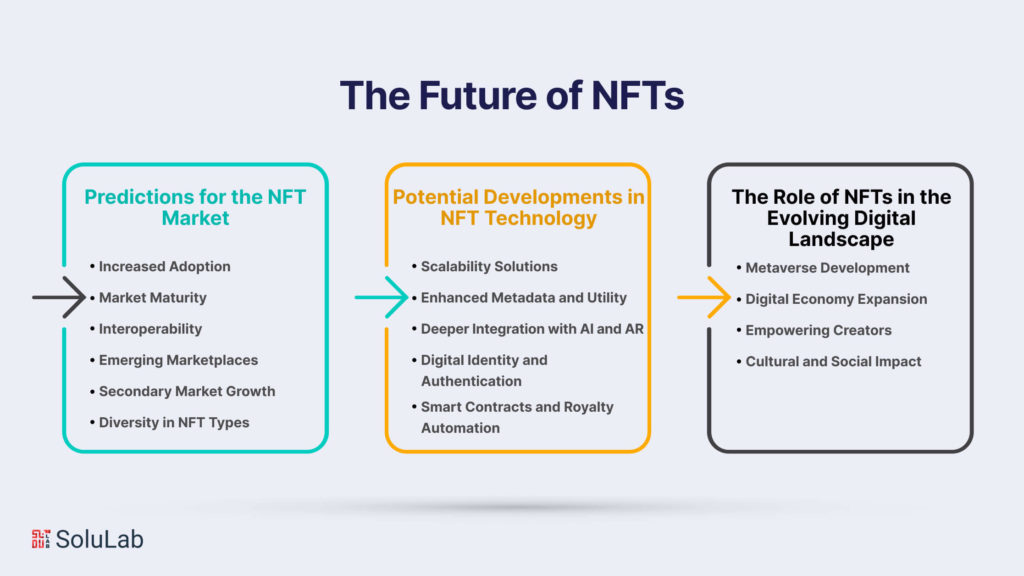
The Future of NFTs

Future of NFTs

As Non-Fungible Tokens (NFTs) continue to reshape various industries and capture the imagination of creators and collectors, it’s essential to consider what the future holds for this innovative technology. In this section, we’ll explore predictions for the NFT market, potential developments in NFT technology, and the evolving role of NFTs in the digital landscape.

A. Predictions for the NFT Market

The NFT market has shown remarkable growth, and its trajectory is likely to continue in the coming years. Here are some predictions for the NFT market:

  • Increased Adoption: NFTs are expected to see broader adoption in industries beyond art and gaming. Sectors like fashion, education, and healthcare may incorporate NFTs for provenance, authentication, and unique experiences.
  • Market Maturity: As the NFT market matures, we can anticipate increased regulation and standardization to address challenges related to fraud, copyright issues, and environmental concerns. This regulatory clarity may help build trust among users.
  • Interoperability: The development of cross-chain NFT solutions may promote interoperability between different blockchain ecosystems, making it easier for users to access and trade NFTs across multiple platforms.
  • Emerging Marketplaces: NFT marketplaces will continue to evolve, offering features such as social interactions, virtual exhibitions, and new ways to showcase and trade digital assets.
  • Secondary Market Growth: The secondary market for NFTs is expected to grow as collectors and investors seek opportunities for trading, flipping, and investing in digital assets. High-value NFTs may appreciate over time.
  • Diversity in NFT Types: New forms of NFTs, such as time-based NFTs, multi-chain NFTs, and NFTs representing real-world assets, will likely emerge, expanding the diversity of the market.

B. Potential Developments in NFT Technology

NFT technology is not static; it continues to evolve and expand its capabilities. Some potential developments include:

  • Scalability Solutions: Scalability issues will drive the development of Layer 2 solutions and the transition to more energy-efficient blockchains, reducing environmental concerns.
  • Enhanced Metadata and Utility: NFTs may become more programmable and dynamic, with metadata that can be updated, and NFTs can carry additional utility beyond ownership, such as granting access to exclusive content or experiences.
  • Deeper Integration with AI and AR: NFTs may be used in conjunction with artificial intelligence (AI) and augmented reality (AR) technologies, creating interactive and adaptive digital experiences.
  • Digital Identity and Authentication: NFTs may play a role in digital identity verification, helping to secure online interactions and protect users’ data and assets.
  • Smart Contracts and Royalty Automation: Smart contracts linked to NFTs will enable automated royalty payments to creators whenever their NFTs are resold, enhancing the fairness of the digital art market.

C. The Role of NFTs in the Evolving Digital Landscape

NFTs are poised to play an integral role in the ongoing transformation of the digital landscape:

  • Metaverse Development: NFTs will become foundational to metaverse environments, enabling users to own, create, and trade digital assets within these immersive virtual worlds.
  • Digital Economy Expansion: NFTs will extend beyond collectibles and art, infiltrating the digital economy as integral components in e-commerce, virtual real estate, and decentralized finance (DeFi) systems.
  • Empowering Creators: NFTs will empower creators and artists by providing more direct access to their audiences, bypassing intermediaries, and granting them greater control over their work and intellectual property.
  • Cultural and Social Impact: NFTs will continue to influence and shape cultural trends, art movements, and the ways we connect and interact in digital spaces.

In conclusion, the future of NFTs appears bright, with the potential for broader adoption, technological advancements, and a growing role in shaping the evolving digital landscape. As NFTs continue to mature, they will bring new opportunities and challenges, ultimately redefining how we perceive and interact with the digital world.
CTA2

Conclusion

In conclusion, the rise of Non-Fungible Tokens (NFTs) has ushered in a transformative era, reshaping how we interact with digital assets and the broader digital world. The impact of NFTs goes well beyond the creative and collectible realms, reaching into areas such as real estate, digital identity, and the metaverse. The emergence of NFT marketplace platforms and white-label NFT marketplace solutions has laid the foundation for a vibrant ecosystem where creators and collectors can connect, exchange, and create value in entirely new ways. These innovations have provided opportunities for entrepreneurs to explore and develop niche marketplaces tailored to specific industries and niches.

As we journey forward, the enduring significance of NFTs in the digital realm becomes more evident. The potential for NFTs to disrupt, innovate, and influence various facets of our digital lives is substantial. This is a world where the boundaries of ownership, creativity, and entrepreneurship are being redefined. It’s a world where opportunities for innovation are boundless, and where the role of NFTs in shaping the future of the digital landscape remains central. The NFT ecosystem continues to evolve, promising a future where the possibilities are as diverse as the digital assets themselves.

SoluLab, a leading blockchain and software development company, plays a pivotal role in the dynamic world of Non-Fungible Tokens (NFTs). As NFTs continue to transform the digital landscape, SoluLab has been at the forefront of innovation, offering NFT marketplace development solutions and white-label NFT marketplace services that empower businesses and entrepreneurs to explore the vast potential of this groundbreaking technology. With a strong commitment to blockchain technology, SoluLab is enabling clients to create custom NFT marketplaces that cater to specific industries and niches, ensuring they stay ahead in the rapidly evolving NFT ecosystem. Their expertise and dedication contribute to the enduring significance of NFTs, driving the digital realm toward a future that is more inclusive, innovative, and interconnected.

FAQs

1. What exactly is an NFT?

An NFT, or Non-Fungible Token, is a digital asset representing ownership or proof of authenticity of a unique item or piece of content, stored on a blockchain. Unlike cryptocurrencies like Bitcoin or Ethereum, NFTs are indivisible and each one has its own distinct value.

2. How can I create my own NFT?

To create your own NFT, you can use various NFT marketplaces like OpenSea, Rarible, or Mintable. You’ll need a digital wallet, connect it to a compatible marketplace, and then follow the platform-specific steps to mint your NFT. You’ll typically need to upload your digital content, set metadata, and determine any royalties for future resales.

3. Are NFTs environmentally friendly?

NFTs on certain blockchains, like Ethereum, have faced criticism for their environmental impact due to energy-intensive proof-of-work consensus mechanisms. However, the industry is actively exploring more eco-friendly solutions through the adoption of proof-of-stake blockchains and Layer 2 scaling solutions to mitigate these concerns.

4. How can NFTs be used in the real estate industry?

NFTs have the potential to revolutionize real estate by enabling the tokenization of property, making it easier to buy, sell, and trade real estate assets. They also offer fractional ownership opportunities, which can lower barriers to entry for real estate investment and make property ownership more accessible to a wider audience.

5. What are white label NFT marketplace solutions?

White label NFT marketplace solutions are customizable platforms provided by companies like SoluLab that allow businesses to create their own NFT marketplaces. They offer a pre-built infrastructure with the flexibility to be tailored to specific needs, industries, and branding, facilitating entrepreneurs and businesses in launching their NFT trading platforms more efficiently.

Building Trust and Transparency in Your NFT Marketplace Ecosystem

Building Trust and Transparency in Your NFT Marketplace Ecosystem

The world of Non-Fungible Tokens (NFTs) has taken the digital landscape by storm, revolutionizing how we perceive ownership and exchange of digital assets. These unique, indivisible tokens, often associated with art, collectibles, virtual real estate, and even in-game items, have created new avenues for creators, investors, and enthusiasts alike.

As the NFT market continues to expand at an unprecedented rate, it has become increasingly evident that trust and transparency are the cornerstones upon which successful NFT marketplaces are built. In a realm where the value of a digital asset can stretch into the millions, establishing trust among buyers, sellers, and creators is paramount.

In this blog, we will delve deep into the intricate web of trust and transparency in the NFT marketplace ecosystem. So, without any further ado, let’s get started!

The Pivotal Role of Trust and Transparency in NFT Marketplace Ecosystem

The Pivotal Role of Trust and Transparency

Trust and transparency are the cornerstones upon which successful NFT (Non-Fungible Token) marketplaces are built. In a rapidly evolving digital landscape where the lines between the physical and virtual worlds are becoming increasingly blurred, establishing trust among buyers, sellers, and creators has become paramount. 

Here, we explore why trust and transparency play such a pivotal role in the NFT marketplace ecosystem:

Read Our Blog Also: Everything You Need to Know About Metaverse NFT Marketplace Development

1. Overcoming Skepticism

The concept of owning a digital asset, whether it’s a piece of digital art, a collectible, or virtual real estate, is still relatively new to many. Skepticism abounds, and potential participants need reassurance that their investments are not in vain. Trust and transparency provide this reassurance by demonstrating the legitimacy and authenticity of NFTs.

2. Mitigating Risk

In a marketplace where transactions can involve significant sums of money, trust and transparency are essential for risk mitigation. Buyers need to trust that they will receive the NFT they pay for, while sellers and creators want assurance that they will be compensated fairly. Transparent marketplace policies, smart contract audits, and secure authentication mechanisms help reduce the risk of fraud and disputes.

3. Fostering Community Engagement

NFT marketplaces are not just transactional platforms; they are vibrant communities of artists, collectors, gamers, and investors. These communities thrive on trust and transparency, as they form the foundation of lasting relationships. When participants feel secure and informed, they are more likely to actively engage with and contribute to the marketplace ecosystem.

Have A Look At Our Blog: How To Launch Your Own NFT Marketplace Website in Less Than 2 Days?

4. Building Reputation

In the digital age, reputation is everything. Trust and transparency contribute significantly to an NFT marketplace’s reputation. Marketplaces that consistently uphold these principles are more likely to attract high-quality creators, collectors, and investors, which, in turn, bolsters their standing in the industry.

5. Encouraging Innovation

NFT marketplace trust and transparency foster an environment where innovation can flourish. Creators are more likely to experiment and push the boundaries of what’s possible when they know their intellectual property rights are protected, and they will be compensated fairly for their work. This leads to a vibrant and dynamic marketplace with a diverse range of NFT offerings.

CTA1

6. Regulatory Compliance

As the NFT marketplace landscape matures, regulatory scrutiny is inevitable. Marketplaces that prioritize trust and transparency are better positioned to navigate the evolving regulatory landscape. They can demonstrate a commitment to compliance, protecting both themselves and their users from legal challenges.

The Significance of Trust in NFT Marketplaces

In the rapidly evolving world of NFTs (Non-Fungible Tokens), trust plays a pivotal role in shaping the success and sustainability of NFT marketplaces. These digital tokens, representing ownership of unique assets, have captured the imagination of creators, collectors, and investors worldwide. However, as the NFT ecosystem continues to expand, establishing trust has become a linchpin for marketplaces.

Read Our Blog: NFT Art for Beginners – How to Make and Sell

A. Why Trust is Crucial for NFT Marketplaces?

In the world of Non-Fungible Tokens (NFTs), trust isn’t just a desirable quality; it’s an absolute necessity. Here’s why trust is the cornerstone of NFT marketplaces:

  • Asset Authenticity: Trust is paramount to ensure that the NFTs being sold are genuine and not counterfeit. Buyers need confidence that the digital asset they are acquiring is indeed unique and verifiable.
  • Protection from Fraud: The digital realm can be a breeding ground for fraud and scams. Trustworthy NFT marketplaces employ robust security measures to protect users from fraudulent transactions and deceptive practices.
  • User Confidence: Trust breeds confidence. When users trust an NFT marketplace, they are more likely to participate actively, which, in turn, drives the growth and vibrancy of the ecosystem.
  • Marketplace Integrity: Upholding trust is essential for maintaining the integrity of the marketplace. Transparent, fair, and ethical dealings are the bedrock of reputable NFT marketplace platforms.
  • Creator Empowerment: Trust is crucial for creators who rely on NFT marketplaces to protect their intellectual property rights and ensure they are fairly compensated for their work.
  • Community Building: NFT marketplaces are more than transactional platforms; they are communities. Trust among participants fosters long-lasting relationships and a sense of belonging.

B. Impact of Trust on User Participation and Investment

Trust and transparency in the NFT marketplace have a profound impact on both user participation and investment. Here’s how it influences these crucial aspects:

  • Increased Participation: When users trust the platform, they are more likely to actively participate by buying, selling, and creating NFTs. This increases the overall activity within the marketplace, making it more dynamic and appealing.
  • Higher Investment Confidence: Trust instills confidence in investors. They are more willing to allocate significant capital to NFTs when they believe their investments are protected from fraud and counterfeit assets.
  • Marketplace Growth: Trust drives the growth of the NFT marketplace ecosystem. As more participants join and transact with confidence, the marketplace becomes a hub for digital asset exchange and innovation.

Know More: How will White-Label NFT Marketplace Development Benefit Your Business?

  • Quality Content Creation: Creators are more likely to produce high-quality content when they trust the platform to protect their rights and ensure they receive fair compensation. This benefits both creators and the marketplace.
  • Positive Feedback Loop: Trust creates a positive feedback loop. As users see the benefits of a trustworthy marketplace, they become advocates, attracting more participants and further reinforcing trust.

Establishing Trust in Your NFT Marketplace Ecosystem

Establishing Trust in Your NFT Marketplace

Building trust in your NFT (Non-Fungible Token) marketplace is not just a goal; it’s a necessity. Trust is the foundation upon which successful NFT ecosystems thrive. Users need to feel confident in the authenticity of the digital assets they’re buying, the fairness of transactions, and the security of their investments. Here are essential steps to establish trust in your NFT marketplace:

1. Robust Authentication Mechanisms

  • Two-Factor Authentication (2FA): Implement 2FA for user accounts. This adds an extra layer of security by requiring users to provide a second authentication factor, typically from a mobile app or SMS, in addition to their password.
  • KYC (Know Your Customer) Verification: To enhance trust further, consider implementing KYC procedures. This involves verifying the identity of users through documents like government-issued IDs. While it can be a more significant barrier to entry, it can significantly reduce fraudulent activities.

Read Also: Why Should You Start Your Own NFT Marketplace Business?

2. Transparent Marketplace Policies

  • Clear Terms and Conditions: Ensure that your marketplace’s terms and conditions are clearly defined and easily accessible to all users. This includes policies related to transactions, fees, refunds, and dispute resolution.
  • Detailed Fee Structures: Transparency in fee structures is vital. Users should know how much they will be charged for listing, selling, and withdrawing funds. Avoid hidden fees or unexpected charges.

3. Smart Contract Auditing

  • Importance of Secure and Transparent Smart Contracts: NFTs rely on smart contracts, and their security is paramount. Conduct thorough audits of your smart contracts to identify and address vulnerabilities. Users need assurance that the code governing their NFTs is robust and trustworthy.
  • Third-Party Audits: Consider hiring third-party audit firms to review your smart contracts. Independent audits add an extra layer of credibility, demonstrating your commitment to security and transparency.

4. User Ratings and Reviews

  • Encourage Honest Feedback: Enable a rating and review system for both buyers and sellers. This allows users to share their experiences openly. Encourage honest feedback and ensure that reviews are visible and easily accessible.
  • Address User Concerns Promptly: Show users that their concerns are taken seriously. Respond promptly to inquiries and complaints. A proactive customer support team can make a significant difference in building trust.

5. Regularly Communicate Updates

  • Platform Updates: Keep users informed about any changes, updates, or improvements to your platform. Transparency in your development process instills confidence that you are actively working to make the platform better.
  • Security Alerts: In the event of security breaches or potential threats, communicate openly and swiftly. Provide guidance on how users can protect their assets and what steps you are taking to rectify the situation.

Know More: Top NFT Development Companies To Look At In 2024

6. Secure Wallet Integration

  • Wallet Security: Emphasize the importance of wallet security to your users. Provide guidelines on how to secure their cryptocurrency wallets, including hardware wallet recommendations and best practices for private key management.
  • Multi-Signature Wallets: Consider integrating multi-signature wallets for added security, where multiple keys are required to authorize a transaction.

By implementing these strategies, you can establish trust in your NFT marketplace and create an environment where users feel confident, secure, and empowered to participate actively. Trust is a valuable asset in the NFT ecosystem, and its cultivation is essential for the long-term success of your platform.

Future Trends of Trust and Transparency within NFT Marketplace Ecosystem

Future Trends of Trust and Transparency

In the dynamic world of NFT (Non-Fungible Token) marketplaces, trust and transparency are evolving concepts that will continue to shape the industry’s trajectory. As technology advances and the ecosystem matures, several future trends are expected to play a significant role in enhancing trust and transparency within NFT marketplaces:

1. Advanced Smart Contracts

The future of NFT marketplaces will likely feature even more advanced and secure smart contracts. These contracts will not only govern ownership and transactions but also include self-executing agreements that automatically address disputes and conflicts. Advanced smart contracts in NFT Marketplace development solutions will further reduce the need for intermediaries and enhance transparency in transactions.

2. Blockchain Upgrades

Blockchain technology, which underpins NFTs, is continuously evolving. Future blockchain upgrades will focus on scalability, speed, and energy efficiency. These improvements will ensure that NFT marketplaces can handle increased traffic, reduce transaction costs, and have a lower environmental impact, thereby enhancing trust in the technology itself.

Check Out Our Blog: The Role of DAOs and Their Benefits in the NFT Ecosystem

3. Decentralized Identity Verification

Decentralized identity solutions, often based on blockchain technology, will become more prevalent. Users will have control over their personal information and identity verification, reducing the need for centralized KYC processes. This will enhance privacy while maintaining trust and security in NFT transactions.

4. Immutable Provenance

Blockchain’s immutable ledger will continue to be leveraged for provenance tracking. Users will be able to trace the entire history of an NFT, including its creation, ownership changes, and transactions, with timestamped records. Immutable provenance will further protect against fraud and enhance transparency.

5. Real-time Analytics

Advanced analytics and data visualization tools will provide users with real-time insights into the NFT marketplace’s health and performance. This transparency will help users make informed decisions about their investments, fostering trust in the marketplace.

CTA2

Conclusion

In the ever-evolving world of NFT marketplaces, trust and transparency are the bedrock upon which success and longevity are built. As we’ve explored the significance of trust, the impact it has on user participation and investment, and the strategies to establish it in NFT marketplaces, it’s clear that these principles are non-negotiable. They inspire confidence, foster community, and drive the growth of this exciting ecosystem.

Looking ahead, the future trends we’ve discussed, from advanced smart contracts to decentralized identity verification and sustainability measures, promise to elevate trust and transparency to new heights. These developments are not just beneficial; they are essential for the continued evolution of NFT marketplaces.

At SoluLab, we understand the importance of staying ahead of the curve in the world of NFT marketplace development. Being an NFT marketplace development company, with our expertise in blockchain technology and decentralized applications, we can provide solutions that align with these future trends, helping NFT marketplaces build the trust and transparency necessary for long-term success. Whether it’s implementing advanced smart contracts or creating secure and scalable blockchain solutions, hire skilled NFT developers from SoluLab as it is your partner in navigating the ever-changing landscape of NFT marketplaces. Together, we can shape a future where trust and transparency are not just aspirations but the very foundations of this digital revolution. Partner with SoluLab today and embark on a journey where innovation meets trust in the world of NFT marketplaces.

FAQs

1. What Are NFT Marketplaces, and Why Do They Need Trust and Transparency?

NFT (Non-Fungible Token) marketplaces are platforms where digital assets are bought, sold, and traded. Trust and transparency are crucial because they ensure the authenticity of NFTs, protect users from fraud, and create a secure environment for transactions.

2. How Can I Verify the Authenticity of an NFT in a Marketplace?

To verify the authenticity of an NFT, check for transparent provenance on the blockchain. Look for timestamped records of ownership changes and consider using reputable marketplaces that conduct smart contract audits. Also, read user reviews and ratings to gauge the marketplace’s credibility.

3. How Do NFT Marketplaces Ensure Fairness in Transactions?

NFT marketplaces promote fairness through transparent fee structures and clear terms and conditions. Many platforms also employ decentralized governance mechanisms like DAOs, where users have a say in platform policies, ensuring decisions are made collectively and transparently.

4. Are There Any Legal and Regulatory Considerations for NFT Marketplaces?

Yes, NFT marketplaces must navigate legal and regulatory requirements, including intellectual property rights and tax implications. Compliance with regional and international regulations is essential to maintain trust and transparency in the marketplace.

5. How Can SoluLab Assist in Enhancing Trust and Transparency in NFT Marketplaces?

SoluLab offers expertise in blockchain development solutions and decentralized applications. We can help NFT marketplaces implement advanced smart contracts, ensure secure transactions, and align with future trends in the industry, ultimately enhancing trust and transparency in your platform.
