Talk to an Expert

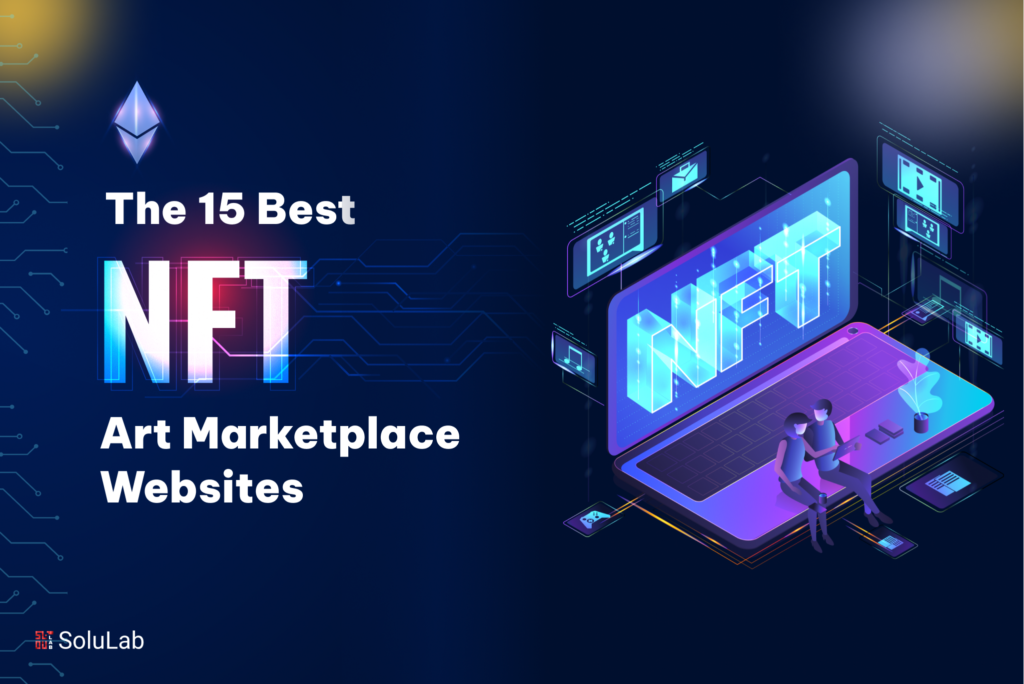
The 15 Best NFT Art Marketplace Websites

The 15 Best NFT Art Marketplace Websites

In the world of digital creativity and ownership, Non-Fungible Tokens (NFTs) have emerged as the revolutionary force redefining how we perceive and interact with art. At the heart of this transformative movement are NFT Art Marketplace Websites, the virtual galleries of the future. These NFT websites serve as the nexus where artists, collectors, and enthusiasts converge to explore, trade, and celebrate the boundless world of digital art.

In this exploration of the vibrant NFT ecosystem, we embark on a journey to uncover the very best. From the pioneers who set the stage to the rising stars shaping the technology, these NFT sites stand as the epitome of innovation and creativity. Join us as we delve into the intricacies of NFT Art Marketplace Websites, navigating through the diverse offerings, unique features, and the dynamic fusion of blockchain technology and artistic expression.

What defines the best in the realm of NFT Marketplaces? Is it the user interface that seamlessly guides creators and collectors? The innovative revenue models that balance the scales for both artists and investors? Or perhaps the commitment to security and authentication features that safeguard the integrity of digital assets?

As we embark on this exploration, we’ll unravel the stories behind each platform, each marketplace contributing to the ever-evolving narrative of digital art ownership. From the recognized leaders such as OpenSea to the unique offerings of platforms like BakerySwap, we aim to showcase the diversity, creativity, and unprecedented opportunities that define the best NFT Art Marketplaces.

What is NFT?

In the world of digital creativity, the advent of Non-Fungible Tokens (NFTs) has ushered in a transformative era for artists, collectors, and enthusiasts alike. This introduction serves as our gateway into the dynamic world of NFT Art Marketplace Websites, where innovation converges with artistic expression, and the traditional boundaries of ownership are redefined. Join us on a journey into the heart of the NFT websites revolution, where pixels become art, and ownership takes on an entirely new dimension.

  • Rise of NFTs in the Art World

The art world has undergone a transformative shift with the meteoric rise of Non-Fungible Tokens (NFTs). These unique digital assets have disrupted traditional notions of art ownership and transactional mechanisms. The intersection of blockchain technology and digital art has given birth to a new era, where creators and collectors engage in a decentralized, transparent marketplace.

  • Significance of NFT Art Marketplaces

NFT Art Marketplaces serve as the nexus where artistic innovation converges with technological prowess. NFT Marketplace platforms offer artists unprecedented opportunities for monetization, empowering them to tokenize their work and establish direct connections with a global audience. Simultaneously, collectors gain access to an expansive, diverse array of digital art, securely authenticated and stored on the blockchain.

  • Overview of the Top 15 NFT Art Marketplaces

In navigating the dynamic landscape of NFTs, it’s essential to highlight the platforms that have emerged as industry leaders. These top 15 NFT Art Marketplaces, each with its unique features and contributions, collectively shape the narrative of digital art ownership and exchange.

Top 15 NFT Art Marketplaces

Embark on a curated journey through the virtual galleries that stand at the pinnacle of the NFT website’s art movement. The Top 15 NFT Art Marketplaces, each with its unique offerings and contributions, take center stage in this section. From the well-established giants to the rising stars, we explore the diverse ecosystems that have reshaped the way we buy, sell, and appreciate digital art. Get ready to discover the platforms that define the forefront of the NFT art revolution.

1. OpenSea

OpenSea, renowned as one of the pioneers in the NFT space, stands out for its user-friendly interface and extensive collection of digital assets. Artists and collectors converge on OpenSea to explore, trade, and discover NFTs across various categories, from digital art to virtual real estate.


$90-$95


101-250


2017


Warner Music Group, Aramco

2. Origin Story

Origin Story, the premier NFT art marketplace, collaborates with top collections for an exclusive experience. Enjoy comprehensive analytics, showcasing holder distribution and prominent holders, along with aggregated volume metrics for NFT collections across major marketplaces. Partnered with elite groups like Pudgy Penguins, Karafuru, Moonrunners, and more, Origin Story ensures a fraud-free environment, permitting only legitimate NFTs from a collection.


$50-$70


10-49


2018


Forbes, Fox

3. Rarible

Rarible distinguishes itself through its decentralized approach and commitment to supporting artists. The platform empowers creators to issue their custom-branded tokens, enabling them to retain royalties on secondary sales. Rarible’s decentralized autonomous organization (DAO) further enhances community engagement and decision-making.


$55-$90


51-100


2020


Adobe, Immutable X

4. GameTrade

GameTrade, the premier NFT art marketplace, caters to gamers and seasoned traders, offering cutting-edge communication features for a seamless trading experience within virtual metaverses. With automatic buying and selling price tracking, buyer-seller communication, and item trading among customers, GameTrade also provides professional traders with multiple accounts, streamlining their trading endeavors. Utilizing blockchain technology, all transactions are securely safeguarded, ensuring items can only be transferred with the owner’s permission.


$14-$54


11-50


2014


Meta, Apple

5. Mintable

Mintable has gained popularity for its user-friendly features, making it accessible to both creators and collectors. The platform enables creators to mint NFTs without coding knowledge, expanding the reach of digital art creation. Mintable’s commitment to accessibility and ease of use makes it a preferred choice for emerging and established artists.


$25-$50


11-50


2018


Airbnb, Sony, Nintendo

6. Foundation

An invite-only best NFT art marketplace is Foundation. A creator who has previously posted work on the site must invite you to list your best NFT art marketplace. You get 10% royalties for each subsequent sale of your NFTs, which can be sold on OpenSea and Rarible. Each deal on the site is subject to a 15% commission fee. It is less well-known than the other marketplaces.


$55-$90


10-49


2020


Fedex, KraftFoods

7. SuperRare

A curated platform is called SuperRare. It only collaborates with a select group of carefully chosen artists. The primary focus of SuperRare is on premium single-edition art NFTs. Only 1% of the applications from artists are accepted. The buyer pays the transaction fee, which is 3% of the sale price. For each sale, the site levies a 15% commission fee.


$25-$50


25-99


2018


Google, Gucci, STARZ

8. Nifty Gateway

Nifty Gateway is another particular NFT art market. It also hosts NFTs built on Ethereum. Acceptance into Nifty Gateway’s carefully curated collections is difficult. They collaborate with well-known musicians, including Steve Aoki, Beeple, and Grimes. They also stage NFT collaborations with famous people, such as the one with Paris Hilton and artist Blake Kathryn. Therefore, unless you’re incredibly well-known, getting accepted for the curated drops is very tough. On Nifty Gateway, there are also verifiable drops, though. The permission procedure is also necessary here, but it is laxer. Each sale has a 5% commission fee from Nifty Gateway. Artists are free to choose their remuneration for subsequent sales.


$55-$90


11-50


2017


Samsung, J2 Global

9. Makersplace

You require an invite from a member of the Makersplace group to list your NFT art marketplace. A 15% commission is incurred every time you make a sale. All secondary sales result in a 10% royalty payment to the seller. Ethereum is not required for payment; credit cards are accepted.


$45-$89


11-50


2016


Binance, Coinbase, Kraken

10. KnownOrigin

Similar to SuperRare, KnownOrigin concentrates on rare and best NFT marketplace for art. It deducts 15% commission fees from each sale and gives the NFT creator 85% of the proceeds. All secondary sales generate a 12.5% royalty. Most of the popular NFTs are created and sold on the Ethereum blockchain. In this article, we concentrated on the marketplaces that host Ethereum-based NFTs. Many other marketplaces allow creators to sell their NFTs based on different blockchains. Some notable ones are the Binance NFT art marketplace for NFTs created on the Binance Smart Chain, AtomicHub for Wax-based NFTs, and Solanart for NFTs built on the Solana blockchain.


$55-$99


11-50


2020


Amazon, Mitsubishi

11. Solanart

The Ethereum blockchain is used to build and trade most of the well-known best NFT marketplace for art. Because of this, we focused on the marketplaces that house Ethereum-based NFTs in this study. There are numerous additional marketplaces where developers can sell NFTs based on various blockchains. The Binance NFT marketplace for NFTs developed on the Binance Smart Chain, AtomicHub for NFTs based on wax, and Solanart for NFTs developed on the Solana blockchain are a few famous examples.


$72-$450


11-50


2021


Visa, American Express, Mastercard

12. DecentraLand

In the decentralized virtual world, Decentraland, you can build and sell goods you make and now own. Various digital assets, including wearables, estates, names, etc., are available on this best NFT marketplace for art. In Decentraland, you may purchase and sell virtual properties, give them your touches, and save them in an Ethereum-based smart contract.


$120-$200


11-50


2017


Apple, Microsoft, Intel

13. NBA Top Shots

Launched in 2020, NBA Top Shot is a well-liked marketplace operated by the NBA. You can purchase their unique NBA highlights and acquire them as digital collectibles. Additionally, this best NFT marketplace for art offers a certification that grants the purchaser ownership rights and guarantees the validity of that singular moment.


$75-$90


10-49


2020


Zara, H&M

14. BakerySwap

On the Binance Smart Chain, BakerySwap is an automated marketplace & decentralized exchange (BSC). It makes use of a local BakerySwap token (BAKE). This best NFT marketplace for art is a multi-purpose cryptocurrency hub that provides non-fungible tokens, a crypto launchpad, and several decentralized finance (DeFi) services. Additionally, you can utilize NFTs in “Combo Meals” to get additional BAKE tokens.


$25-$50


11-50


2020


Airbnb, Nintendo

15. Async Art

A non-fungible token art market called Async was established in February 2020. You can manufacture your NFT tokens using this best NFT art marketplace development and purchasing and trading NFTs. The NFT platform also makes it simple for artists to specify the appearance and behavior of their works of art.


$45-$55


11-50


2020


T-Mobile, World Wide Web Consortium (W3C)

Read Our Blog Post: Top NFT Development Companies

Unique Features of Each NFT Art Marketplace

In the digital symphony of NFT Art Marketplaces, each platform plays a unique note. Dive deep into this section to explore the distinctive features that set apart every marketplace on our list. From special offerings and community engagement features to groundbreaking integrations with emerging technologies, discover the elements that make each platform a vibrant and essential part of the NFT site’s world.

  • Special Offerings

Each NFT Art Marketplace has distinctive features that set it apart. For instance, NBA Top Shot offers licensed sports moments as NFTs, attracting sports enthusiasts and collectors seeking a unique digital collectible experience. These special offerings contribute to the diverse appeal of the NFT website’s ecosystem.

  • Community Engagement Features

Community engagement is a hallmark of successful NFT Art Marketplaces. Platforms like BakerySwap actively encourage user participation through community-driven initiatives, governance mechanisms, and collaborative decision-making. The integration of community engagement features fosters a sense of belonging among users, enhancing the overall experience.

  • Integration with Emerging Technologies

Certain marketplaces, like Portion, embrace emerging technologies to enhance user experiences. Integration with virtual and augmented reality (VR and AR) creates immersive interactions with digital art, offering users a novel way to engage with NFTs. The exploration of these technologies contributes to the forward-thinking nature of NFT Art Marketplaces.

Artist Success Stories

Behind every digital masterpiece lies the journey of an artist who has harnessed the power of NFT Art Marketplaces. In this section, we showcase the success stories of artists who have thrived in the NFT ecosystem. Their narratives, challenges, and triumphs serve as inspiration for aspiring creators, shedding light on the transformative impact of digital art ownership on the artistic community.

  • Profiles of Successful NFT Artists

The success of artists within NFT Art Marketplaces is a testament to the transformative impact of digital art ownership.

  • Their Journeys on NFT Art Marketplaces

Exploring the journeys of successful Non-fungible token artists sheds light on the diverse avenues of creative expression within these marketplaces. From the initial minting of NFTs to building a dedicated following, artists navigate a unique path that reflects the evolving landscape of digital art.

  • Impact on the Artistic Community

The rise of NFT art has created a ripple effect within the artistic community. As artists gain autonomy over the monetization of their work, traditional notions of gallery representation are challenged. The NFT art movement has inspired collaborative projects, community-driven initiatives, and a redefinition of the artist-collector relationship.

Tips for Buying and Selling NFT Art

Navigating the NFT art marketplace requires a set of strategic insights. This section provides valuable tips for both buyers and sellers, offering guidance on effective navigation, evaluating authenticity, and understanding the intricacies of smart contracts. Whether you’re a seasoned collector or a budding artist, these tips are your compass in the digital sea of NFT sites.

  • Navigating the Marketplace

Effectively navigating the best NFT art marketplace requires an understanding of the features and nuances of each platform. Intuitive interfaces, clear categorization, and search functionalities enhance the overall experience for both collectors and creators.

  • Evaluating the Authenticity of NFTs

Ensuring the authenticity of NFTs is a paramount consideration for buyers. Platforms like KnownOrigin and SuperRare, with their commitment to curation and quality, provide users with a level of confidence in the authenticity and rarity of the digital assets they acquire.

  • Understanding Smart Contracts

A fundamental understanding of smart contracts is essential for participants in the NFT space. Knowing how these contracts operate, particularly regarding royalties and resale rights, empowers both artists and collectors with a clear understanding of the terms governing their transactions.

Challenges and Opportunities in the NFT Art Marketplace

  • Scalability and Environmental Concerns

As the popularity of NFTs continues to soar, challenges related to scalability and environmental impact have surfaced. Platforms like MintNFTs actively address these concerns by exploring eco-friendly blockchain alternatives, contributing to the ongoing discourse on sustainable NFT practices.

  • New Avenues for Artistic Expression

The NFT art marketplace has opened new avenues for artistic expression. Artists are no longer confined to traditional mediums, with digital and interactive art gaining prominence. Platforms like Mintbase, enabling creators to establish their marketplaces, exemplify the democratization of artistic expression within the NFT ecosystem.

  • Emerging Trends in NFT Art

Emerging trends within the NFT art space include the integration of blockchain gaming, virtual events, and collaborative projects. Platforms like Axie Marketplace showcase the potential of combining gaming and NFTs, creating novel and engaging experiences for users.

Conclusion

In conclusion, the 15 best NFT art marketplace websites are transforming how digital artists and collectors engage, offering platforms for showcasing, trading, and monetizing digital assets. As NFTs continue to reshape the art world, choosing the right marketplace is essential for both creators and buyers.

A prime example of blockchain-powered innovation is the Source Independent Entertainment (SIE) project, which leverages blockchain for content sharing and rewards. It showcases how blockchain can enhance user experiences and security in digital platforms.

At SoluLab, a leading NFT Marketplace Development Company, we help businesses create innovative NFT solutions. Whether you’re looking to build an NFT marketplace or need expert guidance, our team is here to assist. Hire NFT Developers from SoluLab to bring your vision to life and succeed in the growing NFT space.

CTA 2

FAQs

1. What is an NFT Art Marketplace?

An NFT art marketplace is a platform where digital artists can create, sell, and trade their artwork as non-fungible tokens (NFTs). These platforms use blockchain technology to verify ownership and authenticity of digital assets.

2. How do I choose the best NFT art marketplace?

When selecting an NFT marketplace, consider factors like platform fees, supported blockchains, audience size, and ease of use for both creators and buyers. It’s also helpful to assess the type of art or assets the marketplace focuses on.

3. Can I create my own NFT art marketplace?

Yes, businesses can create custom NFT art marketplaces. Collaborating with a professional NFT Development Company ensures that your platform is tailored to your needs, with features like secure transactions, user-friendly interfaces, and blockchain integration.

4. What are the benefits of using an NFT marketplace for artists?

NFT marketplaces allow artists to monetize their digital work, gain global exposure, and retain more control over their creations. These platforms also enable artists to earn royalties on resales, providing long-term revenue opportunities.

5. How can I hire NFT developers to build my marketplace?

To build a custom NFT marketplace, you can Hire NFT Developers who specialize in blockchain technology, smart contracts, and digital asset creation. They can help you design a secure, scalable, and user-friendly platform.

9 Best NFT Ideas and Examples 2025

Best NFT Ideas

After the enormous success in 2021, it seems doubtful that non-fungible tokens, or NFTs, would lose any of their appeal in the years to come. So that you can start an NFT business right now, we have put together a list of the top 9 NFT ideas and examples for you.

As everyone is aware, NFTs are pieces of art generated using Blockchain technology that has distinctive encryption codes that can be verified for ownership and authenticity. Anything from digital art to a song or an album could be considered the best nft art.

It is undeniable that NFTs are here to stay. To give you the most information to motivate you on your NFT adventure, we’ll strive to cover everything. In this post, we’ll discuss some of the most creative real-world NFT examples and the best and coolest NFTs ideas.

What are NFTs?

2021 has been a successful year for NFTs. The top NFT tokens were able to catch everyone’s attention in the business and consumer community globally thanks to record-breaking sales and ongoing print and electronic media coverage.

However, it continues to develop without any indications of slowing down. In 2021, OpenSea transacted $14 billion worth of business, which is 646 times as much as its sales of $21.7 million in 2020. Furthermore, Best NFTs art examples are used in industries including marketing, real estate, finance, and government.

Ever wonder what The New York Times, the NBA, Gucci, Paris Hilton, and Visa have in common? NFTs are to blame. It is now abundantly evident that there is no reasonable way to ignore non-fungible tokens in today’s dynamic environment.

After having stated that, it is time to jump right into the meat of this blog. Here is the whole list of the most original, creative, humorous, and best NFTs ideas.

9 Best NFT Ideas and Examples

1. Beeple’s “Everydays – The First 5000 Days”

It would be wrong to leave the amazing $69 million NFT auction off of the list of NFT inspirations. The NFT is a collection of five pieces of art that Beeple (Mike Winkelmann) has gathered daily since 2007 for 5,000 days. Winkelmann is still working on the project using the Octane and Cinema 4D programs.

It is the third most expensive piece of live artist art ever sold and the most costly NFT to date. The auction was conducted at the fine art auction house, and the artwork sold for $13,860 per piece.

2. CryptoPunks

NFTs are famous for their CryptoPunks. In 2017, Larva Labs created and distributed 10,000 CryptoPunk NFTs in the form of randomly generated coins that are redeemable with an Ethereum wallet. Resultantly, the value of CryptoPunks went way too high in the secondary market.

As of now, the cheapest CryptoPunk costs more than $100,000, and more than $1 billion CryptoPunks have been exchanged in the NFT series. A huge amount of money has been invested in CryptoPunks by Via, Odell Beckham, and Jay-Z.

3. Artificial Intelligence NFT

This NFT (iNFT) with artificial intelligence is built on the Ethereum Blockchain. Alice is the name of the character, and the more you converse with her, the more she learns and develops a personality. In her promotional film, she was questioned about how she felt about residing on the Blockchain.

Alice responds by saying she feels like a digital goddess and can assume any form she chooses. The business that built this NFT, Alethea AI, is prepared to continue the project and provide the groundwork for iNFTs in the future in light of the overwhelmingly positive feedback.

4. Paris Hilton’s Planet Paris

Paris Hilton has always been a devoted supporter of NFTs. NFTs have been the subject of articles by Hilton, TV program discussions, and even her own NFT series. Together with Blake Kathryn, she co-founded Planet Paris, a business that contains several quick movies that have made Hilton millions of dollars.

5. Louis Vuitton video game

In the premium market, exclusivity and brand recognition are essential components. There can therefore be nothing better for such a field than NFTs. Louis Vuitton entered the NFT market in a very distinctive way. They created a video game called Louis: The Game, in which players perform missions to locate NFTs that are concealed.

6. William Shatner’s memorabilia

William Shatner, a seasoned actor with more than 60 years of experience in the business, is well-known to everyone. In 2020, the actor formally unveiled a collection of his memorabilia in the form of NFTs that included a range of images taken throughout his illustrious career. In less than 10 minutes, more than 125,000 units were sold.

7. Nyan Cat GIF

The next contender on the list of amusing NFTs is “Nyan Cat GIF,” a beautiful example of original NFT art from the 2010s. On its tenth anniversary, the video’s creator turned it into an NFT to eventually auction it off. The price of the video, which was close to $852,300, shocked the entire world.

8. Cryptovoxels

Speaking of NFT ideas, next on the list is Cryptovoxels, a metaverse built on Blockchain that combines social networking, gaming, and business. The system is a user-driven virtual environment that utilizes the Ethereum Blockchain. The idea is something similar to Minecraft but incorporates a little bit of cryptocurrency. Users can construct art galleries, exchange land plots, and interact with other players.

9. The origins of the internet

In 1989, Sir Tim Berbers-Lee was the brains behind the creation of the World Wide Web. After 30 years, he made a staggering $5.4 million selling his initial 9,555 lines of source code as an NFT. The World Wide Web’s source code and various other items made by the creator were included in the Sotheby’s auction.

The selling is a display of pride and exclusivity rather than the buyer acquiring control of the internet. A significant portion of human history is now the buyers.

Examples of NFT art

While the ideas we covered above are fairly enough for the best nft ideas, there are some Other examples of NFT art you can consider if you want to separate out from the crowd. For instance, the blockchain-based artificial intelligence coin Alethea AI is an intelligent NFT (iNFT). These are one of the best coolest NFTs projects with a built-in AI personality that grows and learns as you interact with them. That seems really nice, doesn’t it?

On the other hand, you might investigate name registry services, other expanding market segment in the NFT industry. Shorter, simple-to-remember names associated with a crypto wallet can be registered using name registry services like ENS and Unstoppable Domains. By doing this, you can avoid dealing with the difficulties of a lengthy wallet address.

In addition, several businesses are increasingly utilizing AR technologies to develop distinctive NFTs. Consider Jadu Hoverboards, which are collectible hoverboards that can be used in The Mirrorverse, Jadu’s augmented reality game. You may even develop your own metaverse & AR cars if you’re interested in the technology.

Best NFTs that sell

You may get a good indication of what sells well as the coolest NFTs by taking a short glance at the most expensive NFTs in history. NFT art & collectibles are the undisputed winners. The two best-selling NFTs are The Merge by Pak & Everyday: The First 5000 Days by Beeple.

Similar to how it may be said that 2021 was dominated by NFT collectibles, new projects are still being released despite a decline in sales. This is demonstrated by the enormous success of the Bored Ape Yacht Club NFT collection. Millions of dollars worth of NFTs have also been sold by vintage collections like CryptoPunks.

In addition to these, utility plays a crucial role in determining an NFT’s success. A superb NFT idea by itself won’t suffice to succeed in a market where NFTs are oversaturated. Many collectors are long-term investors when they buy NFTs. In other ways, they are searching for advantages that go much beyond the scope of a PFP.

For this reason, the majority of the best NFT collections give their collectors a tonne of benefits. Take BAYC as an illustration. Members of the community receive benefits such as merchandise, NFT airdrops, access to a plot in The Sandbox, and sometimes even tickets to the yearly NFT festival ApeFest.

Conclusion

In conclusion, the world of NFTs is brimming with innovative ideas and examples that are transforming various industries, from art and music to gaming and real estate. These digital assets offer creators and investors a unique way to monetize and engage with their audience, fostering a new era of ownership and authenticity in the digital realm. Whether it’s through digital collectibles, virtual real estate, or tokenized art, NFTs are opening up a myriad of opportunities that are only beginning to be explored.

However, there are challenges in the NFT space, such as security issues, high transaction costs, and the complexity of creating and managing NFTs. This is where SoluLab steps in as a leading NFT development company. We offer comprehensive solutions, from building secure NFT platforms to providing ongoing support and integration services. Let us help you bring your NFT ideas to life. Contact us today to get started!

FAQs

1. What is an NFT development company?

An NFT development company specializes in creating and managing Non-Fungible Tokens (NFTs). These companies offer a range of services, including the design and development of NFT platforms, smart contract development, and integration with blockchain technology to ensure secure and seamless transactions.

2. What NFT services do you offer?

Our NFT services include end-to-end NFT platform development, smart contract creation, NFT marketplace development, and integration with various blockchain networks. We also offer consulting services to help you refine your NFT ideas and bring them to market successfully.

3. Why should I hire NFT developers?

You should hire NFT developers to ensure that your NFT project is built with the highest standards of security, scalability, and functionality. Professional NFT developers have the technical expertise to navigate the complexities of blockchain technology, ensuring your project is robust and ready for the market.

4. What qualities should I look for in an NFT developer?

When hiring an NFT developer, look for someone with a strong background in blockchain technology, experience with smart contract development, and a solid portfolio of previous NFT projects. Additionally, good communication skills and the ability to understand and implement your specific requirements are crucial.

5. What are some of the best NFT ideas?

Some of the best NFT ideas include digital art, virtual real estate, in-game items, music and videos, digital collectibles, tokenized physical assets, and membership or access tokens for exclusive content. These ideas leverage the unique properties of NFTs to create value and engagement.

6. How can I turn my NFT ideas into reality?

To turn your NFT ideas into reality, start by partnering with a reputable NFT marketplace development company. Our team at SoluLab can help you from the conceptualization stage through to development and deployment. We provide comprehensive support to ensure your Non-Fungible Token project is successful. Contact us today to discuss your ideas and learn how we can assist you in making them a reality.

NFT Art Marketplace Development: A Detailed Guide to Create NFT Marketplace for Artists

A Detailed Guide to Create NFT Marketplace for Artists

Digital artwork is one of the fastest-growing industries. NFTs were created to tokenize unique and different digital artwork and generate ownership rights to prevent counterfeiting. Digital artists can sell their work online. Tokenized paintings and smart contracts enable digital artists to add extensive qualities such as metadata, file links, and identity of ownership, allowing them to retain copyright.

NFT marketplace has offered many new opportunities for traders, and digital assets are becoming popular day by day. If you want to learn and understand more about NFT art marketplace development, you’re at the correct place. In this blog, you’ll learn how to launch the NFT art platform, its features, etc. Let’s get started.

What is an NFT art marketplace?

It is a platform that allows you to store and sell NFT (Non-Fungible Tokens) effortlessly. These tokens are available for purchase or auction at a fixed price. It would be best if you had a crypto wallet to make trades and save your assets to use such a marketplace.

Users can create an account, upload digital artwork, and sell on an NFT marketplace. In general, niche marketplaces are already in higher demand than conventional ones because they include everything a client would require, specialize in marketing some digital artworks, and have a specific demographic.

Top Features of NFT art Marketplace development

Here are some of the features that an NFT marketplace can have:

Storefront

A successful NFT marketplace will typically have a storefront function similar to a dashboard. It gives the users all the information they need about an asset:

  • Owners
  • Bids
  • Value history
  • Previews

Token Advanced Search

Buyers should be able to receive full information about the products they require quickly and easily. Your NFT marketplace app should include every product organized by features (for instance, art, images, music, and videos). Buyers’ satisfaction increases when searches are completed more quickly.

Filter

The use of filters is advantageous. It allows users to select assets based on category, payment method, due date, and listing status. Add this functionality to build an NFT marketplace platform for collectibles.

Bid and Buy

Traders must be able to buy and sell NFTs stored on the platform while using a marketplace. Their bids should also include a bid validity date and allow them to view data on the status of those bids.

Make Listings

Give customers the ability to create and send digital collectibles. Make sure they require the least effort to do the task. Try building a page where they may upload files and provide a full product description. Tags, titles, and illustrations are required.

Wallet

Customers should be able to use your NFT marketplace’s wallet to store, transmit and receive NFTs and cryptocurrencies. You can create your wallets or combine multiple wallets such as Formatic, MyEtherWallet, or Coinbase onto your site.

Listing Status

It benefits people who can provide items and complete the product verification process. It enables you to keep track of the status of the authentication process. It facilitates collectible verification execution.

Rating

It’s a feature for newbies who might not know where to start, select things rapidly, and how the system works. Users may determine whether a seller is honest by looking at their rating. Participants in an NFT marketplace can rank and provide comments based on their experience. It enables others to assess a user’s credibility.

Types of NFT marketplaces

If you intend to launch an NFT marketplace, you should first select an appropriate type of platform. Mass platforms are among the most common types of NFT marketplaces. Platforms for art, gaming, and sports. The kinds of NFT marketplaces are:

  • Art NFT marketplaces: non-curated
  • Art NFT marketplaces: non-curated or invite-only
  • Gaming NFT marketplaces
  • Sports NFT marketplaces
  • Fashion NFT marketplaces
  • Real estate NFT marketplace
  • Music NFT marketplaces

Non-Curated Art NFT Marketplaces

Anyone can use this NFT to trade their artwork. As a result, the value of the digital artworks portrayed on such a platform may vary.

Non-Curated or Invite-Only Art NFT Marketplaces

Launch an NFT marketplace of this sort only if your target audience is interested in one-of-a-kind artwork. To be featured on such a platform, an artist must undergo a rigorous vetting procedure that can take months.

Steps to access the NFT art marketplace platform

Here’s a step-by-step guide to developing an NFT art marketplace.

  • Users should sign up and choose their preferred digital wallet.
  • NFT owners can list their digital assets or NFTs on the platform and the asset’s details. Now, they can select the type of sale — fixed or auction-based sale.
  • Once the platform approves the listed NFTs, buyers can view them.
  • Buyers choose their preferable NFTs and start placing the bids.
  • The smart contract will execute the trade.
  • Now, the NFTs will get transferred to the buyer’s wallet.

NFT Marketplace Development for Artists

NFT marketplace development for artists has now become a marketplace platform for artists and producers where they may list their digital artworks and collections. The website enables digital artists to display their excellence and talents and sell or trade their artworks worldwide and gain recognition for their work. With their expertise, NFT artists have the great opportunity to become billionaires.

Read also: How NFTs Changed Digital Art & The Life Of Artists?

Create the NFT art marketplace to showcase the creativity of digital artists and provide them with a good and new source of income. The development of the NFT art platform can promote contemporary artists and generate significant revenue.

Conclusion

The hype about the NFT market has increased in recent years. People can purchase and create art pieces, cards, and other collectibles on numerous marketplaces — mass, art, sports, and gaming NFT platforms. NFT creates one-of-a-kind digital treasures by utilizing a blockchain’s transparent and secure digital record.

You can create an NFT marketplace to dominate one of the most promising industries in the technology sector. You should select what type of platform to build and what kind of features you should offer. Following that, choosing the correct tech stack is one of the most crucial processes in the development process: blockchain and blockchain standard, testing tools, front-end, and back-end technologies, and developments.

Blog Credits: Medium

How NFTs Changed Digital Art & The Life Of Artists?

How NFTs Changed Digital Art & The Life Of Artists?

We have collected some valuable data published by “ThePrint” news, sharing about the auction made for NFT arts. Let’s dig into this topic in detail by exploring the real-time experiences shared by visual engineers describing their sales in the digital art nft market!

3o yrs old, Karan Kalra, a visual engineer shared his story in public describing the pricing insights for this artwork in the NFT art gallery.

It’s a sparkling sunny day, he woke up and was surprised while he checked his barrage of emails. It’s an acknowledgment email, describing his artwork purchased for “600 wazirx”. In his art, he portrayed an illustration of his dog enjoying a happy ride in a car. Once he finished his masterpiece he waited for his first big sale.

Karan further added, it happened on one fine day in 2021. He was overjoyed that this work has earned him 600 wazirx, that’s around 80,000 rupees in India.

Sounds interesting, right?

NFTs can give you huge returns, beyond what you think. It could be any NFT from art, ranging from the soundtrack, image, video, GIF, or any collectibles that you think of in the real world. NFT welcomes any physical piece of work into digital guaranteeing ownership to the owner. It’s unique in our world and could be replicated. Its jaw-dropping features like immutability attract the buyer on the other hand.

As a token of appreciation to the artist, much Indian art industry steps forward in integrating with modern NFT ideas. By the way, the NFTs art gallery becomes a better medium for the artists to collab with their buyers at the cheapest source. Intermediaries are permanently shut off with the arrival of NFTs.

Once a buyer is ready to purchase, the artist transfers the ownership by making a “digital signature”. It is recorded proof or guarantees a buyer possesses an original work from the artist. A digitally signed painting can hang on your digital wall, and even you can take complete ownership from the artist by paying them.

Read also: Generative Art NFTs: Shining a Spotlight On the Algorithmic Art Movement

In terms of collaboration, NFTs for arts created a huge revolution in the life of artists, said Kalra. Kalra added, before NFTs, it was really challenging for him to sell this artwork, and even felt he was a second-class citizen for selling his art. He needs to approach a middleman to make a sale. Now, he was delighted to make his sale without relying on a middleman.

Shreya Daffney also shared her story. She is 29, an artist and architect, who sold over 30+ artworks in the last 5 years. She said she was selling art that represented a coastal town, like udupi.

Another one, Christie’s sold Beeple’s ‘Everydays: The First 5000 Days’ in 2021 for a stunning $69M. This art is sold for a bigger price at a major auction and it was the first ever NFT art sold at that auction.

Art Vs Artist

35 old visual artist from Kerala, named Vimal Chandran, too shared his experience while selling his nft art. For a long period of time, he was creating digital art in his workspace. On one fine day in 2021, his work was sold at an unimaginable price.

Further his new series called “Folk SciFi”, was minted on the previous day of the sale. Within the next 24 hrs, it was sold.

Constantly being a success factor, nft arts largely transformed the lives of young artists. The above examples prove it quietly.

Are Art Galleries Ready?

Digital art galleries have become one of the best alternatives to traditional galleries. Arts are portrayed digitally and placed for auction in the digital art gallery which holds a huge potential to attract visual audiences. High-walled traditional galleries are being replaced by the nft art galleries proving the evolution of our generation.

Beyond offering constant support for the artist, NFTs for arts are becoming a mainline business for youngsters by creating massive opportunities for buying and selling.

Read also: How to Turn Digital Art into NFTs?

A popular traditional art gallery named, Vadehra Art Gallery, has not yet showcased any art nft but silently insisted that they support any representation of art in nfts.

Vedehra also said nothing can replace exposure to real physical art in person.

NFT — Art Or Money?

Top celebrities like Amitabh Bachchan, Yuvraj Singh, and Manish Malhotra, are inspiring youngsters by owning their own NFT. So, being a good space to showcase individual talents, tons of digital creators are flourishing in this NFT era.

Quite a few questions are raised, saying whether nfts is for art or for money.

N number of allegations are placed before, let’s see one of those. Curator and faculty at Ashoka University, Srinivas Aditya Mopidevi said, cryptos became mainstream but a sudden hype boomed in NFTs in 2021. Momentum passed from cryptos to ntfs creating big business opportunities. Success stories created by nfts are viral and proven. You can even step forward and make your success story by creating an NFT Marketplace For Arts. Developers at a reputed NFT Art Marketplace Development Company can offer endless development solutions to inspirational business freaks who are into nfts.

Blog Credits: Medium

Are NFTs Shaking Up the Digital Art World?


Are NFTs Shaking Up the Digital Art World?

Thanks to Christie’s sale of Beeple’s “EVERYDAYS: THE FIRST 5000 DAYS” making international headlines and Grimes, a multi-hyphenate artist, selling $6 million worth of digital art as Non-fungible tokens (NFTs), NFTs have solidified themselves into the digital zeitgeist, capturing the hearts of many artists and collectors. For example, before the advent of NFTs, it was difficult for artists to create digital artwork that would hold value or scarcity. But because NFTs are secured on an immutable public ledger, digital assets now have a claim on ownership, history, and authenticity previously only associated with physical objects – creating a fundamental shift in the art world. 

What Is NFT Art? 

Non-fungible tokens (NFTs) are cryptographic tokens issued on a blockchain to represent unique digital assets such as artworks, music, or collectibles. Each NFT has a unique identifier that distinguishes them from each other. Meaning they can’t be altered or copied. NFT art marketplace is simply a piece of digital artwork tokenized on a blockchain network which also functions as proof of ownership and authenticity of the artwork. 

Non-fungibility, A Game-Changer For Digital Artists

NFTs are not fungible because each one is a unique digital asset and can’t be interchangeable or replicated. For example, a bitcoin is fungible, you can trade one bitcoin for another bitcoin and get exactly the same thing. Whereas a one-of-a-kind painting like the Mona Lisa is non-fungible. Sure, you can buy a print of the Mona Lisa, but there is only one original painting of the Mona Lisa. 

While the non-fungibility element of an NFT is one factor that determines the scarcity and worth of an NFT art piece, the value of an NFT can also depend on several factors: the team behind it, its use cases, community, or market supply and demand. 

How Have NFTs Changed the Art World?

The usual benefits of NFTs such as proof of ownership, freedom of issuance, and immutability of records have revolutionized the way we create, collect and own art. Below, we’ve highlighted seven more ways NFTs have shaken up the art world. 

Connect artists with a global audience

In a sense, galleries can be seen as gatekeepers of the artwork since they’re the ones who choose what artwork they will display. Compared to traditional art establishments, NFT marketplaces are much more inclusive of emerging artists and niche art concepts. This has enabled artists to thrive outside of the gallery and auction house structure. 

Introduce potential ongoing revenue for artists 

Usually, once an artist sells their artwork, they don’t make anything from subsequent resales. NFTs have revolutionized the secondary art market, and artists can determine the number of royalties they receive with the help of a smart contract – a blockchain program that self-executes tasks whenever certain conditions are met. Artists can set up a rule within the smart contract that triggers a royalty payment whenever their NFT art changes hand the secondary market.

Eliminate the need for intermediaries

Traditionally, galleries and some online marketplaces take a percentage of sales from an artist’s revenue. With NFTs, artists can directly interact with buyers and sell their artwork on NFT marketplaces without needing agents or intermediaries.

More transparency behind transactions

An artwork’s authenticity and origin are one of the factors that influence a buyer’s decision. The ones who verify these metrics are usually auction houses or galleries, but while provenance mistakes and well-produced forgeries are fairly uncommon – they do happen. 

Since an NFT is secured on a blockchain network, anyone can track its transaction and previous ownership history to verify its authenticity. What’s more, the immutable nature of blockchain ledgers significantly minimizes the risk of forgery.

Read also: How to Buy your First Art NFT

Digital art isn’t the only medium that can benefit from NFTs. When it comes to physical artwork, NFTs can function as a digital certificate that proves the artwork’s authenticity with some artists minting digital and physical works together as one NFT. Compared to a piece of paper, NFTs are a more secure way to record ownership, verify its origin, and mitigate risks of forgery. 

Lifting entry barriers

The rise in popularity of NFTs and the accessibility of NFT marketplaces have lifted the veil of mystery covering art galleries and auction houses. Prestigious museums like the State Hermitage Museum recognize NFTs as a form of art, and NFT art galleries pop up across the world. Art has been more accessible than ever before, presenting artists with a wider reach, and connecting them with potential clients from all walks of life. 

Pushing innovation in the art space

As a newly recognized art form, NFTs have pushed creative and innovative boundaries since their conception, with some notable artists toying with their potential.

In 2021, the world-renowned artist and notorious art provocateur Damien Hirst launched a conceptual take on NFT potential. “The Currency” is a collection of hand-painted dot art comprising 10,000 NFTs with 10,000 corresponding physical A4 versions. Each physical piece features a watermark and hologram, making it hard to forge. 

Read also: NFT art—a sales mechanism or a medium?

But here’s the twist: Buyers of the artwork have to choose whether they want to keep the digital or physical version of the artwork. They are given a year from when the NFTs are sent out to make a decision. If they choose to keep the NFT, the physical artwork will be destroyed and vice versa. The final decisions will be made in July 2022. 

Conclusion

The NFT phenomenon has unveiled the mysterious art world and opened up new opportunities for artists and collectors. Compared to art galleries and auction houses, NFT marketplaces are much more inclusive, giving emerging artists niche ideas, and new art collectors the chance to explore art on their own terms. 

While NFT technology is still considered relatively new, the current trajectory of the space suggests that NFTs will continue to open new opportunities and experiences for artists and collectors alike. 

Blog Credits: Binance

How to Buy your First Art NFT


How to Buy your First Art NFT

The future of art has arrived! It’s digital and purchased with cryptocurrency. You’re probably familiar with traditional art — the physical kind, usually in the form of a painting that hangs on a wall, renamed by this generation as Art In-Real-Life (IRL). Digital art comes in the form of a Non-Fungible Token (NFT) and exists on a blockchain.

NFTs are in their infancy and if you get in early you could make bank, kind of like when Bitcoin was in its infancy in 2010 and if your struggling self scraped up $100 to invest, you would be a millionaire today and probably spending the pandemic on a yacht in Monte Carlo. What? Yep. Today 1 Bitcoin is worth more than $46,000. In mid-2010, 1 Bitcoin was worth 6 cents.

Art NFT marketplace is an appreciating asset in two regards. If the artist blows up, so will the value of the artwork. Secondly, the lead cryptocurrency used to purchase an NFT, Ethereum, is an appreciating asset just like Bitcoin, so your NFT will appreciate as Ethereum appreciates.

Ready to get rich already? Ok, here’s how to buy your first Art NFT:

1. Marketplace — Where to Shop!

We’re all familiar with Amazon for our online shopping needs. Digital art has its equivalent shopping sites including OpenSea, Mintable, Rarible, and Foundation.

2. Search Artists 

NFT artworks like CryptoPunk #7804, worth $7M and listed for sale by the current owner at $397.58M, prove that digital artwork can be just as valuable as traditional art. Move over Picasso! If you stumble on an up-and-coming artist before they officially blow up, you could be purchasing the next $7M masterpiece at dirt-cheap. Then you can turn around and resell it for whatever insane amount because, in this new world, freedom and creativity are one. Emerging artists like Moriartsy, who was recently featured in Beijing’s first NFT Show, Stratosphere NFT Art International, have NFTs listed for as low as 0.10 ETH (around $300US equivalent) including a humorous piece of Carole Baskin as Catwoman. Find artists you like and invest in them. It’s shopping so it should be fun. Just think of it as Pinterest meets real-life Monopoly.

Read also: Five Trends Shaping the Future of Art NFTs

3. Create a Digital Wallet  

You’ll need to set up an online wallet to finalize your NFT purchase. The most popular one is MetaMask. Follow the prompts and then purchase Ethereum using PayPal or Venmo.

4. Buy or Bid

You can purchase some NFTs directly. Others you bid on in an online auction, much like eBay. You got this!

5. Display it or Leave it and Wait for the Money Gods to Come! 

Once you’ve purchased your first NFT, you’re done! If you want to show off your purchase, you can display your NFT in a virtual gallery like Decentraland. If you love art and want to visually enjoy it, you can purchase a digital frame and hang it on your wall or plonk it on your desk. Kinda meta — of NFT art doubling as Art IRL. Trippy, right? If you’re looking at this purely as an investment, just live your life and your digital art asset will live its too. If the artist suddenly has a Beeple style breakthrough (that’s the artist who sold his Everydays collection via Christie’s for $69 million), you might find yourself the accidental owner of an artwork worth millions.

Blog Credits: Medium

Five Trends Shaping the Future of Art NFTs


Five Trends Shaping the Future of Art NFTs

Art is ever-evolving. Tastes and styles change, movements rise and fall, and artists turn to new mediums through which to present their vision. Yet one of the biggest leaps forward in the art world has come with the recent boom in NFTs, which are not only providing new ways for artists to create, but also challenging traditional beliefs and practices around who makes art, how art can be purchased, who owns art, and what form or medium art can take.

First, what is art NFTs? An NFT, or “nonfungible token,” is a unique token that lives on the blockchain and corresponds to a digital file—often, this is a piece of art. When an artist creates an NFT, the process is called minting, and doing so creates a token tied to a unique work of art, a song, an experience, etc. When someone purchases an NFT, they become the verifiable owner of that original digital asset because the NFT is kept on the blockchain, which is a public ledger. Blockchain technology also offers the ability for creators to earn royalties on secondary sales, deploy smart contracts to execute transactions, and offer fractionalization or partial ownership of an artwork, among other new and exciting functionalities.

NFTs are not only innovative but they’re also priced high. NFTs saw $2.5 billion in sales in just the first half of 2021, and the market cap of NFTs grew tenfold between 2018 and 2020. In December 2021, digital artist Pak set the record for the largest sale by a living artist with their NFT drop “Merge.” CryptoPunks are regularly selling for around $500,000 apiece (at current ETH prices), with a dozen purchased per day.

Read also: How To Become a Top Earning NFT Artist

Founded upon blockchain technology, NFTs are indeed changing the world of art. What follows are five trends that show how art NFTs are impacting the world today, and how they will influence the world tomorrow.  

Trend 1: New Patronage Of Artists

One of the opportunities that NFTs and blockchain technology offer is the ability to pay an artist directly for their work because the blockchain enables one-to-one transactions outside of third parties. This means that patronage of the arts is changing. No longer will artists have to create for corporate sponsors, brands, or mega-collectors. Instead, they can make the work that they want to produce, while connecting directly with their audience. Because the digitization of art provides access to anyone with an internet connection, we’re seeing more individuals, who may have never thought about collecting before, entering into the art space because it’s now available to them.

Trend 2: Built-In Utility

Beyond the promise of owning the original artwork, there is also a growing movement to add additional utility for token owners, resulting in a number of benefits and usages outside of “art for art’s sake.” To start with, added layers of functionality increase the value not only of the art but also of the transaction and the entire NFT ecosystem, including blockchain security, verifiable ownership, smart contracts, token transferability, and more. Built-in utilities can also include having an NFT attached to something physical, like a sculpture, an experience, a reward or membership, or another unique value-add. 

Trend 3: Nft Communities

Because NFTs are making art more accessible and allowing more artists and collectors to get involved, they’re also forging new communities. It’s not only strengthening the art community by bringing together artists and individuals who are interested in supporting and fostering each other’s work, but it’s also building collector communities and “clubs” around specialized drops.

Read also: The 6 Best NFT Marketplaces to Sell your Art

One way we’ve seen this has been in the rise of PFPs, or “profile picture” projects, where individuals collect limited-run generative art pieces—Cool Cats, CryptoKitties, or the Bored Ape Yacht Club (one of which recently sold for $404,000) are among some of the most well-known. Participating in these communities gives you the chance to collect something unique and ties you to a community that shares similar interests. PFP projects can also lend status, and exhibiting your PFP (as an avatar on social media, for instance) signals that you’re part of a community.

Trend 4: Innovative Projects

Because of the unique technological offerings of NFTs, we’re seeing the rise of innovative projects that are challenging the traditional concepts of art. These may include the aforementioned PFPs, where artists create original characters that buyers collect. A group called the CryptoBaristas is launching characters and using their profits to open an NFT-funded cafe. Nouns.wtf auctions one generative NFT every day, forever, and collects the proceeds in a treasury where Noun NFT holders can vote on its use as part of a DAO, or a decentralized autonomous organization. There’s even NFT clothing, or “wearables,” for your virtual avatars, and NFTs tied to virtual land purchases as well. 

Trend 5: Art Nfts As A Gateway Into Crypto

Finally, we’re seeing NFTs become a gateway into crypto. While there is a thriving community of crypto natives who are transacting in NFTs, those who haven’t had any interaction with crypto are finding their way through art, something that is easily understandable and that can be appreciated by everyone. Through the process of setting up a digital wallet, transferring fiat money into crypto, and minting to the blockchain, both artists and collectors are learning how to navigate a new digital world.

Shaping The Future Of Art

Digital creations, coupled with blockchain technology, have brought us to this moment in time, where the only limit on innovation is our own imagination. Mainstream adoption will be crucially important to support this innovation. We can achieve that by continuing to educate artists and collectors about NFTs and showing them the value NFTs can bring to their work and the art world.

Blog Credits: Fast Company

The 6 Best NFT Marketplaces to Sell your Art

The 6 Best NFT Marketplaces to Sell your Art

As an artist or organization just getting into NFTs (non-fungible tokens), you might get overwhelmed by the amount of NFT art marketplaces. In this blog post, I will share an overview of the biggest marketplaces on the Ethereum blockchain.

First: the buzzwords, explained

Before we dive in, I will assume you are a total beginner and don’t know anything about the crypto world as a whole. I will, however, assume that you know what an NFT is.

Ethereum

In this post, I’ll be talking about NFT marketplaces on the Ethereum blockchain. Ethereum is the second largest cryptocurrency in existence (after the well-known Bitcoin). It is popular because it was the first cryptocurrency that allowed developers to program on it.

Gas

Like with any cryptocurrency, you need to pay a transaction fee whenever you create, move, or do anything on the blockchain. This is what we call gas. I’ll be talking about transaction fees and gas interchangeably throughout this entire blog post. When you choose a marketplace and you’re just starting out, choosing the right marketplace can be a game changer. Some of these marketplaces have implemented ways to circumvent these gas fees completely or at least to a certain degree.

Minting

Another important term I’ll use often is minting. Minting is what we call the transaction that creates the NFT on the blockchain. It is the most important step in the creation of your NFT since it takes care of the blockchain part. Now that we’ve got those terms out of the way, let’s get into the article itself.

The NFT marketplaces

I will make a comparison between two major categories of NFT marketplaces. For instance, on the one hand, you’ve got the curated marketplaces, and on the other hand, you’ve got the non-curated marketplaces.

Read also: How To Become a Top Earning NFT Artist

On curated marketplaces, you need to apply as an artist and get access to sell art. On a non-curated marketplace, anyone can put up anything for sale. 

Non-Curated NFT Marketplaces

Since non-curated NFT marketplaces are not curated by the company that developed them, anything is possible. You can get your art online within a few minutes. The three marketplaces I like the most are OpenSea, Rarible, and Mintable. Anyone new to NFTs can easily access these and you don’t need any verification from the website. For instance, companies like Adidas and Ubisoft have used these in the past.

OpenSea

OpenSea Logo

Let’s start off with OpenSea. OpenSea is by far the most popular marketplace in the NFT space. In fact, it had the first-mover advantage and hosts some of the most popular collections like the Bored Ape Yacht Club and CryptoPunks. It has over 2M+ Collections, 80M+ Goods, and a total market volume of more than 10B+.

To start selling your art on OpenSea, you need to pay for two transactions. First, you need to initialize your account for making sell orders. Secondly, you have to allow OpenSea access to your item. You will need to do this second transaction every time you list a new item. From then on, you will only need to sign a signature request when you’re listing the item. On OpenSea, the buyer pays a 2.5% fee on every item they buy.

You can offer your NFTs either as a direct-for-sale NFT or sell them via an auction. Auctions can last up to 7 days. In OpenSea, you can set royalties up to 10%. To conclude, you can access the platform from the Ethereum Mainnet or from Polygon to get cheaper gas fees.

Rarible

Rarible Logo

Second, Rarible is an NFT marketplace and issuance platform that utilizes the RARI token to empower users who actively interact with the protocol. The platform offers users a fully-featured marketplace that is filtered and sorted using different categories to create a smooth and easy user experience. Anyone can create and post NFTs on the Rarible marketplace. In 2021 they had over 2.1 million monthly active users, over 400k+ NFTs minted, and over 273M+ in trading volume.

To start selling on Rarible you have two options. Either the seller pays for the minting or the buyer does. On Rarible, the seller and buyer both pay a 2.5% service fee.

You can offer your NFTs either as a direct-for-sale NFT or via a timed auction. In addition, you can allow bids. Auctions can last up to 7 days. In Rarible, you can set royalties up to 50%. To conclude, you can access the platform from the Ethereum Mainnet or from Flow or Tezos for cheaper gas fees.

Mintable

Mintable Logo

Third, Mintable is the third non-curated marketplace I want to highlight. This marketplace is special because it offers gasless minting! Mintable is a platform built on top of Ethereum that allows users to create, sell, distribute, buy, and trade digital items for cryptocurrencies. The platform stands out as an excellent entry platform into the NFT space. It is the perfect place to start your journey since they offer a completely gasless listing.

The best part: to start selling on Mintable you don’t even need crypto! What you do need is a wallet, of course. You can either sell using gas fees and pay a 2.5% service fee or use the gasless option and pay 5%.

Furthermore, you can offer your NFTs either as a direct-for-sale NFT or via a timed auction. In addition, you can also allow bids. Auctions can last up to 7 days. You can set royalties up to 10%. To conclude, you can access the platform from the Ethereum mainnet or from ImmutableX for cheaper gas fees.

Curated NFT Marketplaces

Let’s continue with the curated marketplaces. These are the marketplaces established digital artists almost always use to sell their art and collectible projects. Artists like Murat Pak and Beeple sell their digital ego on these.

Foundation

Foundation Logo

The fourth marketplace, Foundation is the biggest curated marketplace on the Ethereum blockchain. Companies usually opt for Foundation because of its clean UI and easy mint process. Since its launch in February 2021, creators have earned over 47k ETH on the platform.

Creators are invited to join the Foundation by members of the community. Once you’ve received an invite, you’ll need to set up a wallet with ETH before you can create an artist profile and mint an NFT — which means uploading your artwork to a decentralized peer-to-peer storage network. It will then be an NFT you can price in ETH and put up for auction or a private sale on Foundation.

When an artwork is sold on the primary market, creators receive 85% of the final sale price. If an NFT is listed and collected again on the secondary market, a 10% royalty is automatically sent to the creator who originally minted the artwork — in perpetuity.

Companies like Quick (a big fast-food chain from Belgium) have sold NFTs via this platform.

SuperRare

SuperRare Logo

Fifth, SuperRare is an NFT marketplace to collect and trade unique, single-edition digital artworks. Each artwork is authentically created by an artist in the network and tokenized as a crypto-collectible digital item that you can own and trade.

You can think of SuperRare as Instagram meets Christies. A new way to interact with art, culture, and collecting on the internet. To sell on SuperRare as an artist, you need to get an invite. That’s the only way to get in.

You can offer your NFTs either as a direct-for-sale NFT or via a timed auction. In addition, you can allow bids. Auctions can last up to 7 days. Royalties are 10%. Artists receive 85% of the sale price.

On all sales, there’s a 3% marketplace fee added on top of the sale price that’s paid for by the buyer. This excludes gas fees. To conclude, you can access the platform from the Ethereum mainnet and can only use ETH to pay.

NiftyGateway

NiftyGateway Logo

Last but certainly not least, NiftyGateway. This is the platform founded by the Winkelvoss Twins. The NiftyGateway motto is to not stop until at least 1 billion people are involved with NFTs.

Nifty Gateway teams up with top artists and brands to create collections of limited edition, high-quality NFTs, exclusively available on their platform. Each collection will be opened at a specific time (a drop) and will only be available for a limited time. You can pay with your wallet or via credit card to buy NFT drops directly.

If you sell an art piece or a collection on NiftyGateway you receive 95% of the sale price and you get a 10% royalty fee on each secondary sale. NiftyGateway innovates in the Ethereum space by enabling wallet-to-wallet NFT transfers. This reduces the fee sellers and buyers have to pay. You can gain access to the platform as a seller by applying via a form on their website.

Blog Credits: Medium