Talk to an Expert

Launch your Own NFT Marketplace: A Step-by-Step Guide

Launch your Own NFT Marketplace: A Step-by-Step Guide

Today, the NFT sector is both a means of self-expression through digital art and a potential financial tool. While having the freedom to come up with anything, NFT artists earn incredible amounts of money, while customers obtain one-of-a-kind goods for resale or collection. However, buying and selling NFTs requires the use of an intermediary. Here, NFT markets come in handy. In this comprehensive guide, we’ll walk you through the steps on how to launch an NFT marketplace and capitalize on this booming market. Before we delve into the nitty-gritty of how you should create your own NFT marketplace, let’s gain a clear understanding of what an NFT marketplace is and why it’s worth your investment of time and effort.

What is an NFT Marketplace?

An NFT (Non-Fungible Token) marketplace is a digital platform where individuals can buy, sell, and trade unique digital assets represented as NFTs. These marketplaces have become the focal point of the booming NFT ecosystem, providing a space for creators, collectors, and investors to engage with digital art, collectibles, virtual real estate, music, videos, and more. If you’re interested in entering this exciting space, you might be wondering how to create your very own NFT marketplace. In this article, we will explore the key aspects of NFT marketplaces, including NFT marketplace development, and guide you through the process of building your own NFT marketplace.

NFT Marketplace Trends

The NFT Marketplace industry is expanding: The Block Research estimates that the overall trading volume of NFTs will exceed $13 billion by 2021. The volume has increased about 400 times from $33 million in 2020.

The data demonstrate that many individuals wish to build and launch an NFT project, leaving room for new platforms to accommodate and exhibit their collections. On an NFT marketplace platform, artists and aficionados want favorable circumstances, convenience, and the possibility to grow and compete. If your marketplace meets their expectations, individuals will pick it as the location for the mint, and you, as the owner, will profit from the launch, sales, and marketing. 

Based on this, we may conclude that launching an NFT marketplace now is a promising concept.

The burgeoning NFT marketplace development sector provides several chances for professionals to participate in the design and trading of NFTs. Today, blockchain technology ensures the protection of consumers’ digital assets, hence increasing interest and confidence. Furthermore, storing your tokens in a contemporary crypto wallet makes them more secure and dependable. This is why NFT platform developers may successfully and financially provide in-demand solutions for designing, issuing, and exchanging non-fungible tokens.
What Types of NFT Marketplace are Out There?

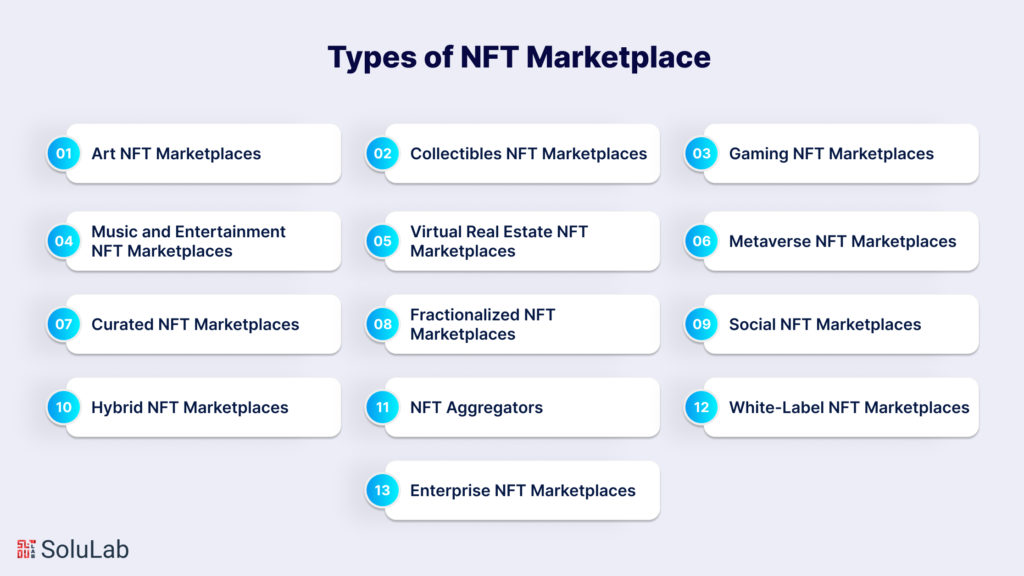
Types of NFT Marketplace

The NFT (Non-Fungible Token) marketplace space has seen significant growth and diversification, offering a range of options to cater to various interests and niches. Here are some types of NFT marketplaces that have emerged:

  • NFT Packs Marketplaces: These marketplaces support NFT “packs” or bundles that can be opened to reveal random digital assets, much like real-world collectible trading card packs. A leading example is Magic Eden, which allows users to buy and open NFT packs, containing rare tokenized Pokémon cards or NFTs on Ethereum or Solana.
  • Collectibles NFT Marketplaces: These marketplaces specialize in digital collectibles, such as virtual trading cards, toys, and in-game items. Notable platforms include NBA Top Shot and CryptoKitties.
  • Gaming NFT Marketplaces: Designed for gamers and game developers, these marketplaces enable the creation and trade of in-game assets as NFTs. Decentraland’s marketplace is an example of this category.
  • Music and Entertainment NFT Marketplaces: These platforms cater to musicians, filmmakers, and content creators, allowing them to tokenize their work as NFTs. Audius and Mintable are popular in this space.

Read Our Blog: How to Build an NFT Marketplace from Scratch
  • Virtual Real Estate NFT Marketplaces: These marketplaces specialize in virtual land and property, where users can buy, sell, and develop virtual real estate assets. Decentraland and The Sandbox are notable examples.
  • Metaverse NFT Marketplaces: Metaverse-focused platforms aim to create a unified virtual world where users can buy, sell, and trade NFTs related to their virtual avatars, items, and experiences. The Central and marketplace is a prime example.
  • Curated NFT Marketplaces: These platforms curate and offer a selection of high-quality NFTs, often with a focus on exclusivity and limited editions. CryptoArtPulse is one such platform.
  • Fractionalized NFT Marketplaces: These marketplaces allow users to buy fractions or shares of high-value NFTs, making ownership more accessible. Fractional is a platform in this category.
  • Social NFT Marketplaces: Social NFT platforms integrate social networking features, enabling users to connect, follow, and interact with creators. Zora is an example.
  • Hybrid NFT Marketplaces: Some platforms offer a combination of various NFT types, providing a broad spectrum of digital assets for users. OpenSea is a versatile marketplace that supports multiple NFT categories.
  • NFT Aggregators: These platforms aggregate NFT listings from various marketplaces, making it easier for users to discover and track NFTs across different platforms. NFTBank and NFTList are examples.
  • White-Label NFT Marketplaces: These are customizable marketplace solutions that can be branded and tailored to specific niches or purposes. They provide a quick way to launch an NFT marketplace with less development effort.
  • Enterprise NFT Marketplaces: Aimed at businesses and enterprises, these platforms facilitate the creation and management of NFT use cases, including digital assets and certificates.

CTA1

Why Create NFT Marketplace?

Creating your own NFT (Non-Fungible Token) marketplace can be a strategic decision for various reasons, depending on your goals and motivations. Here are some reasons why you might want to create your own NFT marketplace:

1. Revenue Generation: Running an NFT marketplace can be a lucrative endeavor. You can earn money through transaction fees, listing fees, and by offering premium services to users.

2. Control and Customization: By creating your own NFT marketplace, you have full control over its design, features, and policies. This allows you to cater to a specific niche or audience.

3. Community Building: A well-executed NFT marketplace can foster a thriving community of artists, collectors, and enthusiasts. This community can be an invaluable asset for your brand.

4. Diversification: Diversifying your crypto portfolio can mitigate risks. Owning an NFT marketplace can complement other crypto ventures you may have.

How Do NFT Marketplaces Work?

Before we get started on the whirlwind roller coaster of creating an application for an NFT marketplace, let’s first grasp how it works.

Every NFT marketplace typically follows a similar methodology. Users create and install digital wallets to store NFTs.

Here’s an outline of a few actions you should take after joining up:
  • Build an NFT and define all the necessary settings.
  • Then, make a list of the digital artworks and other items you wish to present for sale and wait until moderation is complete.
  • During auctions, purchasers will bid on your digital items.
  • After the auctions are completed successfully, the NFT marketplace sends the sold digital items and cryptocurrencies.

A Step-by-Step Guide to Launch Your Own NFT Marketplace

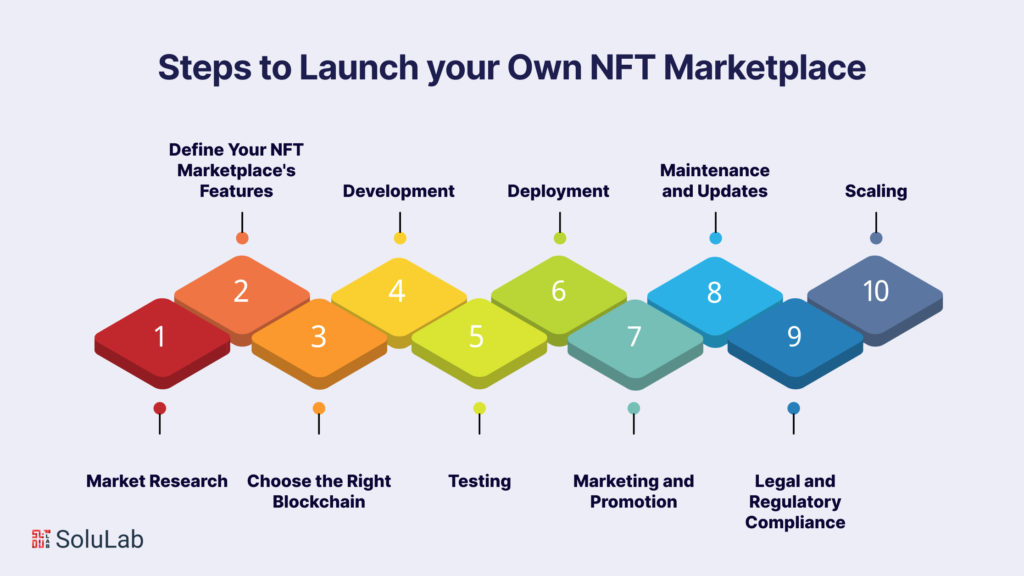
A Step-by-Step Guide to Launch Your Own NFT Marketplace

Now that we understand the benefits, let’s dive into the step-by-step process of how to build an NFT marketplace.

Step 1: Market Research

The first and arguably most crucial step in launching your NFT marketplace is conducting thorough market research. Here are some key aspects to consider:

  • Identify Your Niche: Determine the focus of your marketplace. Will it cater to artists, gamers, or a specific industry? Knowing your niche will help you tailor your platform to meet their needs.
  • Competitor Analysis: Study existing NFT marketplaces to understand their strengths and weaknesses. This will give an idea as to what and what not to implement in your own product.
  • Regulatory Compliance: Keep abreast of the legal and regulatory requirements in your jurisdiction related to cryptocurrencies and NFTs. Ensure that your platform complies with these regulations.
  • User Demographics: Analyze the demographics of potential users to create a user-friendly platform that resonates with your target audience.

Step 2: Define Your NFT Marketplace’s Features

Once you have a clear understanding of your market, it’s time to define the features and functionalities of your NFT marketplace

  • User Registration and Profiles: This allows users to create accounts, customize their profiles, and manage their collections.
  • Wallet Integration: Integrate cryptocurrency wallets to enable users to store and manage their NFTs securely.
  • NFT Minting: Provide a user-friendly minting process for creators to tokenize their digital assets and list them for sale.
  • Search and Discovery: Implement robust search and filter options, enabling users to easily find NFTs of interest.
  • Auction and Fixed Price Listings: Offer both auction-style and fixed-price listings to accommodate different selling strategies.
  • Payment Gateway: Integrate payment gateways for seamless cryptocurrency transactions.
  • Security Measures: Prioritize security to protect user data and assets from potential threats.
  • Community Tools: Build features for user engagement, such as forums, chat, and social sharing.
  • Analytics and Reporting: Provide users with insights into their transactions and collections.

Step 3: Choose the Right Blockchain

The choice of blockchain is pivotal to your NFT marketplace’s success. Ethereum is the most popular choice due to its established NFT standards (ERC-721 and ERC-1155). Other blockchains, such as Flow and Binance Smart Chain, are, nonetheless, gaining popularity. 

Step 4: Development

NFT marketplace development will require technical expertise. You have several options:

  • In-House Development: If you have a skilled development team, you can choose to build the marketplace from scratch. This offers the most customization but may be the most time-consuming and expensive option.
  • Use NFT Marketplace Development Services: Many development firms specialize in creating NFT marketplaces. They can streamline the development process and offer pre-built solutions that can be customized to your needs.
  • White-Label Solutions: Some companies offer White-Label NFT marketplace, which are ready-made platforms that you can brand and customize as your own. This path to market is more expedient.

Step 5: Testing

Before launching your NFT marketplace to the public, rigorous testing is essential. Check the usability, security, and operation of the platform. Engage a group of beta testers to provide feedback and identify any issues.

Step 6: Deployment

Once your marketplace passes all tests and is ready for prime time, deploy it to the blockchain of your choice. This involves configuring smart contracts, setting up servers, and ensuring that the platform is live and accessible.

Read Our Blog: How to Build an NFT Marketplace on Ethereum Blockchain?

Step 7: Marketing and Promotion

Building the marketplace is only half the battle; the other half is getting users to join and transact. Here are some strategies for marketing your NFT marketplace:

  • Social Media: Leverage platforms like Twitter, Instagram, and TikTok to create a buzz around your marketplace. Engage with influencers and artists in the NFT space.
  • Content Marketing: Start a blog or YouTube channel that covers NFT trends, artist profiles, and marketplace updates.
  • Partnerships: Collaborate with artists, creators, and other NFT-related projects for cross-promotion.
  • Community Building: Foster a strong community on your platform through engagement, contests, and rewards.
  • Email Marketing: Build an email list and send out newsletters with updates and promotions.
  • Paid Advertising: Invest in targeted advertising on platforms like Google and Facebook.

Step 8: Maintenance and Updates

Launching your NFT marketplace is just the beginning. Regularly update the platform to improve user experience and security. Listen to user feedback and adapt to the evolving NFT landscape.

Step 9: Legal and Regulatory Compliance

As the owner of an NFT marketplace, it’s crucial to stay compliant with the ever-changing legal and regulatory environment. This includes tax compliance, data protection, and any new regulations specific to NFTs.

Step 10: Scaling

As your NFT marketplace grows, consider scaling options. This may involve adding new features, expanding to other blockchains, or exploring partnerships to reach a wider audience.

Key Considerations for NFT Marketplace Development

When you understand how to create an NFT marketplace, there are a few fundamental requirements to follow. In short, your platform should be safe, transparent, and decentralized.

When it comes to the safety of marketplace components, you should use cloud security solutions that can help you safeguard your confidential information.

When we talk about transparency, we emphasize that the payment process needs to be error-free and prevent any unanticipated problems. Blockchain technology can help you operate your cryptocurrency transactions more smoothly. With this technology, you will get a detailed view of every transaction that occurs on your NFT platform.
CTA2

Conclusion

Creating your own NFT marketplace is a challenging yet rewarding endeavor. With the right research, planning, and execution, you can tap into the booming NFT market and build a thriving platform that caters to artists, collectors, and enthusiasts. Remember that success in the NFT space requires continuous innovation, community engagement, and adaptability to emerging trends and technologies. So, start your journey towards launching your own NFT marketplace today and be part of this exciting digital revolution.

Get in touch with SoluLab to get started with the help of our expert NFT developers if you want your entry into the trendy NFT field to be simple. Our NFT Marketplace Development services will help you assess your project idea, provide advice on the best tech stack, and construct a strong, secure, and feature-rich NFT platform that will provide you the freedom to exploit numerous possibilities and maintain an edge in the NFT space. Contact SoluLab today to enter the world of NFTs and excel right from the first day!

FAQs 

1. What is an NFT Marketplace?

NFTs are unique digital assets that represent ownership or proof of authenticity of digital or physical items, making them valuable in various industries, including art, gaming, entertainment, and more.

2. What are NFTs?

NFTs, or Non-Fungible Tokens, are digital tokens that are indivisible and cannot be exchanged on a one-to-one basis like cryptocurrencies such as Bitcoin or Ethereum. Each NFT is one-of-a-kind and represents ownership of a specific digital item, whether it’s digital art, music, collectibles, virtual real estate, or any other unique digital content.

3. How do I use an NFT Marketplace?

To use an NFT Marketplace, you typically need a cryptocurrency wallet and some knowledge of how NFT transactions work. You can create an account on the marketplace, browse listings, make purchases, and manage your NFT collection. Make sure to read the platform’s terms of service and user guidelines for a smooth experience.

4. Can I sell my own digital content on an NFT Marketplace?

Absolutely! NFT marketplaces allow creators to mint their digital content into NFTs and list them for sale. You can tokenize your art, music, videos, or any other unique digital creation. Just follow the platform’s guidelines for minting and listing NFTs.

5. How do NFT transactions work?

NFT transactions are typically conducted using cryptocurrency, often Ethereum (ETH). When you purchase an NFT, you’ll send the required amount of cryptocurrency to the seller’s wallet address in exchange for ownership of the NFT. Blockchain smart contracts ensure the security and authenticity of the transaction.

6. Are NFTs only for digital art?

No, NFTs have a wide range of use cases beyond digital art. While art is a popular category, NFTs can represent various digital or physical assets, including music, collectibles, virtual real estate, in-game items, domain names, and more. The NFT ecosystem continues to expand into new industries and applications.

How to Build an NFT Marketplace from Scratch

How to Build an NFT Marketplace from Scratch

As the digital world continues to evolve, new opportunities arise for those ready to take the plunge. One such opportunity is the emergence of Non-Fungible Tokens (NFTs) and their associated marketplaces, which have taken the world by storm. This guide will walk you through creating your own NFT marketplace, including identifying your niche, choosing the right blockchain platform, designing and developing your marketplace, establishing smart contracts and tokenization, and launching and marketing your NFT marketplace.

Introduction

Have you heard of individuals purchasing items such as works of art featuring Vladimir Putin, digital kittens, or an NBA play? Do you, however, understand where these items originate from or how they are bought?

NFTs or Non-Fungible Tokens represent a unique digital asset whose uniqueness is determined by a unique value and set of metadata, making them impossible to interchange. They exist on a blockchain, ensuring their authenticity and ownership. From digital art to music, photography, and collectibles, NFTs can represent virtually anything. Consequently, and to build an NFT marketplace is a digital platform where these tokens can be bought and sold. Some marketplaces are general, while others specialize in specific types of NFTs and target a specific audience.

Build the NFT marketplace from scratch, The NFT market is the clear solution to the problem. (NFT, or non-fungible tokens, is used here.) “A digital token is an abbreviation to build an NFT marketplace. It was created expressly to be used as evidence of a digital certificate of ownership rights for items like tweets, real or imagined materials, codes, films, and much more. For instance, Jack Dorsey’s first tweet—best known as the co-founder of Twitter—was purchased as an NFT for $2.9 million.

Read Also: How to Build an NFT Marketplace on Ethereum Blockchain?

The NFT market is also sometimes referred to as a public Blockchain platform. Adding to it, NFTs evolved into the most extravagant cryptocurrency trend as a result of the convergence of more traditional investors looking to acquire these incredible blockchain-based assets and trying to build their own NFT marketplace. Most people do not know how to build an NFT marketplace

Why not create an NFT marketplace then, given the drastic reversal in NFTs? Awaken, Listen! The NFT market is something you need to consider whether you’re an established firm, a crypto enthusiast, or a startup co-founder. (Your ROI could benefit in a variety of ways; you just never know.) Maybe you were looking for information on how to build an NFT marketplace from scratch when you came to this post. However, we are confident that after reading this essay, you will have taken a step toward creating an NFT market. Everything you want to know is covered here. Examples include how to build an NFT marketplace; proposals for an NFT marketplace; well-known NFT apps and websites; and so forth. Here, we take a deep dive into the expanding NFT market! 

What is NFT?

A non-fungible token is an unchangeable data storage unit that is kept on a blockchain. A type of digital ledger that may be traded and sold is the NFT. These tokens are distinctive digital assets, and the Ethereum NFT blockchain allows for ownership tracking.

What is an NFT Marketplace?

An NFT marketplace is what it sounds like if you’re considering building an NFT marketplace, but here’s the quick version: To build an NFT marketplace, to put it simply, a venue for the exchange of digital assets.

Anyone can build an NFT marketplace to sell or buy art, including music, in the virtual world, it doesn’t matter whether you are creating an NFT marketplace app or website but how do you create an NFT marketplace? The blockchain architecture used by NFT marketplaces provides a read-only record that contains a singular, non-fungible token.

Hans Hansen, CEO of Brand3D, a 3D technology company that develops immersive experiences for customers in a variety of industries including AI, 3D technologies, M2M automation, and more, says that once a token has been burned onto the blockchain, it offers the buyer of the NFT with a shred of foolproof ownership evidence that can be verified in the public domain.

Who can Create NFT?

Anyone can construct the NFT, including businesspeople, artists, photographers, writers, and producers. In this sector, experience is not necessary. The only thing you require is ownership of the NFT, which you intend to sell for a profit.

Who can Purchase the NFT?

Anyone who produced the NFT has the ability to mint and buy the NFT on the open market. You will be able to establish a special token on the blockchain with your name and artwork once you have the opportunity to buy the NFT.

CTA 1

Why Should You Invest in NFT Marketplace Today? 

Because the market for NFT is expanding quickly, many investors are looking to invest in digital collectibles. There appears to have been a significant increase in the NFT Market starting in 2021. No one will be able to make duplicate works of art or digital collectibles at the same time as the original works since they will all be tokenized. The NFT Market has a lot of variables to take into account. Let’s talk about the benefits of making an investment in the NFT Marketplace right now.

  • Support to the creators
  • Remove redundancy in the artwork
  • Display unique ownership 
  • Exclusive monetary benefits

Read Our Blog: Benefits Of An NFT Marketplace On Cardano

Most Popular NFT Marketplace of 2023

Whenever you are looking to acquire an NFT, it’s very important to understand which marketplace is appropriate for you and choose wisely. You can use these NFT marketplaces as examples:

  • SoluLab
  • NFT launchPad
  • Crypto.com
  • Binance
  • OpenSea
  • Nifty Gateway
  • Rarible

Most Popular NFTs 

We will now discuss the most well-liked NFTs of 2022.

  • Yubo – Our Favorite NFT Project for 2022
  • Crypto Baristas – NFTs for Coffee Lovers
  • Doodles – Vote on the Future of Your NFT Community
  • Invisible Friends – Best Animated NFT
  • Mutant Ape Yacht Club – A Fresh Take on a Popular NFT Collection

Key Features of NFT Marketplace

  • An attractive & intuitive Storefront for NFT Marketplace.
  • The storefront will contain information such as previews, price history, bids, owner’s information, etc. 
  • Separate seller and buyer account inside
  • Users can create and sell collectibles 
  • The NFT Marketplace platform gives you the opportunity to bid on your listed NFTs.
  • Here you need to set up the Wallet first, named MetaMask 
  • The NFT marketplace platform will provide you to search the items or tokens

Read Also: Solana NFT Marketplace: How to build your own NFT Marketplace on Solana

How to Create Your Own NFT Marketplace from Scratch?

How to Create Your Own NFT Marketplace from Scratch?

Step 1: Define Your Goals and Target Audience

The first step in creating an NFT marketplace is defining your goals and identifying your target audience. Do you want to create a general marketplace or one that specializes in a particular type of NFT? What do you hope to achieve with your marketplace? Answering these questions will help guide your decision-making process throughout the development of your marketplace.

Next, identify your target audience. Are they artists, collectors, gamers, or perhaps a mix of these groups? Understanding your audience’s needs and preferences will enable you to tailor your marketplace to their requirements, increasing its chances of success.

For example, if your target audience consists mainly of artists, you may want to focus on features that make it easy for them to upload and display their work. If your audience comprises collectors, features that ensure the authenticity and rarity of the NFTs might be more critical.

Step 2: Choose the Right Blockchain Platform

Choosing the right blockchain platform for hosting your NFTs is crucial. Different platforms offer varying degrees of scalability, security, and community support. Research the pros and cons of each platform and select the one that best aligns with your goals and requirements.

One popular choice for NFT marketplaces is Ethereum, thanks to its robust smart contract functionality and widespread adoption. However, other platforms like Binance Smart Chain, Flow, and Tezos are also gaining popularity due to lower transaction fees and faster transaction times.

Remember, the chosen platform will significantly influence your users’ experience, so it’s important to make an informed decision.

Step 3: Design and Develop Your Marketplace

Designing and developing your marketplace involves creating a user-friendly interface and implementing various features. This includes search and filtering options, user profiles, and payment integration. It’s also crucial to consider the overall aesthetic of your site, as this can greatly influence how users perceive your marketplace.

From a technical standpoint, developing an NFT marketplace involves front-end and back-end development. Frontend development focuses on the user interface and user experience, while backend development deals with the server side of the application, including database interactions and server logic.

It’s worth noting that the cost of NFT marketplace development typically falls within the range of $15,000 to $25,000. However, the actual cost can vary depending on various factors such as project complexity, desired features, and customization requirements.

Step 4: Establish Smart Contracts and Tokenization

Smart contracts are self-executing contracts with the terms of the agreement directly written into code. In the context of NFTs, smart contracts are used for minting and trading tokens. They ensure that each NFT is unique, authentic, and cannot be duplicated. Moreover, they facilitate transactions by automatically transferring ownership of the NFT from the seller to the buyer upon payment.

Tokenization is the process of converting rights to an asset into digital tokens on a blockchain. This is a critical aspect of NFTs, as it ensures the authenticity and ownership verification of the tokens.

Therefore, when establishing your NFT marketplace, it’s important to develop reliable smart contracts and implement robust tokenization protocols. This not only guarantees the functionality of your marketplace but also builds trust among your users.

Step 5: Launch and Market Your NFT Marketplace

After you’ve developed your NFT marketplace, it’s time to launch and market it. Here, a comprehensive marketing strategy can go a long way in attracting artists and collectors to your platform. Utilize social media, influencers, and partnerships to generate buzz around your marketplace and attract potential users. Also, consider offering exclusive content or promotions to entice users to check out your platform.

Furthermore, remember that launching your marketplace is just the beginning. To maintain interest and engagement, continuously promote your platform and update it with fresh content. Listen to your users’ feedback and make necessary improvements to better serve their needs.

Read Also: How To Launch Your Own NFT Marketplace Website in Less Than 2 Days?

How Much Does it Cost to Develop NFT Marketplace from Scratch?

The NFT Marketplace’s price is entirely determined by its size, available technology, client requirements, and list of market features. You now have a thorough knowledge of the market that we plan to create. The following factors determine the NFT market’s price:

  • Number of features you want
  • Tech Stack
  • Developer’s cost 
  • Time for development 
  • Third-party APIs integration

How to Earn Money from NFTs?

The majority of NFT creators profit from the commissions they receive from the sale of NFTs. The NFT Marketplace system offers a variety of options to earn royalties:

  • Listing Fee

The user can be charged for the listing fee.

  • Gas Fee

To mint, purchase, and sell NFT and execute a blockchain transaction, you must pay the gas fee.

  • Trade NFTs

NFTs can now be purchased through trading. When you buy and sell NFTs, you can make a profit on the margin.

CTA 2

Conclusion

In conclusion, creating your own NFT marketplace can be a rewarding endeavor, given the rapid growth and popularity of NFTs. However, it requires careful planning, strategic decision-making, and technical know-how. By following the steps outlined in this guide, you can navigate the process more smoothly and increase the likelihood of your marketplace’s success. Remember, the key is to create a platform that caters to the needs of your target audience and offers a seamless user experience. So, whether you’re an entrepreneur looking for a new business venture or an artist wanting to monetize your digital creations, building an NFT marketplace could be a great opportunity.

SoluLab, a leading NFT development company, offers specialized NFT marketplace development services to businesses aiming to achieve their goals. With years of experience, SoluLab provides unparalleled NFT Marketplace Development Solutions tailored to the unique needs of its clients. The team of skilled NFT developers at SoluLab possesses extensive expertise, knowledge, and experience to deliver highly customizable solutions that effectively drive business growth. Standing out in the competitive NFT development space is made possible by hiring SoluLab’s team, which focuses on agile development and is committed to delivering exceptional business results. For a distinguished NFT development experience, contact SoluLab today.

FAQs

1. Can I build an NFT marketplace without any technical knowledge or experience?

Building an NFT marketplace from scratch typically requires a solid understanding of blockchain technology and web development. While it’s beneficial to have technical knowledge, you can still collaborate with a development team or hire experts who specialize in NFT marketplace development to bring your vision to life.

2. What are the key features to consider when building an NFT marketplace?

When building an NFT marketplace, it’s crucial to include features such as user authentication, NFT minting and listing, bidding and buying options, secure transactions, smart contract integration, wallet integration, metadata storage, and a user-friendly interface. These features ensure a seamless user experience and efficient marketplace operations.

3. Which blockchain network should I choose for my NFT marketplace?

Ethereum is the most popular blockchain network for NFTs, known for its robust smart contract functionality and large user base. However, other blockchain networks like Binance Smart Chain, Flow, and Polygon are also gaining traction in the NFT space. Consider factors such as scalability, transaction costs, and community support when selecting the blockchain network for your NFT marketplace.

4. How can I monetize my NFT marketplace?

There are several monetization options for an NFT marketplace. You can charge transaction fees or commissions on NFT sales, offer premium listing options for higher visibility, provide advertising spaces for brands, or offer subscription-based services to access exclusive features. Choose a monetization strategy that aligns with your business goals and provides value to your users.

5. What security measures should I implement in my NFT marketplace?

Security is paramount in an NFT marketplace to protect users’ digital assets and ensure trust. Implement robust security measures such as two-factor authentication, encrypted data storage, secure payment gateways, comprehensive smart contract audits, and regular security assessments. Collaborate with cybersecurity experts to identify and address potential vulnerabilities in your marketplace.
