Talk to an Expert

How Non-Fungible Tokens Are Changing the Digital World?

How Non-Fungible Tokens Are Changing the Digital World?

In recent years, the digital landscape has witnessed a transformation that has left the world in awe. A new wave of innovation and disruption has swept through the realms of art, entertainment, real estate, and more, reshaping the way we perceive and interact with the digital world. Non-Fungible Tokens (NFTs), heralded as the future of digital ownership and representation, have played an instrumental role in this paradigm shift. NFTs have transcended the boundaries of traditional digital assets and have introduced a concept that is poised to redefine the very essence of ownership, authenticity, and value in the virtual realm. This phenomenon is not merely a passing trend but a substantial force that is rewriting the rules of the digital world. In this blog, we will explore how Non-Fungible Tokens are leaving an indelible mark on the digital landscape, ushering in a new era of possibilities and reshaping the way we perceive, create, and trade in the digital space.

Understanding NFTs

The advent of Non-Fungible Tokens (NFTs) has brought about a transformative shift in the digital world. To grasp the full extent of their impact on the digital realm, it is essential to delve into the fundamentals of NFTs, understanding what makes them unique, how they are created, and the implications for ownership and authenticity.

A. What Makes an NFT Unique?

NFTs derive their uniqueness from their cryptographic properties and the underlying blockchain technology. Unlike traditional digital assets, NFTs are indivisible, irreplaceable, and cannot be exchanged on a one-to-one basis. Each NFT is a distinct entity with a specific digital signature, making it impossible to forge or replicate. This uniqueness is at the core of NFTs’ value proposition in the digital world.

The impact of NFTs on the digital world is profound in the way they confer ownership and authenticity to digital content. Artists, creators, and even individuals can mint NFTs to represent digital art, music, videos, and virtual assets, establishing a sense of ownership that was previously elusive in the digital realm.

B. How are NFTs Created?

The process of creating NFTs is a testament to the revolutionary power of blockchain technology. NFTs are generated through a process called minting, which involves registering a digital asset on a blockchain. This process creates a unique token associated with the asset, effectively transforming it into an NFT.

The ownership and provenance of NFTs are stored securely on the blockchain, providing a transparent and immutable record of transactions. As a result, the creation and transfer of NFTs are not only secure but also entirely transparent, enhancing trust and authenticity in the digital world.

C. Ownership and Authenticity in the Digital Realm

The impact of NFTs on the digital world extends to the concepts of ownership and authenticity. Prior to NFTs, establishing ownership and proving the authenticity of digital assets were significant challenges. NFTs provide a solution to these issues by allowing creators and buyers to assert ownership with confidence.

Ownership of NFTs is cryptographically verified and recorded on the blockchain, eliminating doubts about the legitimacy of ownership claims. This has profound implications for artists, creators, and collectors, who can now monetize their digital works with a sense of security that was previously unattainable.

In essence, NFT in the digital world has transformed by introducing a novel, secure, and transparent method of asserting ownership and authenticity for a wide range of digital assets. This newfound assurance has opened up exciting possibilities for creators, collectors, and investors, reshaping the way we interact with and perceive the value of digital content.
CTA1

NFTs in Art and Creativity

The world of art and creativity has been profoundly impacted by the emergence of Non-Fungible Tokens (NFTs). Here, we explore how NFTs have revolutionized this space, serving as a game-changer for digital artists while also making significant waves in traditional art markets.

A. NFTs as a Game-Changer for Digital Artists

Digital artists, who have long grappled with the challenge of proving ownership and authenticity of their creations, have found a lifeline in NFTs. NFTs provide a groundbreaking solution, enabling artists to mint their digital works as unique tokens on blockchain platforms.

This development has been nothing short of revolutionary. Digital artists can now attach a sense of rarity and ownership to their creations, allowing them to sell their art directly to a global audience. With NFTs, artists have the potential to earn royalties every time their work is sold or traded on NFT marketplaces.

The impact of NFTs on the digital world in the realm of art is immense. It has democratized the art world, breaking down traditional barriers to entry and recognition for digital artists. Through NFTs, artists can gain more control over their work and financial opportunities they may have struggled to find in the past.

B. Impact on Traditional Art Markets

The emergence of NFTs has not only transformed the digital art landscape but also made waves in traditional art markets. This disruption stems from the growth of NFT marketplaces and the way they have reshaped the dynamics of buying and selling art.

NFT marketplaces, such as OpenSea, Rarible, and SuperRare, have become the platforms of choice for trading NFT art. NFT marketplace development and features have made it easier for artists to mint NFTs, connect with collectors, and secure the value of their digital creations. As NFT marketplaces have matured, they have provided a seamless bridge between digital and traditional art markets, enhancing accessibility and liquidity for art buyers and sellers.

The art world has had to adapt to this evolving landscape. Traditional art institutions and galleries are increasingly exploring partnerships with NFT marketplaces to connect with a broader, tech-savvy audience. As a result, the impact of NFTs on the digital world is not confined solely to the digital realm but extends its influence to the broader art industry.

In brief, NFTs have ushered in a new era of possibilities for artists and collectors alike. They have democratized the art world, providing digital artists with opportunities and control, while also disrupting traditional art markets and opening doors for collaboration and innovation. The NFT marketplace development services have played a pivotal role in these transformations, reshaping how we perceive and engage with art in the digital age.
NFTs in the Gaming Industry

NFTs in the Gaming Industry

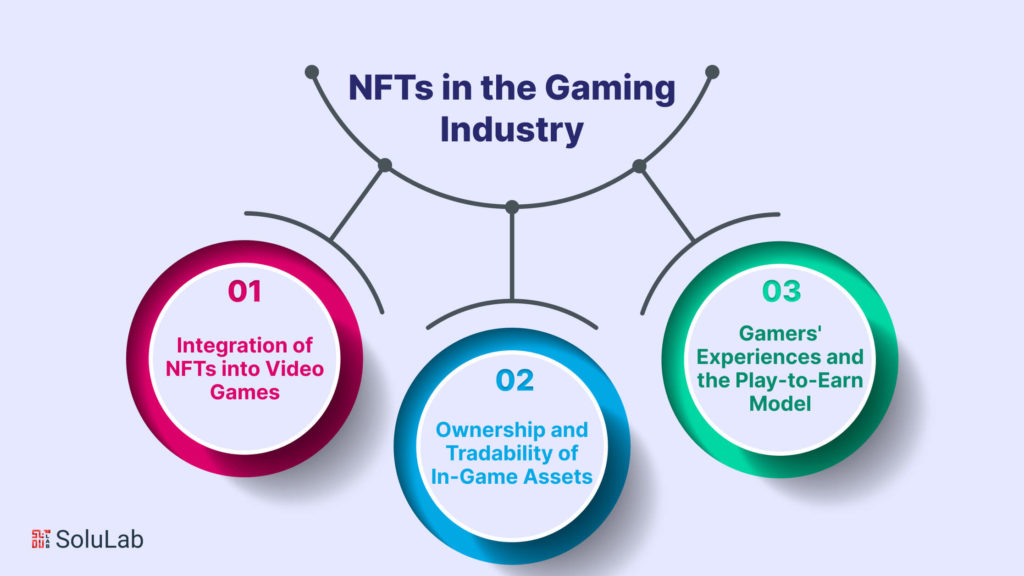
The gaming industry has been significantly impacted by the introduction of Non-Fungible Tokens (NFTs), leading to novel experiences and economic opportunities for both players and developers. Here, we explore the integration of NFTs into video games, ownership and tradability of in-game assets, and how NFTs have given rise to the “play-to-earn” model.

A. Integration of NFTs into Video Games

Traditionally, in-game assets like skins, weapons, and character outfits were owned by the game developers, limiting players’ control over their investments. With the advent of NFTs, these assets can now be tokenized and owned by players as verifiable digital possessions. Game developers are leveraging blockchain technology to create unique NFTs representing these in-game items.

This integration allows players to buy, sell, and trade their assets in a decentralized marketplace. These assets can be used across multiple games that support the same standards, providing players with a sense of ownership and control over their digital collections.

B. Ownership and Tradability of In-Game Assets

NFTs enable true ownership of in-game assets. Players have the freedom to trade, sell, or even lend their digital items, giving them a stake in the gaming ecosystem beyond their gameplay skills. This has led to a thriving secondary market for in-game assets, where players can monetize their investments by selling rare or sought-after items to other players.

Moreover, ownership of in-game assets becomes truly provable through the blockchain, reducing the risk of fraud or counterfeit items. The transparent and immutable nature of the blockchain ensures that the asset’s history and authenticity can be easily verified, making it a safe and trustworthy environment for players and collectors.

C. Gamers’ Experiences and the Play-to-Earn Model

NFTs pioneered the notion of “play-to-earn” in the gaming industry. Traditionally, gamers spent countless hours playing without direct financial gains. With NFTs, they can now accumulate valuable in-game assets that have real-world value. This shift has attracted a new audience of players who see gaming as a way to generate income.

In play-to-earn games, players can earn NFTs through gameplay, and these NFTs can be sold on marketplaces for cryptocurrencies or exchanged for other digital or real-world assets. This model has the potential to empower players, particularly in regions with limited economic opportunities, to earn a living by engaging in their favorite pastimes.

However, the play-to-earn model also comes with challenges, including concerns about the balance between gameplay and income generation, the potential for pay-to-win scenarios, and the need for regulations to protect players from exploitation.

In short, the integration of NFTs into the gaming industry has brought about a paradigm shift in the way players perceive and interact with in-game assets. The ownership, tradability, and play-to-earn model are transforming the gaming experience, opening new doors for both gamers and developers. As NFTs continue to evolve, they are likely to shape the future of gaming in ways that we have yet to fully explore.

NFTs in Real Estate and Virtual Land

The innovation of Non-Fungible Tokens (NFTs) extends beyond the realms of digital collectibles and gaming, venturing into the world of real estate and virtual land. This development brings forth the tokenization of real-world assets, virtual land ownership within metaverse platforms, and its potential impact on the real estate industry.

A. Tokenization of Real-World Assets

NFTs have paved the way for the tokenization of real-world assets, such as real estate properties. Tokenization involves breaking down physical assets into digital tokens, making them easily tradable and divisible. Through NFTs, individuals can hold digital ownership rights to specific portions or properties within the real estate market.

This tokenization opens up a range of possibilities, from enabling fractional ownership where multiple investors can hold shares in a single property to simplifying the process of buying and selling real estate. NFTs offer transparency and security by recording ownership and transaction history on a blockchain, reducing the need for intermediaries and enhancing trust in real estate transactions.

Real estate NFTs are often listed on NFT marketplaces, facilitating easy trade and providing a global platform for investors and buyers. Businesses and developers looking to engage in real estate tokenization can hire top NFT developers to create customized NFT marketplace development services that cater to their specific needs.

B. Virtual Land Ownership in Metaverse Platforms

Metaverse platforms, immersive virtual environments where people interact and socialize in digital spaces, have seen a surge in virtual land ownership through NFTs. Within metaverse worlds, parcels of virtual land are represented as NFTs, allowing users to purchase, develop, and trade virtual real estate.

Virtual land in metaverses serves various purposes, from creating digital businesses and virtual storefronts to hosting events and social gatherings. Some popular metaverse platforms include Decentraland, The Sandbox, and Somnium Space, where virtual land ownership has become a fundamental aspect of the user experience.

This development has encouraged businesses and entrepreneurs to invest in virtual land, further boosting the metaverse’s growth. Virtual landowners can develop their properties to generate revenue or simply hold them as digital assets with the potential for appreciation.

C. The Potential Impact on the Real Estate Industry

The integration of NFTs in real estate and virtual land ownership has the potential to disrupt the traditional real estate industry. Here are some of the potential impacts:

  • Accessibility: Real estate tokenization can lower the barriers to entry, making it possible for a broader range of investors to participate in real estate markets.
  • Efficiency: NFTs can streamline the buying and selling process by reducing paperwork and the involvement of intermediaries.
  • Globalization: NFTs enable cross-border investments, allowing investors to diversify their portfolios across different countries.
  • Liquidity: Fractional ownership and NFT-based real estate can increase liquidity, making it easier for investors to exit their positions.
  • Metaverse Integration: As virtual land ownership becomes more popular, the metaverse may emerge as a new dimension for real estate transactions and business opportunities.

In brief, NFTs have brought real estate into the digital age, offering new avenues for investment and diversification. The tokenization of real-world assets and virtual land ownership within metaverse platforms have the potential to revolutionize the real estate industry and redefine how we interact with both physical and digital properties. Businesses looking to leverage this trend can explore the services of top NFT developers to create their own NFT marketplace development solutions.
Challenges and Controversies

Challenges and Controversies

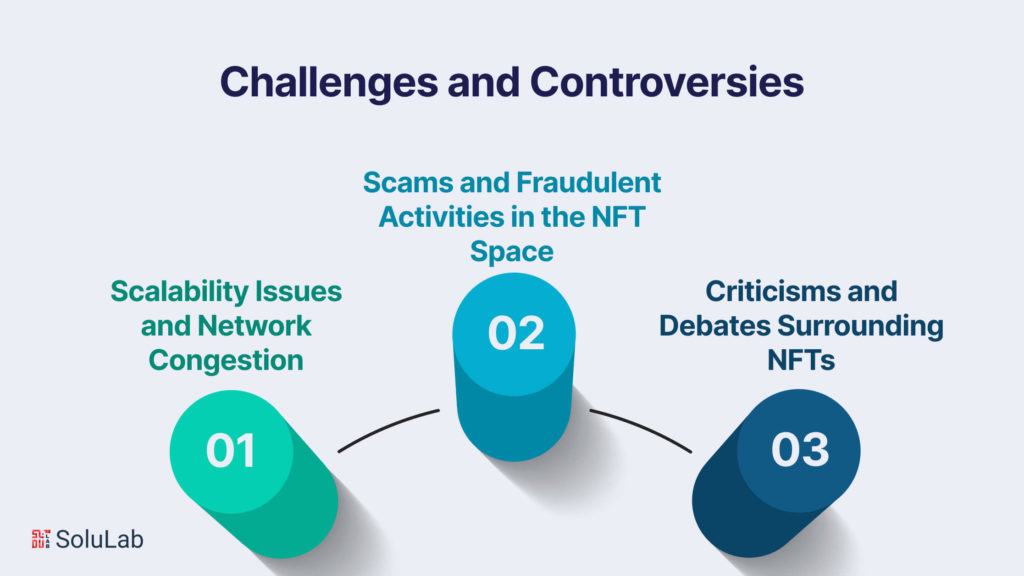
While Non-Fungible Tokens (NFTs) have gained significant attention and adoption, they are not without their share of challenges and controversies. In this section, we’ll explore some of the key issues that have emerged.

A. Scalability Issues and Network Congestion

One of the primary concerns associated with NFTs is the scalability of blockchain networks, particularly Ethereum. As NFTs gained popularity, they led to network congestion and increased transaction fees. The limited capacity of Ethereum and other blockchains has resulted in slow transaction times and high gas costs, making it less accessible for creators and collectors. These scalability issues have prompted discussions about the need for blockchain upgrades and the exploration of Layer 2 solutions to improve the overall NFT ecosystem.

Developers and blockchain communities are actively working on addressing these scalability challenges, but until a scalable solution is widely implemented, network congestion remains a significant hurdle for NFT enthusiasts.

B. Scams and Fraudulent Activities in the NFT Space

The rapid growth of the NFT market has attracted the attention of scammers and fraudsters. There have been instances of fake NFT listings, counterfeit art, and even fraudulent NFT marketplaces. These activities undermine trust in the NFT ecosystem and can lead to financial losses for unsuspecting buyers and creators.

It’s crucial for participants in the NFT space to exercise caution, conduct due diligence, and be aware of the risks associated with fake NFTs and deceptive practices. Emerging NFT marketplaces and services must implement rigorous verification and authentication processes to reduce the prevalence of scams.

C. Criticisms and Debates Surrounding NFTs

NFTs have sparked various criticisms and debates within the digital, artistic, and environmental communities. Some common criticisms include:

  • Environmental Concerns: The energy consumption associated with blockchain networks, particularly in the case of proof-of-work chains like Ethereum, has raised concerns about the carbon footprint of NFTs. These concerns have led to discussions about transitioning to more eco-friendly blockchain technologies.
  • Speculative Bubbles: Some argue that the NFT market has seen speculative bubbles, with overinflated prices for digital assets that may not hold long-term value. The concern is that this speculative behavior could lead to a market crash.
  • Exclusivity and Elitism: NFTs are seen by some as a means for wealthy individuals and celebrities to profit from their digital assets, leaving little room for emerging artists and creators. The question of whether NFTs are democratizing or exacerbating inequalities is a topic of ongoing debate.
  • Lack of Regulation: The lack of regulatory oversight in the NFT space has raised questions about consumer protection, copyright infringement, and legal challenges in case of disputes.

In response to these criticisms, the NFT community and industry are actively engaged in discussions about how to address these issues. This includes exploring more energy-efficient blockchain alternatives, promoting inclusivity supporting emerging artists, and advocating for responsible and ethical practices in the NFT space.

In conclusion, while NFTs have opened up new opportunities and possibilities, they are not immune to challenges and controversies. Addressing scalability, fraudulent activities, and criticisms are essential steps for the NFT ecosystem to mature and establish itself as a sustainable and responsible part of the digital world.
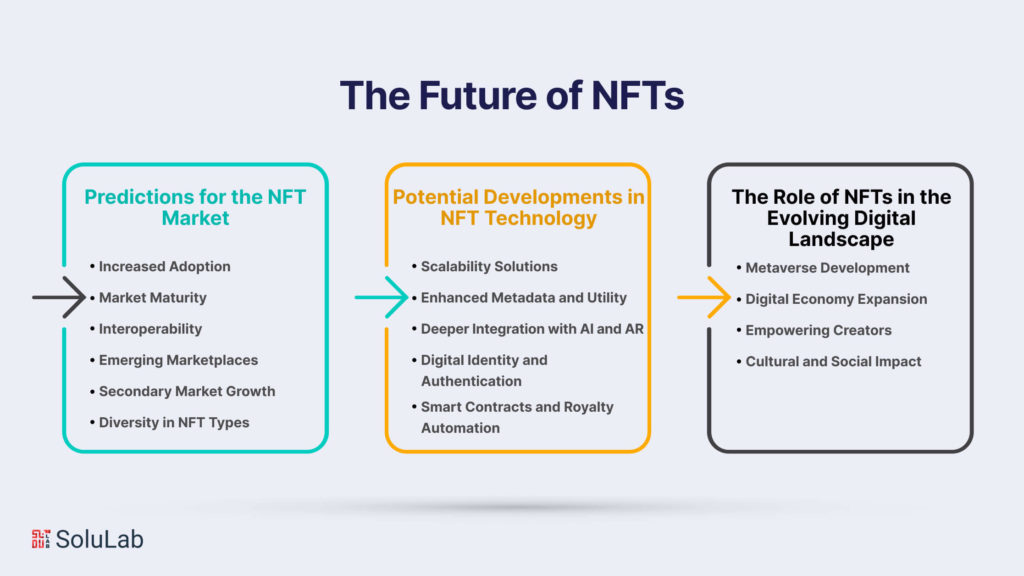
The Future of NFTs

Future of NFTs

As Non-Fungible Tokens (NFTs) continue to reshape various industries and capture the imagination of creators and collectors, it’s essential to consider what the future holds for this innovative technology. In this section, we’ll explore predictions for the NFT market, potential developments in NFT technology, and the evolving role of NFTs in the digital landscape.

A. Predictions for the NFT Market

The NFT market has shown remarkable growth, and its trajectory is likely to continue in the coming years. Here are some predictions for the NFT market:

  • Increased Adoption: NFTs are expected to see broader adoption in industries beyond art and gaming. Sectors like fashion, education, and healthcare may incorporate NFTs for provenance, authentication, and unique experiences.
  • Market Maturity: As the NFT market matures, we can anticipate increased regulation and standardization to address challenges related to fraud, copyright issues, and environmental concerns. This regulatory clarity may help build trust among users.
  • Interoperability: The development of cross-chain NFT solutions may promote interoperability between different blockchain ecosystems, making it easier for users to access and trade NFTs across multiple platforms.
  • Emerging Marketplaces: NFT marketplaces will continue to evolve, offering features such as social interactions, virtual exhibitions, and new ways to showcase and trade digital assets.
  • Secondary Market Growth: The secondary market for NFTs is expected to grow as collectors and investors seek opportunities for trading, flipping, and investing in digital assets. High-value NFTs may appreciate over time.
  • Diversity in NFT Types: New forms of NFTs, such as time-based NFTs, multi-chain NFTs, and NFTs representing real-world assets, will likely emerge, expanding the diversity of the market.

B. Potential Developments in NFT Technology

NFT technology is not static; it continues to evolve and expand its capabilities. Some potential developments include:

  • Scalability Solutions: Scalability issues will drive the development of Layer 2 solutions and the transition to more energy-efficient blockchains, reducing environmental concerns.
  • Enhanced Metadata and Utility: NFTs may become more programmable and dynamic, with metadata that can be updated, and NFTs can carry additional utility beyond ownership, such as granting access to exclusive content or experiences.
  • Deeper Integration with AI and AR: NFTs may be used in conjunction with artificial intelligence (AI) and augmented reality (AR) technologies, creating interactive and adaptive digital experiences.
  • Digital Identity and Authentication: NFTs may play a role in digital identity verification, helping to secure online interactions and protect users’ data and assets.
  • Smart Contracts and Royalty Automation: Smart contracts linked to NFTs will enable automated royalty payments to creators whenever their NFTs are resold, enhancing the fairness of the digital art market.

C. The Role of NFTs in the Evolving Digital Landscape

NFTs are poised to play an integral role in the ongoing transformation of the digital landscape:

  • Metaverse Development: NFTs will become foundational to metaverse environments, enabling users to own, create, and trade digital assets within these immersive virtual worlds.
  • Digital Economy Expansion: NFTs will extend beyond collectibles and art, infiltrating the digital economy as integral components in e-commerce, virtual real estate, and decentralized finance (DeFi) systems.
  • Empowering Creators: NFTs will empower creators and artists by providing more direct access to their audiences, bypassing intermediaries, and granting them greater control over their work and intellectual property.
  • Cultural and Social Impact: NFTs will continue to influence and shape cultural trends, art movements, and the ways we connect and interact in digital spaces.

In conclusion, the future of NFTs appears bright, with the potential for broader adoption, technological advancements, and a growing role in shaping the evolving digital landscape. As NFTs continue to mature, they will bring new opportunities and challenges, ultimately redefining how we perceive and interact with the digital world.
CTA2

Conclusion

In conclusion, the rise of Non-Fungible Tokens (NFTs) has ushered in a transformative era, reshaping how we interact with digital assets and the broader digital world. The impact of NFTs goes well beyond the creative and collectible realms, reaching into areas such as real estate, digital identity, and the metaverse. The emergence of NFT marketplace platforms and white-label NFT marketplace solutions has laid the foundation for a vibrant ecosystem where creators and collectors can connect, exchange, and create value in entirely new ways. These innovations have provided opportunities for entrepreneurs to explore and develop niche marketplaces tailored to specific industries and niches.

As we journey forward, the enduring significance of NFTs in the digital realm becomes more evident. The potential for NFTs to disrupt, innovate, and influence various facets of our digital lives is substantial. This is a world where the boundaries of ownership, creativity, and entrepreneurship are being redefined. It’s a world where opportunities for innovation are boundless, and where the role of NFTs in shaping the future of the digital landscape remains central. The NFT ecosystem continues to evolve, promising a future where the possibilities are as diverse as the digital assets themselves.

SoluLab, a leading blockchain and software development company, plays a pivotal role in the dynamic world of Non-Fungible Tokens (NFTs). As NFTs continue to transform the digital landscape, SoluLab has been at the forefront of innovation, offering NFT marketplace development solutions and white-label NFT marketplace services that empower businesses and entrepreneurs to explore the vast potential of this groundbreaking technology. With a strong commitment to blockchain technology, SoluLab is enabling clients to create custom NFT marketplaces that cater to specific industries and niches, ensuring they stay ahead in the rapidly evolving NFT ecosystem. Their expertise and dedication contribute to the enduring significance of NFTs, driving the digital realm toward a future that is more inclusive, innovative, and interconnected.

FAQs

1. What exactly is an NFT?

An NFT, or Non-Fungible Token, is a digital asset representing ownership or proof of authenticity of a unique item or piece of content, stored on a blockchain. Unlike cryptocurrencies like Bitcoin or Ethereum, NFTs are indivisible and each one has its own distinct value.

2. How can I create my own NFT?

To create your own NFT, you can use various NFT marketplaces like OpenSea, Rarible, or Mintable. You’ll need a digital wallet, connect it to a compatible marketplace, and then follow the platform-specific steps to mint your NFT. You’ll typically need to upload your digital content, set metadata, and determine any royalties for future resales.

3. Are NFTs environmentally friendly?

NFTs on certain blockchains, like Ethereum, have faced criticism for their environmental impact due to energy-intensive proof-of-work consensus mechanisms. However, the industry is actively exploring more eco-friendly solutions through the adoption of proof-of-stake blockchains and Layer 2 scaling solutions to mitigate these concerns.

4. How can NFTs be used in the real estate industry?

NFTs have the potential to revolutionize real estate by enabling the tokenization of property, making it easier to buy, sell, and trade real estate assets. They also offer fractional ownership opportunities, which can lower barriers to entry for real estate investment and make property ownership more accessible to a wider audience.

5. What are white label NFT marketplace solutions?

White label NFT marketplace solutions are customizable platforms provided by companies like SoluLab that allow businesses to create their own NFT marketplaces. They offer a pre-built infrastructure with the flexibility to be tailored to specific needs, industries, and branding, facilitating entrepreneurs and businesses in launching their NFT trading platforms more efficiently.

NFTs in Gaming: Unlocking the Future of Virtual Collectibles

NFTs in Gaming: Unlocking the Future of Virtual Collectibles

In recent years, the convergence of blockchain technology and the gaming industry has given rise to a transformative trend – Non-Fungible Tokens (NFTs) in gaming. This introduction will provide a brief overview of NFTs in gaming, delve into the essence of non-fungible tokens, highlight the significance of NFT gaming collectibles, and elucidate the purpose of the outlined discussion.

Non-Fungible Tokens, or NFTs, are cryptographic tokens built on blockchain technology, typically utilizing Ethereum’s ERC-721 or ERC-1155 standards. Each NFT possesses a distinct set of properties that differentiate it from other tokens. These properties could include metadata, ownership history, and rarity factors. NFTs have gained widespread attention and adoption not only in gaming but also in art, entertainment, and various digital ecosystems due to their ability to represent ownership and uniqueness in the digital realm.

The significance of NFT gaming collectibles lies in their capacity to revolutionize the gaming experience. These digital assets empower gamers with true ownership of in-game items and characters, granting them the freedom to buy, sell, or trade these assets across different gaming platforms. This new paradigm disrupts the traditional closed-loop system of gaming, where virtual items are typically owned by game developers and publishers, allowing gamers to derive real-world value from their in-game investments.

Read Our Blog Post: Top NFT Development Companies

What are NFTs in Gaming?

Non-fungible tokens (NFTs) have emerged as a revolutionary concept in the world of digital assets and gaming. To grasp their significance within the gaming sphere, it’s essential to delve into what NFTs are and how they have been seamlessly integrated into video games.

NFTs, or Non-Fungible Tokens, are unique digital assets that are indivisible, irreplaceable, and provably scarce. Unlike cryptocurrencies like Bitcoin or Ethereum, which are fungible and interchangeable, NFTs represent ownership of one-of-a-kind items, such as digital art, collectibles, or in-game assets. Each NFT is distinguished by a distinct token ID and is stored on a blockchain, ensuring its authenticity and ownership history.

NFTs have found a natural home in the gaming world, where virtual collectibles and in-game items have long held significant value for players. Game developers have begun leveraging NFT technology to create unique in-game assets and collectibles that players can buy, sell, and trade. These NFT gaming collectibles are often tied to blockchain technology, allowing players to truly own and control their virtual possessions. This integration has opened up exciting possibilities for both gamers and developers.

What Role Do NFT Gaming Collectibles Play in Shaping the Economies?

Role of NFT gaming collectibles Economies

NFT gaming collectibles are distinct digital items within video games, each represented as a unique NFT on a blockchain. Unlike traditional in-game assets that are often confined to specific game ecosystems, NFTs offer true ownership and portability. Players can buy, sell, and trade these collectibles both within and outside the game environment, with ownership records securely recorded on the blockchain. This creates a sense of ownership that transcends the boundaries of individual games, making NFT gaming collectibles highly coveted.

1. Shaping Virtual Economies: 

  • Player-Driven Market

NFT gaming collectibles have introduced a player-driven market within virtual gaming worlds. These assets are not just cosmetic; they hold real-world value. This economic dimension encourages players to actively participate in trading, buying, and selling NFTs, influencing their scarcity and value.

Check Our Blog Post: ERC-3643 vs ERC-1400 vs ERC-20

  • Monetization for Developers

Game developers benefit from the secondary market for NFTs as they often receive a percentage of each transaction involving in-game NFTs. This creates a sustainable revenue stream, which can support ongoing game development and maintenance.

CTA1

2. Ownership and Authenticity:

  • Redefining Ownership

NFT gaming collectibles provide a groundbreaking shift in ownership dynamics. Players truly own their digital assets, granting them the autonomy to control, trade, and transfer their NFTs across various games and platforms. This newfound ownership extends the value of in-game items beyond a single gaming experience.

  • Digital Scarcity and Authenticity

NFTs inherently possess digital scarcity and authenticity. Each NFT is unique, provably scarce, and irreplaceable, thanks to blockchain technology. This assures players and collectors of the rarity and authenticity of their digital possessions, enhancing their desirability.

Read Blog Post: Top NFT Trends That Will Build Revenue Streams to the Business

How are NFTs Revolutionizing the Future of the Gaming Industry?

The world of gaming has witnessed a significant transformation in recent years, thanks to the integration of Non-Fungible Tokens (NFTs) into the gaming landscape. NFTs, often referred to as NFT gaming collectibles, have become a buzzword, reshaping how gamers interact with virtual worlds. In this article, we delve into the potential of NFTs in gaming and the challenges and concerns that accompany this innovative technology.

1. Potential of NFTs in Gaming

  • Expansion Beyond Collectibles

Traditionally, collectibles in video games were limited to in-game items like skins, weapons, or cosmetic upgrades. NFTs, however, have broadened the scope of collectibles to an unprecedented level. Gamers can now own unique, verifiable digital assets, be it rare in-game characters, custom skins, or virtual real estate. These NFT gaming collectibles hold tangible value in the form of ownership and scarcity, allowing players to truly invest in their gaming experiences.

This expansion has given rise to a thriving marketplace where players can buy, sell, and trade their NFT gaming assets, fostering a sense of virtual ownership akin to physical possessions. As NFTs continue to proliferate, gaming ecosystems are evolving into dynamic, player-driven economies where creativity and value creation know no bounds.

2. Evolution of In-Game Assets

The incorporation of NFTs into gaming has set the stage for the evolution of in-game assets. Previously, players would often invest time and money in acquiring digital items with no real-world value or transferability. NFTs have changed this paradigm by imbuing in-game assets with real-world value.

Read Also: How to Make an NFT Game?

These NFTs can seamlessly move across different games and platforms, creating a versatile gaming experience. Gamers can now expect a level of continuity and personalization that extends beyond individual titles. This evolution has paved the way for cross-platform gaming, where assets can be ported between various virtual worlds, enhancing player engagement and interactivity.

What are the Challenges and Concerns Associated with the Integration of NFTs in Gaming?

The integration of Non-Fungible Tokens (NFTs) in gaming has been a revolutionary development, offering unique opportunities for gamers and developers alike. However, this innovation is not without its challenges and concerns, which require careful consideration to ensure the sustainable growth of NFT gaming collectibles.

 Scalability Issues

  • NFTs are blockchain-based assets, and as the popularity of NFT gaming grows, scalability becomes a significant concern. The blockchain network may struggle to handle the increasing volume of transactions, leading to slow processing times and higher fees.
  • Developers need to find solutions to scale NFT games efficiently, potentially through layer-2 solutions or blockchain upgrades. This ensures that NFT gaming remains accessible and enjoyable for a broad user base.

Environmental Impact

  • The energy consumption associated with blockchain networks, especially Proof-of-Work (PoW) blockchains, has raised environmental concerns. Some NFTs contribute to carbon footprints due to the energy-intensive mining process.
  • Game developers should consider transitioning to more environmentally friendly blockchains or exploring alternative consensus mechanisms like Proof-of-Stake (PoS) to mitigate this issue.

Regulatory and Legal Considerations

  • As NFTs gain prominence, regulators are taking an interest in their classification and taxation. The legal framework surrounding NFT gaming collectibles can be complex and vary by jurisdiction.
  • Game developers must stay informed about the evolving legal landscape of NFTs and gaming. Compliance with regulations is crucial to avoid potential legal issues or penalties.

Ownership and Security

  • While NFTs offer digital ownership, the security of these assets is a concern. Hacks, scams, and fraud can compromise players’ investments and hard-earned NFT gaming collectibles.
  • NFT developers should prioritize robust security measures, including secure wallets and authentication protocols, to protect gamers’ assets and build trust within the community.

Read Also: Best Play To Earn NFT Games In 2025

Market Saturation and Speculation

  • The rapid influx of NFT projects can lead to market saturation, making it challenging for new projects to stand out. Additionally, speculation can drive prices to unsustainable levels, potentially resulting in a bubble.
  • NFT developers should focus on creating unique and engaging gaming experiences rather than solely relying on the speculative nature of the NFT market. Building a strong community around a game can help sustain its value.

How do Top NFT Developers Influence the Future of NFT Gaming Amidst Evolving Roles and Technology?

Role of NFT developers in Future of NFT gaming

NFTs, or Non-Fungible Tokens, have rapidly become a transformative force within the gaming industry, particularly in the realm of NFT gaming collectibles. To harness the full potential of this technology, the role of NFT developers is pivotal. SoluLab, a prominent player in the NFT game development arena, is at the forefront of this exciting revolution. Let’s delve into the role of NFT developers, their qualities, services, and the impact they have on the future of NFT gaming.

1. NFT Game Development Services

  • Range of Services Offered

SoluLab, like other top NFT development firms, offers a comprehensive range of services. This includes NFT smart contract development, NFT marketplace creation, and the integration of NFTs into existing or new games. They also provide consultation on NFT strategies, tokenomics, and monetization methods specific to NFT gaming.

  • Collaborative Approaches

NFT game development is a collaborative endeavor. Developers work closely with game designers, artists, and publishers to create NFT gaming collectibles that resonate with players. SoluLab’s collaborative approach ensures that NFTs align with the overall game concept, enhancing player engagement and retention.

2. NFT Developers and the Future

  • Their Influence on NFT Gaming

NFT developers play a pivotal role in shaping the future of NFT gaming. Their innovative solutions drive the expansion of NFTs beyond collectibles. They enable in-game assets, skins, characters, and more to become NFTs, fundamentally changing the way gamers perceive ownership and trade.

  • Evolving Roles and Responsibilities

As the NFT gaming landscape evolves, so do the roles and responsibilities of NFT developers. They are increasingly involved in addressing scalability challenges, sustainability concerns, and adapting to regulatory changes. Their ability to provide solutions in these areas is instrumental in maintaining the growth and legitimacy of NFT gaming.

CTA2

Conclusion

In conclusion, SoluLab stands at the forefront of the revolution in NFTs in gaming, shaping the future of virtual collectibles. As the world increasingly embraces Non-Fungible Tokens (NFTs) and their potential in the gaming industry, SoluLab’s expertise in NFT game development services and solutions is nothing short of visionary. Their commitment to excellence and innovation has led to the creation of immersive NFT games that redefine the way we perceive NFT gaming collectibles.

NFTs in gaming are not just digital assets; they represent a profound shift in how gamers interact with and own in-game items. SoluLab’s dedication to pushing the boundaries of NFT gaming has not only defined what NFT games are but has also unveiled the true meaning of NFT gaming.

By offering the opportunity to hire top NFT developers, SoluLab empowers businesses and individuals alike to enter the exciting world of NFTs in gaming confidently. In doing so, they are unlocking a future where virtual collectibles are not only a form of entertainment but a groundbreaking form of ownership, trade, and self-expression.

In a world where NFT gaming is rapidly evolving, SoluLab is the trusted partner you need to navigate this transformative landscape successfully. With their NFT game development expertise, they are helping shape the future of gaming, one non-fungible token at a time. For expert support, contact SoluLab today.

FAQs

1. What are NFTs in gaming?

NFTs in gaming refer to Non-Fungible Tokens, unique digital assets that are used within video games as collectibles, items, or characters. These tokens are blockchain-based and represent ownership of in-game assets.

2. How do NFTs work in gaming?

NFTs work by utilizing blockchain technology to create verifiable and unique digital assets that can be bought, sold, and traded by gamers. Each NFT has a distinct value and can be owned by individual players.

3. What is the significance of NFT gaming collectibles?

NFT gaming collectibles hold value because they are scarce and cannot be replicated. Gamers can buy, sell, or trade these collectibles, fostering a sense of ownership and uniqueness in virtual worlds.

4. Can you explain NFT game development?

NFT game development is the process of creating video games that integrate NFTs as in-game assets or collectibles. This includes designing, coding, and implementing NFT functionality within a game.

5. What services do NFT game development solutions offer?

NFT game development services provide comprehensive solutions for creating blockchain-based games. They include NFT asset creation, smart contract development, integration with NFT marketplaces, and more.


The Future of NFT Marketplaces: Trends and Innovations

The Future of NFT Marketplaces: Trends and Innovations

Non-fungible tokens (NFTs) have completely revolutionized the financial industry. These unique digital assets have disrupted traditional notions of ownership and opened up exciting possibilities for creators and collectors alike. Central to the NFT ecosystem are NFT marketplaces, where these digital treasures are bought, sold, and showcased. In this blog, we will delve into the current landscape and the future possibilities of NFT marketplaces. From marketplace development and emerging trends to innovations and the role of NFT developers, we’ll navigate the ever-evolving world of NFTs.

To comprehend the future, we must first grasp the present. NFT marketplaces are the epicenter of the NFT universe, providing the platform for creators to mint, display, and sell their digital assets. At their core, NFT marketplaces are where unique digital tokens meet eager collectors.

What are NFTs and How Do They Work?

NFTs are cryptographic tokens that represent ownership of a specific digital or physical item, typically hosted on a blockchain. Unlike cryptocurrencies like Bitcoin or Ethereum, NFTs are not interchangeable with one another; each NFT has a distinct value and identity.

The process of creating and owning NFTs involves minting, where a digital asset is tokenized, and ownership is recorded on the blockchain. NFTs are typically bought and sold on NFT marketplaces, with each token carrying a unique digital signature to prove its authenticity.

Read Also: Why Should You Start Your Own NFT Marketplace Business?

Role of NFT Marketplaces in NFT Transactions

NFT marketplaces are critical components of the NFT ecosystem. They provide a platform for artists, musicians, gamers, and other content creators to tokenize their work and make it available to a global audience. The marketplace acts as an intermediary that facilitates transactions and ensures the security and authenticity of NFTs.

Key Players in the NFT Marketplace Industry

Key Players in the NFT Marketplace Industry

Several NFT marketplaces have emerged as leaders in the industry, each with its unique features and specialties. OpenSea, Rarible, and SuperRare are some of the most prominent names in the space. These marketplaces cater to different niches, from digital art to virtual real estate, offering creators and collectors a variety of options.

Before we delve into the future, it’s essential to understand the current state of NFT marketplaces. The landscape has evolved rapidly, with market capitalization, trading volumes, and notable sales reaching unprecedented heights.

  • OpenSea: As one of the largest and most well-known NFT marketplaces, OpenSea offers a wide range of digital assets, including art, music, virtual real estate, and more. It has gained immense popularity for its user-friendly interface and extensive collection.
  • Rarible: Rarible stands out for its focus on decentralization. It allows users to create and manage their NFTs without centralized control. This marketplace empowers creators and collectors alike.
  • SuperRare: SuperRare specializes in digital art NFTs. It has become a go-to platform for artists to showcase and sell their unique creations, often fetching high prices in the market.

CTA1

Market Capitalization and Trading Volumes

The NFT marketplace sector has witnessed exponential growth in market capitalization, reflecting the cumulative value of all NFTs in existence. The figures have soared into the billions, underscoring the economic significance of NFTs.

Trading volumes in NFT marketplaces have surged, mirroring the heightened interest and participation of collectors and investors. Transactions range from modest sums to astronomical amounts, emphasizing the market’s diversity and potential.

Know More: Top NFT Development Companies To Look At In 2023

Notable NFT Sales and Records

1. NFTs have garnered global attention thanks to record-breaking sales. These remarkable transactions highlight the multifaceted nature of NFTs:

2. ”Everyday: The First 5000 Days” by Beeple sold for a whopping $69 million, launching NFT art into the mainstream art scene.

NBA Top Shot, an officially licensed NFT marketplace platform for basketball highlights, has seen individual video clips sold for hundreds of thousands of dollars, signaling NFTs’ potential to disrupt sports memorabilia markets.

The Process of Building an NFT Marketplace

The Process of Building an NFT Marketplace

The rise of NFT marketplaces has led to a growing interest in NFT marketplace development. Entrepreneurs and businesses are eager to create their NFT marketplace to tap into the expanding market. Creating an NFT marketplace entails many critical steps:

  • Conceptualization: Define your marketplace’s niche, target audience, and unique selling points.
  • Technical Development: Engage a skilled development team to create the platform, ensuring security and scalability.
  • Smart Contract Development: Smart contracts are the backbone of NFTs; they manage minting, ownership, and transactions securely.
  • User Interface (UI) and User Experience (UX): A user-friendly interface is crucial to attract and retain users.
  • Blockchain Integration: Choose a suitable blockchain (Ethereum, Binance Smart Chain, Flow, etc.) for your marketplace.
  • Testing and Security Audits: Thoroughly test the platform and conduct security audits to identify vulnerabilities.
  • Launch and Marketing: After rigorous testing, launch your marketplace and implement marketing strategies to attract users.

Watch Out: NFT Art for Beginners – How to Make and Sell

Benefits of Creating Your NFT Marketplace

Establishing your NFT marketplace offers several advantages that can be lucrative and strategically advantageous in the fast-growing NFT ecosystem. Here are some of the key benefits of creating your NFT marketplace:

  • Revenue Generation: Transaction fees generate revenue, ensuring a sustainable business model.
  • Control and Customization: You have full control over the platform’s features and design.
  • Niche Focus: Tailoring the marketplace to specific niches or industries can attract passionate and engaged users.

Recent Trends Shaping the NFT Marketplace Ecosystem

Recent Trends Shaping the NFT Marketplace Ecosystem

As NFTs continue to capture the world’s attention, several trends are shaping the NFT marketplace landscape. These trends reflect the evolving interests and demands of creators and collectors.

  • NFTs in Gaming: NFTs have entered the gaming arena, revolutionizing in-game asset ownership. Games like Axie Infinity and Decentraland have harnessed the potential of NFTs, allowing players to own, trade, and monetize in-game assets.
  • Virtual Real Estate: Virtual real estate marketplaces have emerged, providing users with the opportunity to buy, sell, and develop digital properties. These virtual worlds offer a novel investment avenue and a canvas for digital architects.
  • NFT Music and Audio: Musicians and audio creators have embraced NFTs to sell music, concert tickets, and even unique audio clips. This trend has unlocked new avenues for artists to monetize their creations and engage with fans.
  • NFT Fashion: The fashion industry has ventured into the NFT space, offering virtual fashion items and wearables. This convergence of fashion and technology introduces digital couture to the digital realm.
  • Social Tokens: Creators are issuing social tokens, granting ownership of their personal brand. This enables fans to invest in their favorite influencers, bridging the gap between creators and their communities.

Read Also: How will White-Label NFT Marketplace Development Benefit your Business?

Cutting-edge Technologies Transforming NFT Platforms

The world of Non-Fungible Tokens (NFTs) is constantly evolving, driven by innovative technologies that aim to enhance the functionality, accessibility, and sustainability of NFT platforms. These cutting-edge technologies are at the forefront of transforming the NFT landscape, making it more efficient, scalable, and interconnected.

  • Layer 2 Solutions: Layer 2 scaling solutions like Immutable X and Optimism are addressing high gas fees and slow transaction times on the Ethereum network.
  • Cross-Chain Compatibility: NFTs are becoming cross-chain, allowing assets to move seamlessly between different blockchain networks.
  • Interoperability: Efforts are underway to enable interoperability between different NFT platforms, increasing liquidity and options for users.

Unique Features and Functionalities in Innovative NFT Marketplaces

Unique Features and Functionalities in Innovative NFT Marketplaces

Innovative NFT marketplaces are introducing novel features that are redefining how we perceive and interact with digital assets. These groundbreaking functionalities not only enhance the user experience but also open up new possibilities for creators, collectors, and investors in the ever-evolving world of NFTs.

  • Fractional Ownership: Fractional ownership is democratizing NFT ownership. High-value assets can be divided into smaller shares, making them accessible to a broader audience. This trend aligns with the concept of shared ownership, enabling more people to participate in NFT markets.

Read Also: What are some White-Label NFT Marketplace Solutions?

  • NFT Derivatives: NFT derivatives, including futures and options, are emerging as tools for speculating on NFT prices. These financial instruments add depth to the NFT market, allowing users to hedge their NFT investments.
  • Dynamic NFTs: Some NFTs incorporate dynamic elements, evolving over time or responding to external stimuli. These dynamic NFTs add an interactive dimension to ownership, fostering engagement and uniqueness.

The Future of NFT Marketplaces

The trajectory of NFT marketplaces points toward continued growth, innovation, and integration into everyday life. As we delve into the future of NFTs and their associated marketplaces, it becomes increasingly evident that these unique digital assets are not just a passing trend but a transformative force that will shape various aspects of our digital and potentially physical existence.

  • Mainstream Adoption: NFTs and NFT marketplaces are likely to become more accessible to mainstream users, with simpler user interfaces and lower barriers to entry.
  • Increased Regulation: As the NFT market matures, regulatory bodies may introduce guidelines to ensure consumer protection and tax compliance.
  • Cultural Impact: NFTs will continue to influence culture, from digital art trends to the concept of digital ownership.

Read Our Blog: Solana NFT Marketplace: How to build your own NFT Marketplace on Solana

Regulatory Considerations and Challenges

In the realm of Non-Fungible Tokens (NFTs), regulatory considerations and challenges loom large, encompassing a spectrum of legal, financial, and ethical complexities. Chief among these is the intricate web of copyright and intellectual property concerns. As artists, musicians, and creators tokenize their digital works as NFTs, issues of ownership, licensing, and potential copyright infringement surface. 

Establishing explicit licensing terms and mechanisms within NFT smart contracts becomes imperative to safeguard creators’ intellectual property rights and preempt disputes. 

Equally pressing are the concerns surrounding fraud and scams within the NFT ecosystem. The nascent nature of this space renders it susceptible to fraudulent activities, including counterfeit NFT sales, phishing schemes, and unauthorized auctions. 

Combatting these threats necessitates robust verification and authentication protocols to confirm the legitimacy of NFTs and their associated metadata, coupled with user education efforts to bolster security awareness. Moreover, environmental considerations have taken center stage as NFTs, particularly those built on energy-intensive blockchain networks like Ethereum employing Proof of Work (PoW), have faced scrutiny for their substantial carbon footprint. 

CTA2

Conclusion

In conclusion, the realm of Non-Fungible Tokens (NFTs) and their marketplaces has evolved into an exciting and transformative domain. Our journey through this extensive exploration of NFT marketplaces has illuminated the present landscape and provided glimpses into the future possibilities that lie ahead.

NFT marketplaces serve as the epicenter where unique digital tokens meet eager collectors, offering a platform for creators to mint, showcase, and sell their digital assets. Understanding the core principles of NFTs, the role of NFT marketplaces, and the current leaders in the industry sets the stage for what’s to come.

In this ever-evolving landscape, SoluLab stands as a beacon of expertise and innovation. With a deep understanding of NFT marketplace trends and innovations, their trends, and the transformative potential they hold, SoluLab offers NFT marketplace development services and solutions that empower businesses to embark on their NFT journey.

Whether you aim to create your NFT marketplace, explore NFT development, or simply stay updated with the latest trends and innovations in the NFT space, SoluLab is your trusted partner. Our commitment to excellence and innovation positions us as a leader in the NFT development landscape.

As we conclude this exploration of NFT marketplaces, we invite you to embrace the future with open arms. The world of NFTs is teeming with opportunities, waiting for creators, collectors, and innovators like you to shape it. Together, we’ll navigate the evolving trends, harness the power of NFTs, and pave the way for the future of digital ownership.

Seeking top-notch NFT developers skilled in cryptocurrency and blockchain development? Your search ends here! Our experienced NFT programmers deliver premium solutions, from blockchain tech to smart contracts, streamlining your processes. Our user-friendly, advanced platform development, along with secure digital wallets, tailored to your business, ensures a seamless experience. Contact SoluLab today for expert NFT solutions.

FAQs

1. What is the role of NFT marketplaces in the world of NFTs?

NFT marketplaces serve as digital platforms where creators can tokenize their digital assets, and collectors can buy, sell, and trade NFTs. They facilitate transactions, ensure the security of NFTs, and provide a marketplace for the exchange of digital ownership.

2. How do NFT marketplaces generate revenue?

NFT marketplaces typically generate revenue through transaction fees. When users buy or sell NFTs on these platforms, a percentage of the transaction value is collected as a fee. This fee can vary from one marketplace to another.

3. What are some emerging trends in NFT marketplaces?

Emerging trends in NFT marketplaces include the integration of NFTs into gaming, the rise of virtual real estate marketplaces, NFTs for music and audio content, the use of NFTs in the fashion industry, and the issuance of social tokens. Additionally, cross-chain compatibility and Layer 2 solutions are addressing scalability issues.

4. Are there opportunities for businesses to create their NFT marketplaces?

Yes, businesses can create their NFT marketplaces to tap into the growing NFT market. The process involves conceptualization, technical development, smart contract development, UI/UX design, blockchain integration, testing, security audits, and marketing. Many development firms offer specialized NFT marketplace development services.

5. How are NFT marketplaces contributing to the cultural impact of NFTs?

NFT marketplaces are playing a significant role in the cultural impact of NFTs by providing a platform for artists, musicians, and creators to reach global audiences. They are reshaping how digital art and collectibles are created, valued, and traded, influencing trends in the digital art world.

6. What are some challenges and regulatory considerations in the NFT marketplace space?

Challenges in the NFT marketplace space include copyright issues, concerns over fraud and scams, and environmental considerations related to the energy consumption of certain blockchain networks. Regulatory bodies are beginning to explore guidelines to ensure consumer protection and tax compliance.

How to Build an NFT Marketplace like Binance?

How to Build an NFT Marketplace like Binance?

The world of cryptocurrency and blockchain technology has witnessed an explosion in interest and innovation in recent years. One of the latest trends that has taken the digital world by storm is the concept of NFTs (Non-Fungible Tokens). These unique digital assets have opened up new opportunities for creators, artists, and investors. Leading cryptocurrency exchange Binance has recognized the potential of NFTs and has ventured into the NFT marketplace space. In this article, we will explore how to create an NFT marketplace like Binance, step by step.

What are NFTs?

NFTs, or Non-Fungible Tokens, are unique digital assets that represent ownership or proof of authenticity of a specific item, artwork, collectible, or any other digital or physical item. In contrast to cryptocurrencies like Bitcoin or Ethereum, which are interchangeable and can be traded on a one-to-one basis, NFTs are unique and cannot be swapped for an equivalent item.

Binance NFT Marketplace

Binance, one of the world’s largest cryptocurrency exchanges, has entered the NFT space by launching its NFT marketplace. This marketplace allows users to create, buy, sell, and trade NFTs on the Binance Smart Chain (BSC), which is a blockchain network compatible with the Ethereum Virtual Machine (EVM).

In the beginning, the Binance NFT marketplace was managed by Binance, which is recognized as the world’s largest cryptocurrency exchange, catering primarily to significant players in the industry. Furthermore, Binance Smart Chain has demonstrated exceptional speed, security, and cost-effectiveness. 

It has maintained a robust security record and offers favorable pricing options when transacting with BUSD or BNB. Notably, Binance Coin (BNB) boasts an impressive capability of processing more than 1.4 million transactions per second.

Read Also: Binance Business Model and Revenue Sources Explained

Steps to Build an NFT Marketplace Like Binance

Steps to Build an NFT Marketplace Like Binance

Creating an NFT marketplace like Binance involves several steps. Let’s break down the process:

1. Define Your Niche and Unique Selling Proposition

Before you start building your NFT marketplace, it’s crucial to identify your niche and unique selling proposition (USP). Determine what sets your platform apart from existing NFT marketplaces, including Binance. Consider catering to a specific type of content, such as digital art, music, virtual real estate, or sports memorabilia. Your USP will help attract users and creators to your platform.

2. Legal and Regulatory Compliance

Ensure that you comply with all relevant legal and regulatory requirements in your jurisdiction. NFTs and cryptocurrency-related businesses are subject to evolving regulations, and it’s essential to seek legal counsel to navigate this landscape. 

Know More: BSC NFT Marketplace Development: Everything You Need to Know

3. Team Formation

Building a successful NFT marketplace like Binance requires a skilled and dedicated team. Your team should include blockchain developers, smart contract developers, front-end and back-end developers, UI/UX designers, legal experts, and marketing professionals. Collaborate with experts in blockchain technology to ensure a secure and efficient platform.

4. Choose the Blockchain Platform

Selecting the right blockchain platform is a pivotal decision when creating an NFT marketplace. Binance chose the Binance Smart Chain (BSC) for its marketplace. You can follow suit or opt for a different blockchain, such as Ethereum, Polygon, or Solana, depending on your project’s requirements and scalability needs.

5. Smart Contract Development

Smart contracts are the backbone of NFT marketplaces, as they define the rules and logic of NFT creation, ownership, and transfer. You’ll need to develop and audit smart contracts that govern the minting, buying, selling, and transferring of NFTs on your platform. These contracts should be secure and reliable to gain user trust.

CTA1

6. User Registration and Authentication

Implement a user registration and authentication system to ensure that users can securely access and use your platform. This may involve integrating KYC (Know Your Customer) procedures to verify user identities and comply with legal requirements.

7. User Wallet Integration

To create and manage NFTs, users will need cryptocurrency wallets that are compatible with your platform. Consider integrating popular wallet options like MetaMask, and Trust Wallet, or creating a custom wallet solution for your marketplace.

8. NFT Minting and Listing

Enable users to create and list their NFTs on your marketplace. Develop a user-friendly interface that allows creators to upload their digital assets, set pricing, and define ownership rights. Ensure that the minting process is seamless and straightforward.

9. Marketplace Features

To compete with platforms like Binance, you must offer a range of features that cater to both creators and collectors. Some essential features to consider include:

  • Marketplace Search: Implement robust search functionality so users can discover NFTs based on various criteria.
  • Auction and Fixed Price Sales: Allow for both auction-style and fixed-price listings.
  • Royalty Fees: Enable creators to earn royalties on secondary sales of their NFTs.
  • Community and Social Integration: Build features that allow users to interact, follow creators, and join communities based on their interests.
  • NFT Wallet: Provide users with a secure and easy-to-use wallet to store their NFTs.
  • Gas Fee Optimization: Explore methods to reduce gas fees on your chosen blockchain to enhance the user experience.

Read Our Blog Also: Top 10 Decentralized Crypto Exchanges to Consider in 2023

10. Security and Scalability

Security is paramount in the world of cryptocurrencies and NFTs. Regularly audit your smart contracts and employ robust security measures to protect user data and assets. Additionally, plan for scalability to accommodate a growing user base without compromising performance.

11. Payment Integration

Integrate a payment gateway to facilitate transactions on your platform. Users should be able to purchase NFTs using cryptocurrencies, including Bitcoin, Ethereum, or your platform’s native token.

12. Marketing and Promotion

Promote your NFT marketplace aggressively to attract both creators and collectors. Utilize digital marketing, social media, partnerships, and influencer collaborations to create awareness and drive user adoption.

13. Continuous Development and Updates

The NFT space is constantly evolving, and user feedback is invaluable. Continuously develop and update your NFT marketplace platform to stay competitive and address user needs and emerging trends.

Binance NFT Marketplace Clone Script

A Binance NFT Marketplace Clone Script is a pre-written software solution designed to replicate the functionality and features of Binance’s NFT marketplace. It provides a ready-made foundation for entrepreneurs and developers who want to create their own NFT marketplace that closely resembles Binance’s platform. This script serves as a time-saving and cost-effective option for entering the NFT marketplace industry quickly.

Key Features of a Binance NFT Marketplace Clone Script

Key Features of a Binance NFT Marketplace Clone Script

Have a look at some of the key features one gets offered when using a Binance NFT Marketplace Clone Script.

  • User-Friendly Interface: The script typically includes a user-friendly and visually appealing interface, making it easy for both creators and collectors to navigate and interact with the platform.
  • NFT Minting: Users can easily create and mint their NFTs, specifying attributes, descriptions, and ownership details for their digital assets.
  • NFT Listing: The script allows users to list their NFTs for sale, including options for fixed-price listings and auction-style sales.
  • Payment Integration: Users can transact using various cryptocurrencies, including popular options like Bitcoin, Ethereum, and the platform’s native token (e.g., BNB).
  • Smart Contracts: The clone script incorporates pre-coded smart contracts that manage the creation, ownership, and transfer of NFTs, ensuring security and transparency.
  • Wallet Integration: It supports integration with cryptocurrency wallets, allowing users to store and manage their NFTs securely.

Read Also: How to Hire NFT Developers: Everything You Should Know

  • Community Features: Social and community features such as user profiles, following creators, and engaging in discussions are often included to foster a sense of community among users.
  • Royalty Mechanism: Creators can set royalty fees to earn a percentage of the proceeds from secondary sales of their NFTs, promoting artist and creator rights.
  • Security Measures: The script typically includes security measures and protocols to safeguard user data and assets, reducing vulnerabilities.
  • Customization Options: While the clone script offers a foundation similar to Binance’s NFT marketplace, it also allows for customization to make your platform unique and align with your branding and vision.

Advantages of Using a Clone Script

Advantages of Using a Clone Script

An NFT Binance clone script has several benefits to offer. Here are some of them:

  • Time Efficiency: A clone script significantly reduces development time, enabling you to launch your platform faster.
  • Cost Savings: Developing a custom NFT marketplace can be costly. Using a clone script can help you save on development costs, as you build upon an existing framework.
  • Reliability: Clone scripts are often thoroughly tested and optimized, reducing the likelihood of technical glitches and issues.
  • Familiarity: Users familiar with the Binance NFT marketplace will find it easier to adapt to your platform, potentially attracting a ready-made user base.

Have A Look At Our Blog: Create Your Own NFT Marketplace In Just 48 Hours With This NFT Website Builder

Customization and Uniqueness

It’s important to note that while clone scripts offer a convenient starting point, customization is key to differentiating your NFT marketplace from others. You should tailor the platform to your specific niche, branding, and unique selling proposition to stand out in the competitive NFT market.

So, a Binance NFT Marketplace Clone Script provides a practical foundation for entering the NFT industry by replicating the features and functionality of Binance’s successful NFT marketplace. However, success in the NFT space often relies on innovation, community engagement, and a clear value proposition that distinguishes your platform from the rest.

Binance NFT Marketplace Development

Binance, one of the global leaders in cryptocurrency exchange, ventured into the NFT (Non-Fungible Token) space with the launch of its own NFT marketplace. Binance NFT Marketplace Development refers to the process of creating and maintaining this innovative platform that allows users to create, buy, sell, and trade NFTs on the Binance Smart Chain (BSC). This marketplace has quickly become a prominent player in the NFT ecosystem, attracting artists, creators, collectors, and investors from around the world.

Key Components of Binance NFT Marketplace Development

Key Components of Binance NFT Marketplace Development

There are a lot of essential components that are required to make a Binance NFT Marketplace. 

  • Blockchain Selection: The foundation of Binance NFT Marketplace Development lies in choosing the right NFT blockchain. Binance opted for the Binance Smart Chain (BSC) due to its compatibility with the Ethereum Virtual Machine (EVM) and its capacity to handle a wide range of NFTs.
  • Smart Contract Development: Smart contracts are the core building blocks of NFT marketplaces. Skilled blockchain developers create and deploy smart contracts that define how NFTs are minted, traded, and managed on the platform. Security and efficiency are paramount.
  • User Registration and Authentication: Robust user registration and authentication systems are implemented to ensure secure access to the platform. Some marketplaces may include Know Your Customer (KYC) processes to comply with legal regulations.
  • User Wallet Integration: Users require cryptocurrency wallets that are compatible with the platform. Integration of well-known wallets like MetaMask and Trust Wallet or custom wallet solutions is essential for user convenience.
  • NFT Minting and Listing: Users should have the ability to create, mint, and list their NFTs on the marketplace. The process should be user-friendly, allowing creators to upload digital assets, set pricing, and define ownership terms.

Read Also: Top NFT Development Companies To Look At In 2023

  • Marketplace Features: Binance NFT Marketplace Development includes a variety of features to enhance the user experience. These may include powerful search functionality, auction and fixed-price sales options, royalty fee settings for creators, community-building tools, and optimized gas fee handling.
  • Security and Scalability: Security measures, regular audits, and a focus on scalability are paramount to protect user data and assets while ensuring the platform can handle increased user activity without performance issues.
  • Payment Integration: The integration of payment gateways is crucial to facilitate seamless transactions. Users should be able to purchase NFTs using cryptocurrencies, including Binance Coin (BNB) and stablecoins like BUSD.

CTA2

Conclusion

Creating an NFT marketplace like Binance is a complex undertaking that requires careful planning, development expertise, and adherence to legal and security standards. However, the potential rewards are substantial, as NFTs continue to gain popularity and mainstream adoption. By following the steps outlined in this article and staying updated on industry trends, you can build a successful NFT marketplace that attracts users and creators alike, contributing to the growing NFT ecosystem on the blockchain.

SoluLab stands as a prominent player in the realm of NFT marketplace development services, providing an extensive array of offerings aimed at assisting enterprises in tapping into the flourishing NFT market. Boasting a cadre of seasoned experts with specialized knowledge in blockchain technology, smart contract development, design, and project management, SoluLab is at the forefront of delivering secure and scalable NFT marketplace solutions

What sets SoluLab apart in the competitive landscape of NFT development is its provision of a highly proficient team of NFT developers. So, contact SoluLab now if you wish to work on an NFT Marketplace like Binance.

FAQs

1. What is NFT marketplace development, and why is it important?

NFT marketplace development involves creating an online platform where users can mint, buy, sell, and trade Non-Fungible Tokens (NFTs). NFTs are distinctive digital assets that symbolize the possession of particular items, artworks, or collectibles. It’s important because it enables creators and investors to participate in the growing NFT ecosystem, offering new avenues for monetization and ownership of digital content.

2. How do I choose the right blockchain for NFT marketplace development?

The choice of blockchain depends on factors like scalability, cost, and functionality. Popular options include Ethereum, Binance Smart Chain (BSC), and others. Ethereum is widely used but can be costly in terms of gas fees. BSC offers scalability and lower fees, making it a popular choice. Evaluate your project’s needs before selecting a blockchain.

3. What are the key features of an NFT marketplace?

Key features include NFT minting, listing, and trading capabilities, user authentication, wallet integration, search functionality, auction options, royalty mechanisms, and security measures. A user-friendly interface and community-building tools are also important for engagement.

4. Can I use a clone script for NFT marketplace development?

Yes, clone scripts are pre-built solutions that replicate the functionality of established NFT marketplaces like Binance’s. They can save time and effort but require customization to stand out. Using a clone script can be a good starting point for your project.

5. Are security measures crucial for NFT marketplace development?

Security is paramount. Regular smart contract audits, encryption of user data, robust user authentication, and multi-signature wallets are essential. Implementing best practices and staying updated on security threats is crucial to protecting user assets and data.

6. How can I market and promote my NFT marketplace?

Marketing strategies can include digital advertising, social media campaigns, partnerships with artists and creators, influencer collaborations, and participation in NFT communities. Building a strong online presence and engaging with your target audience is key to success.

OpenSea Business Model and Revenue Sources Explained


OpenSea Business Model and Revenue Sources Explained

In the ever-evolving landscape of the digital economy, Non-Fungible Tokens (NFTs) have emerged as a groundbreaking concept, revolutionizing the way we perceive and trade digital assets. At the forefront of this revolution is OpenSea, an NFT marketplace that has gained significant attention for its role in facilitating the buying, selling, and trading of NFTs. In this article, we will delve into the intricacies of OpenSea’s business model, its revenue sources, and its position in the NFT marketplace ecosystem.

Understanding OpenSea: The Decentralized NFT Marketplace

In the digital age, traditional concepts of ownership and value have undergone a paradigm shift, thanks to the emergence of Non-Fungible Tokens (NFTs). At the forefront of this transformative movement is OpenSea, a decentralized NFT marketplace that has been a driving force behind the rapid growth of the NFT ecosystem. In this article, we will delve deep into understanding OpenSea: its purpose, features, significance, and the role it plays in the world of NFTs.

The Essence of OpenSea:

OpenSea, founded in 2017 by Alex Atallah and Devin Finzer, represents a revolutionary concept that has changed how we perceive and interact with digital assets. At its core, OpenSea is a platform that enables users to buy, sell, and trade NFTs. NFTs are unique digital tokens that establish ownership and authenticity of various digital and physical items, such as digital art, collectibles, music, virtual real estate, and more. Unlike cryptocurrencies like Bitcoin or Ethereum, NFTs are indivisible and cannot be exchanged on a one-to-one basis.

Read Our Blog: How to Build an NFT Marketplace on Ethereum Blockchain?

Empowering Creators and Collectors:

One of OpenSea’s primary functions is to provide creators with a platform to mint their own NFTs. Minting involves tokenizing a digital asset, essentially converting it into a unique, tradable token on the blockchain. This process embeds ownership and provenance information into the token, ensuring its authenticity. Creators can then list their NFTs for sale on OpenSea, reaching a global audience of potential buyers and collectors.

For collectors, OpenSea offers a vast marketplace to discover and acquire a diverse range of NFTs. Whether you’re passionate about digital art, a fan of a specific artist, or interested in a particular category, OpenSea’s interface makes it easy to explore and engage with the NFT ecosystem.

CTA1

Decentralization and Transparency:

Central to OpenSea’s ethos is its decentralized nature. The platform operates on the Ethereum blockchain, leveraging its smart contract functionality to ensure transparency and security. Each NFT transaction, listing, and ownership change is recorded on the blockchain, providing an immutable and publicly accessible ledger. This decentralization eliminates the need for intermediaries, creating a direct connection between buyers and sellers.

NFT Marketplace Dynamics:

OpenSea operates as a hub for NFT transactions, both primary and secondary. Primary transactions involve the initial sale of NFTs from creators to buyers, with creators setting their own pricing and terms. Secondary transactions occur when buyers resell their acquired NFTs to other interested parties. OpenSea’s marketplace provides a seamless environment for these exchanges, fostering liquidity within the NFT ecosystem.

Read Also: Binance Business Model and Revenue Sources Explained

Interoperability and Integration:

OpenSea’s significance extends beyond its own platform. It has become a hub for managing NFTs acquired from various sources. NFTs minted or purchased on other platforms that adhere to Ethereum’s standards can be managed and viewed within a user’s OpenSea wallet. This interoperability enhances convenience for users, who can access their entire NFT collection in one place

How Does OpenSea Work?

How Does OpenSea Work?

OpenSea operates as a decentralized NFT marketplace that functions on the Ethereum blockchain. Its platform facilitates the creation, discovery, buying, and selling of non-fungible tokens (NFTs), which are unique digital assets that represent ownership of specific items or content. Let’s take a closer look at how OpenSea works:

1. Ethereum Blockchain Integration:

OpenSea is built on the Ethereum blockchain, which is a decentralized and programmable blockchain known for its smart contract functionality. NFTs on OpenSea are ERC-721 tokens, a specific token standard on Ethereum that enables the creation of unique and indivisible digital assets.

2. NFT Creation:

Creators, artists, and users can mint their own NFTs on OpenSea. Minting an NFT involves turning a digital file, such as an image, video, music, or other forms of content, into a unique token on the blockchain. This process establishes ownership and authenticity of the digital asset.

3. Listing NFTs:

Once minted, NFTs can be listed for sale on the OpenSea marketplace. Sellers set the price, choose whether the NFT is an auction or fixed-price listing, and add a description and relevant metadata to provide context about the NFT. These listings are visible to potential buyers on the OpenSea platform.

Read Our Blog Post: Why Should You Start Your Own NFT Marketplace Business?

4. Discovering NFTs:

Buyers and collectors can browse the OpenSea marketplace to discover a wide range of NFTs across various categories such as art, collectibles, virtual real estate, domain names, and more. The platform offers search and filtering options to help users find NFTs based on their preferences.

5. Buying NFTs:

When a buyer finds an NFT they are interested in, they can make a purchase by placing a bid or buying it at the listed price, depending on the seller’s preferences. Bids are placed during auction-style listings, and the highest bidder wins the NFT when the auction ends. For fixed-price listings, buyers can immediately purchase the NFT at the specified price.

6. Ownership and Transfer:

Once a purchase is made, ownership of the NFT is transferred from the seller to the buyer. This ownership transfer is recorded on the Ethereum blockchain, providing an immutable record of the transaction. Buyers can view their NFTs in their OpenSea wallet and manage them from there.

Read Our Blog: Rarible Business Model and Revenue Sources

7. Interoperability:

OpenSea is not limited to its own ecosystem. NFTs bought or acquired from other platforms that are compatible with the Ethereum blockchain can also be managed and viewed within the OpenSea interface. This interoperability allows users to have a comprehensive view of their NFT holdings.

8. Community and Engagement:

OpenSea fosters a community of creators, collectors, and enthusiasts. Users can follow their favorite artists, creators, or NFT projects to stay updated on new releases and developments. The platform often hosts special events, collaborations, and drops that engage the community and promote the NFT ecosystem.

9. Secondary Market:

After purchasing an NFT, buyers have the option to resell their NFTs on the OpenSea marketplace. This creates a secondary market where NFTs can change hands multiple times, each time recorded on the blockchain. The ability to trade NFTs in the secondary market adds to the liquidity and dynamic nature of the platform.

Check Our Blog Post: Top NFT Development Companies To Look At In 2023

10. Decentralization and Security:

OpenSea operates in a decentralized manner, meaning that ownership, transactions, and listings are recorded on the Ethereum blockchain, reducing the risk of fraud and ensuring transparency. The platform does not hold users’ private keys, enhancing security and control over their assets.

In essence, OpenSea serves as a bridge between creators, collectors, and buyers in the NFT ecosystem, leveraging the power of blockchain technology to create a transparent, secure, and accessible marketplace for unique digital assets.

OpenSea Business Model:

OpenSea Business Model

OpenSea’s business model is rooted in several key elements:

Transaction Fees: One of the primary revenue streams for OpenSea is the collection of transaction fees. Whenever a successful NFT transaction occurs on the platform, OpenSea charges a percentage of the sale value as a fee. These fees can vary based on factors such as the type of asset being traded and the total transaction amount.

Listing Fees: In addition to transaction fees, OpenSea may also charge listing fees to creators who wish to list their NFTs on the platform. These fees contribute to the operational costs of maintaining the marketplace.

Premium Services: OpenSea has the potential to introduce premium services for both buyers and sellers. These services could include enhanced visibility for listings, analytics tools, and customization options, all of which could be offered at a premium price.

Read Also: Navigating the NFT Marketplace Landscape: Exploring the Best Platforms in 2023

Partnerships and Collaborations: OpenSea can explore partnerships with brands, artists, and other NFT projects. Collaborative efforts can lead to exclusive drops, special events, and limited editions, generating additional revenue through shared profits or collaboration fees.

Integration Fees: OpenSea can offer integration services to other platforms, allowing them to incorporate OpenSea’s marketplace functionality into their own ecosystems. This could involve licensing fees or revenue-sharing arrangements.

Licensing and Intellectual Property: OpenSea might delve into licensing digital assets from creators, enabling the platform to earn through sublicensing and the commercial use of these assets.

OpenSea’s Revenue Sources

As of 2023, OpenSea’s revenue model has been fueled primarily by transaction fees and listing fees. The exact percentages and fee structures can vary over time and may depend on the evolution of the NFT market. These fees are instrumental in sustaining the platform’s operations, supporting technological advancements, and fostering the growth of the NFT ecosystem.

Service Fees

With each transaction conducted on the platform, OpenSea imposes a service fee of 2.5%. This implies that a transaction amounting to $1000 results in OpenSea earning revenue of $25.

During its initial stages, OpenSea introduced the bundles feature as a solution to address situations where Ethereum gas fees exceeded the value of an NFT. However, at present, OpenSea assumes responsibility for covering all Ethereum gas fees.

Read Our Blog: How To Launch Your Own NFT Marketplace Website in Less Than 2 Days?

Registration Fees

To initiate a user’s account, OpenSea applies an initial fee ranging from $70 to $300. Additionally, for obtaining access to a user’s NFTs, OpenSea imposes a fee of approximately $10 to $30.

OpenSea’s Revenue in 2023

As of 2023, OpenSea’s revenue has seen substantial growth, mirroring the explosive rise of NFTs in mainstream culture. With the increasing adoption of NFTs across industries and the growing interest from collectors, OpenSea’s transaction volume has likely expanded, consequently boosting its revenue.

OpenSea’s Competitive Landscape

While OpenSea has established itself as a prominent player in the NFT marketplace, it faces competition from various other platforms with similar offerings. Competitors include Rarible, Foundation, SuperRare, and Mintable, among others. Each of these platforms employs its own unique business models and revenue strategies, contributing to a diverse and competitive NFT marketplace landscape.

CTA2

Final Remarks

OpenSea’s future growth prospects are closely tied to the evolution of the NFT market. As NFTs continue to infiltrate sectors such as art, gaming, music, and real estate, OpenSea’s user base and transaction volume are poised to expand. The platform’s revenue streams may diversify further as it introduces innovative services and leverages partnerships to tap into emerging trends.

As the NFT ecosystem continues to evolve, OpenSea’s adaptability and capacity to innovate will play a pivotal role in shaping its revenue trajectory and solidifying its position as a key player in the NFT marketplace.

With the increasing popularity of NFTs, businesses and entrepreneurs may find themselves intrigued by the prospect of establishing their own NFT marketplaces. SoluLab stands out as a reputable company specializing in the development of NFT marketplaces, offering customized solutions tailored to the unique requirements of businesses aiming to venture into the NFT domain. 

Whether the need is to enlist the services of NFT developers or to acquire a white-label NFT marketplace, SoluLab possesses the expertise and technical prowess to transform conceptual NFT marketplace ideas into tangible realities.

Leveraging its profound grasp of blockchain technology and its array of NFT marketplace development services, SoluLab brings a range of comprehensive offerings to the table. In summary, OpenSea’s success as a digital asset trading platform highlights the growing demand for NFT marketplaces. If you are considering entering the NFT space, SoluLab is a trusted partner that offers comprehensive services, including NFT marketplace development, hiring NFT developers, and white-label NFT marketplace. Embracing the potential of NFTs and partnering with SoluLab can open up exciting opportunities for businesses in the digital asset industry.

FAQs

1. What is the OpenSea NFT marketplace?

OpenSea is the largest user-friendly exchange platform for buying and selling NFTs. The founders; Devin Finzer and Alex Atallah established OpenSea after the great success of NFT CrypoKitties.  It is a great marketplace to browse through, buy, and sell NFTs, including music, collectibles, art, and video game things. It offers an opportunity for users to trade with one another in a quick, complete, and trustless manner. Users get full access to and control over their cryptocurrency wallets due to the noncustodial aspect of the platform.

2. What is the business model of OpenSea?

The OpenSea business model is flexible because it enables users to buy, sell, and trade non-fungible tokens online. OpenSea turns a profit via service chary. Each successful sale of a digital asset via a platform leads to the collection of these charges. Collectors can safely transfer their money for rare digital products.

3. What are the pros and cons of selling NFTs on OpenSea?

There are certain pros and cons related to selling NFTs on Open Sea. Let’s start with the pros. OpenSea offers significant NFT assets. This has more than 150 different cryptocurrencies, which makes it easy for investors to trade in NFTs. It also accepts over 14 different cryptocurrency wallets for transactions.

4. What are the features of Opensea clone scripts?

The OpenSea Clone Script was built by top-tier computer experts and is completely customizable as per the user’s needs. And experts are 24/7 available to add and remove features based on the user’s requests. OpenSea clone scripts also provide the feature to buy, sell, and trade all the cryptocurrencies and enable the users to trade cryptocurrencies in many domains.

Why Should You Start Your Own NFT Marketplace Business?

Why Should You Start Your Own NFT Marketplace Business?

In recent years, the digital landscape has witnessed a remarkable phenomenon – the rise of NFTs or Non-Fungible Tokens. This introduction aims to shed light on the intriguing world of NFTs, and their growing popularity in the business realm, and provide an overview of the burgeoning NFT marketplace business.

Non-fungible tokens (NFTs) are unique digital assets representing ownership or proof of authenticity of a particular item, piece of content, or collectible on a blockchain. NFTs are indivisible and cannot be swapped one for one like cryptocurrencies like Bitcoin or Ethereum. Each NFT is distinct and carries its own inherent value, making it an ideal means to represent digital ownership in a secure and transparent manner.

The ascent of NFTs in the business world has been nothing short of meteoric. Initially, NFTs gained prominence in the art and gaming industries, allowing artists and gamers to tokenize their creations and assets, opening new revenue streams. However, this trend rapidly transcended its origins and infiltrated various sectors, from music and entertainment to real estate and fashion. NFTs have become a novel medium for businesses to engage with their audiences, create digital scarcity, and explore innovative monetization strategies.

What Are the Benefits of Starting Your Own NFT Marketplace Business?

What Are the Benefits of Starting Your Own NFT Marketplace Business?

In recent years, the term “NFT” (Non-Fungible Token) has become synonymous with innovation and profitability in the digital world. NFTs have revolutionized the way we perceive ownership and trade digital assets, opening up a world of opportunities for entrepreneurs. If you’re considering venturing into the NFT for business arena, here are the compelling benefits of starting your own NFT marketplace business:

  • Profit Potential

One of the most enticing aspects of entering the NFT marketplace business is the substantial profit potential it offers. NFT transactions can generate significant revenue through transaction fees, auction sales, and royalties on secondary sales. With the right strategy and execution, your NFT marketplace can become a lucrative venture, attracting collectors, artists, and investors.

  • Diversification of Portfolio

Integrating an NFT marketplace into your existing business model allows you to diversify your portfolio. Unlike traditional assets, NFTs offer a unique and innovative way to store value and generate income. This diversification can reduce your dependence on conventional financial instruments, mitigating risks associated with market fluctuations.

  • Capitalizing on Trends

In the fast-paced world of technology and finance, staying ahead of trends is crucial. Launching an NFT marketplace positions you at the forefront of the blockchain and cryptocurrency revolution. As NFTs gain mainstream recognition, your business can leverage this trend to attract a growing user base seeking to buy, sell, and trade digital collectibles and assets.

  • Niche Market Opportunities

The NFT marketplace business allows you to target specific niches and cater to unique interests. Whether it’s art, music, virtual real estate, or gaming items, you can create a tailored platform that appeals to a passionate community of collectors and enthusiasts. This specialization can result in a loyal user base and increased brand recognition.

CTA1

  • Brand Building

Launching an NFT marketplace can significantly enhance your brand’s visibility and reputation. By aligning your business with the booming NFT industry, you can attract attention from tech-savvy and forward-thinking audiences worldwide. NFTs can also be used as powerful marketing tools to engage your audience and create buzz around your brand.

  • Legal Structure and Long-Term Stability

Starting your own NFT marketplace allows you to target specific niches and cater to unique interests. Establishing your business as an LLC through a registered agent provides a formal legal structure, offering personal liability protection and potentially favorable tax treatment. In addition to safeguarding your personal assets, operating as an LLC can enhance your credibility with partners, investors, and users. This structure lays a solid foundation for growth, making your marketplace more resilient and trustworthy in a rapidly evolving digital landscape.

  • Innovation and Creativity

NFTs encourage innovation and creativity in both content creation and technological advancement. Your NFT marketplace can serve as a platform for artists, creators, and developers to explore new possibilities and experiment with digital assets. This fosters a vibrant ecosystem where unique and valuable NFTs are born.

Read Our Blog: Things you need to know about NFT Marketplace

  • Access to Top NFT Developers

Building a successful NFT marketplace requires top-notch technical expertise. When you start an NFT business, you have the opportunity to hire and collaborate with leading NFT developers who specialize in blockchain technology, smart contracts, and security. Their expertise ensures the smooth operation and growth of your platform.

How to Start Your NFT Marketplace Business?

How to Start Your NFT Marketplace Business?

Non-Fungible Tokens (NFTs) have become a game-changer in the quickly developing real world applications of blockchain technology and digital assets. NFTs, which represent unique digital items or collectibles, have gained significant attention not only in the art and entertainment industries but also as a lucrative opportunity for entrepreneurs. If you’re looking to capitalize on this trend and start your NFT marketplace business, here’s a comprehensive guide on how to get started.

  • Market Research and Analysis

Before diving into the NFT marketplace business, it’s crucial to conduct thorough market research. Determine your target market, comprehend their requirements, and research your rivals. This research will help you tailor your platform to meet specific demands and stand out in the market.

  • Business Plan

Creating a solid business plan is essential. Define your niche within the NFT marketplace business. Decide whether you want to focus on digital art, music, virtual real estate, or other unique assets. Outline your business goals, revenue model, and a timeline for development.

  • NFT Marketplace Development

To bring your NFT marketplace to life, you’ll need a team of experienced developers. You can either hire top NFT developers or utilize NFT marketplace development services. Look for experts who understand blockchain technology, smart contracts, and user-friendly interface design.

Read Our Blog Post: Navigating the NFT Marketplace Landscape: Exploring the Best Platforms in 2025

  • Legal and Regulatory Considerations

Navigating the legal landscape is crucial in the NFT for business world. Address intellectual property rights and copyright issues to ensure creators and buyers are protected. Stay compliant with cryptocurrency regulations and engage legal counsel to guide you through the process.

  • User-Friendly Interface

Creating a user-friendly and visually appealing interface is key to attracting and retaining users. The success of your NFT marketplace business relies on providing a seamless and enjoyable experience for both creators and collectors.

  • How to Make NFTs That Benefit Businesses

To attract artists and creators to your platform, guide them on creating NFTs that provide value to businesses. Encourage them to focus on content selection, ensuring that their NFTs are unique and valuable. Explore partnership opportunities with artists and brands to enhance your platform’s offerings and marketing strategies.

Check Our Blog Post: What are some White-Label NFT Marketplace Solutions?

  • Leveraging Smart Contracts

Implement smart contracts within your NFT marketplace to automate transactions and royalties. Smart contracts ensure transparency, security, and seamless interactions between creators and buyers. They also help creators receive their fair share of revenue from secondary sales.

  • Benefits of NFT Marketplaces

Highlight the advantages of NFT marketplaces for both creators and collectors. Emphasize the potential for revenue generation through transaction fees and royalties. Showcase how NFTs can boost brand visibility, attract a global audience, and provide access to niche markets.

Read Also: How will White-Label NFT Marketplace Development Benefit your Business?

  • Challenges and Risks

Acknowledge the challenges and risks associated with the NFT marketplace business. Be prepared for the volatility in the NFT market, navigate legal complexities, and be aware of competition and potential saturation. Address technological challenges to ensure a secure and reliable platform.

How to Make NFTs That Benefit Businesses?

How to Make NFTs That Benefit Businesses?

In the rapidly evolving world of digital assets, NFTs (Non-Fungible Tokens) have emerged as a groundbreaking technology with immense potential for businesses. NFTs offer a unique way to engage with customers, generate revenue, and promote brand awareness. If you’re considering starting an NFT business or incorporating NFTs into your existing venture, here’s a comprehensive guide on how to make NFTs that benefit businesses.

  • Understand the NFT Landscape

Before diving into NFT creation, it’s essential to grasp the dynamics of the NFT marketplace business. Familiarize yourself with the various NFT marketplaces, ongoing trends, and the legal and regulatory aspects of dealing with digital assets. This foundational knowledge will help you make informed decisions and navigate the competitive landscape effectively.

  • Identify Your Niche

To stand out in the crowded NFT marketplace, define your niche. Whether you’re an artist, a brand, or a content creator, pinpoint your unique selling proposition (USP). Consider what sets your NFTs apart from the rest and why collectors should be interested in your offerings. A clear niche helps attract a dedicated audience.

Read Our Blog: Top NFT Development Companies To Look At In 2025

  • Create Valuable and Unique NFTs

The heart of any successful NFT business lies in the NFTs themselves. When creating NFTs for your business, focus on value and uniqueness. Here’s how:

A. Select High-Quality Content

Whether it’s art, music, collectibles, or virtual real estate, ensure your content is of the highest quality. Quality content attracts buyers and collectors.

B. Rarity and Uniqueness

Embrace scarcity to enhance the perceived value of your NFTs. Limited editions or one-of-a-kind items are more likely to fetch higher prices.

Read Also: Solana NFT Marketplace: How to build your own NFT Marketplace on Solana

  • Leverage Partnerships

Collaborations can be a game-changer in the NFT business. Partner with artists, influencers, or brands to co-create NFTs or promote your offerings. These partnerships not only bring new audiences but also add credibility and appeal to your NFTs.

  • Utilize Smart Contracts

Smart contracts are at the core of NFT technology. They automate various aspects of NFT transactions, such as royalties and ownership transfers. By implementing smart contracts, you ensure that artists and creators receive their fair share of resale royalties, creating a sustainable ecosystem and attracting talent to your platform.

Read Our Blog Post: How to Build an NFT Marketplace on Ethereum Blockchain?

  • Market Your NFTs Strategically

Effective marketing is essential for success in the NFT marketplace business. Utilize social media, email marketing, and partnerships to reach your target audience. Engage with your community and build anticipation around your NFT drops.

  • Offer Utility or Access

NFTs can go beyond digital collectibles. Consider offering utility or access as part of your NFTs. For example, NFT holders could gain exclusive access to virtual events, premium content, or real-world perks. This added value encourages more purchases and long-term engagement.

  • Engage Your Community

Building an active and passionate community around your NFTs is crucial. Listen to feedback, hold discussions, and involve your community in decision-making processes. A strong community not only supports your business but also becomes your brand ambassador.

  • Stay Compliant and Ethical

Navigating the legal and ethical aspects of NFTs is vital. Ensure that your NFTs comply with intellectual property rights and local regulations. Transparency and ethical practices build trust among collectors and investors.

Read Our Blog: The Complete Guide to White-Label NFT Marketplace

  • Hire Top NFT Developers

If you’re contemplating the development of your NFT marketplace, partnering with SoluLab to hire top NFT developers is imperative. Our seasoned experts possess the knowledge and experience necessary to craft a secure and user-friendly platform, guaranteeing a seamless and trustworthy experience for both creators and collectors alike. With SoluLab’s expertise in NFT marketplace development services, you can rest assured that your project will be in capable hands, paving the way for your NFT business’s success.

What are the Challenges and Risks in the NFT Marketplace Business?

While the NFT (Non-Fungible Token) marketplace business offers significant potential for entrepreneurs, it is not without its fair share of challenges and risks. Before diving headfirst into the world of NFTs for business, it’s crucial to understand and navigate these potential obstacles effectively.

A. Volatility in the NFT Market

The NFT market is notorious for its volatility. Prices of NFTs can fluctuate wildly, with some assets seeing meteoric rises in value while others fade into obscurity. This volatility can pose challenges for business owners, as it can be challenging to predict the long-term value of NFTs. Entrepreneurs need to be prepared for sudden shifts in the market that may impact their profitability and business stability.

B. Legal Complexities

The legal landscape surrounding NFTs is still evolving. Intellectual property rights, copyright issues, and licensing agreements can be complex and vary from one jurisdiction to another. Navigating these legal complexities is crucial to avoid potential lawsuits and protect your NFT marketplace business. It’s advisable to consult with legal experts who specialize in cryptocurrency and NFTs to ensure compliance with relevant regulations.

Read Also: BSC NFT Marketplace Development: Everything You Need to Know

C. Competition and Saturation

As the popularity of NFTs continues to grow, so does the number of NFT marketplaces. The competition in this space is fierce, and saturation can become a real issue. New entrants in the NFT marketplace business face the challenge of standing out from the crowd and attracting both artists and collectors to their platform. Effective marketing strategies and unique value propositions are essential to compete successfully.

D. Technological Challenges

Building and maintaining an NFT marketplace requires advanced technical expertise. Entrepreneurs must deal with complex blockchain technology, smart contract development, and security considerations. Technological challenges can be daunting, especially for those without a technical background. To overcome this obstacle, many businesses choose to hire top NFT developers or utilize NFT marketplace development services to ensure the robustness and security of their platforms.

SoluLab offers a comprehensive set of services and solutions to help mitigate the challenges and risks associated with the NFT marketplace business. With our technical expertise, legal knowledge, and marketing support, we can empower your NFT for a business venture to thrive in a competitive and dynamic market. Partnering with SoluLab means having a dedicated ally in your journey to success in the NFT space.

CTA2

Conclusion

In conclusion, embarking on the journey to start your own NFT marketplace business with SoluLab’s expertise in NFT marketplace development services is a strategic move that promises substantial benefits for entrepreneurs and established businesses alike. The NFT marketplace industry is booming, and there’s no better time to seize the opportunity. SoluLab’s team of top-notch NFT developers possesses the experience and skill set needed to help you navigate the complexities of this emerging market.

Starting an NFT business can be a daunting task, but SoluLab simplifies the process by offering comprehensive guidance on how to start an NFT marketplace. From ideation to execution, their services cover everything you need to create a thriving NFT marketplace. With their support, you can make an NFT that not only benefits your business but also opens doors to new revenue streams and customer engagement opportunities.

The benefits of venturing into the NFT marketplace arena are immense. Not only does it allow you to tap into the burgeoning world of digital assets, but it also offers a chance to revolutionize your business model. SoluLab’s commitment to delivering top-tier NFT development services ensures that you have the right tools and technology at your disposal. So, take the leap, hire SoluLab’s expert NFT developers, and join the NFT for business revolution to secure your future success in this dynamic market.

FAQs

1. What is an NFT Marketplace Business?

An NFT marketplace business is a platform that allows users to buy, sell, and trade non-fungible tokens (NFTs). NFTs are unique digital assets that represent ownership of digital or physical items, and they have gained immense popularity in recent years.

2. Why Should You Start Your Own NFT Marketplace Business?

Starting your own NFT marketplace business can be a lucrative venture for several reasons. Firstly, the NFT market is rapidly growing, and it offers substantial revenue potential. As more artists, collectors, and businesses embrace NFTs, the demand for NFT marketplace services is on the rise.

3. How to Start an NFT Marketplace Business?

To start an NFT marketplace business, you need to follow several key steps. Begin by conducting market research to identify your target audience and niche. Then, hire top NFT developers or utilize NFT marketplace development services to create a robust and user-friendly platform. You’ll also need to consider legal and regulatory aspects, as NFTs are subject to various rules in different jurisdictions.

4. How to Make an NFT that Benefits Businesses?

Businesses can benefit from NFTs by creating unique digital assets that represent their products, services, or exclusive experiences. These NFTs can be used for marketing, loyalty programs, and engaging with customers. By leveraging the scarcity and authenticity of NFTs, businesses can enhance their brand value and customer engagement.

5. What are the Benefits of an NFT Marketplace for Business?

NFT marketplaces offer several advantages for businesses. They provide a new revenue stream through NFT sales and auctions. Additionally, NFTs can foster customer engagement and loyalty, as customers are drawn to exclusive digital collectibles and experiences. Moreover, NFT marketplaces can serve as a marketing tool, helping businesses reach a broader audience in the digital realm.

6. Why Hire Top NFT Developers for NFT Marketplace Development?

Hiring top NFT developers is crucial for successful NFT marketplace development. Experienced developers can ensure the security, scalability, and functionality of your platform, as well as integrate the latest blockchain technology to provide a seamless user experience. Their expertise can save time and resources while maximizing the potential of your NFT marketplace.
