


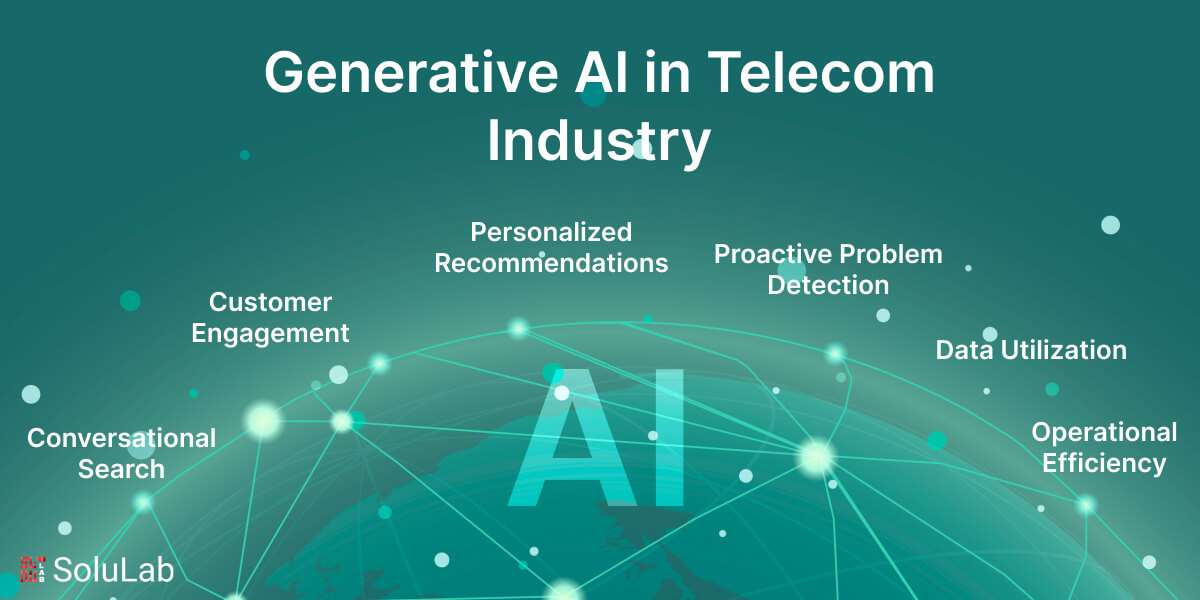
The telecommunications sector is extremely dynamic, always expanding to suit the changing requirements of consumers and companies alike. Against this context, the emergence of generative AI stands out as a disruptive trend, with the potential to reshape the surroundings of communication and connection. As a powerful component of AI, generative AI can create original material in the form of text, graphics, and audio, heralding a new era of telecommunications innovation.
Generative AI in telecom industry has several applications, ranging from advanced virtual assistants that engage in natural language conversations to automated content-generating systems. Generative AI is expected to have an influence on many parts of the telecom industry, including marketing, customer service, data analysis, and product creation. According to Precedence Research, the generative AI in the telecom market is expected to develop significantly, reaching USD 150.81 million by 2022. The market is expected to grow at a CAGR of 41.59% between 2023 and 2032, reaching an amazing USD 4,883.78 million by 2032. This fast expansion demonstrates the growing importance and broad acceptance of generative AI in the telecom sector.
In this article, we will explore generative AI, including its applications, benefits, and limitations for the telecommunications sector. But before that, let’s get to know more about generative AI.
Generative AI is a branch of AI that seeks to enable robots to create fresh and unique material. Unlike standard AI systems, which use predetermined rules and patterns, generative AI uses sophisticated algorithms and neural networks to produce outputs that automatically mimic human creativity and decision-making.
The capacity to learn from huge datasets and understand the fundamental trends and structures in the data is at the heart of generative AI. Once instructed, these models may generate new material, such as pictures, text, music, or movies, that closely mimic the samples they were shown during training.
Generative AI models are often built with advanced neural network algorithms such as Generative Adversarial Networks (GANs) and Variational Autoencoders (VAEs). GANs are made up of a generator network, which creates instances that are new, and a discriminator network, which attempts to discern between produced and actual instances. Generative AI systems generate outputs that reflect patterns, styles, and semantic coherence by analyzing data and identifying intrinsic qualities.
In contrast, VAEs are neural networks that perform two tasks: The encoder part of the network converts the input data into a distribution of points in the latent space of the data. This distribution has a mean and a variance that reflect the statistical features of the data’s location in latent space.
Conversely, the decoder network attempts to recreate the original data using points from the latent space as input. Even though the data points were not included in the training set, the decoder can produce data points that correspond closely to the input data through learning from the encoded interpretations.
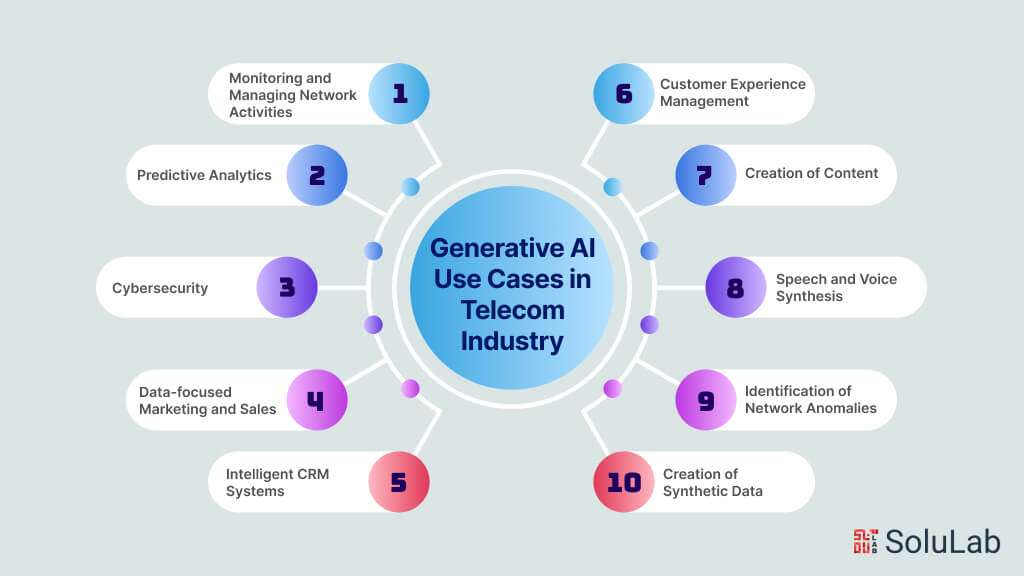
It is now essential to integrate modern technology in the dynamic telecom market to address changing consumer expectations and industrial difficulties. Of these, Generative Artificial Intelligence (AI) stands out as a game-changer, providing creative answers and revolutionizing the way telecom services are provided and consumed. Let’s examine a few fascinating generative AI use cases in telecom industry that highlight how generative AI might completely transform the telecom industry:
There is an increasing need for more network automation and agility due to the intricate nature of networking and networked applications. Telecom AI approaches should be integrated into network automation systems to satisfy these demands and offer dependable, fast, and effective management operations. Network-centric applications include, for instance:
By identifying core causes, integrating data from numerous event sources, screening out false warnings, and identifying failures and Service-level Agreement (SLA) violations in real-time, generative AI in telecom plays a critical role in assisting with network operations. Because 5G and technologies like Network Functions Virtualization (NFV) need higher degrees of abstraction in network architecture, which makes correlation analysis more difficult, existing service assurance systems could require assistance during this transition.
Predictive analytics is used by generative AI-based networking systems to foresee abnormalities in the network and possible breakdowns. These technologies enable telecom operators to take preventive steps before problems worsen by utilizing cutting-edge algorithms and machine-learning approaches. They can successfully cut downtime, uphold a high level of service quality, and avoid spending money on network disruptions thanks to predictive analytics. Service providers as well as end users gain from this proactive strategy, which guarantees a more dependable and effective network infrastructure.
Static rules and signatures are the foundation of traditional security solutions, which can easily become out-of-date and unable to handle sophisticated attacks that are constantly changing and aimed at communications service provider (CSP) networks. AI systems are able to adjust to the ever-evolving threat landscape, identifying abnormalities as harmful on their own and providing context to assist human specialists.
For years, generative AI methods like VAEs and GANs have been effectively applied to improve the identification of threats and malicious code in telecom data. The possibilities of AI are not limited; it may also be used to offer pertinent data to human security analysts so they can make more educated decisions. This allows for automated remedial activities.
Read Blog:
Large volumes of data, including use trends, transactions, and customer interactions, are gathered by telecom companies from a variety of sources. In the telecom industry, generative AI is essential for evaluating this data, deriving insightful conclusions, and launching targeted marketing and sales initiatives.
Using generative AI in telecom market may create client segments based on use patterns, preferences, and behaviors. This allows for the development of marketing campaigns that are specifically targeted at particular consumer groups. By using this strategy, telecom companies may increase customer engagement and boost conversion rates by sending highly relevant and tailored communications, offers, and suggestions.
Additionally, telecommunications companies can use AI-powered data analysis to find hidden trends and patterns in customer data, which provides insightful advice for maximizing pricing strategies, spotting upselling and cross-selling opportunities, and choosing the best marketing and sales channels. Telecom firms may improve sales effectiveness and revenue growth by leveraging data-driven decision-making skills afforded by generative AI.

CRM systems use generative artificial intelligence (AI) for analyzing vast amounts of real-time data, giving organizations vital insights into the behavior, preferences, and interactions of their customers. Prompt responses to consumer demands are made possible by this data-driven strategy, which guarantees individualized solutions and increased customer satisfaction.
By examining past data and customer trends, predictive analytics allows AI to predict customer behavior and spot possible churn risks. This allows for proactive customer involvement and reduces churn. CRM procedures are streamlined by generative AI-powered automation, which also benefits customer support by enabling effective AI-powered chatbots that improve help experiences and speed up response times.
Telecom companies may tailor marketing messages, offers, and suggestions according to individual customer preferences thanks to the level of personalization provided by generative AI in CRM systems. This telecom AI increases customer engagement, loyalty, and retention. AI-driven CRM solutions in the telecom sector also bring in a new era of automation, improved data analysis, and predictive abilities.
Read Blog: Generative AI Use Cases
Telecom companies may get important insights into customer satisfaction by using Customer Experience Management (CEM) Generative AI’s capacity to evaluate customer interactions, sentiment, and behavior data. Businesses can find particular regions generating problems or unhappiness for customers by looking through this data. Telecom companies may use this information to identify areas for improvement, lower churn rates, and better customer service.
Businesses may now better understand client feelings and preferences thanks to generative AI-powered analysis, which enables customized services and solutions to meet specific demands. Telecommunication companies may improve customer happiness, encourage loyalty, and forge closer bonds with their clientele by offering more individualized experiences.
Moreover, AI’s predictive powers may assist in anticipating consumer needs and proactively addressing any issues, leading to improved customer care and higher retention rates.
Generative AI in telecom industry plays a critical role in creating effective marketing materials and commercials. AI algorithms may examine trends, user preferences, and pertinent data to dynamically develop tailored content that appeals to target audiences.
This helps telecom firms keep ahead of industry trends and improve their communication strategies by customizing messaging for particular populations. In the dynamic and cutthroat telecom market, generative AI expedites content generation and guarantees a more efficient and captivating marketing strategy, eventually building deeper customer ties.
By creating realistic artificial voices for voice-based services, virtual personal assistants, and Interactive Voice Response (IVR) systems, generative AI revolutionizes telecom services. With more realistic and varied speech options, this innovation greatly enhances user interactions. AI-driven speech technology is revolutionizing the telecom industry by streamlining operations and personalizing customer experiences.
Telecom AI offers a smooth and entertaining user interface for services like call routing, automated customer care, and hands-free operations. AI is a key use case in revolutionizing telecommunications because of this breakthrough, which improves customer happiness and simplifies communication procedures.
Models of generative artificial intelligence are essential for forecasting and sustaining network performance. Through an understanding of the typical actions of network elements, these models are able to predict anticipated performance indicators.
When abnormalities or deviations occur, such as unanticipated traffic spikes or equipment faults, the AI instantly sounds an alarm. With the help of automatic answers from this proactive monitoring, telecom operators may quickly resolve possible problems and guarantee that consumers receive dependable and smooth communication services. This use case shows how proactive handling of performance aberrations by AI improves the efficiency and reliability of telecom networks.
Read Also: DePIN In the Telecom Industry
By producing synthetic datasets for testing, training, and research, Generative AI is essential in meeting the data needs of telecom firms. With the use of this technology, accurate data that closely resembles actual situations may be generated, allowing for extensive evaluation of new services and applications. Telecom businesses can use synthetic datasets to solve privacy and security issues, protecting sensitive client information. Without sacrificing privacy or compliance, this strategy promotes industry innovation and makes it easier to create dependable and strong telecommunications solutions.
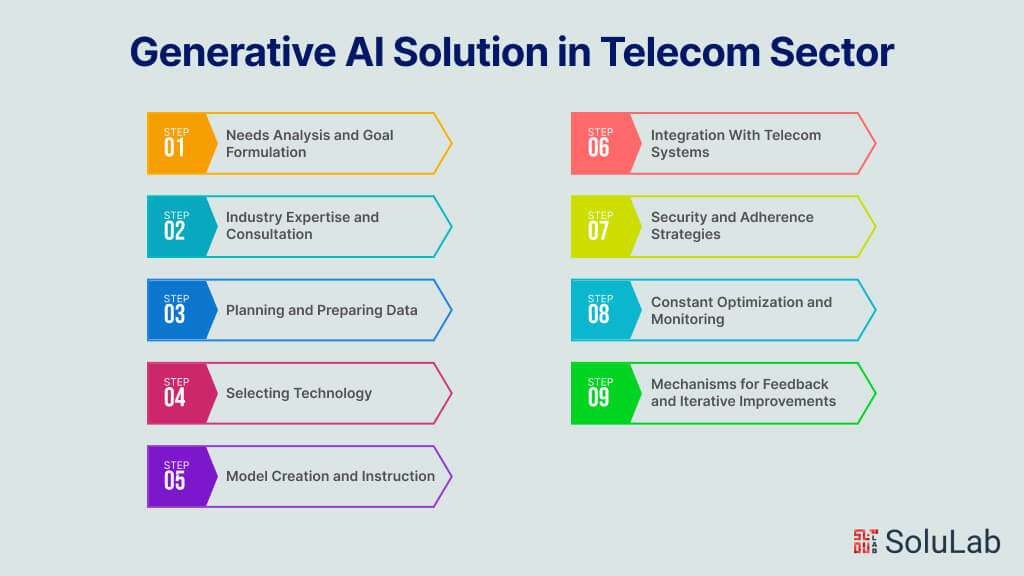
In the telecom sector, generative AI solutions must be implemented strategically and gradually. This is a comprehensive handbook that will assist you in effectively using generative AI in telecom operations:
You may efficiently apply Generative AI solutions to improve productivity, customer experience, and overall operations in the telecom business by following these steps and customizing them to your unique use cases.
The telecom business benefits from generative AI because it improves customer experience, reduces costs, detects issues before they occur, and increases operational efficiency. Here are the advantages of generative AI in telecom industry:
Read Blog: Conversational AI

The emergence of generative AI represents a significant change in the telecom industry, one that promises to completely transform the ways in which people connect, interact, and imagine the future. After exploring the wide range of uses of generative AI in the telecommunications industry, it is clear that this technology is more than just a new idea—rather, telecom AI represents the progress of both technology and human interaction. Generative AI is a change agent that may be used to create tailored content, enable quick network optimization, improve predictive maintenance, and alter customer service. Encouraging telecom companies to anticipate and satisfy their consumers’ ever-changing requirements while also bringing in a new age of operational efficiency and innovation.
As a leading AI development company, SoluLab specializes in crafting customized generative AI solutions tailored to the unique needs of the telecom industry. Our team of expert AI developers possesses extensive experience in using advanced technologies to drive innovation and optimize operations for telecom providers. Whether it’s optimizing network performance, enhancing customer experience, or streamlining marketing campaigns, SoluLab delivers tailored Generative AI solutions that propel telecom businesses forward. Contact us now to hire AI developers and unlock the transformative potential of generative AI in the telecom sector.
Generative AI refers to a subset of artificial intelligence that involves machines creating new content or outputs similar to what humans produce. In the telecom industry, Generative AI revolutionizes operations by optimizing network performance, enhancing customer experience, and streamlining marketing campaigns through data-driven insights and personalized interactions.
Generative AI algorithms analyze vast amounts of network data to predict traffic patterns, identify potential bottlenecks, and suggest adaptive routing strategies. By optimizing network performance and efficiency, telecom providers can ensure reliable service delivery and enhance overall customer satisfaction.
Absolutely. Generative AI-powered chatbots and virtual assistants revolutionize customer service by providing real-time responses, personalized recommendations, and troubleshooting assistance. These intelligent systems improve customer interactions, leading to higher satisfaction levels and increased loyalty.
Generative AI enables telecom companies to analyze vast amounts of customer data, segment customers based on behaviors and preferences, and craft personalized marketing campaigns. By leveraging data-driven insights, telecom firms can optimize pricing strategies, identify upselling opportunities, and refine marketing channels to drive revenue growth.
SoluLab specializes in developing customized Generative AI solutions tailored to the specific needs of the telecom industry. Our expert team of AI developers possesses extensive experience in using modern technologies to drive innovation and optimize operations for telecom providers. Contact us now to explore how our customized AI solutions can transform your telecom business.


