


In the era of digital transformation, businesses are constantly seeking innovative ways to enhance customer interactions, streamline processes, and boost productivity. One such technology that has gained prominence is Chatbot Development. AI-powered chatbots, often referred to as Intelligent Virtual Assistants, have become integral components of modern business strategies. In this comprehensive guide, we will delve into the world of Chatbot Development, exploring key concepts, strategies, and best practices to build intelligent virtual assistants that deliver meaningful value.
Chatbots are artificial conversational tools designed to simulate human-like interactions. They have evolved from basic rule-based systems to sophisticated AI-powered models capable of natural language processing (NLP) and machine learning (ML).
The roots of chatbots can be traced back to the early days of computing when simple rule-based systems governed interactions. These early chatbots followed predefined scripts, responding to specific keywords or phrases. Over time, advancements in Artificial Intelligence (AI), particularly in the realms of Natural Language Processing (NLP) and Machine Learning (ML), have propelled chatbots into a new era of sophistication.
Traditional rule-based chatbots operate within the constraints of predefined rules and scripts. While effective for straightforward tasks, they often fall short in handling nuanced conversations or adapting to changing user needs. The advent of AI-powered chatbots marked a paradigm shift. These intelligent virtual assistants leverage NLP to understand the intricacies of human language, enabling them to interpret user intent, context, and sentiment.
NLP forms the bedrock of chatbot intelligence. It enables chatbots to comprehend and interpret human language, breaking down user queries to discern intent and extract relevant information. As NLP algorithms evolve, chatbots become increasingly adept at understanding context, leading to more natural and contextually relevant conversations.
Machine Learning empowers chatbots to go beyond static rule sets. ML algorithms allow chatbots to learn from user interactions, adapting and improving their responses over time. This continuous learning loop enhances the chatbot’s ability to handle a wide range of queries and provide personalized experiences.
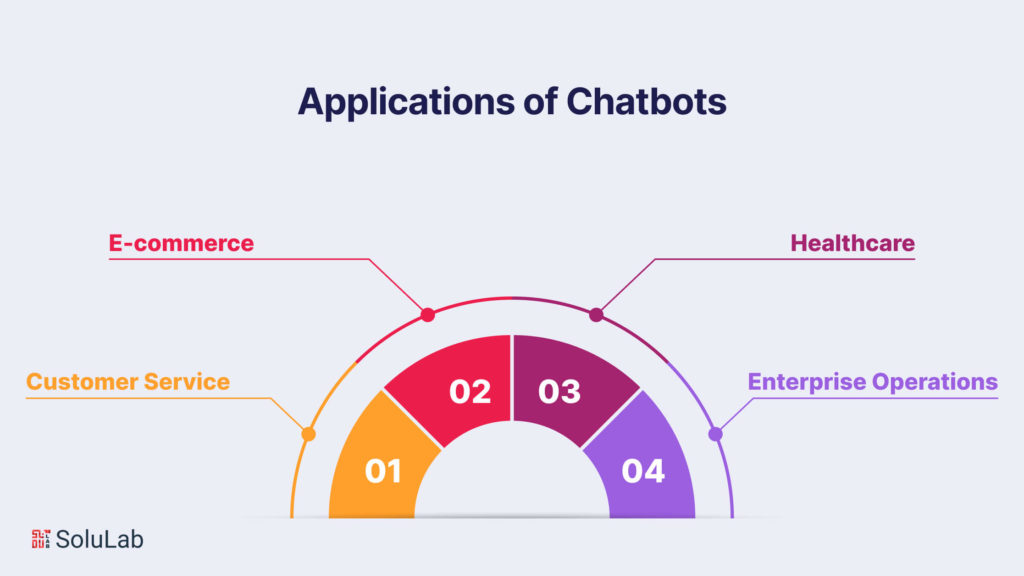
Chatbots are widely employed in customer service to provide instant responses to frequently asked questions, troubleshoot issues, and guide users through processes. This not only improves customer satisfaction but also frees up human agents for more complex tasks.
In the realm of e-commerce, chatbots facilitate seamless shopping experiences. They assist users in finding products, offer personalized recommendations, and even handle the checkout process, streamlining the customer journey.
Chatbots play a crucial role in the healthcare sector, offering virtual assistance for symptom checking, medication reminders, and general health inquiries. They contribute to improved accessibility and health awareness.
Within enterprises, chatbots are deployed to automate routine tasks, assist employees with internal queries, and enhance collaboration. They serve as digital assistants, boosting efficiency and productivity.
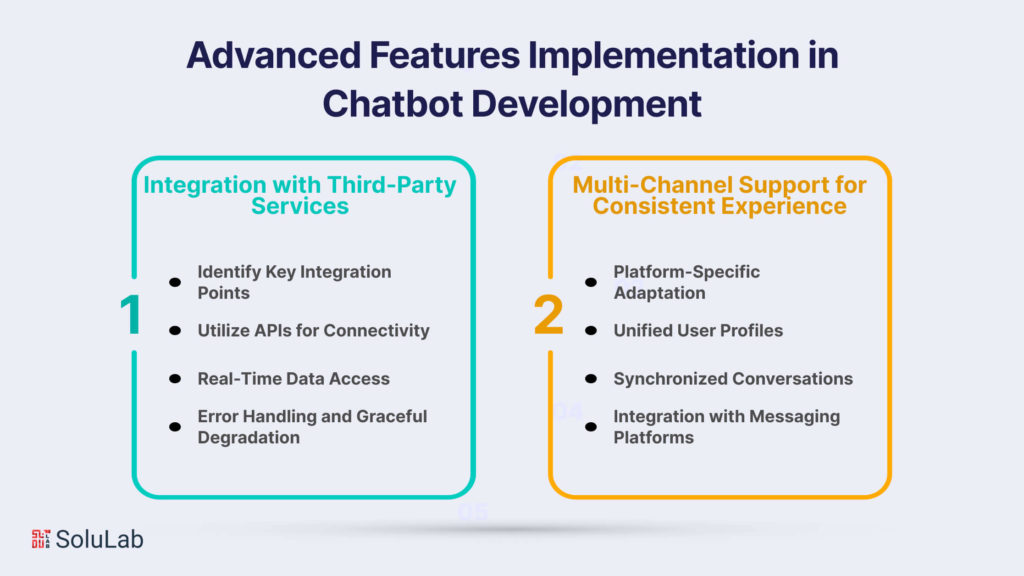
In the rapidly evolving landscape of chatbot development, integrating advanced features is paramount to providing a seamless and sophisticated user experience. Two crucial aspects of this advancement are the integration with third-party services and ensuring multi-channel support for a consistent user experience.
One of the hallmarks of a robust chatbot is its ability to seamlessly integrate with third-party services. This feature expands the bot’s capabilities beyond predefined responses, allowing it to access external data and perform tasks that enhance user interactions. Here’s how you can effectively implement integration with third-party services:
Define the specific functionalities and data sources from third-party services that align with your chatbot’s objectives. This could include integrating with CRM systems, payment gateways, or external databases.
Leverage Application Programming Interfaces (APIs) to establish connectivity between your chatbot and external services. Ensure that the APIs used are secure, well-documented, and capable of handling the expected data volume.
Enable real-time data access to ensure that the information provided by the chatbot is up-to-date. This is particularly crucial for applications such as e-commerce transactions, where real-time inventory and pricing information are essential.
Implement robust error handling mechanisms to manage situations where third-party services may be temporarily unavailable. Additionally, design the chatbot to gracefully degrade its functionality if certain integrations are not accessible, ensuring a consistent user experience.
Modern users interact with brands across various channels, necessitating a chatbot that provides a consistent and cohesive experience irrespective of the platform. Implementing multi-channel support ensures that users can seamlessly transition between different touchpoints while maintaining continuity in their interactions.
Customize the chatbot’s interface and interaction style based on the specific characteristics of each channel. For example, interactions on a website might differ from those on a social media platform, considering the varying user expectations and interface designs.
Implement a unified user profile system that consolidates user data from different channels. This allows the chatbot to recognize users across platforms, providing a personalized experience based on their historical interactions and preferences.
Enable synchronized conversations, allowing users to seamlessly switch between channels without losing context. This is particularly important for complex interactions where users may initiate a conversation on one channel and continue it on another.
If deploying a chatbot on messaging platforms like Facebook Messenger or WhatsApp, ensure seamless integration. Leverage platform-specific features such as quick replies and rich media to enhance the user experience within these channels.
In conclusion, the successful implementation of advanced features, such as integration with third-party services and multi-channel support, is pivotal in elevating the capabilities of your chatbot. By strategically incorporating these elements, you not only enhance the functionality and versatility of your chatbot but also provide users with a consistent and engaging experience across various touchpoints.
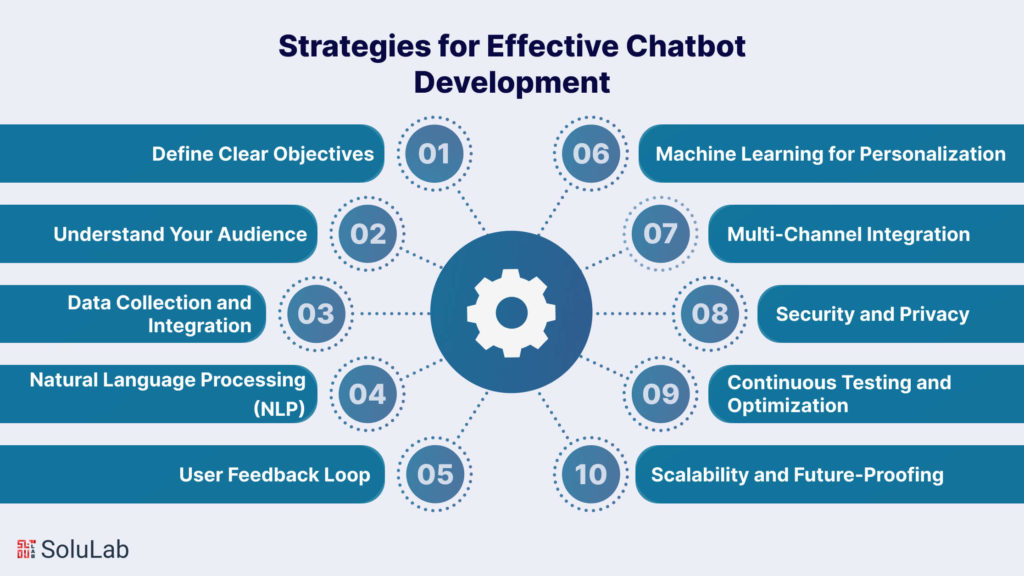
Effective chatbot development involves a combination of technical prowess, user-centric design, and a commitment to continuous improvement. Here, we delve into detailed strategies to guide your chatbot development process:
Start by establishing clear objectives for your chatbot. Identify the specific tasks it will perform, whether it’s answering customer queries, providing product information, or facilitating transactions. Clearly defined goals will guide the development process and ensure the chatbot meets user expectations.
Conduct comprehensive audience research to understand the demographics, preferences, and communication styles of your target users. This information is crucial for tailoring the chatbot’s language, tone, and functionality to align with user expectations.
Implement robust data collection mechanisms to gather valuable insights into user behavior and preferences. Integrate your chatbot with existing databases and systems to access real-time data, ensuring that the information provided is accurate and up-to-date.
Leverage advanced Natural Language Processing (NLP) techniques to enhance the chatbot’s ability to understand and respond to user queries in a natural and conversational manner. Regularly update the language model to stay current with linguistic trends and nuances.
Establish a continuous feedback loop by collecting user feedback and analyzing it systematically. Use this feedback to identify areas for improvement, address user concerns, and enhance the overall user experience. Regularly iterate on the chatbot based on user input.
Implement machine learning algorithms to personalize user interactions. Analyze user data to predict preferences, offer tailored recommendations, and create a more engaging and personalized experience. This dynamic adaptation is key to keeping users actively engaged.
Ensure your chatbot is seamlessly integrated across various channels, including websites, mobile apps, and social media platforms. This multi-channel approach provides users with a consistent experience and expands the reach of your chatbot to meet users where they are.
Prioritize data security and user privacy. Implement robust security protocols to protect user data and communicate these measures transparently to build trust. Stay informed about data protection regulations and ensure compliance to safeguard user information.
Establish a comprehensive testing strategy throughout the development lifecycle. Conduct usability testing, performance testing, and A/B testing to identify and address any issues. Regularly optimize the chatbot based on performance metrics and user feedback.
Design your chatbot with scalability in mind to accommodate future growth in user interactions. Stay abreast of emerging technologies and industry trends to future-proof your chatbot against evolving user expectations and technological advancements.
As the adage goes, “what gets measured gets managed.” In the realm of chatbot development, measuring performance is essential for ensuring the effectiveness of the bot and continually enhancing the user experience. This involves monitoring key performance indicators (KPIs) such as response time and user satisfaction, while also establishing user feedback loops for iterative improvement.
1. Response Time: Response time refers to the time it takes for the chatbot to generate and deliver a response to the user query.
2. User Satisfaction: User satisfaction gauges how content users are with their interactions with the chatbot.
1. Establishing Feedback Mechanisms:
2. Analyzing Feedback:
3. Iterative Improvement:
4. Adapting to User Preferences:
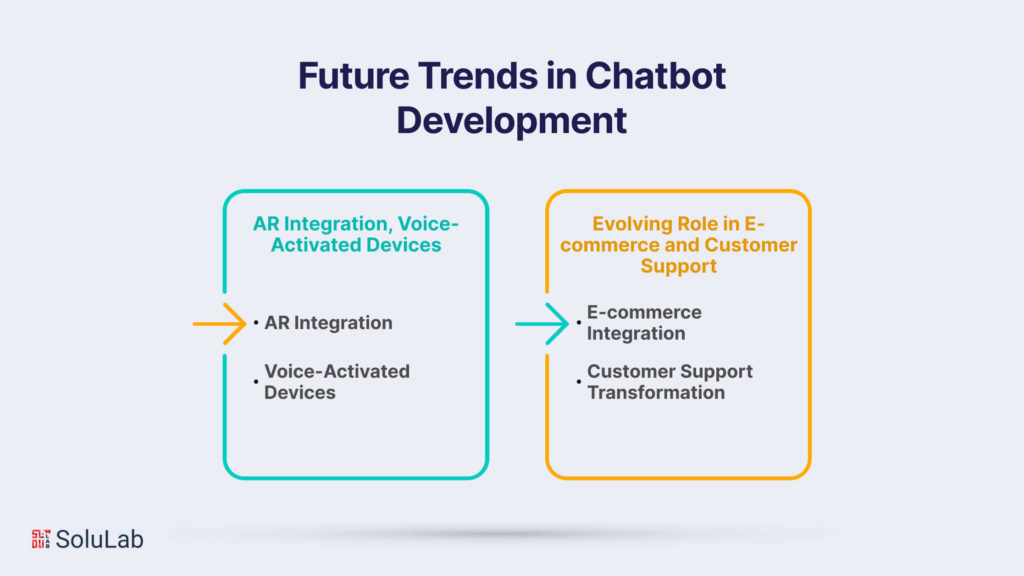
The landscape of chatbot development is continuously evolving, driven by technological advancements and changing user expectations. Two prominent future trends shaping the trajectory of chatbots are the integration of Augmented Reality (AR) and Voice-Activated Devices, as well as their evolving role in E-commerce and Customer Support.
1. AR Integration: Augmented Reality (AR) integration involves overlaying digital information, such as visuals or data, onto the real-world environment perceived through a device’s camera.
2. Voice-Activated Devices: The integration of chatbots with voice-activated devices allows users to interact with bots using voice commands.
1. E-commerce Integration:
2. Customer Support Transformation:

In conclusion, the landscape of AI-powered chatbot development is dynamic and evolving. From custom solutions for enterprises to voice-activated assistants and immersive experiences in virtual reality, the potential for innovation is vast. By understanding the key components, strategies, and challenges, businesses can embark on a journey to create executive virtual assistants that not only meet current needs but also pave the way for the future of human-computer interaction.
As technology continues to advance, the role of intelligent virtual assistants in shaping the digital landscape is set to become even more profound, redefining the way we communicate, work, and engage with information. Are you aiming to take the forefront in the Conversational AI revolution? SoluLab stands as your top-tier AI development service and chatbot development company. With a demonstrated history of innovation and specialized expertise, we excel in creating state-of-the-art chatbot solutions tailored to meet your specific requirements. Collaborate with SoluLab to leverage the capabilities of AI-driven virtual companions and stay ahead in the ever-evolving realm of technology.
Augmented Reality (AR) in chatbot development enhances user experiences by overlaying digital information in the real-world environment. This can be applied in various industries, allowing users to virtually try on products, visualize items in their surroundings, and engage with immersive content.
Voice-activated devices integrate with chatbots by allowing users to interact through natural language voice commands. This hands-free approach enables seamless engagement with chatbots on smart speakers, smartphones, and other IoT devices, offering users a more convenient and accessible interaction method.
AR-enhanced chatbots provide more immersive and interactive experiences. Users can visualize products in real-world scenarios, facilitating better decision-making. This technology is particularly valuable in industries like retail, education, and healthcare, where visualizing information is crucial.
Chatbots transform e-commerce by offering contextual recommendations based on user preferences and behavior. They facilitate conversational commerce, enabling users to make purchases directly within chat interfaces. This enhances the overall shopping experience by making it more personalized and intuitive.
Chatbots in customer support will advance in handling more complex queries using advanced Natural Language Processing (NLP) and machine learning. They will seamlessly integrate with human agents, recognizing when a query requires human intervention. Proactive engagement will also become a norm, addressing potential issues before they escalate.
Chatbots contribute to seamless multi-channel experiences by adapting their interface and interaction style based on specific channel characteristics. Unified user profiles enable users to transition between channels without losing context, ensuring consistent and personalized interaction across various touchpoints.
Key performance indicators for chatbots include response time, measuring the speed of generating and delivering responses, and user satisfaction, gauging how content users are with their interactions. Monitoring these KPIs is crucial for assessing the effectiveness of the chatbot and ensuring a positive user experience.


