


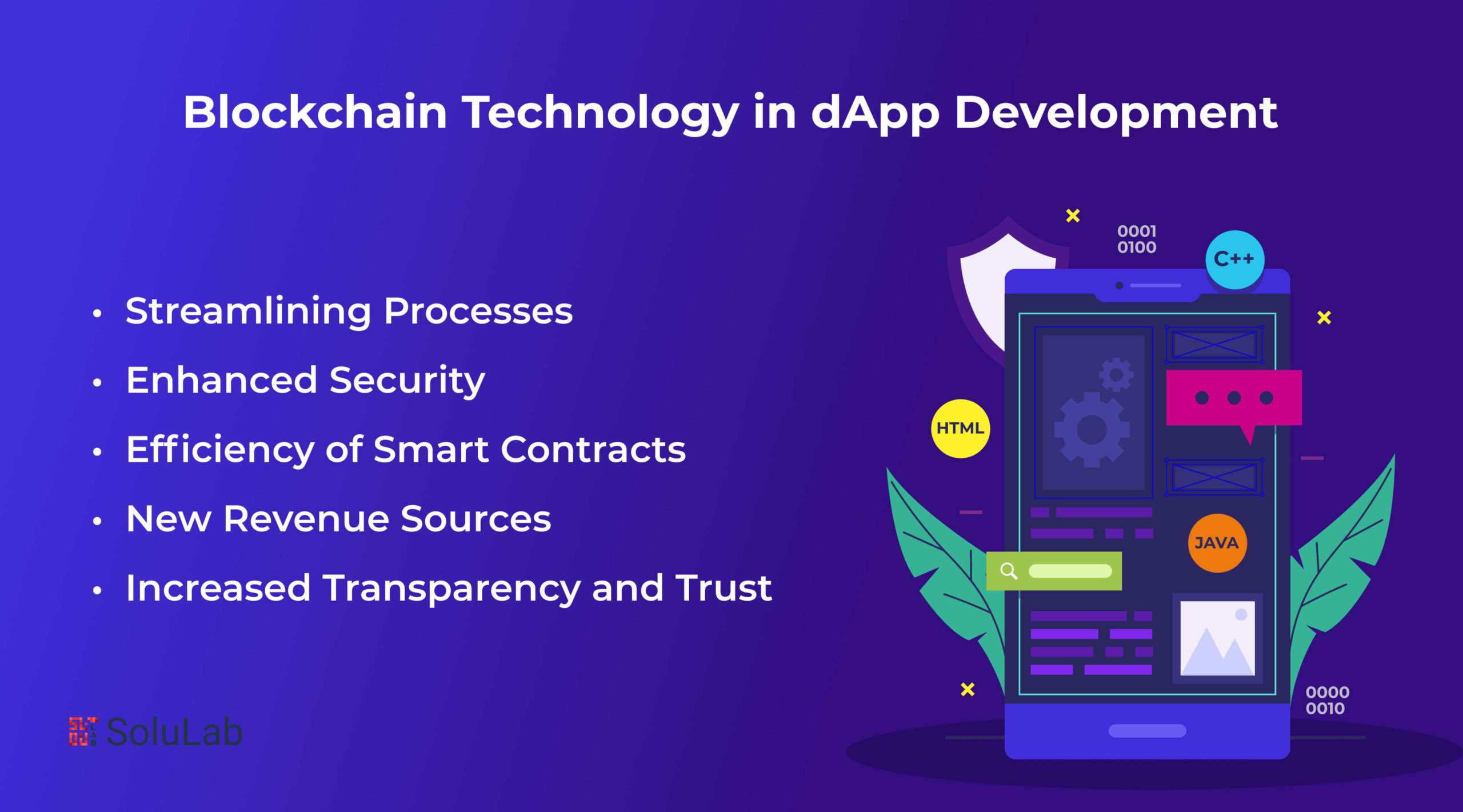
Businesses everywhere are continuously looking for innovative methods to remain ahead of the constantly evolving technology market. The advent of decentralized apps and blockchain technology in recent years has given organizations new opportunities to modernize their processes, enhance security, and look into new revenue sources.
In this blog, we will explore the pivotal role that blockchain technology plays in the development of dApps. From the fundamental principles that underpin blockchain to the unique attributes that make dApps a revolutionary concept, we delve into the symbiotic relationship between these two technological marvels. As we unravel the layers of this intricate alliance, we will witness how blockchain empowers dApp developers to create secure, transparent, and tamper-proof applications that have the potential to redefine industries.
Decentralized Applications, or dApps, stand at the forefront of the blockchain revolution, embodying the ethos of decentralization and reshaping the traditional landscape of application development. Unlike conventional applications that rely on centralized servers, dApps leverage the power of blockchain networks to operate in a trustless, transparent, and distributed manner.
At the heart of every dApp is the principle of decentralization. These applications operate on a peer-to-peer network of computers, eliminating the need for a central authority or intermediary. This not only enhances security by removing single points of failure but also fosters a more democratic and inclusive ecosystem.
dApps are built on open-source code, making their underlying logic and functionalities accessible to the public. This transparency not only ensures community involvement in development but also allows users to verify the integrity of the application and understand how it operates.
Integral to the concept of dApps is their integration with blockchain technology. The blockchain serves as a tamper-resistant and immutable ledger, recording every transaction and action within the application. This not only enhances security but also instills a high level of trust among users.
Tokens based on blockchain technology are widely used in dApps to facilitate exchanges of value within the application. These tokens can represent various assets or functionalities and are often used to incentivize users and developers. Smart contracts, self-executing code on the blockchain, facilitate the creation and management of these tokens.
Unlike traditional applications that rely on central servers and intermediaries to facilitate transactions or data storage, dApps operate directly between users on a peer-to-peer network. By doing away with the necessity for middlemen, expenses are cut and efficiency is increased.
The use of blockchain ensures that all transactions and data within a dApp are recorded in an immutable and transparent manner. This not only enhances accountability but also provides a verifiable history of all interactions within the application.
Decentralization and blockchain technology contribute to the robust security architecture of dApps. The distributed nature of the network makes them resistant to single points of failure or hacking, providing users with a higher level of confidence in the security of their data and assets.
Initially, the basic architecture of cryptocurrencies was intended to be supported by blockchain technology. But nowadays, it’s developed into a versatile tool used in many other sectors. DApps, or decentralized apps, are at the center of this transformation. Businesses benefit from dApps in blockchain through some unparalleled benefits in terms of efficiency, security, and transparency as they function on a decentralized network.
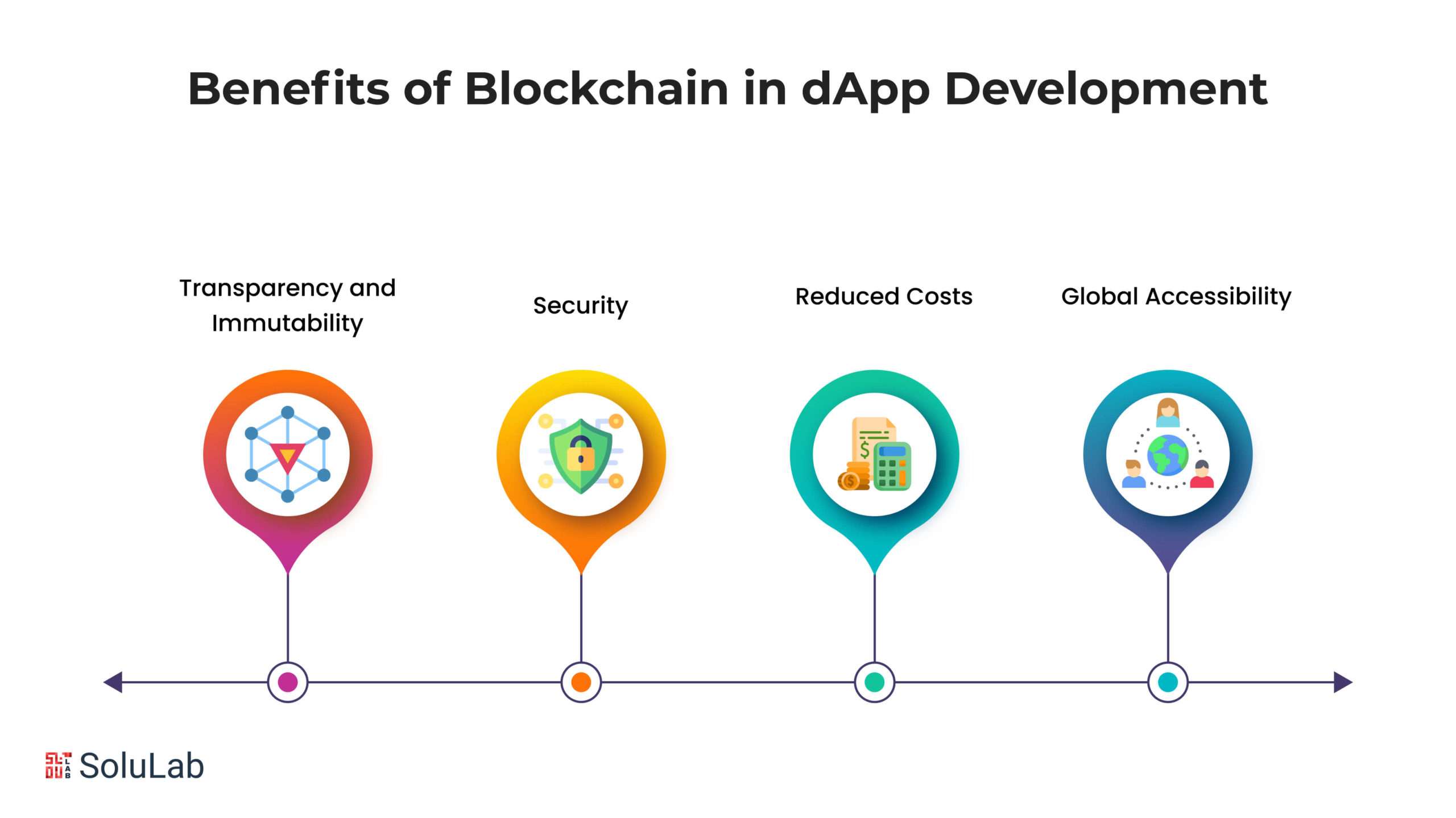
The development of Ethereum DApps is changing how decentralized apps will be used in the future. The following advantages are driving the growing popularity of blockchain-based DApps:
Keeping up with transformational technology is critical to maintaining competitiveness in the fast-paced world of business. Decentralization has emerged as a key factor influencing how businesses will operate in the future, particularly when it comes to the creation of blockchain-based DApps. This section will examine how companies might profit from decentralization, with an emphasis on the growth prospects and advantages of developing blockchain applications for companies and daily operations.
Adopting decentralized solutions through the appropriate blockchain DApp development firm is a strategic requirement for organizations looking to grow and diversify. Blockchain technology’s decentralization opens up new development opportunities for companies that were previously limited by conventional centralized systems.
Traditional corporate procedures have been revolutionized by blockchain DApps, increasing operational efficiency. Reputable blockchain DApp development firms understand how important decentralized apps are to changing how businesses operate.
To ensure ongoing success in the fast-paced world of blockchain DApp development and company today, it is imperative to stay ahead of the curve. Technological developments, especially in the area of blockchain DApp development, create new commercial prospects.
DApps built on blockchain technology are revolutionizing the financial sector. One of the most notable use cases is in decentralized finance (DeFi).
DeFi DApps provide a variety of financial services, such as lending, borrowing, trading, and yield farming, without the need for traditional banks or intermediaries. Users can interact directly with DeFi protocols, which are managed by smart contracts.
Furthermore, the stability and reliability of the market have been enhanced by smart contract-governed stablecoins like USDC and DAI, which are based on blockchain technology. This might offer a more inclusive and effective financial system, especially in places where traditional banks are not easily accessible.
Healthcare is another sector that might benefit from DApps. Electronic health records (EHRs), which provide secure, interoperable, and immutable medical data, may be stored using blockchain technology. In order to improve privacy and trust, patients have authority over their health data and can provide access to medical personnel, researchers, and insurance companies.
The supply chain for pharmaceuticals and medical equipment may operate more efficiently thanks to DApps. Transparent, unchanging data eventually improves patient safety by guaranteeing the quality and legitimacy of prescriptions and prohibiting the sale of counterfeit items.
Distributed ledger apps (DApps) built on the blockchain offer a robust traceability and transparency approach for supply chain management. All supply chain participants may track an item’s progress in real-time from manufacture to delivery by using a shared ledger.
In industries like food and luxury goods, where authenticity and quality are vital, this technology is quite beneficial.
The billion-dollar annual expenditures that businesses incur due to counterfeit goods may be significantly reduced. By scanning a product’s QR code, customers may verify its validity and feel more at ease about their purchases.
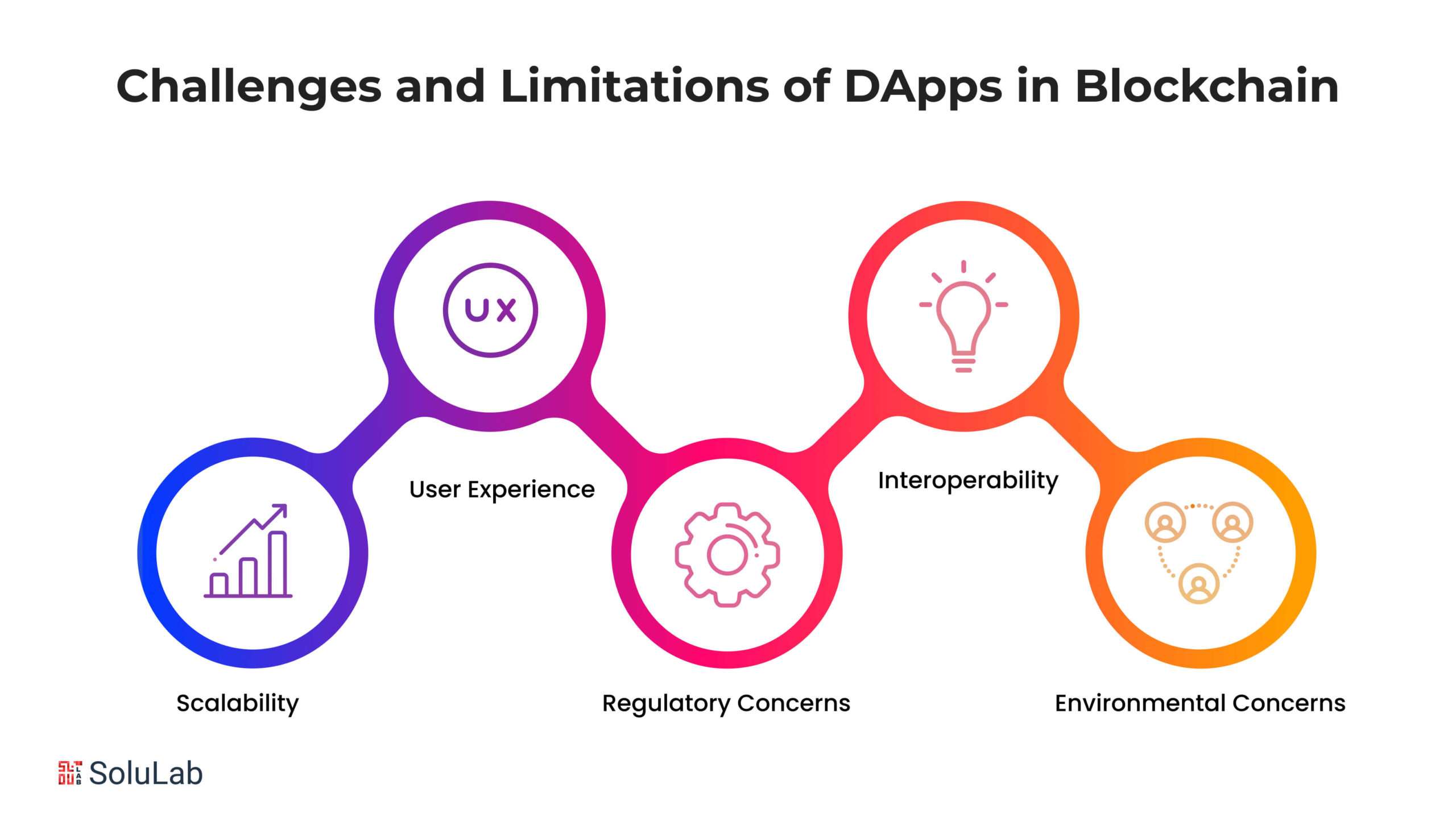
DApps provide a number of advantages, but they also present certain challenges and disadvantages.
The future of DApp development is really bright. Hire Dapp Developers who are committed to removing present barriers and enhancing DApp usability and accessibility.
Future developments and trends affecting DApps include the following:
Selecting the top blockchain DApp development company requires avoiding common blunders and carefully weighing a number of important considerations:
DApps built on the blockchain are unquestionably creating new opportunities. They offer cost-effectiveness, security, and transparency in several businesses. DApps should be utilized more extensively as layer 2 solutions, interoperability, and user-friendly interfaces continue to progress, even though there are still challenges.
DApps have the potential to completely transform current procedures and provide people, businesses, and industries with a more open, effective, and inclusive future thanks to their expanding popularity and capabilities. With the power of blockchain technology and the inventiveness of DApp developers working together, we seem to be heading toward a decentralized, promising, and exciting future.
The most effective option is to go with SoluLab as your blockchain DApp development company. Our skilled group has a proven track record of developing advanced decentralized apps. To guarantee the reliability of your DApp, we place a high priority on security, scalability, and regulatory compliance. Our commitment to your pleasure is evidenced by our transparent pricing policy, customer-focused methodology, and stellar client testimonials. More than just a development service, SoluLab is a dApp development company. It is a reliable partner dedicated to brilliantly and creatively realizing your blockchain idea. For a smooth and fruitful DApp development experience with an emphasis on ongoing support and maintenance, hire blockchain developers from SoluLab today! Contact us now!
Blockchain technology provides the foundational infrastructure for developing decentralized applications (dApps). Its core features such as decentralization, transparency, and immutability enable dApps to operate autonomously without the need for intermediaries. Smart contracts, decentralized storage, and tokenization are key blockchain components that empower dApp development by automating processes, securing data, and facilitating monetization.
Decentralized applications offer several advantages, including enhanced security due to their distributed nature, transparent governance mechanisms, and increased user autonomy. Unlike traditional applications, dApps are not controlled by a single entity, reducing the risk of censorship and manipulation. Additionally, dApps enable users to interact directly with one another, fostering a more peer-to-peer ecosystem.
Smart contracts are self-executing contracts with the terms of the agreement directly written into code. In dApp development, smart contracts automate various processes, eliminating the need for intermediaries and reducing the risk of fraud or manipulation. They enable secure and transparent execution of transactions, ranging from simple payments to complex financial agreements, within the decentralized ecosystem of dApp.
Despite its potential, blockchain-based dApp development faces several challenges. Scalability remains a significant issue, with current blockchain networks struggling to handle large-scale transactions efficiently. Moreover, regulatory uncertainty and compliance requirements vary across jurisdictions, posing legal hurdles for dApp developers. Additionally, achieving widespread user adoption and overcoming the learning curve associated with decentralized technologies are ongoing challenges.
SoluLab offers comprehensive blockchain development services, specializing in decentralized application (dApp) creation. With seasoned developers proficient in Ethereum, Hyperledger, and EOSIO, SoluLab ensures tailored solutions aligned with clients’ needs. From ideation to deployment, SoluLab provides end-to-end support, incorporating modern technologies and offering post-deployment maintenance. Trusted for its expertise and commitment to client success, SoluLab stands as a reliable partner in navigating the complexities of blockchain-based dApp development.


