Talk to an Expert

Custodial vs. Non-Custodial Wallets: How to Pick the Right Crypto Wallet in 2026

Custodial vs. Non-Custodial Wallets banner

Choosing between custodial wallets and non-custodial wallets really comes down to your goals. A custodial wallet is simple to use, great for beginners, and perfect for everyday trading. A self-custody wallet or non-custodial wallet gives you full control of your crypto, but you also take full responsibility for security.

The 2025 numbers say a lot. Crypto exchanges faced $2.37 billion in stolen funds in just the first half of the year, a 66% rise from H1 2024. Meanwhile, cold self-custody wallets with proper security show under 5% incident rates, while online software crypto wallets cross 15% breach rates.

This is why the debate around custodial vs non-custodial wallets is more important than ever. And if you’re exploring your own product, our agency builds secure, scalable solutions through expert crypto wallet development services, helping you choose the right model while keeping it cost-efficient.

Key Takeaways

Custodial wallets offer convenience and recovery support, making them ideal for beginners, exchanges, and enterprises that prioritize ease of use.

Non-custodial wallets provide full control and private-key ownership, suited for experienced users, DeFi investors, and those who value maximum security.

The right choice depends on your risk tolerance, technical comfort, and asset management goals, especially as regulations and Web3 apps evolve in 2026.

Why Choosing the Right Wallet Is Critical for Crypto Security?

Choosing the right crypto wallet matters because it controls how your private keys are stored, who can access your funds, and what happens if something fails. In crypto, your wallet is the main security layer; there is no reset button or customer support that can recover lost keys.

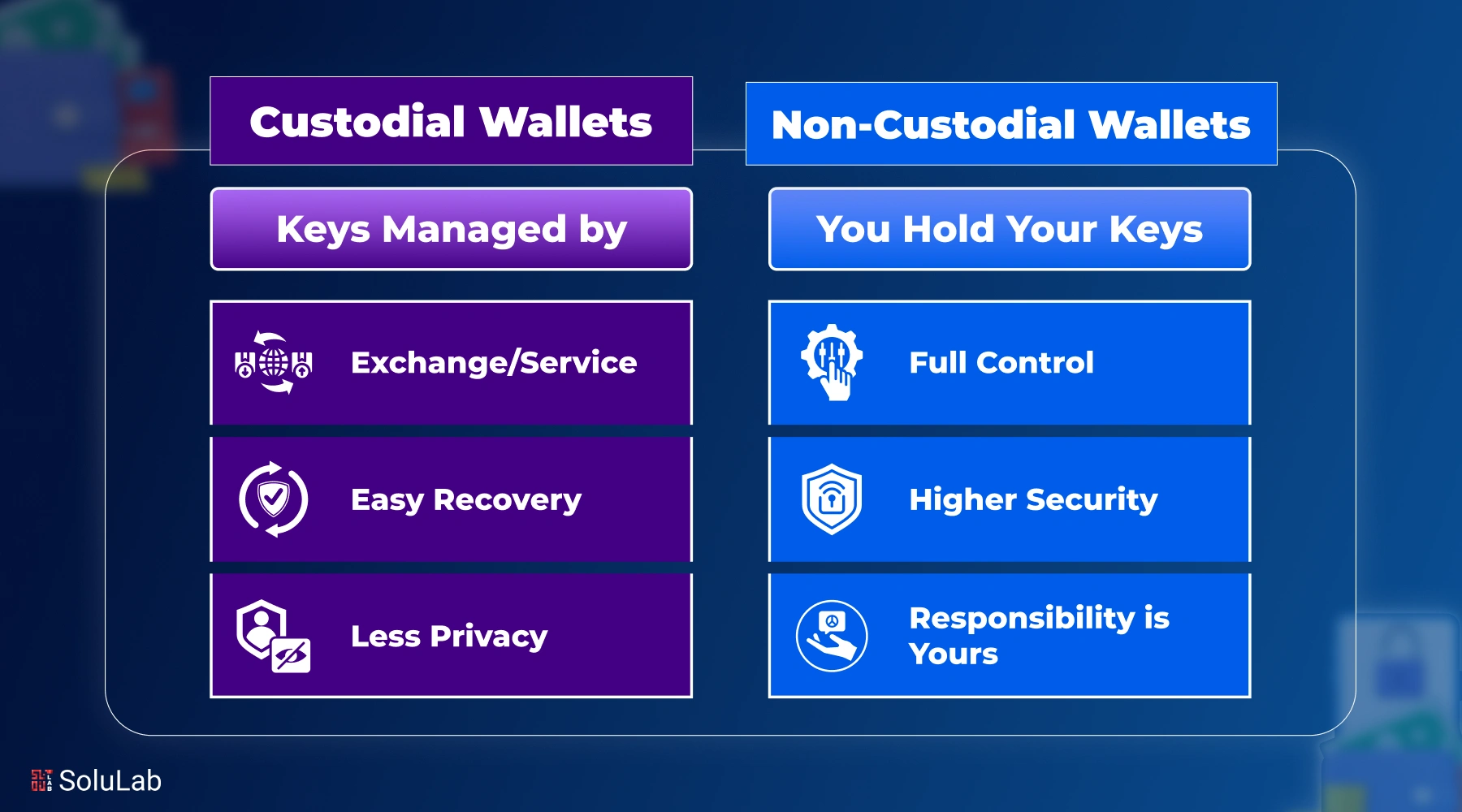
  • A custodial wallet stores your keys on a company’s servers.
  • A non-custodial wallet stores your keys on your own device.

The difference between custodial and non-custodial wallets impacts:

  • control over private keys
  • risk of hacks or server breaches
  • recovery options
  • compliance and regulation
  • how fast funds can be moved
  • responsibility during a failure

From a business point of view, especially for founders and teams handling project funds, the wallet type you choose affects security, operations, and trust. If your wallet setup is wrong, your entire system becomes vulnerable.

For companies building products, partnering with one of the best crypto wallet development companies ensures you choose a structure that is safe, scalable, and compliant.

Custodial Vs Non-Custodial Wallet table chart

What Are Custodial and Non-Custodial Wallets?

When people talk about crypto wallets, they usually mean two types: custodial and non-custodial. The easiest way to understand them is by thinking of renting a house vs. owning a house.

1. Custodial Wallets

A custodial wallet is like renting. A company stores and manages your private keys for you. You get access to your assets, but the company holds the real control. This type is popular among beginners and teams who want simple access, low responsibility, and someone else handling the technical part.

Key points businesses care about:

  • Easy onboarding
  • Faster recovery if someone loses access
  • Customer support from the provider
  • Good for exchanges, apps, and new traders

This is where the benefits of custodial wallets matter because users want a safe and simple tool instead of managing keys on their own.

2. Non-Custodial Wallets

A non-custodial wallet is like owning your house. You hold the private keys yourself. You have full control of your assets, and no one can freeze or limit your funds. This is preferred by people who want independence and by advanced users who work with DeFi, NFTs, staking, or multi-chain apps.

Key points for businesses and pro users:

  • You fully own and control your crypto
  • No third-party risks
  • Works best for decentralized apps
  • Great for teams that want full transparency and security

This is where the benefits of non-custodial wallets come in: more freedom, more privacy, and more trustless control.

Crypto Wallet Market Trends & Consumer Preferences in 2026

Crypto adoption in 2026 is rising faster than ever. The market is growing, and the way people store their assets is changing too. 

Here are the key trends:

  • 960M – 1.2B global crypto users by 2026.
  • 59% users prefer self-custody; 41% prefer custodial.
  • 300% increase in hardware wallet sales after FTX.
  • DeFi activity is pushing non-custodial wallet adoption further.
  • Enterprises are now building their own wallets using custom development for better control and security.
  • 24 countries updated wallet compliance rules in 2025, making secure design more important than ever.

These trends show one thing clearly: Users and businesses want safer, smarter, and more reliable wallet solutions.

So, if you’re a founder building the next big thing in Web3, now is the right time to invest in your own wallet system. With user adoption rising and compliance getting stricter, you need a setup that’s secure, scalable, and built for real-world use. 

Compliance & Regulation Changes Every Founder Should Know

Crypto rules became much stricter in 2026, and these changes directly affect how users choose between custodial and non-custodial wallets. For businesses building wallet products, these updates matter even more. Here are the key points:
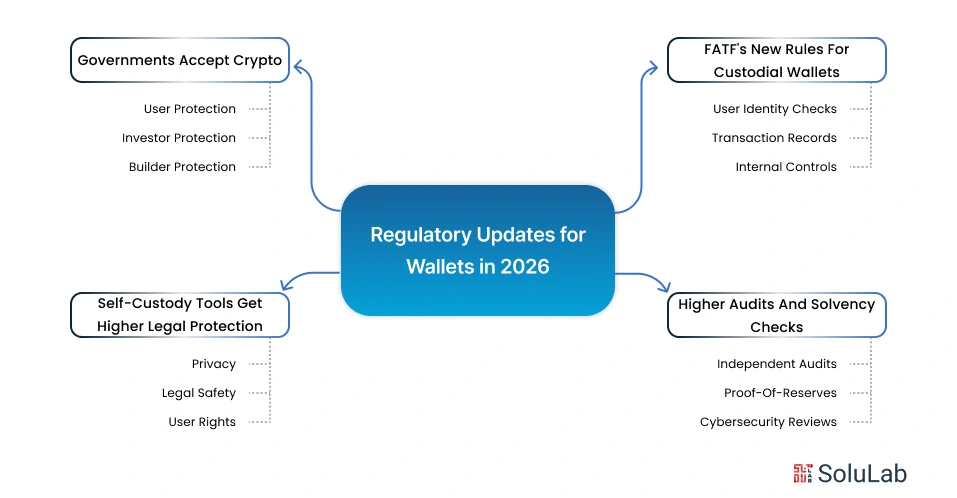
Regulatory Updates for Wallets in 2026

1. FATF’s New Rules for Custodial Wallets

Global regulators now require stronger KYC and monitoring for custodial wallets, especially for platforms offering the best custodial wallets. This means companies must show:

  • Clear user identity checks
  • Transparent transaction records
  • Strong internal controls

If you’re running or building a custodial wallet, this is no longer optional.

2. Self-Custody Tools Get Higher Legal Protection

Many countries now treat self-custody wallet systems as private digital vaults. This gives non-custodial wallets:

  • More privacy
  • More legal safety
  • More user rights

Basically, governments now respect non-custodial ownership as a valid form of digital property.

3. Higher Audits and Solvency Checks for Custodial Platforms

Any crypto exchange platform offering the Best custodial wallets must now pass:

  • Independent audits
  • Proof-of-reserves checks
  • Stronger cybersecurity reviews

This was pushed after past failures in the industry.

4. Governments Accept That Crypto Is Permanent

By 2026, regulators finally understood the simple truth is Crypto is staying. So they are building clearer rules to protect users, investors, and builders. For founders and teams building crypto products, this is the best time to focus on secure solutions. 

Advantages and Disadvantages of Custodial & Non-Custodial Wallets

Wallet Type Pros Cons
Custodial Wallets

Very easy to use

No private key or seed phrase to manage

24/7 customer support on many platforms

Password or email-based account recovery

Good for beginners, businesses, and teams that need shared access

You depend on the company holding your funds

Risk of exchange hacks or company failure

Possible withdrawal limits or delays

Must follow KYC and regulations

Not ideal for long-term storage

Non-Custodial Wallets

You fully own your crypto and private keys

No third-party control over your assets

Works smoothly with DeFi, NFTs, and Web3 apps

Better privacy and independence

If you lose your seed phrase, funds are lost forever

Slightly more technical to set up

No customer support for recovery

Responsibility for security is 100% on you

What FTX Taught Us About Crypto Wallet Security?

The FTX collapse delivered one of the most powerful lessons to the crypto world: if you don’t hold your private keys, you don’t control your crypto.

At its peak in 2021, FTX was valued at 32 billion USD and had over 1 million active users worldwide. Regarded as one of the safest and most reputable exchanges, it managed billions in daily trading volume. Yet, in November 2022, everything unraveled. Users discovered that customer funds, estimated at around 8 to 10 billion USD, had been misappropriated and used by FTX and its sister company, Alameda Research.

When the exchange collapsed, millions of users were locked out of their accounts, unable to withdraw their own assets. The reason was simple: FTX had full custody of customer funds. This is the clearest example of the risk inherent in custodial vs. non‑custodial wallet systems.

FTX didn’t fail because of blockchain technology or crypto protocols. It failed because users trusted a centralized entity with their private keys. In contrast, self‑custody wallets, whether hardware or software‑based, allow users to directly control their crypto through private keys stored only by them.

If those same users had stored their funds in non‑custodial wallets, the collapse of FTX would not have locked up their assets. Their crypto would have remained safely in their own wallets, untouched by the exchange’s failure.

Best Security Practices for Every Wallet Type

No matter which wallet you use custodial or non-custodial, security is the first thing you should care about. These simple steps help reduce risk and protect your user funds, project treasury, or personal assets.
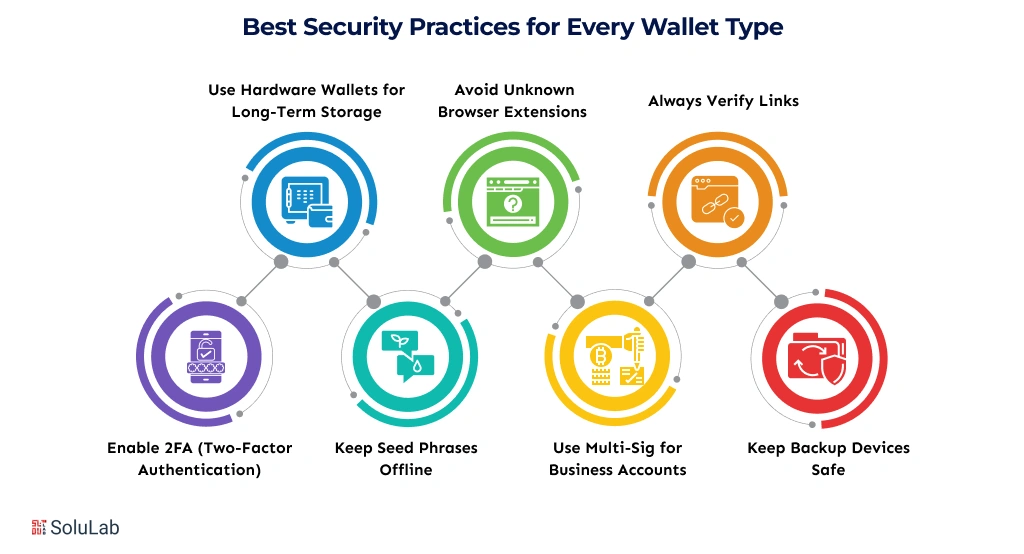
Best Security Practices for Every Wallet Type

1. Enable 2FA (Two-Factor Authentication)

Always turn on 2FA for every custodial wallet or exchange account. It adds an extra layer of protection on top of your password.

2. Use Hardware Wallets for Long-Term Storage

For anyone holding large amounts of crypto, a hardware wallet is still one of the safest options. It keeps your private keys offline and away from common online attacks. This applies to users of both non-custodial wallets and hybrid setups.

3. Keep Seed Phrases Offline

Your seed phrase should never be stored in screenshots, notes apps, or cloud backups. Write it down, keep it offline, and store it in a secure place. If someone gets the seed phrase of your self-custody wallet, they get full control forever.

4. Avoid Unknown Browser Extensions

Extensions can secretly read your clipboard, access tabs, or inject scripts. Only install tools from trusted sources, especially when using online crypto wallets or any Web3 dApp.

5. Use Multi-Sig for Business Accounts

If you are a founder or managing project funds, set up a multi-sig wallet. This prevents a single team member from moving funds alone. It’s one of the most important steps for DAO treasuries, Web3 startups, and anyone building with crypto wallet development services.

6. Always Verify Links

Phishing attacks are still the number one reason for wallet hacks. Always double-check URLs, especially when logging into a custodial wallet or signing transactions in a non-custodial wallet.

7. Keep Backup Devices Safe

If you use backup hardware wallets or seed phrase copies, store them in separate safe places. Losing backups can lock you out. A stolen backup can drain your wallet.
Custodial vs. Non-Custodial Wallets cta

How to Pick the Best Wallet for Your Crypto Strategy?

Choosing the right wallet matters because it directly affects how safe your crypto is. Most users fall into two groups: people who want convenience and people who want full control. Here’s a simple and clear way to decide.

Wallet Type Best For Why Choose It? Key Needs
Custodial Wallet New crypto users, traders, and businesses that need easy access A third party manages your keys. This makes it simple to use and easier to recover if you lose access. Simple UI, customer support, recovery options, centralized control
Non-Custodial Wallet Users who want full ownership and high security You control your private keys. No one can freeze your funds or access your assets. Managing private keys, DeFi, NFTs, staking, and high privacy
Hybrid Setup (Most Recommended) Smart investors, founders, and teams handling project funds Use custodial wallets for daily trading and fast access, use non-custodial wallets for long-term storage and higher security. Balanced safety, flexibility, and risk management

Conclusion

Choosing the right wallet is not a small step. It decides how safe your crypto really is. This is not only a tech choice, but it is also a long-term financial security decision. If you prefer an easy setup and support, a custodial wallet may work better, and if you want full control and hold your own keys, a self-custody or non-custodial wallet is the right fit.

The goal is simple – pick the wallet that matches how you manage risk, how you store assets, and how your business operates.

And if you are building a wallet or a Web3 product, our team can help. SoluLab, as a crypto wallet development company, designs and builds wallets that are secure, compliant, scalable, and ready for real-world users. 

Whether you need a custodial, non-custodial, multi-chain, or enterprise-grade solution, we offer full-stack crypto wallet development services to match your product goals. 

If you want expert help, better security, and faster development, contact our experts. We’re here to build it with you!

FAQs

1. Can a business use both custodial and non-custodial wallets?

Yes, many businesses use both. This gives them more control and flexibility. A custodial wallet helps with quick payments and easy team access, while a non-custodial wallet protects long-term holdings and treasury funds. This balance reduces risk and keeps operations smooth.

2. How much does crypto wallet development cost?

The cost depends on the features and level of security needed. Adding support for multiple chains, KYC, staking, or DeFi will increase the price. Enterprise wallets with compliance layers, monitoring tools, and advanced security naturally cost more than simple personal wallets. The budget changes based on complexity and integrations.

3. Can I integrate both wallet types inside a single Web3 product?

Yes, this is common and useful. Many apps offer a simple custodial option when users sign up, and a non-custodial option for advanced users who want more control. This hybrid setup improves user experience, increases conversions, and gives businesses more flexibility.

4. How long does it take to build a crypto wallet from scratch?

A full wallet build usually takes between 4 to 12 weeks, depending on design, features, security needs, and chain integrations. Enterprise wallets may take longer due to compliance checks, deeper testing, and additional security layers. A proper development cycle includes planning, UI, blockchain integration, audits, and a stable launch.

5. Do custodial wallets charge more fees than non-custodial wallets?

Often yes, because custodial wallets may include trading fees, withdrawal charges, and platform service costs. Non-custodial wallets usually only charge blockchain network fees, making them more cost-efficient for long-term holding.

Top 10 Crypto Wallet Development Companies 2026

Cryptocurrency wallets are essential tools for anyone engaged in the world of digital currencies. They act as secure storage solutions, allowing users to safely send, receive, and manage their crypto assets. However, not all crypto wallets are built the same. Choosing the right development company to create a wallet tailored to your specific requirements is critical for ensuring security, usability, and performance.

In this blog, we’ll explore the Top 10 Crypto Wallet Development Companies in 2026, helping you make an informed decision about who to trust with your next crypto wallet project.

Criteria for Evaluating the Best Crypto Wallet Development Companies

As the cryptocurrency ecosystem continues to expand, choosing the right crypto wallet development company in 2026 requires a forward-thinking approach. Here are the key criteria to consider:

1. Seamless User Experience (UX) & Accessibility: In 2026, users expect wallets that are not only intuitive but also accessible across devices and platforms. Evaluate how the company integrates voice commands, biometric security, and multilingual support to enhance user experience.

2. Multi-currency and Asset Support: Beyond Bitcoin and Ethereum, decentralized finance (DeFi) tokens, NFTs, and emerging digital assets are now mainstream. Ensure the company supports a diverse portfolio of cryptocurrencies, tokens, and cross-chain integrations to meet future needs.

3. Scalable Customization & White-Label Solutions: With personalized financial services becoming the norm, check if the company offers modular and scalable solutions. This includes white-label wallets, branded experiences, API integrations, and flexible architecture to accommodate future upgrades.

4. Trust, Compliance & Security Audits: Reputation now extends to regulatory compliance and security credentials. Look for companies with third-party security audits, GDPR and AML compliance, robust encryption protocols, and transparent data protection practices.

5. Innovation & Blockchain Expertise: The best development companies stay ahead of trends, incorporating Layer 2 solutions, AI-powered transaction monitoring, and decentralized identity management. Assess their experience in cutting-edge blockchain technologies and their ability to adapt to future advancements.

Top Crypto Wallet Development Companies to Consider [2026]

1. SoluLab

SoluLab is a leading blockchain development company specializing in enterprise-grade crypto wallet solutions. Their wallets support multi-currency transactions and seamless integration with decentralized applications (dApps), making them suitable for startups and established businesses alike.

Security is a core focus at SoluLab, with advanced encryption and authentication protocols ensuring robust protection against cyber threats. Their wallets are scalable, highly reliable, and customizable, allowing businesses to tailor features and branding to meet specific needs.


$35-$60


50-249


2014


Los Angeles, CA, USA


NFTY, Crypto Mining

Webisoft

2. Webisoft

Webisoft specializes in cryptocurrency and blockchain wallet development for web, mobile, and DeFi platforms. Their wallets support Bitcoin, Ethereum, NFTs, TRX, and multichain assets, providing versatile solutions for crypto users.

Security is paramount, with MPC wallets and centralized structures fortified by encryption and multi-layered authentication protocols. Webisoft also offers tailored solutions with cross-platform functionality and seamless integration, enhancing user experience and operational efficiency.


$30-$55


50-100


2016


Montreal, Quebec, Canada

Synodus

3. Synodus

Synodus provides crypto wallet development services to startups and enterprises, offering robust and secure wallet solutions tailored to market needs. Their focus on scalability and security allows for high transaction volumes and efficient asset management across multiple blockchains.

Businesses can customize functionalities and branding to align with strategic goals and customer preferences, creating wallet solutions that meet diverse operational requirements.


$25-$45


20-99


2017


Hanoi, Vietnam

Hyperlocal Cloud

4. Hyperlocal Cloud

Hyperlocal Cloud delivers cryptocurrency wallet development services aimed at businesses seeking fast deployment and flexible digital asset management solutions. Their wallets emphasize security with encryption, secure APIs, and compliance with blockchain standards, ensuring safe and efficient operations.

The company offers customization services, allowing enterprises to adapt wallets to unique workflows and enhance user experience while maintaining quick-to-market deployment.


$40-65


100-200


2015


Wilmington, Delaware, USA

ScienceSoft

5. ScienceSoft

ScienceSoft is renowned for its expertise in crypto wallet development, offering secure and scalable solutions for businesses integrating blockchain technology across various sectors. Their wallet solutions incorporate layered encryption, cold storage, and regulatory compliance to protect users’ assets.

With customization services, businesses can tailor wallets to specific project needs, ensuring seamless integration with existing platforms and interfaces for efficient asset management.


$50-80


500-999


1989


McKinney, Texas, USA

Cubix

6. Cubix

Cubix specializes in developing cryptocurrency wallet solutions designed for digital asset management. Their wallets support multiple cryptocurrencies and feature intuitive interfaces that cater to users of all experience levels.

Security measures such as two-factor authentication (2FA), encryption, and secure transaction processing ensure users’ funds remain protected. Customization options allow businesses to build branded wallets aligned with platform needs, enhancing user trust and reliability.


$30-55


50-200


2008


West Palm Beach, Florida, USA

Peiko

7. Peiko

Peiko develops custodial and non-custodial wallet solutions focused on advanced security features for businesses handling large volumes of digital assets. Their wallets feature multi-signature authentication and secure storage, ensuring tight control over asset access.

Security protocols include multi-layer authentication and private key management, enhancing safety and compliance. Customization services allow enterprises to design interfaces that reflect their brand identity while providing seamless access to digital assets.


$35-60


20 -99


2016


Kyiv, Ukraine

Coinsclone

8. Coinsclone

Coinsclone offers Web3 wallet solutions compatible with multiple platforms, providing cross-platform functionality and multi-signature authentication. Their wallets are scalable, cost-effective, and customizable to meet diverse blockchain business needs.

Security is maintained through encrypted communication channels, authentication layers, and robust access protocols, ensuring user assets are well-protected. Customization services allow businesses to create wallets that mirror their brand while supporting features like NFT management and transaction tracking.


$25-$45


50 – 200


2017


Madurai, Tamil Nadu, India

HashCash Consultants

9. HashCash Consultants

HashCash Consultants provides enterprise-grade crypto wallet development services with a focus on scalability, operational efficiency, and security. Their wallets integrate seamlessly into corporate blockchain strategies, offering end-to-end encryption, cold storage, and compliance with industry standards.

Customization services enable businesses to design branded wallets that align with operational goals while ensuring asset protection and user trust.


$35-$65


200 – 500


2013


India

RichestSoft

10. RichestSoft

RichestSoft is a recognized crypto wallet development company offering intuitive interfaces, multi-currency support, and seamless blockchain integration. Their wallets are designed for ease of use, helping users navigate complex crypto ecosystems while ensuring asset protection through encryption and authentication measures.

Customization options allow businesses to create branded interfaces that meet specific functionality needs, enhancing usability and customer confidence.


$25-$45


10 -49


2016


Warsaw (Warszawa)

Cryptocurrency Wallet Development Services

Conclusion

The cryptocurrency wallet development landscape in 2026 is rapidly evolving, with innovative companies driving secure, scalable, and user-friendly solutions. Selecting the right development partner is essential to ensure your wallet meets the demands of modern users, regulatory compliance, and emerging technologies like DeFi, NFTs, and cross-chain integrations.

By evaluating factors such as security protocols, customization capabilities, scalability, and industry expertise, you can align your project with a company that matches your goals and budget. While the top 10 companies listed here are leaders in the space, the dynamic nature of the crypto industry means staying updated and conducting thorough research is key to making informed choices.

Contact us to get a customized quote!

FAQs

1. What services do crypto wallet development companies typically offer?

The name itself represents the work function of these modern AIs; generative here means nothing but the AI that can generate data, mainly in the form of text, images, audio or video files, or any other media. 

2. What Are Generative AI Examples?

To assess the security of a crypto wallet, look for features like encryption, two-factor authentication (2FA), multi-signature support, and cold storage. Additionally, check if the company conducts security audits and has a track record of safeguarding users’ digital assets.

3. What is the average cost of hiring a crypto wallet development company?

The cost of hiring a crypto wallet development company can vary widely based on factors like the complexity of the project, customization requirements, and the reputation of the company. Hourly rates can range from a few hundred to several thousand dollars per hour.

4. Can these companies create wallets for specific blockchain platforms?

Yes, many crypto wallet development companies have the expertise to create wallets for specific blockchain platforms, such as Ethereum, Bitcoin, or Binance Smart Chain. They can tailor the wallet to the chosen blockchain’s features and functionality.
