Talk to an Expert

The Complete Guide to Carbon Credit NFT Marketplace 

The Complete Guide to Carbon Credit NFT Marketplace 

In an era marked by growing environmental consciousness, innovative solutions are emerging to combat climate change. One such innovation is the Carbon Credit NFT Marketplace, a cutting-edge platform that combines the power of Non-Fungible Tokens (NFTs) with the vital mission of carbon credit trading. 

In this comprehensive guide, we will explore the world of carbon credits, delve into the exciting realm of NFTs, and unveil the potential of Carbon Credit NFT Marketplaces.

The Carbon Credit Conundrum

The Kyoto Protocol, established in 1997, and the subsequent Paris Agreement of 2015, represented global agreements that outlined targets for international CO2 emissions reduction. Having garnered ratification from all but six nations, these agreements have led to the establishment of national emission targets and the corresponding regulatory frameworks.

As these new regulations come into effect, there is an escalating demand for businesses to seek strategies for diminishing their carbon emissions. Presently, most interim solutions involve engagement in carbon markets.

Read Our Blog: Top 10 Carbon Crypto Companies to Watch Out in 2025

Carbon credits are a vital component of our battle against climate change. They represent a measurable reduction in greenhouse gas emissions and are a key tool in encouraging individuals and organizations to reduce their carbon footprint. These credits are traditionally traded as certificates or permits, often within complex markets. 

However, the traditional approach to carbon credit trading has its limitations, such as a lack of transparency and accessibility. This is why Carbon Credit NFTs come forward as a perfect new-age solution to reduce the carbon footprint and also gain financial benefits in the process.

Carbon credits enable enterprises to diminish their environmental impact by securing financial backing for conservation initiatives worldwide. They also offer the possibility of secondary trading, allowing a company to sell any excess credits to others for financial gain.

An exemplary illustration of this phenomenon is embodied by Elon Musk’s Tesla. Surprisingly, Tesla generated an impressive $518 million in revenue during the initial quarter of 2021 by selling carbon credits to traditional automakers.
Understanding the Operational Framework of Carbon Credit NFTs

Understanding the Operational Framework of Carbon Credit NFTs

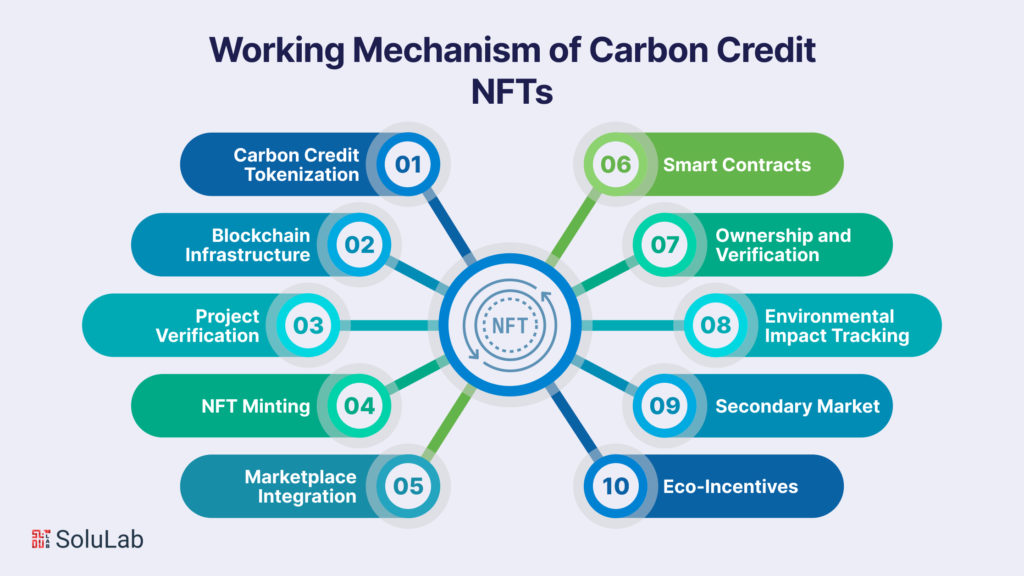
Carbon Credit NFTs representing carbon credits, operate on a unique and innovative system that combines blockchain technology, environmental conservation, and the principles of tokenization. This mechanism serves as the backbone of this emerging solution for tackling climate change. Let’s delve into the working mechanism of Carbon Credit NFTs:

  • Carbon Credit Tokenization: The process begins with the conversion of traditional carbon credits into digital tokens, specifically Non-Fungible Tokens (NFTs). Each NFT corresponds to a specific quantity of carbon emissions that have been reduced or offset through verified environmental projects.
  • Blockchain Infrastructure: Carbon Credit NFTs are built on blockchain technology, which provides a decentralized and immutable ledger for recording and verifying transactions. Popular blockchain platforms like Ethereum are often used for this purpose.
  • Project Verification: Before a carbon credit is tokenized as an NFT, it undergoes a rigorous verification process. This process ensures that the carbon reduction project adheres to established environmental standards and that the emissions reductions are accurately quantified.

CTA1

  • NFT Minting: Once verified, the carbon credits are minted as NFTs. Each NFT is unique and indivisible, representing a specific carbon reduction accomplishment.
  • Marketplace Integration: These Carbon Credit NFTs are then integrated into a specialized marketplace. This marketplace allows buyers and sellers to trade these tokens, thereby facilitating the exchange of carbon credits in a digital format.
  • Smart Contracts: Smart contracts, self-executing code on the blockchain, govern the rules and conditions of trading within the Carbon Credit NFT marketplace. They automate the process, ensuring that transactions are executed when predefined criteria are met, such as the transfer of ownership upon purchase.
  • Ownership and Verification: Ownership of Carbon Credit NFTs is recorded on the blockchain, providing a transparent and immutable ledger of who possesses which credits. Verification of the legitimacy of these NFTs can be easily conducted by referencing the blockchain’s historical data.

Check Out the Blog: Best Tron NFT Marketplace Platforms of 2025
  • Environmental Impact Tracking: The NFTs serve as a traceable record of the environmental impact that has been achieved through carbon reduction projects. Buyers of these NFTs can easily quantify and track their contribution to emissions reduction.
  • Secondary Market: One notable feature is the ability to trade Carbon Credit NFTs in the secondary market. Companies and individuals can buy and sell these tokens, creating a dynamic ecosystem that encourages continued carbon reduction efforts.
  • Eco-Incentives: Some Carbon Credit NFTs may incorporate eco-incentives, such as rewards or benefits for holders who actively engage in sustainable practices. This encourages ongoing participation in emissions reduction initiatives.

Facts and Benefits of Carbon Credit NFT Marketplace 

Facts and Benefits of Carbon Credit NFT Marketplace 

The emergence of Carbon Credit NFT Marketplaces has brought forth a range of benefits that are both environmentally impactful and financially lucrative. Let’s delve into some key benefits, supported by relevant facts and figures:

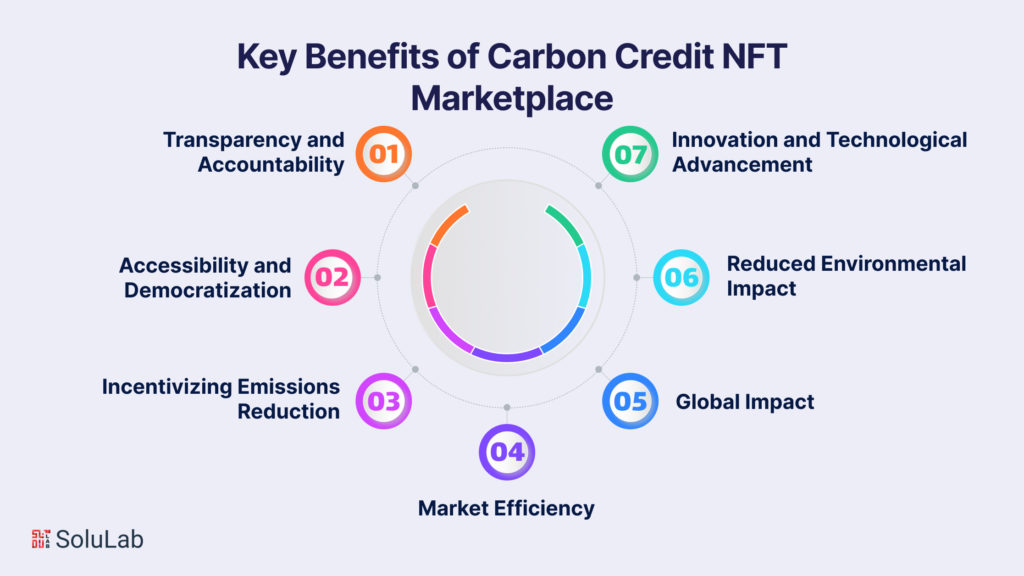
  • Transparency and Accountability

Fact: According to a report by EY (formerly Ernst & Young), blockchain technology, often employed in NFTs and carbon credit marketplaces, enhances transparency and traceability, reducing fraud and errors in carbon credit trading by up to 99%.

Benefit: Carbon Credit NFT Marketplaces provide an immutable ledger that tracks the entire lifecycle of carbon credits, ensuring transparency and accountability. This instills confidence in carbon credit buyers and investors. Moreover, the core motive of moving towards digital solutions is to offer a transparent system and framework to the beneficiaries. 

Read Also: How to Build an NFT Marketplace from Scratch?

  • Accessibility and Democratization

Fact: The World Bank reports that carbon pricing initiatives, including carbon credit markets, are currently implemented or scheduled for implementation in over 60 jurisdictions globally.

Benefit: Carbon Credit NFT Marketplaces democratize access to carbon credits. Individuals and smaller organizations can now participate in emissions reduction efforts, helping to spread the burden of sustainability more widely.

  • Incentivizing Emissions Reduction

Fact: The International Emissions Trading Association (IETA) estimates that carbon pricing mechanisms, including carbon credits, can potentially reduce global greenhouse gas emissions by up to 19 GtCO2e per year by 2030.

Benefit: The main motive of Carbon Credit NFTs is to provide modern solutions that can incorporate incentives for carbon reduction, motivating companies and individuals to actively engage in sustainable practices and accelerate emissions reductions.

  • Market Efficiency

Fact: A study by the Environmental Defense Fund found that carbon pricing, which includes carbon credit markets, has the potential to drive over $200 billion in clean energy investments annually.

Benefit: Carbon Credit NFT Marketplaces create a more efficient market for carbon credits, facilitating investment in clean energy and sustainable projects while spurring economic growth.

Check Our Press Release: SoluLab Empowers Companies with Carbon Credit Marketplace to Foster Environmental Responsibility

  • Global Impact

Fact: The United Nations Framework Convention on Climate Change (UNFCCC) states that the sale of carbon credits generated by the Clean Development Mechanism (CDM) reached a cumulative $400 billion by 2020.

Benefit: Carbon Credit NFT Marketplaces contribute to the global effort to combat climate change by mobilizing substantial investments in environmental projects, helping nations meet their emission reduction targets.

  • Reduced Environmental Impact

Fact: A report by McKinsey & Company indicates that carbon offsetting programs, which carbon credits support, have the potential to reduce emissions by 11 to 20 gigatons per year by 2030.

Benefit: Carbon Credit NFTs enable individuals and companies to take direct action in reducing their carbon footprint, thus aiding in achieving substantial emissions reductions.

  • Innovation and Technological Advancement

Fact: The adoption of blockchain technology in carbon credit markets is rising. According to MarketsandMarkets, the global blockchain market size is projected to reach $39.7 billion by 2025, indicating rapid technological advancement.

Benefit: Carbon Credit NFT Marketplaces drive innovation by merging blockchain technology with environmental conservation, fostering new solutions for a sustainable future.
Use Cases of Carbon Credit NFT Marketplaces

Use Cases of Carbon Credit NFT Marketplaces

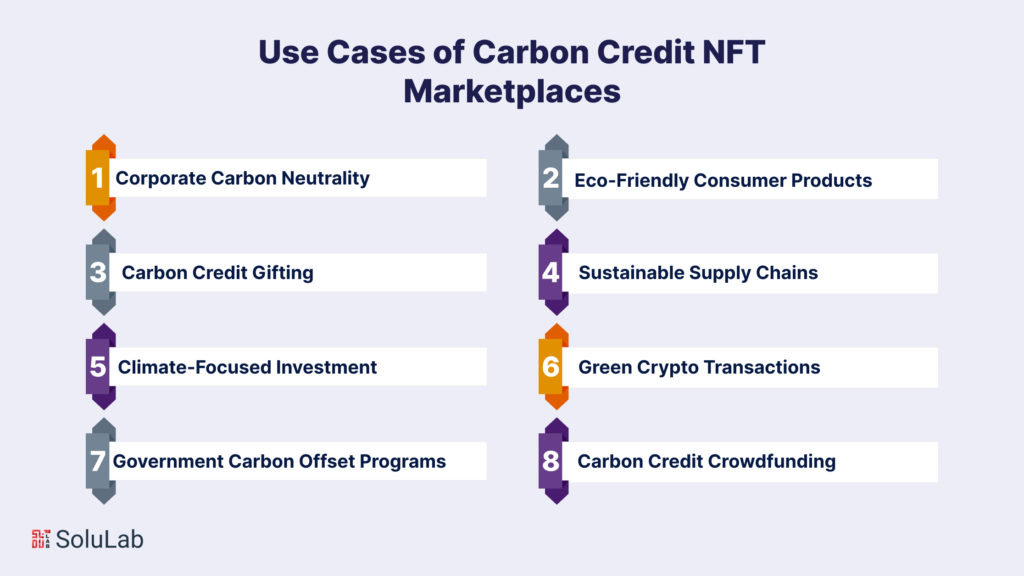
Carbon Credit NFT Marketplaces are poised to revolutionize the way carbon credits are traded and utilized. Here are some use cases of how these innovative platforms are making a difference in the fight against climate change and for better understanding, we will accompany these with real-world examples.

  • Corporate Carbon Neutrality

Large corporations seeking to achieve carbon neutrality can utilize Carbon Credit NFT Marketplaces to purchase verified carbon credits, thereby offsetting their emissions.

Example: A tech giant purchases Carbon Credit NFTs equivalent to the emissions generated by its data centers, ensuring it meets its sustainability commitments.

Have A Look at Our Blog: What are the Benefits of Using Digital Identity with Blockchain in the Future?

  • Eco-Friendly Consumer Products

Companies producing eco-friendly products can showcase their commitment to sustainability by including Carbon Credit NFTs with their merchandise like customized clothing, allowing customers to offset the carbon footprint of their purchases.

Example: A clothing brand includes Carbon Credit NFTs in the purchase of each organic cotton custom t-shirt, enabling customers to contribute to reforestation projects.

  • Carbon Credit Gifting

Individuals can gift Carbon Credit NFTs to friends and family, promoting environmental awareness and encouraging carbon offsetting as a thoughtful gesture.

Example: A person gifts Carbon Credit NFTs to commemorate a loved one’s birthday, symbolizing their commitment to a greener future.

  • Sustainable Supply Chains

Companies can ensure their supply chains are sustainable by collaborating with suppliers who use Carbon Credit NFTs to offset emissions associated with production and transportation.

Example: An automobile manufacturer partners with suppliers who utilize Carbon Credit NFTs to offset emissions from raw material extraction to vehicle assembly.

Read Also: How To Launch Your Own NFT Marketplace Website in Less Than 2 Days?

  • Climate-Focused Investment

Investors can diversify their portfolios by acquiring Carbon Credit NFTs, supporting carbon reduction projects while potentially benefiting from the appreciation of NFT values.

Example: An environmentally conscious investor purchases Carbon Credit NFTs representing emissions reductions from renewable energy projects, aligning their investments with their values.

  • Green Crypto Transactions

Cryptocurrency exchanges and platforms can integrate Carbon Credit NFTs into their transaction processes, allowing users to offset the carbon emissions generated by crypto transactions.

Example: A crypto exchange offers users the option to purchase Carbon Credit NFTs along with Bitcoin, reducing the carbon footprint associated with cryptocurrency mining.

  • Government Carbon Offset Programs

Governments can leverage Carbon Credit NFT Marketplaces to administer and enhance their carbon offset programs, ensuring transparency and efficiency.

Example: A national environmental agency partners with a Carbon Credit NFT Marketplace to facilitate carbon credit trading among local businesses and individuals.

Read Also: Metaverse NFT – Foundation Of Next Blockchain Revolution!

  • Carbon Credit Crowdfunding

Crowdfunding platforms can enable campaigns that fund carbon reduction projects by selling Carbon Credit NFTs, allowing individuals to collectively support environmental initiatives.

Example: A crowdfunding campaign raises funds to reforest an area by selling Carbon Credit NFTs, providing backers with a tangible environmental impact.

Future of Carbon Credit NFT Marketplace 

The future of the Carbon Credit NFT Marketplace holds immense promise as it converges two transformative forces: carbon credit trading and blockchain-based Non-Fungible Tokens (NFTs). This innovative fusion is set to redefine how we address climate change and carbon emissions in the years to come.

Firstly, the integration of NFT technology into carbon credit markets is gaining momentum. According to a report by Statista, revenue in the NFT industry is reported to reach US$1,601.00m in 2023. This surge highlights the growing interest in NFTs and their potential applicability to carbon credits. In the future, Carbon Credit NFTs could become a widely accepted and accessible means of trading and offsetting carbon emissions.

Secondly, blockchain technology is revolutionizing the transparency and integrity of carbon credit transactions. Blockchain’s immutable ledger and smart contracts enable real-time tracking, verification, and trading of Carbon Credit NFTs, ensuring the legitimacy and impact of each credit. This transparency is vital for building trust among participants and verifying emissions reductions.

Furthermore, global commitments to carbon neutrality are expected to drive the adoption of Carbon Credit NFTs. The Paris Agreement aims to limit global warming to well below 2 degrees Celsius, and countries are setting ambitious targets to achieve carbon neutrality. To meet these goals, companies and individuals will increasingly turn to Carbon Credit NFT Marketplaces to offset their carbon emissions, further fueling the growth of this innovative ecosystem.

CTA2

Conclusion

In conclusion, the future of the Carbon Credit NFT Marketplace is marked by technological advancements, increased participation, and a growing demand for sustainable practices. As blockchain and NFT technologies continue to mature, and as the world becomes more committed to addressing climate change, Carbon Credit NFTs are undeniably the need of the hour. 

SoluLab, a distinguished leader in carbon credit marketplace development, is your go-to partner for top-tier carbon credit NFT marketplace development services and solutions. Their team of seasoned experts has a proven track record of creating exceptional Carbon NFTs tailored to diverse business models. When you opt for SoluLab to spearhead your Carbon Credit NFT marketplace development, you unlock a world of advantages.

In the ever-evolving landscape of Carbon Credit NFT marketplaces, trust in SoluLab’s expertise to lead the way. With a commitment to excellence and a history of success, SoluLab is your gateway to harnessing the full potential of carbon credit NFTs. Join hands with SoluLab today and embark on a journey toward sustainable and profitable environmental impact through cutting-edge blockchain technology.

FAQs

1. What is a Carbon Credit NFT Marketplace?

A Carbon Credit NFT Marketplace is a digital platform where Non-Fungible Tokens (NFTs) are used to represent and trade carbon credits. It provides a transparent and efficient way to buy, sell, and trade carbon credits, which can help individuals and organizations offset their carbon emissions.

2. How do Carbon Credit NFTs differ from traditional carbon credits?

Carbon Credit NFTs are a digital form of carbon credits represented by unique tokens on a blockchain. They offer enhanced transparency, traceability, and accessibility compared to traditional paper or digital certificates. NFTs make it easier to verify the authenticity of carbon credits and facilitate secondary trading.

3. What are the benefits of using Carbon Credit NFTs?

Carbon Credit NFTs offer several advantages, including transparency, accessibility, and the potential for incentives. They provide a clear record of carbon offsetting efforts, enable wider participation in carbon markets, and can incorporate rewards or benefits for carbon reduction activities.

4. How can I participate in a Carbon Credit NFT Marketplace?

To participate, you can start by creating an account on a carbon credit NFT marketplace platform. Then, you can browse available Carbon Credit NFTs, purchase them, and track your carbon offsetting contributions.

5. What types of projects qualify for carbon credits in NFT form?

Carbon credit projects must meet specific environmental standards and verification processes to qualify for tokenization as NFTs. Common projects include renewable energy initiatives, reforestation, methane capture, and energy efficiency projects.

6. How can I ensure the authenticity of the Carbon Credit NFTs I purchase?

Authenticity is ensured through blockchain technology. Each Carbon Credit NFT is recorded on a blockchain ledger, providing an immutable record of its origin and ownership. Additionally, verification mechanisms validate the legitimacy of the carbon credits.

7. Are there risks associated with investing in Carbon Credit NFTs?

Like any investment, there are risks, such as market volatility and the potential for fraudulent projects. It’s essential to conduct due diligence, verify project credentials, and choose reputable Carbon Credit NFT Marketplaces.

SoluLab Empowers Companies with Carbon Credit Marketplace to Foster Environmental Responsibility


SoluLab Empowers Companies with Carbon Credit Marketplace to Foster Environmental Responsibility

SoluLab, India, July 14, 2023 – SoluLab launches innovative Carbon Credit NFT Marketplace, empowering users to combat climate change. This groundbreaking platform aims to revolutionize how individuals and organizations participate in the fight against climate change and pollution.

SoluLab’s Carbon Credit NFT Marketplace provides a secure and transparent ecosystem for the trading of carbon credits. By leveraging blockchain technology, SoluLab enables users to contribute to the global efforts of reducing carbon emissions while ensuring fairness and accountability in the marketplace.

The marketplace revolutionizes carbon credit trading, bringing transparency, efficiency, and global accessibility to individuals and organizations passionate about environmental preservation.

With SoluLab’s Carbon Credit NFT Marketplace, users can actively participate in the global fight against climate change, empowering a sustainable future for generations to come.

Key Features of SoluLab’s Carbon Credit NFT Marketplace:

  • Enhanced Search Functionality: Empowers traders to quickly locate and acquire specific NFTs through an advanced search calibrator.
  • Listing and Positioning NFTs: Dynamically ranks NFTs based on trading volume and the number of owners, providing valuable insights for trading decisions.
  • Auction Gateway: Enables smooth transactions through bidding fees, initial bid amounts, and expiration dates set by sellers.
  • Storefront Functionality: Allows sellers to provide detailed descriptions, prices, and essential information to assist purchasers in making informed decisions.
  • NFT Staking Option: Provides token holders the ability to stake their NFTs, earning rewards based on the duration of their stake and promoting long-term engagement.
  • Secure Crypto Wallet: Safely stores the cryptocurrencies required for trading, along with the NFTs acquired by users.
  • Trading & Auction Mechanisms: Offers various trading options, including fixed-price listings, auctions, and decentralized exchanges, to accommodate different buying and selling preferences.
  • Smart Contract Functionality: Facilitates seamless transfer of NFTs, executes carbon credit trades, calculates carbon offset values, and enforces marketplace terms and conditions.

Why Should One Choose SoluLab for Carbon Credit Marketplace Development?

  • Tailor-made Solutions: Rapid delivery of customized solutions tailored to the target audience’s needs.
  • Expertise in Blockchain Technologies: Extensive knowledge and experience in diverse blockchain technologies, ensuring a solid foundation for the marketplace.
  • Comprehensive Post-Delivery Services: Ongoing support and maintenance to focus on business growth while SoluLab takes care of the marketplace’s continued success.
  • Agile Development Process: Flexibility, adaptability, and efficient project management throughout the development lifecycle.
  • Security and Data Privacy: Robust security measures, best practices, and cutting-edge technologies to safeguard the platform and user information.
  • User-Friendly Interface: Intuitive and engaging user experience, making carbon credit trading accessible for buyers, sellers, and other participants.

About SoluLab

SoluLab Inc is well-known for its exceptional Blockchain, AI, and IoT services. The company was established by a former VP of Goldman Sachs and Citrix’s former principal software architect.

  • We have 1500+ clients across 30+ countries with a 97% success rate
  • Some of our clients from the insurance industry are Cigna, Heritage Insurance, MetLife, Swiss Re, New York Life, and 10 more
  • Ranked 33rd on Deloitte’s 2020 Technology Fast 500™ list
  • Top Blockchain development company by Goodfirms, Clutch, and Gartner in 2020 and 2021
  • Microsoft Silver Certified Partner, Google Developer Certified Agency, and Hyperledger Certified Service Provider
  • Video Testimonial of AnrKeyX COO whom we helped in raising 2.2M USD funding through our MVP development – https://bit.ly/44hWne5

Media Contact:

Gursumeet Kaur, Marketing TL

[email protected]


The Ultimate Guide To Creating a Carbon Credit Marketplace

The Ultimate Guide To Creating a Carbon Credit Marketplace

Carbon credit exchanges have developed as cutting-edge responses to the problem of reducing greenhouse gas emissions as worries about climate change and environmental sustainability continue to rise. These markets provide venues where businesses and private persons may purchase and sell carbon credits, reducing carbon footprints and assisting initiatives that encourage sustainable practices. The idea of what carbon credit marketplaces are, their importance, and how they contribute to a cleaner future will all be covered in this blog article.

What is a Carbon Credit Marketplace?

A carbon credit marketplace is a digital platform that facilitates the trading of carbon credits between entities looking to offset their carbon emissions and those involved in projects that generate verifiable emission reductions. Carbon credits represent the equivalent of one metric ton of carbon dioxide (or another greenhouse gas) that has been reduced, avoided, or removed from the atmosphere.

How Does a Carbon Credit Marketplace Work?

Carbon credit marketplaces operate on the principle of supply and demand. Project developers, such as renewable energy producers, reforestation initiatives, or energy efficiency programs, generate carbon credits through their efforts to reduce greenhouse gas emissions. These credits are then listed on the marketplace for potential buyers.

Buyers, such as businesses or individuals seeking to offset their carbon emissions, can browse through the available credits and purchase them to compensate for their own environmental impact. By purchasing carbon credits, buyers effectively support and finance projects that reduce greenhouse gas emissions, contributing to a more sustainable future.

What are the Benefits of Carbon Credit Marketplaces? 

  • Emissions Reduction

Carbon credit marketplaces incentivize the implementation of projects that directly reduce greenhouse gas emissions. By connecting emission reduction projects with interested buyers, these marketplaces drive real environmental change.

  • Financial Support for Sustainable Projects

The revenue generated from carbon credit sales provides financial support for projects aimed at mitigating climate change. This funding can enable the development and expansion of renewable energy installations, reforestation initiatives, and other sustainability-focused projects.

  • Market Efficiency and Transparency

Carbon credit marketplaces provide a transparent platform for buyers and sellers to engage in transactions. They ensure that carbon credits are properly verified and tracked, instilling trust and confidence in the marketplace.

  • Global Impact

Carbon credit marketplaces transcend geographical boundaries, allowing organizations and individuals worldwide to participate in emissions reduction efforts. This global reach maximizes the potential for positive environmental impact on a larger scale.

Read Our Blog Post: Top 10 Carbon Crypto Companies to Watch Out in 2023

What are the Different Types of Carbon Credits?

What are the Different Types of Carbon Credits?

In the pursuit of combating climate change and promoting sustainable practices, carbon credits have gained significant attention as valuable tools. These credits represent the reduction or removal of greenhouse gas emissions from the atmosphere. However, it’s important to understand that not all carbon credits are the same. In this article, we will explore the two different types of carbon credits: “Compliance” and “Voluntary,” their characteristics, and how they contribute to the global effort towards carbon neutrality.

  • Compliance Carbon Credits

Compliance carbon credits, also known as regulatory or mandatory carbon credits, are typically associated with government-imposed regulations or international agreements aimed at reducing greenhouse gas emissions. These credits are issued based on compliance with specific emission reduction targets or standards.

  • Certified Emission Reductions (CERs)

CERs are generated through Clean Development Mechanism (CDM) projects under the United Nations Framework Convention on Climate Change (UNFCCC). These projects are typically implemented in developing countries and contribute to sustainable development while reducing emissions. CERs can be used by companies to comply with their emission reduction obligations.

  • Emission Reduction Units (ERUs)

ERUs are created through Joint Implementation (JI) projects, which involve emission reduction efforts in developed countries. JI projects allow countries with emission reduction commitments to invest in emission reduction projects in other participating countries. ERUs can be used by companies to comply with their emission reduction targets.

  • Voluntary Carbon Credits

Voluntary carbon credits, as the name suggests, are not tied to any regulatory requirements but are purchased voluntarily by individuals, organizations, or businesses aiming to offset their carbon footprints and demonstrate environmental responsibility. These credits are typically used to support projects that go beyond regulatory requirements and make additional emission reductions.

  • Verified Carbon Units (VCUs)

VCUs are generated from projects that follow recognized methodologies and undergo rigorous third-party verification. These projects can include renewable energy installations, reforestation and afforestation efforts, energy efficiency initiatives, and more. VCUs allow individuals and organizations to voluntarily offset their emissions and demonstrate their sustainability commitment.

  • Gold Standard Credits

Gold Standard credits are a type of voluntary carbon credit that meet rigorous environmental and social criteria. They are issued to projects that demonstrate exceptional sustainable development outcomes, such as poverty reduction, biodiversity protection, and community engagement, in addition to emission reductions. Gold Standard credits provide an even higher level of confidence and credibility to buyers.

Check Out Our PR Article: SoluLab Bridging the Gap Between Technology And Innovation

Carbon Credits Explained: How Do Carbon Credits Work?

What are the Benefits of Carbon Credit Marketplaces? 

As the world tackles the challenges of climate change, carbon credits have emerged as a crucial mechanism to incentivize and facilitate the reduction of greenhouse gas emissions. This article aims to provide a comprehensive understanding of how carbon credits work, their purpose, and the underlying mechanisms that drive their effectiveness in combating climate change.

  • Carbon Credit Basics

A carbon credit represents a unit of measurement that quantifies the reduction, avoidance, or removal of one metric ton of carbon dioxide (CO2) or its equivalent in other greenhouse gases. The concept is based on the principle that each emission reduction has a positive environmental impact and contributes to achieving carbon neutrality.

  • Emission Calculation and Baseline

To initiate the process, a baseline or reference level of emissions is established. This baseline represents the projected amount of emissions that would occur without any emission reduction efforts. It serves as a benchmark against which the actual emissions are measured to determine carbon credit eligibility.

  • Emission Reduction Projects

Entities, such as businesses or organizations, can engage in emission reduction projects to lower their carbon footprint. These projects can encompass various strategies, including the adoption of renewable energy, energy efficiency improvements, afforestation or reforestation initiatives, or the implementation of clean technologies. The emission reductions achieved through these projects form the basis for carbon credits.

  • Verification and Certification

Once an emission reduction project is implemented, it undergoes a rigorous verification and certification process. Independent third-party organizations assess the project’s adherence to specific methodologies and criteria. The verification ensures the accuracy and validity of the emission reductions claimed, instilling confidence in the integrity of the carbon credits.

  • Carbon Credit Issuance

Upon successful verification, carbon credits are issued to the project owner or entity responsible for the emission reduction efforts. Each carbon credit represents one metric ton of CO2 equivalent reduction. These credits are registered and assigned a unique identification number to maintain traceability and prevent double-counting.

  • Carbon Credit Trading

The trading of carbon credits occurs through various mechanisms, including compliance markets and voluntary markets. Compliance markets operate under regulatory frameworks, where companies with emission reduction obligations can buy and sell carbon credits to meet their targets. Voluntary markets, on the other hand, facilitate the trading of carbon credits on a voluntary basis, allowing individuals and organizations to offset their carbon footprint or demonstrate environmental responsibility.

  • Offsetting Emissions

Buyers of carbon credits can use them to offset their own emissions. By purchasing carbon credits, individuals or organizations effectively finance emission reduction projects and contribute to global efforts in combating climate change. The offsetting process involves retiring the purchased carbon credits, ensuring that they are not reused or double-counted.

CTA 1

Why do People Use Carbon Credits?

As the world grapples with the challenges of climate change and the need for sustainable practices, carbon credits have gained significant traction as a valuable tool in the fight against greenhouse gas emissions. This article explores the reasons why individuals, organizations, and businesses choose to use carbon credits and highlights the benefits associated with their utilization.

  • Mitigating Carbon Footprint

One of the primary motivations for using carbon credits is the desire to mitigate one’s carbon footprint. By purchasing carbon credits, individuals and organizations can offset their own greenhouse gas emissions, taking responsibility for their environmental impact. This proactive approach allows them to contribute to the reduction of global emissions and support projects that foster sustainability.

  • Demonstrating Environmental Responsibility

Using carbon credits serves as a tangible demonstration of environmental responsibility. It sends a clear message that individuals and organizations are committed to mitigating climate change and taking action beyond regulatory requirements. By investing in emission reduction projects through carbon credits, they showcase their dedication to sustainability and inspire others to follow suit.

  • Achieving Carbon Neutrality

Carbon credits play a pivotal role in achieving carbon neutrality goals. By calculating and offsetting their emissions through the purchase of carbon credits, individuals and organizations can balance out their carbon footprints. This commitment to carbon neutrality aligns with the global objective of limiting global warming and transitioning to a low-carbon economy.

  • Supporting Sustainable Projects

Carbon credits provide a valuable source of financial support for sustainable projects. When individuals or organizations purchase carbon credits, they contribute to funding emission reduction initiatives, renewable energy projects, reforestation efforts, and other sustainability-focused endeavors. This financial backing not only promotes sustainable practices but also encourages the development and expansion of environmentally friendly projects.

  • Compliance with Regulatory Requirements

For businesses operating within regulatory frameworks, using carbon credits helps them meet mandatory emission reduction targets and comply with environmental regulations. By purchasing carbon credits, companies can offset a portion of their emissions, demonstrating their commitment to meeting regulatory obligations while supporting sustainable projects.

  • Enhancing Corporate Social Responsibility (CSR)

Carbon credits align with the principles of Corporate Social Responsibility (CSR) by enabling businesses to address their environmental impact and engage in sustainable practices. By incorporating carbon credits into their CSR initiatives, companies can demonstrate their commitment to the environment, strengthen their brand reputation, and attract environmentally conscious customers and partners.

  • Encouraging Innovation and Market Transformation

The utilization of carbon credits fosters innovation and market transformation. The demand for carbon credits incentivizes the development of new emission-reduction technologies, clean energy solutions, and sustainable practices. This drives market forces towards a low-carbon economy, encouraging businesses to adopt innovative approaches and transition to more sustainable business models.

Launch Your Own Carbon Credit NFT Marketplace with SoluLab

What do You Need to Know Before Using Carbon Credits?

How do carbon credits work and have gained prominence? As a tool to mitigate greenhouse gas emissions and promote sustainability. However, before diving into the world of carbon credits, it is essential to understand certain key aspects to ensure their effective and meaningful utilization. In this article, we will explore what you need to know before using carbon credits to maximize their environmental impact and align with your sustainability goals.

  • Carbon Footprint Calculation

Before purchasing carbon credits, it is crucial to calculate your carbon footprint accurately. Understanding your carbon emissions across various activities, such as energy consumption, transportation, and waste generation, provides a baseline to assess your offsetting needs. Consider utilizing reputable carbon calculators or engaging sustainability experts to help you in this process.

  • Setting Clear Objectives

Define your objectives and goals for using carbon credits. Whether it is achieving carbon neutrality, supporting specific emission reduction projects, or aligning with regulatory requirements, clarifying your intentions will guide your decision-making process. Clearly outlining your objectives will also help you choose the most appropriate carbon credit projects to support.

  • Quality Assurance and Certification

Ensure that the carbon credits you purchase are from verified and certified sources. Look for internationally recognized standards and certifications, such as the Verified Carbon Standard (VCS) or Gold Standard. These certifications guarantee that the emission reductions associated with the credits are accurately measured, verified by independent auditors, and adhere to robust methodologies.

  • Additionality and Permanence

Consider the concept of additionality when selecting carbon credits. Additionality ensures that the emission reductions achieved through supported projects would not have occurred without the financial support from carbon credit sales. Projects with strong additionality contribute to real and tangible emission reductions. Additionally, assess the permanence of the emission reductions to ensure the long-term sustainability of the projects you choose to support.

  • Project Selection and Impact

Research and evaluate the projects associated with the carbon credits. Understand the types of emission reduction activities, such as renewable energy, energy efficiency, reforestation, or waste management, and assess their alignment with your sustainability values. Consider the geographic location of the projects, their social and environmental co-benefits, and the transparency of project information to gauge their impact and credibility.

Check Out Our Press Release: SoluLab Honored By GoodFirms as the Winner of the Trusted Choice Award 2023

What are the Examples of Companies Using Carbon Credits? 

Numerous companies across different industries have recognized the importance of reducing their carbon footprint and have implemented carbon credit initiatives as part of their sustainability strategies. Here are a few examples of companies that have utilized carbon credits:

1. Microsoft

Microsoft has made a commitment to being carbon negative by 2030. To achieve this, they have implemented a carbon fee and have been purchasing carbon credits to offset their remaining emissions. They have also launched the Microsoft Carbon Removal Marketplace, which allows customers to purchase verified carbon removal credits.

2. Salesforce

Salesforce, a cloud computing company, has taken significant steps to reduce its environmental impact. They achieved net-zero greenhouse gas emissions in 2017 and continue to offset emissions through the purchase of high-quality carbon credits. They have invested in projects that promote renewable energy, energy efficiency, and reforestation.

3. Unilever

Unilever, a multinational consumer goods company, has set ambitious sustainability goals, including becoming carbon positive by 2030. They have been actively investing in renewable energy projects and have used carbon credits to offset their emissions. Unilever focuses on projects that align with its values and contribute to social and environmental co-benefits.

4. Delta Air Lines

Delta Air Lines, a major airline, has implemented various measures to reduce its carbon emissions. In addition to fleet efficiency improvements, they have invested in carbon offset projects, such as forest conservation and renewable energy. Delta offers customers the option to purchase carbon offsets to mitigate the emissions associated with their flights.

5. Apple

Apple has made significant progress in reducing its carbon footprint and has committed to being carbon-neutral across its entire supply chain by 2030. They have invested in renewable energy projects, improved energy efficiency, and implemented carbon offset initiatives. Apple has supported projects like forest conservation and the development of solar and wind farms.

CTA 2

Conclusion

What is a carbon credit marketplace? Creating a carbon credit marketplace is a complex undertaking that requires careful planning, collaboration, and a deep understanding of the principles underlying carbon offsetting. In this ultimate guide to creating a carbon credit marketplace, we have explored the key components and considerations involved in establishing an effective and successful platform.

From understanding the concept of carbon credits and their role in mitigating greenhouse gas emissions to the technical and operational aspects of building a marketplace, we have covered a wide range of topics. We have delved into the importance of robust verification and certification processes, the significance of transparency and traceability, and the role of technology in facilitating transactions and ensuring market integrity.

We have also discussed the various stakeholders involved in a carbon credit marketplace, including project developers, buyers, and verifiers, and emphasized the importance of fostering partnerships and collaboration among these actors. Furthermore, we have highlighted the need to align with internationally recognized standards and methodologies to ensure the credibility and quality of the carbon credits traded on the marketplace.

SoluLab, a well-known company in the field of carbon credit marketplace development, has a specialization in providing outstanding carbon credit marketplace development services and solutions. With a team of expert professionals, SoluLab has achieved remarkable success in creating Carbon NFTs for a wide range of business models. For more information, contact SoluLab today.

FAQs

1. What is a carbon credit marketplace?

A carbon credit marketplace is a platform or system that facilitates the buying and selling of carbon credits. It serves as a marketplace where buyers, such as companies or individuals, can purchase carbon credits to offset their carbon emissions, while sellers, such as emission reduction project owners, can sell their verified emission reductions in the form of carbon credits.

2. What is a carbon credit? Why create a carbon credit marketplace? 

Creating a carbon credit marketplace is important to promote and incentivize emission reduction efforts. It provides a transparent and efficient platform for buyers and sellers to engage in carbon credit transactions, encouraging the development of emission reduction projects and supporting the transition to a low-carbon economy.

3. How do carbon credits work?

A carbon credit marketplace typically operates by bringing together buyers and sellers of carbon credits. Sellers can register their emission reduction projects and have them verified by independent auditors. Once verified, the emission reductions are converted into carbon credits, which can be listed on the marketplace. Buyers can browse and purchase these credits to offset their own carbon emissions.

4. What are carbon credits and their key components?

A carbon credit marketplace consists of several key components, including project registration and verification processes, credit listing and trading mechanisms, robust tracking and accounting systems, and secure payment and settlement methods. It should also incorporate transparent reporting and auditing mechanisms to ensure the integrity and credibility of the marketplace.
