Talk to an Expert

How Can AI in Education Help Teachers Save Time and Boost Results?

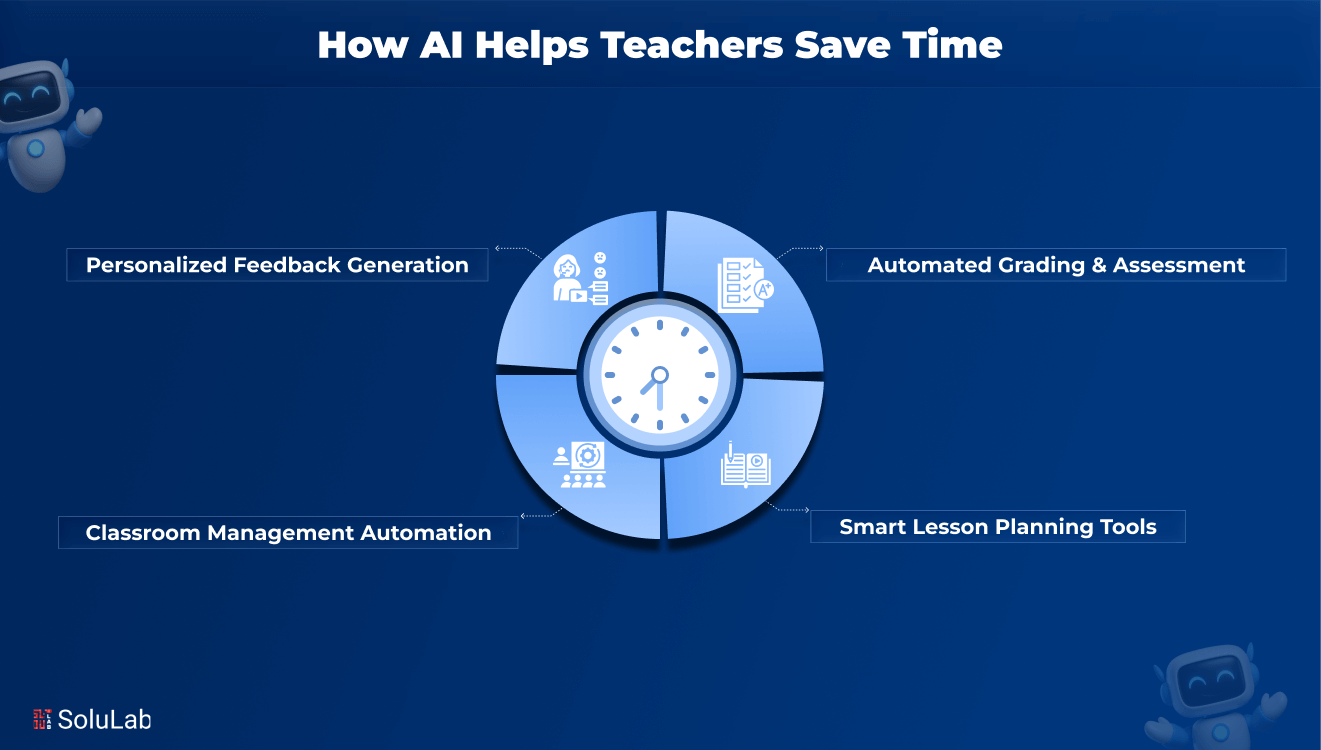
How AI Helps Teachers Save Time

Grading papers, planning lessons, tracking student progress, and managing classrooms all within a limited time. The pressure keeps growing, especially in schools and colleges where class sizes are large and resources are limited. This often leads to burnout, missed opportunities for personalized teaching, and reduced student engagement. 

That’s what AI for teachers is needed for. From automating repetitive tasks to offering smart insights into student performance, AI tools are helping educators focus more on what matters—teaching.

Around 50% of educators use AI for lesson planning, and nearly 37% use it to generate classroom materials and assessments. 

In this blog, let’s explore how AI in education is saving time, improving learning outcomes, and making life easier for teachers, both in classrooms and lecture halls.

How AI Helps Teachers Save Time?

Generative AI in education has simplified work by automating repetitive tasks. Now, teachers have more time to focus on helping students learn better. Let’s see how AI can be used in education:

  • Automated Grading & Assessment: With AI, teachers can quickly grade multiple-choice questions, short answers, and even essays. It helps teachers check large volumes of student work faster. This reduces the time spent on assessments and spends that time giving students feedback.
  • Smart Lesson Planning Tools: Another big plus is that AI-powered tools can suggest lesson plans based on the subject, class level, and curriculum. Teachers can save hours by using templates. Teachers can structure lessons, choosing topics and finding the best resources for each topic.
  • Classroom Management Automation: AI helps manage daily tasks like taking attendance, sending reminders, or answering basic student questions through chatbots. This cuts down on routine work. So teachers can stay focused on teaching instead of paperwork and coordination.
  • Personalized Feedback Generation: AI can analyze student performance data and create individual progress reports. Teachers can quickly understand where each student is struggling and share feedback. With parents, or use it to adjust their teaching methods without spending hours on manual review.

How Does AI Impact The Role Of Teachers In The Classroom?

 With the rise of the best AI tools for teachers, lesson planning, grading, and student support have become faster and more effective. Here’s how AI impacts the role of teachers in the classroom:
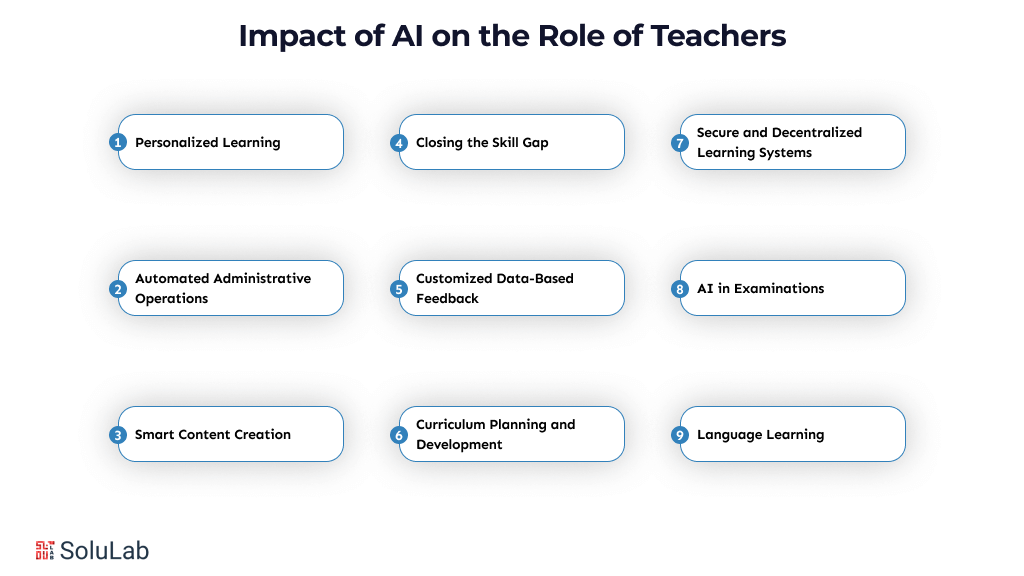
Impact of AI on the Role of Teachers

1. Assist in the Translation of Language: AI will be able to generate lessons in alternative languages. This assists in classrooms with students having different mother tongues. The teachers will ensure all the learners comprehend what is being taught, irrespective of their language.

2. Helps in Emotional Wellness: Certain AI-based solutions can monitor student mood by behavioral or response patterns. This assists the teachers in knowing when a student is under pressure or not interested. They will then be able to speak to the student and provide early support.

3. Makes the Teaching Easy Online: In remote or hybrid learning, AI is capable of structuring material, tracking student progress, and solving technology problems. Also, for teachers, an AI detection tool acts like a quiet assistant in the background, helping them spot AI generated assignments without disrupting their teaching flow.

4. Recommends areas of teaching improvement: Artificial Intelligence offers recommendations to teachers, on the performance. It may suggest that the pace of something should be altered, or an alternative teaching style used. This assists the teachers in perfecting their style and reaching a greater number of students.

Read More: AI In Practical Science Learning

How AI Boosts Learning Outcomes?

AI is helping teachers make learning better for students by offering more personalized support, tracking progress, and making lessons more interesting and fun. Here are some advantages of AI in education:

1. Personalized Learning Paths: AI tools can adjust lessons to match each student’s speed and understanding. If a student is struggling with a topic, the AI suggests easier tasks or extra help. If a student is doing well, it gives harder questions to challenge them, helping every student learn at their level.

2. Predictive Analytics for Student Performance: AI can look at past test scores, attendance, and other data to find which students might fall behind. It helps teachers take action early with the help a quiz maker, teachers can create quick assessments to track progress and take action early—like giving extra help or changing the way they teach—so students don’t struggle later and stay on track with their studies.

3. Enhanced Engagement Through AI Tools: Enhancing students’ engagement is another more of AI in education. AI makes learning more fun by using games, quizzes, and videos to explain topics. Some tools even act like virtual tutors, helping students whenever they get stuck. This keeps students more focused and makes learning less boring, especially in subjects they usually find hard.

Popular AI Tools for Teachers in 2025

AI tools are becoming everyday companions for teachers, helping them plan lessons, engage students, and reduce workload with ease. Here are some AI applications in education for teachers: 
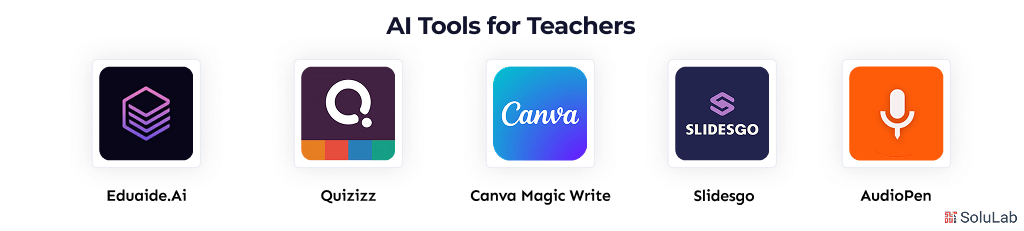
1. Eduaide.Ai

Eduaide.Ai helps teachers create lesson plans, quizzes, and classroom activities in minutes. You just type your topic, and the tool gives you ready-made teaching material. It saves hours of planning time and helps teachers stay organized without starting from scratch every day.

2. Quizizz

Quizizz is an AI-powered quiz and game platform. Teachers can create or use ready-made quizzes that are fun and interactive. It works great for student engagement and gives instant results, so teachers don’t need to check every answer manually.

3. Canva Magic Write

Canva’s Magic Write helps teachers quickly write content for slides, posters, and classroom material. You just describe what you want, and it gives you creative text options. It saves time, especially when making presentations or writing instructions.

4. Slidesgo

Slidesgo offers free, AI-recommended templates for educational presentations. Teachers can find visually appealing slides that match their topic and simply plug in the content. It’s perfect for making classes more engaging without spending hours designing.

5. AudioPen

AudioPen turns voice notes into clean, readable text. Teachers can speak their thoughts or lesson plans, and the tool turns them into notes or summaries. It helps when ideas come suddenly or when teachers prefer talking over typing.

Future of AI in Education

The future of AI in education looks promising, especially for teachers who want to work smarter, not harder. With AI tools becoming more advanced, educators can now automate grading, get real-time student insights, and personalize learning for every child. Similarly, students can benefit from support systems like a paper writing service, which can help them organize research, improve writing quality, and better understand academic standards through guided assistance

Tools like an AI checker for teachers can quickly review assignments and detect plagiarism or AI-generated content. At the same time, the best AI software for teachers helps with lesson planning, content creation, and even classroom engagement.

To maintain academic honesty, AI detectors for teachers are also being used to ensure originality in student work. Using a reliable plagiarism checker alongside AI tools adds an extra layer of verification, especially when reviewing research-based assignments.

As technology grows, AI will not replace teachers but become their smart assistant. From saving time to improving student outcomes, AI is reshaping how classrooms function in India and beyond. Embracing AI in education will prepare both teachers and students for a more efficient, tech-powered future of learning.
AI Development Company

Conclusion

 AI will never come to take the place of teachers, but rather aid them to be more effective and efficient. The AI in teaching enables educators to use smart teaching tools that will make the learning process and planning, as well as assessing children more efficient. Such capabilities as customized feedback, foresight, and exciting content can be created to make the teaching process less challenging and more successful. 

Other tools, including an AI checker for teachers, can be used to ensure academic integrity and detect copied or AI material. There is no doubt that as schools further integrate AI, teachers will be able to concentrate more on what matters, which is mentoring, inspiring, and helping students develop to their fullest potential.

Looking to bring AI into your edtech platform? SoluLab AI development company in USA, can help you build smart, teacher-friendly AI solutions that save time and boost learning results.

FAQs

1. What are the benefits of AI in education?

Its advantages are that it lowers the workload, allows individualized learning, quicker grading, a more effective classroom, and better student results.

2. How does AI personalize learning?

AI provides feedback on student learning and performance to suggest the appropriate lessons, exercises, or pacing. This assists the slow learners to proceed and enables the advanced ones to master more difficult materials.

3. Is AI useful in rural or low-resource schools?

Absolutely. The AI tools can help fill the access gaps, assisting in several languages, offline capabilities, and easier instructional learning materials that are functional even under a developed infrastructure.

4. Can AI help with classroom presentations?

Yes, tools like Canva Magic Write and Slidesgo assist teachers in creating attractive presentations quickly by providing templates, design ideas, and content suggestions.

5. Where can I learn more about AI in education trends?

Well, such tools as Canva, Magic Write, and Slidesgo help a teacher to make an appealing presentation in no time, offering templates, design ideas, and content ideas.

How is AI in Education Transforming the Way We Learn?

AI in education

Every student learns differently. Some grasp concepts quickly, while others need more time and support to understand a topic. Traditional classroom settings often struggle to address these differences, resulting in learning gaps. 

AI can analyze each student’s learning patterns, strengths, and weaknesses, and adapt the content accordingly. Whether it’s breaking down a difficult concept into simpler parts or adjusting the pace of lessons, AI brings personalized learning to the forefront.

This blog examines how AI is transforming the education industry—from personalized learning experiences to intelligent classroom management—and why its role is poised to grow even stronger.

What is AI in Education?

AI in education refers to the use of artificial intelligence technologies to enhance the learning experience, support teachers, and streamline administrative tasks. It allows machines to analyze data, make decisions, and provide personalized guidance to students, creating a smarter and more adaptive educational environment.

By integrating AI, schools and educational platforms can provide a more engaging, efficient, and personalized learning experience, helping students achieve better outcomes while reducing teachers’ administrative burden.

Traditional Ed-tech Vs. AI-driven Solution

Aspect Traditional Ed-Tech AI-Driven Solutions
Content Delivery Static, one-size-fits-all lessons Adaptive, personalized learning paths
Feedback Manual, delayed feedback from teachers Instant, data-driven feedback and guidance
Assessment Paper-based or standard digital tests Automated grading, predictive analytics for performance
Teacher Role Manually adjusts lessons and tracks progress Focuses on strategy; AI handles repetitive tasks
Learning Experience Uniform for all students Tailored to each student’s pace and needs
Decision Making Based on limited data and observation Data-driven insights for proactive interventions

Key Impact Areas of AI in Education

AI is no longer just a futuristic concept; it is actively transforming education by making learning more personalized, efficient, and engaging. Here are the key areas where AI is making a real difference:

1. Personalized Learning

AI systems can analyze individual student performance, learning styles, and pace to deliver customized lessons. Platforms like DreamBox and Squirrel AI adapt content in real-time, ensuring that each student receives material that suits their strengths and addresses their weaknesses. This level of personalization helps students stay engaged and learn more effectively, reducing the frustration of one-size-fits-all education.

2. Intelligent Tutoring & Assistance

AI-powered tutors provide 24/7 support, offering explanations, practice exercises, and instant feedback. Unlike traditional tutoring, AI tutors never tire and can handle unlimited students simultaneously. Tools like Carnegie Learning’s MATHia offer interactive problem-solving sessions that simulate one-on-one teacher attention, helping students grasp complex concepts outside classroom hours.

3. Automation of Tasks

AI automates repetitive administrative and educational tasks, saving teachers significant time. Automated grading, attendance tracking, and even basic lesson planning are now possible through AI platforms like Gradescope. For students managing multiple assignments, seeking guidance online, like conclusion generator tools, can complement AI tools by ensuring high-quality academic output.

4. Predictive Analytics 

AI can analyze historical and real-time student data to predict learning gaps, performance trends, and even the risk of dropouts. This empowers educators to intervene proactively, offering extra support where needed. Predictive insights help schools and institutions allocate resources efficiently and design targeted programs that maximize student success.

Read More: AI In Practical Science Learning

5. Enhanced Engagement

AI integrates gamification, adaptive quizzes, and VR/AR experiences to make learning more engaging. Tools such as AI-driven simulations allow students to interact with concepts in immersive ways, turning abstract subjects like science and history into hands-on experiences. This approach not only increases motivation but also reinforces knowledge retention.

CTA1

6. Streamlined Administrative Management

Beyond classroom learning, AI helps educational institutions optimize operations. From scheduling classes to managing student records and predicting enrollment trends, AI ensures smoother workflows, reduces human error, and allows administrators to focus on strategic planning and improving the learning environment.

7. Language Learning and Translation

AI-powered apps like Duolingo adapt lessons based on individual progress and provide instant translation support. This enables learners to practice languages at their own pace while receiving personalized feedback.

8. Chatbots for Student Support

AI-powered chatbots assist students with enrollment, course selection, scholarship guidance, and general queries. For example, Georgia State University uses chatbots to answer student questions and guide them through administrative procedures, increasing efficiency and engagement.

Key Advantages of Using AI in Education

Advantages of Using AI in Education

AI is modernizing education by offering tailored solutions for students, teachers, and institutions. Here’s a detailed look at its key benefits:

For Students:

  • Personalized Learning: AI analyzes each student’s strengths, weaknesses, and learning pace to deliver customized lessons and practice exercises. This ensures students get the support they need where it matters most.
  • Higher Engagement: AI-powered gamification, interactive lessons, and VR/AR experiences make learning more immersive and fun, keeping students motivated and focused.
  • Better Performance: Continuous feedback from AI tutors and adaptive platforms allows students to track progress, address gaps, and improve learning outcomes effectively.
  • 24/7 Support: AI tutors and chatbots provide guidance anytime, helping students clarify doubts outside traditional classroom hours.
  • Skill Development: AI tools can identify skill gaps and recommend learning modules, preparing students for real-world challenges and future careers.

For Teachers:

  • Reduced Workload: Automation of grading, attendance tracking, and report generation saves significant time, allowing teachers to focus on mentoring and creative lesson planning.
  • Data-Driven Insights: AI analyzes student performance trends, identifying areas where intervention is needed and helping teachers make informed decisions.
  • Personalized Support for Students: With insights provided by AI, teachers can tailor instruction to individual needs, improving overall classroom effectiveness.
  • Enhanced Collaboration: AI tools can assist in curriculum development and facilitate communication with students and parents more efficiently.

Read Also: How Can AI in Education Help Teachers Save Time?

For Institutions:

  • Operational Efficiency: AI streamlines administrative tasks such as scheduling, record management, and resource allocation, reducing errors and overhead costs.
  • Scalable Learning Solutions: Institutions can deliver personalized learning experiences to large numbers of students without compromising quality.
  • Predictive Analytics: AI helps predict student performance trends, enrollment patterns, and potential dropouts, allowing institutions to plan interventions proactively.
  • Innovation and Competitiveness: Integrating AI enhances the institution’s reputation as a modern, tech-forward learning environment, attracting students and educators.
  • Cost Savings: By automating repetitive administrative and teaching tasks, AI reduces the need for extensive human resources, optimizing budgets while maintaining educational quality.

Real-World Examples of AI in Education

Examples of AI in Education

AI is no longer experimental in education—it’s actively driving measurable improvements in learning outcomes, engagement, and operational efficiency across schools, universities, and ed-tech platforms.

1. Georgia State University: AI Chatbot for Student Support

Implementation: Georgia State University uses an AI-powered chatbot named Pounce to assist students with enrollment, registration, and financial aid queries.

Impact: Pounce answered over 100,000 questions in its first year, reducing human staff workload and improving student response time from days to seconds.

2. Carnegie Learning: AI-Powered Math Tutoring

Implementation: MATHia, an AI-driven tutoring system, provides personalized math lessons for middle and high school students.

Impact: Schools reported a 20% improvement in student test scores and increased engagement in mathematics compared to traditional methods.

3. Squirrel AI Learning: Adaptive Learning Platform

Implementation: This Chinese ed-tech company uses AI to create adaptive learning paths for K–12 students, adjusting lessons based on individual performance.

Impact: Students using Squirrel AI showed a 30–50% faster learning progress in core subjects than peers using standard curricula.

4. DreamBox Learning: Personalized Math Instruction

Implementation: DreamBox uses AI to tailor online math lessons for elementary and middle school students.

Impact: Studies found that students using DreamBox for just 14 hours experienced a 60% increase in math proficiency growth compared to non-users.

5. BYJU’S: AI-Powered Learning App

Implementation: BYJU’S uses AI to recommend personalized content, quizzes, and practice sessions for millions of students across India.

Impact: Students report improved retention and performance, while the platform achieves higher engagement rates, with users spending more time on personalized learning modules.

6. Coursera: AI for Course Recommendations

Implementation: Coursera uses AI algorithms to suggest courses and learning paths based on student preferences and past activity.

Impact: Personalized recommendations led to a significant increase in course completion rates, helping learners achieve certifications faster.

Future of AI in Education

The future of AI in education is changing how we teach, learn, and evaluate. As more AI tools are coming every other day, they will bring deeper personalization, smarter automation, and broader accessibility to learners around the world.

In the coming years, AI will move beyond just content delivery—it will understand emotions, learning preferences, and cognitive abilities to create hyper-personalized learning journeys. Intelligent virtual tutors will provide instant support, feedback, and motivation. 

AI will also help educators make data-driven decisions by analyzing performance patterns, predicting outcomes, and suggesting intervention strategies. Tasks like grading, scheduling, and reporting will be automated, allowing teachers to focus on creativity and human connection in the classroom.

Furthermore, AI will play a vital role in inclusive education. With tools like speech-to-text, real-time translation, and learning aids for neurodivergent students, education will become more accessible and equitable.

CTA2

Concluding Remarks

AI is rapidly transforming the education sector, making learning more personalized, engaging, and accessible. From AI tutors and adaptive learning platforms to immersive VR classrooms and predictive analytics, the possibilities are endless. Students gain tailored learning experiences, teachers can focus on mentorship and strategy, and institutions achieve operational efficiency and global scalability.

For educational institutions and ed-tech companies looking to harness the power of AI, partnering with a reliable AI development company is crucial. SoluLab specializes in building AI-driven educational solutions—from personalized learning platforms and intelligent tutoring systems to VR/AR classrooms and predictive analytics tools. 

Partner with us to create innovative AI solutions that make learning smarter!

FAQs

1. How does AI improve student engagement?

Through gamification, interactive quizzes, VR/AR lessons, and adaptive content, AI makes learning more immersive, motivating students to actively participate and retain knowledge better.

2. Can AI replace teachers?

No. AI acts as an assistant, automating repetitive tasks and providing personalized support, while teachers focus on mentorship, critical thinking, and creative teaching.

3. Is AI in education accessible for small schools or institutions?

Yes. Many AI-powered platforms are scalable and cloud-based, allowing even small schools or ed-tech startups to implement personalized learning and administrative automation affordably.

4. Can AI support inclusive and multilingual education?

Absolutely. AI tools can provide real-time translations, text-to-speech, adaptive content, and accessibility features for students with disabilities, making education more inclusive.

5. How can a business or institution implement AI in education?

Partnering with experts like SoluLab can help design and integrate AI-powered solutions, from personalized learning platforms to intelligent tutoring systems and administrative automation.
