In the ever-evolving world of art, a revolutionary digital phenomenon is making waves – Non-Fungible Tokens (NFTs). These digital tokens have transformed the way we create, own, and trade art. If you’re new to the world of NFTs and intrigued by the concept of owning and selling digital art, you’re in the right place. In this blog, we’ll take you on a journey through the universe of NFT art, equipping you with the knowledge and tools to create and sell your very own digital masterpieces.
Understanding NFT Art
NFT art stands for Non-Fungible Token art, a term that might sound complex at first but is rather straightforward once demystified. At its core, NFT art is digital artwork, but it’s far from ordinary. What sets it apart is the innovative technology behind it – blockchain.
Blockchain Technology: At the heart of every NFT is a blockchain, a decentralized and immutable digital ledger. This ledger records the ownership and provenance of a piece of digital art. Unlike traditional art, where authenticity can be a challenge to verify, NFTs offer indisputable proof of ownership and a unique digital fingerprint for each artwork.
Digital Asset Ownership: NFTs provide a revolutionary concept of ownership. When you purchase an NFT, you aren’t just buying a copy of an artwork; you’re acquiring a digital certificate of ownership for that specific piece. This ownership is secured by blockchain technology, making it tamper-proof and transparent.
For artists, NFTs represent a groundbreaking opportunity. They offer a direct connection with their audience, eliminating the need for intermediaries like galleries or agents. This newfound autonomy allows artists to retain a larger share of their earnings and creative control over their work. It’s no wonder that many artists are flocking to NFTs to explore this brave new world.
Beyond the financial incentives, NFTs also enable artists to engage with their audience in unique ways. Artists can embed unlockable content, such as behind-the-scenes footage or special editions, adding extra value for collectors. This dynamic relationship between artist and collector is redefining the art world.
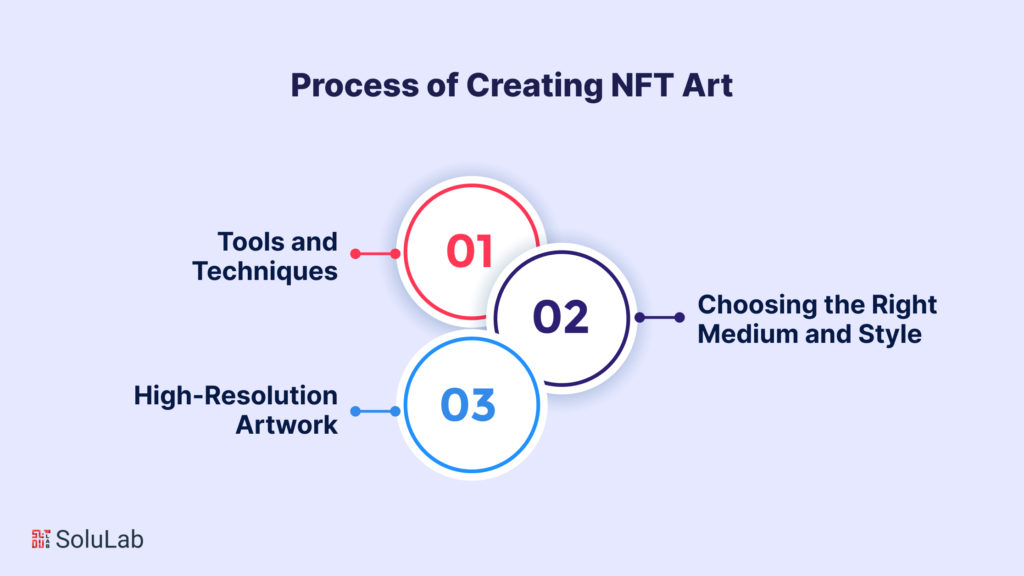
Process of Creating NFT Art
Now that we’ve demystified the concept of NFT art, let’s dive into the creative process. Creating NFT art isn’t limited to the digital elite; anyone with a passion for creativity can participate.
Tools and Techniques: To embark on your NFT art journey, you’ll need the right tools. Fortunately, there’s a wealth of user-friendly software and apps tailored for digital art creation. Programs like Adobe Photoshop, Procreate, or even free options like GIMP can help bring your vision to life. It’s all about finding the one that best suits your artistic style and preferences.
Choosing the Right Medium and Style: NFT art knows no bounds when it comes to medium and style. Whether you’re a painter, illustrator, 3D artist, or photographer, your skills can find a home in the digital realm. Experiment with various styles to discover what resonates most with your artistic identity. The diversity of NFT art is one of its strengths, offering something for every taste.
High-Resolution Artwork: A crucial aspect of NFT art is ensuring your creations are high-resolution. High-quality files are essential for presenting your art in the best possible light and ensuring potential buyers can appreciate the details. Plus, it’s a reflection of your commitment to delivering top-notch art to your collectors.
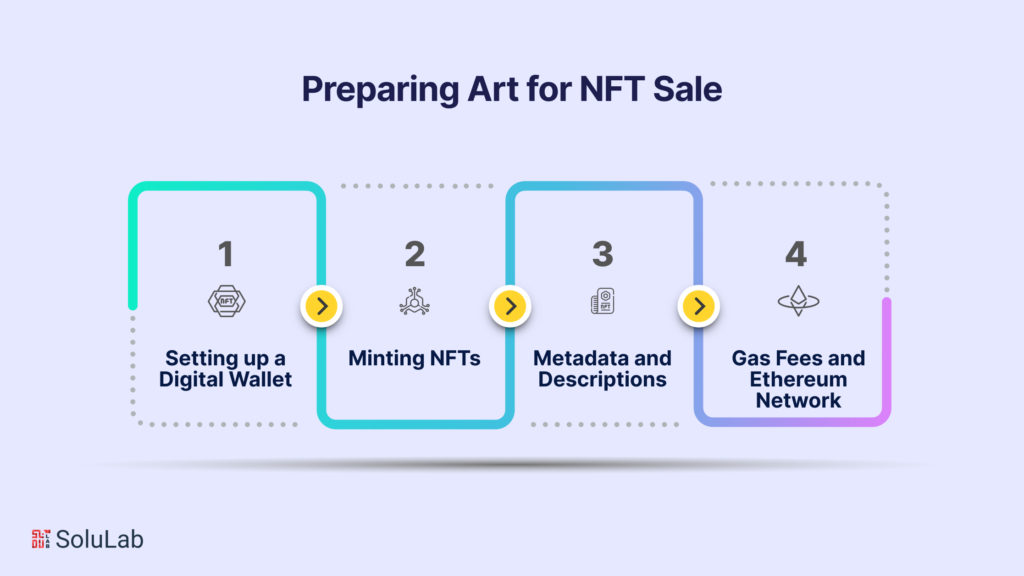
Preparing Your Art for NFT Sale
Now that you’ve ventured into the creative process of making digital art, it’s time to prepare your creations for sale as NFTs. This involves several crucial steps that ensure your artwork is ready to find its digital home.
Setting up a Digital Wallet: To engage with the world of NFTs, you’ll need a digital wallet. Think of it as your virtual art vault. Popular options include MetaMask and Trust Wallet. These wallets securely store your NFTs and enable you to interact with NFT marketplaces. Ensure you keep your wallet’s private keys safe; they are the keys to your digital kingdom.
Minting NFTs: Minting is the process of creating NFTs from your digital artwork. This process varies slightly depending on the NFT marketplace you choose, but the general steps involve uploading your art, adding metadata (more on this later), and confirming the minting process. It’s the moment your art becomes a unique digital asset on the blockchain.
Metadata and Descriptions: Metadata plays a crucial role in presenting your NFTs. It’s the digital backstory of your artwork. Describe your art, share your creative process, and provide any relevant information about the piece. A compelling story can captivate potential buyers, making your art more desirable.
Gas Fees and Ethereum Network: Before minting your NFTs, it’s essential to understand gas fees. These are transaction fees on the Ethereum network required for minting and transferring NFTs. Gas fees can fluctuate, so it’s a good practice to check current rates before proceeding. Some marketplaces may allow you to choose when to mint your NFTs to optimize costs.
NFT Art Platforms
With your NFTs minted and ready, it’s time to choose the right platform to showcase and sell your art. NFT marketplaces are where collectors discover and purchase NFTs, making it crucial to select the one that aligns with your artistic goals.
Overview of Popular Platforms: There’s a diverse landscape of NFT marketplaces, each with its unique features and audience. OpenSea, Rarible, Foundation, and Mintable are some of the most prominent names. Research these NFT marketplace platforms to find the best fit for your art. Consider factors like user base, fees, and user experience.
Creating an Artist Profile and Portfolio: Setting up your presence on an NFT marketplace is akin to curating your art gallery. Create a compelling artist profile that tells your story and showcases your portfolio. Use this space to connect with potential buyers and fellow artists, sharing your creative journey.
Remember, the NFT marketplace you choose can significantly impact your visibility and success. Take your time in making this decision, as it’s a pivotal step in your NFT art adventure.
Pricing and Marketing Your NFT Art
Now that your art is on display, it’s essential to understand how to price and market your NFTs effectively.
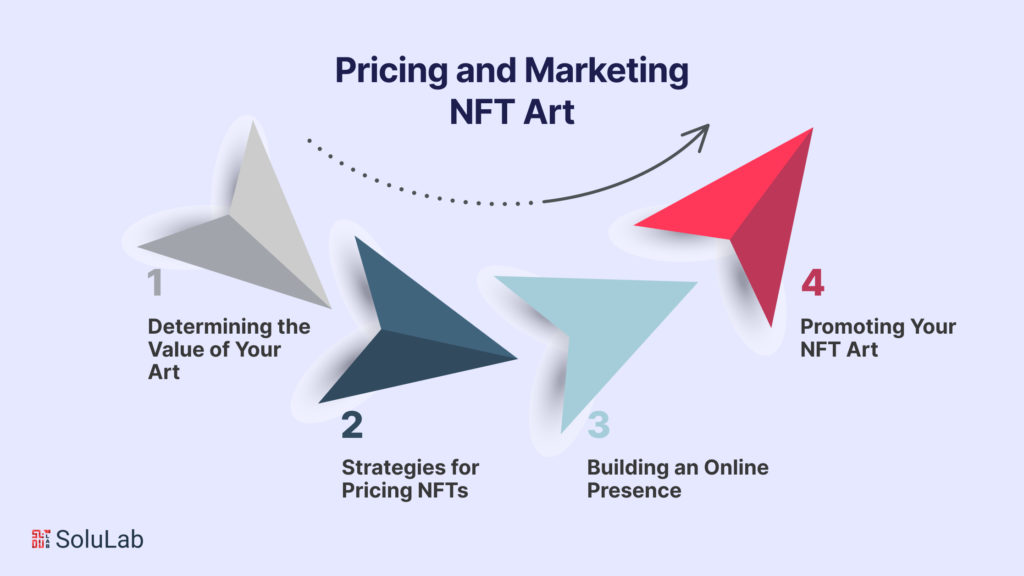
Determining the Value of Your Art: Pricing your NFTs can be a challenge. Factors like your reputation, demand for your art, and scarcity all play a role. Research similar artworks and engage with the community to gauge fair market value. Be open to adjusting prices as you gain experience.
Strategies for Pricing NFTs: There are various pricing strategies to consider, from fixed prices to auctions and reserve prices. Each has its advantages and suits different scenarios. Experiment and find the approach that aligns with your art and goals.
Building an Online Presence: In the digital art world, your online presence is your calling card. Actively engage on social media platforms, art forums, and NFT communities to connect with potential buyers and fellow artists. Share your artistic journey, behind-the-scenes glimpses, and insights into your creative process. Building a loyal following can significantly boost your NFT sales.
Promoting Your NFT Art: Effective promotion is essential. Use social media platforms like Twitter, Instagram, and TikTok to showcase your art. Participate in NFT-related discussions and engage with your audience authentically. Communities like Discord and Clubhouse can be excellent places to connect with art enthusiasts.
Selling Your NFT Art
Your NFT art is now out in the digital world, but selling NFT art for beginners effectively is an art in itself. This section will guide you through the process of selling your NFTs and ensuring a successful NFT art drop.
Tips for a Successful NFT Art Drop
Timing is crucial in the NFT world. Consider factors like market trends, events, and your audience when scheduling your NFT art drop. Engage with your community beforehand to generate excitement and anticipation. Provide clear instructions for potential buyers on how to participate.
Handling Auctions and Fixed-Price Listings: NFTs can be sold through auctions, fixed-price listings, or a combination of both. Auctions can create a sense of urgency and competition, while fixed-price listings offer stability. Experiment with different approaches to find what works best for your art.
Managing Royalties and Secondary Sales: One of the remarkable features of NFTs is the ability to earn royalties on secondary sales. When your art is resold, you can receive a percentage of the sale price. Make sure to set your desired royalty rate when minting your NFTs, and understand how different platforms handle royalties.
Navigating Legal and Ethical Considerations
As an NFT artist, it’s crucial to navigate legal and ethical considerations responsibly.
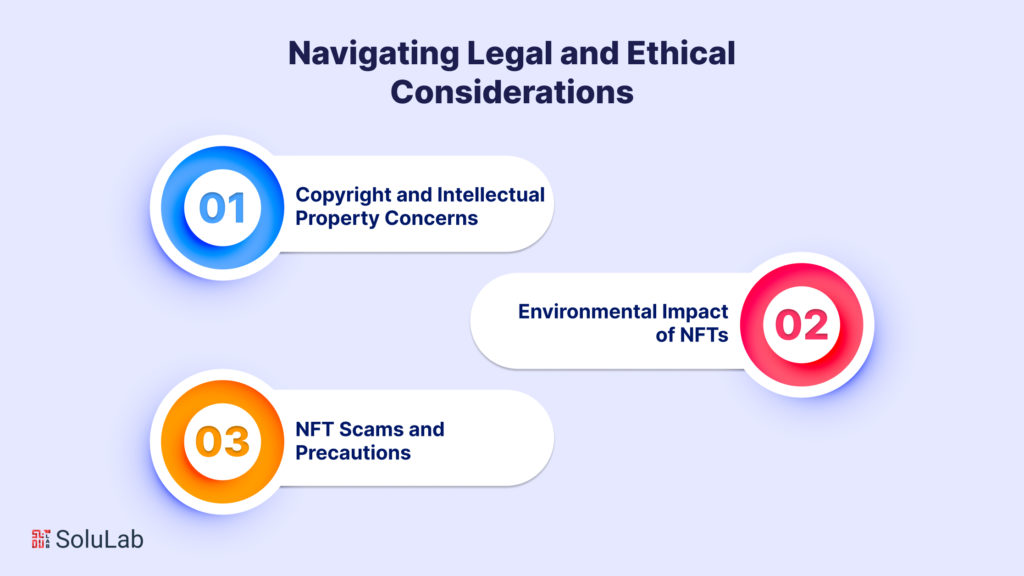
Copyright and Intellectual Property Concerns: Ensure that the art you mint as NFTs doesn’t infringe on any copyrights or intellectual property rights. If you’re using third-party content, obtain the necessary permissions and licenses. Respect the rights of other creators as you would want yours to be respected.
Environmental Impact of NFTs: The environmental impact of blockchain technology used in NFTs has raised concerns. Some blockchains, like Ethereum, consume significant energy. Consider eco-friendly blockchain alternatives, or offset your carbon footprint through initiatives like carbon credits to contribute positively to the environment.
NFT Scams and Precautions: Unfortunately, scams can occur in the NFT space. Be cautious when dealing with buyers, use reputable marketplaces, and verify the authenticity of the art and the identity of the seller. Staying informed and vigilant is your best defense against potential scams.
Conclusion
In closing, your journey into the world of NFT art has been an exploration of creativity, innovation, and community. You’ve learned how to make and sell NFT art, as well as navigate legal and ethical considerations. The White-label NFT marketplace development services space is dynamic and evolving, offering endless opportunities for artists like you.
SoluLab is a prominent technology company known for its expertise in blockchain technology and development services. With a solid track record of delivering innovative solutions, SoluLab plays a vital role in the evolving landscape of NFT art. Their proficiency in blockchain technology and smart contracts can be a valuable resource for artists and creators venturing into the NFT space. Whether you’re seeking to mint NFTs, explore eco-friendly blockchain alternatives, or need guidance on the technical aspects of NFT art, SoluLab’s experience and commitment to cutting-edge technology make them a potential partner in your NFT art journey. Their contribution to the blockchain ecosystem aligns with the transformative potential of NFTs for artists worldwide.
If you’re in search of top-notch NFT developers specializing in cryptocurrency and blockchain solutions, your quest ends here! Our team of seasoned NFT programmers offers premium NFT services, including blockchain and smart contract development for process automation. Our user-friendly yet advanced platform development, coupled with highly secure custom digital wallets, is tailored to your specific business requirements.
Obtain a fully customized white-label NFT art marketplace, complete with support for multiple blockchains. Facilitate seamless bidding and buying experiences for your art NFTs’ buyers. Contact SoluLab today to embark on your NFT journey with confidence.
FAQs
1. What exactly is an NFT, and how is it different from traditional digital art?
NFT stands for Non-Fungible Token, a type of digital asset that represents ownership or proof of authenticity of a unique item, in this case, digital art. Unlike traditional digital art, NFTs are indivisible and cannot be replicated or altered, making them a secure and traceable way to own and trade digital creations.
2. Do I need to be a professional artist to create and sell NFT art?
No, you don’t need to be a professional artist to get started with NFT art. NFT art welcomes creators of all levels, from beginners to seasoned artists. What matters most is your passion, creativity, and dedication to your craft. Experiment, learn, and grow as you engage with the NFT art community.
3. How do I protect my NFT art from copyright infringement or theft?
To protect your NFT art, ensure that you have the rights to use all elements within your artwork, or obtain the necessary permissions and licenses for third-party content. Additionally, consider using watermarks or low-resolution previews when sharing your art online to deter unauthorized use. It’s also important to document your creative process and ownership history.
4. Are there any eco-friendly alternatives to blockchain platforms with high energy consumption for minting NFTs?
Yes, there are eco-friendly blockchain platforms, such as Tezos and Flow, that have lower energy consumption compared to Ethereum. These platforms have gained popularity among artists concerned about the environmental impact of NFTs. Research and choose a blockchain that aligns with your values and sustainability goals.
5. How can I promote my NFT art effectively and build a following in the NFT community?
Effective promotion of your NFT art involves engaging with the NFT community and showcasing your work on social media platforms like Twitter, Instagram, and TikTok. Participate in relevant forums, Discord communities, and Clubhouse discussions. Building a strong online presence, being authentic, and interacting with potential buyers and fellow artists can help you grow your following.