Talk to an Expert

ICO vs. STO: What’s the Difference?


ICO vs. STO: What’s the Difference?

Initial Coin Offerings (ICOs) and Security Token Offerings (STOs) have made significant waves in the world of fundraising and investment within the blockchain and cryptocurrency industry. However, these two fundraising methods differ significantly in their nature, regulatory aspects, and potential benefits. 

In this blog post, we’ll delve into the distinctions between ICOs and STOs, exploring their characteristics, advantages, and drawbacks. Understanding these differences is crucial for entrepreneurs, investors, and blockchain enthusiasts to make informed decisions in the evolving crypto landscape.

What is ICO (Initial Coin Offering)?

ICOs are fundraising events where cryptocurrency tokens are issued to investors in exchange for capital. The primary purpose of ICOs is to raise funds for new blockchain projects or decentralized applications (DApps). These tokens typically represent future access to the project’s products or services.

ICOs gained immense popularity around 2017, with projects like Ethereum, EOS, and Tezos raising substantial amounts through token sales. These events often attracted global attention and investment due to the potential for high returns.

ICOs offer several advantages, including accessibility for a wide range of investors, quick fundraising, and potential for exponential growth. However, they are also associated with significant drawbacks, such as a lack of regulatory oversight, potential scams, and volatility in token prices.

ICOs have faced increasing regulatory scrutiny in various countries, leading to legal challenges and restrictions. Governments have been concerned about fraudulent projects and the need to protect investors.

What is STO (Security Token Offering)?

STOs, on the other hand, are a more regulated and secure method of fundraising. They involve issuing tokens that are backed by real-world assets, such as equity in a company, real estate, or commodities. STOs are designed to comply with existing securities regulations.

Several successful STOs have demonstrated the viability of this fundraising method. Projects in real estate, art, and venture capital have used STOs to tokenize assets and offer fractional ownership.

STOs offer advantages such as improved investor protection, transparency, and compliance with legal frameworks. However, they also require more regulatory compliance, which can be costly and time-consuming for issuers.
Difference between ICO and STO

Difference between ICO and STO

STOs differ from ICOs in several crucial ways. Firstly, STOs are security offerings, subject to securities regulations, while ICOs are often utility token sales. Secondly, STOs are typically backed by tangible assets, providing investors with more security and potential for dividends or profit-sharing.

Key Differences Between ICOs and STOs

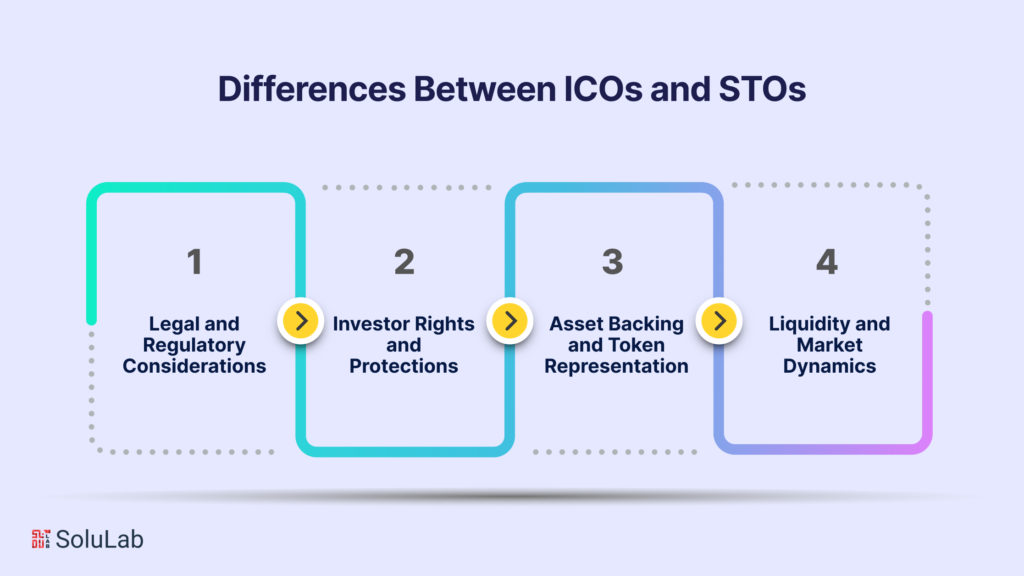
Initial Coin Offerings (ICOs) and Security Token Offerings (STOs) are both methods of raising capital in the cryptocurrency and blockchain space. However, they have distinct differences in terms of their nature, regulation, and purpose. Here are the key differences between ICOs and STOs:

Read Blog Post: 10 Best Defi Exchanges 2024

1. Legal and Regulatory Considerations

  • ICOs often operate in a legal grey area, while STOs are subject to securities regulations.
  • ICOs may face legal consequences for non-compliance with securities laws.

2. Investor Rights and Protections

  • STO investors typically have more rights and protections, such as ownership shares and potential dividends.
  • ICO investors often have limited rights and rely on the project’s success for returns.

CTA1

3. Asset Backing and Token Representation

  • ICO tokens may not necessarily be backed by tangible assets or represent ownership.
  • STO tokens are backed by real assets, offering a clear value proposition to investors.

4. Liquidity and Market Dynamics

  • ICO tokens often trade on cryptocurrency exchanges, which can lead to extreme price volatility.
  • STO tokens may have a more stable price due to their asset-backed nature, but liquidity can be lower.

What to Choose: ICO or STO?

What to Choose: ICO or STO?

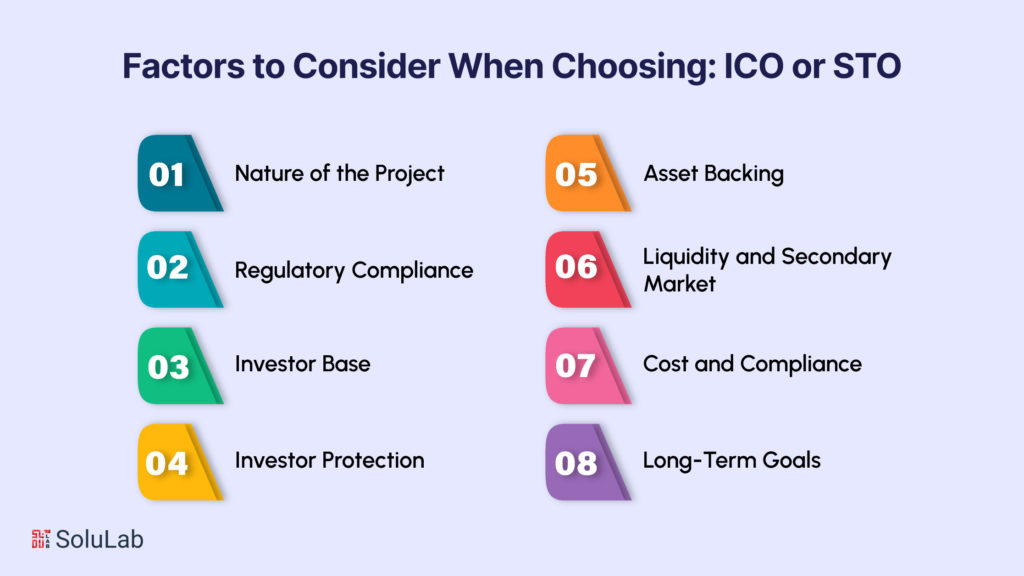
Choosing between an Initial Coin Offering (ICO) and a Security Token Offering (STO) depends on several factors, including the nature of your project, regulatory considerations, and your target audience. Here are some key factors to consider when deciding which fundraising method to choose:

1. Nature of the Project

  • If your project involves a utility token that provides access to a specific product or service within your platform (e.g., a decentralized application or ecosystem), an ICO development may be suitable.
  • If your project involves asset-backed tokens, such as company equity, real estate, or revenue-sharing, and you want to comply with securities regulations, an STO is more appropriate.

Read Also: 7 Most Successful ICOs of All Time

2. Regulatory Compliance

  • Consider the regulatory environment in your jurisdiction and the jurisdictions of your potential investors. STOs are typically subject to securities regulations, which can be complex and vary from country to country. Ensure you have legal counsel to navigate these regulations.
  • ICOs may have fewer regulatory requirements but could still face legal scrutiny in some jurisdictions.

3. Investor Base

  • Determine your target investor base. If you want to attract a broad and global audience of retail investors, an ICO may be more suitable.
  • If you are targeting accredited or institutional investors who are comfortable with regulatory compliance, an STO may be the better choice.

4. Investor Protection

  • If you prioritize strong investor protection and transparency, an STO is more likely to provide these features due to securities regulations.
  • ICOs have historically been associated with a higher risk of fraud and less legal protection for investors.

5. Asset Backing

  • Consider whether your project involves tangible assets or revenue streams that can back your tokens. If so, an STO can provide a direct link between the tokens and the underlying assets.
  • If your tokens are primarily utility-based and don’t represent ownership or assets, an ICO may be more appropriate.

6. Liquidity and Secondary Market

  • Evaluate how you plan to provide liquidity to your investors. Security tokens are typically designed to be more liquid, potentially allowing trading on traditional securities exchanges.
  • ICO tokens may face liquidity challenges and may not be listed on major exchanges.

Read Also: How To Write A Compelling ICO Whitepaper That Actually Sells?

7. Cost and Compliance

  • Be aware that conducting an STO can be more expensive and time-consuming due to regulatory compliance requirements, legal fees, and the need for thorough due diligence.
  • ICOs may have lower upfront costs, but they may require significant marketing efforts to attract investors.

8. Long-Term Goals

  • Consider your long-term goals for the project. STOs may offer a more structured path to traditional financial markets and long-term sustainability.
  • ICOs may provide more flexibility but can also be riskier and less predictable in terms of future outcomes.

Check Out Our Blog: Top 25 Smart Contract Companies To Look For in 2024

Future Trends and Developments

The crypto fundraising landscape continues to evolve, and several trends are shaping the future of ICOs and STOs:

1. Hybrid Models: Some projects are exploring hybrid models that combine elements of ICOs and STOs to strike a balance between fundraising and regulatory compliance.

2. Secondary Markets: The development of secondary trading platforms for security tokens could improve liquidity and provide investors with more options for buying and selling tokens.

3. Regulatory Clarity: As regulatory frameworks become more defined, the crypto industry may see increased participation from traditional financial institutions and mainstream investors.
Blockchain and the Future of ICOs and STOs

Blockchain and the Future of ICOs and STOs

Understanding these blockchain trends and their potential impact on ICOs and STOs is essential for stakeholders in the crypto fundraising space. As the technology matures, we can anticipate exciting developments that will shape the future of token offerings and the broader blockchain industry.

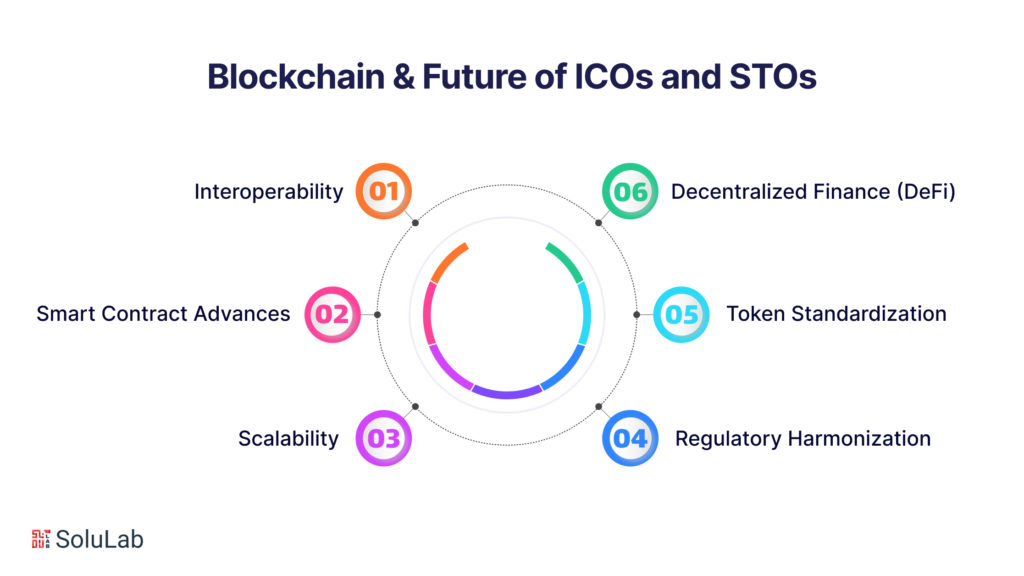
Blockchain technology continues to evolve, presenting opportunities and challenges for ICOs and STOs. As the underlying technology for both fundraising methods, the future of blockchain plays a pivotal role in shaping their trajectories.

1. Interoperability: Interoperability between different blockchain networks is becoming a key focus. This will allow assets from one blockchain to be traded on another, potentially increasing liquidity for tokens from both ICOs and STOs.

Read Blog Post: Top 10 STO Development Companies in 2024

2. Smart Contract Advances: Smart contracts are at the heart of ICOs and STOs. As blockchain technology matures, we can expect more advanced and secure smart contract platforms, reducing the risk of contract vulnerabilities.

3. Scalability: Scalability issues have plagued blockchain networks, affecting transaction speeds and costs. Solving these issues will enhance the efficiency of token offerings, making them more accessible and cost-effective.

4. Regulatory Harmonization: The crypto industry seeks harmonization of regulatory frameworks globally. A cohesive approach to regulation could reduce uncertainty and promote a more favorable environment for both ICOs and STOs.

5. Token Standardization: Standardisation of token types can simplify the token creation process and enhance interoperability. Ethereum’s ERC-20 and ERC-1400 standards are examples of how standardization can facilitate token issuance.

6. Decentralized Finance (DeFi): DeFi platforms have gained traction, offering new opportunities for fundraising and investment. DeFi projects are increasingly exploring ICO and STO models within their ecosystems.

CTA2

Concluding Remarks

In conclusion, comprehending the distinctions between Initial Coin Offerings (ICOs) and Security Token Offerings (STOs) is crucial within the blockchain and cryptocurrency arena. ICOs once celebrated for their rapid fundraising potential, faced regulatory uncertainties and concerns about investor safeguarding. Conversely, STOs have emerged as a more regulated and secure fundraising approach, offering investors tangible asset-backed ownership and compliance with securities laws, which has garnered institutional interest and bolstered trust in the crypto fundraising landscape.

Looking forward, expect to witness the emergence of hybrid fundraising models blending ICO and STO elements, the growth of secondary markets to enhance token liquidity, and increasing regulatory clarity. As blockchain technology matures, the crypto fundraising landscape will continually adapt, providing innovative opportunities. For entrepreneurs and investors, a deep understanding of these distinctions will serve as a compass in navigating the dynamic world of ICOs and STOs successfully. Whether you’re seeking capital or investment opportunities, staying informed and compliant will be paramount in this evolving blockchain ecosystem protocol.

SoluLab is a prominent company in the blockchain technology and software development sector, offering expertise in various industries, including decentralized finance, supply chain management, and healthcare. SoluLab has earned a reputation for delivering innovative blockchain solutions. In the context of ICOs and STOs, SoluLab provides crucial technical support and development services. They assist startups and enterprises in launching ICOs and STOs by offering secure smart contract development and wallet creation while ensuring compliance with regulatory frameworks, which is particularly vital for STOs. SoluLab serves as a valuable partner for those navigating the complex landscape of blockchain-based fundraising, offering ICO development services and STO development services, all while adhering to regulatory standards. Contact SoluLab today to explore their comprehensive blockchain solutions.

FAQs

1. What is the primary difference between an ICO and an STO?

An ICO (Initial Coin Offering) is a fundraising method where cryptocurrency tokens are issued, often as utility tokens, without direct ownership rights. In contrast, an STO (Security Token Offering) involves the issuance of tokens backed by real-world assets, such as equity or property, offering investors ownership rights and potential dividends.

2. Why are ICOs often associated with regulatory challenges?

ICOs have faced regulatory challenges due to their lack of compliance with securities laws in many jurisdictions. This lack of oversight has raised concerns about investor protection, leading to increased regulatory scrutiny.

3. What are the benefits of participating in an STO for investors?

Investors in STOs typically gain ownership rights in the underlying asset, such as shares in a company or real estate. This can provide more security and the potential for dividends or profit-sharing, making STOs appealing to those seeking traditional investment features.

4. Are ICOs still a viable fundraising method in today’s regulatory landscape?

ICOs have evolved in response to regulatory challenges. Some projects conduct compliant ICOs, while others opt for alternative fundraising methods like STOs. The viability of an ICO development company depends on the project’s nature and its ability to navigate regulatory requirements.

5. How do secondary markets impact the liquidity of security tokens from STOs?

Secondary markets, such as security token exchanges, can significantly impact the liquidity of tokens from STOs. They provide a platform for investors to buy and sell security tokens, potentially increasing liquidity and tradability compared to traditional assets.

6. What trends can we expect in the ICO and STO space shortly?

The future of ICOs and STOs will likely see increased regulatory clarity, hybrid fundraising models, and the integration of blockchain technology into traditional financial systems. Institutional involvement and a focus on compliance are also expected to shape the industry’s direction.

ICO Vs IPO: What’s the Difference?

ICO Vs IPO

In the little time that cryptocurrencies have existed, many new concepts and procedures have been brought to us, such as decentralization, coins, tokens, altcoins, etc. The Initial Coin Offering, or ICO, is one such procedure that has been made possible by the cryptocurrency revolution.

An initial coin offering (ICO) is a crowdfunding technique used by companies offering decentralized goods and services and running on an irreversible distributed ledger. To finance the project’s development, digital currencies or tokens must be created and sold.

IPOs are another procedure in the crypto industry. An investor receives stocks or shares in return for their investment during an IPO. A private firm can expand and become public by initiating the Initial Public Offering (IPO), a well-defined and documented procedure. Throughout the procedure, there are some formalities. The term “IPO” refers to a company’s shares being sold to the general public with the intention of raising money for development.

Although these pathways denote different ways for businesses to acquire capital, they have quite different internal workings, benefits, and possible drawbacks. In this blog, we will discuss an extensive comparison of Initial Coin Offering vs Initial Public Offering with an emphasis on the important differences to help you make informed investing choices.

What is ICO and How Does it Work?

Let’s get to know what is ICO and how does it work. An Initial Coin Offering (ICO) is a fundraising mechanism primarily used by startups and companies in the cryptocurrency and blockchain space. It allows these entities to raise capital by offering digital tokens or coins to investors, typically in exchange for established cryptocurrencies like Bitcoin or Ethereum, or sometimes fiat currency.

An ICO is similar to an Initial Public Offering (IPO) in the stock market, but instead of offering shares in a company, an ICO offers digital tokens. These tokens may represent various things, such as a stake in a blockchain project, a right to use a particular service or access to a decentralized application.

The process of an ICO generally involves the following steps:

1. Announcement and Whitepaper: The company or project team announces the ICO and releases a whitepaper. This document outlines the project’s goals, technology, business plan, team, and how the funds will be used. It also details the technical specifications of the token being offered.

2. Pre-ICO Stage: Pre-ICO stages are held by some ventures in order to generate early capital and publicity. This phase often offers tokens at a discounted rate to early investors.

3. Token Sale: During the main ICO event, tokens are offered to investors. The sale can last from a few days to several weeks. Investors participate by sending their funds (usually in cryptocurrencies) to a designated address provided by the ICO organizers.

4. Token Distribution: Once the ICO concludes, the tokens are distributed to the investors’ wallets. These tokens can be used within the project’s ecosystem or traded on cryptocurrency exchanges if they gain listing approval.

5. Post-ICO Development: The raised funds are used to develop the project as per the roadmap. Successful projects often see their tokens appreciated in value if they deliver on their promises and achieve significant milestones.

Benefits of ICO

Benefits of ICO

Initial Coin Offerings (ICOs) have gained popularity as a novel fundraising mechanism in the digital age, particularly within the cryptocurrency and blockchain industries. Here are some of the key benefits of ICOs:

1. Access to Capital

  • Global Reach: ICOs provide startups and emerging projects access to a global pool of investors. Traditional fundraising methods are often limited by geographical and regulatory barriers, but ICOs leverage the borderless nature of cryptocurrencies to attract investments from around the world.
  • Ease of Fundraising: The process of launching an ICO can be simpler and faster compared to conventional methods like venture capital or bank loans. With the right team and a compelling whitepaper, projects can raise significant amounts of capital in a relatively short period.

2. Community Building and Engagement

  • Early Community Involvement: ICOs help in building a strong community of supporters and users right from the start. Investors who participate in an ICO often become advocates for the project, contributing to its promotion and adoption.
  • Incentivized Participation: By offering tokens, projects incentivize early adopters and investors to participate in the ecosystem. These tokens can grant holders various rights within the platform, such as governance, access to services, or profit-sharing.

3. Liquidity and Trading

  • Tradable Tokens: Unlike traditional equity, which might be locked up for extended periods, tokens from an ICO can often be traded on cryptocurrency exchanges soon after the ICO concludes. Investors can use this liquidity for trading or for selling their tokens on secondary marketplaces.
  • Market-Driven Valuation: The value of tokens can fluctuate based on market demand and the project’s performance, providing opportunities for investors to realize gains if the project succeeds and gains traction.

4. Innovation and Disruption

  • Encourages Innovation: ICOs have enabled a wave of innovation in the blockchain and cryptocurrency space. By providing a new avenue for fundraising, ICOs empower startups to pursue ambitious projects that might not have received funding through traditional means.
  • Disruptive Potential: Through democratizing the availability of investment possibilities, initial coin offerings (ICOs) have the potential to upend established financial systems. This decentralization can lead to more diverse and inclusive funding environments.

5. Lower Barriers to Entry

  • Reduced Financial Intermediaries: ICOs eliminate the need for many financial intermediaries, such as investment banks and brokers. The fundraising process may be made more efficient and less expensive by cutting out intermediaries.
  • Accessibility for Small Investors: Traditional investment opportunities often require significant capital, which can exclude small investors. ICOs, on the other hand, typically allow participation with relatively small amounts of cryptocurrency, making it accessible to a broader audience.

6. Transparency and Accountability

  • Transparent Process: The use of blockchain technology ensures that all transactions related to the ICO are recorded on a public ledger. This transparency can increase trust among investors, as they can verify the allocation and use of funds.
  • Smart Contracts: Many ICOs utilize smart contracts to automate and enforce the terms of the token sale. This can include aspects like fund distribution, token issuance, and governance, enhancing accountability and reducing the risk of fraud.

7. Flexibility in Fund Utilization

  • Flexible Funding Structures: ICOs allow projects to structure their fundraising in various ways. This could include setting hard and soft caps, conducting multiple funding rounds, or even having continuous token sales.
  • Funds for Development: The capital raised through an ICO can be used directly for project development, marketing, and operational costs, enabling startups to focus on growth and innovation.

CTA1

Risks Associated with ICO

While Initial Coin Offerings (ICOs) offer numerous benefits, they also come with significant risks that potential investors and project creators should carefully consider. Here are the primary risks associated with ICOs:

1. Regulatory Uncertainty

  • Lack of Clear Regulations: The legal status of ICOs varies widely across different jurisdictions. Some countries have clear regulations, while others have yet to establish a legal framework. This uncertainty can lead to sudden changes in the regulatory environment, potentially impacting the viability and legality of a project.
  • Risk of Regulatory Action: Governments and regulatory bodies may impose restrictions, fines, or even bans on ICO activities. This can result in the suspension of a project, loss of investor funds, or legal repercussions for the project team.

2. Fraud and Scams

  • Prevalence of Scams: The ICO space has seen numerous fraudulent schemes where unscrupulous individuals or groups launch fake projects with no intention of delivering a product or service. Investors may suffer large financial losses as a result of these methods.
  • Lack of Accountability: In many cases, the anonymity of the blockchain and the global nature of ICOs make it challenging to hold scammers accountable. Investors may find it difficult to recover their funds or pursue legal action against fraudulent actors.

3. Market Volatility

  • Price Fluctuations: The value of tokens issued through an ICO can be highly volatile. Market conditions, investor sentiment, and project developments can cause significant price swings, leading to potential losses for investors.
  • Speculative Nature: Many ICOs attract speculative investors looking for quick gains. This speculation can lead to artificial price inflation during the ICO and subsequent sharp declines once the tokens start trading on exchanges.

4. Technical Risks

  • Smart Contract Vulnerabilities: ICOs often rely on smart contracts to automate various processes, including token issuance and fund distribution. However, smart contracts are not immune to bugs or vulnerabilities. Exploits can result in loss of funds or other unintended consequences.
  • Technical Failures: The underlying technology of an ICO project may encounter technical failures, delays, or scalability issues. Such problems can hinder the project’s progress and affect the value of the tokens.

5. Project Risks

  • Team Competence: The success of an ICO largely depends on the competence and reliability of the project team. If the team lacks the necessary skills, experience, or commitment, the project may fail to deliver on its promises.
  • Unproven Business Models: Many ICO projects are based on innovative but untested business models. There is a risk that the project may not achieve market adoption, fail to generate revenue, or become obsolete due to technological advancements.

6. Security Risks

  • Cyber Attacks: ICOs are prime targets for cyber attacks, including hacking, phishing, and distributed denial-of-service (DDoS) attacks. These attacks can compromise the security of the project, leading to loss of funds and data breaches.
  • Wallet Vulnerabilities: Investors must use secure wallets to store their tokens. Vulnerabilities in wallet software or poor security practices can result in the loss of tokens through hacking or theft.

7. Liquidity Risks

  • Low Liquidity: Not all tokens issued through ICOs get listed on major cryptocurrency exchanges. Even if listed, some tokens may suffer from low trading volumes, making it difficult for investors to buy or sell significant amounts without impacting the market price.
  • Exit Scams: Some projects may perform well initially but later engage in “exit scams,” where the project creators abandon the project and disappear with the remaining funds, leaving investors with worthless tokens.

8. Legal and Compliance Risks

  • Intellectual Property Issues: Projects might face legal challenges related to intellectual property, such as patent infringement or trademark disputes. These legal battles can drain resources and hinder project progress.
  • Compliance with Securities Laws: Depending on the jurisdiction, tokens issued in an ICO may be classified as securities. Failure to comply with securities laws can result in legal action against the project and its founders and potential financial penalties.

While an ICO platform presents exciting opportunities, they are fraught with risks that can lead to significant financial losses and legal challenges. Investors and project creators must perform thorough due diligence, and assess the risks to solve the complexities of the ICO ecosystem safely.

Now, we shall discuss the IPO meaning or Initial Public Offering in more details.

What is an Initial Public Offering?

An initial public offering (IPO) is the procedure by which a private firm first makes its shares available to the general public. This event transforms the company from a privately held entity into a publicly traded one, allowing it to raise capital from public investors.

How Does an IPO Work?

An Initial Public Offering (IPO) is a complex process that involves a company offering its stocks to the public for the first time. This process of initial public offering stocks includes selecting underwriters, conducting due diligence, obtaining regulatory approval, marketing the offering, setting the IPO price, and finally listing the stocks on a public exchange. Here is a detailed breakdown of how an IPO works:

1. Preparation and Planning

  • Selection of Underwriters: The company selects investment banks, known as underwriters, to manage the IPO process. These underwriters play a crucial role in setting the IPO price, buying the shares from the company, and selling them to the public.
  • Due Diligence and Documentation: The company and its underwriters conduct thorough due diligence to ensure all financial statements and business information are accurate and compliant with regulatory standards. This phase involves preparing key documents like the registration statement and the prospectus.

2. Regulatory Approval

  • Filing with Regulatory Bodies: In the United States, the company must file a registration statement with the Securities and Exchange Commission (SEC). This document provides detailed information about the company’s financial performance, business model, risks, and management.
  • SEC Review: The SEC reviews the registration statement to ensure it complies with legal and regulatory requirements. The company may need to respond to SEC comments and make necessary revisions.

3. Marketing and Roadshow

  • Investor Roadshow: The company and its underwriters conduct a roadshow, presenting the business to potential investors across different locations. This marketing effort aims to generate interest and demand for the shares.
  • Book Building: During the roadshow, underwriters collect non-binding indications of interest from institutional investors, helping to gauge the appropriate IPO price and demand.

4. Pricing and Allocation

  • Setting the IPO Price: Based on investor feedback and market conditions, the underwriters and the company determine the final IPO price. This price is typically set just before the shares are issued.
  • Allocating Shares: Shares are allocated to institutional and retail investors. Institutional investors, such as mutual funds and pension funds, often receive a significant portion of the shares due to their large investment capacity.

5. Going Public

  • Listing on the Exchange: On the IPO day, the company’s shares are listed on a public stock exchange, and trading begins. The performance of the shares on the first day of trading can vary widely, depending on market sentiment and investor interest.

Benefits of IPO

An Initial Public Offering (IPO) marks a significant milestone for a company, transforming it from a private entity to a publicly traded one. This process offers a range of benefits, providing both immediate and long-term advantages. Here are some of the key benefits of Initial Public Offerings:

1. Access to Capital

  • Increased Funding: One of the primary advantages of an IPO is the ability to raise substantial capital by selling shares to the public. This influx of funds can be used for various purposes such as expanding operations, investing in research and development, and paying off existing debt.
  • Diversified Investor Base: By going public, companies can attract a diverse group of investors, including institutional investors, retail investors, and mutual funds. This diversified investor base can provide more stability and financial backing for future growth.

2. Enhanced Public Profile and Credibility

  • Increased Visibility: Listing on a public stock exchange significantly raises the company’s profile. The media coverage and analyst attention that accompany an IPO can increase brand recognition and market presence, attracting customers and business partners.
  • Credibility and Trust: Being a publicly traded company often enhances credibility with customers, suppliers, and potential investors. The rigorous regulatory and financial scrutiny that comes with an IPO reassures stakeholders of the company’s transparency and reliability.

3. Liquidity for Shareholders

  • Market Liquidity: An IPO provides liquidity for existing shareholders, such as founders, early employees, and private investors. These stakeholders can sell their shares on the open market, realizing returns on their initial investments.
  • Employee Incentives: Publicly traded shares can be used as part of employee compensation packages, such as stock options or equity grants. This can be a powerful tool for attracting and retaining top talent by aligning employee interests with the company’s success.

4. Growth and Expansion Opportunities

  • Acquisition Currency: Publicly traded shares can be used as currency for acquisitions, allowing the company to grow inorganically by purchasing other businesses. This strategy can be particularly effective for entering new markets or acquiring new technologies.
  • Leverage for Future Financing: A successful IPO can make it easier for a company to secure additional financing in the future. Public companies often have better access to capital markets and can issue additional shares or debt at more favorable terms.

5. Market Valuation and Benchmarking

  • Market Valuation: An IPO provides a market-driven valuation of the company. This can help in setting benchmarks for performance and in comparing with competitors in the same industry.
  • Stock-Based Compensation: The ability to offer stock-based compensation can align the interests of management and employees with those of shareholders, incentivizing them to work towards enhancing shareholder value.

Risks Associated with IPO

Risks Associated with IPO

While Initial Public Offerings (IPOs) offer significant benefits, they also come with a range of risks that companies and investors must carefully consider. Understanding these IPO risks is crucial for making informed decisions about participating in or conducting an IPO. Here are some of the key risks associated with IPOs:

1. Regulatory and Compliance Risks

  • Regulatory Scrutiny: Going public subjects a company to intense regulatory scrutiny. Compliance with the rules and regulations of securities commissions, such as the SEC in the United States, requires ongoing disclosure of financial and operational information. This can be costly and time-consuming.
  • Legal Risks: Public companies are more susceptible to legal actions, including shareholder lawsuits and regulatory investigations. The increased visibility and higher standards of accountability can lead to more frequent legal challenges.

2. Market Risks

  • Market Volatility: The stock market can be highly volatile. The price of a company’s shares can fluctuate significantly due to market conditions, economic factors, and investor sentiment. This volatility can impact the company’s market valuation and make it challenging to maintain a stable stock price.
  • Underperformance: There is a risk that the company’s shares may underperform post-IPO. If the market perceives that the company has not met its growth expectations or if there are broader market downturns, the stock price can decline, leading to potential financial losses for investors.

3. Financial and Operational Risks

  • High Costs: The IPO process is expensive. Costs include underwriting fees, legal and accounting expenses, and the ongoing costs of compliance and reporting. These expenses can be a significant financial burden, especially for smaller companies.
  • Short-Term Focus: Public companies often face pressure to meet quarterly earnings expectations. This can lead to short-term decision-making that prioritizes immediate financial performance over long-term strategic goals, potentially harming the company’s overall health and growth.

4. Dilution of Ownership

  • Ownership Dilution: Issuing new shares to the public dilutes the ownership percentage of existing shareholders. Founders and early investors may lose some control over the company, which can lead to changes in the strategic direction that may not align with their original vision.
  • Potential Loss of Control: With public ownership comes the possibility of hostile takeovers or significant influence from large institutional investors. This can lead to a shift in control and management, which may not always be in the best interest of the original founders or management team.

5. Increased Transparency and Disclosure

  • Mandatory Disclosures: Public companies must regularly disclose detailed financial and operational information, including quarterly earnings, executive compensation, and strategic plans. This transparency can be beneficial but also exposes the company to greater scrutiny and competitive disadvantage.
  • Loss of Privacy: The requirement for transparency can lead to a loss of privacy regarding company operations and strategies. Competitors can gain insights into the company’s business plans and financial health, potentially using this information to their advantage.

6. Investor Relations and Market Perception

  • Managing Investor Expectations: Public companies must manage relationships with a diverse group of shareholders, including institutional and retail investors. Meeting the expectations of these stakeholders can be challenging and time-consuming.
  • Reputation Risk: Negative news or perceptions can quickly impact the company’s stock price and reputation. Public companies are more vulnerable to media scrutiny and market rumors, which can affect investor confidence and company valuation.

Difference Between ICO and IPO

Both initial public offerings (IPOs) and initial coin offerings (ICOs) are profitable ways for recently founded businesses to raise capital when the public contributes money in return for anything. But what the investor gets in return for money is one of the biggest distinctions between the two. Accredited investors have the right to voting power over the firm and equity (a company’s assets less its liabilities) in the event of an initial public offering (IPO). During an initial coin offering (ICO), a regular investor will be able to claim ownership and use of the token that is created, but they will not be able to vote or possess any shares in the underlying firm. Here are a few significant differences between IPO vs ICO.

1. Stage

Usually, an ICO takes place fairly early on in the life of the business or initiative. It frequently needs working cash before it has any functioning goods or services in order to develop an untested concept or idea. Because of this, ICOs should expect a higher return on investment than IPOs because they are riskier. IPOs, on the other hand, take place later in a company’s growth. They frequently already have a working product that is profitable and just needs long-term funding and development instead of working capital.

2. Regulation

Regulation is another significant distinction between an IPO and an ICO. Whereas initial public offerings (IPOs) are heavily controlled by government regulatory bodies like the Securities and Exchange Commission, initial coin offerings (ICOs) are primarily self-regulated through smart contracts on the blockchain. Thus, investing in IPOs as opposed to ICOs is often safer. IPO scams have, nonetheless, occurred in the past. Regulatory compliance does not guarantee investor safety; as a stakeholder, you should exercise vigilance and conduct thorough research.

3. Conditions for Listing

An initial coin offering (ICO) can start even if the underlying cryptocurrency isn’t listed on any exchanges. It means that although investors can participate in an initial coin offering (ICO), they will not be able to sell their tokens if they are not listed on any exchange. IPOs, however, are required to have their shares listed on an exchange prior to the offering. This guarantees the two will work together and provides comfort to the investor.

4. Recipients (Intermediaries)

By eliminating the need for intermediaries (exchanges, brokerages, underwriters, regulators, etc.), ICOs have been able to run significantly more effectively than IPOs. An ICO may therefore be significantly more profitable, which is advantageous to both the company or project holding the ICO and the investor. In contrast, IPOs have to pay up to 4% to brokers and other fees to the intermediaries involved.

5. Distribution

The distribution of money is one area where a lot of initial coin offerings have fallen short of initial public offerings. Because “whales” purchase the majority of the coins, for example, certain initial coin offerings (ICOs) distribute their cryptocurrency tokens unfairly and enable market manipulation. IPOs, on the other hand, distribute their shares using a variety of workable strategies that have regulatory approval and guarantee an equitable distribution of asset shares.

6. Category of Investors

Investors who wish to take part in an IPO must adhere to and fulfill the stringent guidelines set out by brokers and authorities. This entails abiding by the rules for AML (anti-money laundering) and KYC (know your customer). However, a lot of initial coin offerings (ICOs) have no prerequisites, so anybody with an internet connection may take part. Recent ICOs do appear to be altering this, though, and upcoming legislation is driving these demands.

Conclusion

In summary, while both Initial Coin Offerings (ICOs) and Initial Public Offerings (IPOs) serve as fundraising mechanisms, they cater to different markets and come with their own unique sets of advantages and disadvantages. ICOs are innovative and accessible, leveraging blockchain technology to democratize access to capital. However, they often face regulatory uncertainty and higher risks of fraud. On the other hand, IPOs provide established regulatory oversight and access to significant capital but involve extensive regulatory compliance and substantial costs. Understanding these differences is crucial for companies and investors to choose the right path for their funding needs.

Both ICOs and IPOs present challenges that require careful navigation. ICOs face issues such as regulatory scrutiny, security vulnerabilities, and market volatility, while IPOs deal with high costs, regulatory burdens, and the pressure of market performance. Future trends in ICOs and IPOs suggest an evolving landscape with increasing regulatory clarity and technological advancements. SoluLab can help you solve these complexities with our expertise in ICO technology and financial regulations. Whether you’re considering an ICO or an IPO, we offer comprehensive support to ensure a successful fundraising journey. Contact us to learn more about how we can assist you in achieving your funding goals.

FAQs

1. What is the primary difference between an ICO and an IPO?

The primary difference between an Initial Coin Offering (ICO) and an Initial Public Offering (IPO) lies in the type of asset being offered and the regulatory environment. An ICO involves selling digital tokens or coins, often used within a blockchain-based platform or project, while an IPO involves selling shares of a company to the public on a stock exchange. ICOs are typically less regulated and accessible globally, whereas IPOs are heavily regulated by financial authorities.

2. What are the main advantages of an ICO?

The main advantages of an ICO include lower barriers to entry, global accessibility, and a faster, more streamlined fundraising process. ICOs leverage blockchain technology, which allows startups to reach a broad audience of investors without the need for intermediaries like investment banks. This can make ICOs a more cost-effective option compared to traditional fundraising methods like IPOs.

3. What are the risks associated with participating in an ICO?

Risks associated with participating in an ICO include regulatory uncertainty, potential for fraud and scams, market volatility, and technical vulnerabilities such as smart contract bugs. Investors should conduct thorough due diligence and be aware that the lack of regulation can sometimes lead to higher chances of fraudulent activities.

4. How do regulatory requirements differ between ICOs and IPOs?

ICOs typically operate in a more loosely regulated environment, though this is changing as governments worldwide introduce new regulations to protect investors. IPOs, on the other hand, are highly regulated and require companies to comply with extensive disclosure and reporting requirements set by financial authorities like the SEC in the United States. This regulatory framework provides greater transparency and investor protection in IPOs compared to ICOs.

5. How can SoluLab help with launching an ICO or an IPO?

SoluLab offers comprehensive support for both ICOs and IPOs, helping businesses navigate the complexities of fundraising. For ICOs, SoluLab provides expertise in blockchain technology, smart contract development, and regulatory compliance. For IPOs, we assist with preparing the necessary documentation, ensuring compliance with regulatory requirements, and managing the entire process from planning to execution.

Initial Coin Offering (ICO): Everything You Need To Know!

Initial Coin Offering

An Initial Coin Offering (ICO) is a novel fundraising mechanism employed by businesses in the cryptocurrency industry. It involves issuing a new cryptocurrency token and selling it to investors during a specified period. Similar to how Coinbase, a crypto-fiat based company, recently launched its Initial Public Offering (IPO) by offering shares of its company in exchange for funds that can be used for various projects and capital requirements. In the crypto world, a token or coin issued through an ICO is also referred to as an ICO. Token creators can sell a predetermined quantity of digital tokens at a fixed price to distribute the token in the market and raise capital for their project or personal needs.

Types of ICOs

There are two types of ICO:

1. Private ICOs:

  • Limited participation, only a select group of investors are allowed.
  • Participants tend to be large institutions and wealthy individuals due to high minimum investment amounts.
  • Companies choose this option when they need significant funding and target specific, high-value investors.

2. Public ICOs:

  • Open to everyone, targeting the general public.
  • Regulatory concerns have made private ICOs more attractive for companies.
  • Lower investment amounts to attract a wider range of participants.
  • Companies aim to raise funds from a large number of contributors.

Working of ICO

An ICO (Initial Coin Offering) is a process that demands a profound understanding of the underlying technology. The fundamental concept behind an ICO is to secure capital for the company from investors. To raise funds through an ICO, the project organizer must first define its structure. There are typically three common structures for an ICO:

1. Static Supply and Static Price: The number of tokens and their price remain constant in this model.

2. Static Supply and Dynamic Price: The price of the token is determined by the amount of funds raised during the ICO, while the supply of the token remains fixed.

3. Dynamic Supply and Static Price: The supply of the token is determined by the amount of funds raised during the ICO, while the price of the token remains fixed.

The Following Are The Steps Explaining The Working Of ICO:

1. Investment Targets:

  • Upon launching an ICO, a company establishes a value for its currency and seeks individuals interested in acquiring that value.
  • Identifying the target audience, the company creates relevant materials to attract potential investors.

2. Token Creation:

  • After identifying the target audience, the company initiates the creation of tokens.
  • These tokens are tradable and distinct from cryptocurrencies.
  • Tokens do not confer equity ownership in the company but rather provide holders with a stake in the company’s success.
  • Tokens are created on existing blockchain platforms, eliminating the need for the company to develop code from scratch.

3. Promotion Campaign:

  • The company launches promotional campaigns to raise awareness about its ICO among potential customers.
  • These promotions are primarily conducted online, as some platforms prohibit the promotion of ICOs on their platforms.
  • Despite these restrictions, there are numerous potential platforms willing to run promotional campaigns for ICOs.

4. Initial Offering:

  • Tokens are offered to investors through several funding rounds.
  • The company can utilize the proceeds from the ICO to launch new products or services, while investors can use the received tokens to access and benefit from those offerings.

The startup begins the Initial Coin Offering (ICO) process by setting up the blockchain and establishing protocols and rules. Then, the company specifies the purpose of the ICO launch. After that, the creators take the final step of checking to ensure the smooth operation of the ICOs at the time of launch. The creators will sign up with an exchange, where active or upcoming ICOs can be found. The process is similar to an Initial Public Offering (IPO) listing but with less paperwork for the company.

ICO vs IPO

When investing in an Initial Public Offering (IPO), one gains voting rights proportional to the number of shares owned. This allows shareholders to influence company decisions. However, investing in an IPO requires thorough research and due diligence, as the success of the project is uncertain. IPOs are regulated by government agencies and established companies can only raise IPOs with stable bank accounts, business records, and proper legal formats. Lawyers and banks are usually involved in IPOs.

In contrast, Initial Coin Offerings (ICOs) do not require a finished product, leading to increased risk. However, some ICOs do have working and testable products, which should be considered when investing. Unlike IPOs, ICOs are not regulated, making it easier for developers to take the money and run away, creating a “rug pool” scam. Any startup or new entity can launch an ICO, as it only requires a new idea and does not follow a specific legal format. Programmers and the internet are usually involved in ICOs.

IPO

  • Initial Public Offering (IPO) involves opening a bank account for security purposes.
  • IPOs are a conventional method for private companies to raise funds under government supervision.
  • IPOs are subject to strict regulations imposed by the regulatory bodies of the respective countries.
  • An IPO provides security in the form of shares, representing the ownership rights of the investor.
  • IPOs require a substantial amount of time to obtain funds from a company, as they involve extensive due diligence processes.

ICO

  • Initial Coin Offering (ICO), a new form of fundraising, requires an account with an exchange or a wallet to apply for offerings.
  • ICOs are characterized by low regulations and low to moderate transparency, with the exception of security tokens.
  • Cryptocurrency utility tokens are issued during ICOs, except in cases where security tokens are taken as equity.
  • Cryptocurrency tokens can be issued quickly, while security tokens typically take longer to issue due to regulatory requirements.

Related: ICO Vs IPO: What’s the Difference?

How to Create ICO?

How to Create ICO

The steps to create an ICO are:

1. Whitepaper:

  • A statistical explanation of the coin’s purpose and how it differs from others.
  • Includes information such as marketing plans, problem-solving capabilities, unique features, development fees, developer wallets, future plans, and long-term goals.

2. Marketing:

  • Challenging due to past influencer scams and rug pulls associated with ICOs.
  • Involves attracting investors to understand the coin’s purpose and secure funding.
  • Popular advertising methods include targeted advertising on crypto platforms, joining relevant groups, and promoting through influencers.

3. Selling on Platforms:

  • Platforms allow for the collection of pre-sale funds and subsequent distribution of coins to investors.
  • Investors trust third-party platforms rather than solely relying on the coin’s developers.
  • Simplifies the coin launch process.

Related: 15 Best ICO Platforms to Invest In 2024

ICO Regulations

To enhance the capitalization of the cryptocurrency market, the regulation of the ICO space is essential. The Russian Association of Crypto-Currency and Blockchain (RACB) has taken the initiative to establish uniform standards for companies participating in ICOs. Currently, the lack of uniform standards and the absence of new institutions to delineate the relationship between cryptocurrencies and their economic role and significance pose challenges. However, governments in the future are expected to create favorable conditions for ICOs, fostering innovative activity, diversified business development, and increased income generation.

Advantages of ICO

  • Liquidity: Lack of funds is a frequent obstacle for individuals seeking investment opportunities. ICOs provide significant liquidity to investors, eliminating many limitations imposed by traditional funding sources.
  • Decentralization: Most ICOs allow investors to transfer funds at the time of purchase, ensuring that many individuals can contribute at any time. Early investment is advantageous as it allows contributors to pay less and avoid premiums.
  • Ease of Funding: ICOs offer a straightforward method for fundraising. Anyone from anywhere in the world can participate in the investment process, simplifying fundraising and allowing projects to acquire the necessary funds.
  • Online Marketing: ICO tokens are marketed online, reaching a wide audience. Potential buyers can learn about ICOs through the organization’s website, forums, and other platforms.
  • Positive Impact: The ICO model promotes the development of decentralized applications, as these applications require numerous users. When an organization launches a public ICO for decentralized applications, it encourages adoption and growth.
  • Quick Fund Availability: Companies can raise funds without extensive paperwork. This process is rapid, enabling funds to be made available quickly, which is crucial for building a company’s infrastructure at an early stage.
  • Traceability: All ICO transactions are conducted online and can be easily traced, allowing potential investors to conduct thorough research. Plans for the coming months and year are transparently visible.
  • High Liquidity: ICO tokens have high liquidity, meaning they can be bought and sold easily. Their digital nature eliminates the need for physical exchange, and investors can monitor their investments closely.
  • High Returns: Some ICOs offer high returns, as they begin with a low initial value that increases over time. These potential returns make ICOs attractive to investors.

Disadvantages Of ICO

Concerns Surrounding Initial Coin Offerings (ICOs):

1. Due Diligence:

  • Lack of formal ICO audit processes.
  • Flaws in white papers may remain undetected until substantial investments have been made.
  • Some organizations include clauses requiring contributors to accept project abandonment risks.

2. Volatility:

  • Rapid fluctuations in token prices within seconds.
  • High price volatility poses risks for investors and may impact their portfolios.
  • The competitive nature of ICOs in the market can lead to unpredictable price changes, making them more volatile compared to other investment options.

3. Unlawful Activity:

  • Growing concerns about the potential use of ICOs to finance terrorist organizations or criminal activities.
  • Cryptography’s hash functions conceal the identities of parties involved, making it easier for unlawful activities to occur.

4. Conflict of Interest:

  • Founders’ lack of personal financial risk in ICO transactions creates a conflict of interest.
  • Allocating tokens to founders without lock-up periods misaligns incentives.

5. ICO Scams:

  • Investors often invest in ICOs with the expectation of quick and high returns.
  • While some successful ICOs have delivered high returns, investors often overlook ICO scams, leading to financial losses.
  • Scammers take advantage of the lack of paperwork and ease of fundraising in ICOs, targeting unsuspecting investors.

6. Lack of Clarity:

  • Unclear regulations regarding the treatment of profits from ICOs in various jurisdictions.
  • Ambiguity in tax accounting and tax treatment of ICOs.

Read Also: Build MiCA-Compliant Neo Banks in Europe

Examples

  • Ethereum: Launched in 2014, Ethereum raised $18 million in just 42 days with an initial token price of $0.31. It remains the most valuable cryptocurrency ecosystem, providing technology for building distributed applications through smart contracts.
  • Tezos: Despite raising $232 million in its ICO in July 2017, this project faced numerous delays in token distributions. As a result, it wasn’t able to achieve its desired outcome.
  • EOS: EOS launched in 2017 with an initial token price of $0.925. This blockchain raised $185 million in just five days. It positions itself as an alternative to the Ethereum network.
  • NEO: NEO initially came into existence between 2015 and 2016 with an initial token price of $0.032. This ICO yielded substantial returns in 2016, largely attributed to the support and confidence it garnered from high-profile entities.

What To Consider Before Investing In An ICO?

What to Consider Before Investing In An ICO

To protect your financial interests, exercising caution when assessing an Initial Coin Offering (ICO) is imperative. Here are some key factors to consider to avoid the risk of monetary loss:

1. Project Goals Assessment:

  • Scrutinize the project’s goals and objectives for realism and achievability.
  • Beware of unrealistic promises and timelines that might indicate over-ambition.
  • Legitimate projects will have well-defined and practical goals aligned with their resources and expertise.

2. Developers’ Reputation and Transparency:

  • Research the developers behind the ICO for a proven track record in the cryptocurrency industry.
  • Examine their reputation for transparency and openness.
  • Look for red flags such as past failures or questionable dealings.

3. Legal Terms and Conditions Review:

  • Thoroughly review the ICO’s legal terms and conditions for clarity, comprehensiveness, and legal compliance.
  • Pay close attention to clauses related to token distribution, refunds, and dispute resolution.
  • Consider seeking legal counsel to understand your rights and obligations as an investor.

4. Escrow Wallet with Multiple Keys Verification:

  • Confirm that the funds raised during the ICO are stored in an escrow wallet with multiple keys.
  • This setup ensures that no single entity has control over the funds, reducing the risk of misappropriation or fraud.
  • The escrow wallet should be managed by a reputable third-party custodian.

5. Professional Advice:

  • Enlist the help of cryptocurrency experts, such as financial advisors or analysts specializing in ICOs, to gain valuable insights and guidance.
  • These experts can evaluate the project’s potential, assess the risks involved, and assist you in making informed investment decisions.

To mitigate the risk of investing in deceptive or unsustainable Initial Coin Offerings (ICOs), investors should adhere to a strategic approach. While the cryptocurrency market’s volatility presents inherent risks, even for promising projects, prudent investors can minimize potential losses by conducting thorough research, exercising caution, and investing only disposable funds.

The Difference Between Coin And Token

In the cryptocurrency realm, coins and tokens, though often used interchangeably, possess distinct meanings. Coins, exemplified by Bitcoin, Ether, Ripple, and Litecoin, are cryptocurrencies built on their own decentralized blockchain networks. These coins serve specific purposes, such as a store of value or a medium of exchange. In contrast, tokens utilize existing blockchain networks as their foundation. Each project has its own interpretation of tokens, as exemplified by the ERC20 standard on the Ethereum blockchain. The fundamental difference between coins and tokens lies in their underlying structure: coins operate on their own dedicated blockchains, while tokens leverage pre-existing ones. Typically, coins and tokens are listed on separate cryptocurrency exchanges. Grasping this distinction is essential for navigating the world of cryptocurrency effectively.

ICO Development Company

Conclusion

In conclusion, understanding the intricacies of an Initial Coin Offering (ICO) is crucial for navigating the rapidly evolving world of cryptocurrency. Whether you’re asking “What is an Initial Coin Offering?” or looking at specific initial coin offering examples, the key aspects such as ICO vs IPO, how to create ICO, and the various types of ICOs are essential knowledge. With numerous ICO listings available, it’s important to discern which projects are worthwhile. ICO development plays a pivotal role in shaping the success of these ventures. Companies like SoluLab are at the forefront of this field, offering expert guidance and innovative solutions for your coin initial offering needs. Explore our comprehensive ICO initial coin offering list to stay informed and make educated decisions in this dynamic market.

FAQs

1. What is a Initial Coin Offering (ICO)?

An Initial Coin Offering (ICO) is a fundraising method used by startups to raise capital by issuing digital tokens in exchange for cryptocurrencies like Bitcoin or Ethereum.

2. How does an ICO work?

An ICO works by allowing investors to purchase newly issued tokens from a project in its early stages. These tokens can represent various utilities or assets within the project’s ecosystem and can often be traded on various crypto exchanges.

3. What are some initial coin offering examples?

Examples of successful initial coin offerings include Ethereum, which raised millions in its ICO, and Filecoin, which became one of the largest ICOs in history by raising over $250 million.

4. What is the difference between ICO vs IPO?

An ICO (Initial Coin Offering) is used to raise funds for cryptocurrency projects by issuing digital tokens, whereas an IPO (Initial Public Offering) is the process of offering shares of a private corporation to the public in the stock market.

5. How to create an ICO?

To create an ICO, you need a well-defined project, a whitepaper outlining the project’s goals, a legal framework, a strong development team, a marketing strategy, and a platform for issuing and managing tokens.

6. What are the types of ICOs?

The types of ICOs include Public ICOs, open to the general public, and Private ICOs, restricted to a select group of investors. Each type has its own benefits and regulatory considerations.

7. Where can I find an ICO initial coin offering list?

ICO listings can be found on various platforms and websites dedicated to tracking upcoming and ongoing ICOs. These lists provide information on project details, funding goals, and timelines.

8. What role does ICO development play?

ICO development involves creating the technological infrastructure, legal framework, and marketing strategy necessary to successfully launch and manage an ICO. Companies like SoluLab specialize in providing comprehensive ICO development services.