


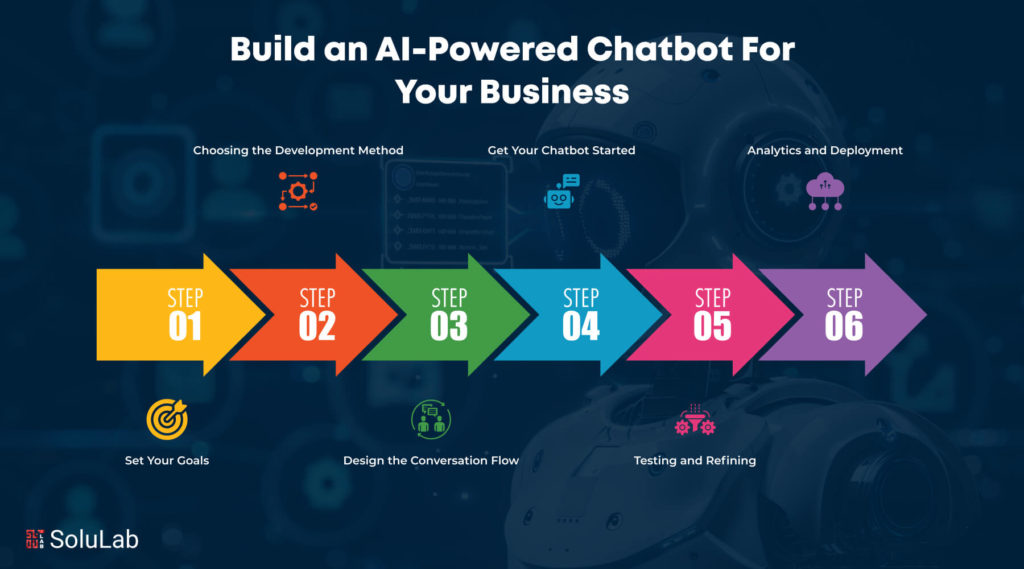
Want to build your artificial intelligence chatbot? They are making waves across education and consumer service. We are going to walk you through the exciting journey of developing a chatbot—from concept to dialog. We will show you how to pick the best resources, design engaging conversations, and even train your AI-powered chatbot to grow and change. Get ready to build informative, entertaining, amazing chatbots!
Have you ever used a virtual assistant or visited some website to ask for help and never really had to talk to a person? Chances are, you are talking with a chatbot. Chatbots are programs designed to mimic human conversation. They range from simple, rule-based applications that provide preset responses to basic questions to complex AI-driven bots.
One of the techniques creating an AI chatbot uses is Natural Language Processing, NLP, which helps them understand all sublimities in human language. This helps chatbots to gauge and assess questions, answer them naturally, and improve with time.
Chatbots are now across the board in messaging apps, websites, and even in phone calls. This is how businesses take orders, answer frequently asked questions, and deal with customer service. AI use cases have applied even in educational settings, giving individualized instruction and answering questions.
We can’t deny the presence of chatbots in our digital lives. Given the many chatbots out there, it is only understandable to be interested in the different types of Chatbots and how they differ from one another. Today, we will consider six well-known chatbot categories:
Just think of a vending machine that speaks for itself. Well, most of the time, menu-driven chatbots are that. These simple bots present their user with a set of choices in the form of buttons or menus. After the user has selected an option, they receive a hard-coded response, guiding them through some specific function or answering an FAQ. For such basic transactions, like booking an appointment or ordering, they work great.
They, too, use a predefined set of rules and keywords. While processing the user’s inputs, they look for terms that have pre-written responses related to them. In case the user’s question matches any of the recognized keywords, the chatbot responds with the appropriate response, which can be seen in AI agent use cases Even though menu-driven bots are less flexible compared to complicated ones, they still are incapable of answering complex requests or phrasing known queries differently.
Now we enter the age of intelligent dialogue. AI chatbots follow a method of natural language processing to identify the communications made by the user and try to infer what they want to say. The power of AI chatbot can detect synonyms, paraphrase, consider the context of the conversation, and adjust accordingly based on how the user responded previously. All this provides for a better user experience since it allows more organic, human-like dialogues and the perfect example would be chatbots in healthcare.
Imagine talking to your phone or giving voice commands to a virtual assistant. That is what voice-activated chatbots can do. These chatbots allow users to communicate by using their voices through speech recognition technology that converts spoken words to text. They are designed hands-free for applications where typing is a hassle—for example while driving or cooking.
Embracing the Future! Generative AI chatbots push the boundaries of this technology. The complex bot, in line with machine learning algorithms, generates new formats of text, like scripts or poems, and provides a better understanding of the intent of the user. They even tailor material according to the available information about users, offering a unique and engaging experience.
The hybrid AI chatbot holds an advantage for both rule-based and AI-driven methodologies. They are capable of handling basic jobs and frequently asked questions with pre-established guidelines and easily escalating complicated queries to AI modules for deeper comprehension. Their adaptiveness enables them to provide a strong, effective conversational experience to a broader spectrum of users.
Imagine a computer program keeping a meaningful dialogue with you, understanding what you intend to do, and even learning new things. That explains what is an AI chatbot. They are not ordinary chatbots but much more advanced compared to their basic relatives. Indeed, to deeply understand human language, they use artificial intelligence, more especially natural language processing.
Enterprise AI Chatbot works with NLP and allows AI chatbots to read your messages, assess the situation, and get what you mean. AI-powered chatbots learn the tone of the message, understand synonyms, and even use experience learned from previous conversations to make their responses more intelligent in the future. This power of chatty ability with a helpful friend becomes a more real flowing one, less like talking to a computer.
AI-powered chatbots have several advantages that enable companies to respond to complex inquiries, provide customer care, and individualize user experiences 24/7. They can replace teachers in the classroom, working according to the needs of students with their very own peculiarities and providing answers with meaning for them. You must build an AI-powered chatbot to make new ways of engaging with technology—from the eased execution of day-to-day activities to having interesting conversations.
The area of chatbots is developing in leaps and bounds. It revolutionizes communication in many various industries. Ever felt the urge to create your AI-powered friend? Now you’ll get the breaking of how to create an AI chatbot
Clearly define what your chatbot is trying to achieve before you start designing your chatbot. What problem is it going to solve? Who is your target audience? Your idea of these will dictate the design and training data. Some examples include the following:
The two main paths to consider are:
Think about your chatbot as a sort of digital storyteller. Give life to the flowchart in an outline detailing how users will make their way through your bot. Here are a few things you might want to consider:
This is where the life of your chatbot begins! In this training phase, you feed your bot data that helps it recognize user intent and linguistic patterns. Among the sources are:
Test it a lot. Tweak the responses of your chatbot, understand where it fails, and simulate user interaction. The following are some ways to test:
Now that you are satisfied with the performance, it is time to bring your HR chatbot into action. Deploy it before your target audience; integrate it with a website, messaging app, or any other platform of your choice. Not to forget, you need to monitor its performance. Track user interactions, identify areas of development, and update your chatbot frequently with new information and features.
Designing a successful AI chatbot requires careful thought. To help, here is a summary of important dos and don’ts:
What clients want in this fast-moving world is instant satisfaction. Chatbots are virtual assistants who, 24 hours a day, 7 days a week, respond to inquiries, help fix issues, or simply engage with your audience. But why, in particular, should your business create your own AI chatbot? Here are some compelling reasons:
This artificial intelligence bot personalizes user experiences and speeds up customer service for future communication. Building your chatbot is a goal you can reach no matter the level of experience as a developer with available tools and resources and understand the types of Chatbots. As always, the secret is knowing who your audience is, what your objective is, and how to keep improving your work. As you embark on this thrilling adventure, keep in mind the dos and don’ts we have talked about. You can build a chatbot that automates tasks and makes meaningful connections with users if you take serious effort and thought to make it work for them.
Now that you’re ready to jump into the revolution of AI chatbots? It’s your time now to hire an AI developer or AI chatbot development company like SoluLab to experience the difference in technology, the era of powerful and engrossing communication.
How difficult it would be depends on how you approach the task. No-code platforms’ UI is easy for a beginner to understand, and then again, the code method through frameworks offers more personalization. Programming skills are essential.
Chatbots are everywhere! While educational chatbots provide a personalized experience in learning, customer service chatbots answer all your questions on websites. Chatbots are also used extensively in messaging apps for information and entertainment purposes.
Using NLP, focus on clarity, brevity of speech, and natural interactions in the conversations. Always test thoroughly, elicit user feedback, and constantly refine your chatbot’s responses.
Even as Natural Language Processing(NLP) continues improving, chatbots might sometimes miss complex questions or very subtle nuances in language. Be forthright in the admission of your limitations, and always provide a path for more complex issues to be handled by human actors.
Of course! A team of energetic AI enthusiasts, SoluLab, is here to walk with you in the process of developing a chatbot. SoluLab can collaborate with you on developing a chatbot that will enhance user experience—right from defining your goals to choosing the best platform and establishing captivating conversation flows.


