Talk to an Expert

Navigating the Future: Web3 Development and DeFi Integration

Navigating the Future: Web 3 Development and DeFi Integration

Web 3 development and DeFi integration are at the forefront of technological innovation, revolutionizing the way we interact with digital ecosystems. With the rise of decentralized finance (DeFi) and the evolution of Web3 technology, the digital landscape is undergoing a transformative shift towards a more decentralized, secure, and user-centric experience. In this blog, we delve into the realm of DeFi development, exploring the intricacies of DeFi lending platforms, the top DeFi protocols, and the expanding DeFi ecosystem. Furthermore, we navigate the promising landscape of Web3 development, uncovering the use cases of Web3 technology, the top Web3 platforms, and the emerging trends in Web3.0 development. Let’s embark on a journey to understand the convergence of Web 3 and DeFi and its implications for the future of digital interactions and transactions.

Understanding DeFi Development

In the rapidly evolving landscape of decentralized finance (DeFi), understanding DeFi development is essential for comprehending the underlying principles and mechanisms driving the growth and adoption of decentralized financial solutions. This section delves into the fundamental aspects and key components of DeFi development, providing insights into the foundational elements that shape the DeFi ecosystem and its expanding influence in the global financial landscape.

  • Exploring the DeFi Ecosystem

The DeFi ecosystem encompasses a wide array of decentralized financial applications that operate on blockchain networks, offering various financial services without the need for traditional intermediaries. Within the DeFi landscape, users can access services such as lending, borrowing, yield farming, and decentralized exchanges, among others. These DeFi platforms leverage smart contracts to automate processes and ensure transparent and efficient transactions. The decentralized nature of the DeFi ecosystem promotes financial inclusivity, enabling users worldwide to access financial services with minimal barriers. Moreover, the open-source nature of many DeFi protocols fosters innovation and collaboration, allowing developers to build upon existing infrastructure and create novel financial products tailored to specific user needs.

  • The Rise of DeFi Lending Platforms

DeFi lending platforms have emerged as a crucial component within the DeFi ecosystem, providing users with opportunities to lend or borrow digital assets in a decentralized manner. These platforms enable users to lend their cryptocurrencies and earn interest, while borrowers can utilize these assets as collateral to obtain loans. DeFi lending protocols typically operate through smart contracts, ensuring the secure and automated execution of lending and borrowing activities. By eliminating the need for traditional financial institutions and intermediaries, DeFi lending platforms offer a more accessible and efficient avenue for users to access liquidity and generate returns on their digital assets.

  • Unraveling the Top DeFi Protocols

Within the DeFi space, various protocols have gained prominence for their contributions to the development of decentralized financial applications. These protocols often serve as the foundational infrastructure for a range of DeFi services, including decentralized exchanges (DEXs), liquidity provision, asset management, and yield farming. Some of the notable DeFi protocols include Compound, Aave, MakerDAO, Uniswap, and Synthetix, among others. These protocols play a crucial role in fostering a decentralized and permissionless financial environment, enabling users to engage in a diverse set of financial activities with increased autonomy and flexibility.

  • Analyzing the Best DeFi Exchanges

DeFi exchanges, also known as decentralized exchanges (DEXs), facilitate the peer-to-peer trading of digital assets without the need for intermediaries or centralized authorities. These exchanges operate on blockchain networks and leverage automated market-making (AMM) algorithms to enable seamless and efficient asset swaps. DeFi exchanges offer users enhanced security, improved liquidity, and reduced trading fees compared to traditional centralized exchanges. Some of the prominent DeFi exchanges include Uniswap, SushiSwap, and PancakeSwap, which have garnered significant attention for their contributions to the growth and accessibility of decentralized trading within the DeFi ecosystem.

Exploring Web3 Development

Exploring the realm of Web3 development unveils the transformative potential of next-generation web technologies in driving the evolution of decentralized systems and applications. This section delves into the innovative aspects and functionalities of Web3 development, shedding light on the cutting-edge technologies and tools that facilitate the development of user-centric and decentralized solutions, fostering a more inclusive and secure digital environment.
CTA1

  • Understanding the Concept of Web3 Technology

Web3 technology represents the next phase of internet evolution, characterized by the integration of decentralized protocols, blockchain technology, and peer-to-peer networks. Unlike its predecessor, Web2, which primarily focuses on centralized platforms and data control by corporations, Web3 emphasizes user sovereignty, data ownership, and enhanced privacy. The core principles of Web3 technology revolve around decentralization, transparency, and user empowerment, enabling individuals to interact and transact directly without relying on intermediaries. Through the utilization of blockchain and distributed ledger technology, Web3 applications foster trustless and secure interactions, providing users with greater control over their digital footprint and online activities.

  • Key Use Cases of Web3 Technology

Web3 technology has paved the way for various innovative use cases across multiple industries, offering solutions that prioritize data privacy, security, and decentralized governance. Some of the prominent use cases of Web3 technology include decentralized finance (DeFi), non-fungible tokens (NFTs), decentralized autonomous organizations (DAOs), decentralized social networks, and supply chain management solutions, among others. By leveraging the capabilities of blockchain and distributed ledger technology, Web3 applications enable the seamless exchange of value, transparent data management, and secure digital interactions, revolutionizing the way individuals and organizations engage with digital platforms and services.

  • Top Web3 Platforms in the Market

Within the Web3 ecosystem, several platforms have emerged as key players, driving the adoption and integration of decentralized technologies across various industries. These platforms offer users and developers a comprehensive set of tools and services to build, deploy, and manage Web3 applications effectively. Some of the leading Web3 platforms include Ethereum, Polkadot, Cardano, Binance Smart Chain, and Solana, each offering unique features and functionalities that cater to diverse use cases and development requirements. These platforms serve as the backbone for the development of decentralized applications (dApps) and facilitate the seamless integration of blockchain technology into existing digital infrastructures.

  • Uncovering the Web3.0 Development Trend

The emergence of Web 3.0 signifies a paradigm shift in internet architecture, emphasizing the decentralization of data, applications, and digital interactions. Web 3.0 development trends focus on enhancing user privacy, data security, and user-centric experiences, enabling individuals to regain control over their digital identities and online activities. As the demand for decentralized applications and services continues to grow, the Web 3.0 development trend emphasizes the creation of interoperable protocols, scalable blockchain solutions, and user-friendly interfaces, fostering a user-centric and transparent digital environment that prioritizes data ownership and security.
DeFi Development and Integration

DeFi Development and Integration

The seamless integration of DeFi solutions within the broader framework of Web3 technologies plays a pivotal role in shaping the future of decentralized finance and digital ecosystems. This section provides insights into the intricate processes and strategies involved in the development and integration of DeFi services, highlighting the synergistic relationship between DeFi development and the broader spectrum of Web3 technologies.

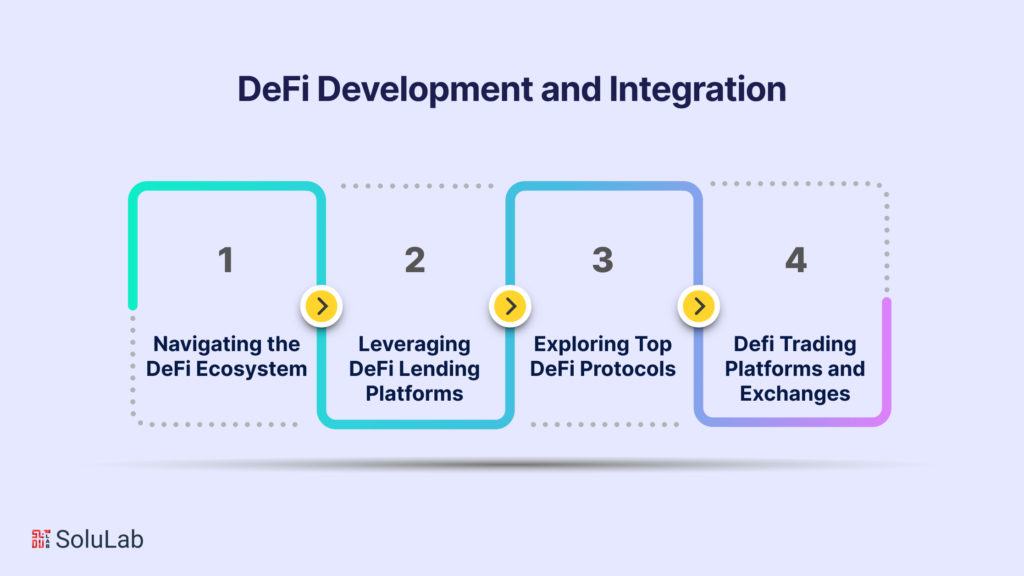
  • Navigating the DeFi Ecosystem

DeFi development has transformed the traditional financial landscape by enabling decentralized lending, borrowing, and trading activities without the need for intermediaries. The DeFi ecosystem comprises a diverse range of protocols, platforms, and applications that facilitate the seamless exchange of digital assets, yield farming, liquidity provision, and decentralized trading. Through the utilization of blockchain and smart contract technology, DeFi protocols ensure transparency, security, and efficiency in financial transactions, offering users a range of options to earn passive income and participate in various decentralized financial activities.

  • Leveraging DeFi Lending Platforms

DeFi lending platforms play a crucial role in enabling users to lend and borrow digital assets without the need for traditional financial institutions. These platforms utilize smart contracts to automate the lending process, allowing users to earn interest on their deposited assets or access loans using their cryptocurrency holdings as collateral. By eliminating the need for intermediaries and central authorities, DeFi lending platforms provide users with greater control over their funds and offer competitive interest rates and flexible borrowing options, fostering a more inclusive and accessible financial ecosystem for users worldwide.

  • Exploring Top DeFi Protocols

Within the DeFi space, several protocols have gained prominence for their innovative approaches to decentralized finance and their contribution to the expansion of the DeFi ecosystem. These protocols encompass a range of services, including decentralized exchanges (DEXs), lending and borrowing platforms, yield farming protocols, and liquidity provision mechanisms. Some of the top DeFi protocols include Uniswap, Aave, Compound, MakerDAO, and Synthetix, each offering unique features and functionalities that cater to diverse DeFi use cases and financial needs.

  • DeFi Trading Platforms and Exchanges

DeFi trading platforms and exchanges have revolutionized the way users access and trade digital assets, offering decentralized, non-custodial solutions that prioritize security and user control. These platforms facilitate the seamless exchange of cryptocurrencies, tokens, and other digital assets, enabling users to trade directly with one another without the need for intermediaries. By leveraging the capabilities of blockchain and smart contract technology, DeFi trading platforms provide users with secure and transparent trading experiences, offering a range of trading pairs, liquidity pools, and yield farming opportunities to maximize their returns and diversify their investment portfolios.

Advancements in Web3 Development

The ongoing advancements in Web3 development represent a critical milestone in the evolution of decentralized technologies, underscoring the continuous innovation and refinement of digital infrastructures and platforms. This section explores the latest advancements in Web3 development, emphasizing the transformative capabilities and potential implications for the future of decentralized systems and services.

  • Harnessing the Power of Web3 Technology

Web3 technology has ushered in a new era of internet capabilities, emphasizing decentralized, peer-to-peer interactions and data ownership. This advancement has led to the development of innovative solutions that prioritize user privacy, security, and digital sovereignty. By leveraging blockchain, distributed ledger technology, and decentralized protocols, Web3 development promotes the creation of user-centric applications and platforms that empower individuals to control their digital identities and engage with online services in a secure and transparent manner.

  • Top Web3 Platforms and Their Capabilities

Several leading Web3 platforms have emerged as key players in the development and integration of decentralized technologies, offering developers and users a wide range of tools and services to build and deploy Web3 applications effectively. These platforms provide comprehensive solutions for decentralized application development, blockchain integration, and digital asset management, fostering the creation of user-friendly and secure digital environments that prioritize data privacy and transparency. Some of the top Web3 platforms include Ethereum, Polkadot, IPFS, Filecoin, and Holochain, each contributing to the advancement of decentralized technologies and the expansion of the Web3 ecosystem.

  • Exploring Web3 Use Cases and Applications

The integration of Web3 technology has led to the development of various use cases and applications across multiple industries, enabling the creation of decentralized applications, peer-to-peer networks, and transparent data management systems. Web3 use cases encompass a wide range of applications, including decentralized finance (DeFi), non-fungible tokens (NFTs), decentralized social networks, supply chain management solutions, and decentralized autonomous organizations (DAOs), among others. These use cases demonstrate the transformative potential of Web3 technology in revolutionizing digital interactions, data management, and online transactions, fostering a more inclusive and user-centric digital landscape for individuals and organizations worldwide.

  • Emerging Web3.0 Development Trends

The evolution of Web 3.0 development trends signifies the continuous advancement and adoption of decentralized technologies, emphasizing the creation of interoperable protocols, scalable blockchain solutions, and user-friendly interfaces. Web 3.0 development trends focus on enhancing data privacy, user security, and digital sovereignty, promoting the creation of decentralized applications and platforms that empower users to control their digital experiences and engage with online services in a secure and transparent manner. As the demand for decentralized technologies and applications continues to grow, Web 3.0 development trends emphasize the need for scalable, efficient, and user-centric solutions that prioritize data privacy, security, and user empowerment.
Integrating DeFi with Web3 Technologies

Integrating DeFi with Web3 Technologies

The integration of DeFi services with Web3 technologies marks a significant paradigm shift in the digital landscape, fostering a more cohesive and interconnected ecosystem for decentralized financial solutions. This section delves into the intricacies of integrating DeFi with Web3 technologies, elucidating the key strategies and benefits of this collaborative approach, which leads to the development of innovative and user-friendly financial solutions.

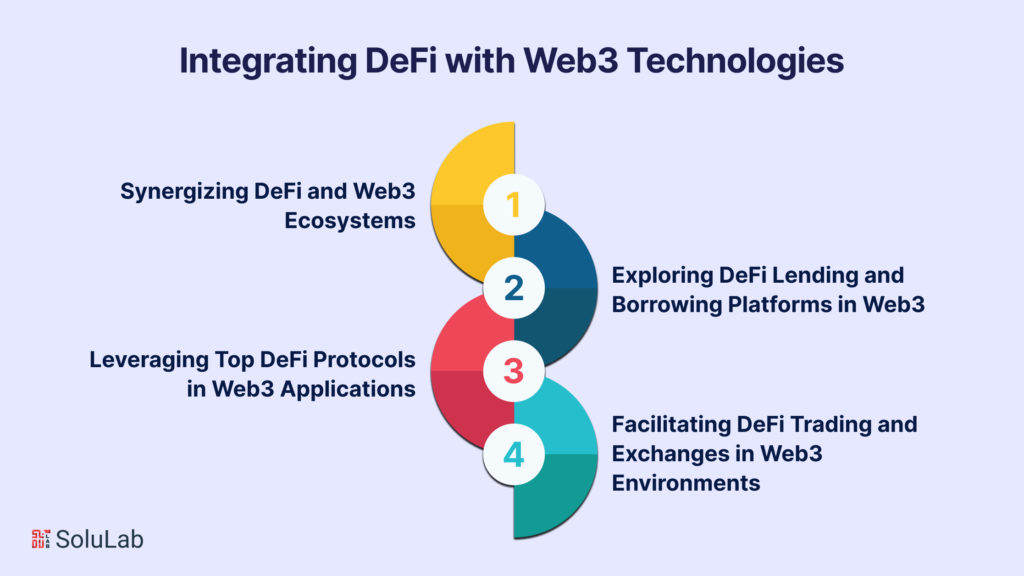
  • Synergizing DeFi and Web3 Ecosystems

The integration of DeFi with Web3 technologies marks a significant step toward creating a more interconnected and user-centric financial landscape, emphasizing decentralized, transparent, and secure financial services and applications. The collaboration between DeFi and Web3 ecosystems enables the seamless integration of decentralized financial protocols with blockchain-based technologies, promoting the development of user-friendly and accessible financial solutions that prioritize data privacy, security, and user empowerment. By leveraging the capabilities of blockchain, smart contracts, and decentralized networks, the integration of DeFi with Web3 technologies fosters the creation of a robust and inclusive financial ecosystem that caters to the diverse financial needs and preferences of users worldwide.

  • Exploring DeFi Lending and Borrowing Platforms in Web3

The integration of DeFi lending and borrowing platforms within the Web3 ecosystem has facilitated the seamless exchange of digital assets and the provision of secure and transparent lending and borrowing services for users. These platforms leverage the capabilities of blockchain and smart contract technology to automate lending processes, enable instant fund transfers, and ensure transparent and secure transactions. By integrating DeFi lending and borrowing platforms with Web3 technologies, users can access a wide range of financial services, including peer-to-peer lending, decentralized borrowing, and yield farming, fostering a more accessible and inclusive financial landscape for individuals and businesses.

  • Leveraging Top DeFi Protocols in Web3 Applications

Top DeFi protocols play a pivotal role in driving the integration of decentralized financial services within the Web3 ecosystem, offering users a diverse range of financial tools and services to manage and grow their digital assets effectively. These protocols enable users to participate in various financial activities, including lending, borrowing, liquidity provision, and yield farming, while ensuring transparency, security, and efficiency in financial transactions. By leveraging the capabilities of top DeFi protocols within Web3 applications, users can access decentralized financial services seamlessly, diversify their investment portfolios, and maximize their returns, fostering a more inclusive and accessible financial environment for users worldwide.

  • Facilitating DeFi Trading and Exchanges in Web3 Environments

The integration of DeFi trading platforms and exchanges within Web3 environments has revolutionized the way users access and trade digital assets, offering decentralized, secure, and transparent trading solutions for individuals and businesses. These platforms leverage blockchain and smart contract technology to facilitate the seamless exchange of digital assets, provide users with greater control over their funds, and ensure transparency and security in financial transactions. By integrating DeFi trading platforms and exchanges with Web3 technologies, users can access a wide range of trading pairs, liquidity pools, and yield farming opportunities, fostering a more inclusive and accessible trading landscape for users worldwide.

Enhancing Web3 Technologies with DeFi Integration

The enhancement of Web3 technologies through the integration of DeFi principles and functionalities represents a crucial step in advancing the capabilities and applications of decentralized systems. This section examines the ways in which DeFi integration enhances the functionalities and user experiences of Web3 technologies, paving the way for the development of secure, transparent, and inclusive digital ecosystems.

  • Amplifying Web3 Use Cases with DeFi Applications

The integration of DeFi applications within the Web3 environment has expanded the scope and utility of Web3 technologies, enabling the seamless integration of decentralized financial services and applications with blockchain-based platforms and solutions. This integration has empowered users to access a diverse range of financial tools and services, including decentralized lending and borrowing, liquidity provision, asset trading, and yield farming, fostering a more interconnected and user-centric financial landscape that prioritizes accessibility, transparency, and security. By amplifying Web3 use cases with DeFi applications, users can benefit from a wide range of decentralized financial services, access advanced financial tools, and participate in various financial activities, promoting financial inclusivity and empowerment for users worldwide.

  • Exploring the Synergy Between DeFi and Web3 Technology

The synergy between DeFi and Web3 technology has catalyzed the development of innovative and user-friendly financial solutions, emphasizing decentralized, transparent, and secure financial services and applications for users worldwide. This synergy leverages the capabilities of blockchain, smart contract technology, and decentralized networks to foster the seamless integration of decentralized financial protocols with Web3 applications, promoting the development of user-centric and inclusive financial ecosystems that prioritize data privacy, security, and user control. By exploring the synergy between DeFi and Web3 technology, users can access a wide range of financial tools and services that facilitate secure and efficient financial transactions, fostering a more accessible and user-centric financial landscape for individuals and businesses.

  • Navigating Web3.0 Development Trends and DeFi Integration

Navigating Web 3.0 development trends and the integration of DeFi within the Web3 ecosystem highlights the evolution of decentralized technologies and financial services, emphasizing the importance of creating an interconnected and user-centric financial environment that prioritizes accessibility, transparency, and security. This integration navigates the advancements in blockchain, smart contract technology, and decentralized networks to foster the development of user-friendly and inclusive financial solutions that cater to the diverse financial needs and preferences of users worldwide. By embracing Web 3.0 development trends and DeFi integration, users can navigate a rapidly evolving financial landscape, access advanced financial tools and services, and participate in various financial activities, fostering financial empowerment and inclusivity for individuals and businesses.

  • Embracing the Role of Top Web3 Development Companies in DeFi Integration

The role of top Web3 development companies in DeFi integration underscores the significance of collaboration and innovation in driving the development and adoption of decentralized financial services and applications. These companies leverage their expertise in blockchain, smart contract technology, and decentralized networks to facilitate the seamless integration of DeFi solutions within the Web3 ecosystem, offering users a diverse range of financial tools and services that promote accessibility, transparency, and security. By embracing the role of top Web3 development companies in DeFi integration, users can benefit from the expertise and knowledge of industry-leading professionals, access cutting-edge financial solutions, and participate in a dynamic and user-centric financial landscape that prioritizes user control and empowerment.
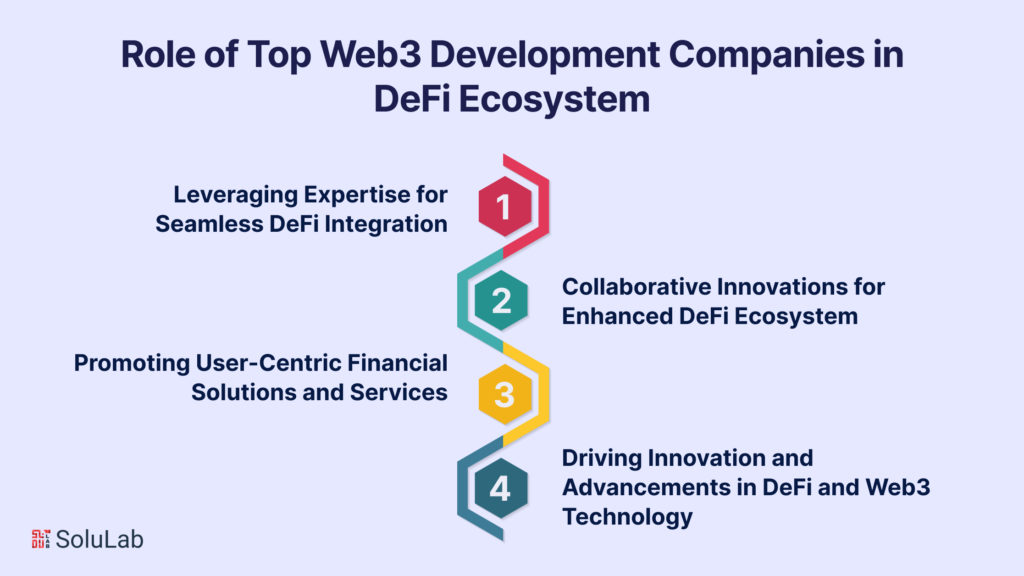
The Role of Top Web3 Development Companies in the DeFi Ecosystem

The Role of Top Web3 Development Companies in the DeFi Ecosystem

The active participation of leading Web3 development companies in the DeFi ecosystem underscores the pivotal role these firms play in driving innovation and fostering the adoption of decentralized financial solutions. This section emphasizes the significant contributions and expertise of top Web3 development companies, highlighting their role in shaping the future of the DeFi landscape and accelerating the adoption of user-centric and secure financial services.

  • Leveraging Expertise for Seamless DeFi Integration

The role of top Web3 development companies in the DeFi ecosystem revolves around leveraging their expertise in blockchain, smart contract technology, and decentralized networks to facilitate the seamless integration of DeFi applications and protocols within the Web3 environment. These companies prioritize the development of user-friendly and innovative financial solutions that cater to the diverse financial needs and preferences of users worldwide, fostering a more accessible and inclusive financial landscape that emphasizes transparency, security, and user control. By leveraging their expertise for seamless DeFi integration, these companies enable users to access a wide range of financial tools and services, participate in various financial activities, and explore new opportunities for financial growth and empowerment.

  • Collaborative Innovations for Enhanced DeFi Ecosystem

Collaborative innovations for the enhanced DeFi ecosystem emphasize the importance of fostering partnerships and collaborations among top Web3 development companies to drive the development and adoption of user-centric and inclusive financial solutions. These collaborative efforts focus on promoting the integration of decentralized financial protocols with Web3 applications, fostering the development of a more interconnected and user-friendly financial landscape that prioritizes accessibility, transparency, and security. By engaging in collaborative innovations for the enhanced DeFi ecosystem, top Web3 development companies can contribute to the advancement of decentralized technologies and financial services, promote financial inclusivity and empowerment, and facilitate the growth and expansion of the DeFi ecosystem for users worldwide.

  • Promoting User-Centric Financial Solutions and Services

Promoting user-centric financial solutions and services highlights the commitment of top Web3 development companies to create innovative and inclusive financial ecosystems that cater to the diverse financial needs and preferences of users worldwide. These companies prioritize the development of user-friendly and accessible financial tools and services, emphasizing the importance of transparency, security, and user control in facilitating seamless and efficient financial transactions. By promoting user-centric financial solutions and services, top Web3 development companies enable users to access advanced financial tools, participate in various financial activities, and explore new opportunities for financial growth and empowerment, fostering a more dynamic and user-friendly financial landscape that prioritizes user experience and satisfaction.

  • Driving Innovation and Advancements in DeFi and Web3 Technology

The drive for innovation and advancements in DeFi and Web3 technology underscores the commitment of top Web3 development companies to foster the development and adoption of cutting-edge and user-friendly financial solutions that promote accessibility, transparency, and security. These companies focus on driving innovation and advancements in blockchain, smart contract technology, and decentralized networks to create a more interconnected and inclusive financial ecosystem that caters to the diverse financial needs and preferences of users worldwide. By driving innovation and advancements in DeFi and Web3 technology, top Web3 development companies contribute to the evolution of decentralized technologies and financial services, promote financial inclusivity and empowerment, and facilitate the growth and expansion of the DeFi ecosystem for individuals and businesses.

The Growing Significance of Web3.0 Development Trends in DeFi Ecosystem

The growing significance of Web 3.0 development trends in the DeFi ecosystem reflects the increasing focus on next-generation web technologies and their transformative potential in revolutionizing the global financial landscape. This section explores the emerging trends and developments in Web 3.0, emphasizing their impact on the DeFi ecosystem and the broader digital environment, signaling a shift toward more advanced and inclusive digital infrastructures.

  • Embracing Decentralized Finance with Web3.0 Innovations

The growing significance of Web 3.0 development trends in the DeFi ecosystem highlights the industry’s shift towards embracing decentralized finance with the integration of advanced Web 3.0 innovations. These trends emphasize the importance of leveraging blockchain, smart contract technology, and decentralized networks to create a more interconnected and accessible financial landscape that prioritizes transparency, security, and user control. By embracing Web 3.0 innovations, the DeFi ecosystem can foster the development and adoption of user-centric and inclusive financial solutions, promoting financial inclusivity, accessibility, and empowerment for individuals and businesses worldwide.

  • Driving Technological Advancements for Enhanced DeFi Offerings

Driving technological advancements for enhanced DeFi offerings underscores the industry’s commitment to fostering the development and adoption of cutting-edge and user-friendly financial solutions that cater to the diverse financial needs and preferences of users worldwide. These advancements focus on driving innovation in blockchain, smart contract technology, and decentralized networks to create a more dynamic and inclusive financial ecosystem that promotes accessibility, transparency, and security. By driving technological advancements for enhanced DeFi offerings, the industry can facilitate the growth and expansion of the DeFi ecosystem, foster financial inclusivity and empowerment, and promote the evolution of decentralized technologies and financial services.

  • Fostering Collaboration and Integration Across DeFi and Web3.0 Landscape

Fostering collaboration and integration across the DeFi and Web 3.0 landscape highlights the industry’s emphasis on promoting partnerships and collaborations among key stakeholders to drive the development and adoption of user-centric and interconnected financial solutions. These collaborative efforts aim to foster the integration of decentralized financial protocols with Web 3.0 applications, creating a more seamless and efficient financial ecosystem that prioritizes user experience, security, and transparency. By fostering collaboration and integration across the DeFi and Web 3.0 landscape, the industry can promote the development of a more interconnected and user-friendly financial landscape, facilitate the growth and expansion of the DeFi ecosystem, and drive the evolution of decentralized technologies and financial services for users worldwide.

  • Exploring Future Possibilities and Innovations in DeFi and Web3.0

Exploring future possibilities and innovations in DeFi and Web 3.0 underscores the industry’s dedication to exploring new opportunities and advancements in decentralized finance and technology. These explorations focus on identifying emerging trends and technologies that can shape the future of the DeFi ecosystem, fostering the development and adoption of innovative and user-friendly financial solutions that cater to the evolving needs and preferences of users worldwide. By exploring future possibilities and innovations in DeFi and Web 3.0, the industry can contribute to the advancement of decentralized technologies and financial services, promote financial inclusivity and empowerment, and drive the evolution of the global financial landscape for individuals and businesses.
CTA2

Conclusion

In the fast-evolving landscape of DeFi and Web3 development, the role of pioneering companies such as SoluLab stands out as an essential catalyst for innovation and transformative growth. As a leading Web3 development company with a focus on DeFi solutions, SoluLab continues to drive the advancement of cutting-edge technologies and tools, empowering businesses to thrive in the rapidly changing digital ecosystem. With its expertise in DeFi development and a profound understanding of the intricate nuances of Web3 technologies, SoluLab remains at the forefront of revolutionizing the digital landscape, providing comprehensive solutions that cater to the diverse needs of modern businesses and industries.

By leveraging the expertise of a top DeFi development service and Web3 development company like SoluLab, businesses can unlock a world of possibilities and tap into the immense potential offered by DeFi and Web3 technologies. With a focus on delivering seamless and innovative solutions, SoluLab empowers businesses to stay ahead of the curve, embrace the latest trends, and capitalize on the transformative capabilities of DeFi and Web3. As a leading DeFi development service and Web3 development company, SoluLab’s dedicated team of skilled professionals and commitment to excellence continue to set new benchmarks in DeFi and Web3 development, ensuring that businesses are well-equipped to navigate the dynamic landscape and thrive in the digital age.

FAQs

1. What is the role of DeFi in the Web3 development landscape?

The role of DeFi in the Web3 development landscape is primarily centered around enabling decentralized financial services and applications, creating a more open and accessible financial ecosystem powered by blockchain technology.

2. How can businesses benefit from integrating DeFi with Web3 technologies?

Businesses can benefit from integrating DeFi with Web3 technologies by gaining access to a more secure, transparent, and efficient financial infrastructure. This integration allows for the development of decentralized applications (dApps) and the facilitation of peer-to-peer transactions with reduced intermediation.

3. What are the key features to look for when choosing a top Web3 development company?

When selecting a top Web3 development company, it is crucial to consider factors such as expertise in blockchain technology, experience in developing decentralized applications, a track record of successful projects, and a strong understanding of DeFi protocols and ecosystems.

4. How does SoluLab contribute to the advancement of DeFi and Web3 technologies?

SoluLab contributes to the advancement of DeFi and Web3 technologies through its comprehensive development services, including DeFi development, blockchain solutions, and Web3 integration. The company’s expertise and commitment to innovation make it a valuable contributor to the growth of these sectors.

5. What are the emerging trends and future prospects for DeFi and Web3 development?

The emerging trends and future prospects for DeFi and Web3 development are promising, with increased adoption of decentralized financial services, expansion of blockchain applications, and the integration of advanced technologies to enhance security, scalability, and usability within the ecosystem.

6. How does the integration of DeFi and Web3 technologies impact the financial sector?

The integration of DeFi and Web3 technologies significantly impacts the financial sector by revolutionizing traditional financial processes, promoting financial inclusion, enabling global access to financial services, and fostering innovation in the way financial transactions are conducted.

7. What are the challenges and opportunities for businesses looking to adopt DeFi and Web3 solutions?

Businesses looking to adopt DeFi and Web3 solutions face challenges related to regulatory compliance, security risks, scalability issues, and user adoption. However, these challenges present opportunities for companies to pioneer groundbreaking solutions, establish new standards for financial services, and contribute to the growth and development of the DeFi and Web3 landscape.

Navigating the Metaverse: A Guide to the Web3 Revolution

Navigating the Metaverse: Your Guide to the Web3 Revolution

Metaverse has emerged as the epicenter of innovation, offering a convergence of Metaverse development, Augmented Reality (AR), and Metaverse AI Integration. This comprehensive guide delves into the top metaverse platforms and Web3 development, unveiling the intricacies of Web3 technology and the myriad of Web3 use cases that are shaping our tomorrow.

The concept of the Metaverse has ignited the imagination of people worldwide, and its implications are profoundly transformative. In this Introduction, we will define the Metaverse and explore its intersection with the emerging Web3 technology.

The Metaverse, in its essence, is a virtual, interconnected universe comprising multiple digital spaces and environments. It is not limited to one platform but is an expansive, collective virtual reality that combines real-world and digital experiences. In the Metaverse, individuals are represented by digital avatars, and they can interact, socialize, work, and play within this shared digital space.

What are the key components of the Metaverse?

key components of the Metaverse

  • Virtual Reality (VR)

The Metaverse often incorporates VR technology, enabling users to immerse themselves fully in the digital environment.

  • Augmented Reality (AR)

AR enhances the real world with digital information and objects, bridging the gap between the physical and digital realms.

  • Metaverse AI Integration

AI technologies are integrated into the Metaverse to create dynamic and responsive virtual environments. These AI-driven systems adapt to user behavior, enhancing the overall experience.

What is the Role of Augmented Reality and Virtual Reality in the Metaverse?

Role of Augmented Reality and Virtual Reality in the Metaverse

As the metaverse continues to evolve and shape the digital landscape, it’s imperative to understand the crucial role that augmented reality (AR) and virtual reality (VR) play within this emerging realm. The metaverse represents a convergence of the physical and digital worlds, and the incorporation of AR and VR technologies is pivotal in achieving this vision.

  • Metaverse Development and Integration

Metaverse development, as a whole, encompasses the creation of virtual spaces, interconnected ecosystems, and digital experiences. 

AR and VR are integral components of this development, enhancing the immersion and interactivity offered by metaverse platforms. The integration of AR and VR technologies in the metaverse is essential for creating rich, engaging, and dynamic virtual environments.

  • Metaverse AI Integration

Metaverse AI, another critical element, leverages artificial intelligence to facilitate interaction, personalization, and automation within the metaverse. 

AR and VR, when combined with AI, enable more natural and intuitive user experiences. This synergy opens the door to various applications, from virtual assistants guiding users through metaverse experiences to personalized content recommendations.

CTA1

  • Metaverse Use Cases and Benefits

AR and VR bring tangible benefits to the metaverse in terms of user engagement and practical applications. They can be utilized across various sectors, including education, entertainment, healthcare, and more. 

For instance, in education, AR and VR can create immersive learning environments, making complex subjects more accessible and interactive. In healthcare, they enable remote surgeries and medical training in a risk-free virtual environment. These use cases underscore the metaverse’s potential to revolutionize traditional industries.

  • Virtual Reality Metaverse

Virtual Reality Metaverse is a pivotal component of the metaverse, creating fully immersive experiences for users. Top metaverse platforms often prioritize VR integration to offer users an almost tangible sense of presence within the digital world. 

This level of immersion opens up opportunities for social interaction, entertainment, and even remote work, transforming the way people connect and collaborate.

  • Future Based on the Metaverse

The future of the internet and digital experiences is heavily reliant on the metaverse, where AR and VR technologies will continue to be at the forefront. 

As metaverse development progresses, we can expect to see even more sophisticated applications of AR and VR, leading to a more seamless blending of the physical and digital realms. Web3 technology and Web3.0 developer Leads the Way in Shaping the Metaverse?

The concept of the Metaverse has captured the imagination of tech enthusiasts, entrepreneurs, and investors alike. As the digital realm continues to evolve, the Metaverse is becoming more tangible, offering countless opportunities for innovation and engagement. 

  • Selecting the Right Development Partners

Partnering with the right metaverse development companies is essential to harness the full potential of AR and VR within the metaverse. 

These companies are equipped to provide the expertise and tools required for effective AR and VR integration. Similarly, in the realm of Web3 development, choosing the top Web3 development companies is vital for keeping pace with the ever-evolving technology landscape.

Who Leads the Way in Shaping the Metaverse?

The concept of the Metaverse has captured the imagination of tech enthusiasts, entrepreneurs, and investors alike. As the digital realm continues to evolve, the Metaverse is becoming more tangible, offering countless opportunities for innovation and engagement. But who are the leading players in the field of Metaverse development, and how are they shaping this virtual world of tomorrow?

In this ever-expanding universe of possibilities, Metaverse development companies are at the forefront, pushing the boundaries of what is possible in this interconnected digital space. These visionary organizations are pioneers, driving the evolution of Metaverse technology and its seamless integration into our daily lives.

Metaverse development services play a crucial role in bringing the Metaverse to life. These services encompass a range of activities, from designing immersive digital environments to developing Metaverse-compatible applications and platforms. With the integration of augmented reality and advanced Metaverse AI, the possibilities are virtually limitless. What can we expect from these services, and how will they shape the Metaverse landscape?

The Metaverse development field is in high demand, and this demand extends to skilled professionals who can bring these virtual worlds to life. One notable player in this space is SoluLab, a company renowned for its expertise in Metaverse development. Hiring dedicated developers for Metaverse projects is becoming increasingly essential, as companies and entrepreneurs seek to harness the potential of this digital frontier.

These developers possess a deep understanding of Metaverse technology, including Web3 development and integration of Augmented Reality (AR) and Metaverse AI. With an eye on top web3 platforms and the future implications of the Metaverse, they are vital to bringing innovative ideas to fruition.

As we navigate the exciting realms of Metaverse development, one thing is clear: the Metaverse is no longer science fiction but a dynamic and ever-evolving digital frontier with real-world applications, promising a future rich in interconnected experiences and opportunities.

How is the Integration of AI Shaping the Future of Digital Realities Within the Metaverse?

AI Shaping the Future of Digital Realities Within the Metaverse

The Metaverse, a rapidly emerging digital realm where individuals can immerse themselves in augmented and virtual realities, is evolving at an unprecedented pace. Its development has been a confluence of Metaverse development, augmented reality, Web3 technology, and the integration of artificial intelligence (AI). This integration of AI is pivotal, as it significantly influences the future of digital realities within the Metaverse.

A. Metaverse AI and its Significance

In the ever-evolving landscape of the Metaverse, the integration of artificial intelligence (AI) holds a pivotal role. The Metaverse, a virtual universe interconnected with the real world, relies on advanced technologies to provide immersive experiences. AI integration into the Metaverse is significant for several reasons:

  • Enhanced User Experiences

Metaverse AI can adapt and personalize interactions, making the user experience more engaging and relevant. It can recognize user preferences, anticipate needs, and create a tailored environment.

  • Realism and Immersion

AI can contribute to the realism of virtual environments by simulating natural behavior and interactions. This enhances the immersion factor, blurring the lines between the digital and real worlds.

  • Dynamic Content Generation

AI can generate content dynamically, reducing the burden on content creators and ensuring that the Metaverse remains vibrant and continuously evolving.

  • Safety and Moderation

AI algorithms can help monitor and maintain a safe and respectful virtual environment by detecting and mitigating harmful or inappropriate behavior.

B. Potential Use Cases

Metaverse AI integration brings forth a multitude of potential use cases, ranging from entertainment to education and beyond:

  • Entertainment and Gaming

In virtual worlds, AI can create non-player characters (NPCs) with advanced behavior and personalities, making games more lifelike and challenging.

  • Education and Training

AI-driven virtual tutors and educational assistants can provide personalized learning experiences, adapting to individual learning styles and pacing.

  • Virtual Commerce

AI can assist users in shopping, recommending products, and creating virtual shopping experiences that mimic real-world retail.

  • Healthcare and Telemedicine

The Metaverse can be used for telehealth services, with AI helping diagnose and provide medical information to users.

  • Social Interactions

Metaverse AI can enhance social interactions by creating realistic avatars and facilitating natural language communication.

C. AI Integration in Top Metaverse Platforms

Leading Metaverse platforms are actively exploring AI integration to stay competitive and innovative. Several top Metaverse development companies are investing in AI technologies to power their platforms:

  • Virtual Reality Metaverse

Platforms like Oculus from Meta (formerly Facebook) are integrating AI to create realistic avatars and enhance user interactions.

  • Decentraland

This blockchain-based Metaverse leverages AI for content curation and moderation, ensuring a safe and enjoyable user experience.

  • Roblox

This popular gaming platform employs AI for game creation and scripting, allowing users to create their virtual experiences with ease.

  • Minecraft

Microsoft’s Minecraft Metaverse explores AI integration for world-building, making it easier for users to design and populate virtual environments.

  • OpenAI and Web3

OpenAI’s advancements in AI technology have broader implications for the Metaverse, as their AI models can be integrated into various platforms to enhance user interactions and content generation.

What are the Metaverse Use Cases and Benefits?

Use Cases and Benefits of Metaverse

The Metaverse is rapidly evolving into a versatile digital realm with a multitude of use cases and benefits, transforming the way we interact with the virtual world. From education and training to business and marketing, and even healthcare and telemedicine, the Metaverse is poised to revolutionize various sectors. Here, we explore some of the key use cases and benefits, while also shedding light on how Metaverse development, Augmented Reality (AR), and Metaverse AI integration play crucial roles in shaping this futuristic landscape.

  • Metaverse in Education and Training

The Metaverse holds immense potential in the field of education and training, offering an interactive and immersive learning environment. Incorporating augmented reality and virtual reality technologies, educators can create dynamic simulations and interactive lessons, making complex concepts more engaging and easier to grasp. 

Metaverse AI integration enables personalized learning experiences, tailoring content to individual student needs. This not only enhances understanding but also allows for continuous assessment and feedback.

  • Business and Marketing Opportunities

Businesses are recognizing the Metaverse as a new frontier for customer engagement and marketing. Brands can create immersive and interactive experiences within the Metaverse, enabling customers to interact with products, services, and advertisements more engagingly. 

Top Metaverse platforms are becoming sought-after spaces for virtual events, product launches, and customer interaction, all while tracking user engagement in real-time. Web3 development trends and technology enable secure transactions and data management within these virtual environments, ensuring a seamless experience for users and businesses.

  • Healthcare and Telemedicine in the Metaverse

The Metaverse has the potential to revolutionize healthcare and telemedicine. Patients can access virtual clinics, consult with doctors, and even undergo medical procedures within this digital space. Augmented reality can aid in remote diagnoses, while Metaverse AI integration can assist in patient monitoring and treatment adherence. 

The virtual reality Metaverse allows for realistic medical training simulations, enhancing the skills of healthcare professionals. This not only improves the quality of care but also extends healthcare services to remote or underserved areas.

Metaverse development companies and top Web3 development companies are at the forefront of building the infrastructure needed for these applications. They provide the tools and platforms that enable Metaverse experiences to thrive. Hiring dedicated developers with expertise in Web3 technology ensures the seamless integration of these technologies into Metaverse projects.

CTA2

Conclusion

In conclusion, the Metaverse is not just a digital trend; it’s a revolution that will shape the future of the internet. As we step into the era of Web3, the Metaverse’s impact will be profound, affecting all aspects of our lives. To thrive in this new digital landscape, it’s crucial to embrace Metaverse development, Augmented Reality, and Metaverse AI integration. By doing so, we can unlock the limitless potential of the Metaverse and embark on an exciting journey that promises to redefine our online existence.

Augmented reality and Metaverse AI integration are the cornerstones of this revolution. These elements will unlock unprecedented possibilities, creating immersive and interactive experiences that seamlessly blend the virtual and real worlds. From entertainment and education to business and social interactions, the Metaverse promises to touch every aspect of our lives.

SoluLab, a leading player in this space, stands as a testament to the possibilities that the Metaverse holds. Their expertise in Metaverse development, Web3 technology, and Metaverse AI integration makes them a valuable partner for those seeking to navigate this uncharted territory. The future belongs to those who are ready to embrace the Metaverse, and with the right guidance, there are no limits to what we can achieve in this brave new digital world. In the rapidly evolving landscape of the Metaverse, SoluLab emerges as a leading force, equipped with expertise in Metaverse development, Web3 technology, and Metaverse AI integration. Partner with us to unlock the limitless potential of the Metaverse. Hire metaverse developers to embark on this exciting journey into the future of the digital world.

FAQs

1. What is the Metaverse, and how is it related to Web3 technology?

The Metaverse is a virtual, interconnected world where digital and physical realities merge. It’s closely linked to Web3 technology, which emphasizes decentralization and blockchain integration to create a more immersive online experience.

2. What is the Metaverse development process, and what are its key components?

Metaverse development involves creating the infrastructure, content, and platforms that enable users to interact in the digital realm. Key components include augmented reality, Metaverse AI integration, and virtual reality Metaverse environments.

3. Can you explain the concept of Augmented Reality in the Metaverse?

Augmented reality in the Metaverse refers to the integration of digital information and objects into the real world, enhancing the user’s perception of reality within the virtual space.

4. What are the top Metaverse platforms for development?

Top Metaverse platforms include virtual worlds like Decentraland, The Sandbox, and platforms that support blockchain integration such as Ethereum and Binance Smart Chain.

5. How does Metaverse AI play a role in the development of the Metaverse?

Metaverse AI enhances user experiences by providing personalized content, interactions, and virtual assistance, making the digital environment more dynamic and responsive.

6. What are the most prominent use cases and benefits of the Metaverse?

Metaverse use cases include virtual conferences, gaming, social interactions, education, and e-commerce. Benefits encompass improved accessibility, global connectivity, and new revenue opportunities.

The Role of Blockchain in Web 3 Development

The Role of Blockchain in Web 3 Development

The Internet has experienced major developments over the last two decades. Web 1.0 brought us static web pages, Web 2.0 introduced dynamic and interactive content, and now, Web 3.0 is poised to revolutionize the way we interact with the digital world. At the heart of this transformation is blockchain technology. 

In this blog, we will explore the crucial role of blockchain in Web 3 development and its potential to reshape the Internet as we know it.

The Evolution of the Internet Leading to Web 3.0

To understand the significance of blockchain in the context of Web 3 technology, it’s essential to trace the journey of the Internet itself. We’ve witnessed two distinct phases, known as Web 1.0 and Web 2.0, each representing a unique stage in the Internet’s development.

Web 1.0 marked the internet’s initial foray, originating in the late 1980s. This phase primarily featured static, ‘read-only’ web content and was the creation of a select few participants. At the time, Web 1.0 was groundbreaking, as it allowed people to access information from around the world. However, it came with significant limitations, particularly in terms of user interaction.

Following Web 1.0, we witnessed the rise of Web 2.0, which brought substantial advancements in user engagement and interaction. Web 2.0 empowered users to create personal accounts through various applications, enabling them to build unique digital identities on the internet. This development led to the expansion of e-commerce and social media platforms, exploring new avenues to reach a broader audience. Additionally, Web 2.0 fostered the emergence of transformative web technologies like HTML5, CSS3, and JavaScript.

Read Our Blog: Top 10 Web3 Development Companies 2024

Now, the world is on the cusp of a new era in internet development, often referred to as Web 3.0. What does this latest iteration of the internet promise, and how does blockchain fit into this new landscape?

The Emergence of Web 3.0 and the Role of Blockchain Platforms

Web 3.0 represents a paradigm shift in the way we approach the Internet. It focuses on decentralization, user control, and data security. In this new era, blockchain platforms play a central role in shaping the future of the internet.

Web 3.0 harnesses the power of blockchain technology applications to ensure that data is stored in a decentralized, tamper-resistant manner. This decentralization eliminates the need for central servers, enhancing security and reducing the risk of data breaches. Furthermore, blockchain technology is pivotal in creating self-sovereign digital identities, giving users complete control over their personal data and digital interactions.

Smart contracts, a product of blockchain platforms like Ethereum, play a crucial role in automating various processes and agreements, allowing for more efficient and trust-based transactions. Moreover, these smart contracts power decentralized applications (DApps), opening up new frontiers in areas such as decentralized finance (DeFi) and non-fungible tokens (NFTs).

CTA1

In Web 3.0, blockchain platforms promote interoperability, facilitating seamless data and asset exchange across various networks. This interconnectedness enables users to navigate the decentralized web more smoothly.

As we journey into the era of top Web platforms, blockchain technology is the linchpin, underpinning the principles of decentralization, user sovereignty, and data security. It’s revolutionizing the Internet, offering us a new digital landscape that’s more inclusive, secure, and user-centric.

Defining Web 3.0: The Next Phase of the Internet

When we delve into the concept of the latest iteration of the Internet, Web 3.0, it’s important to establish a clear definition. Web 3.0 represents the third generation of Internet services, empowered by cutting-edge technologies such as Artificial Intelligence (AI), the Internet of Things (IoT), and blockchain. This new internet phase places a strong emphasis on innovations like AI and machine learning while prioritizing enhanced security measures. To fully grasp the essence of Web 3.0, it’s essential to examine the backdrop against which it has evolved.

Web 2.0 was a pivotal turning point that transformed our understanding of online social interactions. It brought together producers and consumers of products, services, and information within a single digital arena. More significantly, Web 2.0 expanded the horizons of peer-to-peer (P2P) transactions on a global scale. However, a significant challenge with Web 2.0 became apparent through the role of platforms that had to act as trusted intermediaries between parties with mutual distrust. While Web 2.0 platforms facilitated P2P economies and efficient value settlement, they simultaneously wielded substantial control, dictating transaction rules and managing user data. These issues set the stage for the emergence of Web 3.0.

Read Also: Top Blockchain Trends in 2024

Web 3.0: Applications and Use Cases

Web 3.0: Applications and Use Cases

Web 3.0 introduces a range of innovative applications and use cases, building upon the shortcomings of its predecessor:

  • Decentralized Social Networks: Web 3 use cases allow for decentralized social platforms that put users in control of their data and interactions. This mitigates concerns over centralized data control and content censorship.
  • DeFi (Decentralized Finance): One of the standout applications of Web 3.0, DeFi platforms, leverages blockchain and smart contracts to create an open and transparent financial ecosystem. This empowers users with more control over their financial assets and transactions.
  • Digital Identity Management: Web 3.0 brings forth self-sovereign identity solutions, giving individuals complete authority over their digital identities and reducing reliance on central authorities.
  • Supply Chain Transparency: Utilizing blockchain, Web 3.0 offers immutable supply chain management systems that ensure the authenticity and traceability of products.
  • Content and Intellectual Property: Blockchain technology in Web 3.0 aids in fair compensation for content creators, particularly through NFTs, thus revolutionizing content monetization and intellectual property management.

In brief, Web 3.0 signifies the next step in the evolution of the Internet, driven by advanced technologies and a focus on user empowerment and data security. This new digital era addresses the limitations of Web 2.0 and introduces a diverse array of Web 3 use cases, promising a more decentralized, secure, and user-centric online experience.

The Role of Blockchain in Web 3.0 Advancements

The significance of Web 3.0, exemplified by innovations like voice assistants such as Siri and Alexa, showcases the transformative potential of machine learning in shaping new internet services. In addition to the integration of machine learning and the interconnection of IoT devices, the third generation of the Internet is underpinned by the utilization of decentralized protocols. This underscores the need to explore the pivotal role of blockchain technology within the Web 3.0 landscape.

In Web 3.0, networks exhibit remarkable features, including interoperability and automation facilitated by smart contracts. This results in seamless integration and the establishment of a censorship-resistant framework for the storage of peer-to-peer (P2P) data files. It becomes abundantly clear that blockchain technology is poised to become a driving force in shaping the next era of the Internet.

Check Our Blog Post: Top 5 Enterprise Blockchain Platforms of 2024

Blockchain technology plays a central role in redefining conventional approaches to data storage and management. In simpler terms, blockchain provides a distinct data collection framework or a universal state layer that operates under collective management. This state layer not only serves as the foundation for a value settlement layer on the internet but also facilitates secure, copy-protected file transfers, enabling efficient peer-to-peer transactions without the need for intermediaries.

In the realm of Web 3.0, blockchain development companies and blockchain ecosystem protocols are instrumental in harnessing the full potential of blockchain technology, revolutionizing data management, and paving the way for a more decentralized and efficient digital landscape.

How Blockchain Paved the Way for Web 3.0?

The emergence of Bitcoin marked a significant milestone in charting the course for Web 3.0. Bitcoin’s blockchain and other protocols played a crucial role in establishing networks where malicious actors would need to breach multiple global locations to access data stored in a single location. Blockchain laid the foundational principles that have come to define the Web 3.0 landscape by enabling data storage across multiple copies within a peer-to-peer (P2P) network. The protocol not only outlines clear rules for governing the network but also ensures data security through a consensus mechanism involving all network participants. Incentives in the form of native network tokens are provided to these participants for their contributions towards network security and maintenance.

Read Our Blog: Top 10 Blockchain Ecosystem Protocols of 2024

Indeed, blockchain serves as the bedrock upon which Web 3.0 is constructed, particularly in its transformation of the data structures underpinning the internet’s infrastructure. Furthermore, blockchain technology has given rise to a governance layer that operates in tandem with the existing internet. This governance layer facilitates the ability for two parties, even if they are unfamiliar with each other and harbor mutual distrust, to reach agreements and execute transactions over the internet securely.

The role of blockchain in Web 3 development is predominantly focused on effecting a transformation in the backend infrastructure. From a technical standpoint, Web 3.0 can be envisioned as an assemblage of blockchain-based protocols designed to reconfigure the foundational structure of the Internet. Blockchain, in essence, serves as a distributed global computer, poised to revolutionize our perception of the internet.

Blockchain in Web 3.0: Practical Applications

Blockchain technology entails the utilization of distributed ledgers for the storage of data, ensuring immutability, a high degree of security, and interconnectivity. Additionally, this technology incorporates smart contracts, which are self-executing programs triggered by predefined conditions.

In essence, blockchain technology presents a substantial departure from traditional methods, offering the potential to enhance and transform the Internet significantly.

  • Digital Universal Identification Through Blockchain

Presently, websites heavily rely on third-party cookies for user identification, a method that proves to be both unreliable and insecure. Furthermore, this approach is anticipated to become increasingly untenable in the future. The limitations of Web 2.0 become evident when it comes to managing the identities of individuals, objects, and organizations. As a result, most consumer identity management processes hinge on centralized and isolated service providers.

Read Also: Web 3.0 Development Trends: What’s Next for the Internet

  • How Does the Current Consumer Identity Management Process Function?

Users create IDs on platforms using email IDs from providers like Google, Yahoo, or Meta. These service providers collect and control the data generated through email permissions and tracking.

With the continuous evolution of enterprise blockchain consulting firms and blockchain technology, there is the potential for an alternative global digital identification system. Through this technology, self-sovereign and encrypted digital identities can be created. These digital IDs offer enhanced protection against online theft and breaches while eliminating the need for multiple usernames and passwords.

Benefits of Employing Blockchain in Identity Management

Benefits of Employing Blockchain in Identity Management

  • Unique User IDs: Blockchain facilitates the creation of distinct and individualized identification for each user, enhancing security and user control.
  • Data Control: Users gain greater authority over the utilization of their data, determining who can access and use it.
  • Decentralized Data: Blockchain enables data to be stored in a decentralized manner, reducing dependence on central authorities and enhancing data security.
  • Universal User Identity: Through blockchain, the possibility of establishing a universal digital identity for each user becomes feasible, streamlining interactions across various platforms.
  • Individual Monetization: Blockchain empowers users to monetize their data and digital presence, providing opportunities for individuals to benefit from their online activities.

Read Our Blog Post: The Rise of Web 3.0: Exploring its Impact on the Digital Landscape

Leveraging Blockchain Technology in Marketing

Smart Contracts, an extension of blockchain technology, offers the capacity for individuals to engage in transactions of value online without the need for intermediaries. This ensures transparency and eliminates conflicts, presenting the potential to transform how marketing operates in the context of Web 3.0.

Smart contracts reside at specific addresses on the blockchain, functioning based on predefined rules and penalties for every agreement. Notably, they do not rely on external entities or third parties, such as banks, to enforce these rules.

Blockchain technology, particularly smart contracts, has the potential to reshape the landscape of online marketing in the Web3 era. Organizations, including a Web3 game development company, can explore innovative and decentralized marketing strategies powered by these technologies.

Utilizing Blockchain in the Digital Advertising Sector

Blockchain technology is supposed to revolutionize the digital advertising industry in several impactful ways. Initially, it empowers publishers with the capability to access consumer metadata, enabling them to enhance the efficiency of their advertising campaigns. Furthermore, blockchain immutable ledger system offers a practical solution for combatting fraudulent activities by recording impressions securely.

To enhance transparency and trust, the adoption of smart contracts is encouraged as they provide a reliable and visible audience, ensuring that advertising operations run smoothly. Additionally, blockchain plays a pivotal role in anonymizing metadata, aligning with privacy regulations, and ensuring a superior brand experience for users while safeguarding their personal information.

In the era of Web 3.0, which embraces blockchain technologies, the way we store, access, and manage data on the Internet is set to undergo a transformative shift. This shift empowers individuals and elevates their web experiences by offering enhanced control over their data and interactions.

Blockchain Technology in the Healthcare Sector

The healthcare industry has witnessed substantial advantages from the progress in enterprise blockchain solutions and services. These innovations have fundamentally altered how information is exchanged within various sectors of the healthcare ecosystem.

Processes like drug development, research activities, and other essential facets of healthcare necessitate secure contracts. Blockchain technology presents a means of creating immutable documents that companies can utilize for contract purposes.

Read Also: Blockchain Security: Best Practices Every Developer Should Know

Moreover, the integration of blockchain-powered Learning Management Systems (LMS) has revolutionized the sharing of information among healthcare stakeholders. This technological advancement has made information more accessible on a global scale while ensuring that users receive pertinent and accurate data from trusted sources.

Blockchain in Web 3.0: Real-World Examples

One standout illustration of blockchain’s functionalities within the Web 3.0 landscape is the platform known as Follow. This decentralized, autonomous organization has introduced an innovative decentralized social protocol, ushering in a new era of web services. The core objective of Follow’s blockchain-based social protocol is to grant users complete control over their social identities and data. As the development of Web 3.0 unfolds, there is a concerted effort to establish novel social infrastructures that align with the foundational principles of the Internet. Blockchain’s role in this context is to eliminate the necessity for trusted intermediaries while enabling networks to collectively record and remember user interactions and past events. Clearly, blockchain stands as a formidable catalyst, unlocking the potential for a more decentralized internet.

Businesses and organizations looking to embrace blockchain technology within the Web 3.0 paradigm can consider options like to hire blockchain developers or hire dedicated developers to harness the full potential of this transformative technology.

CTA2

Conclusion

In conclusion, the role of blockchain in Web 3 development cannot be overstated. This technology is at the forefront of ushering in a new era of the internet, one that is more decentralized, secure, and user-centric. As Web 3.0 emerges, we witness the transformation of data management, digital identities, and online interactions. Blockchain’s core principles of decentralization, data immutability, and smart contracts have laid the foundation for a web where users have more control over their data and transactions, privacy is prioritized, and trust is fostered through transparency. This paradigm shift extends to various industries, from decentralized finance and supply chain management to digital content and intellectual property, all of which stand to benefit from the innovative potential of blockchain technology.

Web 3.0 represents not only a technological advancement but a paradigm shift towards a more equitable and user-driven digital future. With blockchain technology as a cornerstone, we embark on a journey where individuals have greater sovereignty over their online presence, and the internet evolves into a space that empowers rather than centralizes. As we continue to explore the vast potential of blockchain in this new web era, it is evident that it will play a pivotal role in shaping the internet of tomorrow, providing us with a more resilient, secure, and inclusive digital landscape.

SoluLab, a well-known Blockchain development company and Web3 development company is a leading provider of blockchain technology and Web3 development solutions. With our team of experienced blockchain developers and experts, we offer comprehensive services to help businesses and organizations harness the power of blockchain in building decentralized applications, and smart contracts, and integrating blockchain into existing systems. Our expertise spans a wide range of blockchain platforms and protocols, ensuring tailored solutions that align with the unique needs of clients in various industries. SoluLab’s commitment to innovation and our deep understanding of Web3 technologies make us a valuable partner for those looking to navigate the evolving landscape of blockchain and Web3 development. So, if you are looking to hire Web3 developers, look no further than SoluLab!

FAQs

1. What is Web 3.0, and how does it differ from previous iterations of the Internet? 

Web 3.0, often referred to as the “decentralized web,” is the next evolution of the internet. Unlike Web 1.0 and Web 2.0, Web 3.0 focuses on decentralization, user control, and data security. It aims to empower users, enhance data privacy, and promote interoperability among various online services.

2. How does blockchain technology enhance data security and decentralization in the context of Web 3.0? 

Blockchain provides a tamper-proof and decentralized ledger for storing data. It removes the need for centralized servers, reducing the risk of data breaches. Users gain control over their data and digital identities, and smart contracts automate and secure transactions, contributing to a more secure and decentralized internet.

3. What are some real-world applications of blockchain in Web 3.0 development? 

Blockchain in Web 3.0 is being utilized in various domains, including decentralized social networks, decentralized finance (DeFi) platforms, digital identity management, supply chain transparency, and content monetization through non-fungible tokens (NFTs).

4. How can businesses and individuals benefit from Web 3.0 and blockchain technology?

Businesses can leverage Web 3.0 and blockchain for increased security, cost-effective transactions, and innovative business models. Individuals gain more control over their online presence, better data privacy, and opportunities for monetizing their digital activities.

5. What challenges and obstacles does the integration of blockchain and Web 3.0 face, and how can they be addressed? 

Challenges include scalability, energy consumption, and regulatory issues. Solutions like layer 2 scaling, energy-efficient consensus algorithms, and regulatory frameworks can help address these challenges and pave the way for a smoother transition to Web 3.0 powered by blockchain technology.

Top 10 Web3 Platforms to Watch Out for 2026

Do you want to take advantage of Web3’s potential for your business in 2026? Web3 platforms are transforming business operations by offering enhanced transparency, security, and decentralization as blockchain technology continues to evolve. 

The Web3 market is projected to grow from USD 1.04 billion in 2025 to USD 6.06 billion by 2030, representing a 42.3% compound annual growth rate (CAGR). Whether you’re exploring decentralized finance, supply chain transparency, or secure data sharing, these platforms offer tools to elevate your enterprise.

But how can you pick the best platform that fits your business objectives when there are so many possibilities available? This is why in this blog, we’ll walk you through the top 10 Web3 platforms of 2026, each carefully selected for their innovation, scalability, and real-world use cases. 

What is a Web3 Platform?

A Web3 platform is a digital space that uses blockchain technology to give users more control, ownership, and privacy online. Unlike Web2 platforms, where data is stored and controlled by centralized web3 companies (like Facebook or Google), Web3 platforms are decentralized. This means your data, identity, and digital assets are often managed through wallets and smart contracts instead of being tied to one company. 

Think of platforms like Ethereum or Polkadot—they allow users to interact, trade, or build apps without needing a middleman. In short, Web3 is all about creating a more open, transparent, and user-driven internet experience.

Benefits of Web3 Platforms

Web3 platforms offer a multitude of benefits that extend far beyond the capabilities of their Web2 predecessors. These decentralized networks are revolutionizing the digital landscape. Embracing a Web3 network infrastructure comes with several key benefits that are reshaping the way we interact with technology and the Internet, such as:

  • Data Ownership and Control: In Web3 technology, individuals regain control over their data. Unlike the centralized models of Web2, Web3 platforms allow users to own and manage their information, giving them greater autonomy over their digital identities.
  • Enhanced Security: The use of blockchain technology in Web3 platforms brings robust security measures. Data on a decentralized ledger is encrypted and distributed across a network, making it more resistant to hacking and unauthorized access.
  • Interoperability: Web3 platforms are designed with interoperability in mind. This means that applications and services built on these networks can seamlessly interact with each other, promoting a more connected and efficient digital ecosystem.
  • Censorship Resistance: Centralized platforms have the power to censor content and applications. Web3 networks, on the other hand, are more resistant to censorship, as data and applications are distributed across a decentralized network of nodes.
  • Transparency: Web3 networks encourage a sense of community among users and developers. This fosters innovation and the creation of applications that cater to diverse needs, from financial services to creative endeavors.

Top 10 Web3 Platforms to Try Out in 2026

Ethereum

1. Ethereum

With its vast developer community and DApp ecosystem, Ethereum has long served as the foundation of the decentralized web. With the full implementation of Ethereum 2.0, it remains the top platform for Web3 development.

Key features include a large number of decentralized nodes in a highly secure network, which facilitates sophisticated programmable applications and is generally interoperable with different protocols and dApps.

Uniswap

2. Uniswap

Uniswap is one of the most popular decentralized exchanges (DEX) built on the Ethereum blockchain, allowing users to swap cryptocurrencies without the need for intermediaries. It operates using an automated market maker (AMM) model, which means trades are executed from liquidity pools rather than traditional order books.

Key features include permissionless trading, support for a wide range of ERC-20 tokens, and opportunities for users to earn fees by providing liquidity. Ideal for crypto traders, DeFi enthusiasts, and developers looking to integrate token swaps into their dApps, Uniswap remains a go-to platform in the Web3 ecosystem.

3. Audius

Audius is a decentralized music streaming platform built on Web3 technology for artists to share music directly with fans without intermediaries. It uses blockchain to ensure transparent royalty payments and artist ownership of content.

Key features include free music hosting with high-quality streaming and a built-in token system (AUDIO) that rewards both creators and listeners. Ideal for independent musicians and fans looking for a more artist-friendly alternative to traditional platforms, Audius offers a fair, community-driven experience in the music industry.

4. The Graph

The Graph is a Web3 indexing protocol that enables developers to efficiently query blockchain data using GraphQL. It plays a crucial role in making blockchain data accessible and usable for decentralized apps (dApps).

The Graph offers subgraphs for custom data indexing and open APIs that anyone can query. It’s ideal for web3 developers building DeFi, NFT, or DAO platforms who need fast, reliable access to on-chain data. With its decentralized network of node operators, The Graph ensures scalability and data integrity across Web3 ecosystems.

5. Sushiswap

SushiSwap is a decentralized exchange (DEX) built on Ethereum that allows users to swap, earn, and lend crypto assets without relying on a centralized authority. Launched as a community-driven project, it offers features like yield farming, staking, and an on-chain governance model.

SushiSwap also supports cross-chain swaps through its BentoBox and Kashi lending solutions. Ideal for DeFi enthusiasts and crypto traders looking for flexibility and control, SushiSwap combines utility with decentralization, making it a standout platform in the Web3 ecosystem.

6. Aave

Aave is a Web3 decentralized finance (DeFi) platform that allows users to lend and borrow a wide range of cryptocurrencies without intermediaries. Built on the Ethereum blockchain, Aave offers features like flash loans (instant, uncollateralized loans) and interest rate switching (between stable and variable rates).

It also uses a non-custodial protocol, ensuring users maintain full control over their funds. Ideal for crypto investors, developers, and DeFi enthusiasts, Aave is a go-to platform for those looking to explore advanced lending and borrowing mechanics in the Web3 space.

Decentraland

7. Decentraland

Decentraland is a popular Web3 platform that combines virtual reality with blockchain. Users can buy, sell, and build on virtual land using its native token, MANA. Built on the Ethereum blockchain, it offers full ownership of digital real estate and wearables as NFTs.

Decentraland is a decentralized governance model through a DAO and a builder tool for creating immersive experiences. Ideal for creators, gamers, and virtual event organizers looking to monetize digital experiences in a decentralized metaverse.

Metamask

8. Metamask

MetaMask is one of the most popular Web3 wallets that acts as a bridge between your browser and the decentralized web. It allows users to manage crypto assets, interact with dApps, and securely store private keys all within an easy-to-use browser extension or mobile app.

Key features include support for multiple blockchains like Ethereum and BNB Chain, and a built-in swap feature for exchanging tokens directly. Ideal for crypto beginners, DeFi users, and developers looking to test or deploy dApps with ease.

Brave Browser

9. Brave Browser

Brave Browser is a privacy-focused Web3 platform that combines fast browsing with blockchain-powered features. Unlike traditional browsers, Brave blocks ads and trackers by default, ensuring a clean and secure user experience.

It also rewards users with Basic Attention Tokens (BAT) for viewing privacy-respecting ads. It has built-in crypto wallets and support for decentralized apps (dApps). Ideal for users who value online privacy, want to earn while browsing, and explore the Web3 ecosystem.

Chainlink

10. Chainlink

Chainlink is a Web3 platform known for its secure and reliable decentralized oracle network that connects smart contracts with real-world data. It ensures data accuracy by aggregating information from multiple sources, making it ideal for DeFi projects, insurance, and supply chain applications.

It offers tamper-proof data feeds, integration with various blockchains, and security protocols. Chainlink’s ability to bridge on-chain and off-chain data makes it a must-try platform for developers looking to build decentralized applications in 2026.

Conclusion

Web3 platforms are becoming essential tools for businesses to innovate and stay ahead. Whether you’re looking to enhance transparency, security, or efficiency, these top 10 Web3 platforms offer solutions for your business. 

From Ethereum to smart contracts or Aave, each platform brings unique strengths that can change how businesses operate. The key is choosing the right one that aligns with your business goals and tech stack.

SoluLab, a renowned web3 development company in the USA, can help you choose the right web3 platform and give you expert guidance to implement it in your business.

CTA2

FAQs

1. What is Web3 technology, and how is it different from Web2?

Web3 represents a paradigm shift towards a more decentralized internet where data ownership and control are in the hands of users. Unlike Web2, which relies on centralized platforms, Web3 leverages blockchain technology to create trustless, user-centric applications and services.

2. Why are Web3 platforms significant in 2026?

Web3 platforms are significant because they address critical issues like data privacy, security, and censorship resistance. They empower users, foster innovation, and offer a more transparent and equitable digital environment.

3. What are the challenges faced while using Web3 platforms?

The complexity in understanding ads using Web3 platforms includes scalability issues, Reve concerns due to blockchain, transparency, and difficulty while setting up wallets and managing private keys. In addition to this, interoperability issues between blockchains make it hard for everyday users to fully adopt Web3. 

4. What are some examples of Web3 applications?

Web3 applications, also known as DApps, cover a wide range of use cases. Some examples include DeFi platforms for lending and borrowing, non-fungible token (NFT) marketplaces for digital collectibles, blockchain-based identity verification systems, and social networks that give users control over their data.

5. How does SoluLab’s expertise benefit my Web3 project?

SoluLab brings a wealth of experience in Web3 development to the table. Our team of skilled developers and blockchain experts can help you design, develop, and launch your Web3 project efficiently and securely. Whether it’s building decentralized applications, integrating blockchain solutions, or providing guidance on Web3 best practices, SoluLab’s expertise ensures your project’s success in the rapidly evolving Web3 landscape.

Top 10 Web3 Development Companies 2026

With the rise of blockchain, DeFi, and NFTs, businesses are adopting Web3 solutions. As the AI grows, Web3 is also taking new turns and decision-making, gaining more attention. Web3 enhancements are playing a key role in enabling reliable decisions based on data and analytics. Web3 development gives security to user data; this is why many enterprises are eagerly building Web3 platforms. 

Web3 Developers’ Growth Active Web3 inventors stood at about 25,000 by 2024, which is an increase of 40 over 2022.

The following discussion has the list of the top 10 Web3 development companies; you must check them out. For reliable, scalable, innovative growth, choose the right partner.

Why is Web3 Important?

Unlike traditional Web2, which is dominated by centralized platforms, Web3 is decentralized, user-centric, and powered by blockchain technology. It represents a significant shift in how we interact, transact, and own digital assets online.

1. True Ownership and Decentralization

In Web2, tech giants control user data, digital assets, and online identities. Web3 changes this by enabling true ownership of digital assets through blockchain and smart contracts.

2. Enhanced Security and Privacy

Web3 leverages decentralized networks and cryptographic security, reducing the risks of data breaches, hacking, and surveillance.

3. Financial Freedom with DeFi

With Web3, anyone can lend, borrow, trade, or invest directly on blockchain platforms, fostering financial inclusion.

4. Trustless and Transparent Transactions

Web3 operates on smart contracts, ensuring that transactions are automated, transparent, and tamper-proof.

5. Empowering the Creator Economy

Web3 enables direct monetization for content creators, artists, and developers. It allows creators to earn directly from their audience through decentralized platforms, non-fungible tokens (NFTs), and tokenized rewards.

Key Factors You Must Consider in Choosing a Web3 Development Company

Choosing the right Web3 development company in USA is a key decision that can significantly impact the success of your decentralized project. With the proliferation of blockchain technology and the rise of Web3, it is essential to consider several key factors when selecting a Web3 development solutions company to ensure a seamless and effective implementation of your vision.

Here are the key factors to consider while choosing the top Web3 platform development agency for a business:

1. Expertise and Experience: Actively seek organizations with a proven track record in Web3 wallets, platforms and services. Check their familiarity with blockchain technology, smart contracts, and decentralized apps.

2. Diverse Services: Look for organizations that provide a wide range of services, from consulting to full-stack development and continuous maintenance. Such firms are likely to have a unified development process.

3. Technical Proficiency: The organization you hire should have a thorough grasp of blockchain technology. A technically adept organization will ensure the creation and implementation of secure, scalable solutions.

4. Client Testimonials: Look for internet reviews and client testimonials. This will assist you in determining a company’s reputation and quality of work. Positive feedback from delighted clients indicates a firm you can trust with your Web3 development project.

5. Transparency: Successful collaboration requires efficient communication. So, make sure the organization you hire keeps open contact with you throughout the agreement. They will offer you regular updates on the status of your project.

6. Security Measures: Blockchain applications’ sensitive nature necessitates the implementation of rigorous security procedures. So make sure the firm you hire follows top industry standards for security. One should be deeply devoted to protecting user data and assets.

Top 10 Web3 Development Companies to Consider Before 2026 Ends

Several companies offer web3 services from full-scale development to future-ready solutions. However, cost and time are the biggest aspects to consider when choosing a company, as we discussed above. 

Here is the list of the top 10 Web3 development solutions companies in 2026 that you must check before jumping into the development phase.

1. SoluLab

SoluLab is a top Web3 development company offering a full spectrum of decentralized solutions that help businesses transition from traditional models to blockchain-powered ecosystems. Their expertise spans Web3 app development, smart contracts, NFT marketplace development, DeFi solutions, DAO creation, and metaverse applications.

SoluLab also excels in multi-chain solutions, integrating Ethereum, Solana, Polygon, and Binance Smart Chain (BSC) for seamless interoperability. Additionally, their Web3 consulting services help enterprises explore blockchain-based innovations with a strong focus on security and scalability.


$25-$49


250-999


2014


Los Angeles, CA, USA


Walt Disney, Goldman Sachs, Mercedez Benz

Technoloader

2. Technoloader

Technoloader is a leading Web3 and blockchain development company delivering full-stack digital solutions for startups and enterprises. Their core expertise includes custom blockchain development, NFT marketplace creation, Play-to-Earn (P2E) gaming, and decentralized Web3 applications.

Technoloader provides scalable and secure blockchain ecosystems designed to help businesses embrace decentralization effectively.


$25-$49


150+


2019


Jaipur, India


Solana-based token and NFT projects, gaming startups

SENLA

3. SENLA

SENLA is an established software engineering company that offers Web3, blockchain, and enterprise application development. Known for its technical excellence and staff-augmentation model, SENLA supports global enterprises in building scalable, secure, and data-driven decentralized applications.

With deep expertise across blockchain technologies, SENLA delivers full-cycle Web3 product development: from consulting and MVP design to integration and support.


$25-$49


700+


2012


Warsaw, Poland


Bosch, IKEA, Bayer, Deloitte

Aegas

4. Aegas

Aegas is a blockchain and Web3 development agency specializing in NFTs, decentralized applications (dApps), crypto exchanges, and staking platforms. They combine creative design with robust blockchain engineering to deliver highly secure, scalable Web3 solutions.

Aegas stands out for its agility and attention to detail in developing next-gen decentralized products.


N/A


50+


2017


Newark, Delaware, USA


NFT marketplaces, crypto exchanges, and Web3 startups

Innowise Group

5. Innowise Group

Innowise Group has built a strong reputation as a global Web3 and blockchain development leader. Known for its technological expertise and futuristic approach, the company designs visually engaging, highly functional Web3 solutions that drive digital transformation.

They are recognized for creating custom dApps, NFT solutions, and enterprise blockchain integrations for global clients.


$50-$99


1000-9999


2007


Warszawa, Poland


Terraces.io, Voka, Belyagdar

Blocktech Brew

6. Blocktech Brew

Blocktech Brew specializes in secure, scalable, and performance-driven Web3 applications. Their services include multi-chain smart contract development, tokenomics design, and decentralized cloud storage solutions.

The company also offers blockchain security audits, secure wallet creation, and fraud-resistant NFT marketplace development to ensure maximum data integrity and security.


<$25


250-999


2011


NYC, New York, USA


Binance, Getblock, Google Cloud

Queppelin

7. Queppelin

Queppelin is a renowned Web3 and metaverse development company helping businesses enter the decentralized internet era. They specialize in AR/VR metaverse platforms, NFT marketplaces, decentralized apps, and Web3-based virtual experiences.

Their solutions integrate immersive 3D environments with blockchain, empowering brands to create tokenized virtual assets and unique interactive ecosystems.


$25/hr


200-500


2010


Gurugram, Haryana, India


Meta, Emirates NBD, HTC

EvaCodes

8. EvaCodes

EvaCodes is a blockchain and Web3 software development company that helps businesses build decentralized applications, NFT collections, and Web3 gaming projects. They focus on delivering secure, scalable, and efficient blockchain ecosystems with high-quality smart contract implementations.

The company offers Web3 consulting, token development, and full-stack blockchain integration to support enterprises in their decentralized transformation journey.


$25-$49


100-250


2019


Tallinn, Estonia


The Sandbox, Elrond, Polygon

Synodus

9. Synodus

Synodus delivers decentralized SaaS products, NFT infrastructure, and blockchain-powered enterprise solutions. Their notable innovations include NFT ticketing systems, loyalty programs, and decentralized identity verification platforms

The company’s mission is to make Web3 solutions more accessible and scalable for enterprises through AI automation and fractionalized ownership models.


$25-$49


250-999


2019


Hanoi, Vietnam


BOC Aviation, KPMG, Sovico Group

NetSet Software

10. NetSet Software

NetSet Software is a global IT and Web3 development company delivering decentralized app development, DeFi platforms, and smart contract solutions. They also provide blockchain consulting and token creation for startups and enterprises.

With a strong focus on innovation, transparency, and performance, NetSet helps organizations transition to Web3 ecosystems with scalable, secure architectures.


$25-$49


250-999


2011


Mohali, Punjab, India


Deloitte, Accenture, Tech Mahindra

Final words

In 2026, top Web3 development companies are shaping the future of the internet with blockchain, dApps, and smart contracts. They create decentralized, transparent, and secure solutions for users with full data control. If you are also looking for a reliable partner, then SoluLab is here to support your Web3 journey. 

We, at SoluLab, a top web3 development company in USA, built efficient solutions for various industries that align with your business needs. Our expert team supports organizations in utilizing the potential of decentralization through our reliable end-to-end Web3 services. For more information on the web3 development process, contact us today and discuss your goal.

FAQs

1. What is Web3 development, and why is it significant? 

Web3 development refers to the creation of decentralized applications (dApps), leveraging blockchain technology and smart contracts. It’s significant because it fosters transparency, security, and user control over data, revolutionizing traditional internet systems.

2. How do Web3 development companies differ from traditional web development firms? 

Web3 development companies specialize in blockchain technology, decentralized applications, and smart contracts, whereas traditional web development firms focus on centralized web solutions. Top Web3 companies prioritize decentralization, transparency, and security.

3. What industries benefit from Web3 development solutions? 

Industries across finance, supply chain, healthcare, gaming, and more benefit from Web3 development solutions. These solutions enhance transparency, security, and efficiency in various sectors.

4. What criteria should I consider when choosing a Web3 development company? 

When selecting a Web3 development company, consider factors like expertise in blockchain technology, experience with decentralized applications, track record of successful projects, client testimonials, and alignment with your project goals.

5. What sets SoluLab apart as a top Web3 development company? 

With a focus on offering cost-effective solutions for Web3, SoluLab excels in both open-source and proprietary development platforms. Recognized as a top Web3 development company, we collaborate closely with clients to enhance their Web3 presence and offerings, ensuring their projects stand out in the dynamic space.
