Talk to an Expert

A Brief Guide on Web3 in Hospitality

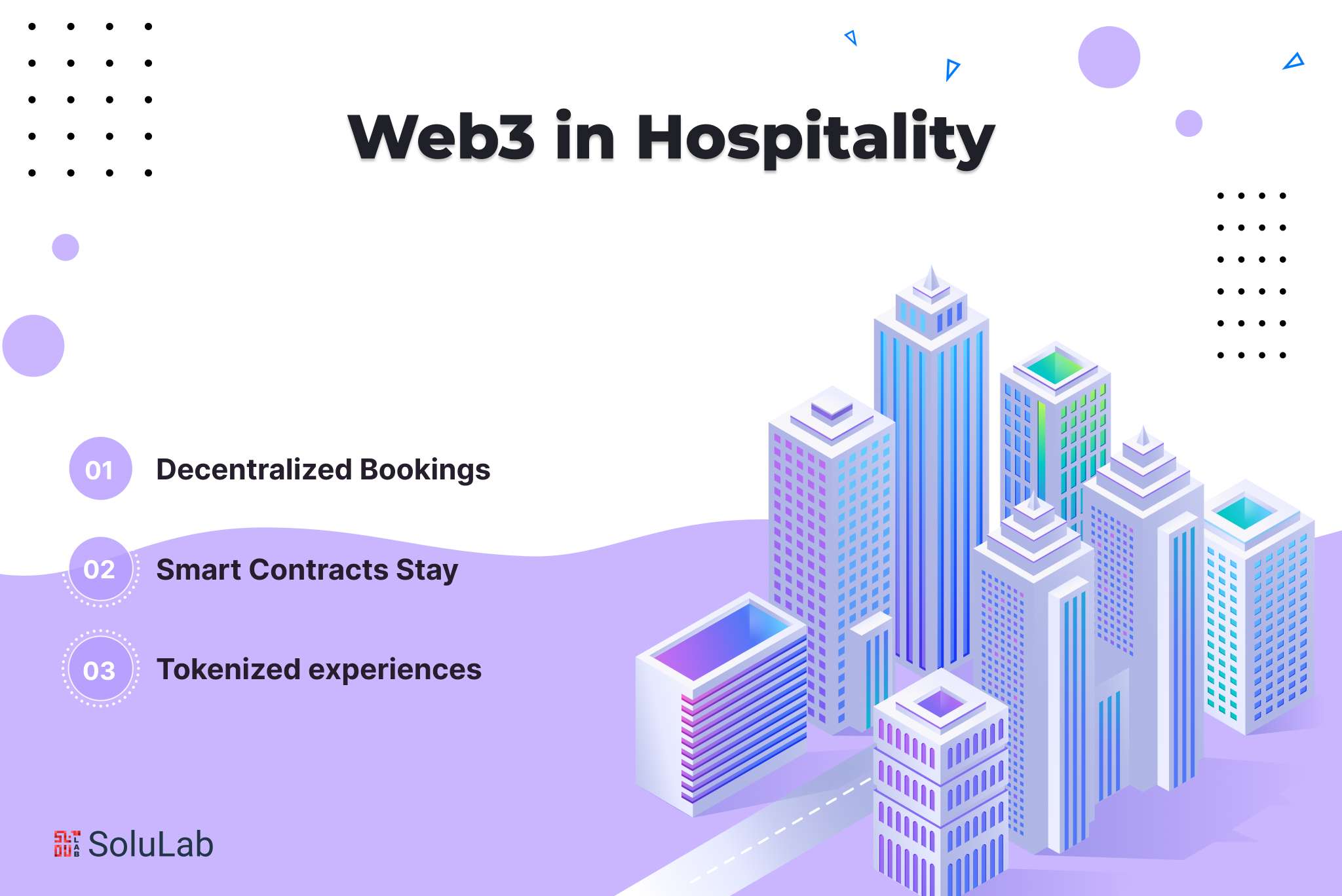
Web3 in Hospitality

The introduction of Web3 represents a fundamental shift in how companies work, and the hotel industry is no different. Web3, a decentralized and user-centric internet paradigm, ushers in a new era of openness, trust, and cooperation. This brief overview examines the definition, relevance, and evolution of Web3, with a particular emphasis on its implications in the hotel business.

Web3 is the third generation of the internet, distinguished by decentralization, blockchain technology, and more user control. Unlike its predecessors, Web3 promotes peer-to-peer connections, allowing users to take more control of their data and online experiences. Significantly, it seeks to eliminate intermediaries and promote trust via decentralized networks.

The move from Web1 to Web3 represents a fundamental leap in Internet technology. Web1, the first phase, was static and mostly information-based. Web2 provided dynamic content and user interaction via social media and collaboration web3 platforms. Web3 now utilizes blockchain technology and decentralized protocols to further empower users by securing data ownership, privacy, and security.

How Does Decentralization Impact the Traditional Models of the Hospitality Sector?

The introduction of Web3 technology is transforming the landscape of the hotel business. In this investigation of Web3 in Hospitality, we will look at the basics that characterize this game-changing paradigm, as well as the ramifications for the industry.

Fundamentals of Web3

  • Key Principles and Characteristics

Web3, the third era of the internet, introduces principles and characteristics that distinguish it from its predecessors. Transparency, trust, and interoperability are at the forefront, fostering a decentralized Web3 ecosystem where users have greater control over their data. 

Smart contracts, powered by blockchain technology, automate agreements, ensuring a tamper-resistant and secure framework for transactions. Immutability and consensus mechanisms further fortify the integrity of the system, assuring stakeholders of the reliability of data.

  • Decentralization and Blockchain Technology

At the heart of Web3 lies the concept of decentralization, a departure from the centralized models dominating the current internet landscape. Blockchain technology plays a pivotal role in achieving this decentralization, providing a distributed ledger that records transactions across a network of nodes. 

In the hospitality industry, this translates to enhanced Web3 security in transactions, reduced dependency on intermediaries, and increased efficiency in operations. The transparent and auditable nature of blockchain ensures a higher level of accountability, a valuable asset in a sector built on trust.

What is the Web3 Impact on the Industry?

The hospitality industry is undergoing a transformative journey with the integration of Web3 technologies, bringing forth decentralized applications (DApps) and smart contracts. This paradigm shift is poised to redefine operational efficiencies, security measures, and guest experiences within the sector.

  • Decentralized Applications (DApps) in Hospitality

Web3’s introduction of decentralized applications is reshaping the way hospitality services are delivered. DApps provide a decentralized, transparent, and secure environment for various functions like bookings, payments, and customer reviews. By eliminating intermediaries, DApps empowers hotels and service providers to establish direct connections with customers, fostering a more personalized and cost-effective experience.

  • Smart Contracts and Their Applications

Smart contracts, a crucial component of Web3, automate and enforce contractual agreements without the need for intermediaries. In the hospitality industry, smart contracts streamline processes like booking confirmations, cancellations, and payment settlements. This not only reduces operational costs but also enhances the overall efficiency of transactions, offering a seamless and trustless experience for both guests and service providers.

  • Enhanced Security and Privacy Features:

Web3’s focus on enhanced security and privacy features is a game-changer for the hospitality sector. With blockchain technology at its core, Web3 ensures secure and transparent data management. Guest information, financial transactions, and sensitive data are protected through decentralized networks, reducing the risk of data breaches and enhancing customer trust.
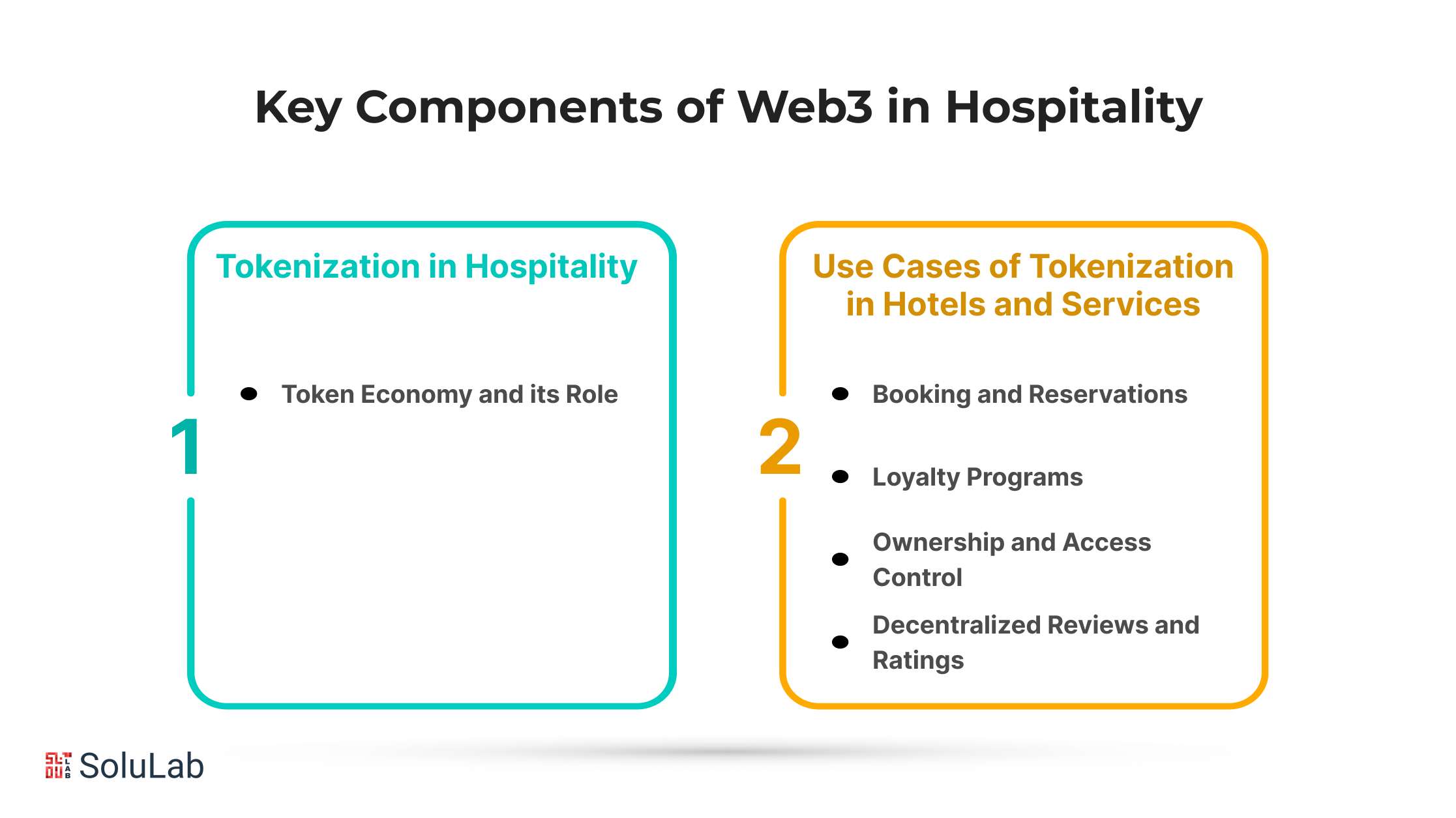
What are the Key Components of Web3 in Hospitality? Components of Web3 in Hospitality

Web3, the next evolutionary phase of the internet, is set to revolutionize various industries, including hospitality. In this context, the key components of Web3 in the hospitality sector play a pivotal role in reshaping traditional practices. One of these crucial components is the implementation of tokenization.

A. Tokenization in Hospitality

  • Token Economy and its Role

Tokenization introduces a new economic model within the hospitality industry – the token economy. This novel concept involves the creation and use of digital tokens, powered by blockchain technology, to represent assets or value. In Web3, these tokens facilitate secure and transparent transactions, fostering a decentralized ecosystem.

In the hospitality sector, the token economy plays a transformative role by decentralizing control over transactions and assets. It enhances transparency, reduces intermediaries, and ensures a more equitable distribution of value among stakeholders. Hotels and service providers can create their tokens, enabling seamless transactions and unlocking innovative revenue streams.

B. Use Cases of Tokenization in Hotels and Services

Tokenization in hospitality brings forth a myriad of use cases that redefine traditional practices. These include:

  • Booking and Reservations

Implementing tokens for booking and reservations ensures secure, fraud-resistant transactions. Smart contracts, powered by Web3, automate the booking process, eliminating the need for intermediaries.

  • Loyalty Programs  

Web3 enables decentralized loyalty programs through tokenization. Guests can earn and redeem tokens across various affiliated services and establishments within the decentralized hospitality network.

  • Ownership and Access Control

Tokenization extends to ownership and access control within hotels. Digital keys in the form of tokens enhance security and streamline the check-in process, providing a seamless and secure guest experience.

CTA1

  • Decentralized Reviews and Ratings

Web3 allows for decentralized review and rating systems, where users are incentivized with tokens for contributing valuable feedback. This ensures genuine and transparent evaluations of hospitality services.

Web3 in Hospitality is not just a buzzword; it’s a transformative force reshaping the industry. The integration of tokenization introduces efficiency, transparency, and decentralization, aligning the hospitality sector with the principles of the decentralized web.

In light of these advancements, trends in Web3 and hospitality are rapidly emerging. Companies in the hospitality sector are recognizing the need to adapt and are increasingly seeking the expertise of Web3 development companies. The demand for skilled Web3 developers is on the rise as the industry undergoes a paradigm shift towards decentralized, blockchain-based solutions.

To navigate this transition successfully, businesses in the hospitality sector are actively exploring partnerships with Web3 development companies and considering the option to hire Web3 developers. This strategic move ensures that they stay at the forefront of innovation, leveraging the full potential of Web3 technologies to enhance guest experiences and streamline operations.

How does Decentralized Identity Management Contribute to Enhanced Security in the Hospitality Industry?

Decentralized Identity Management (DID) is transforming a variety of industries, including hospitality. Embracing the benefits of decentralized identification in hospitality improves not just security but also the whole visitor experience.

One of the key benefits of decentralized identification in the hotel business is improved security. Traditional identity management solutions frequently store important guest information in centralized databases, leaving them vulnerable to data breaches. DID minimizes this vulnerability by dispersing identification information over a decentralized network, lowering the likelihood of illegal access and data compromise.

Decentralized identity management provides seamless and tailored services that contribute to a better guest experience. Guests can manage their identification information and provide special rights for various services throughout their stay. This results in a more personalized and efficient experience, as hotels and resorts may only access the relevant information with the guest’s explicit approval.

Furthermore, the introduction of Web3 into hospitality enhances these benefits. Web3 technologies, built on decentralized protocols such as blockchain, improve transparency and confidence in identity verification procedures. This not only speeds check-in operations but also enables secure and fast certification of visitor identities, contributing to a smoother and more pleasurable stay.

What is The Role of Smart Contracts and Web3?

In the constantly shifting environment of the hospitality industry, technological advances are redefining conventional methods. One such groundbreaking breakthrough is the use of smart contracts in conjunction with Web3 technology to improve booking processes and transaction security. This article analyzes the transformative impact of smart contracts on booking and transactions in the hotel sector, with a particular emphasis on Web3’s role in fostering openness and reducing fraud.

  • Streamlining Booking Processes with Smart Contracts

Smart contracts in Web3 security, built on blockchain technology, offer a decentralized and automated approach to streamline booking processes. These self-executing contracts enable parties involved in a booking – guests, hotels, and intermediaries – to interact seamlessly without the need for intermediaries. 

The transparency and immutability of blockchain ensure that once the terms are agreed upon, they cannot be altered, reducing the risk of disputes and enhancing overall efficiency.

By leveraging smart contracts, the hospitality industry can automate various stages of the booking process, including reservation confirmations, payment settlements, and cancellation policies. This not only expedites the entire process but also reduces the likelihood of errors, resulting in a more reliable and efficient booking system.

  • Ensuring Transparency and Reducing Fraud

Transparency is a cornerstone in the hospitality industry, and smart contracts play a pivotal role in enhancing it. With every transaction recorded on a decentralized ledger, stakeholders gain real-time access to a transparent and traceable history of all bookings and transactions. This not only builds trust among parties but also aids in preventing fraudulent activities.

The immutability of blockchain ensures that once a transaction is recorded, it cannot be tampered with or altered. This significantly reduces the risk of fraud, as the entire transaction history is securely stored and easily verifiable. Guests and service providers alike can benefit from this heightened level of security, fostering a more secure and reliable booking environment.

What are the Primary Technological Barriers that the Hospitality Industry Faces?

The incorporation of Web3 into the hotel sector represents a paradigm shift in how firms work, providing a decentralized and linked approach. However, this change does not come without its hurdles. In this essay, we will look at the challenges of implementing Web3 in the hotel industry, focusing on both technological and regulatory issues. Despite these limitations, the rise of Web3 opens up enormous potential for innovation and growth.

A. Challenges of Implementing Web3 in Hospitality

  • Technological Barriers

One of the foremost challenges in embracing Web3 in hospitality lies in overcoming technological barriers. Traditional systems may not seamlessly integrate with decentralized technologies, posing obstacles to the adoption of blockchain, smart contracts, and decentralized applications (dApps). The need for upskilling the existing workforce or hiring specialized Web3 developers becomes imperative to navigate this technological landscape effectively.

  • Regulatory Considerations

Implementing Web3 in the hospitality sector requires careful consideration of regulatory frameworks. The decentralized nature of Web3, with its use of blockchain and cryptocurrencies, introduces complexities in compliance with existing laws. Hospitality businesses must address issues related to data privacy, consumer protection, and financial regulations. Collaborating with legal experts to navigate this regulatory maze becomes essential to ensure a smooth transition.

B. Opportunities Amidst Challenges

  • Innovation and Efficiency

Overcoming technological barriers presents an opportunity for hospitality businesses to innovate and enhance operational efficiency. Smart contracts, for instance, can streamline processes such as bookings, payments, and loyalty programs. Embracing these technologies can result in cost savings and improved customer experiences.

  • Enhanced Security and Trust

Web3’s use of blockchain technology enhances security and transparency. Hospitality businesses can leverage this to build trust among customers by securing transactions and protecting sensitive data. The decentralized nature of blockchain also reduces the risk of fraud and cyberattacks.

  • Competitive Advantage

Early adoption of Web3 in the hospitality industry can provide businesses with a significant competitive advantage. Those who invest in cutting-edge technologies and provide a seamless, decentralized experience for customers may attract a tech-savvy clientele, setting themselves apart in a crowded market.
What are the Future Trends in Web3 and Hospitality?

Future Trends in Web3 and Hospitality

In a period of rapid technological progress, the incorporation of Web3 into the hotel industry is set to change how we experience and interact with the services provided. A canvas of new technologies is painting a vivid picture of a future in which AI and IoT blend seamlessly with Web3, changing the face of hospitality technology.

  • Integration of AI and IoT with Web3

As the hospitality industry moves towards a more decentralized and interconnected future, the integration of Artificial Intelligence (AI) and the Internet of Things (IoT) with Web3 is poised to play a pivotal role. AI algorithms, powered by the decentralized nature of Web3, are set to enhance customer experiences by personalizing recommendations, automating processes, and predicting individual preferences with unprecedented accuracy.

In collaboration with AI, the Internet of Things is transforming the delivery of hospitality services. Smart devices connected via Web3 protocols offer a continuous and efficient flow of information, resulting in a responsive and adaptive environment. From smart room controls to tailored guest experiences, the combination of AI, IoT, and Web3 is opening up new avenues of opportunity.

  • Predictions for the Future of Hospitality Technology

Web3 is more than just a term; it drives innovation that goes beyond traditional limits. The future of hospitality technology resides in Web3’s decentralized nature, where openness, security, and efficiency come together to form an ecosystem that benefits both service providers and consumers.

In this Web3-powered future, we may expect a boom in demand for qualified experts and development firms that specialize in Web3 technology. The ability to engage Web3 developers with knowledge of blockchain, smart contracts, and decentralized apps (dApps) will become a strategic advantage for hospitality organizations seeking to remain competitive in this changing field.
CTA2

Conclusion

To summarize, going through the enormous areas of Web3 in the hotel sector necessitates an organized approach, and organizations like SoluLab stand out as innovators in this obstructive effort. As a top Web3 development firm, SoluLab not only understands the complexities of this developing technology but also provides a complete guide to maximizing its potential in the hotel business.

The hotel industry is on the verge of a paradigm shift, and adopting Web3 technology is critical for remaining ahead of the curve. SoluLab’s expertise in Web3 development makes it an ideal partner for firms wishing to reinvent their digital presence and consumer interaction tactics. SoluLab bridges the gap between classic hospitality standards and cutting-edge Web3 technologies, allowing companies to thrive in the world.

Hiring SoluLab’s web3 developers is a strategic decision for companies looking to use the potential of Web3. SoluLab’s professional and experienced staff is up to date on the newest breakthroughs in blockchain, decentralized apps, and smart contracts, allowing hospitality firms to effortlessly integrate these technologies into their operations.

In essence, the combination of SoluLab’s experience with the revolutionary potential of Web3 results in a synergy that drives the hospitality sector into a new age of innovation. As companies adapt to the digital world, SoluLab emerges as a trusted friend, providing not just development services but also a transformational path to reinventing the very fabric of hospitality in the Web3 age.

FAQs

1. What is Web3 and how does it relate to the hospitality industry?

Web3 is the next evolution of the internet, focusing on decentralization, blockchain technology, and user empowerment. In the hospitality industry, it can revolutionize processes, enhance security, and create more transparent and trust-based systems.

2. How can Web3 benefit hospitality businesses?

Web3 brings benefits such as enhanced data security through decentralized systems, streamlined transactions using cryptocurrencies, and increased trust between businesses and customers through transparent and immutable ledgers.

3. Are there specific use cases for Web3 in the hospitality sector?

Yes, there are various use cases, including decentralized identity verification for guests, smart contracts for automated and secure bookings, and loyalty programs using blockchain tokens. These applications can transform the guest experience and operational efficiency.

4. Can I hire Web3 developers for my hospitality business?

Absolutely! You can hire Web3 developers to implement blockchain solutions, smart contracts, and decentralized applications tailored to the specific needs of your hospitality business. Look for skilled developers who understand both the industry and Web3 technologies.

5. How do I find a reliable Web3 development company for my hospitality project?

To find a reliable Web3 development company, consider their experience in both hospitality and blockchain technologies. Look for portfolios, client reviews, and expertise in developing decentralized applications. Communication skills and the ability to understand your business requirements are also crucial.

6. What are the key challenges in implementing Web3 solutions in hospitality?

Challenges may include regulatory compliance, integration with existing systems, and educating staff and customers about the benefits of Web3. Overcoming these challenges requires careful planning and collaboration with experienced Web3 developers.

Navigating the Future: Web3 Development and DeFi Integration

Navigating the Future: Web 3 Development and DeFi Integration

Web 3 development and DeFi integration are at the forefront of technological innovation, revolutionizing the way we interact with digital ecosystems. With the rise of decentralized finance (DeFi) and the evolution of Web3 technology, the digital landscape is undergoing a transformative shift towards a more decentralized, secure, and user-centric experience. In this blog, we delve into the realm of DeFi development, exploring the intricacies of DeFi lending platforms, the top DeFi protocols, and the expanding DeFi ecosystem. Furthermore, we navigate the promising landscape of Web3 development, uncovering the use cases of Web3 technology, the top Web3 platforms, and the emerging trends in Web3.0 development. Let’s embark on a journey to understand the convergence of Web 3 and DeFi and its implications for the future of digital interactions and transactions.

Understanding DeFi Development

In the rapidly evolving landscape of decentralized finance (DeFi), understanding DeFi development is essential for comprehending the underlying principles and mechanisms driving the growth and adoption of decentralized financial solutions. This section delves into the fundamental aspects and key components of DeFi development, providing insights into the foundational elements that shape the DeFi ecosystem and its expanding influence in the global financial landscape.

  • Exploring the DeFi Ecosystem

The DeFi ecosystem encompasses a wide array of decentralized financial applications that operate on blockchain networks, offering various financial services without the need for traditional intermediaries. Within the DeFi landscape, users can access services such as lending, borrowing, yield farming, and decentralized exchanges, among others. These DeFi platforms leverage smart contracts to automate processes and ensure transparent and efficient transactions. The decentralized nature of the DeFi ecosystem promotes financial inclusivity, enabling users worldwide to access financial services with minimal barriers. Moreover, the open-source nature of many DeFi protocols fosters innovation and collaboration, allowing developers to build upon existing infrastructure and create novel financial products tailored to specific user needs.

  • The Rise of DeFi Lending Platforms

DeFi lending platforms have emerged as a crucial component within the DeFi ecosystem, providing users with opportunities to lend or borrow digital assets in a decentralized manner. These platforms enable users to lend their cryptocurrencies and earn interest, while borrowers can utilize these assets as collateral to obtain loans. DeFi lending protocols typically operate through smart contracts, ensuring the secure and automated execution of lending and borrowing activities. By eliminating the need for traditional financial institutions and intermediaries, DeFi lending platforms offer a more accessible and efficient avenue for users to access liquidity and generate returns on their digital assets.

  • Unraveling the Top DeFi Protocols

Within the DeFi space, various protocols have gained prominence for their contributions to the development of decentralized financial applications. These protocols often serve as the foundational infrastructure for a range of DeFi services, including decentralized exchanges (DEXs), liquidity provision, asset management, and yield farming. Some of the notable DeFi protocols include Compound, Aave, MakerDAO, Uniswap, and Synthetix, among others. These protocols play a crucial role in fostering a decentralized and permissionless financial environment, enabling users to engage in a diverse set of financial activities with increased autonomy and flexibility.

  • Analyzing the Best DeFi Exchanges

DeFi exchanges, also known as decentralized exchanges (DEXs), facilitate the peer-to-peer trading of digital assets without the need for intermediaries or centralized authorities. These exchanges operate on blockchain networks and leverage automated market-making (AMM) algorithms to enable seamless and efficient asset swaps. DeFi exchanges offer users enhanced security, improved liquidity, and reduced trading fees compared to traditional centralized exchanges. Some of the prominent DeFi exchanges include Uniswap, SushiSwap, and PancakeSwap, which have garnered significant attention for their contributions to the growth and accessibility of decentralized trading within the DeFi ecosystem.

Exploring Web3 Development

Exploring the realm of Web3 development unveils the transformative potential of next-generation web technologies in driving the evolution of decentralized systems and applications. This section delves into the innovative aspects and functionalities of Web3 development, shedding light on the cutting-edge technologies and tools that facilitate the development of user-centric and decentralized solutions, fostering a more inclusive and secure digital environment.

CTA1

  • Understanding the Concept of Web3 Technology

Web3 technology represents the next phase of internet evolution, characterized by the integration of decentralized protocols, blockchain technology, and peer-to-peer networks. Unlike its predecessor, Web2, which primarily focuses on centralized platforms and data control by corporations, Web3 emphasizes user sovereignty, data ownership, and enhanced privacy. The core principles of Web3 technology revolve around decentralization, transparency, and user empowerment, enabling individuals to interact and transact directly without relying on intermediaries. Through the utilization of blockchain and distributed ledger technology, Web3 applications foster trustless and secure interactions, providing users with greater control over their digital footprint and online activities.

  • Key Use Cases of Web3 Technology

Web3 technology has paved the way for various innovative use cases across multiple industries, offering solutions that prioritize data privacy, security, and decentralized governance. Some of the prominent use cases of Web3 technology include decentralized finance (DeFi), non-fungible tokens (NFTs), decentralized autonomous organizations (DAOs), decentralized social networks, and supply chain management solutions, among others. By leveraging the capabilities of blockchain and distributed ledger technology, Web3 applications enable the seamless exchange of value, transparent data management, and secure digital interactions, revolutionizing the way individuals and organizations engage with digital platforms and services.

  • Top Web3 Platforms in the Market

Within the Web3 ecosystem, several platforms have emerged as key players, driving the adoption and integration of decentralized technologies across various industries. These platforms offer users and developers a comprehensive set of tools and services to build, deploy, and manage Web3 applications effectively. Some of the leading Web3 platforms include Ethereum, Polkadot, Cardano, Binance Smart Chain, and Solana, each offering unique features and functionalities that cater to diverse use cases and development requirements. These platforms serve as the backbone for the development of decentralized applications (dApps) and facilitate the seamless integration of blockchain technology into existing digital infrastructures.

  • Uncovering the Web3.0 Development Trend

The emergence of Web 3.0 signifies a paradigm shift in internet architecture, emphasizing the decentralization of data, applications, and digital interactions. Web 3.0 development trends focus on enhancing user privacy, data security, and user-centric experiences, enabling individuals to regain control over their digital identities and online activities. As the demand for decentralized applications and services continues to grow, the Web 3.0 development trend emphasizes the creation of interoperable protocols, scalable blockchain solutions, and user-friendly interfaces, fostering a user-centric and transparent digital environment that prioritizes data ownership and security.

DeFi Development and Integration

DeFi Development and Integration

The seamless integration of DeFi solutions within the broader framework of Web3 technologies plays a pivotal role in shaping the future of decentralized finance and digital ecosystems. This section provides insights into the intricate processes and strategies involved in the development and integration of DeFi services, highlighting the synergistic relationship between DeFi development and the broader spectrum of Web3 technologies.

  • Navigating the DeFi Ecosystem

DeFi development has transformed the traditional financial landscape by enabling decentralized lending, borrowing, and trading activities without the need for intermediaries. The DeFi ecosystem comprises a diverse range of protocols, platforms, and applications that facilitate the seamless exchange of digital assets, yield farming, liquidity provision, and decentralized trading. Through the utilization of blockchain and smart contract technology, DeFi protocols ensure transparency, security, and efficiency in financial transactions, offering users a range of options to earn passive income and participate in various decentralized financial activities.

  • Leveraging DeFi Lending Platforms

DeFi lending platforms play a crucial role in enabling users to lend and borrow digital assets without the need for traditional financial institutions. These platforms utilize smart contracts to automate the lending process, allowing users to earn interest on their deposited assets or access loans using their cryptocurrency holdings as collateral. By eliminating the need for intermediaries and central authorities, DeFi lending platforms provide users with greater control over their funds and offer competitive interest rates and flexible borrowing options, fostering a more inclusive and accessible financial ecosystem for users worldwide.

  • Exploring Top DeFi Protocols

Within the DeFi space, several protocols have gained prominence for their innovative approaches to decentralized finance and their contribution to the expansion of the DeFi ecosystem. These protocols encompass a range of services, including decentralized exchanges (DEXs), lending and borrowing platforms, yield farming protocols, and liquidity provision mechanisms. Some of the top DeFi protocols include Uniswap, Aave, Compound, MakerDAO, and Synthetix, each offering unique features and functionalities that cater to diverse DeFi use cases and financial needs.

  • DeFi Trading Platforms and Exchanges

DeFi trading platforms and exchanges have revolutionized the way users access and trade digital assets, offering decentralized, non-custodial solutions that prioritize security and user control. These platforms facilitate the seamless exchange of cryptocurrencies, tokens, and other digital assets, enabling users to trade directly with one another without the need for intermediaries. By leveraging the capabilities of blockchain and smart contract technology, DeFi trading platforms provide users with secure and transparent trading experiences, offering a range of trading pairs, liquidity pools, and yield farming opportunities to maximize their returns and diversify their investment portfolios.

Advancements in Web3 Development

The ongoing advancements in Web3 development represent a critical milestone in the evolution of decentralized technologies, underscoring the continuous innovation and refinement of digital infrastructures and platforms. This section explores the latest advancements in Web3 development, emphasizing the transformative capabilities and potential implications for the future of decentralized systems and services.

  • Harnessing the Power of Web3 Technology

Web3 technology has ushered in a new era of internet capabilities, emphasizing decentralized, peer-to-peer interactions and data ownership. This advancement has led to the development of innovative solutions that prioritize user privacy, security, and digital sovereignty. By leveraging blockchain, distributed ledger technology, and decentralized protocols, Web3 development promotes the creation of user-centric applications and platforms that empower individuals to control their digital identities and engage with online services in a secure and transparent manner.

  • Top Web3 Platforms and Their Capabilities

Several leading Web3 platforms have emerged as key players in the development and integration of decentralized technologies, offering developers and users a wide range of tools and services to build and deploy Web3 applications effectively. These platforms provide comprehensive solutions for decentralized application development, blockchain integration, and digital asset management, fostering the creation of user-friendly and secure digital environments that prioritize data privacy and transparency. Some of the top Web3 platforms include Ethereum, Polkadot, IPFS, Filecoin, and Holochain, each contributing to the advancement of decentralized technologies and the expansion of the Web3 ecosystem.

  • Exploring Web3 Use Cases and Applications

The integration of Web3 technology has led to the development of various use cases and applications across multiple industries, enabling the creation of decentralized applications, peer-to-peer networks, and transparent data management systems. Web3 use cases encompass a wide range of applications, including decentralized finance (DeFi), non-fungible tokens (NFTs), decentralized social networks, supply chain management solutions, and decentralized autonomous organizations (DAOs), among others. These use cases demonstrate the transformative potential of Web3 technology in revolutionizing digital interactions, data management, and online transactions, fostering a more inclusive and user-centric digital landscape for individuals and organizations worldwide.

  • Emerging Web3.0 Development Trends

The evolution of Web 3.0 development trends signifies the continuous advancement and adoption of decentralized technologies, emphasizing the creation of interoperable protocols, scalable blockchain solutions, and user-friendly interfaces. Web 3.0 development trends focus on enhancing data privacy, user security, and digital sovereignty, promoting the creation of decentralized applications and platforms that empower users to control their digital experiences and engage with online services in a secure and transparent manner. As the demand for decentralized technologies and applications continues to grow, Web 3.0 development trends emphasize the need for scalable, efficient, and user-centric solutions that prioritize data privacy, security, and user empowerment.

Integrating DeFi with Web3 Technologies

Integrating DeFi with Web3 Technologies

The integration of DeFi services with Web3 technologies marks a significant paradigm shift in the digital landscape, fostering a more cohesive and interconnected ecosystem for decentralized financial solutions. This section delves into the intricacies of integrating DeFi with Web3 technologies, elucidating the key strategies and benefits of this collaborative approach, which leads to the development of innovative and user-friendly financial solutions.

  • Synergizing DeFi and Web3 Ecosystems

The integration of DeFi with Web3 technologies marks a significant step toward creating a more interconnected and user-centric financial landscape, emphasizing decentralized, transparent, and secure financial services and applications. The collaboration between DeFi and Web3 ecosystems enables the seamless integration of decentralized financial protocols with blockchain-based technologies, promoting the development of user-friendly and accessible financial solutions that prioritize data privacy, security, and user empowerment. By leveraging the capabilities of blockchain, smart contracts, and decentralized networks, the integration of DeFi with Web3 technologies fosters the creation of a robust and inclusive financial ecosystem that caters to the diverse financial needs and preferences of users worldwide.

  • Exploring DeFi Lending and Borrowing Platforms in Web3

The integration of DeFi lending and borrowing platforms within the Web3 ecosystem has facilitated the seamless exchange of digital assets and the provision of secure and transparent lending and borrowing services for users. These platforms leverage the capabilities of blockchain and smart contract technology to automate lending processes, enable instant fund transfers, and ensure transparent and secure transactions. By integrating DeFi lending and borrowing platforms with Web3 technologies, users can access a wide range of financial services, including peer-to-peer lending, decentralized borrowing, and yield farming, fostering a more accessible and inclusive financial landscape for individuals and businesses.

  • Leveraging Top DeFi Protocols in Web3 Applications

Top DeFi protocols play a pivotal role in driving the integration of decentralized financial services within the Web3 ecosystem, offering users a diverse range of financial tools and services to manage and grow their digital assets effectively. These protocols enable users to participate in various financial activities, including lending, borrowing, liquidity provision, and yield farming, while ensuring transparency, security, and efficiency in financial transactions. By leveraging the capabilities of top DeFi protocols within Web3 applications, users can access decentralized financial services seamlessly, diversify their investment portfolios, and maximize their returns, fostering a more inclusive and accessible financial environment for users worldwide.

  • Facilitating DeFi Trading and Exchanges in Web3 Environments

The integration of DeFi trading platforms and exchanges within Web3 environments has revolutionized the way users access and trade digital assets, offering decentralized, secure, and transparent trading solutions for individuals and businesses. These platforms leverage blockchain and smart contract technology to facilitate the seamless exchange of digital assets, provide users with greater control over their funds, and ensure transparency and security in financial transactions. By integrating DeFi trading platforms and exchanges with Web3 technologies, users can access a wide range of trading pairs, liquidity pools, and yield farming opportunities, fostering a more inclusive and accessible trading landscape for users worldwide.

Enhancing Web3 Technologies with DeFi Integration

The enhancement of Web3 technologies through the integration of DeFi principles and functionalities represents a crucial step in advancing the capabilities and applications of decentralized systems. This section examines the ways in which DeFi integration enhances the functionalities and user experiences of Web3 technologies, paving the way for the development of secure, transparent, and inclusive digital ecosystems.

  • Amplifying Web3 Use Cases with DeFi Applications

The integration of DeFi applications within the Web3 environment has expanded the scope and utility of Web3 technologies, enabling the seamless integration of decentralized financial services and applications with blockchain-based platforms and solutions. This integration has empowered users to access a diverse range of financial tools and services, including decentralized lending and borrowing, liquidity provision, asset trading, and yield farming, fostering a more interconnected and user-centric financial landscape that prioritizes accessibility, transparency, and security. By amplifying Web3 use cases with DeFi applications, users can benefit from a wide range of decentralized financial services, access advanced financial tools, and participate in various financial activities, promoting financial inclusivity and empowerment for users worldwide.

  • Exploring the Synergy Between DeFi and Web3 Technology

The synergy between DeFi and Web3 technology has catalyzed the development of innovative and user-friendly financial solutions, emphasizing decentralized, transparent, and secure financial services and applications for users worldwide. This synergy leverages the capabilities of blockchain, smart contract technology, and decentralized networks to foster the seamless integration of decentralized financial protocols with Web3 applications, promoting the development of user-centric and inclusive financial ecosystems that prioritize data privacy, security, and user control. By exploring the synergy between DeFi and Web3 technology, users can access a wide range of financial tools and services that facilitate secure and efficient financial transactions, fostering a more accessible and user-centric financial landscape for individuals and businesses.

  • Navigating Web3.0 Development Trends and DeFi Integration

Navigating Web 3.0 development trends and the integration of DeFi within the Web3 ecosystem highlights the evolution of decentralized technologies and financial services, emphasizing the importance of creating an interconnected and user-centric financial environment that prioritizes accessibility, transparency, and security. This integration navigates the advancements in blockchain, smart contract technology, and decentralized networks to foster the development of user-friendly and inclusive financial solutions that cater to the diverse financial needs and preferences of users worldwide. By embracing Web 3.0 development trends and DeFi integration, users can navigate a rapidly evolving financial landscape, access advanced financial tools and services, and participate in various financial activities, fostering financial empowerment and inclusivity for individuals and businesses.

  • Embracing the Role of Top Web3 Development Companies in DeFi Integration

The role of top Web3 development companies in DeFi integration underscores the significance of collaboration and innovation in driving the development and adoption of decentralized financial services and applications. These companies leverage their expertise in blockchain, smart contract technology, and decentralized networks to facilitate the seamless integration of DeFi solutions within the Web3 ecosystem, offering users a diverse range of financial tools and services that promote accessibility, transparency, and security. By embracing the role of top Web3 development companies in DeFi integration, users can benefit from the expertise and knowledge of industry-leading professionals, access cutting-edge financial solutions, and participate in a dynamic and user-centric financial landscape that prioritizes user control and empowerment.

The Role of Top Web3 Development Companies in the DeFi Ecosystem

The Role of Top Web3 Development Companies in the DeFi Ecosystem

The active participation of leading Web3 development companies in the DeFi ecosystem underscores the pivotal role these firms play in driving innovation and fostering the adoption of decentralized financial solutions. This section emphasizes the significant contributions and expertise of top Web3 development companies, highlighting their role in shaping the future of the DeFi landscape and accelerating the adoption of user-centric and secure financial services.

  • Leveraging Expertise for Seamless DeFi Integration

The role of top Web3 development companies in the DeFi ecosystem revolves around leveraging their expertise in blockchain, smart contract technology, and decentralized networks to facilitate the seamless integration of DeFi applications and protocols within the Web3 environment. These companies prioritize the development of user-friendly and innovative financial solutions that cater to the diverse financial needs and preferences of users worldwide, fostering a more accessible and inclusive financial landscape that emphasizes transparency, security, and user control. By leveraging their expertise for seamless DeFi integration, these companies enable users to access a wide range of financial tools and services, participate in various financial activities, and explore new opportunities for financial growth and empowerment.

  • Collaborative Innovations for Enhanced DeFi Ecosystem

Collaborative innovations for the enhanced DeFi ecosystem emphasize the importance of fostering partnerships and collaborations among top Web3 development companies to drive the development and adoption of user-centric and inclusive financial solutions. These collaborative efforts focus on promoting the integration of decentralized financial protocols with Web3 applications, fostering the development of a more interconnected and user-friendly financial landscape that prioritizes accessibility, transparency, and security. By engaging in collaborative innovations for the enhanced DeFi ecosystem, top Web3 development companies can contribute to the advancement of decentralized technologies and financial services, promote financial inclusivity and empowerment, and facilitate the growth and expansion of the DeFi ecosystem for users worldwide.

  • Promoting User-Centric Financial Solutions and Services

Promoting user-centric financial solutions and services highlights the commitment of top Web3 development companies to create innovative and inclusive financial ecosystems that cater to the diverse financial needs and preferences of users worldwide. These companies prioritize the development of user-friendly and accessible financial tools and services, emphasizing the importance of transparency, security, and user control in facilitating seamless and efficient financial transactions. By promoting user-centric financial solutions and services, top Web3 development companies enable users to access advanced financial tools, participate in various financial activities, and explore new opportunities for financial growth and empowerment, fostering a more dynamic and user-friendly financial landscape that prioritizes user experience and satisfaction.

  • Driving Innovation and Advancements in DeFi and Web3 Technology

The drive for innovation and advancements in DeFi and Web3 technology underscores the commitment of top Web3 development companies to foster the development and adoption of cutting-edge and user-friendly financial solutions that promote accessibility, transparency, and security. These companies focus on driving innovation and advancements in blockchain, smart contract technology, and decentralized networks to create a more interconnected and inclusive financial ecosystem that caters to the diverse financial needs and preferences of users worldwide. By driving innovation and advancements in DeFi and Web3 technology, top Web3 development companies contribute to the evolution of decentralized technologies and financial services, promote financial inclusivity and empowerment, and facilitate the growth and expansion of the DeFi ecosystem for individuals and businesses.

The Growing Significance of Web3.0 Development Trends in DeFi Ecosystem

The growing significance of Web 3.0 development trends in the DeFi ecosystem reflects the increasing focus on next-generation web technologies and their transformative potential in revolutionizing the global financial landscape. This section explores the emerging trends and developments in Web 3.0, emphasizing their impact on the DeFi ecosystem and the broader digital environment, signaling a shift toward more advanced and inclusive digital infrastructures.

  • Embracing Decentralized Finance with Web3.0 Innovations

The growing significance of Web 3.0 development trends in the DeFi ecosystem highlights the industry’s shift towards embracing decentralized finance with the integration of advanced Web 3.0 innovations. These trends emphasize the importance of leveraging blockchain, smart contract technology, and decentralized networks to create a more interconnected and accessible financial landscape that prioritizes transparency, security, and user control. By embracing Web 3.0 innovations, the DeFi ecosystem can foster the development and adoption of user-centric and inclusive financial solutions, promoting financial inclusivity, accessibility, and empowerment for individuals and businesses worldwide.

  • Driving Technological Advancements for Enhanced DeFi Offerings

Driving technological advancements for enhanced DeFi offerings underscores the industry’s commitment to fostering the development and adoption of cutting-edge and user-friendly financial solutions that cater to the diverse financial needs and preferences of users worldwide. These advancements focus on driving innovation in blockchain, smart contract technology, and decentralized networks to create a more dynamic and inclusive financial ecosystem that promotes accessibility, transparency, and security. By driving technological advancements for enhanced DeFi offerings, the industry can facilitate the growth and expansion of the DeFi ecosystem, foster financial inclusivity and empowerment, and promote the evolution of decentralized technologies and financial services.

  • Fostering Collaboration and Integration Across DeFi and Web3.0 Landscape

Fostering collaboration and integration across the DeFi and Web 3.0 landscape highlights the industry’s emphasis on promoting partnerships and collaborations among key stakeholders to drive the development and adoption of user-centric and interconnected financial solutions. These collaborative efforts aim to foster the integration of decentralized financial protocols with Web 3.0 applications, creating a more seamless and efficient financial ecosystem that prioritizes user experience, security, and transparency. By fostering collaboration and integration across the DeFi and Web 3.0 landscape, the industry can promote the development of a more interconnected and user-friendly financial landscape, facilitate the growth and expansion of the DeFi ecosystem, and drive the evolution of decentralized technologies and financial services for users worldwide.

  • Exploring Future Possibilities and Innovations in DeFi and Web3.0

Exploring future possibilities and innovations in DeFi and Web 3.0 underscores the industry’s dedication to exploring new opportunities and advancements in decentralized finance and technology. These explorations focus on identifying emerging trends and technologies that can shape the future of the DeFi ecosystem, fostering the development and adoption of innovative and user-friendly financial solutions that cater to the evolving needs and preferences of users worldwide. By exploring future possibilities and innovations in DeFi and Web 3.0, the industry can contribute to the advancement of decentralized technologies and financial services, promote financial inclusivity and empowerment, and drive the evolution of the global financial landscape for individuals and businesses.

CTA2

Conclusion

In the fast-evolving landscape of DeFi and Web3 development, the role of pioneering companies such as SoluLab stands out as an essential catalyst for innovation and transformative growth. As a leading Web3 development company with a focus on DeFi solutions, SoluLab continues to drive the advancement of cutting-edge technologies and tools, empowering businesses to thrive in the rapidly changing digital ecosystem. With its expertise in DeFi development and a profound understanding of the intricate nuances of Web3 technologies, SoluLab remains at the forefront of revolutionizing the digital landscape, providing comprehensive solutions that cater to the diverse needs of modern businesses and industries.

By leveraging the expertise of a top DeFi development service and Web3 development company like SoluLab, businesses can unlock a world of possibilities and tap into the immense potential offered by DeFi and Web3 technologies. With a focus on delivering seamless and innovative solutions, SoluLab empowers businesses to stay ahead of the curve, embrace the latest trends, and capitalize on the transformative capabilities of DeFi and Web3. As a leading DeFi development service and Web3 development company, SoluLab’s dedicated team of skilled professionals and commitment to excellence continue to set new benchmarks in DeFi and Web3 development, ensuring that businesses are well-equipped to navigate the dynamic landscape and thrive in the digital age.

FAQs

1. What is the role of DeFi in the Web3 development landscape?

The role of DeFi in the Web3 development landscape is primarily centered around enabling decentralized financial services and applications, creating a more open and accessible financial ecosystem powered by blockchain technology.

2. How can businesses benefit from integrating DeFi with Web3 technologies?

Businesses can benefit from integrating DeFi with Web3 technologies by gaining access to a more secure, transparent, and efficient financial infrastructure. This integration allows for the development of decentralized applications (dApps) and the facilitation of peer-to-peer transactions with reduced intermediation.

3. What are the key features to look for when choosing a top Web3 development company?

When selecting a top Web3 development company, it is crucial to consider factors such as expertise in blockchain technology, experience in developing decentralized applications, a track record of successful projects, and a strong understanding of DeFi protocols and ecosystems.

4. How does SoluLab contribute to the advancement of DeFi and Web3 technologies?

SoluLab contributes to the advancement of DeFi and Web3 technologies through its comprehensive development services, including DeFi development, blockchain solutions, and Web3 integration. The company’s expertise and commitment to innovation make it a valuable contributor to the growth of these sectors.

5. What are the emerging trends and future prospects for DeFi and Web3 development?

The emerging trends and future prospects for DeFi and Web3 development are promising, with increased adoption of decentralized financial services, expansion of blockchain applications, and the integration of advanced technologies to enhance security, scalability, and usability within the ecosystem.

6. How does the integration of DeFi and Web3 technologies impact the financial sector?

The integration of DeFi and Web3 technologies significantly impacts the financial sector by revolutionizing traditional financial processes, promoting financial inclusion, enabling global access to financial services, and fostering innovation in the way financial transactions are conducted.

7. What are the challenges and opportunities for businesses looking to adopt DeFi and Web3 solutions?

Businesses looking to adopt DeFi and Web3 solutions face challenges related to regulatory compliance, security risks, scalability issues, and user adoption. However, these challenges present opportunities for companies to pioneer groundbreaking solutions, establish new standards for financial services, and contribute to the growth and development of the DeFi and Web3 landscape.

Embracing the Magic of Soulbound Tokens in the Web3 Era

Embracing the Magic of Soulbound Tokens in the Web3 Era

In the not-so-distant past, the idea of owning something truly unique and rare in the digital realm was a novel concept. Digital assets, for all their convenience and accessibility, often lacked the magic of physical ownership. Then came Web3, the revolutionary paradigm shift that changed everything. It ushered in a new era of digital ownership, transforming how we perceive, interact with, and trade digital assets. At the heart of this transformation lies a concept that’s as enchanting as it is transformative: Soulbound Tokens (SBTs).

As the digital world becomes increasingly entangled with the physical one, we find ourselves in a time where digital ownership means more than just possessing files or data. Soulbound Tokens represent the future of digital ownership, promising not only possession but also a unique connection with our digital assets. In this blog, we will embark on a journey to explore the enchanting world of Soulbound Tokens in the Web3 technology era, unraveling their significance, magic, and the possibilities they bring to the forefront of the digital universe.

What Are Soulbound Tokens? Unveiling the Magic of Ownership in the Web3 Era

In the ever-evolving landscape of Web3 development, where decentralization, blockchain technology, and the Internet of Value reign supreme, a new paradigm in ownership has emerged—Soulbound Tokens. These tokens represent an exciting leap forward in the way we perceive and interact with assets, both digital and physical, in the digital age.

Defining Soulbound Tokenization

At its core, Soulbound Tokenization refers to the process of creating digital tokens, where each token is uniquely linked to an individual, an entity, or even a physical asset. The term “Soulbound” implies a deep, unbreakable connection between the token and its rightful owner. It signifies a profound shift from traditional models of ownership and introduces an era of true, secure ownership in the digital realm.

How Do Soulbound Tokens Work?

How Do Soulbound Tokens Work?

Soulbound tokens work by harnessing the power of blockchain technology and smart contracts. Here’s a simplified breakdown of how Soulbound tokens and working takes place:

  • Creation: To initiate the creation of a soulbound token, an asset, whether it’s a piece of digital art, a real estate property, or an identity certificate, is tokenized through a smart contract. This tokenization process generates a unique digital representation of the asset.
  • Identity Verification: The owner’s identity is securely linked to the token using cryptographic techniques. This ensures that only the rightful owner can access, trade, or make changes to the token.
  • Immutable Ownership: Once the token is created, it becomes an immutable record on the blockchain. It cannot be altered, duplicated, or tampered with, ensuring the highest level of trust and security.

Read Our Blog: Top 10 Web3 Platforms of 2025

  • Transfer of Ownership: The owner of a soulbound token has the authority to transfer it to another party. This transfer, facilitated through blockchain transactions, is both transparent and tamper-proof, guaranteeing the integrity of the ownership change.
  • Smart Contract Functionality: Many soulbound tokens are equipped with smart contract features, allowing for conditional actions. For instance, a token representing a digital artwork may automatically distribute royalties to the original artist whenever it’s resold.
  • Interoperability: One of the remarkable features of soulbound tokens is their interoperability with various platforms, applications, and ecosystems in the Web3 space. This means that a soulbound token for a virtual real estate property in a gaming world can seamlessly integrate with a metaverse, further expanding its utility.

CTA1

The Magic of Soulbound Tokens

The enchanting aspect of soulbound tokens lies in the assurance of true ownership. In the traditional digital world, proving ownership or authenticity of an asset is challenging, but soulbound tokens solve this problem. The unbreakable link between the token and its owner ensures that they have full control over their assets, be it a digital collectible, a house, or their personal identity.

Moreover, the potential applications of soulbound tokens are as vast and diverse as the Web 3.0 development trends landscape itself. From collectibles and digital art to real estate, gaming, and self-sovereign identity, these tokens are ushering in a new era of possibilities.

In essence, soulbound tokens are a testament to the transformative power of blockchain technology and decentralization. They offer a glimpse into a future where ownership is not just a matter of possession, but a digital manifestation of the soul—a bond that is unbreakable and magical in the Web3 era.

The Role of Soulbound Tokens in the Web3 Space

The Role of Soulbound Tokens in the Web3 Space

Web 3.0 development trends are reshaping the digital landscape, introducing new ways to handle personal information, accomplishments, and credentials. In this Web3 era, the concept of Soulbound Tokenization has emerged as a transformative force, offering unprecedented applications across various aspects of our lives.

Let’s delve into how Soulbound Tokens are set to revolutionize Web3 and how they can be harnessed in several key use cases:

  • Proof of Professional Skills in Web3 Development Companies: In the Web3 realm, individuals can leverage Soulbound Tokens to showcase their credentials, including educational qualifications, work history, professional certificates, and resumes. For Web3 development companies, these tokens provide a powerful means to verify the authenticity of an applicant’s qualifications, enhancing the hiring process and ensuring that the right skills are brought on board.
  • Credit Reports and Loan Approval: Web3 has the potential to redefine the financial sector. Here, users can use Soulbound Tokens to present their credit profiles to lenders. This innovative approach streamlines the loan approval process, enabling lenders to quickly assess an individual’s credit history and make informed lending decisions. Web 3.0 development trends in the financial industry are paving the way for seamless and secure credit transactions.
  • Medical Record Management in Web3 Healthcare: Managing medical records in a traditional healthcare system can be a cumbersome task. However, in the Web3 healthcare landscape, patients and healthcare providers can employ Soulbound Tokens to store and share medical records effortlessly. Patients gain full control of their data, facilitating quick identity verification and hassle-free sharing of medical history with doctors, particularly when switching healthcare providers or dealing with insurance claims. Web3 development services are ushering in a new era of patient-centric healthcare.
  • Digital IDs and Memberships for Web3 Institutions: Web3 institutions, such as gyms, sports clubs, and libraries, are adopting Soulbound Tokenization to provide digital IDs and memberships to their members. These tokens can be securely stored in digital wallets, offering members convenient access to their data, visit history, and long-term token retention. As part of Web3 development trends, this approach reduces the reliance on physical cards and wallets, providing a seamless and efficient user experience.
  • Attendance Verification in Web3 Events: Soulbound Tokens can be effectively used to verify event attendance in Web3, similar to the Proof of Attendance Protocol (POAP) in use today. These tokens serve the primary purpose of confirming an individual’s participation in an event, enhancing transparency and trust in Web3 event management. The Web3 development landscape is fostering innovative approaches to event verification and engagement.

Read Also: The Role of Blockchain in Web 3 Development

  • Reputation Indicator for Web3 DAOs: In Web3, Soulbound Tokens have the potential to become powerful indicators of reputation. Individuals holding reputable tokens can play a pivotal role in the development of decentralized autonomous organizations (DAOs). These reputable token holders may receive majority votes, entrusted to safeguard the integrity of DAOs and protect them from malicious actors. Web3 development trends are driving the evolution of governance and trust within decentralized organizations.

In brief, the rise of Web3 and the integration of Soulbound Tokenization are setting the stage for a paradigm shift in how we manage and utilize personal information and accomplishments. These tokens are poised to redefine Web3 development trends across various industries, offering a secure and efficient means of interaction and verification in this new era of the internet.

Amazing Benefits of Soulbound Tokens

Benefits of Soulbound Tokens

Soulbound tokens (SBTs), bring a range of compelling advantages to the Web3 ecosystem. These tokens offer a fundamental shift away from centralized systems, ensure document authenticity, foster trust within the Web3 space, and come with the unique attribute of being non-tradable and non-transferable. Let’s delve deeper into these benefits and explore how SBTs achieve them:

  • Reducing Dependence on Centralized Services

Presently, many services in the digital realm operate under centralized models, allowing companies to access and harvest users’ personal data for various purposes, including marketing. SBTs empower individuals with unprecedented sovereignty over their data. Users themselves assume control of their personal information, deciding who can access it and for what specific purposes. In the Web3 era, SBTs redefine the ownership and management of personal data, reducing reliance on centralized intermediaries.

Check Our Blog Post: How are Soul Bound Tokens different from NFTs?

  • Non-Tradable and Non-Transferable Tokens

Unlike NFTs, which can be effortlessly bought, collected, or hoarded for speculative purposes, SBTs follow a different path. Their value is not solely rooted in monetary gain but rather in their significance for individuals. SBTs demand effort and dedication to obtain, serving as a substantial testament to one’s reputation and granting access to critical features such as loans and exclusive projects. This unique characteristic of non-tradability and non-transferability ensures that SBTs retain their core purpose and utility, contributing to the resilience of the Web3 ecosystem.

  • Guaranteeing Document Authenticity

Soulbound tokens inherently encompass digital verification and documentation. This feature proves advantageous for both individuals and institutions. Users can effortlessly store their essential documents within SBTs, ensuring easy accessibility from anywhere. Simultaneously, agencies benefit from expedited verification processes, as the authenticity of documents can be swiftly validated, reducing bureaucratic hurdles and enhancing efficiency. SBTs streamline the document management landscape, making it more secure and efficient.

Read Our Blog Post: The Rise of Web 3.0: Exploring its Impact on the Digital Landscape

  • Enhancing Trust within the Decentralized Society

In the Web3 decentralized society, trust is paramount. SBTs play a pivotal role in building and strengthening trust among community members. These tokens provide members of the decentralized society with a means to assess individuals’ reputations. Consequently, individuals can trust each other more than they would through casual interactions on social media or within digital projects. The use of SBTs elevates the trust factor, contributing to a more transparent and dependable Web3 ecosystem.

Limitations and Challenges of Soulbound Tokens

Limitations and Challenges of Soulbound Tokens

While soulbound tokens in Web3 offer a promising vision of digital ownership, it’s essential to recognize that they are not without their limitations and challenges. As with any emerging technology, the implementation of soulbound tokens presents a set of issues that need to be addressed. Here are some key limitations and challenges associated with soulbound tokens:

  • Complexity and Accessibility: Implementing soulbound tokens can be technically complex. Users may face challenges in creating and managing these tokens, which could hinder widespread adoption. There’s a learning curve associated with blockchain technology, which could be a barrier to entry for many individuals.
  • Security Concerns: While blockchain technology is known for its security, it’s not immune to vulnerabilities. Hacks and breaches have occurred, and there’s a risk that soulbound tokens could become targets for cyberattacks. Ensuring the security of these tokens is a critical concern.
  • Regulatory Uncertainty: The regulatory landscape for blockchain and cryptocurrencies is still evolving. Depending on the jurisdiction, soulbound tokens could fall under various legal frameworks, including securities regulations and data protection laws. Navigating this regulatory uncertainty can be a challenge.
  • User Responsibility: With great power comes great responsibility. Users are in control of their soulbound tokens, but this also means they must safeguard their private keys and follow best practices in blockchain security. The risk of losing access to their tokens due to a forgotten password or lost key is a real concern.
  • Scalability: As the Web3 ecosystem grows, scalability becomes a pressing issue. Ensuring that soulbound tokens can scale to accommodate a large number of users and transactions without sacrificing speed or security is a considerable challenge.
  • Interoperability: While the idea of interoperability is one of the strengths of Web3, it also presents challenges. Different blockchains and platforms may have varying standards and protocols for soulbound tokens. Ensuring seamless interoperability across diverse ecosystems requires standardized practices and technologies.

Read Also: Top 10 Web3 Use Cases You Should Know For 2025

  • Immutable Mistakes: Once information is stored on a blockchain as a soulbound token, it becomes virtually immutable. Any errors or inaccuracies in the initial creation or verification of the token can be challenging to rectify, potentially causing problems for users down the line.
  • Inclusivity: Web3 technologies and soulbound tokens may not be accessible to all individuals, especially those in underserved or marginalized communities. Ensuring that the benefits of this technology reach a broader demographic is a challenge.
  • Consumer Education: The average user may not fully grasp the intricacies of soulbound tokens, leading to potential misuse or misunderstandings. Education and user-friendly interfaces are crucial to overcoming this challenge.

In closing, while soulbound tokens hold enormous potential to reshape digital ownership and trust, they are not without their limitations and challenges. Addressing these issues is essential for the widespread adoption and success of this groundbreaking technology in the Web3 era. The ongoing development and refinement of these tokens will likely play a pivotal role in overcoming these challenges and unlocking their full potential.

The Future of Soulbound Tokens

The future of soulbound tokens is a promising landscape that transcends the boundaries of traditional ownership and trust. As these tokens continue to evolve, they are set to encompass an ever-expanding array of use cases, from academic credentials and medical records to real estate and digital identity. The drive toward enhanced security and privacy measures will ensure that users have full control over their data, with robust encryption and biometric verification safeguarding their assets. Standardization and interoperability will further solidify the role of soulbound tokens in the Web3 ecosystem, enabling seamless interaction across various blockchain platforms. Moreover, with the emergence of decentralized governance and community-driven decision-making, respected soulbound token holders will play a pivotal role in shaping the future of decentralized autonomous organizations (DAOs).

Read Our Blog: Top 10 Real World Applications of Blockchain Technology

As the cultural shift toward mass adoption takes hold, user-friendly interfaces, and educational resources will make soulbound tokens more accessible to a broader audience, democratizing the concept of digital ownership. These tokens are poised to become an integral part of the metaverse, providing a secure and versatile means for individuals to establish their digital identity and navigate the multifaceted virtual experiences of the metaverse. In essence, the future of soulbound tokens is synonymous with a dynamic and transformative digital era, where true ownership, trust, and control are firmly in the hands of individuals, fostering a decentralized and user-centric Web3 landscape.

CTA2

Conclusion

In conclusion, the world of Web3 is on the cusp of a profound transformation, and soulbound tokens are poised to be at the forefront of this revolutionary journey. These tokens, with their unbreakable link between digital assets and their rightful owners, represent a paradigm shift in the way we perceive ownership, security, and trust in the digital age. As they continue to evolve and diversify their applications, soulbound tokens are set to empower individuals with unparalleled control over their data, documents, and digital identities. The future promises enhanced security, greater privacy, and widespread adoption, ultimately reshaping the way we interact with digital assets and redefining the concept of true ownership in a Web3 world.

The potential of soulbound tokens extends beyond mere tokens; they signify a shift towards a more inclusive, user-centric, and decentralized digital future. As we navigate the uncharted waters of Web3, the journey will be guided by the principles of security, transparency, and trust, all underpinned by the remarkable magic of soulbound tokens. These tokens are not just technological innovations; they are catalysts for change, ushering in a new era where individuals hold the keys to their digital destinies, and the boundaries of what’s possible in the digital realm are continuously pushed, promising a future where the magic of true ownership knows no bounds.

SoluLab, a leading Web3 Game Development company, offers a comprehensive suite of services to navigate the exciting realm of Soulbound Tokens in Web3. With a commitment to cutting-edge blockchain technologies and a pool of top Web3 developers, SoluLab provides tailored solutions to harness the power of Soulbound Tokens. Whether it’s for deploying secure identity verification systems, creating innovative Web3 applications, or pioneering decentralized ownership in gaming and collectibles, SoluLab’s expertise is at your disposal. With the ability to hire dedicated developers, they ensure that your project receives the utmost attention and is guided by experienced hands, turning your Web3 aspirations into reality.

FAQs

1. What exactly are Soulbound Tokens, and how do they differ from traditional digital assets?

Soulbound Tokens are digital tokens uniquely linked to individual owners, entities, or physical assets on the blockchain. They differ from traditional digital assets by offering true ownership, unbreakable links, and secure control over data and assets in the Web3 era.

2. What are the key use cases for Soulbound Tokens?

Soulbound Tokens have diverse applications, including proof of professional skills, credit reports, medical record management, digital IDs, attendance verification, and reputation indicators, revolutionizing industries ranging from education to healthcare and decentralized governance.

3. How do Soulbound Tokens contribute to enhancing trust in the Web3 ecosystem?

Soulbound Tokens enhance trust by allowing users to verify one another’s reputations and credentials, fostering greater trust in a decentralized society. They introduce a more secure and transparent way to interact and transact in the digital realm.

4. Are Soulbound Tokens subject to regulatory scrutiny, and what legal considerations should be taken into account when using them?

Yes, Soulbound Tokens are subject to evolving regulatory frameworks in different jurisdictions. Legal considerations may involve securities regulations, data protection laws, and tax implications. Users and developers should stay informed about these legal aspects.

5. How can I get started with Soulbound Tokens and leverage them for various applications in Web3?

To get started, you can seek the expertise of Web3 development companies like SoluLab, who offer dedicated developers to assist in creating and managing your Soulbound Tokens. Additionally, exploring Web3 resources and blockchain development platforms is crucial for individuals and businesses interested in embracing this innovative technology.

The Role of Blockchain in Web 3 Development

The Role of Blockchain in Web 3 Development

The Internet has experienced major developments over the last two decades. Web 1.0 brought us static web pages, Web 2.0 introduced dynamic and interactive content, and now, Web 3.0 is poised to revolutionize the way we interact with the digital world. At the heart of this transformation is blockchain technology. 

In this blog, we will explore the crucial role of blockchain in Web 3 development and its potential to reshape the Internet as we know it.

The Evolution of the Internet Leading to Web 3.0

To understand the significance of blockchain in the context of Web 3 technology, it’s essential to trace the journey of the Internet itself. We’ve witnessed two distinct phases, known as Web 1.0 and Web 2.0, each representing a unique stage in the Internet’s development.

Web 1.0 marked the internet’s initial foray, originating in the late 1980s. This phase primarily featured static, ‘read-only’ web content and was the creation of a select few participants. At the time, Web 1.0 was groundbreaking, as it allowed people to access information from around the world. However, it came with significant limitations, particularly in terms of user interaction.

Following Web 1.0, we witnessed the rise of Web 2.0, which brought substantial advancements in user engagement and interaction. Web 2.0 empowered users to create personal accounts through various applications, enabling them to build unique digital identities on the internet. This development led to the expansion of e-commerce and social media platforms, exploring new avenues to reach a broader audience. Additionally, Web 2.0 fostered the emergence of transformative web technologies like HTML5, CSS3, and JavaScript.

Read Our Blog: Top 10 Web3 Development Companies 2024

Now, the world is on the cusp of a new era in internet development, often referred to as Web 3.0. What does this latest iteration of the internet promise, and how does blockchain fit into this new landscape?

The Emergence of Web 3.0 and the Role of Blockchain Platforms

Web 3.0 represents a paradigm shift in the way we approach the Internet. It focuses on decentralization, user control, and data security. In this new era, blockchain platforms play a central role in shaping the future of the internet.

Web 3.0 harnesses the power of blockchain technology applications to ensure that data is stored in a decentralized, tamper-resistant manner. This decentralization eliminates the need for central servers, enhancing security and reducing the risk of data breaches. Furthermore, blockchain technology is pivotal in creating self-sovereign digital identities, giving users complete control over their personal data and digital interactions.

Smart contracts, a product of blockchain platforms like Ethereum, play a crucial role in automating various processes and agreements, allowing for more efficient and trust-based transactions. Moreover, these smart contracts power decentralized applications (DApps), opening up new frontiers in areas such as decentralized finance (DeFi) and non-fungible tokens (NFTs).

CTA1

In Web 3.0, blockchain platforms promote interoperability, facilitating seamless data and asset exchange across various networks. This interconnectedness enables users to navigate the decentralized web more smoothly.

As we journey into the era of top Web platforms, blockchain technology is the linchpin, underpinning the principles of decentralization, user sovereignty, and data security. It’s revolutionizing the Internet, offering us a new digital landscape that’s more inclusive, secure, and user-centric.

Defining Web 3.0: The Next Phase of the Internet

When we delve into the concept of the latest iteration of the Internet, Web 3.0, it’s important to establish a clear definition. Web 3.0 represents the third generation of Internet services, empowered by cutting-edge technologies such as Artificial Intelligence (AI), the Internet of Things (IoT), and blockchain. This new internet phase places a strong emphasis on innovations like AI and machine learning while prioritizing enhanced security measures. To fully grasp the essence of Web 3.0, it’s essential to examine the backdrop against which it has evolved.

Web 2.0 was a pivotal turning point that transformed our understanding of online social interactions. It brought together producers and consumers of products, services, and information within a single digital arena. More significantly, Web 2.0 expanded the horizons of peer-to-peer (P2P) transactions on a global scale. However, a significant challenge with Web 2.0 became apparent through the role of platforms that had to act as trusted intermediaries between parties with mutual distrust. While Web 2.0 platforms facilitated P2P economies and efficient value settlement, they simultaneously wielded substantial control, dictating transaction rules and managing user data. These issues set the stage for the emergence of Web 3.0.

Read Also: Top Blockchain Trends in 2024

Web 3.0: Applications and Use Cases

Web 3.0: Applications and Use Cases

Web 3.0 introduces a range of innovative applications and use cases, building upon the shortcomings of its predecessor:

  • Decentralized Social Networks: Web 3 use cases allow for decentralized social platforms that put users in control of their data and interactions. This mitigates concerns over centralized data control and content censorship.
  • DeFi (Decentralized Finance): One of the standout applications of Web 3.0, DeFi platforms, leverages blockchain and smart contracts to create an open and transparent financial ecosystem. This empowers users with more control over their financial assets and transactions.
  • Digital Identity Management: Web 3.0 brings forth self-sovereign identity solutions, giving individuals complete authority over their digital identities and reducing reliance on central authorities.
  • Supply Chain Transparency: Utilizing blockchain, Web 3.0 offers immutable supply chain management systems that ensure the authenticity and traceability of products.
  • Content and Intellectual Property: Blockchain technology in Web 3.0 aids in fair compensation for content creators, particularly through NFTs, thus revolutionizing content monetization and intellectual property management.

In brief, Web 3.0 signifies the next step in the evolution of the Internet, driven by advanced technologies and a focus on user empowerment and data security. This new digital era addresses the limitations of Web 2.0 and introduces a diverse array of Web 3 use cases, promising a more decentralized, secure, and user-centric online experience.

The Role of Blockchain in Web 3.0 Advancements

The significance of Web 3.0, exemplified by innovations like voice assistants such as Siri and Alexa, showcases the transformative potential of machine learning in shaping new internet services. In addition to the integration of machine learning and the interconnection of IoT devices, the third generation of the Internet is underpinned by the utilization of decentralized protocols. This underscores the need to explore the pivotal role of blockchain technology within the Web 3.0 landscape.

In Web 3.0, networks exhibit remarkable features, including interoperability and automation facilitated by smart contracts. This results in seamless integration and the establishment of a censorship-resistant framework for the storage of peer-to-peer (P2P) data files. It becomes abundantly clear that blockchain technology is poised to become a driving force in shaping the next era of the Internet.

Check Our Blog Post: Top 5 Enterprise Blockchain Platforms of 2024

Blockchain technology plays a central role in redefining conventional approaches to data storage and management. In simpler terms, blockchain provides a distinct data collection framework or a universal state layer that operates under collective management. This state layer not only serves as the foundation for a value settlement layer on the internet but also facilitates secure, copy-protected file transfers, enabling efficient peer-to-peer transactions without the need for intermediaries.

In the realm of Web 3.0, blockchain development companies and blockchain ecosystem protocols are instrumental in harnessing the full potential of blockchain technology, revolutionizing data management, and paving the way for a more decentralized and efficient digital landscape.

How Blockchain Paved the Way for Web 3.0?

The emergence of Bitcoin marked a significant milestone in charting the course for Web 3.0. Bitcoin’s blockchain and other protocols played a crucial role in establishing networks where malicious actors would need to breach multiple global locations to access data stored in a single location. Blockchain laid the foundational principles that have come to define the Web 3.0 landscape by enabling data storage across multiple copies within a peer-to-peer (P2P) network. The protocol not only outlines clear rules for governing the network but also ensures data security through a consensus mechanism involving all network participants. Incentives in the form of native network tokens are provided to these participants for their contributions towards network security and maintenance.

Read Our Blog: Top 10 Blockchain Ecosystem Protocols of 2024

Indeed, blockchain serves as the bedrock upon which Web 3.0 is constructed, particularly in its transformation of the data structures underpinning the internet’s infrastructure. Furthermore, blockchain technology has given rise to a governance layer that operates in tandem with the existing internet. This governance layer facilitates the ability for two parties, even if they are unfamiliar with each other and harbor mutual distrust, to reach agreements and execute transactions over the internet securely.

The role of blockchain in Web 3 development is predominantly focused on effecting a transformation in the backend infrastructure. From a technical standpoint, Web 3.0 can be envisioned as an assemblage of blockchain-based protocols designed to reconfigure the foundational structure of the Internet. Blockchain, in essence, serves as a distributed global computer, poised to revolutionize our perception of the internet.

Blockchain in Web 3.0: Practical Applications

Blockchain technology entails the utilization of distributed ledgers for the storage of data, ensuring immutability, a high degree of security, and interconnectivity. Additionally, this technology incorporates smart contracts, which are self-executing programs triggered by predefined conditions.

In essence, blockchain technology presents a substantial departure from traditional methods, offering the potential to enhance and transform the Internet significantly.

  • Digital Universal Identification Through Blockchain

Presently, websites heavily rely on third-party cookies for user identification, a method that proves to be both unreliable and insecure. Furthermore, this approach is anticipated to become increasingly untenable in the future. The limitations of Web 2.0 become evident when it comes to managing the identities of individuals, objects, and organizations. As a result, most consumer identity management processes hinge on centralized and isolated service providers.

Read Also: Web 3.0 Development Trends: What’s Next for the Internet

  • How Does the Current Consumer Identity Management Process Function?

Users create IDs on platforms using email IDs from providers like Google, Yahoo, or Meta. These service providers collect and control the data generated through email permissions and tracking.

With the continuous evolution of enterprise blockchain consulting firms and blockchain technology, there is the potential for an alternative global digital identification system. Through this technology, self-sovereign and encrypted digital identities can be created. These digital IDs offer enhanced protection against online theft and breaches while eliminating the need for multiple usernames and passwords.

Benefits of Employing Blockchain in Identity Management

Benefits of Employing Blockchain in Identity Management

  • Unique User IDs: Blockchain facilitates the creation of distinct and individualized identification for each user, enhancing security and user control.
  • Data Control: Users gain greater authority over the utilization of their data, determining who can access and use it.
  • Decentralized Data: Blockchain enables data to be stored in a decentralized manner, reducing dependence on central authorities and enhancing data security.
  • Universal User Identity: Through blockchain, the possibility of establishing a universal digital identity for each user becomes feasible, streamlining interactions across various platforms.
  • Individual Monetization: Blockchain empowers users to monetize their data and digital presence, providing opportunities for individuals to benefit from their online activities.

Read Our Blog Post: The Rise of Web 3.0: Exploring its Impact on the Digital Landscape

Leveraging Blockchain Technology in Marketing

Smart Contracts, an extension of blockchain technology, offers the capacity for individuals to engage in transactions of value online without the need for intermediaries. This ensures transparency and eliminates conflicts, presenting the potential to transform how marketing operates in the context of Web 3.0.

Smart contracts reside at specific addresses on the blockchain, functioning based on predefined rules and penalties for every agreement. Notably, they do not rely on external entities or third parties, such as banks, to enforce these rules.

Blockchain technology, particularly smart contracts, has the potential to reshape the landscape of online marketing in the Web3 era. Organizations, including a Web3 game development company, can explore innovative and decentralized marketing strategies powered by these technologies.

Utilizing Blockchain in the Digital Advertising Sector

Blockchain technology is supposed to revolutionize the digital advertising industry in several impactful ways. Initially, it empowers publishers with the capability to access consumer metadata, enabling them to enhance the efficiency of their advertising campaigns. Furthermore, blockchain immutable ledger system offers a practical solution for combatting fraudulent activities by recording impressions securely.

To enhance transparency and trust, the adoption of smart contracts is encouraged as they provide a reliable and visible audience, ensuring that advertising operations run smoothly. Additionally, blockchain plays a pivotal role in anonymizing metadata, aligning with privacy regulations, and ensuring a superior brand experience for users while safeguarding their personal information.

In the era of Web 3.0, which embraces blockchain technologies, the way we store, access, and manage data on the Internet is set to undergo a transformative shift. This shift empowers individuals and elevates their web experiences by offering enhanced control over their data and interactions.

Blockchain Technology in the Healthcare Sector

The healthcare industry has witnessed substantial advantages from the progress in enterprise blockchain solutions and services. These innovations have fundamentally altered how information is exchanged within various sectors of the healthcare ecosystem.

Processes like drug development, research activities, and other essential facets of healthcare necessitate secure contracts. Blockchain technology presents a means of creating immutable documents that companies can utilize for contract purposes.

Read Also: Blockchain Security: Best Practices Every Developer Should Know

Moreover, the integration of blockchain-powered Learning Management Systems (LMS) has revolutionized the sharing of information among healthcare stakeholders. This technological advancement has made information more accessible on a global scale while ensuring that users receive pertinent and accurate data from trusted sources.

Blockchain in Web 3.0: Real-World Examples

One standout illustration of blockchain’s functionalities within the Web 3.0 landscape is the platform known as Follow. This decentralized, autonomous organization has introduced an innovative decentralized social protocol, ushering in a new era of web services. The core objective of Follow’s blockchain-based social protocol is to grant users complete control over their social identities and data. As the development of Web 3.0 unfolds, there is a concerted effort to establish novel social infrastructures that align with the foundational principles of the Internet. Blockchain’s role in this context is to eliminate the necessity for trusted intermediaries while enabling networks to collectively record and remember user interactions and past events. Clearly, blockchain stands as a formidable catalyst, unlocking the potential for a more decentralized internet.

Businesses and organizations looking to embrace blockchain technology within the Web 3.0 paradigm can consider options like to hire blockchain developers or hire dedicated developers to harness the full potential of this transformative technology.

CTA2

Conclusion

In conclusion, the role of blockchain in Web 3 development cannot be overstated. This technology is at the forefront of ushering in a new era of the internet, one that is more decentralized, secure, and user-centric. As Web 3.0 emerges, we witness the transformation of data management, digital identities, and online interactions. Blockchain’s core principles of decentralization, data immutability, and smart contracts have laid the foundation for a web where users have more control over their data and transactions, privacy is prioritized, and trust is fostered through transparency. This paradigm shift extends to various industries, from decentralized finance and supply chain management to digital content and intellectual property, all of which stand to benefit from the innovative potential of blockchain technology.

Web 3.0 represents not only a technological advancement but a paradigm shift towards a more equitable and user-driven digital future. With blockchain technology as a cornerstone, we embark on a journey where individuals have greater sovereignty over their online presence, and the internet evolves into a space that empowers rather than centralizes. As we continue to explore the vast potential of blockchain in this new web era, it is evident that it will play a pivotal role in shaping the internet of tomorrow, providing us with a more resilient, secure, and inclusive digital landscape.

SoluLab, a well-known Blockchain development company and Web3 development company is a leading provider of blockchain technology and Web3 development solutions. With our team of experienced blockchain developers and experts, we offer comprehensive services to help businesses and organizations harness the power of blockchain in building decentralized applications, and smart contracts, and integrating blockchain into existing systems. Our expertise spans a wide range of blockchain platforms and protocols, ensuring tailored solutions that align with the unique needs of clients in various industries. SoluLab’s commitment to innovation and our deep understanding of Web3 technologies make us a valuable partner for those looking to navigate the evolving landscape of blockchain and Web3 development. So, if you are looking to hire Web3 developers, look no further than SoluLab!

FAQs

1. What is Web 3.0, and how does it differ from previous iterations of the Internet? 

Web 3.0, often referred to as the “decentralized web,” is the next evolution of the internet. Unlike Web 1.0 and Web 2.0, Web 3.0 focuses on decentralization, user control, and data security. It aims to empower users, enhance data privacy, and promote interoperability among various online services.

2. How does blockchain technology enhance data security and decentralization in the context of Web 3.0? 

Blockchain provides a tamper-proof and decentralized ledger for storing data. It removes the need for centralized servers, reducing the risk of data breaches. Users gain control over their data and digital identities, and smart contracts automate and secure transactions, contributing to a more secure and decentralized internet.

3. What are some real-world applications of blockchain in Web 3.0 development? 

Blockchain in Web 3.0 is being utilized in various domains, including decentralized social networks, decentralized finance (DeFi) platforms, digital identity management, supply chain transparency, and content monetization through non-fungible tokens (NFTs).

4. How can businesses and individuals benefit from Web 3.0 and blockchain technology?

Businesses can leverage Web 3.0 and blockchain for increased security, cost-effective transactions, and innovative business models. Individuals gain more control over their online presence, better data privacy, and opportunities for monetizing their digital activities.

5. What challenges and obstacles does the integration of blockchain and Web 3.0 face, and how can they be addressed? 

Challenges include scalability, energy consumption, and regulatory issues. Solutions like layer 2 scaling, energy-efficient consensus algorithms, and regulatory frameworks can help address these challenges and pave the way for a smoother transition to Web 3.0 powered by blockchain technology.

Top 10 Web3 Use Cases You Should Know For 2026

Web3 Use Cases

In the fast-changing internet ecosystem, the introduction of Web3 has become a major point of innovation and revolution. Web3, often known as the next generation of the internet, represents a change away from the traditional centralized architecture of Web1 and Web2 and toward a decentralized, user-centered approach. This phase provides Web3 application cases that are expected to revolutionize the digital environment in 2026 and beyond.

Web3 is the next version of the internet, based on decentralized protocols and powered by blockchain technology. Web3 aspires to give people more control over their data, identities, and digital interactions. 

As we approach 2026, the importance of Web3 becomes more apparent. The top web3 use cases are set to transform many sectors and reshape our interactions with digital platforms. With an emphasis on user empowerment, privacy, and security, Web3 is well-positioned to solve the limits and shortcomings of its predecessors. The decentralized structure of Web3 alleviates concerns about data breaches, online privacy, and monopolistic control over information, giving people unparalleled autonomy over their digital presence.

What Makes Web3 Different from Web2?

In the constantly shifting web ecosystem, the shift from Web1 to Web2 represented a substantial increase in interaction and user engagement. What distinguishes Web3 from its predecessor, Web2, are its ground-breaking capabilities and creative use cases, which are expected to revolutionize the digital environment by 2026.

Web3, unlike Web2, is founded on the concept of decentralization. While Web2 is based on centralized servers and control structures controlled by companies, Web3 uses blockchain technology to share power among its users. This fundamental change eliminates the need for middlemen, resulting in a more transparent and trustless environment.

Web3 provides smart contracts, which are self-executing contracts with programmed terms embedded directly into lines of code. These contracts automate procedures, eliminating the need for intermediaries and facilitating transactions. Web 3.0 use cases include automating a variety of operations, ranging from financial transactions to supply chain management, hence increasing efficiency and cost-effectiveness.

CTA1

What is Web3?

Instantaneous immersion in the digital world is emphasized by Web 3.0, this version of the web places a strong emphasis on using cryptocurrencies and blockchain technology, as well as owning personal data. Although 3.0 is still in its infancy, its objective is to create a decentralized, open Internet platform that provides users with more security and value. The goal is to make the internet more user-centric so that users can manage their data and transact with one another without relying on centralized organizations. 

It is anticipated that Web 3.0 technologies will be open, distributed, and trustless. Open-source technology will be used in the construction of content creation platforms, ensuring transparency and accessibility. In a trustless setting, everyone will follow the zero-trust principles and network security will be extended to the furthest. This suggests that interaction between people, devices, and services is possible without a single authority’s consent. 

Top 10 Real-World Use Cases for Web 3.0 Development

Use Cases for Web 3.0 Development

As we enter 2026, the internet’s transformation continues with the emergence of Web 3.0, which promises a decentralized and user-centric online experience. This article delves into the top ten real-world use cases for Web 3.0 development, highlighting the revolutionary impact of these advancements.

  • Decentralized financing (DeFi)

With the rise of Decentralized Finance (DeFi) development, Web3 use cases are gaining prominence in the financial world. Decentralized exchanges (DEX), lending and borrowing platforms, and yield farming are altering traditional financial institutions by giving consumers greater control over their assets.

  • Non-fungible tokens (NFTs)

Non-fungible tokens (NFTs) enable Web 3.0 application cases in the creative world. From digital art to tokenizing real-world assets, NFTs are transforming ownership by allowing artists and investors to interact in a decentralized marketplace.

  • Decentralized autonomous organizations (DAOs)

Web 3.0 lays the path for new governance systems, including Decentralized Autonomous Organizations (DAOs). These entities use transparent, community-driven decision-making procedures to challenge traditional hierarchical theories.

  • Blockchain-Based Identity

Web 3.0 use cases, notably blockchain-based identification solutions, represent a significant shift in identity management. Self-sovereign identification models improve privacy and security while giving users more control over their personal information.

  • Web3 and Internet of Things (IoT)

The combination of Web3 and IoT creates new prospects. Decentralized data markets and smart contracts in IoT applications improve security while also paving the way for a more connected and efficient digital environment.

  • Supply Chain Management on Blockchain

Blockchain’s impact on supply chain management is evident, with Web 3.0 applications emphasizing transparency and traceability. Tokenization lowers fraud and results in a more trustworthy and responsible supply chain.

  • Decentralized Storage Solutions

Web 3.0 addresses the difficulties of centralized storage with novel methods. Decentralized storage solutions, rewarded by tokenization, not only improve data security but also promote distributed and robust storage infrastructures.

  • Decentralized Social Media

Web 3.0 use cases improve the social media ecosystem by addressing challenges such as privacy and content regulation. Token-based incentives and community governance transform user participation, resulting in a more democratic online environment.

  • Web3 and the Future of the Internet

As Web 3.0 development proceeds, the influence on Internet infrastructure becomes clearer. A decentralized internet concept challenges the standard client-server architecture, offering a more user-centric and dependable online experience.

  • Web3 in Healthcare

Web 3.0 use cases arise in the healthcare industry, with blockchain-based systems enabling safe and interoperable health data management. Decentralized solutions enable patient privacy, data security, and efficient communication among healthcare stakeholders.

What are the Benefits of Web3?

Benefits of Web3

Web3 has emerged as a game-changing fundamental shift, providing several benefits that are transforming the digital world. Web3 use cases range from decentralized banking to non-fungible coins, and they are having a lasting impact on how we engage with technology. Let us look at the several benefits that Web3 brings to the table.

  • Decentralization

Web3’s key strength is its decentralized design. Web3 decreases reliance on central authority, enabling better resilience against censorship and single points of failure. This decentralized nature distributes authority among players, resulting in a more democratic and inclusive digital environment.

  • Improved Security

The use of blockchain technology in Web3 guarantees strong security protocols. Cryptographic techniques that protect transactions and data lower the danger of cyber attacks dramatically. This not only secures user data, but it also builds confidence in the digital environment.

  • Transparent transactions

Web3’s connection with blockchain increases transparency in financial transactions and data transfers. This improved transparency is most visible in decentralized financial (DeFi) development services, which record each transaction on an unchangeable ledger. This transparency reduces fraud, increases confidence, and simplifies auditing procedures.

  • Tokenization and monetization

Tokenization is a common feature in Web3 use cases, in which digital tokens represent assets. This has far-reaching ramifications, ranging from fractional ownership of real-world assets to the development of non-fungible tokens (NFTs) in the fields of digital art and gaming. Tokenization opens up new investment opportunities while also allowing producers to directly monetize their digital work.

  • User Control

Web3 gives people unparalleled control over their data and digital identities. Self-sovereign identification systems incorporated in Web3 enable users to securely control their personal information. This gives consumers control over how and when their data is shared, solving common privacy concerns on traditional online platforms.

  • Effective supply chain management

Blockchain-based supply chain solutions, a significant Web3 use case, improve efficiency and transparency in the logistics sector. The blockchain’s decentralized structure ensures that every step of the supply chain is documented and verified, lowering the risk of fraud and increasing traceability.

  • Incentives for Collaboration

The incorporation of token-based incentives into Web3 encourages collaboration across decentralized ecosystems. Tokens motivate users in decentralized social media platforms and blockchain-based governance systems, resulting in a participative environment in which every input is rewarded.

  • Interoperability

Web3 supports interoperability by allowing for seamless communication and interaction across diverse systems. This interoperability is critical in cases where decentralized apps (dApps) must collaborate to maintain a coherent and linked digital ecosystem.

Why choose for Web3 Solutions?

In the continuously shifting technological landscape, the Web3 platform has emerged as a revolutionary force that has the potential to transform how we engage with the digital world. Aside from the buzzwords and technical language, there are compelling reasons to consider using Web3 solutions in numerous parts of our lives. Let’s look into the reasons behind the increased interest in this breakthrough technology.

  • Empowering Ownership and Control

Web3 solutions profoundly alter the nature of ownership and power in the digital world. Traditional approaches frequently concentrate on authority, raising worries about privacy and data control. With Web3, users get unparalleled control over their digital assets, resulting in a fairer and safer online experience.

  • Beyond Transactions

The Web3 environment includes more than simply financial transactions. Its decentralized finance (DeFi) solutions provide a more comprehensive financial ecosystem that extends beyond traditional banks. From lending and borrowing to innovative decentralized exchanges (DEX), Web3 is democratizing money and promoting inclusion.

  • Redefining digital value

Non-Fungible Tokens (NFTs) under the Web3 architecture is changing the idea of digital ownership. Artists, producers, and even ordinary users may tokenize their work to establish a direct link with customers. This transition has significant ramifications for the arts, entertainment, and gaming sectors.

  • Transparency and Trust with Blockchain

The blockchain platform, a key component of Web3, provides unrivaled transparency and trust. Supply chain management, for example, is experiencing a change in which every step of a product’s path can be tracked, minimizing fraud and guaranteeing authenticity.

  • Web3 and Personality

Traditional identification systems are frequently compromised and misused. Web3 technologies, notably in the field of self-sovereign identification, provide a more secure and private means for individuals to manage and control their personal information.

Have a Web3 Business Idea?

Imagine a decentralized environment in which your concept is seamlessly integrated with blockchain technology, smart contracts, and decentralized apps (DApps). Whether it’s challenging traditional finance with decentralized finance (DeFi) solutions, changing digital identification with blockchain-based systems, or improving supply chain transparency with distributed ledgers, the possibilities are endless.

Hiring Web3 engineers is an important step towards managing the complexities of this changing world. A competent team can bring your concept to reality by using their experience in blockchain, decentralized protocols, and smart contract development. SoluLab, a top Web3 development firm, can provide bespoke solutions that are aligned with your business objectives.

Web3 is a collaborative environment. SoluLab, with its industry contacts and experience, can promote these collaborations, ensuring your concept becomes part of a wider, linked ecosystem.

CTA2

Conclusion

To summarize, the technology environment is fast changing, and Web3 is emerging as a revolutionary force in creating the digital universe. As we explore the complicated network of decentralized solutions, it becomes clear that Web3’s potential uses go well beyond what is now possible. The different use cases discussed in this investigation demonstrate Web3’s complex influence on various sectors.

Looking ahead to 2026 and beyond, organizations and people should understand the importance of incorporating Web3 into their operations. Decentralized finance, non-fungible coins, and blockchain-based identification solutions have the potential to significantly disrupt existing processes. Furthermore, the seamless integration of Web3 and the Internet of Things foreshadows a future in which connection and security combine to revolutionize our digital experiences.

To summarize, the Web3 adventure has only just begun, and the future holds a decentralized environment that enables individuals, revolutionizes industries, and promotes creativity. To begin this transforming journey, consider hiring the help of specialized web3 developers and development businesses who can walk you through the complexities of this breakthrough period.

FAQs

1. What is Web3, and how does it differ from Web1 and Web2?

Web3 represents the next phase of the internet, emphasizing decentralization, blockchain technology, and user empowerment. It builds upon the centralized nature of Web1 and the interactive, social features of Web2.

2. What are the key use cases of Web3 in 2026?

Web3 encompasses various use cases, including Decentralized Finance (DeFi), Non-Fungible Tokens (NFTs), Decentralized Autonomous Organizations (DAOs), Blockchain-based Identity, IoT integration, Supply Chain Management, Decentralized Storage, and more.

3. How does Decentralized Finance (DeFi) work within the Web3 framework?

DeFi leverages blockchain technology to provide financial services without traditional intermediaries. This includes decentralized exchanges, lending and borrowing platforms, yield farming, and liquidity pools, all facilitated through smart contracts.

4. What role do Non-Fungible Tokens (NFTs) play in the Web3 ecosystem?

NFTs are unique digital assets representing ownership of digital or real-world items. In 2026, they find applications in digital art, tokenization of real-world assets, gaming, and collectibles, providing authenticity and ownership verification.

5. How can Decentralized Autonomous Organizations (DAOs) impact industries?

DAOs are entities governed by smart contracts, allowing for decentralized decision-making. They can revolutionize industries by enhancing transparency, reducing bureaucracy, and enabling community-driven governance.

6. How does Web3 address identity management challenges?

Web3 introduces self-sovereign identity, giving individuals control over their digital identities. It offers secure and privacy-focused solutions for identity verification, reducing reliance on centralized authorities.

Why Web3 is the Future of Gaming?

Web3 - The Future of Gaming

Web3 represents the next stage of the internet’s growth, marked by decentralization and more user control. Unlike its predecessors, Web1 and Web2, Web3 is based on blockchain technology, resulting in a decentralized and trustworthy ecosystem. In terms of gameplay, Web3 opens up new possibilities, altering how players interact with virtual environments.

The transition from Web1 to Web2 and the emergence of Web1, the early Internet period, had static web pages and little user interaction. Web2 included constantly changing content, social media, and user-generated material, making the internet a more collaborative platform. However, when worries about centralization and data privacy grew, Web3 development trends as a natural next step. It uses blockchain to empower consumers and ensure data ownership.

The game sector, which has traditionally been at the forefront of technical innovation, is now seeing the revolutionary potential of Web3. Decentralization and tokenization have dissolved the conventional lines between players and developers in Web3 gaming. This change in perspective includes new concepts such as play-to-earn, which allows players to gain real-world value through in-game actions. The future of Web3 gaming promises unprecedented user experiences, fueled by full ownership of in-game assets and increased community interaction.

What are Smart Contracts, and How Do They Work?

Decentralization is aided by blockchain technology, which is a cornerstone of web3 innovation. This section delves into the complex relationship between blockchain and gaming, examining the tremendous influence of smart contracts on gaming ecosystems.

  • Blockchain Technology and its Role in Gaming

Blockchain serves as the foundation of web3 gaming, transforming how users interact with virtual worlds. Unlike previous centralized systems, blockchain allows for the decentralization of in-game asset ownership and control, assuring transparency and security. In web3 gaming, every transaction, object, or achievement is securely recorded on an immutable ledger, establishing a tamper-proof history.

The use of blockchain in web3 gaming introduces the NFTs (Non-Fungible Tokens), which represents an important shift in virtual asset ownership. NFTs are individual digital tokens that reflect ownership of certain in-game objects or characters. This invention allows users to own their virtual items, creating a sense of uniqueness and authenticity.

  • Smart Contracts for Gaming Ecosystems

Smart contracts emerge as a critical component in the changing architecture of web3 gaming, altering how agreements and transactions are carried out. Smart contracts are self-executing contracts in which the terms of the agreement are encoded directly into code. In web3 gaming, these contracts automate a variety of operations, guaranteeing trustless and transparent player interactions.

Smart contracts in web3 gaming allow for the design of complex game mechanisms and economies. For example, play-to-earn models may be smoothly integrated using smart contracts, letting players earn real money for their in-game achievements. This idea has far-reaching ramifications for the future of web3 gaming, converting virtual worlds into thriving economic ecosystems.

CTA1

What Problems and Possibilities Occur in the Web3 Gaming Industry?

In the world of web3 gaming, the Improved Player Experience takes center stage, providing players with a significant shift in how they engage with virtual worlds. This revolution is fuelled by seamless interoperability across games, it not only enables the seamless flow of assets and characters but also opens up intriguing Cross-Platform Gaming Opportunities.

  • Smooth Transition of Assets and Characters

In the ever-changing world of web3 gaming, the idea of seamless object and character transfer emerges as a game changer. With the use of blockchain technology and NFTs (Non-Fungible Tokens), players may now really control their in-game assets. This ownership goes beyond the confines of a single game, allowing players to easily move their hard-earned things and characters between gaming contexts.

Consider earning a unique weapon in one web3 game and seamlessly using it in a whole other gaming realm. This amount of fluidity in asset movement not only increases the player’s sense of ownership but also contributes to a more immersive and integrated game environment.

  • Cross-Platform Gaming Opportunities

Web3 gaming comes in an era in which barriers between gaming platforms are broken down, opening the door for unparalleled cross-platform gaming opportunities. Players are no longer limited to a single device or console; they may effortlessly switch between platforms while maintaining their progress, achievements, and earned assets.

This kind of cross-platform compatibility not only accommodates players’ different choices but also promotes a more inclusive and wider gaming community. The web3 gaming experience is uniform across all platforms, including PC, console, and mobile devices, creating a unified area for gamers to interact and compete.

What are the Attainable Economic Rewards for Gamers Involved in the Virtual Economy?

Rewards for Gamers Involved in Virtual Economy

A.Play-to-earn models

Economic prospects in Web3 gaming are expanding exponentially, revolutionizing how gamers interact with virtual environments. One of the most groundbreaking parts is the introduction of play-to-earn models, which reshape gaming by allowing users to earn real money via their virtual activities.

  • Earning Real Value by Gaming in Web3

Traditional gaming models frequently confine incentives to the virtual environment, such as in-game awards or objects. The integration of blockchain and decentralized technology allows players to earn genuine, real-world value for their in-game activity. This is made feasible by the usage of cryptocurrencies, NFTs, and other blockchain-based assets with actual market value.

The idea of play-to-earn not only gives gamers a more immersive experience but also allows them to monetize their abilities and time spent in the virtual world. By gaining digital goods that may be bought or sold, users are effectively engaging in a virtual economy that mimics real-world market dynamics.

  • Opportunities for Professional Gamers in Web 3

Web3 gaming provides several options for individuals to pursue gaming as a professional career. Web3 allows professional gamers to directly benefit from their abilities and successes, breaking free from the traditional esports paradigm in which earnings are frequently centralized and controlled by gaming companies.

Professional gamers may make use of Web3’s decentralized structure to engage directly with their fans and community. Through play-to-earn models, fans may help their favorite gamers by contributing to the in-game economy, resulting in a symbiotic connection in which both players and supporters benefit. This move enables gamers to become businesses in their own right, controlling their digital assets and maintaining a more direct and open relationship with their fans.

B. Decentralized finance (DeFi) integration

The incorporation of decentralized finance (DeFi) has emerged as a major changer, transforming financial ecosystems inside gaming platforms. This revolutionary transformation is altering how gamers interact with virtual worlds while also presenting new chances for economic empowerment.

  • Financial Ecosystems on Gaming Platforms

The introduction of DeFi ideas into gaming platforms represents a shift away from traditional centralized payment arrangements. Web3 gaming allows gamers to participate in rich, decentralized financial ecosystems. Smart contracts, which use blockchain technology included in web3, enable transparent and automated transactions. This gives users greater control over their in-game assets and revenue.

In these decentralized financial ecosystems, the principle of play-to-earn takes center stage. Players are no longer passive customers, but active contributors to the gaming industry. Web3 gaming platforms use blockchain and smart contract functionality to enable the seamless production, trade, and ownership of in-game assets. This transition is consistent with the web3 concept, which emphasizes decentralization and user empowerment.

  • The Use of Cryptocurrencies in In-Game Transactions

Cryptocurrencies play an important role in influencing in-game transactions in the web3 gaming paradigm. As digital assets are tokenized via techniques such as Non-Fungible Tokens (NFTs), the transferability and ownership of in-game objects are transformed. NFTs, are a key component of the web3 gaming ecosystem, ensuring that players retain actual ownership of their virtual goods.

In web3 gaming, bitcoins are the primary means of exchange for in-game transactions. This not only allows for faster and more secure transactions but also eliminates the need for intermediaries. Cryptocurrencies let users purchase, sell, and transfer virtual assets between gaming platforms, promoting a borderless and integrated gaming economy.

What Scalability Issues Does the Web3 Game Business Face?

In the ever-evolving areas of web3 gaming, various issues and concerns have surfaced. Scalability is a significant challenge, especially when dealing with large-scale blockchain transactions in the context of web3 gaming.

  • Handling large-scale transactions on the blockchain

Scalability is an important consideration in web3 gaming, as decentralized networks use blockchain technology. As the user base grows and transaction volumes increase, the present blockchain infrastructure may encounter processing limits. Some blockchain networks, like Ethereum, may struggle to handle the sheer volume of transactions, resulting in bottlenecks and delayed processing times.

Delays or congestion caused by scalability concerns can have a negative influence on the user experience in a web3 gaming environment that relies on real-time interactions and transactions. Gamers used to smooth and quick in-game transactions may find their involvement impeded, necessitating the necessity for strong solutions.

  • Solutions and Ongoing Development

Recognizing the need for scalability in web3 settings, the gaming industry has pushed for creative solutions and continued research to overcome this difficulty. Various blockchain projects are currently working on scalability improvements, including sharding and layer 2 scaling solutions.

Sharding, for example, is the process of splitting down the blockchain into smaller, more manageable sections (shards), allowing transactions to be processed in parallel. This strategy tries to ease the load on the network and boost overall throughput.

What have been the Technological Advancements in Web3 Gaming?

Technological Advancements in Web3 Gaming

As we look ahead to the future of gaming in the realm of Web3, two technological advancements stand out: the integration of Virtual Reality (VR) and Augmented Reality (AR), and the critical role played by Artificial Intelligence (AI) in shaping the landscape of Web3 trends.

  • Integrating Virtual Reality (VR) with Augmented Reality (AR)

In the future of Web3 gaming, we may expect a seamless mixing of the virtual and real worlds thanks to the combination of Virtual Reality (VR) and Augmented Reality (AR). This integration goes beyond just visual upgrades; it includes immersive experiences that change the way players interact with their environs. 

Consider a situation in which gamers wearing VR headsets enter a parallel realm within the Web3 gaming environment. This convergence not only improves the game experience, but also creates new avenues for discovery inside the decentralized and linked world of Web3 gaming.

CTA2

  • The Impact of Artificial Intelligence (AI) on Web3 Gaming

In the changing world of Web3 gaming, Artificial Intelligence (AI) emerges as a critical factor, transforming the fundamental fabric of immersive experiences. AI algorithms will not only improve the realism of non-player characters (NPCs) but will also respond in real-time to player actions, resulting in a customized and developing gaming experience. 

This adaptive intelligence goes beyond in-game components to affect game development, content creation, and even player matching. The combination of AI with Web3 technologies will be critical in developing a gaming environment that learns, adapts, and interacts seamlessly with the decentralized nature of Web3 platforms.

Conclusion

To summarize, the combination of Web3 and gaming represents a watershed point in the history of the gaming industry, driving it toward a future defined by decentralization, player empowerment, and creative business models. As we negotiate this revolutionary terrain, it becomes clear that Web3 in gaming is more than just a fad; it is a paradigm shift with far-reaching ramifications.

SoluLab, a top Web3 development firm, is at the forefront of this technological revolution, providing access to a gaming world defined by transparency, security, and unmatched user experiences. SoluLab’s creative approach to web3 gaming development fits neatly with the idea of decentralized ecosystems, enabling interoperability and unleashing new dimensions for player involvement.

As we look ahead, the need to employ Web3 engineers becomes more clear. SoluLab’s dedication to innovation and expertise in web3 development distinguishes it as a valuable strategic partner for companies attempting to negotiate the challenges of this developing gaming frontier. Businesses that leverage SoluLab’s expertise may not only adapt but also lead the way in designing the future era of gaming.

FAQs

1. What is the significance of Web3 in the gaming industry?

Web3 in gaming marks a revolutionary shift towards decentralization, introducing blockchain technology and smart contracts to enhance player experiences and create new economic opportunities.

2. How does Web3 contribute to the decentralization of gaming?

Web3’s decentralized architecture ensures that gaming ecosystems are not controlled by a single entity, providing players with more autonomy and fostering a truly player-driven environment.

3. Can you explain the role of NFTs (Non-Fungible Tokens) in Web3 gaming?

NFTs in Web3 gaming enable the tokenization of in-game assets, allowing players to truly own and trade virtual items. This not only adds real value to virtual possessions but also opens up new avenues for the gaming economy.

4. How does Web3 improve the player experience in gaming?

Web3 introduces interoperability between games, enabling seamless transitions of assets and characters across different gaming platforms. Additionally, community-driven development ensures that players actively contribute to and influence the gaming landscape.

5. Are there economic opportunities for gamers in Web3?

Absolutely! Web3 gaming introduces play-to-earn models, where players can earn tangible value through their in-game activities. This has paved the way for professional gamers to thrive in the decentralized gaming ecosystem.

6. What role do decentralized finance (DeFi) and cryptocurrencies play in Web3 gaming?

DeFi integration within Web3 gaming platforms facilitates financial ecosystems, allowing for secure and efficient in-game transactions. Cryptocurrencies play a vital role in enabling decentralized economies within the gaming space.
